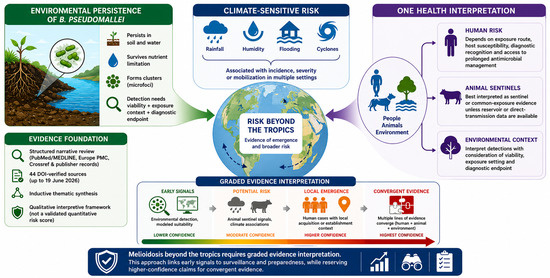
1. Introduction
Melioidosis is an environmentally acquired infectious disease caused by
Burkholderia pseudomallei (
B. pseudomallei), a Gram-negative environmental bacterium that persists mainly in soil and water. Human infection usually follows contact with contaminated environmental sources through percutaneous inoculation, inhalation, or ingestion, and the disease can range from localized abscesses to severe pneumonia, sepsis, and relapsing or disseminated infection. Diabetes mellitus, chronic kidney disease, hazardous alcohol use, chronic lung disease, and immunosuppression are among the repeatedly recognized host factors that increase susceptibility and severity [
1,
2,
3]. Because
B. pseudomallei is environmentally persistent, difficult to detect uniformly, and hazardous for laboratories when misidentified, melioidosis is not only a clinical problem but also an environmental, diagnostic, and public health preparedness challenge.
Historically, melioidosis has been framed primarily as a disease of tropical northern Australia and Southeast Asia. This framing remains important because these regions provide the most mature clinical, environmental, and epidemiological evidence base. However, the broader literature shows that the recognized distribution of melioidosis is shaped by more than climate and latitude. Global distribution modeling estimated approximately 165,000 human cases and 89,000 deaths annually, while subsequent burden work emphasized substantial mortality and probable underrecognition [
4,
5]. Reports from Puerto Rico, the continental United States, Europe-linked travel investigations, and temperate Australia further show that the apparent map of melioidosis is partly a map of environmental sampling, genomic investigation, and laboratory recognition [
6,
7,
8,
9,
10].
Environmental studies explain why this disease can remain hidden until exposure, sampling, or diagnostic conditions change.
B. pseudomallei can survive prolonged nutrient limitation, occur in spatially heterogeneous soil and water microhabitats, form biofilms, and show fine-scale environmental clustering [
11,
12,
13,
14,
15]. Water-associated investigations and whole-genome sequencing (WGS) source-attribution studies have also shown that domestic or community water systems can become epidemiologically relevant exposure pathways when clinical, environmental, and molecular evidence converge [
16,
17,
18]. At the same time, culture results, molecular detection, sampling depth, hydrological context, and spatial clustering determine whether environmental findings support viability, exposure plausibility, or only site-level occurrence.
Climate and weather are important to melioidosis ecology, but the available evidence supports a cautious interpretation. Rainfall, humidity, flooding, cyclones, and land-water disturbance have been associated with incidence, case clustering, or disease severity in several settings, including northern Australia, Singapore, Darwin, and dry tropical Australia [
19,
20,
21,
22,
23]. These studies indicate that weather can modify environmental mobilization and exposure intensity, while geographic interpretation still depends on local microbiological and epidemiological corroboration. Modeling studies and future-risk projections are valuable for identifying where surveillance may be justified, but modeled suitability remains weaker evidence than locally acquired disease, viable environmental isolation, or genomic linkage [
4,
24].
For melioidosis, One Health relevance is primarily environmental and cross-sectoral, linking human, animal, and ecosystem evidence around common environmental exposure pathways. Human cases, animal disease, serological signals, environmental detection, and climate-associated exposure events can each provide useful information, but they differ in evidentiary strength. Animal events can indicate environmental risk and justify investigation, whereas serology or animal occurrence alone should not be overinterpreted as proof of broad exposure, reservoir status, or direct animal-to-human transmission [
25,
26,
27]. Diagnostic and biosafety literature further shows that apparent emergence may reflect improved recognition, safer referral pathways, and better laboratory identification rather than newly established environmental risk alone [
28,
29,
30].
Taken together, the literature indicates that melioidosis beyond the tropics cannot be interpreted through geography, climate suitability or case recognition alone. The central knowledge gap is not whether B. pseudomallei can be detected outside historically recognized endemic areas, but how heterogeneous signals should be interpreted when they differ in proximity to local exposure, microbiological confirmation, environmental viability, genomic linkage and cross-domain concordance. A travel-associated infection, a locally acquired case, a culture-positive environmental sample, a serological signal, an animal event and a climate-suitability prediction each address different questions about presence, exposure, establishment and preparedness. An explicit evidence-weighted interpretation is therefore needed to calibrate both scientific claims and surveillance responses to the strength of each signal.
The objective of this narrative review was to critically synthesize evidence on environmental persistence, climate-associated ecological processes, geographic emergence, and One Health preparedness for melioidosis outside its historically recognized endemic core. The novelty of the synthesis lies in organizing environmental detection, climate-associated mobilization, geographic recognition, animal sentinel signals, and laboratory preparedness into a qualitative conceptual framework that specifies the inference each signal can support and the response level it can justify. It therefore provides a structured basis for proportionate interpretation in newly recognized or plausibly underdetected settings while preserving caution where evidence remains incomplete.
2. Materials and Methods
2.1. Review Design and Objective
The review used a structured narrative design with focused literature searching, verified-source selection, and critical evidence synthesis. The methodological workflow specified the review question, information sources, eligibility criteria, screening sequence, extraction fields, and thematic evidence appraisal. These elements were structured to reflect established quality criteria for narrative reviews, including justification of the review focus, explicit aims, transparent literature searching, source selection, critical reasoning, traceable referencing, and appropriate evidence presentation.
The review question was: how should environmental, climatic, geographic, animal, clinical, diagnostic, and laboratory evidence be interpreted when assessing melioidosis risk beyond classical tropical endemic regions? The review was organized around six evidence domains: environmental persistence and exposure ecology; climate-sensitive mobilization and ecological suitability; geographic emergence beyond historically recognized endemic regions; animal and veterinary evidence with One Health relevance; human health risk, diagnostic recognition, and treatment relevance; and laboratory identification, biosafety, and public health preparedness. The scope was anchored in established clinical, epidemiological, and microbiological syntheses and then narrowed toward environmental, climatic, One Health, and preparedness evidence [
1,
2,
3,
28].
2.2. Information Sources and Search Date
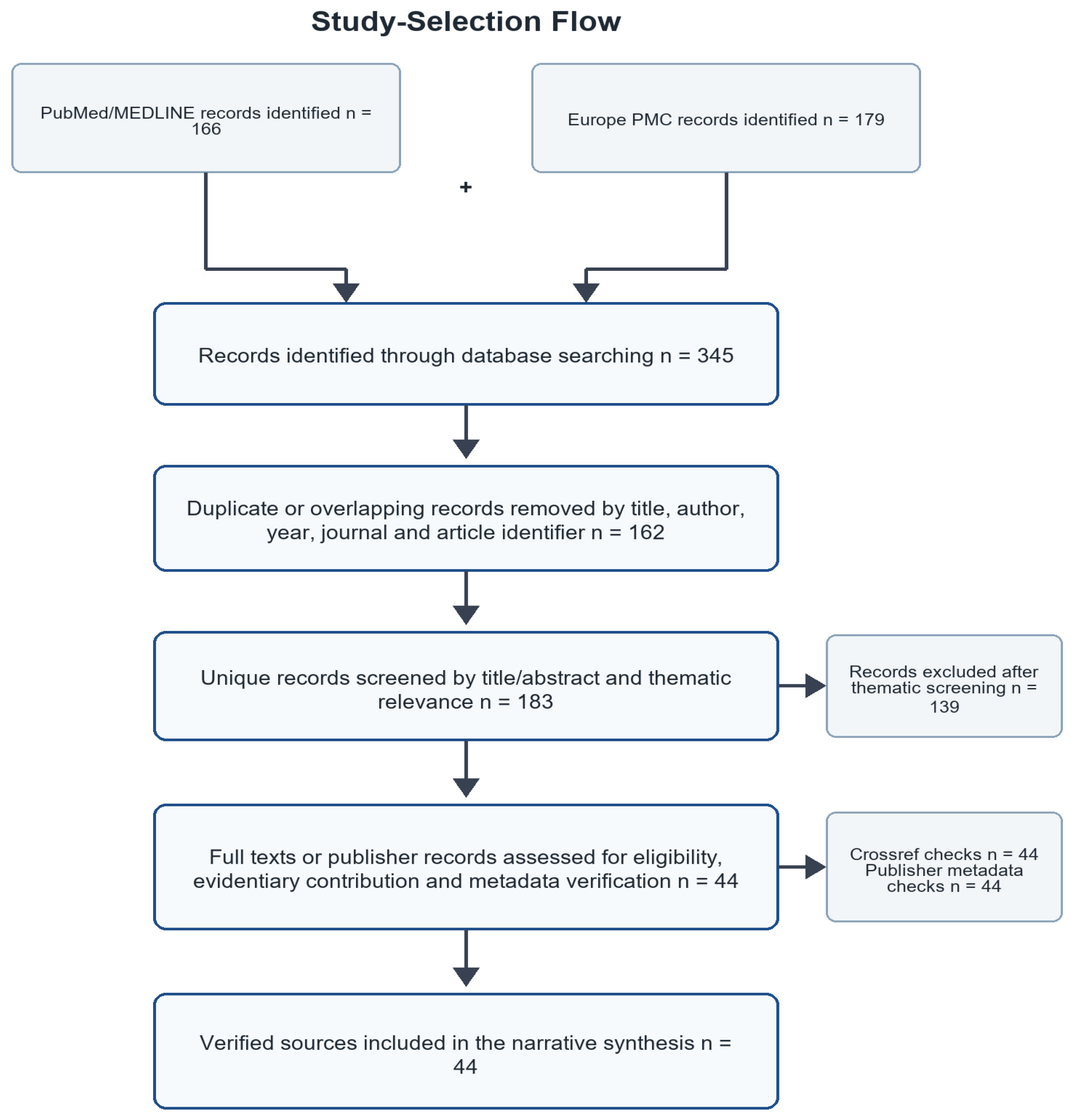
Searches and source verification were conducted in PubMed/Medical Literature Analysis and Retrieval System Online (MEDLINE), Europe PubMed Central (Europe PMC), Crossref, and publisher records for literature available up to 19 June 2026. PubMed/MEDLINE and Europe PMC were used to identify candidate records; Crossref and publisher records were used to verify Digital Object Identifier (DOI) landing pages, article identifiers, and retained-reference metadata. The search returned 166 records in PubMed/MEDLINE and 179 records in Europe PMC; 44 retained references were checked in Crossref and publisher records.
2.3. Search Strategy
Search concepts combined disease and pathogen terms with environmental, climatic, geographical, veterinary, diagnostic, clinical-risk, and preparedness terms. Representative search blocks included: (melioidosis OR Burkholderia pseudomallei); (melioidosis OR B. pseudomallei) AND (soil OR water OR environmental persistence OR survival OR biofilm); (melioidosis OR B. pseudomallei) AND (rainfall OR flooding OR cyclone OR climate OR extreme weather); (melioidosis OR B. pseudomallei) AND (non-endemic OR autochthonous OR geographic expansion OR emergence OR United States OR Africa OR Europe); (melioidosis OR B. pseudomallei) AND (animal OR veterinary OR wildlife OR One Health); (melioidosis OR B. pseudomallei) AND (treatment OR therapy OR antimicrobial OR relapse OR ceftazidime OR meropenem OR trimethoprim-sulfamethoxazole); and (melioidosis OR B. pseudomallei) AND (diagnostic OR biosafety OR biosecurity OR MALDI-TOF MS OR whole-genome sequencing OR metagenomics).
The most recent update used focused title-based searches from 1 January 2020 to 19 June 2026 to capture recent literature while preserving older foundational sources when they remained important for disease ecology, epidemiological framing, clinical-risk interpretation, or environmental analysis. Environmental-domain searches captured soil, water, survival, biofilm, sanitation, domestic-water, and hydrological evidence; climate-domain searches captured rainfall, flooding, cyclones, humidity, ecological suitability, and extreme-weather evidence; geographic searches captured Puerto Rico, the continental United States, temperate Australia, Europe-linked recognition, Africa, and under-recognized regions; One Health searches captured animal, veterinary, wildlife, sentinel, and common-exposure evidence; and laboratory-preparedness searches captured culture, molecular identification, MALDI-TOF MS, biosafety, biosecurity, whole-genome sequencing (WGS), and metagenomic evidence [
4,
12,
26,
27,
29,
31].
2.4. Eligibility Criteria
Eligible sources were peer-reviewed primary studies, diagnostic-development studies, environmental microbiology studies, outbreak or case-cluster investigations, genomic source-attribution papers, climate or ecological modeling studies, animal and veterinary reports, biosafety or biosecurity papers, and relevant reviews used for contextual framing or citation tracing. Sources were required to have verified article-level metadata and direct relevance to at least one review domain: environmental detection or persistence of
B. pseudomallei; climate- or weather-associated risk; evidence of emergence beyond classical tropical endemic regions; animal or veterinary evidence with One Health relevance; human health risk, diagnostic recognition, and treatment relevance; laboratory diagnosis; biosafety; biosecurity; genomic surveillance; or public health preparedness [
1,
4,
5,
19].
Sources were excluded when article-level or publisher metadata could not be verified, when they addressed melioidosis only as non-specific background, when they duplicated stronger or more specific sources, or when they lacked direct relevance to environmental persistence, climate-sensitive risk, geographic recognition, One Health interpretation, diagnostic recognition, biosafety, or preparedness. Foundational articles were retained when they remained necessary for disease ecology, epidemiological framing, diagnostic interpretation, or environmental evidence weighting.
2.5. Screening and Source Selection
Records were screened sequentially. Database and publisher records were first checked for duplicate or overlapping bibliographic entries by title, author, year, journal, and article identifier. Title and abstract records were then screened for thematic relevance to the review question. Potentially eligible records underwent full-text or publisher-record assessment, identifier verification, and evaluation of their specific evidentiary contribution. Sources were retained when they provided culture-confirmed environmental evidence, survival or persistence data, climate-associated incidence or mobilization evidence, genomic source attribution, autochthonous or travel-linked geographic recognition, animal or serological evidence with One Health relevance, validated diagnostic information, biosafety implications, or preparedness value.
Study selection was performed independently by two reviewers at the title/abstract and full-text or publisher-record stages. Both reviewers assessed thematic relevance, eligibility, identifier verification, and the specific evidentiary contribution of potentially eligible sources. Differences in eligibility or interpretive relevance were resolved through consensus reassessment against the predefined inclusion criteria, identifier and publisher metadata, direct relevance to the review question, and specificity of evidentiary contribution.
The retained thematic reference set comprised 44 sources with verified article-level metadata and direct relevance to melioidosis beyond the tropics. The retained references combined foundational epidemiological papers, environmental microbiology studies, climate-associated analyses, emergence reports, animal evidence, diagnostic studies, biosafety literature, and recent 2024–2026 publications relevant to the scope.
Figure 1 summarizes the pathway from database identification to inclusion of the verified narrative-review source set.
2.6. Data Extraction
For each retained source, extracted information included author and year, country or region, study type, host or population, environmental matrix, diagnostic or analytical method, study period, sample size or dataset where available, principal finding, numerical outcome, genomic method where reported, climate or environmental exposure variable, One Health domain, preparedness implication, and major limitation. Environmental studies were evaluated according to sampling matrix, detection method, and evidence for persistence or ecological establishment. Climate-related studies were evaluated according to climatic exposure, geography, study period, analytical design, and whether reported associations supported mobilization, exposure, or disease severity. Geographic-emergence evidence was classified as imported infection, autochthonous human disease, confirmed environmental detection, animal occurrence, genomic linkage, serological exposure, or modeled ecological suitability.
2.7. Evidence Synthesis and Critical Appraisal
Evidence was synthesized thematically and compared by geography, study design, diagnostic method, environmental matrix, host species, and strength of inference. Culture-based environmental isolation, molecular detection, serology, genomic attribution, and ecological modeling were interpreted as distinct evidence types rather than interchangeable indicators of endemicity. Quantitative findings were interpreted in relation to the denominator, sampling design, diagnostic method, and local context. Climate-related claims were restricted to association, mobilization, or suitability unless study design supported stronger inference. Review articles were used for contextual framing, whereas primary studies and verified outbreak, environmental, diagnostic, or modeling papers were prioritized for specific claims [
7,
8,
29,
31].
Included sources were appraised descriptively according to study design, sampling frame, environmental matrix, diagnostic or analytical method, culture confirmation, molecular detection, viability inference, denominator availability, geographic and temporal resolution, exposure reconstruction, genomic linkage, climate-variable specificity, cross-domain One Health relevance, and stated or inferable limitations. Stronger inference was assigned to evidence linking local disease with viable environmental recovery, repeated detection, exposure reconstruction, genomic source attribution, or concordant human–animal-environmental signals. Weaker or conditional inference was assigned to isolated serology, animal occurrence without exposure context, model-only suitability, detection-only evidence without viability, or single-domain observations without environmental or genomic linkage.
For cross-domain triangulation, each source was appraised for whether it linked evidence across human, animal, environmental, climatic, or laboratory domains. The synthesis prioritized studies that connected clinical disease with environmental sources, animal occurrence with environmental co-exposure, climate events with hydrological mobilization, or laboratory identification with public health action. Single-domain signals were interpreted differently from partially concordant evidence streams and from unpaired observations that remained hypothesis-generating.
2.8. Quality Appraisal and Methodological Limitations
No standardized critical appraisal tool or formal study-level risk-of-bias categorization was applied because the retained sources comprised heterogeneous environmental microbiology studies, clinical and outbreak investigations, genomic analyses, climate or ecological modeling papers, animal reports, diagnostic studies, biosafety papers, and narrative or contextual reviews. Methodological quality was evaluated descriptively according to the level of inference being drawn, with attention to whether each source supported detection, persistence, exposure, establishment, source attribution, clinical relevance, sentinel value, modeling hypothesis, or preparedness action.
Pooled prevalence, incidence, or risk estimates were not calculated because study designs, host populations, environmental matrices, diagnostic methods, denominator structures, and geographic contexts were not sufficiently comparable. Spatial and genomic concordance was assessed descriptively at the resolution provided by the original sources. No formal geographic clustering analysis, pooled risk estimate, or de novo phylogenetic reconstruction was performed because the reviewed literature did not provide a harmonized dataset of paired human, animal, environmental, climatic, and genomic observations.
The review used focused narrative synthesis rather than exhaustive evidence mapping or quantitative estimation. Database counts refer to the documented search workflow and retained-source verification. Restriction to sources with verified article-level identifiers strengthened citation traceability but may have excluded relevant official reports, local surveillance documents, or older regional observations without such metadata. These methodological boundaries informed the conservative interpretation used throughout the synthesis.
3. Analytical Framework: Evidence Strength, Environmental Persistence, and One Health Interpretation
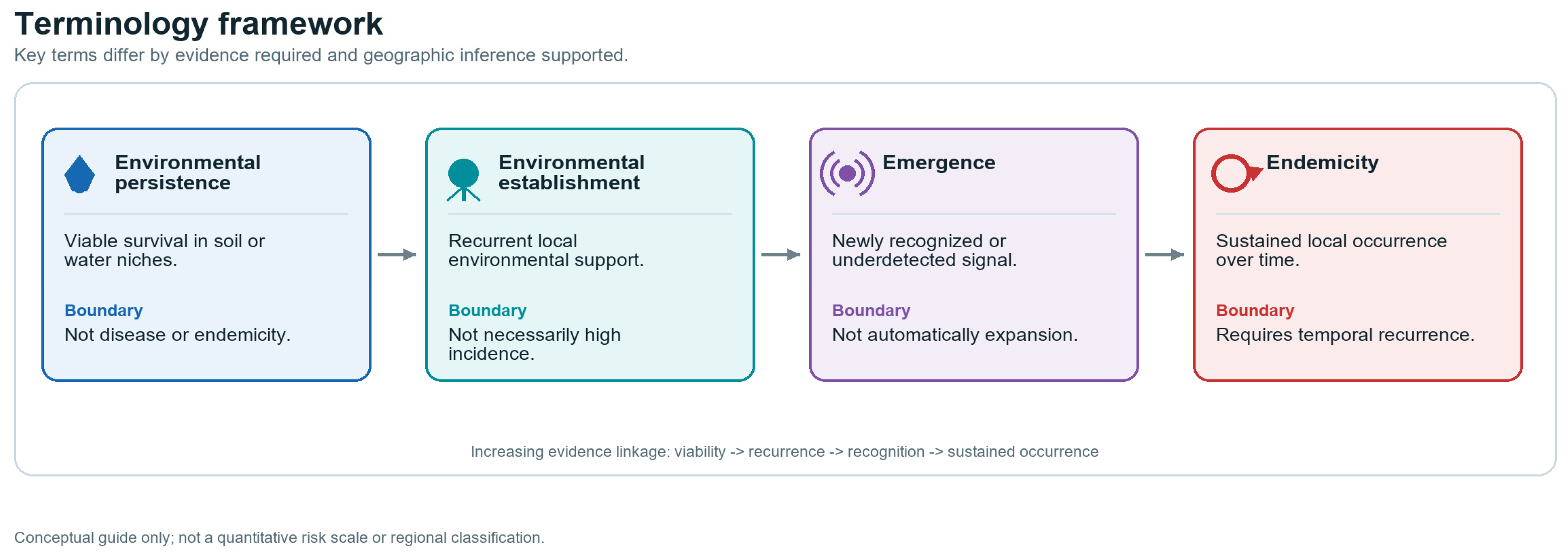
The melioidosis evidence base does not form a single linear chain from environmental presence to human disease. It consists of partially overlapping domains: environmental microbiology, hydrology, climate epidemiology, human clinical recognition, animal disease, laboratory diagnosis, biosafety, and genomic source attribution. These domains differ in the type of inference they can support rather than only in the volume of available evidence. The evidence categories used in this review were derived inductively during thematic synthesis from the evidentiary function each retained source could support: detection of the organism, demonstration of viable local presence, reconstruction of exposure, attribution between sources and cases, sentinel animal or serological evidence, and modeled ecological suitability. The framework was developed inductively from the reviewed evidence rather than adapted from an existing One Health or evidence-ranking framework and should be read as an interpretive hierarchy rather than a formal grading scale; it applies microbiological and epidemiological principles of viability, culture confirmation, exposure plausibility, spatiotemporal concordance, and genomic relatedness to narrative One Health interpretation. The analytical framework therefore separates environmental persistence, exposure mobilization, recognized disease, and preparedness capacity. To maintain consistent interpretation across these domains, the core geographic terms used throughout the review are distinguished in
Figure 2.
Three distinctions organize the synthesis. First, environmental detection identifies an evidentiary endpoint, whereas transmission or disease risk depends on viability, exposure route, and host susceptibility. Second, newly recognized diseases, ecological suitability, and geographic expansion are separate claims that require different combinations of clinical, environmental, and genomic evidence. Third, One Health interpretation is strongest when human, animal, and environmental data identify common environmental pathways; direct animal-to-human spread requires separate evidence. These distinctions reduce the risk that environmental, animal, clinical, and model-based signals are interpreted as interchangeable evidence.
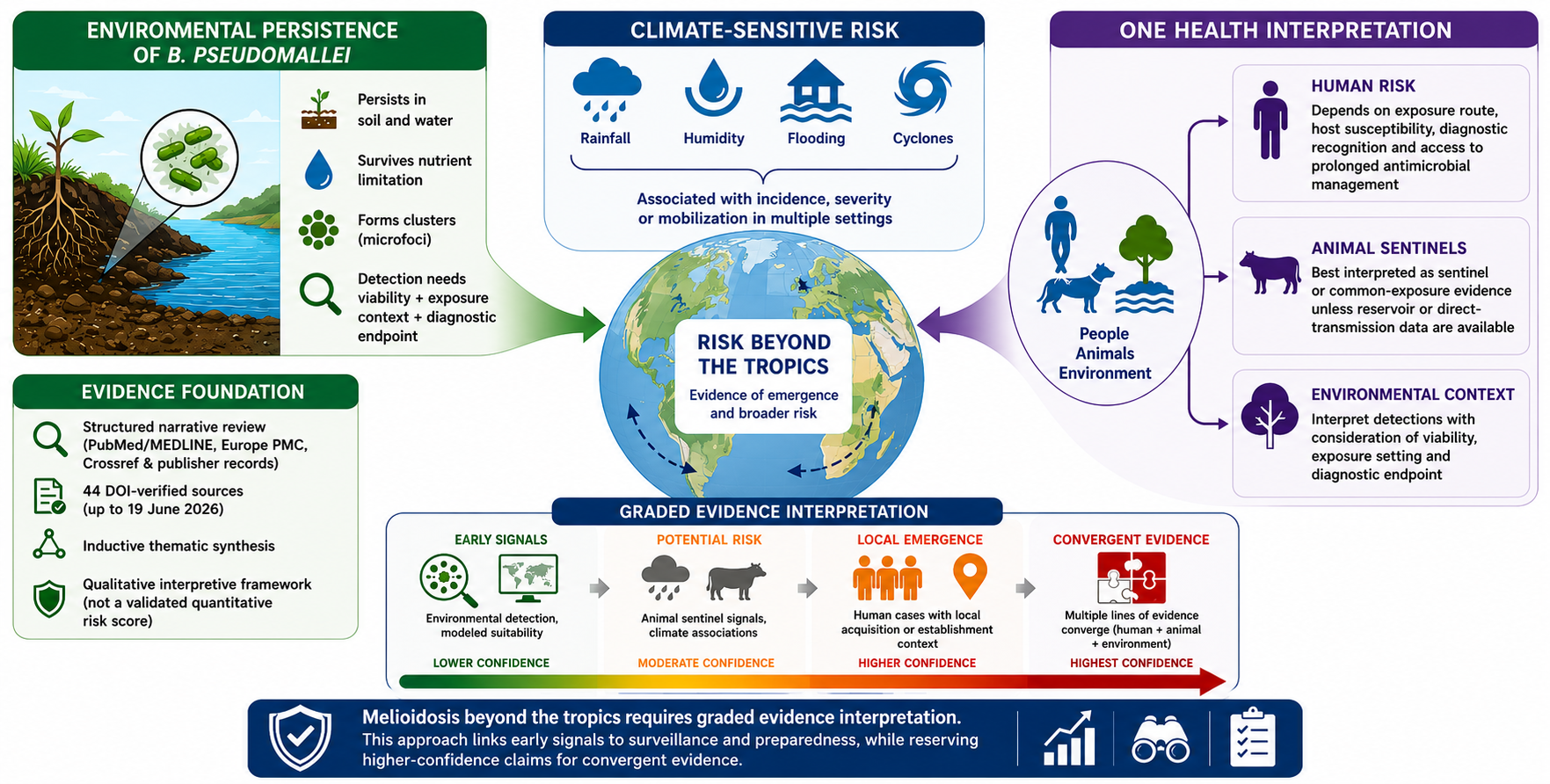
The novelty of this framework lies in treating these distinctions as decision rules rather than as descriptive categories. Evidence types were assigned greater interpretive weight when they reduced competing explanations such as importation, non-viable detection, non-specific exposure, incomplete sampling, or model-only suitability. Culture-confirmed local disease, viable environmental isolation, and genomic attribution can support high-confidence local-risk interpretation when they converge; animal occurrence, serology, modeled suitability, and weather-associated case increases are valuable but should primarily function as surveillance triggers unless linked to higher-confidence environmental or genomic evidence. This evidence-weighted approach preserves early warning value while keeping interpretation proportional to the strength and linkage of the available evidence. Accordingly, the hierarchy should be read as an interpretive framework for proportionate inference, not as a validated risk score or a substitute for local surveillance data.
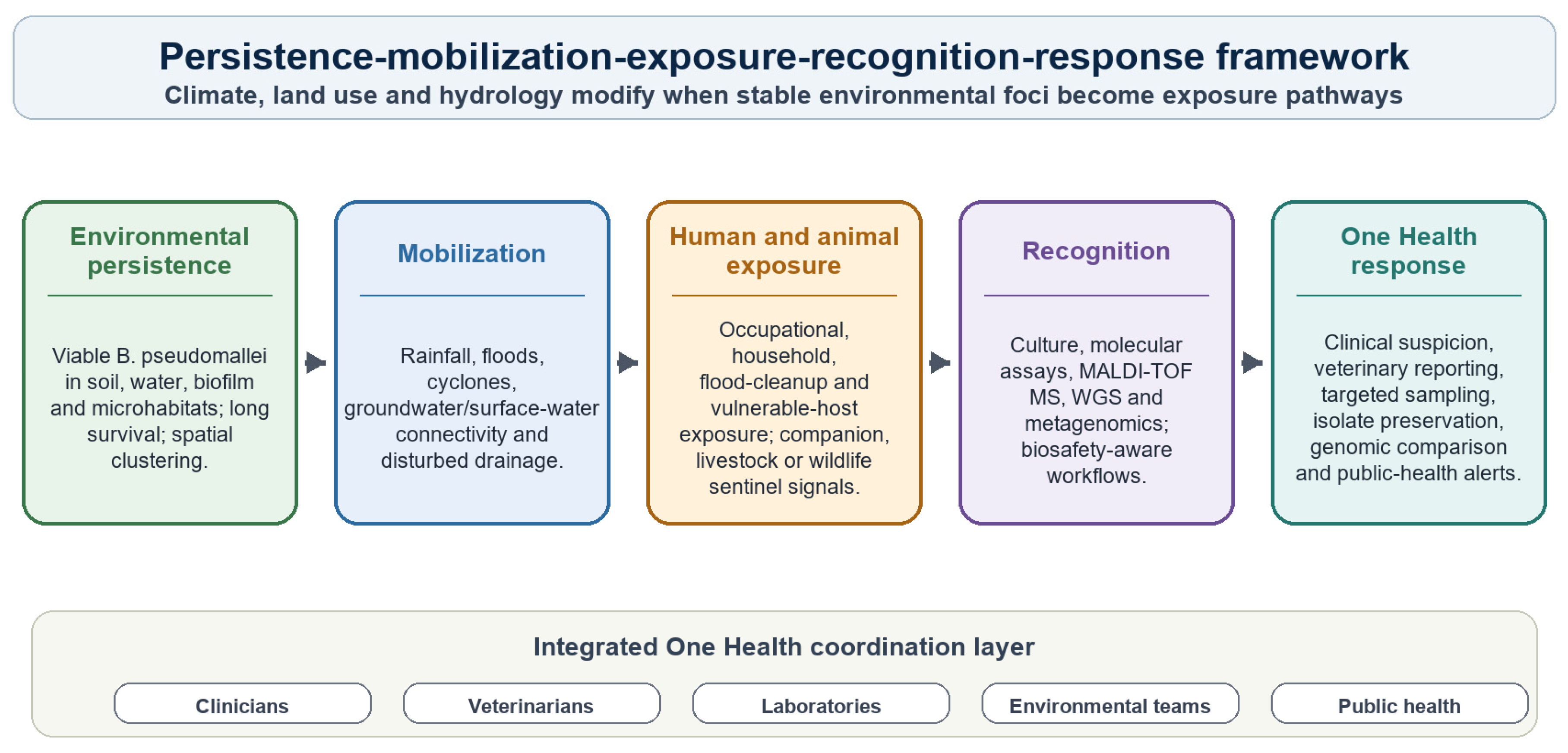
The resulting framework can be expressed as four linked but non-equivalent stages: environmental persistence, environmental mobilization, host exposure, and diagnostic recognition. Environmental persistence concerns the capacity of viable B. pseudomallei to remain in soil, water, or microhabitats. Mobilization concerns hydrological or physical processes that move organisms from environmental niches into exposure pathways. Exposure concerns the contact of susceptible humans or animals with contaminated soil, water, aerosols, or domestic systems. Recognition concerns whether clinical, veterinary, and laboratory systems identify the disease. Weakness at any stage can make the risk less visible; evidence at one stage does not automatically prove the next.
Figure 3 illustrates the conceptual pathway connecting environmental persistence with mobilization, exposure, recognition, and coordinated One Health response.
Quantitative findings are included when they clarify evidence strength. Key examples include the estimated global burden of approximately 165,000 cases and 89,000 deaths per year [
4]. Other numerical anchors include the 30-year prospective clinical evidence base from northern Australia, the 16-year survival experiment in distilled water, and high-resolution environmental detection data from northeast Thailand [
12,
31,
32]. These figures are not pooled because they arise from different evidence types. Their value lies in anchoring the scale of disease burden, biological plausibility, clinical recognition, and environmental-exposure interpretation.
This evidence hierarchy is especially important outside highly studied endemic regions. In a well-characterized setting, repeated culture-confirmed human cases, environmental sampling, and genomic comparison can define local patterns with reasonable confidence. In newly recognized areas, however, evidence may begin with a single autochthonous case, a small environmental signal, an animal cluster, or a genomic finding. Such evidence should trigger investigation, not premature certainty. A cautious scientific response is graduated interpretation: weak signals justify targeted surveillance, moderate signals justify public health preparedness, and convergent clinical-environmental-genomic evidence supports higher-confidence claims of local establishment.
Table 1 summarizes the evidence categories used to rank signals of melioidosis emergence beyond classical endemic areas.
4. Environmental Persistence and Exposure Ecology of B. pseudomallei
Environmental persistence is a biological prerequisite for melioidosis emergence, but persistence should be separated from exposure and disease. Current evidence indicates that
B. pseudomallei can remain viable under severe nutrient limitation, occur in heterogeneous soil and water microfoci, and enter domestic or community exposure pathways under specific hydrological conditions [
12,
13,
14,
31]. The critical question is the evidentiary meaning of each environmental finding: the detection endpoint, evidence of viability, and linkage to human or animal exposure.
The routes by which environmental presence becomes human infection require explicit source-route-host interpretation. Humans most commonly acquire melioidosis after contact with contaminated soil or water through percutaneous inoculation, inhalation, or ingestion; these routes are not mutually exclusive, and their relative importance varies by ecology, behavior, weather event, and host susceptibility [
1,
2,
3]. Percutaneous inoculation is most plausible when wet soil or surface water contacts skin abrasions, wounds, or occupational and agricultural microtrauma. Inhalational exposure becomes more relevant when intense rainfall, cyclones, flooding, dust, pressure washing, or cleanup activities aerosolize contaminated water or soil particles. Ingestion is most strongly supported when untreated drinking water, household storage, domestic water systems, or source-linked outbreaks connect environmental contamination with clinical disease [
16,
17,
18,
19]. This distinction prevents overinterpretation: a contaminated source indicates potential exposure, but infection risk depends on route-specific contact, dose-related opportunity, host vulnerability, and timely diagnostic recognition.
4.1. Soil, Water, and Environmental Heterogeneity
B. pseudomallei is not evenly distributed across landscapes. Environmental studies indicate clustered occurrence in soil and water, with detection affected by hydrology, soil characteristics, land use, sampling depth, enrichment methods and molecular targets. In northern Australia, landscape changes were associated with the occurrence of
B. pseudomallei in soil, suggesting that ecological disturbance can shape local distribution [
33]. Culture-based detection studies improved recovery and quantification from soil but also demonstrated that method sensitivity and sampling strategy strongly influence apparent prevalence [
13]. Surface-water detection using Moore swabs in southern Laos and environmental surveys in Myanmar extended evidence for water-associated and soil-associated occurrence across different ecological settings [
34,
35].
Across environmental studies, reported positivity and inferred persistence are shaped by three non-equivalent layers of evidence. The first is the sampling frame. Soil studies vary in purposive or grid-based design, sampling depth, number of samples per site, wet- versus dry-season timing, enrichment procedures and whether sampling is case-triggered or independent of clinical recognition; water studies vary by point samples, Moore swabs, source type, sampled volume, flow state and hydrological connectivity. These differences alter sensitivity, denominator structure and spatial representativeness, so percentages of positive samples cannot be compared directly across studies unless matrix, season, sampling density and analytical workflow are considered. The second layer is the analytical endpoint. Culture, molecular assays and genomic approaches do not measure the same phenomenon: culture supports viable organisms but is vulnerable to low density, environmental stress and background microbial competition; molecular detection increases sensitivity but may not prove viability; genomic data strengthen source attribution when paired clinical, animal or environmental isolates are available. The third layer is ecological heterogeneity.
B. pseudomallei can occupy microfoci within fields, households, watersheds or water networks, making a negative sample compatible with nearby persistence and a positive sample insufficient to define environmental extent. Consequently, inconsistencies across environmental studies should be interpreted as evidence about sampling design, detection endpoint and ecological structure before they are used to infer persistence or local establishment [
13,
31,
34,
35].
Land use, agriculture, irrigation and urbanization represent the interface between environmental suitability and human exposure. Landscape-change evidence from northern Australia indicates that disturbance can alter the probability of recovering
B. pseudomallei from soil, but this should not be simplified into a universal claim that all agricultural or urban change increases risk [
33]. The more precise interpretation is that land modification changes hydrology, soil exposure, drainage, vegetation cover, animal access and human contact with wet soil or water. Urban environmental hot spots and sanitation-linked water detection further show that exposure ecology can be peri-domestic or municipal rather than purely rural [
14,
31]. Irrigation and water management are therefore important not only as environmental variables, but as mechanisms that connect persistent microfoci to repeated human, animal and household exposure.
The major limitation of environmental detection studies is that positive environmental evidence does not directly quantify human exposure or infection risk. Culture-positive soil or water samples provide stronger evidence of viable organisms than molecular signals alone, but culture methods may underestimate burden because of competition, low organism density and spatial clustering. Molecular assays increase sensitivity and speed but may detect deoxyribonucleic acid (DNA) without proving viability. The contrast is evident in recent environmental diagnostics: Pakdeerat et al. [
31] reported that a clustered regularly interspaced short palindromic repeats (CRISPR)-based assay, CRISPR-BEEPs, had higher sensitivity than conventional culture-based plate inspection when double quantitative polymerase chain reaction (qPCR) was used as the reference standard (93.5% versus 19.4%), while maintaining high specificity (100% versus 98.0%). The same study detected
B. pseudomallei in 73.3% of groundwater, 32.9% of surface water and 26.2% of piped water samples across 15,118 square kilometers in northeast Thailand, and found that environmental detection within 10 km of households was associated with melioidosis risk (odds ratio 2.74; 95% confidence interval 1.38–5.48) [
31]. These data illustrate both the value of highly sensitive environmental tools and the need to distinguish viable culture, molecular detection and epidemiological association. Accordingly, discrepancies between culture-based and molecular environmental studies should be interpreted against endpoint definition and reference-standard choice before they are attributed to true ecological absence or presence.
A further interpretive challenge is scale. Environmental distribution may vary across meters, households, fields, watersheds and regions. A negative sample from one location cannot exclude nearby microfoci, while a positive sample does not define the spatial extent of hazard. This is why environmental sampling designs that record depth, soil type, moisture, land use, hydrological connectivity and recent weather are more informative than opportunistic sampling alone. The most useful environmental studies are therefore those that treat B. pseudomallei as a spatially structured organism rather than as a uniform property of an administrative region.
4.2. Persistence Under Nutritional and Environmental Stress
Long-term persistence is important to the emergence problem. Survival of
B. pseudomallei in distilled water for 16 years shows that the organism can remain viable under extreme nutrient limitation [
12]. This finding is biologically important because it decouples persistence from continuous nutrient-rich environmental conditions. It also supports the plausibility of prolonged environmental reservoirs that become epidemiologically visible only during favorable mobilization or exposure events. However, distilled-water survival is an experimental observation and should not be treated as a direct estimate of persistence in complex natural water systems, where microbial competition, temperature, salinity, pH, and organic matter alter survival dynamics.
Biofilm formation and stress-adaptation pathways add mechanistic depth to environmental persistence. Studies of biofilm formation, stress tolerance and interactions with environmental organisms suggest that
B. pseudomallei can persist in protected microhabitats and respond to environmental stressors that differ across soil and water systems [
11,
15,
36]. These findings reinforce the need to interpret environmental risk as a multidimensional ecological process rather than a simple presence-or-absence variable.
These mechanistic findings have direct implications for climate interpretation. If persistence depends on interacting stress tolerance, biofilm behavior, water systems and sampling matrix, then climate-related risk cannot be reduced to rainfall alone. The same rainfall event may dilute organisms in one setting, mobilize them in another, and increase aerosol or surface-water exposure in a third. This complexity explains why climate associations differ across studies and why environmental microbiology should be integrated with epidemiological time-series analyses [
12,
15,
31].
4.3. Water Systems, Domestic Exposure, and Genomic Attribution
Water is an important but methodologically complex exposure pathway. A clonal cluster linked to water supply in northern Australia and WGS-based tracing of an outbreak originating from a contaminated domestic water supply show that waterborne exposure can be epidemiologically and genomically supported under specific circumstances [
16,
18]. In Thailand, drinking water was implicated in melioidosis caused by
B. pseudomallei, supporting ingestion as a possible route in selected settings [
17]. These studies provide higher-confidence evidence than general environmental detection because they connect clinical disease, environmental source, and molecular or epidemiological evidence.
Genomic studies have refined source attribution, but they also reveal complexity. Whole-genome sequencing from an urban environmental hot spot showed fine-scale population structure and localized spatial clustering, indicating that environmental heterogeneity can occur at scales relevant to household, occupational or community exposure [
14]. Such studies strengthen inference when clinical and environmental isolates are linked, but absence of a genomic match does not exclude environmental exposure. Environmental sampling often occurs after cases are identified, and the sampled location may not fully represent the exposure history of the patient.
Water-associated evidence is particularly important for newly recognized areas because domestic water systems can convert environmental presence into repeated exposure. The most robust evidence comes from situations in which clinical isolates, environmental isolates, and molecular typing or genomic data converge. However, water investigations can also be biased toward locations examined after clinical recognition. A household or community water source may be sampled because a case has occurred, while equally contaminated but clinically silent sources remain untested. Investigation designs that include comparison sites, repeated sampling, and hydrological context are therefore more informative than single post-case environmental surveys.
5. Climate-Sensitive Risk, Extreme Weather, and Ecological Suitability
Climate-sensitive risk is one of the most important but most easily overstated components of melioidosis emergence. Because environmental persistence is interpreted through exposure pathways and detection systems, climate-related evidence should be separated into two streams. Empirical evidence links rainfall, humidity, extreme weather, hydrological disturbance and melioidosis occurrence in several settings, including northern Australia, Singapore and dry tropical Australia [
19,
20,
21,
22,
23]. Predictive and ecological modeling extends beyond observed cases by estimating where environmental conditions may be suitable or where future extreme-weather scenarios could increase risk [
4,
24]. These streams answer different questions: empirical studies test observed weather-disease relationships in defined settings, whereas predictive models generate spatial or future-risk hypotheses that require microbiological, clinical, or environmental validation. Across studies, the causal pathway varies: climate may alter environmental mobilization, exposure intensity, or detection probability, and these mechanisms require separate interpretation.
5.1. Rainfall, Humidity and Disease Incidence
Within the empirical evidence stream, rainfall is the most consistently reported climate-related factor in melioidosis epidemiology, but its interpretation differs across regions and study designs. In northern Australia, rainfall intensity was associated with disease severity, supporting the hypothesis that heavy rainfall may increase inhalational exposure or deliver higher infectious inocula through environmental mobilization [
19]. Extreme weather events and environmental contamination were also associated with case clusters in the Northern Territory, linking weather, environmental disturbance and clinical occurrence [
20]. A 23-year time-series analysis in Darwin further supported climatic influence, but the relevant climatic variables and lag structures depended on local ecology and temporal scale [
22]. These studies support weather-sensitive occurrence, not a generalizable climatic rule independent of local exposure ecology.
Evidence from Singapore and Townsville shows that rainfall and humidity associations are not uniform. Singapore data from 2003 to 2012 linked incidence with rainfall and humidity, whereas the dry tropical setting of Townsville required region-specific interpretation of climatic effects [
21,
23]. These comparisons argue against a universal rainfall threshold for melioidosis risk. Rainfall may increase risk through soil saturation, surface-water contamination, aerosolization, changed occupational exposure or behavioral changes, but the dominant mechanism likely varies across ecological settings.
The main analytical weakness in many climate-risk interpretations is the temptation to treat association as mechanism. A temporal association between rainfall and cases may reflect increased exposure, increased bacterial mobilization, delayed clinical presentation, seasonal agricultural work, or enhanced diagnostic attention during recognized melioidosis seasons. Lag structures are also biologically important because exposure, incubation, clinical progression and healthcare access do not occur simultaneously. Climate-sensitive surveillance should therefore combine meteorological indicators with clinical onset dates, exposure histories, environmental sampling and laboratory confirmation rather than relying on aggregate rainfall alone.
5.2. Extreme Weather Events and Pathogen Mobilization
Empirical evidence on extreme weather can show how environmental persistence is transformed into acute exposure risk. Northern Australia studies link rainfall intensity, environmental contamination and case clusters with severity or occurrence, while climate reviews support interpreting flooding, cyclones and hydrological disturbance as exposure modifiers rather than as a single causal mechanism [
19,
20,
37]. These data support event-related weather sensitivity, but they do not establish a universal rainfall threshold, quantify future suitability or confirm lasting ecological change after every extreme weather event.
Climate-related evidence should be interpreted by mechanism and time scale. Extreme weather may reveal previously underdetected foci, alter short-term exposure opportunities or, in some locations, contribute to longer-term ecological change. Case increases after storms, and environmental findings in newly sampled areas and modeled future suitability therefore represent different endpoints. Their interpretation should depend on whether the evidence demonstrates mobilization, viable local presence or projected suitability.
Long-term climate change, predictive ecological suitability and short-term extreme-weather mobilization should be analyzed as related but distinct processes. Long-term climate change may alter ecological suitability, rainfall patterns, soil moisture, groundwater dynamics or the geographic envelope in which
B. pseudomallei can persist, but this inference is generally indirect unless supported by longitudinal environmental recovery or repeated locally acquired disease [
4,
22,
24]. Extreme weather, by contrast, can mobilize organisms from existing environmental niches, intensify contact with contaminated water or soil, and produce short-term case increases [
20,
23,
37]. Keeping these mechanisms separate prevents attributing every outbreak after heavy rain to climate change while still recognizing that climate instability can alter exposure systems.
Extreme weather also changes the practical geography of exposure. Flooding, cyclones and intense rainfall can connect soil, surface water, groundwater, drainage channels and domestic environments that are usually separated. Such events may increase exposure among farmers, construction workers, cleanup workers, emergency responders and residents using contaminated water or entering flooded environments. This operational perspective is important because preparedness does not require proof that climate has permanently shifted the pathogen’s range; it requires recognition that extreme weather events can temporarily intensify exposure in compatible ecological settings.
5.3. Modeling and Prediction
Ecological distribution and future-risk models extend surveillance beyond observed cases, but their outputs should not be read as direct evidence of local presence. They are built from occurrence records, environmental covariates, and assumptions about relationships between the two; each component can introduce uncertainty. Global distribution modeling estimated a wider potential range of
B. pseudomallei than historical case detection alone, emphasizing underrecognition in regions with limited diagnostics or environmental sampling [
4]. Future extreme-weather projections can identify settings where disease burden could increase under specified scenarios, but such projections depend on climate pathways, baseline disease data, exposure assumptions, and model transferability [
24]. Model outputs therefore indicate ecological suitability or projected risk, not culture-confirmed persistence, local establishment or current endemicity.
The main scientific value of predictive modeling lies in hypothesis generation and surveillance prioritization. Models can identify areas where environmental sampling, laboratory preparedness and clinical awareness should be strengthened, particularly where routine diagnostics are limited. They cannot replace culture-confirmed environmental isolation, genomic attribution or locally acquired human and animal cases. For non-endemic areas, the most defensible approach is therefore tiered: modeled suitability can trigger targeted surveillance, environmental or clinical confirmation can upgrade evidence strength, and genomic linkage can refine source attribution.
Uncertainty in ecological modeling is multilayered. Occurrence data are shaped by diagnostic capacity, publication density and environmental sampling intensity; environmental predictors may be coarse relative to the microhabitats in which B. pseudomallei persists; pseudo-absence can reflect surveillance failure; and model transferability is limited when relationships learned from well-sampled tropical settings are projected into poorly sampled regions. Future-risk models add scenario uncertainty because projected hazards, land use, water management, population exposure and health-system recognition may change together. Model validation should therefore be sought through targeted sampling, sentinel clinical surveillance, environmental culture or molecular screening, and, where available, genomic comparison. Until such validation exists, modeled suitability should be interpreted as surveillance priority rather than empirical evidence of environmental persistence.
6. Geographic Emergence Beyond Classical Tropical Endemic Zones
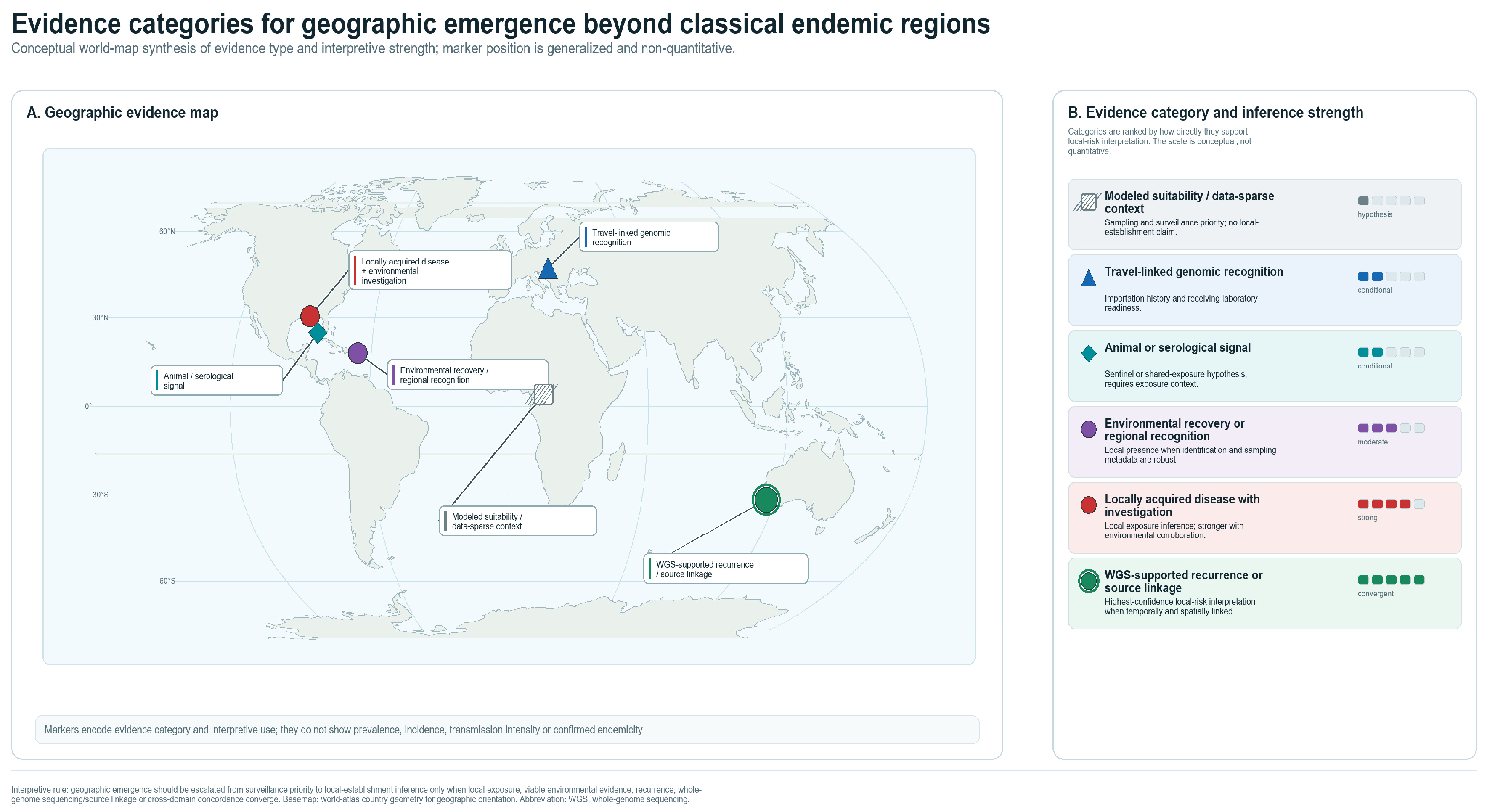
Geographic emergence is especially vulnerable to overstatement unless evidence categories are explicitly separated. The same phrase, ‘new area’, can describe imported disease, local acquisition, environmental isolation, animal occurrence, serological exposure, modeled suitability or genomic attribution. Recent evidence from Puerto Rico, the continental United States, Europe-linked travel infections and global dispersal analyses illustrates how these categories differ in evidentiary weight and public health meaning [
7,
8,
9,
10,
38]. Geography is therefore treated as an evidence problem rather than as a simple map of countries.
6.1. Evidence Categories for Geographic Emergence
Within this evidence framework, geographic emergence was interpreted according to the specific question each signal can answer. Travel-related genomic investigations mainly test importation history and receiving-laboratory readiness [
9]. Locally acquired disease linked to environmental investigation addresses local exposure more directly [
8]. Environmental recovery moves the inference from case recognition toward local presence when identification is robust [
7,
35]. Animal and serological signals remain useful but conditional because they require exposure context, diagnostic confirmation, and, where possible, environmental or genomic linkage [
25,
26,
27].
The practical value of this classification is that it links each geographic signal to a proportionate response. A travel-associated case should strengthen diagnostic and genomic referral pathways; a locally acquired case should trigger exposure reconstruction and targeted environmental investigation; modeled ecological suitability should guide sampling rather than define endemicity; and animal clusters should prompt common-exposure assessment rather than immediate reservoir claims. This avoids escalating all geographic signals equally while still preserving early warning value.
For regional comparison, evidence quality was interpreted according to four linked criteria: proximity of the signal to local exposure, microbiological confirmation, spatial or temporal recurrence, and source-attribution strength. Local environmental establishment was considered most defensible when robust environmental recovery of viable B. pseudomallei or repeated locally acquired disease occurred within a geographically coherent setting, especially when supported by exposure reconstruction, repeated sampling, spatial clustering or genomic linkage. Surveillance priority was assigned when evidence indicated plausible risk but lacked this convergence, including model-derived suitability, travel-related recognition, isolated serology, animal events without common-exposure investigation or ecologically plausible but under-sampled regions.
Applied regionally, temperate Australia and Puerto Rico represent stronger establishment-level signals because available evidence combines low-prevalence endemicity or environmental recovery with spatial or genomic context [
6,
7]. The continental United States Gulf Coast is best interpreted as a localized and evolving evidence category: Mississippi provides a stronger clinical-environmental signal [
8], whereas earlier Texas sampling, serology and One Health scoping indicate that broad extrapolation remains unwarranted [
26,
27,
38,
39]. Europe-linked infections primarily support importation recognition, laboratory readiness and genomic source attribution rather than local environmental establishment [
9]. Africa and other data-sparse regions should be treated as surveillance-priority settings because ecological suitability and plausible under-recognition exceed the available culture-confirmed and environmentally linked evidence [
3,
4,
5,
10].
This classification also prevents a common geographic bias. Countries with stronger laboratories may appear to have more emergence simply because they recognize rare cases, investigate environmental sources and publish genomic findings. Conversely, countries with limited diagnostic access may appear free of melioidosis despite ecological suitability and compatible clinical syndromes. The map of recognized melioidosis is therefore partly a map of microbiology capacity. For this reason, geographic emergence should be interpreted as a joint product of pathogen ecology, environmental exposure and detection infrastructure. The geographic distribution of evidence signals is summarized in
Figure 4.
6.2. The United States, Puerto Rico and the Gulf Coast Signal
The United States illustrates the importance of evidence classification. Environmental establishment in Puerto Rico demonstrated that
B. pseudomallei can be rare but ecologically established and widely dispersed in a United States territory [
7]. In the continental United States, earlier environmental sampling near two likely locally acquired Texas cases did not detect
B. pseudomallei, supporting a low broad-scale acquisition risk at the time and showing that negative environmental investigations remain informative when interpreted locally [
38]. The later Mississippi evidence between 2020 and 2023 changed the interpretation because locally acquired clinical disease was linked to environmental investigation, creating a stronger signal than isolated imported cases [
8].
Subsequent serological and One Health work refined, rather than simply amplified, this signal. DeBord et al. [
26] tested 825 residual sera, including 550 samples from Mississippi Gulf Coast residents and 275 controls from northern United States regions. At an indirect hemagglutination assay cut-off of at least 1:40, seropositivity was similar in Mississippi Gulf Coast residents (14%; 95% confidence interval 11–17%) and controls (17%; 95% confidence interval 13–18%), suggesting that serology alone did not demonstrate broad environmental exposure. By contrast, One Health scoping has argued that targeted environmental and animal biosurveillance is needed to define the potential scope of
B. pseudomallei in the continental United States [
27]. These findings are not contradictory: low broad-scale risk, localized environmental detection and targeted surveillance needs can coexist.
The Gulf Coast signal is scientifically important because it changes the question from whether melioidosis can occur in the continental United States to how localized environmental establishment should be recognized, delimited and managed. Public health interpretation should avoid both minimization and overgeneralization. The available evidence supports heightened awareness, targeted environmental work and laboratory readiness in compatible areas; it does not justify assuming uniform risk across the country. This distinction is important for risk communication, resource allocation and the design of environmental sampling after locally acquired cases, and it aligns with concerns raised about the public health significance of autochthonous continental United States cases [
39].
Recent global-dispersal synthesis adds further nuance to the United States signal by discussing evolving evidence for melioidosis endemicity in the United States of America, including the need to interpret historical, genomic and post-extreme-weather case evidence according to whether local environmental recovery has been demonstrated [
10]. These observations strengthen the argument for targeted surveillance after compatible events while reinforcing a central caution: suspected local acquisition, genetic relatedness and temporal association with extreme weather should not be collapsed into identical proof of established environmental persistence.
6.3. Africa, Europe-Linked Recognition and Temperate Evidence
Africa and other under-sampled regions remain major uncertainty zones because diagnostic capacity and environmental sampling have historically been limited. Global distribution modeling and burden analyses identify probable underrecognition, but model-based suitability cannot replace culture-confirmed human disease, environmental isolation or genomic linkage [
3,
4,
5]. The correct inference is therefore cautious: absence of reports should not be read as absence of risk, but sparse reporting also should not be converted into claims of continent-wide expansion without stronger local evidence.
The same logic applies to recent African signals summarized in global-dispersal literature. Such evidence is important because it challenges absence-by-non-detection in regions with limited diagnostic access, but its public health meaning depends on whether cases are linked to local environmental exposure, whether isolates are available for genomic comparison and whether environmental sampling can confirm persistence [
10]. Africa should therefore be framed as a high-priority evidence gap rather than as a region where expansion can be asserted from limited reports alone.
Europe-linked cases are most often interpreted through travel exposure, importation and laboratory recognition. Whole-genome sequencing and comparative genomics of
B. pseudomallei isolated from travel-related infections in Hungary illustrate the role of genomic tools in source attribution and preparedness in non-endemic laboratories [
9]. Temperate Australia provides a different evidence category: WGS investigation of a quarter-century outbreak uncovered a region of low-prevalence endemicity, showing that persistence at the margin of expected climatic range can be detected only through long-term clinical, environmental and genomic attention [
6].
The African evidence gap is not merely a regional omission; it is a major uncertainty for global melioidosis ecology. Sparse culture-confirmed reports may reflect limited laboratory capacity, low clinical suspicion, competing diagnostic priorities and under-sampling of environmental reservoirs. Europe, by contrast, is more often a recognition and attribution setting for travel-related infections. These two contexts require different preparedness responses. Africa needs to improve clinical and environmental detection capacity in ecologically plausible regions, whereas European laboratories need safe identification, travel-history integration and genomic referral pathways for unexpected isolates.
6.4. Case-Based Evidence and Interpretive Boundaries
Case-based evidence is most useful for this topic when it clarifies the pathway from environmental presence to recognized disease, source attribution or preparedness. Individual cases, clusters and animal events should not be treated as interchangeable signals: some support importation, some indicate local acquisition, some support water-source attribution, and others mainly expose diagnostic or surveillance gaps. The selected signals include water-source clusters, extreme-weather-associated clusters, low-prevalence temperate endemicity, environmental establishment in Puerto Rico, continental United States locally acquired disease, travel-linked European recognition and animal sentinel events [
6,
7,
8,
9,
16,
20,
25].
Table 2 summarizes these case-based signals according to what each event supports and what it does not support.
7. Human Health Risk, Diagnostic Recognition and Treatment Relevance
The human health dimension links environmental exposure to clinical action. In this review, it is ordered from clinical compatibility and host risk, through diagnostic recognition, to treatment relevance, because antimicrobial management depends on timely suspicion, appropriate sampling and laboratory confirmation [
1,
2,
3,
32].
7.1. Human Health Risk and Clinical Compatibility
Human health risk is a necessary part of interpreting melioidosis emergence because environmental exposure becomes clinically meaningful only when it intersects with host susceptibility, diagnostic delay and the need for prolonged antimicrobial management. Melioidosis can present as pneumonia, sepsis, abscesses, osteoarticular infection, neurological disease or chronic and relapsing infection, and severe disease is concentrated among patients with recognized risk factors such as diabetes mellitus, chronic kidney disease, hazardous alcohol use, chronic lung disease or immunosuppression [
1,
2,
3,
32]. The human-risk question is therefore not only whether
B. pseudomallei is present in the environment, but also whether exposed populations include susceptible hosts, whether clinicians recognize compatible syndromes and whether laboratories can identify the pathogen quickly enough to guide management.
Diagnostic uncertainty in emerging regions arises because the clinical syndrome is non-specific, exposure histories are often incomplete and the pre-test probability assigned by clinicians is shaped by local disease expectations. A patient with pneumonia, sepsis or deep abscess after soil or water exposure may be classified as having a more common bacterial infection when melioidosis is not part of routine differential diagnosis. Under-recognition is therefore not only a laboratory problem; it begins at triage, history taking, specimen choice and the decision to alert the laboratory to possible
B. pseudomallei. This is particularly relevant beyond long-recognized endemic areas, where environmental suitability or sporadic local acquisition may exist before clinical pathways have adapted [
1,
2,
3,
28,
32].
7.2. Diagnostic Recognition as the Bridge to Management
Treatment relevance should follow diagnostic recognition rather than precede it. In non-endemic areas, the first clinical problem is often suspicion: melioidosis may not be considered when patients present with severe community-acquired pneumonia, sepsis, abscesses or relapsing infection after environmental, occupational, travel or extreme-weather exposure. Clinical suspicion is strengthened when compatible syndromes occur in patients with such host-susceptibility factors, but these factors should guide suspicion rather than replace microbiological confirmation [
1,
2,
3,
32].
This sequence is important for the logic of preparedness. Environmental or animal signals may increase awareness, but they do not diagnose an individual patient. Clinical recognition should therefore trigger appropriate specimen collection, safe laboratory communication, referral pathways and exposure reconstruction before therapeutic implications are interpreted. In newly recognized risk areas, this order prevents two errors: overlooking melioidosis because the region is not considered endemic and over-attributing compatible illness to B. pseudomallei without laboratory support.
Healthcare-system variability determines how quickly compatible illness becomes confirmed disease. In well-resourced emerging settings, referral laboratories, isolate preservation, genomic access and public health investigation can convert a rare case into an interpretable signal; in settings with limited microbiology access, prior antibiotic exposure, blood culture constraints, delayed transport or restricted biosafety capacity can leave clinically compatible disease unconfirmed. The same ecological exposure can therefore produce different apparent epidemiology across regions. Translational preparedness should prioritize low-complexity clinical triggers, exposure-history prompts, specimen pathways, laboratory notification and referral mechanisms before advanced attribution is attempted. This keeps clinical action proportionate: weak geographic or environmental signals increase suspicion and sampling, whereas individual diagnosis still depends on microbiological confirmation [
1,
2,
3,
28,
32].
7.3. Treatment Relevance and Relapse Prevention
Treatment relevance should be addressed without turning an environmental review into a therapeutic guideline. Standard management is usually described as a two-phase approach: an intensive intravenous phase using agents such as ceftazidime or meropenem for severe disease, followed by an eradication phase, commonly based on trimethoprim-sulfamethoxazole (TMP-SMX), to reduce relapse risk; regimen choice and duration depend on severity, infection focus, host factors and local clinical guidance [
1,
2,
3,
32]. This therapeutic structure increases the public health importance of early recognition in non-endemic settings. If exposure history, diagnostic suspicion or laboratory identification is delayed, empirical management may be misaligned with the pathogen, opportunities for source investigation may be missed and relapse-prevention planning may be compromised.
The treatment dimension also clarifies why climate-informed and One Health surveillance have clinical value. Environmental or animal signals do not prescribe therapy, but they can shorten the interval between compatible illness and clinical suspicion in areas where melioidosis is rarely considered. Conversely, treatment complexity reinforces the need for cautious risk communication: broad environmental concern without diagnostic pathways may increase anxiety without improving care, whereas targeted alerts linked to exposure context, susceptible hosts and laboratory referral can improve readiness without overstating local endemicity.
8. One Health Dimensions: Animals, Environment and Shared Exposure
For melioidosis, One Health analysis is centered on shared environmental exposure across humans, animals and contaminated soil or water systems. Humans and animals can encounter B. pseudomallei through contaminated soil, water, aerosols or disturbed environments. Animal cases may therefore function as sentinels of environmental risk, particularly where human case recognition is limited. However, animal occurrence alone does not prove reservoir status, sustained environmental establishment or direct transmission to humans. The value of animal data depends on diagnostic confirmation, geographic context, temporal clustering and linkage to environmental or genomic evidence.
An integrated One Health surveillance framework should use common environmental exposure as the linking unit rather than any single host, specimen or institution. Human surveillance contributes compatible syndromes, host susceptibility, exposure histories and confirmed isolates; veterinary surveillance contributes sentinel illness, species context, husbandry, movement and shared water or soil exposure; and environmental surveillance contributes matrix-specific sampling, hydrology, land use, weather window and detection endpoint. These streams become comparable only when time, place, exposure route, diagnostic method and isolate availability are recorded in compatible formats. Without that common denominator, a human case, animal event or positive environmental sample remains informative but difficult to translate into source attribution, exposure delimitation or proportional public health action [
8,
16,
18,
25,
26,
27].
The scientific value of integration is greatest when concordant and discordant signals are interpreted explicitly. Concordance between human disease, animal illness and environmental recovery supports stronger inference about a common source or exposure route, especially when isolates and field metadata allow source comparison. Discordance is also informative. Human disease without environmental recovery may reflect incomplete sampling, wrong matrix selection, delayed investigation or microfocal contamination; environmental detection without recognized human disease may reflect low exposure intensity, low host susceptibility, under-recognition or limited clinical surveillance; and animal disease without human cases may indicate sentinel exposure, species-specific susceptibility or a managed-environment exposure pathway. Treating these patterns as interpretable surveillance states prevents premature conclusions while directing the next investigation step [
8,
16,
18,
25,
26,
27,
31,
35].
Animal-focused evidence strengthens the One Health argument when it is interpreted by exposure context rather than by simple presence. Fatal melioidosis in captive slender-tailed meerkats combined epidemiology, pathology and WGS, showing how animal events can raise environmental and institutional exposure questions that are relevant to human health preparedness [
25]. In the continental United States, serological work did not demonstrate broad exposure in Mississippi Gulf Coast residents compared with controls, while One Health scoping argued for targeted environmental and animal biosurveillance rather than broad assumptions about exposure [
26,
27]. These findings show why animal and serological data are valuable, but only when linked to diagnostic certainty, denominator structure and environmental context.
Comparison across animal events, serological evidence and One Health scoping clarifies the evidence hierarchy. A confirmed animal cluster with pathology, epidemiology and WGS can support a localized environmental-exposure investigation, whereas population serology with an explicit control group can show that apparent exposure is not necessarily higher in a suspected-risk area. DeBord et al. [
26] tested 825 residual sera and found similar seropositivity in Mississippi Gulf Coast residents and northern controls, illustrating that negative or equivocal One Health signals are scientifically informative when denominator and comparator data are available. Kuhn et al. [
27] translated such uncertainty into a targeted biosurveillance argument rather than a claim of broad exposure. The critical implication is that One Health evidence gains strength when animal, human, environmental and laboratory data are linked and loses strength when any one signal is interpreted in isolation.
Animal evidence also has important limitations. Species susceptibility, husbandry, captivity, environmental access and veterinary diagnostic capacity differ widely across settings. Reports from managed facilities, household animals, livestock or wildlife cannot be generalized across regions without considering exposure opportunity, diagnostic method, isolate availability and environmental context. For this reason, animal data should be integrated with environmental sampling and human surveillance rather than treated as a stand-alone indicator of public health risk.
A mature One Health approach should therefore separate sentinel, reservoir and transmission interpretations. Sentinel evidence is present when animal disease indicates exposure to environments also relevant for humans. Reservoir evidence requires data showing that animals maintain or amplify B. pseudomallei in ways that affect persistence or onward spread. Evidence for direct transmission to humans remains the most demanding category. This hierarchy preserves the public health importance of veterinary findings while keeping zoonotic claims proportionate to the evidence.
Animal surveillance can still be operationally powerful. Companion animals may reflect household or peri-domestic exposures, livestock may indicate agricultural or water-source risk, and captive animal clusters may reveal environmental contamination in managed facilities. The practical value of animal data increases when veterinary laboratories report confirmed cases, when isolates are preserved for genomic comparison and when investigations document animal movement, water exposure, soil contact, recent weather and human cases in the same area. Without these linkages, animal reports remain important but difficult to translate into public health action.
Practical multidisciplinary surveillance also requires predefined thresholds for cross-sector action. A confirmed human case with plausible local exposure should initiate exposure reconstruction, laboratory referral and targeted environmental assessment; a confirmed animal case should trigger veterinary-public-health notification and common-exposure investigation; and a positive environmental sample should prompt verification of detection endpoint, hydrological context and possible links to human or animal disease. Serological or model-only signals should instead lead to focused awareness and sampling, not claims of local establishment. Implementation is strongest when clinical, veterinary, environmental and laboratory teams agree in advance on minimum datasets, notification routes, isolate preservation and periodic joint review. This makes One Health an evidence-integration process rather than a loose aggregation of separate clinical, animal and environmental observations [
8,
25,
26,
27,
31,
35].
9. Laboratory Identification, Biosafety and Genomic Preparedness
After clinical suspicion is raised, laboratory identification and biosafety readiness determine whether melioidosis is confirmed safely, confirmed late or missed. Laboratory evidence is therefore treated here as part of the emergence mechanism rather than as a purely technical add-on. Reviews and diagnostic studies show that culture, molecular assays, MALDI-TOF MS, WGS and validated referral pathways shape whether
B. pseudomallei is correctly identified, while misidentification and biosafety gaps can convert a clinical case into a public health and occupational risk event [
28,
29,
30,
40,
41].
9.1. Laboratory Identification and Methodological Interpretation
Laboratory capacity is a major determinant of apparent melioidosis geography. Where
B. pseudomallei is unexpected, unfamiliar workflows, incomplete identification databases and delayed referral can lead to misidentification or delayed confirmation. Reviews of human melioidosis and molecular diagnostic methods emphasize that culture remains central, but PCR, antigen detection, MALDI-TOF MS and WGS increasingly shape confirmation, outbreak investigation and public health response [
28,
29,
42]. Reports of misidentification and recent comparative diagnostic work show that technical limitations are not peripheral; they are part of the emergence problem itself [
29,
41].
MALDI-TOF MS provides rapid identification when databases and biosafety workflows are appropriate, but it can also create risk if laboratory systems are not validated for
B. pseudomallei. Multi-country MALDI-TOF MS evaluation and performance comparisons with real-time PCR, antigen detection and biochemical testing show that no single method solves recognition across all settings [
29,
40]. Reports of misidentification in China illustrate how diagnostic failure can occur even when the organism is cultured [
41]. The preparedness requirement is therefore method validation, staff awareness, referral capacity and safe handling procedures.
Diagnostic evidence should also be interpreted by what each method can and cannot establish. Culture provides viable organisms and enables antimicrobial susceptibility testing, isolate preservation and WGS, but it may be slow and insensitive when bacterial burden is low or when competing flora dominate environmental samples. PCR and antigen-based methods can accelerate recognition, but positive molecular or antigen signals do not automatically provide viability, source attribution or epidemiological linkage. MALDI-TOF MS can shorten the time to identification when reference libraries are adequate, whereas WGS and metagenomic approaches add source-attribution value only when sampling metadata, quality controls and interpretive pipelines are strong. This methodological hierarchy is important in non-endemic settings because an apparent increase in melioidosis may reflect improved recognition as much as changing environmental risk [
29,
40,
42,
43].
The diagnostic problem differs between endemic and non-endemic settings. In endemic areas, the challenge is often rapid recognition, access to reliable methods and integration with clinical care. In non-endemic areas, the challenge is suspicion: laboratories may not expect
B. pseudomallei, databases may be incomplete, and biosafety escalation may occur only after preliminary manipulation has already taken place. Sequence-based real-time PCR assays developed for clinical and environmental matrices illustrate how molecular confirmation can support both diagnosis and environmental investigation, but they do not remove the need for validated workflows and biosafety escalation [
44]. Diagnostic algorithms for at-risk non-endemic regions should therefore include explicit triggers for suspect isolates, safe handling instructions, confirmatory referral and communication with clinicians and public health authorities.
The accessibility of advanced diagnostics is therefore part of evidence interpretation. MALDI-TOF MS, real-time PCR, antigen detection and sequence-based assays can shorten time to recognition, but their field value depends on reference-library coverage, assay validation, reagent supply, maintenance, quality control, staff competence, biosafety procedures and referral pathways. In low-resource settings, a technically advanced platform may still produce weak public health evidence if it lacks local validation, confirmatory access or safe isolate handling. Conversely, culture-based recognition combined with rapid referral, clear biosafety triggers and preserved metadata may be more actionable than an isolated molecular signal that cannot support viability, susceptibility testing or source comparison. A balanced diagnostic strategy should therefore compare methods by the inference they support, not only by analytical speed [
29,
30,
40,
42,
44].
9.2. Biosafety, Biosecurity and Genomic Public Health
B. pseudomallei is a laboratory safety concern because misidentification or delayed suspicion can expose laboratory personnel. Biosafety and biosecurity evidence for
B. pseudomallei and
Burkholderia mallei (
B. mallei) identifies gaps in sustainable practice, especially in endemic and low-resource settings, but the same principles apply to non-endemic laboratories encountering unexpected isolates [
30]. Biosafety level 3 (BSL-3) capacity, referral networks, validated identification algorithms and communication between clinicians, microbiologists and public health authorities are important components of safe recognition.
Genomic tools add a preparedness layer beyond organism identification. WGS can support outbreak investigation, environmental source attribution and discrimination between importation and local acquisition. Shotgun metagenome sequencing and informatics may support rapid public health response when culture or isolate recovery is delayed, but such approaches require validated pipelines, contamination controls and interpretive expertise [
43]. In the 2021 contaminated aromatherapy-spray outbreak investigation, metagenome-assembled genome analysis recovered a
B. pseudomallei genome with 99.9% average nucleotide identity to the corresponding isolate genome and supported source attribution to South Asia, specifically India [
43]. This shows the potential of metagenomics, but also the need for conservative quality checks because related organisms can create taxonomic ambiguity.
The implementation of genomic and metagenomic methods poses an even higher threshold in resource-constrained systems. These approaches require high-quality nucleic acid extraction, sequencing access, contamination control, bioinformatic infrastructure, curated reference databases, data-security governance and personnel able to interpret related environmental organisms cautiously. Their absence should not be treated as an absence of diagnostic preparedness; rather, preparedness can be tiered. Peripheral laboratories need recognition triggers, safe culture handling, specimen referral and communication pathways; regional or national reference laboratories can provide confirmatory molecular testing, MALDI-TOF MS database validation, WGS and metagenomic analysis when isolates or high-quality specimens are available. This hub-and-referral model preserves the scientific value of advanced methods while acknowledging that universal local deployment is not realistic or necessary [
30,
40,
43,
44].
Biosecurity concerns also shape data sharing and public health response. B. pseudomallei is not only an environmental pathogen but also a high-consequence laboratory organism. Genomic surveillance, isolate transfer and environmental investigation should therefore be coordinated with biosafety governance. The scientific value of sequencing is highest when metadata are sufficient to interpret geography, exposure and source attribution, but metadata collection should be balanced with privacy, security and laboratory capacity. Sustainable preparedness is likely to require routine pathways rather than improvised responses after an unexpected isolate is detected.
10. Integrated Risk Interpretation and Research Priorities
Integrated risk interpretation requires a clear separation between conclusions directly supported by the reviewed evidence and the interpretive synthesis used to organize heterogeneous signals. The literature supports environmental persistence of B. pseudomallei in defined soil and water contexts, climate-sensitive disease occurrence in several investigated settings, source attribution when clinical and environmental isolates are linked, and important diagnostic-capacity effects on the recognized geography of melioidosis.
The evidence-strength framework therefore functions as a structured interpretive tool rather than as a validated quantitative risk score. Its purpose is to identify which uncertainty remains unresolved for a given region and to align interpretation with the strongest linked evidence available [
4,
6,
7,
8,
16,
18,
24,
26,
27,
31].
10.1. Cross-Domain Evidence Integration
Cross-domain integration adds value when it connects uncertainties that cannot be resolved within one evidence stream. Mississippi links locally acquired disease with environmental investigation; Puerto Rico links environmental recovery with spatial ecological interpretation; and temperate Australia shows how genomic analysis can reveal low-prevalence endemicity outside the most familiar tropical frame [
6,
7,
8]. By contrast, travel-associated infections in Europe mainly inform diagnostic and genomic preparedness in non-endemic laboratories, not local establishments [
9].
Apparent conflicts across domains are best interpreted by endpoint, scale and detection pathway. Environmental recovery without recognized disease may reflect microfocal contamination, low exposure intensity, limited host contact, small susceptible populations or weak clinical suspicion. Locally acquired disease without environmental recovery may reflect delayed, sparse or methodologically insensitive sampling.
Modeled suitability without cases may reflect ecological extrapolation, under-recognition or insufficient exposure, whereas animal or serological signals may indicate common environmental exposure without defining reservoirs or sustained establishment. These discordances do not invalidate the evidence base; they show that each signal answers a different question about organism presence, exposure opportunity, clinical disease and detection capacity.
For research design, this means that future studies should be built around discriminating questions rather than accumulated positive signals. A robust environmental claim requires a transparent sampling strategy, organism viability or reliable identification, and ecological context; a robust clinical-geographic claim requires exposure reconstruction and laboratory confirmation; and a robust climate-risk claim requires empirical disease or environmental endpoints alongside modeled suitability. The same observation may justify surveillance priority in one setting but support local-establishment inference in another only when independent lines of evidence converge.
10.2. Evidence Strength, Uncertainty, and Research Priorities
Research priorities should be ordered by the uncertainty they reduce and by the inferential weight of the evidence. Source-linked culture or genome-supported findings carry the greatest interpretive weight because they can connect organism presence to place, exposure and disease. Environmental molecular or culture signals carry intermediate weight according to viability, method performance, repeatability and sampling design.
Animal, serological and model-based evidence mainly identifies plausible exposure or surveillance priority unless it is independently corroborated. This weighting is an expert synthesis grounded in microbiological specificity and spatial-temporal linkage, not a formal risk-of-bias grade [
6,
7,
8,
16,
18,
24,
26,
27,
31].
High-value next-generation studies are likely to be those designed around linkage questions from the outset. Environmental investigations should be paired with exposure histories and repeat sampling; climate analyses should include onset dates, diagnostic pathways and lag assumptions; veterinary reports should preserve isolates and environmental metadata; and clinical series should record residence, occupation, water contact and extreme-weather exposure. Recent work connecting household risk, targeted One Health scoping and high-resolution environmental diagnostics suggests that these linkages are feasible, but still uneven across regions [
26,
27,
31].
Remaining uncertainties are not a single absence of data but a set of linked inferential gaps. Viability and infective dose remain difficult to infer from molecular detection alone; environmental microfoci can be missed by sparse sampling; retrospective exposure histories may not distinguish inhalation, inoculation and ingestion; climate models are sensitive to covariate selection, spatial resolution and validation data; and healthcare access can shape where melioidosis becomes visible.
A conservative interpretation is warranted when only one link in this chain is observed. Stronger conclusions require concordance between microbiological confirmation, exposure reconstruction, geographic specificity and independent human, animal or environmental evidence [
2,
3,
4,
14,
24,
25,
26,
27,
29,
31,
41].
10.3. Future Research Priorities
Future research should prioritize four linked tasks. First, environmental surveillance requires standardized environmental sampling protocols for soil and water that record matrix, depth, season, hydrology, land use, recent rainfall and diagnostic method so that culture, molecular and viability-aware endpoints can be compared across regions. Second, WGS should be incorporated into environmental surveillance when isolates are available, linking human, animal and environmental genomes with field metadata rather than treating sequences as isolated findings.
Third, prospective One Health surveillance should collect clinical, veterinary, environmental, host-risk and exposure variables through a shared investigation structure. Fourth, climate-risk models should be validated against microbiological and clinical endpoints, including repeated environmental detection, viable recovery, onset dates, exposure windows and laboratory-confirmed disease, before being used to support inference about local establishment or geographic expansion [
13,
24,
27,
31,
43].
Table 3 provides selected quantitative anchors that support the main interpretive claims without pooling heterogeneous evidence types.
11. Preparedness Framework for Newly Recognized Risk Areas
Preparedness should translate uncertain but plausible risk into proportionate action. In newly recognized areas, operational pathways should connect clinical suspicion, veterinary signals, environmental investigation and laboratory safety as evidence appears. This operational stance is supported by One Health scoping for the continental United States, environmental and serological evidence, genomic public health investigations and laboratory biosafety guidance [
26,
27,
30,
43]. The proposed framework is therefore operational rather than purely descriptive.
11.1. Layered One Health Surveillance
Surveillance for melioidosis outside long-recognized endemic regions should be layered. The first layer is clinical recognition of compatible disease in patients with environmental, occupational, travel or extreme-weather exposure. The second layer is laboratory readiness for safe and accurate identification of B. pseudomallei. The third layer is animal and veterinary reporting where compatible cases occur in shared environments. The fourth layer is targeted environmental sampling in locations identified through clinical cases, animal signals, hydrological risk or ecological suitability models. The fifth layer is genomic comparison across human, animal and environmental isolates.
This layered framework is designed for proportional action. In a non-endemic hospital, the first practical requirement is not environmental mapping but recognition of compatible sepsis, pneumonia, abscesses or unusual Gram-negative isolates in patients with relevant exposure. In a veterinary setting, the first requirement is confirmation and reporting of compatible animal cases. In a public health setting, the first requirement is rapid linkage of clinical, laboratory and environmental information. In an environmental investigation, the first requirement is targeted sampling guided by hydrology, exposure history and climatic context.
Preparedness should avoid two opposite errors. Over-response can broaden environmental screening and risk communication before evidence is sufficiently linked. Under-response can delay clinician alerts, veterinary reporting and laboratory biosafety escalation until after severe disease or occupational exposure has occurred. A proportionate One Health system therefore uses low-confidence signals to trigger targeted awareness and investigation while escalating public health claims when clinical, environmental and genomic evidence converge.
Clinical surveillance should explicitly include occupational and host-susceptibility dimensions. Environmental exposure is more plausible in agricultural workers, people working with wet soil or surface water, construction and excavation workers, flood-cleanup workers, emergency responders and residents whose domestic water systems or wounds are exposed during flooding. Host vulnerability also modifies the probability that exposure becomes recognized disease: diabetes mellitus, chronic kidney disease, hazardous alcohol use, chronic lung disease, immunosuppression and other comorbidities are consistently emphasized in clinical reviews and long-term cohort evidence [
1,
2,
3,
32]. A high-quality surveillance system should therefore collect exposure context and host-risk information together rather than treating melioidosis as either an environmental or a clinical problem alone.
Risk communication and exposure-reduction messages should follow the same source-route-host logic. In suspected or newly recognized risk areas, prevention should be targeted rather than alarmist: protecting skin wounds during contact with wet soil or floodwater, using appropriate personal protective equipment during agricultural work, excavation or cleanup, reducing exposure to untreated domestic water where source contamination is plausible, and prioritizing advice for people with diabetes, chronic kidney disease, chronic lung disease, hazardous alcohol use or immunosuppression. These measures are best framed as interim, route-specific risk reduction while environmental, clinical and genomic confirmation develops [
1,
2,
3,
17].
11.2. Climate-Informed Environmental Investigation
Climate-informed environmental investigation should begin with a defined exposure window and hydrological map, not with broad untargeted screening. After a locally acquired case, animal cluster or extreme-weather-associated signal, sampling should prioritize points where water movement, soil disturbance and human or animal contact intersect: domestic water supplies, household storage, flood-affected yards, creek margins, irrigation channels, work sites and cleanup routes. Event timing is critical because heavy rainfall can dilute, transport or concentrate organisms, so samples should be linked to rainfall intensity, flood extent, groundwater connection, land use and recorded exposure activities [
23,
31,
37].
Seasonal preparedness should specify actions before, during and after high-risk periods. Before rainy seasons or forecast extreme weather, laboratories and clinicians need short alerts on compatible syndromes, specimen handling and referral pathways. During flooding, cyclones or cleanup periods, surveillance should capture wound exposure, inhalational or water-contact exposure and severe community-acquired sepsis or pneumonia in susceptible hosts. After the event, environmental teams should preserve isolates and metadata so that later clinical or veterinary cases can be compared genomically rather than interpreted as isolated observations [
20,
29,
30,
37].
Operational documentation should be standardized before investigations begin. Clinical forms should record residence, travel, occupation, soil and water exposure, storm or flood exposure, wounds and host comorbidities. Veterinary reports should preserve species, location, husbandry setting, environmental contact and diagnostic method. Environmental sampling sheets should record matrix, depth, water source, drainage connection, recent weather, land use and nearby human or animal activity. Public health teams should then connect these records with laboratory confirmation and, where isolates are available, cross-source genomic assessment [
8,
16,
18,
27].
Table 4 translates this preparedness logic into an operational One Health matrix for use in newly recognized or suspected-risk settings.
11.3. High-Priority Knowledge Gaps
High-priority knowledge gaps fall into six linked areas: standardized environmental sampling protocols; comparison of culture, molecular and viability-aware detection across matrices; soil and water microcosm studies across temperature and hydrological gradients; animal sentinel frameworks with denominator data; diagnostic-pathway evaluation in non-endemic laboratories; and climate-informed trigger systems for surveillance. These priorities follow directly from evidence that culture recovery is method-sensitive, molecular detection can alter apparent exposure, biofilm and stress-adaptation biology may support persistence, animal evidence is sentinel but heterogeneous, and weather events can mobilize environmental risk [
13,
15,
20,
25,
31].
A research agenda for melioidosis beyond the tropics should therefore move from distribution mapping alone to exposure-system analysis. Priority studies should pair repeated environmental sampling with weather data, water-system mapping, land-use and irrigation data, human and animal case investigation, host-risk profiles, genomic comparison and diagnostic-pathway evaluation. Genomic and metagenomic approaches can strengthen source attribution, but only when paired with field metadata, laboratory quality controls and conservative interpretation [
9,
10,
43]. Such studies would allow investigators to distinguish persistent environmental reservoirs from transient contamination, short-term mobilization from long-term suitability, occupational exposure from background environmental presence and diagnostic emergence from ecological expansion. This is the evidence needed for high-confidence risk assessment in newly recognized areas.
12. Limitations
Several limitations should be considered when interpreting this synthesis. The review used a structured narrative approach rather than exhaustive evidence mapping, formal risk-of-bias scoring or quantitative synthesis. Because the synthesis was narrative, some degree of subjective interpretation remained inherent when evidentiary weight was assigned across heterogeneous environmental, clinical, veterinary, genomic and modeling sources, despite the use of structured search and source verification procedures. The decision to retain only DOI-verified literature strengthened citation traceability, but it may have excluded relevant official reports, local surveillance documents or older regional observations without DOI metadata. The database counts reported in Materials and Methods therefore describe the search and verification process, not the full universe of potentially relevant melioidosis evidence.
The evidence base itself is heterogeneous. Environmental studies differ in sampling matrix, depth, timing, culture conditions, molecular target, viability inference and geographic resolution. Clinical and outbreak reports vary in exposure reconstruction, diagnostic confirmation, isolate availability and genomic comparison. Animal reports, serological studies and ecological models provide useful signals, but they cannot be interpreted as equivalent to culture-confirmed local disease, viable environmental isolation or source-linked genomic evidence. For these reasons, the review avoids pooled prevalence or risk estimates and emphasizes evidence strength, context and uncertainty.
Several important regions remain under-sampled or under-recognized because diagnostic capacity, environmental surveillance and publication practices are uneven. Apparent emergence may therefore reflect ecological change, improved recognition, increased sampling or a combination of these processes. Treatment was included only as a public health and preparedness-relevant dimension, not as a clinical practice guideline. These limitations do not weaken the need for preparedness; they define the level of caution required when translating early signals into local-risk interpretation.
13. Conclusions
Melioidosis beyond the tropics should be interpreted as a graded evidentiary problem rather than as a simple endemic/non-endemic classification. The reviewed literature supports the biological plausibility of environmental persistence and weather-sensitive exposure and documents recognition outside the most familiar endemic settings, but the strength of inference differs substantially by evidence type and region. Environmental recovery, locally acquired disease, animal events, serological findings, travel-associated cases and ecological suitability models do not carry the same interpretive weight. Conclusions about local establishment or geographic expansion should therefore remain conditional unless supported by convergent microbiological, epidemiological and environmental evidence.
Remaining knowledge gaps are concentrated at the points where evidence streams fail to connect. Environmental research still needs standardized soil and water sampling strategies, repeat sampling across seasons and hydrological events, clearer viability assessment and better comparison between culture, molecular and genomic endpoints. Epidemiological research needs prospective exposure reconstruction, denominator-based surveillance, better recognition of severe pneumonia and sepsis compatible with melioidosis, and systematic evaluation of diagnostic access in regions where absence of reported disease may reflect limited laboratory capacity rather than true absence of risk.
Future One Health research should prioritize linked human, veterinary and environmental surveillance rather than isolated case descriptions or model-only risk maps. The most informative studies will preserve isolates, integrate whole-genome sequencing when feasible, compare human and animal events with shared environmental exposures, and validate climate-risk models against microbiological and clinical endpoints. Risk interpretation should therefore remain proportionate, escalating from targeted surveillance to higher-confidence public health conclusions as repeated, source-linked and locally contextualized evidence accumulates.