1. Introduction
The Unmanned Aerial Systems (UASs) market has grown in popularity for commercial, recreational, and scientific research purposes. Their appeal stems from their small size, low-cost electrical components, hovering and maneuvering capabilities, and user-friendly flying controllability. Various UAS systems have been presented as a new means of transportation and delivery over distances ranging from 1 to 300 km. Small Unmanned Aerial Systems (sUAS) are becoming a more common component of civilian activities, such as rescue operations, reaching hard-to-reach areas, and inspecting buildings. Multi-rotors are now the preferred sUAS platform, and their usage has increased. Multi-rotors currently have a low operational time of less than one hour, which is insufficient for complex tasks. Besides, the noise generated from the operating multi-rotors is another essential problem that can be limited to their use. Noise has adverse effects on humans' and animals' health, such as fatigue, mental illness, cognitive dysfunction, aggression, hormonal disorders, stress, stroke, heart attack, hypertension, diabetes, sleep disruption, and hearing impairment [
1]. In other words, low-noise products are more competitive in the market, and aerodynamic and acoustic improvements are vital to increasing operational life and reducing noise.
The two primary noise sources of multi-rotors are the propellers and the motors. The propellers are the main source of lift generation and the predominant noise heard during flight phases under normal conditions, so in comparison, the noise of the motors can be ignored [
2]. The propellers introduce complicated aerodynamic and aeroacoustic interactions that understanding their characteristics is critical for more efficient and quiet design.
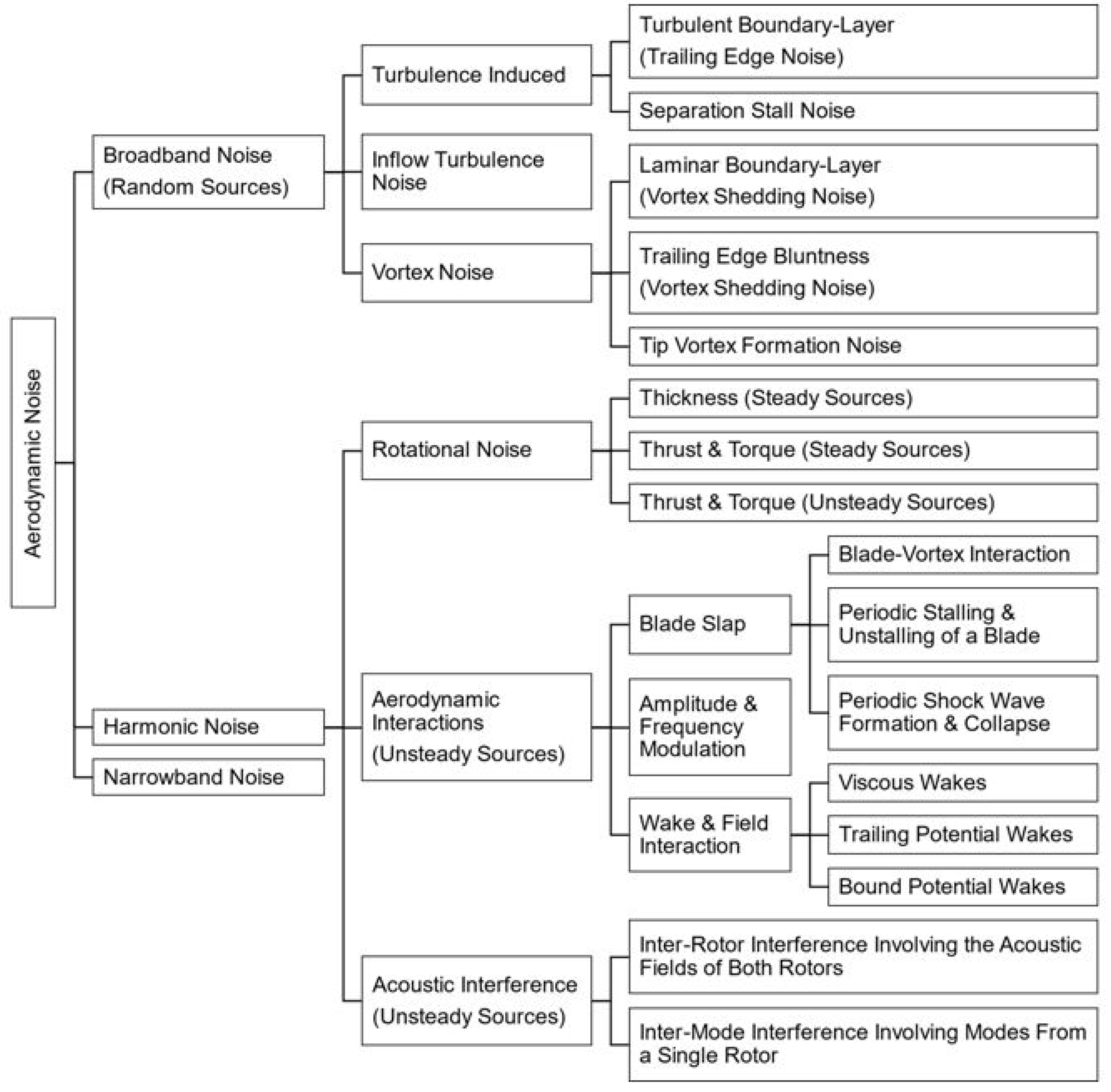
Figure 1 shows aerodynamic noise sources. Small propellers are operated at lower Reynolds number regimes (10
4 - 10
5) and by decreasing the Reynolds number in this range, the lift decreases, whereas the drag increases. Propellers only have a few aerodynamic noise sources due to their size and Reynolds number regimes. A single propeller blade's noise mechanisms contribute to two main classes: broadband noise and harmonic noise. Harmonic noise includes thickness noise, loading noise, and blade-vortex interactions. Thickness noise is caused by the fluid being displaced around the blade as it turns and being directed towards the propeller plane. Loading noise is generated predominantly above and below the propeller plane due to the surface's steady and unsteady pressure loads. When the Mach number is less than one, the loading noise outweighs the harmonic noise. However, blade-vortex interaction (BVI) noise is heard when the previously generated tip vortices and entrance blade collision. Broadband noise contains inflow turbulence and vortex noise. Inflow turbulence is present in broadband noise, and vortex noise is produced by the interaction of the flow with various components of the blade, such as the leading edge, trailing edge, blade-tip, or turbulent flow in the wake.
There have been various noise reduction approaches to changing the design of the propeller blade, but these techniques must have no profound impact on aerodynamic performance and vehicle flight dynamics. Propeller noise studies, especially for larger vehicles like helicopters, focus on harmonic and impulsive noise sources. However, isolated small-scale propellers suffer from a different type of noise [
3]. Tonal noise in the low to mid-frequency region dominates isolated small-scale propellers, as it does full-scale propellers [
4]. Broadband noise is substantial for small propellers at higher frequencies [
5], [
6]. In recent years, some experimental and numerical research has been done to understand and improve the aerodynamic performance and aeroacoustic signatures of small propellers in different flight modes and conditions, such as hover flight, forward flight, and flight in harsh environments. Also, the effect of inflow disturbance and unsteady loading has been studied in some cases. Hovering quadrotors' noise signatures can be considerably decreased by replacing them with customized propellers. Zawodny and Boyd [
7] studied hover acoustic measurements of isolated small propeller-airframe interactions. According to the analysis, under certain propeller tip clearance circumstances, the presence of the airframe surfaces might cause noise levels similar to or larger than the propeller blade surfaces. Thai and Grace [
8] predicted thickness and loading noise directivity patterns for a small propeller in hover using CREATETM-AV Helios combined with the Ffowcs Williams-Hawkings solver. Whelchel, Alexander, and Intaratep [
9] experimentally investigated the noise and thrust produced by four small propellers operating at takeoff conditions and propeller-airframe interaction and compared them with a DJI Matrice 600 Pro propeller. Carroll
et al. [
10] showed that small propellers could be produced rapidly for specific mission requirements. To produce geometries that meet user-specified performance requirements, a hybrid optimization technique is used with an aerodynamic performance algorithm. The model was validated experimentally using a propeller test stand capable of measuring both axial and non-axial performance. Brandt and Selig [
11] tested 79 small propellers fitted in the 9- to 11-in diameter that operate in the low Reynolds number range of 50,000 to 100,000 to quantify propeller efficiency. Propeller efficiencies range from a high of 0.65 (for an efficient propeller) to a low of 0.28 (for an efficient propeller). According to the findings, appropriate propeller selection for UAVs can have a significant impact on aircraft performance. Wisniewski
et al. [
12] analyzed thrust, sound pressure level (SPL), and RPM data from a DJI standard propeller and three custom-designed propellers at 1.4 lbf thrust. McKay and Kingan [
13] observed that the minor variations in the small propeller's RPM produced unsteady loading and thickness noise, and after that, blade passing frequency tones started showing up. Zawodny and Haskin [
14] performed a subsequent detailed experimental investigation which showed how the relative importance of thickness and loading noise changed with observer position and how interference between the two noise sources could be important at specific locations. Casalino
et al. [
15] demonstrated the experimental and computational challenges of the benchmark configuration for small propeller aeroacoustics in the presence and absence of inflow, as well as the importance of fundamental research problems in transition and other low Reynolds number phenomena. Andria
et al. [
16] presented a way to improve small propeller performance. The modeling of the propeller's blades and hub, followed by simulation to estimate thrust, was the first step in this procedure. Finally, the thrust produced by different propellers was compared to better understand the changes that may be made. The aeroacoustic fingerprints of two small propellers were studied experimentally by Sinibaldi and Marino [
17]. They observed that the improved propeller produces significantly less noise than the standard propeller at lower thrust settings.
Active and passive flow control techniques can be utilized to increase propeller performance and minimize noise. Active flow control methods are unviable for small propellers. On the other hand, passive flow control approaches manipulate the boundary layer without using any extra energy. They have been found to minimize noise production and are the focus of many studies. Leading and trailing edge patterns, porous materials, morphing, surface treatment, and dimples are the most common passive control approaches used to reduce noise generation. Because flying animals have evolved over millions of years to create efficient, high-performance wings, nature is an excellent source for passive flow control approaches for designing bioinspired wings. Yang, Wang,
et al. [
18] adopted an owl wing-inspired trailing-edge serrations for noise reduction of a small propeller and compared its aerodynamic and acoustic performance with a baseline propeller in the forward flight condition. Cambray
et al. [
19] investigated the noise production process from small propellers as well as the influence of trailing-edge serrations on noise reduction in their tests. Ning, Wlezien, and Hu [
20] studied the noise attenuation capability of three distinct bio-inspired saw-tooth serrations applied to the baseline propeller to assess the serration's noise attenuation potential on a small propeller. To achieve maximal noise reduction while preserving aerodynamic power, Xiong, Nguyen, and Cramer [
21] optimized an anti-phase alternating trailing-edge pattern for propeller noise suppression. Yang, Liu, Hu,
et al. [
22] presented a small wavy propeller and compared its aerodynamic and acoustic performance with a baseline propeller. Hintz
et al. [
23] presented experimental research findings to determine the influence of a bio-inspired blade planform on small-scale propeller thrust and energy consumption. Ning and Hu [
24] examined a small propeller's aerodynamic and aeroacoustic properties with a novel planform shape inspired by the maple seed by comparing it to a typical baseline propeller in hover flight. They showed that the bioinspired propeller could provide equivalent thrust with constant power input while emitting less noise.
The goal of this research is to create a small bioinspired propeller that has the same power input as a conventional propeller and can achieve the same or better aerodynamic performance while reducing noise. Nature appears to have done an incredible job of designing insects' wings that are both practical and capable of sustained flight. Insects have different species, fly slower than birds, and operate at low Reynolds number flows. They take advantage of vortex patterns to provide the additional lift they require to fly [
25]. Several studies have connected flow separation and vortex generation to insect flight's high lift aerodynamics [
26]. The tip vortex adds significantly to the lift generated by a flat plate with an aspect ratio and motion amplitudes equal to those seen in nature, according to experimental studies [
27]. Ning and Hu [
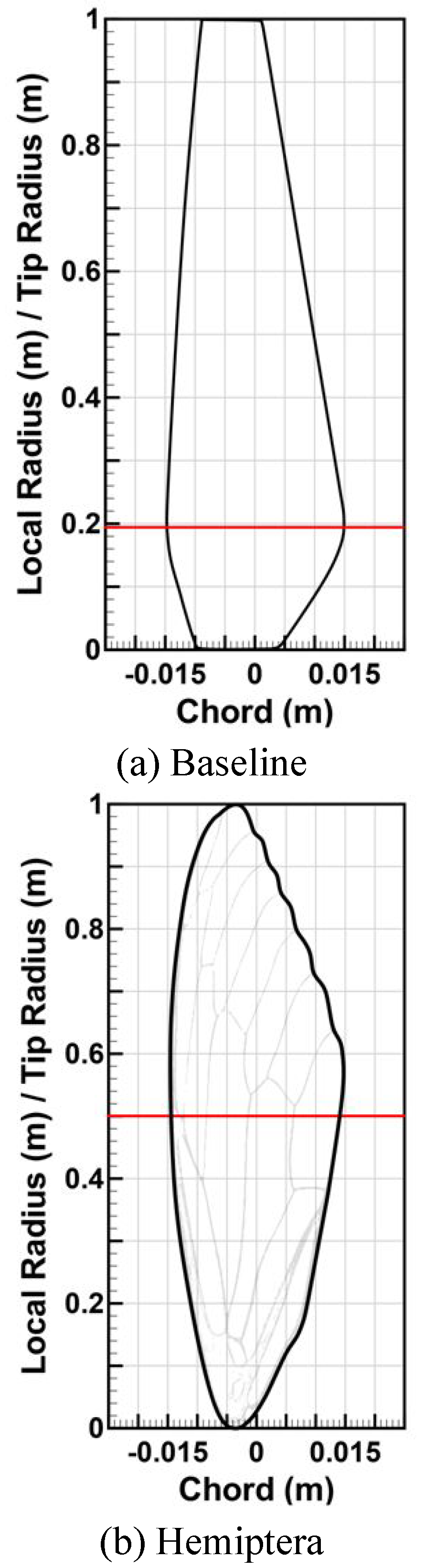
24] showed that the majority of the thrust for a rotary-wing is known to be created between 50% and 90% of the propeller radius, and at Reynolds numbers ranging from 10,000 to 100,000, the lift to drag ratio dramatically increases as the Reynolds number increases. As shown in
Figure 2, the Hemiptera (Cicada) wings’ planform appears to be more compatible with the lift distribution, where the longest chord length is in the high lift area. As a result, if this planform configuration is used in the design, the propeller will operate at a better lift to drag ratio. Accordingly, an experimental test is mainly used to study a small propeller's aerodynamic and aeroacoustic performance with a unique planform shape inspired by Hemiptera (Cicada) wings. For the current investigation's comparison study, a typical tapered small-scale propeller was used as the baseline propeller.
The paper is organized as follows. The general phenomenon, the problem, cause of the problem, studies and solutions presented by other authors, article objective, and solution have been shown in the introduction section. The two following sections deal with the methodologies used to analyze the aerodynamic and aeroacoustic properties of the propellers, as well as the experimental and numerical setup. Then, the third section reports and discusses the results. Eventually, Section four summarizes the investigation conclusions and describes future work and improvements.
2. Experimental Setup
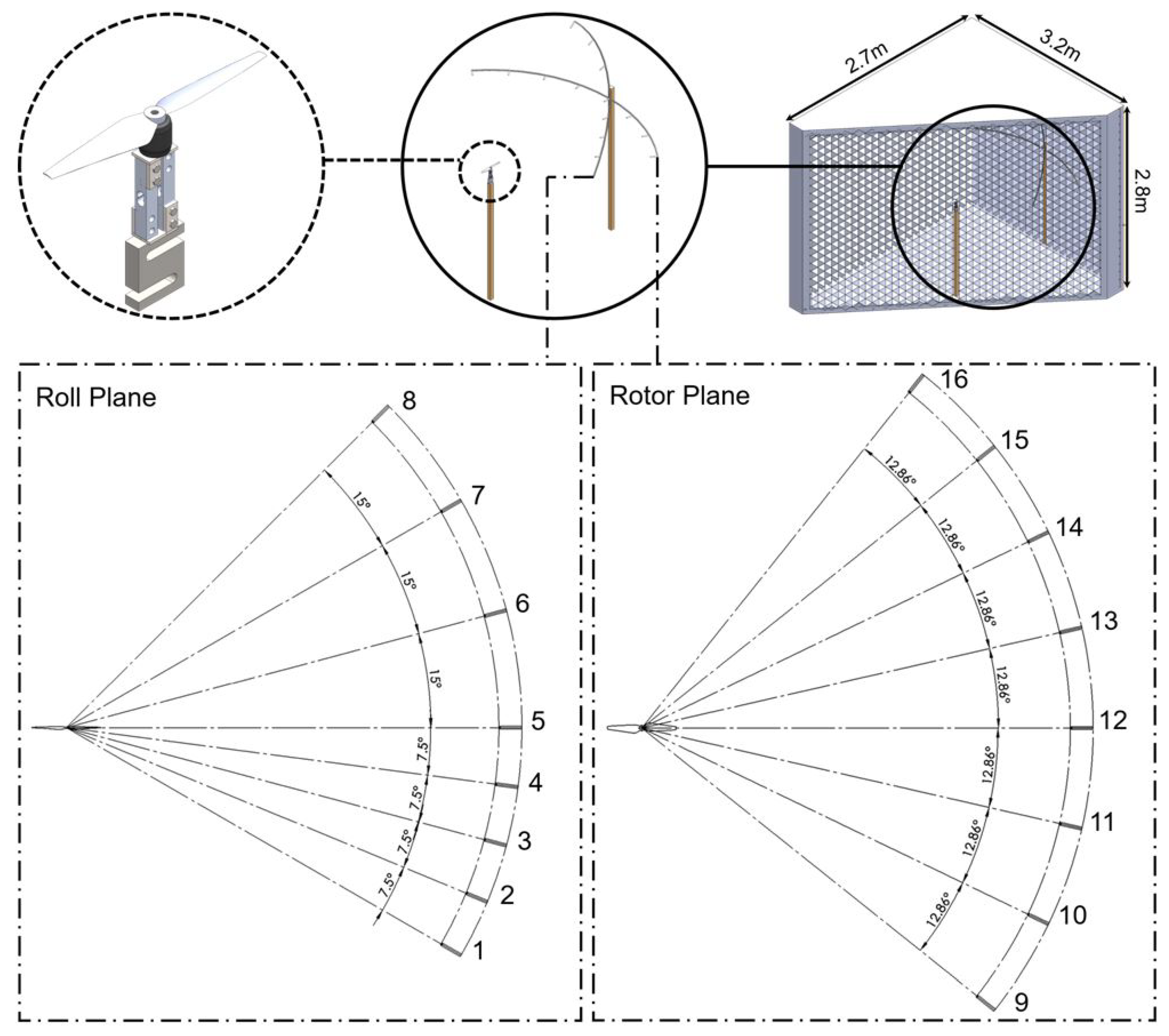
The experiments were performed in the Experimental Aerodynamics and Aeroacoustics Research Laboratory's fully anechoic chamber at the University of Tehran. A schematic of the facility is sketched out in
Figure 3. The inner dimensions of the anechoic chamber from wedge tip to wedge tip are 3m long, 2.5m wide, and 2.56m tall with a low-frequency cut-off of 100 Hz. To reduce noise contamination, the propeller noise and loadings at the hover flight condition were measured using an external PC and DAQ.
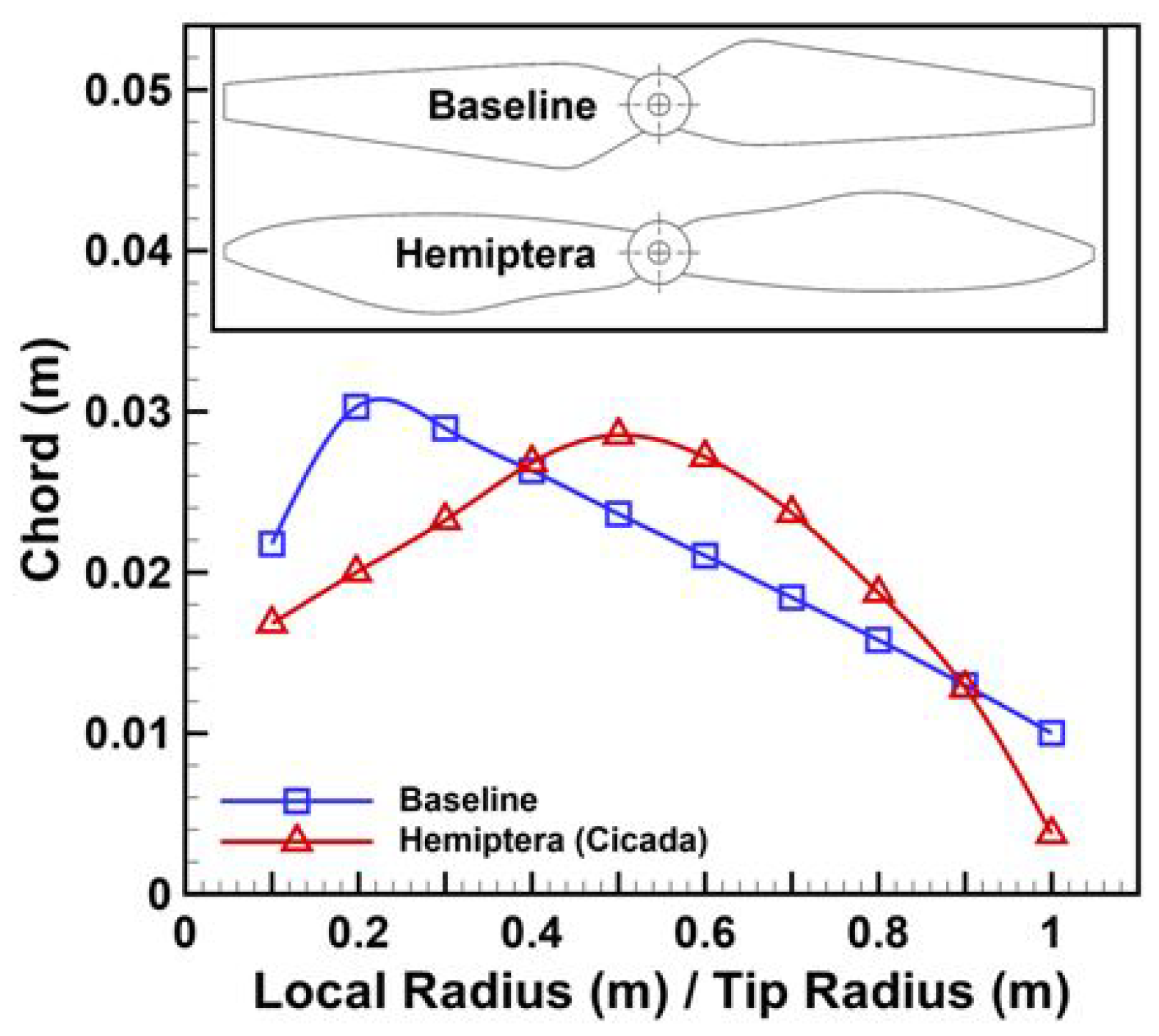
Our experimental analysis compares the aeroacoustic features of two propellers with different planforms. We call the first one the baseline propeller and the bioinspired one the Hemiptera propeller. The shape of the baseline propeller is derived from a two-bladed 9450 model for the DJI Phantom II that has a 9.4" diameter and a pitch of 5.0", which is a small-scale commercial drone propeller used for video shooting and entertainment. The Hemiptera propeller's shape is inspired by a type of insect with about 50 to 80 thousand species, including cicadas. Their flying abilities are well developed for short distances and sporadically.
Based on Ning and Hu [
24], the chord length from the largest chord on the planform to the propeller's tip decreased linearly. It was calculated by
Cr =
Ctip /
r, where
Cr is the chord length at the corresponding radius location, and
r represents a non-dimensional radial distance. The blade twisted 17.7 degrees at the largest chord on the planform to 4.7 degrees at the propeller's tip. Like Ning and Hu [
24], due to a strength worry, we reshaped every single profile with a doubled thickness E63 airfoil based on the camber line and rescaled the diameter to 24cm fixed for both propellers, and our developed propellers achieved 0.12 solidity like other ordinary small propellers. The schematic and geometric details of both propellers are shown in
Figure 4. The propellers with a 0.1mm airfoil trailing edge thickness were manufactured using the Umbreil3d 3D printer with a 100µm resolution and a density of 20%, and were made by PLA material.
The experimental setup is shown in
Figure 3, which measures the thrust, torque, RPM, and sound pressure level. The testing equipment was positioned on a lab stand 6.25D above the surface such that the thrust was directed toward the chamber floor. The reflected noise from the floor was minimized by acoustic foam. When the propeller is in hover mode, the entire rig experiences nearly no vibration. For the measurement of the propeller thrust and torque, driven by an AIR 2213 electric brushless Tiger Motor with 920 KV, a three-component balance (a 30kg force capacity AmCells S-type and two 5kg force capacity YZC-133 loadcell) produced by the Experimental Aerodynamics and Aeroacoustics Research Group was located directly below the motor. An Agilent E3621A DC power supply provided power to the motor set at a constant 11.1 V for all tests. The propeller rotational speed was regulated using a T-Motor 20A AIR electronic speed controller, which received time pulse signals from an Arduino Uno and measured using a LUTRON DT-2268 tachometer. The T9545 propeller was tested to validate the aerodynamic facility's accuracy, and the results were compared to its datasheet, which showed the error was about 0.8%.
The microphone array is shown in
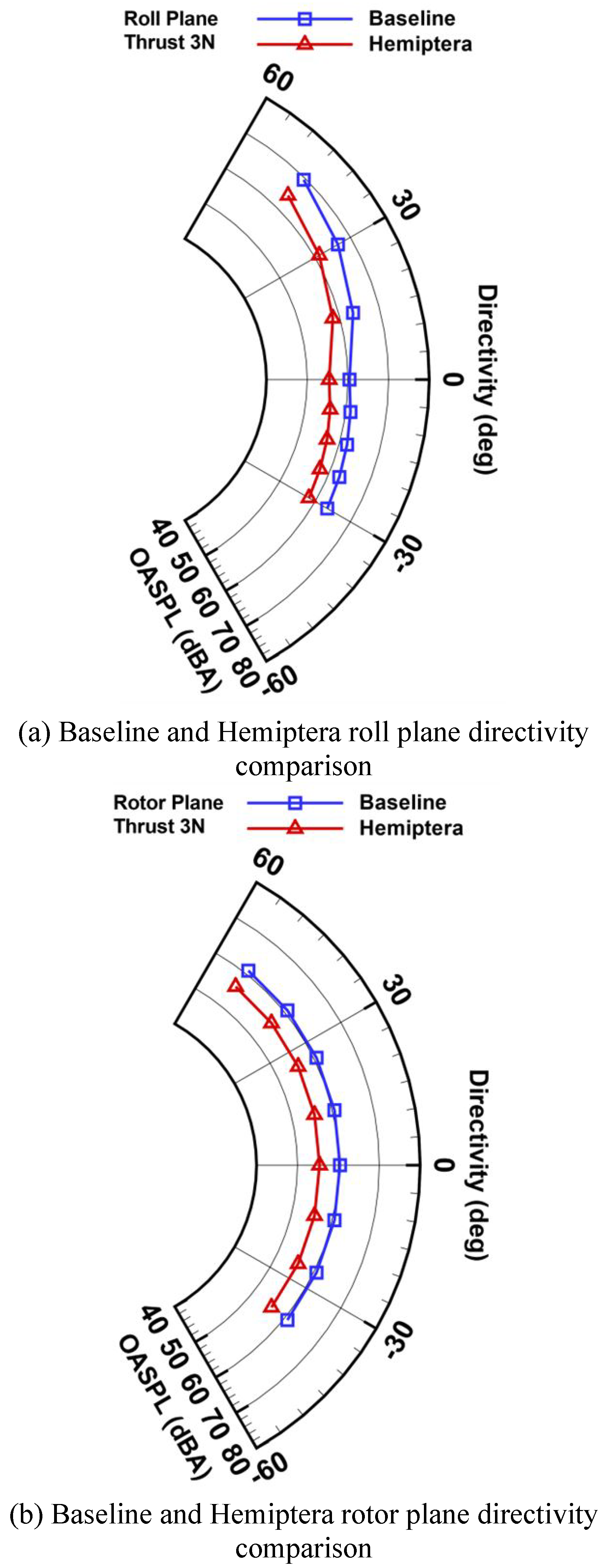
Figure 3. All acoustic measurements were made using fifteen 1/2 inch free-field Bruel & Kjaer microphones type 4190 microphones. The microphones were configured on two crossed C-shaped arrays at a 6.25D radial distance from the center of the propeller and were positioned every 15
° between 0
° and 45
° and every 7.5
° between 0
° and −30
° on the roll-plane C-shape array configuration and every 13
° on the propeller plane from the common microphone. The goal of this microphone array is to demonstrate noise reduction directivity and provide more accurate results than a single microphone. Wind-screens covered the microphones, and the frame was lined with absorbing material to reduce reflections. They were individually calibrated using a B&K Type 4231 sound calibrator. The calibrator showed ±0.2 dB calibration accuracy. The microphone's measurement uncertainty was ±1 dB up to 20 kHz. Noise measurements were performed on all microphones, but only results for microphone number five are reported for the sake of compactness. While acoustic pressure was recorded for 15 seconds at a sampling rate of 48 kHz, only the last 5 seconds of data was used to calculate the acoustic spectra. This time range was selected to consider only the steady-state noise. The thrust, torque, and rotation rates were recorded synchronously with the acoustic data. The balance data was collected for 5 seconds at a sampling rate of 2000 Hz. The thrust, torque, RPM, and microphone data were recorded using a LAN-XI DAQ data acquisition system and collected by an in-house developed data acquisition and control. For each Fourier transform, the recorded acoustic data was divided into time blocks of 1024 samples. Hanning windows were used, with a 50 percent overlap.
While investigating the impacts of propeller operation conditions and varied geometric parameters on aerodynamic loads and noise emissions, each propeller was operated at eleven rotational speeds ranging from 3000 rpm to 8000 rpm in 500 rpm increments. This rotation rate represents the typical RPM for small drones. Also, the freestream velocity was 0 m/s because the propeller was operated at a simulated hover condition. Representative values of local chord-based Reynolds and Mach numbers are displayed in
Table 1.
Before testing in place, the load cells were calibrated by applying known weights to provide steady thrust and torque loads along the axis of each load cell, which covers the range of propeller loadings, and the calibration was verified before each set of tests. The thrust and torque measurement uncertainties were obtained at about 0.29% and 0.15% of the full range. The repeatability of 20 measurements on the baseline model at 3000, 5500, and 8000 RPM was used to calculate the uncertainty of the microphone data. The uncertainties for the total noise's overall A-weighted sound pressure level (OASPL) were obtained at about 0.1 dB and 0.9 dB, respectively. The rotational speed uncertainty is 5 RPM, which can be ignored.
3. Flow Field Measurement
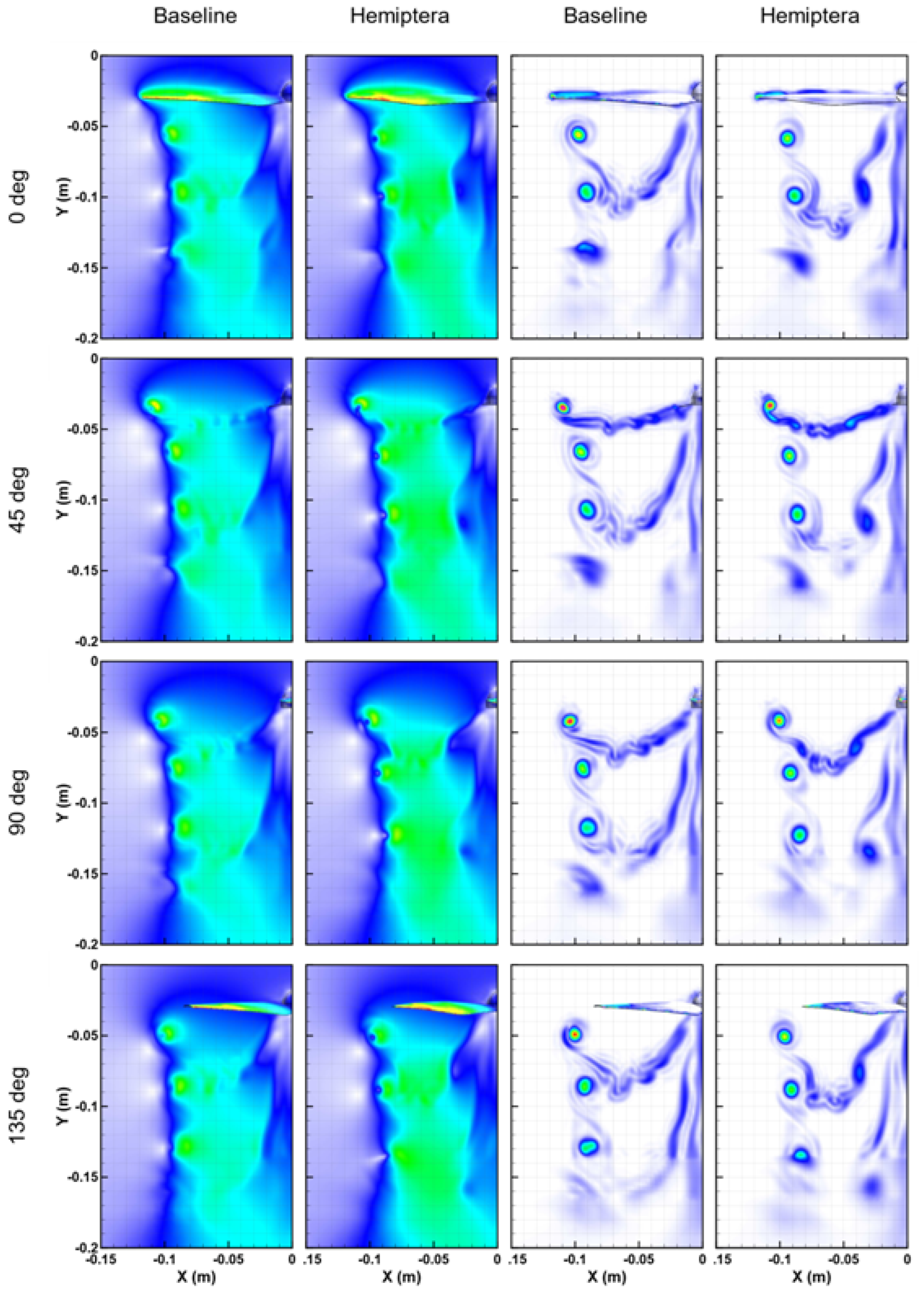
To better understand the complex unsteady flow fields, including velocity, vorticity, and noise reduction mechanisms of the bioinspired propeller concept, a 3D numerical simulation was performed based on a Lattice-Boltzmann method (LBM). The LBM defines fluid as a collection of separate, tiny, independent particles that can only exchange momentum when two particles collide. LBM's main idea is to statistically track these particles' advection and collisions using an integer number of distribution functions aligned with predetermined discrete directions. The Boltzmann transport equation is shown in Equation (1).
where fi is the distribution function in the direction i, b is the number of velocity directions, r is the position on the lattice, ei is the velocity in the i direction (m/s), t is the discrete-time (s), and Ωi is the collision operator.
The simulation focused on two rigid, fixed-pitch, two-bladed propellers operated at a rotation rate of 8000 RPM. The range of Reynolds numbers for baseline and Hemiptera propellers at different radial positions based on each section's chord length and linear velocity are shown in
Table 1. The density and dynamic viscosity are selected as
ρ = 1.225
Kg ∙
m−3 and
μ = 1.789 × 10
−5 Pa.
s. For the rotation rate of 8000 RPM, each simulation was run for 0.15 seconds (20 revolutions) with a two degrees azimuth time step, and the results were sampled for the last 0.075 seconds (10 revolutions). The simulation was performed in a rectangular domain that was 3.1m long, 3.1m wide, and 2.2m high. The fluid domain contains the propeller blades as solid boundary conditions and lateral walls, inlet, and outlet as far-field boundary conditions. At the boundaries of the propeller blades, an adiabatic wall with a non-slip boundary condition was utilized, whereas the lateral walls had a free slip boundary condition. The top and bottom boundary conditions were adjusted to have a velocity inlet of 0 m/s (hover condition) and a pressure outlet of zero-gauge pressure (atmospheric conditions). The LES-WALE turbulence model was used. A grid independence study was performed using the baseline propeller to ensure that the mesh refinement did not affect the results, as shown in
Table 2. The convergence criterion was based on the thrust, averaged for the last 0.075 s of the simulation. As a determination of the data's reliability, the thrust was compared with the measured experimental data. The Fine grid was chosen for the simulations that followed. As the data shows, there is good agreement between the experimental and simulation thrust of the propeller, and the error relative to the experimental thrust is only 2.3%. The far-field scale is 0.0256 m in all cases. The resulting mesh size was about 4.3 million volume elements. All computations were performed on the Experimental Aerodynamics and Aeroacoustics Research Lab's computer at the Faculty of New Science and Technologies - the University of Tehran. It takes about two days to 20 revolutions on eight cores for each isolated propeller simulation.
5. Conclusions
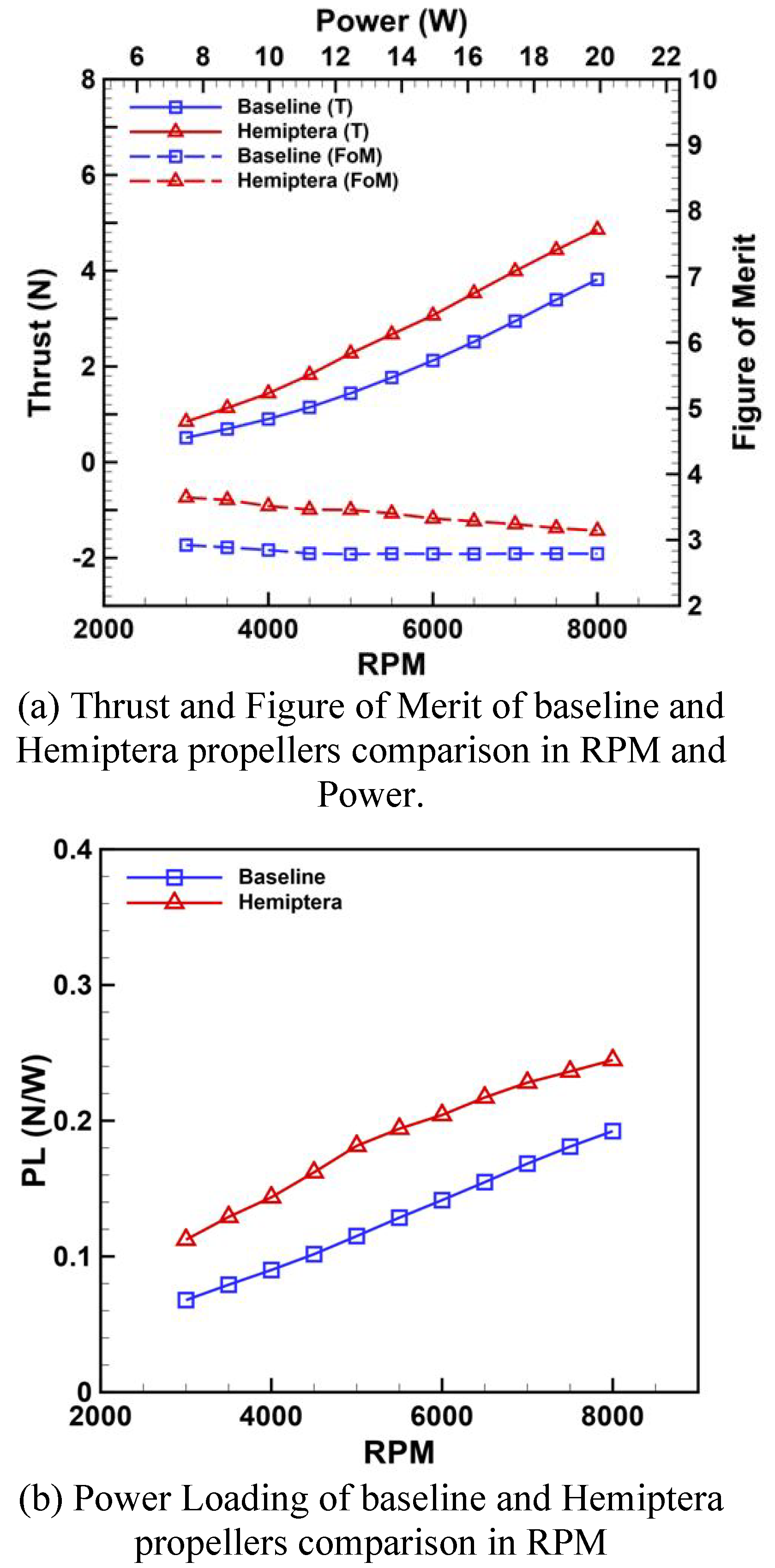
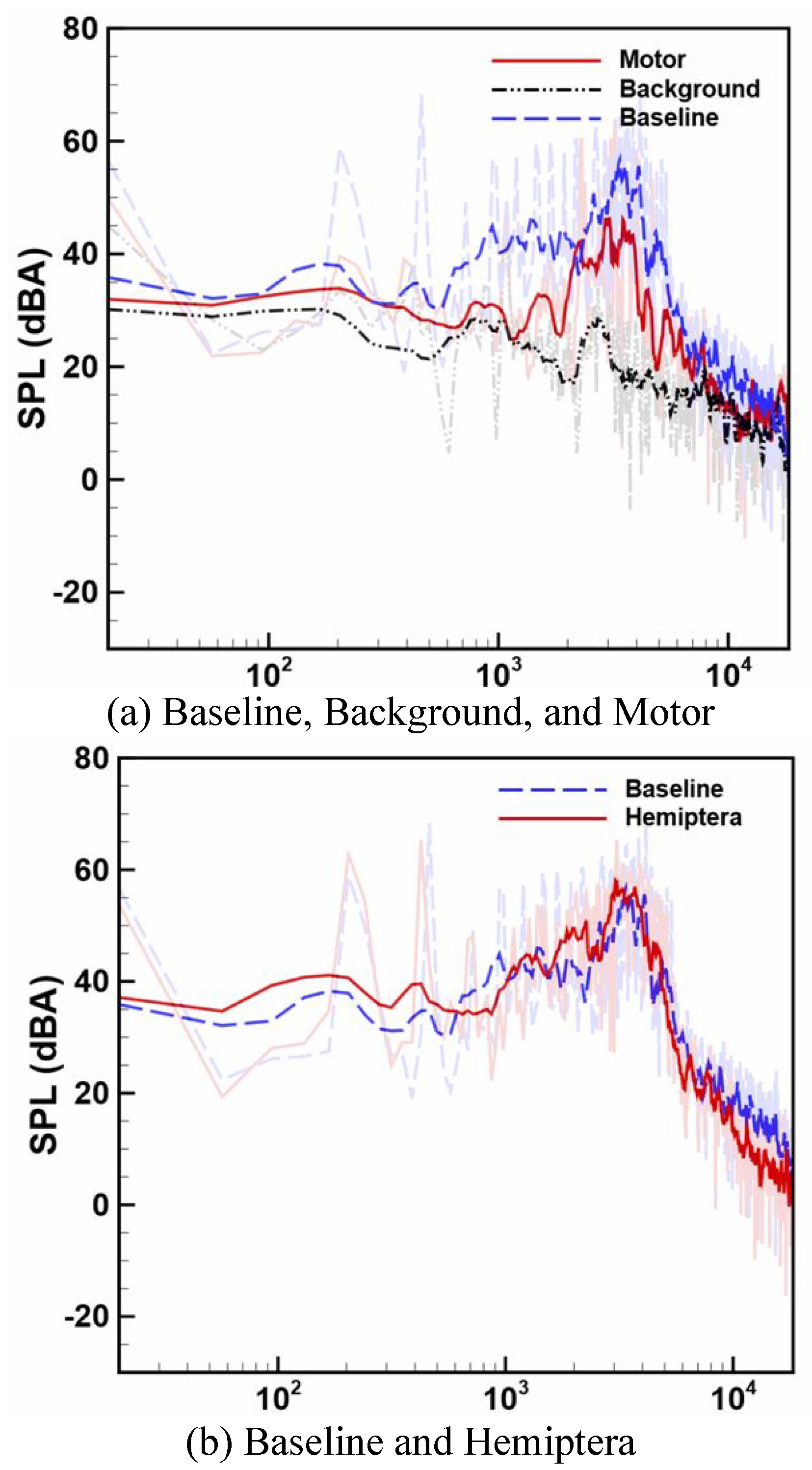
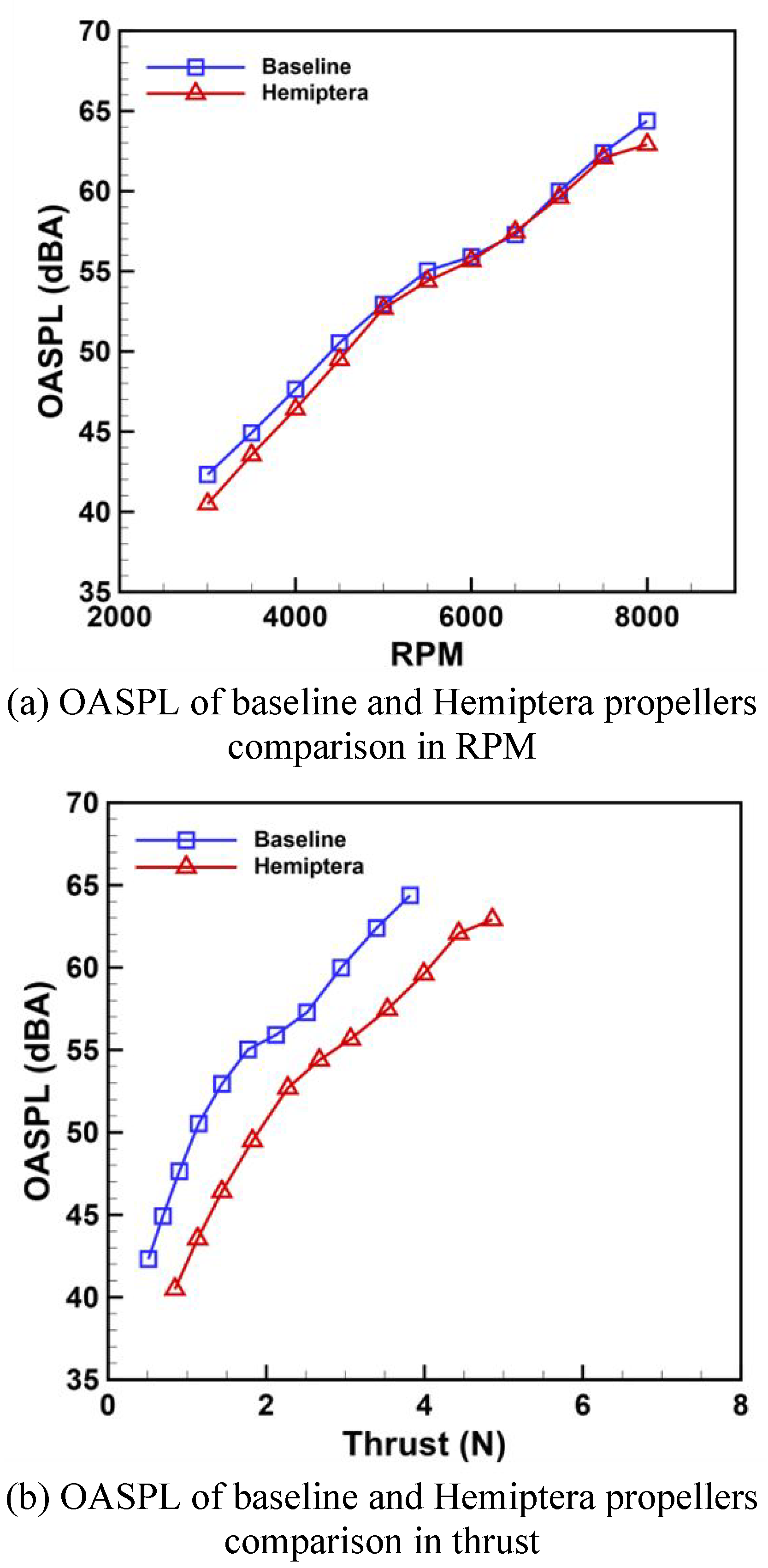
An experimental investigated the impacts of operation conditions and varied geometric parameters on a small propeller's aerodynamic and aeroacoustic performance with a unique planform shape inspired by Hemiptera wings. Each propeller was operated at eleven rotational speeds ranging from 3000 to 8000 RPM with no freestream velocity for simulating hover conditions. Finally, using force and sound, a comparative experimental investigation into the aerodynamics and aeroacoustics characteristics of the baseline and bioinspired propellers was undertaken in an anechoic chamber. When compared to the baseline propeller, the Hemiptera propeller produced greater thrust for the same power source, reduced harmonic and broadband noise, and offered a better noise level. This noise reduction might be attributed to a decrease in Hemiptera propeller force fluctuation. Furthermore, its rotational speed was lower and its figure of merit was higher than the baseline propeller at hover flying with 3N thrust. Moreover, at this force, the Hemiptera propeller shows a 2.8W power reduction and a 5 dB decrease in acoustic signature. When it came to hover efficiency, the Hemiptera propeller outperformed the baseline propeller across the board, regardless of thrust.
Future investigations will focus on some improvements. XFoil should be utilized to guarantee that the best airfoil is chosen for each blade segment. Because noise generation is affected by blade quality vibrations, a high-resolution (25µm) 3D printed using a rigid material such as ABS plastic might offer accurate manufacturing precision. To increase structural stiffness, the airfoil section from r/R = 0.2 should be smoothly integrated into the hub. To ensure reliable printing output, the trailing edge airfoil utilized along the propeller span (E63) should be thickened to 0.8 mm. The propeller should be connected from the top to a profiled aluminum testing rig for the least amount of interference. To decrease motor and test stand vibrations, a neoprene dampening material should be put directly beneath the load cell. The sampling rate may be increased to 80 kHz. The recording time may be increased by up to 20 seconds, and the data from the first 10 seconds could be utilized to compute acoustic spectra. It is necessary to investigate the effects of recirculation within the anechoic chamber. To get a frequency resolution of around 5 Hz, the number of FFT samples might be increased.
This study did not assess the influence of the existence of adjacent propellers and forward flight, which makes them a great target for future investigations. Furthermore, Smoke visualization, hotwire mapping, and PIV might be used to describe the downwash flow of a propeller, among other methods.