Introduction
Solar energy applications encompass a very wide variety of technologies such as solar photovoltaic, solar thermal for heat augmentation as well as concentrated solar power utilizing the thermal heat of the sun to produce electricity. In the solar thermal energy applications, heat transfer fluids are used to capture the Sun’s heat in them and transfer it to some other usable form [
1]. In order to develop such heat transfer fluids, their thermal characterization and evaluation is necessary so as to understand their heat transfer behavior in actual use [
2]. A common methodology is to determine the thermal conductivity of the heat transfer fluids which however, suffers from several drawbacks especially when the fluid in question is to be used at high temperatures [
3]. In particular cases when the fluid is required to be used at high temperatures of about 400°C, convective heat transfer phenomenon dominates in practical situation [
4].
Heat transfer phenomenon of convection occurs when two streams of fluids, separated by a surface, are at two different temperatures and are moving with respect to the surface. While, convective heat transfer can be studied experimentally, it is generally expressed as a function of the fluid properties, heat exchanger design at a particular temperature and the velocity. Though, convective heat transfer situations are often complex, making it difficult to provide simple analytical solutions, for convenience, most researchers and literatures assume that this heat transfer follows Newton Law expressed below:
Thus, for a given fluid flow inside a heat exchanger, the convective heat transfer coefficient may be calculated if the physical properties of the fluid, the area and surface characteristic as well as fluid temperature can be measured. However, in most engineering situations, while it is possible to measure the fluid temperature by some means and known instrumentation techniques, it is often very difficult to measure the surface temperatures, especially when the fluid moves inside a confined geometry of a heat exchanger. Even when it is possible to measure the surface temperature, it often varies from one point to another and is affected by the presence of the temperature sensors. Thus, instead of measuring the surface temperatures, researchers often resort to techniques that enable them to utilize the measured fluid inlet and outlet temperatures [
5].
Researchers have been trying to research fluids that can operate at increasing temperatures and at the same time improve the heat transfer ability, relative to existing fluids. While the operating temperature of the fluid can be easily measured in the lab, its heat transfer ability is generally measured either in terms of thermal conductivity or, more realistically, based on its convective heat transfer coefficient. The Wilson plot technique, which has been used by large number of researchers, is a very effective method for evaluating the convection ability of heat transfer fluids, especially when used in Shell-and-Tube type heat exchangers. The Wilson plot Method assumes that if the mass flow of one of the fluid exchanging heat is varied, then the change in total thermal resistance is a result of the change in the convective heat transfer coefficient of that fluid while the change in the thermal resistance of the other fluid as well as the thermal resistance of the tube wall can be taken as constant [
6].
Wilson Plot Method and Its Modifications
In applying the Wilson plot method, the following factors are generally assumed:
The thermal resistance of one of the heat exchanging fluids remains constant
The mass flow and thus the velocity of the other fluid is varied, keeping the flow in the turbulent regime
The heat transfer surface is smooth on both sides
For the sake of calculations, the thermal resistance due to fluid fouling is neglected
The value of the exponent of the velocity of the fluid, whose mass flow rate is varied, is based on a Nusselt number correlation such as Equation 2.
A number of researchers have proposed variations and modifications of the Wilson Plot method, extending its use to various additional applications [
7,
8]. Some of these modifications were made to address certain unavoidable issues which are manifested during particular convective heat transfer processes, such as those in a forced laminar flow region, phase change of the fluid during the process, etc [
9]. Wilson in his original work assumed the velocity exponent value to be 0.8. Modifying Wilson’s original method, several researchers proposed using the exponent of the Reynolds Number in the well-known correlation of convective heat transfer in a flow inside tubes:
For the particular case of Shell-and-Tube type heat exchangers, the original Wilson Plot method [
10] has been utilized by researchers in determining the convective heat transfer coefficient of heat transfer fluids. Neglecting the fluid fouling effect for the sake of analysis, the Wilson plot method involves categorizing the total thermal resistance across the heat exchanger into internal thermal resistance, external thermal resistance and all other thermal resistances taking part in the heat transfer process as shown below:
Equation 3 is often expressed as,
During experimentation, heat transfer problems are addressed by stabilizing the temperatures at which the heat exchange takes place, i.e. when steady state is achieved [
11]. Once the steady state is achieved, it is assumed as well as observed, that the heat given by the warmer fluid is taken by the colder fluid, thus satisfying the following Equation 5:
where;
Thus, for the case of Shell-and-Tube type heat exchanger, the Wilson plot Method assumes that if the mass flow of one of the fluid exchanging heat is varied, then the change in total thermal resistance is a result of the change in the convective heat transfer coefficient of that fluid. On the other hand, the thermal resistance of the other fluid, as well as the thermal resistance of the tube wall, are assumed to remain unchanged [
12]. Thus, in light of this method, Equation3can be rewritten as,
where, C
2 = Constant = R
w + R
o.
Wilson’s method also assumes that for a fully developed turbulent flow inside a circular tube, the convection coefficient is proportional to the power of the reduced velocity of the fluid flowing inside the tube, thus taking care of the gross property variation of the fluid with temperatures [
13]. Thus, variation of the convective heat transfer inside the tube with reducing velocity can be expressed as:
and
where C
2 is constant defined in Equation 8 and C
1 is constant which is determined by the bulk properties of the fluid flowing inside the tube. Equation 10 represents a straight line having the constant C
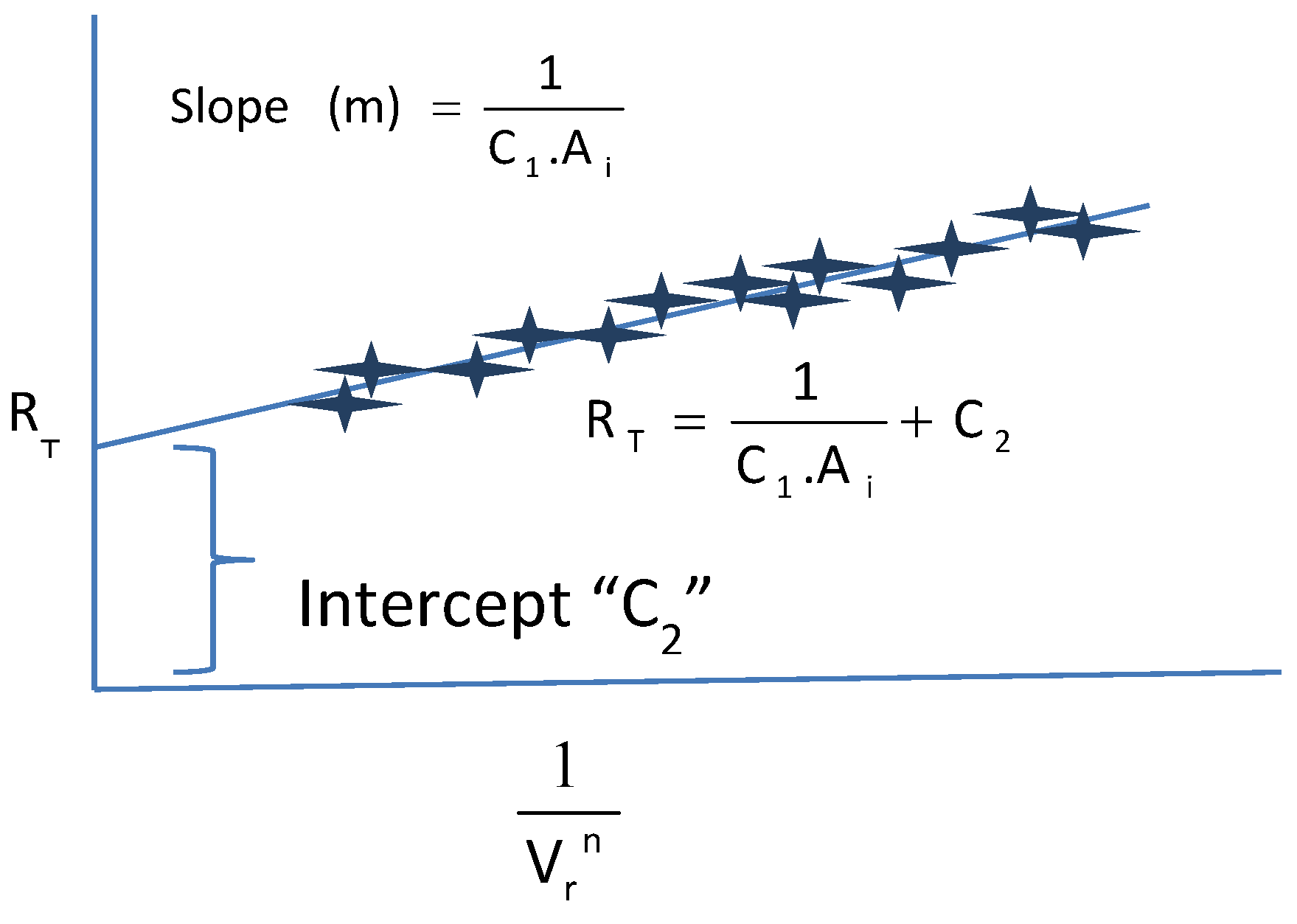
2 as the intercept and 1/(C
1.Ai) as the slope.
Now, RT can be obtained by measuring the inlet and outlet bulk fluid temperatures and the mass flow rates of the two heat exchanging fluids flowing inside and outside of the tubes of the heat exchanger. The inlet and outlet temperatures of the two fluids can be used to calculate the log mean temperature difference. RT can then be calculated by substituting the LMTD calculated using Equation 7 in Equation 6.
During experimentation, the mass flow rate of the hot oil inside the tube is varied from 1500 kg/hr to 1800 kg/hr. A Wilson Plot is obtained by calculating R
T from the mass flow rate and temperature measurements, using Equation 6, while varying the flow velocity inside the tube. Assuming a value of the exponent “n” in Equation 9 – based on previous studies, analysis or experiments – R
T can be plotted as a function of 1/V
nr. The plotted experimental data should fall near a straight line, whose slope and intercept can be obtained using regression analysis, as shown in
Figure 1. The values of the two constants “C
1” and “C
2” can now be obtained from the plot, and the internal and external heat transfer coefficients can be calculated.
Based on the work carried out by past researchers, it has been observed that the exponents of the Reynolds Number and Prandtl Number in Equation 2 varies as a function of the Prandtl Number. If the Prandtl Number is smaller than 1, the values of the exponents of the Reynolds Number and Prandtl Number are relatively close to each other. As the Prandtl Number increases, its exponent isreduced, while the value of the exponent of the Reynolds Number increases [
14]. To accommodate for these variations and increase the prediction’s accuracy in the transition region, Gnielinski modified the Petukhov correlation [
15,
16] in the following form:
Applicable for: “2300 ≤ Re ≤ 106 and 0.5 ≤ Pr ≤ 200”
f = Darcy’s Friction Coefficient obtained from the Blasius Correlation applicable for turbulent flow in smooth pipes
Taking Gnielinski’s equation as the most appropriate correlation for Tube-and-Shell type heat exchangers, the relevant general form of the Nusselt number correlation can be written as [
14]:
where d
i is tube inner diameter and L
w is length of the tube
Analysis
The following steps are conducted to obtain the overall resistance, RT:
- (a)
The LMTD, defined in Equation 7, is calculated using the inlet and outlet temperatures of the hot & cold fluids.
- (b)
The mass flow rate of the water is noted from the flow meter
- (c)
The specific heat of water at given temperature is taken from standard data books [
22].
- (d)
The temperature differential of the water stream is calculated by subtracting the value of outlet temperature of water from its inlet temperature.
Using the data obtained in the above steps, at specific operating conditions, the value of RT can be calculated at these conditions using Equation 6.
Then, the value of d
i and L
w of the present experimental setup are introduced to Equation 12, and itis used for calculating Nu and hi for each of the operating conditions where RT had been obtained.
where, T
m.o is the mean oil temperature expressed as a function of oil properties. Equation 13 assumes that the gross heat transport properties of the oil can be expressed as a function of the mean fluid temperature and fluid velocity and the exponent value of velocity is assumed to be0.8, based on the past literatures [
14].
1/V
nr values for the Wilson plot are obtained from the experiments, where the oil’s mass flow rate was varied from 1500 to 1800 kg/hr. After plotting the values of R
T vs 1/V
nr and using a linear curve fitting method, the straight line expression in the form of Equation 10 is obtained for each set of temperatures of the oil flowing inside the tube, while the water flow rate and temperature in the Shell are kept constant.
Table 1 shows the values of intercept “C
2” and slope “1/C
1Ai”, shown schematically in
Figure 1, at each mean temperatures of the oil.
An expression for ho can be derived by combining Equation 3, Equation 4 and Equation 8, and as below:
Taking the value of the thermal conductivity of steel kw from the standard data book and substituting in Equation 4, Rw is calculated. Further, the value of intercept C2 obtained graphically and the value of Rw is substituted in Equation 14 to obtain the value of ho, the convective heat transfer coefficient of steam flowing in the shell side.
The overall heat transfer coefficient can be calculated from Equation 15:
The slope of the line obtained using Wilson plot is inversely proportional to the constant C1inline with Equation 16.
From Equation 12 and Equation 13, an expression for determination of hi can be derived so as to obtain Equation 17. The convective heat transfer coefficient of the oil flowing on the tube side can be calculated by substituting the value of “C1” into the Equation 17:
An examination of Equation 13 and Equation 17 shows that C1 represents the bulk heat transport properties of the oil at the mean oil temperatures for a given geometry of the heat exchanger. Ideally C1 should be equal to the numerical value of 1.054 times mean oil temperature as taken in Equation 13. However, during the fluid flow inside the tube, there are several other heat transport properties as well as few experimental uncertainties which can influence the value of C1. Further, the exponent of reduced velocity Vr was assumed initially to be equal to 0.8, which may or may not hold true. In order to verify the value of hi obtained from the Wilson Method it should be compared with previous references, or preferably, with the value of hi obtained using another test method. This is described below in the Results and Discussion section of this paper.
Results and Discussion
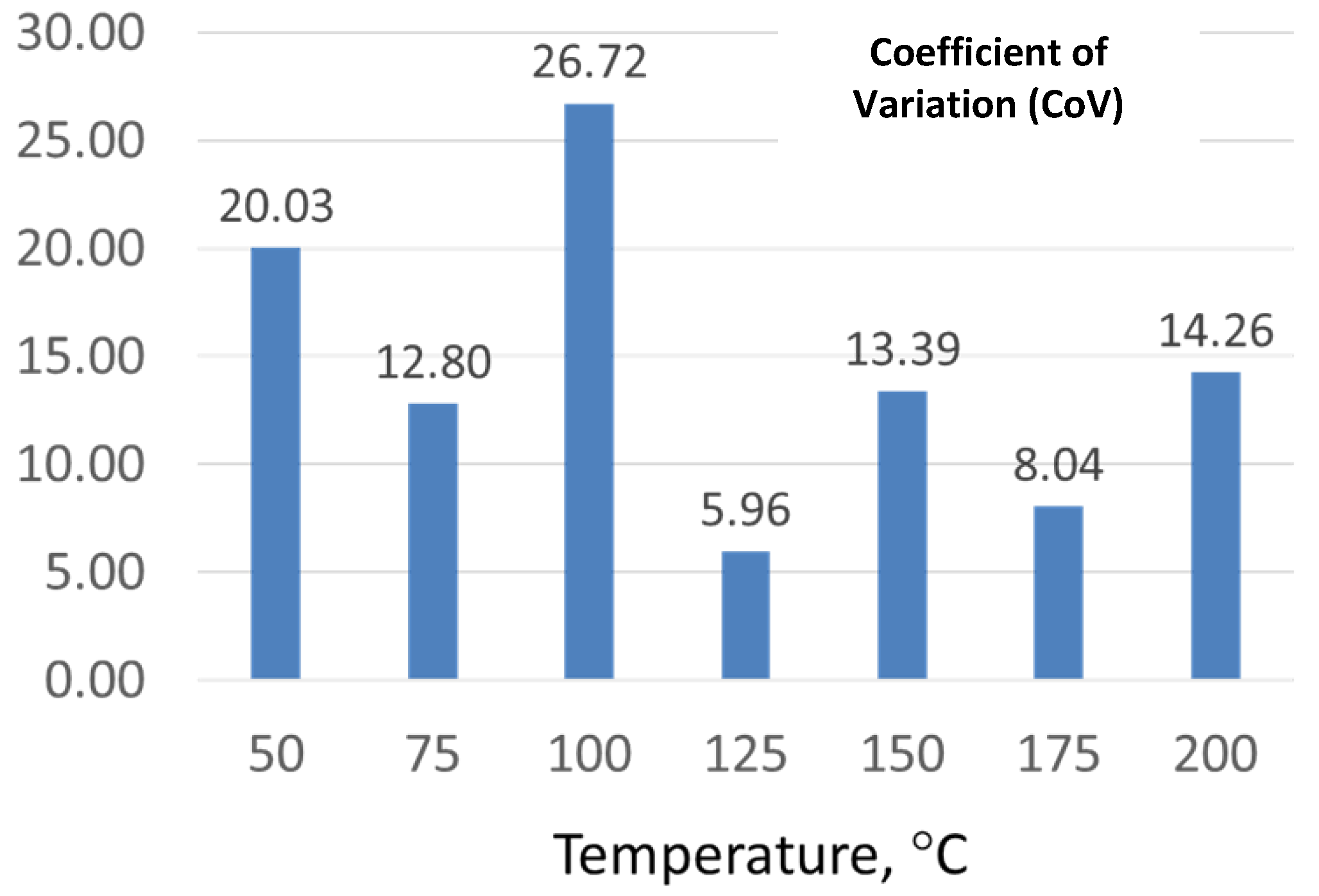
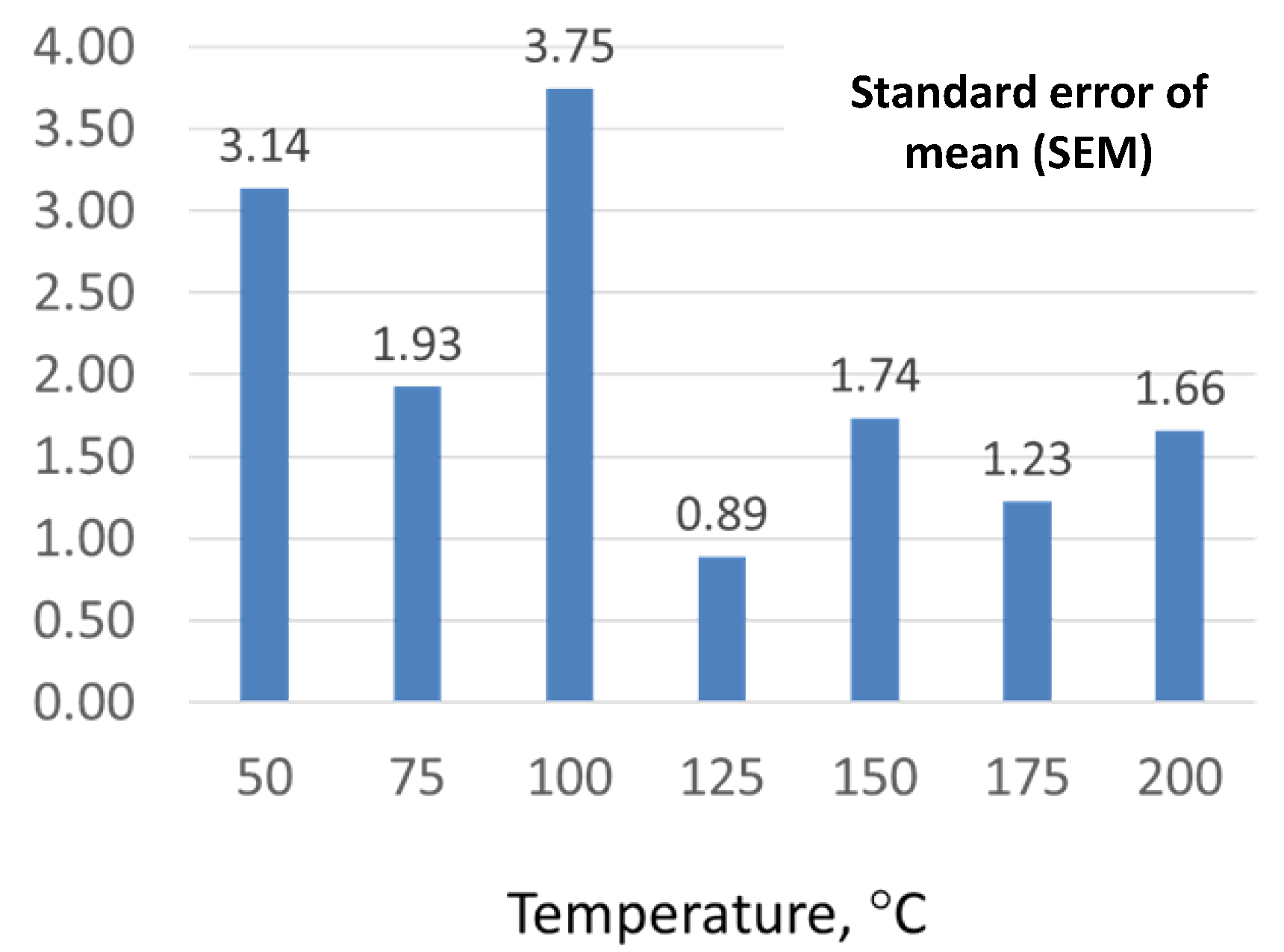
The thermal fluid commonly used in applications of concentrated solar power is a eutectic mixture of diphenyl-oxide and diphenyl, having kinematic viscosity of 2.48 c Stat 40°C, flash point of 124°C and pour point of 12°C. In the present study, starting from a temperature of 50°C, up to 200°C, in steps of 25°C, the test runs using the oil are repeated for three times so as to arrive at analyze the repeatability of the tests. The coefficients of convective heat transfer obtained using Equations 14, Equation 15 and Equation 17, are tabulated in
Table 2 and shown in
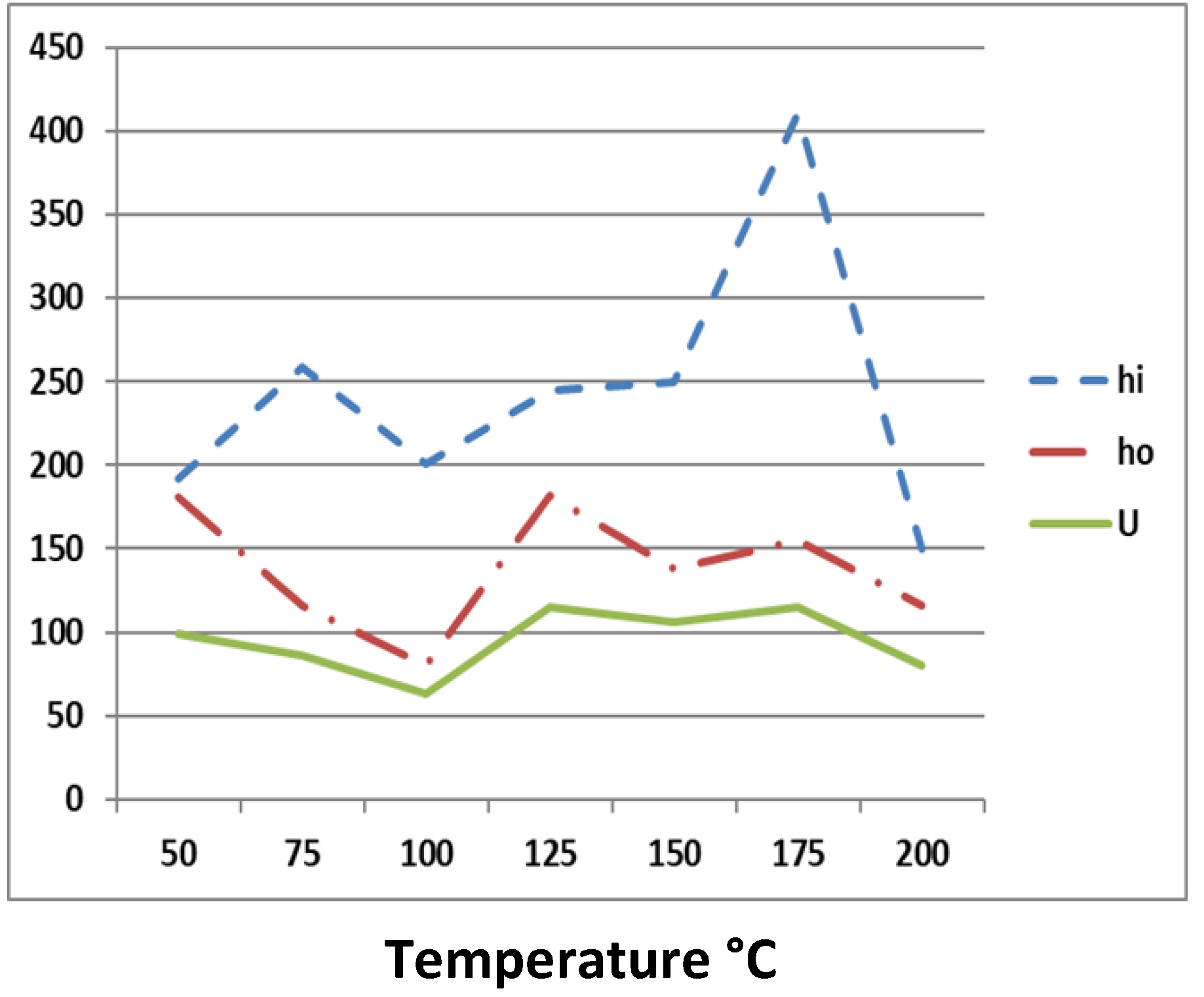
Figure 4. An error analysis of the measurements of hi, the convective heat transfer coefficient of the oil flow inside the tubes, is presented in Appendix I.
The behavior of the individual heat transfer coefficients, ho, U and hi, shown in
Figure 4are discussed below:
As can be seen in
Figure 4, and consistent with Equation 4, the overall heat transfer coefficient, U, is smaller than hi and ho, and varies less than them. As expected, it is affected more by the lower of these two coefficients (ho). U decreases by about 30% as the temperature increases from 50°C to 100°C, because of the relatively large decrease (~50%) of ho in this temperature range. As T increases from 100°C to 125°C, U increases because the water in the shell side starts to transfer more heat. Between 125°C to 175°C, the variations in U are relatively small following the heat transfer coefficient on the water side. Beyond 175°C, there is a steep decrease owing to the vapor blanket effect on both water and oil side. As can be observed from Equation 4, mathematically also, U shall almost always be less than the individual values of ho and hi and the same is being observed in
Figure 4. Furthermore, the value of U is within the range of values reported in the literature for oil-water systems [
23]
The convective heat transfer coefficient “ho” for the water side decreases initially as the temperature increases from50 to 100°C owing to the latent heat effect. Between 100°C and 125°C, there is a sharp increase in the value of ho, due to the fact that the thermal conductivity of water increases with its temperature up to about 130°C and then starts decreasing [
24]. Around the same temperature, vapor blanketing also reduces the heat transfer on the water side [
25]. Consequently, ho decreases by about 20% as the temperature increases from 125°C to 150°C. Further increase of the temperature causes the vapor blanket to collapse and there is a gradual increase of heat transfer as the temperature rises from 150°C to 175°C.
The coefficient of convective heat transfer coefficient of oil hi experiences maximum variation in its values during the experiments because the oil is receiving energy from two sources i.e. the electrical heating and the pump. Both of these sources contribute a lot on the flow pattern, heat transfer ability and hence in the variations of the heat transfer coefficients of oil. Since, oil is in turbulence at the entrance of heat exchanger, the initial heat flow is high. From 50°C to 100°C, the oil tends to lose its momentum of flow and hence the value of hi decreases. As the temperature rises from 100°C to 125°C, hi increases because the thermal conductivity of water also increases and there is a consistent heat flow between oil and water. Between 125°C and 150°C, hi is nearly constant. Then it rises sharply, by about 60%, as T increases from 150°C to 175°C, Followed by an even larger decline as T increases from 175°C to 200°C.”
Beyond 150°C, vapor blanket collapses under the combined effect of velocity, time and temperature and the heat transfer increases drastically and then starts to normalize.
Chemical nature of oil and water causing varying degree of wetting ability of the heat transfer surfaces also effects heat transfer variations
Experimentation procedure such as variation in surface temperature during heat transfer, high surface temperatures of the oil heaters causing momentary vapor formation in the oil and the continuous testing of oil in the test setup wherein the inlet temperature of water is not constant at all temperatures of oil also causes variation. Ideally, a suitable chiller should have been designed along with the test set up so that the inlet temperature of water could be maintained uniform for all temperatures of heat transfer with respect to inlet temperatures of hot oil.
Like most other test methods used for evaluating the performance of oils, the present test method should be used primarily for a comparison between new oil, under consideration as a heat transferring fluid, and commercially used oil, in the same test setup and similar test conditions. Owing to limitation of experimental setup, the heat transfer between oil and water could only be measured up to a temperature of about200°C.Beyond this temperature the oil’s vapor pressure exceeded the maximum allowable pressure of the test apparatus.
Note that the value of h
i given in
Table 2 and
Figure 4 are calculated using the empirically simplified Equation17, where the slope1/ (C
1A
i), is obtained from Wilson plot. The Wilson plot itself is drawn using the reduced velocity function of the hot fluid flowing inside the tube based on certain assumptions as listed below:
the thermal resistance of one of the heat exchanging fluids remains constant,
the mass flow and thus the velocity of the other fluid is varied, keeping the flow in the turbulent regime,
the heat transfer surface is smooth on both sides,
the thermal resistance due to fluid fouling is neglected
the value of the exponent of the velocity of the fluid, whose mass flow rate is varied, is assumed.
In line with earlier reported results by the authors [
5], another way of obtaining h
i, the local convective heat transfer coefficient of the oil in the tube is proposed here, for comparison with the present values. It utilizes the values of R
T and ho obtained from the Wilson Plot and by substituting them in the classical thermal resistance Equation 4. For the sake of clarity, let this local convective heat transfer coefficient of oil obtained through Equation 4 be denoted by “Hi”:
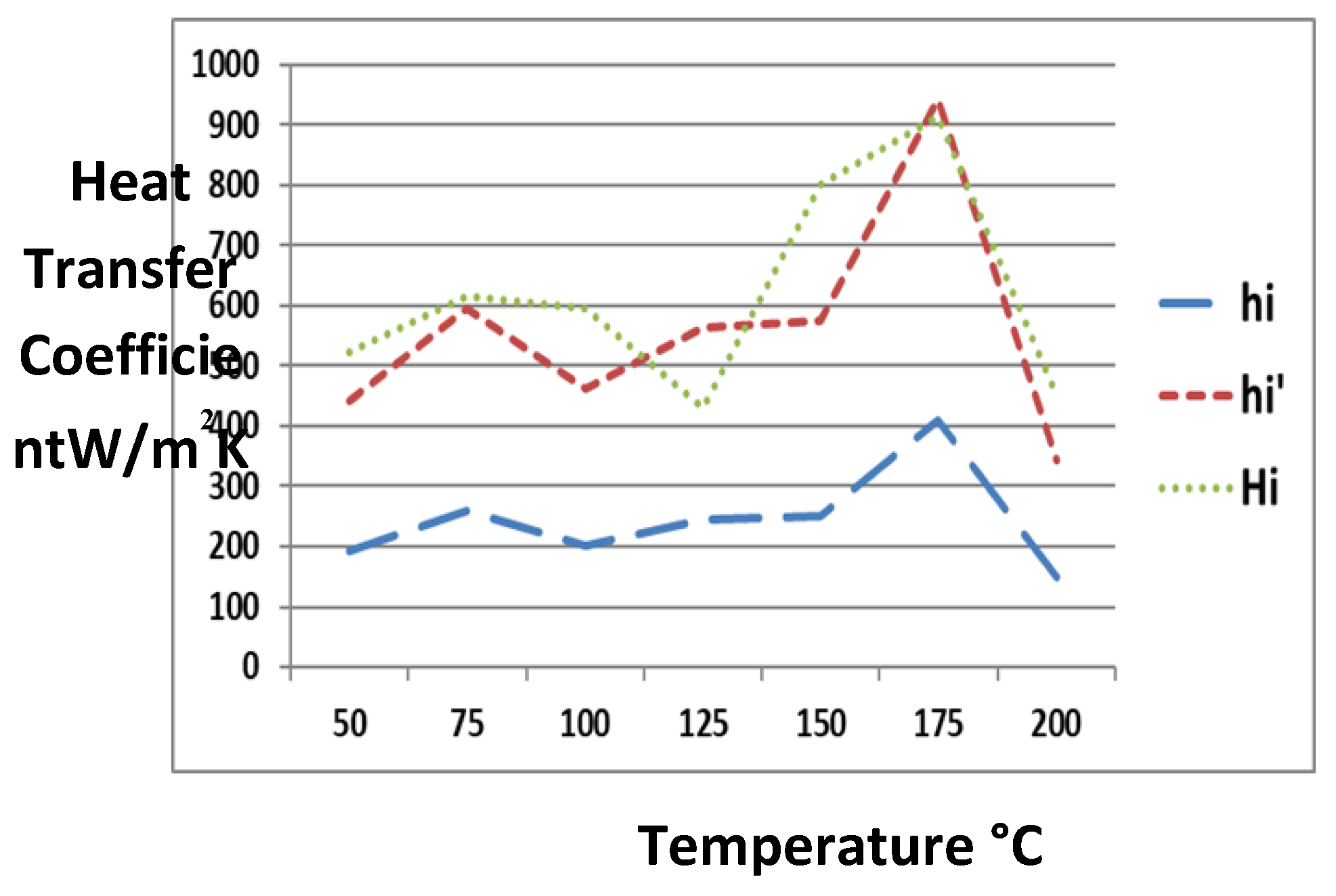
The two values of local convective heat transfer coefficient of oil – hi, derived based on Equation 17 using the slope of Wilson Plot, and Hi, derived using Equation 4a – can then be compared. Thus, the validity of Equation13 can be assessed and a correction factor can be obtained so that a generalized form of the local convective heat transfer coefficient in terms of the mean fluid velocity and the mean temperature is derived. Let this corrected convective heat transfer coefficient be denoted by hi’.
The values of the three convective heat transfer coefficients, hi as derived from Equation 17, Hi as obtained from Equation 4a and the corrected value hi’ obtained by superimposing the curves of hi over that of Hi are graphically shown in
Figure 5.
As per Equation 13, the value of C
1 ideally should be equal to 1.054 times mean oil temperature as taken in Equation 13. However, during the fluid flow inside the tube, there are several other heat transport properties as well as few experimental uncertainties which influence the value of C
1. In order to find the best possible value of C
1, the curves in
Figure 5 were obtained by suitably multiplying the values of hi as obtained from the Wilson plot using Equation 13 such that the curve moves upward and gets super imposed onto the values of Hi obtained thru the classical thermal resistance Equation 4a. The most suitable multiplication factor so obtained can then be introduced into Equation 13, to more accurately calculate the convective heat transfer coefficient, designated as h
i”, expressed in terms of the velocity and mean temperature of the hot oil flowing inside the tube; as expressed in Equation 18:
The 2.3 multiplication factor obtained on the basis of above discussions is able to accommodate the oil’s Prandtl number and Reynolds number, experimentally taking into consideration the gross properties of oil and their variations with mean oil temperature. Further, so as to obtained an accurate fit, the exponent of velocity needed to be reduced to 0.2 from the initially assumed value of 0.8, during the process of superimposing the curve of hi” onto Hi. The exponent value of 0.8 was assumed on the basis of Wilson’s original work whereas the value of 0.2 is derived based on the experiments and the chemical nature of the solar grade heat transfer oil. Equation 18 takes into consideration bulk heat transport properties of the fluid at various temperatures as well as experimental uncertainties. The corrected values of convective heat transfer coefficient hi” are compared with the original hi obtained using Wilson Plot, the H
i obtained using classical heat resistance method and also with the graphically obtained hi values and are tabulated in
Table 3.
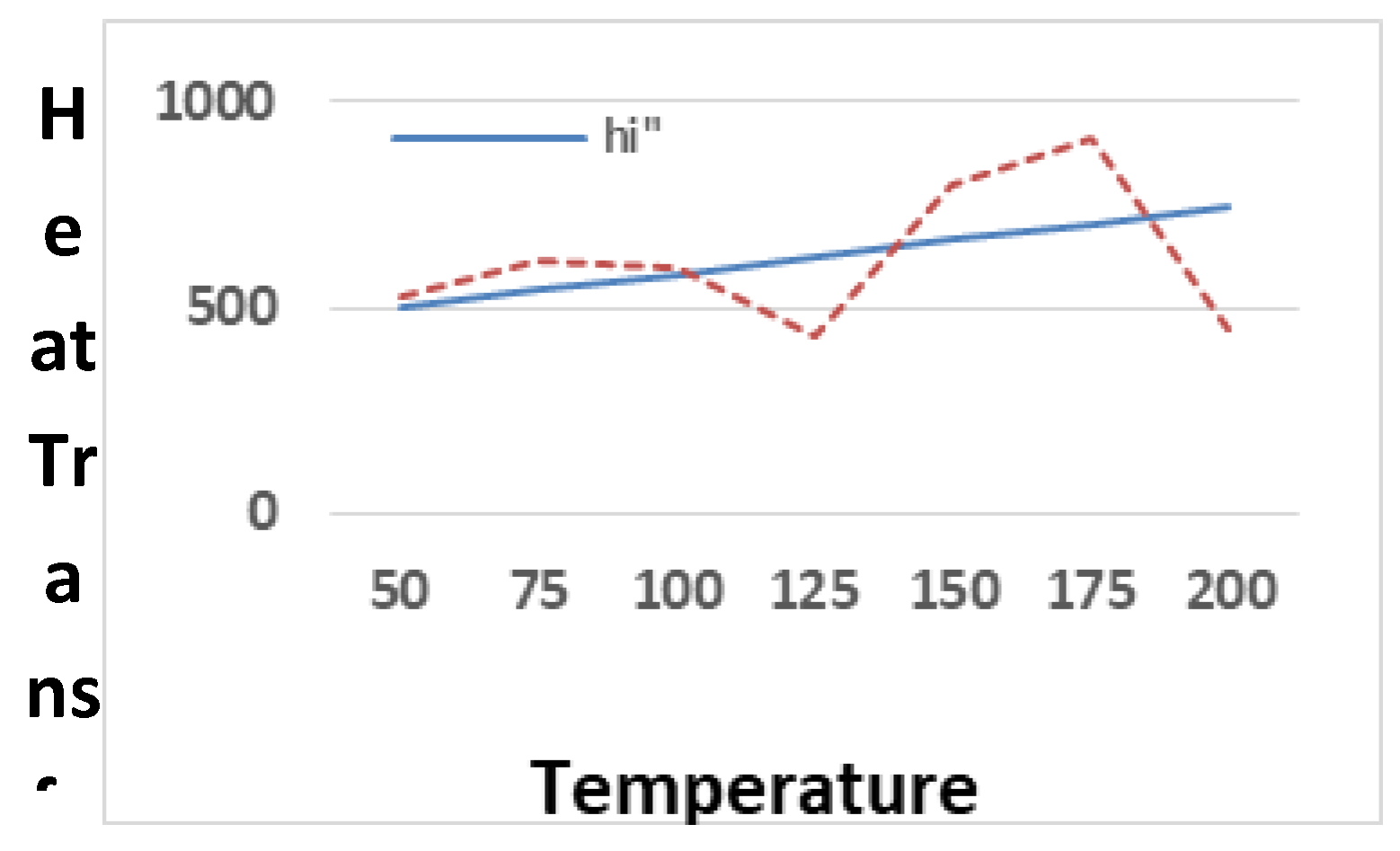
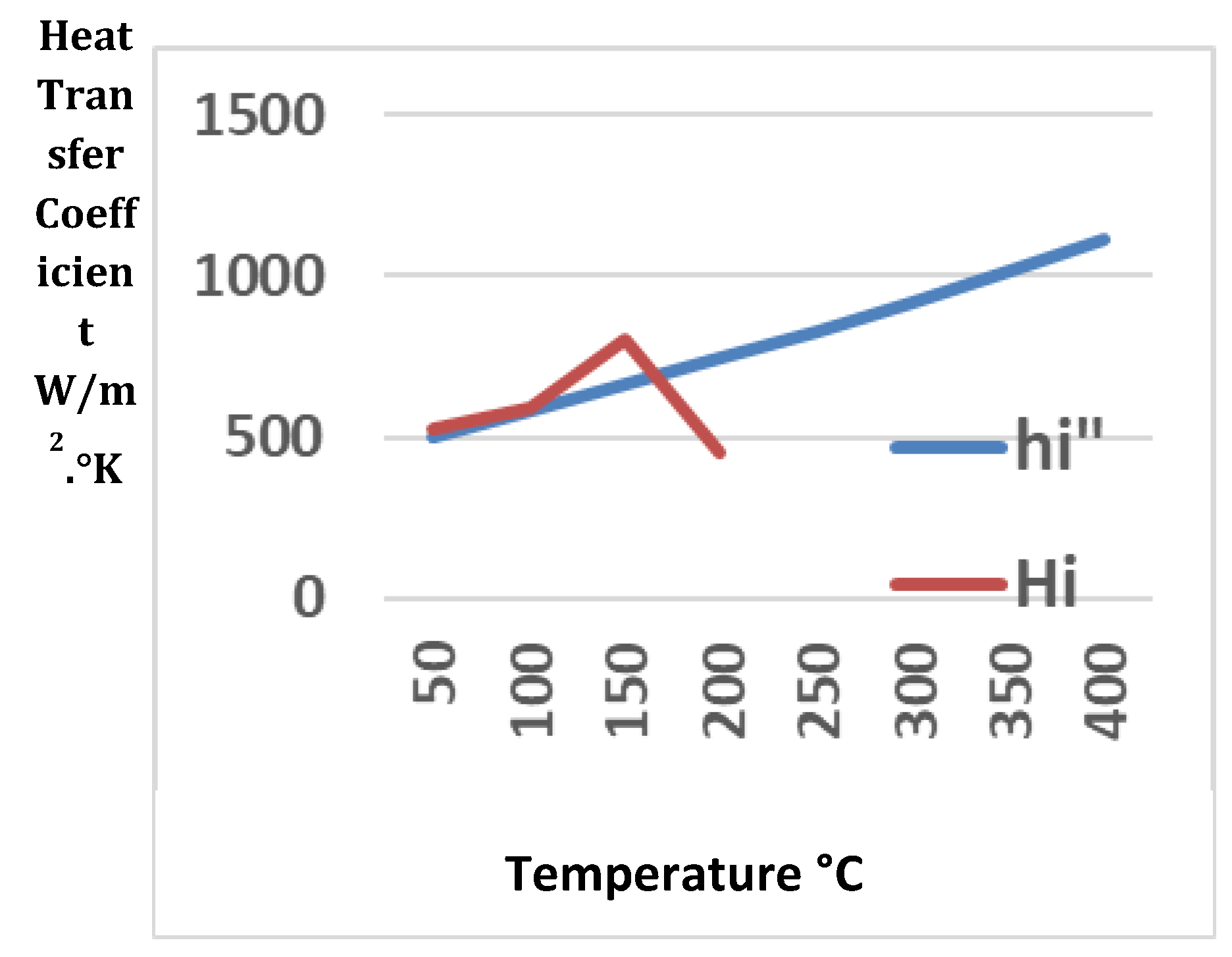
A plot of the values of convective heat transfer coefficient h
i” obtained using the proposed empirical relationship in comparison to convective heat transfer coefficient obtained through the classical heat resistance method H
i up to the actually measured experimental temperatures of 200°C is shown in
Figure 6.
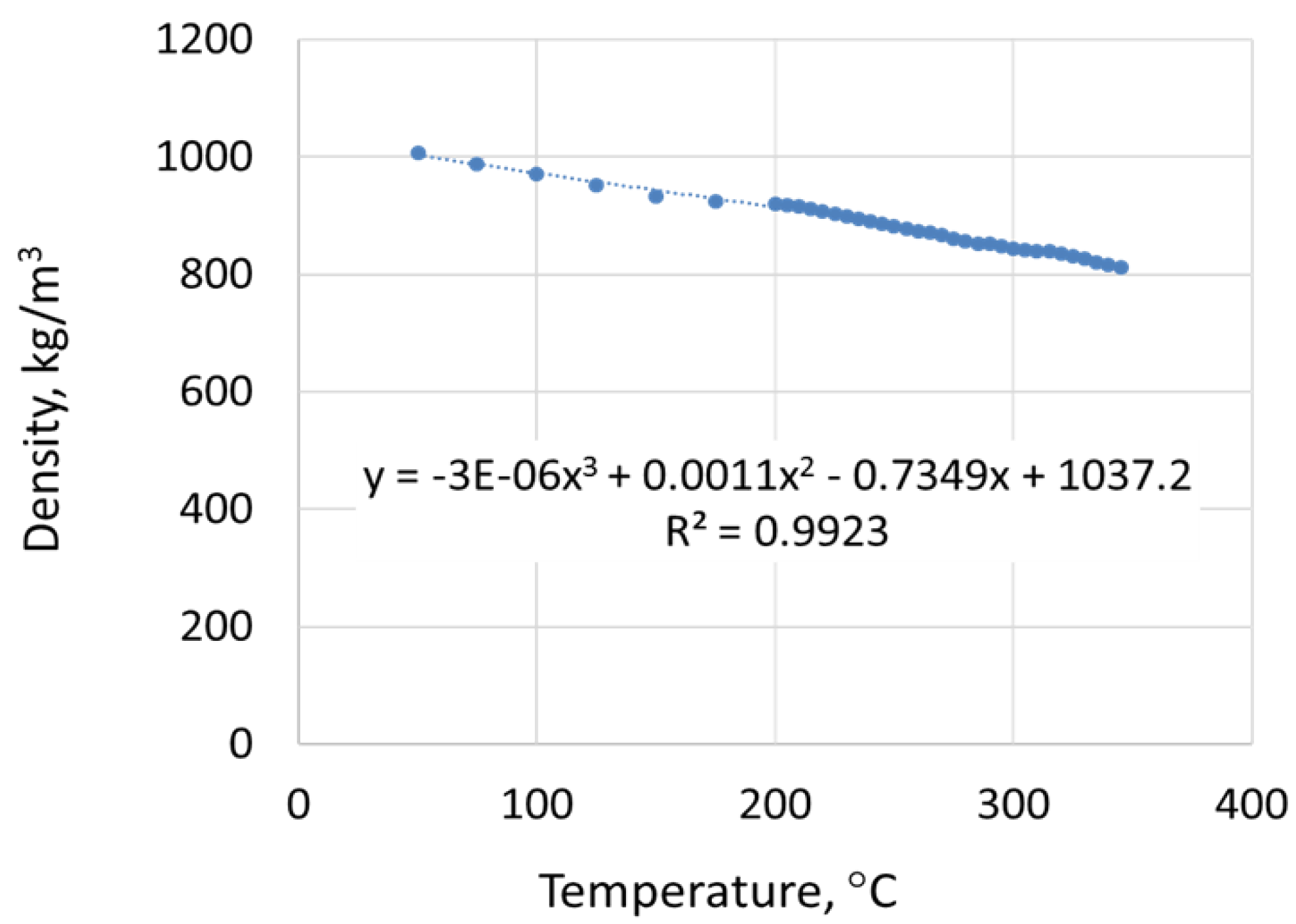
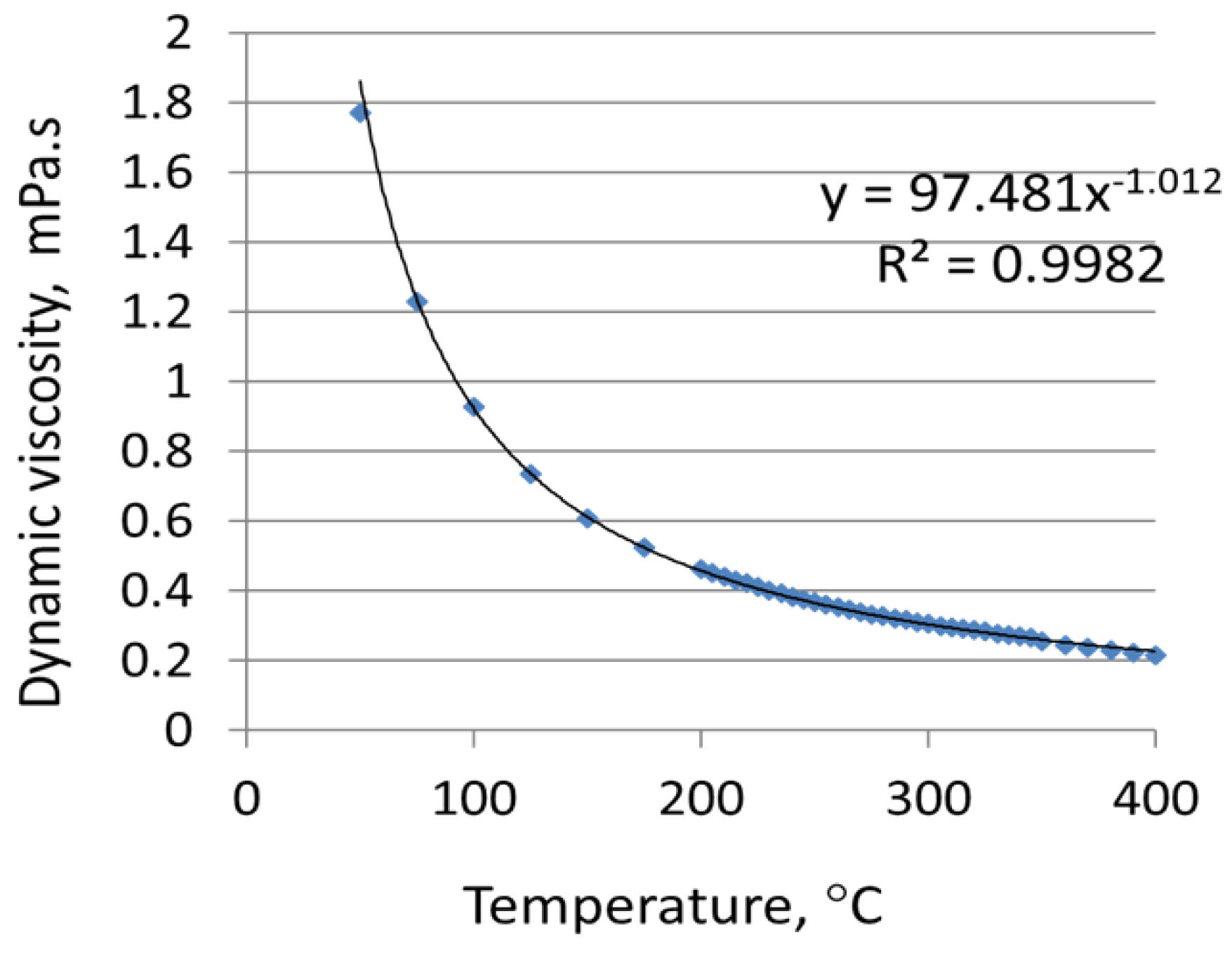
The present test set-up enabled measurements of the heat transport properties of the oil, especially, the convective heat transfer coefficients, at elevated temperatures. Thus, it was able to overcome the gap area identified by the authors in the beginning of this study to a great extent. However, the test setup as designed suffered from a deficiency that it could not sustain the oil vapor pressure at T > 200°C. Hence, the measurements described above could not be performed beyond that limit on a regular basis. During the initial commissioning tests, taking enough safety measures, the test set-up was operated till a temperature of 350°C, on a one-time basis. The values of density and viscosity were measured up to 350°C during this trial run. It is worthwhile to mention here that the test set-up was designed taking the oil properties as published in its product data sheet [
16] wherein a pressure of ~ 12 bar was specified at a temperature of 400°C.
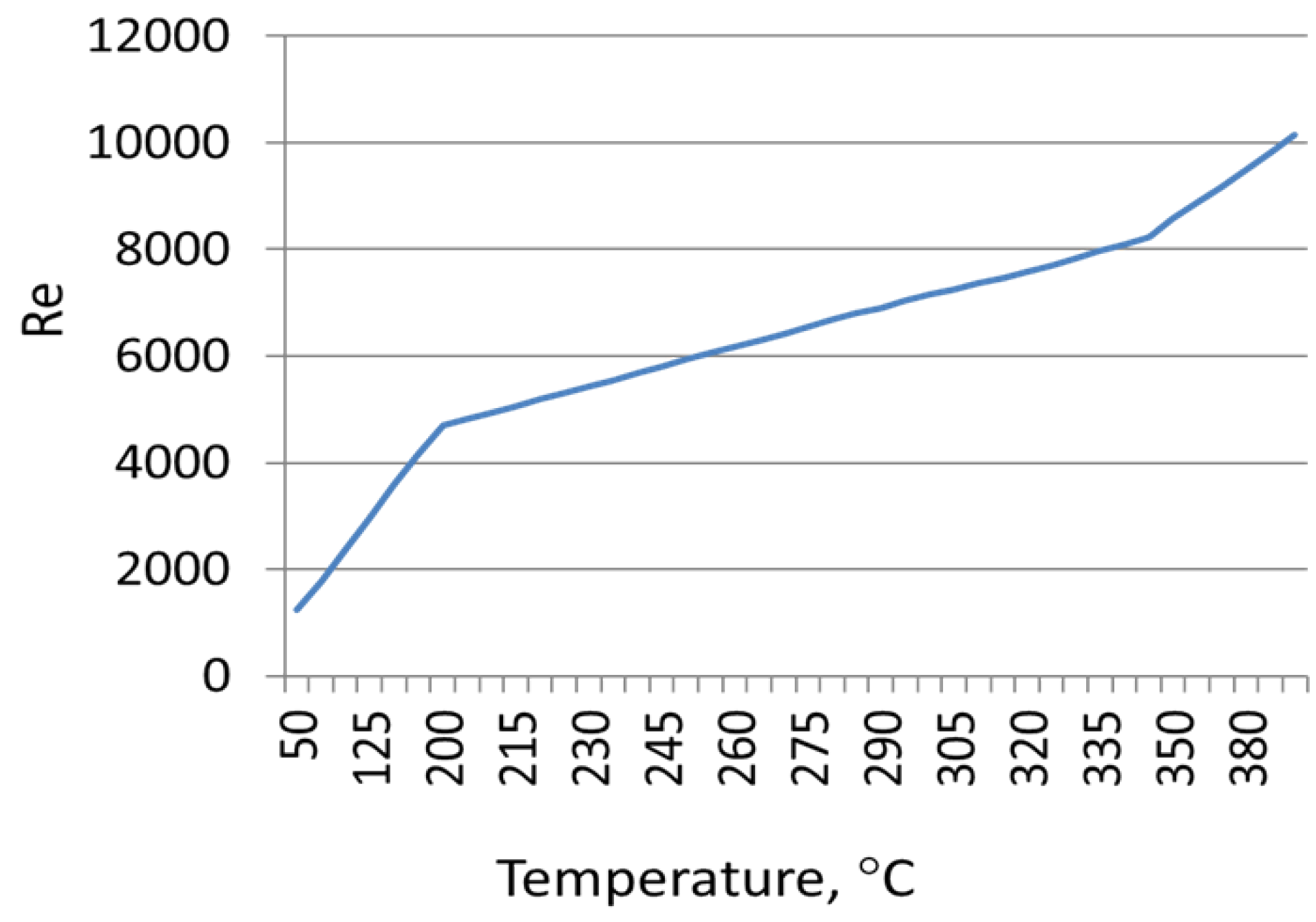
Thus, using the experimentally determined values of density and dynamic viscosity, the Reynolds number up to a temperature of 350°C was also obtained. See
Figure 7 and
Figure 8 respectively, along with their regression equation and regression coefficients.
From
Figure 7 and
Figure 8, it is seen that the regression coefficients of both, the density and dynamic viscosity of the oil are very high (> 0.99), signifying that the respective curve-fitting expressions provide a good representation of the measurements. The values of density and dynamic viscosity, experimentally obtained up to a temperature of 350°C, were extra plated to 400°C using the regression equations. The oil’s velocity and Reynolds number were calculated from the density and dynamic viscosity, as shown in Equation 19:
The velocity in tubes,
where,
Ai-cs = 18 x (π/4) di2 = 0.00351 m2 (di = 0.01575 m)
Thus, the velocity of the oil,
The Reynolds number for the oil flow was calculated using Equation 20 at various temperatures and is shown in
Figure 9.
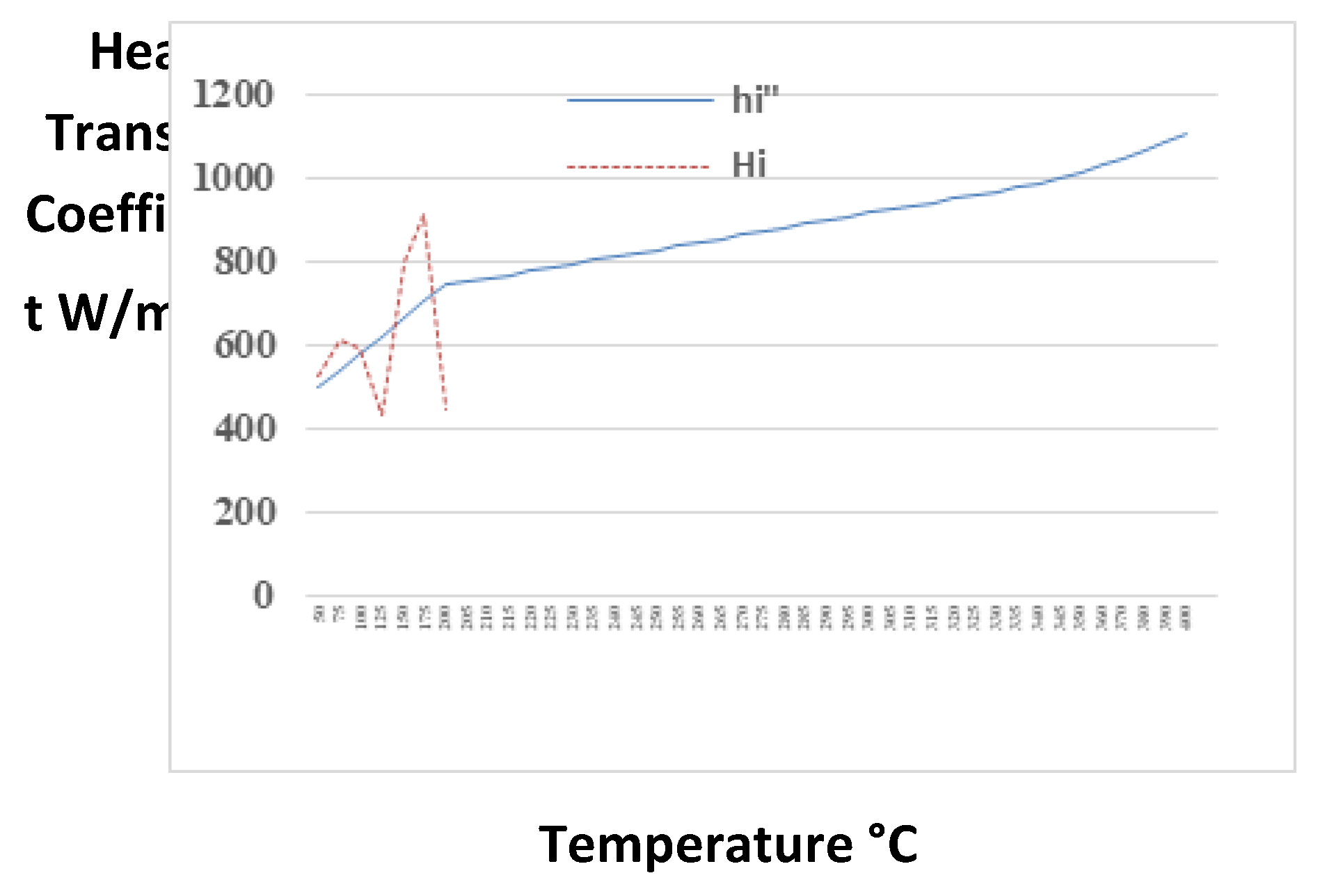
Equation 19 is used to calculate the velocity of the oil based on measured values of the density and viscosity up to 350°C and extrapolation from 350°C to 400°C. Then, the convective heat transfer coefficient, hi” is calculated using Equation 18 over the full operational range (50° – 400°C). From
Figure 10, it can be noticed that there is a change of slope at 200°C because of the fact that up to the temperature of 200°C, the hi” values are calculated at a temperature interval of 25°C while beyond 200°C, the hi” values are calculated at a temperature interval of 5°C. Similarly, beyond 350°C, the hi” values are calculated at an interval of 10°C and hence the change of slope of the curve.
Figure 11 has been plotted for the full temperature range of 50-400°C by considering the uniform temperature intervals of 25°C from where it can be observed that the curve for hi” is much smooth and uniform. The values of convective heat transfer coefficient with uniform temperature differences up to 400C is given in Appendix II.
Conclusions
(1) Experimental work on a commonly used synthetic heat transfer fluid was carried out in a test setup centered on Shell-and-Tube heat exchanger. Efforts were made to maintain the flow of the fluid in the turbulent or near turbulent regime.
(2) In line with the Wilson Method, the flow of the cooling fluid in the shell outside of the tubes was kept steady and constant and the velocity of fluid flowing inside the tubes was reduced gradually in the experimentation.
(3) On the basis of the Wilson Technique, the convective heat transfer coefficients were experimentally obtained for the fluid flowing inside as well as outside the tube and then the overall heat transfer coefficient was also calculated.
(4) There was a wide variation in the values of the heat transfer coefficients at different temperatures of oil, especially in the value of the convective heat transfer coefficient for the oil (hi), obtained using the Wilson Technique. Following a~35% increase-decrease-increase trend, as T was raised from 50° to 125°C, hi increased from ~250 to ~410 W/(m2-K)(>60%),as T increases from 150° to 175°C, then dropped to 150 W/(m2-K) (65%)as T increases from 170° to 200°C.
(5) If the measurement is carried out in a narrow temperatures range, say within 50-60°C, the variation of the heat transfer coefficients would be quite less. Because the heat transfer coefficients evaluated in this work are over a relatively wide temperature range, between 50°C and 400°C, several peaks and valleys appear in the data graphs.
(6) A superimposition of the convective heat transfer coefficient of oil derived using the slope of the Wilson Plot and that derived using the classical thermal resistance lead to a correction factor of 2.3 which can be utilized to express the local convective heat transfer coefficient in terms of mean fluid velocity and mean temperature. The 2.3 multiplication factor is able to accommodate the gross properties of oil and their variations with mean oil temperature.
(7) During the process of obtaining the best fit curve of the empirical coefficient hi” onto the Hi values, the exponent of the velocity was reduced to 0.2 from the initially assumed value of 0.8. Combining this with the multiplication factor of 2.3 accounted for the variations of the fluid’s bulk heat transport properties with changes of temperatures.
(8) Discrepancies in the results are caused by vapor blanketing effect, surface temperature variations and difficulties in its measurement, dependence of convection phenomenon on surface geometry, and the physical conditions of both of the fluids taking part in the heat transfer process
(9) The present study resulted into an empirical relationship of convective heat transfer coefficient with velocity of oil and mean oil temperatures, and was able to determine the convective heat transfer coefficient of oil for its entire range of operational temperatures
(10) The present method should be especially useful for a comparison between new oil, under consideration as a heat transfer fluid, and commercially used oil, in the same set up and similar testing conditions.