1. Introduction
The classic paper written by Gabrielli and von Kármán [
1] demonstrated the balance of the cost and time value of people and cargo idle in transit. At the center of von Kármán-Gabrielli’s diagram, there is a gap which is not covered by conventional maritime, land or aerial vehicles. Since the 1960s, researchers and developers have been working on non-conventional WIG craft to fill this gap in the diagram [
2,
3]. To enable WIG craft to cruise faster than marine vessels and be more efficient than airplanes, most research has adapted existing technology to exploit the ground effect [
4].
The main parameter in most experimental and numerical studies on various airfoils is the ground clearance (
hc), described as the proportion of the distance of the trailing edge above the ground (
ht) to the chord length (
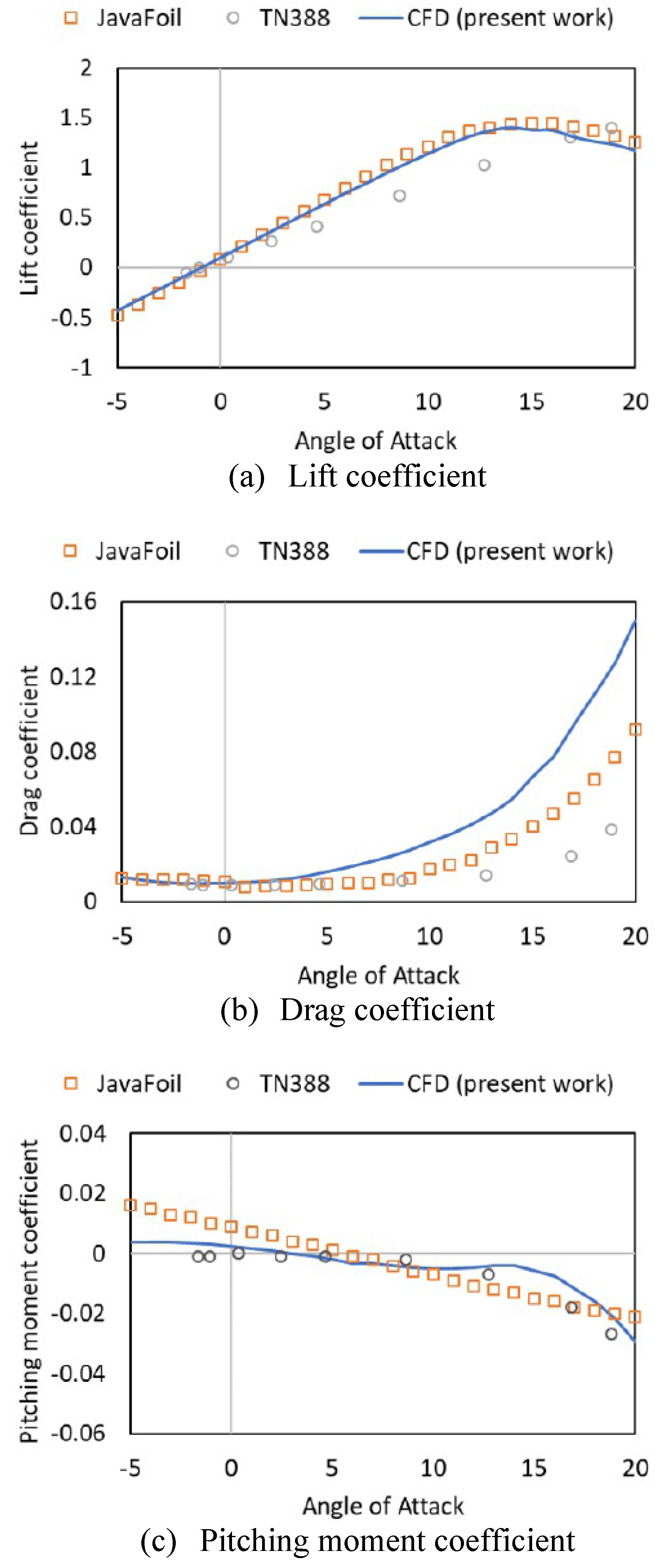
c). Typically, aerodynamic characteristics, such as lift, drag and pitching moment coefficient (
Cl,
Cd and
Cm) were studied. Ranzenbach [
5] studied the performance of an inverted NACA 4412 airfoil used as a race car front wing in GE. The results show that significant downforce occurred when the ground clearance (
hc) was roughly equal to 0.04 and maximum at
hc of 0.8. The merging of the wing and ground boundary layers causes the downforce to increase as
hc decreases. The flow around the NACA 4412 airfoil with various ground clearances (
hc) was examined numerically and experimentally with fixed and moving ground conditions [
6,
7,
8]. The lift coefficient in GE was greater than in the free stream. The lift dropped significantly with small ground clearance (
hc = 0.05) due to suction in the passage between the airfoil and the ground which has a convergent–divergent shape. An extensive wind tunnel test was conducted on NACA 6409 in GE with a fixed ground boundary condition [
9]. The results show that, by increasing α with low
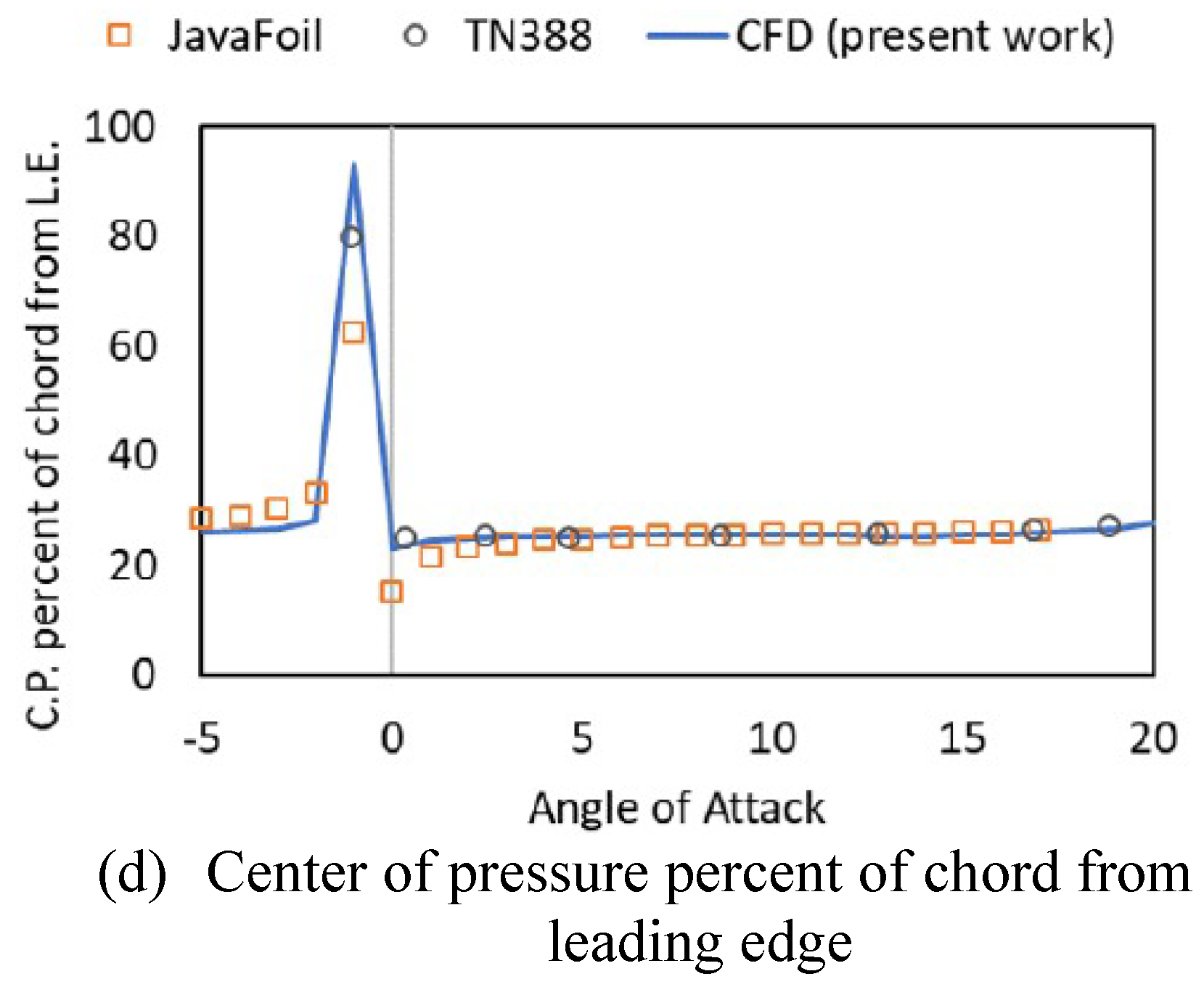
hc, the center of pressure (
Xcp) was shifted toward the leading edge and the lift-to-drag ratio was increased. Various airfoils were investigated in GE using different turbulence models such as the standard
k-ε, realizable and SST variants of the
k-ω model [
3,
10,
11,
12,
13,
14,
15,
16].
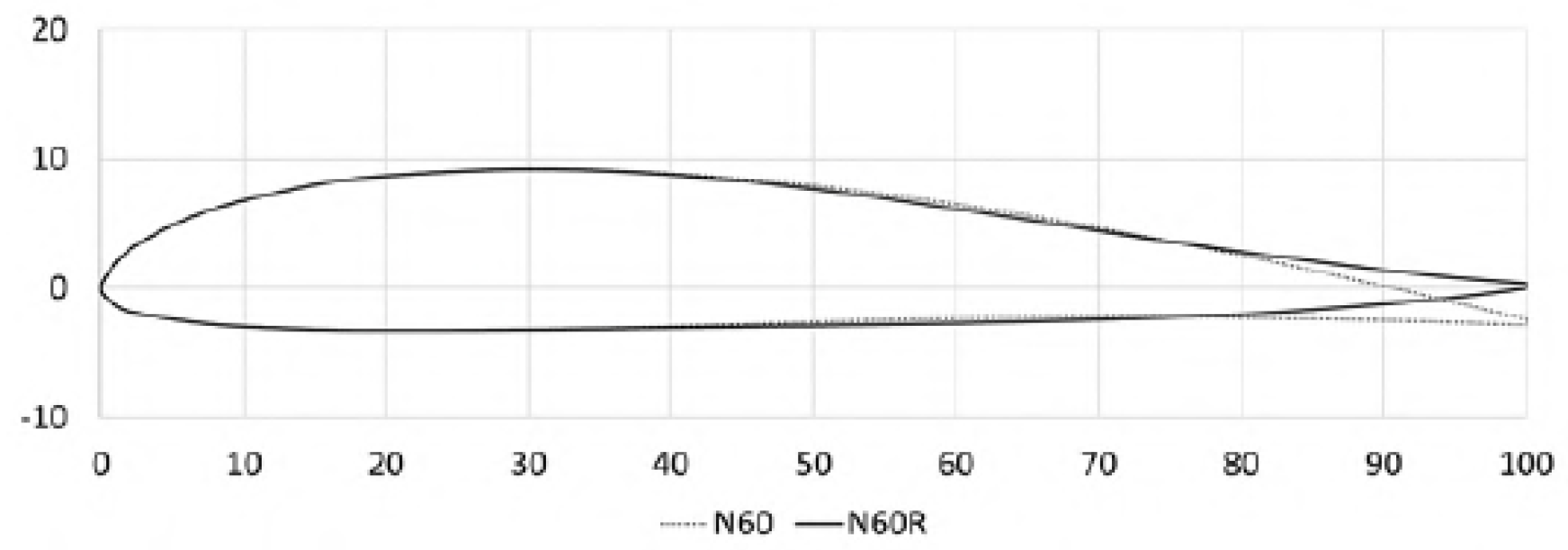
The previous studies show that some well-known airfoils are used in the WIG, such as NACA 6409, NACA 4412 and Clark-Y. The NACA 6409 is an excellent airfoil at low speed, but its large camber limits its high-speed performance. The NACA 4412 and Clark-Y are recognized for their performance in GE due to the flat bottom since this prevents the negative ground effect produced by a high cambered airfoil [
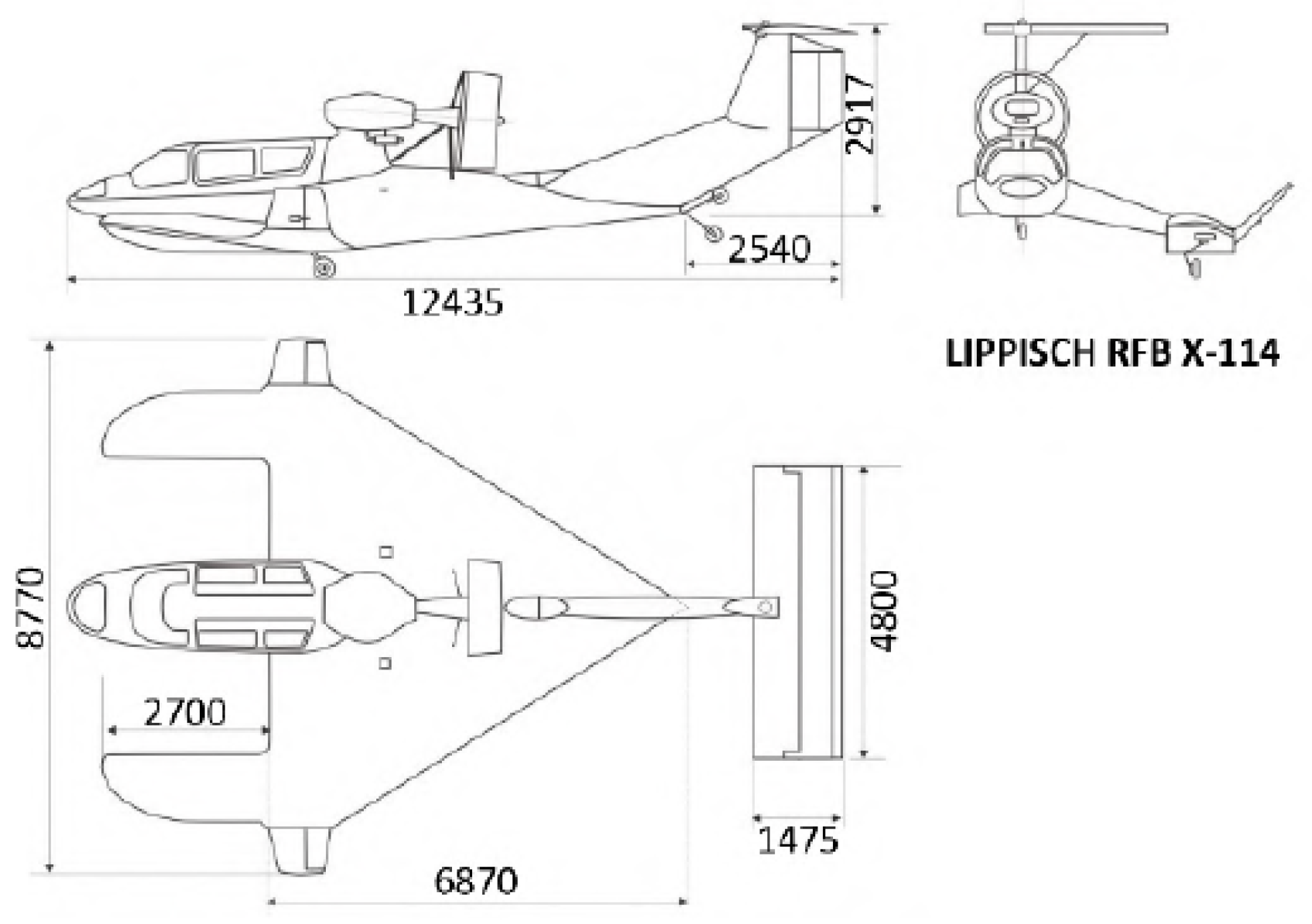
17]. The reflexed airfoil, N60R, with ‘S’ sections at the trailing edge has better stability compare to the traditional airfoil, thus the horizontal stabilizer area can be reduced at the expense of lift. Small WIG craft tend to utilize the Lippisch planform as shown in
Figure 1. It is a low aspect ratio reverse delta wing with anhedral angle. It resembles the flying wing [
4], which typically uses a reflexed airfoil [
18]. Because of the reflexed trailing edge, the change in pitching moment with ground clearance is less noticeable. Thus, the required control power necessary for the transition in height is reduced leading to a reduction in the tail plane area [
4,
13]. However, the investigation of the reflexed airfoil is still lacking and limited in the small ranges of α and
hc.
The main objective of the present work is to investigate the aerodynamic characteristics of the N60R with the ‘S’ sections at the trailing edge in GE. Numerical simulations were conducted with the SST k-ω turbulence model at various Reynolds Numbers, angles of attack and ground clearances. Furthermore, regression models for each characteristic were developed and can be used to predict the aerodynamic coefficients of the N60R without the need for time consuming CFD.
2. Governing equations
The RANS equations with SST
k-ω turbulence model were used to investigate the steady, incompressible flow over the airfoil in ANSYS Fluent 2021 R1. A pressure-based double precision solver with a coupled algorithm for the pressure-velocity coupling was selected. The transport equations of the SST
k-ω model are expressed below.
Gk,
Gω,
Yk and
Yω are the generation and the dissipation of
k and
ω respectively.
Dω is the cross-diffusion term.
Sk and
Sω are source terms defined by the user. The diffusivity of
k and
ω defined as
Γk and
Γω are shown below.
where the turbulent Prandtl numbers for
k and
ω are defined as
σk and
σω, respectively. The term
G,
Y,
D,
S and
μt is given in the references [
19,
20]. The model boundary conditions are:
where
L is the approximate length of the computational domain. The lift, drag, pitching moment coefficients and the center of pressure were determined by
4. Computational domain and flow conditions
The numerical analysis of the N60R operating in ground effect is set up similar to the free stream flight validation in section 3.3, except the height of the trailing edge is defined as
ht. The angle of attack range is 0°-20°. Various flow velocities and corresponding
Re were set up as shown in
Table 1. The ground clearance ratio (
hc) was varied from 0.05, 0.1, 0.15, 0.2, 0.25, 0.3, 0.5, 0.75, 1, 1.25 and 1.5.
According to
Table 1, the range of
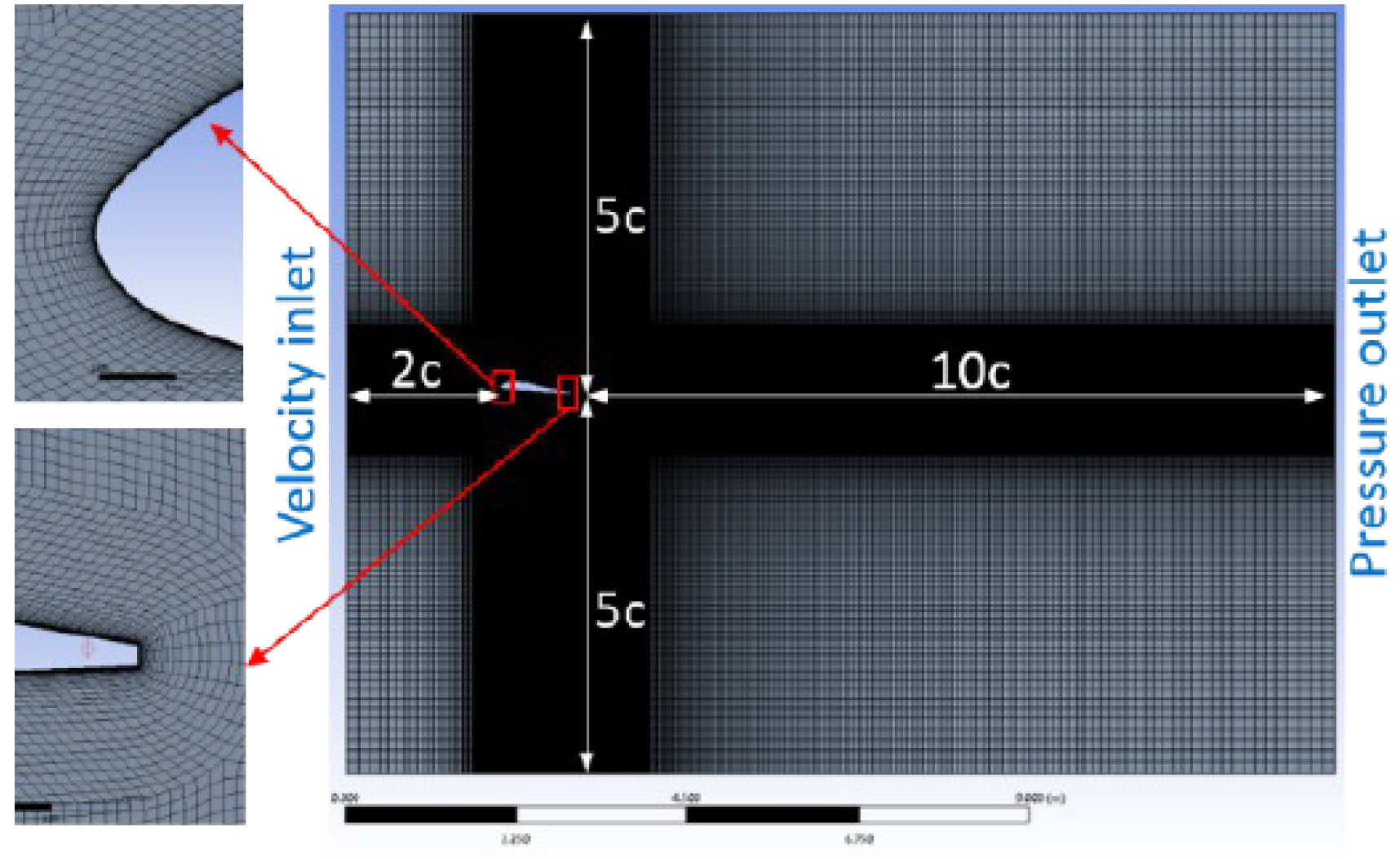
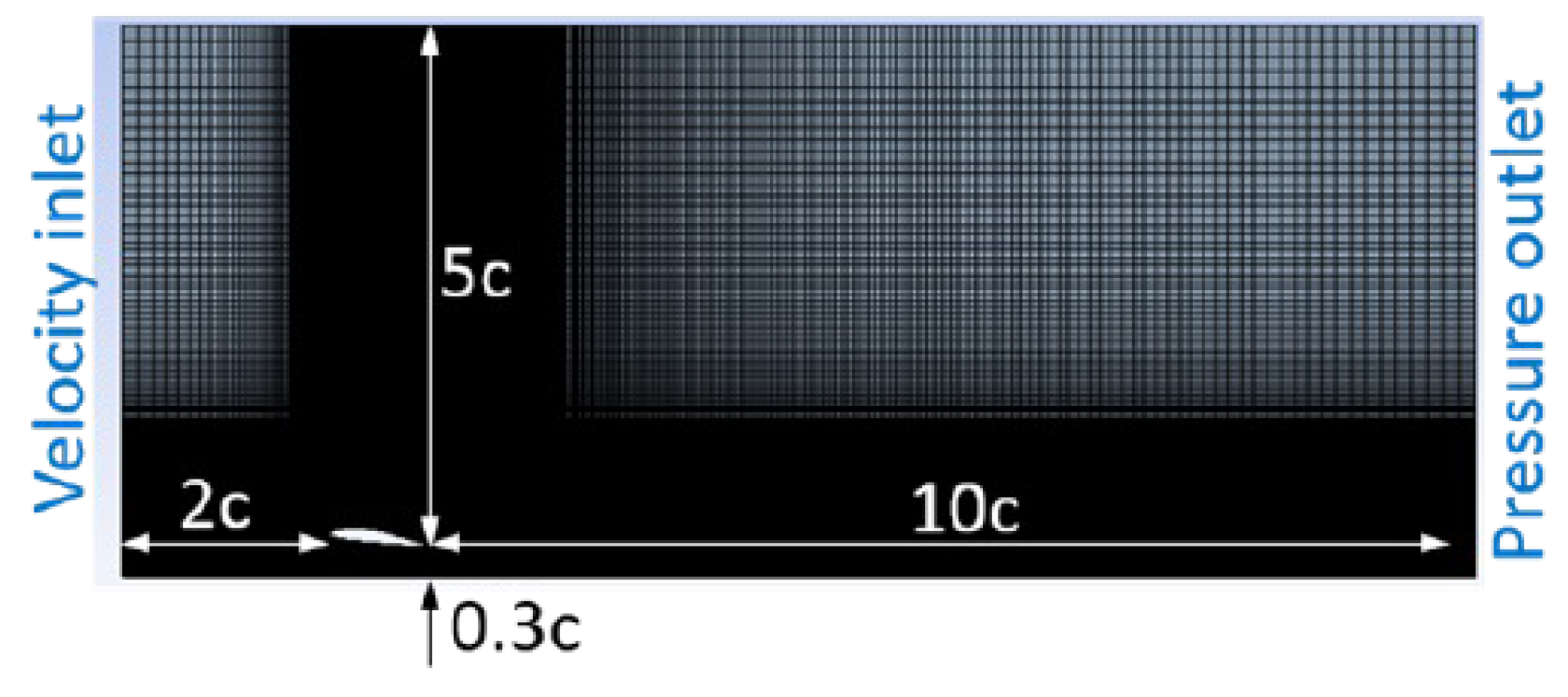
Ma is between 0.03 and 0.22, thus the flow is incompressible. A pressure-based coupled algorithm was applied with double-precision solvers. The governing equations were discretized with the second-order upwind method. The computational domain and the generated mesh, with
hc = 0.3, are shown in
Figure 6.
5. Results and discussion
5.1. Pressure and velocity distributions
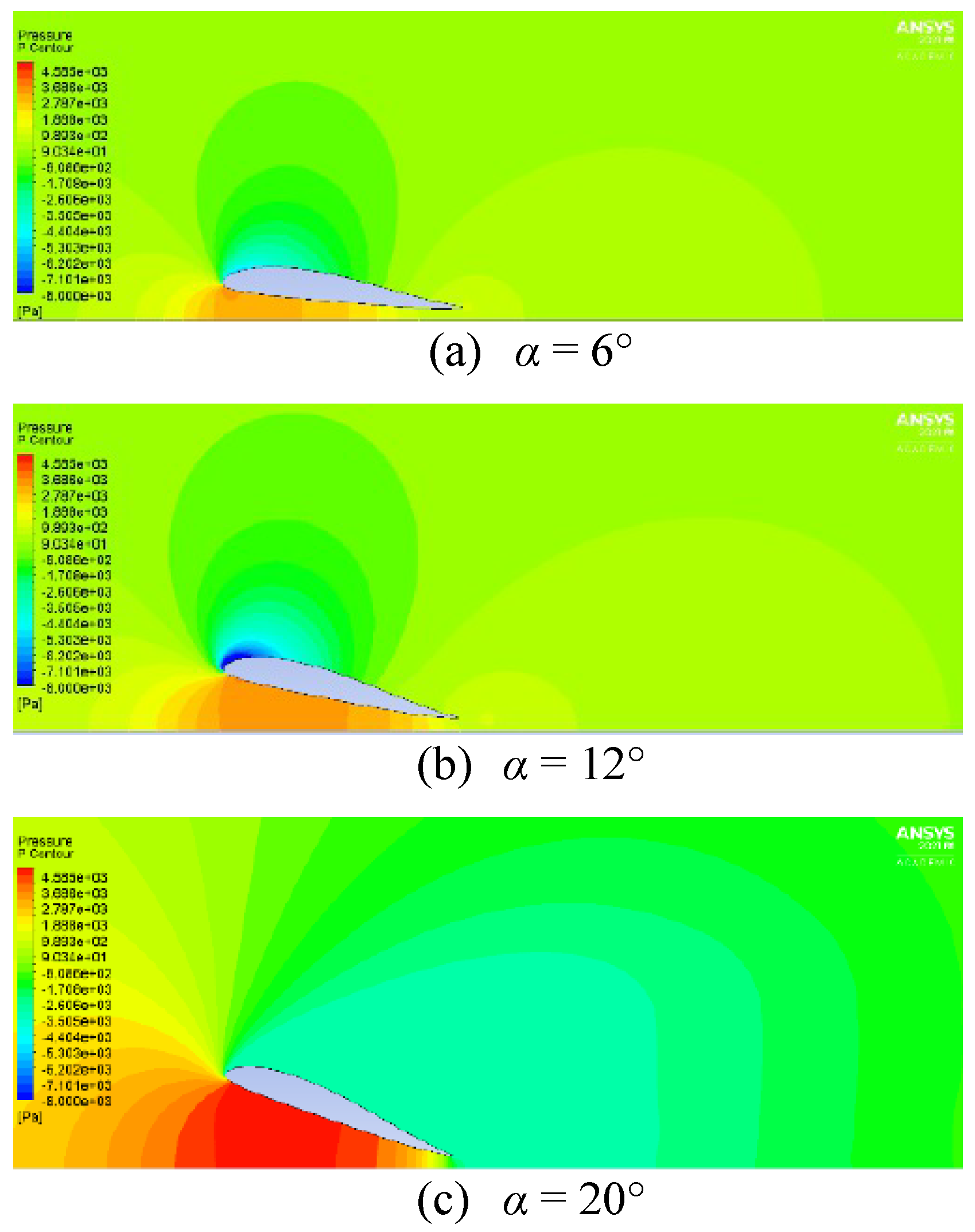
Figure 7 and
Figure 8 show the pressure contour for a flow velocity of 75 m/s at
hc = 0.3 and 0.05, respectively. High pressure is located under the airfoil near the leading edge then decreases as the distance from the leading edge increases while the suction-lift occurs on the upper surface. At very low
hc (
Figure 8), high pressure builds up along the chord length due to the ramming effect.
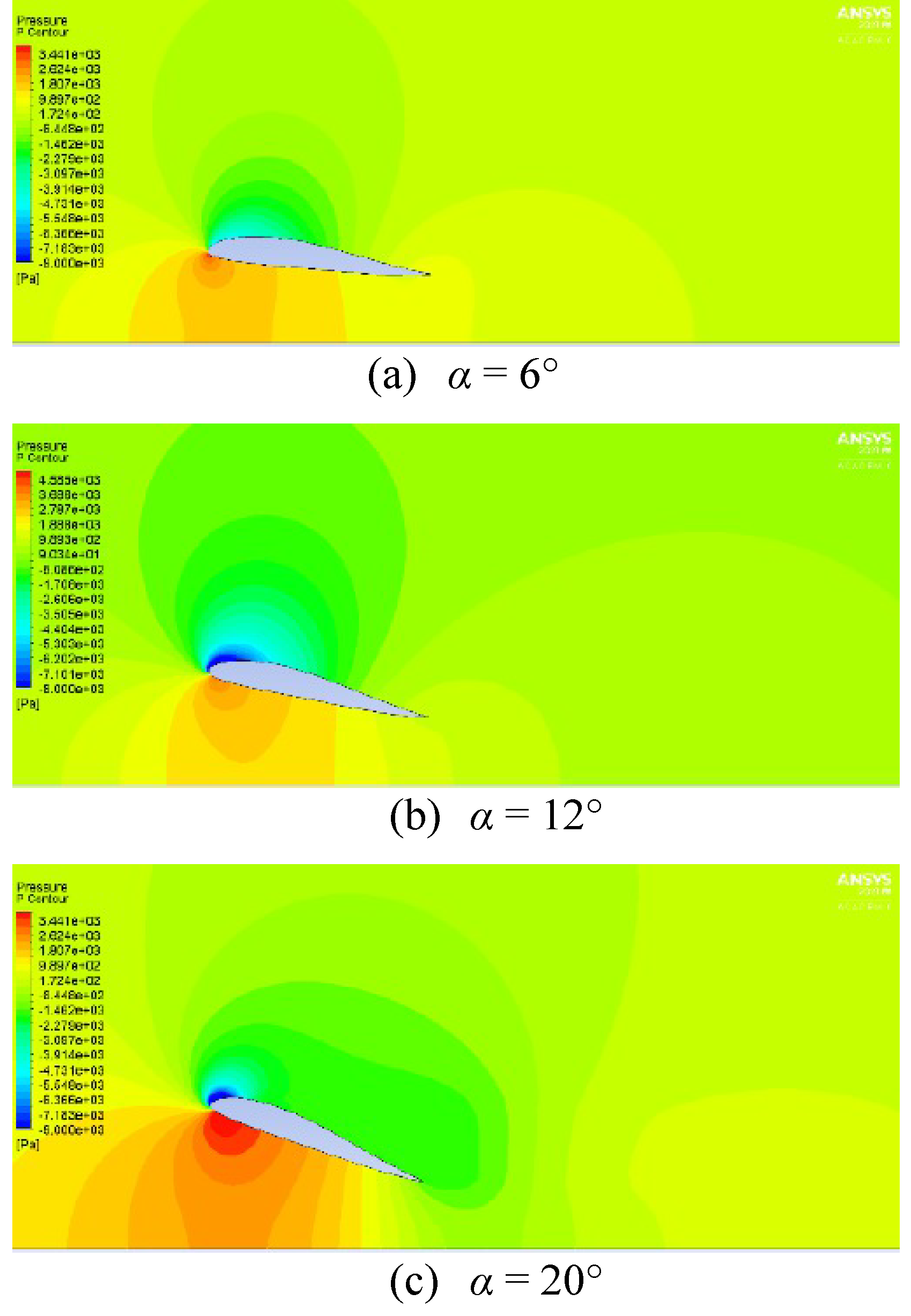
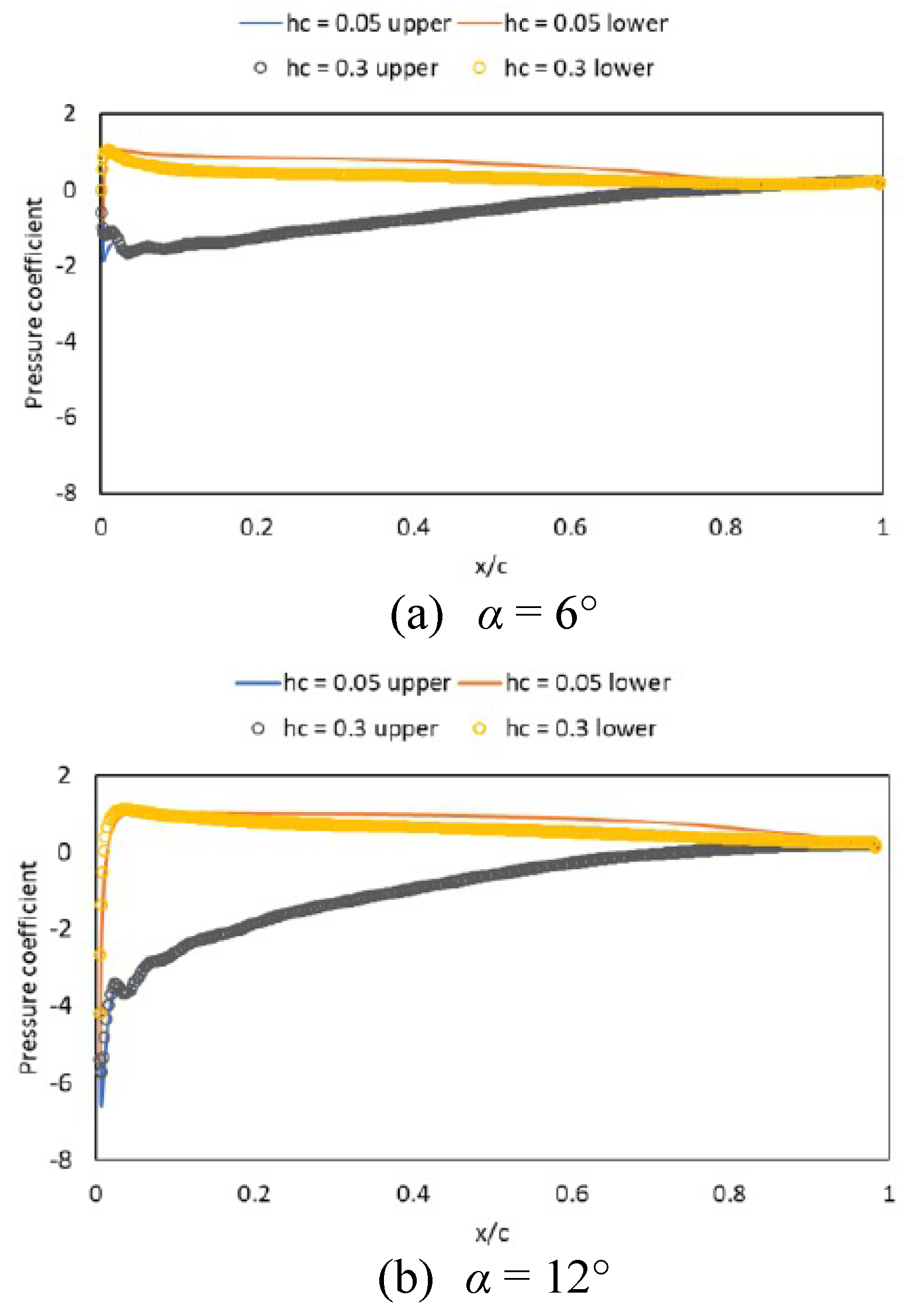
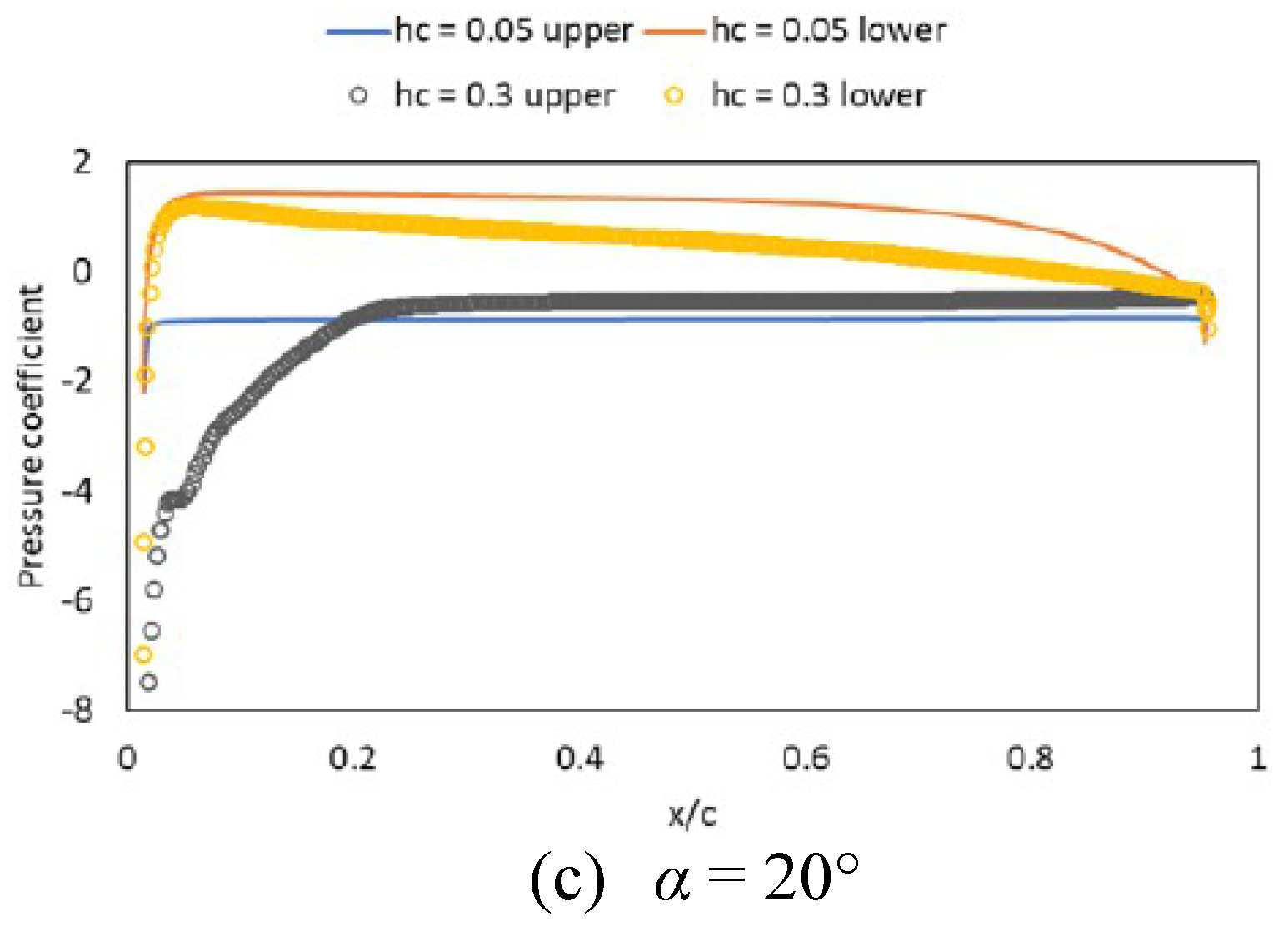
The pressure distribution at
α = 6°, 12° and 20° at
hc = 0.3 and 0.05 is shown in
Figure 9. Interestingly, the upper surface loses the suction-lift at small
α. At
α less than the stall angle, the difference of the pressure over the airfoil is insignificant for both
hc = 0.3 and 0.05 (
Figure 9(a)-(b)).
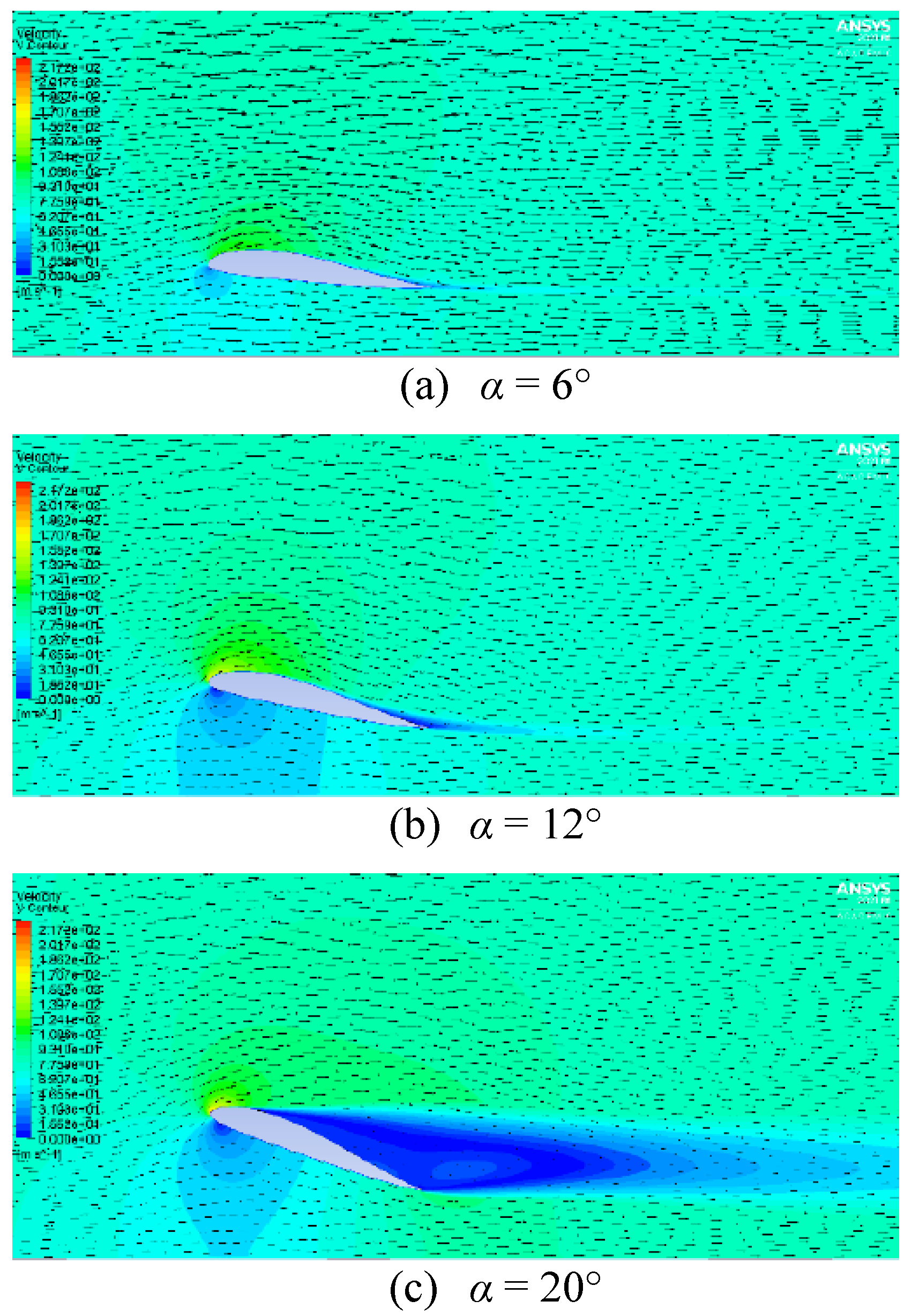
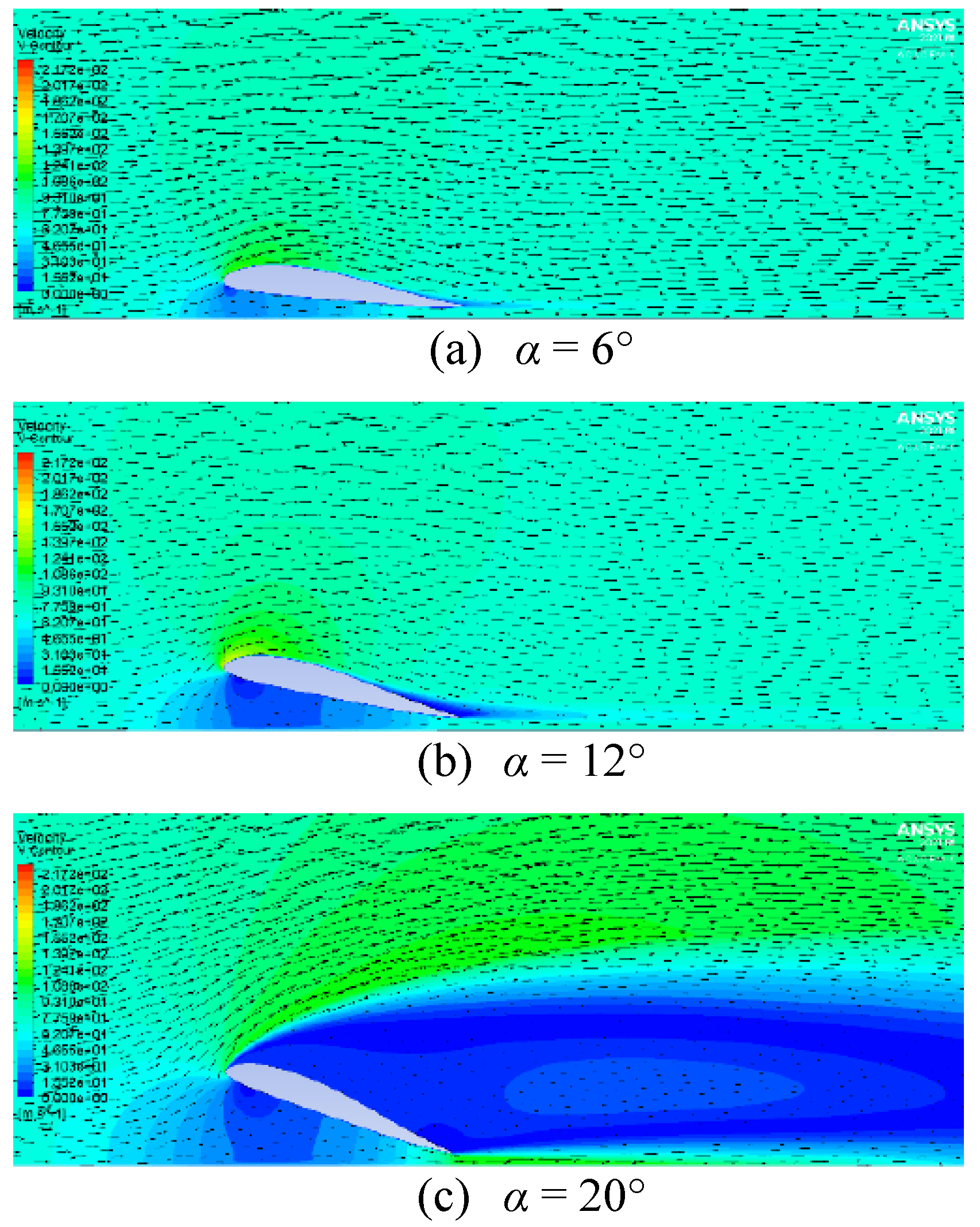
The velocity contours in
Figure 10 and
Figure 11 show that as
hc decreases, the trailing edge, which is close to the ground, traps the air underneath. Hence more air flows over the upper surface, lowering the pressure over the upper surface of the airfoil. This low pressure creates suction-lift while the air underneath slows down and near-stagnation pressure occurs. Both suction-lift on the upper surface and high pressure on the lower surface create a significant increase in
Cl.
When α approaches stall angle (~12°), flow separation occurs on the upper surface close to the trailing edge. The separation is more severe and occurs at lower α with the decrease in hc.
5.2. Aerodynamic characteristics
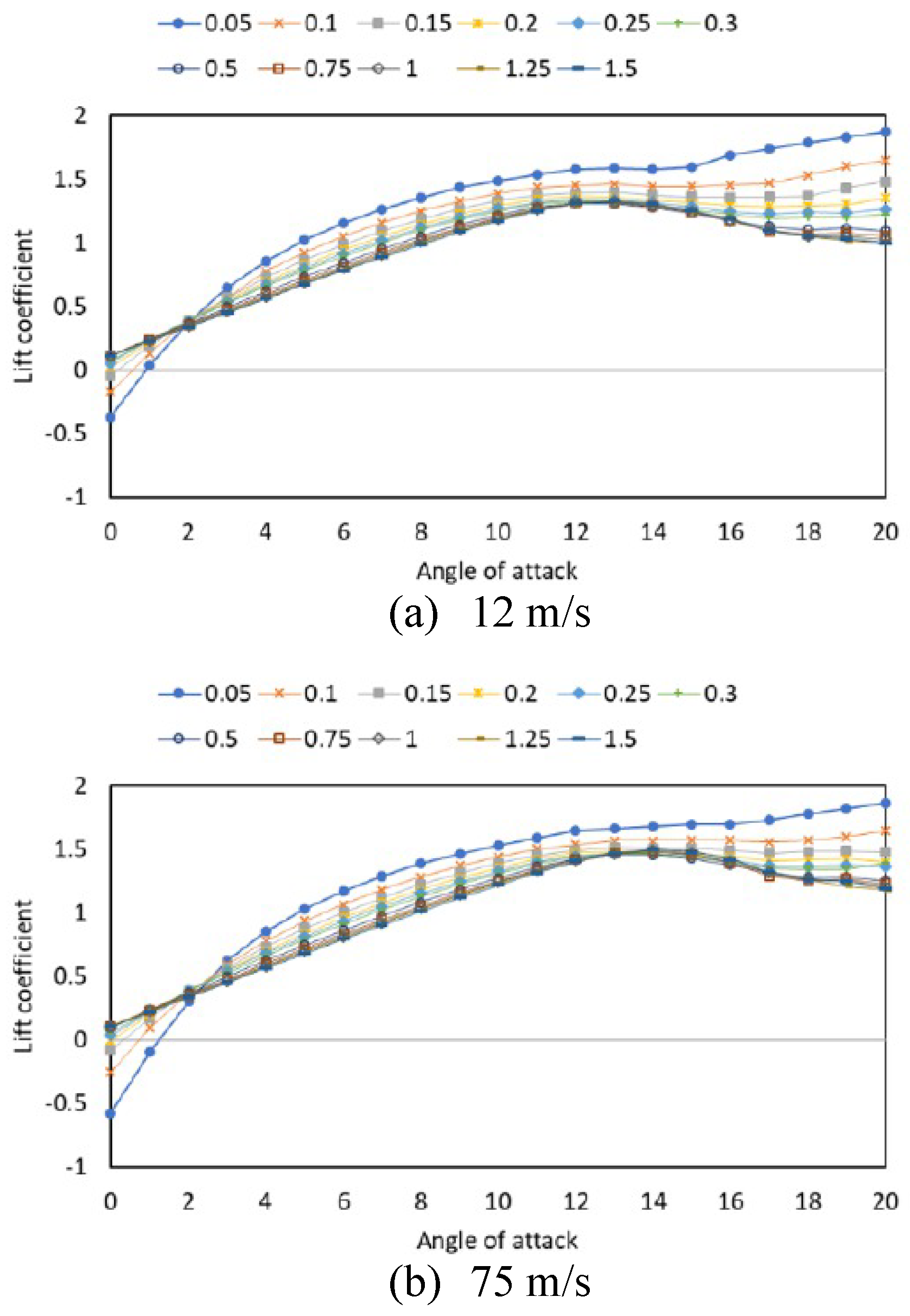
Lift curves for various
hc at flow velocity 12 and 75 m/s are shown in
Figure 12. The lift curve for
hc ≥ 0.5 exhibits a linear portion when 0°<
α <12° but shows curvature at low
hc. Lower
hc exhibits greater curvature.
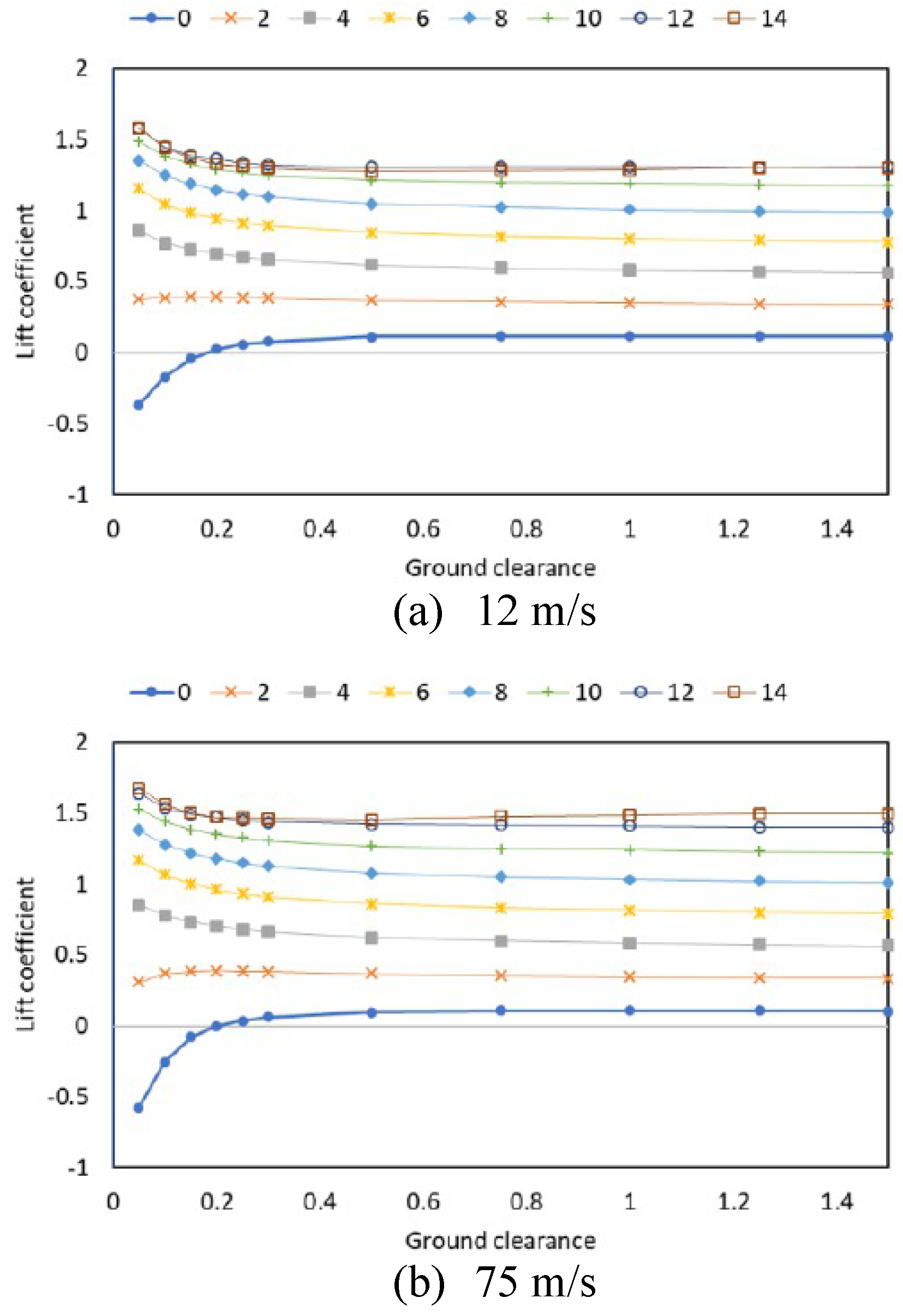
Figure 13 shows
Cl versus
hc at the same velocity. The change of
Cl is insignificant for
hc ≥ 0.5. However, for
hc ≤ 0.3 and
α ≥ 3,
Cl increases significantly as
hc decreases. An incidence of zero lift becomes less negative or becomes positive as
hc decreases. The same behavior occurs on flow velocities ranging from 12 to 75 m/s (
Re from 0.8 to 5 × 10
6).
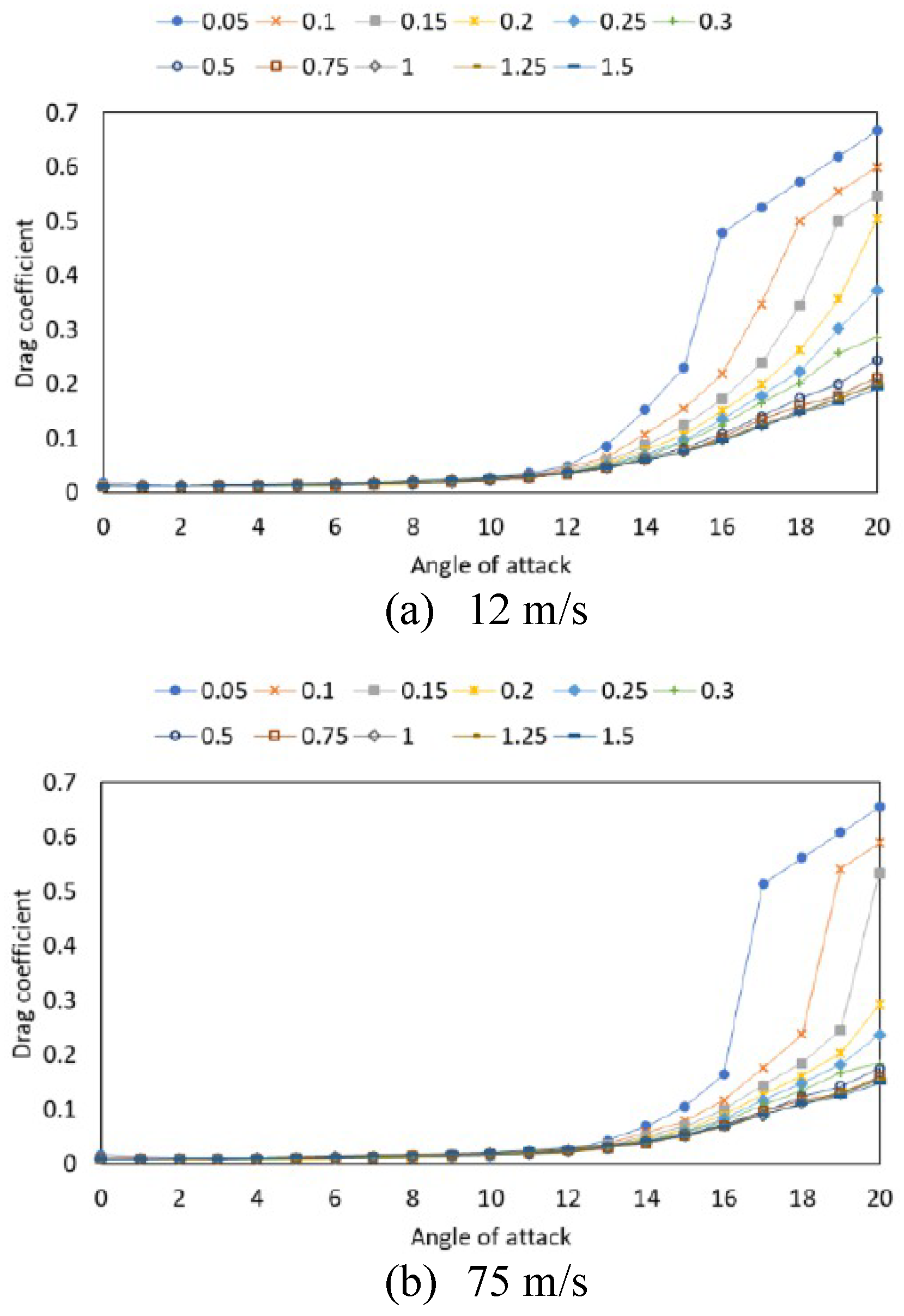
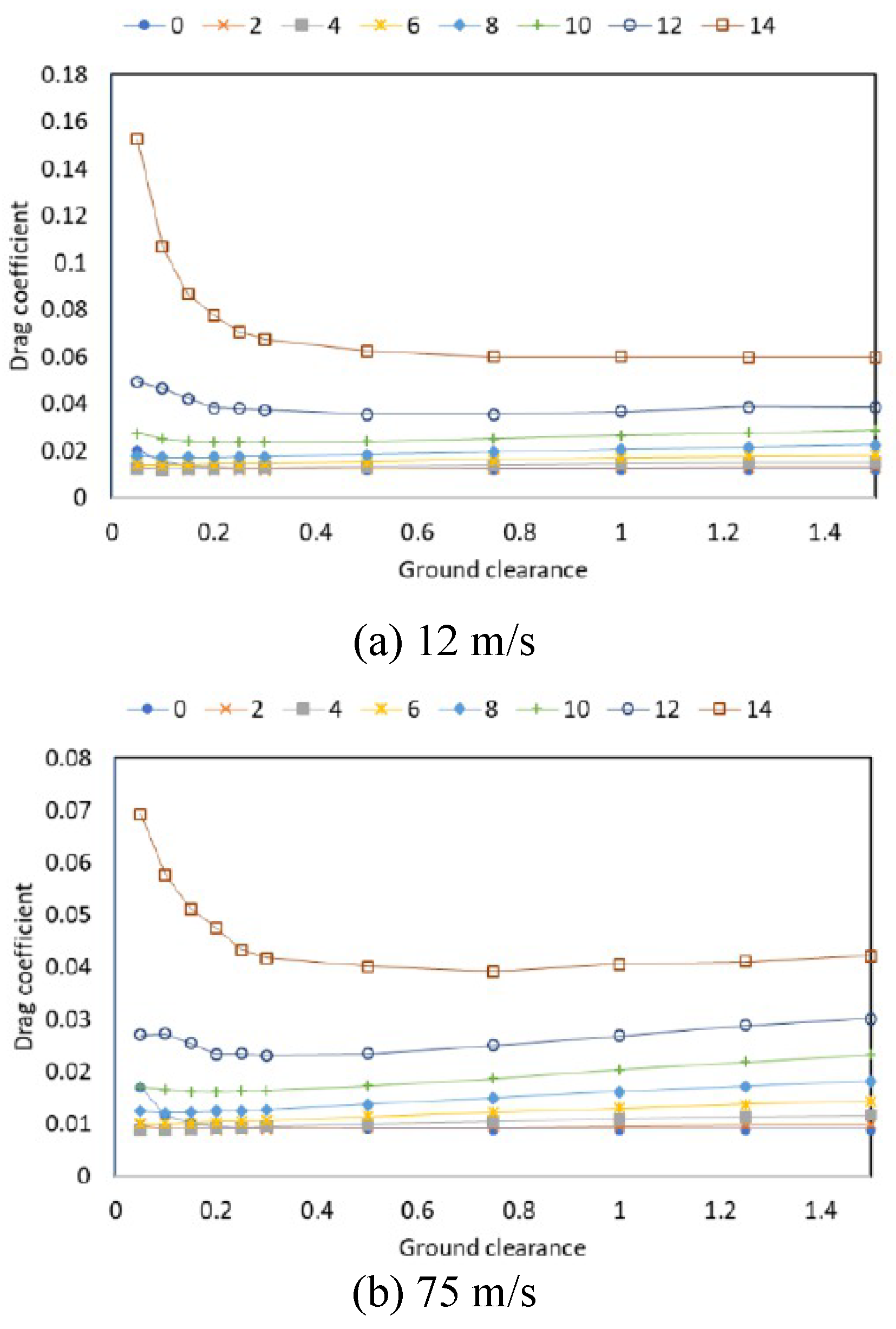
Cd increases as
α increases, especially when
α > 12° when the separation occurs. However,
Cd increases sharply at very low
hc due to the flow congestion in the passage between the airfoil and ground as shown in
Figure 14. The change of
Cd is also insignificant for
hc ≥ 0.5, as shown in
Figure 15.
In
Figure 16 and
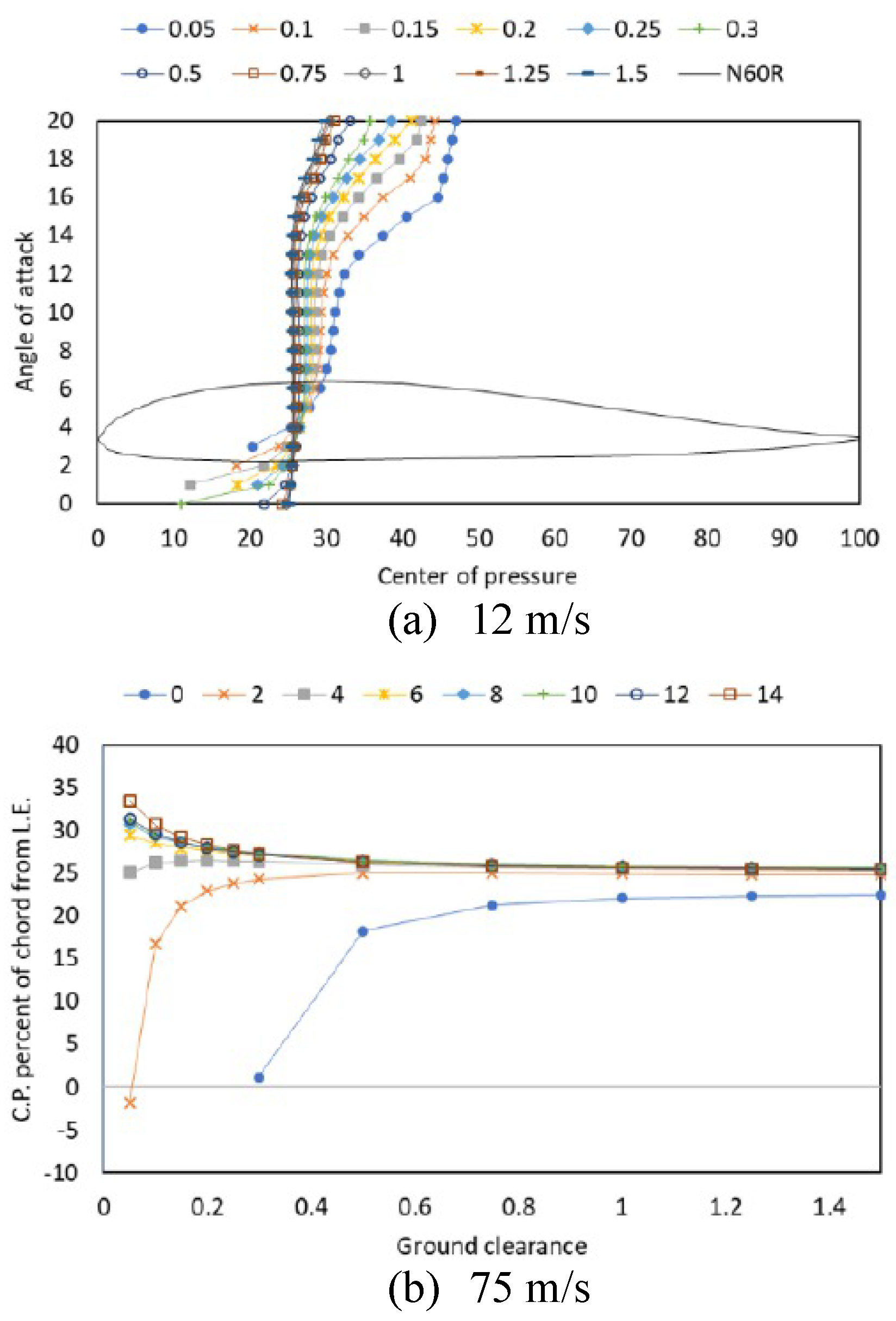
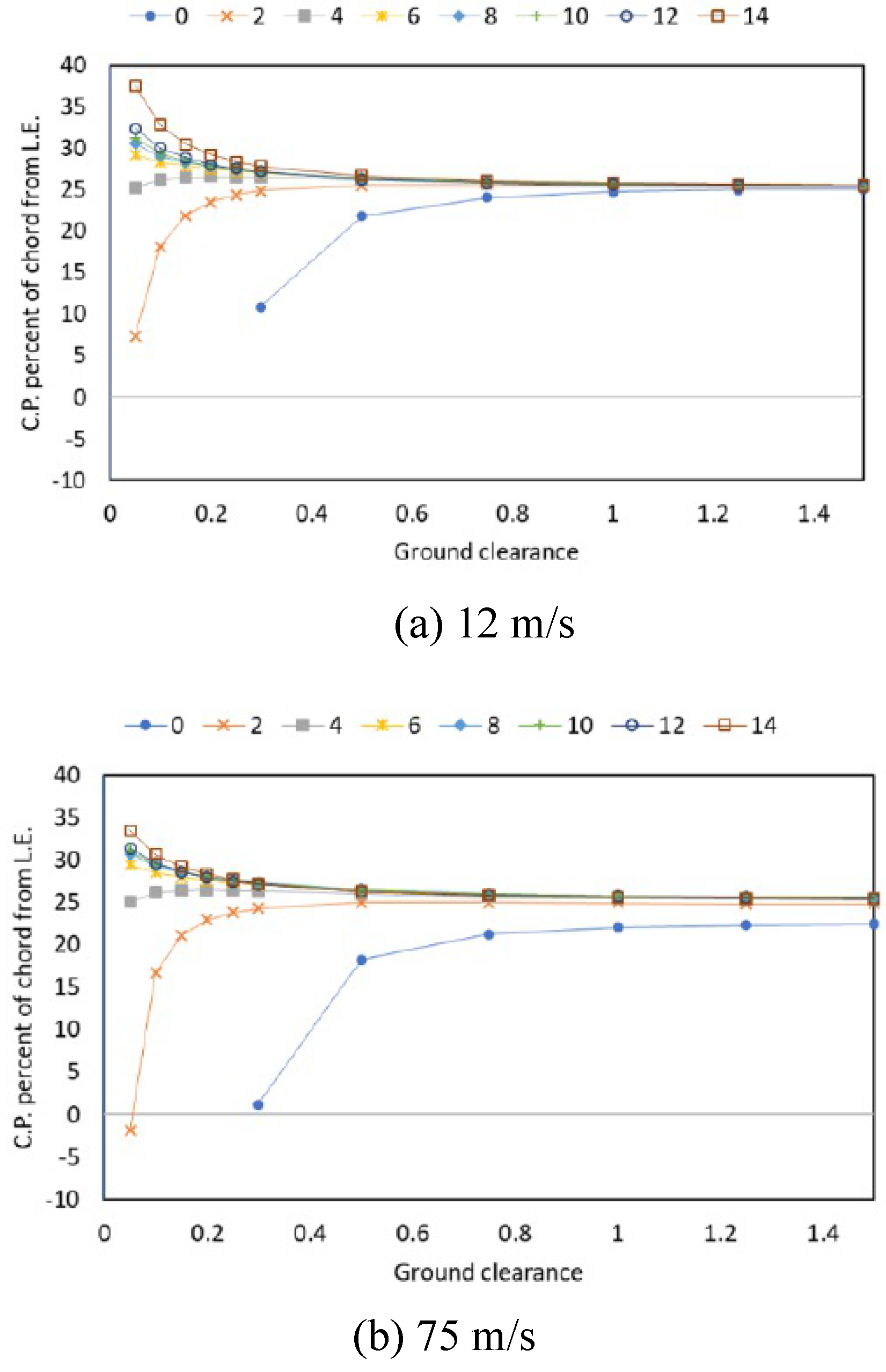
Figure 17, for
hc ≥ 0.5, the location of
Xcp is approximately a quarter of the chord from the leading edge similar to flight in free stream over the useful angle of attack before stall. In contrast to in-ground-effect flight (
hc < 0.5), the center of pressure shifts further to the trailing edge. The center of pressure may move to nearly half chord position especially at high
α and when the airfoil is extremely closed to the ground.
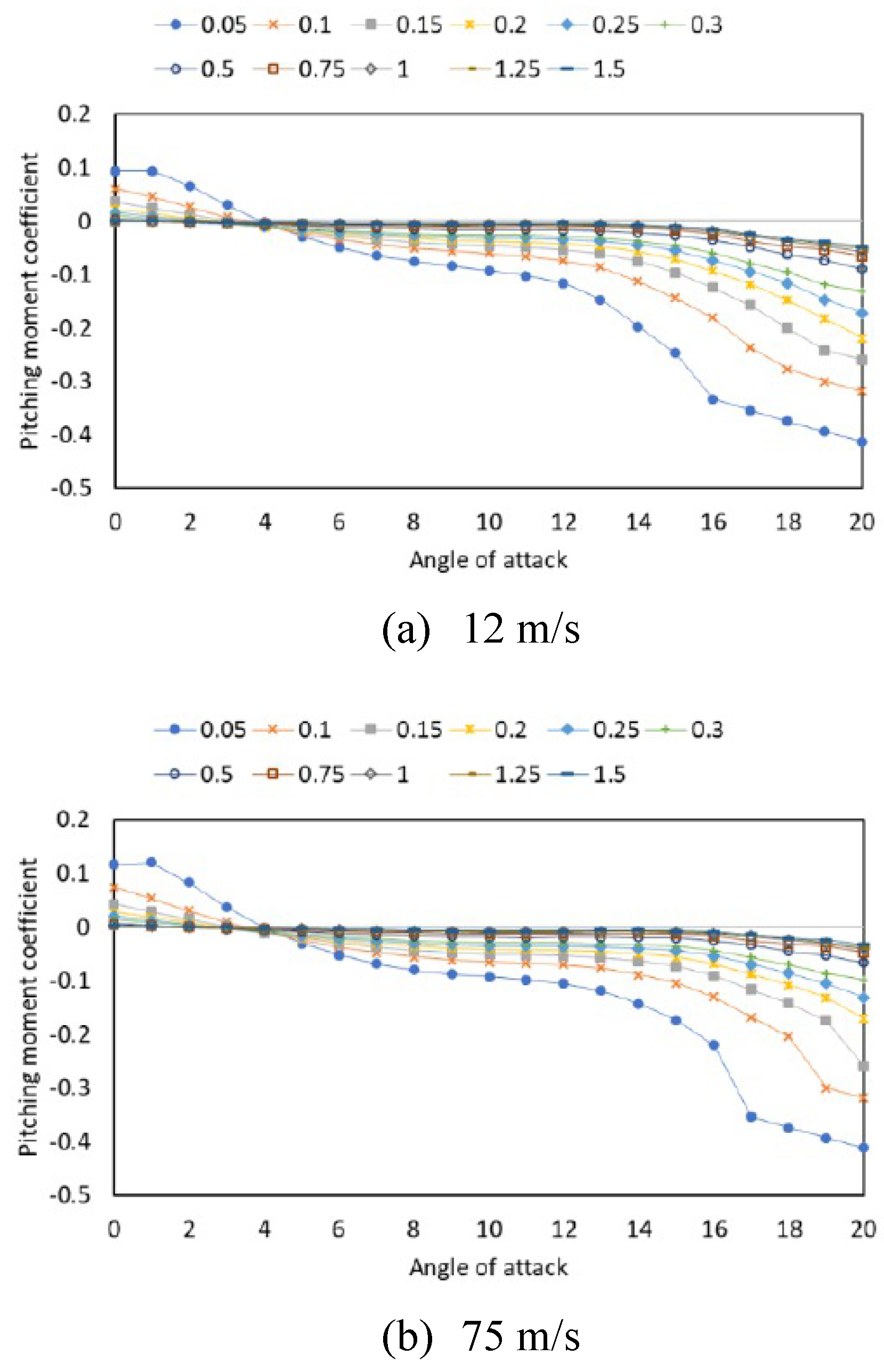
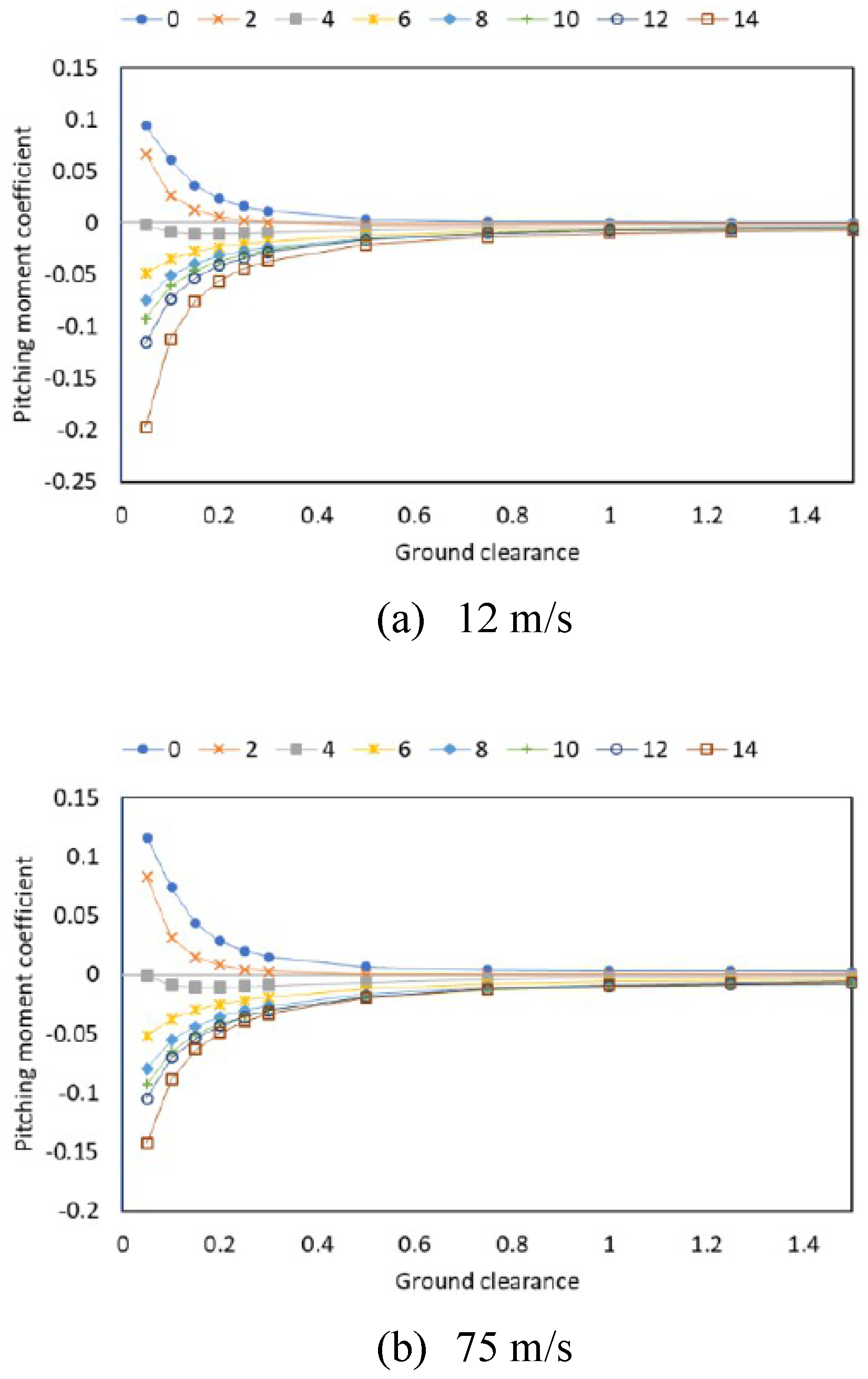
By convention, the pitching moment is defined as negative when it acts to pitch the airfoil in the nose-down direction. From
Figure 18, for
hc ≥ 0.5,
Cm is practically constant and close to zero over the useful range of
α up to the stall angle, and the negative moment slightly increases after stall. For
hc ≤ 0.3, the negative moment is significantly increased by
hc since
Xcp moves further away from the leading edge (
Figure 19).
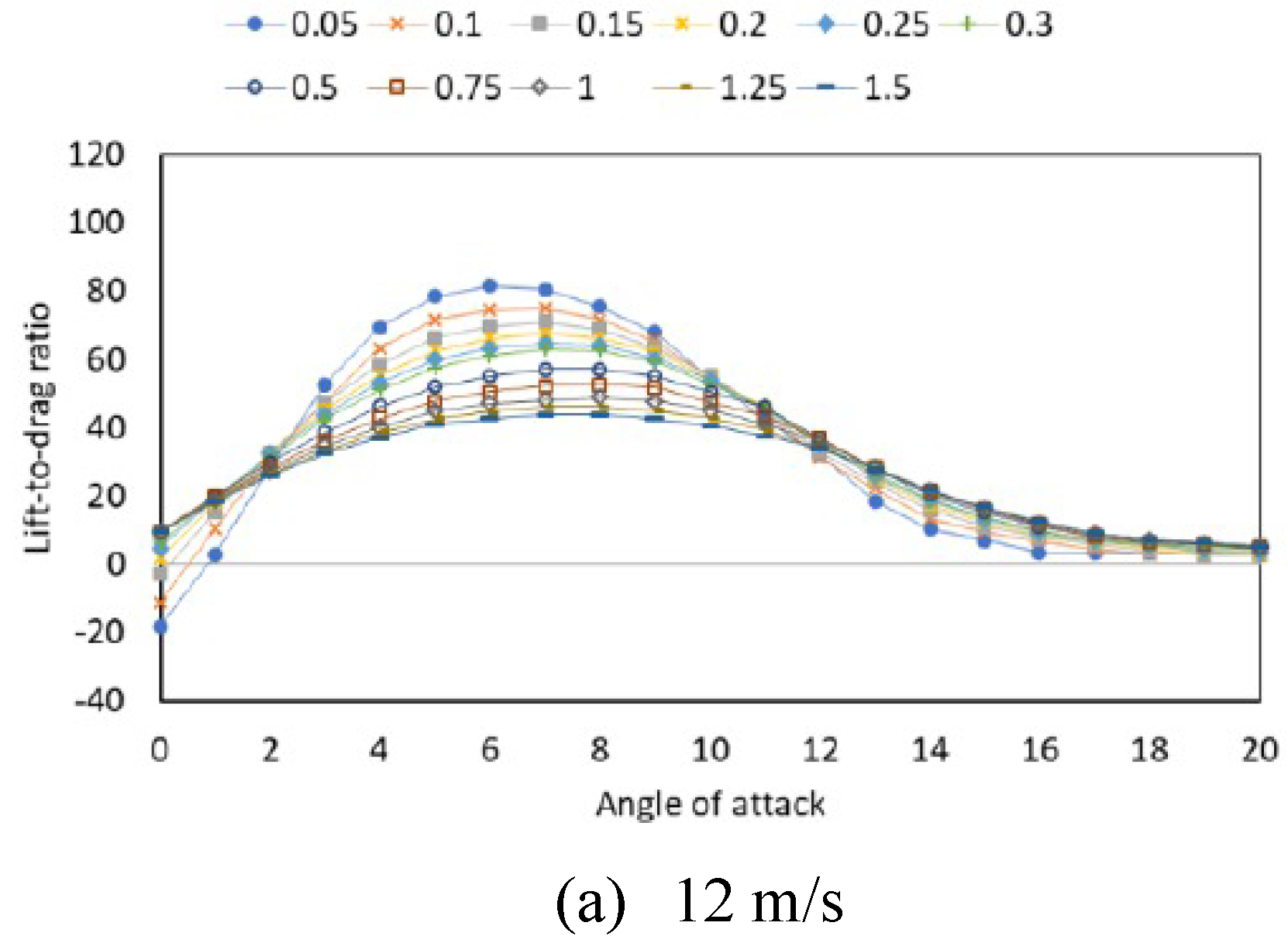
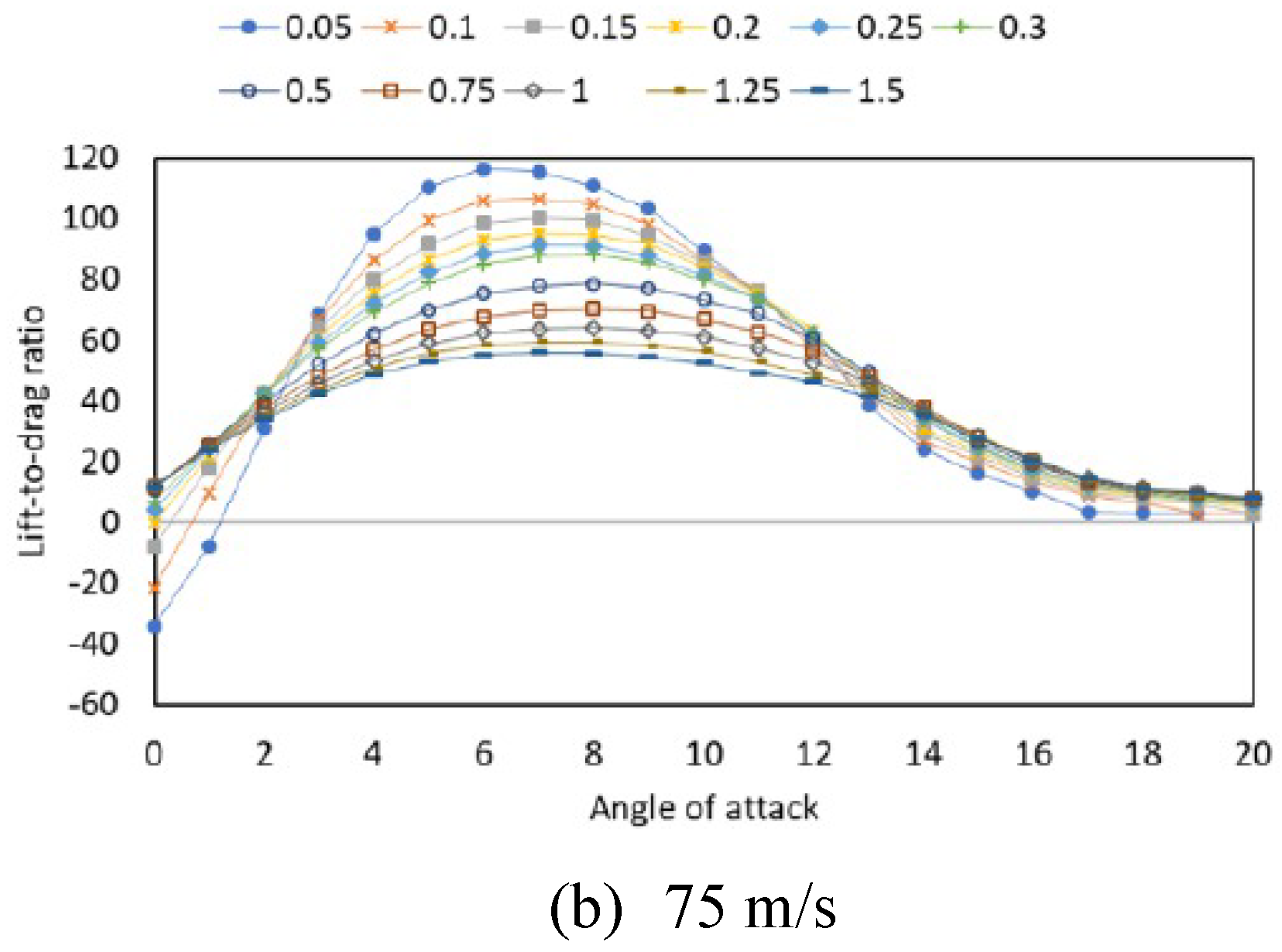
The effect of
hc on lift-to-drag ratio is demonstrated in
Figure 20 and
Figure 21. The increase in lift-to-drag ratio is clearly seen as the airfoil is close to the ground (
hc < 0.5).
To maximize efficiency, the WIG craft should cruise at a medium angle of attack (2°<α<12°) to obtain high lift-to-drag ratio and maintain hc > 0.15 to avoid instability at low ground clearance.
5.3. Regression models
There are some difficulties in performing a numerical study of the airfoil operating in GE. First, the mesh must be regenerated for each hc and α, which is a time-consuming process. Second, a large number of cells are required in the vicinity of the ground to capture the high-pressure gradient. To maximize utilization of generated data from numerical studies, the relationship between a set of variables (α, hc and flow velocity) and the response variables (aerodynamic characteristics such as Cl, Cd and Cm) can be described using regression analysis.
Over the useful range of
α (0°-15°), the Analysis of Variance (ANOVA) with the significant level 0.05 has been analyzed. The value of
α,
hc and flow velocity are defined as factors
A,
B and
C respectively. The result of ANOVA for
Cl is summarized in
Table 2 with
R2= 99.56%.
The regression model can be written as:
where y is the response (such as
Cl),
βi (for
i = 0,1,..,10) are constants whose values are to be determined,
A is a variable that represents
α,
B represents
hc and
C represents the flow velocity.
AB,
AC,
BC and
ABC represent the interaction between
A and
B,
A and
C,
B and
C,
A and
B and
C respectively.
From
Table 2, the P-value for
C,
BC and
ABC are greater than 0.05, indicating they are not statistically significant. However, the term
CC and the interaction
AC are significant (P-value < 0.05), thus factor
C cannot be excluded from the model. The same procedure was conducted for
Cl,
Cd,
Cm and lift-to-drag ratio. The constants
βi for all responses after removing insignificant factors are summarized in
Table 3.
The
R2 of the models representing
Cl,
Cd and
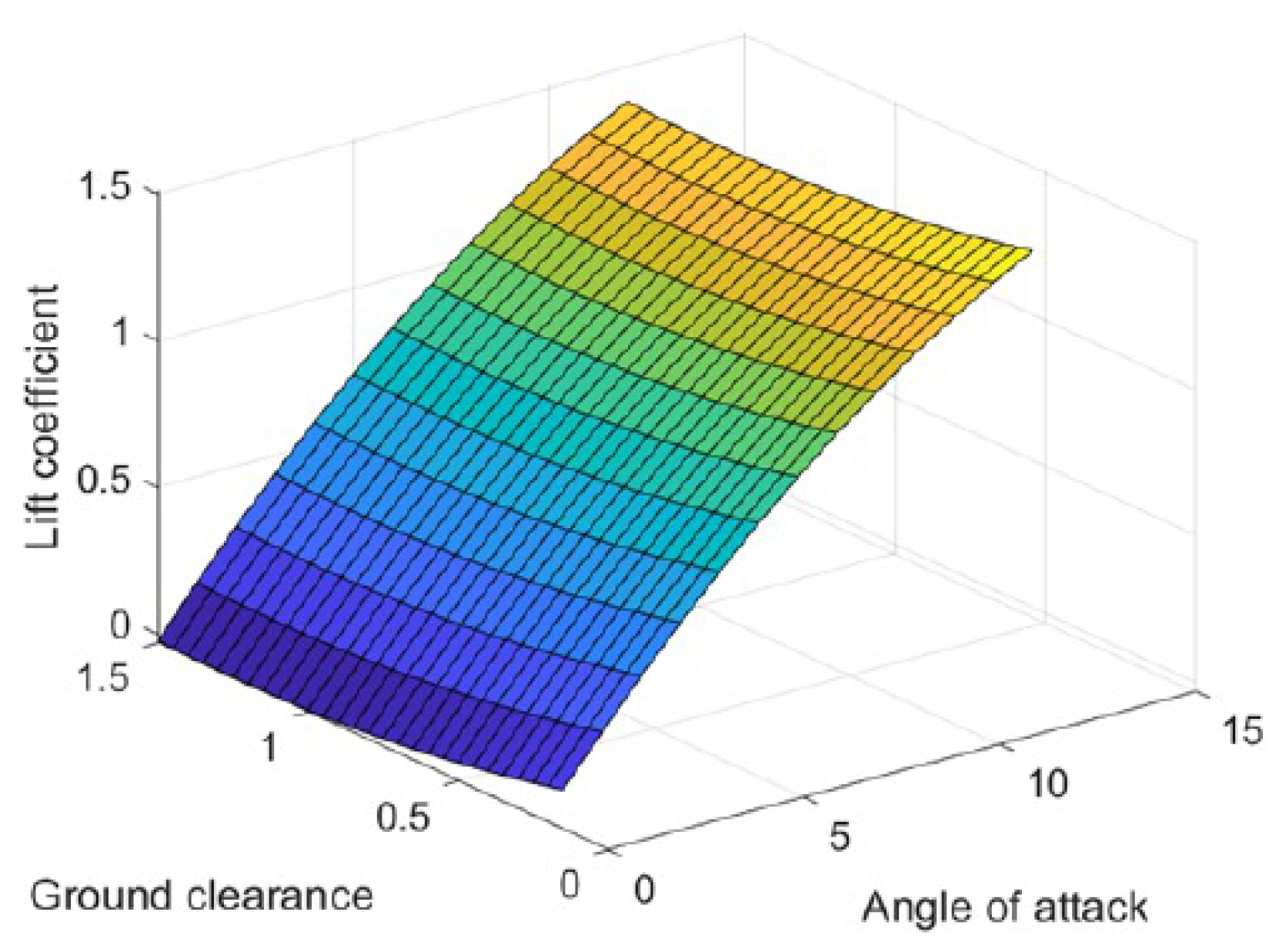
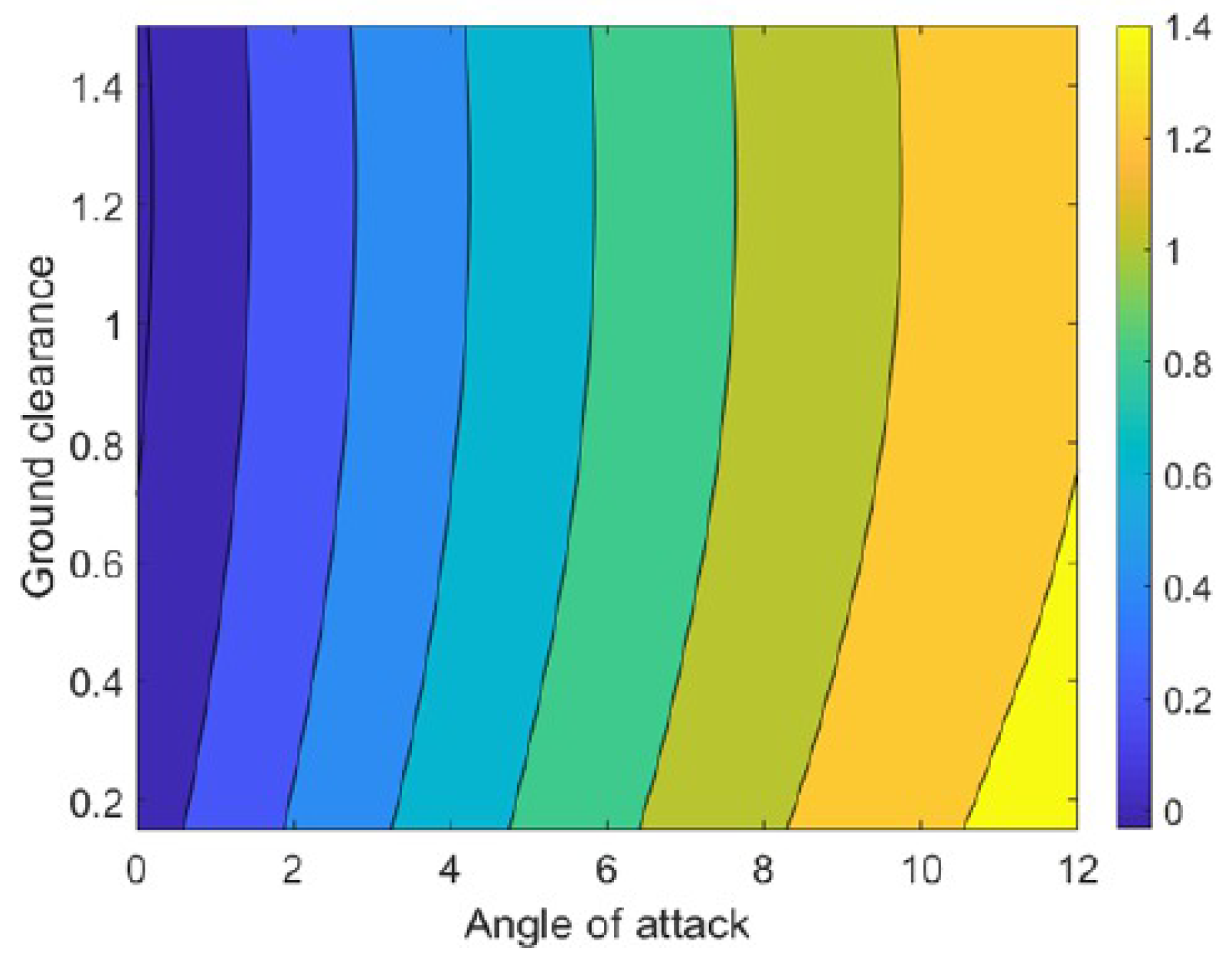
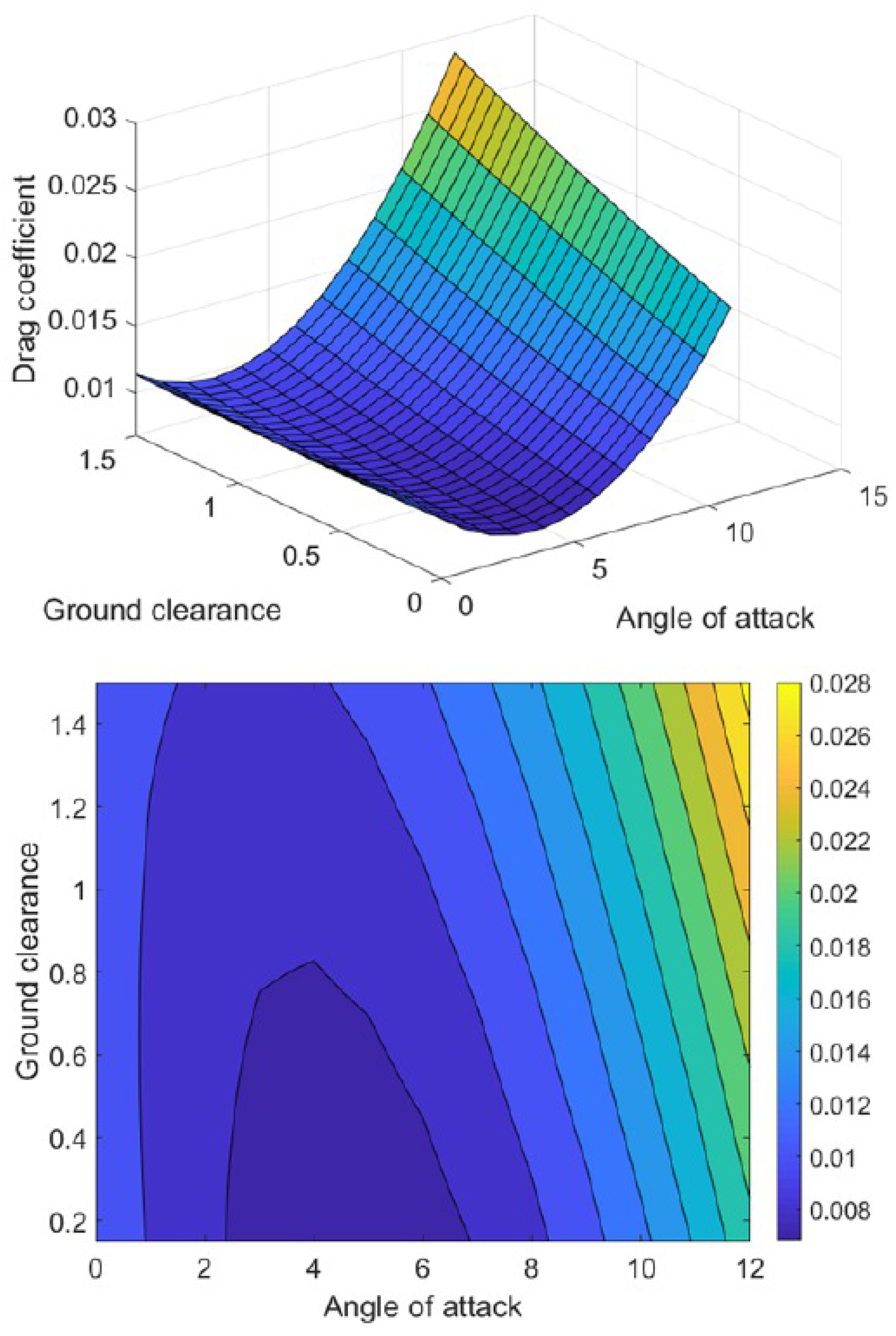
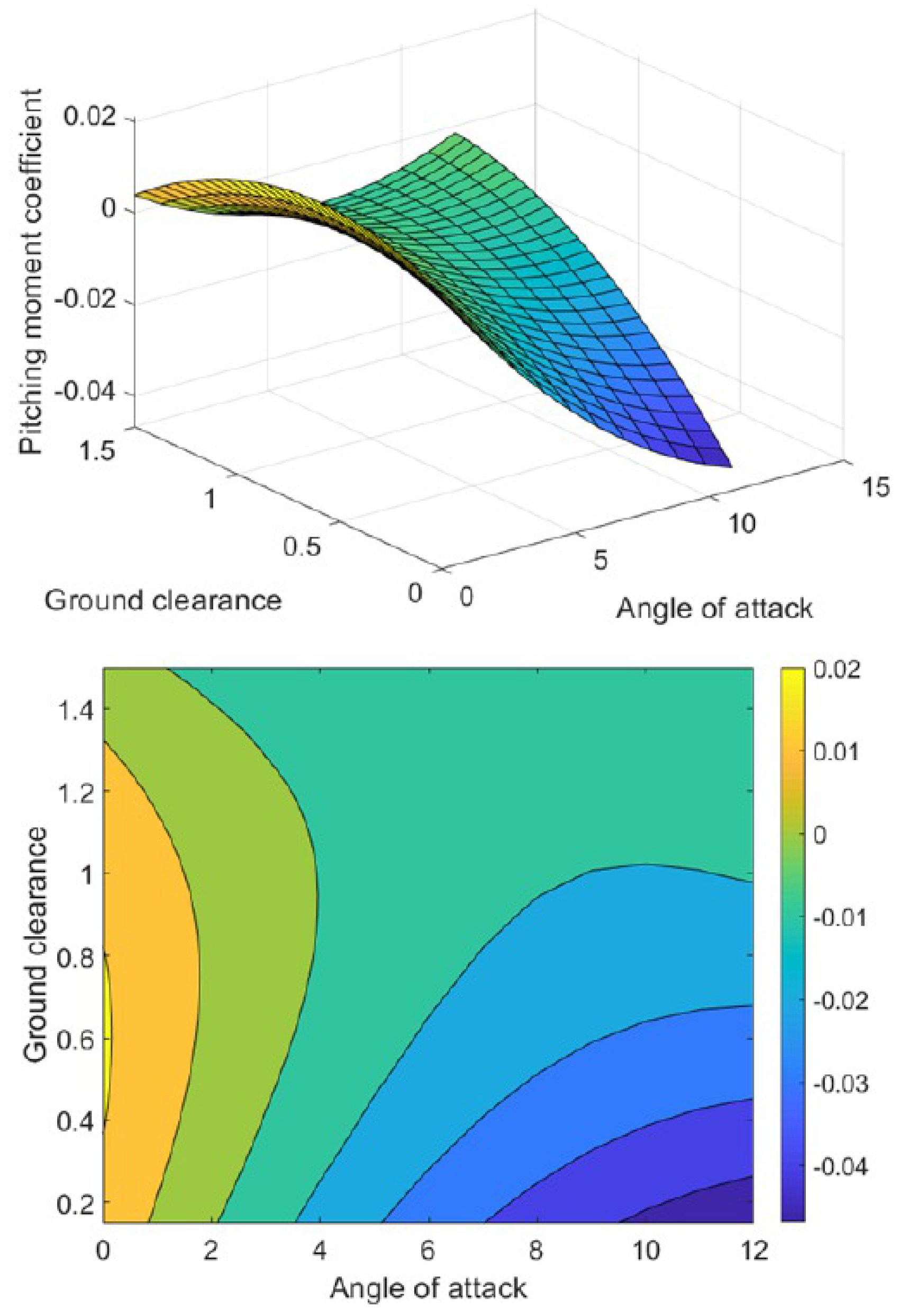
Cm and lift-to-drag ratio after removing insignificant terms are 99.56%, 97.36%, 91.31% and 94.04%, respectively. The response surfaces for the predicted
Cl,
Cd and
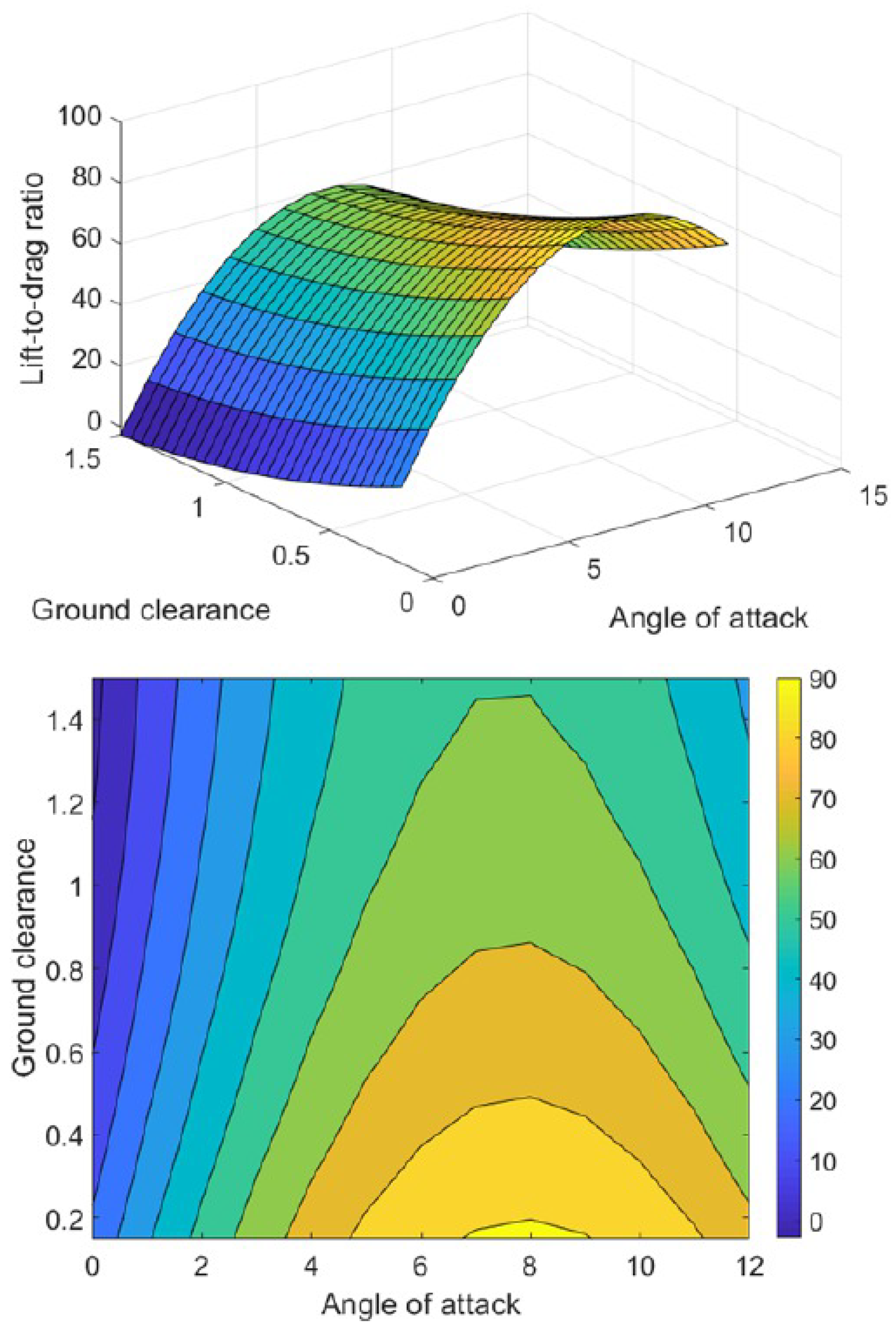
Cm and lift-to-drag ratio at flow velocity 75 m/s can be generated as shown in
Figure 22,
Figure 23,
Figure 24 and
Figure 25.
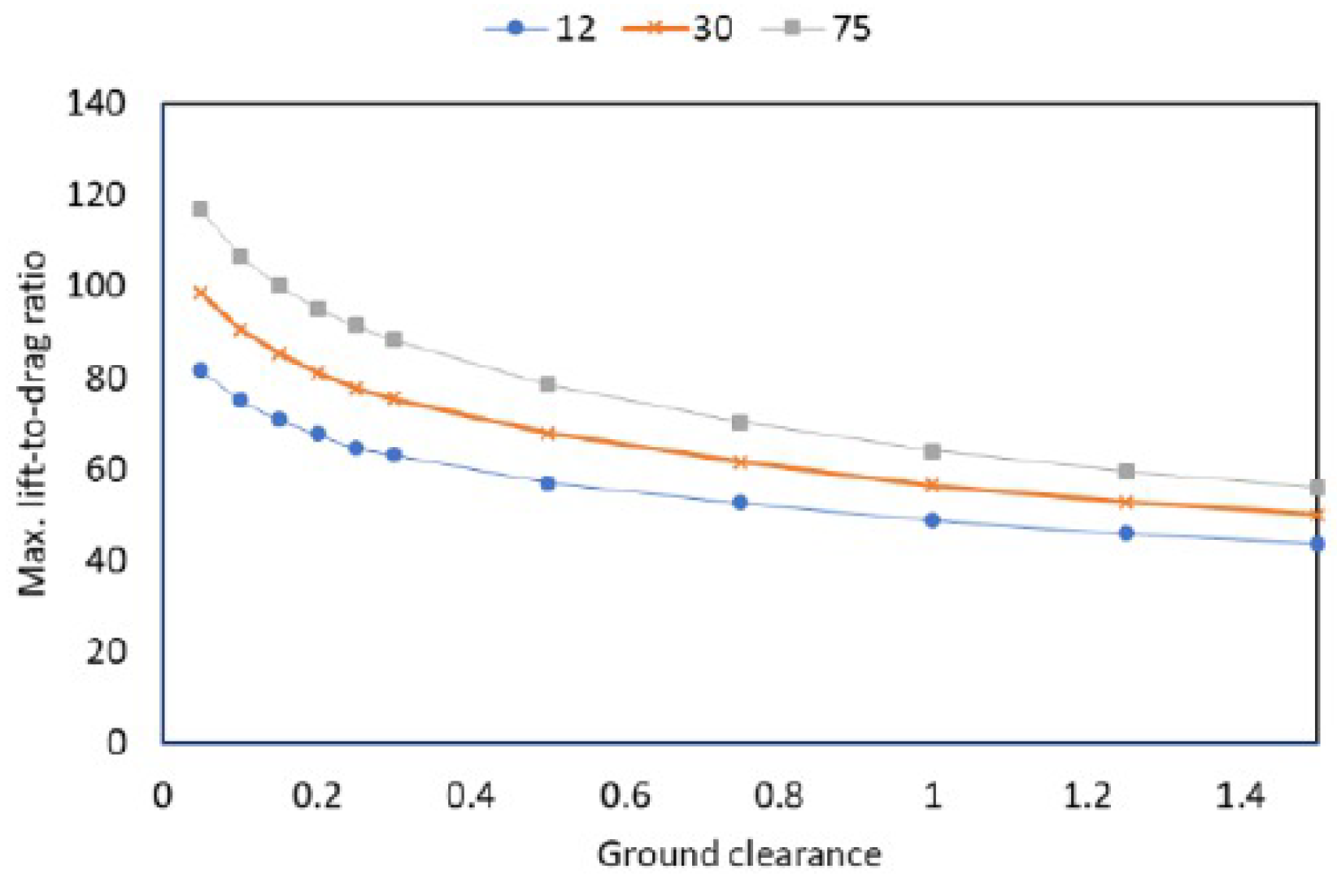
It is shown that Cl increases as α increases and hc decreases while minimum Cd occurs: around α = 4° to 6° when hc is less than 0.8. The maximum lift-to-drag ratio is located around α = 6° to 8° and decreases as hc increases.
5.3. Backtesting of the regression models
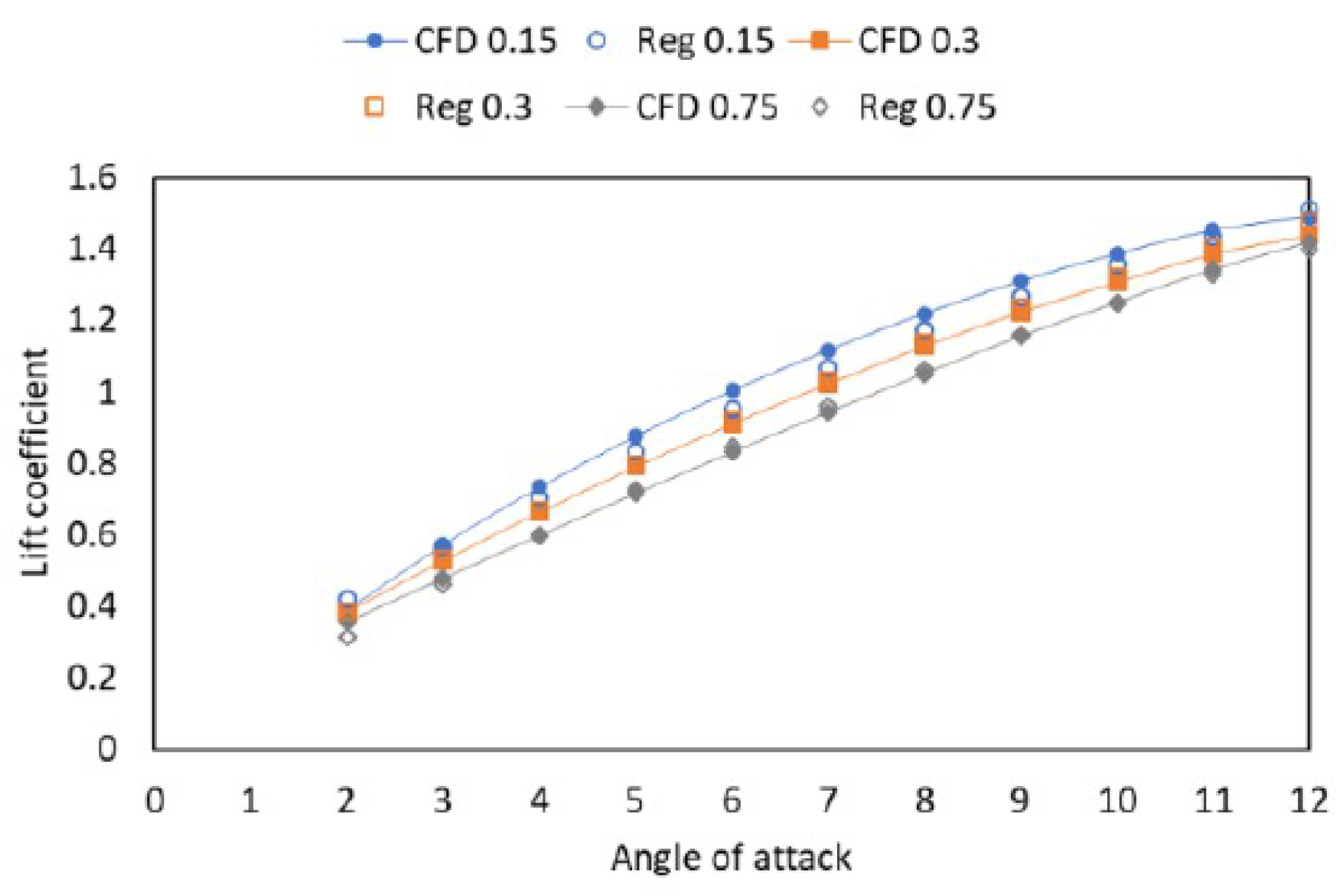
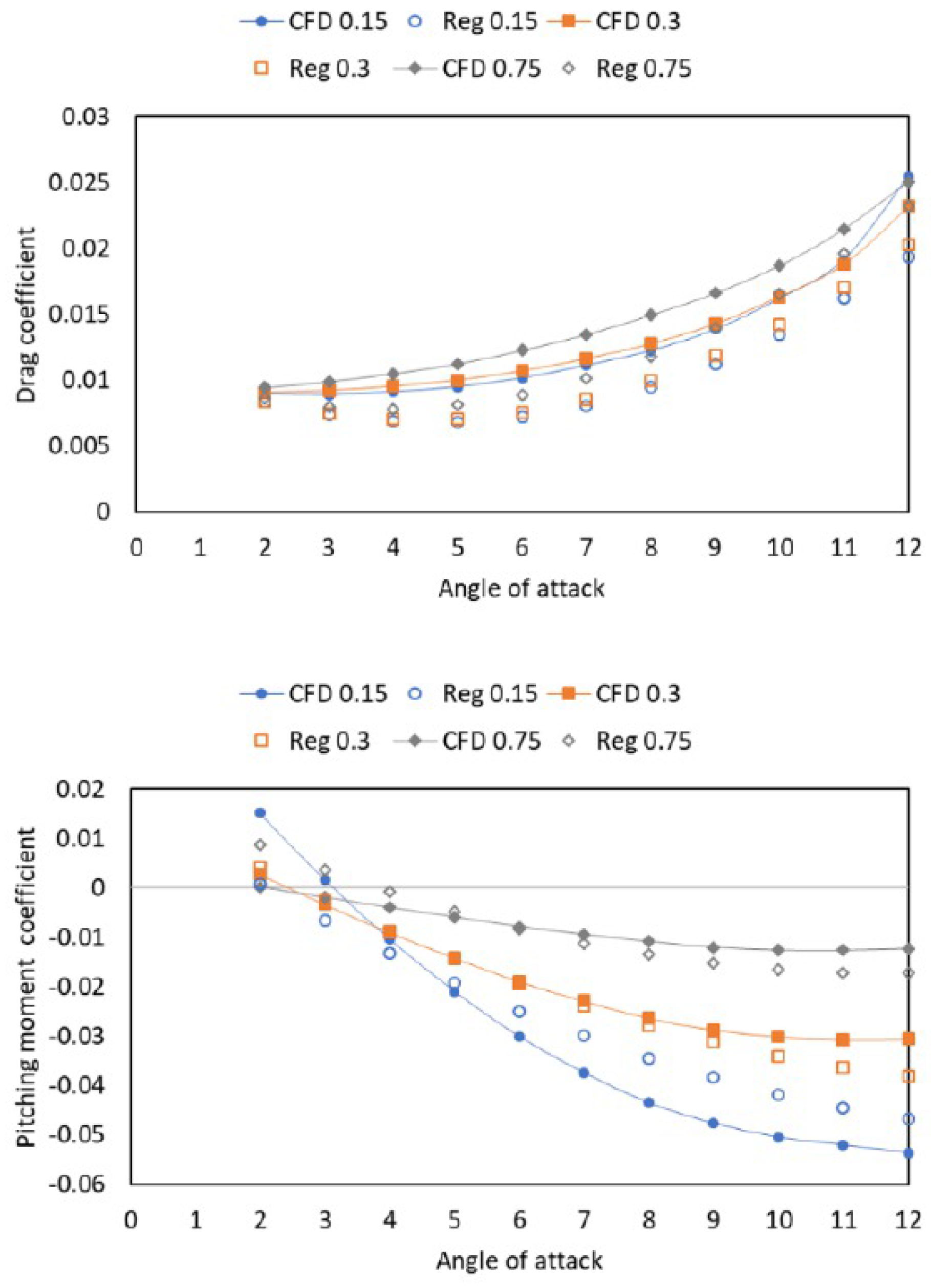
To validate the accuracy and performance of the models described in the previous section, a comparison between data from CFD and regression was conducted. The results at flow velocity 75 m/s are shown in
Figure 26. The regression accuracy is acceptable in the range of
α (2° to 12°). The lift is predicted quite well except at
hc = 0.15, which is under-predicted. The drag is under-predicted for all ranges of
α and
hc. The error of the moment coefficient prediction is quite large for
hc = 0.15 but acceptable for
hc > 0.3.
6. Conclusions
A numerical study of the reflexed airfoil, N60R, was conducted to investigate the effect of α, hc and flow velocity on the aerodynamic characteristics in GE. It is clearly shown that the GE has an effect on Cl, Cd, Cm, and Xcp, especially when hc< 0.5. The pitching moment is almost equal to zero over a useful range of α but the nose-down moment increases as hc decreases below 0.3. At an angle of attack approximately 6° to 7°, the maximum lift-to-drag ratio can be achieved. The increase in the lift-to-drag ratio enhances the efficiency of the airfoil compared with the out-of-ground effect flight.
The regression models were presented to predict the Cl, Cd, Cm and lift-to-drag ratio with acceptable accuracy for α ranging from 2° to 12° and hc from 0.15 to 1.5.