
Morphology of the Labial Frenum by Age Cohort: A Cross-Sectional Study
 , ,
, ,
Abstract
1. Introduction
2. Materials and Methods
2.1. Study Design
2.2. Participants and Eligibility Criteria
2.3. Examiner Training and Calibration
2.3.1. Examiner Training, Calibration, and Agreement
2.3.2. Measurements and Operational Definitions
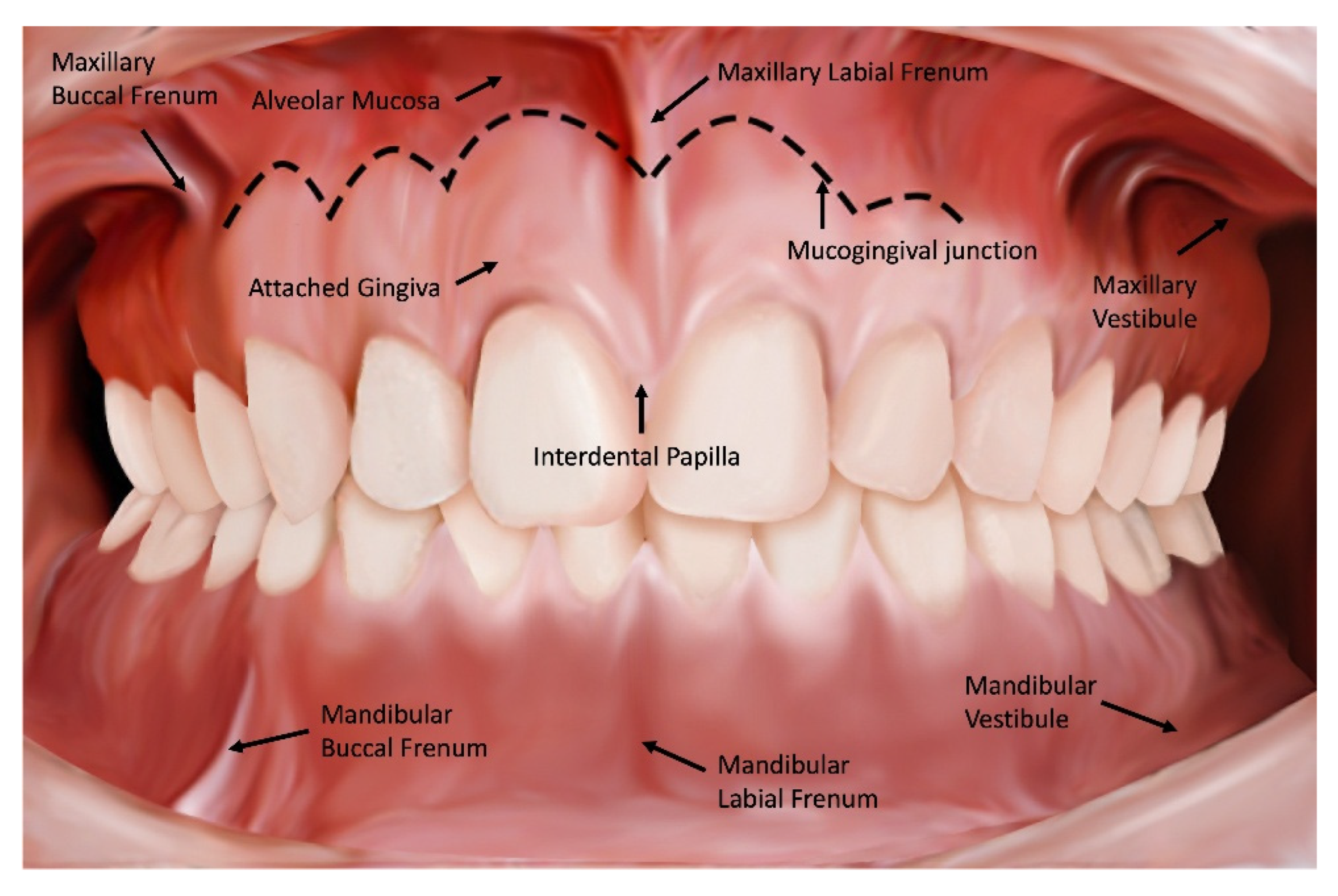
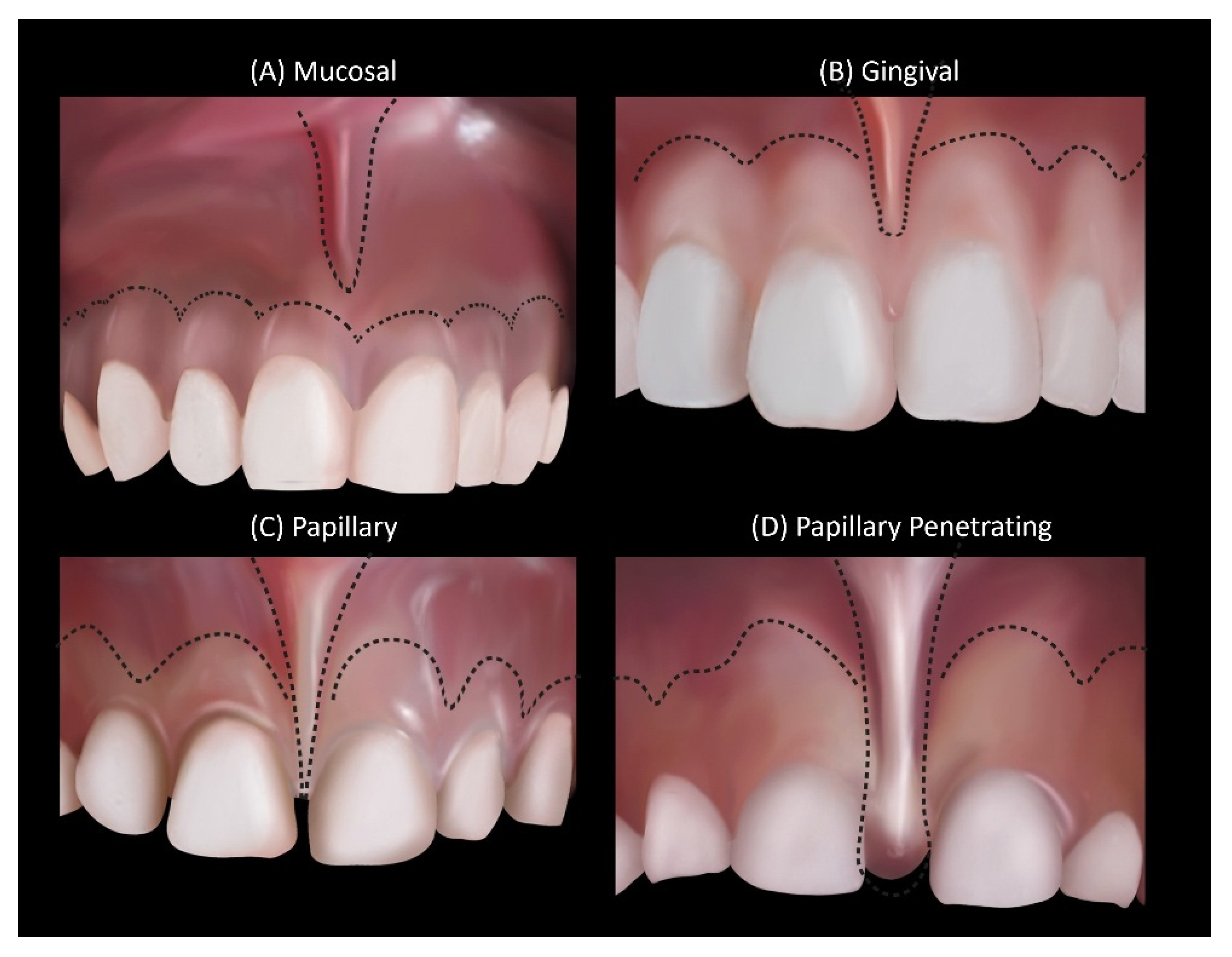
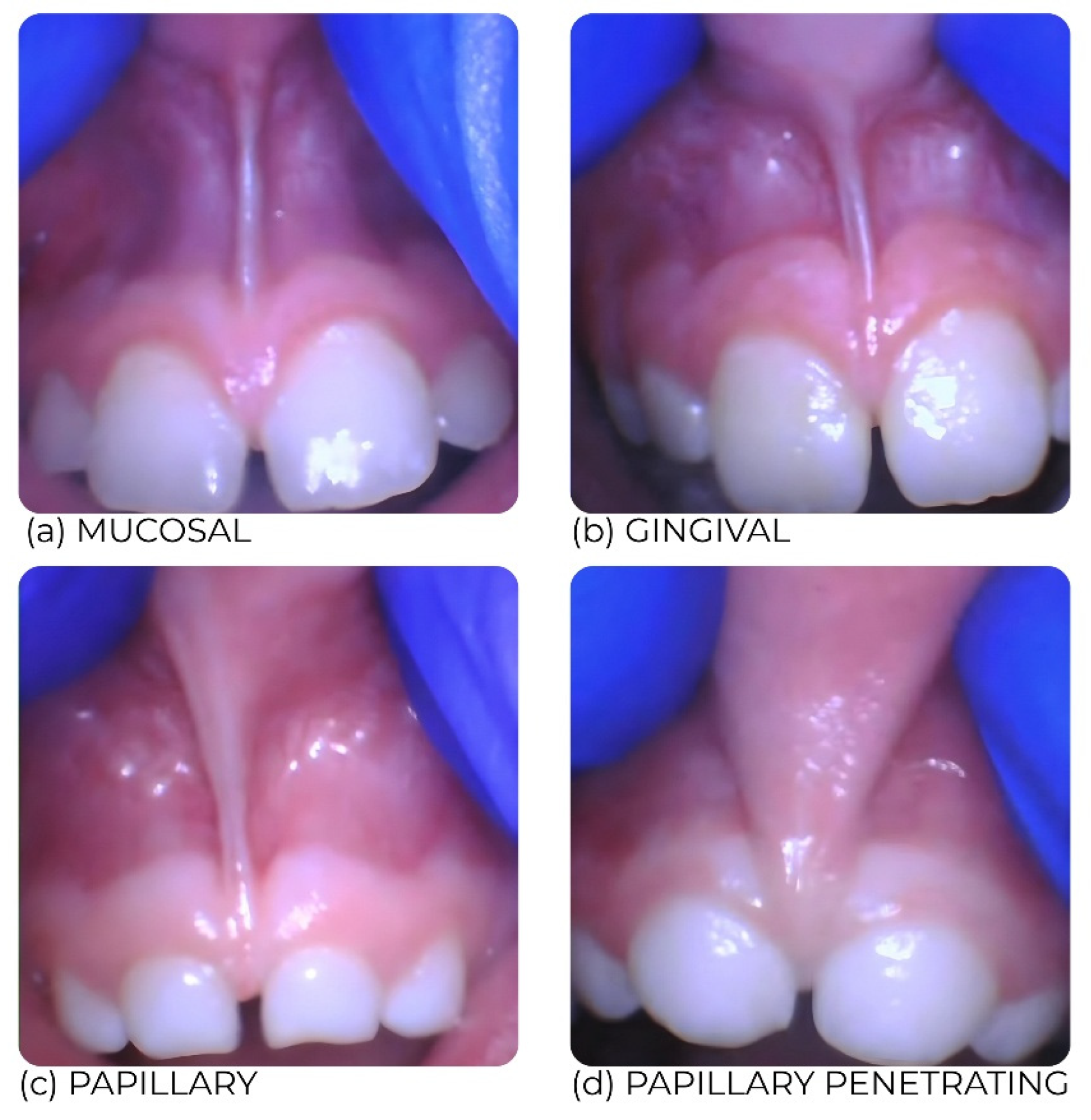
- Frenum morphology (primary exposure): classified as mucosal, gingival, papillary, or papillary-penetrating.
- Palpable tension (functional exposure): assessed by manual lip pulling to the mucogingival junction with a gloved finger. Tension was defined as visible blanching and/or palpable resistance relative to adjacent mucosa; recorded as present/absent.
- Midline diastema (primary outcome): defined as ≥1 mm spacing between maxillary central incisors, measured at the incisal midline using a periodontal probe under standardized lighting. If two immediate readings differed, the larger value was recorded; when feasible, the exact width in millimeters was also documented Although transient midline spacing of up to 2 mm may be considered physiologic during the mixed dentition period, a ≥1 mm threshold was selected to ensure consistent identification of visible diastema across all age cohorts and to allow standardized regression modeling.
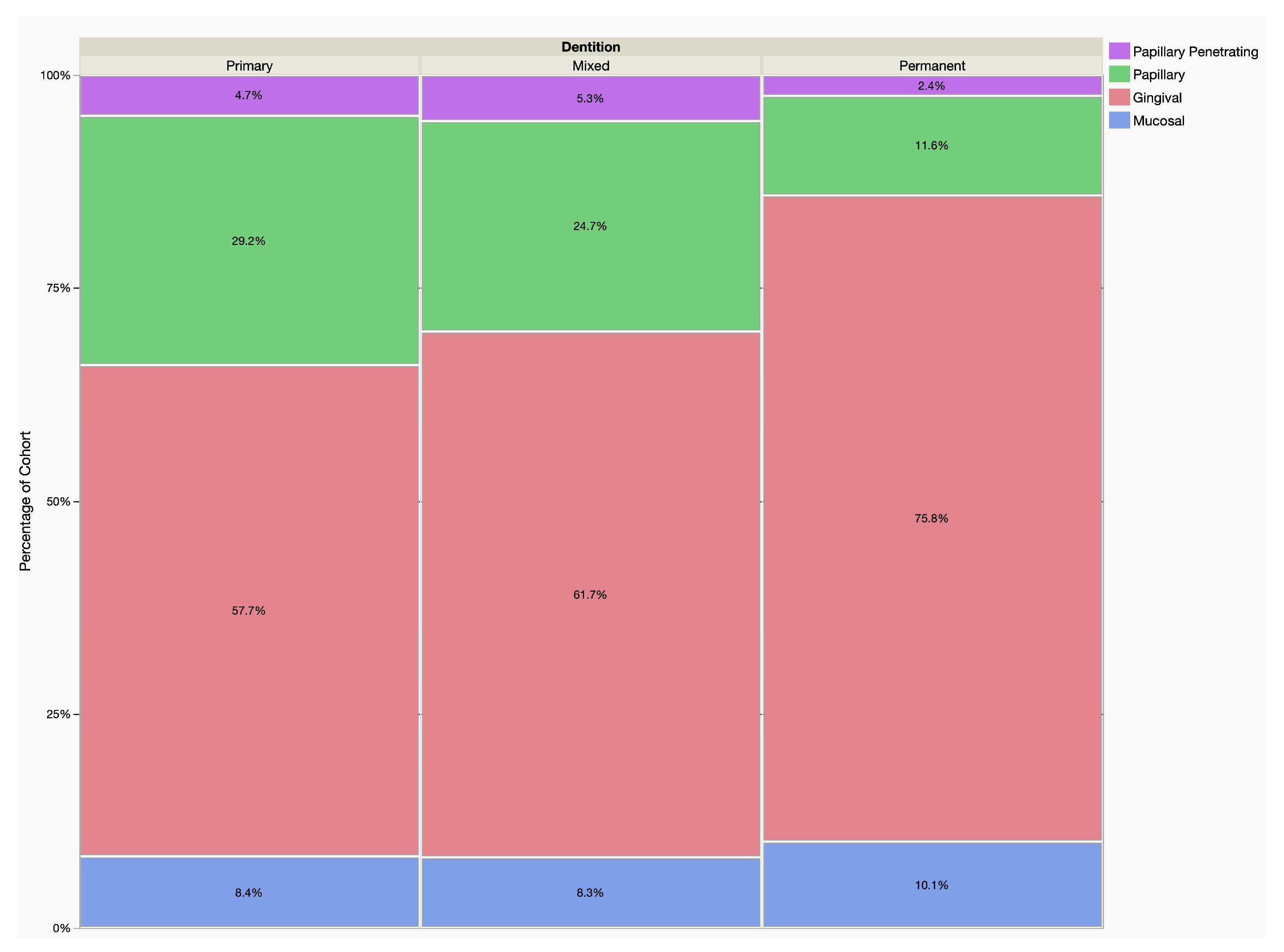
- Dentition stage: categorized as primary, mixed, or permanent per clinical criteria.
- Demographics and covariates: age and sex (complete cohort). In infants < 2 years, additional features such as lip flange seal, sucking/lip clicking, and bony notching were noted when present. Functional/behavioral covariates (habitual open-mouth posture, awake mouth breathing, drooling) were documented when observed.
- Periodontal findings: presence or absence of gingival recession at mandibular incisors was recorded.
- Photographic documentation: representative intraoral photographs were obtained in a subset for validation, documentation, and quality checks.
2.3.3. Bias Control and Handling of Missing Data
2.4. Sample Size Determination
2.5. Statistical Analysis
- Analyses were performed in JMP Pro v16.0 (SAS Institute, Cary, NC, USA).
- Descriptive statistics: continuous variables as mean ± SD; categorical variables as counts and percentages ± SE.
- Group comparisons: Associations between age cohort, dentition stage, sex, and clinical outcomes (frenum morphology, palpable tension, midline diastema) were evaluated using Pearson’s Chi-square tests. Bonferroni correction was applied for multiple comparisons, with statistical significance set at two-tailed p < 0.001.
- Effect sizes: Relative risks (RR) with 95% confidence intervals (CI) were calculated for associations between diastema and (i) frenum morphology and (ii) palpable tension.
- Regression modeling: Logistic regression was performed with diastema (present vs. absent) as the dependent variable and frenum morphology, tension, age, sex, and dentition stage as independent covariates. Odds ratios (ORs) with 95% CIs were reported. Sex-stratified models were conducted as sensitivity analyses. In a subset of patients, additional clinical covariates (e.g., mouth breathing, drooling, open-mouth posture) were explored in supplementary analyses.
- Missing data: Cases with incomplete records were excluded listwise from the relevant analysis; denominators are explicitly stated for each comparison.
- Sample size and power: An a priori sample size calculation estimated that 511 participants would be required to detect a 10% difference in proportions between age cohorts (SD = 20%, α = 0.001, power = 99.9%). The final cohort (n = 1068) exceeded this requirement, ensuring robust power for the detection of clinically meaningful differences.
2.6. STROBE Compliance
3. Results
3.1. Demographic Characteristics
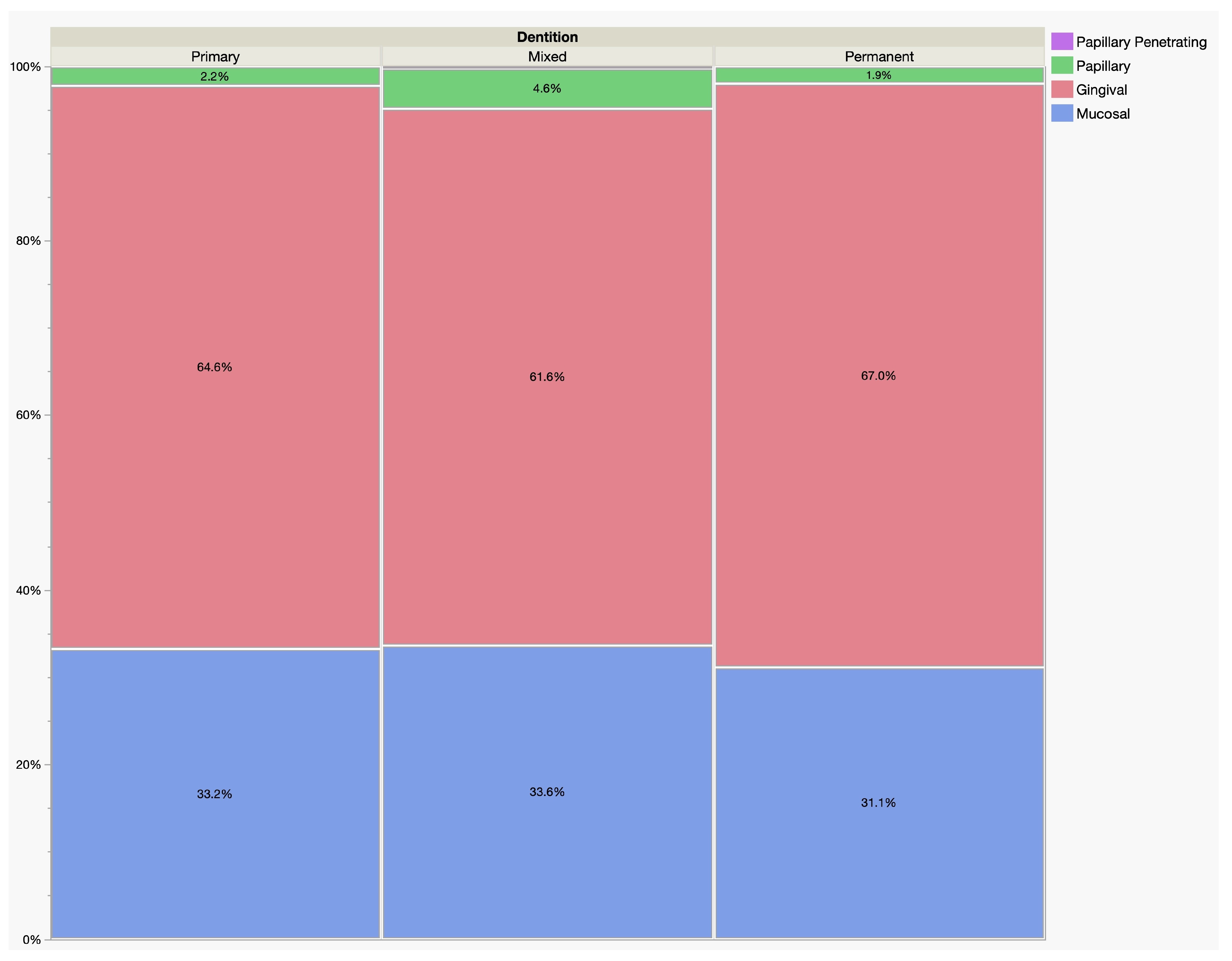
3.2. Maxillary Labial Frenum: Morphology by Age Cohort and Dentition Stage
3.3. Maxillary Labial Frenum: Incidence of Palpable Tension by Age Cohort
3.4. Mandibular Labial Frenum: Morphology by Age Cohort and Dentition Type
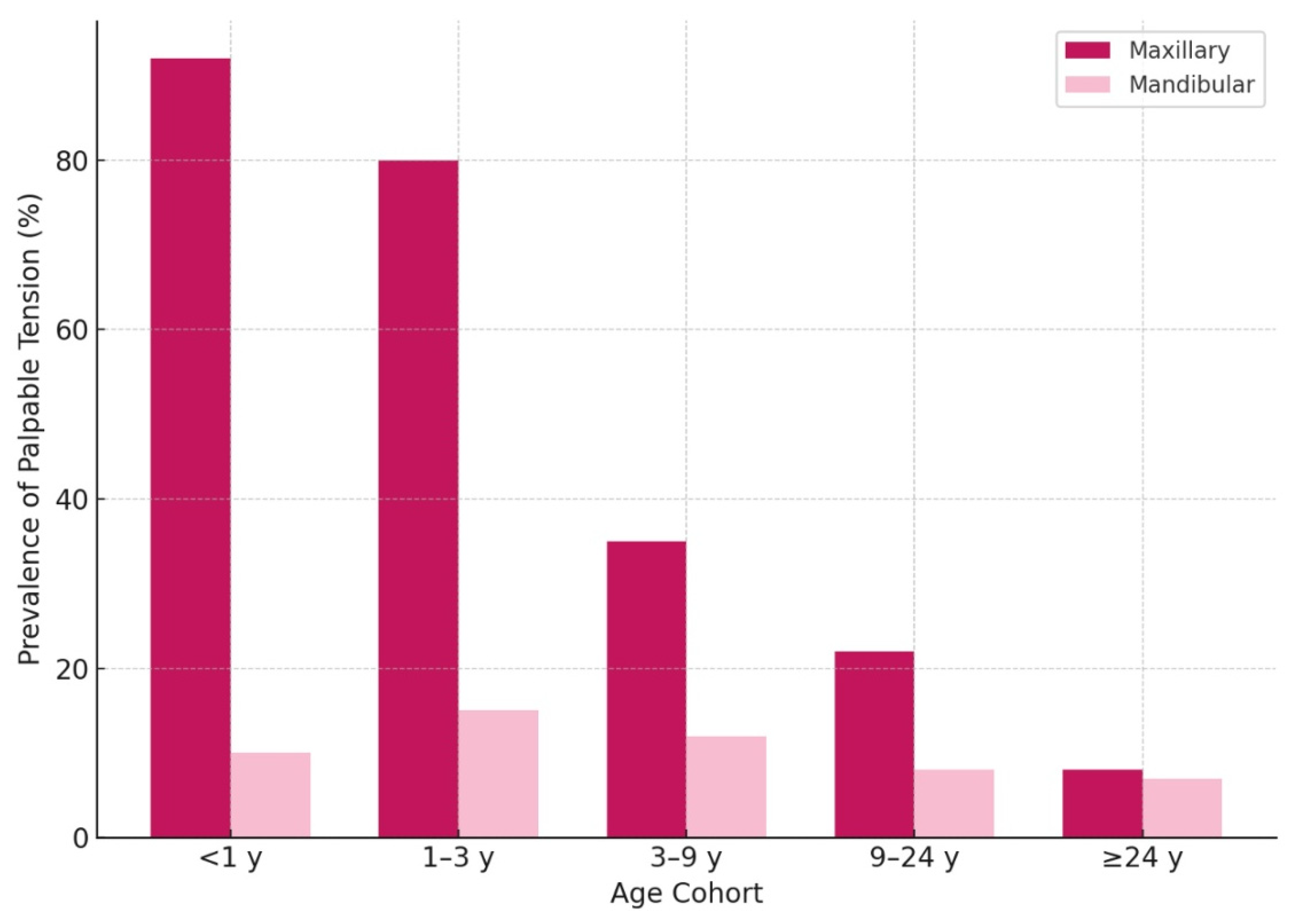
3.5. Prevalence of Palpable Tension by Age Cohort
- Infants < 1 year (n = 40): 92.5 ± 4.2%
- Children 1–3 years (n = 30): 80.0 ± 7.3%
- Children 3–9 years (n = 327): 35.0 ± 3.2%
- Adolescents/young adults 9–24 years (n = 284): 22.5 ± 2.9%
- Adults ≥ 25 years (n = 13): 7.7 ± 7.4%
3.6. Association Between Maxillary Frenum Morphology, Tension, and Midline Diastema
4. Discussion
4.1. Clinical Implications
4.2. Strengths and Limitations
4.3. Future Directions
5. Conclusions
Supplementary Materials
Author Contributions
Funding
Institutional Review Board Statement
Informed Consent Statement
Data Availability Statement
Conflicts of Interest
Abbreviations
| IRB | Institutional Review Board |
| SD | Standard Deviation |
| SE | Standard Error |
| STROBE | Strengthening the Reporting of Observational Studies in Epidemiology |
| RR | Relative Risk |
| CI | Confidence Interval |
References
- Henry, S.W.; Levin, M.P.; Tsaknis, P.J. Histologic features of the superior labial frenum. J. Periodontol. 1976, 47, 25–28. [Google Scholar] [CrossRef]
- Placek, M.; Skach, M.; Mrklas, L. Significance of the labial frenum attachment in periodontal disease in man. J. Periodontol. 1974, 45, 891–894. [Google Scholar] [PubMed]
- Kotlow, L.A. Oral diagnosis of abnormal frenum attachments in neonates and infants: Evaluation and treatment of the maxillary and lingual frenum using the Erbium: YAG laser. J. Pediatr. Dent. Care 2004, 10, 11–14. [Google Scholar]
- Kinney, R.; Burris, R.C.; Moffat, R.; Almpani, K. Assessment and Management of Maxillary Labial Frenum—A Scoping Review. Diagnostics 2024, 14, 1710. [Google Scholar] [CrossRef]
- Flinck, A.; Paludan, A.; Matsson, L.; Holm, A.K.; Axelsson, I. Oral findings in a group of newborn Swedish children. Int. J. Paediatr. Dent. 1994, 4, 67–73. [Google Scholar] [CrossRef]
- Santa Maria, C.; Aby, J.; Truong, M.T.; Thakur, Y.; Rea, S.; Messner, A. The superior labial frenulum in newborns: What is normal? Glob. Pediatr. Health 2017, 4, 2333794X17718896. [Google Scholar] [CrossRef]
- Wen, Z.; Walner, D.L.; Popova, Y.; Walner, E.G. Tongue-tie and breastfeeding. Int. J. Pediatr. Otorhinolaryngol. 2022, 160, 111242. [Google Scholar] [CrossRef] [PubMed]
- O’Callahan, C.; Macary, S.; Clemente, S. The effects of office-based frenotomy for anterior and posterior ankyloglossia on breastfeeding. Int. J. Pediatr. Otorhinolaryngol. 2013, 77, 827–832. [Google Scholar] [CrossRef]
- Siegel, S.A. Aerophagia induced reflux in breastfeeding infants with ankyloglossia and shortened maxillary labial frenula (tongue and lip tie). Int. J. Clin. Pediatr. 2016, 5, 6–8. [Google Scholar] [CrossRef]
- Siegel, S. Surgical Treatment of Tethered Oral Tissues (TOTs): Effects on Speech Articulation Disorders in Children a Review. Res. Pediatr. Neonatol. 2018, 2, 142–144. [Google Scholar] [CrossRef]
- Townsend, J.A.; Brannon, R.B.; Cheramie, T.; Hagan, J. Prevalence and variations of the median maxillary labial frenum in children, adolescents, and adults in a diverse population. Gen. Dent. 2013, 61, 57–60. [Google Scholar]
- Segal, L.M.; Stephenson, R.; Dawes, M.; Feldman, P. Prevalence, diagnosis, and treatment of ankyloglossia: Methodologic review. Can. Fam. Physician 2007, 53, 1027–1033. [Google Scholar] [PubMed]
- Priyanka, M.; Sruthi, R.; Ramakrishnan, T.; Emmadi, P.; Ambalavanan, N. An overview of frenal attachments. J. Indian Soc. Periodontol. 2013, 17, 12–15. [Google Scholar] [CrossRef]
- Edwards, J.G. The diastema, the frenum, the frenectomy: A clinical study. Am. J. Orthod. 1977, 71, 489–507. [Google Scholar] [CrossRef]
- Delli, K.; Livas, C.; Sculean, A.; Katsaros, C.; Bornstein, M.M. Facts and myths regarding the maxillary midline frenum and its treatment: A systematic review of the literature. Quintessence Int. 2013, 44, 177–187. [Google Scholar]
- Tadros, S.; Ben-Dov, T.; Cathain, E.O.; Anglin, C.; April, M.M. Association between superior labial frenum and maxillary midline diastema-a systematic review. Int. J. Pediatr. Otorhinolaryngol. 2022, 156, 10–16. [Google Scholar] [CrossRef]
- Corbin, A.F.; DiNardo, L.A.; Akella, D.S.; Ma, A.C.; Nanu, D.P.; Viola, F.C.; Carr, M.M. Age-dependent trends in pediatric maxillary frenum classification. Int. J. Pediatr. Otorhinolaryngol. 2024, 187, 112173. [Google Scholar] [CrossRef] [PubMed]
- Ceremello, P.J. The superior labial frenum and the midline diastema and their relation to growth and development of the oral structures. Am. J. Orthod. 1953, 39, 120–139. [Google Scholar] [CrossRef]
- Soskolne, A.W.; Bimstein, E. Apical migration of the junctional epithelium in the human primary dentition as a multifactorial phenomenon. J. Pedod. 1989, 13, 239–242. [Google Scholar] [PubMed]
- Santos, A.; Silva, L.M.; Lima, I.; Oliveira, L.M.; Vajgel, B.D.; Cimões, R. Variações morfológicas do freio labial, tipo de inserção e presença de diastemas: Revisão integrativa. RGO-Rev. Gaúcha De Odontol. 2023, 71, e20230012. [Google Scholar] [CrossRef]
- Kaplan, T.T.; Taraç, M.G. Maxillary labial frenum types in children and effects on the oral cavity: A cross-sectional study. ADO Klin. Bilim. Derg. 2025, 14, 41–48. [Google Scholar] [CrossRef]
- Kramer, P.F.; de Amorim, L.M.; de Moura Alves, N.; Ruschel, H.C.; Bervian, J.; Feldens, C.A. Maxillary labial frenum in preschool children: Variations, anomalies and associated Factors. J. Clin. Pediatr. Dent. 2022, 46, 51–57. [Google Scholar] [CrossRef]
- Vandana, K.L.; Aditya, V.; Lakhani, N.L. An Insight into the Frenum. RGUHS J. Dent. Sci. 2024, 16, 1–8. [Google Scholar] [CrossRef]
- Schuepbach, I.; Vento, C.; Denes, B.J.; Antonarakis, G.S.; Kiliaridis, S. Longitudinal changes of the insertion of the maxillary labial frenum in children and adolescents undergoing orthodontic treatment. Am. J. Orthod. Dentofac. Orthop. 2023, 163, 786–792. [Google Scholar] [CrossRef] [PubMed]
- Maguire, S.; Hunter, B.; Hunter, L.; Sibert, J.R.; Mann, M.; Kemp, A.M. Diagnosing abuse: A systematic review of torn frenum and other intra-oral injuries. Arch. Dis. Child. 2007, 92, 1113–1117. [Google Scholar] [CrossRef]
- Huang, W.J.; Creath, C.J. The midline diastema: A review of its etiology and treatment. Pediatr. Dent. 1995, 17, 171–179. [Google Scholar] [PubMed]
- Baxter, R.T.; Zaghi, S.; Lashley, A.P. Safety and efficacy of maxillary labial frenectomy in children: A retrospective comparative cohort study. Int. Orthod. 2022, 20, 100630. [Google Scholar] [CrossRef] [PubMed]
- Rajani, E.R.; Biswas, P.P.; Emmatty, R. Prevalence of variations in morphology and attachment of maxillary labial frenum in various skeletal patterns-A cross-sectional study. J. Indian Soc. Periodontol. 2018, 22, 257–262. [Google Scholar] [CrossRef]
- American Academy of Pediatric Dentistry. Policy on Management of the Frenulum in Pediatric Patients. The Reference Manual of Pediatric Dentistry; American Academy of Pediatric Dentistry: Chicago, IL, USA, 2024; pp. 73–78. [Google Scholar]
- Rathod, S.; Bawankar, P.V.; Chikhale, P.; Bidwaikar, A. Evaluation of variations in morphology and attachment of frenum in diverse population—A cross-sectional study. Clin. Epidemiol. Glob. Health 2020, 8, 1094–1097. [Google Scholar] [CrossRef]



| Characteristic | Value |
|---|---|
| Total N | 1068 |
| Mean Age (years) | 9.3 ± 5.3 |
| Age Range | 1 day–47 years |
| Female | 558 (52.7%) |
| Male | 501 (47.3%) |
| Sex Unreported | 9 |
| Dentition: Primary | 279 (28%) |
| Dentition: Mixed | 507 (51%) |
| Dentition: Permanent | 209 (21%) |
| Dentition Not Recorded | 73 |
| Insertion Site/Attachment Point | Palpable Tension | |||||||||||||
|---|---|---|---|---|---|---|---|---|---|---|---|---|---|---|
| Mucosal | Gingival | Papillary | Papillary-Penetrating | No | Yes | |||||||||
| Age Cohorts (Years) | N | % of Total | N | % of Cohort | N | % of Cohort | N | % of Cohort | N | % of Cohort | N | % of Cohort | N | % of Cohort |
| 0–1 | 40 | 3.7% | 1 | 3.1% | 0 | 0.00% | 22 | 68.8% | 9 | 28.1% | 2 | 6.3% | 30 | 93.8% |
| 1–2 | 14 | 1.3% | 0 | 0.0% | 1 | 16.7% | 4 | 66.7% | 1 | 16.7% | 1 | 16.7% | 5 | 83.3% |
| 2–3 | 16 | 1.5% | 1 | 7.7% | 3 | 23.0% | 7 | 53.9% | 2 | 15.4% | 3 | 23.1% | 10 | 76.9% |
| 3–4 | 39 | 3.7% | 1 | 2.6% | 22 | 57.9% | 14 | 36.8% | 1 | 2.6% | 22 | 56.4% | 17 | 43.6% |
| 4–5 | 58 | 5.4% | 3 | 5.2% | 37 | 63.8% | 14 | 24.1% | 4 | 6.9% | 36 | 62.1% | 22 | 37.9% |
| 5–6 | 98 | 9.2% | 6 | 6.2% | 64 | 66.0% | 25 | 25.8% | 2 | 2.1% | 62 | 64.6% | 34 | 35.4% |
| 6–9 | 327 | 30.6% | 30 | 9.2% | 198 | 60.7% | 81 | 24.9% | 17 | 5.2% | 225 | 70.5% | 94 | 29.5% |
| 9–12 | 214 | 20.0% | 18 | 8.4% | 127 | 59.4% | 55 | 25.7% | 14 | 6.5% | 159 | 75.7% | 51 | 24.2% |
| 12–15 | 145 | 13.6% | 14 | 9.8% | 103 | 72.0% | 22 | 15.4% | 4 | 2.8% | 107 | 74.8% | 36 | 25.2% |
| 15–18 | 70 | 6.6% | 9 | 12.9% | 51 | 72.9% | 9 | 12.9% | 1 | 1.4% | 55 | 78.6% | 15 | 21.4% |
| 18–24 | 34 | 3.2% | 3 | 9.1% | 27 | 81.8% | 3 | 9.1% | 0 | 0.0% | 26 | 76.5% | 8 | 23.5% |
| ≥24 | 13 | 1.2% | 1 | 7.7% | 11 | 84.6% | 0 | 0.0% | 1 | 7.7% | 12 | 92.3% | 1 | 7.7% |
| All | 1068 | 100% | 87 | 8.3% | 644 | 61.7% | 256 | 24.5% | 56 | 5.37% | 710 | 68.7% | 323 | 31.3% |
| Insertion Site/Attachment Point | Palpable Tension | |||||||||||||
|---|---|---|---|---|---|---|---|---|---|---|---|---|---|---|
| Mucosal | Gingival | Papillary | Papillary-Penetrating | No | Yes | |||||||||
| Age Cohorts (Years) | N | % of Total | N | % of Cohort | N | % of Cohort | N | % of Cohort | N | % of Cohort | N | % of Cohort | N | % of Cohort |
| 0–1 | 40 | 3.7% | 23 | 71.9% | 8 | 25.0% | 1 | 3.1% | 0 | 0.0% | 31 | 100.0% | 0 | 0.0% |
| 1–2 | 14 | 1.3% | 2 | 40.0% | 3 | 60.0% | 0 | 0.0% | 0 | 0.0% | 4 | 80.0% | 1 | 20.0% |
| 2–3 | 16 | 1.5% | 3 | 23.1% | 9 | 69.2% | 1 | 7.7% | 0 | 0.0% | 11 | 84.6% | 2 | 15.4% |
| 3–4 | 39 | 3.7% | 14 | 36.8% | 24 | 63.2% | 0 | 0.0% | 0 | 0.0% | 36 | 92.3% | 3 | 7.7% |
| 4–5 | 58 | 5.4% | 13 | 22.4% | 42 | 72.4% | 3 | 5.2% | 0 | 0.0% | 51 | 92.7% | 4 | 7.3% |
| 5–6 | 98 | 9.2% | 30 | 30.6% | 64 | 65.3% | 4 | 4.1% | 0 | 0.0% | 88 | 90.7% | 9 | 9.3% |
| 6–9 | 327 | 30.6% | 119 | 36.8% | 190 | 58.8% | 14 | 4.3% | 0 | 0.0% | 293 | 93.0% | 22 | 7.0% |
| 9–12 | 214 | 20.0% | 71 | 33.3% | 133 | 62.4% | 8 | 3.8% | 1 | 0.5% | 198 | 95.2% | 10 | 4.8% |
| 12–15 | 145 | 13.6% | 38 | 26.4% | 104 | 72.2% | 2 | 1.4% | 0 | 0.0% | 138 | 96.5% | 5 | 3.5% |
| 15–18 | 70 | 6.6% | 25 | 35.7% | 44 | 62.9% | 1 | 1.4% | 0 | 0.0% | 67 | 97.1% | 2 | 2.9% |
| 18–24 | 34 | 3.2% | 11 | 32.4% | 23 | 67.6% | 0 | 0.0% | 0 | 0.0% | 32 | 94.1% | 2 | 5.9% |
| ≥24 | 13 | 1.2% | 6 | 46.2% | 7 | 53.8% | 0 | 0.0% | 0 | 0.0% | 12 | 92.3% | 1 | 7.7% |
| All | 1068 | 100% | 355 | 34.1% | 651 | 62.5% | 34 | 3.3% | 1 | 0.1% | 961 | 94.0% | 61 | 6.0% |
| Total | Mucosal | Gingival | Papillary | Papillary-Penetrating | ||||||||||||||
|---|---|---|---|---|---|---|---|---|---|---|---|---|---|---|---|---|---|---|
| No | Yes | No | Yes | No | Yes | No | Yes | |||||||||||
| Diastema | N | % | N | % | N | % | N | % | N | % | N | % | N | % | N | % | N | % |
| Present | 264 | 27.2% | 20 | 26.7% | 1 | 20.0% | 95 | 19.0% | 33 | 30.6% | 32 | 36.0% | 47 | 35.1% | 7 | 58.3% | 27 | 77.1% |
| Absent | 708 | 72.8% | 55 | 73.3% | 4 | 80.0% | 406 | 81.0% | 75 | 69.4% | 57 | 64.0% | 87 | 64.9% | 5 | 41.7% | 8 | 22.9% |
Disclaimer/Publisher’s Note: The statements, opinions and data contained in all publications are solely those of the individual author(s) and contributor(s) and not of MDPI and/or the editor(s). MDPI and/or the editor(s) disclaim responsibility for any injury to people or property resulting from any ideas, methods, instructions or products referred to in the content. |
© 2026 by the authors. Published by MDPI on behalf of the International Association of Orofacial Myology (IAOM). Licensee MDPI, Basel, Switzerland. This article is an open access article distributed under the terms and conditions of the Creative Commons Attribution (CC BY) license.
Share and Cite
Yoon, A.; Shamsudeen, S.; Baxter, R.; Hu, C.; Norouz-Knutsen, L.; Kim, R.; Kupiec, L.M.; Zaghi, S. Morphology of the Labial Frenum by Age Cohort: A Cross-Sectional Study. Int. J. Orofac. Myol. Myofunct. Ther. 2026, 52, 3. https://doi.org/10.3390/ijom52010003
Yoon A, Shamsudeen S, Baxter R, Hu C, Norouz-Knutsen L, Kim R, Kupiec LM, Zaghi S. Morphology of the Labial Frenum by Age Cohort: A Cross-Sectional Study. International Journal of Orofacial Myology and Myofunctional Therapy. 2026; 52(1):3. https://doi.org/10.3390/ijom52010003
Chicago/Turabian StyleYoon, Audrey, Shifa Shamsudeen, Richard Baxter, Caroline Hu, Leyli Norouz-Knutsen, Reuben Kim, Lesley McGovern Kupiec, and Soroush Zaghi. 2026. "Morphology of the Labial Frenum by Age Cohort: A Cross-Sectional Study" International Journal of Orofacial Myology and Myofunctional Therapy 52, no. 1: 3. https://doi.org/10.3390/ijom52010003
APA StyleYoon, A., Shamsudeen, S., Baxter, R., Hu, C., Norouz-Knutsen, L., Kim, R., Kupiec, L. M., & Zaghi, S. (2026). Morphology of the Labial Frenum by Age Cohort: A Cross-Sectional Study. International Journal of Orofacial Myology and Myofunctional Therapy, 52(1), 3. https://doi.org/10.3390/ijom52010003