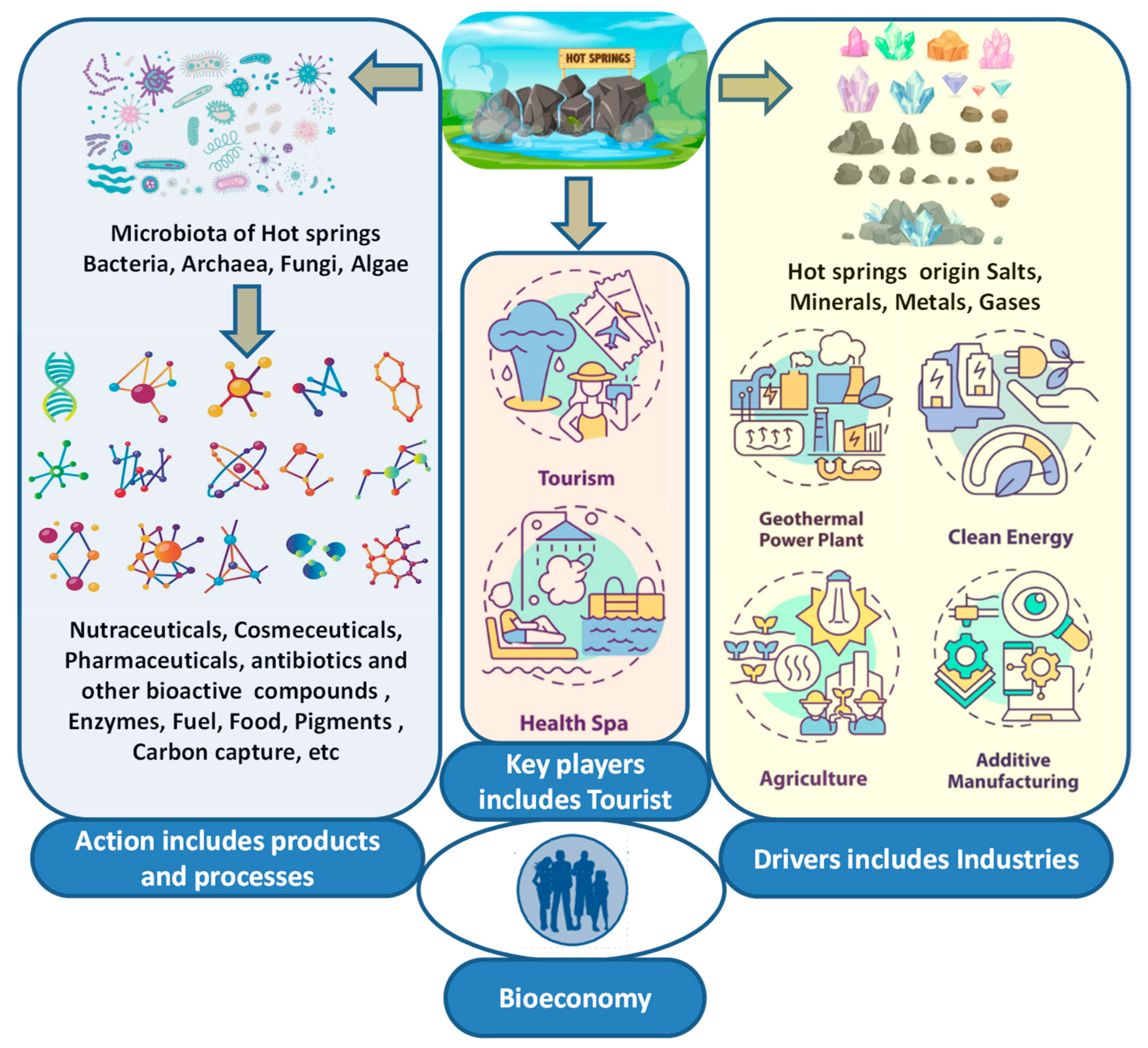


Hot Springs as Reservoirs of Valuable Microbes, Metabolites, and Minerals with Ecological, Biotechnological and Bioeconomic Perspectives

 , , , and
Abstract
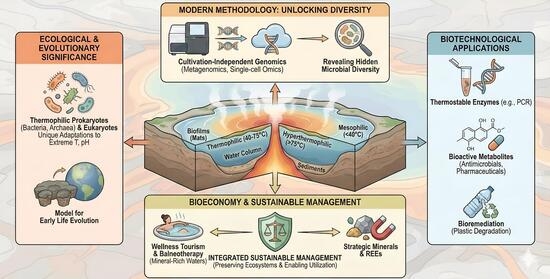
1. Introduction
1.1. Hot Springs as Natural Laboratories
1.2. Evolutionary and Economic Significance
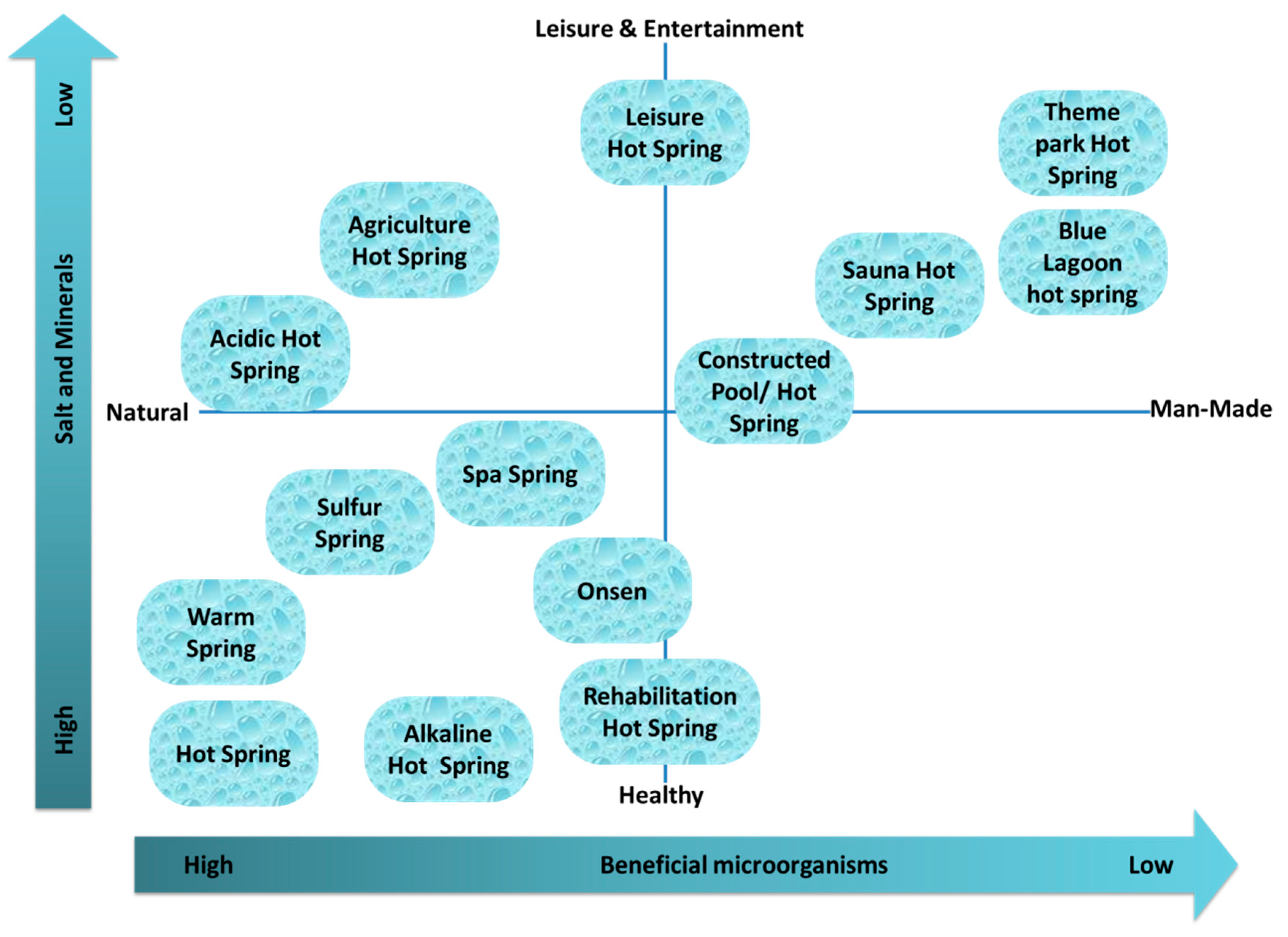
2. Geological and Geochemical Foundations
2.1. Formation Mechanisms and Energy Sources
2.2. Chemical Diversity and Classification
2.3. Geothermal Gases and Biogeochemical Connections
3. Ecological Organization and Community Assembly
3.1. Microbial Life in Hot Springs
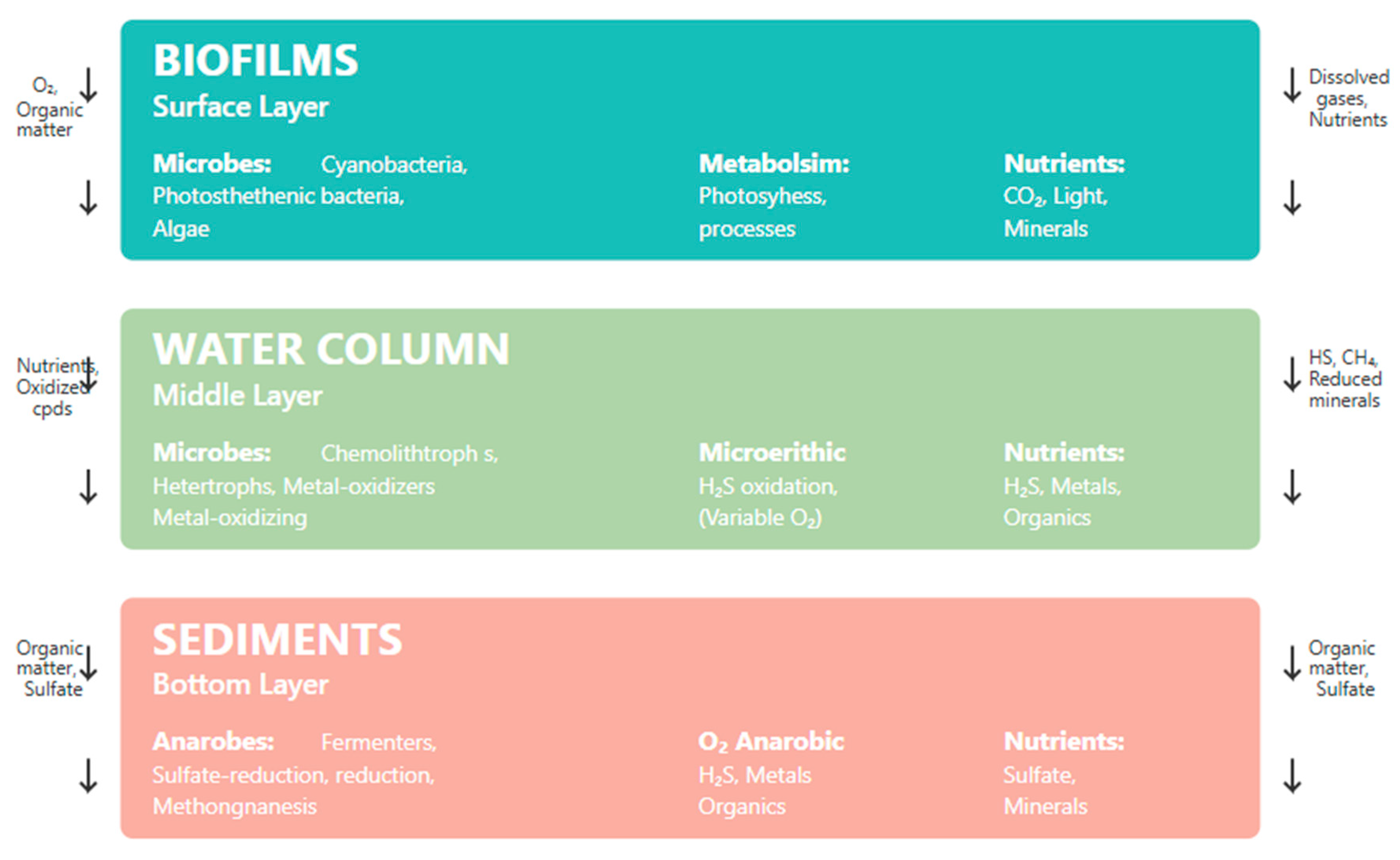
3.2. Spatial Structure and Habitat Types
3.3. Environmental Drivers of Community Composition
4. Prokaryotic Diversity and Thermophilic Adaptations
4.1. Classification and Thermo-Adaptation Mechanisms

4.2. Bacterial and Archaeal Diversity
4.3. Eukaryotic Microorganisms: Thermal Limits and Ecological Roles
5. Biotechnological Applications
5.1. Thermostable Enzymes: Industrial Revolution
5.2. Bioactive Metabolites and Pharmaceuticals
5.3. Environmental Applications: Bioremediation
6. Economic Applications and the Hot Spring Bioeconomy
6.1. Therapeutic Applications of Mineral-Rich Waters
6.2. Strategic Minerals and Rare Earth Elements
6.3. Sustainable Management Framework
7. Critical Knowledge Gaps and Research Priorities
7.1. Fundamental Biological Processes
7.2. Technological and Methodological Innovation
7.3. Environmental Change and Conservation
8. Conclusions
Author Contributions
Funding
Institutional Review Board Statement
Informed Consent Statement
Data Availability Statement
Acknowledgments
Conflicts of Interest
References
- Pentecost, A.; Jones, B.; Renaut, R.W. What is a hot spring? Can. J. Earth Sci. 2003, 40, 1443–1446. [Google Scholar] [CrossRef]
- Ward, D.M.; Castenholz, R.W.; Miller, S.R. Cyanobacteria in Geothermal Habitats. In Ecology of Cyanobacteria II: Their Diversity in Space and Time; Springer: Dordrecht, The Netherlands, 2012; pp. 39–63. [Google Scholar] [CrossRef]
- Colman, D.R.; Feyhl-Buska, J.; Fecteau, K.M.; Xu, H.; Shock, E.L.; Boyd, E.S. Ecological differentiation in planktonic and sediment-associated chemotrophic microbial populations in Yellowstone hot springs. FEMS Microbiol. Ecol. 2016, 92, fiw137. [Google Scholar] [CrossRef]
- Trumpy, E.; Donato, A.; Gianelli, G.; Gola, G.; Minissale, A.; Montanari, D.; Santilano, A.; Manzella, A. Data integration and favourability maps for exploring geothermal systems in Sicily, southern Italy. Geothermics 2015, 56, 1–16. [Google Scholar] [CrossRef]
- Massello, F.L.; Chan, C.S.; Chan, K.G.; Goh, K.M.; Donati, E.; Urbieta, M.S. Meta-Analysis of Microbial Communities in Hot Springs: Recurrent Taxa and Complex Shaping Factors beyond pH and Temperature. Microorganisms 2020, 8, 906. [Google Scholar] [CrossRef]
- Qi, Y.L.; Chen, Y.T.; Xie, Y.G.; Li, Y.X.; Rao, Y.Z.; Li, M.M.; Xie, Q.J.; Cao, X.R.; Chen, L.; Qu, Y.N.; et al. Analysis of nearly 3000 archaeal genomes from terrestrial geothermal springs sheds light on interconnected biogeochemical processes. Nat. Commun. 2024, 15, 4066. [Google Scholar] [CrossRef] [PubMed]
- Reysenbach, A.L.; Shock, E. Merging genomes with geochemistry in hydrothermal ecosystems. Science 2002, 296, 1077–1082. [Google Scholar] [CrossRef]
- Stetter, K.O. Hyperthermophiles in the history of life. Philos. Trans. R. Soc. B Biol. Sci. 2006, 361, 1837–1843. [Google Scholar] [CrossRef] [PubMed]
- Mangrola, A.V.; Patel, R.K.; Dudhagara, P.; Gandhi, H.; Ghelani, A.; Jain, K.R.; Shah, H.; Mevada, V.A. Thermophiles: Physiology, metabolism, enzymology, and adaptation mechanisms. In Physiology, Genomics, and Biotechnological Applications of Extremophiles; IGI Global Scientific Publishing: Hershey, PA, USA, 2022; pp. 65–93. [Google Scholar]
- Boekstein, M.S.; Spencer, J.P. International trends in health tourism: Implications for thermal spring tourism in the Western Cape Province of South Africa: Tourism and hospitality. Afr. J. Phys. Health Educ. Recreat. Danc. 2013, 19, 287–298. [Google Scholar]
- Jones, P. Wellness in the Global Hospitality and Tourism Industry. Athens J. Tour. 2024, 11, 225–238. [Google Scholar] [CrossRef]
- Henley, R.W.; Ellis, A.J. Geothermal systems ancient and modern: A geochemical review. Earth Sci. Rev. 1983, 19, 1–50. [Google Scholar] [CrossRef]
- Hurwitz, S.; Lowenstern, J.B. Dynamics of the Yellowstone hydrothermal system. Rev. Geophys. 2014, 52, 375–411. [Google Scholar] [CrossRef]
- Giggenbach, W.F. Isotopic shifts in waters from geothermal and volcanic systems along convergent plate boundaries and their origin. Earth Planet. Sci. Lett. 1992, 113, 495–510. [Google Scholar] [CrossRef]
- Inskeep, W.P.; McDermott, T.R. Geomicrobiology of acid-sulfate-chloride springs in Yellowstone National Park. Geotherm. Biol. Geochem. Yellowstone Natl. Park 2005, 1, 143–162. [Google Scholar]
- Shock, E.L.; Holland, M.; Meyer-Dombard, D.; Amend, J.P.; Osburn, G.R.; Fischer, T.P. Quantifying inorganic sources of geochemical energy in hydrothermal ecosystems, Yellowstone National Park, USA. Geochim. Cosmochim. Acta 2010, 74, 4005–4043. [Google Scholar] [CrossRef]
- Cox, A.; Shock, E.L.; Havig, J.R. The transition to microbial photosynthesis in hot spring ecosystems. Chem. Geol. 2011, 280, 344–351. [Google Scholar] [CrossRef]
- Spear, J.R.; Walker, J.J.; McCollom, T.M.; Pace, N.R. Hydrogen and bioenergetics in the Yellowstone geothermal ecosystem. Proc. Natl. Acad. Sci. USA 2005, 102, 2555–2560. [Google Scholar] [CrossRef] [PubMed]
- Mangrola, A.V.; Dudhagara, P.R.; Koringa, P.G.; Joshi, C.G.; Patel, R.K. Metagenomic microbial community profiling of Unnai hot spring by Ion-Torrent based shotgun sequencing. Microbiology 2018, 87, 143–146. [Google Scholar] [CrossRef]
- Nicholson, K. Geothermal Fluids: Chemistry and Exploration Techniques; Springer Science & Business Media: Berlin/Heidelberg, Germany, 2012. [Google Scholar]
- Kirk Nordstrom, D.; Blaine McCleskey, R.; Ball, J.W. Sulfur geochemistry of hydrothermal waters in Yellowstone National Park: IV Acid–sulfate waters. Appl. Geochem. 2009, 24, 191–207. [Google Scholar] [CrossRef]
- Zhang, W.P.; Wei, H.; Zhang, S.Y.; Zhang, S.F.; Zhou, Y.; Sun, W.J.; Lee, J.S.; Wang, M.; Wang, D.Z. Elevated temperature as the dominant stressor on the harmful algal bloom-causing dinoflagellate Prorocentrum obtusidens in a future ocean scenario. Sci. Total Environ. 2024, 952, 175946. [Google Scholar] [CrossRef]
- López-López, O.; Cerdán, M.E.; González-Siso, M.I. Hot Spring Metagenomics. Life 2013, 3, 308–320. [Google Scholar] [CrossRef]
- Power, J.F.; Carere, C.R.; Lee, C.K.; Wakerley, G.L.J.; Evans, D.W.; Button, M.; White, D.; Climo, M.D.; Hinze, A.M.; Morgan, X.C.; et al. Microbial biogeography of 925 geothermal springs in New Zealand. Nat. Commun. 2018, 9, 2876. [Google Scholar] [CrossRef]
- Arnórsson, S.; Stefánsson, A.; Bjarnason, J.Ö. Fluid-Fluid Interactions in Geothermal Systems. Rev. Miner. Geochem. 2007, 65, 259–312. [Google Scholar] [CrossRef]
- Symonds, R.B.; Gerlach, T.M.; Reed, M.H. Magmatic gas scrubbing: Implications for volcano monitoring. J. Volcanol. Geotherm. Res. 2001, 108, 303–341. [Google Scholar] [CrossRef]
- Hilton, D.R. The helium and carbon isotope systematics of a continental geothermal system: Results from monitoring studies at Long Valley caldera (California, U.S.A.). Chem. Geol. 1996, 127, 269–295. [Google Scholar] [CrossRef]
- Boyd, E.S.; Jackson, R.A.; Encarnacion, G.; Zahn, J.A.; Beard, T.; Leavitt, W.D.; Pi, Y.; Zhang, C.L.; Pearson, A.; Geesey, G.G. Isolation, Characterization, and Ecology of Sulfur-Respiring Crenarchaea Inhabiting Acid-Sulfate-Chloride-Containing Geothermal Springs in Yellowstone National Park. Appl. Environ. Microbiol. 2007, 73, 6669–6677. [Google Scholar] [CrossRef]
- Allwood, A.C.; Walter, M.R.; Burch, I.W.; Kamber, B.S. 3.43-billion-year-old stromatolite reef from the Pilbara Craton of Western Australia: Ecosystem-scale insights to early life on Earth. Precambrian Res. 2007, 158, 198–227. [Google Scholar] [CrossRef]
- Damer, B.; Deamer, D. The hot spring hypothesis for an origin of life. Astrobiology 2020, 20, 429–452. [Google Scholar] [CrossRef] [PubMed]
- Des Marais, D.J.; Walter, M.R. Terrestrial hot spring systems: Introduction. Astrobiology 2019, 19, 1419–1432. [Google Scholar] [CrossRef] [PubMed]
- Baross, J.A. The rocky road to biomolecules. Nature 2018, 564, 42–43. [Google Scholar] [CrossRef]
- Walter, M.R.; Des Marais, D.J. Preservation of biological information in thermal spring deposits: Developing a strategy for the search for fossil life on Mars. Icarus 1993, 101, 129–143. [Google Scholar] [CrossRef]
- Yin, Z.; Ye, L.; Jing, C. Genome-resolved metagenomics and metatranscriptomics reveal that Aquificae dominates arsenate reduction in Tengchong geothermal springs. Environ. Sci. Technol. 2022, 56, 16473–16482. [Google Scholar] [CrossRef] [PubMed]
- Boomer, S.M.; Noll, K.L.; Geesey, G.G.; Dutton, B.E. Formation of multilayered photosynthetic biofilms in an alkaline thermal spring in Yellowstone National Park, Wyoming. Appl. Environ. Microbiol. 2009, 75, 2464–2475. [Google Scholar] [CrossRef] [PubMed]
- Urbieta, M.S.; Donati, E.R.; Chan, K.G.; Shahar, S.; Sin, L.L.; Goh, K.M. Thermophiles in the genomic era: Biodiversity, science, and applications. Biotechnol. Adv. 2015, 33, 633–647. [Google Scholar] [CrossRef]
- Selvarajan, R.; Sibanda, T.; Tekere, M. Thermophilic bacterial communities inhabiting the microbial mats of “indifferent” and chalybeate (iron-rich) thermal springs: Diversity and biotechnological analysis. Microbiologyopen 2018, 7, e00560. [Google Scholar] [CrossRef]
- Ward, D.M.; Ferris, M.J.; Nold, S.C.; Bateson, M.M. A Natural View of Microbial Biodiversity within Hot Spring Cyanobacterial Mat Communities. Microbiol. Mol. Biol. Rev. 1998, 62, 1353–1370. [Google Scholar] [CrossRef]
- Schuler, C.G.; Havig, J.R.; Hamilton, T.L. Hot Spring microbial community composition, morphology, and carbon fixation: Implications for interpreting the ancient rock record. Front. Earth Sci. 2017, 5, 302276. [Google Scholar] [CrossRef]
- Bunbury, F.; Rivas, C.; Calatrava, V.; Shelton, A.N.; Grossman, A.; Bhaya, D. Differential Phototactic Behavior of Closely Related Cyanobacterial Isolates from Yellowstone Hot Spring Biofilms. Appl. Environ. Microbiol. 2022, 88, e00196-22. [Google Scholar] [CrossRef]
- Bunbury, F.; Rivas, C.; Calatrava, V.; Malkovskiy, A.V.; Joubert, L.M.; Parvate, A.D.; Evans, J.E.; Grossman, A.R.; Bhaya, D. Cyanobacteria and Chloroflexota cooperate to structure light-responsive biofilms. Proc. Natl. Acad. Sci. USA 2025, 122, e2423574122. [Google Scholar] [CrossRef]
- Chen, J.S.; Hussain, B.; Tsai, H.C.; Nagarajan, V.; Koner, S.; Hsu, B.M. Analysis and interpretation of hot springs water, biofilms, and sediment bacterial community profiling and their metabolic potential in the area of Taiwan geothermal ecosystem. Sci. Total Environ. 2023, 856, 159115. [Google Scholar] [CrossRef]
- Urbieta, M.S.; González-Toril, E.; Bazán, Á.A.; Giaveno, M.A.; Donati, E. Comparison of the microbial communities of hot springs waters and the microbial biofilms in the acidic geothermal area of Copahue (Neuquén, Argentina). Extremophiles 2015, 19, 437–450. [Google Scholar] [CrossRef] [PubMed]
- Fernandes-Martins, M.C.; Keller, L.M.; Munro-Ehrlich, M.; Zimlich, K.R.; Mettler, M.K.; England, A.M.; Clare, R.; Surya, K.; Shock, E.L.; Colman, D.R.; et al. Ecological dichotomies arise in microbial communities due to mixing of deep hydrothermal waters and atmospheric gas in a circumneutral hot spring. Appl. Environ. Microbiol. 2021, 87, e01598-21. [Google Scholar] [CrossRef]
- Hujslová, M.; Gryndlerová, H.; Bystrianský, L.; Hršelová, H.; Gryndler, M. Biofilm and planktonic microbial communities in highly acidic soil (pH < 3) in the Soos National Nature Reserve, Czech Republic. Extremophiles 2020, 24, 577–591. [Google Scholar] [PubMed]
- Anda, D.; Szabó, A.; Kovács-Bodor, P.; Makk, J.; Felföldi, T.; Ács, É.; Mádl-Szőnyi, J.; Borsodi, A.K. In situ modelling of biofilm formation in a hydrothermal spring cave. Sci. Rep. 2020, 10, 21733. [Google Scholar] [CrossRef] [PubMed]
- Robinson, G.; Caldwell, G.S.; Wade, M.J.; Free, A.; Jones, C.L.; Stead, S.M. Profiling bacterial communities associated with sediment-based aquaculture bioremediation systems under contrasting redox regimes. Sci. Rep. 2016, 6, 38850. [Google Scholar] [CrossRef]
- Finke, N.; Jørgensen, B.B. Response of fermentation and sulfate reduction to experimental temperature changes in temperate and Arctic marine sediments. ISME J. 2008, 2, 815–829. [Google Scholar] [CrossRef]
- Hong, Y.; Wu, J.; Wilson, S.; Song, B. Vertical stratification of sediment microbial communities along geochemical gradients of a subterranean estuary located at the Gloucester Beach of Virginia, United States. Front. Microbiol. 2019, 9, 3343. [Google Scholar] [CrossRef]
- Aguilera, A.; Souza-Egipsy, V.; González-Toril, E.; Rendueles, O.; Amils, R. Eukaryotic microbial diversity of phototrophic microbial mats in two Icelandic geothermal hot springs. Int. Microbiol. 2010, 13, 21–32. [Google Scholar]
- Zhou, X.; Lennon, J.T.; Lu, X.; Ruan, A. Anthropogenic activities mediate stratification and stability of microbial communities in freshwater sediments. Microbiome 2023, 11, 191. [Google Scholar] [CrossRef]
- An, S.U.; Kim, K.T.; Kim, S.H.; Baek, J.W.; Jeong, H.J.; Sun, C.I.; Choi, J.Y.; Hong, S.; Lee, D.I.; Lee, J.S. Biogeochemical cycling of sedimentary organic carbon and benthic nutrient fluxes in the semi-enclosed Jinhae Bay, Korea: Insights into benthic-pelagic coupling. Front. Mar. Sci. 2025, 11, 1521036. [Google Scholar] [CrossRef]
- Yin, Z.; Zhang, M.; Jing, C.; Cai, Y. Organic matter in geothermal springs and its association with the microbial community. Sci. Total Environ. 2024, 954, 176775. [Google Scholar] [CrossRef]
- Dar, S.A.; Kleerebezem, R.; Stams, A.J.; Kuenen, J.G.; Muyzer, G. Competition and coexistence of sulfate-reducing bacteria, acetogens and methanogens in a lab-scale anaerobic bioreactor as affected by changing substrate to sulfate ratio. Appl. Microbiol. Biotechnol. 2008, 78, 1045–1055. [Google Scholar] [CrossRef] [PubMed]
- Kato, S.; Masuda, S.; Shibata, A.; Shirasu, K.; Ohkuma, M. Insights into ecological roles of uncultivated bacteria in Katase hot spring sediment from long-read metagenomics. Front. Microbiol. 2022, 13, 1045931. [Google Scholar] [CrossRef]
- Podar, M.; Gilmour, C.C.; Brandt, C.C.; Soren, A.; Brown, S.D.; Crable, B.R.; Palumbo, A.V.; Somenahally, A.C.; Elias, D.A. Global prevalence and distribution of genes and microorganisms involved in mercury methylation. Sci. Adv. 2015, 1, e1500675. [Google Scholar] [CrossRef]
- Tang, J.; Zheng, A.P.; Bromfield, E.S.P.; Zhu, J.; Li, S.C.; Wang, S.Q.; Deng, Q.M.; Li, P. 16S rRNA gene sequence analysis of halophilic and halotolerant bacteria isolated from a hypersaline pond in Sichuan, China. Ann. Microbiol. 2010, 61, 375–381. [Google Scholar] [CrossRef]
- Häder, D.P.; Gao, K. Aquatic Productivity under Multiple Stressors. Water 2023, 15, 817. [Google Scholar] [CrossRef]
- Dopson, M.; Johnson, D.B. Biodiversity, metabolism and applications of acidophilic sulfur-metabolizing microorganisms. Environ. Microbiol. 2012, 14, 2620–2631. [Google Scholar] [CrossRef]
- Santos, H.; Da Costa, M.S. Compatible solutes of organisms that live in hot saline environments. Environ. Microbiol. 2002, 4, 501–509. [Google Scholar] [CrossRef]
- Takai, K.; Nakamura, K.; Toki, T.; Tsunogai, U.; Miyazaki, M.; Miyazaki, J.; Hirayama, H.; Nakagawa, S.; Nunoura, T.; Horikoshi, K. Cell proliferation at 122 °C and isotopically heavy CH4 production by a hyperthermophilic methanogen under high-pressure cultivation. Proc. Natl. Acad. Sci. USA 2008, 105, 10949–10954. [Google Scholar] [CrossRef] [PubMed]
- Lulchev, P.; Klostermeier, D. Reverse gyrase—Recent advances and current mechanistic understanding of positive DNA supercoiling. Nucleic Acids Res. 2014, 42, 8200–8213. [Google Scholar] [CrossRef] [PubMed]
- Christodoulou, E.; Vorgias, C.E. The thermostability of DNA-binding protein HU from mesophilic, thermophilic, and extreme thermophilic bacteria. Extremophiles 2002, 6, 21–31. [Google Scholar] [CrossRef] [PubMed]
- Mukherjee, A.; Sokunbi, A.O.; Grove, A. DNA protection by histone-like protein HU from the hyperthermophilic eubacterium Thermotoga maritima. Nucleic Acids Res. 2008, 36, 3956–3968. [Google Scholar] [CrossRef]
- Hu, E.Z.; Lan, X.R.; Liu, Z.L.; Gao, J.; Niu, D.K. A positive correlation between GC content and growth temperature in prokaryotes. BMC Genom. 2022, 23, 110. [Google Scholar] [CrossRef]
- Wang, Q.; Cen, Z.; Zhao, J. The survival mechanisms of thermophiles at high temperatures: An angle of omics. Physiology 2015, 30, 97–106. [Google Scholar] [CrossRef]
- Fiala, G.; Stetter, K.O. Pyrococcus furiosus sp. nov. represents a novel genus of marine heterotrophic archaebacteria growing optimally at 100 C. Arch. Microbiol. 1986, 145, 56–61. [Google Scholar] [CrossRef]
- Robb, F.T.; Maeder, D.L.; Brown, J.R.; DiRuggiero, J.; Stump, M.D.; Yeh, R.K.; Weiss, R.B.; Dunn, D.M. Genomic sequence of hyperthermophile, Pyrococcus furiosus: Implications for physiology and enzymology. Methods Enzymol. 2001, 330, 134–157. [Google Scholar] [PubMed]
- Zeldovich, K.B.; Berezovsky, I.N.; Shakhnovich, E.I. Protein and DNA sequence determinants of thermophilic adaptation. PLoS Comput. Biol. 2007, 3, e5. [Google Scholar] [CrossRef]
- Papageorgiou, A.C.; Adam, P.S.; Stavros, P.; Nounesis, G.; Meijers, R.; Petratos, K.; Vorgias, C.E. HU histone-like DNA-binding protein from Thermus thermophilus: Structural and evolutionary analyses. Extremophiles 2016, 20, 695–709. [Google Scholar] [CrossRef]
- Takami, H.; Takaki, Y.; Chee, G.J.; Nishi, S.; Shimamura, S.; Suzuki, H.; Matsui, S.; Uchiyama, I. Thermoadaptation trait revealed by the genome sequence of thermophilic Geobacillus kaustophilus. Nucleic Acids Res. 2004, 32, 6292–6303. [Google Scholar] [CrossRef] [PubMed]
- Pucci, F.; Rooman, M. Physical and molecular bases of protein thermal stability and cold adaptation. Curr. Opin. Struct. Biol. 2017, 42, 117–128. [Google Scholar] [CrossRef]
- Littlechild, J.A. Archaeal enzymes and applications in industrial biocatalysts. Archaea 2015, 2015, 147671. [Google Scholar] [CrossRef]
- Åqvist, J.; Isaksen, G.V.; Brandsdal, B.O. Computation of enzyme cold adaptation. Nat. Rev. Chem. 2017, 1, 0051. [Google Scholar] [CrossRef]
- Boccaletto, P.; Stefaniak, F.; Ray, A.; Cappannini, A.; Mukherjee, S.; Purta, E.; Kurkowska, M.; Shirvanizadeh, N.; Destefanis, E.; Groza, P.; et al. MODOMICS: A database of RNA modification pathways. 2021 update. Nucleic Acids Res. 2022, 50, D231–D235. [Google Scholar] [CrossRef] [PubMed]
- Lorenz, C.; Lünse, C.E.; Mörl, M. tRNA modifications: Impact on structure and thermal adaptation. Biomolecules 2017, 7, 35. [Google Scholar] [CrossRef]
- Danan, C.; Manickavel, S.; Hafner, M. PAR-CLIP: A method for transcriptome-wide identification of RNA binding protein interaction sites. In Post-Transcriptional Gene Regulation; Springer: New York, NY, USA, 2016; pp. 153–173. [Google Scholar]
- Caforio, A.; Driessen, A.J. Archaeal phospholipids: Structural properties and biosynthesis. Biochim. Biophys. Acta (BBA) Mol. Cell Biol. Lipids 2017, 1862, 1325–1339. [Google Scholar] [CrossRef]
- Salvador-Castell, M.; Tourte, M.; Oger, P.M. In search for the membrane regulators of archaea. Int. J. Mol. Sci. 2019, 20, 4434. [Google Scholar] [CrossRef]
- Sollich, M.; Yoshinaga, M.Y.; Häusler, S.; Price, R.E.; Hinrichs, K.U.; Bühring, S.I. Heat stress dictates microbial lipid composition along a thermal gradient in marine sediments. Front. Microbiol. 2017, 8, 1550. [Google Scholar] [CrossRef]
- Jensen, S.M.; Neesgaard, V.L.; Skjoldbjerg, S.L.N.; Brandl, M.; Ejsing, C.S.; Treusch, A.H. The effects of temperature and growth phase on the lipidomes of Sulfolobus islandicus and Sulfolobus tokodaii. Life 2015, 5, 1539–1566. [Google Scholar] [CrossRef]
- Rosenzweig, R.; Nillegoda, N.B.; Mayer, M.P.; Bukau, B. The Hsp70 chaperone network. Nat. Rev. Mol. Cell Biol. 2019, 20, 665–680. [Google Scholar] [CrossRef]
- Schopf, F.H.; Biebl, M.M.; Buchner, J. The HSP90 chaperone machinery. Nat. Rev. Mol. Cell Biol. 2017, 18, 345–360. [Google Scholar] [CrossRef] [PubMed]
- Verghese, J.; Abrams, J.; Wang, Y.; Morano, K.A. Biology of the heat shock response and protein chaperones: Budding yeast (Saccharomyces cerevisiae) as a model system. Microbiol. Mol. Biol. Rev. 2012, 76, 115–158. [Google Scholar] [CrossRef] [PubMed]
- Blackwood, J.K.; Rzechorzek, N.J.; Abrams, A.S.; Maman, J.D.; Pellegrini, L.; Robinson, N.P. Structural and functional insights into DNA-end processing by the archaeal HerA helicase–NurA nuclease complex. Nucleic Acids Res. 2012, 40, 3183–3196. [Google Scholar] [CrossRef]
- Ishino, S.; Nishi, Y.; Oda, S.; Uemori, T.; Sagara, T.; Takatsu, N.; Yamagami, T.; Shirai, T.; Ishino, Y. Identification of a mismatch-specific endonuclease in hyperthermophilic Archaea. Nucleic Acids Res. 2016, 44, 2977–2986. [Google Scholar] [CrossRef]
- Mariotti, L.; Wild, S.; Brunoldi, G.; Piceni, A.; Ceppi, I.; Kummer, S.; Lutz, R.E.; Cejka, P.; Gari, K. The iron–sulphur cluster in human DNA2 is required for all biochemical activities of DNA2. Commun. Biol. 2020, 3, 322. [Google Scholar] [CrossRef]
- Sarmiento, F.; Mrázek, J.; Whitman, W.B. Genome-scale analysis of gene function in the hydrogenotrophic methanogenic archaeon Methanococcus maripaludis. Proc. Natl. Acad. Sci. USA 2013, 110, 4726–4731. [Google Scholar] [CrossRef]
- White, M.F.; Allers, T. DNA repair in the archaea—An emerging picture. FEMS Microbiol. Rev. 2018, 42, 514–526. [Google Scholar] [CrossRef] [PubMed]
- Empadinhas, N.; da Costa, M.S. Osmoadaptation mechanisms in prokaryotes: Distribution of compatible solutes. Int. Microbiol. 2008, 11, 151–161. [Google Scholar]
- Shao, W.; Price, M.N.; Deutschbauer, A.M.; Romine, M.F.; Arkin, A.P. Conservation of transcription start sites within genes across a bacterial genus. MBio 2014, 5, 10–1128. [Google Scholar] [CrossRef]
- Gonçalves, L.G.; Lamosa, P.; Huber, R.; Santos, H. Di-myo-inositol phosphate and novel UDP-sugars accumulate in the extreme hyperthermophile Pyrolobus fumarii. Extremophiles 2008, 12, 383–389. [Google Scholar] [CrossRef] [PubMed]
- Faria, T.Q.; Mingote, A.; Siopa, F.; Ventura, R.; Maycock, C.; Santos, H. Design of new enzyme stabilizers inspired by glycosides of hyperthermophilic microorganisms. Carbohydr. Res. 2008, 343, 3025–3033. [Google Scholar] [CrossRef] [PubMed]
- Hoffmann, T.; Bremer, E. Protection of Bacillus subtilis against cold stress via compatible-solute acquisition. J. Bacteriol. 2011, 193, 1552–1562. [Google Scholar] [CrossRef]
- Madigan, M.T.; Martinko, J.M.; Dunlap, P.V.; Clark, D.P. Brock biology of microorganisms 12th edn. Int. Microbiol. 2008, 11, 65–66. [Google Scholar]
- Merino, N.; Aronson, H.S.; Bojanova, D.P.; Feyhl-Buska, J.; Wong, M.L.; Zhang, S.; Giovannelli, D. Living at the extremes: Extremophiles and the limits of life in a planetary context. Front. Microbiol. 2019, 10, 780. [Google Scholar] [CrossRef] [PubMed]
- Sarmiento, F.; Peralta, R.; Blamey, J.M. Cold and hot extremozymes: Industrial relevance and current trends. Front. Bioeng. Biotechnol. 2015, 3, 148. [Google Scholar] [CrossRef]
- Schönheit, P.; Buckel, W.; Martin, W.F. On the origin of heterotrophy. Trends Microbiol. 2016, 24, 12–25. [Google Scholar] [CrossRef] [PubMed]
- Grogan, D.W. Understanding DNA repair in hyperthermophilic Archaea: Persistent gaps and other reasons to focus on the fork. Archaea 2015, 2015, 942605. [Google Scholar] [CrossRef]
- Zeldes, B.M.; Keller, M.W.; Loder, A.J.; Straub, C.T.; Adams, M.W.; Kelly, R.M. Extremely thermophilic microorganisms as metabolic engineering platforms for production of fuels and industrial chemicals. Front. Microbiol. 2015, 6, 1209. [Google Scholar] [CrossRef] [PubMed]
- Groussin, M.; Gouy, M. Adaptation to environmental temperature is a major determinant of molecular evolutionary rates in archaea. Mol. Biol. Evol. 2011, 28, 2661–2674. [Google Scholar] [CrossRef]
- Forterre, P. A hot story from comparative genomics: Reverse gyrase is the only hyperthermophile-specific protein. Trends Genet. 2002, 18, 236–237. [Google Scholar] [CrossRef] [PubMed]
- Singer, G.A.C.; Hickey, D.A. Thermophilic prokaryotes have characteristic patterns of codon usage, amino acid composition and nucleotide content. Gene 2003, 317, 39–47. [Google Scholar] [CrossRef]
- Koga, Y. Thermal Adaptation of the Archaeal and Bacterial Lipid Membranes. Archaea 2012, 2012, 789652. [Google Scholar] [CrossRef] [PubMed]
- Trent, J.D.; Gabrielsen, M.; Jensen, B.; Neuhard, J.; Olsen, J. Acquired thermotolerance and heat shock proteins in thermophiles from the three phylogenetic domains. J. Bacteriol. 1994, 176, 6148–6152. [Google Scholar] [CrossRef]
- Hedlund, B.P.; Dodsworth, J.A.; Murugapiran, S.K.; Rinke, C.; Woyke, T. Impact of single-cell genomics and metagenomics on the emerging view of extremophile “microbial dark matter”. Extremophiles 2014, 18, 865–875. [Google Scholar] [CrossRef]
- Parte, A.C.; Carbasse, J.S.; Meier-Kolthoff, J.P.; Reimer, L.C.; Göker, M. List of prokaryotic names with standing in nomenclature (LPSN) moves to the DSMZ. Int. J. Syst. Evol. Microbiol. 2020, 70, 5607–5612. [Google Scholar] [CrossRef]
- Ghelani, A.; Patel, R.; Mangrola, A.; Dudhagara, P. Cultivation-independent comprehensive survey of bacterial diversity in Tulsi Shyam Hot Springs, India. Genom. Data 2015, 4, 54–56. [Google Scholar] [CrossRef]
- Ward, L.M.; Cardona, T.; Holland-Moritz, H. Evolutionary Implications of Anoxygenic Phototrophy in the Bacterial Phylum Candidatus Eremiobacterota (WPS-2). Front. Microbiol. 2019, 10, 1658. [Google Scholar] [CrossRef]
- Gohel, S.D.; Singh, S.P. Purification strategies, characteristics and thermodynamic analysis of a highly thermostable alkaline protease from a salt-tolerant alkaliphilic actinomycete, Nocardiopsis alba OK-5. J. Chromatogr. B 2012, 889–890, 61–68. [Google Scholar] [CrossRef]
- Ajeje, S.B.; Hu, Y.; Song, G.; Peter, S.B.; Afful, R.G.; Sun, F.; Asadollahi, M.A.; Amiri, H.; Abdulkhani, A.; Sun, H. Thermostable Cellulases/Xylanases from Thermophilic and Hyperthermophilic Microorganisms: Current Perspective. Front. Bioeng. Biotechnol. 2021, 9, 794304. [Google Scholar] [CrossRef] [PubMed]
- Podosokorskaya, O.A.; Prokofeva, M.I.; Kuchierskaya, A.A.; Klyukina, A.A.; Elcheninov, A.G. Tenuifilum osseticum sp. nov., a novel thermophilic hydrolytic bacterium within the Tenuifilaceae isolated from a North Ossetian thermal spring, and emended description of the genus Tenuifilum. Syst. Appl. Microbiol. 2025, 48, 126591. [Google Scholar] [CrossRef]
- Liu, Z.T.; Dai, J.Y.; Lian, Z.H.; Liu, L.; Xian, W.D.; Li, M.M.; Fang, B.Z.; Jiao, J.Y.; Li, W.J. Thermomonas flagellata sp. nov. and Thermomonas alba sp. nov., two novel members of the phylum Pseudomonadota isolated from hot spring sediments. Int. J. Syst. Evol. Microbiol. 2022, 72, 005444. [Google Scholar] [CrossRef]
- Habib, N.; Khan, I.U.; Xiao, M.; Li, S.; Saqib, M.; Xian, W.D.; Butt, S.; Li, W.J. Marmoricola caldifontis sp. Nov., a novel actinobacterium isolated from a hot spring. Int. J. Syst. Evol. Microbiol. 2020, 70, 2053–2058. [Google Scholar] [CrossRef] [PubMed]
- Zayulina, K.S.; Prokofeva, M.I.; Elcheninov, A.G.; Voytova, M.P.; Novikov, A.A.; Kochetkova, T.V.; Kublanov, I.V. Arenimonas fontis sp. Nov., a bacterium isolated from chukotka hot spring, Arctic Region, Russia. Int. J. Syst. Evol. Microbiol. 2020, 70, 2726–2731. [Google Scholar] [CrossRef]
- Hanada, S.; Tamaki, H.; Nakamura, K.; Kamagata, Y. Crenotalea thermophila gen. nov., sp. nov., a member of the family Chitinophagaceae isolated from a hot spring. Int. J. Syst. Evol. 2014, 64, 1359–1364. [Google Scholar] [CrossRef]
- Mori, K.; Yamazoe, A.; Hosoyama, A.; Ohji, S.; Fujita, N.; Ishibashi, J.I.; Kimura, H.; Suzuki, K.I. Thermotoga profunda sp. nov. and Thermotoga caldifontis sp. nov., anaerobic thermophilic bacteria isolated from terrestrial hot springs. Int. J. Syst. Evol. Microbiol. 2014, 64, 2128–2136. [Google Scholar] [CrossRef] [PubMed]
- Podosokorskaya, O.A.; Elcheninov, A.G.; Novikov, A.A.; Merkel, A.Y.; Kublanov, I.V. Fontisphaera persica gen. nov., sp. nov., a thermophilic hydrolytic bacterium from a hot spring of Baikal Lake region, and proposal of Fontisphaeraceae fam. nov., and Limisphaeraceae fam. nov. within the Limisphaerales ord. Nov. (Verrucomicrobiota). Syst. Appl. Microbiol. 2023, 46, 126438. [Google Scholar] [CrossRef]
- Hivarkar, S.S.; Vasudevan, G.; Dhakephalkar, P.K.; Dagar, S.S. Description of Sporanaerobium hydrogeniformans gen. nov., sp. nov., an obligately anaerobic, hydrogen-producing bacterium isolated from Aravali hot spring in India. Arch. Microbiol. 2023, 205, 305. [Google Scholar] [CrossRef]
- Lv, Y.Q.; Hu, C.J.; Xian, W.D.; Li, M.M.; Liu, L.; Liu, Z.T.; Tan, S.; Liu, W.Q.; Jiao, J.Y.; Li, W.J. Chelatococcus albus sp. nov., a bacterium isolated from hot spring microbial mat. Int. J. Syst. Evol. Microbiol. 2024, 74, 006307. [Google Scholar] [CrossRef]
- Thawai, C.; Tanasupawat, S.; Kudo, T. Micromonospora caldifontis sp. nov., isolated from hot spring soil. Int. J. Syst. Evol. 2019, 69, 1336–1342. [Google Scholar] [CrossRef]
- Ganbat, D.; Jeong, G.E.; Oh, D.; Lee, D.W.; Lee, Y.J.; Kim, S.B.; Cha, I.T.; Chi, W.J.; Park, S.K.; Lee, J.S.; et al. Description of Microbacterium neungamense sp. nov. isolated from a hot spring. Arch. Microbiol. 2023, 205, 23. [Google Scholar] [CrossRef]
- Saini, M.K.; Yoshida, S.; Sebastian, A.; Hara, E.; Tamaki, H.; Soulier, N.T.; Albert, I.; Hanada, S.; Tank, M.; Bryant, D.A. Elioraea tepida, sp. Nov., a moderately thermophilic aerobic anoxygenic phototrophic bacterium isolated from the mat community of an alkaline siliceous hot spring in yellowstone national park, WY, USA. Microorganisms 2022, 10, 80. [Google Scholar] [CrossRef] [PubMed]
- Itoh, T.; Onishi, M.; Kato, S.; Iino, T.; Sakamoto, M.; Kudo, T.; Takashina, T.; Ohkuma, M. Athalassotoga saccharophila gen. nov., sp. nov., isolated from an acidic terrestrial hot spring, and proposal of Mesoaciditogales ord. nov. and Mesoaciditogaceae fam. nov. in the phylum Thermotogae. Int. J. Syst. Evol. 2016, 66, 1045–1051. [Google Scholar] [CrossRef]
- Mori, K.; Yamaguchi, K.; Sakiyama, Y.; Urabe, T.; Suzuki, K.I. Caldisericum exile gen. nov., sp. nov., an anaerobic, thermophilic, filamentous bacterium of a novel bacterial phylum, Caldiserica phyl. nov., originally called the candidate phylum OP5, and description of Caldisericaceae fam. nov., Caldisericales ord. nov. and Caldisericia classis nov. Int. J. Syst. Evol. 2009, 59, 2894–2898. [Google Scholar] [CrossRef]
- Iino, T.; Nakagawa, T.; Mori, K.; Harayama, S.; Suzuki, K. ichiro: Calditerrivibrio nitroreducens gen. nov., sp. nov., a thermophilic, nitrate-reducing bacterium isolated from a terrestrial hot spring in Japan. Int. J. Syst. Evol. 2008, 58, 1675–1679. [Google Scholar] [CrossRef]
- Tank, M.; Bryant, D.A. Nutrient requirements and growth physiology of the photoheterotrophic Acidobacterium, Chloracidobacterium thermophilum. Front. Microbiol. 2015, 6, 132240. [Google Scholar] [CrossRef]
- Albuquerque, L.; Rainey, F.A.; Nobre, M.F.; da Costa, M.S. Meiothermus granaticius sp. nov., a new slightly thermophilic red-pigmented species from the Azores. Syst. Appl. Microbiol. 2010, 33, 243–246. [Google Scholar] [CrossRef]
- Habib, N.; Khan, I.U.; Hussain, F.; Zhou, E.M.; Xiao, M.; Dong, L.; Zhi, X.Y.; Li, W.J. Meiothermus luteus sp. nov., a slightly thermophilic bacterium isolated from a hot spring. Int. J. Syst. Evol. Microbiol. 2017, 67, 2910–2914. [Google Scholar] [CrossRef]
- Dodsworth, J.A.; Ong, J.C.; Williams, A.J.; Dohnalkova, A.C.; Hedlund, B.P. Thermocrinis jamiesonii sp. nov., a thiosulfate-oxidizing, autotropic thermophile isolated from a geothermal spring. Int. J. Syst. Evol. 2015, 65, 4769–4775. [Google Scholar] [CrossRef] [PubMed]
- Dodsworth, J.A.; Gevorkian, J.; Despujos, F.; Cole, J.K.; Murugapiran, S.K.; Ming, H.; Li, W.J.; Zhang, G.; Dohnalkova, A.; Hedlund, B.P. Thermoflexus hugenholtzii gen. nov., sp. nov., a thermophilic, microaerophilic, filamentous bacterium representing a novel class in the Chloroflexi, Thermoflexia classis nov., and description of Thermoflexaceae fam. nov. and Thermoflexales ord. nov. Int. J. Syst. Evol. Microbiol. 2014, 64, 2119–2127. [Google Scholar] [CrossRef] [PubMed]
- Hetzer, A.; McDonald, I.R.; Morgan, H.W. Venenivibrio stagnispumantis gen. nov., sp. nov., a thermophilic hydrogen-oxidizing bacterium isolated from Champagne Pool, Waiotapu, New Zealand. Int. J. Syst. Evol. 2008, 58, 398–403. [Google Scholar] [CrossRef]
- Tripathi, C.; Mishra, H.; Khurana, H.; Dwivedi, V.; Kamra, K.; Negi, R.K.; Lal, R. Complete genome analysis of Thermus parvatiensis and comparative genomics of Thermus spp. provide insights into genetic variability and evolution of natural competence as strategic survival attributes. Front. Microbiol. 2017, 8, 273810. [Google Scholar] [CrossRef]
- Khan, I.U.; Habib, N.; Hussain, F.; Xian, W.D.; Amin, A.; Zhou, E.M.; Ahmed, I.; Zhi, X.Y.; Li, W.J. Thermus caldifontis sp. nov., a thermophilic bacterium isolated from a hot spring. Int. J. Syst. Evol. 2017, 67, 2868–2872. [Google Scholar] [CrossRef]
- Mangrola, A.V.; Dudhagara, P.; Koringa, P.; Joshi, C.G.; Patel, R.K. Shotgun metagenomic sequencing based microbial diversity assessment of Lasundra hot spring, India. Genom. Data 2015, 4, 73–75. [Google Scholar] [CrossRef]
- Wirajana, I.N.; Ariantari, N.P.; Shyu, D.J.; Vaghamshi, N.; Antaliya, K.; Dudhagara, P. Prokaryotic communities profiling of Indonesian hot springs using long-read Oxford Nanopore sequencing. BMC Res. Notes 2024, 17, 286. [Google Scholar] [CrossRef]
- Thauer, R.K.; Kaster, A.K.; Seedorf, H.; Buckel, W.; Hedderich, R. Methanogenic archaea: Ecologically relevant differences in energy conservation. Nat. Rev. Microbiol. 2008, 6, 579–591. [Google Scholar] [CrossRef]
- Prokofeva, M.I.; Karaseva, A.I.; Tulenkov, A.S.; Klyukina, A.A.; Suzina, N.E.; Bale, N.J.; Mets, A.; Schleper, C.; Elcheninov, A.G.; Kochetkova, T.V. Polysaccharide-degrading archaea dominate acidic hot springs: Genomic and cultivation insights into a novel Thermoproteota lineage. mSystems 2025, 10, e00710-25. [Google Scholar] [CrossRef]
- Slobodkina, G.B.; Lebedinsky, A.V.; Chernyh, N.A.; Bonch-Osmolovskaya, E.A.; Slobodkin, A.I. Pyrobaculum ferrireducens sp. nov., a hyperthermophilic Fe (III)-, selenate- and arsenate-reducing crenarchaeon isolated from a hot spring. Int. J. Syst. Evol. Microbiol. 2015, 65, 851–856. [Google Scholar] [CrossRef]
- Niederberger, T.D.; Götz, D.K.; McDonald, I.R.; Ronimus, R.S.; Morgan, H.W. Ignisphaera aggregans gen. nov., sp. nov., a novel hyperthermophilic crenarchaeote isolated from hot springs in Rotorua and Tokaanu, New Zealand. Int. J. Syst. Evol. Microbiol. 2006, 56, 965–971. [Google Scholar] [CrossRef] [PubMed]
- Sako, Y.; Nunoura, T.; Uchida, A. Pyrobaculum oguniense sp. nov., a novel facultatively aerobic and hyperthermophilic archaeon growing at up to 97 degrees C. Int. J. Syst. Evol. Microbiol. 2001, 51, 303–309. [Google Scholar] [CrossRef]
- Kublanov, I.V.; Bidjieva, S.K.; Mardanov, A.V.; Bonch-Osmolovskaya, E.A. Desulfurococcus kamchatkensis sp. nov., a novel hyperthermophilic protein-degrading archaeon isolated from a Kamchatka hot spring. Int. J. Syst. Evol. Microbiol. 2009, 59, 1743–1747. [Google Scholar] [CrossRef] [PubMed]
- Zillig, W.; Gierl, A.; Schreiber, G.; Wunderl, S.; Janekovic, D.; Stetter, K.O.; Klenk, H.P. The archaebacterium Thermofilum pendens represents, a novel genus of the thermophilic, anaerobic sulfur respiring Thermoproteales. Syst. Appl. Microbiol. 1983, 4, 79–87. [Google Scholar] [CrossRef] [PubMed]
- Zayulina, K.S.; Kochetkova, T.V.; Piunova, U.E.; Ziganshin, R.H.; Podosokorskaya, O.A.; Kublanov, I.V. Novel Hyperthermophilic Crenarchaeon Thermofilum adornatum sp. nov. Uses GH1, GH3, and Two Novel Glycosidases for Cellulose Hydrolysis. Front. Microbiol. 2020, 10, 510189. [Google Scholar] [CrossRef]
- Sakai, H.D.; Kurosawa, N. Saccharolobus caldissimus gen. nov., sp. nov., a facultatively anaerobic iron-reducing hyperthermophilic archaeon isolated from an acidic terrestrial hot spring. Int. J. Syst. Evol. Microbiol. 2018, 68, 1271–1278. [Google Scholar] [CrossRef]
- Osburn, M.R.; Amend, J.P. Thermogladius shockii gen. nov., sp. nov., a hyperthermophilic crenarchaeote from Yellowstone National Park, USA. Arch. Microbiol. 2011, 193, 45–52. [Google Scholar] [CrossRef]
- Itoh, T.; Suzuki, K.I.; Nakase, T. Vulcanisaeta distributa gen. nov., sp. nov., and Vulcanisaeta souniana sp. nov., novel hyperthermophilic, rod-shaped crenarchaeotes isolated from hot springs in Japan. Int. J. Syst. Evol. Microbiol. 2002, 52, 1097–1104. [Google Scholar] [CrossRef]
- Toshchakov, S.V.; Korzhenkov, A.A.; Samarov, N.I.; Mazunin, I.O.; Mozhey, O.I.; Shmyr, I.S.; Derbikova, K.S.; Taranov, E.A.; Dominova, I.N.; Bonch-Osmolovskaya, E.A.; et al. Complete genome sequence of and proposal of Thermofilum uzonense sp. nov. a novel hyperthermophilic crenarchaeon and emended description of the genus. Stand. Genom. Sci. 2015, 10, 122. [Google Scholar] [CrossRef]
- Prokofeva, M.I.; Kostrikina, N.A.; Kolganova, T.V.; Tourova, T.P.; Lysenko, A.M.; Lebedinsky, A.V.; Bonch-Osmolovskaya, E.A. Isolation of the anaerobic thermoacidophilic crenarchaeote Acidilobus saccharovorans sp. nov. and proposal of Acidilobales ord. nov., including Acidilobaceae fam. nov. and Caldisphaeraceae fam. nov. Int. J. Syst. Evol. Microbiol. 2009, 59, 3116–3122. [Google Scholar] [CrossRef]
- Yoshida, N.; Nakasato, M.; Ohmura, N.; Ando, A.; Saiki, H.; Ishii, M.; Igarashi, Y. Acidianus manzaensis sp. nov., a novel thermoacidophilic archaeon growing autotrophically by the oxidation of H2 with the reduction of Fe3+. Curr. Microbiol. 2006, 53, 406. [Google Scholar] [CrossRef]
- Xiang, X.; Dong, X.; Huang, L. Sulfolobus tengchongensis sp. nov., a novel thermoacidophilic archaeon isolated from a hot spring in Tengchong, China. Extremophiles 2003, 7, 493–498. [Google Scholar] [CrossRef]
- Itoh, T.; Suzuki, K.; Sanchez, P.C.; Nakase, T. Caldisphaera lagunensis gen. nov., sp. nov., a novel thermoacidophilic crenarchaeote isolated from a hot spring at Mt Maquiling, Philippines. Int. J. Syst. Evol. Microbiol. 2003, 53, 1149–1154. [Google Scholar] [CrossRef] [PubMed]
- Liu, L.J.; You, X.Y.; Guo, X.; Liu, S.J.; Jiang, C.Y. Metallosphaera cuprina sp. nov., an acidothermophilic, metal-mobilizing archaeon. Int. J. Syst. Evol. Microbiol. 2011, 61, 2395–2400. [Google Scholar] [CrossRef] [PubMed]
- Peng, T.J.; Liu, L.J.; Liu, C.; Yang, Z.F.; Liu, S.J.; Jiang, C.Y. Metallosphaera tengchongensis sp. nov., an acidothermophilic archaeon isolated from a hot spring. Int. J. Syst. Evol. Microbiol. 2015, 65, 537–542. [Google Scholar] [CrossRef] [PubMed]
- Daebeler, A.; Herbold, C.W.; Vierheilig, J.; Sedlacek, C.J.; Pjevac, P.; Albertsen, M.; Kirkegaard, R.H.; de la Torre, J.R.; Daims, H.; Wagner, M. Cultivation and genomic analysis of “Candidatus Nitrosocaldus islandicus,” an obligately thermophilic, ammonia-oxidizing thaumarchaeon from a hot spring biofilm in Graendalur Valley, Iceland. Front. Microbiol. 2018, 9, 193. [Google Scholar] [CrossRef]
- Tansey, M.R.; Brock, T.D. The upper temperature limit for eukaryotic organisms. Proc. Natl. Acad. Sci. USA 1972, 69, 2426–2428. [Google Scholar] [CrossRef] [PubMed]
- Ando, N.; Barquera, B.; Bartlett, D.H.; Boyd, E.; Burnim, A.A.; Byer, A.S.; Colman, D.; Gillilan, R.E.; Gruebele, M.; Makhatadze, G.; et al. The molecular basis for life in extreme environments. Annu. Rev. Biophys. 2021, 50, 343–372. [Google Scholar] [CrossRef] [PubMed]
- Ciniglia, C.; Yoon, H.S.; Pollio, A.; Pinto, G.; Bhattacharya, D. Hidden biodiversity of the extremophilic Cyanidiales red algae. Mol. Ecol. 2004, 13, 1827–1838. [Google Scholar] [CrossRef] [PubMed]
- Clarke, A. The thermal limits to life on Earth. Int. J. Astrobiol. 2014, 13, 141–154. [Google Scholar] [CrossRef]
- Baumgartner, M.; Eberhardt, S.; De Jonckheere, J.F.; Stetter, K.O. Tetramitus thermacidophilus n. sp., an amoeboflagellate from acidic hot springs. J. Eukaryot. Microbiol. 2009, 56, 201–206. [Google Scholar] [CrossRef]
- Dudhagara, P.; Ghelani, A.; Bhatt, S. Structural characterization of mycobiome from the metagenome of Lonar Lake sediment using next generation sequencing. Ind. J. Sci. 2015, 12, 11–16. [Google Scholar]
- Gross, W.; Schnarrenberger, C. Heterotrophic Growth of Two Strains of the Acido-Thermophilic Red Alga Galdieria sulphuraria. Plant Cell Physiol. 1995, 36, 633–638. [Google Scholar] [CrossRef]
- Barbier, G.; Oesterhelt, C.; Larson, M.D.; Halgren, R.G.; Wilkerson, C.; Garavito, R.M.; Benning, C.; Weber, A.P. Comparative genomics of two closely related unicellular thermo-acidophilic red algae, Galdieria sulphuraria and Cyanidioschyzon merolae, reveals the molecular basis of the metabolic flexibility of Galdieria sulphuraria and significant differences in carbohydrate metabolism of both algae. Plant Physiol. 2005, 137, 460–474. [Google Scholar] [CrossRef]
- Chien, A.; Edgar, D.B.; Trela, J.M. Deoxyribonucleic acid polymerase from the extreme thermophile Thermus aquaticus. J. Bacteriol. 1976, 127, 1550–1557. [Google Scholar] [CrossRef]
- Cariello, N.F.; Swenberg, J.A.; Skopek, T.R. Fidelity of Thermococcus litoralis DNA polymerase (VentTM) in PCR determined by denaturing gradient gel electrophoresis. Nucleic Acids Res. 1991, 19, 4193–4198. [Google Scholar] [CrossRef]
- Dudhgara, P.R.; Sunil, B.; Anjana, G. Hide dehairing and laundry detergent compatibility testing of thermostable and solvents tolerant alkaline protease from hot spring isolate Bacillus cohnii U3. Online J. Biol. Sci. 2015, 15, 152–161. [Google Scholar] [CrossRef]
- Bhagat, D.; Dudhagara, P.; Desai, P. Production and characterization of thermo-alkalistable xylanase from geothermal spring isolate. CIBTech 2014, 3, 36–45. [Google Scholar]
- Turner, P.; Mamo, G.; Karlsson, E.N. Potential and utilization of thermophiles and thermostable enzymes in biorefining. Microb. Cell Fact. 2007, 6, 9. [Google Scholar] [CrossRef] [PubMed]
- Blumer-Schuette, S.E.; Kataeva, I.; Westpheling, J.; Adams, M.W.; Kelly, R.M. Extremely thermophilic microorganisms for biomass conversion: Status and prospects. Curr. Opin. Biotechnol. 2008, 19, 210–217. [Google Scholar] [CrossRef]
- Taylor, M.P.; Eley, K.L.; Martin, S.; Tuffin, M.I.; Burton, S.G.; Cowan, D.A. Thermophilic ethanologenesis: Future prospects for second-generation bioethanol production. Trends Biotechnol. 2009, 27, 398–405. [Google Scholar] [CrossRef]
- Himmel, M.E.; Ding, S.Y.; Johnson, D.K.; Adney, W.S.; Nimlos, M.R.; Brady, J.W.; Foust, T.D. Biomass recalcitrance: Engineering plants and enzymes for biofuels production. Science 2007, 315, 804–807. [Google Scholar] [CrossRef]
- Dudhagara, P.; Bhavasar, S.; Ghelani, A.; Bhatt, S. Isolation, characterization and investing the industrial applications of thermostable and solvent tolerant serine protease from hot spring isolated thermophililic Bacillus licheniformis U1. Int. J. Appl. Sci. Biotechnol. 2014, 2, 75–82. [Google Scholar] [CrossRef]
- O’connor, E.; Shand, R.F. Halocins and sulfolobicins: The emerging story of archaeal protein and peptide antibiotics. J. Ind. Microbiol. Biotechnol. 2002, 28, 23–31. [Google Scholar] [CrossRef]
- Atanasova, N.S.; Pietilä, M.K.; Oksanen, H.M. Diverse antimicrobial interactions of halophilic archaea and bacteria extend over geographical distances and cross the domain barrier. MicrobiologyOpen 2013, 2, 811–825. [Google Scholar] [CrossRef]
- Özdemir, S.C.; Uzel, A. Bioprospecting of hot springs and compost in West Anatolia regarding phytase producing thermophilic fungi. Sydowia 2020, 72, 1–11. [Google Scholar] [CrossRef]
- Panda, T.; Gowrishankar, B.S. Production and applications of esterases. Appl. Microbiol. Biotechnol. 2005, 67, 160–169. [Google Scholar] [CrossRef]
- Gomes, J.; Steiner, W. The biocatalytic potential of extremophiles and extremozymes. Food Technol. Biotechnol. 2004, 42, 223–225. [Google Scholar]
- Tournier, V.; Topham, C.M.; Gilles, A.; David, B.; Folgoas, C.; Moya-Leclair, E.; Kamionka, E.; Desrousseaux, M.L.; Texier, H.; Gavalda, S.; et al. An engineered PET depolymerase to break down and recycle plastic bottles. Nature 2020, 580, 216–219. [Google Scholar] [CrossRef] [PubMed]
- Ronkvist, Å.M.; Xie, W.; Lu, W.; Gross, R.A. Cutinase-catalyzed hydrolysis of poly (ethylene terephthalate). Macromolecules 2009, 42, 5128–5138. [Google Scholar] [CrossRef]
- Austin, H.P.; Allen, M.D.; Donohoe, B.S.; Rorrer, N.A.; Kearns, F.L.; Silveira, R.L.; Pollard, B.C.; Dominick, G.; Duman, R.; El Omari, K.; et al. Characterization and engineering of a plastic-degrading aromatic polyesterase. Proc. Natl. Acad. Sci. USA 2018, 115, E4350–E4357. [Google Scholar] [CrossRef]
- Yoshida, S.; Hiraga, K.; Takehana, T.; Taniguchi, I.; Yamaji, H.; Maeda, Y.; Toyohara, K.; Miyamoto, K.; Kimura, Y.; Oda, K. A bacterium that degrades and assimilates poly (ethylene terephthalate). Science 2016, 351, 1196–1199. [Google Scholar] [CrossRef] [PubMed]
- Norris, P.R.; Burton, N.P.; Foulis, N.A. Acidophiles in bioreactor mineral processing. Extremophiles 2000, 4, 71–76. [Google Scholar] [CrossRef]
- Lloyd, J.R. Microbial reduction of metals and radionuclides. FEMS Microbiol. Rev. 2003, 27, 411–425. [Google Scholar] [CrossRef]
- Krivoruchko, A.; Kuyukina, M.; Peshkur, T.; Cunningham, C.J.; Ivshina, I. Rhodococcus Strains from the Specialized Collection of Alkanotrophs for Biodegradation of Aromatic Compounds. Molecules 2023, 28, 2393. [Google Scholar] [CrossRef]
- LaPara, T.M.; Nakatsu, C.H.; Pantea, L.; Alleman, J.E. Phylogenetic analysis of bacterial communities in mesophilic and thermophilic bioreactors treating pharmaceutical wastewater. Appl. Environ. Microbiol. 2000, 66, 3951–3959. [Google Scholar] [CrossRef]
- Bai, R.; Li, C.; Xiao, Y.; Sharma, M.; Zhang, F.; Zhao, Y.; Enix, D. Effectiveness of spa therapy for patients with chronic low back pain: An updated systematic review and meta-analysis. Medicine 2019, 98, e17092. [Google Scholar] [CrossRef]
- Fioravanti, A.; Giannitti, C.; Bellisai, B.; Iacoponi, F.; Galeazzi, M. Efficacy of balneotherapy on pain, function and quality of life in patients with osteoarthritis of the knee. Int. J. Biometeorol. 2012, 56, 583–590. [Google Scholar] [CrossRef]
- Weaver, C.M.; Alexander, D.D.; Boushey, C.J.; Dawson-Hughes, B.; Lappe, J.M.; LeBoff, M.S.; Liu, S.; Looker, A.C.; Wallace, T.C.; Wang, D.D. Calcium plus vitamin D supplementation and risk of fractures: An updated meta-analysis from the National Osteoporosis Foundation. Osteoporos. Int. 2016, 27, 367–376. [Google Scholar] [CrossRef]
- Nielsen, F.H.; Lukaski, H.C. Update on the relationship between magnesium and exercise. Magnes. Res. 2006, 19, 180–189. [Google Scholar]
- Protano, C.; Vitali, M.; De Giorgi, A.; Marotta, D.; Crucianelli, S.; Fontana, M. Balneotherapy using thermal mineral water baths and dermatological diseases: A systematic review. Int. J. Biometeorol. 2024, 68, 1005–1013. [Google Scholar] [CrossRef]
- Barel, A.; Calomme, M.; Timchenko, A.; De Paepe, K.; Demeester, N.; Rogiers, V.; Clarys, P.; Vanden Berghe, D. Effect of oral intake of choline-stabilized orthosilicic acid on skin, nails and hair in women with photodamaged skin. Arch. Dermatol. Res. 2005, 297, 147–153. [Google Scholar] [CrossRef] [PubMed]
- Abbaspour, N.; Hurrell, R.; Kelishadi, R. Review on iron and its importance for human health. J. Res. Med. Sci. Off. J. Isfahan Univ. Med. Sci. 2014, 19, 164. [Google Scholar]
- He, F.J.; MacGregor, G.A. Reducing population salt intake worldwide: From evidence to implementation. Prog. Cardiovasc. Dis. 2010, 52, 363–382. [Google Scholar] [CrossRef] [PubMed]
- Schrauzer, G.N. Lithium: Occurrence, dietary intakes, nutritional essentiality. J. Am. Coll. Nutr. 2002, 21, 14–21. [Google Scholar] [CrossRef]
- Nielsen, F.H. Update on human health effects of boron. J. Trace Elem. Med. Biol. 2014, 28, 383–387. [Google Scholar] [CrossRef]
- Zimmermann, M.B.; Andersson, M. Assessment of iodine nutrition in populations: Past, present, and future. Nutr. Rev. 2012, 70, 553–570. [Google Scholar] [CrossRef] [PubMed]
- Ascenzi, P.; Bettinelli, M.; Boffi, A.; Botta, M.; De Simone, G.; Luchinat, C.; Marengo, E.; Mei, H.; Aime, S. Rare earth elements (REE) in biology and medicine. Rend. Lincei. Sci. Fis. Nat. 2020, 31, 821–833. [Google Scholar] [CrossRef]
- Protano, C.; Fontana, M.; De Giorgi, A.; Marotta, D.; Cocomello, N.; Crucianelli, S.; Del Cimmuto, A.; Vitali, M. Balneotherapy for osteoarthritis: A systematic review. Rheumatol. Int. 2023, 43, 1597–1610. [Google Scholar] [CrossRef]
- Nasermoaddeli, A.; Kagamimori, S. Balneotherapy in medicine: A review. Environ. Health Prev. Med. 2005, 10, 171–179. [Google Scholar] [CrossRef]
- Antonelli, M.; Donelli, D. Effects of balneotherapy and spa therapy on levels of cortisol as a stress biomarker: A systematic review. Int. J. Biometeorol. 2018, 62, 913–924. [Google Scholar] [CrossRef]
- Morer, C.; Roques, C.F.; Françon, A.; Forestier, R.; Maraver, F. The role of mineral elements and other chemical compounds used in balneology: Data from double-blind randomized clinical trials. Int. J. Biometeorol. 2017, 61, 2159–2173. [Google Scholar] [CrossRef]
- Fioravanti, A.; Karagülle, M.; Bender, T.; Karagülle, M.Z. Balneotherapy in osteoarthritis: Facts, fiction and gaps in knowledge. Eur. J. Integr. Med. 2017, 9, 148–150. [Google Scholar] [CrossRef]
- Breede, K.; Dzebisashvili, K.; Liu, X.; Falcone, G. A systematic review of enhanced (or engineered) geothermal systems: Past, present and future. Geotherm. Energy 2013, 1, 4. [Google Scholar] [CrossRef]
- Goodenough, K.M.; Wall, F.; Merriman, D. The rare earth elements: Demand, global resources, and challenges for resourcing future generations. Nat. Resour. Res. 2018, 27, 201–216. [Google Scholar] [CrossRef]
- Neupane, G.; Wendt, D.S. Assessment of mineral resources in geothermal brines in the US. In Proceedings of the 42nd Workshop on Geothermal Reservoir Engineering, Stanford, CA, USA, 13–15 February 2017; pp. 13–15. [Google Scholar]
- Zhao, Z.; Qiu, Z.; Yang, J.; Lu, S.; Cao, L.; Zhang, W.; Xu, Y. Recovery of rare earth elements from spent fluid catalytic cracking catalysts using leaching and solvent extraction techniques. Hydrometallurgy 2017, 167, 183–188. [Google Scholar] [CrossRef]
- Gkika, D.A.; Chalaris, M.; Kyzas, G.Z. Review of methods for obtaining rare earth elements from recycling and their impact on the environment and human health. Processes 2024, 12, 1235. [Google Scholar] [CrossRef]
- Herrington, R. Road map to mineral supply. Nat. Geosci. 2013, 6, 892–894. [Google Scholar] [CrossRef]
- Talukder, M.B.; Hossain, S.E.; Al Ferdous, F.; Khan, M.R. Exploring the Rise of Wellness Tourism: Trends, Benefits, and Market Potential. In AI Technologies and Advancements for Psychological Well-Being and Healthcare; IGI Global: Hershey, PA, USA, 2025; pp. 351–378. [Google Scholar]
- Bull, A.T.; Stach, J.E. Marine actinobacteria: New opportunities for natural product search and discovery. Trends Microbiol. 2007, 15, 491–499. [Google Scholar] [CrossRef]
- Axelsson, G.; Gunnlaugsson, E.; Jónasson, T.; Ólafsson, M. Low-temperature geothermal utilization in Iceland–Decades of experience. Geothermics 2010, 39, 329–338. [Google Scholar] [CrossRef]
- Grant, M. Geothermal Reservoir Engineering; Elsevier: Amsterdam, The Netherlands, 2013. [Google Scholar]
- Rybach, L.; Mongillo, M. Geothermal sustainability-a review with identified research needs. GRC Trans. 2006, 30, 1083–1090. [Google Scholar]
- Shortall, R.; Davidsdottir, B.; Axelsson, G. Geothermal energy for sustainable development: A review of sustainability impacts and assessment frameworks. Renew. Sustain. Energy Rev. 2015, 44, 391–406. [Google Scholar] [CrossRef]
- Breitbart, M.; Wegley, L.; Leeds, S.; Schoenfeld, T.; Rohwer, F. Phage community dynamics in hot springs. Appl. Environ. Microbiol. 2004, 70, 1633–1640. [Google Scholar] [CrossRef] [PubMed]
- Suttle, C.A. Marine viruses—Major players in the global ecosystem. Nat. Rev. Microbiol. 2007, 5, 801–812. [Google Scholar] [CrossRef] [PubMed]
- Prestel, E.; Regeard, C.; Salamitou, S.; Neveu, J.; DuBow, M.S. The bacteria and bacteriophages from a Mesquite Flats site of the Death Valley desert. Antonie Van Leeuwenhoek 2013, 103, 1329–1341. [Google Scholar] [CrossRef] [PubMed]
- Soucy, S.M.; Huang, J.; Gogarten, J.P. Horizontal gene transfer: Building the web of life. Nat. Rev. Genet. 2015, 16, 472–482. [Google Scholar] [CrossRef]
- Zhaxybayeva, O.; Swithers, K.S.; Lapierre, P.; Fournier, G.P.; Bickhart, D.M.; DeBoy, R.T.; Nelson, K.E.; Nesbø, C.L.; Doolittle, W.F.; Gogarten, J.P.; et al. On the chimeric nature, thermophilic origin, and phylogenetic placement of the Thermotogales. Proc. Natl. Acad. Sci. USA 2009, 106, 5865–5870. [Google Scholar] [CrossRef]
- LA, A.Z.; Gomez, F.; Zettler, E.; Keenan, B.G.; Amils, R.; Sogin, M.L. Microbiology: Eukaryotic diversity in Spain’s River of Fire. Nature 2002, 417, 137. [Google Scholar]
- Ward, D.M.; Bateson, M.M.; Ferris, M.J.; Kühl, M.; Wieland, A.; Koeppel, A.; Cohan, F.M. Cyanobacterial ecotypes in the microbial mat community of Mushroom Spring (Yellowstone National Park, Wyoming) as species-like units linking microbial community composition, structure and function. Philos. Trans. R. Soc. B Biol. Sci. 2006, 361, 1997–2008. [Google Scholar] [CrossRef]
- Stepanauskas, R. Single cell genomics: An individual look at microbes. Curr. Opin. Microbiol. 2012, 15, 613–620. [Google Scholar] [CrossRef]
- Miller, S.R.; Strong, A.L.; Jones, K.L.; Ungerer, M.C. Bar-coded pyrosequencing reveals shared bacterial community properties along the temperature gradients of two alkaline hot springs in Yellowstone National Park. Appl. Environ. Microbiol. 2009, 75, 4565–4572. [Google Scholar] [CrossRef]
- Rouwet, D.; Tassi, F.; Mora-Amador, R.; Sandri, L.; Chiarini, V. Past, present and future of volcanic lake monitoring. J. Volcanol. Geotherm. Res. 2014, 272, 78–97. [Google Scholar] [CrossRef]
- Inskeep, W.P.; Ackerman, G.G.; Taylor, W.P.; Kozubal, M.; Korf, S.; Macur, R.E. On the energetics of chemolithotrophy in nonequilibrium systems: Case studies of geothermal springs in Yellowstone National Park. Geobiology 2005, 3, 297–317. [Google Scholar] [CrossRef]
- Li, Y.; Abu Bakar, N.A.; Ismail, N.A.; Mohd Ariffin, N.F.; Mundher, R. Experts’ perspectives on inclusive governance for protecting hot spring landscapes in China: Barriers and implications. Sustainability 2024, 16, 2767. [Google Scholar] [CrossRef]
- Gleeson, T.; Cuthbert, M.; Ferguson, G.; Perrone, D. Global groundwater sustainability, resources, and systems in the Anthropocene. Annu. Rev. Earth Planet. Sci. 2020, 48, 431–463. [Google Scholar] [CrossRef]




| Sr. No. | Species | Location | Country | T (°C) | pH | Energy Source | Primary Metabolism | O2 Requirement | Reference |
|---|---|---|---|---|---|---|---|---|---|
| 1 | Tenuifilum osseticum sp. nov. | Hydrothermal spring | Russia (North Ossetia) | 55 | 6.8–7.2 | Chemoorganotroph | Fermentation, polysaccharide metabolism | Anaerobe | [112] |
| 2 | Thermomonas flagellata sp. nov. | Hot spring sediments, Yunnan | China | 45 | 7.0 | Chemoorganotroph | Respiration | Aerobic | [113] |
| 3 | Marmoricola caldifontis sp. nov. | Hot spring sediment, Tibet | China | 35–50 | 6.5–8.0 | Chemoorganotroph | Respiration | Aerobic | [114] |
| 4 | Arenimonas fontis sp. nov. | Geothermal spring, Chukotka | Russia (Arctic) | 50 | 6.0–9.5 | Chemoorganoheterotroph | Polysaccharide metabolism | Aerobic | [115] |
| 5 | Crenotalea thermophila gen. nov. | Sulfur-turf biofilm, Okuhodaka | Japan | 45–50 | 5.5–7.5 | Chemolithotroph/Chemoorganotroph | Fermentation, nitrate respiration | Aerobic | [116] |
| 6 | Thermotoga profunda sp. nov. | Terrestrial hot spring | Japan | 65 | 7.4 | Chemoheterotroph | Thiosulfate-reduction | Anaerobe | [117] |
| 7 | Fontisphaera persica gen. nov. | Hot spring water, Baikal | Russia | 45 | 6.8 | Chemoorganoheterotroph | Polysaccharide metabolism | Facultative anaerobe | [118] |
| 8 | Sporanaerobium hydrogeniformans gen. nov. | Aravali hot spring, Ratnagiri | India | 42 | 8.0 | Chemoorganotroph | Anaerobic fermentation, H2 production | Obligate anaerobe | [119] |
| 9 | Chelatococcus albus sp. nov. | Microbial mat, Tengchong | China (Yunnan) | 37 | 6.0 | Chemoorganotroph | Aerobic respiration | Aerobe | [120] |
| 10 | Micromonospora solifontis sp. nov. | Hot spring soil, Chiang Rai | Thailand | 30 | 5.0–8.0 | Chemoorganotroph | Aerobic respiration | Aerobe | [121] |
| 11 | Microbacterium neungamense sp. nov. | Hot spring, Chungju | South Korea | 35 | 6.0–10.0 | Chemoorganotroph | Aerobic respiration | Aerobe | [122] |
| 12 | Elioraea tepida sp. nov. | Microbial mats, Mushroom Spring | USA (Yellowstone) | 47 | 7.0–7.5 | Chemoheterotroph/Photoheterotroph | Aerobic respiration, photophosphorylation | Aerobe | [123] |
| 13 | Cohnella caldifontis sp. nov. | Hot spring soil, Tengchong | China (Yunnan) | 45 | 7.0 | Chemoorganotroph | Aerobic respiration, sulfur metabolism | Obligate aerobe | [121] |
| 14 | Athalassotoga saccharophila gen. nov. | Acidic hot spring, Oku-Shiobara | Japan | 55 | 5.5–6.0 | Heterotroph | Iron oxidation | Anaerobic | [124] |
| 15 | Caldisericum exile gen. nov. | Hot spring | Japan | 65 | 5.5–7.5 | Chemoheterotroph | Sulfur-reduction | Anaerobe | [125] |
| 16 | Calditerrivibrio nitroreducens gen. nov. | Hot spring water, Yumata | Japan (Nagano) | 55 | 7.25 | Chemoorganoheterotroph | Nitrate-reduction | Anaerobe | [126] |
| 17 | Chloracidobacterium thermophilum gen. nov. | Microbial mats, Octopus Spring | USA (Yellowstone) | 51 | 7.0 | Photoheterotroph | Anoxygenic photosynthesis | Anoxygenic microaerophilic | [127] |
| 18 | Fervidobacterium riparium sp. nov. | Hot spring water, Kunashir Island | Russia | 65 | 7.8 | Chemoorganotroph | Fermentation | Anaerobe | [128] |
| 19 | Meiothermus granaticius sp. nov. | Hot spring, Furnas | Portugal (Azores) | 47 | 7.5 | Chemoorganoheterotroph | Nitrate-reduction, aerobic respiration | Aerobe | [128] |
| 20 | Meiothermus hypogaeus sp. nov. | Subsurface hot spring (1000 m) | Japan | 50 | 7.6 | Chemoorganoheterotroph | Nitrate-reduction, aerobic respiration | Aerobe | [125] |
| 21 | Meiothermus luteus sp. nov. | Hot spring sediment, Tengchong | China (Yunnan) | 60 | 7.5 | Chemoorganoheterotroph | Polysaccharide metabolism, aerobic respiration | Aerobe | [129] |
| 22 | Thermocrinis jamiesonii sp. nov. | Great Boiling Spring | USA (Nevada) | 80 | 7.25 | Chemolithoautotroph/Chemolithoheterotroph | Thiosulfate-oxidation | Microaerobe | [130] |
| 23 | Thermoflexus hugenholtzii gen. nov. | Great Boiling Spring | USA (Nevada) | 73 | 7.25 | Heterotroph | Fermentation | Facultative anaerobe | [131] |
| 24 | Venenivibrio stagnispumantis gen. nov. | Terrestrial hot spring, Waiotapu | New Zealand | 70 | 5.4 | Chemolithotroph | Hydrogen-oxidation | Microaerobe | [132] |
| 25 | Thermus parvatiensis sp. nov. | Hot spring, Manikaran | India (Himachal Pradesh) | 70 | 7.2 | Heterotroph | Polysaccharide metabolism, aerobic respiration | Aerobe | [133] |
| 26 | Thermus amyloliquefaciens sp. nov. | Hot spring, Niujie | China (Yunnan) | 62 | 7.0 | Heterotroph | Nitrate-reduction, aerobic respiration | Aerobe | [134] |
| Sr. No. | Species | Phylum | Location | Country | T (°C) | pH | Energy Source | Primary Metabolism | O2 Requirement | Reference |
|---|---|---|---|---|---|---|---|---|---|---|
| 1 | Tardisphaera miroshnichenkoae gen. nov. | Thermoproteota | Mud spring, Kamchatka | Russia | 58 | 4.2 | Heterotroph | Polysaccharide metabolism | Facultative aerobe | [138] |
| 2 | Tardisphaera saccharovorans sp. nov. | Thermoproteota | Mud spring, Kamchatka | Russia | 60 | 4.5 | Heterotroph | Polysaccharide metabolism | Facultative aerobe | [138] |
| 3 | Pyrobaculum calidifontis sp. nov. | Crenarchaeota | Los Baños hot spring | Philippines | 92.5 | 7.0 | Heterotroph | Sulfur-reduction, proteinaceous metabolism | Facultative anaerobe | [139] |
| 4 | Pyrobaculum ferrireducens sp. nov. | Crenarchaeota | Uzon Caldera | Russia (Kamchatka) | 85 | 6.5 | Chemolithoautotroph | Proteinaceous metabolism | Anaerobe | [140] |
| 5 | Ignisphaera aggregans gen. nov. | Crenarchaeota | Hot springs, Rotorua/Tokaanu | New Zealand | 93.5 | 6.4 | Heterotroph | Fermentation | Anaerobe | [141] |
| 6 | Pyrobaculum oguniense sp. nov. | Crenarchaeota | Oguni-cho hot spring | Japan | 92 | 6.5 | Heterotroph | Sulfur-reduction, proteinaceous metabolism | Facultative anaerobe | [142] |
| 7 | Desulfurococcus kamchatkensis sp. nov. | Crenarchaeota | Uzon Caldera | Russia (Kamchatka) | 85 | 6.5 | Organotrophic | Sulfur-reduction | Anaerobe | [143] |
| 8 | Sulfolobus tengchongensis sp. nov. | Crenarchaeota | Acidic hot spring, Tengchong | China (Yunnan) | 85 | 3.5 | Lithotroph/Heterotroph | Sulfur-oxidation, aerobic respiration | Aerobe | [144] |
| 9 | Thermofilum adornatum sp. nov. | Crenarchaeota | Hot spring | Unknown | 80 | 5.75 | Chemoorganoheterotroph | Polysaccharide metabolism | Anaerobe | [145] |
| 10 | Saccharolobus caldissimus gen. nov. | Crenarchaeota | Hakone Ohwaku-dani | Japan | 85 | 3.0 | Chemolithotroph | Iron-reduction, polysaccharide metabolism | Facultative anaerobe | [146] |
| 11 | Thermogladius shockii gen. nov. | Crenarchaeota | Washburn hot spring | USA (Yellowstone) | 84 | 5.5 | Organoheterotroph | Fermentation | Anaerobe | [147] |
| 12 | Vulcanisaeta distributa gen. nov. | Crenarchaeota | Hot spring areas | Japan (Eastern) | 87.5 | 4.25 | Heterotroph | Sulfur-reduction, polysaccharide metabolism | Anaerobe | [148] |
| 13 | Thermofilum uzonense sp. nov. | Crenarchaeota | Kamchatka hot spring | Russia | 85 | 6.25 | Chemoorganotroph | Polysaccharide metabolism | Anaerobe | [149] |
| 14 | Acidilobus saccharovorans sp. nov. | Crenarchaeota | Acidic hot spring | Russia (Kamchatka) | 82.5 | 3.75 | Heterotroph | Fermentation | Anaerobe | [150] |
| 15 | Acidianus manzaensis sp. nov. | Crenarchaeota | Hot spring sample | China (Yunnan) | 65 | 2.0 | Heterotroph | Fermentation, monosaccharide metabolism | Facultative anaerobe | [151] |
| 16 | Sulfolobus tokodaii sp. nov. | Crenarchaeota | Beppu Hot Springs | Japan (Kyushu) | 80 | 2.75 | Chemoheterotroph | Sulfur-oxidation, aerobic respiration | Anaerobe | [152] |
| 17 | Caldisphaera lagunensis gen. nov. | Crenarchaeota | Mt Maquiling acidic hot spring | Philippines | 72.5 | 3.75 | Heterotroph | Fermentation, sulfate-reduction | Anaerobe | [153] |
| 18 | Metallosphaera cuprina sp. nov. | Crenarchaeota | Sulfuric hot spring, Tengchong | China (Yunnan) | 70 | 3.0 | Chemolithoautotroph | Aerobic respiration | Aerobe | [154] |
| 19 | Metallosphaera tengchongensis sp. nov. | Crenarchaeota | Sulfuric hot spring, Tengchong | China (Yunnan) | 70 | 3.5 | Chemolithoautotroph/Heterotroph | Aerobic respiration | Aerobe | [155] |
| 20 | Candidatus Nitrosocaldus islandicus * | Thaumarchaeota | Hot spring biofilm, Graendalur | Iceland | 65 | 7.5 | Chemolithoautotroph | Ammonia oxidation | Aerobe | [156] |
| Mineral | Chemical Form | Concentration (ppm) | Origin | Health Applications | Industrial Applications | Reference |
|---|---|---|---|---|---|---|
| Calcium | Ca2+ | 50–500 | Limestone, carbonate rocks | Bone health, muscle function, neuromuscular transmission | Cement, glass, pharmaceuticals | [189] |
| Magnesium | Mg2+ | 20–200 | Magnesium silicates, carbonates | Muscle relaxation, pain relief, sleep quality, stress reduction | Industrial catalysts, alloys | [190] |
| Sulfur (elemental/H2S) | S, H2S, SO42− | 10–500 | Sulfide mineral oxidation | Skin conditions, joint pain, arthritis relief, eczema | Chemical industry, disinfectants | [191] |
| Silica | SiO2 (colloidal) | 50–300 | Quartz dissolution | Skin health, collagen synthesis, hair/nail strength | Electronics, glass, cosmetics | [192] |
| Iron | Fe2+/Fe3+ | 5–50 | Iron-rich minerals | Blood circulation, oxygen transport, anemia treatment | Steel production, catalysts | [193] |
| Sodium | Na+ | 100–1000 | Salt minerals, halite | Electrolyte balance, nerve function | Chemical industry, salt production | [194] |
| Lithium | Li+ | 0.1–2 | Lithium minerals | Mood stabilization, mental health, bipolar disorder treatment | Battery production, pharmaceuticals | [195] |
| Boron | B(OH)3, B(OH)4− | 1–50 | Borax, borate minerals | Bone health, joint function, brain cognition | Glass production, ceramics, cosmetics | [196] |
| Iodine | I− | 0.1–1 | Iodide minerals | Thyroid function, metabolic regulation | Chemical industry, disinfectants | [197] |
| Rare Earth Elements (La, Ce, Nd, etc.) | REE3+ | 0.01–50 | Complex minerals | Emerging medical research | Catalysts, magnets, electronics, green technology | [198] |
Disclaimer/Publisher’s Note: The statements, opinions and data contained in all publications are solely those of the individual author(s) and contributor(s) and not of MDPI and/or the editor(s). MDPI and/or the editor(s) disclaim responsibility for any injury to people or property resulting from any ideas, methods, instructions or products referred to in the content. |
© 2026 by the authors. Licensee MDPI, Basel, Switzerland. This article is an open access article distributed under the terms and conditions of the Creative Commons Attribution (CC BY) license.
Share and Cite
Wirajana, I.N.; Vaghamshi, N.; Ariantari, N.P.; Sawur, A.B.; Ratnayani, K.; Antaliya, K.; Atara, S.; Ghelani, A.; Dudhagara, D.; Dudhagara, P. Hot Springs as Reservoirs of Valuable Microbes, Metabolites, and Minerals with Ecological, Biotechnological and Bioeconomic Perspectives. Bacteria 2026, 5, 12. https://doi.org/10.3390/bacteria5010012
Wirajana IN, Vaghamshi N, Ariantari NP, Sawur AB, Ratnayani K, Antaliya K, Atara S, Ghelani A, Dudhagara D, Dudhagara P. Hot Springs as Reservoirs of Valuable Microbes, Metabolites, and Minerals with Ecological, Biotechnological and Bioeconomic Perspectives. Bacteria. 2026; 5(1):12. https://doi.org/10.3390/bacteria5010012
Chicago/Turabian StyleWirajana, I Nengah, Nilam Vaghamshi, Ni Putu Ariantari, Agustino Beatronaldo Sawur, Ketut Ratnayani, Komal Antaliya, Smita Atara, Anjana Ghelani, Dushyant Dudhagara, and Pravin Dudhagara. 2026. "Hot Springs as Reservoirs of Valuable Microbes, Metabolites, and Minerals with Ecological, Biotechnological and Bioeconomic Perspectives" Bacteria 5, no. 1: 12. https://doi.org/10.3390/bacteria5010012
APA StyleWirajana, I. N., Vaghamshi, N., Ariantari, N. P., Sawur, A. B., Ratnayani, K., Antaliya, K., Atara, S., Ghelani, A., Dudhagara, D., & Dudhagara, P. (2026). Hot Springs as Reservoirs of Valuable Microbes, Metabolites, and Minerals with Ecological, Biotechnological and Bioeconomic Perspectives. Bacteria, 5(1), 12. https://doi.org/10.3390/bacteria5010012