


Abstract
This study evaluated the nutritional composition, nutrient digestibility, and effects on small intestinal morphology of feather meal (100% feather meal) and a mixed meal consisting of 90% feather meal and 10% offal meal. A total of 300 twenty-two-day-old male Ross 308 broilers were randomly allocated into two dietary treatment groups (93% feather meal- or mixed meal-based diets). Each treatment had six replicates of 25 birds in each replication, and the experiment lasted 7 days using a direct feeding approach for nutrient digestibility evaluation. Data were analyzed using the General Linear Model (GLM) of the Statistical Analysis System (SAS), and treatment means were compared using a two-sample t-test (5%). Results showed that feather meal had higher crude protein and gross energy, while mixed meal contained greater ash, crude fiber, and unsaturated fatty acids. Feather meal was rich in methionine and lysine, whereas mixed meal had higher levels of valine, leucine, and serine. Standardized ileal digestibility was higher for fiber and most amino acids in the mixed meal, while protein digestibility and metabolizable energy were similar (p > 0.05) between treatments. Additionally, birds fed the mixed meal exhibited improved intestinal morphology, with greater jejunum and ileum villus height. In summary, the mixed meal showed better digestibility and gut morphology, indicating greater potential as a sustainable protein source.
1. Introduction
In poultry production systems, feed costs account for the dominant financial input, nearly 70% of total production expenses [1]. This challenge has sparked growing interest in low-cost, locally available protein alternatives to partially replace conventional ingredients, such as soybean meal [2]. Animal by-products have attracted particular attention due to their potential to reduce feed costs and improve resource utilization efficiency [3].
Among these, feather meal and mixed meal are two widely discussed by-products [4]. Feather meal (100% feather-derived product) has an extremely high crude protein content, but its utilization is limited by the presence of indigestible keratin and an unbalanced amino acid profile [5,6]. In this study, mixed meal refers to a combination of 90% feather meal and 10% offal meal. Mixed meal, produced from rendered animal by-products after fat removal, provides a more diverse nutrient composition but suffers from inconsistent quality and unstable nutritional value [3,7].
Previous studies have shown that increasing the dietary inclusion of feather meal markedly reduces the apparent ileal digestibility (AID) of nutrients, particularly protein [4]. AID is an indicator used to assess the digestibility of nutrients, representing the proportion of nutrients that disappear from the digestive tract before the end of the ileum. It is typically calculated from nutrient and marker concentrations in both feed and ileal digesta, reflecting the animal’s overall nutrient absorption. However, AID includes endogenous nutrient losses—such as digestive enzymes, desquamated epithelial cells, and mucoproteins—which can lead to an underestimation of the true nutritive value of nutrients [8,9].
To achieve a more accurate assessment, the concept of standardized ileal digestibility (SID) was introduced. By accounting for basal endogenous losses (BELs), SID provides a more accurate estimate of feed ingredient digestibility than AID. Thus, it provides a more precise estimation of the actual nutrient utilization by animals. This correction better reflects the true efficiency of nutrient absorption, making it a more consistent and reliable measure for comparing the nutritional value of different feed ingredients [10,11].
However, comprehensive SID data for feather meal and mixed meal remain scarce, underscoring the importance of systematically evaluating their nutrient composition and digestibility [7,12]. Furthermore, assessing small intestinal morphology is essential when evaluating alternative protein sources, as it directly reflects gut health and nutrient absorption capacity in broilers.
Therefore, the current study aimed to systematically evaluate and compare the nutritional composition, AID and SID values, and small intestinal morphology of broilers fed feather meal- or mixed meal-based diets. The findings will provide updated insights into the nutritive value of these animal by-products and support the development of cost-effective and sustainable feeding strategies in poultry production [1,2].
2. Materials and Methods
2.1. Experimental Setup and Feeding Regimens
A total of 300 one-day-old male broiler chicks (Ross 308) were procured from a local hatchery (FFM Farms Sdn. Bhd., 47000 Sungai Buloh, Selangor, Malaysia) and housed in a closed commercial poultry facility with controlled temperature and humidity, following the Ross 308 management guidelines. Environmental conditions were initially maintained at 31 ± 1 °C on day 1 and gradually reduced to approximately 23 ± 1 °C by the end of the trial, with adjustments made to account for relative humidity, which averaged 70 ± 5% throughout the experimental period. Continuous lighting was provided throughout the study. The birds were accommodated in a penning cage system. Vaccinations were administered against Newcastle disease and Infectious Bronchitis at 7 and 22 days of age, respectively, and against Infectious Bursal Disease at 13 days of age. From day 1 to 21, all birds were fed a standard commercial diet to meet their nutritional requirements. The experimental diets containing feather meal or mixed meal were introduced only from day 22 to 28 as a short-term feeding period for digestibility and intestinal morphology evaluation. On day 22, birds were randomly allocated to two experimental dietary groups based on feather meal (100% feather-derived) and mixed meal (90% feather meal and 10% offal meal) inclusion (93%), with six replicates per treatment and 25 birds per replicate. Throughout the 7-day feeding trial, birds had unrestricted access to the experimental diets and drinking water. Titanium dioxide (TiO2) was incorporated at 0.3% in the diets as an indigestible marker to evaluate nutrient digestibility. The experimental diets (Table 1) were not formulated to be isonitrogenous or isoenergetic, as the primary objective was to evaluate the intrinsic nutritional value and digestibility of the test ingredients. While this direct feeding approach provides valuable insight into nutrient digestibility, it may also influence physiological responses, which we acknowledge as a limitation of the study.
Table 1.
Nutrient composition of feed in week 4 (day 22–28).
2.2. Sampling
At the end of the experiment, a total of 60 birds were randomly selected from each dietary treatment, with 10 birds per replicate, for sample collection. The selected birds were euthanized following halal procedures in accordance with the Department of Standards Malaysia guidelines. Ileal digesta were collected from Meckel’s diverticulum to approximately 1 cm proximal to the ileocecal junction, gently expressed into plastic containers, and subsequently freeze-dried for analysis. Feed samples were obtained immediately after complete mixing of the diet ingredients, ground to a fine powder, and stored at −20 °C until further chemical analysis.
2.3. Chemical Analysis and Calculations
2.3.1. Proximate Analysis
The proximate composition of the samples was determined following the official methodologies prescribed by the Association of Official Analytical Chemists (AOAC) [14]. The contents of neutral detergent fiber (NDF), acid detergent fiber (ADF), and acid detergent lignin (ADL) in the feed samples were quantified using the analytical procedures outlined by Van Soest [15].
2.3.2. Amino Acid Analysis
Amino acid concentrations were determined by high-performance liquid chromatography with fluorescence detection (HPLC-FLD) using previously established protocols [16]. After sample hydrolysis and derivatization with AccQ-Fluor reagent (Waters Corporation, Milford, MA, USA), separation was performed on an AccQ-Tag column, 3.9 × 150 mm, 4 µm (Waters Corporation, Milford, MA, USA), and quantification was performed using an external standard method with an internal standard (L-2-aminobutyric acid). The content of each amino acid is expressed as a percentage by mass (% w/w).
2.3.3. Fatty Acid Analysis
Fatty acid analysis employs gas chromatography (GC) as previously explained [17]. Briefly, the total lipids are extracted from the sample, and then triglycerides and other components are converted into highly volatile fatty acid methyl ester (FAME) derivatives via an alkali-catalyzed transesterification reaction. The prepared sample was injected into a gas chromatograph equipped with a polar capillary column and a flame ionization detector (FID) for compound separation and quantification. Finally, compounds were identified by matching their retention times to those of known standards, and the relative proportions of each fatty acid were determined using an area normalization approach.
2.3.4. Assessment of Gross Energy Content
Gross energy (GE) content was measured using a fully automated C300 basic combustion oxygen bomb calorimeter manufactured by IKA (Staufen, Germany), as explained earlier [18]. Briefly, approximately 1 g of the sample was compressed into a pellet and introduced into the calorimeter chamber. Following complete combustion, during which the sample was oxidized to carbon dioxide and water as end products, the instrument automatically measured and recorded the gross energy value.
2.3.5. Titanium Dioxide Analysis
The TiO2 concentration was quantified following the analytical approach described by Short et al. [19]. Briefly, approximately 0.1 g of feed or ileal digesta was weighed into pre-dried, pre-weighed crucibles and incinerated at 600 °C for 6 h to obtain ash. After cooling, 10 mL sulfuric acid (7.4 M) was added, and the samples were heated gently on a hot plate for about 60 min to ensure complete dissolution of the residue. Once cooled, the solutions were transferred into beakers containing 25 mL of distilled water and filtered through Whatman No. 541 filter paper (Whatman International Ltd., Maidstone, UK) into 100 mL volumetric flasks. Subsequently, 20 mL of 30% hydrogen peroxide was added to each flask, and the volume was adjusted to 100 mL using distilled water. A stock TiO2 standard solution (0.3 mg/mL) prepared in concentrated sulfuric acid was serially diluted to construct a calibration curve, while a TiO2-free blank solution served as the reference. The absorbance of the prepared samples was then measured at 410 nm using a Multiskan GO spectrophotometer (Thermo Scientific, Waltham, MA, USA) [16].
2.3.6. Calculations of AID, Basal Endogenous Losses (BELs), and SID
Calculations were conducted based on data stated on a dry matter basis [10,20]. The AID of nutrients was calculated according to the following equation:
The BELs flow was expressed as mg of nutrient flow per kg of dry matter intake and was determined as
The AID values of nutrients were then standardized by correcting for the BEL flow to obtain the SID using the following formula:
2.3.7. Apparent Metabolizable Energy Measurement
Apparent metabolizable energy (AME) was determined following the method of Scott and Boldaji [21], using the equation provided below:
2.3.8. Small Intestine Histomorphology
Intestinal samples were from the duodenum (mid-duodenal loop), jejunum (midway between the duodenal loop endpoint and Meckel’s diverticulum), and ileum (midway between Meckel’s diverticulum and the ileocaecal junction). These segments were promptly flushed with 10% neutral buffered formalin. From each, 3 mm pieces were then trimmed, placed in plastic cassettes, and fixed overnight in the same formalin solution. Tissue processing included dehydration using a tissue processor (Leica ASP 3000, Tokyo, Japan) and embedding in paraffin wax (Leica EG 1160, Tokyo, Japan) at an embedding station. Sections were initially trimmed to 30 µm, then cut to 4 µm, mounted on slides, and dried on a 60 °C hot plate. After hematoxylin and eosin staining, the slides were coverslipped and examined under light microscopy. Morphometric parameters—specifically crypt depth (defined as the depth of invagination between adjacent villi) and villus height (measured from the villus tip to the villus-crypt junction)—were quantified using an image analysis system [22,23].
2.4. Statistical Analysis
All data were analyzed using the General Linear Model (GLM) procedure in SAS 9.4 (SAS Institute Inc., Cary, NC, USA). Treatment means were compared using a two-sample t-test, with statistical significance declared at p < 0.05. The variables analyzed included AID, BELs, SID, GE, AME, DM, CP, CF, Ash, NDF, ADF, ADL, AA profile, FA profile, and villi structure across dietary treatments.
3. Results
3.1. Chemical
3.1.1. Proximate Composition
The proximate and fiber contents of feather meal and mixed meal are shown in Table 2. Feather meal had significantly higher crude protein content compared to mixed meal (p = 0.0412), while its Ash content was significantly lower (p = 0.0197). No significant differences were detected between the two meals with respect to dry matter, organic matter, ether extract, crude fiber, neutral detergent fiber, acid detergent lignin, or gross energy content.
Table 2.
Proximate and fiber contents of feather meal and mixed meal.
3.1.2. Amino Acid
The amino acid contents of feather meal and mixed meal are shown in Table 3. Significant differences were observed in all amino acids between the two meals. Mixed meal exhibited significantly higher levels of most amino acids, except for lysine and methionine, which showed higher content in feather meal. Notably, the serine content in mixed meal was significantly greater than that in feather meal (p < 0.0001).
Table 3.
Amino acid contents of feather meal and mixed meal.
3.1.3. Fatty Acid Contents
The fatty acid composition of feather meal and mixed meal is shown in Table 4. Significant differences were observed in multiple fatty acids between the two meals. Mixed meal exhibited significantly higher levels of most unsaturated fatty acids (e.g., oleic acid, p = 0.0007; linoleic acid, p = 0.0010) and specific saturated fatty acids, including butyric acid (p < 0.0001) and myristic acid (p = 0.0015). Conversely, feather meal showed higher contents of capric acid (p = 0.0037), nervonic acid (p < 0.0001), and lignoceric acid (p = 0.0324).
Table 4.
Fatty acid contents of feather meal and mixed meal.
3.2. Apparent and Standardized Ileal Nutrient Digestibility
3.2.1. Digestibility of Proximate Composition
According to the AID and SID data shown in Table 5, mixed meal showed significantly higher digestibility of ash (AID, p = 0.0013; SID, p = 0.0013), crude fiber (AID, p = 0.0427; SID, p = 0.0427), neutral detergent fiber (AID, p = 0.0271; SID, p = 0.0270), and acid detergent fiber (AID, p = 0.0090; SID, p = 0.0090) compared to feather meal. In contrast, feather meal had significantly higher digestibility of acid detergent lignin (AID, p = 0.0274; SID, p = 0.0274). The digestibility of dry matter, organic matter, ether extract, crude protein, or metabolizable energy showed no significant variation among treatments.
Table 5.
Apparent and standard digestibility of nutrients in broilers fed feather meal and mixed meal.
3.2.2. Amino Acids Digestibility
The digestibility of the amino acid contents of feather meal and mixed meal is shown in Table 6. Significant differences were detected between the two feed types in the digestibility of several amino acids. Mixed meal exhibited significantly higher AID and SID for valine (p = 0.0212), phenylalanine (p = 0.0433), isoleucine (p = 0.0172), histidine (p = 0.0007), and serine (p = 0.0163) compared to feather meal. In contrast, feather meal showed significantly higher digestibility for aspartic acid (p = 0.0231). No alterations (p > 0.05) were found in the digestibility of threonine, leucine, lysine, methionine, arginine, proline, alanine, tyrosine, glycine, glutamic acid, or cystine between the two meals.
Table 6.
Digestibility of amino acids in broilers fed feather meal and mixed meal-based diets.
3.2.3. Digestibility of Fatty Acids
The fatty acid digestibility of feather meal and mixed meal is shown in Table 7. Significant differences in the digestibility of most fatty acids were detected between the two feed types. Mixed meal exhibited significantly higher AID and SID for the majority of fatty acids, particularly short- and medium-chain fatty acids, including butyric acid (p = 0.0006), caproic acid (p = 0.0005), caprylic acid (p = 0.0001), and capric acid (p = 0.0016). Several unsaturated fatty acids, including linolelaidic acid (p = 0.0418), linoleic acid (p = 0.0377), and α-linolenic acid (p = 0.0428), also demonstrated significantly higher digestibility in mixed meal. In contrast, feather meal showed significantly higher digestibility for lignoceric acid (p < 0.0001). No significant differences were observed in the digestibility of tridecylic acid, pentadecylic acid, palmitic acid, heptadecanoic acid, palmitoleic acid, stearic acid, oleic acid, elaidic acid, arachidic acid, and several other fatty acids between the two meals.
Table 7.
Digestibility of fatty acids in broilers fed feather meal and mixed meal-based diets.
3.3. Small Intestinal Histomorphology
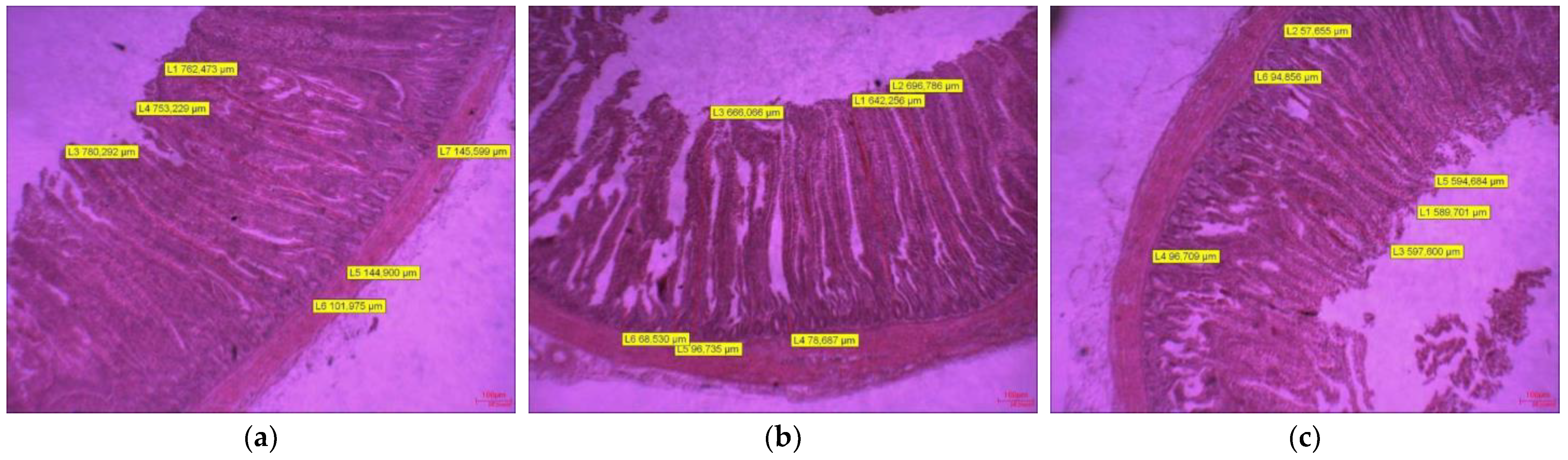
Table 8 presents the histomorphological characteristics of the small intestine of broiler chickens fed diets based on feather meal or mixed meal (Figure 1). Birds fed the mixed meal diet exhibited significantly greater villus height in the jejunum and ileum, along with increased crypt depth in the ileum, compared with those fed feather meal (p < 0.05). In contrast, the villus height-to-crypt depth ratio in the jejunum was significantly higher in the feather meal group. No differences (p > 0.05) in duodenal morphology were detected between the two dietary treatments.
Table 8.
Histomorphology of the small intestine in broiler chicken fed feather meal and mixed meal.
Figure 1.
(a) Duodenum, (b) Jejunum, (c) Ileum villi heights and crypt depth of small intestines.
4. Discussion
4.1. Proximate Composition
The compositional variation between the two animal by-products likely arises from differences in raw material sources and processing conditions; mixed meal is typically produced from a blend of diverse animal tissues, whereas feather meal consists almost exclusively of poultry feathers that require specific hydrolysis to disrupt keratin, resulting in compositional differences [24,25].
Feather meal and mixed meal exhibited distinct differences in proximate composition. Feather meal contained substantially higher crude protein (94.36%) and gross energy, whereas mixed meal showed higher ash, crude fiber, and unsaturated fatty acid contents. These results are consistent with those of Wang and Parsons [2] and Papadopoulos [26], who reported that the elevated protein concentration of feather meal results from its keratin structure, which is highly resistant to hydrolysis. The higher ash and unsaturated fatty acid contents in mixed meal reflect the retention of mineral and lipid fractions during rendering [27].
4.2. Composition and Digestibility of Amino Acids
Recent advances in precision nutrition emphasize that ingredient composition and processing strongly influence amino acid digestibility and overall protein utilization in broiler diets, reinforcing observed differences between feather meal and mixed meal [28].
The amino acid composition showed that feather meal was rich in methionine and lysine, while mixed meal contained higher levels of valine, leucine, isoleucine, and serine. Despite the higher crude protein content of feather meal, its amino acid balance was markedly poorer. The SID results further revealed that mixed meal exhibited greater digestibility of several essential amino acids, including valine, phenylalanine, isoleucine, and histidine. These findings are consistent with Lemme et al. [7] and Adedokun et al. [12], who reported that keratin-based ingredients exhibit low amino acid digestibility due to extensive disulfide cross-linkages, making the keratin matrix resistant to enzymatic degradation. Conversely, mixed meal contains a higher proportion of connective tissue proteins, which are generally more easily digestible. Processing methods such as enzymatic hydrolysis or alkaline treatment may improve the availability of amino acids in feather meal and enhance its efficiency in broiler diets [4].
The observed differences in amino acid digestibility can be largely attributed to the inherent physical and chemical structures of the proteins in the respective ingredients. Feather meal is predominantly composed of keratin, which contains dense disulfide cross-linkages that strongly resist degradation by gastrointestinal digestive enzymes. In contrast, the mixed meal provides a more balanced amino acid profile with protein structures (such as connective or muscle tissues) that are more readily accessible to enzymatic hydrolysis, thereby leading to significantly higher AID and SID values.
4.3. Composition and Digestibility of Fatty Acid
Emerging research highlights that the structural and physicochemical properties of fatty acids play a crucial role in digestibility and lipid utilization in poultry, aligning with the observed differences between feather meal and mixed meal [29,30].
The fatty acid profiles of feather meal and mixed meal differed markedly. Mixed meal exhibited both higher proportions and greater digestibility of unsaturated fatty acids, particularly linoleic, α-linolenic, and γ-linolenic acids, which are essential for metabolic regulation and membrane integrity in poultry. These findings correspond with those of Izuddin et al. [17], who reported that dietary inclusion of unsaturated fats improved lipid absorption and metabolism in laying hens. The superior digestibility of unsaturated fatty acids in mixed meal may be attributed to their lower melting points and greater solubility, which facilitate micelle formation and intestinal absorption. In contrast, the predominance of long-chain saturated fatty acids in feather meal could explain its relatively lower digestibility.
Furthermore, the digestibility of fatty acids is closely related to their structural and physicochemical properties, particularly their degree of saturation. Ingredients with a higher proportion of unsaturated fatty acids exhibit better lipid emulsification and micelle formation in the avian gastrointestinal tract. Consequently, the distinct fatty acid profile in the mixed meal facilitates more efficient lipid absorption, resulting in higher overall digestibility compared to the lipid fractions primarily found in feather meal.
4.4. Fiber and Energy Digestibility
The structural and physicochemical characteristics of feed ingredients can modulate both enzymatic digestibility and gut microbial interactions, shaping nutrient utilization efficiency in broilers [30,31].
Mixed meal showed significantly higher apparent and standardized ileal digestibility values for ash and fibers than feather meal, indicating improved utilization of mineral and fibrous components. This improvement could be linked to the heterogeneous structure and residual lipid content of mixed meal, which may enhance enzymatic exposure and microbial fermentation. Similar patterns were described by Barua et al. [10], who emphasized the influence of ingredient structure on nutrient accessibility. The higher digestibility of ADL in feather meal could be due to partial keratin breakdown during thermal processing. Nevertheless, no changes were detected between feather meal and mixed meal in crude protein or metabolizable energy digestibility, suggesting that both can serve as viable protein and energy sources when appropriately processed.
4.5. Intestinal Morphology
Morphological assessment of the small intestine revealed that broilers fed mixed meal-based diets exhibited significantly greater villus height in the jejunum and ileum, as well as deeper crypts in the ileum, suggesting enhanced absorptive surface area and epithelial regeneration. These observations are consistent with those of Gilani et al. [32], who reported that improved nutrient digestibility supports intestinal development and function. Conversely, the higher villus height-to-crypt depth ratio observed in the jejunum of feather meal-fed birds is likely a mathematical consequence of their shallower crypt depths, as the lower nutrient digestibility of feather meal may not provide sufficient substrates to stimulate rapid intestinal crypt cell proliferation compared to mixed meal. Overall, the morphological advantages observed in the mixed meal-fed group align with its superior nutrient digestibility and utilization efficiency.
5. Conclusions
This study demonstrates that although feather meal has high crude protein, its amino acid composition is unbalanced and its nutrient digestibility is relatively low. In contrast, mixed meal not only has a more balanced nutritional composition but also shows significantly higher AID and SID values for most nutrients (particularly fiber components and essential amino acids). Additionally, mixed meal promotes intestinal development, as evidenced by significantly increased villus height in the jejunum and ileum. Therefore, under the conditions of this short-term study, mixed meal demonstrated better overall nutrient digestibility and beneficial effects on intestinal morphology compared to feather meal, suggesting its potential as a viable alternative protein source in broiler diets. Building on existing research, further efforts should continue to optimize strategies to enhance the utilization efficiency of feather meal, particularly through its combination with complementary protein sources, through the application of processing techniques such as enzymatic treatment.
Author Contributions
Conceptualization, J.L. and T.C.L.; methodology, J.L., M.N.A. and E.L.T.C.; software, J.L. and F.H.; validation, T.C.L., M.N.A. and H.L.F.; formal analysis, J.L. and N.H.F.; investigation, J.L., F.H. and N.H.F.; resources, T.C.L. and H.L.F.; data curation, J.L. and M.N.A.; writing—original draft preparation, J.L.; writing—review and editing, T.C.L., E.L.T.C. and H.L.F.; visualization, J.L. and F.H.; supervision, T.C.L. and E.L.T.C.; project administration, T.C.L.; funding acquisition, T.C.L. and H.L.F. All authors have read and agreed to the published version of the manuscript.
Funding
This research received no external funding.
Institutional Review Board Statement
The study was approved by the Universiti Putra Malaysia Institutional Animal Care and Use Committee, 10/09/2024 (UPM/IACUC/AUP-R041/2024, approved on 10 September 2024).
Informed Consent Statement
Not applicable.
Data Availability Statement
The original contributions presented in this study are included in the article. Further inquiries can be directed to the corresponding author.
Acknowledgments
The authors would like to thank the Department of Animal Science, Universiti Putra Malaysia, for providing facilities and technical support during the feeding trial.
Conflicts of Interest
The authors declare no conflicts of interest.
References
- Swiatkiewicz, S.; Arczewska-Wlosek, A.; Jozefiak, D. The Nutrition of Poultry as a Factor Affecting Litter Quality and Foot Pad Dermatitis–An Updated Review. J. Anim. Physiol. Anim. Nutr. 2017, 101, e14–e20. [Google Scholar] [CrossRef] [Scilit] [PubMed]
- Wang, X.; Parsons, C. Effect of Processing Systems on Protein Quality of Feather Meals and Hog Hair Meals. Poult. Sci. 1997, 76, 491–496. [Google Scholar] [CrossRef] [Scilit] [PubMed]
- Ramankevich, A.; Danko, S.; Banaszkiewicz, R.; Kasperek, K.; Zięba, G. Residual Feed Intake as a Behavioral, Nutritional and Economic Criterion in Poultry Production. Animals 2025, 15, 1115. [Google Scholar] [CrossRef] [Scilit]
- Kim, W.K.; Patterson, P.H. Nutritional Value of Enzyme- or Sodium Hydroxide-Treated Feathers from Dead Hens. Poult. Sci. 2000, 79, 528–534. [Google Scholar] [CrossRef] [Scilit] [PubMed]
- Kuo, T.-L.; Wei, H.-W. The Bioavailability of Solid-State Fermented Feather Meal Using a Novel Geather-Fegrading Bacterium Bacillus velezensis PN1 in Broilers. Animals 2024, 14, 3254. [Google Scholar] [CrossRef] [Scilit]
- Springett, M.B.; Adams, J.B. Identification of 1-cyano-2,3-epithiopropane in Volatiles of a Model System from Brussels Sprouts (Brassica Oleraceae L Var Bullata Subvar Gemmifera DC). J. Sci. Food Agric. 1989, 46, 211–219. [Google Scholar] [CrossRef] [Scilit]
- Lemme, A.; Ravindran, V.; Bryden, W.L. Ileal Digestibility of Amino Acids in Feed Ingredients for Broilers. Worlds Poult. Sci. J. 2004, 60, 423–438. [Google Scholar] [CrossRef] [Scilit]
- Alafif, M.S.; Hoffman, L.C.; Cozzolino, D.; Abdollahi, M.R.; Roura, E.; Nguyen, A.D.; Soumeh, E.A. Assessment of Apparent Metabolizable Energy, and Ileal Amino Acid Digestibility of Full-Fat Black Soldier Fly Larvae (Hermetia illucens) in Broiler Chickens. Poult. Sci. 2025, 104, 105506. [Google Scholar] [CrossRef] [Scilit]
- Heydari, S.; Ghazaghi, M.; Rokouei, M.; Mehri, M. Corrigendum to “Apparent and Standardized Ileal Digestibility of Calcium in Wheat and Soybean Meal for Growing Quail Chicks Using Direct Method” [Poultry Science, 104 (2025) 104830]. Poult. Sci. 2025, 104, 105311. [Google Scholar] [CrossRef] [Scilit]
- Barua, M.; Abdollahi, M.R.; Zaefarian, F.; Wester, T.J.; Girish, C.K.; Ravindran, V. Standardized Ileal Amino Acid Digestibility of Protein Sources for Broiler Chickens Is Influenced by the Feed Form. Poult. Sci. 2020, 99, 6925–6934. [Google Scholar] [CrossRef] [Scilit]
- Cowieson, A.J.; Sorbara, J.O.B.; Pappenberger, G.; Abdollahi, M.R.; Ravindran, V. Toward Standardized Amino Acid Matrices for Exogenous Phytase and Protease in Corn–Soybean Meal–Based Diets for Broilers. Poult. Sci. 2020, 99, 3196–3206. [Google Scholar] [CrossRef] [Scilit] [PubMed]
- Adedokun, S.A.; Parsons, C.M.; Lilburn, M.S.; Adeola, O.; Applegate, T.J. Endogenous Amino Acid Flow in Broiler Chicks Is Affected by the Age of Birds and Method of Estimation. Poult. Sci. 2007, 86, 2590–2597. [Google Scholar] [CrossRef] [Scilit] [PubMed]
- Azizi, M.N.; Loh, T.C.; Lim, E.; Chung, T.; Faris, M.; Aziz, A.; Foo, H.L.; Liu, J.; Ibrahim, W. Sustainable Alternative Feed Ingredients: Effects of Palm Kernel Cake and Decanter Cake on Broiler Growth and Production Performance. Trop. Anim. Health Prod. 2026, 58, 77. [Google Scholar] [CrossRef] [Scilit]
- AOAC International. Official Methods of Analysis of AOAC International; Latimer, G.W., Ed.; Oxford University Press: Oxford, UK, 2005; ISBN 9780197610138. [Google Scholar]
- Van Soest Use of Detergents in the Analysis of Fibrous Feeds. II. A Rapid Method for the Determination of Fiber and Lignin. J. Assoc. Off. Agric. Chem. 1963, 46, 829–835. [CrossRef] [Scilit]
- Azizi, M.N.; Loh, T.C.; Chung, E.L.T.; Ab Aziz, M.F.; Foo, H.L.; Liu, J.; Aiman Farzana, Z.; Samuel Raj, L. From Nutritional Profiles to Digestibility Insights: Exploring Palm Kernel Cake and Decanter Cake in Broiler Diets. Animals 2025, 15, 1966. [Google Scholar] [CrossRef] [Scilit]
- Izuddin, W.I.; Loh, T.C.; Nayan, N.; Akit, H.; Noor, A.M.; Foo, H.L. Blood Lipid Profiles, Fatty Acid Deposition and Expression of Hepatic Lipid and Lipoprotein Metabolism Genes in Laying Hens Fed Palm Oils, Palm Kernel Oil, and Soybean Oil. Front. Vet. Sci. 2023, 10, 1192841. [Google Scholar] [CrossRef] [Scilit] [PubMed]
- Azizi, M.N.; Loh, T.C.; Foo, H.L.; Akit, H.; Izuddin, W.I.; Shazali, N.; Teik Chung, E.L.; Samsudin, A.A. Chemical Compositions of Brown and Green Seaweed, and Effects on Nutrient Digestibility in Broiler Chickens. Animals 2021, 11, 2147. [Google Scholar] [CrossRef] [Scilit]
- Short, F.J.; Gorton, P.; Wiseman, J.; Boorman, K.N. Determination of Titanium Dioxide Added as an Inert Marker in Chicken Digestibility Studies. Anim. Feed. Sci. Technol. 1996, 59, 215–221. [Google Scholar] [CrossRef] [Scilit]
- Barua, M.; Abdollahi, M.R.; Zaefarian, F.; Wester, T.J.; Girish, C.K.; Chrystal, P.V.; Ravindran, V. Basal Ileal Endogenous Amino Acid Flow in Broiler Chickens as Influenced by Age. Poult. Sci. 2021, 100, 101269. [Google Scholar] [CrossRef] [Scilit]
- Scott, T.A.; Boldaji, F. Comparison of Inert Markers [Chromic Oxide or Insoluble Ash (CeliteTM)] for Determining Apparent Metabolizable Energy of Wheat- or Barley-Based Broiler Diets with or without Enzymes. Poult. Sci. 1997, 76, 594–598. [Google Scholar] [CrossRef] [Scilit]
- Alagbe, E.O.; Sung, J.Y.; Pasternak, J.A.; Adeola, O. Postnatal Small Intestinal Morphological Development in Cobb 500 Broiler Chickens. Poult. Sci. 2026, 105, 106412. [Google Scholar] [CrossRef] [Scilit]
- Danladi, Y.; Loh, T.C.; Foo, H.L.; Akit, H.; Tamrin, N.A.M.; Azizi, M.N. Effects of Postbiotics and Paraprobiotics as Replacements for Antibiotics on Growth Performance, Carcass Characteristics, Small Intestine Histomorphology, Immune Status and Hepatic Growth Gene Expression in Broiler Chickens. Animals 2022, 12, 917. [Google Scholar] [CrossRef] [Scilit]
- Brands, L.; Ullrich, C.; Wilke, V.; Visscher, C.; Kamphues, J.; Abd El-Wahab, A. Effects of Poultry By-Product Composition and Processing on Nutrient Digestibility and Fecal Characteristics of High-Protein Dry Dog Food. Animals 2025, 15, 2693. [Google Scholar] [CrossRef] [Scilit]
- Li, R.; Cho, S.H. Fish Meal Replacement by Chicken By-Product Meal in Diet: Impacts on Growth and Feed Availability of Juvenile Rockfish (Sebastes schlegeli), and Economical Analysis. Animals 2025, 15, 80. [Google Scholar] [CrossRef] [Scilit]
- Papadopoulos, M.C. Effect of Processing on High-Protein Feedstuffs: A Review. Biol. Wastes 1989, 29, 123–138. [Google Scholar] [CrossRef] [Scilit]
- Oliveira, C.R.C.; Rabello, C.B.V.; Rodrigues, P.B.; da Costa Lopes, C.; Silva, B.A.; Lopes, E.C.; Ludke, M.d.C.M.M.; de Souza, L.F.A.; Nascimento, J.C.d.S.; da Silva, W.A.; et al. Nutritional Composition and Prediction of Energy Values of Poultry Offal Meal and Meat and Bone Meal for Broilers. Trop. Anim. Health Prod. 2025, 57, 335. [Google Scholar] [CrossRef] [Scilit] [PubMed]
- Alabi, T.; Adedokun, S. Amino Acid Nutrition in Poultry: A Review. Animals 2025, 15, 3323. [Google Scholar] [CrossRef] [Scilit] [PubMed]
- Shoaib, M.; Bhatti, S.A.; Ashraf, S.; Hamid, M.M.A.; Najam-us-Sahar; Javed, M.M.; Amir, S.; Aslam, N.; Roobi, A.; Iqbal, H.H.; et al. Fat Digestion and Metabolism: Effect of Different Fat Sources and Fat Mobilisers in Broilers’ Diet on Growth Performance and Physiological Parameters—A Review. Ann. Anim. Sci. 2023, 23, 641–661. [Google Scholar] [CrossRef] [Scilit]
- Rodriguez-Sanchez, R.; Tres, A.; Sala, R.; Soler, M.D.; Guardiola, F.; Barroeta, A.C. Effects of Free-Fatty-Acid Content and Saturation Degree of the Dietary Oil Sources on Lipid-Class Content and Fatty-Acid Digestibility along the Gastrointestinal Tract in Broilers from 22 to 37 Days of Age. Poult. Sci. 2021, 100, 101261. [Google Scholar] [CrossRef] [Scilit]
- Getahun, A.; Yemane, N. Review on Impact of Dietary Fiber on Poultry Performance. S. Asian J. Life Sci. 2025, 13, 41–49. [Google Scholar] [CrossRef] [Scilit]
- Gilani, S.M.H.; Rashid, Z.; Galani, S.; Ilyas, S.; Sahar, S.; Zahoor-ul-Hassan; Al-Ghanim, K.; Zehra, S.; Azhar, A.; Al-Misned, F.; et al. Growth Performance, Intestinal Histomorphology, Gut Microflora and Ghrelin Gene Expression Analysis of Broiler by Supplementing Natural Growth Promoters: A Nutrigenomics Approach. Saudi J. Biol. Sci. 2021, 28, 3438–3447. [Google Scholar] [CrossRef] [Scilit] [PubMed]

Disclaimer/Publisher’s Note: The statements, opinions and data contained in all publications are solely those of the individual author(s) and contributor(s) and not of MDPI and/or the editor(s). MDPI and/or the editor(s) disclaim responsibility for any injury to people or property resulting from any ideas, methods, instructions or products referred to in the content. |
© 2026 by the authors. Licensee MDPI, Basel, Switzerland. This article is an open access article distributed under the terms and conditions of the Creative Commons Attribution (CC BY) license.