Article

Soil Seedbank Persistence of Parthenium hysterophorus L.

by
Simon J. Brooks
1,*,
Faiz F. Bebawi
1,
Dannielle A. Brazier
1 and
Shane D. Campbell
2
1
Tropical Weeds Research Centre, Department of Primary Industries, Charters Towers, QLD 4820, Australia
2
School of Agriculture and Food Sustainability, The University of Queensland, Gatton Campus, Gatton, QLD 4343, Australia
*
Author to whom correspondence should be addressed.
Seeds 2026, 5(4), 40; https://doi.org/10.3390/seeds5040040
Submission received: 29 April 2026 / Revised: 8 July 2026 / Accepted: 10 July 2026 / Published: 17 July 2026

Abstract

Parthenium hysterophorus L. is highly invasive across many countries, impacting agriculture, human and animal health and the environment. Despite a widespread invasive range, the persistence of P. hysterophorus seeds (achenes) in the soil profile has been identified as a gap in current knowledge. A long-term seed persistence field trial was under-taken, where packets of P. hysterophorus seeds were buried, retrieved periodically over 10 years and the viability assessed. Time, burial depth and soil type (clay or loam) significantly influenced seed viability. Overall viability was <5% after 5 years, and <0.2% of viable seed was recovered after 7 to 10 years. The decline was faster in seeds at 0 cm (on the soil surface) and buried at 20 cm and slower in seeds buried at 2.5 cm and 10 cm. At most retrieval times viability was higher in seeds retrieved from clay soil plots than from loam soil plots. Pasture cover (present or excluded) did not significantly influence the viability of seeds. Data from controlled ageing laboratory experiments indicated persistent seeds and complemented the field trial data. Based on the weight of 1000 seeds, less than 20 mm of rainfall could incorporate 50% of seeds into three soil types. Parthenium hysterophorus develops a persistent seed bank when incorporated into the soil and infestations will require longer-term control even if seed input is prevented.

1. Introduction

Parthenium hysterophorus L. (parthenium weed) belongs to the Heliantheae tribe within the Asteraceae Family. This annual or short-lived perennial herbaceous weed is native to the Americas and widely invasive across southern Asia and the Indian subcontinent, China, eastern Africa, Indian and Pacific Ocean islands and eastern Australia [1]. Across five continents and forty countries [2] P. hysterophorus is recognised as having broad impacts across many agricultural [3] and environmental land uses [4]. Impacts on human health include respiratory, skin, nausea and giddiness [5]. Animal health impacts include acute toxicity in cattle and mild contamination [5,6].
Reproduction in P. hysterophorus is via seeds, as this weed is not known to reproduce vegetatively [7,8]. Parthenium hysterophorus seeds can be spread via wind and water [9], contaminated produce and vehicles [7,8]. Once established at a location, P. hysterophorus can establish large soil seed banks and was a dominant component of several soil seed bank studies. An estimated soil seed bank of 200,000 seeds per m2 occurs in abandoned fields in India [10]. Samples from grazing properties in Australia recorded up to 33,904 germinable seedlings per m2 in the top 3.5 cm of soil [11], and up to 6996 germinable seedlings m2 in repeat samples to 10 cm [12,13].
Multiple studies have assessed germinable P. hysterophorus soil seed bank densities and found high, but variable densities over a range of sampled depths, land uses and time frames [14,15]. Sampling at three locations in Kenya found averages of 7.3 to 28 seedlings per m2 emerged from 0 to 15 cm deep soil samples from roadside, pasture, crop, residential and riverbank land uses [14]. In southern Ethiopia, across crop, grazing and forest land uses at three locations, an average of 18.4 P. hysterophorus seedlings per m2 emerged from 0–5 cm deep soil samples, significantly more than the 8.2 and 8 seedlings per m2 at 5–10 and 10–15 cm, respectively [15]. Five years of sampling from a Nepalese grassland revealed P. hysterophorus seeds dominated 28.1% of the germinable seedbank, with approximately eight times higher mean density at 0 to 5 cm than 5 to 10 cm [16].
With a short life span and time to maturity, P. hysterophorus can produce seeds in 28–42 days throughout much of the year [7,17]. Reproductive output (capitula per plant) can be positively influence by plant biomass, negatively influenced by weed density and vary annually between locations [18]. In the absence of repeated control measures, fresh seeds can be deposited into the soil seed bank. Parthenium hysterophorus is susceptible to various chemical, physical and biological control or suppression measures [13,19], singularly or usually in combination. However, the duration of control in the absence of seed input is unknown. The potential for variable fresh seed input contributes to the temporal variation observed in repeat seed density field studies [11,12,13,16] and limits the conclusions that can be drawn about persistence from these studies.
Three studies have incorporated known amounts of seeds in containers buried in soil, retrieving and germinating them at intervals up to 2 years [20,21,22]. A study in central Queensland, Australia found seeds in surface containers were exhausted by ants in 1 month, while after 2 years, 11.5% of seed was germinable in data pooled across depths between 2 cm and 20 cm [20]. Conversely, seed packets buried at 5 cm in southeast Queensland, Australia declined to an average germinability of 73.7% after 2 years and was projected to reach 50% after 6 years [21]. Seed packets were buried at 10 cm at two sites in Ethiopia and declined linearly but were above 50% germinable after 2 years [22]. Projections from the linear equations from both sites reach 0% germinability at 6 to 8.25 years [22]. Across the three studies, there were different percentages and temporal trajectories of germinable seeds after two years [20,21,22].
Parthenium hysterophorus reproduces and disperses by seed and forms dense, germinable buried soil seed banks. Seeds found deeper in the soil profiles of natural areas are classified as persistent due to the time taken to be incorporated [23]. Reviews of the P. hysterophorus literature [1,8,17] identify that the absence of longer-term soil seed bank persistence trials is a major knowledge gap in managing this invasive weed.
The primary objective of the current study was to assess the viability of P. hysterophorus buried at different soil depths over 10 years. For that, known quantities of seeds were enclosed in packets, buried at four depths in a field persistence trial, retrieved at intervals between 3 months and 10 years and viability tested. A shorter laboratory trial was also conducted to determine if the results of the long-term field trial were reflected in a controlled ageing test [24]. In field situations, outside of seed packet experiments, seeds can move into the soil profile. To evaluate P. hysterophorus seed movement into different soil types, the 1000 seed weight was used to estimate the amount of rainfall required to incorporate 50% of surface seeds [25].

2. Materials and Methods

2.1. Germination Procedures

Germination testing was conducted under a 30/20 °C, 12 h diurnal regime in (Thermoline® Scientific, Fairfield, NSW, Australia) incubators. Germinated seeds (healthy with radicle emergence) [26] were counted and removed every 3 or 4 days. Seeds that did not germinate were subject to a physical test of viability (pressed for solidity or collapse), then ‘solid’ seeds were checked for dormancy using the tetrazolium method [27]. Trial dates and variations in these methods are documented within Experiments 1, 2.1 and 2.2. Non-treated seed lots served as ‘controls’ to determine pre-treatment viabilities.

2.2. Experiment 1—Field Persistence of Seeds

Parthenium hysterophorus seed persistence was investigated with buried packets of seeds in a field trial (Experiment 1). Fresh P. hysterophorus seeds were collected from multiple plants in the vicinity of Charters Towers, Australia (20°09′ S, 146°26′ E; elevation 318 m). Six hundred and forty samples of 50 seeds were randomly selected and placed in mesh packets (4 cm × 4 cm × 0.5 cm; 1.1 mm × 2.4 mm mesh size). On 15 July 2009, the packets of seeds were placed in a field burial trial, with the same treatments and location described [28]. The packets were buried at 0, 2.5, 10 and 20 cm within single PVC pipes and filled with one of two soil types, alluvial river loam or black cracking clay, and placed in plots with pasture present or pasture excluded [28]. Retrievals were scheduled for 3, 6 and 12 months then annually, bi-annually or until no viable seeds were recorded for two consecutive retrievals. However, this was not reached and the trial concluded with the final samples collected after 10 years. To determine the seed viability prior to burial, 64 lots of 50 seeds were placed on filter paper in 9 cm Petri dishes, kept moist with distilled water and germinated in incubators. At each retrieval time, seeds were removed from field packets and similarly tested for germinability/viability. Experiment 1 was conducted under conditions of warm wet summers and mild dry winters (Appendix A Figure A1 and Figure A2).

2.3. Experiment 2—Controlled Ageing Tests

Two controlled ageing tests were conducted under laboratory conditions [24]. Fresh seeds were collected on 8 and 15 January 2019 (Experiment 2.1), and on 13 February 2024 (Experiment 2.2) from the Burdekin River near Selheim (19°59′ S, 146°26′ E) and sorted into 24 lots of 50 seeds for testing. Lots were placed in individual open glass vials, which were evenly split between two replicate boxes sealed to IP67 [29]. Vials were subjected to a 14 day ‘hydration’ phase with a 47% relative humidity from a lithium chloride solution (320 g L−1 H2O) [29] in a dark 20 °C incubator. After the hydration phase, a seed lot was removed from both boxes and germinated; these were non-aged reference (day 0) seed lots. Then an ‘ageing’ phase was conducted in the same dark incubator set at 45 °C and with 60% relative humidity from a lithium chloride solution of 370 g L−1 H2O in the same boxes [29,30]. A seed lot was removed from each box after the ageing periods shown in Table 1.
The hydration and ageing phases were repeated as Experiment 2.2 with another 24 lots of 50 fresh seeds. The retrieval intervals were altered to move day 35 to a later date (Table 1) because of other seed lots in the controlled ageing batches [30]. Once removed from the ageing environment, seeds germinated as described, and non-germinated seeds were non-viable, as they collapsed when subjected to physical tests of viability [31].

2.4. Experiment 3—Seed Weight and Movement from the Soil Surfaces

Seeds were collected from multiple roadside plants near Capella (23°09′ S, 147°26′ E) on 9 October 2025 and randomly selected into ten samples of 100 seeds on 18 November 2025. Seeds collected from Selheim for Experiment 2.2 were also sorted into ten lots of 100 seeds and weighed on 28 January 2026. Both seed lots were stored in paper bags at approximately 22 °C on a bench in an air-conditioned laboratory until they were weighed using CP324S Satorius AG scales (Goettingen, Germany). Weights were used to calculate mean 1000 weight of seeds for Capella and Selheim seed collections. The 1000-weights were used to calculate the rainfall required for 50% of seeds to be incorporated into silty clay, sandy and loam soil types [25].

2.5. Data Analysis

Statistical analyses for all trials were conducted in Genstat® V24 (VSN International Ltd., Hemel Hempstead, UK). Raw data from Experiments 1, 2.1, 2.2 and 3 are available in Supplementary Materials Tables S1–S4. Experiment 1, the field persistence trial, consisted of nine retrieval times and four replicate blocks. There were also two soil types (whole plot), two levels of pasture cover (split plot) and four seed burial depths (split-split plot) [28,31]. The percentage of total viable seeds retrieved in Experiment 1 was analysed for all retrievals between 0.25- and 10-years using Analysis of Variance as a split-split-plot design with time, pasture cover, soil type and depth factors. The same analysis was conducted on the percentage of non-germinable, but still viable (dormant) seeds at each retrieval time.
The percentage of viable seeds retrieved in Experiment 1 was further analysed using a log-linear regression model with a Poisson distribution. Separate linear models were fitted for each soil type over retrieval time and for each burial depth. The regression analysis generated curves from Equation (1). The constant and slope estimates and error terms for each Equation (1) are presented in Appendix A Table A1, which were used to generate the fitted model parameters in Appendix A Table A2.
V = e(D + Fx)
where V represents the viable percentage of seed remaining at time x (years), D is the fitted initial viability (constant) and F the decay factor (slope) (Appendix A Table A2).
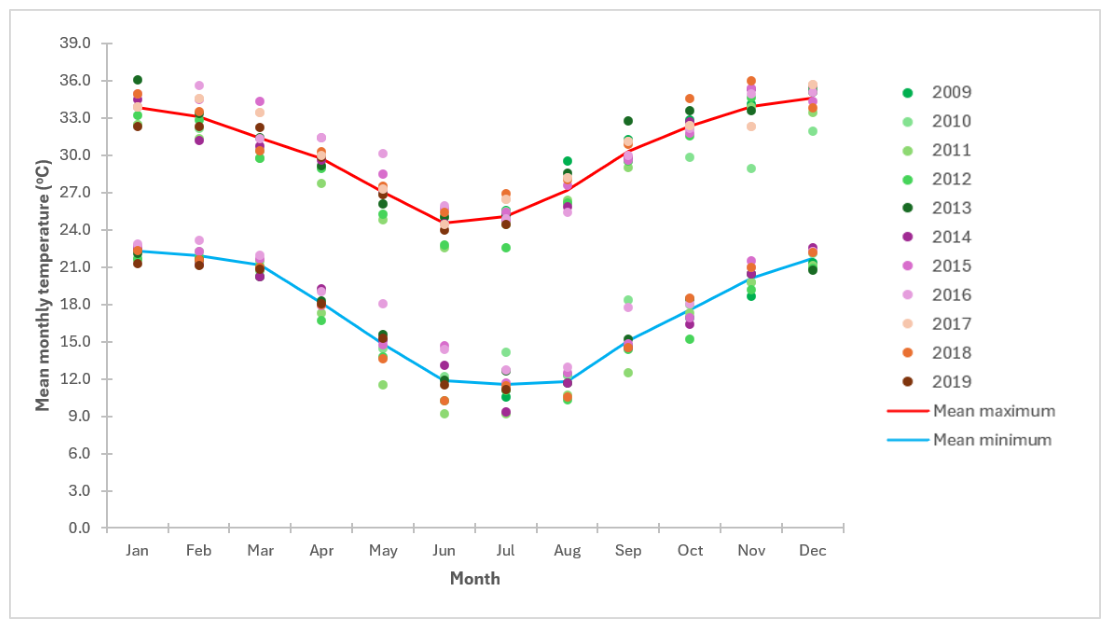
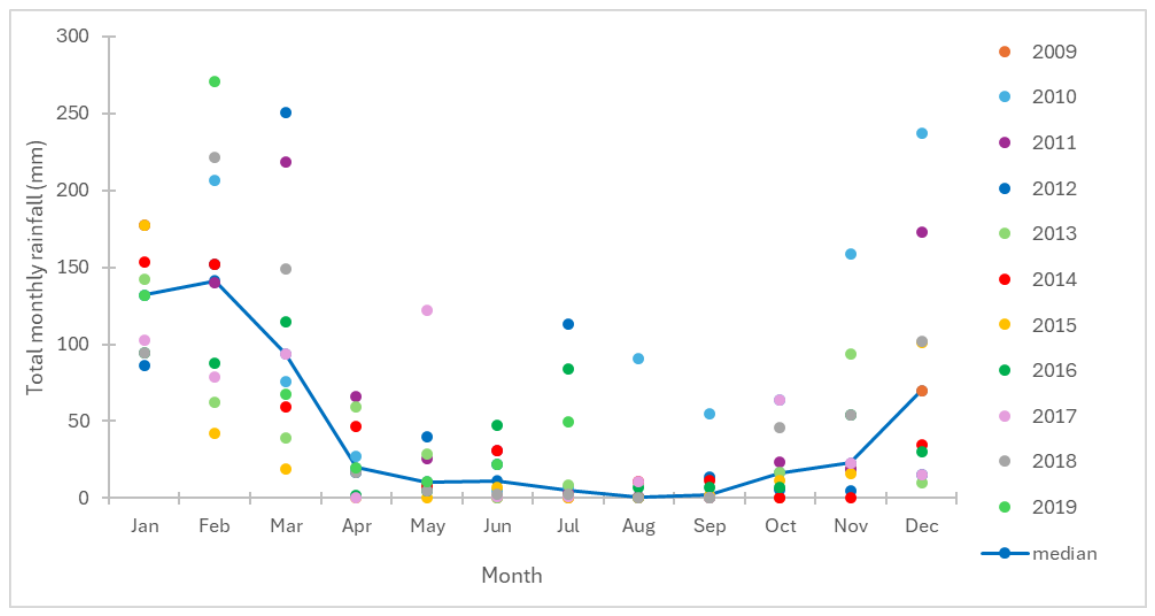
To document the local weather conditions, the field trial (Experiment 1), daily maximum and minimum temperatures and rainfall were extracted between 2009 and 2019 [32]. Temperature data was averaged per month and rainfall summed per month (Appendix A Figure A1 and Figure A2). To interpret the results from the seeds buried at the soil surface (0 cm) in the first year of the field trial, seven-day moving averages of daily maximum and minimum average temperatures and daily rainfall totals were calculated from June 2009 to July 2010.
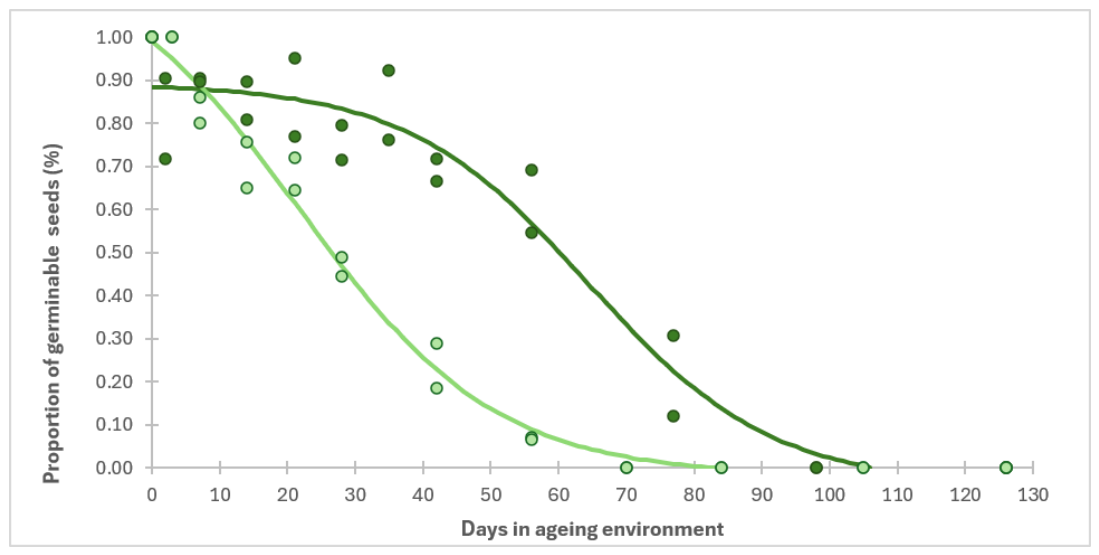
For Experiments 2.1 and 2.2, the germination of the total of seeds removed from the ageing environment was calculated as a proportion of the non-aged day 0 germination (proportion germinable = 1) per box. The proportion of germinable data over time in the A and B boxes was used to chart negative logistic regression curves [31] for each experiment. The relative proportion of viable seed over time in the ageing environment was calculated from the non-aged germinability for retrievals from each of the boxes in Experiments 2.1 and 2.2 and curves fitted per experiment using Equation (2).
G = A + C/[1 + e − (x − M)]
where G represents the germinable proportion of seeds remaining at time x (days); C is the fitted initial viability; B the slope decay; A represents the vertical shift/asymptote of the sigmoid curve; and M the inflection point of the curve (Appendix A Table A3).
The results from controlled ageing tests are compared with a P50 value, which is the ‘M’ parameter in Equation (2) (Appendix A Table A3). P50 corresponds to the days in the ageing environment for a 50% decline in the germinablity relative to non-aged seeds [24].
For Experiment 3, the 1000-weight of seeds from the Capella was used to estimate the amount of rainfall required to reduce the surface seeds by 50%, using linear equations for three soil types [25] (Supplementary Materials Table S4).

3. Results

3.1. Seed Responses over Time

In Experiments 1, 2.1 and 2.2, the viability of P. hysterophorus seeds was assessed over time under the different test conditions. In Experiment 1, the initial germination of non-buried P. hysterophorus seeds averaged 98.4% (±0.33, Standard Error Means SEM) with no dormant seeds (Supplementary Materials Table S1). Averaged across all treatment factors, viability declined at each retrieval and time was a significant factor (p < 0.001) (Table 2). After 2 years of burial, 20.06% of seeds were viable and less the 1% of seeds were viable after 7 years of burial. The trial concluded after 10 years, although small quantities of viable seeds were recovered after 7 to 10 years of burial (Table 2). Significant 2- and 3-way interactions between time, burial depth and soil type are described in the depth and soil sections below.
The reference germinabilities of each box after the hydration phase were 84%, 78% in Experiment 2.1 and 90%, 86% in Experiment 2.2 (Supplementary Materials Table S3). The curves generated from Equation (2) and the points for each box are shown in Figure 1.
The responses of the seed lots to the ageing environment differed in the two controlled ageing tests (Figure 1), as the P50 values for Experiments 2.1 and 2.2 (Figure 1) were 64.67 and 21.79 days, respectively (Appendix A Table A3).

3.2. Seed Responses to Soil Types and Depth Treatments

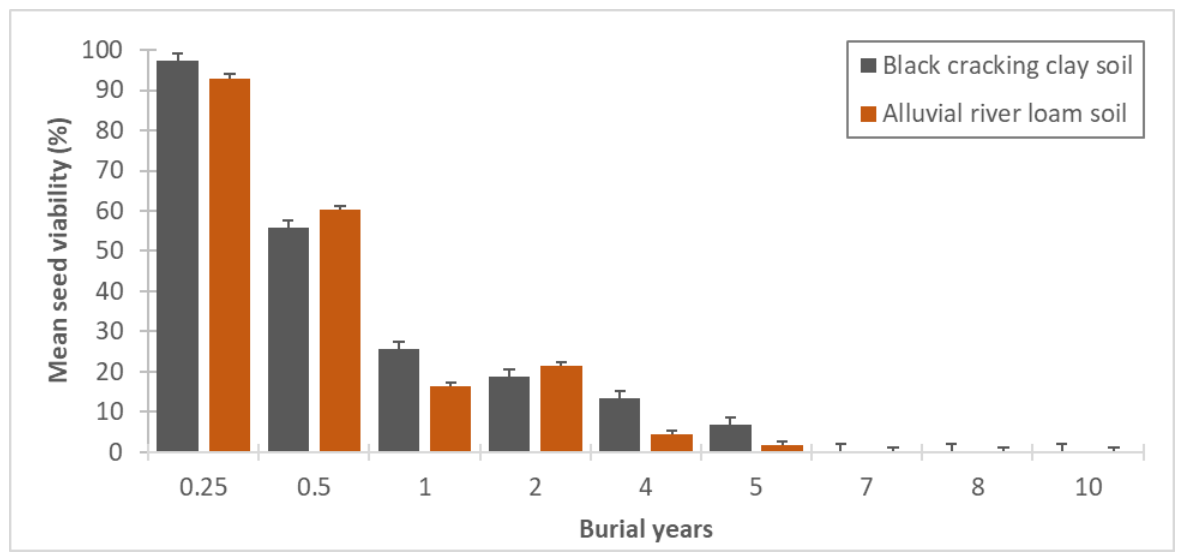
Across all retrieval times within Experiment 1, soil type was significant (p = 0.02). Overall, the seed viability was higher in seed packets buried in clay soil plots (24.26%) than those buried in loam soil plots (21.90%) (SEM ± 0.368). There was a significant soil × time interaction (p < 0.001) and the main soil effects are shown in Figure 2. Seeds retrieved from clay soil plots had a higher viability at 0.25, 1 and after 4 years of burial than loam soil plots. The last viable seeds were retrieved from loam soil plots in the 5th year of retrievals. The only viable seeds in the 7-, 8-and 10-year retrievals were in clay soil plots (Table 2, Figure 2).
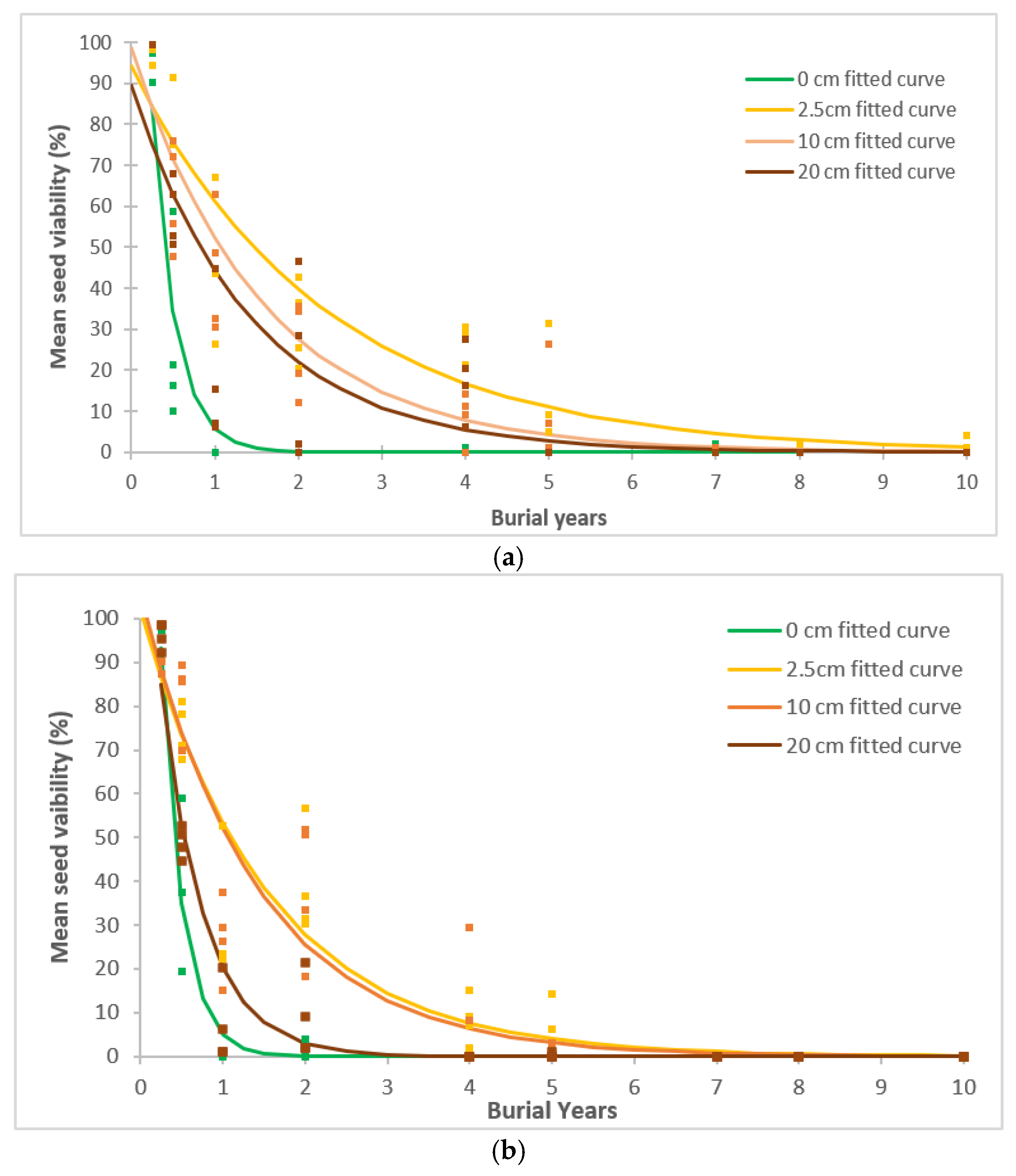
In Experiment 1 there were also significant soil × depth (p = 0.015) and soil × depth × time (p = 0.021) interactions. Mean viable seeds over burial time for each depth and soil type were averaged across the pasture types (Figure 3a,b).
The equations in Appendix A Table A2 and plotted in Figure 3 were solved for years to 50, 95 and 99% declines in seed viability for each depth in both soil types. The calculated years are shown in Table 3, and are single values determined from the mean response curves fitted to the seed retrieval data. The fitted curves had a very long tail, which reflects the few seeds retrieved at the last three retrievals (Table 2) and the fitting of exponential Equation (1). At all depths and across both soil types, seed viability declined 50% within 1.5 years.
Across both types of soil, the seed viabilities in the 0 cm treatment decreased rapidly to <1% in the first year of the trial (Figure 3a,b and Table 3). The 0 cm seed depth curves had fully declined by 3.5 years and were less affected by soil type.
The differences between the soil types were more evident in the mean viabilities of seeds buried at 20 cm (Figure 3a,b); these declined to below 10% in the second retrievals from loam soil plots, while the seed viability in the clay soil plots was less than 10% after 4 years’ burial. The calculated years were much greater in the deepest buried seeds in clay soil than the loam soil plots (Table 3).
The seeds buried at 2.5 cm in clay soil plots were more persistent than any other treatments in Experiment 1 (Figure 3a), and viability averaged 11.6% after 5 years of burial. Seeds buried at 2.5 cm in clay soil plots contained the only viable seeds after 8 and 10 years of burial.
In loam soil plots the seeds buried at 2.5 and 10 cm were more persistent than those at 0 and 20 cm (Figure 3b).

3.3. Dormant Seeds in Field Soil and Depth Treatments

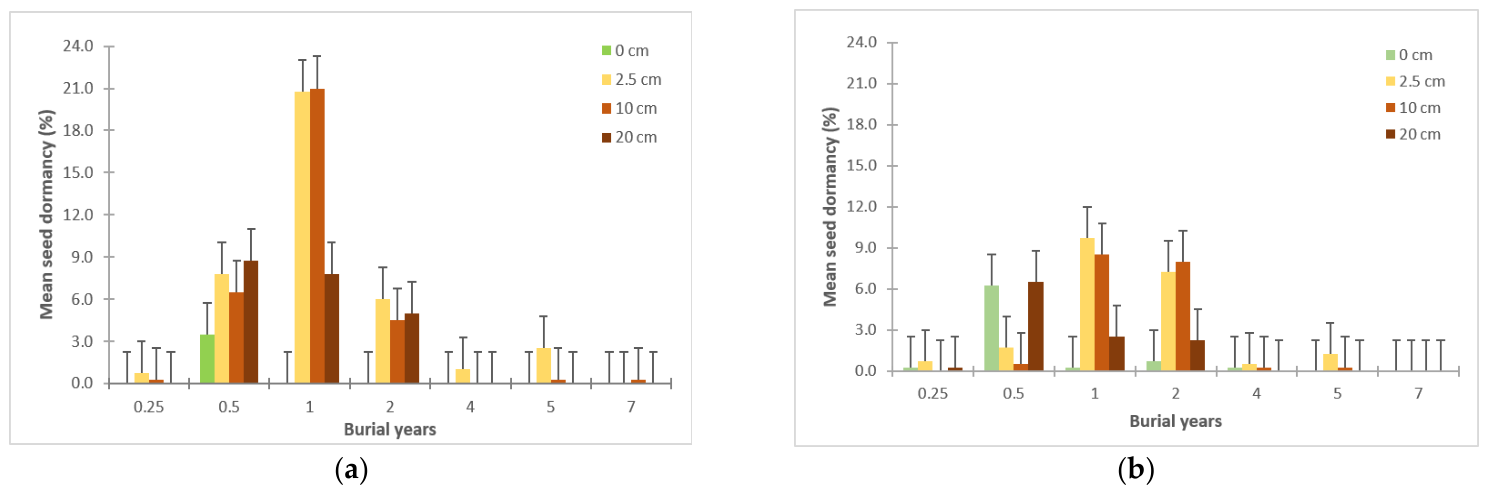
The relative contribution of viable but non-germinated seeds (dormant) is shown in Table 1 and Figure 4. Dormant seeds were identified following seed packet retrieval and subsequent exposure to the germination environment. Dormancy was higher between 0.5 and 2 years. There were no dormant seeds in retrievals from years 8 and 10.
There was a significant difference in retrieval time (p < 0.001), with the highest percentage of dormant seed in years 1 (8.8%), 0.5 (5.2%) and 2 (4.2%); the remaining values were less than 1%. Dormancy made little contribution to P. hysterophorus seed persistence beyond the second year of retrievals (Figure 4a,b).
Soil type was a significant whole plot factor (p = 0.027). Across all retrievals, mean dormancy was significantly higher in clay soil plots (3.5%) compared to loam soil plots (2.7%). There was significant depth (p < 0.001), soil × depth (p = 0.043), soil × years and depth × years (p < 0.001) treatment combinations. Dormancy was lower in seeds at 0 cm, except for 0.5 years in both soil types and higher in clay soil plots from 2.5 and 10 cm depths at the 1-year retrieval (Figure 4a,b). In the analysis of dormant seeds, there were no significant one-, two- or three-way interactions of pasture present or excluded treatments.

3.4. Seed Responses to Pasture and Surface (0 cm) Depth Treatments

Pasture treatment did not significantly influence mean viability in Experiment 1, nor were there any significant interactions between the pasture treatments and time, soil type and depth treatments. Similar total viable seed counts were recorded over the duration of Experiment 1 across pasture or soil treatments (Table 4).
The viability of seeds at 0 cm fell slightly after 0.25 years, more sharply after 0.5 years, and was limited to 0 to 4 seeds at 1 to 7 years (Table 4).
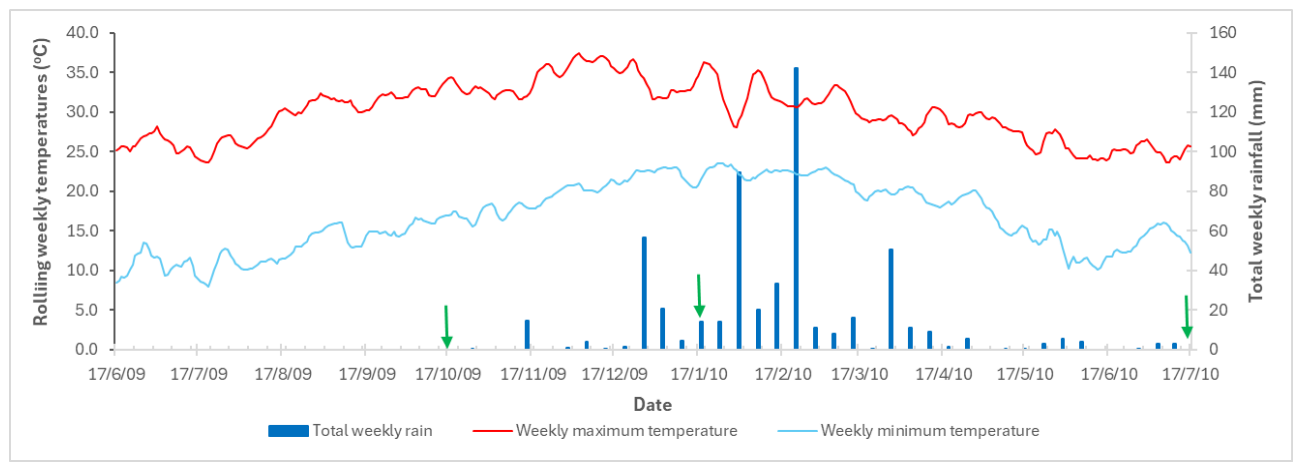
No rain was recorded for at least a month prior to the burial date (17 July 2009) of Experiment 1, and up to the 0.25-year retrieval (17 October 2009) (Figure 5). There was <5% loss in seed viability up to 0.25 years (Table 4). After 117.6 mm of rain between 0.25- and 0.5-year retrievals, the viability of the seeds at 0 cm fell by 60% at the 0.5-year retrieval. There was 315.8 mm of rainfall between the 0.5 and 1-year retrieval (Figure 5). Less than four viable seeds were recorded per treatment from the 1-year retrieval onwards, with no viable seeds recorded in the final two retrievals (Table 4).

3.5. Seed Weight and Movement from the Soil Surfaces

The mean 1000 weight of the Capella sample was 0.4893 g ± 0.0032 (n = 10), and that of the Selheim sample was 0.4593 g ± 0.0078 (n = 10). Based on the weight of the Capella sample, the amount of rainfall calculated to reduce the surface seed by 50% was 19.2 mm in silty clay soil, 17.3 mm in loam soil and 10.2 mm in sandy soil [25].

4. Discussion

4.1. Seed Persistence

Parthenium hysterophorus reproduces and spreads by seeds and forms dense soil seed banks. However, soil seed bank persistence has only been studied for 2 years, with notable variation in trajectories of those studies [20,21,22]. To inform physical, chemical and biological weed management activities, field and laboratory experiments were conducted, and showed P. hysterophorus can develop a persistent soil seed bank. In the field persistence trial, overall seed viability declined below 5% over 5 years of burial and <0.2% of seeds remained viable after 7, 8 and 10 years.
The field persistence trial recorded viable seeds, not the germinable seed densities determined from other field studies [11,12,13,14,15,16] and previous persistence studies [20,21,22]. In the field persistence trial (Experiment 1), dormancy was more prevalent in retrievals between 6 and 24 months. After 4 years of burial, physiological dormancy made a relatively small contribution to the overall viability of the retrieved samples and does not solely account for the longer-term viability at the sub-surface burial depths, which supports suggestions that conditional dormancy develops in buried P. hysterophorus seeds [7].
Buried seed packet field persistence trials provide a realistic guide to the longevity of seeds [31,33]. In buried seed trials seed bank loss may be attributed to combinations of detected and undetected fatal germination, seed ageing, and micro-predation [31]. High densities of germinable P. hysterophorus seeds were found in many field seed bank studies [11,12]. However, the increased seed density in buried packets may promote the loss of seed viability by fungal pathogen damage [34]. Persistence in buried packet trials may be over-estimated by excluding losses to macroinvertebrates and emigration [31]. Ant predation of seeds in surface jars was noted in a P. hysterophorus persistence study [20]. The results of buried packet trials are also most applicable to the site and prevailing conditions, but persistent seed banks were evident in trajectories of shorter field studies [20,21,22].
While studies seek to correlate field seed persistence from long-term field trials with short-term controlled ageing tests [24,31], P. hysterophorus seed lots have responded differently under laboratory test conditions. In testing seeds from different parental growing conditions, P50 values of 68.8 days and 77.7 days were calculated from seeds of ‘warm’ environment raised plants, and P50 values of 40.1 days and 44.3 days from ‘cool’ raised plants [35]. A local sample of P. hysterophorus seeds (P50 = 46.7 days) [24] was collected from the same warm dry-tropical climate (Appendix A Figure A1 and Figure A2) as Experiments 2.1 and 2.2. The results from Experiment 2.1 (P50 = 64.5 days) better reflected seed persistence in the field trial. While the lower weight of the Selheim sample may reflect the lower P50 value (21.79 days) in Experiment 2.2, the weights were recorded a year after collection.
The results of some controlled ageing tests on P. hysterophorus seeds, where P50 > 50 days, fit the longer-term persistent category > 3 years [24] and are broadly consistent with the buried seed data in the field persistence trial. Values of P50 between 20 and 50 have been determined from controlled ageing tests (Experiment 2.2, [24,35]) and are more consistent with short-lived 1–3 yr classification [24]. The variable responses of P. hysterophorus seed to controlled ageing tests make categorising a single P50 value from a controlled ageing test and comparing to a single estimate of field persistence problematic.

4.2. Parthenium Seed Behaviour at 0 and 2.5 cm Depths

In the field persistence trial, P. hysterophorus seeds remained highly viable through the dry conditions in the 0 cm seed packets for 0.25 years, when it is assumed that the weekly rolling mean maximum and minimum temperatures were not a barrier to germination prior to the 0.25-year retrieval (Figure 5). Seed viability then declined over the first wet season with summer rainfall. Few surface (0 cm) seeds remained viable after 1 year and the likelihood of seedling establishment from surface seed after one year is low.
In a seedling emergence experiment [21], P. hysterophorus seeds were sown on the soil surface in February and seedlings were recorded after a second rainfall event. After initial inhibition of seedling emergence, 51.4% of seeds were lost via emergence up to 5 months after sowing. With no emergence recorded after 5 months, seeds were thought to be lost to desiccation, predation or fatal germination [21]. However, the remaining seeds could not be inspected, and some seeds may have been incorporated into the soil. The observations of surface-sown seed [21] and results of the surface (0 cm) seeds in the field persistence trial (Experiment 1) suggest P. hysterophorus seeds on the soil surface are mostly depleted within a year but may be incorporated into the soil profile.
The 1000-seed weights in Experiment 3 were lower than the reported range of 0.51 to 0.56 g per 1000 seeds [36]. They were greater than the reported range of 0.30 to 0.39 g per 1000 seeds recorded from collections above 700 m [37]. Small rainfall events of <20 mm could incorporate 50% of P. hysterophorus seed into different soil types. In addition to rainfall [25] and seed mass [23], the likelihood of vertical soil movement increases if seeds lack adhesion structures or are smooth [38]. The field persistence trial showed seeds in the soil profile to be more persistent than seeds on the surface.
Parthenium hysterophorus seeds could germinate over a range of temperatures in the dark [39]. Other studies have reported that seedlings could emerge from seeds buried at 3 cm [22,40]. In a local clay soil, 76% and 62% seedling emergence was recorded from seeds buried at 0 and 2 cm, respectively, while 28% seedling emergence was recorded from seeds buried at 3 cm, and no emergence was recorded from seeds at 4 or 5 cm [40]. Seedlings emerged from seeds buried in sandy loam and loamy sand soils at 2 cm, some at 3 cm in sandy loam soil and none at 5 cm in either soil type tested [22]. Parthenium hysterophorus seeds were more persistent at 2.5 cm and seedlings may establish from seed buried at depths up to 3 cm [22,40].

4.3. Seeds Buried Below 5 cm Deep

Generally, seeds found deeper in the soil profiles of natural areas are classified as persistent [23] and germinable. P. hysterophorus seeds have been from soil depths below 5 cm [15,16]. In the field persistence trial, viable seeds were recovered from depths of 10 and 20 cm after 5 years (Figure 3a,b). Parthenium hysterophorus can develop persistent soil seed banks at 10+ cm of soil, where seedlings cannot successfully establish [22,40].
Disturbance events such as flooding could alter the density and depth distribution of seeds by deposition or erosion of soil [11] as P. hysterophorus seeds are dispersed along water courses [9,12]. Similarly, cultivation such as ploughing can alter the depth distribution of seeds in arable soil [22,41]. An Ethiopian study recommended seeds be cultivated to below 7 cm deep, but that requires mechanised agricultural equipment [22]. Processes of cracking and turning-over in black clay soils may also redistribute seeds though the soil profile and contribute to the emergence of P. hysterophorus plants after years of absence on clay soils in central Queensland (author’s personal observations).

4.4. Soil Type

Persistence was greater in black cracking clay soils in the field persistence trial, and no viable seeds were recovered from river loam soil plots after 7 years. Parthenium hysterophorus will grow on a wide range of soils but shows a preference for black cracking clay soils [7]. Multiple central Queensland seed density studies have sampled seed banks from black cracking clay soils [11,13,42] and sites with sandy loam soils [11,12,13]. Despite the repeat field sampling of germinable P. hysterophorus soil seed banks in clay and loam soil types, drawing inferences from the effect of soil type on persistence is difficult. The field samples [11,12,13,42] occur over different spatial and temporal scales with variable biological and weed management factors coupled with P. hysterophorus seed inputs and losses.
In the field persistence trial (Experiment 1) the maximum post retrieval dormancy was 21% at 2.5 and 10 cm after one year of burial in clay soil plots. Due to smaller pore spaces and a more hypoxic environment, compacted clay soils have a greater percentage of dormancy of small, buried seeds than seeds buried in loam and sandy soils [43]. Compacted clay soils can also limit seedling emergence from small seeds [43].
In field situations, the bonds between small clay particles inhibit the vertical movement of seeds in silty clay soils compared to loam and sandy soils [25,43]. This was reflected in the equations used in Experiment 3, although the differences in the calculated rainfall for 50% of P. hysterophorus seeds to be incorporated were limited to 10.2 to 19.2 mm in sandy and clay soils.

4.5. Weed Management Implications

Parthenium hysterophorus seeds have been found in the soil sampled across different land uses [14,15]. Pasture present and excluded was not a factor in the surface seeds’ viability and had no significant impact on the sub-surface seeds. Land managers could expect similar patterns of viability decline under different depth and soil conditions across bare cultivated land and vegetated for grazing or conservation land uses.
In tilled cropping areas viable P. hysterophorus seeds could be returned to a shallower depth and bare ground for seedling establishment by cultivation [41] years after seed deposition. In non-tilled areas seeds can persist and seedlings establish in the top few centimetres of soil for 5 or more years.
Within grazing systems, a low above ground density of P. hysterophorus plants may not reflect the greater density and persistence of the soil seed bank [13,19]. There are effects of integrated control measures on the seed bank density where management activities included biological control and reduced grazing pressure [13], or herbicide use and reduced grazing pressure [19]. However, the effects of control activities on the P. hysterophorus seed bank may be limited over 2 or more years [19] and reflect both persistence and input of seeds. In a 5-year study, grazing intensity had a small but significant effect on seed bank density [16], although the overall mean P. hysterophorus seed bank density was between 4000 and 10,000 seeds per m2 annually.
Seed depth and persistence also contribute to outcomes from fires. Pre- and post-burn soil seed bank samples (to 5 cm) contained similar densities of germinable P. hysterophorus seeds [42]. Seeds buried at 1 cm are insulated by the soil and may survive temperatures from an initial fire. Seeds could then germinate from shallow depths in black clay soils onto bare ground after the fire. A lower density of seedlings was reported after subsequent fires, but similar effects were also observed in plots with grazing excluded [42].
With a persistent soil seed bank, a short life cycle, high seed production and multiple pathways of introduction, re-introduction and dispersal, there are few documented examples of P. hysterophorus eradication [8]. Early detection and intervention is more likely to be a successful strategy [8], ahead of the build-up of above- and below-ground P. hysterophorus densities. The seed bank data from the field persistence trial enables practitioners to make decisions based on the risk of 50 to 99% seed decline (Table 3). However, the short life cycle [7,17] means that preventing fresh input of seeds for five or more years is a difficult proposition for land managers.

5. Conclusions

Parthenium hysterophorus spreads, reproduces and persists by seeds. By retrieving seeds buried in packets, in the absence of fresh input, this study found <0.2% of seeds viable after 7 to 10 years. Persistent buried soil seed banks can remain for 5 years, extending to soil depths of 20 cm for clay and loam soils. However, clay soil and 2.5 cm burial depth treatment combination had the highest and longest persistence, which was not fully explained by the development of physiological dormancy. Seed persistence has implications for the management of this invasive plant across bare and vegetated land uses. Preventing fresh seed input and managing the soil seed banks of this highly invasive herb is a difficult and long-term problem.

Supplementary Materials

The following supporting information can be downloaded at: https://www.mdpi.com/article/10.3390/seeds5040040/s1, Table S1: Non-buried seed viability of Parthenium hysterophorus in Experiment 1 (n = 64 × 50 seeds). Table S2: Buried seed viability of Parthenium hysterophorus in Experiment 1 (n = 576 × 50 seeds). Table S3: Pre- and post-ageing germinability of Parthenium hysterophorus in Experiments 2.1 and 2.2. Table S4: Weights of 100 Parthenium hysterophorus seeds in Experiment 3 and rainfall calculations.

Author Contributions

Different experiments were conceived and implemented by different combinations of authors. The trials were designed by S.D.C., F.F.B. and S.J.B. and were implemented by F.F.B. and D.A.B. Data, results and method text were validated by S.J.B., F.F.B., D.A.B. and S.D.C. Analysis was done by S.J.B. The first author did most of the editing, but text was reviewed and edited by the other authors depending on their involvement in the trials. All authors have read and agreed to the published version of the manuscript.

Funding

This research received no external funding.

Institutional Review Board Statement

Not applicable.

Informed Consent Statement

Not applicable.

Data Availability Statement

The raw data supporting the conclusions of this article are attached as Supplementary Materials.

Acknowledgments

We thank W. Vogler, M. Setter and K. Murree for reviewing the manuscript. The technical assistance of K. Gough, C. Crowley, K. Thorp, R. Stevenson, K. Risdale, C. Andersen and C. Warren is also acknowledged.

Conflicts of Interest

The authors declare no conflict of interest.

Appendix A

Figure A1. Climatic conditions for Experiment 1. Monthly mean maximum and minimum temperatures from July 2009 to 2019 are shown as points. Red and blue lines indicate 10-year mean maximum and minimum temperatures, respectively. Data sourced from SILO grid point data set for S 20.10° and E 146.25° [32].
Seeds 05 00040 g0a1
Figure A2. Climatic conditions for Experiment 1, total monthly rainfall shown as points and median rainfall (line) from July 2009 to 2019. Data sourced from SILO grid point data set for S 20.10° and E 146.25° [32].
Seeds 05 00040 g0a2
Table A1. Estimates, standard errors and t-statistics of the fitted log-linear models used in Equation (1) for Parthenium hysterophorus seed viability at each depth. Soil type was analysed separately. Constant and slope parameters for each depth are relative to the 0 cm seeds. The T statistics were significant (T. pr. < 0.001) for each parameter.
SoilDepth (cm)Constant Estimate (±SE)tSlope Estimate (±SE)t
Clay05.3329 ± 0.09556.05−3.587 ± 0.236−15.21
2.5−0.788 ± 0.102−7.723.156 ± 0.23613.35
10−0.742 ± 0.104−7.162.953 ± 0.23712.43
20−0.837 ± 0.105−7.952.883 ± 0.23812.1
Loam05.5121 ± 0.09657.68−3.908 ± 0.247−15.83
2.5−0.889 ± 0.104−8.563.259 ± 0.24813.12
10−0.855 ± 0.104−8.213.203 ± 0.24912.87
20−0.590 ± 0.117−5.051.993 ± 0.2747.28
Table A2. Fitted model parameters for Equation (1). Parthenium hysterophorus seed viability for clay and loam soil types at different depths given estimates in Table A1 and plotted in Figure 3.
Depth (cm)
Soil TypeEquation Parameters02.51020
Clayfitted constant (D)5.33294.54494.59094.4959
fitted slope (F)−3.5870−0.4310−0.6340−0.7040
Loamfitted constant (D)5.51214.62314.65714.9221
fitted slope (F)−3.908−0.649−0.705−1.915
Table A3. Parameters from Equation (2) for Experiments 2.1 and 2.2, fitted to the decline in viability of Parthenium hysterophorus seed over days in the ageing environment and shown in Figure 1.
ParameterEstimate 2.1Standard Error 2.1Estimate 2.2Standard Error 2.2
B−0.07410.0172−0.06880.0105
M64.473.8321.793.36
C0.93150.081.2340.132
A−0.03890.0619−0.01750.0212

References

  1. Bajwa, A.A.; Chauhan, B.S.; Farooq, M.; Shabbir, A.; Adkins, S.W. What do we really know about alien plant invasion? A review of the invasion mechanism of one of the world’s worst weeds. Planta 2016, 244, 39–57. [Google Scholar] [CrossRef] [PubMed]
  2. Shabbir, A.; McConnachie, A.; Adkins, S.W. Spread. In Parthenium Weed: Biology, Ecology and Management; Adkins, S.W., Shabbir, A., Dhileepan, K., Eds.; CAB International: Oxford, UK, 2019; pp. 40–56. [Google Scholar]
  3. Bajwa, A.A.; Shabbir, A.; Adkins, S.W. Interference and Impact of Parthenium Weed on Agriculture. In Parthenium Weed: Biology, Ecology and Management; Adkins, S.W., Shabbir, A., Dhileepan, K., Eds.; CAB International: Oxford, UK, 2019; pp. 57–78. [Google Scholar]
  4. Witt, A.; Belgeri, A. Impacts on the Environment. In Parthenium Weed: Biology, Ecology and Management; Adkins, S.W., Shabbir, A., Dhileepan, K., Eds.; CAB International: Oxford, UK, 2019; pp. 79–104. [Google Scholar]
  5. Kohli, R.K.; Batish, D.R.; Singh, H.P.; Dogra, K.S. Status, invasiveness and environmental threats of three tropical American invasive weeds (Parthenium hysterophorus L., Ageratum conyzoides L., Lantana camara L.) in India. Biol. Invasions 2006, 8, 1501–1510. [Google Scholar] [CrossRef]
  6. Allan, S.; BoYang, S.; Adkins, S.W. Impact of Parthenium Weed on Human and Animal Health. In Parthenium Weed: Biology, Ecology and Management; Adkins, S.W., Shabbir, A., Dhileepan, K., Eds.; CAB International: Oxford, UK, 2019; pp. 105–130. [Google Scholar]
  7. Navie, S.C.; McFadyen, R.E.; Panetta, F.D.; Adkins, S.W. The biology of Australian weeds. 27. Parthenium hysterophorus L. Plant Prot. Q. 1996, 11, 76–88. [Google Scholar]
  8. Shabbir, A.; Bajwa, A.A.; Mao, R.; Kezar, S.; Dorji, S.; Adkins, S.W. Biology of Invasive Plants 6. Parthenium hysterophorus L. Invasive Plant Sci. Manag. 2024, 17, 129–156. [Google Scholar] [CrossRef]
  9. Mao, R.; Nguyen, T.L.T.; Osunkoya, O.O.; Adkins, S.W. Spread pathways of the invasive weed Parthenium hysterophorus L.: The potential for water dispersal. Austral Ecol. 2019, 44, 1111–1122. [Google Scholar] [CrossRef]
  10. Joshi, S. Biocontrol of Parthenium hysterophorus L. Crop Prot. 1991, 10, 429–431. [Google Scholar] [CrossRef]
  11. Navie, S.C.; Panetta, F.D.; McFadyen, R.E.; Adkins, S.W. Germinable soil seedbanks of central Queensland rangelands invaded by the exotic weed Parthenium hysterophorus L. Weed Biol. Manag. 2004, 4, 154–167. [Google Scholar] [CrossRef]
  12. Osunkoya, O.O.; Ali, S.; Nguyen, T.; Perrett, C.; Shabbir, A.; Navie, S.C.; Belgeri, A.; Dhileepan, K.; Adkins, S. Soil seed bank dynamics in response to an extreme flood event in a riparian habitat. Ecol. Res. 2014, 29, 1115–1129. [Google Scholar] [CrossRef]
  13. Nguyen, T.L.T.; Bajwa, A.A.; Navie, S.C.; O’Donnell, C.; Adkins, S.W. The soil seedbank of pasture communities in central Queensland invaded by Parthenium hysterophorus L. Rangel. Ecol. Manag. 2017, 70, 244–254. [Google Scholar] [CrossRef]
  14. Murono, D.C.; Abuto, O.A. Parthenium hysterophorus Linn: Soil seed bank analysis and impact on agricultural production in Nyando Sub-County, Kisumu County, Kenya. Eur. Acad. Res. 2019, 7, 2888–2910. [Google Scholar]
  15. Minase, T.; Shiferaw, W.; Tsegaye, G. Assessing the status of soil seed bank in Parthenium hysterophorus—Invaded land use types and is social aspects in Lower Hare Watershed, Southern Ethiopia. Ekológia 2024, 43, 120–130. [Google Scholar] [CrossRef]
  16. Rokaya, M.B.; Khatri-Chettri, J.; Ghimire, S.R.; Shrestha, B.B. Vegetation and soil seedbank dynamics in Parthenium hysterophorus L. invaded subtropical grassland in Nepal. Trop. Ecol. 2020, 61, 238–247. [Google Scholar] [CrossRef]
  17. Adkins, S.W.; Shabbir, A. Biology, ecology and management of the invasive parthenium weed (Parthenium hysterophorus L.). Pest Manag. Sci. 2014, 70, 1023–1029. [Google Scholar] [CrossRef] [PubMed]
  18. Dhileepan, K. Reproductive variation in naturally occurring populations of the weed Parthenium hysterophorus (Asteraceae) in Australia. Weed Sci. 2012, 60, 571–576. [Google Scholar] [CrossRef]
  19. Belgeri, A.; Navie, S.C.; Vivian-Smith, G.; Adkins, S.W. Early recovery signs of an Australian grassland following the management of Parthenium hysterophorus L. Flora-Morphol. Distrib. Funct. Ecol. Plants 2014, 209, 587–596. [Google Scholar] [CrossRef]
  20. Butler, J.E. Longevity of Parthenium hysterophorus L. seed in the soil. Aust. Weeds 1984, 3, 6. [Google Scholar]
  21. Navie, S.C.; Panetta, F.D.; McFadyen, R.E.; Adkins, S.W. Behaviour of buried and surface-sown seeds of Parthenium hysterophorus. Weed Res. 1998, 38, 335–341. [Google Scholar] [CrossRef]
  22. Tamado, T.; Schutz, W.; Milberg, P. Germination ecology of the weed Parthenium hysterophorus in eastern Ethiopia. Ann. Appl. Biol. 2002, 140, 263–270. [Google Scholar] [CrossRef]
  23. Bekker, R.M.; Bakker, J.P.; Grandin, U.; Kalamees, R.; Milberg, P.; Poschlod, P.; Thompson, K.; Willems, J.H. Seed size, shape and vertical distribution in the soil: Indicators of seed longevity. Funct. Ecol. 1998, 12, 834–842. [Google Scholar] [CrossRef]
  24. Long, R.L.; Panetta, F.D.; Steadman, K.J.; Probert, R.; Bekker, R.; Brooks, S.J.; Adkins, S.W. Seed persistence in the field may be predicted by laboratory-controlled aging. Weed Sci. 2008, 56, 523–528. [Google Scholar] [CrossRef]
  25. Benvenuti, S. Natural weed seed burial: Effect of soil texture, rain and seed characteristics. Seed Sci. Res. 2007, 17, 211–219. [Google Scholar] [CrossRef]
  26. International Seed Testing Association. International Rules for Seed Testing 2018; International Seed Testing Association: Bassersdorf, Switzerland, 2018; Chapter 5; 298p. [Google Scholar]
  27. Moore, R.P. Handbook of Tetrazolium Testing; International Seed Testing Association: Zurich, Germany, 1985; 99p. [Google Scholar]
  28. Bebawi, F.F.; Campbell, S.D.; Mayer, R.J. Seed bank longevity and age to reproductive maturity of Calotropis procera (Aiton)W.T. Aiton in the dry tropics of northern Queensland. Rangel. J. 2015, 37, 239–247. [Google Scholar] [CrossRef]
  29. Hay, F.; Klin, K.; Probert, R.J. Can a post-harvest ripening treatment extend the longevity of Rhododendron L. seeds? Sci. Hortic. 2006, 111, 80–83. [Google Scholar] [CrossRef]
  30. Brooks, S.J.; Brazier, D.A.; Warren, C. Estimating tropical weed seed longevity with a laboratory test. In Proceedings of the 2022 Australasian Weeds Conference, Adelaide, Australia, 25 September 2022. [Google Scholar]
  31. Brooks, S.J.; Bebawi, F.F.; Brazier, D.A.; Gough, K.L.; Campbell, S.D. Seedling emergence and soil seedbank persistence of the invasive Azadirachta indica A. Juss. Seeds 2025, 4, 11. [Google Scholar] [CrossRef]
  32. Silo Long Paddock Point Data Set. Available online: https://www.longpaddock.qld.gov.au/silo/point-data/ (accessed on 1 December 2025).
  33. Saatkamp, A.; Affre, L.; Dutoit, T.; Poschlod, P. The seed bank longevity index revisited: Limited reliability evident from a burial experiment and database analyses. Ann. Bot. 2009, 104, 715–724. [Google Scholar] [CrossRef] [PubMed]
  34. Van Mourik, T.A.; Stomph, T.J.; Murdoch, A.J. Why high seed densities within buried mesh bags may overestimate depletion rates of soil seed banks. J. App. Ecol. 2005, 42, 299–305. [Google Scholar] [CrossRef]
  35. Nguyen, T.; Bajwa, A.A.; Navie, S.C.; O’Donnell, C.; Adkins, S.W. Parthenium weed (Parthenium hysterophorus L.) and climate change: The effect of CO2 concentration, temperature, and water deficit on growth and reproduction of two biotypes. Environ. Sci. Pollut. Res. Int. 2017, 24, 10727–10739. [Google Scholar] [CrossRef] [PubMed]
  36. Bajwa, A.A.; Chauhan, B.S.; Adkins, S.W. Morphological, physiological and biochemical responses of two Australian biotypes of Parthenium hysterophorus to different soil moisture regimes. Environ. Sci. Pollut. Res. Int. 2017, 24, 16186–16194. [Google Scholar] [CrossRef]
  37. Rathee, S.; Ahmad, M.; Sharma, P.; Singh, H.P.; Batish, D.R.; Kaur, S.; Kaur, A.; Yadav, S.S.; Kohli, R.K. Biomass allocation and phenotypic plasticity are key elements of successful invasion of Parthenium hysterophorus at high elevation. Environ. Exp. Bot. 2021, 184, 104392. [Google Scholar] [CrossRef]
  38. Chambers, J.C.; MacMahon, J.A.; Haefner, J.H. Seed entrapment in alpine ecosystems: Effect of soil particle size and diaspore morphology. Ecology 1991, 72, 1668–1677. [Google Scholar] [CrossRef]
  39. Bajwa, A.A.; Chauhan, B.S.; Adkins, S.W. Germination ecology of two Australian biotypes of ragweed parthenium (Parthenium hysterophorus) relates to their invasiveness. Weed Sci. 2018, 66, 62–70. [Google Scholar] [CrossRef]
  40. Matzrafi, M.; Raz, H.; Rubin, B.; Yaacoby, T.; Eizenberg, H. Distribution and biology of the invasive weed Parthenium hysterophorus L. in Israel. Front. Agron. 2021, 3, 639991. [Google Scholar] [CrossRef]
  41. Campbell, S.D.; Vogler, W.D.; Tana, T. Management: Physical, Cultural, Chemical. In Parthenium Weed: Biology, Ecology and Management; Adkins, S.W., Shabbir, A., Dhileepan, K., Eds.; CAB International: Oxford, UK, 2019; pp. 157–176. [Google Scholar]
  42. Vogler, W.D.; Navie, S.; Adkins, S.W.; Setter, C. Use of Fire to Control Parthenium Weed; Publication 06/130; Rural Industries Research and Development Corporation: Barton, ACT, Australia, 2006; 51p. [Google Scholar]
  43. Benvenuti, S.; Mazzoncini, M. Soil physics involvement in the germination ecology of buried weed seeds. Plants 2019, 8, 7. [Google Scholar] [CrossRef] [PubMed]
Figure 1. Proportion of germinable Parthenium hysterophorus seeds from Experiment 2.1 (dark green) and 2.2 (light green), showing the data (points) and fitted curve (line) over days in the ageing environment. Estimated parameters of fitted curves (Equation (2)) are in Appendix A Table A3.
Seeds 05 00040 g001
Figure 2. Mean seed viability (%) of Parthenium hysterophorus after 10 years of burial in clay and loam soils in a seed longevity trial (Experiment 1). Pooled standard errors of means (SEM) soil × time = ±1.08 are shown.
Seeds 05 00040 g002
Figure 3. Fitted curves and point data for viable seeds of Parthenium hysterophorus (%) at each burial depth (0, 2.5, 10 and 20 cm) in (a) clay and (b) loam soil plots. Four replicate points are shown for each treatment depth and soil combination and retrieval time. Details of the fitted models are in Appendix A Table A1 and Table A2.
Seeds 05 00040 g003
Figure 4. Mean seed dormancy (%) for Parthenium hysterophorus at 0, 2.5, 10 and 20 cm burial depths and between 0.25 and 7 years in (a) clay soil and (b) loam soil plots. The data are averaged across pasture treatments. Pooled standard error of the means (SEM) time × depth × soil = ±2.26 are shown.
Seeds 05 00040 g004
Figure 5. Weekly rainfall and rolling means of minimum and maximum temperatures 17 June 2009 to 17 July 2010 [32]. Green arrows are trial dates—establishment, 3-, 6- and 12-month retrievals.
Seeds 05 00040 g005
Table 1. Commencement and retrieval schedule of Parthenium hysterophorus seeds from the ageing environment in Experiment 2.
ExperimentStart DateRetrieval Schedule (Days of Ageing)
2.131 January 20190, 2, 7, 14, 21, 28, 35, 42, 56, 77, 98, 126.
2.218 February 20240, 3, 7, 14, 21, 28, 42, 56, 70, 84, 105, 126.
Table 2. Mean seed viability (%), mean dormant seeds (%) and total viable seeds of Parthenium hysterophorus retrieved from Experiment 1. Across each row, seed percentages followed by the same letter are not significantly different (% viable SEM = ±1.83, LSD = ±3.69, % dormant SEM = ±0.801, LSD = ±1.58). Total viable seed pool was 3166 per retrieval time, estimated from the non-buried seed viability (0.984 × 3200 seeds) across all soil, depth and pasture factors.
Years
0.250.512457810
Mean seed viability (%)95.16 a58.05 b20.97 c20.06 c8.88 d4.22 e0.13 f0.13 f0.16 f
Mean seed dormant (%)0.28 c5.19 b8.81 a4.22 b0.25 c0.53 c0.03 c0.000.00
Viable seeds retrieved30451858671642284135445
Table 3. Calculated years for a 50, 95 and 99% decline in Parthenium hysterophorus seed viability in each soil and depth treatment in Experiment 1. Years calculated from solving Equation (1) using the fitted values in Appendix A Table A2. Years are colour-coded as yellow low, orange fiftieth per centile, blue high.
Depth (cm)
Soil TypeEstimated Years to Viability Decline02.51020
Clay50% decline0.41.51.10.8
95% decline1.06.84.74.1
99% decline1.510.57.26.4
Loam50% decline0.41.11.10.5
95% decline1.04.64.31.7
99% decline1.47.16.62.6
Table 4. Total viable seeds of Parthenium hysterophorus retrieved from 0 cm (surface) packets in Experiment 1. Pool of 198 viable seeds per clay or loam soil type and present or excluded pasture treatment at each retrieval time. Viable pool calculated from 98.4% non-buried seed viability.
Years
PastureSoil Type0.250.512457810Total
ExcludedClay193400001000234
ExcludedLoam185810000000266
PresentClay189650020200258
PresentLoam183702410000260
Total 75025624312001018
Disclaimer/Publisher’s Note: The statements, opinions and data contained in all publications are solely those of the individual author(s) and contributor(s) and not of MDPI and/or the editor(s). MDPI and/or the editor(s) disclaim responsibility for any injury to people or property resulting from any ideas, methods, instructions or products referred to in the content.