1. Introduction
Ginkgo biloba L. is an ancient gymnosperm species that has been extensively investigated for its pharmacologically active phytochemicals. Most research to date has focused on its leaves, which yield standardized extracts rich in flavonoid glycosides and terpene trilactones (ginkgolides and bilobalide). These bioactive constituents are widely recognized for their beneficial effects on cognitive performance, peripheral microcirculation, and neuroprotection [
1].
In contrast, the seeds, commonly referred to as “ginkgo nuts,” have remained comparatively underexplored despite their complex phytochemical composition. They contain substantial amounts of carbohydrates, proteins, and vitamins, including vitamin C and several B vitamins, as well as a diverse array of phenolic and flavonoid compounds contributing to their antioxidant and putative neuroprotective properties [
2,
3]. This rich yet insufficiently studied phytochemical matrix positions
Ginkgo biloba seeds as a potentially valuable raw material for food, nutraceutical, and phytochemical applications.
Despite these favorable pharmacological attributes, the broader utilization of Ginkgo seeds is significantly limited by the presence of toxic constituents, most notably ginkgotoxin (4′-O-methylpyridoxine, MPN) and ginkgolic acids. Clinical and experimental studies have demonstrated that excessive consumption of Ginkgo seeds may induce adverse neurological and gastrointestinal effects, including seizures and loss of consciousness, particularly in children [
4,
5]. Consequently, the efficient removal of these toxic constituents is a critical prerequisite for the safe use of Ginkgo-derived products.
Ginkgotoxin is a structural analog of pyridoxine (vitamin B
6) and acts primarily as an antivitamin B
6 compound. Following ingestion, MPN interferes with pyridoxal kinase activity and disrupts the conversion of pyridoxine into its biologically active coenzyme form, pyridoxal-5′-phosphate (PLP), which is essential for amino acid metabolism and neurotransmitter synthesis [
4,
6]. One of the most clinically relevant consequences of this inhibition is the impairment of γ-aminobutyric acid (GABA) biosynthesis, resulting from reduced glutamate decarboxylase activity. Since GABA is the principal inhibitory neurotransmitter in the central nervous system, its depletion can lead to neuronal hyperexcitability and neurotoxicity [
4].
Clinical manifestations of ginkgotoxin intoxication include nausea, vomiting, abdominal pain, dizziness, tremors, confusion, tonic–clonic seizures, respiratory distress, and, in severe cases, loss of consciousness [
4,
5]. Children are considered particularly susceptible due to their lower body mass and immature vitamin B
6 homeostasis mechanisms. Several reports have documented seizure episodes following the consumption of improperly processed or excessive quantities of Ginkgo seeds, especially in pediatric populations [
4]. Experimental studies further indicate that chronic or repeated exposure to MPN may induce oxidative stress and neuronal dysfunction, although the precise molecular mechanisms remain incompletely understood [
7].
In parallel, ginkgolic acids constitute another major toxicological concern associated with
Ginkgo biloba seeds and extracts. Chemically, ginkgolic acids are alkylphenolic compounds structurally related to anacardic acids found in cashew shells and poison ivy-like allergenic substances [
6,
8]. These compounds possess highly reactive hydrophobic side chains that can interact with membrane lipids and cellular proteins, thereby contributing to their cytotoxic and irritant properties.
Numerous studies have demonstrated that ginkgolic acids exhibit multiple adverse biological activities, including cytotoxic, allergenic, immunotoxic, mutagenic, embryotoxic, and potentially carcinogenic effects [
6,
8]. Their toxicity is associated with membrane destabilization, mitochondrial dysfunction, induction of oxidative stress, DNA damage, and interference with cellular signaling pathways [
6]. In vitro studies have shown that elevated concentrations of ginkgolic acids may promote apoptosis and inflammatory responses in various cell lines [
8]. Furthermore, due to their strong sensitizing potential, ginkgolic acids are considered major contributors to allergic reactions associated with poorly purified Ginkgo preparations.
Because of these toxicological concerns, international quality standards for pharmaceutical-grade Ginkgo leaf extracts generally require ginkgolic acid concentrations below 5 µg/g to minimize potential adverse effects [
8]. Consequently, efficient removal of both ginkgotoxin and ginkgolic acids remains a critical prerequisite for the development of chemically detoxified Ginkgo seed-derived products.
To address these safety concerns, several detoxification approaches have been investigated, including thermal treatment, fermentation, enzymatic degradation, adsorption technologies, membrane separation, and combined purification systems [
7,
9,
10].
Thermal treatment represents one of the oldest and most accessible detoxification approaches. Conventional roasting, boiling, steaming, and autoclaving have been shown to substantially reduce ginkgotoxin levels due to the thermal instability of MPN and its glucoside derivatives. Yoshimura et al. reported that heat processing significantly decreases ginkgotoxin concentrations in packaged and canned
Ginkgo biloba seeds, although complete elimination is rarely achieved under conventional conditions [
10]. Similarly, Mei et al. demonstrated that prolonged thermal treatment could reduce the acute toxicity associated with Ginkgo seeds; however, excessive heating may simultaneously degrade thermolabile flavonoids, vitamins, and terpene trilactones, thereby compromising the phytochemical quality of the extracts [
4]. In addition, thermal processing alone often exhibits limited efficiency in removing lipophilic toxic constituents, such as ginkgolic acids.
Microbial fermentation has also emerged as a promising detoxification strategy. Fermentation using traditional starter cultures or selected microorganisms may promote enzymatic degradation of ginkgotoxin and partial biotransformation of ginkgolic acids. In addition, fermentation may improve the bioavailability of certain phytochemicals through enzymatic hydrolysis and metabolic conversion processes [
7,
11]. Recent reviews indicate that lactic acid bacteria and fungal fermentation systems can substantially reduce toxic constituents through enzymatic hydrolysis and metabolic conversion processes [
7,
11]. Moreover, fermentation may enhance antioxidant activity by releasing bound phenolic compounds and modifying flavonoid glycosides. Nevertheless, fermentation-based detoxification remains highly dependent on strain selection, fermentation time, substrate composition, and process standardization, which may complicate industrial implementation and reproducibility.
Enzymatic degradation approaches have received increasing attention due to their selectivity and relatively mild operating conditions. Specific hydrolases and oxidoreductases have been investigated for their ability to degrade ginkgotoxin-related compounds or modify alkylphenolic structures associated with ginkgolic acids [
11]. Combined enzymatic–adsorptive systems have demonstrated particularly promising detoxification efficiencies, in some cases reducing both ginkgotoxin and ginkgolic acid concentrations to analytically low levels while preserving valuable bioactive constituents [
8,
11]. However, the high cost of enzymes, sensitivity to operational conditions, and challenges associated with enzyme recovery and reuse may limit large-scale applicability.
Adsorption technologies and membrane-based separations have also been proposed as alternative purification strategies. Microporous adsorption resins, activated carbon, and membrane filtration systems can selectively remove low-molecular-weight toxic constituents while retaining larger bioactive molecules [
11]. These approaches offer advantages in terms of solvent reduction and process controllability; however, they may suffer from membrane fouling, incomplete selectivity, adsorption losses of desirable phytochemicals, and relatively high operational costs.
Because no single detoxification technique fully satisfies the requirements for efficiency, selectivity, scalability, and phytochemical preservation, recent research has increasingly focused on combined or sequential extraction approaches. Multistep extraction systems employing solvents of differing polarity may improve selective fractionation of toxic and beneficial constituents while remaining operationally simple and economically feasible [
7,
11]. Such approaches may therefore provide a practical compromise between detoxification efficiency and retention of pharmacologically relevant phytochemicals. However, excessive processing, prolonged thermal exposure, or aggressive purification conditions may negatively affect the stability and potential bioavailability of terpene trilactones and flavonoids, which remain important considerations during detoxification process design.
The availability of reliable, sensitive, and selective analytical methods is equally critical for validating detoxification efficiency. Ultra-high-performance liquid chromatography coupled with mass spectrometry (UHPLC–MS or UHPLC–MS/MS) provides the analytical precision required for the simultaneous quantification of terpene trilactones (ginkgolides and bilobalide), major flavonoids, and toxic constituents such as MPN and ginkgolic acids. Establishing robust analytical workflows is essential not only for evaluating extraction efficiency but also for ensuring consistent quality, reproducibility, and regulatory compliance of Ginkgo seed-based products [
12].
Despite notable advances in both extraction and analytical methodologies, the current literature still lacks a consolidated, practical protocol that combines high efficiency in MPN and ginkgolic acid removal with minimal loss of valuable phytochemicals and operational simplicity—factors crucial for industrial application. Moreover, relatively few studies provide systematic quantitative data on the behavior of individual flavonoids and terpene trilactones during successive extraction and purification steps, as monitored by modern UHPLC–MS techniques.
The present study was therefore designed to address these gaps. The objective was to develop a practical multistep liquid–liquid extraction protocol capable of substantially reducing ginkgotoxin and ginkgolic acid concentrations in Ginkgo biloba seed extracts while preserving key flavonoids and terpene trilactones. In addition, the study aimed to provide systematic UHPLC–MS-based quantitative monitoring of toxic and bioactive constituents throughout the extraction process to evaluate detoxification efficiency and phytochemical retention.
2. Materials and Methods
2.1. Plant Material and Chemicals
Mature seeds of Ginkgo biloba L. were collected over a 5-year period (from 2017 to 2021) from a cultivated tree located on the campus of the Medical College, Medical University of Plovdiv, Bulgaria. The seeds were manually cleaned to remove the soft outer sarcotesta and the hard shell. The kernels were then homogenized using a laboratory blender and stored at −20 °C before use.
Reference standards of ginkgotoxin, ginkgolic acid (C 13:0), ginkgolides A, B, and C, bilobalide, quercetin, kaempferol, and isorhamnetin were purchased from Sigma–Aldrich (St. Louis, MO, USA). All solvents used, namely methanol, ethanol, hexane, ethyl acetate, and hydrochloric acid, were of HPLC grade. Ultrapure water was produced using a ELGA Veolia Chorus system (ELGA Lab Water, Lane End, UK).
2.2. Multistep Liquid–Liquid Extraction
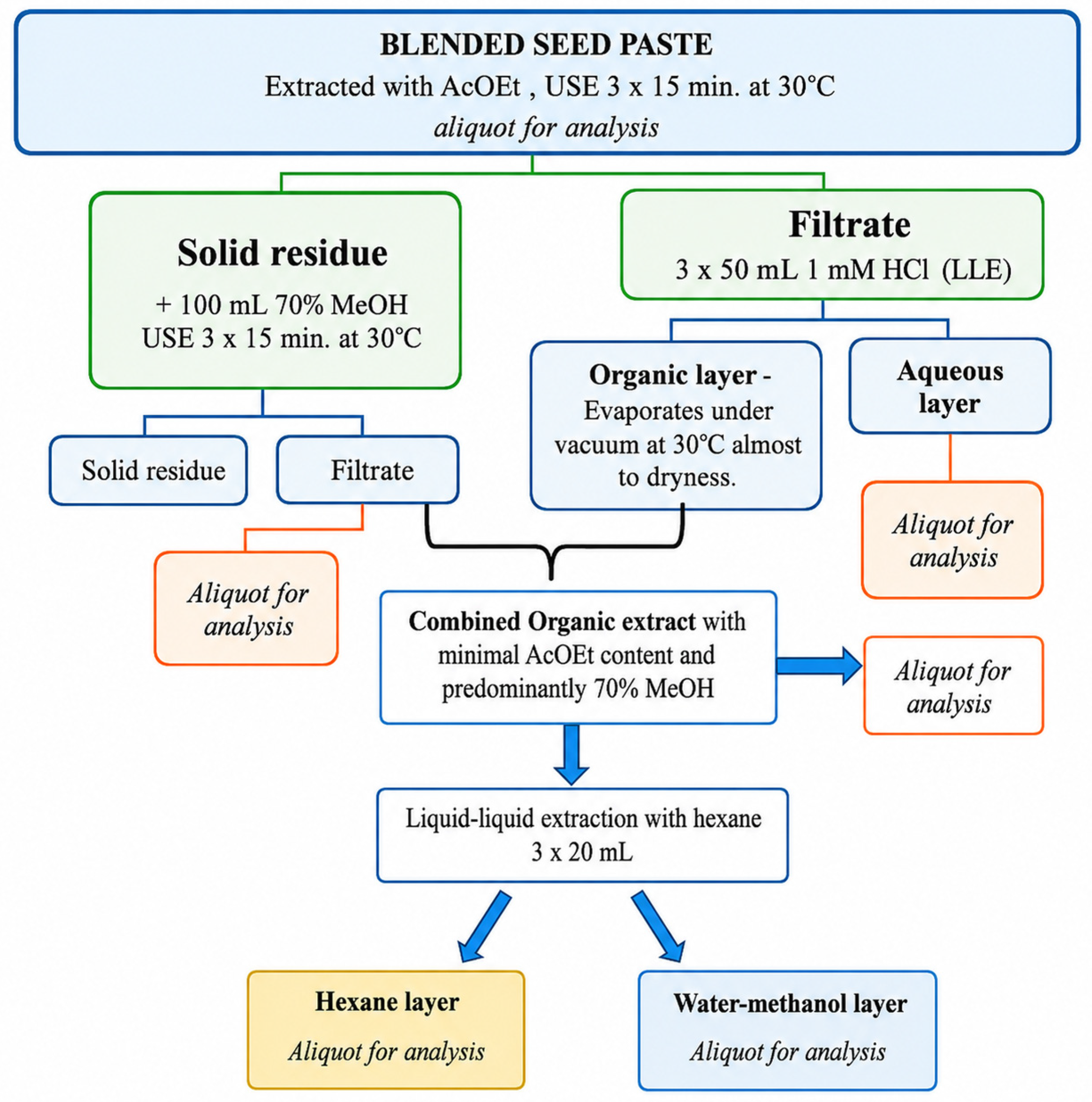
Approximately 10 g of blended Ginkgo biloba seed material was suspended in 100 mL of ethyl acetate and subjected to ultrasonic extraction (USE) for 30 min at room temperature. The mixture was then centrifuged at 5000× g for 10 min, and the organic phase was collected as the initial extract.
This crude extract served as the starting material for a multistage liquid–liquid extraction (LLE) process designed to selectively remove ginkgotoxin and ginkgolic acid while preserving the major bioactive constituents. Sequential extractions were performed with immiscible solvents in the following order:
Solid residue was extracted with 70% methanol to achieve comprehensive extraction of flavonoids and terpene trilactones.
LLE of the ethyl acetate layer with 1 mM hydrochloric acid was used to increase ginkgotoxin water solubility while maintaining phenolic compound stability.
Combination of organic extracts—the ethyl acetate and methanol fractions were combined to form the combined organic extract.
The combined organic extract was subjected to LLE with hexane to remove ginkgolic acid, which is very lipophilic.
A control (single-step) extraction was also performed for comparison, in which the seed paste was directly extracted with 70% aqueous methanol under identical ultrasonic conditions. The efficiency of ginkgotoxin removal and bioactive compound retention was assessed by comparing the multistep and single-step protocols (
Figure 1). UHPLC-MS was used to analyze all samples and aliquots obtained from the individual stages.
2.3. UHPLC–MS Analysis
Quantitative analysis of ginkgotoxin, ginkgolic acid, and the principal phytochemical constituents was conducted using a Thermo Dionex Ultimate 3000 UHPLC system equipped with a Thermo TSQ Quantum Access MAX triple-quadrupole mass spectrometer coupled with a Heated Electrospray Ionization (HESI) source (Thermo Fisher Scientific, Waltham, MA, USA).
Chromatographic separation was achieved on a C18 reverse-phase analytical column following the optimized conditions previously described by Petrov et al. [
12]. Data were acquired in both positive and negative modes, depending on the analyte. Calibration plots for each compound were constructed using reference standards, and linearity was verified (R
2 > 0.99).
2.4. Data Processing and Statistical Analysis
All extractions were performed in triplicate (n = 3). Concentrations of ginkgotoxin, ginkgolic acid, ginkgolides, bilobalide, and flavonoids were expressed as milligrams per gram (mg/g) of dry matter in the extract.
Data were presented as mean ± standard error of the mean (SEM). One-way analysis of variance (ANOVA) followed by Tukey’s post hoc test was applied to determine statistically significant differences among extraction protocols. A p-value of < 0.05 was considered statistically significant.
3. Results and Discussion
3.1. Efficiency of the Multistep Extraction
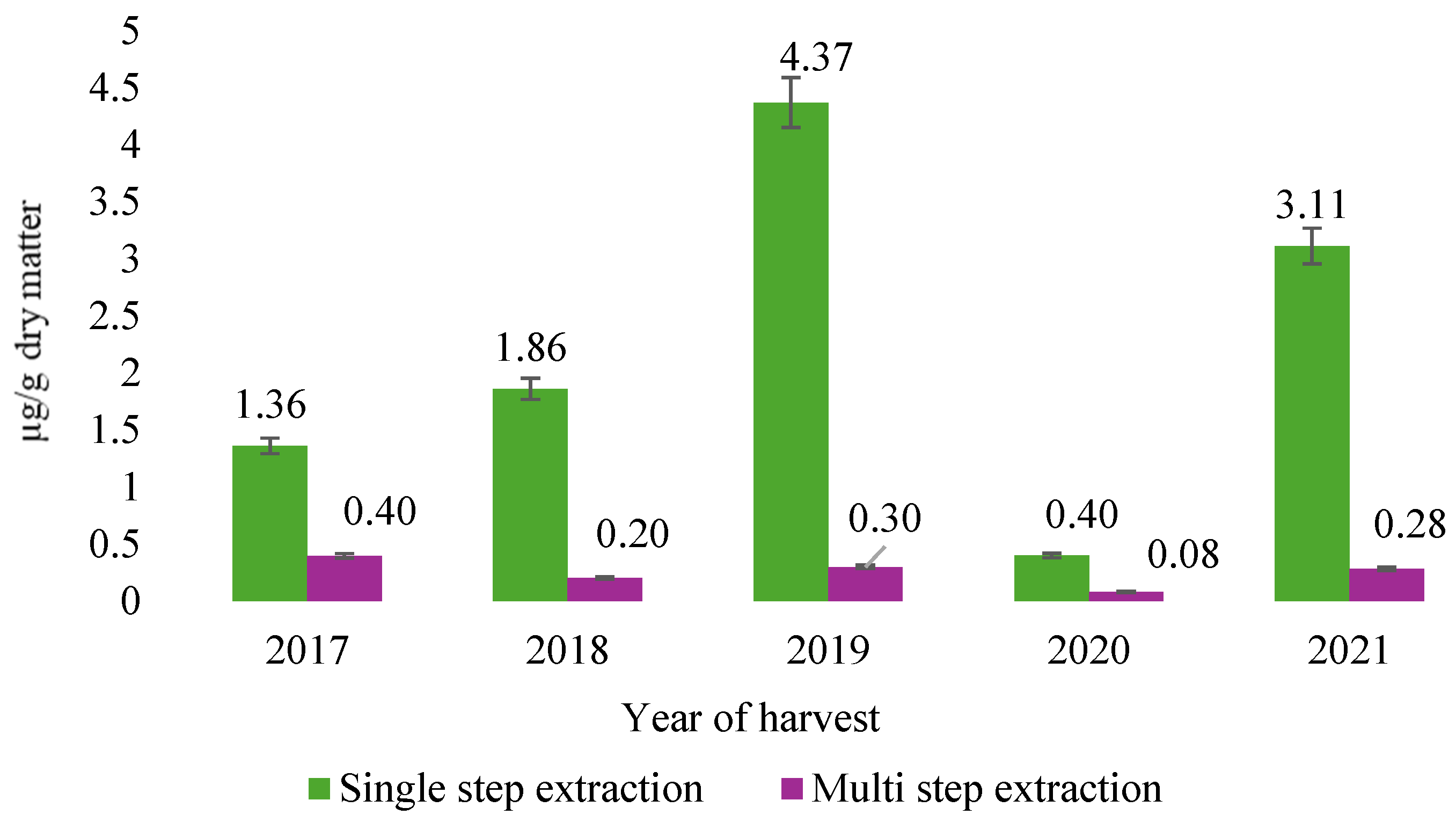
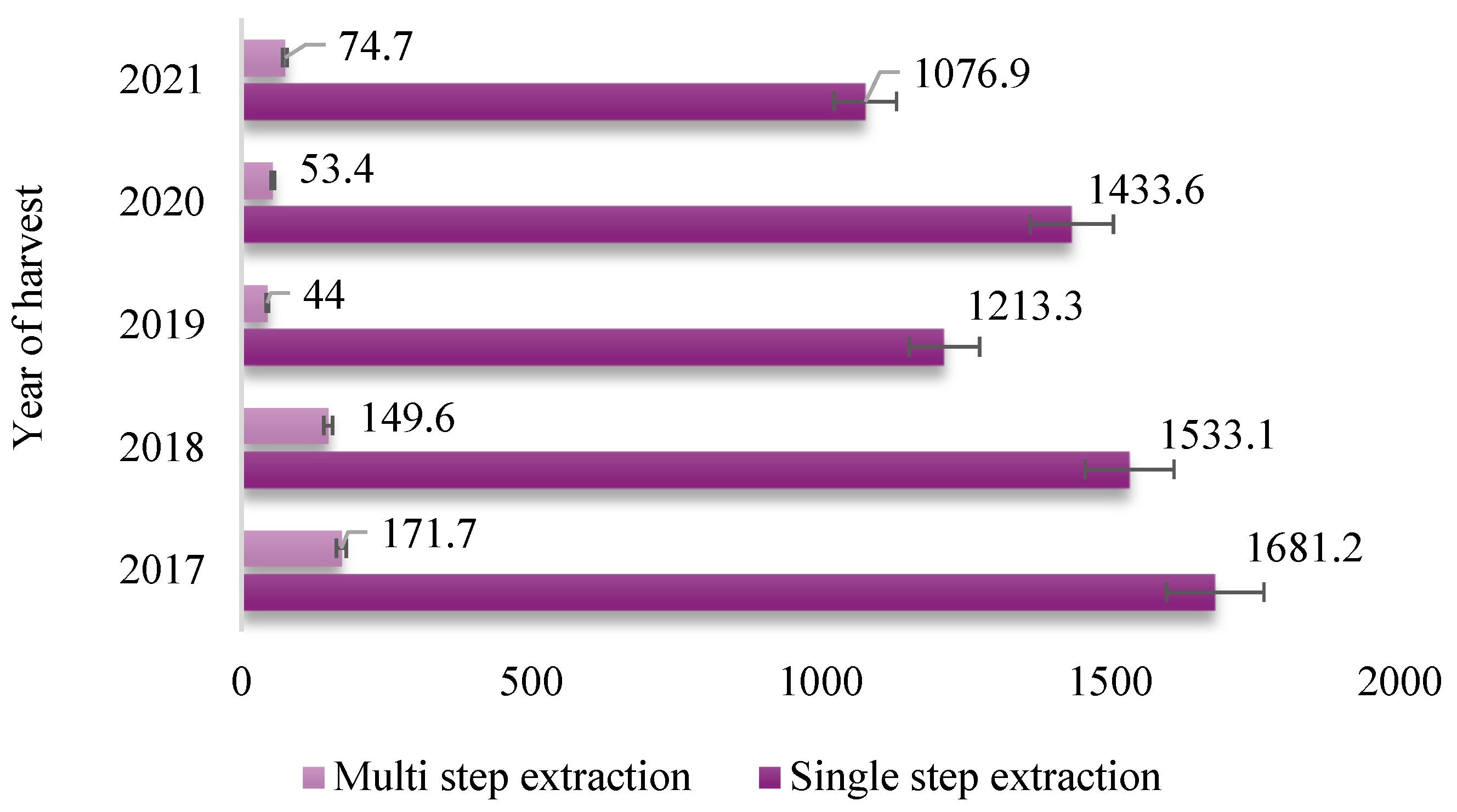
The multistep liquid–liquid extraction protocol resulted in a marked reduction in ginkgotoxin concentration in the final extract compared with the conventional single-step extraction using 70% methanol (
Figure 2). In the initial methanol extract, the mean ginkgotoxin concentration was approximately 180 µg/g dry matter. Following sequential extractions with solvents of differing polarity, the ginkgotoxin content in the final fraction was reduced to below 5 µg/g dry matter, corresponding to approximately a 97% reduction.
The removal of ginkgotoxin was most pronounced following the mildly acidic extraction step, confirming that, as an antivitamin B
6 derivative, it is preferentially partitioned under slightly acidic conditions. The preliminary hexane extraction primarily removed non-polar constituents, including lipophilic fractions and residual ginkgolic acids, contributing to an average reduction of about 80% in total ginkgolic acid content (
Figure 3).
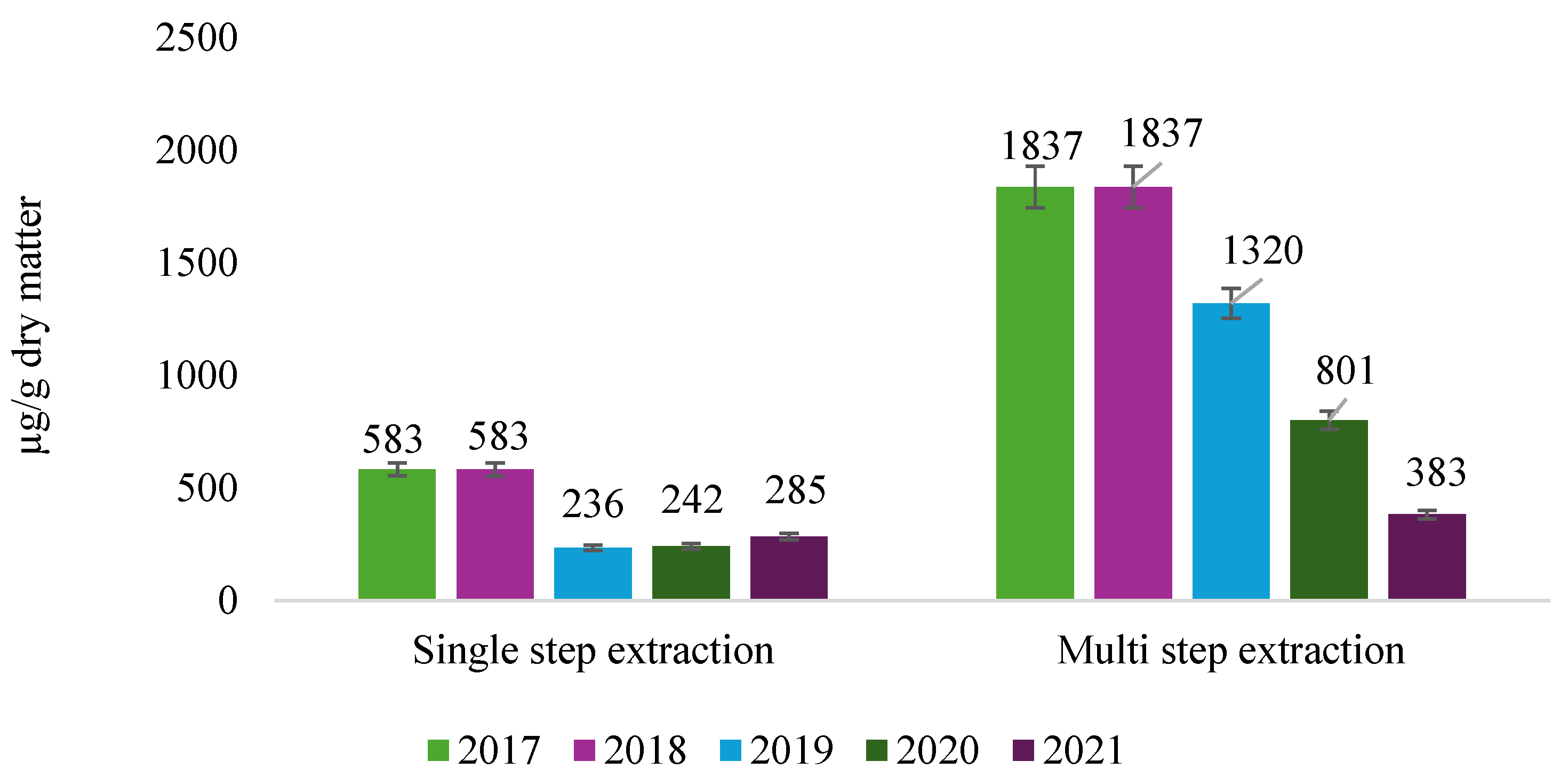
Importantly, these substantial reductions in the undesirable compounds did not compromise the retention of key bioactive components. On the contrary, the terpene trilactones demonstrated a positive trend, increasing by approximately 75% in the extract obtained via multistep extraction. This enrichment effect likely reflects enhanced solubilization and recovery of these compounds from the defatted, low-polarity matrix obtained after the preliminary extraction stages. In the initial methanol extract, the mean ginkgotoxin concentration was approximately 180 µg/g dry matter, consistent with previously reported ranges in Ginkgo seeds [
11].
3.2. Retention of Bioactive Compounds
Retention of essential bioactive constituents is a critical determinant of extract functionality and therapeutic potential. The multistep extraction protocol successfully preserved and, in some cases, enhanced the levels of major flavonoids and terpene trilactones.
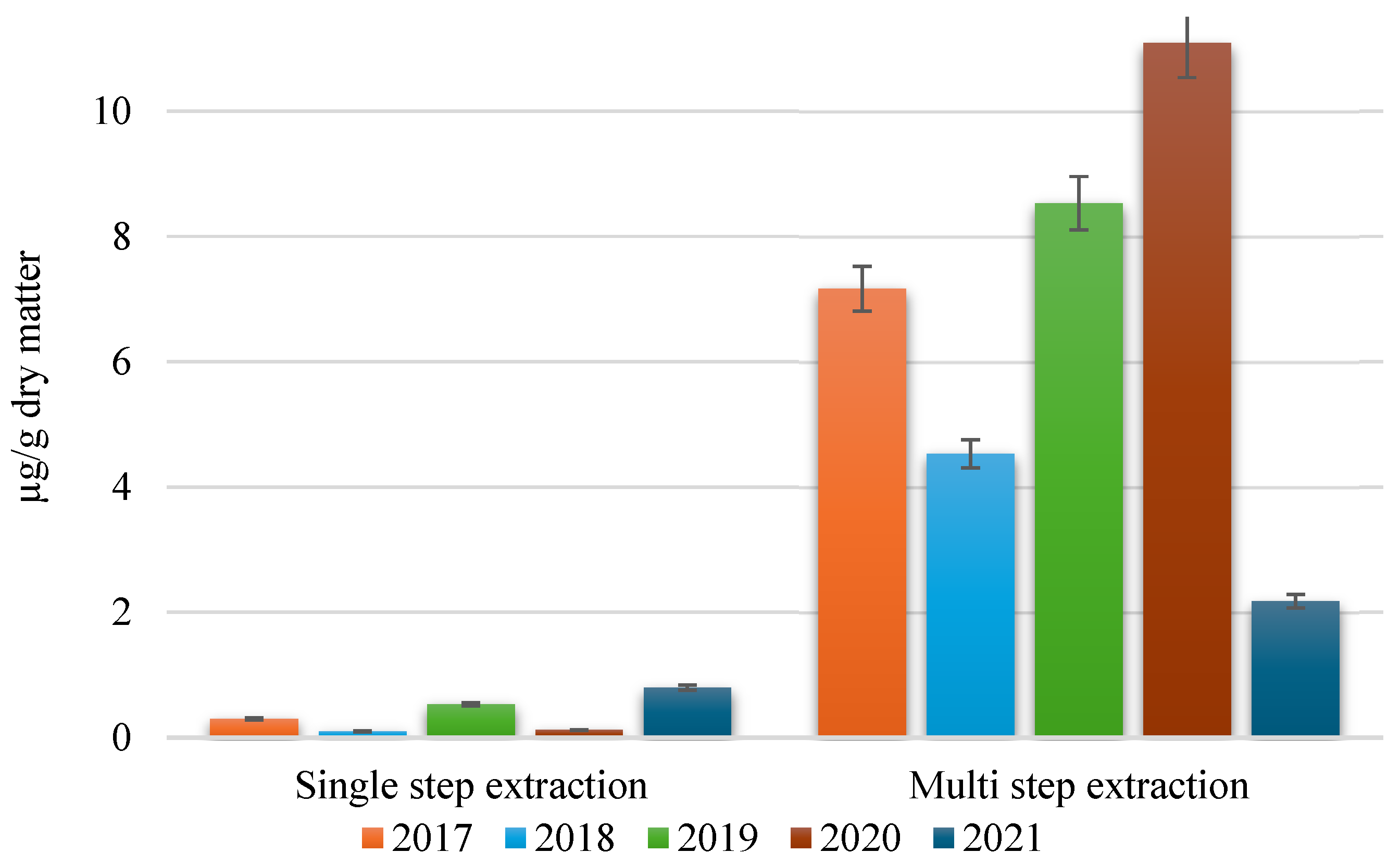
The flavonoid aglycones—quercetin, kaempferol, and isorhamnetin—were significantly enriched in the final extract, exhibiting an approximate 80% increase relative to the single-step 70% methanol extract (
Figure 4). Similarly, the concentrations of terpene lactones (ginkgolides A, B, C, J, and bilobalide) increased by around 75% following the multistep extraction (
Figure 5).
This outcome underscores the selectivity of the developed procedure. The solvent system effectively removed unwanted neurotoxic and lipophilic compounds while maintaining or even concentrating hydrophilic bioactive constituents. This selective fractionation likely arises from improved solubility gradients across solvents of differing polarity and the removal of matrix-bound interfering compounds that otherwise hinder extraction efficiency.
The results, therefore, support the view that properly optimized multistep extraction can enhance both the safety and the functional value of Ginkgo biloba seed extracts.
3.3. Comparison with Conventional Single-Step Extraction
In contrast, the conventional single-step extraction with 70% aqueous methanol yielded extracts with persistently high levels of ginkgotoxin and ginkgolic acid, demonstrating limited detoxification efficiency. No significant fractionation or selective enrichment of the desired components was achieved under these conditions.
The persistence of ginkgotoxin at potentially hazardous concentrations highlights the unsuitability of single-step protocols for producing safe Ginkgo seed-derived materials intended for functional foods or nutraceutical applications.
The comparative data therefore confirm that the multistep protocol provides substantially lower concentrations of the monitored toxic constituents while simultaneously enhancing the concentration of bioactive phytochemicals. These advantages collectively establish the developed approach as a viable strategy for producing detoxified, functionally enriched Ginkgo seed extracts.
3.4. Analytical Monitoring and Validation
UHPLC–MS proved indispensable for quantitative and qualitative monitoring of both undesirable and beneficial components throughout the extraction process. The high analytical sensitivity enabled the detection of ginkgotoxin at trace levels (<5 µg/g dry matter in the extract), thus permitting precise evaluation of detoxification efficiency at each extraction stage.
The chromatographic profiles confirmed that the structural integrity of terpene trilactones and flavonoid glycosides was largely preserved throughout the multistep process. The absence of degradation products or peak fragmentation in the mass spectra further supported the chemical stability of these constituents under the applied conditions.
These findings validate the suitability of UHPLC–MS as a robust analytical platform for comprehensive monitoring of detoxification workflows and phytochemical profiling of Ginkgo biloba seed extracts.
3.5. Implications for the Chemically Detoxified Ginkgo biloba Seed Extracts
The experimental results provide strong evidence that multistep liquid–liquid extraction is an effective means of reducing the principal safety risks associated with Ginkgo biloba seed use—namely, the presence of ginkgotoxin and ginkgolic acid. The near-complete elimination of these toxic constituents, combined with the retention of key flavonoids and terpene trilactones, underscores the potential of this approach to support the development of chemically detoxified Ginkgo biloba seed extracts with preserved beneficial phytochemical composition.
This method therefore represents a significant advancement in bridging the gap between laboratory-scale detoxification studies and practical industrial applications.
Despite the effectiveness of several detoxification approaches, important limitations remain regarding industrial scalability, solvent consumption, environmental sustainability, and preservation of thermolabile phytochemicals. Solvent-intensive purification procedures may generate significant chemical waste, whereas thermal and enzymatic methods may compromise sensitive bioactive constituents or require complex process optimization. Consequently, the development of operationally simple, scalable, and phytochemically selective detoxification strategies remains an important objective in the industrial utilization of Ginkgo biloba seed extracts.
Nevertheless, further research is required to optimize the process scalability, assess batch-to-batch reproducibility, and evaluate the bioavailability and stability of the bioactive compounds in the detoxified extracts.
Future work should also include in vitro and in vivo studies to confirm the safety and efficacy of the purified extracts, ensuring their suitability for inclusion in functional food formulations or phytopharmaceutical preparations.
4. Conclusions
This study demonstrates that a carefully optimized multistep liquid–liquid extraction protocol can substantially reduce the levels of ginkgotoxin and ginkgolic acid in Ginkgo biloba seed extracts, while maintaining or even enhancing the concentration of key bioactive constituents such as flavonoids and terpene trilactones.
Compared to conventional single-step extraction, the proposed approach achieved a 97% reduction in ginkgotoxin content and about an 80% decrease in ginkgolic acid, while also preserving detectable concentrations of essential bioactive substances, highlighting its dual benefits of increased safety and functional efficacy. The results confirm that Ginkgo biloba seeds, when properly processed, represent a valuable yet underutilized source of bioactive compounds with potential applications in functional foods and nutraceutical formulations.
The combination of multistep solvent fractionation and UHPLC–MS analytical monitoring provides a reliable and practical foundation for the industrial development of detoxified Ginkgo seed-based products. Future studies should focus on scaling up the process, evaluating its reproducibility across seed batches, and assessing the bioavailability, safety, and stability of the resulting extracts under physiological conditions.
From a practical perspective, the proposed multistep extraction protocol employs relatively simple liquid–liquid extraction procedures and widely available solvents, which may facilitate adaptation to laboratory-scale or pilot-scale processing. Although additional optimization would be necessary for large-scale industrial implementation, particularly regarding solvent consumption, recovery efficiency, and environmental sustainability, the presented approach demonstrates the feasibility of selectively reducing toxic constituents while preserving major bioactive compounds. These findings may contribute to the future development of safer Ginkgo biloba seed-derived extracts for potential nutraceutical or phytopharmaceutical applications.




 ,
,