Article

Mexican Achiote Seed (Bixa orellana L.): Physicochemical Characteristics, Nutritional Value and Antioxidant Compound Content

by
Lilibeth Andujo-Ponce
1,
Celia Chavez-Mendoza
1,*,
Alexandro Guevara-Aguilar
1,
Esteban Sánchez
1,
Alma Delia Alarcón-Rojo
2,
Elia Cruz-Crespo
3 and
Martin Juárez-Morales
2
1
Coordinación en Tecnología de Productos Hortofrutícolas y Lácteos, Centro de Investigación en Alimentación y Desarrollo, Avenida Cuarta Sur No. 3820, Fraccionamiento Vencedores del Desierto, Delicias 33089, Chihuahua, Mexico
2
Facultad de Zootecnia y Ecología, Universidad Autónoma de Chihuahua, Perif. Fco. R. Almada km 1, Chihuahua 31000, Chihuahua, Mexico
3
Unidad Académica de Agricultura, Posgrado CBAP, Universidad Autónoma de Nayarit, Carretera Tepic-Compostela km 9, Xalisco 63780, Nayarit, Mexico
*
Author to whom correspondence should be addressed.
Seeds 2026, 5(3), 28; https://doi.org/10.3390/seeds5030028
Submission received: 13 January 2026 / Revised: 21 April 2026 / Accepted: 22 April 2026 / Published: 6 May 2026

Abstract

Achiote has been used since pre-Hispanic times, but today it is undervalued in Mexico and is threatened with disappearance in some regions. Therefore, it is important to focus research on this crop to enhance its value and prevent the loss of this ancestral germplasm, which is an essential part of Mexican, Latin American, and Caribbean cuisine and a source of income for small rural and indigenous producers. Furthermore, it has the potential to increase its commercial value as a natural colorant compared to synthetic ones. However, despite its properties, there is currently no information available on the nutritional characteristics of the seed produced in various regions of Mexico. The aim of this study was to determine the physicochemical characteristics, nutritional value, and antioxidant compound content of achiote seeds from Nuevo Huixtán Margaritas Chiapas (Margaritas), San Pedro Tapanatepec Oaxaca (Oaxaca), and Nuevo Jericó Palenque, Chiapas (Palenque), Mexico. The effect of the region on morphological and physicochemical characteristics, nutritional quality, and nutraceutical properties of the seed was evaluated. A statistically significant difference (p ≤ 0.05) was obtained between regions for all variables studied except for the brightness (L*) of ground seeds and the content of total phenols, C, N, and S. Margaritas seeds were the heaviest and longest, while those from Oaxaca were the smallest and presented the highest values for all whole seed color parameters, in addition to having the best nutritional quality. The antioxidant capacity (DPPH) obtained was 70.01 to 76.96% inhibition, with the maximum values found in seeds from Oaxaca and Palenque. In conclusion, Mexican achiote seeds exhibit notable nutritional and nutraceutical properties, which vary depending on the region of production, highlighting the influence of geographic origin on their composition.

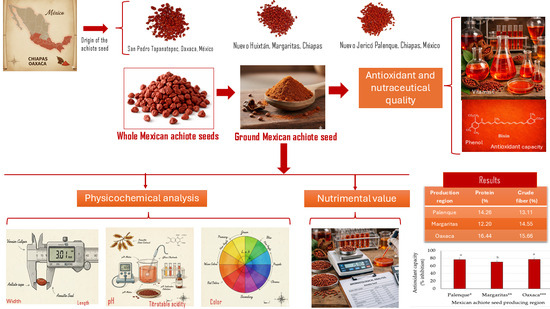
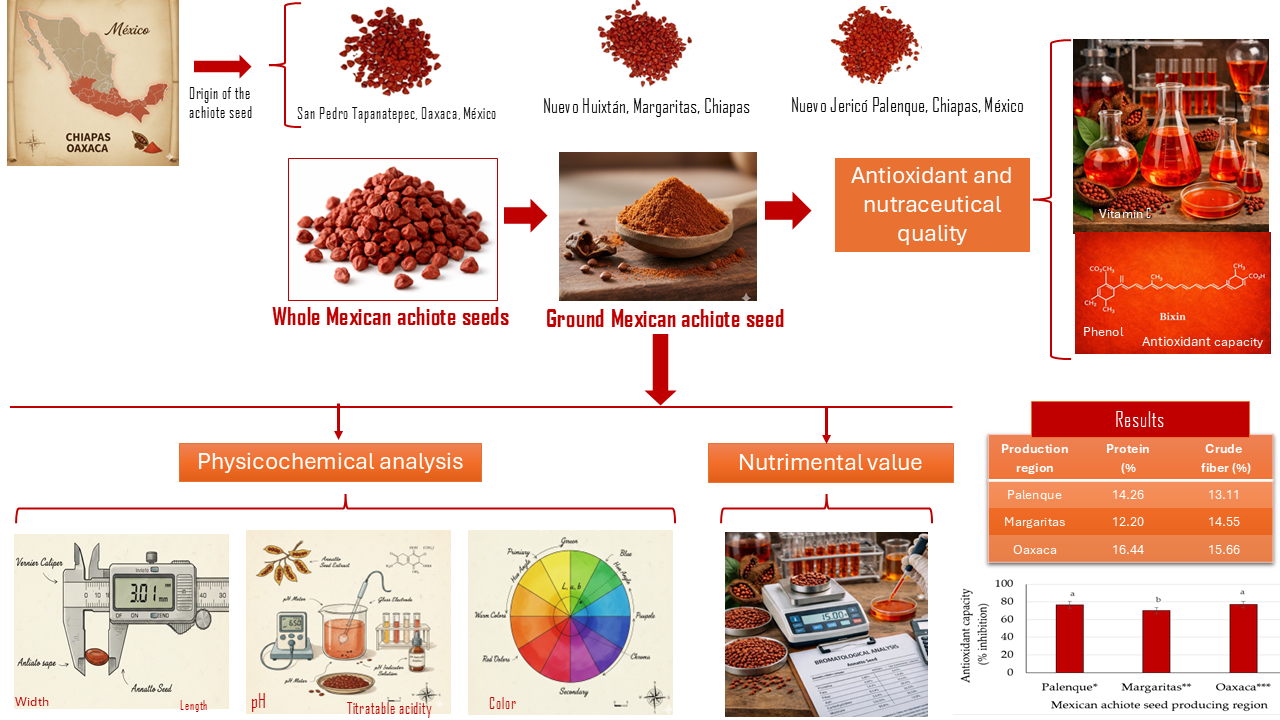
Graphical Abstract

1. Introduction

Achiote (Bixa orellana L.) is a plant native to tropical America, probably originating in the Amazon basin of Brazil. The term achiote is derived from the Nahuatl word “achiotl.” This crop has been used in Mexico since pre-Hispanic times, primarily as a natural dye and for medicinal purposes [1]. The fruit of the achiote plant has the form of a dehiscent oval capsule grouped in clusters, whose covering has spiny, simple and flexible appendages, long or short. This capsule is reddish-brown or greenish-yellow and contains 30 to 45 seeds within its placenta, covered by a thin red or orange layer [2]. These seeds are typically 3.5 to 5 mm long, pyramidal in shape, and covered by a reddish-orange resinous substance that becomes dry, hard, and dark upon maturation, forming the aril [3], which contains the crude pigment called annatto, composed mainly of the carotenoids bixin and norbixin, which give it its characteristic reddish color [2]. Achiote is the only commercial source of bixin, which is widely used in the food industry [4]. This is a non-toxic, natural compound with antioxidant properties. Its use in food is permitted due to its proven and complete safety, and it is currently used as a substitute for some synthetic colorants, such as erythrosine and geranine. Norbixin imparts a yellow color to the extract. Both compounds are primarily used to develop attractive colors in dairy products, meats, ice cream, condiments, and other foods [2].
The achiote seed contains various classes of bioactive compounds, including aliphatic sterols, monoterpenes, sesquiterpenes, triterpenoids, volatile oils, carotenoids, and apocarotenoids. These compounds exhibit a wide range of pharmacological activities, notably antioxidant, antibacterial, and anticancer functions [5,6]. Due to its properties, achiote is a crop of great interest to the chemical, cosmetic, food, and pharmaceutical industries. Furthermore, it is considered a good technological alternative, given the demand for natural colorants in the international and national markets [7]. Globally, 60% of achiote seed production occurs in Latin America, with Peru, Brazil, and Mexico being the main producing countries [8]. In Mexico, it is produced in 14 states, with Yucatán being the leading producer, followed by Oaxaca, Veracruz, Chiapas, and Guerrero [9]. Isolated plantations of the crop have also been reported in other states, though they are not commercially exploited, while in other regions it is grown in backyard settings, which could be indicative of the vulnerability and diversity of the genetic material [10]. In regions such as Yucatan, achiote is cultivated under three main agronomic systems: backyard (solar), polyculture (milpa), and monoculture systems [11]. Furthermore, this crop is understudied and scarcely promoted in Mexico, despite its high national and international demand. It also faces several obstacles to its development; most farmers cultivate it for self-consumption using it as a food dye and spice. In addition, production remains highly heterogeneous due to the lack of certified agronomic varieties with standardized bixin content.
Therefore, the achiote seeds available to farmers are highly variable and are primarily selected based on their origin (e.g., Jamaican, Peruvian, Indian, and Guatemalan). In Mexico, some studies on this crop have primarily focused on understanding pigment biosynthesis and identifying their biochemical precursors [12,13]. Other studies have evaluated pigment extraction yield, color parameters, and antioxidant compound content in Yucatecan accessions [8]. Furthermore, seeds of various origins have been evaluated, demonstrating significant genetic and phenotypic variability in this crop in México [14]. However, the nutritional value of achiote seeds and the influence of the production region on their composition have been poorly studied in Mexico. In particular, in states such as Oaxaca and Chiapas, where environmental conditions are favorable for their growth. Currently available information on the influence of geographic region on the nutritional quality of these seeds is limited and, in some cases, virtually nonexistent. Knowledge generation is important and aligns with the growing interest of governmental institutions and plant breeding programs in conserving the natural genetic variability of both commercial crops and underutilized species at risk of genetic erosion. This interest is based on the recognition that plant materials with little or no current commercial value may become highly relevant for future agricultural systems [15], particularly under conditions of environmental change. In this context, the nutritional and physicochemical characterization of achiote seeds from understudied regions contributes to expanding current scientific knowledge about the phenotypic and functional diversity of this underutilized species in Mexico, facilitating a more efficient selection and use of plant material for productive and industrial purposes.
Thus, in the present study, it was hypothesized that environmental differences between achiote seed populations from three producing regions of Mexico could translate into variations in their physicochemical, nutritional and nutraceutical quality. The aim of this study was to determine the physicochemical characteristics, nutritional value, and antioxidant content of achiote seeds (Bixa orellana L.) from three producing regions in Mexico.

2. Materials and Methods

2.1. Origins and Collection of the Seed

The achiote seed samples were collected in 2021. They were obtained from the following regions:
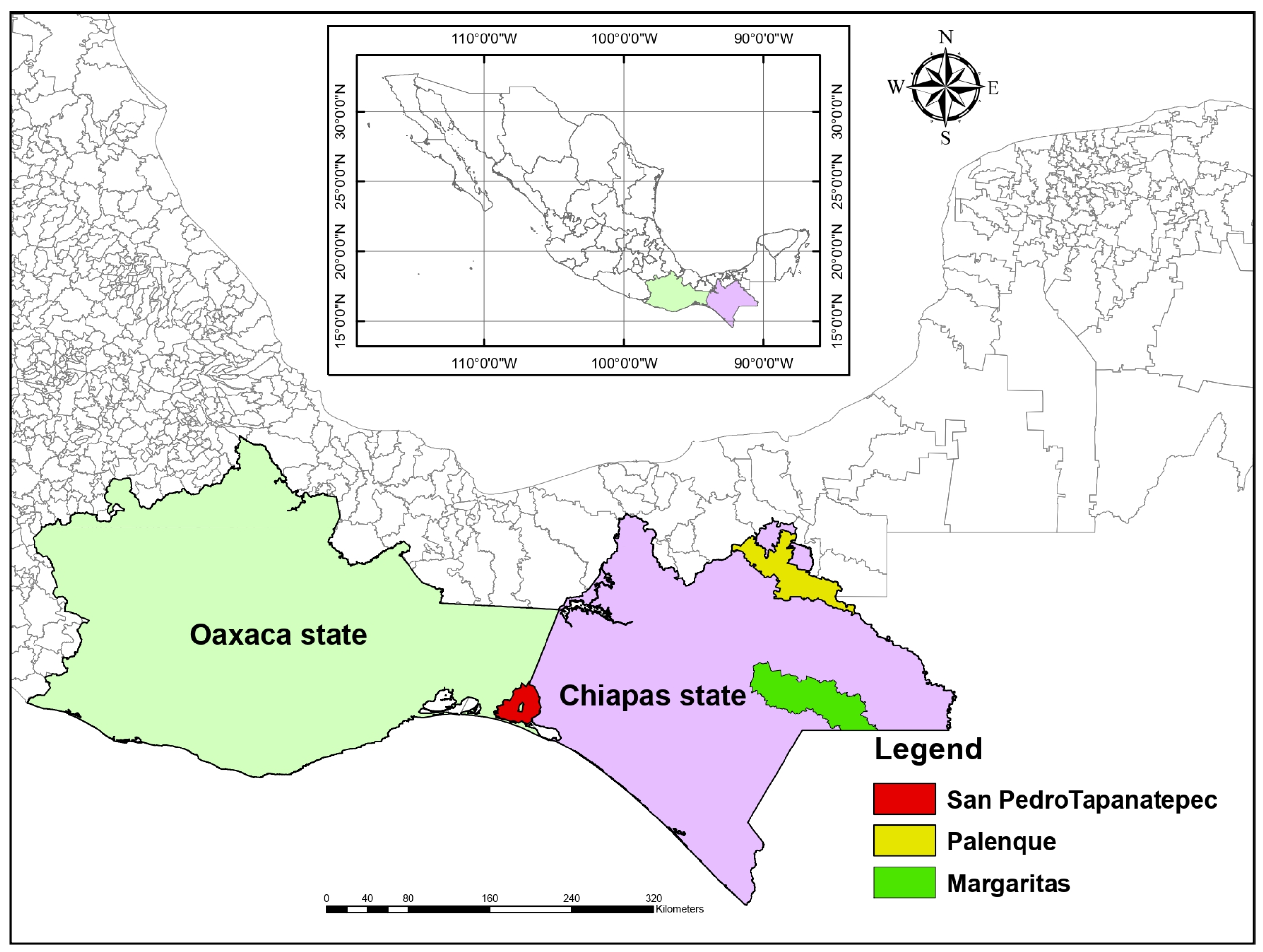
San Pedro Tapanatepec (Figure 1), located in the south of the state of Oaxaca, Mexico. It is located on a plain in the Isthmus of Tehuantepec. This region has a warm subhumid climate (similar classification to Aw) with a marked rainy season in summer and a dry season in winter, with rainfall concentrated between June and November approximately [16]. The minimum and maximum temperatures (°C) distributed throughout the months are as follows: Jan (17.4, 35.4), Feb (10.1, 35.3), Mar (18.2, 37.1) Apr (19.1, 36.5) May (19.3, 36.5), Jun (19, 35.8), Jul (19.2, 35.8), Aug (19.2, 35.8), Sep (19, 34.3) Oct (18.6, 34.4), Nov (18.5, 34.5), Dec (27.2, 34.6) (Chahuites climatological station, Oaxaca (20328)) [17]. Likewise, this region has an annual rainfall of 1200 to 2000 mm. In addition, it is located at an altitude of 200 m.a.s.l., and the predominant soil types are Phaeozem (17.56%), Leptosol (13.96%), Fluvisol (12.40%), Cambisol (11.25%), Vertisol (10.59%), Solonchak (2.97%), Gleysol (1.93%), Regosol (1.80%), and Arenosol (1.20%) [18].
Nuevo Huixtán, Margaritas, Chiapas (Figure 1), located in the southeast of the state of Chiapas, Mexico, in an area near the border with Guatemala. It has a semi-warm, humid climate (Am classification) typical of rainforest or low-mountain rainy regions, with an annual rainfall of 1000 to 3500 mm [19]. The minimum and maximum temperatures (°C) distributed throughout the months are as follows: Jan (20.5, 34.5), Feb (21.5, 39.0), Mar (23.5, 43.0) Apr (26.5, 44), May (26, 41.5), Jun (25.5, 39), Jul (23.5, 36), Aug (24.5, 36.5), Sep (23, 32.5) Oct (23.5, 36), Nov (23, 35), Dec (23, 33.5) (San Quintin (CFE) climatological station, Chiapas (7151)) [17]. It is located at an altitude of 320 m.a.s.l. [20], and its soil composition is Luvisol (41.90%), Leptosol (34.97%), Phaeozem (13.19%), Cambisol (4.69%), Vertisol (3.32%), Regosol (0.74%), Acrisol (0.45%), and Fluvisol (0.41%) [18].
Nuevo Jericó Palenque, Chiapas. It is in northern Chiapas, near the border with Tabasco (Figure 1). Its climate is tropical humid (Af/warm humid) with abundant rainfall almost all year round and an annual precipitation of 1500 to 4500 mm. Its altitude is 330 m.a.s.l [20]. The minimum and maximum temperatures (°C) distributed throughout the months are as follows: Jan (17, 29.7), Feb (17.6, 31.3), Mar (18.3, 34.0), Apr (20.8, 36.2), May (22.2, 37.5), Jun (22, 37.5), Jul (21.5, 35.3), Aug (20.9, 36.2), Sep (22.1, 32.4) Oct (21.1, 32.4), Nov (18.2, 30.2), Dec (17.2, 30) (Playas de Catazaja climatological station, Chiapas (7151)) [17]. Its soil is composed of Leptosol (22.35%), Luvisol (20.39%), Cambisol (15.93%), Gleysol (14.09%), Regosol (13.09%), Phaeozem (12.45%), and Arenosol (0.41%) [18].
These regions were chosen because they are areas where achiote is grown in Mexico, possessing the ideal agroclimatic characteristics for its cultivation. Although these regions have suitable agroclimatic conditions, the quality of its seed has not been analyzed, so there is no information on this crop in these producing areas of Mexico. Such information is necessary to promote this crop and prevent the loss of important germplasm with ancestral value.
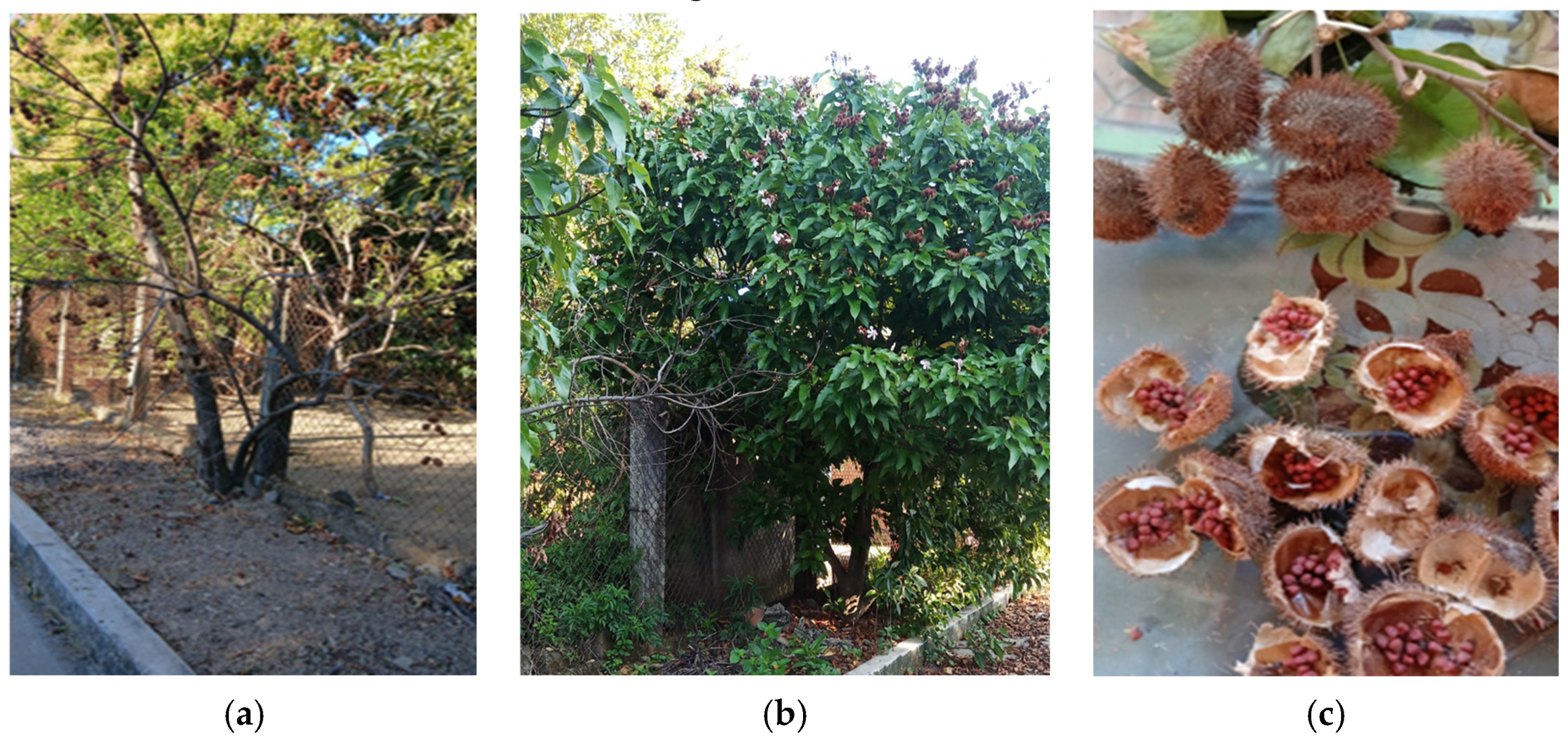
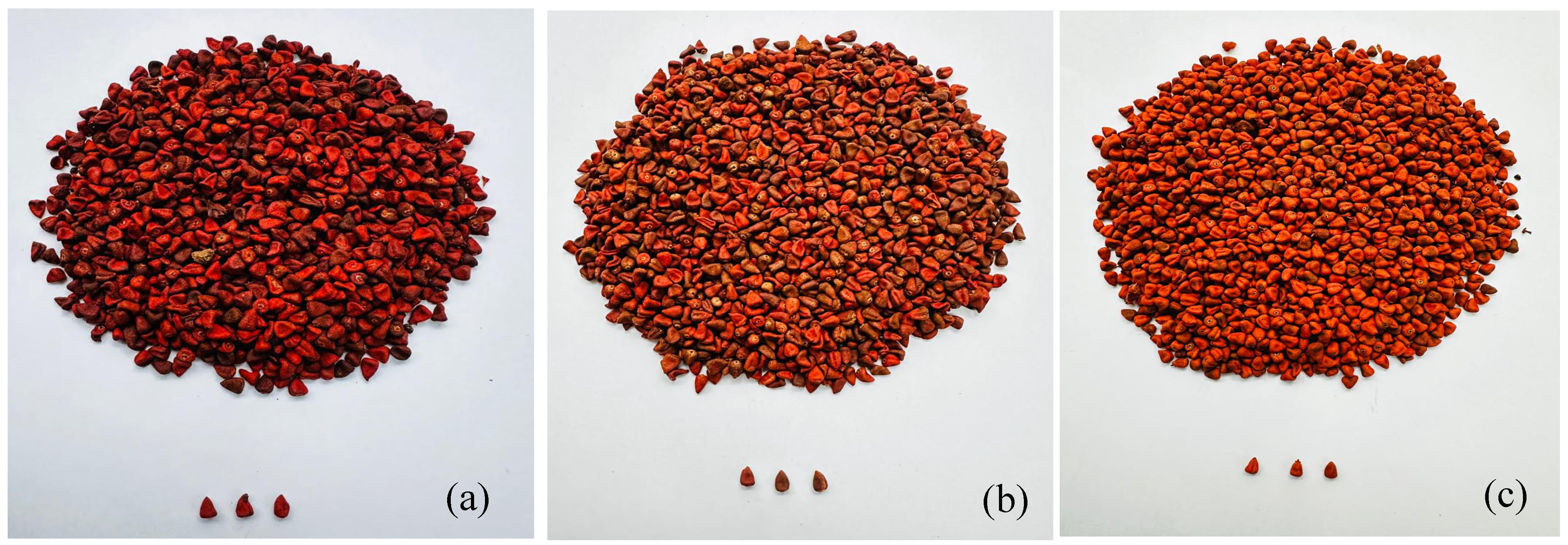
Achiote seed ecotypes were purchased from small-scale local producers who cultivate a limited number of trees in family orchards for their own consumption (Figure 2). In each study region, a sample of approximately 50 kg of seeds was collected. The fruits were manually cut from the trees and dried, and the seeds were removed from the capsules (Figure 2) manually. The seeds (Figure 3) were then packed in plastic bags and placed in a cardboard box for transport to the Food Technology and Preservation Laboratory at the Center for Food Research and Development, located in Delicias, Chihuahua, Mexico. At the laboratory, the seeds were stored in sealed containers in a cool, dry place. For laboratory analysis, random samples were taken in triplicate from the total amount of seed collected in each region.
The term “ecotypes” was used to describe the plant materials analyzed in the present study due to the lack of formal varietal identification and their adaptation to local agroecological conditions. Although some Bixa orellana materials have been officially registered (primarily to protect local genetic resources and support indigenous communities that depend on this crop as a source of income), such as the “Soconusco V7” variety from the Soconusco region, Chiapas (community of Libertad, municipality of Unión Juárez) [21], and the “Comal” variety from the indigenous community of San Juan Comaltepec, Choápam, Oaxaca [22], it cannot be confirmed that the analyzed seeds correspond to these registered materials. Instead, they represent heterogeneous, farmer-managed populations with distinct phenotypic traits; therefore, in this study, they are referred to as local ecotypes.

2.2. Physicochemical Analysis and Obtainment of Flour from the Achiote Seed

The length and width of the seed were determined using a digital vernier caliper (HER-411, Steren, Mexico City, Mexico). For the test, 100 seeds (in triplicate (N = 300)) were selected at random and measured one by one. The length was measured from the tip of the seed to its widest point. The width was measured at the roundest part of the seed. The results were expressed in mm. The samples, measured in length and width, were also used to determine weight, which was obtained using an FA2204 analytical balance (Jinan Hanon Instruments Co., Ltd., Jinan, China). The determination was made in triplicate.
To obtain the achiote seed flour, a random sample of 100 g was taken in triplicate from the total amount of seed collected in each of the production regions under study. These samples were then ground in an Osterizer food processor for three min, or until a homogeneous powder was obtained. The samples were subsequently placed in resealable plastic bags and stored in a desiccator to prevent moisture and contamination, for use in subsequent analyses.
pH was determined according to Mexican regulations according to NOM-F-317-S-1978 [23]. Titratable acidity was obtained in accordance with the method reported by NMX-F-102-NORMEX-2010 [24]. The analysis was performed in triplicate. The results were expressed as a percentage of malic acid. Color was determined in both whole and ground seeds to evaluate the effect of grinding on this variable. For the evaluation, 27 g of whole seeds and 17 g of ground seeds were weighed. The samples were then placed in a circular container measuring 7 cm in diameter and 2 cm in height. The device was calibrated using the equipment’s calibration device (calibration values: L = 97.09, a* = −0.50, b = −0.44), and direct readings were taken on the surface using a Konica Minolta DP-400 portable colorimeter. The equipment was used to obtain the CIELab system coordinates (L*, a*, and b*) in triplicate. The CIE L* C* h° color space was also obtained using the coordinates L*, a*, and b*, where C* represents the chroma or saturation of the color and h° is the hue angle that represents the hue according to the angle on the 360° color wheel [25]. Chroma and hue angle were calculated using the following formulas [25]:
C* = (a* 2 + b* 2) ½ h° = [(arctan (b*/a*))/6.2832] 360

2.3. Nutritional Analysis of the Seed

The dry matter, moisture, fat, crude fiber, ash, and protein contents were determined according to the AOAC methods [26]. Carbohydrate contents were obtained by determining differences in the protein, fat, fiber, moisture, and ash contents.
The energy contained in each sample was measured as the sum of calories contained in carbohydrates, fat and protein. Energy content was expressed in Kcal/100 g. The analyses were performed in triplicate.

2.4. Determination of Antioxidant Compound Content

Total carotenoids were determined according to the method reported by Talcott and Howard [27]. Absorbances were obtained using a spectrophotometer (Thermo Scientific Genesys 10S UV-Vis. Waltham, MA, USA) at a wavelength of 470 nm. Hexane was used as a blank. The results were expressed in µg of β-carotene/100 g of sample dry weight.
Bixin content was measured according to the spectrophotometric method described by FAO/WHO [28], with some modifications. A quantity of 1 g of ground achiote seed was placed in an amber tube and 10 mL of acetone was added. The tube was then placed in a shaker (Boekel Rocker II, Boekel Industries Inc. model 260350. Feasterville-Trevose, PA, USA) for 50 min and protected from light to prevent degradation, then placed in a sonicator (VWR Scientific Aquasonic 150D. Radnor, PA, USA) for 40 min. After sonication, 1 µL of the solution was taken and placed in a 100 mL beaker and left to evaporate at room temperature for approximately 10 min. Next, 40 mL of acetone was added, and the absorbance was measured in a spectrophotometer (Thermo Scientific Genesys 10S UV-Vis) at 487 nm using acetone as a blank. The analysis was performed in triplicate. The bixin content was obtained using the following formula:
%   o f   b i x i n = A × V E . 1   V i d c   d i
where V = initial extraction volume (mL), Vi = dilution volume (mL), di = aliquot volume for dilution (mL), A = absorbance read at a wavelength of 487 nm, E1 1% = absorbance coefficient (3090), and dc = cell optical path (1.0 cm). To convert the result obtained into a percentage of bixin, it was multiplied by a factor of 1.076.
To determine vitamin C content, the method reported by Padar and Salunkhe [29] was used. An iodine solution (0.005% mol), starch indicator solution (0.5%), and standard vitamin C solution were used for the analysis. The vitamin C content was expressed in mg of ascorbic acid in 100 g of dry sample.
Total phenol content was determined according to the method described by Ornelas-Paz et al. [30], with some modifications. A quantity of 1 g of ground seed was macerated with 10 mL of methanol (80%) and sodium bisulfite (0.5%). Subsequently, it was sonicated (VWR 150D) for 10 min, protected from light to prevent degradation of the phenolic compounds, then centrifuged for 10 min at 8000 rpm (Eppendorf 5418). The supernatant obtained was used to carry out the reaction, which was performed according to the method reported by Viuda-Martos et al. [31], using a spectrophotometer (Thermo Scientific Genesys 10S UV-Vis) at a wavelength of 765 nm. A gallic acid standard curve (y = 0.0011x + 0.0298, R2 = 0.9981) was used to quantify the total phenol content. The results were expressed as mg gallic acid equivalents per 100 g of sample (mg GAE/100 g dry weight).
To determine the antioxidant capacity, an extract of the seed was obtained using the technique described above for measuring the total phenol content. Antioxidant capacity was measured according to the method reported by Pagani et al. [32] using the 1,1-diphenyl-2-picrylhydrazyl (DPPH, Sigma-Aldrich, Burlington, MA, USA) radical. Absorbances were read at 515 nm in a spectrophotometer (Thermo Scientific Genesys 10S UV-Vis). A Trolox standard curve from 0.25 to 1.25 mM (y = −0.5265x + 0.6599 and R2 = 0.997) was used for quantification. Results were reported in µmol Trolox Equivalents (ET)/g sample.
The percentage of inhibition was also determined according to the following formula:
%   i n h i b i t i o n = A b s   D P P H A b s   s a m p l e A b s   D P P H × 100
where Abs DPPH = indicates the absorbance of DPPH in 80% methanol and Abs sample = the absorbance of the sample.

2.5. Analysis of Micro- and Macroelements in Achiote Seeds

A quantity of 1 g of ground seed was weighed on an analytical balance (And Company Limited, Milpitas, CA, USA). Then, 25 mL of a triacid mixture (1000 mL nitric acid, 100 mL hydrochloric acid, 25 mL sulfuric acid) was added and placed in a digester (Labconco Corporation, Kansas City, MO, USA). After digestion, the sample was filtered and placed in 50 mL volumetric flasks filled with triple-distilled water and shaken. Finally, the solution was transferred to 50 mL polypropylene tubes to determine the concentration of Cu, Fe, Mn, and Zn by atomic absorption spectrophotometry (Atomic Absorption Spectrophotometer Ice 300; Thermo Scientific Corporation, Cambridge, UK). The results were expressed in µg/g.
Magnesium (Mg), potassium (K), and calcium (Ca) and sodium (Na) were quantified by atomic absorption spectrophotometry (Atomic Absorption Spectrophotometer Ice 300; Thermo Scientific Corporation, Cambridge, UK) in the same way as the micronutrients, and the results were expressed as percentages.
Mineral elements were quantified by atomic absorption spectroscopy (AAS) using certified standard solutions for each analyte, prepared from high-purity commercial standards (Agilent, Part No. 6610030700; lot: 00312008033). The certified reference material (CRM) was manufactured under a quality management system compliant with ISO 9001, ISO Guide 34, and ISO/IEC 17025. Certified concentrations were established by gravimetric methods using single-element stock solutions validated according to a high-performance ICP-OES protocol developed by the National Institute of Standards and Technology (NIST), with direct traceability to SRMs 3109a, 3126a, 3141a, 3131a, and 3152a.
Calibration curves were constructed by diluting the stock standard solutions to appropriate concentration ranges covering those expected in the samples. Method validation was ensured through the analysis of calibration blanks, standard verification solutions, and periodic recalibration throughout the analytical run. All measurements were performed in triplicate to ensure precision and reproducibility.

2.6. Organic Elements: C, H, S, and N

Organic elements were determined using the Dumas method [33]. A quantity of 3 µg of ground achiote seed sample was placed in a nickel capsule, and 9 µg of vanadium pentoxide (V2O5) was added. Subsequently, samples were introduced into the Flash 2000 organic elemental analyzer (Thermo Scientific Corporation, Cambridge, UK). Concentrations were expressed as percentages.
Organic elements were quantified using certified reference material No. 183407 provided by Thermo Fisher Scientific. Certified values for C, H, and N were determined using an elemental analyzer calibrated with acetanilide (NIST SRM 141d). Sulfur was determined using the same analyzer calibrated with cystine (NIST SRM 143d).

2.7. Data Analysis

The experiment was conducted under a completely randomized design with a single factor corresponding to the region of origin. Treatments consisted of the different regions evaluated and were randomly assigned to the experimental units to ensure independence of observations. The assumptions of normality and homogeneity of variances were verified using the Shapiro–Wilk and Bartlett tests, respectively (p ≤ 0.05). Once these assumptions were met, an analysis of variance (ANOVA) was performed to evaluate the effect of the treatments (local ecotypes or seed-producing regions: Oaxaca, Margaritas, and Palenque) on physicochemical, nutritional, and nutraceutical variables. When statistically significant differences were detected, means were compared using Tukey’s test. Additionally, Pearson correlation analysis was performed among the nutritional, antioxidant, and color variables of ground seeds. Statistical significance was established at a 95% confidence level (p ≤ 0.05). All analyses were carried out using the SAS statistical package version 9.0 (SAS Institute Inc., Cary, NC, USA). Results are expressed as the mean ± standard deviation (SD), with all analyses performed in triplicate (n = 3).

3. Results and Discussion

3.1. Physicochemical Analysis of Achiote Seeds

Table 1 shows the physicochemical characteristics obtained for the achiote seed. Statistical analysis showed a significant effect of the producing region (p ≤ 0.05) on all the physicochemical characteristics evaluated. The width of the seed analyzed ranged from 2.89 to 3.26 mm. The length varied from 4.03 to 4.96 mm The weight was in the range of 0.020 and 0.037 g. The pH value ranged from 5.97 to 6.4, and the titratable acidity ranged from 8.73 to 35.4%.
The seed from the Margaritas region were the heaviest and longest, while the seed from the Oaxaca region were the smallest and lightest. Likewise, the Oaxaca seed had the highest values for pH and titratable acidity, while the Palenque sample had the highest seed width values and the lowest pH values.
The results obtained for seed width were lower than those found by López et al. [34] in seeds from La Merced, Laredo, Trujillo Province, Peru, while the seed length values obtained by these authors were consistent with those observed in the present study. In the same manner, both the width and length values were in accordance with the ranges reported by Arias-Pérez et al. [35] in seeds collected from various ranches in Tabasco, Mexico. Likewise, the seed weight values obtained were lower than those reported by López et al. [34] in Peruvian achiote seeds. In the same way, the pH results obtained were comparable to those reported by Naranjo et al. [36] in Colombian achiote seeds. With respect to seed titratable acidity, a comparison with previously reported results was not possible because no relevant data were available in the literature.
The differences observed in the morphological and physicochemical characteristics between the three regions evaluated can be mainly attributed to edaphoclimatic differences and genotype × environment interaction. Previous studies have demonstrated wide genetic and phenotypic variability in accessions of Bixa orellana [14,37]. Likewise, Akshatha et al. [38] reported that variations in achiote seeds morphometry could be due to different factors, such as geographical factors or environmental influences. In addition, abiotic stress, particularly water deficit and high temperature, can limit photoassimilate accumulation during seed filling, reducing seed size and quality [39]. Simultaneously, to cope with water stress, plants accumulate metabolites involved in antioxidant defense and osmoregulation, including organic acids [40], which may increase in titratable acidity. Moreover, according to Weerasekara et al. [41], the seed development process is determined by both genetic and environmental factors, such as soil fertility, water, temperature, day length, relative humidity, and rainfall. Therefore, the differences in altitude, rainfall patterns, and soil characteristics between the producing regions likely influenced both seed filling efficiency and the metabolic balance of organic acids, which could explain the simultaneous occurrence of smaller seeds and higher titratable acidity in the Oaxaca samples, since the region studied there has a lower incidence of rainfall.
Regarding the color of the seed, this was measured in both whole and ground seeds. Determining the color parameters of achiote seeds from Mexican producing regions is important because it allows for the selection of seeds that provide better L*, C*, and hue angle values for use in industry.
Table 2 shows the variables related to seed color: brightness (L*), redness (a*), yellowness (b*), chroma (C*) and hue angle for whole and ground seed by production region. Statistical analysis showed significant differences (p ≤ 0.05) between the three regions in most of the variables evaluated.
In whole seed, lightness (L*) values ranged from 22.78 to 29.28, redness (a*) values varied ranged from 20.76 to 24.962, yellowness (b*) values ranged from 16.16 to 21.11, and chroma (C*) values ranged from 16.16 to 21.11. The seed from the Oaxaca region had the highest of all the color-related variables studied, while the samples from Margaritas and Palenque showed the lowest results and did not show a statistically significant difference (p ≥ 0.05) between the two regions. These differences can be explained by regional variation in temperature, solar radiation, and rainfall between producing regions, which influences carotenoid biosynthesis and the relative proportion of red and yellow pigments during seed development [42,43].
The hue angle (°h) in whole seed ranged from 37.89 to 40.23. Statistical analysis showed no significant difference (p > 0.05) in this variable between the three regions studied. The absence of statistically significant differences suggests that regional variation mainly influenced color intensity (a*, b*, and C*) rather than hue (°h). Hue angle values fell within the red–yellow range, corresponding to the 0–90° quadrant of the color wheel, as defined by McGuire [25]. This is consistent with the coloration reported for this crop, whose tones range from red–orange to yellow–orange, which are provided by bixin and norbixin, reported as the main components of the achiote pigment. The coloration depends on the concentrations at which these are present; they are used to color various foods such as soft drinks, confectionery, margarine, ice cream, fish products, etc. [44]. The values obtained for the angle hue were higher than those reported by Paramadhas et al. [45] for Indian achiote seed.
The L* value of seeds from the Oaxaca region fell within the range reported by Carvahlo et al. [46] for achiote accessions from the IAC Germplasm Bank (Pindorama, Brazil), whereas lower values were observed in samples from Margaritas and Palenque. In contrast, a* and b* values in the present study exceeded those reported by these authors.
On the other hand, the ground achiote seed (achiote flour) had L* values that varied from 22.78 to 29.28, a* values that ranged from 20.85 to 25.30, b* values that ranged from 26.18 to 31.40, C* values that ranged from 33.47 to 39.19, and hue angle results that varied from 49.78 to 53.59.
No statistically significant difference (p ≥ 0.05) was found between regions for L* values of ground seed, while the samples from the production regions of Oaxaca and Margaritas presented the highest values for a*, b* and C*. In contrast, the ground seed from Oaxaca had the lowest angle hue value, while the highest value was presented by the sample from the Margaritas region.
Finally, a comparison was made between the color characteristics of whole and ground achiote seeds. The results are presented in Table 2. Statistical analysis showed significant differences (p ≤ 0.05) between whole and ground seeds for all color-related variables studied, except for a* values (p ≥ 0.05). The results showed higher brightness (L*), yellowness (b*), chroma, and hue angle in ground seeds than in whole seeds. In general, it was observed that the grinding process produced a relatively bright and more yellow achiote flour. Similar results have been reported for celery powders, where smaller particles showed higher L* and b* values, but lower a* values [47].
The increase in L*, b*, chroma (C*), and hue angle after grinding can be explained using the Kubelka–Munk theory, which relates absorption (K) and scattering (S) to diffuse reflectance (R). Milling increases specific surface area and solid–air interfaces, enhancing multiple light scattering (S). Since diffuse reflectance is determined by the K/S ratio, an increase in the scattering coefficient (S) leads to a reduction in K/S and, consequently, to a higher fraction of emergent light [48]. Since CIELAB coordinates are derived from spectral reflectance measuring color, enhanced scattering explains the higher L* values. The increase in b* and, consequently, C* indicates greater expression of the yellow component, whereas the stability of a* suggests no clear evidence of substantial changes in intrinsic pigment absorption. Other studies have shown that variation in particle size modifies the intensity and purity of the color by altering the dispersion efficiency, affecting the parameters L*, a* and b* [49].
Another explanation for the increase in achiote seed color coordinates after milling may be associated with physicochemical changes resulting from the release of pigments located in the outer layers of the seed coat, particularly in the epidermal cells of the aril-derived tissue [4]. Once released, these compounds modify light–matrix interactions; the internal redistribution of the pigment after milling may generate a more homogeneous matrix, reducing the surface variability observed in whole seeds. Previous studies have shown that milling seeds prior to extraction significantly increases bixin yield compared to whole seeds [50]. Therefore, mechanical disruption enhances pigment release from the seed matrix, increasing the fraction of optically active compounds exposed to incident light. Overall, the results indicate that changes in seeds color parameters after milling can be attributed to structural changes and physicochemical modifications that alter light–matrix interactions.

3.2. Nutritional Analysis of Achiote Seed

The nutritional analysis of the achiote seed from the three producing regions studied is presented in Table 3. A statistically significant difference (p ≤ 0.05) was found between regions for all nutritional variables evaluated (dry matter content, moisture, fat, protein, carbohydrates, crude fiber, ash, and energy).
The analyzed achiote seed had a dry matter content ranging from 88.83 to 90.96%, a moisture content ranging from 9.03 to 11.16%, a crude fat content ranging from 2.83 to 5.43%, a protein content ranging from 12.20 to 16.44%, a crude fiber content ranging from 13.11 to 15.66%, a carbohydrate content ranging from 50.59 to 52.84%, and an ash content ranging from 5.12 to 5.53%
Seeds from the Oaxaca production region had the highest dry matter, protein, and fiber contents, and lower moisture and fat contents, which may be desirable in a food product. Meanwhile, the carbohydrate and ash contents were higher in the sample obtained in the Palenque production region. Finally, the seed from the Margaritas region had the highest fat concentration and energy content, which were statistically equal (p ≥ 0.05) to those obtained from the seed from the Palenque region.
The dry matter content observed in the present study was lower than that reported by Valério et al. [51] for achiote seeds from Brazil. Similarly, the moisture content obtained was consistent with the values reported by Devia and Saldarriaga [2] for Colombian achiote seeds; however, it was higher than that reported for achiote seeds from Brazil (6.75%) and southeastern Nigeria [51,52]. In contrast, the values were lower than those reported for achiote seeds from Tabasco, Mexico [53].
The fat content results were higher than those reported for Brazilian achiote seeds and seeds achiote morphotypes from the Yucatan Peninsula in Mexico [51,54]. However, they were lower than the fat contents of seeds collected in southeastern Nigeria and some communities of Tabasco, Mexico [52,53]. The relatively low fat content of the seed has allowed it to be used as an important additive in the manufacture of various food products, such as dairy products, sweets, ice cream, dressings, and margarine [55].
The protein content observed in this study was comparable to values reported for achiote seeds from Colombia and various communities in Tabasco, Mexico (14.5–16.03%), as well as Guatemalan achiote seeds with and without pigment [2,56]. On the other hand, when comparing the protein content obtained for the achiote seed analyzed in this study with those of commonly used grains and seeds, it was observed that the seed had higher values than those reported in brown rice, barley, oats and rye [57]. The protein content of achiote seed flour suggests that it could be used as a source of this nutrient in animal feed or for human nutrition purposes. Another interesting fact is that achiote seed contain higher amounts of lysine than soybeans [56], making it an important source of this amino acid in the diet. Furthermore, studies conducted by Valério et al. [51] showed that the biological value of the protein obtained from achiote residues was higher (94.89%) than those of soybean residues (88.1%) and soybean grain (87%).
In the same way, the results obtained for crude fiber were comparable to those reported for achiote seed from Colombian, Yucatán (México) [2,54]. It has been reported that the total dietary fiber content obtained from achiote seeds is comparable to that obtained from other species such as chia (Salvia hispanica L.) and flaxseed (Linum usitatissimum) [54]. This information is of interest given the importance of fiber in human health, which makes the flour from this seed a potential source of fiber in the diet.
In terms of ash content, results were consistent with those reported for achiote seed from Colombia, southeastern Nigeria and Yucatán [2,52,54]. The differences observed between samples are attributed to the varied agroclimatic conditions that are characteristic of each of the regions analyzed, as well as genetic diversity, among other factors. According to Priego [58], it must be considered that ash content can be affected by the fruit, stage of ripeness, variety, and harvest season, Likewise as well as by growing conditions, irrigation, and climate. Dike et al. [52] reported that the high ash content of achiote seeds implies that they contain a large amount of minerals, and this may be the reason for their use in Caribbean, Latin American, Filipino, and Mexican cuisine, where achiote has been used in soups, stews, and chicken and pork in achiote sauce and as a spice for beef, eggs, fish, shrimp, sweet potatoes, and tomatoes [59].
Finally, the energy content of the achiote seed ranged from 293.60 to 303.83 kcal/100 g. The energy value of the pericarp of achiote seeds, considered until recently to be a waste product, was estimated at 3.81 kcal/g, which gives these seeds broader applications beyond their traditional use as a food coloring agent [60].
In general, the differences observed in the proximate composition of achiote seed from the three evaluated regions are mainly attributed to the prevailing agroclimatic and edaphological conditions in each of the regions studied, as well as the genetic diversity that exists in this plant in Mexico. Seed development has been reported to be highly sensitive to the growing environment, as climatic and edaphic factors regulate source–sink relationships and the distribution of assimilates during seed filling [60,61,62]. Temperature and water availability affect photosynthetic carbon uptake and nitrogen assimilation, controlling the biosynthesis and deposition of storage compounds such as proteins and lipids [39,62]. Furthermore, the environmental conditions prevailing in the final stage of seed development, just before physiological maturity and complete drying, determine the rate and pattern of seed drying. This affects the concentration of solid compounds (proteins, lipids, carbohydrates, and minerals), which become proportionally more concentrated with water loss. Consequently, the final moisture percentage of the seed can vary between regions and change the relative proportions of chemical compounds in their tissues [61]. Studies in other crop species support the strong influence of environmental and soil factors on seed chemical composition. For example, maize seeds grown at different cultivation sites showed significant variation in nutrient profiles and proximate composition, which was related to regional climatic conditions and soil geochemistry [63]. These findings, taken together, indicate that regional differences in temperature, precipitation, and soil characteristics can alter metabolic activity and reserve deposition during seed development.
Overall, the results of the present study show that achiote seeds contain significant amounts of protein, fat, and crude fiber, which are organic compounds beneficial to human health. This makes these seeds a potential functional ingredient. In addition, the ash content reflects the mineral content in food; therefore, these seeds are a significant source of minerals that are important in the diet given their metabolic and physiological function in the human body, so their use as a potential ingredient in the production of functional foods may be feasible.

3.3. Nutraceutical Quality of Achiote Seeds

The nutraceutical quality of the achiote seed was determined by its bioactive compound contents, such as total phenols, total carotenoids, bixin, vitamin C, and macro- and microelements, as well as its antioxidant capacity.
Table 4 shows the antioxidant compound content obtained in achiote seeds from the three production regions evaluated. Statistical analysis showed a significant difference between regions (p ≤ 0.05) for all compounds analyzed except for total phenol contents.
The analyzed seeds showed a total phenol content of 172.45 ± 54.75 to 217.61 ± 12.29 mg GAE/100 g. The total carotenoid content was 18.86 ± 0.93 to 31.07 ± 1.35 µg/100 g, while the bixin content was 1.78 ± 0.05 to 1.96 ± 0.06%. The vitamin C content was 51.36 ± 4.40 to 97.59 ± 1.12 mg ascorbic acid (AA)/100 g. The antioxidant capacity was 87.12 ± 4.59 to 95.99 ± 1.16 µmol Trolox equivalents (TE)/g.
The antioxidant capacity results observed in the present study were higher than those reported by Gómez-Linton et al. [64] in achiote accessions grown on the Yucatan Peninsula in Mexico (Campeche, Quintana Roo, and Yucatan). These authors reported a high correlation between antioxidant activity and the contents of phenols and bixin in achiote seeds. Likewise, the total phenol results obtained were lower than the values obtained in several accessions of achiote seed from Merida Yucatán, Mexico [8,54], and were consistent with those obtained by Gómez-Linton et al. [64] for achiote accessions cultivated in the Yucatan Peninsula, Mexico (Campeche, Quintana Roo, and Yucatan). Likewise, the total phenol contents obtained in the present study were higher than the values obtained in achiote seeds from Colombia (73 mg GAE/100 g), Brazil (170 mg GAE/100 g) and Africa [31,52,65]. According to Viuda-Martos et al. [31], the differences observed may be due to the fact that the concentration and type of phenolic compounds present in the extracts depend on several factors, such as the season, environmental conditions such as soil type and climate, genetic factors, and processing methods such as the type of solvent used.
In the same way, the differences in carotenoid content observed between regions are attributed to the agroclimatic characteristics of the regions in which they were produced. Furthermore, according to Molina-Romani et al. [66], the chemical composition of achiote may vary depending on the part of the plant being analyzed, the location of the species, or environmental, climatic, and soil factors. When comparing the results obtained for the concentration of total carotenoids in the present study, it was found that the carotenoid content was lower than that reported by Natividad and Rafael [67] in Philippine seeds. Likewise, these authors reported that achiote seeds have a four to nine times higher carotenoid content than carrots, tomatoes, and corn, making them a good source of these nutraceutical compounds. These authors point out that the study of carotenoids in achiote is of great importance in the food industry because they can serve as colorants, such that they can replace synthetic colorants that are currently being banned due to their association with diseases such as cancer.
Concerning the bixin contents determined in this study, seeds from the Margaritas region showed the highest concentration, while samples from Oaxaca exhibited the lowest content. However, seeds from Palenque did not show statistically significant differences compared to samples from either of the aforementioned regions (p ≥ 0.05). In general, samples from Chiapas state were found to have the highest concentration of this compound, which is likely favored by the agroclimatic conditions prevalent in this region, characterized by a warmer and more humid climate.
Bixin results were obtained for achiote seeds from Yucatán and Chiapas, Mexico (0.95 to 2.13%) [10,14]. The results are consistent with the bixin content reported by Paramadhas et al. [45] in Indian achiote seed. Nevertheless, these values exceeded those reported for achiote seeds from Colombia, the Yucatán Peninsula in Mexico, and Brazil [31,64,65]. On the other hand, the bixin content values reported in the present study differ from those reported for achiote seeds collected in some communities in Tabasco, Mexico [53]. In the latter study, bixin concentrations of 1.08–4.09% were found, which exceed the levels obtained in achiote seeds from the regions studied in the present work.
According to Zarza-García et al. [54], the bixin content of achiote seeds is an important factor for their commercialization; achiote seeds are required to contain 2.7% of this compound for international markets. As observed in the results of the present study, none of the analyzed seeds exhibited this concentration, which may represent an obstacle to the commercialization of seeds from the study regions for export. Research focused on genetic improvement and analysis of other accessions could be suggested, with the aim of achieving the amount of bixin required to make the cultivation of achiote more profitable in Mexico and meet international market conditions. Conversely, other authors mention that a concentration of 2% bixin is the minimum desirable content in the seed [64]. Therefore, according to this criterion, seeds from the Margaritas region could have potential for commercial applications. Although no statistically significant differences were observed compared to the samples from Palenque, Margaritas seeds are the only ones that reach the upper limit of the range at 2% bixin. Furthermore, the study of this compound is important because some research has reported that ingesting achiote reduces plasma triglycerides and may have potential effects against diabetes [4].
The vitamin C results obtained were higher than the value reported by Devia and Saldarriaga [2] for Colombian achiote (12.5 mg/100 g). On the other hand, citrus fruits are known to be a natural source of vitamin C. However, the results obtained in this study were higher than the vitamin C contents reported by Domínguez and Ordoñez [68] for lemons, limes, and mandarins.
In terms of antioxidant capacity measured as a percentage of inhibition, this ranged from 70.01% to 76.96%. The producing regions of Oaxaca and Palenque had the highest inhibition percentages (p ≥ 0.05). The results obtained were lower than the values reported by Valencia et al. [69] in two seed accessions from Yucatán, Mexico.
The differences in the content of bioactive compounds observed between regions may be due to various factors, such as vulnerability to temperature, pH, light and oxygen, soil fertility, climatic conditions, and genetic diversity, among other factors [69]. Other studies have also reported differences in the contents of bioactive compounds among accessions of achiote seeds collected in various locations in Merida, Yucatan, Mexico [8]. Akula and Ravishankar [70] reported that the accumulation of secondary metabolites plays a fundamental role in plant adaptation to the environment and in overcoming stress conditions. Environmental factors such as temperature, humidity, light intensity, water supply, minerals, and CO2 influence their production.

3.4. Micro- and Macroelements Content in Achiote Seeds

The statistical analysis of micro- and macroelements showed significant differences (p ≤ 0.05) between regions. Table 5 shows the results obtained.
The Cu content ranged from 7 to 14 µg/g, Fe from 38.83 to 86.16 µg/g, Mn from 11.5 to 28.0 µg/g, Zn from 14 to 28.16 µg/g, Mg from 0.20 to 0.31%, K from 1.07 to 1.51%, Ca from 0.19% to 0.23%, and Na from 0.008 to 0.04%.
Seeds from the Palenque region had the highest concentration of micro- and macroelements, while the sample from Margaritas had the lowest concentrations of microelements and the seeds from Oaxaca had the lowest amounts of macroelements.
The sample from the Palenque region had the highest concentrations of Cu, Fe, Mn, Zn, Na, Mg and K (the latter two minerals showed comparable contents to those found in the Margaritas region, with no statistical significance (p ≥ 0.05)). Lastly, Ca concentration did not differ significantly among production regions.
Cu contents were lower than the values reported by Akakpo et al. [71] for achiote seeds from Benin, Africa, whereas Fe contents exceeded those reported by the same authors. In comparison, Fe levels in some samples surpassed those described for achiote seeds from the Chiquimula region of Guatemala but remained below the values reported by Celis et al. [72] for samples from Gualivá, Colombia. Mn concentrations were lower than previously reported for achiote seeds from Benin, Africa [71]. Similarly, Zn levels were below those documented for achiote seeds from Gualivá, Colombia [72].
Concerning Mg concentration, the values obtained were higher than those found in achiote seeds from Benin, Africa, and Brazil [51,71]. In terms of K concentration, the results obtained were comparable to those observed in achiote seeds from Benin, Africa, and Gualivà, Colombia [71,72]. However, they were lower than the data obtained for achiote seeds from Brazil [49]. With respect to Ca concentration, the values obtained were in accordance with those observed for achiote seeds from Benin, Africa [71]. Likewise, they were slightly higher than those obtained by Valério et al. [51] in achiote seeds from Brazil, and lower than those in achiote seeds from Gualivá, Colombia [72]. To conclude, the Na content results were lower than those reported for achiote seeds from Benin, Africa, and Brazil [51,71].
Finally, the concentrations of microelements in the achiote seeds from the regions of Mexico analyzed were in the following order: Fe > Mn > Zn > Cu. And the concentrations of macronutrients were in the following order: K > Mg > Ca > Na.
Fluctuations in mineral content may be due to differences in chemical and physical properties of the soil, agroclimatic conditions, and genetic diversity in the different regions where the seeds were produced. It has been reported that the mineral content of a seed does not depend on a single factor, but on genotype × environment interaction, with conditions during seed filling being especially critical [73,74].

3.5. Organic Elements: C, N, H, and S

The organic element contents (C, N, H, and S) in achiote seeds are shown in Table 6.
Statistical analysis showed no significant differences (p ≥ 0.05) in the contents of N, H and S between regions, but differences were significant (p ≤ 0.05) for C contents.
The carbon (C) content ranged from 41.16 to 44.72%, N from 1.69 to 1.95%, hydrogen (H) from 6.05 to 6.43%, and sulfur (S) from 0.14 to 0.15% by dry weight.
The Margaritas production region exhibited the highest C concentration, whereas seeds from Oaxaca showed the lowest levels. It was observed that these organic elements were not influenced by agroclimatic differences among the studied regions or by the existing genetic diversity of the crop, except for carbon content.
In summary, the concentrations of organic compounds in the achiote seeds analyzed in the present study exhibited the following order: C > H > N > S. Phosphorus (P) was not determined because its concentration in seeds is generally considered relatively stable, as it is predominantly stored as phytic acid, the principal storage form of phosphorus in seeds, and is tightly regulated during seed development, which generally results in a relatively consistent proportion of total seed phosphorus [75]. Therefore, P content is likely to exhibit limited sensitivity to agroclimatic variation, suggesting a reduced discriminatory value for the objectives of this study. Nevertheless, its determination is recommended in future research, as it would contribute to a more comprehensive assessment of seed nutritional value.

3.6. Correlation Analysis of Physicochemical Variables and Antioxidant Compounds of Achiote Seed

Table 7 shows the Pearson correlation coefficients for the general correlation analysis performed with physicochemical variables and antioxidant compounds of the achiote seeds studied. The correlation analysis revealed no statistically significant relationship (p ≥ 0.05) between total phenolic content (TPC) and any of the analyzed variables. The absence of significant correlations suggests that in the analyzed samples these compounds were not the main determinants of the physicochemical or chromatic variability in the seeds. In achiote seeds, the color is mainly due to apocarotenoids (particularly bixin and norbixin) and not to phenolic components, whose concentrations in the seed coat are comparatively lower and more variable [4]. Previous studies on other matrices have shown that total phenolic content does not always correlate significantly with instrumental color parameters, supporting current findings that phenolic levels may not be primary determinants of color variability in seed tissues. For example, in cocoa seeds undergoing controlled processing, TPC exhibited no significant correlation with most CIELab color metrics, indicating that other compounds or factors are more influential in defining instrumental color attributes [76]. In contrast, vitamin C and total carotenoids exhibited strong and statistically significant positive correlations (p ≤ 0.001) with CIELab parameters (a*, chroma, and hue) and with L* (p ≤ 0.01), supporting the role of carotenoids as major contributors to the red–orange coloration of achiote seeds. Carotenoids absorb light in the blue–green region of the visible spectrum (400–500 nm), which enhances red reflectance and chromatic intensity [77,78]. Likewise, vitamin C and total carotenoids showed a strong and significant positive correlation (p ≤ 0.001), which may indicate coordinated antioxidant protection mechanisms within the seed matrix. Ascorbic acid is a central non-enzymatic antioxidant in plant cells and can regenerate oxidized carotenoids and other antioxidants, thereby contributing to the stabilization of pigment systems and protection against oxidative stress [79].
Bixin showed a statistically significant negative correlation with a* values (p ≤ 0.05). Although bixin is the predominant carotenoid responsible for the reddish coloration of achiote seeds, color expression in particulate matrices depends not only on pigment concentration but also on light absorption and scattering phenomena. At high pigment concentrations, increased optical density enhances internal absorption and reduces diffuse reflectance, potentially leading to darker tones and lower instrumental a* values. This optical behavior, described by the Kubelka–Munk theory [48], may explain the observed inverse relationship. Similarly, bixin showed significant negative correlations (p ≤ 0.001) with pH, dry matter, and protein content. As an apocarotenoid derived from carotenoid precursors through carotenoid cleavage dioxygenases within the plastidial methylerythritol phosphate pathway in Bixa orellana, its biosynthesis is integrated with primary metabolism [4]. During seed maturation, carbon fluxes are dynamically distributed among storage compounds and specialized metabolites, as described in plant physiological frameworks [62,80]. Therefore, the inverse relationships observed likely reflect differences in metabolic status or developmental progression rather than direct biochemical competition. Although bixin contains dicarboxylic groups, its accumulation alone cannot account for bulk pH variation, which more plausibly reflects broader metabolic adjustments during seed filling.
On the other hand, bixin showed a significant positive correlation (p ≤ 0.001) with seed moisture and fiber content. The positive correlation with humidity suggests that the physiological conditions associated with greater tissue hydration favor the synthesis or stability of bixin. Likewise, the positive association between bixin and fiber could reflect a co-developmental phenomenon, since seeds further along in their maturity simultaneously exhibit greater structural consolidation and a greater capacity for carotenoid storage. It has been described that the accumulation of carotenoids in seeds and non-green tissues, as well as the biosynthesis and storage of these compounds, are closely linked to cell differentiation and the tissue’s stage of maturity [81]. Therefore, the observed correlation does not necessarily imply a direct causal relationship between fiber and bixin; rather, both parameters could be responding to the same underlying physiological process, the degree of seed development and differentiation.
In contrast, bixin was significantly and negatively correlated with titratable acidity and antioxidant capacity (AC) (p ≤ 0.05). The inverse association with acidity suggests that higher pigment accumulation is linked to lower relative levels of organic acids. During seed development, substantial metabolic reorganization occurs, including dynamic changes in primary metabolites such as organic acids [82]. Concurrently, carotenoid biosynthesis in non-photosynthetic tissues is associated with plastid differentiation and maturation processes [81]. Therefore, seeds with greater bixin accumulation may represent a more advanced developmental stage, which may coincide with reduced titratable acidity. This association likely reflects coordinated developmental changes in metabolite composition rather than direct regulatory interaction between primary and secondary metabolic pathways. The negative correlation between bixin and total antioxidant capacity indicates that bixin is not the principal determinant of overall AC in the seed. Although carotenoids exhibit antioxidant properties, their effectiveness in commonly used in vitro assays is often lower than that of phenolic and other water-soluble antioxidants [77]. Moreover, antioxidant compounds differ in chemical nature, cellular localization, and redox behavior [83]. Because many antioxidant assays are conducted in aqueous systems, hydrophilic antioxidants may contribute more prominently to measured activity than lipophilic compounds such as bixin. Thus, the observed inverse association likely reflects development-related compositional shifts rather than direct metabolic competition. Similarly, the AC was positively and significantly correlated (p ≤ 0.001) with protein, ash (p ≤ 0.001) and dry matter contents (p ≤ 0.05) and showed a significant negative correlation with fat (p < 0.001) and moisture (p ≤ 0.05). These positive correlations suggest that seeds with higher protein, ash, and dry matter contents could also have high AC. However, there could be an inverse relationship between AC and the fat and moisture contents of the seed. Finally, the positive relationship of AC with pH (p ≤ 0.001) and a* values (p ≤ 0.05) further supports the contribution of red chromophoric antioxidants and the pH-dependent stability of antioxidant compounds. Koo et al. [84] reported that the stability of pigments that provide red, purple, and blue color in fruits and vegetables is influenced by pH. Their highly conjugated structure allows them to capture free radicals. Overall, antioxidant capacity appears to be determined by the integrated nutritional and phytochemical composition of the seed rather than by bixin concentration alone.

4. Conclusions

In conclusion, Mexican achiote seeds exhibit outstanding nutritional and nutraceutical properties, highlighting their potential as a valuable natural resource for food and health-related applications. Notably, these properties vary according to the region of production, reflecting the influence of environmental and growing conditions on seed composition. This regional variability underscores the importance of considering geographic origin in the evaluation, utilization, and future research on achiote seeds.
Achiote seed exhibited a favorable nutritional and nutraceutical profile, characterized by elevated levels of protein, carbohydrates, dietary fiber, minerals, phenolic compounds, carotenoids, and vitamin C and significant antioxidant capacity. These compositional attributes support its potential application as a functional ingredient in the formulation of value-added food products. In addition, seed grinding improved all color parameters (L*, a*, b*, chroma, and hue angle).
The whole seed from the Oaxaca region had the highest color parameter values, the highest acidity and pH, and the highest nutritional and nutraceutical quality, but it was the smallest in size and weight and had the lowest bixin concentration. Likewise, seeds from the Margaritas and Palenque regions in Chiapas exhibited the highest bixin concentrations and are therefore the only ones that could reach the minimum desired threshold of 2% required for potential commercial applications.
Total carotenoids and vitamin C were the main contributors to color expression, showing strong correlations with CIELab parameters, thus confirming their central role in determining seed visual quality. The strong positive association between these compounds also suggests coordinated antioxidant protection mechanisms within the seed matrix. Bixin exhibited inverse associations with a*, pH, dry matter, and protein and positive correlations with moisture and fiber, suggesting that its accumulation may be related to differences in seed tissue structure and carbon partitioning during seed development. Likewise, the results suggest that antioxidant capacity in Bixa orellana seeds is determined by the combined contribution of multiple phytochemicals and nutritional constituents.
Finally, it is concluded that this type of study could expand current knowledge on seeds produced in key producing regions in Mexico, which could contribute to the recovery and enhancement of ancestral crops of great importance in Mexico, such as achiote, the nutritional content of the seeds of this crop exceeding those of seeds produced in other countries.

Supplementary Materials

The following supporting information can be downloaded at: https://www.mdpi.com/article/10.3390/seeds5030028/s1: Table S1: Raw data on physicochemical variables and antioxidant compounds of achiote seeds from three producing regions of Mexico. Table S2: Raw data of length, width and weight of achiote seeds from Margaritas production region. Table S3: Raw data of length, width and weight of achiote seeds from Palenque production region. Table S4: Raw data of length, width and weight of achiote seeds from Oaxaca producing region.

Author Contributions

Conceptualization, C.C.-M.; methodology, A.G.-A. and L.A.-P.; software, C.C.-M. and M.J.-M.; validation, C.C.-M., E.C.-C. and A.G.-A.; formal analysis, C.C.-M., M.J.-M. and E.C.-C.; investigation, A.G.-A. and L.A.-P.; resources, C.C.-M.; data curation, C.C.-M. and L.A.-P.; writing—original draft preparation, C.C.-M., E.S. and A.D.A.-R.; writing—review and editing, C.C.-M., E.S. and A.D.A.-R.; visualization, C.C.-M., E.S. and A.D.A.-R.; supervision, C.C.-M. and A.G.-A.; project administration, C.C.-M.; funding acquisition, C.C.-M. All authors have read and agreed to the published version of the manuscript.

Funding

This research received no external funding.

Data Availability Statement

The original contributions presented in this study are included in the article/Supplementary Material. Further inquiries can be directed to the corresponding author.

Conflicts of Interest

The authors declare no conflicts of interest.

References

  1. Raddatz-Mota, D.; Pérez-Flores, L.J.; Carrari, F.; Mendoza-Espinoza, J.A.; de León-Sánchez, F.D.; Pinzón-López, L.L.; Godoy-Hernández, G.; Rivera-Cabrera, F. Achiote (Bixa orellana L.): A natural source of pigment and vitamin E. J. Food Sci. Technol. 2017, 54, 1729–1741. [Google Scholar] [CrossRef]
  2. Pineda, J.E.D.; Calderón, L.S. Pilot plant for obtaining dye from the annatto seed (Bixa orellana). Rev. Univ. EAFIT 2003, 39, 8–22. [Google Scholar]
  3. Stringheta, P.C.; Silva, P.I.; Costa, A.G. Annatto/Urucum—Bixa orellana. In Exotic Fruits; Rodríguez, S., de Oliveira Silva, E., de Brito, E.S., Eds.; Academic Press: Rio de Janeiro, Brazil, 2018; pp. 23–30. [Google Scholar] [CrossRef]
  4. Rivera-Madrid, R.; Aguilar-Espinosa, M.; Cárdenas-Conejo, Y.; Garza-Caligaris, L.E. Carotenoid derivatives in achiote (Bixa orellana) seeds: Synthesis and health-promoting properties. Front. Plant Sci. 2016, 7, 1406. [Google Scholar] [CrossRef]
  5. Islam, S.U.; Rather, J.L.; Mohammad, F. Phytochemistry, biological activities and potential of annatto in natural colorant production for industrial applications—A review. J. Adv. Res. 2016, 7, 499–514. [Google Scholar] [CrossRef]
  6. Guerrero-Lagunes, L.A.; Ruiz-Posadas, L.M.; Cadena-Iñiguez, J.; Soto-Hernández, R.M.; Avendaño-Arrazate, C.H.; Aguirre-Medina, J.F.; Soto-Mendoza, C.; Aguirre-Cadena, J.F. Bioprospecting of Bixa orellana L. for the selection of characters with biological activity. Metabolites 2025, 15, 115. [Google Scholar] [CrossRef] [PubMed]
  7. Pérez, S.; Cuen, M.; Becerra, R. The achiote. Biodiversitas 2003, 46, 7–11. [Google Scholar]
  8. Raddatz-Mota, D.; Pérez-Flores, L.J.; Carrari, F.O.; Insani, E.M.; Asis, R.; Mendoza-Espinoza, J.A.; Díaz de León Sánchez, F.; Rivera-Cabrera, F. Chemical characterization and quantification of the pigment extraction yield of seven Mexican accessions of Bixa orellana. Rev. Mex. Ing. Química 2016, 15, 727–740. [Google Scholar] [CrossRef]
  9. Pinzón-López, L.L.; Avendaño-Arrazate, C.H.; Mijangos-Cortés, J.O.; Godoy-Hernández, G.C.; Cituk, D.E.; Correa-Navarro, P.J.; Campos-Rojas, E. Diagnosis of the Achiote (Bixa orellana L.) Resource in Mexico; National Seed Inspection and Certification Service (SNICS), SINAREFI, SAGARPA: Mexico City, Mexico, 2009; 10p.
  10. Avendaño-Arrazate, C.H.; Pinzón-López, L.L.; Mendoza-López, A.; Campos-Rojas, E.; Correa-Navarro, P.J.; Godoy-Hernández, G.; Mijangos-Cortés, J.O.; Rivera-Madrid, R. Rescue and conservation of achiote (Bixa orellana L.) in Mexico. Agro Product. 2012, 5, 3–8. [Google Scholar] [CrossRef]
  11. Pech-Hoil, R.; Ferrer, M.M.; Aguilar-Espinosa, M.; Valdez-Ojeda, R.; Garza-Caligaris, L.E.; Rivera-Madrid, R. Variation in the mating system of Bixa orellana L. (achiote) under three different agronomic systems. Sci. Hortic. 2017, 223, 31–37. [Google Scholar] [CrossRef]
  12. Rivera-Madrid, R.; Escobedo-García, R.M.; Balam-Galera, E.; Vera-Ku, M.; Harries, H. Preliminary studies toward genetic improvement of annatto (Bixa orellana L.). Sci. Hortic. 2006, 109, 165–172. [Google Scholar] [CrossRef]
  13. Rivera-Madrid, R. The value chain of achiote (Bixa orellana) behind the scientific and technological advance. Desde El Herb. CICY 2021, 13, 222–226. [Google Scholar]
  14. Valdez-Ojeda, R.; Hernández-Stefanoni, J.L.; Aguilar-Espinosa, M.; Rivera-Madrid, R.; Ortiz, R.; Quirós, C.F. Assessing morphological and genetic variation in annatto (Bixa orellana L.) by sequence-related amplified polymorphism and cluster analysis. HortScience 2008, 43, 2013–2017. [Google Scholar] [CrossRef]
  15. Vallejo, F.; Escobar, O.; Gómez, C. Phenotypic variability of yield components and other quantitative traits of Bixa sp. Acta Agron. 1981, 31, 25–34. [Google Scholar]
  16. INEGI. Compendium of Municipal Geographic Information: San Pedro Tapanatepec, Oaxaca; National Institute of Statistics and Geography: Aguascalientes, Mexico, 2010; pp. 1–10. Available online: https://www.inegi.org.mx/contenidos/app/mexicocifras/datos_geograficos/20/20327.pdf (accessed on 6 February 2026).
  17. National Water Commission (CONAGUA). General Coordination of the National Meteorological Service. National Climatological Database: Climatological Standards 1991–2020; Government of Mexico, 2026. Available online: https://www.cakex.org/community/directory/organizations/national-water-commission-comisi%C3%B3n-nacional-del-agua-conagua (accessed on 6 February 2026).
  18. FAO. World Reference Base for Soil Resources 2015: International Soil Classification System for Naming Soils and Creating Legends for Soil Maps; Update 2022; FAO: Rome, Italy, 2022. [Google Scholar]
  19. INEGI. Compendium of Municipal Geographic Information: Margaritas, Chiapas; National Institute of Statistics and Geography: Aguascalientes, Mexico, 2010; pp. 1–10. Available online: https://www.inegi.org.mx/contenidos/app/mexicocifras/datos_geograficos/07/07052.pdf (accessed on 6 February 2026).
  20. INEGI. Compendium of Municipal Geographic Information: Palenque, Chiapas; National Institute of Statistics and Geography: Aguascalientes, Mexico, 2010; pp. 1–10. Available online: https://www.inegi.org.mx/contenidos/app/mexicocifras/datos_geograficos/07/07065.pdf (accessed on 6 February 2026).
  21. Ruiz-Posadas, L.M.; Guerrero-Lagunes, L.A.; Avendaño-Arrazate, C.H.; Cadena-Iñiguez, J.; Soto-Hernández, R.M.; Santiago-Osorio, E.; Aguiñiga-Sánchez, I. Description and legal registration of the annatto (Bixa orellana L.) variety “SOCONUSCO V7”. Agro-Divulgación 2023, 3, 6. [Google Scholar] [CrossRef]
  22. Guerrero-Lagunes, L.A.; Ruiz-Posadas, L.M.; Cadena-Iñiguez, J.; Ascencio-Velasco, M.S.; Aguiñiga-Sánchez, I.; Soto-Hernández, R.M.; Santiago-Osorio, E. Description and legal registration of the annatto (Bixa orellana L.) variety “COMAL”. Agro-Divulgación 2023, 3, 6. [Google Scholar] [CrossRef]
  23. NOM-F-317-S-1978 Official Mexican Standard; Determination of pH in Food. Ministry of Heritage and Industrial Development: Mexico City, Mexico, 1978.
  24. NMX-F-102-NORMEX-2010 Mexican Standard; Foods-Determination of Titratable Acidity in Foods Test. Ministry of Economy: Mexico City, Mexico, 2010.
  25. McGuire, R.G. Reporting of objective color measurements. HortScience 1992, 27, 1254–1255. [Google Scholar] [CrossRef]
  26. AOAC. Official Methods of Analysis, 17th ed.; Association of Official Analytical Chemists: Gaithersburg, MD, USA, 2000. [Google Scholar]
  27. Talcott, S.T.; Howard, L.R. Phenolic autoxidation is responsible for color degradation in processed carrot puree. J. Agric. Food Chem. 1999, 47, 2109–2115. [Google Scholar] [CrossRef]
  28. FAO; World Health Organization (WHO). Annatto extracts (solvent-extracted bixin). In Combined Compendium of Food Additive Specifications; Monographs 3, 67th meeting; FAO JECFA Expert Committee on Food Additives: Rome, Italy, 2006. [Google Scholar]
  29. Padar, G.B.; Salunkhe, H.J. Study of amount of vitamin C (ascorbic acid) from Vasco, Cecon and Ascobex drugs by using iodometric titration. Int. Adv. Res. Sci. Commun. Technol. 2021, 3, 226–229. [Google Scholar]
  30. Ornelas-Paz, J.; Martínez-Burrola, J.M.; Ruiz-Cruz, S.; Santana-Rodríguez, V.; Ibarra-Junquera, V.; Olivas, G.I.; Pérez-Martínez, J.D. Effect of cooking on the capsaicinoids and phenolics contents of Mexican peppers. Food Chem. 2010, 119, 1619–1625. [Google Scholar] [CrossRef]
  31. Viuda-Martos, M.; Ciro-Gómez, G.L.; Ruiz-Navajas, Y.; Zapata-Montoya, J.E.; Sendra, E.; Pérez-Álvarez, J.A.; Fernández-López, J. In vitro antioxidant and antibacterial activities of extracts from annatto (Bixa orellana L.) leaves and seeds. J. Food Saf. 2012, 32, 399–406. [Google Scholar] [CrossRef]
  32. Pagani, A.A.C.; de Souza, A.L.G.; Souza, D.S.; Batista, R.A.; Xavier, A.C.R.; Pagani, G.D. Quantification of bioactive compounds of pink pepper (Schinus terebinthifolius). Int. J. Eng. Innov. Technol. 2014, 4, 37–41. [Google Scholar]
  33. Reussi-Calvo, N.I.; Echeverría, H.E.; Sainz Rozas, H. Comparison of methods for determining nitrogen and sulfur in plants: Implications for the diagnosis of sulfur in wheat. Cienc. Suelo 2008, 26, 161–167. [Google Scholar]
  34. López, S.E.; Caicedo, M.; Gil, A.; López, A.; Pazos, A.E. Fruit and seed morphometry of Bixa orellana L. “achiote”. Sci. Agropecu. 2018, 9, 213–216. [Google Scholar] [CrossRef]
  35. Arias-Pérez, I.; De Dios-Durán, F.M.; Avalos-Fernández, J.M.; Zaldívar-Cruz, J.M.; Rincón-Ramírez, J.; Del Rivero-Bautista, N. Morphological characterization of a local sample of Bixa orellana L. in Tabasco, Mexico. Agro Product. 2017, 10, 91–97. [Google Scholar] [CrossRef]
  36. Naranjo, A.M.; Quiroz, J.Q.; Gómez, G.C. Optimization of the leaching process of bioactive compounds from Bixa orellana L. seeds (annatto). Rev. Cuba. Plantas Med. 2018, 22, 1–16. [Google Scholar]
  37. Duque, E.R.D.Y.; Aguirre-Saltos, M.B.; Tamayo-Domínguez, A.C. Phenotypic and genotypic characterization and pollination tests of 18 annatto (Bixa orellana L.) accessions in Costa Rica. Agron. Costarric. 2022, 46, 117–134. [Google Scholar] [CrossRef]
  38. Akshatha, V.; Giridhar, P.; Ravishankar, G. Morphological diversity in Bixa orellana L. and variations in annatto pigment yield. J. Hortic. Sci. Biotechnol. 2015, 86, 319–324. [Google Scholar] [CrossRef]
  39. Farooq, M.; Wahid, A.; Kobayashi, N.; Fujita, D.; Basra, S.M.A. Plant drought stress: Effects, mechanisms and management. Agron. Sustain. Dev. 2009, 29, 185–212. [Google Scholar] [CrossRef]
  40. Khamis, G.; Alsherif, E.A.; Korany, S.M.; Aldailami, D.A.; Aloufi, A.S.; Khalaf, M.H.; Selim, S. Drought stress differentially influences growth, physiology and metabolite accumulation in Triticum aestivum (C3) and Amaranthus caudatus (C4) plants. BMC Plant Biol. 2025, 25, 1199. [Google Scholar] [CrossRef]
  41. Weerasekara, I.; Sinniah, U.R.; Namasivayam, P.; Nazli, M.H.; Abdurahman, S.A.; Ghazali, M.N. The influence of seed production environment on seed development and quality of soybean (Glycine max L. Merrill). Agronomy 2021, 11, 1430. [Google Scholar] [CrossRef]
  42. Kim, C.K.; Eom, S.H. Light controls in the regulation of carotenoid biosynthesis in leafy vegetables: A review. Horticulturae 2025, 11, 152. [Google Scholar] [CrossRef]
  43. Yang, Y.Z.; Li, T.; Teng, R.M.; Han, M.H.; Zhuang, J. Low temperature effects on carotenoids biosynthesis in the leaves of green and albino tea plant (Camellia sinensis (L.) O. Kuntze). Sci. Hortic. 2021, 285, 110164. [Google Scholar] [CrossRef]
  44. Satyanarayana, A.; Rao, P.P.; Rao, D.G. Influence of source and quality on the color characteristics of annatto dyes and formulations. LWT-Food Sci. Technol. 2010, 43, 1456–1460. [Google Scholar] [CrossRef]
  45. Paramadhas, S.; Selvi, P.; Shridar, B.; Palanisamy, P.; Baburaj, N.S.; Govindarajan, N.; Pandiselvam, R. Optimization and extraction of annatto pigments obtained from Bixa orellana L. using supercritical fluid extraction. Microchem. J. 2024, 206, 111494. [Google Scholar] [CrossRef]
  46. Carvalho, P.R.N.; Silva, M.A.A.; Oliveira, J.V.S.; Fabri, E.G.; Silva, M.G. Color measurements in annatto (Bixa orellana L.) seeds. Braz. J. Food Technol. 2024, 27, e2023063. [Google Scholar] [CrossRef]
  47. Ramachandraiah, K.; Chin, K.B. Impact of drying and micronization on the physicochemical properties and antioxidant activities of celery stalk. J. Sci. Food Agric. 2017, 97, 4539–4547. [Google Scholar] [CrossRef]
  48. Hunt, R.W.G.; Pointer, M.R. Measuring Colour, 4th ed.; John Wiley & Sons: Hoboken, NJ, USA, 2011. [Google Scholar] [CrossRef]
  49. Liu, Y.; Yin, H.; Yuan, S.; Chen, Z. Influence of particle characteristics and E/Z-isomer ratio on the colour of concentrated β-carotene dispersions. Int. J. Food Sci. Technol. 2010, 45, 1450–1456. [Google Scholar] [CrossRef]
  50. Isaza-Jiménez, I.; Jaramillo-Valencia, T.; Posada-Uribe, L.F.; Palacio-González, G.L. Evaluation of the Alkaline Extraction Process of Bixin from Annatto Seeds (Bixa orellana L.); EAFIT University Repository. 2019. Available online: https://repository.eafit.edu.co/entities/publication/cc707ead-3a98-44c4-96c4-994acc2d5e16 (accessed on 28 February 2026).
  51. Valério, M.A.; Ramos, M.I.L.; Braga, N.J.A.; Macedo, M.L.R. Annatto seed residue (Bixa orellana L.): Nutritional quality. Food Sci. Technol. 2015, 35, 326–330. [Google Scholar] [CrossRef]
  52. Dike, I.P.; Ibojo, O.O.; Daramola, F.Y.; Omonhinmin, A.C. Phytochemical and proximate analysis of foliage and seed of Bixa orellana Linn. Int. J. Pharm. Sci. Rev. Res. 2016, 36, 247–251. [Google Scholar]
  53. Avalos-Fernández, J.M.; Del Rivero-Bautista, N.; Hernández-Nataren, E.; Acosta-Pech, R.G.; Pereyra-Susán, J.P. Bromatological analysis of annatto (Bixa orellana L.) seeds. Agro Product. 2024, 17, 27–34. [Google Scholar] [CrossRef]
  54. Zarza-García, A.L.; Sauri-Duch, E.; Raddatz-Mota, D.; Cuevas-Glory, L.F.; Pinzón-López, L.L.; Rivera-Cabrera, F.; Mendoza-Espinoza, J. Pharmacological, phytochemical and morphological study of three Mayan accessions of Bixa orellana L. leaves. Emir. J. Food Agric. 2017, 29, 163–169. [Google Scholar] [CrossRef]
  55. Sathiya, M.K.; Prabhakara Rao, R.P.; Prabhavathy, M.B.; Satyanarayana, A. Studies on application of annatto (Bixa orellana L.) dye formulations in dairy products. J. Food Sci. Technol. 2015, 52, 912–919. [Google Scholar] [CrossRef]
  56. Bressani, R.; Porta-España de Barneón, F.; Braham, J.E.; Elías, L.G.; Gómez-Brenes, R. Chemical composition, amino acid content and nutritive value of the protein of the annatto seed (Bixa orellana L.). Arch. Latinoam. Nutr. 1983, 33, 356–376. [Google Scholar]
  57. Juliano, B.O.; Hicks, P.A. Rice functional properties and rice food products. Food Rev. Int. 1996, 12, 71–103. [Google Scholar] [CrossRef]
  58. Priego, N. Obtaining Dietary Fiber from Orange Saccules by Applying a Steam Treatment. Bachelor’s Thesis, Technological University of Mixteca, Huajuapan de León, Mexico, 2007; 64p. [Google Scholar]
  59. Martínez, Y.; Orozco, C.E.; Montellano, R.M.; Valdivié, M.; Parrado, C.A. Use of achiote (Bixa orellana L.) seed powder as pigment of the egg yolk of laying hens. J. Appl. Poult. Res. 2021, 30, 100154. [Google Scholar] [CrossRef]
  60. Akakpo, E.; Badoussi, M.E.; Gnacadja, C.K.; Houngbo, H.; Dossou, A.; Azokpota, P. The annatto tree (Bixa orellana): A source of biocolorant for the food industry: An analytical review. Int. J. Biol. Chem. Sci. 2019, 13, 2332–2351. [Google Scholar] [CrossRef][Green Version]
  61. Bewley, J.D.; Bradford, K.J.; Hilhorst, H.W.M.; Nonogaki, H. Seeds: Physiology of Development, Germination and Dormancy, 3rd ed.; Springer: New York, NY, USA, 2013. [Google Scholar] [CrossRef]
  62. Taiz, L.; Zeiger, E.; Møller, I.M.; Murphy, A. Plant Physiology and Development, 6th ed.; Sinauer Associates: Sunderland, MA, USA, 2015. [Google Scholar]
  63. Imran, M.; Lee, S.-G.; Park, S.-Y.; Park, H.-M.; Kim, E.-H.; Oh, S.-W.; Jung, J.-W.; Choi, H.; Oh, T.-Y.; Go, Y.-S.; et al. Influence of environmental factors and genotype on natural variation in the chemical composition of maize seeds. Sustainability 2024, 16, 10451. [Google Scholar] [CrossRef]
  64. Gómez-Linton, D.R.; Navarro-Ocaña, A.; Alavez, S.; Pinzón-López, L.; Trejo-Aguilar, G.M.; Pérez-Flores, L.J. Effect of sonication on the content of bixin, norbixin, total phenols and antioxidant activity of extracts of five achiote accessions. Rev. Mex. Ing. Química 2020, 19, 1083–1094. [Google Scholar] [CrossRef][Green Version]
  65. Chisté, R.C.; Mercadante, A.Z.; Gomes, A.; Fernandes, E.; da Costa Lima, J.L.F.; Bragagnolo, N. In vitro scavenging capacity of annatto seed extracts against reactive oxygen and nitrogen species. Food Chem. 2011, 127, 419–426. [Google Scholar] [CrossRef]
  66. Molina-Romani, S.P.; Bonilla-Rivera, P.E.; de Albuquerque, R.D.D.G. A review of Bixa orellana L. (annatto) leaves as medicinal resource: Use in the population as complementary medicine, phytotherapeutic action and quality parameters. Nat. Resour. Hum. Health 2023, 3, 277–285. [Google Scholar] [CrossRef]
  67. Natividad, L.R.; Rafael, R.R. Carotenoid analyses and antibacterial assay of annatto (Bixa orellana L.), carrot (Daucus carota L.), corn (Zea mays L.) and tomato (Solanum lycopersicum L.) extracts. Res. J. Recent Sci. 2014, 3, 40–45. [Google Scholar]
  68. Domínguez, E.; Ordoñez, E. Evaluation of antioxidant activity and vitamin C of citrus juices from sweet lime (Citrus limetta), Tahiti lemon (Citrus latifolia), rough lemon (Citrus jambhiri Lush.) and Cleopatra mandarin (Citrus reshni) stored under refrigeration. Investig. Amaz. 2013, 3, 30–35. Available online: https://revistas.unas.edu.pe/index.php/revia/article/view/78 (accessed on 28 February 2026).
  69. Valencia, D.; Aguilar-González, D.I.; Ortega-García, J.; Godoy-Hernández, G.; Leyva-Peralta, M.A.; Moo-Huchín, V.M.; Zarza-García, A.L. Phytochemical profile, antioxidant and antiproliferative activity from leaves and seeds of Bixa orellana L. from the Yucatán Peninsula, Mexico. Pharmacogn. Mag. 2023, 19, 482–490. [Google Scholar] [CrossRef]
  70. Akula, R.; Ravishankar, G.A. Influence of abiotic stress signals on secondary metabolites in plants. Plant Signal. Behav. 2011, 6, 1720–1731. [Google Scholar] [CrossRef]
  71. Akakpo, E.; Badoussi, M.E.; Gnacadja, C.K.; Houngbo, H.; Dossou, A.; Gbaguidi, F.; Azokpota, P. Ethnobotanical, phytochemical and nutritional characterization of Bixa orellana Linn. seeds of Benin. Int. J. Biosci. 2020, 17, 46–56. [Google Scholar] [CrossRef]
  72. Celis, M.C.B. Characterization of the Achiote Market in the Province of Gualivá for the Company Asoprobulucaima de La Vega Cundinamarca. Doctoral Thesis, Corporación Universitaria Minuto de Dios, La Vega, Colombia, 2018; 49p. [Google Scholar]
  73. Yeken, M.Z. Investigation of genotype × environment interactions for the seed mineral composition in Phaseolus vulgaris L. J. Food Compos. Anal. 2023, 124, 105657. [Google Scholar] [CrossRef]
  74. Sehgal, A.; Sita, K.; Siddique, K.H.M.; Kumar, R.; Bhogireddy, S.; Varshney, R.K.; Hanumantha Rao, B.; Nair, R.M.; Prasad, P.V.V.; Nayyar, H. Drought and/or heat stress effects on seed filling in food crops: Impacts on functional biochemistry, seed yields, and nutritional quality. Front. Plant Sci. 2018, 9, 1705. [Google Scholar] [CrossRef]
  75. Raboy, V. Approaches and challenges to engineering seed phytate and total phosphorus. Plant Sci. 2009, 177, 281–296. [Google Scholar] [CrossRef]
  76. Becerra, L.D.; Quintanilla-Carvajal, M.X.; Escobar, S.; Ruiz, R.Y. Correlation between color parameters and bioactive compound content during cocoa seed transformation under controlled process conditions. Food Biosci. 2023, 53, 102526. [Google Scholar] [CrossRef]
  77. Rodríguez-Amaya, D.B. Update on natural food pigments—A mini-review on carotenoids, anthocyanins, and betalains. Food Res. Int. 2019, 124, 200–205. [Google Scholar] [CrossRef]
  78. Britton, G.; Liaaen-Jensen, S.; Pfander, H. Carotenoids: Volume 5: Nutrition and Health; Birkhäuser: Basel, Switzerland, 2009. [Google Scholar]
  79. Racchi, M.L. Antioxidant defenses in plants with attention to Prunus and Citrus spp. Antioxidants 2013, 2, 340–369. [Google Scholar] [CrossRef]
  80. Baud, S.; Lepiniec, L. Physiological and developmental regulation of seed oil production. Prog. Lipid Res. 2010, 49, 235–249. [Google Scholar] [CrossRef]
  81. Howitt, C.A.; Pogson, B.J. Carotenoid accumulation and function in seeds and non-green tissues. Plant Cell Environ. 2006, 29, 435–445. [Google Scholar] [CrossRef] [PubMed]
  82. Fait, A.; Angelovici, R.; Less, H.; Ohad, I.; Urbanczyk-Wochniak, E.; Fernie, A.R.; Galili, G. Arabidopsis seed development and germination is associated with temporally distinct metabolic switches. Plant Physiol. 2006, 142, 839–854. [Google Scholar] [CrossRef] [PubMed]
  83. Apel, K.; Hirt, H. Reactive oxygen species: Metabolism, oxidative stress, and signal transduction. Annu. Rev. Plant Biol. 2004, 55, 373–399. [Google Scholar] [CrossRef]
  84. Khoo, H.E.; Azlan, A.; Tang, S.T.; Lim, S.M. Anthocyanidins and anthocyanins: Colored pigments as food, pharmaceutical ingredients, and the potential health benefits. Food Nutr. Res. 2017, 61, 1361779. [Google Scholar] [CrossRef] [PubMed]
Figure 1. Locations of the Mexican achiote seed-producing regions studied: San Pedro Tapanatepec, Oaxaca, Mexico; Nuevo Huixtán, Margaritas, Chiapas; Nuevo Jericó Palenque, Chiapas, México.
Seeds 05 00028 g001
Figure 2. Achiote trees (a,b) and capsules (c) used in the present work.
Seeds 05 00028 g002
Figure 3. Achiote seed ecotypes (Bixa orellana L) from three production regions of Mexico: (a) Nuevo Jericó Palenque, Chiapas; (b) Nuevo Huixtán, Margaritas, Chiapas; (c) San Pedro Tapanatepec, Oaxaca.
Seeds 05 00028 g003
Table 1. Physicochemical characteristics of achiote seed ecotypes from three producing regions in Mexico.
Production
Region
Width
(mm)
Length
(mm)
Weight
Per Seed Unit *
(g)
pHTitratable
Acidity
(%)
Palenque 13.26 ± 0.51 a4.87 ± 0.38 b0.037 ± 0.006 b 5.97 ± 0.01 c 10.40 ± 0.40 b
Margaritas 23.01 ± 0.47 b4.96 ± 0.37 a0.030 ± 0.01 a6.26 ± 0.04 b 8.73 ± 0.50 b
Oaxaca 32.89 ± 0.31 c4.03 ± 0.24 c0.02 ± 0.004 c6.40 ± 0.02 a 35.4 ± 1.44 a
LSD0.080.070.0020.072.22
abc Different letters in the same column indicate statistically significant differences between regions (Tukey (p ≤ 0.05)). * Unit weight of 100 seeds in triplicate. 1 Nuevo Jericó Palenque, Chiapas. 2 Nuevo Huixtán, Margaritas, Chiapas. 3 San Pedro Tapanatepec, Oaxaca, Mexico. LSD = Least Significant Difference. For morphological measurements and seed weights N = 300. The data are presented as the mean ± standard deviation (SD). n = 3 replicates.
Table 2. Color characteristics of achiote seed ecotypes, whole and ground, from three producing regions of Mexico.
L*a*b*Chroma (C*)Hue Angle (h°)
Production
region
Whole seedGround seedWhole seedGround seedWhole seedGround seedWhole seedGround seedWhole seedGround seed
Palenque 124.56 ± 0.46 b35.03 ± 0.06 a21.88 ± 0.96 b20.85 ± 0.88 c17.40 ± 0.59 b26.18 ± 0.51 b27.96 ± 1.11 b33.47 ± 0.94 b38.49 ± 0.29 a51.47 ± 0.65 b
Margaritas 222.78 ± 0.89 b36.47 ± 1.87 a20.76 ± 0.48 b23.14 ± 0.14 b16.16 ± 0.69 b 31.40 ± 0.77 a26.31 ± 0.35 b39.01 ± 0.53 a38.49 ± 0.29 a53.59 ± 0.84 a
Oaxaca 329.28 ± 2.33 a35.33 ± 0.55 a24.96 ± 0.47 a25.30 ± 0.50 a21.11 ± 0.18 a29.93 ± 0.82 a32.69 ± 0.47 a39.19 ± 0.93 a40.23 ± 0.33 a49.78 ± 0.34 c
LSD36.7382.83517.0051.48513.46717.98318.2832.07825.0481.6277
Seed formL*a*b*Chroma (C*)Hue angle (h°)
Whole 25.54 ± 3.17 b22.53 ± 1.97 a18.22 ± 2.28 b28.99 ± 2.93 b38.87 ± 1.36 b
Ground35.61 ± 1.18 a23.10 ± 1.99 a29.17 ± 2.41 a37.22 ± 2.90 a51.61 ± 1.74 a
LSD2.391.982.342.911.56
abc Different letters in the same column indicate statistically significant differences between production regions and seed form (Tukey (p ≤ 0.05)). 1 Nuevo Jericó Palenque, Chiapas. 2 Nuevo Huixtán, Margaritas, Chiapas. 3 San Pedro Tapanatepec, Oaxaca, Mexico. LSD = Least Significant Difference. The data are presented as the mean ± standard deviation (SD). n = 3 replicates.
Table 3. Nutritional quality of achiote seed ecotypes from three production regions in Mexico.
Production RegionDry Matter
(%)
Moisture (%)Fat
(%)
Protein
(%)
Carbohydrates
(%)
Crude
Fiber (%)
Ashes
(%)
Energy
(Kcal/100 g)
Palenque 189.37 ± 0.07 b10.62 ± 0.07 b3.61 ± 0.35 b14.26 ± 0.005 b52.82 ± 0.63 a 13.11 ± 0.32 c5.53 ± 0.005 a301.00 ± 0.67 a
Margaritas 288.83 ± 0.005 c 11.16 ± 0.005 a 5.43 ± 0.05 a12.20 ± 0.005 c 51.52 ± 0.01 b 14.55 ± 0.0 b5.12 ± 0.005 c303.83 ± 0.04 a
Oaxaca 390.96 ± 0.12 a9.03 ± 0.12 c 2.83 ± 0.32 c16.44 ± 0.15 a50.59 ± 0.33 b 15.66 ± 0.68 a5.43 ± 0.005 b293.60 ± 4.91 b
LSD0.21350.21350.69720.22581.04161.10180.01457.1723
abc Different letters in the same column indicate statistically significant differences between production regions (Tukey (p ≤ 0.05)). 1 Nuevo Jericó Palenque, Chiapas, México. 2 Nuevo Huixtán, Margaritas, Chiapas. 3 San Pedro Tapanatepec, Oaxaca, Mexico. LSD = Least Significant Difference. The data are presented as the mean ± standard deviation (SD). n = 3 replicates.
Table 4. Bioactive compound contents and antioxidant capacity of achiote seed ecotypes from three producing regions of Mexico.
Production
Region
TPC
(mg GAE/100 g)
TCs
(µg/100 g)
Bixin (%)Vitamin C
(µ/100 g)
AC
(µmol TE/g)
AC
(% Inhibition)
Margaritas 1172.45 ± 54.75 a30.90 ± 0.13 a1.96 ± 0.06 a91.44 ± 5.16 a87.12 ± 4.59 b70.01 ± 3.60 b
Oaxaca 2217.61 ± 12.29 a31.07 ± 1.35 a1.65 ± 0.13 b97.59 ± 1.12 a95.99 ± 1.16 a76.96 ± 0.91 a
Palenque 3183.96 ± 10.06 a18.86 ± 0.93 b1.78 ± 0.05 ab51.36 ± 4.40 b95.42 ± 1.49 a76.52 ± 1.17 a
LSD49.362.390.22379.954.303.38
ab Different letters per column indicate statistically significant differences between production regions (Tukey, p ≤ 0.05). 1 Nuevo Huixtán, Margaritas, Chiapas. 2 San Pedro Tapanatepec, Oaxaca. 3 Nuevo Jericó Palenque, Chiapas, México. LSD = Least Significant Difference. TPC = Total phenol content. TCs = Total carotenoids. AC = Anti-oxidant capacity. GAE = Galic acid equivalent. TE = Trolox equivalent. The data are presented as the mean ± SD. n = 3 replicates.
Table 5. Micro- and macroelement contents of achiote seed ecotypes from three producing regions in Mexico.
Production
Region
Fe
(µg/g)
Cu
(µg/g)
Mn
(µg/g)
Zn
(µg/g)
Mg
(%)
K
(%)
Ca
(%)
Na
(%)
Palenque 186.1 ± 2.5 a14.0 ± 1.0 a28.0 ± 3.1 a28.1 ± 2.5 a0.31 ± 0.02 a1.5 ± 0.03 a0.23 ± 0.02 a0.04 ± 0.0001 a
Margaritas 238.8 ± 2.2 c7.0 ± 0.5 b16.8 ± 0.2 b14.0 ± 1.0 c0.30 ± 0.01 a1.4 ± 0.02 a0.21 ± 0.01 a0.008 ± 0.002 c
Oaxaca 348.5 ± 1.8 b8.0 ± 1.0 b11.5 ± 1.0 c21.5 ± 0.8 b0.20 ± 0.01 b1.0 ± 0.005 b0.19 ± 0.01 a0.02 ± 0.001 b
LSD5.58612.16954.76054.11210.04650.06730.04650.0048
abc Different letters per column indicate statistically significant differences between regions (Tukey, p ≤ 0.05). 1 Nuevo Jericó Palenque, Chiapas. 2 Nuevo Huixtán, Margaritas, Chiapas. 3 San Pedro Tapanatepec, Oaxaca, Mexico. LSD = Least Significant Difference. The data are presented as the mean ± SD. n = 3 replicates.
Table 6. Organic elements (C, N, H, and S) (%) of achiote seed ecotypes from three producing regions in Mexico.
Producing RegionCarbon
(C)
Nitrogen
(N)
Hydrogen
(H)
Sulfur
(S)
Palenque 142.90 ± 0.09 b1.87 ± 0.15 a6.11 ± 0.04 ab0.14 ± 0.01 a
Margaritas 244.72 ± 0.28 a1.88 ± 0.30 a6.25 ± 0.07 ab0.14 ± 0.04 a
Oaxaca 341.16 ± 0.53 c1.95 ± 0.06 a6.05 ± 0.1 b0.15 ± 0.01 a
LSD0.88320.49840.19310.0626
abc Different letters per column indicate statistically significant differences between regions (Tukey, p ≤ 0.05). 1 Nuevo Jericó Palenque, Chiapas. 2 Nuevo Huixtán, Margaritas, Chiapas. 3 San Pedro Tapanatepec, Oaxaca, Mexico. LSD = Least Significant Difference. The data are presented as the mean ± SD.
Table 7. Pearson correlation coefficients of physicochemical variables and antioxidant compounds of achiote seeds from three producing regions of Mexico.
TAVitamin CBixinTCsFatFiberProteinCarbohydratesMoistureAshesDry MatterpHL* Ground Seeda* Ground Seedb* Ground SeedC* Ground SeedHue Ground SeedACTotal Phenols
TA1
Vitamin C0.5061
Bixin−0.722 *−0.0181
TCs0.4590.987 ***0.0311
Fat−0.749 *0.1590.783 **0.2031
Fiber0.786 **0.833 **−0.2790.821 **−0.3271
Protein0.891 **0.074−0.879 **0.017−0.940 **0.4601
Carbohydrates−0.776 **−0.875 **0.306−0.8570.239−0.968−0.4371
Moisture−0.973 ***−0.3360.835 **−0.2800.842 **−0.6450.962 ***0.6331
Ashes0.334−0.640−0.652−0.673 *−0.841 **−0.2130.715 *0.264−0.5021
Dry Matter0.973 ***0.336−0.835 **0.280−0.842 **0.6450.962 ***−0.633−1 ***0.5021
pH0.717 *−0.219−0.824−0.280−0.9560.1840.945−0.147−0.8340.8810.8341
L* Ground Seed0.2110.870 **0.2180.856 **0.3510.664 *−0.186−0.681 *−0.054−0.761 **0.054−0.4681
a* Ground Seed0.794 **0.109−0.749 *0.0450.837 **0.3820.880 **−0.307−0.881 **0.5900.881 **0.843 **−0.0951
b* Ground Seed0.3670.983 ***0.1320.974 ***0.2970.756 **−0.077−0.793 **−0.192−0.748 *0.192−0.3610.920 **0.0091
C* Ground Seed0.4550.986 ***0.0430.968 ***0.1950.792 **0.0260.819 **−0.293−0.671 *0.293−0.25910.9047 **0.1320.992 ***1
Hue Ground Seed0.2790.967 ***0.2160.968 ***0.3860.712 *−0.174−0.754 **−0.094−0.809 **0.094−0.4520.921 **−0.0990.993 ***0.972 ***1
AC0.520−0.370−0.717 *−0.386−0.786 **−0.0600.790 **0.061−0.661 *0.860 **0.661 *0.879 **−0.6280.728 *−0.488−0.4−0.5611
Total Phenols0.5610.232−0.6280.164−0.4740.3830.557−0.401−0.5690.2840.5690.527−0.1130.4030.1000.1440.0540.241
TA = Titratable acidity; TCs = Total carotenoids; AC = Antioxidant capacity; Significant correlation: * p ≤ 0.05; highly significant correlation: ** p ≤ 0.01, *** p ≤ 0.0001.
Disclaimer/Publisher’s Note: The statements, opinions and data contained in all publications are solely those of the individual author(s) and contributor(s) and not of MDPI and/or the editor(s). MDPI and/or the editor(s) disclaim responsibility for any injury to people or property resulting from any ideas, methods, instructions or products referred to in the content.