Article

Physiology of Germination and Postharvest Deterioration in Chickpea (Cicer arietinum L., Fabaceae) Seeds Treated with Non-Thermal Plasma


by
Ada S. Vélez
1,
Brenda L. Fina
2,*,
Juan A. Arguello
1,
Matías G. Ferreyra
2,
Brenda Santamaría
2,
Pablo S. Vélez
3,
Carla G. Zilli
4,5,
Leandro Prevosto
2,† and
Karina B. Balestrasse
4,5,†
1
Escuela para Graduados, Facultad de Ciencias Agropecuarias, Universidad Nacional de Córdoba, Ing. Agr. Felix Aldo Marrone N◦ 746, Córdoba X5000, Argentina
2
Grupo de Descargas Eléctricas, Departamento Ing. Electromecánica, Facultad Regional Venado Tuerto, Universidad Tecnológica Nacional, CONICET, Laprida 651, Venado Tuerto S2600, Argentina
3
Centro de Excelencia en Productos y Procesos (CEPROCOR), Ministerio de Producción, Ciencia e Innovación Tecnológica, Álvarez de Arenales 180, Córdoba X5004AAP, Argentina
4
Instituto de Investigaciones en Biociencias Agrícolas y Ambientales, Facultad de Agronomía, Universidad de Buenos Aires, CONICET, Av. San Martín 4453, Autónoma de Buenos Aires C1417DSE, Argentina
5
Cátedra de Bioquímica, Facultad de Agronomía, Universidad de Buenos Aires, Av. San Martín 4453, Autónoma de Buenos Aires C1417DSE, Argentina
*
Author to whom correspondence should be addressed.
These authors contributed equally to this work.
Seeds 2025, 4(4), 69; https://doi.org/10.3390/seeds4040069
Submission received: 27 October 2025 / Revised: 27 November 2025 / Accepted: 15 December 2025 / Published: 17 December 2025

Abstract

Chickpea seed quality is highly susceptible to mechanical damage during handling and to rapid deterioration under postharvest storage. Atmospheric pressure Non-Thermal Plasma (NTP) has shown positive effects on seed quality in several species, but its long-term impact on chickpea remains poorly understood. This study evaluated the effect of NTP on the physiological germination process and postharvest deterioration of Cicer arietinum L. (Fabaceae) ’Felipe UNC-INTA’ seeds. Seeds were treated for three minutes with dielectric barrier discharge using O2 and N2 as carrier gases. Results showed that NTP optimized the triphasic germination response in embryo, especially in phases II and III, where radicle protrusion occurred earlier in treated (27 and 30 h) than in control (33 h) seeds, accompanied with a partition ratio < 1, indicating the roots’ preferential assimilate allocation. Fungal incidence decreased notably, e.g., Aspergillus decreased from 31% (control) to 11% (N2) and 10% (O2). O2-treated seeds exhibited higher germination (94%) than the control (90%) and an 11% reduction in individual electrical conductivity, indicating enhanced membrane integrity. After six months of storage, both treatments delayed aging, maintaining higher vigor than untreated seeds. Overall, NTP emerges as a promising postharvest technology to enhance and preserve seed vigor and viability in C. arietinum.

1. Introduction

Chickpea (Cicer arietinum L., Fabaceae) is a leguminous crop of high nutritional and agronomic value. In Argentina, its cultivation has gained increasing importance, particularly in the provinces of Salta, Tucumán, Santiago del Estero, Córdoba, and Catamarca, which together account for over 95% of the national production area [1]. Since 2007, the development of local varieties such as ‘Felipe UNC-INTA’ and ‘Kiara UNC-INTA’ has resulted in superior yield and seed quality compared to existing cultivars [2]. Despite its potential, chickpea cultivation faces significant challenges related to seed quality. Chickpea seeds possess a thin seed coat and a prominent radicle lobe, features that make them particularly susceptible to mechanical damage during harvest and postharvest handling, which negatively affects seeds physiological quality [2,3,4]. Furthermore, seeds are highly vulnerable to storage pathogenic fungi such as Aspergillus P. Micheli (Ascomycota) spp., Penicillium Link (Ascomycota) spp. and Cladosporium Link (Ascomycota) spp., which contribute to seed deterioration during storage and lead to significant losses in viability [2,5,6].
Seed quality is a critical factor in crop success, directly influencing stand establishment, yield, and disease incidence in the field [7]. However, the widespread use of chemical seed treatments, such as fungicides, to mitigate these problems is increasingly questioned due to concerns about fungal resistance, residual accumulation in soils, and ecological impact [8,9]. Physical alternatives include hydro-priming and osmo-priming, which enhance germination but provide limited protection during storage [10]; thermal treatments such as dry-heat disinfection, effective for some pathogens yet potentially damaging to seed membranes [11,12]; and controlled-atmosphere or low-oxygen storage systems, which can delay aging but are costly and species-dependent [13,14]. More recently, technologies such as UV-C irradiation and ozone fumigation have shown efficacy in reducing fungal contamination, although their effects on seed vigor are variable and often genotype-specific [15,16].
In this context, non-thermal plasma (NTP) emerges as an alternative physical method for seed treatment that is efficient, rapid, and environmentally friendly. Several studies have demonstrated that NTP can inactivate seed-borne microorganisms, enhance seed coat wettability, and promote both germination and early seedling growth across different plant species [17,18,19,20]. A wide range of NTP configurations has been investigated for seed treatment, each differing in discharge characteristics and reactive species generation. Plasma jets, commonly operated with helium or argon, have been shown to enhance germination and microbial decontamination due to their high flux of long-lived reactive species and efficient plume–seed interaction [21]. Gliding-arc discharges, which generate broader spectra of energetic species, have also improved seedling performance and decontamination efficiency in several crops [22,23]. Likewise, parallel-plate and surface dielectric barrier discharge (DBD) systems using mixed gases (He/O2, Ar/N2, or air/O2) have been reported to modify seed coat chemistry, increase surface oxidation, and enhance wettability in different species [22,24]. These studies highlight that plasma effects strongly depend on both gas composition and discharge configuration. In particular, DBD plasma systems are considered especially effective, as they operate at atmospheric pressure and are suitable for agricultural-scale applications [25,26].
Although NTP application in chickpea seeds has shown promising results in terms of reducing pathogen load and improving germination rate and conductivity [19,27], the underlying physiological mechanisms remain unclear. Most previous studies have focused on descriptive performance indicators (germination percentage or conductivity), without addressing how NTP modulates the internal physiological processes governing germination. Seed germination follows a widely accepted triphasic model: an initial water uptake (Phase I), followed by a phase with intense metabolic activation (Phase II), and culminating in radicle protrusion and seedling growth (Phase III) [28]. However, this conceptual framework has not yet been applied to interpret the effects of NTP on chickpea seed germination. Characterizing this model in seeds exposed to NTP treatments would provide deeper insight into how this technology influences physiological processes.
In addition, no studies have quantified long-term storage-related seed damage following non-thermal plasma treatment in chickpea. While cold plasma has been tested in chickpea mainly for short-term germination processes, systematic assessments of post-treatment storage (months to years) on seed vigor remain absent [20,29]. As a result, it remains unknown whether the beneficial effects of NTP on chickpea seeds are transient or can be maintained during postharvest storage. Evidence from other species and seed banks suggests plasma effects may persist over short storage windows or benefit long-stored germplasm, underscoring the need to address this gap specifically in C. arietinum [29,30]. In chickpea, storage per se causes physiological deterioration, further motivating such evaluation [31].
Based on these gaps, we hypothesized that non-thermal plasma induces physiological changes in chickpea seeds that extend beyond the seed coat, directly affecting the embryo and optimizing the triphasic germination process, with persistent effects during storage. In this context, the objective of this study was to evaluate the effect of NTP on the physiological germination process and postharvest deterioration of C. arietinum ’Felipe UNC-INTA’ seeds.

2. Materials and Methods

2.1. Biological Material

The experiments were carried out using chickpea (C. arietinum) seeds of the ‘Felipe UNC-INTA’ variety, provided by the breeding and seed company Granaria S.A. (Remedi 332, Jesús María, Córdoba, Argentina). Quality assessments were conducted at SVlab Laboratorio Agropecuario, authorized by INASE and registered in the National Register of Seed Trade and Inspection under No. I/8934, located in Venado Tuerto, Santa Fe, Argentina.

2.2. Dielectric Barrier Discharge (DBD) Plasma Source

The discharge system consisted of an active electrode of a needle array (crimped wire cup brush with a total diameter 120 mm) and a grounded counter-electrode covered by a dielectric barrier formed by 3 layers of polyester films (Thernophase, 400 μm thickness) (Figure 1). This active electrode configuration was selected based on previous experiments conducted on soybean seeds [32]. The gas gap between the top surface of the barrier and the tip of the needles (tip radius ≈ 50 μm) was maintained at 10 mm during experiments. The discharge was powered by a high-voltage transformer with a high dispersion reactance operating at 50 Hz, with a peak voltage of approximately ±30 kV. The high impedance of the transformer creates negative feedback between the discharge current and voltage (without the need for an external ballast), and this eliminates the possibility of the discharge becoming a high-current thermal discharge.
The plasma was generated in ambient air, with either oxygen (O2) or nitrogen (N2) injected into the active discharge region as carrier gases at a flow rate of 6 NL min−1. The carrier gas was introduced through the central threaded opening of the crimped wire brush (Figure 1), allowing the flow to enter the discharge through the axial direction of the brush and exit radially upon reaching the dielectric barrier. These gases not only modified the local discharge atmosphere but also transported long-lived reactive species produced in the plasma from the active zone to the treated substrate. Seeds (200 g) were exposed to plasma for 3 min, and the treatments were of two groups: one for each discharge carrier gas (N2 and O2). The Control group consisted of chickpea seeds not treated with plasma. Each treatment was repeated 3 times. From each treated sample, the required technical replicates were performed for the measurement of each variable.
Electrical parameters of the discharge were monitored using a four-channel oscilloscope (Tektronix TDS 2004C, 1 GS/s sampling frequency, 70 MHz analog bandwidth). The discharge voltage was measured with a high-voltage probe (Tektronix P6015A; 1000× attenuation, 3 pF, 100 MΩ) connected to channel 1 (CH1) of the oscilloscope Figure 1a. The discharge current was obtained from the voltage drop across a low-inductance shunt resistor R (100 Ω) placed in series with the discharge on the low-voltage side, and recorded through channel 2 (CH2). Alternatively, the discharge mean power was evaluated using the Lissajous method, by plotting the electrical charge transferred through the discharge –measured from the voltage drop across a series capacitor C (1 µF)– as a function of the applied periodic voltage [33].
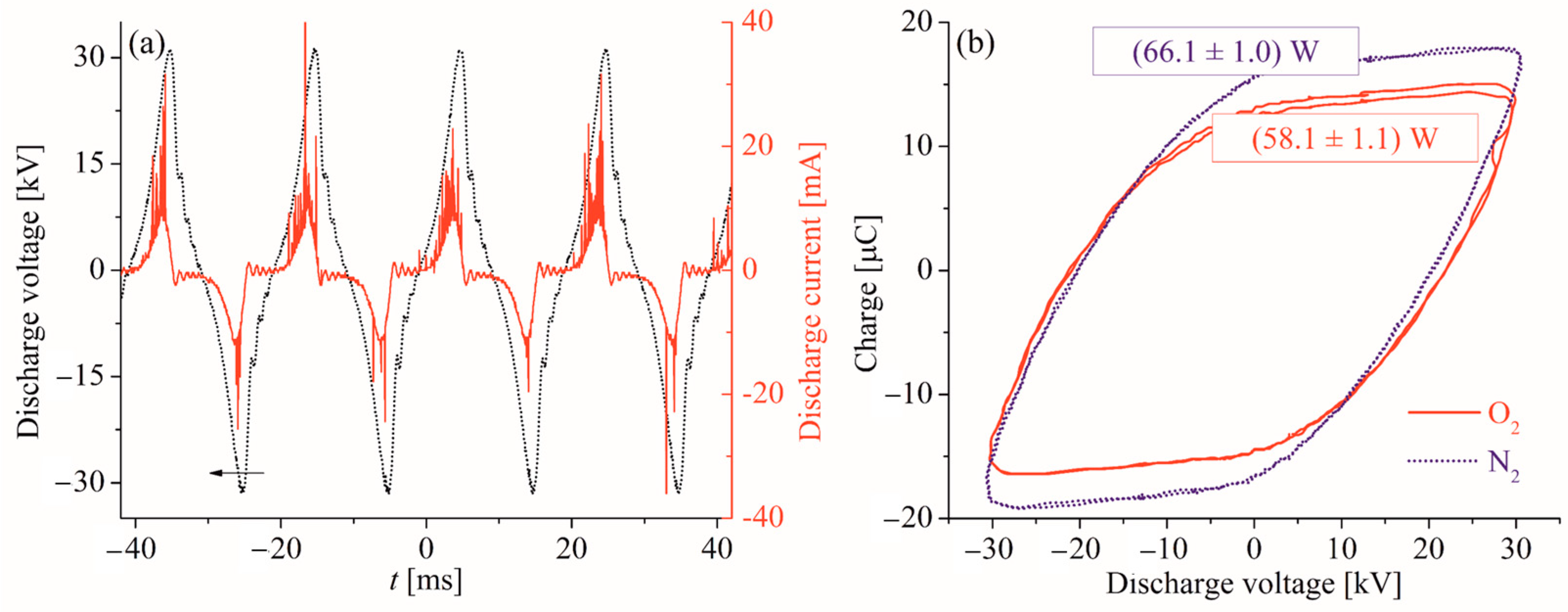
The discharge voltage and current waveforms are shown in Figure 2a. The voltage signal exhibits a polyharmonic sinusoidal shape, primarily governed by the high impedance of the discharge, with peak values of about ±30 kV. The current signal displays distinct behaviors for the positive and negative half-cycles: during the positive half-cycle, multiple short-duration current pulses (approximately 20–40 mA, duration ~10 ns) are observed, whereas only a few pulses appear during the negative half-cycle.
The discharge current waveform behavior is mainly related to the mechanism that sustains the ionization level of the discharge, which depends on the polarity of the electrode at which the electric field is highest, in this case, the needle array active electrode. When this electrode acts as the anode (positive voltage half-cycle), the breakdown mechanism is streamer-driven, and the discharge develops in a filamentary mode. In this regime, multiple filaments bridging the electrode gap (with radii of approximately 50–100 µm) are observed, which is reflected in the large number of current pulses. Conversely, when the needle electrode is the cathode, the breakdown mechanism follows a Townsend-type process [34].
Plasma filaments exhibit chaotic spatio-temporal dynamics, with current densities in the range of 100–1000 A cm−2. The electron density and electron temperature inside a filament typically lie in the ranges 1018–1021 m−3 and 1–10 eV, respectively. The short lifetime of the filaments prevents significant gas heating, keeping the neutral gas temperature close to ambient (~300 K) [34].
Lissajous curves for the discharge operating with different carrier gases (O2 and N2) are shown in Figure 2b. The average power (mean value ± standard deviation of the mean) inferred from the Lissajous curves was (66.1 ± 1.0) W for the discharge operated with O2, and (58.1 ± 1.1) W when operated with N2. The corresponding power densities were 0.58 and 0.51 W/cm−2 for O2 and N2, respectively. This difference in power values between carrier gases may be attributed to changes in the discharge chemistry, mainly associated with variations in electron attachment processes as the molecular oxygen content in the discharge changes.

2.3. Evaluation of the Triphasic Germination Response in Chickpea

Five replicates of 25 seeds were sown in paper rolls per treatment. The paper was moistened with distilled water, with the water volume carefully adjusted to avoid excess. Slow imbibition on moistened paper was recorded at one-hour intervals until completion of the three germination phases, following the approach reported by Hardegree and Emmerich [35], where more than 50% germination is completed (in our case, up to 33 h for the control group). At each time point, the fresh weight of the seeds was recorded and plotted as a function of time, according to the scheme described by Suárez and Melgarejo [36].

2.4. Germination Speed

Five replicates of 25 seeds were sown in paper rolls per treatment. Radicle growth was measured at hourly intervals until more than 50% germination was achieved, comparing treated seeds with the control group.

2.5. Moisture Content Determination

Moisture content was determined using the high constant temperature oven method, following the species-specific protocol for C. arietinum described in Chapter 9 of the ISTA Rules [37]. Seeds were coarsely ground, ensuring that ≥50% of the material passed through a 4.0 mm sieve and ≤55% through a 2.0 mm sieve. Two replicates of approximately 5 g were placed in pre-weighed metal containers and spread in a thin layer. The open containers were dried at 130 °C for 1 h. After drying, the containers were covered, cooled in a desiccator, and then weighed. Moisture content (%) was calculated as the percentage weight loss relative to the initial sample weight. All determinations were performed in duplicate. The treated samples were subsequently stored in a chamber at 20 °C (±2 °C). Subsequently, samples from each treatment were stored under controlled conditions in a chamber at 20 °C (±2 °C).

2.6. Germination Test

Germination tests were conducted according to the methodology described in Chapter 5 of the International Seed Testing Association (ISTA) Rules [37] for chickpea. Four replicates of 100 seeds for each treated sample (n = 3), separated from the pure seed fraction, were used. Seeds were incubated at a constant temperature of 20 °C, with a photoperiod of 16 h darkness and 8 h light. Sand was used as the growth medium, and seedling classification was performed following the criteria established for chickpea as described in ISTA (2018) [38].

2.7. Conductivity Test—Bulk Method

Bulk conductivity of seeds from each treatment was measured using four replicates of 50 seeds each for each treated sample (n = 3), as specified in Table 15A, Chapter 15 of the ISTA Rules [37]. Replicates were randomly selected from the pure seed fraction. Seed moisture content was adjusted to 10–14%. Each replicate was weighed on a Sartorius balance (0.001 g) and placed in a 500 mL Erlenmeyer containing 250 mL of deionized or distilled water, ensuring complete submersion. Flasks were covered with aluminum foil or film and incubated at 20 °C (±2 °C) for 24 h. Measurements were taken with a conductivity meter (Hanna Instruments HI 2314), and results were expressed in µS cm−1 g−1.

2.8. Conductivity Test—Individual Method

The individual conductivity test for chickpea was standardized through successive trials and established as follows: conductivity was measured for both treatments and controls using four replicates of 100 seeds for each treated sample (n = 3). Seeds were individually weighed on a Sartorius balance (0.001 g) and placed in 10 mL screw-cap Eppendorf tubes. Each seed was randomly selected from the pure seed fraction, submerged in 5 mL of deionized or bidistilled water, and incubated at (20 ± 2) °C for 24 h. Measurements were taken with a conductivity meter (Hanna Instruments HI 2314), and results were expressed in µS cm−1 g−1.

2.9. Seed Health

Seed health tests were performed using the blotter method, which promotes the development of fungal structures such as conidiophores, conidia, pycnidia, and acervuli, enabling the identification of microorganisms present in seeds subjected to non-thermal plasma (NTP) treatments with N2 and O2, as well as untreated controls.
A total of 100 seeds per treatment were used. Seeds were surface-disinfected with 1% sodium hypochlorite and placed either in plastic trays (16 × 20 × 5 cm) with a capacity of 50 seeds or in 9 cm Petri dishes with 10 seeds, for each treated sample (n = 3). Seeds were placed on moistened sterile filter paper and sterile cotton, under controlled conditions. Incubation was carried out for 5–8 days at 25 °C ± 1 °C under alternating cycles of 12 h fluorescent light and 12 h darkness, following the methodology of [5].

2.10. Fresh and Dry Weight of Shoot and Root

For fresh and dry weight measurements, four replicates of 50 seeds for each treated sample (n = 3) were germinated following the methodology described in the ISTA Rules [37]. After 8 days, the fresh weight of the shoot and root fractions was recorded using a Sartorius balance (model 3719 MP, precision 0.001 g). For dry weight, seedlings were placed in labeled and numbered aluminum containers and dried in a forced-air oven (Tecnodalvo, model TDSF/D, ±0.5 °C precision) at 80 °C. Samples were weighed every 30 min until constant weight was achieved.

2.11. Chickpea Seed Deterioration During Storage

To assess post-harvest seed quality, samples corresponding to the different treatments were stored for six months under two controlled conditions: (i) in a cold chamber at 10 ± 2 °C and (ii) at ambient temperature (28 °C ± 5 °C), which corresponds to the average maximum temperature recorded during the summer period in Venado Tuerto, Santa Fe, Argentina, according to data from the Servicio Meteorológico Nacional (SMN, 2022). The storage period extended from September 2022 to March 2023. During this interval, the average temperature was 28 ± 5 °C, while relative humidity ranged between 51% (January) and 75% (May).
After six months of storage under both conditions, the three treatments germination test, seed moisture content, and both mass and individual conductivity were evaluated as previously described.

2.12. Statistical Analysis

Statistical analyses were conducted using R version 4.1.1 [39]. Differences among groups were assessed by one-way ANOVA followed by Fisher’s LSD post hoc test. Differences were considered statistically significant at p < 0.05. Data are presented as means ± standard deviation of the mean (SEM).
To integrate the physiological, hydric, and sanitary variables and explore their interrelationships, a Principal Component Analysis (PCA) was performed using the FactoMineR package in R software (Version 4.5.1) [39]. Significantly quantitative variables were included in the analysis, namely normal seedlings (NS), abnormal seedlings (AS), dead seeds (DS), individual electrical conductivity (IC), moisture content (M), fungal incidence (Aspergillus spp., Penicillium spp., Rhizopus spp., and Cladosporium spp.), root and shoot dry weight (RDW and SDW), and water content in root and shoot tissues (Rootwater and Shootwater), as well as the duration of Phase I and Phase II of the triphasic germination model. Treatments (Control, NTP–O2, and NTP–N2) were included as qualitative Supplementary Variables to facilitate graphical interpretation. PCA was conducted using data corresponding to freshly treated seeds (time 0), and results were visualized through individual and variable factor maps.

3. Results and Discussion

3.1. Initial Seed Lot Quality

3.1.1. Triphasic Response and Vigor

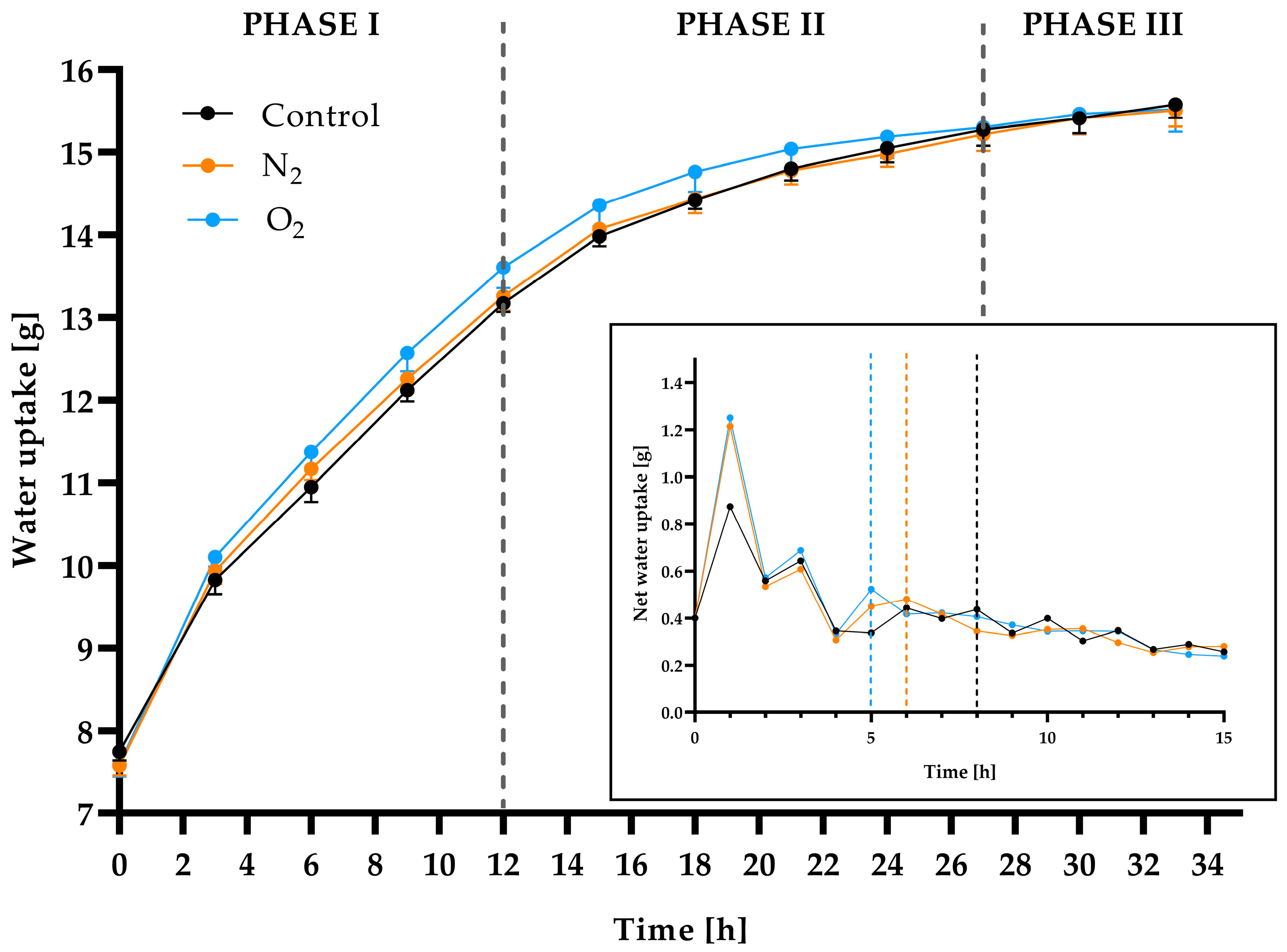
Figure 3 illustrates the triphasic germination response of chickpea seeds, where the three phases of germination (I, II, and III) can be clearly distinguished. Seeds exposed to NTP absorbed water more rapidly than the control, although the total amount of water absorbed was similar across all treatments by the end of the curve. The net water uptake profile (inset figure) highlights that NTP treatments enhanced the imbibition mechanism during Phase I, enabling faster water absorption. Specifically, the control group completed Phase I in 8 h, while the NTP-O2 treatment reduced this time to 5 h and the NTP-N2 treatment to 6 h.
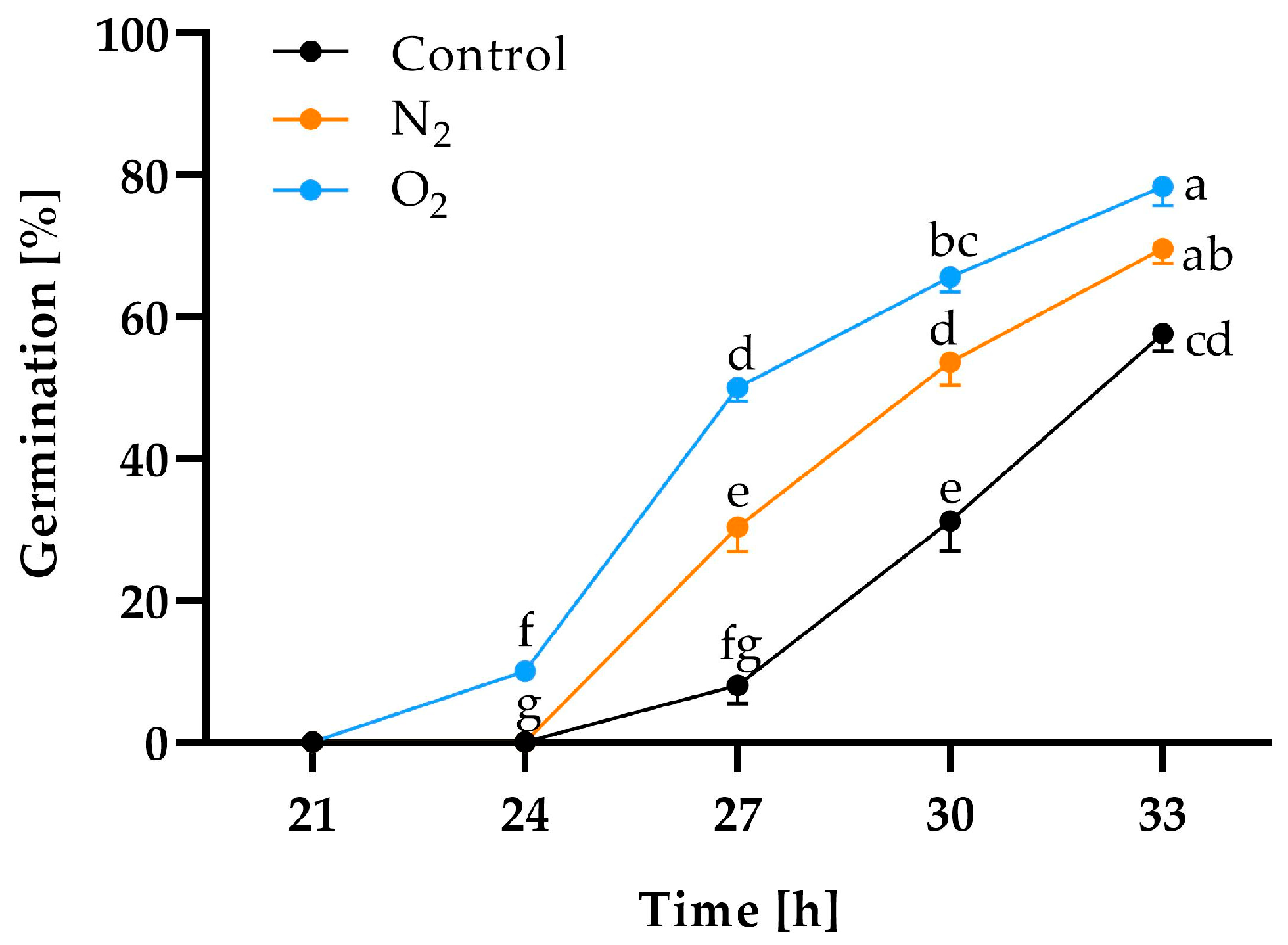
In addition, Phase II of the triphasic germination model was observed to occur earlier and conclude more rapidly in plasma-treated seeds. This suggests that a more efficient metabolic activation during this phase contributes to an earlier onset of embryonic growth. This development is evidenced by the early radicle protrusion, marking the beginning of Phase III. As shown in Figure 4, radicle emergence occurred progressively earlier depending on the treatment applied: at 27 h in NTP-O2-treated seeds, at 30 h in NTP-N2-treated seeds, and at 33 h in the Control.
These temporal differences provide strong evidence that NTP significantly accelerates the germination rate by optimizing the transition between phases, particularly by shortening the duration of Phase II.
Research conducted to date has not precisely clarified the impact of non-thermal plasma treatments on the physiological mechanism of germination, as most studies have focused on the seed coat without considering the internal processes of the embryo. In this context, the triphasic water uptake curve, based on the proposals of Bewley and Black, and of da Silva [28,40] represents a relevant analytical tool to experimentally interpret the effects of NTP during chickpea germination.
Several studies have reported that plasma treatments enhance water uptake in seeds, typically increasing imbibition by 14–30% compared with untreated controls [32,41,42,43,44]. Our findings are consistent with this trend, as plasma-treated chickpea seeds showed faster water absorption without altering the total amount absorbed at saturation. In chickpea specifically, Pathan et al. [45] modeled water uptake kinetics using Peleg’s equation and demonstrated that plasma treatment reduced the K1 constant, indicating faster initial water absorption, while the K2 constant (maximum capacity) remained unaffected. More recently, Ford et al. [46] provided a broader mechanistic explanation in grains, showing that plasma exposure alters the balance between diffusional and capillary transport pathways depending on grain structure and plasma duration. It is worth noting that those findings were obtained using grains intended for food consumption; whereas our study focuses on seeds intended for agricultural use, where the physiological process of germination is particularly relevant.
Consistent with the findings of Mildazienė et al. [18], who argued that increased wettability and water absorption alone do not explain the improved germination rate observed in various species after NTP application, the results of the present study in chickpea offer a physiological explanation: the optimization of the triphasic germination response—especially during Phase II—facilitates earlier metabolic activation in the embryo, resulting in accelerated germination.

3.1.2. Moisture Content

Control seeds showed the highest moisture content (11.95 ± 0.05%, a), while NTP-N2 treatment resulted in a significant reduction (11.10 ± 0.01%, b). The lowest value was observed in O2-treated seeds (10.55 ± 0.05%, c), which differed significantly from both control and N2 treatments. Values are expressed as mean ± SEM, with different lowercase letters (a, b, c) indicating statistically significant differences between treatments (One-way ANOVA, p < 0.05). These results show that NTP treatments, especially with O2, reduce the initial moisture content of seeds. This reduction could contribute to optimizing the three-phase germination response (see Section 3.1.1) by promoting better modulation of internal water relations.

3.1.3. Germination Test

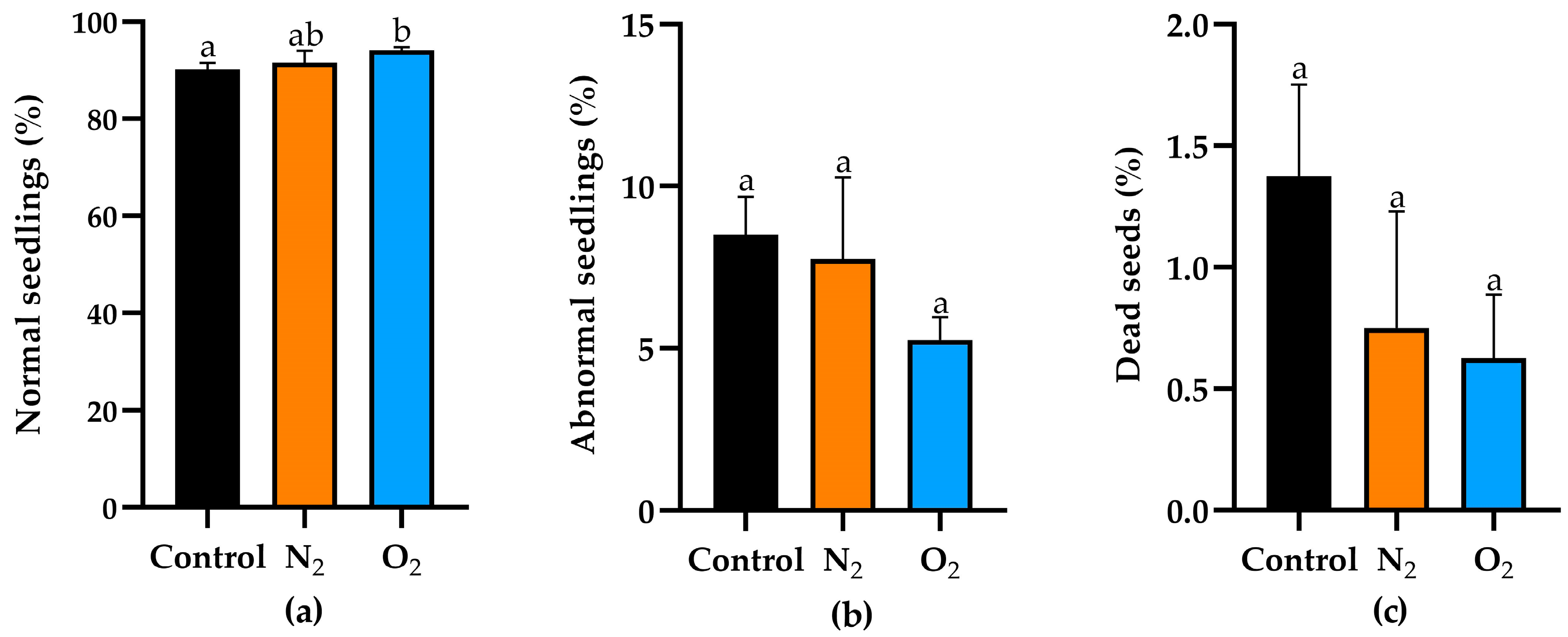
Figure 5 illustrates the effect of NTP treatments (N2 and O2) on chickpea seed germination. Seeds treated with NTP-O2 exhibited a significantly higher percentage of normal seedlings compared with the control. Although the germination percentage of the control group was already very high, the NTP-O2 treatment still produced a measurable improvement. Few studies have examined the effect of non-thermal plasma treatment on chickpea seed quality. Consistent with our findings, Mitra et al. [19] reported a significant increase in germination percentage (89%) for plasma-treated chickpea seeds, although their control exhibited a relatively low germination rate (60%). In contrast, Fereydooni and Alizadeh [27] observed no significant differences in germination percentage between two chickpea varieties treated with either corona or DBD plasma.
Furthermore, there are many works reporting beneficial effects of NTP on the germination of various seeds other than chickpea [17,18,22,32,47]. It is worth noting that among the studies reviewed by these authors, only Pérez-Pizá et al. [32] applied the ISTA Rules to soybean, which limits methodological comparability. In contrast, our study demonstrates for the first time the effect of NTP on chickpea using agronomic evaluations conducted in accordance with the ISTA 2025 Rules [37]. The NTP-O2 treatment improved the physiological quality of the seed lot by increasing the percentage of normal seedlings and showing a trend toward reducing abnormal seedlings and dead seeds, although these differences were not statistically significant.

3.1.4. Bulk and Individual Conductivity

The International Seed Testing Association (ISTA, 2025) Rules [37] and the Association of Official Seed Analyst (AOSA) Standards (2013) [48] include official quality control techniques for C. arietinum. Both institutions have also validated the electrical conductivity (EC) test as a vigor assessment method for chickpea, traditionally performed using the bulk conductivity approach. However, this method has limitations, as it can mask the actual degree of deterioration of individual seeds. Therefore, the individual conductivity method was proposed to identify seeds with the highest electrolyte leakage [49]. This approach is particularly useful for refining the evaluation of physical treatments such as non-thermal plasma.
Results presented in Table 1 show that, using the bulk EC method, no significant differences were detected among treatments. This can be attributed to the inherent limitation of the method, which measures the average leakage of the entire seed lot and may obscure individual variation. In contrast, results obtained through the individual EC method revealed clear differences: seeds treated with NTP-O2 exhibited significantly lower conductivity values compared with the control. This reduction in electrolyte leakage suggests improved cell membrane integrity in seeds treated with NTP-O2.
These findings suggest that plasma treatments may promote faster membrane repair, facilitating the transition from hexagonal to lamellar phases, which is crucial for restoring selective permeability during imbibition in Phase I [50,51]. The reduced individual conductivity observed particularly with O2 plasma is consistent with improved physiological quality, as reflected by the higher proportion of normal seedlings in the germination test (Figure 5).

3.1.5. Seed Health

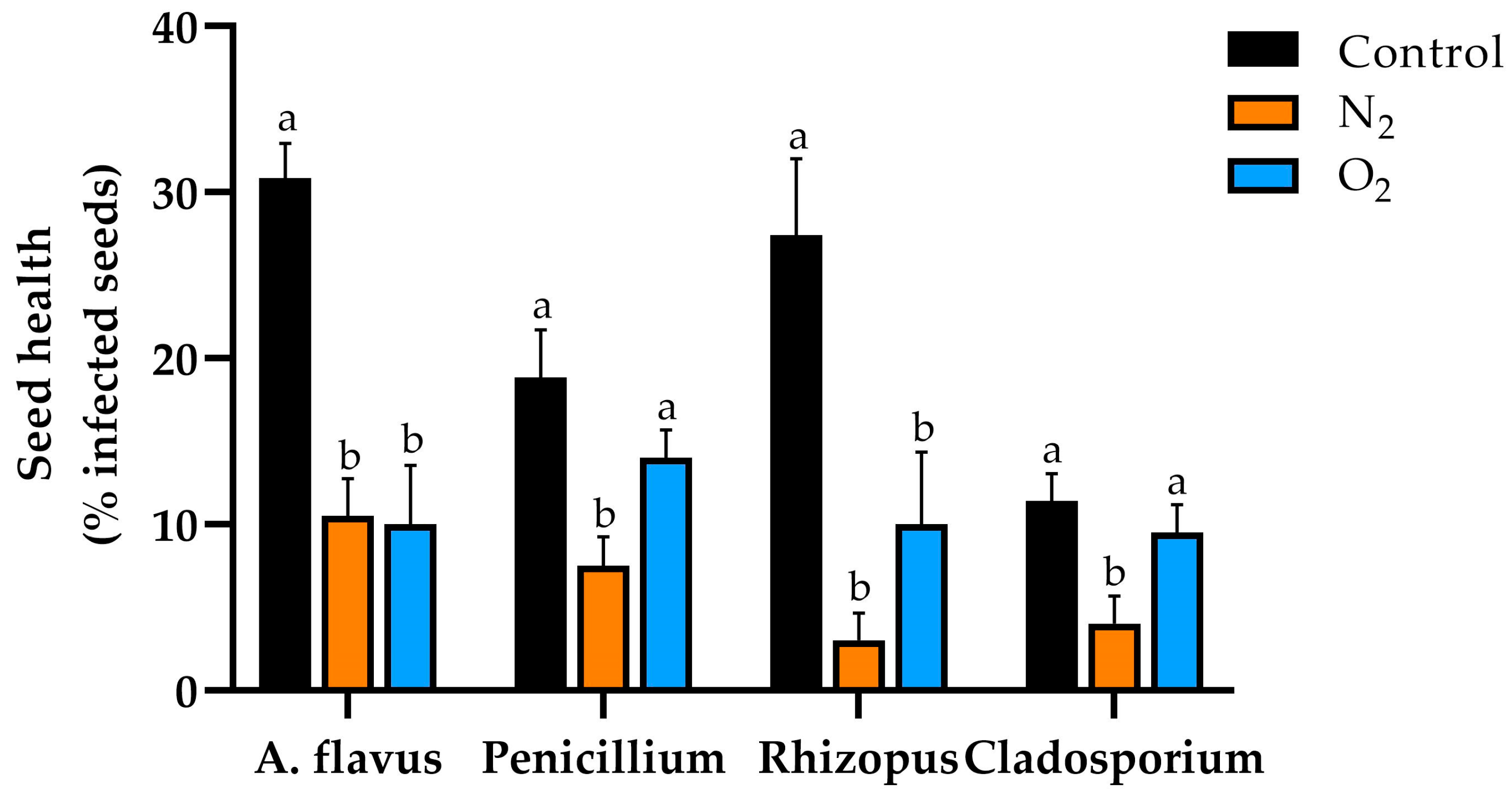
Figure 6 shows the percentage of C. arietinum ’Felipe UNC-INTA’ seeds infected with the phytopathogenic fungi Aspergillus flavus Link (Ascomycota, Aspergillaceae), Penicillium Link spp. (Ascomycota, Aspergillaceae), Rhizopus Ehrenb. spp. (Mucoromycota, Rhizopodaceae), and Cladosporium Link. spp. (Ascomycota, Cladosporiaceae) after NTP (N2 or O2) treatments compared with the Control. In all cases, fungal development was significantly reduced in plasma-treated seeds, confirming the antifungal effectiveness of NTP. Specifically, A. flavus infection was markedly lower in both N2- and O2-treated seeds, consistent with previous results in other crops, such as soybeans, rice and hazelnuts, where NTP has been successfully used for the inactivation of fungal propagules and the surface decontamination of reproductive structures [24,32,52,53].
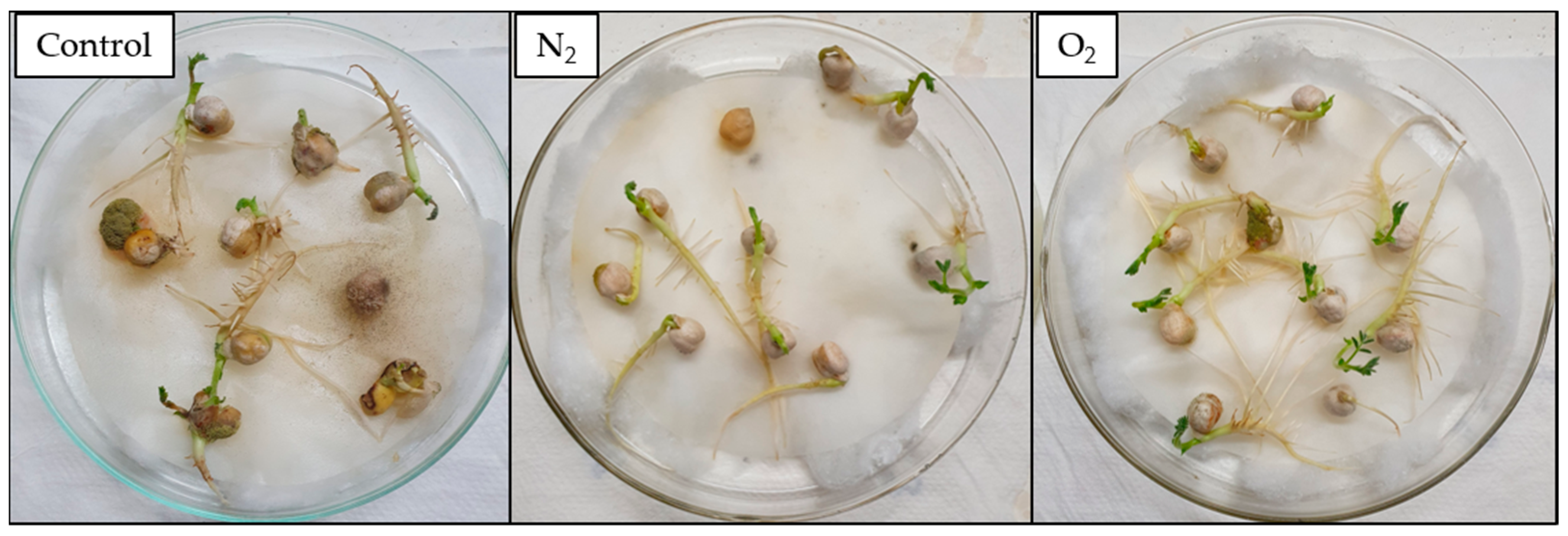
On the other hand, the genus Rhizopus spp.—a typical storage fungus [5]—also showed a decrease in its isolation frequency on plates, indicating a reduction in its viability and/or colonization capacity. Likewise, the presence of Penicillium spp. and Cladosporium spp. was notably reduced in the N2 plasma treatment, suggesting a differential effect depending on the gas used in the discharge. This outcome may be related to the generation of reactive nitrogen species (RNS), which are known to exhibit antimicrobial activity in plant tissues [32]. Figure 7 shows representative photos of the testing of fungally infected chickpea seeds, where it is clearly observed that the NTP treatments are effective against this type of pathogen.
In chickpea, however, the available literature does not provide quantitative measurements of microbial reduction after NTP exposure; existing studies in C. arietinum have primarily focused on germination, vigor, and seed coat characteristics. Nonetheless, abundant evidence from other seeds, including legumes, supports the effectiveness of NTP in eliminating microorganisms [17,18,20,22,32]. From a phytosanitary perspective, a significant decrease in fungal incidence was observed in seeds treated with NTP, supporting the notion that this treatment exerts a fungistatic or partially fungicidal effect depending on the pathogen involved. Consequently, this reduction in infectious load acquires agronomic relevance in pre-sowing management, as it helps preserve seed lot health and minimize the risk of seed-borne disease transmission.
In summary, from a seed technology standpoint, these results are highly relevant. Seed health is a critical attribute in lot characterization, as it directly influences field performance parameters such as emergence, stand establishment, and the persistence of inoculum within the agroecosystem.

3.1.6. Fresh and Dry Weight of Seedlings

Table 2 shows that plasma treatments significantly enhanced chickpea seedling growth compared with the control. O2 plasma significantly increased root fresh weight by 40%, shoot fresh weight by 18%, root dry weight by 25%, and shoot dry weight by 19%. N2 plasma produced similar improvements, with increments of 30%, 18%, 30%, and 17%, respectively. Both treatments also led to significantly higher water content in roots and shoots, indicating that NTP favors water balance in seedlings. These results highlight a positive effect of plasma on Phase III of germination, which translates into increased seedling vigor.
The analysis of the results indicates a positive effect of NTP treatment on seedling vigor. Moreover, the assimilate partition index (shoot-to-root ratio, PSA/PSR) lower than one in plasma-treated seedlings suggests a preferential allocation of resources toward the root system, possibly stimulating its development and strengthening root anchorage and functionality. This structural and functional response is crucial during the early stages of crop establishment, as it would directly promote successful seedling implantation. These findings provide a valuable contribution by demonstrating, for the first time, a precise quantification of assimilate partitioning in chickpea seedlings treated with NTP.
Comparable responses have been reported in other studies. In chickpea, Mitra et al. [19] found ~120% increases in seedling dry weight after 1 min plasma exposure, and Li et al. [29] reported ~22% and ~28% increases in shoot and root dry weights, respectively, in plasma treated soybean seeds. Taken together, our findings extend previous evidence by providing the first quantification of biomass partitioning in chickpea seedlings following NTP exposure.

3.2. Multivariate Integration of Physiological and Sanitary Responses

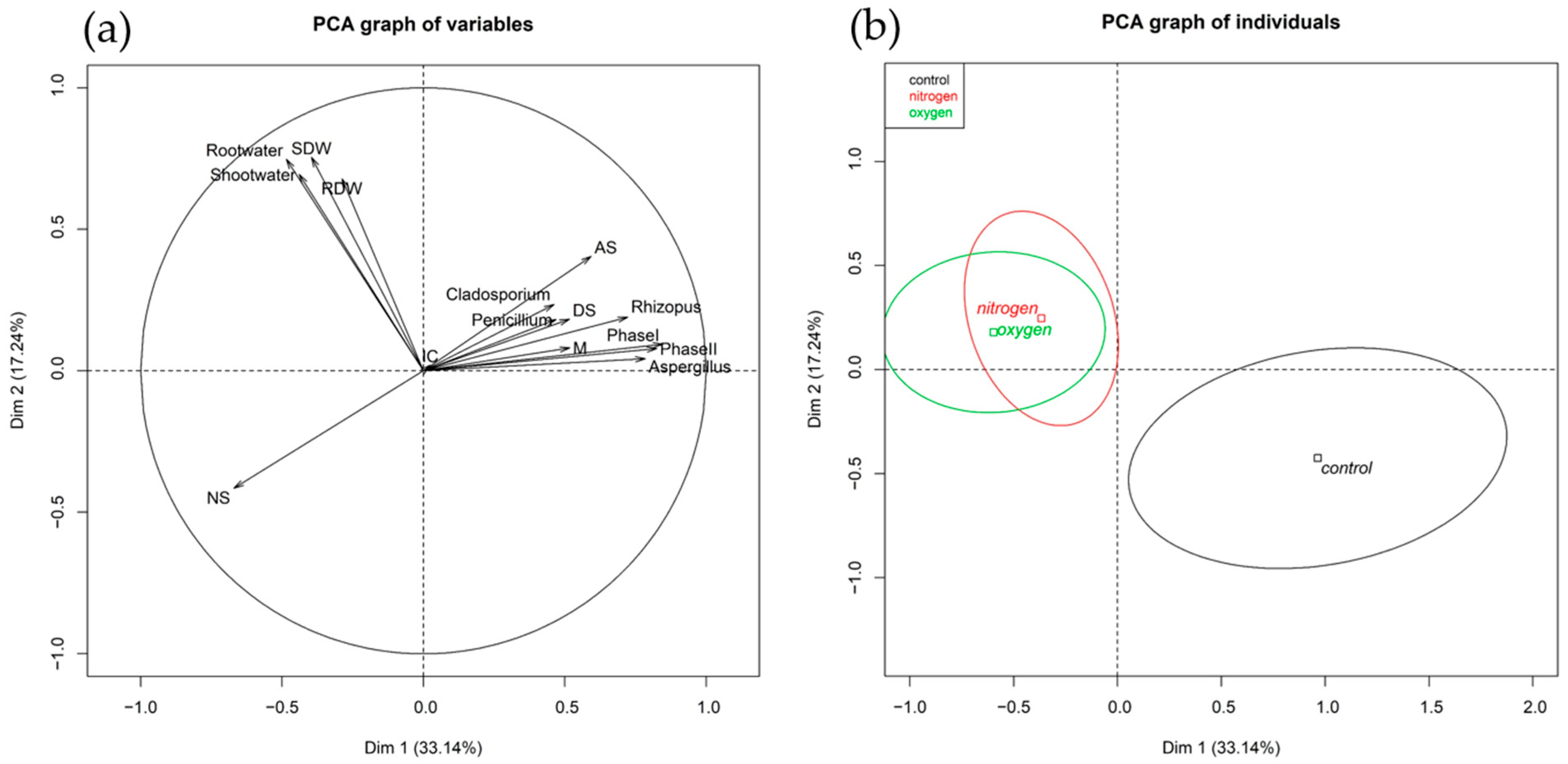
Principal Component Analysis provided an integrated view of the physiological and sanitary responses of chickpea seeds to non-thermal plasma treatment (Figure 8). The first two principal components explained 50.4% of the total variance (Dim1 = 33.14%, Dim2 = 17.24%). The individual factor map (Figure 8b) showed a clear separation (with a 99% confidence level for the ellipses) between non-treated Control seeds and NTP-treated samples along Dim1, with both O2 and N2 treatments clustering on the negative side of this axis.
Variable projection (Figure 8a) indicated that Dim1 mainly represented a deterioration–vigor gradient. Variables associated with seed deterioration and delayed germination, including Phase I duration, Phase II duration, abnormal seedlings, dead seeds, electrical conductivity, moisture content, and fungal incidence, loaded positively on this axis. In contrast, normal seedlings, root and shoot dry weight, and water content in root and shoot tissues were positioned on the opposite side, reflecting improved vigor and physiological performance. Dim2 was primarily associated with early seedling growth and internal water status.
Importantly, Phase II duration clustered with deterioration- and pathogen-related variables, while vigor traits grouped in the opposite direction, providing strong physiological evidence that NTP-induced acceleration of Phase II is closely linked to improved seed vigor. This multivariate pattern supports the hypothesis that non-thermal plasma acts beyond surface effects, modulating internal physiological processes that govern germination dynamics and early seedling development.

3.3. Chickpea Seed Deterioration During Storage

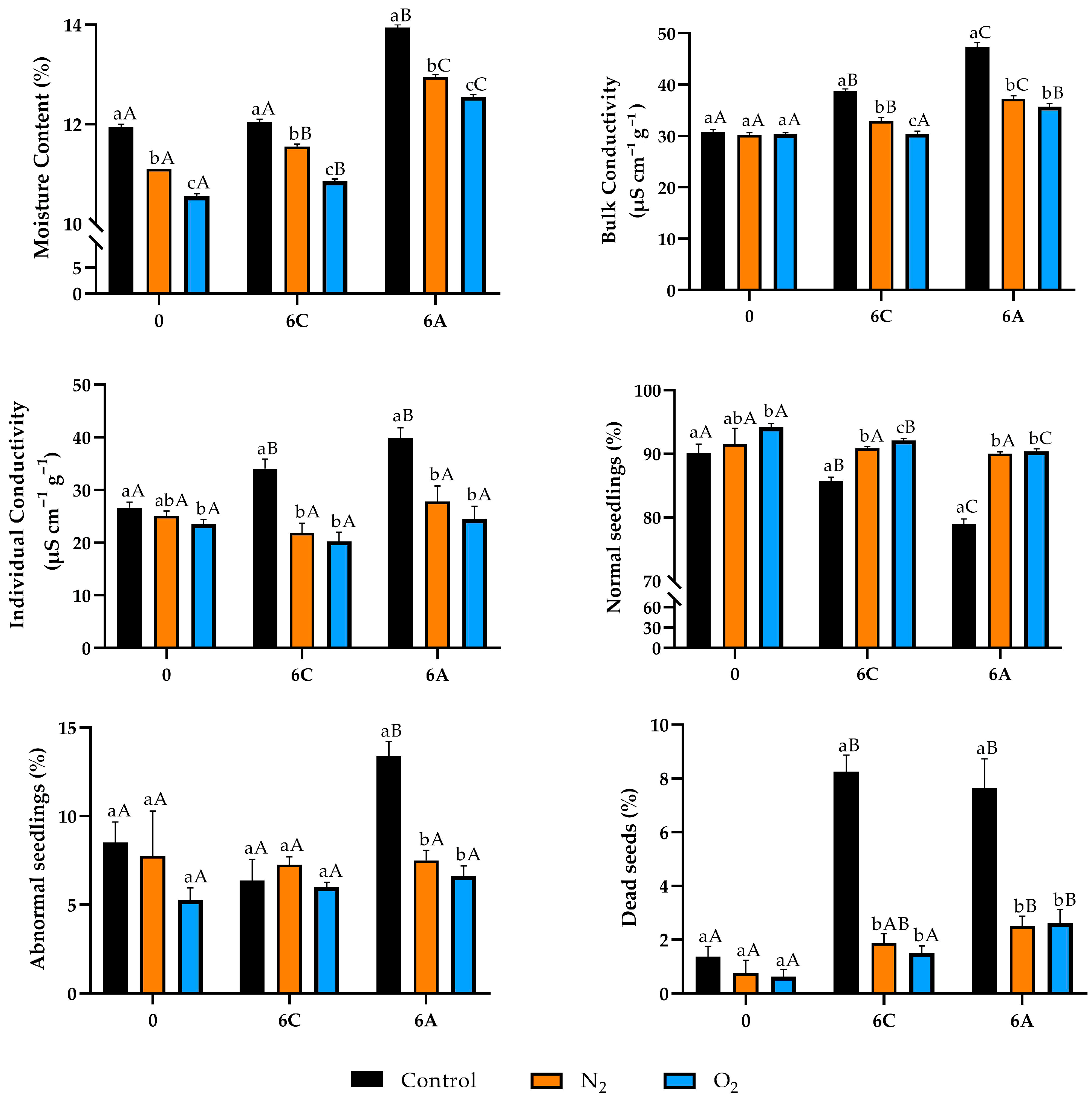
In general terms, chickpea seeds are very sensitive to deterioration, so treatment with NTP can help maintain their physiological quality during storage. Figure 9 summarizes the deterioration patterns in chickpea seeds (C. arietinum, ‘Felipe UNC-INTA’) treated with NTP (N2 and O2) at the beginning and after 6 months of storage, either under cold conditions (10 °C ± 2 °C) or at ambient temperature (28 °C ± 5 °C). After six months, all treatments exhibited increased seed moisture, particularly under ambient storage, yet control seeds consistently retained the highest values. These trends can be attributed to the high relative humidity (51–75%) typical of the storage environment. The lower moisture content in plasma-treated seeds could partly explain the optimization of the triphasic germination response through modulation of internal water relations. It may also be associated with improved aquaporin functionality [22,54], enhancing water transport under ambient conditions and during refrigerated storage. NTP treatments with N2 and O2 effectively delayed seed deterioration and promoted vigor in chickpea during storage.
Seed vigor parameters confirmed these positive effects. Control seeds showed a marked decline in normal seedlings—up to 11% under ambient storage—together with sharp increases in abnormal seedlings and dead seeds. By contrast, NTP-treated seeds, especially those stored at 10 °C, maintained higher proportions of normal seedlings (still being ~90%) and lower levels in abnormal seedlings and dead seeds. Bulk and individual conductivity analyses further supported these findings: while conductivity increased significantly in controls, indicating membrane damage, plasma-treated seeds showed only minor changes, with O2-treated seeds under cold storage remaining statistically unchanged. Together, these results demonstrate that NTP treatments delay physiological aging and maintain vigor during storage.
These findings are consistent with previous reports on other crops. For instance, Sarinont et al. [55] demonstrated radish seeds with air plasma irradiation still kept growth enhancement ability during 17 months of storage, while Ahmed et al. [56] showed sustained improvements in water uptake and conductivity in Bambara groundnut (Vigna subterranea (L.) Verdc., Fabaceae), chilli (Capsicum annuum L., Solanaceae), and papaya (Carica papaya L., Caricaceae) for up to 60 days after treatment. Similarly, Kobayashi et al. [57] reported that plasma-enhanced germination effects in Brassica juncea (L.) Czern. (Brassicaceae) were maintained for at least one month under storage, and Doshi et al. [58] found extended vigor preservation for 6 months in legumes exposed to plasma combined with hydropriming before storage. Together, these studies highlight that plasma effects are not merely transient but can persist during storage; although, the extent depends on species, plasma parameters, and storage conditions. In agreement with this, these data clearly indicate that environmental variables such as temperature and relative humidity strongly influence chickpea seed preservation. To our knowledge, this is the first report describing how plasma treatment impacts seed quality during storage in C. arietinum, providing a novel basis for its application in seed technology.
While non-thermal plasma represents a highly promising, eco-friendly physical method for enhancing seed quality, recognized for its capacity to improve germination, vigor, and decontamination [17], the field of seed physiology is actively investigating other analogous non-thermal technologies. These alternative methods, like NTP, are designed to induce favorable physicochemical and biological alterations without thermal damage. Electric and magnetic fields, for example, enhanced germination in soybeans by ~7%, depending on the cultivar [59], but resulted in no observed increase in plant dry weight in chickpea seeds [60]. In comparison, our NTP treatment with O2 produced a 4% improvement in chickpea germination and simultaneously increased root or shoot dry weight by around 20%. Ultrasound treatments have shown, similarly to our work, increases in water-uptake kinetics along with enhanced germination and vigor in various crops, but they also generate membrane pores caused by ultracavitation [61,62,63]. UV-C irradiation effectively reduces fungal contamination in maize (23.5–26.25%) and maintains pea seed quality for up to 270 days of storage. However, its spatial non-uniformity requires further study to overcome this limitation [64,65]. The continued exploration, mechanistic understanding, and systematic optimization of these diverse non-thermal technologies are essential for establishing sustainable and effective strategies to meet global agricultural demands for high-performance seeds.

4. Conclusions

This study demonstrates that atmospheric pressure non-thermal plasma (NTP) treatment improves chickpea seed performance by inducing physiological effects that extend beyond the seed coat to the embryo. NTP optimized the triphasic germination response, particularly by shortening Phase II, which resulted in earlier radicle protrusion and faster germination.
Plasma-treated seeds exhibited enhanced vigor, expressed as improved root development and a preferential allocation of assimilates toward the root system, which is relevant for early crop establishment. NTP also preserved membrane integrity, as shown by lower individual electrical conductivity, and optimized internal water relations during germination.
Importantly, NTP significantly delayed postharvest seed deterioration. Treated seeds maintained higher vigor and seedling quality after six months of storage under both ambient and refrigerated conditions, highlighting the persistence of plasma-induced effects.
From a phytosanitary perspective, NTP reduced the incidence of seed-borne fungi, supporting its potential as a physical alternative to chemical seed treatments.
Overall, these findings identify non-thermal plasma as an effective and environmentally friendly postharvest technology to enhance germination physiology, vigor, storage longevity, and sanitary quality of chickpea seeds, contributing relevant advances to seed science and technology.

Supplementary Materials

The following supporting information can be downloaded at: https://www.mdpi.com/article/10.3390/seeds4040069/s1.

Author Contributions

Conceptualization, J.A.A., K.B.B. and L.P.; methodology, A.S.V., B.L.F., M.G.F., B.S. and C.G.Z.; software, B.L.F. and A.S.V.; formal analysis, B.L.F., P.S.V. and A.S.V.; investigation, A.S.V., B.L.F., M.G.F., B.S., J.A.A., K.B.B. and L.P.; resources, K.B.B. and L.P.; data curation, A.S.V., B.L.F., P.S.V., J.A.A., K.B.B. and L.P.; visualization, A.S.V. and B.L.F.; writing—original draft preparation, B.L.F.; writing—review and editing, A.S.V., B.L.F., J.A.A. and K.B.B.; supervision, J.A.A., K.B.B. and L.P.; project administration, K.B.B. and L.P.; funding acquisition, K.B.B. and L.P. All authors have read and agreed to the published version of the manuscript.

Funding

This work was supported by grants from the Universidad Tecnológica Nacional (PID 8461), CONICET (PIP CONICET 11220200100459CO and PIP CONICET 11220210100718CO), and Agencia Nacional de Promoción Científica y Tecnológica (PICT-2021-IA-00769).

Institutional Review Board Statement

Not applicable.

Informed Consent Statement

Not applicable.

Data Availability Statement

The raw data supporting the conclusions of this article will be made available by the authors on request.

Acknowledgments

B.L.F., C.Z., L.P. and K.B.B. are members of CONICET. B.S. and M.G.F. thank CONICET for their doctoral fellowship.

Conflicts of Interest

The authors declare no conflicts of interest.

Abbreviations

The following abbreviations are used in this manuscript:
NTPNon-thermal plasma
UNC-INTAUniversidad Nacional de Córdoba-Instituto Nacional de Tecnología Agropecuaria
DBDDielectric barrier discharge
ISTAInternational Seed Testing Association
LSDLeast Significant Difference

References

  1. Instituto Nacional de Semillas (INASE). Informe de Gestión 2019–2023; Instituto Nacional de Semillas (INASE): Buenos Aires, Argentina, 2023.
  2. Carreras, J.; Mazzuferi, V.; Karlin, M. El Cultivo de Garbanzo (Cicer arietinum L.) en Argentina; Universidad Nacional de Córdoba: Córdoba, Argentina, 2016; Volume 1, ISBN 978-950-33-1251-3. [Google Scholar]
  3. Delfan, F.; Shahbazi, F.; Eisvand, H.R.; Shahbazi, S. Assessing the effects of free fall conditions on damage to chickpea seeds: A comprehensive examination of seed deterioration. Food Sci. Nutr. 2024, 12, 3714–3724. [Google Scholar] [CrossRef] [PubMed]
  4. de Oliveira Cruz, J.; de Carvalho, L.C.; Carmona, R.; dos Santos, J.B.; Artiaga, I.F. Iodine test to detect physical damage in chickpea seeds. Rev. Cienc. Agron. 2025, 56, e202392380. [Google Scholar] [CrossRef]
  5. Scandiani, M.M.; Luque, A.G. Identificación de patógenos en semilla de soja. In Análisis de Semillas; Estudio Rolando: Rosario, Argentina, 2009; p. 148. ISSN 1852-5024. [Google Scholar]
  6. Aguaysol, N.C.; Acosta, M.E.; González, V.; Fogliata, G.; de Lisi, V.; Ploper, L.D. Patógenos detectados en semillas de garbanzo (Cicer arietinum) en Tucumán y áreas de influencia. Av. Agroindustrial 2013, 34, 28–30. [Google Scholar]
  7. Carreras, J.; Reginatto, J.; Solfanelli, P. La Cadena de Valor del Garbanzo en Córdoba; Farías, R., Fiant, S.E., Agusto, G., Meriggiola, P.N., Cerino Rivara, L.A., De Lara Aldalur, A., Alonso, C.A., Spinazzé, C.D., Perez, C., Ruiz Troccoli, J.L., Eds.; Bolsa de Cereales de Córdoba: Córdoba, Argentina, 2018; ISBN 9789874640338. [Google Scholar]
  8. Endes, A.; Yones, A.M.; Atmaca, S.; Tahir, M.; Kayim, M. Resistance of Ascochyta rabiei isolates from chickpeas (Cicer arietinum L.) to fungicides. Heliyon 2024, 10, e35795. [Google Scholar] [CrossRef]
  9. Swaine, M.; Bergna, A.; Oyserman, B.; Vasileiadis, S.; Karas, P.A.; Screpanti, C.; Karpouzas, D.G. Impact of pesticides on soil health: Identification of key soil microbial indicators for ecotoxicological assessment strategies through meta-analysis. FEMS Microbiol. Ecol. 2025, 101, fiaf052. [Google Scholar] [CrossRef]
  10. Lemmens, E.; Deleu, L.J.; De Brier, N.; De Man, W.L.; De Proft, M.; Prinsen, E.; Delcour, J.A. The impact of hydro-priming and osmo-priming on seedling characteristics, plant hormone concentrations, activity of selected hydrolytic enzymes, and cell wall and phytate hydrolysis in sprouted wheat (Triticum aestivum L.). ACS Omega 2019, 4, 22089–22100. [Google Scholar] [CrossRef]
  11. Whitehouse, K.J.; Hay, F.R.; Ellis, R.H. High-temperature stress during drying improves subsequent rice (Oryza sativa L.) seed longevity. Seed Sci. Res. 2017, 27, 281–291. [Google Scholar] [CrossRef]
  12. Yao, S.; Librizzi, B.R.; Chen, H. Heating temperature and water activity of alfalfa seeds affect thermal inactivation of Salmonella and maintaining seed viability. Int. J. Food Microbiol. 2023, 2, 109975. [Google Scholar] [CrossRef]
  13. Wageningen Seed Science Centre Seed Storage. Available online: https://edepot.wur.nl/387084 (accessed on 25 November 2025).
  14. Groot, S.P.C.; De Groot, L.; Kodde, J.; Van Treuren, R. Prolonging the longevity of ex situ conserved seeds by storage under anoxia. Plant Genet. Resour. Characterisation Util. 2015, 13, 18–26. [Google Scholar] [CrossRef]
  15. Pournavab, R.F.; Mejía, E.B.; Mendoza, A.B.; Salas Cruz, L.R.; Heya, M.N. Ultraviolet radiation effect on seed germination and seedling growth of common species from Northeastern Mexico. Agronomy 2019, 9, 269. [Google Scholar] [CrossRef]
  16. Pandiselvam, R.; Mayookha, V.P.; Kothakota, A.; Sharmila, L.; Ramesh, S.V.; Bharathi, C.P.; Gomathy, K.; Srikanth, V. Impact of ozone treatment on seed germination—A systematic review. Ozone Sci. Eng. 2019, 42, 331–346. [Google Scholar] [CrossRef]
  17. Barjasteh, A.; Lamichhane, P.; Dehghani, Z.; Kaushik, N.; Gupta, R.; Choi, E.H.; Kaushik, N.K. Recent progress of non-thermal atmospheric pressure plasma for seed germination and plant development: Current scenario and future landscape. J. Plant Growth Regul. 2023, 42, 5417–5432. [Google Scholar] [CrossRef]
  18. Mildaziene, V.; Ivankov, A.; Sera, B.; Baniulis, D. Biochemical and physiological plant processes affected by seed treatment with non-thermal plasma. Plants 2022, 11, 856. [Google Scholar] [CrossRef]
  19. Mitra, A.; Li, Y.F.; Klämpfl, T.G.; Shimizu, T.; Jeon, J.; Morfill, G.E.; Zimmermann, J.L. Inactivation of surface-borne microorganisms and increased germination of seed specimen by cold atmospheric plasma. Food Bioprocess Technol. 2014, 7, 645–653. [Google Scholar] [CrossRef]
  20. Šerá, B.; Scholtz, V.; Jirešová, J.; Khun, J.; Julák, J.; Šerý, M. Effects of non-thermal plasma treatment on seed germination and early growth of leguminous plants—A review. Plants 2021, 10, 1616. [Google Scholar] [CrossRef] [PubMed]
  21. Burducea, I.; Burducea, C.; Mereuta, P.E.; Sirbu, S.R.; Iancu, D.A.; Istrati, M.B.; Straticiuc, M.; Lungoci, C.; Stoleru, V.; Teliban, G.C.; et al. Helium atmospheric pressure plasma jet effects on two cultivars of Triticum aestivum L. Foods 2023, 12, 208. [Google Scholar] [CrossRef]
  22. Priatama, R.A.; Pervitasari, A.N.; Park, S.; Park, S.J.; Lee, Y.K. Current advancements in the molecular mechanism of plasma treatment for Seed Germination and Plant Growth. Int. J. Mol. Sci. 2022, 23, 4609. [Google Scholar] [CrossRef]
  23. Waskow, A.; Howling, A.; Furno, I. Mechanisms of plasma-seed treatments as a potential seed processing technology. Front. Phys. 2021, 9, 617345. [Google Scholar] [CrossRef]
  24. Mošovská, S.; Medvecká, V.; Gregová, M.; Tomeková, J.; Valík, Ľ.; Mikulajová, A.; Zahoranová, A. Plasma inactivation of Aspergillus flavus on hazelnut surface in a diffuse barrier discharge using different working gases. Food Control. 2019, 104, 256–261. [Google Scholar] [CrossRef]
  25. Bruggeman, P.J.; Iza, F.; Brandenburg, R. Foundations of atmospheric pressure non-equilibrium plasmas. Plasma Sources Sci. Technol. 2017, 26, 123002. [Google Scholar] [CrossRef]
  26. Brandenburg, R. Dielectric barrier discharges: Progress on plasma sources and on the understanding of regimes and single filaments. Plasma Sources Sci. Technol. 2018, 27, 053001. [Google Scholar] [CrossRef]
  27. Fereydooni, M.; Haji, H. Microscopic investigation of cold plasma effect on chickpea seed germination. J. Agric. Mach. 2022, 12, 231–240. [Google Scholar] [CrossRef]
  28. Bewley, J.D.; Black, M. Seeds: Physiology of Development and Germination; Springer: New York, NY, USA, 1994; ISBN 0306447479. [Google Scholar]
  29. Matějovič, M.; Jozová, E.; Rost, M.; Čurn, V.; Hnilička, F.; Kotíková, Z.; Hlásná Čepková, P. Evaluation of the effect of low-temperature plasma treatment on seed germination of long-term stored genetic resources. Agronomy 2024, 14, 1918. [Google Scholar] [CrossRef]
  30. Matějovič, M.; Čurn, V.; Kubeš, J.; Jozová, E.; Kotíková, Z.; Hlásná Čepková, P. Effects of low-temperature plasma treatment on germination, seedling development, and biochemical parameters of long-term-stored seeds. Agronomy 2025, 15, 1637. [Google Scholar] [CrossRef]
  31. Lamichaney, A.; Kumar, V.; Katiyar, P.K.; Singh, N.P. Effect of storage condition and its duration on seed quality of chickpea (Cicer arietinum L.). J. Food Legum. 2019, 32, 152–156. [Google Scholar]
  32. Pérez-Pizá, M.C.; Prevosto, L.; Zilli, C.; Cejas, E.; Kelly, H.; Balestrasse, K. Effects of non–thermal plasmas on seed-borne Diaporthe/Phomopsis complex and germination parameters of soybean seeds. Innov. Food Sci. Emerg. Technol. 2018, 49, 82–91. [Google Scholar] [CrossRef]
  33. Pipa, A.V.; Koskulics, J.; Brandenburg, R.; Hoder, T. The simplest equivalent circuit of a pulsed dielectric barrier discharge and the determination of the gas gap charge transfer. Rev. Sci. Instrum. 2012, 83, 115112. [Google Scholar] [CrossRef] [PubMed]
  34. Fridman, A.; Chirokov, A.; Gutsol, A. Non-thermal atmospheric pressure discharges. J. Phys. D Appl. Phys. 2005, 38, R1–R24. [Google Scholar] [CrossRef]
  35. Hardegree, S.P.; Emmerich, W.E. Effect of matric-priming duration and priming water potential on germination of four grasses. J. Exp. Bot. 1992, 43, 233–238. [Google Scholar] [CrossRef]
  36. Suárez, D.; Melgarejo, L.M. Biología y germinación de semillas. In Experiments in Plant Physiology; Universidad Nacional de Colombia: Valledupar, Colombia, 2010; p. 24. [Google Scholar]
  37. International Seed Testing Association International Rules for Seed Testing 2024; The International Seed Testing Association (ISTA): Wallisellen, Switzerland, 2024; ISBN 9783906549699.
  38. International Seed Testing Association Handbook on Seedling Evaluation, 4th ed.; Don, R., Ducournau, S., Eds.; ISTA: Zürichstrasse, Switzerland, 2018; ISBN 978-3-906549-39-2. [Google Scholar]
  39. R Core Team. R: A Language and Environment for Statistical Computing 2021, Version 4.5.1; R Foundation for Statistical Computing: Vienna, Austria, 2021.
  40. da Silva, A.R.; Leão-Araújo, É.F.; Rezende, B.R.; dos Santos, W.V.; Santana, H.A.; Silva, S.C.M.; Fernandes, N.A.; Costa, D.S.; de Mesquita, J.C.P. Modeling the three phases of the soaking kinetics of seeds. Agron. J. 2018, 110, 164–170. [Google Scholar] [CrossRef]
  41. Holc, M.; Gselman, P.; Primc, G.; Vesel, A.; Mozetič, M.; Recek, N. Wettability and water uptake improvement in plasma-treated alfalfa seeds. Agriculture 2022, 12, 96. [Google Scholar] [CrossRef]
  42. Li, L.; Jiang, J.; Li, J.; Shen, M.; He, X.; Shao, H.; Dong, Y. Effects of cold plasma treatment on seed germination and seedling growth of soybean. Sci. Rep. 2014, 4, 5859. [Google Scholar] [CrossRef]
  43. Ahmed, N.; Masood, A.; Siow, K.S.; Wee, M.F.M.R.; Auliya, R.Z.; Ho, W.K. Effect of H2O-based low-pressure plasma (Lpp) treatment on the germination of bambara groundnut seeds. Agronomy 2021, 11, 338. [Google Scholar] [CrossRef]
  44. Dawood, N. Effects of air plasma treatment on water uptake of wheat and barley seeds. J. Taibah Univ. Sci. 2021, 15, 1094–1100. [Google Scholar] [CrossRef]
  45. Pathan, F.L.; Trimukhe, A.M.; Deshmukh, R.R.; Annapure, U.S. A peleg modeling of water absorption in cold plasma-treated Chickpea (Cicer arietinum L.) cultivars. Sci. Rep. 2023, 13, 7857. [Google Scholar] [CrossRef] [PubMed]
  46. Ford, M.; Coad, B.R. Plasma glows and shifting water flows: Measuring the changes to water transport phenomena in seeds after plasma treatment. Food Chem. 2025, 479, 143733. [Google Scholar] [CrossRef]
  47. Pérez-Pizá, M.C.; Clausen, L.; Cejas, E.; Ferreyra, M.; Chamorro-Garcés, J.C.; Fina, B.; Zilli, C.; Vallecorsa, P.; Prevosto, L.; Balestrasse, K. Non-thermal plasma application improves germination, establishment and productivity of Gatton panic grass (Megathyrsus maximus) without compromising forage quality. Crop. Pasture Sci. 2022, 73, 1188–1199. [Google Scholar] [CrossRef]
  48. Association of Official Seed Analysts. Seed Vigor Testing Handbook, 32nd ed.; Association of Official Seed Analysts, Ed.; Association of Official Seed Analysts: Wichita, KS, USA, 2013. [Google Scholar]
  49. Vieira, R.D.; Krzyzanowski, F.C. Testes de Vigor em Sementes; Associação Brasileira de Tecnologia de Sementes (ABRATES): Curitiba, Brasil, 2020. [Google Scholar]
  50. Nicolson, G. Update of the 1972 Singer-Nicolson fluid-mosaic model of membrane structure. Discoveries 2013, 1, e3. [Google Scholar] [CrossRef] [PubMed]
  51. Azcón-Bieto, J.; Talón, M. Fundamentals of Plant Physiology, 2nd ed.; McGraw-Hill-Interamericana de España, S.L.: Madrid, Spain, 2008; ISBN 9788448192938. [Google Scholar]
  52. Selcuk, M.; Oksuz, L.; Basaran, P. Decontamination of grains and legumes infected with Aspergillus spp. and Penicillum spp. by cold plasma treatment. Bioresour. Technol. 2008, 99, 5104–5109. [Google Scholar] [CrossRef]
  53. Dasan, B.G.; Mutlu, M.; Boyaci, I.H. Decontamination of Aspergillus flavus and Aspergillus parasiticus spores on hazelnuts via atmospheric pressure fluidized bed plasma reactor. Int. J. Food Microbiol. 2016, 216, 50–59. [Google Scholar] [CrossRef]
  54. Yusupov, M.; Razzokov, J.; Cordeiro, R.M.; Bogaerts, A. Transport of reactive oxygen and nitrogen species across aquaporin: A molecular level picture. Oxid. Med. Cell. Longev. 2019, 2019, 1–11. [Google Scholar] [CrossRef]
  55. Sarinont, T.; Amano, T.; Attri, P.; Koga, K.; Hayashi, N.; Shiratani, M. Effects of plasma irradiation using various feeding gases on growth of Raphanus sativus L. Arch. Biochem. Biophys. 2016, 605, 129–140. [Google Scholar] [CrossRef]
  56. Ahmed, N.; Siow, K.S.; Wee, M.F.M.R.; Patra, A. A study to examine the ageing behaviour of cold plasma-treated agricultural seeds. Sci. Rep. 2023, 13, 1675. [Google Scholar] [CrossRef]
  57. Kobayashi, M.; Yamaguchi, S.; Kusano, S.; Kumagai, S.; Ito, T. Non-thermal atmospheric-pressure plasma exposure as a practical method for improvement of Brassica juncea seed germination. J. Biotechnol. 2024, 392, 103–108. [Google Scholar] [CrossRef]
  58. Doshi, P.; Scholtz, V.; Khun, J.; Thonová, L.; Cai, X.; Šerá, B. Non-thermal plasma and hydropriming combined treatment of cucumber and broccoli seeds and the effects on germination and seedling characteristics after short-term storage. Appl. Sci. 2025, 15, 8404. [Google Scholar] [CrossRef]
  59. Dziwulska-Hunek, A.; Niemczynowicz, A.; Kycia, R.A.; Matwijczuk, A.; Kornarzyński, K.; Stadnik, J.; Szymanek, M. Stimulation of soy seeds using environmentally friendly magnetic and electric fields. Sci. Rep. 2023, 13, 18085. [Google Scholar] [CrossRef]
  60. Afrasiyab, A.; Zafar, J.; Muhmmad, H. Effect of electric field on seed germination and growth parameters of chickpea Cicer arietinum L. Ukr. J. Ecol. 2020, 10, 12–16. [Google Scholar] [CrossRef] [PubMed]
  61. Alfalahi, A.O.; Alobaidy, B.S.; Almarie, A.A.; Dhanoon, O.M.; Qasem, J.R.; Almehemdi, A.F.; Najda, A. Ultrasonic treatment enhances germination and affects antioxidant gene expression in soybean (Glycine max L. Merr). Agronomy 2022, 12, 2446. [Google Scholar] [CrossRef]
  62. Chen, J.; Shao, F.; Igbokwe, C.J.; Duan, Y.; Cai, M.; Ma, H.; Zhang, H. Ultrasound treatments improve germinability of soybean seeds: The key role of working frequency. Ultrason. Sonochem. 2023, 96, 106434. [Google Scholar] [CrossRef]
  63. Nogueira, A.; Puga, H.; Gerós, H.; Teixeira, A. Ultrasound-enhanced seed hydration: Impacts on seedling vigor, gene expression and absorption kinetics in maize, bean and pepper seeds. J. Sci. Food Agric. 2025, 105, 7227–7241. [Google Scholar] [CrossRef] [PubMed]
  64. Rojas, M.; Hernández-Aguilar, C.; Méndez, J.I.; Balderas-Silva, D.; Domínguez-Pacheco, A.; Ponce, P. Design and evaluation of an automated ultraviolet-C irradiation system for maize seed disinfection and monitoring. Sensors 2025, 25, 6070. [Google Scholar] [CrossRef] [PubMed]
  65. Tekin Kumaş, Y.; Kibar, H.; Soydemir, H.E. Investigating UV-C radiation as a non-chemical method to prevent quality loss in the pea seed during storage. J. Stored Prod. Res. 2025, 111, 102532. [Google Scholar] [CrossRef]
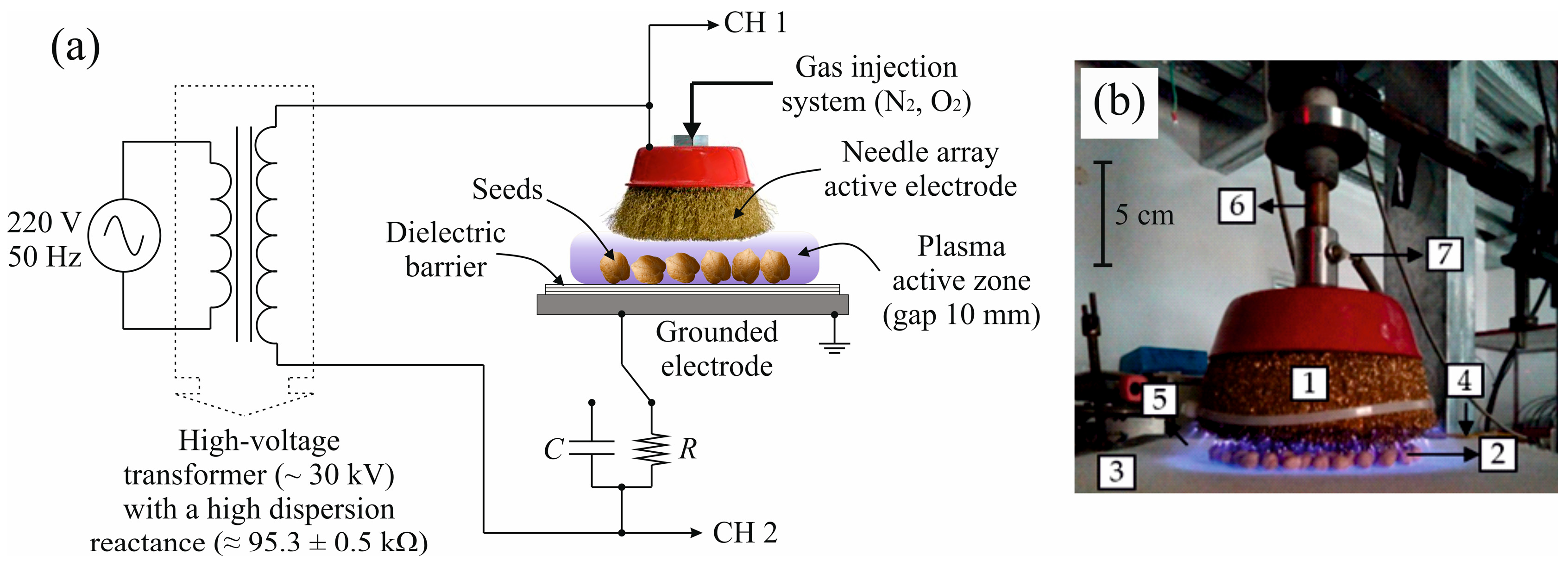
Figure 1. (a) Diagram of the Dielectric Barrier Discharge (DBD) plasma system and measurement circuit, and (b) image of the DBD plasma system during the treatment of chickpea (Cicer arietinum L., Fabaceae, ‘Felipe UNC-INTA’) seeds. 1: Needle array active electrode, 2: seeds, 3: dielectric barrier, 4: grounded electrode, 5: plasma active zone, 6: gas injection system, 7: connection to the high-voltage transformer.
Seeds 04 00069 g001
Figure 2. (a) instantaneous voltage (left axis, dot line) and discharge current (right axis, solid line) waveforms of the Dielectric Barrier Discharge (DBD), and (b) Lissajous figure and average power of the DBD for both carrier gases: O2 (solid line) and N2 (dot line).
Seeds 04 00069 g002
Figure 3. Water uptake (g) in chickpea seeds (Cicer arietinum L., Fabaceae, ‘Felipe UNC-INTA’) treated with NTP (O2 and N2) and Control during the triphasic germination process. Vertical lines indicate the end of Phase I and the beginning of Phase III. Inset: Net water uptake up to 15 h. Dashed lines indicate the completion of Phase I for each treatment. Phase I: Imbibition phase; Phase II: Metabolic activation phase; Phase III: Seedling growth phase. Values are shown as mean ± SEM (n = 3).
Seeds 04 00069 g003
Figure 4. Germination percentage (%) of chickpea (Cicer arietinum L., Fabaceae, ‘Felipe UNC-INTA’) seeds treated with NTP (O2 and N2) and Control as a function of time (h) during the triphasic response. The completion of Phase II and the beginning of Phase III are shown. Values are shown as mean ± SEM (n = 3). Different lowercase letters indicate statistical differences between treatments and for each time point (Two-way ANOVA, posttest LSD (Fisher), p < 0.05).
Seeds 04 00069 g004
Figure 5. Effect of NTP treatments (N2 or O2) on chickpea (Cicer arietinum L., Fabaceae, ‘Felipe UNC-INTA’) seed germination. Data represent the percentage of (a) normal seedlings, (b) abnormal seedlings, and (c) dead seeds. Values are shown as mean ± SEM (n = 3). Different lowercase letters indicate significant differences between treatments (One-way ANOVA, Fisher’s LSD post-test, p < 0.05).
Seeds 04 00069 g005
Figure 6. Percentage of chickpea (Cicer arietinum L., Fabaceae, ‘Felipe UNC-INTA’) seeds infected by Aspergillus flavus, Penicillium spp., Rhizopus spp., and Cladosporium spp. treated with NTP (N2 or O2) and Control. Values are shown as mean ± SEM (n = 3). Different lowercase letters indicate significant differences between treatments (one-way ANOVA, Fisher’s LSD post-test, p < 0.05).
Seeds 04 00069 g006
Figure 7. Fungal contamination test of chickpea seeds: untreated control (Control) and seeds treated with non-thermal plasma using N2 or O2 as carrier gases.
Seeds 04 00069 g007
Figure 8. Factor maps of Principal Component Analysis (PCA) of physiological and sanitary responses. (a) Variables factor map; (b) Individuals factor map showing the ellipses with a 99% confidence level. Control (black), NTP-O2 treated group (oxygen, green) and NTP-N2 treated group (nitrogen, red).
Seeds 04 00069 g008
Figure 9. Moisture content (%), bulk and individual conductivity (µS cm−1 g−1), normal seedlings (%), abnormal seedlings (%), and dead seeds (%) of chickpea seeds (Cicer arietinum L., Fabaceae, ‘Felipe UNC-INTA’) in Control and NTP-treated groups (N2 and O2), evaluated immediately after plasma treatment (0) and after six months of storage either under cold conditions at 10 °C (6C) or at ambient temperature (6A). Data are shown as mean ± SEM (n = 3). Different lowercase letters indicate significant differences among treatments (Control, N2, or O2) within each time point, while different uppercase letters indicate significant differences among storage times (0, 6C, or 6A) within each treatment (two-way ANOVA, Fisher’s LSD post hoc test, p < 0.05).
Seeds 04 00069 g009
Table 1. Effect of non-thermal plasma treatments (N2 and O2) on bulk and individual electrical conductivity (µS cm−1 g−1) of chickpea seeds (Cicer arietinum L., Fabaceae, ‘Felipe UNC-INTA’).
Conductivity (µS cm−1 g−1)ControlN2O2
Bulk conductivity30.8 ± 1.3 a30.2 ± 1.0 a30.4 ± 0.9 a
Individual conductivity26.6 ± 1.0 a25.1 ± 0.9 ab23.6 ± 0.8 b
Values represent the mean ± SEM (n = 3). Different lowercase letters indicate significant differences between groups (One-way ANOVA, Fisher’s LSD post-test, p < 0.05).
Table 2. Root fresh weight (RFW), shoot fresh weight (SFW), root dry weight (RDW), shoot dry weight (SDW), root and shoot water content, and shoot-to-root dry weight partitioning index (SDW/RDW) of chickpea (Cicer arietinum L., Fabaceae, ‘Felipe UNC-INTA’) seedlings treated with NTP (N2 or O2) and controls.
Variables (g)ControlN2O2
RFW0.402 ± 0.089 a0.547 ± 0.120 b0.563 ± 0.082 b
SFW0.318 ± 0.039 a0.389 ± 0.059 b0.376 ± 0.039 b
RDW0.036 ± 0.009 a0.043 ± 0.011 b0.045 ± 0.008 b
SDW0.034 ± 0.004 a0.040 ± 0.006 b0.040 ± 0.005 b
Root water content0.367 ± 0.081 a0.504 ± 0.112 b0.518 ± 0.079 b
Shoot water content0.284 ± 0.036 a0.349 ± 0.054 b0.336 ± 0.036 b
SDW/RDW1.004 ± 0.0560.983 ± 0.0480.912 ± 0.033
Values are shown as mean ± SEM (n = 3). Different lowercase letters indicate significant differences between treatments (one-way ANOVA, Fisher’s LSD post-test, p < 0.05).
Disclaimer/Publisher’s Note: The statements, opinions and data contained in all publications are solely those of the individual author(s) and contributor(s) and not of MDPI and/or the editor(s). MDPI and/or the editor(s) disclaim responsibility for any injury to people or property resulting from any ideas, methods, instructions or products referred to in the content.