1. Introduction
Juvenile idiopathic arthritis (JIA) is the most prevalent chronic rheumatic disease in children, affecting approximately 1 in 1000 children globally. JIA encompasses a heterogeneous group of chronic arthritides that present before age 16, lack an identifiable etiology, and persist for at least 6 weeks [
1]. The disease is associated with significant morbidity, including pain, functional disability, growth impairment, and joint damage if not managed promptly [
2,
3].
The International League of Associations for Rheumatology (ILAR) classification delineates seven categories of JIA. Polyarticular-course disease is characterized by the involvement of five or more joints within the first six months and is associated with a particularly high risk of persistent disease activity and long-term complications [
4]. Recent evidence-based studies have introduced validated composite measures, such as the Juvenile Arthritis Disease Activity Score (JADAS) and the American College of Rheumatology criteria for inactive disease, which establish standardized therapeutic targets [
5].
Etanercept, the first biologic disease-modifying antirheumatic drug (bDMARD) approved in 1999, transformed the therapeutic landscape for JIA. Over the subsequent three decades, treatment options have expanded to include agents such as tumor necrosis factor inhibitors (TNFi), interleukin-6 (IL-6) inhibitors, T-cell co-stimulation modulators, and, more recently, Janus kinase (JAK) inhibitors [
6,
7]. Landmark studies, including the Childhood Arthritis and Rheumatology Research Alliance (CARRA) and the Start Time Optimization of Biologics in Polyarticular JIA (STOP-JIA), indicate that early initiation of biologics, particularly within the first three months of diagnosis, can facilitate rapid achievement of inactive disease and improve long-term outcomes. This therapeutic expansion, combined with the recognition that early aggressive treatment can modify disease trajectory, has led to the adoption of treat-to-target (T2T) strategies similar to those used in adult rheumatology [
8].
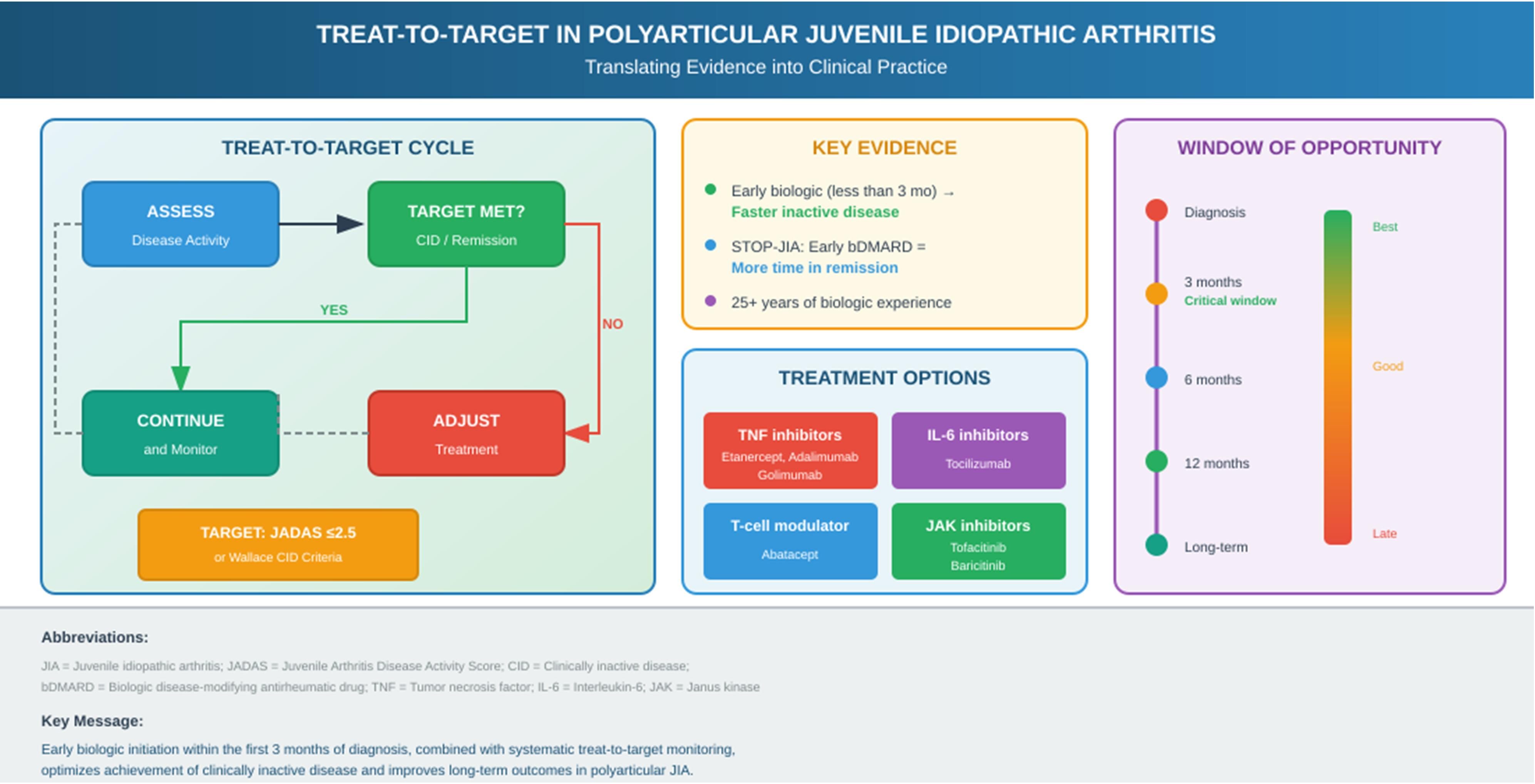
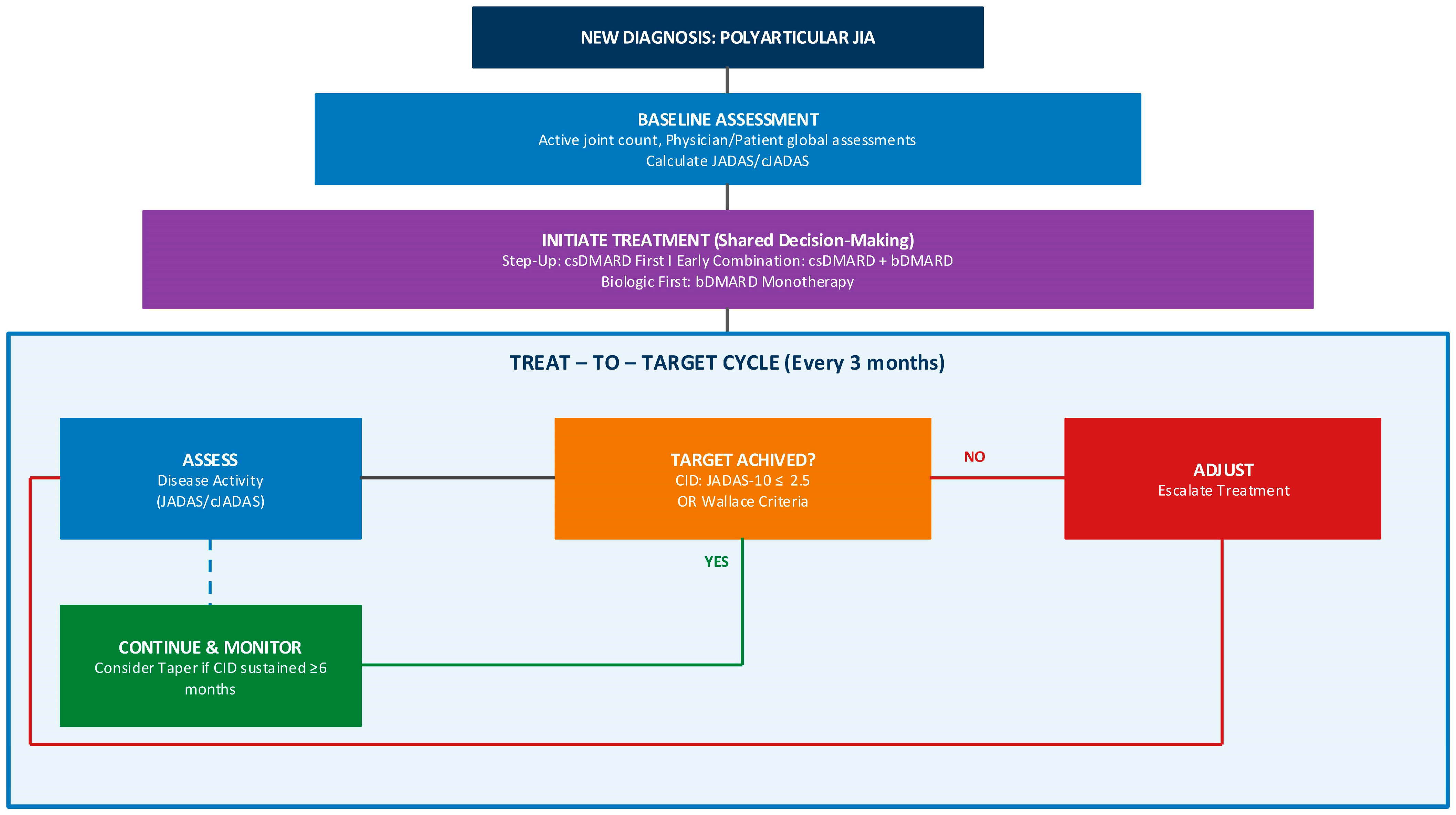
The treat-to-target (T2T) paradigm centers on achieving predefined therapeutic goals through systematic assessment of disease activity, regular treatment adjustments, and escalation when targets are not met, with the primary objective of attaining clinically inactive disease (CID) or remission, as illustrated in
Figure 1 [
9]. Evidence from adult rheumatoid arthritis (RA) protocols demonstrates that stricter disease control prevents structural joint damage and improves functional outcomes, which has informed the development of analogous management strategies for JIA [
10]. However, applying T2T principles in JIA must account for unique considerations, including pediatric patients’ growth and developmental stages, psychosocial factors, and the distinct pathophysiology of different JIA categories.
This narrative review synthesizes current evidence supporting treat-to-target (T2T) approaches and early initiation of biologic therapies in polyarticular-course JIA. It examines validated outcome measures that define therapeutic targets, discusses practical barriers to implementation, and proposes strategies to optimize treatment outcomes in clinical practice.
While this review primarily focuses on polyarticular course JIA, which has the highest risk of persistent disease activity and joint damage; T2T principles are being increasingly applied across other JIA categories. For example, in systemic JIA, IL-1 and IL-6 inhibitors currently serve as the first line treatment with biologics and have distinct treatment targets primarily focusing on systemic symptom control. TNF inhibitors and IL-17A inhibitors are the primary biological options for enthesitis-related-arthritis and juvenile psoriatic arthritis. Oligo-articular JIA is commonly managed with intraarticular steroids and csDMARDs, but it may require escalation of the biologics in extended disease pattern. The evidence base and treat-t-target framework of these categories are less developed than for poly-articular disease, and direct extrapolation of findings should be restricted.
2. Defining Treatment Targets in JIA
2.1. Evolution of Disease Activity Measures
Effective implementation of treat-to-target (T2T) strategies requires outcome measures that are valid, reliable, and clinically meaningful. The American College of Rheumatology (ACR) Pediatric Core Set, established in 1997, provided the initial framework for the management of juvenile idiopathic arthritis (JIA). This core set introduced standardized guidelines for disease assessment, including physician and patient/parent global assessments, active and restricted joint counts, functional ability, and inflammatory markers [
11]. Building on this foundation, Wallace and colleagues developed an international consensus process in 2004, which was subsequently validated in 2011 for the preliminary criteria for clinically inactive disease (CID) and clinical remission [
12,
13].
The Wallace criteria define clinically inactive disease (CID) as the absence of active arthritis, systemic features attributable to JIA, uveitis, and normal inflammatory markers (erythrocyte sedimentation rate [ESR] and C-reactive protein [CRP]), and a physician’s global assessment indicating no disease activity. Clinical remission on medication is defined as the maintenance of CID for at least six consecutive months while receiving medication. In contrast, clinical remission off medication requires 12 months of CID following the discontinuation of all anti-arthritis therapy [
12].
Throughout this review, the term ‘clinically inactive disease’ (CID) refers specifically to the state defined by the Wallace criteria or validated JADAS cut-offs, rather than informal clinical impressions of disease quiescence. Readers should note that ‘inactive disease’ as used in this manuscript corresponds to formally defined CID unless otherwise specified.
2.2. The Juvenile Arthritis Disease Activity Score (JADAS)
The development of the Juvenile Arthritis Disease Activity Score (JADAS) by Consolaro and colleagues in 2009 addressed the need for a continuous composite measure in the management of juvenile idiopathic arthritis (JIA) [
14]. JADAS comprises four components: physician global assessment (0–10 visual analog scale), parent or patient global assessment (0–10 visual analog scale), active joint count (using 10, 27, or 71 joints depending on the version), and normalized erythrocyte sedimentation rate (0–10 scale). In contrast, the clinical JADAS (cJADAS) provides practical advantages for point-of-care assessment by eliminating the laboratory component and thus does not require phlebotomy [
15].
Disease activity in JIA and its categories is determined using validated JADAS cut-offs, as presented in
Table 1. For polyarticular JIA, JADAS-10 cut-offs define inactive disease (≤2.7), low disease activity (≤6), moderate disease activity (≤17), and high disease activity (>17) [
16]. The 2021 updated thresholds further refined these cut-offs through rigorous validation, with cJADAS-10 defining inactive disease as ≤2.5 for polyarticular disease [
17]. These standardized measures facilitate systematic monitoring and establish actionable thresholds for treatment decisions within the treat-to-target (T2T) framework.
2.3. Treatment Targets and Clinical Goals
Recent studies and updated guidelines consistently endorse clinically inactive disease (CID) or remission as the primary therapeutic target [
18,
19]. The 2019 American College of Rheumatology/Arthritis Foundation guidelines recommend achieving CID, assessed using either the Wallace criteria or JADAS-based measures [
18]. When CID is unattainable, such as due to unacceptable side effects, risks from further treatment, or conflicts with patient and family preferences, minimal or low disease activity is considered an acceptable alternative target.
The primary objective is to taper and eventually discontinue medication while maintaining CID or remission. Evidence suggests that drug-free remission is achievable in only a subset of patients and remains unattainable for many, particularly among those with rheumatoid factor (RF)-positive polyarthritis, where sustained remission off medication occurs in approximately 5% of cases [
20].
3. Evidence for Early Biologic Initiation
3.1. Rationale: The Window of Opportunity
The concept of a therapeutic “window of opportunity” suggests that early and aggressive intervention can fundamentally alter disease biology, potentially transforming a chronic, destructive process into sustained remission [
21]. Evidence from adult rheumatoid arthritis (RA) management guidelines demonstrates that superior long-term outcomes are achieved when treatment is initiated within the first 12 weeks of symptom onset, compared to later intervention [
22]. This treatment principle has been extended to the pediatric population for juvenile idiopathic arthritis (JIA), indicating that early effective therapy can prevent the establishment of pathogenic immunological cascades and preserve joint integrity during critical developmental periods.
3.2. The STOP-JIA Study: Landmark Evidence
The STOP-JIA (Start Time Optimization of Biologics in Polyarticular JIA) study represents a landmark prospective, non-randomized, observational comparative effectiveness investigation conducted through the Childhood Arthritis and Rheumatology Research Alliance (CARRA) Registry [
23]. The study enrolled 400 children with newly diagnosed polyarticular-course JIA at 56 North American pediatric rheumatology centers and compared three consensus treatment plans: Step-Up (initial conventional synthetic DMARD [csDMARD] only), Early Combination (csDMARD plus bDMARD from diagnosis), and Biologic First (bDMARD monotherapy). Results indicated that achieving clinically inactive disease (CID) without glucocorticoid use did not differ significantly among the three groups at 12 months. However, trajectory analysis demonstrated that patients who began bDMARD therapy within three months of baseline assessment achieved inactive disease more rapidly than those with delayed biologic initiation [
24]. Three-year outcomes published in 2025 showed that, although ultimate attainment of inactive disease was similar across strategies, the proportion of time spent in CID or low disease activity was significantly greater with earlier biologic initiation [
25].
3.3. Registry and Real-World Evidence
Large registry studies consistently corroborate the benefits of early aggressive treatment. Analyses of the German BiKeR (Biologics in Pediatric Rheumatology) and JuMBO (Juvenile Arthritis Methotrexate/Biologics Long-Term Observation) registries indicate that early bDMARD treatment is associated with improved outcomes, including higher rates of drug-free remission, enhanced disease control, and better functional status in young adulthood [
26]. Additionally, a retrospective analysis from a major US pediatric rheumatology center reported that early initiation of csDMARD plus bDMARD resulted in approximately 2 additional points of disease activity reduction at 6 months compared with csDMARD alone. In contrast, adding bDMARD after six months of csDMARD monotherapy provided minimal incremental benefit [
27].
There are some methodological limitations of the evidence base that supports early initiation of biologics. STOP-JIA was prospective, multi center, and observational comparative effectiveness study in which the treatment assignment was determined by the physician and family preference rather than randomization, thus potentially introducing confounding by indication. Patients selected for early biological therapy may have had more severe disease at baseline or have differing social determinants of health. Registry analyses, including BiKeR and JuMBO, have similar limitations, including selection bias, follow-up durations that are variable, heterogeneous treatment protocols, and inadequate creature of confounders. Observed differences in outcomes between early biological initiation and conventional step-up therapy cannot be attributed to treatment strategy alone as there are no head-to-head randomized control trials. Future implications include more research to offer randomized comparative studies and provide definitive evidence.
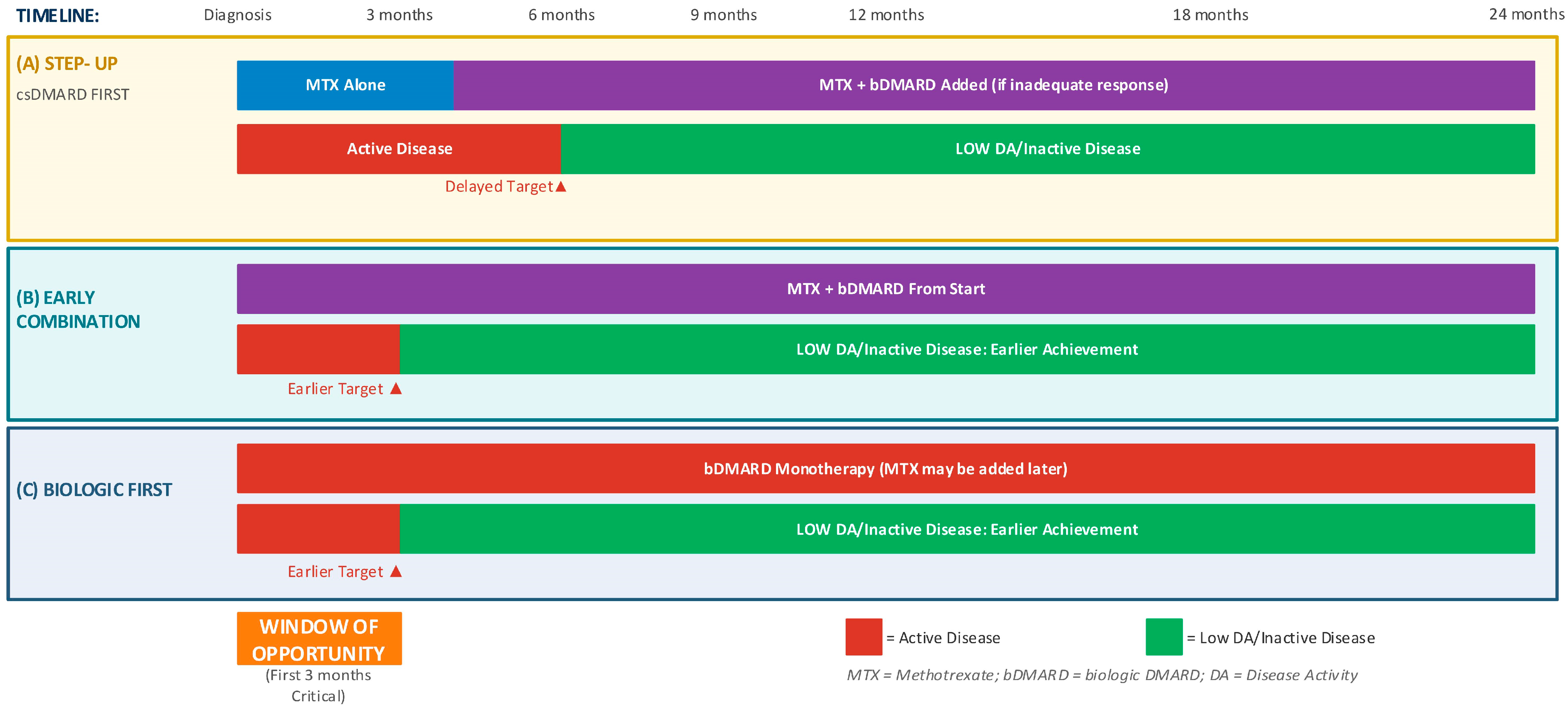
The Trial of Early Aggressive Therapy (TREAT) in polyarticular JIA did not achieve its primary endpoint of clinical remission off medication at 24 months. However, early combination therapy including TNFi demonstrated numerically superior outcomes compared to methotrexate monotherapy, with benefits evident within the initial months of treatment [
28]. Collectively, these findings support the existence of a time-sensitive therapeutic window during which aggressive intervention may yield maximal benefit (
Figure 2).
3.4. Emerging Therapies and the Evolving T2T Landscape
The range of therapeutic options is expanding beyond traditional injectable biologics. Tofacitinib, a Janus kinase (JAK) 1/3 inhibitor, received FDA approval for polyarticular juvenile idiopathic arthritis (JIA) in 2020 and provides an oral alternative to injectable biologics [
27]. In a phase III trial, tofacitinib demonstrated rapid clinical improvement and favorable rates of clinically inactive disease (CID) achievement using both JADAS and ACR criteria. A post hoc analysis further confirmed robust attainment of inactive disease and clinical remission [
28]. Secukinumab, an interleukin-17A (IL-17A) inhibitor, has shown efficacy in enthesitis-related arthritis and juvenile psoriatic arthritis, thereby expanding targeted treatment options for these specific JIA categories [
29]. The expanding evidence base for multiple therapeutic classes supports increasingly personalized treatment selection within the treat-to-target (T2T) framework. However, direct comparative trials among biologic agents are still lacking.
Baricitinib, a JAK1/JAK2 inhibitor, also demonstrated efficacy in polyarticular JIA, with improvements observed in both physician-assessed and patient-reported outcomes in a phase III withdrawal design trial [
30]. These oral agents offer additional strategies for achieving treat-to-target (T2T) goals, particularly when tumor necrosis factor inhibitor (TNFi) therapy is ineffective, contraindicated, or when patients and families prefer non-injectable options.
4. Translating Evidence into Practice: Barriers and Solutions
4.1. Healthcare System and Insurance Barriers
Despite compelling evidence supporting the benefits of early intervention, substantial gaps remain between optimal and actual treatment patterns. The initiation of biologic disease-modifying antirheumatic drugs (bDMARDs) is often delayed due to insurance authorization requirements. Many payers require documented failure of conventional synthetic DMARDs (csDMARDs), typically 3 to 6 months of methotrexate therapy, before approving biologic agents. This step-therapy approach conflicts with evidence favoring early aggressive treatment [
31]. Geographic disparities in access to pediatric rheumatology specialists further exacerbate these challenges. Fewer than 400 board-certified pediatric rheumatologists serve approximately 300,000 children with rheumatic diseases in the United States, and many regions lack any pediatric rheumatology coverage [
32].
4.2. Cost and Accessibility Considerations
The high cost of biologic therapies exacerbates access barriers, even when these medications are clinically indicated. The introduction of biosimilar agents has improved affordability for certain therapies, and most pediatric rheumatology centers in the United Kingdom have transitioned from originator to biosimilar TNFi products. However, biosimilar availability remains limited across therapeutic classes and geographic regions [
33]. Patient assistance programs and foundation support have been established to provide financial aid, although accessing these resources often requires considerable administrative effort from clinical teams.
4.3. Clinical Practice Variability
Treatment patterns differ significantly among centers and individual practitioners. The CARRA consensus treatment plans have advanced standardization by outlining evidence-based options and enabling comparative effectiveness research, rather than prescribing rigid protocols [
34]. Clinical decision support systems that integrate disease activity scoring and treatment algorithms have been shown to improve attainment of treat-to-target (T2T) goals. Furthermore, clinical decision support combined with quality improvement initiatives and structured disease activity review resulted in a 36% improvement in polyarticular juvenile idiopathic arthritis (JIA) disease activity measures [
35].
4.4. Shared Decision-Making and Patient Preferences
The implementation of treat-to-target (T2T) strategies is more likely to be accepted when patient and family preferences are integrated within evidence-based medical frameworks. Research demonstrates considerable variability in medication preferences. Some families prioritize avoiding injectable medications and favor oral conventional synthetic disease-modifying antirheumatic drugs (csDMARDs), despite their potentially lower efficacy in achieving rapid disease control. Conversely, other families prefer early aggressive therapy to maximize the probability of remission. Evidence suggests that clear communication and comprehensive counseling with patients and families facilitate meaningful and effective shared decision-making. This process involves detailed discussions regarding treatment options, anticipated outcomes, potential risks, and the rationale for T2T principles [
34].
4.5. Implementation Strategies
Effective T2T implementation necessitates systematic, team-based strategies. Employing standardized disease activity measurement at each clinical encounter ensures that treatment decisions are informed by objective data rather than subjective impressions. The integration of JADAS calculators into electronic health records supports routine assessment and longitudinal monitoring. Protocol-driven escalation pathways, which specify clear criteria for treatment adjustment when targets are not achieved, can minimize practice variation and promote timely intensification [
36]. Adopting multidisciplinary care models that include nurse specialists, pharmacists, and care coordinators can streamline prior authorization processes and enhance patient education. The use of telemedicine platforms can expand access to specialist care, particularly in underserved regions, although in-person joint examination remains critical for accurate assessment of disease activity.
5. Discussion
Treat-to-target (T2T) remains the current standard of care for polyarticular juvenile idiopathic arthritis (JIA), supported by validated outcome measures, expanded therapeutic options, and growing evidence for early aggressive intervention. The literature supports several key principles: CID represents an achievable and appropriate therapeutic target for most patients; early initiation of biological disease-modifying antirheumatic drugs (DMARDs), particularly within the first three months of diagnosis, accelerates attainment of this target; and systematic disease activity monitoring enables timely adjustments to treatment when therapeutic goals are not met.
Despite numerous studies in this field, significant knowledge gaps remain. Clinicians lack definitive guidance on optimal agent selection or sequencing after initial treatment failure, as no randomized controlled trials have directly compared biologic agents in JIA. Biomarkers that predict individual response to specific therapies require further investigation and remain unreliable, and personalized treatment approaches are not yet feasible in routine clinical practice [
37]. Although long-term safety data for established agents are reassuring, continued surveillance through registry participation is necessary, particularly for newer agents in pediatric populations who may face prolonged exposure.
It is also important to balance the benefits of aggressive treatment with the risks of overtreatment. Registry data indicate that 36% of clinical remission episodes off medication persist for at least two years, but only 6% are sustained for five years [
20]. These findings suggest that many patients who achieve medication-free remission may eventually experience disease flare and require resumption of therapy. Conversely, continued treatment in patients who could safely discontinue therapy exposes them to unnecessary medication risks, costs, and burdens.
Long-term safety data for established biologic agents, particularly TNF inhibitors with over two decades of pediatric use, are generally reassuring. However, long-term pediatric safety data for newer agents, including JAK inhibitors and IL-17A inhibitors, remain limited. Continued pharmacovigilance through registries such as BiKeR and BSPAR is essential to detect rare adverse events that may emerge with prolonged exposure during childhood and adolescence. The potential risks of long-term immunosuppression in developing children, including susceptibility to infections and theoretical concerns regarding malignancy, must be weighed against the benefits of disease control.
Formal cost-effectiveness analyses of early biologic initiation in polyarticular JIA are lacking. While early disease control may reduce downstream costs associated with joint damage, disability, surgery, and repeated hospitalizations, the upfront costs of biologic therapies are substantial. These costs may not be sustainable across all healthcare systems, particularly in low- and middle-income countries. The introduction of biosimilar agents has improved affordability for certain therapeutic classes, but access remains uneven globally.
The ethical dimensions of early aggressive therapy in children warrant careful consideration. The principle of proportionality requires balancing the potential benefits of early disease control against the burden and risks of long-term immunosuppression in developing children. Informed assent and consent processes should ensure that families understand both the potential benefits and the uncertainties associated with early biologic initiation. Treatment decisions must consider the child’s quality of life, developmental stage, and family preferences alongside clinical evidence.
Several ongoing clinical trials may provide additional evidence to guide future practice. The STARS (comparison of step-up and step-down therapeutic strategies in childhood arthritis) study is evaluating whether initiating aggressive therapy followed by de-escalation yields superior outcomes compared to traditional step-up approaches [
35]. The SMART-JIA (Sequential Medications After anti-TNF Failure) trial is comparing biologic options after TNF inhibitor failure to inform sequencing decisions [
36]. Precision medicine initiatives that integrate genomic, transcriptomic, and proteomic data may eventually enable individualized treatment selection, although clinical implementation remains several years away.
6. Conclusions and Future Directions
Treat-to-target strategies and early biologic initiation have significantly advanced the management of polyarticular juvenile idiopathic arthritis (JIA). Validated outcome measures, such as the Juvenile Arthritis Disease Activity Score (JADAS) and its clinical variant (cJADAS), offer clear therapeutic targets. Evidence from STOP-JIA and international registry studies demonstrates that early aggressive treatment increases the likelihood of achieving inactive disease and reduces cumulative disease burden. However, implementation barriers, including insurance requirements for step-up therapy, cost constraints, limited access, and practice variability, necessitate systematic solutions such as clinical decision support systems, enhanced care coordination infrastructure, and targeted policy advocacy.
Future research should prioritize head-to-head comparative trials of biological agents, as well as the optimization of medication tapering and discontinuation strategies. Additional focus is needed on biomarker development for predicting treatment response and on long-term safety surveillance extending into adulthood. Incorporating patient-reported outcomes and health-related quality-of-life measures into treat-to-target frameworks will ensure that therapeutic success reflects both disease control and meaningful improvements in patients’ daily lives.
The overarching goal of treat-to-target strategies in juvenile idiopathic arthritis is not limited to attaining a numerical disease activity score. It also involves enabling children to grow, develop, and participate fully in childhood activities without the constraints of chronic inflammatory disease. Ongoing collaborative research across international networks, quality improvement initiatives at the practice level, and sustained commitment to evidence-based care are essential for advancing the field toward this vision.
Author Contributions
Conceptualization, V.S.C. and J.R.P.; Methodology, V.S.C. and S.C.; Formal Analysis, S.C. and J.R.P.; Investigation, V.S.C.; Data Curation, V.S.C., S.C. and J.R.P.; Writing—Original Draft Preparation, V.S.C., S.C. and J.R.P.; Writing—Review and Editing, S.C. and J.R.P.; Visualization, V.S.C.; Supervision, V.S.C. and J.R.P. All authors have read and agreed to the published version of the manuscript.
Funding
This research received no external funding.
Institutional Review Board Statement
Not applicable.
Informed Consent Statement
Not applicable.
Data Availability Statement
No new data were created or analyzed in this study. Data sharing is not applicable to this article.
Conflicts of Interest
The authors declare no conflicts of interest.
Abbreviations
The following abbreviations are used in this manuscript:
| ACR | American College of Rheumatology |
| CARRA | Childhood Arthritis and Rheumatology Research Alliance |
| CID | Clinically Inactive Disease |
| CRP | C-reactive protein |
| ESR | Erythrocyte Sedimentation Rate |
| JAK | Janus kinase |
| JIA | Juvenile idiopathic arthritis |
| IL-6 | Interleukin-6 |
| ILAR | International League of Associations for Rheumatology |
| JADAS | Juvenile Arthritis Disease Activity Score |
| DMARD | Disease-Modifying Antirheumatic Drug |
| RA | Rheumatoid Arthritis |
| RF | Rheumatoid Factor |
| SMART-JIA | Sequential Medications After anti-TNF Failure |
| STOP-JIA | Start Time Optimization of Biologics in Polyarticular JIA |
| T2T | Treat-To-Target |
| TREAT | Trial of Early Aggressive Therapy |
| TNFi | Tumor necrosis factor inhibitors |
References
- Martini, A.; Lovell, D.J.; Albani, S.; Brunner, H.I.; Hyrich, K.L.; Thompson, S.D.; Ruperto, N. Juvenile Idiopathic Arthritis. Nat. Rev. Dis. Primers 2022, 8, 5. [Google Scholar] [CrossRef] [Scilit]
- Correll, C.K.; Klein-Gitelman, M.S.; Henrickson, M.; Battafarano, D.F.; Orr, C.J.; Leonard, M.B.; Mehta, J.J. Child Health Needs and the Pediatric Rheumatology Workforce: 2020–2040. Pediatrics 2024, 153, e2023063678R. [Google Scholar] [CrossRef] [Scilit]
- Glerup, M.; Rypdal, V.; Arnstad, E.D.; Ekelund, M.; Peltoniemi, S.; Aalto, K.; Rygg, M.; Toftedal, P.; Nielsen, S.; Fasth, A.; et al. Long-Term Outcomes in Juvenile Idiopathic Arthritis: Eighteen Years of Follow-Up in the Population-Based Nordic Juvenile Idiopathic Arthritis Cohort. Arthritis Care Res. 2020, 72, 507–516. [Google Scholar] [CrossRef] [Scilit]
- Nigrovic, P.A.; Colbert, R.A.; Holers, V.M.; Ozen, S.; Ruperto, N.; Thompson, S.D.; Wedderburn, L.R.; Yeung, R.S.M.; Martini, A. Biological Classification of Childhood Arthritis: Roadmap to a Molecular Nomenclature. Nat. Rev. Rheumatol. 2021, 17, 257–269. [Google Scholar] [CrossRef] [Scilit] [PubMed]
- Lovell, D.J.; Giannini, E.H.; Reiff, A.; Cawkwell, G.D.; Silverman, E.D.; Nocton, J.J.; Stein, L.D.; Gedalia, A.; Ilowite, N.T.; Wallace, C.A.; et al. Etanercept in Children with Polyarticular Juvenile Rheumatoid Arthritis. Pediatric Rheumatology Collaborative Study Group. N. Engl. J. Med. 2000, 342, 763–769. [Google Scholar] [CrossRef] [Scilit]
- Shishov, M.; Weiss, P.F.; Levy, D.M.; Chang, J.C.; Angeles-Han, S.T.; Ogbu, E.A.; Nanda, K.; Sherrard, T.M.; Goldmuntz, E.; Lovell, D.J.; et al. 25 Years of Biologics for the Treatment of Pediatric Rheumatic Diseases—Advances in Prognosis and Ongoing Challenges. Arthritis Care Res. 2024, 77, 573–583. [Google Scholar] [CrossRef] [Scilit]
- Brunner, H.I.; Ruperto, N.; Ramanan, A.V.; Horneff, G.; Minden, K.; Calvo Penades, I.; Alexeeva, E.; Cleary, G.; Stern, S.M.; Kone-Paut, I.; et al. Long-Term Efficacy and Safety of Subcutaneous Tocilizumab in Clinical Trials of Polyarticular or Systemic Juvenile Idiopathic Arthritis. Rheumatology 2024, 63, 2535–2546. [Google Scholar] [CrossRef] [Scilit]
- Ravelli, A.; Consolaro, A.; Horneff, G.; Laxer, R.M.; Lovell, D.J.; Wulffraat, N.M.; Akikusa, J.D.; Al-Mayouf, S.M.; Antón, J.; Avcin, T.; et al. Treating Juvenile Idiopathic Arthritis to Target: Recommendations of an International Task Force. Ann. Rheum. Dis. 2018, 77, 819–828. [Google Scholar] [CrossRef] [Scilit] [PubMed]
- Smolen, J.S.; Landewé, R.B.M.; Bergstra, S.A.; Kerschbaumer, A.; Sepriano, A.; Aletaha, D.; Caporali, R.; Edwards, C.J.; Hyrich, K.L.; Pope, J.E.; et al. EULAR Recommendations for the Management of Rheumatoid Arthritis with Synthetic and Biological Disease-Modifying Antirheumatic Drugs: 2022 Update. Ann. Rheum. Dis. 2023, 82, 3–18. [Google Scholar] [CrossRef] [Scilit] [PubMed]
- Grigor, C.; Capell, H.; Stirling, A.; McMahon, A.D.; Lock, P.; Vallance, R.; Kincaid, W.; Porter, D. Effect of a Treatment Strategy of Tight Control for Rheumatoid Arthritis (the TICORA Study): A Single-Blind Randomised Controlled Trial. Lancet 2004, 364, 263–269. [Google Scholar] [CrossRef] [Scilit]
- Giannini, E.H.; Ruperto, N.; Ravelli, A.; Lovell, D.J.; Felson, D.T.; Martini, A. Preliminary definition of improvement in juvenile arthritis. Arthritis Rheum. 1997, 40, 1202–1209. [Google Scholar] [CrossRef] [PubMed]
- Wallace, C.A.; Ruperto, N.; Giannini, E.; Childhood Arthritis and Rheumatology Research Alliance; Pediatric Rheumatology International Trials Organization; Pediatric Rheumatology Collaborative Study Group. Preliminary Criteria for Clinical Remission for Select Categories of Juvenile Idiopathic Arthritis. J. Rheumatol. 2004, 31, 2290–2294. [Google Scholar]
- Wallace, C.A.; Giannini, E.H.; Huang, B.; Itert, L.; Ruperto, N. American College of Rheumatology Provisional Criteria for Defining Clinical Inactive Disease in Select Categories of Juvenile Idiopathic Arthritis. Arthritis Care Res. 2011, 63, 929–936. [Google Scholar] [CrossRef] [Scilit]
- Consolaro, A.; Ruperto, N.; Bazso, A.; Pistorio, A.; Magni-Manzoni, S.; Filocamo, G.; Malattia, C.; Viola, S.; Martini, A.; Ravelli, A. Development and Validation of a Composite Disease Activity Score for Juvenile Idiopathic Arthritis. Arthritis Rheum. 2009, 61, 658–666. [Google Scholar] [CrossRef] [Scilit] [PubMed]
- Mcerlane, F.; Beresford, M.W.; Baildam, E.M.; Chieng, S.E.A.; Davidson, J.E.; Foster, H.E.; Gardner-Medwin, J.; Lunt, M.; Wedderburn, L.R.; Thomson, W.; et al. Validity of a Three-Variable Juvenile Arthritis Disease Activity Score in Children with New-Onset Juvenile Idiopathic Arthritis. Ann. Rheum. Dis. 2012, 72, 1983–1988. [Google Scholar] [CrossRef] [Scilit]
- Consolaro, A.; Ruperto, N.; Bracciolini, G.; Frisina, A.; Gallo, M.C.; Pistorio, A.; Verazza, S.; Negro, G.; Gerloni, V.; Goldenstein-Schainberg, C.; et al. Defining Criteria for High Disease Activity in Juvenile Idiopathic Arthritis Based on the Juvenile Arthritis Disease Activity Score. Ann. Rheum. Dis. 2013, 73, 1380–1383. [Google Scholar] [CrossRef] [Scilit] [PubMed]
- Trincianti, C.; Van Dijkhuizen, E.H.P.; Alongi, A.; Mazzoni, M.; Swart, J.F.; Nikishina, I.; Lahdenne, P.; Rutkowska-Sak, L.; Avcin, T.; Quartier, P.; et al. Definition and Validation of the American College of Rheumatology 2021 Juvenile Arthritis Disease Activity Score Cutoffs for Disease Activity States in Juvenile Idiopathic Arthritis. Arthritis Rheumatol. 2021, 73, 1966–1975. [Google Scholar] [CrossRef] [Scilit] [PubMed]
- Ringold, S.; Angeles-Han, S.T.; Beukelman, T.; Lovell, D.; Cuello, C.A.; Becker, M.L.; Colbert, R.A.; Feldman, B.M.; Ferguson, P.J.; Gewanter, H.; et al. 2019 American College of Rheumatology/Arthritis Foundation Guideline for the Treatment of Juvenile Idiopathic Arthritis: Therapeutic Approaches for Non-Systemic Polyarthritis, Sacroiliitis, and Enthesitis. Arthritis Care Res. 2019, 71, 717–734. [Google Scholar] [CrossRef] [Scilit]
- Onel, K.B.; Horton, D.B.; Lovell, D.J.; Shenoi, S.; Cuello, C.A.; Angeles-Han, S.T.; Becker, M.L.; Cron, R.Q.; Feldman, B.M.; Ferguson, P.J.; et al. 2021 American College of Rheumatology Guideline for the Treatment of Juvenile Idiopathic Arthritis: Therapeutic Approaches for Oligoarthritis, Temporomandibular Joint Arthritis, and Systemic Juvenile Idiopathic Arthritis. Arthritis Care Res. 2022, 74, 553–569. [Google Scholar] [CrossRef] [Scilit]
- Wallace, C.A.; Huang, B.; Bandeira, M.; Ravelli, A.; Giannini, E.H. Patterns of Clinical Remission in Select Categories of Juvenile Idiopathic Arthritis. Arthritis Rheum. 2005, 52, 3554–3562. [Google Scholar] [CrossRef] [Scilit]
- Burgers, L.E.; Raza, K.; van der Helm-van Mil, A.H. Window of Opportunity in Rheumatoid Arthritis—Definitions and Supporting Evidence: From Old to New Perspectives. RMD Open 2019, 5, e000870. [Google Scholar] [CrossRef] [Scilit]
- van der Linden, M.P.M.; le Cessie, S.; Raza, K.; van der Woude, D.; Knevel, R.; Huizinga, T.W.J.; van der Helm-van Mil, A.H.M. Long-Term Impact of Delay in Assessment of Patients with Early Arthritis. Arthritis Rheum. 2010, 62, 3537–3546. [Google Scholar] [CrossRef] [Scilit]
- Kimura, Y.; Ringold, S.; Riordan, M.E.; Tomlinson, G.; Gaizo, V.D.; Murphy, K.; Dennos, A.; Weiss, P.F.; Feldman, B.; Schanberg, L. Comparing Three Ways to Start Treatment for Patients with Polyarticular Juvenile Idiopathic Arthritis—The Stop-JIA Trial; Patient-Centered Outcomes Research Institute: Washington, DC, USA, 2021. [Google Scholar] [CrossRef] [Scilit]
- Wallace, C.A.; Giannini, E.H.; Spalding, S.J.; Hashkes, P.J.; O’Neil, K.M.; Zeft, A.; Szer, I.S.; Ringold, S.; Brunner, H.I.; Schanberg, L.E.; et al. Trial of Early Aggressive Therapy in Polyarticular Juvenile Idiopathic Arthritis. Arthritis Rheum. 2012, 64, 2012–2021. [Google Scholar] [CrossRef] [Scilit]
- Ringold, S.; Ong, M.; Tomlinson, G.; Natter, M.D.; Schanberg, L.E.; Gaizo, V.D.; Feldman, B.M.; Murphy, K.L.; Kimura, Y. Three-Year Outcomes and Latent Class Trajectory Analysis of the Childhood Arthritis and Rheumatology Research Alliance Polyarticular JIA Consensus Treatment Plans Study. Arthritis Rheumatol. 2025, 77, 1433–1441. [Google Scholar] [CrossRef] [Scilit]
- Kearsley-Fleet, L.; Klotsche, J.; van Straalen, J.W.; Costello, W.; D’Angelo, G.; Giancane, G.; Horneff, G.; Klein, A.; Láday, M.; Lunt, M.; et al. Burden of Comorbid Conditions in Children and Young People with Juvenile Idiopathic Arthritis: A Collaborative Analysis of 3 JIA Registries. Rheumatology 2022, 61, 2524–2534. [Google Scholar] [CrossRef] [Scilit]
- Ruperto, N.; Brunner, H.I.; Synoverska, O.; Ting, T.V.; Mendoza, C.A.; Spindler, A.; Vyzhga, Y.; Marzan, K.; Grebenkina, L.; Tirosh, I.; et al. Tofacitinib in Juvenile Idiopathic Arthritis: A Double-Blind, Placebo-Controlled, Withdrawal Phase 3 Randomised Trial. Lancet 2021, 398, 1984–1996. [Google Scholar] [CrossRef] [Scilit]
- Consolaro, A.; Ruperto, N.; Lovell, D.J.; Synoverska, O.; Abud-Mendoza, C.; Spindler, A.; Vyzhga, Y.; Alexeeva, E.; Chaitow, J.; Chiraseveenuprapund, P.; et al. Clinically Inactive Disease and Remission in Patients with Juvenile Idiopathic Arthritis Receiving Tofacitinib: Post-Hoc Analysis of a Phase III Trial. J. Rheumatol. 2025, 52, 919–926. [Google Scholar] [CrossRef] [Scilit]
- Brunner, H.I.; Foeldvari, I.; Alexeeva, E.; Ayaz, N.A.; Calvo Penades, I.; Kasapcopur, O.; Chasnyk, V.G.; Hufnagel, M.; Żuber, Z.; Schulert, G.; et al. Secukinumab in Enthesitis-Related Arthritis and Juvenile Psoriatic Arthritis: A Randomised, Double-Blind, Placebo-Controlled, Treatment Withdrawal, Phase 3 Trial. Ann. Rheum. Dis. 2022, 82, 154–160. [Google Scholar] [CrossRef] [Scilit]
- Ramanan, A.V.; Quartier, P.; Okamoto, N.; Foeldvari, I.; Spindler, A.; Fingerhutová, Š.; Antón, J.; Wang, Z.; Mészáros, G.; Araújo, J.; et al. Baricitinib in Juvenile Idiopathic Arthritis: An International, Phase 3, Randomised, Double-Blind, Placebo-Controlled, Withdrawal, Efficacy, and Safety Trial. Lancet 2023, 402, 555–570. [Google Scholar] [CrossRef] [Scilit]
- Beukelman, T.; Ringold, S.; Davis, T.E.; DeWitt, E.M.; Pelajo, C.F.; Weiss, P.F.; Kimura, Y. Disease-Modifying Antirheumatic Drug Use in the Treatment of Juvenile Idiopathic Arthritis: A Cross-Sectional Analysis of the CARRA Registry. J. Rheumatol. 2012, 39, 1867–1874. [Google Scholar] [CrossRef] [Scilit]
- Lee, J.J.Y.; Laxer, R.M.; Feldman, B.M.; Barber, C.E.H.; Batthish, M.; Berard, R.; Tucker, L.B.; Levy, D.M.; Pediatrics Committee of the Canadian Rheumatology Association. Variations in Pediatric Rheumatology Workforce and Care Processes across Canada. J. Rheumatol. 2022, 49, 197–204. [Google Scholar] [CrossRef] [Scilit] [PubMed]
- Ringold, S.; Nigrovic, P.A.; Feldman, B.M.; Tomlinson, G.A.; von Scheven, E.; Wallace, C.A.; Huber, A.M.; Schanberg, L.E.; Li, S.C.; Weiss, P.F.; et al. The Childhood Arthritis and Rheumatology Research Alliance Consensus Treatment Plans: Toward Comparative Effectiveness in the Pediatric Rheumatic Diseases. Arthritis Rheumatol. 2018, 70, 669–678. [Google Scholar] [CrossRef] [Scilit] [PubMed]
- Ringold, S.; Weiss, P.F.; Beukelman, T.; DeWitt, E.M.; Ilowite, N.T.; Kimura, Y.; Laxer, R.M.; Lovell, D.J.; Nigrovic, P.A.; Robinson, A.B.; et al. 2013 Update of the 2011 American College of Rheumatology Recommendations for the Treatment of Juvenile Idiopathic Arthritis: Recommendations for the Medical Therapy of Children with Systemic Juvenile Idiopathic Arthritis and Tuberculosis Screening among C. Arthritis Rheum. 2013, 65, 2499–2512. [Google Scholar] [CrossRef] [Scilit] [PubMed]
- Horneff, G.; Becker, I.; Reschke, A.; Rademaker, J.; Minden, K.; Klotsche, J. Efficacy and Safety of Etanercept Biosimilars Compared with the Originator for Treatment of Juvenile Arthritis: A Prospective Observational Study. ACR Open Rheumatol. 2021, 3, 798–807. [Google Scholar] [CrossRef] [Scilit]
- Schanberg, L.E. Comparing the Effectiveness of Biologic Therapies Used to Treat Children with Refractory Polyarticular Course Juvenile Idiopathic Arthritis—The SMART-JIA Trial; Patient-Centered Outcomes Research Institute (PCORI): Washington, DC, USA, 2023; Available online: https://www.pcori.org/research-results/2023/trial-sequential-medications-after-tnf-failure-juvenile-idiopathic-arthritis-smart-jia (accessed on 28 December 2025).
- Lipstein, E.A.; Lovell, D.J.; Denson, L.A.; Kim, S.C.; Spencer, C.; Britto, M.T. Parents’ Information Needs and Influential Factors When Making Decisions about TNF-α Inhibitors. Pediatr. Rheumatol. 2016, 14, 53. [Google Scholar] [CrossRef] [Scilit]
| Disclaimer/Publisher’s Note: The statements, opinions and data contained in all publications are solely those of the individual author(s) and contributor(s) and not of MDPI and/or the editor(s). MDPI and/or the editor(s) disclaim responsibility for any injury to people or property resulting from any ideas, methods, instructions or products referred to in the content. |