Article

Offshore Wind Resource Assessment and Wind Farm Optimization Using Machine Learning and CFD Modelling


1
Department of Climate Science and Meteorological Engineering, Istanbul Technical University, Ayazaga, 34469 Istanbul, Türkiye
2
Department of Climate Science and Meteorological Engineering, University of Samsun, 19 Mayis, 55000 Samsun, Türkiye
*
Author to whom correspondence should be addressed.
Submission received: 25 June 2026 / Revised: 31 July 2026 / Accepted: 12 August 2026 / Published: 15 September 2026
(This article belongs to the Special Issue Wind Energy Resource Development and the Sustainable Environment)

Abstract

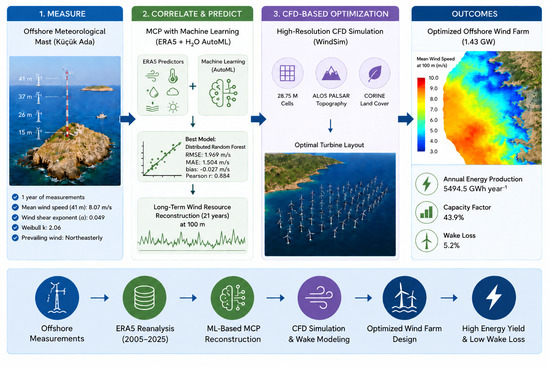
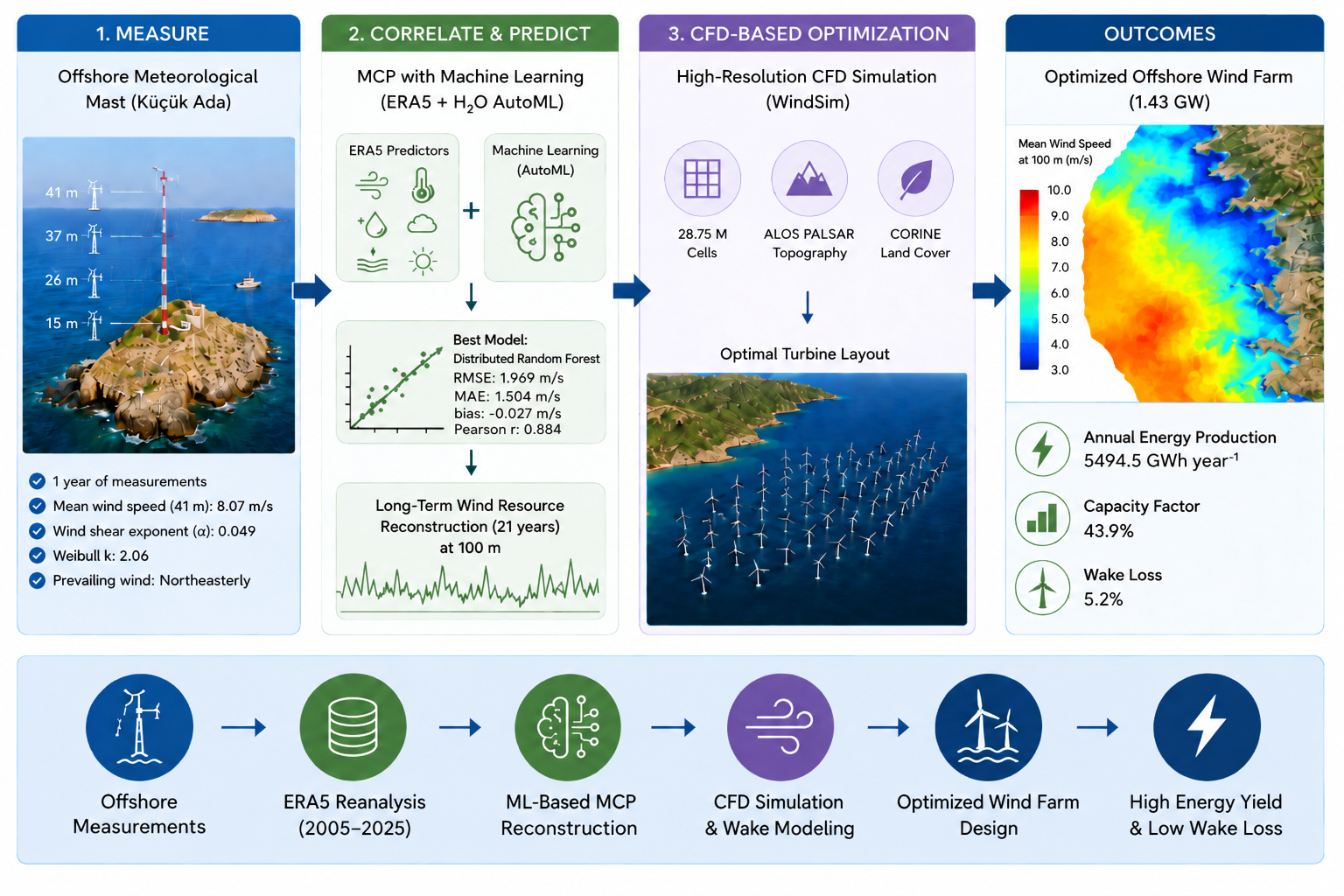
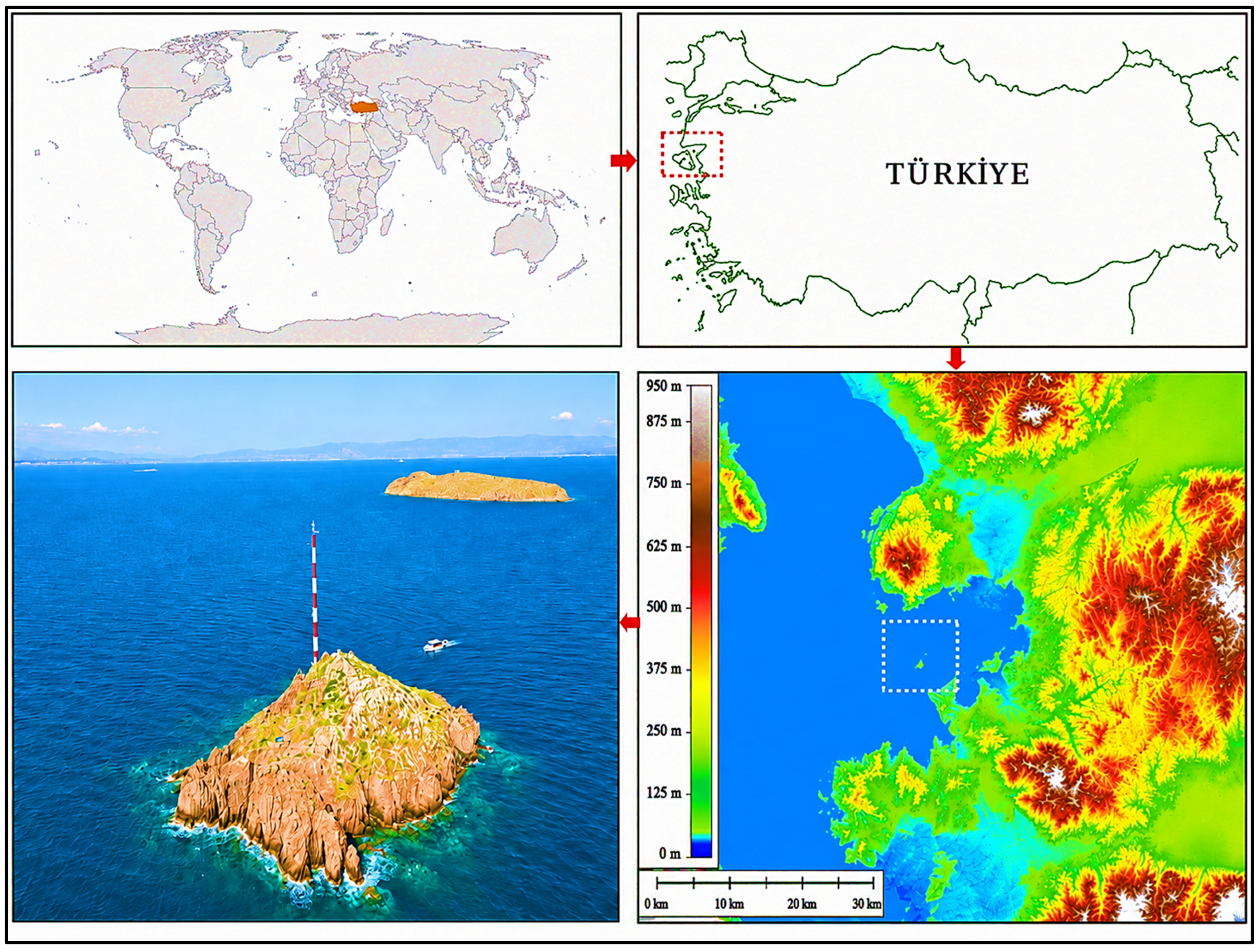
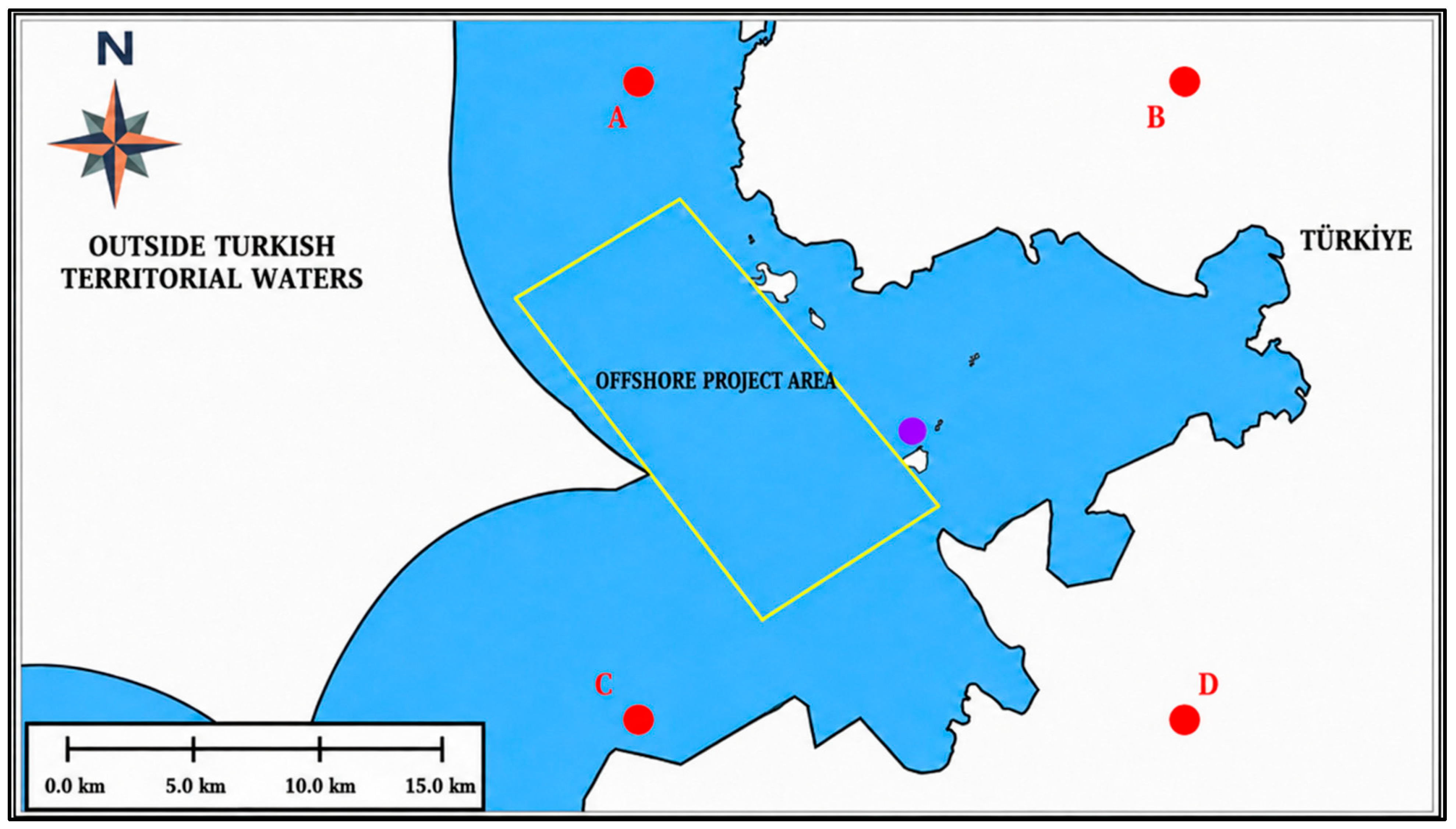
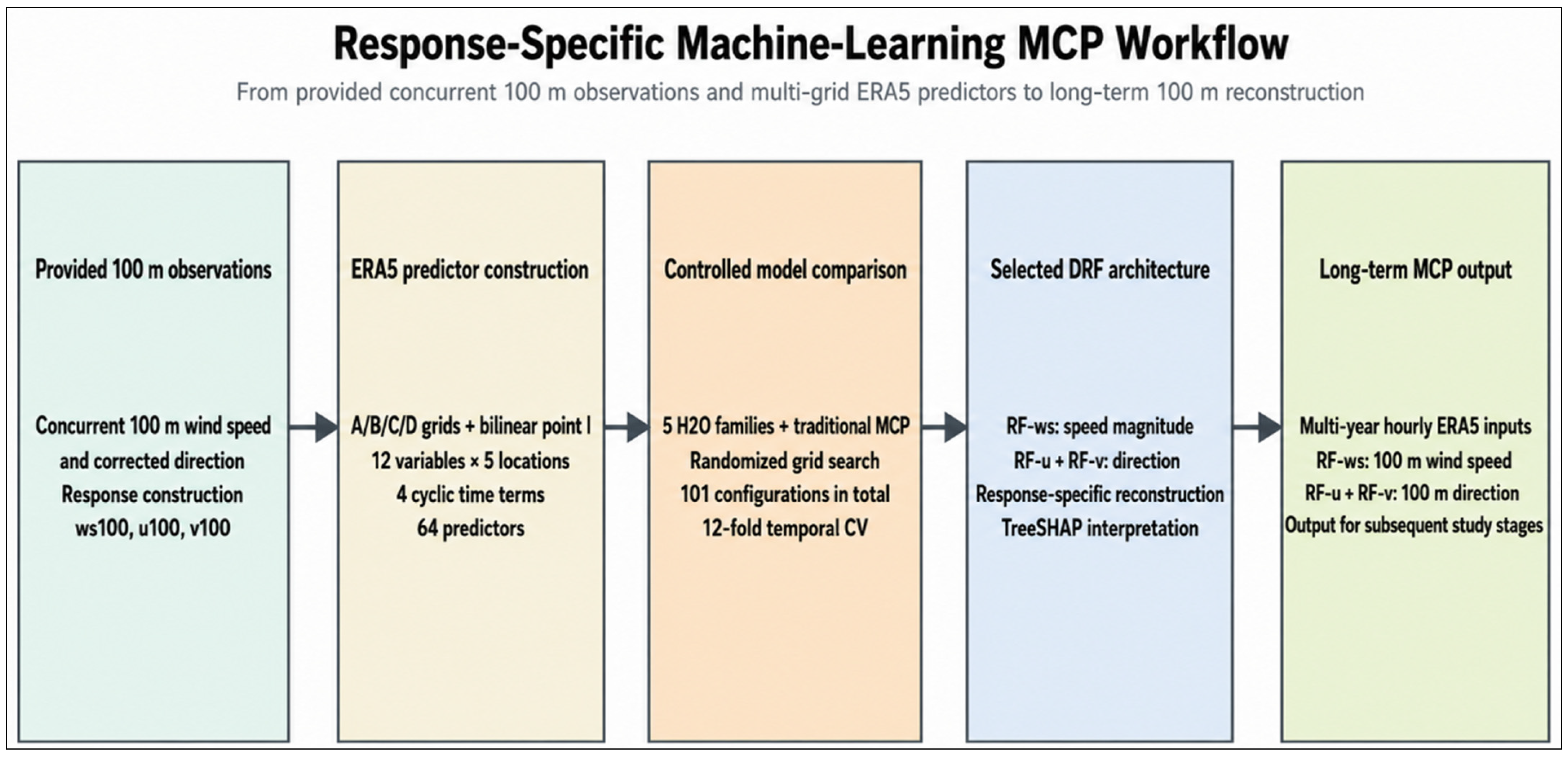
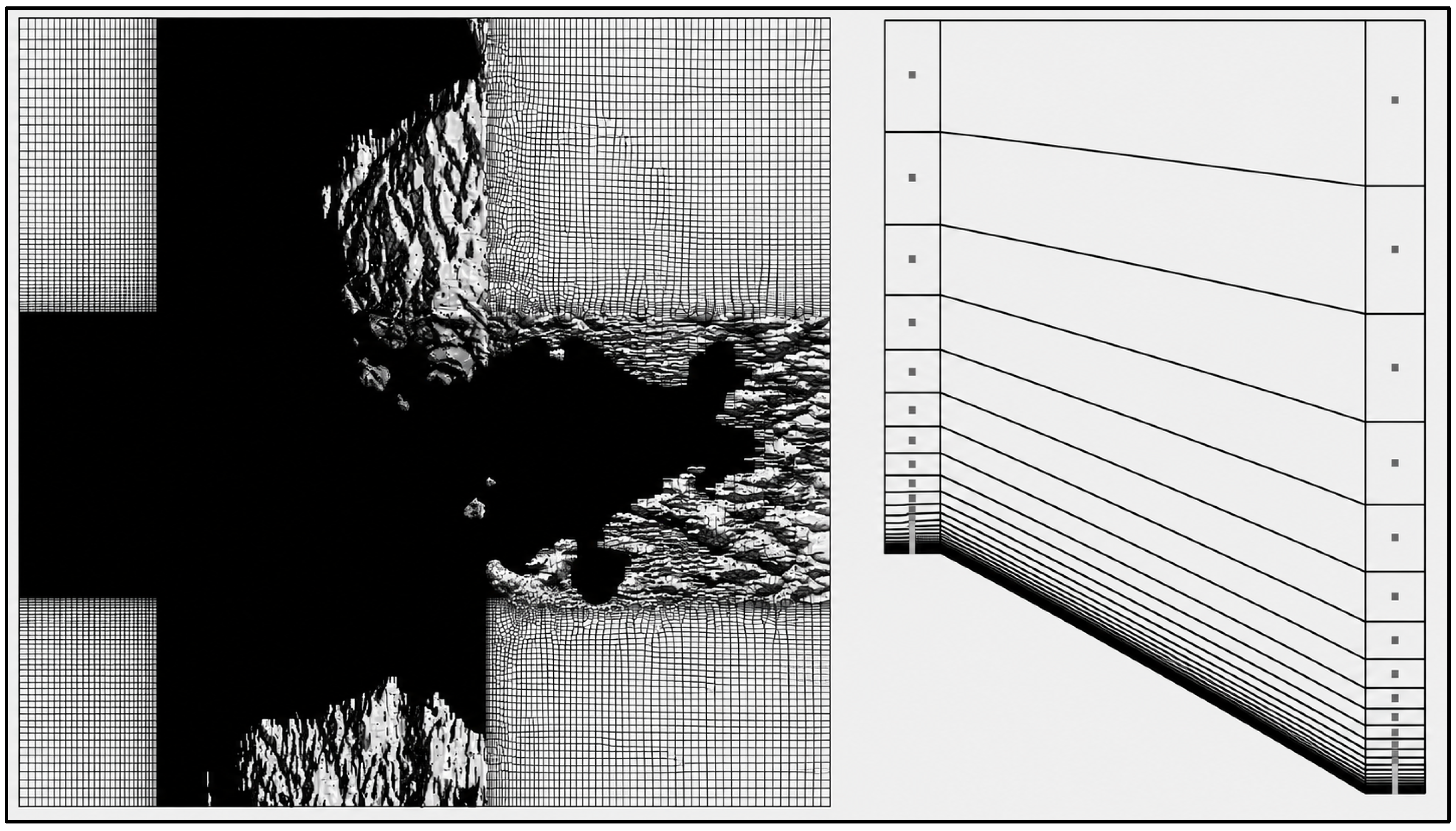
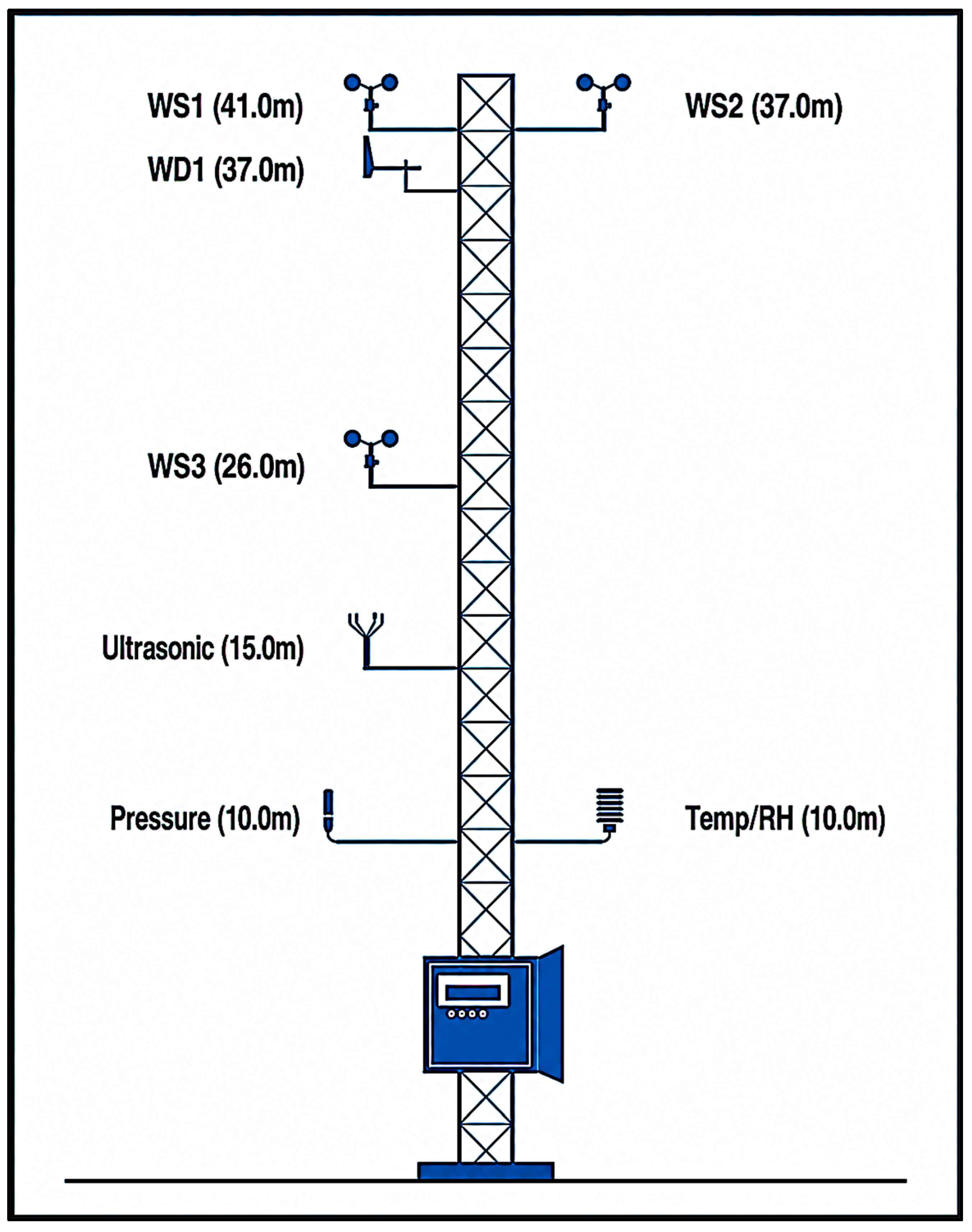
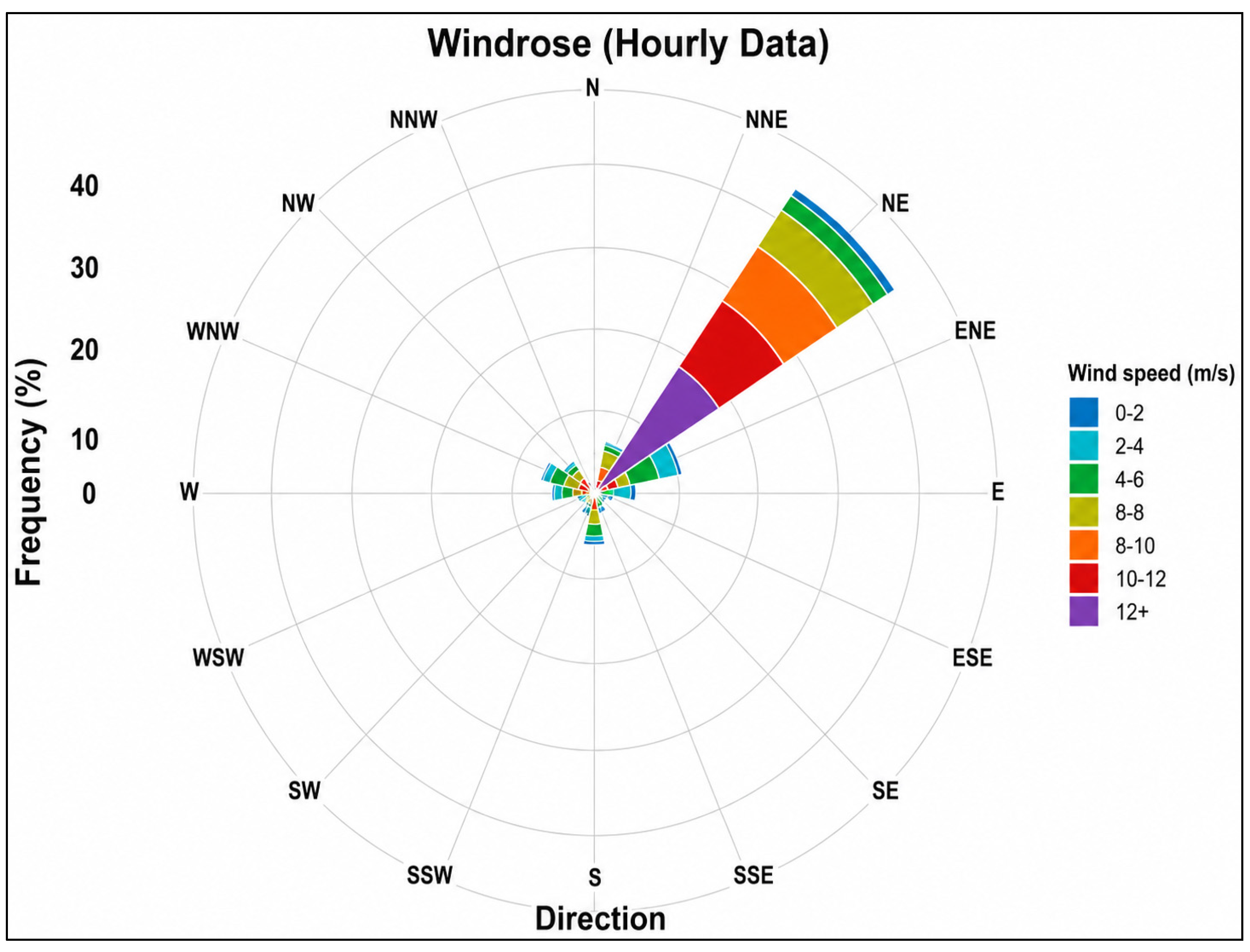
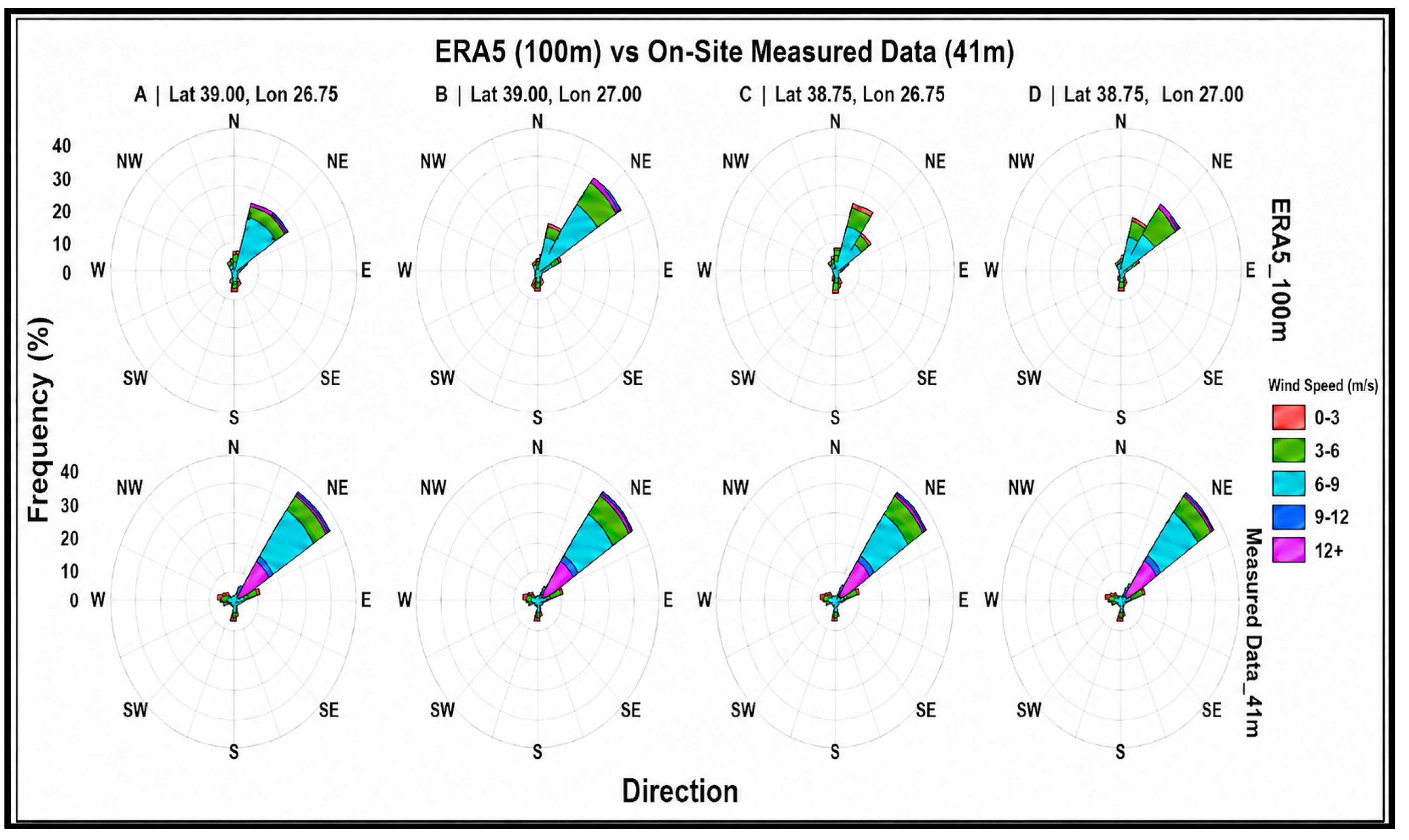
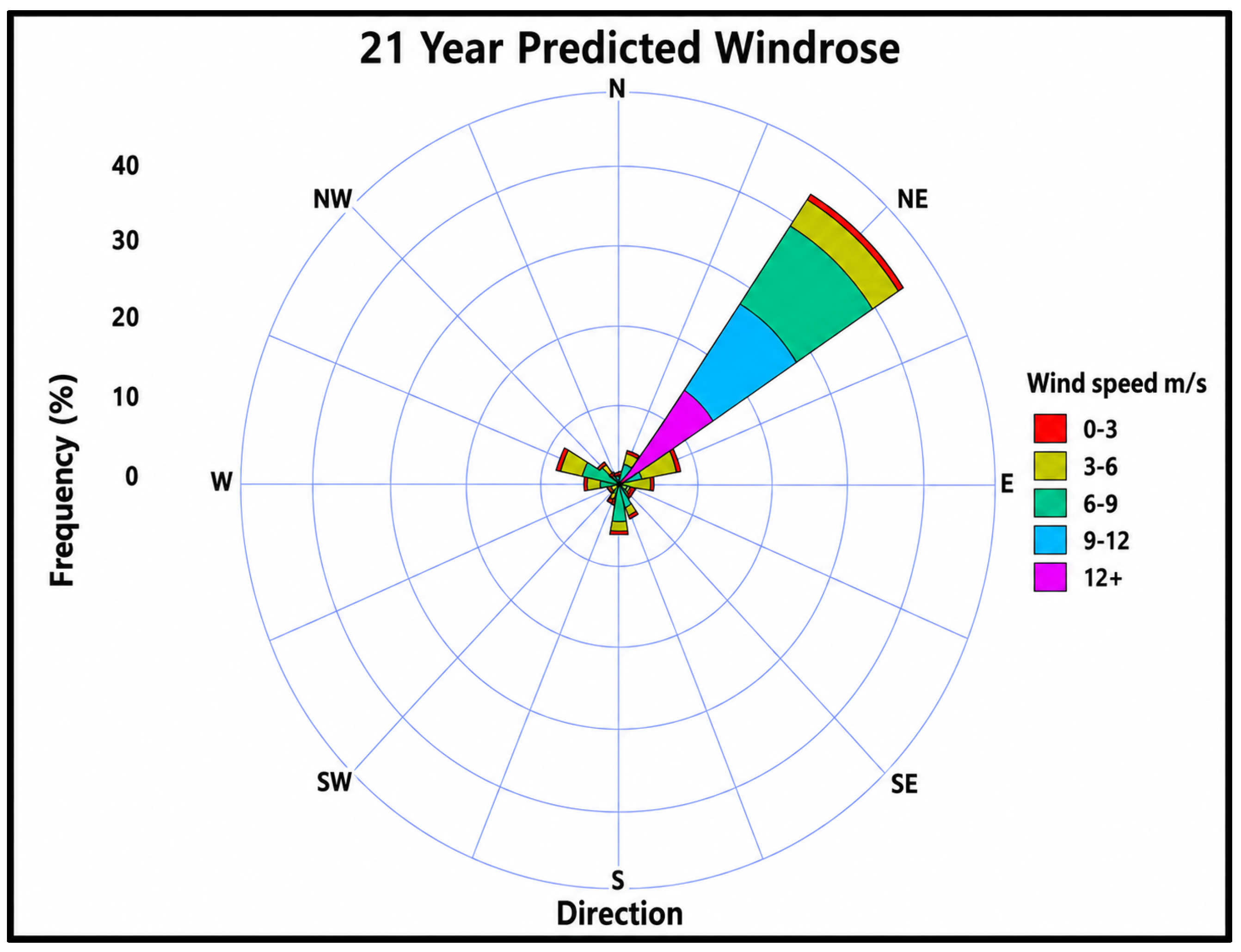
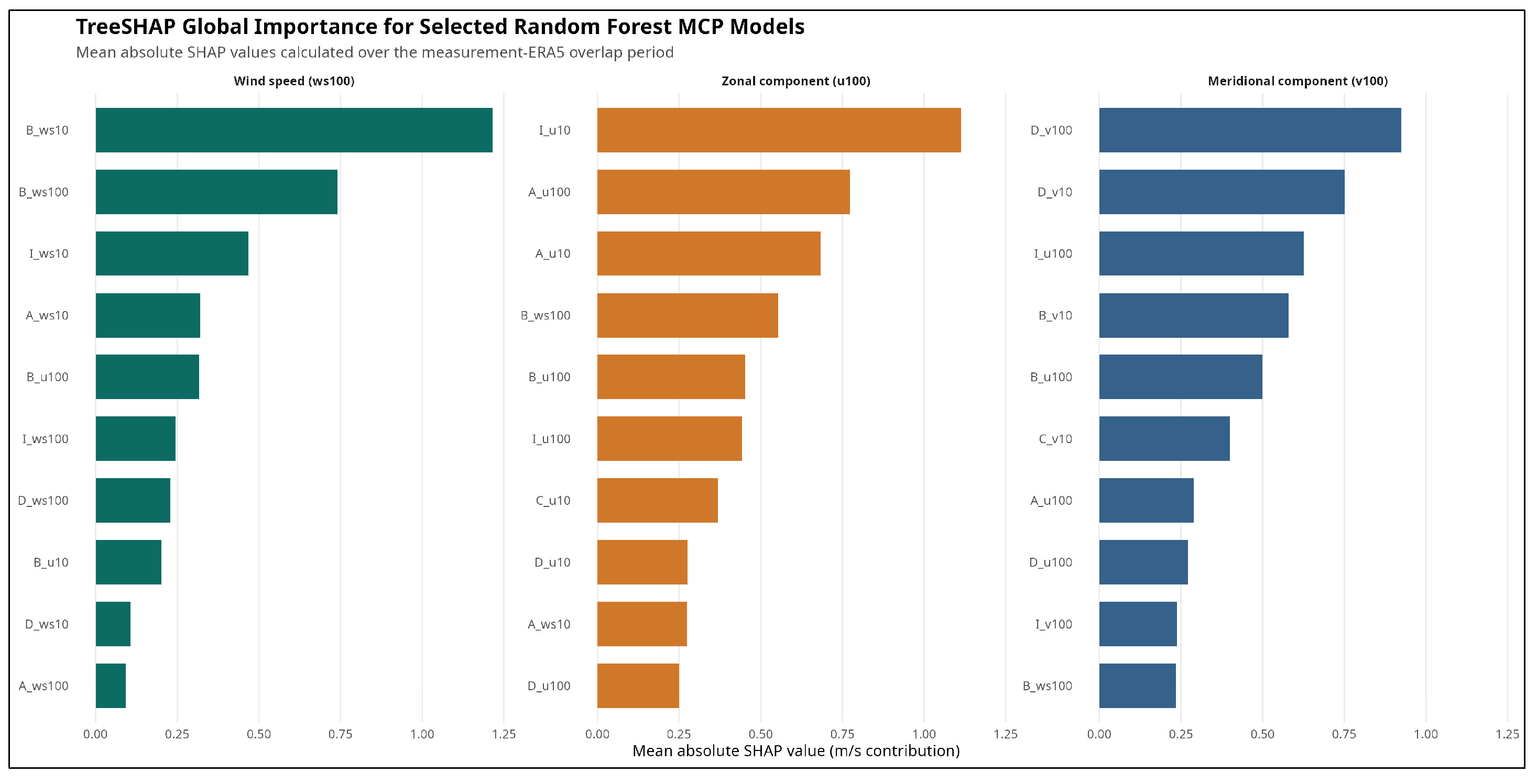
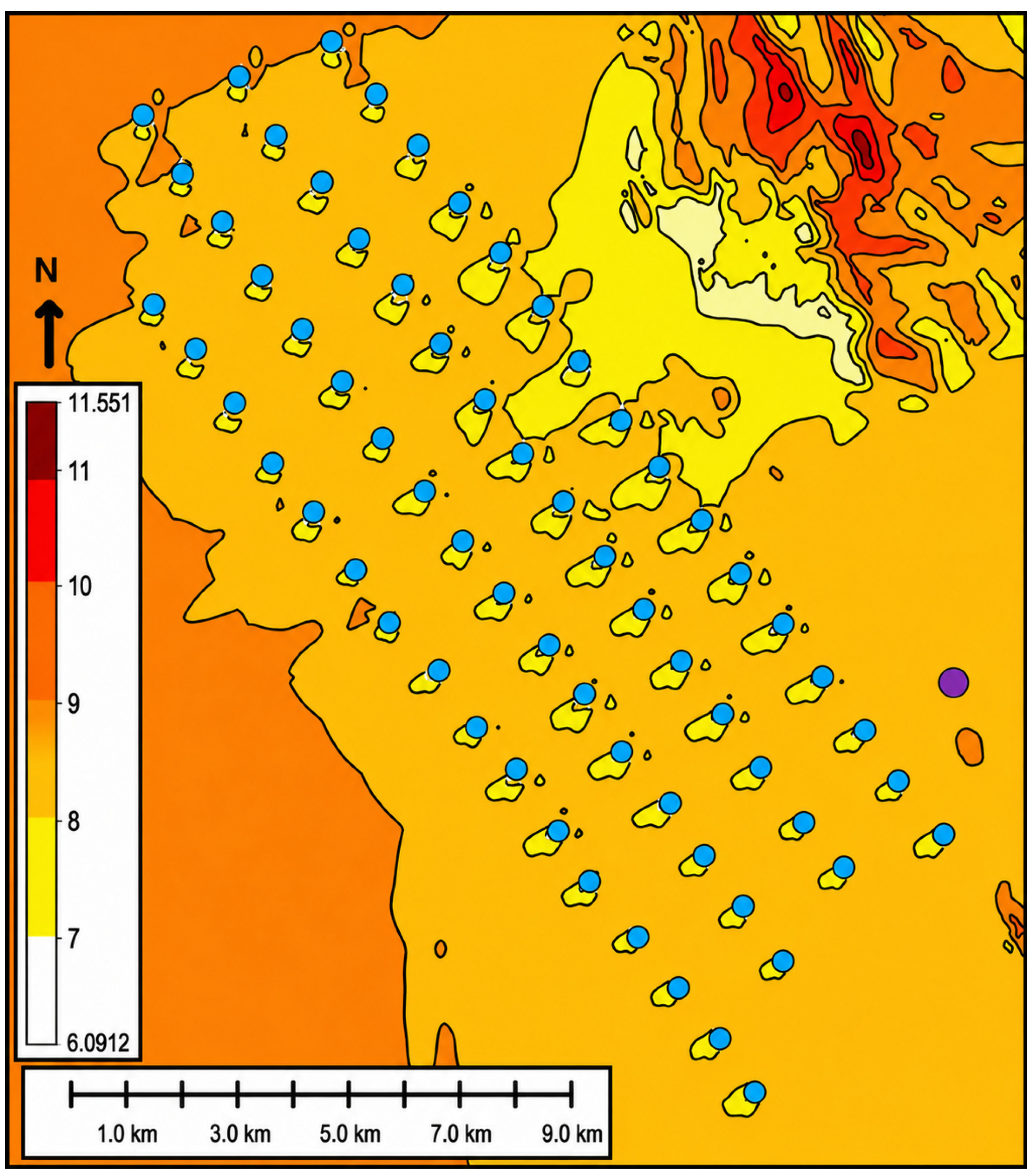
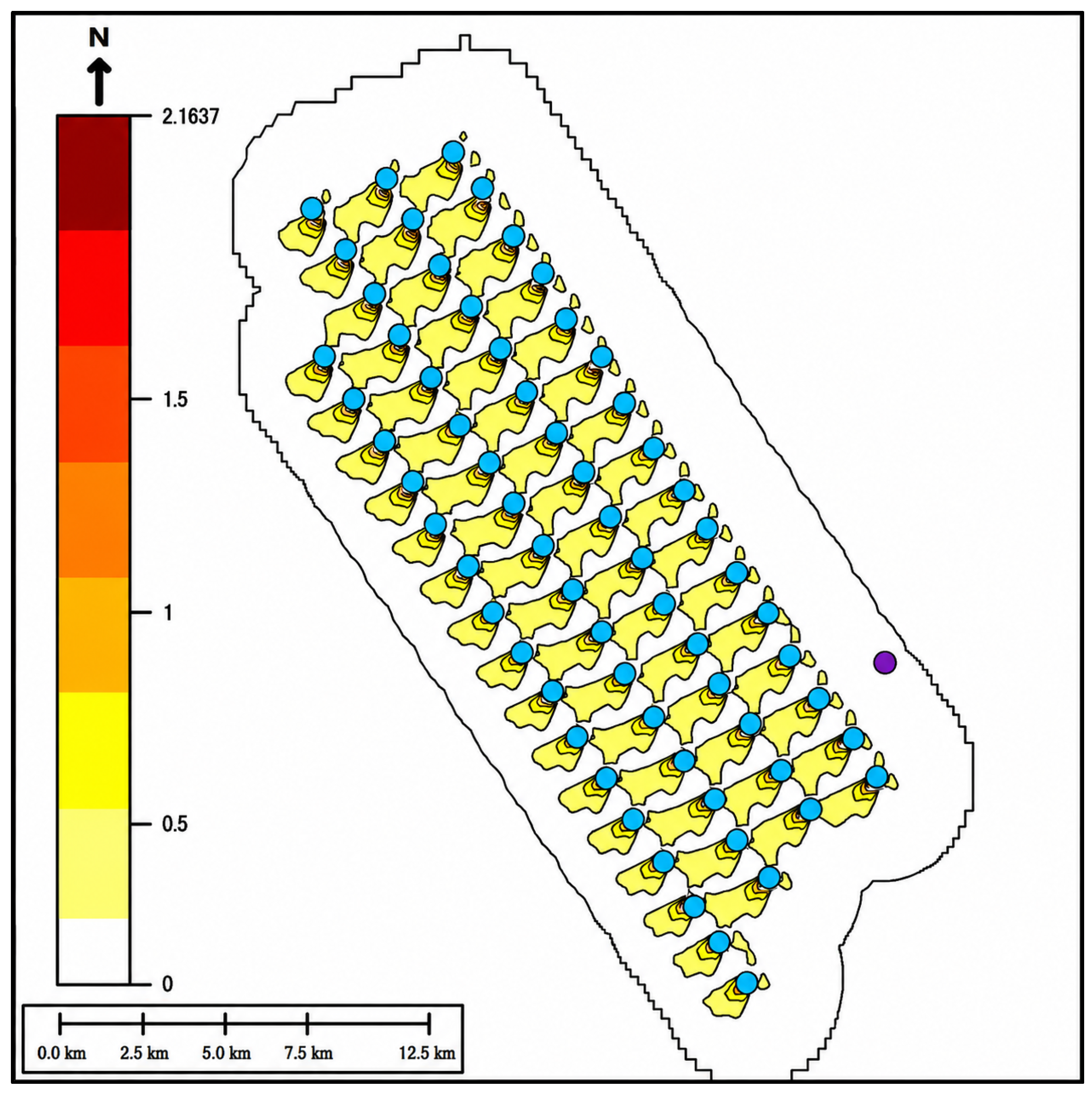
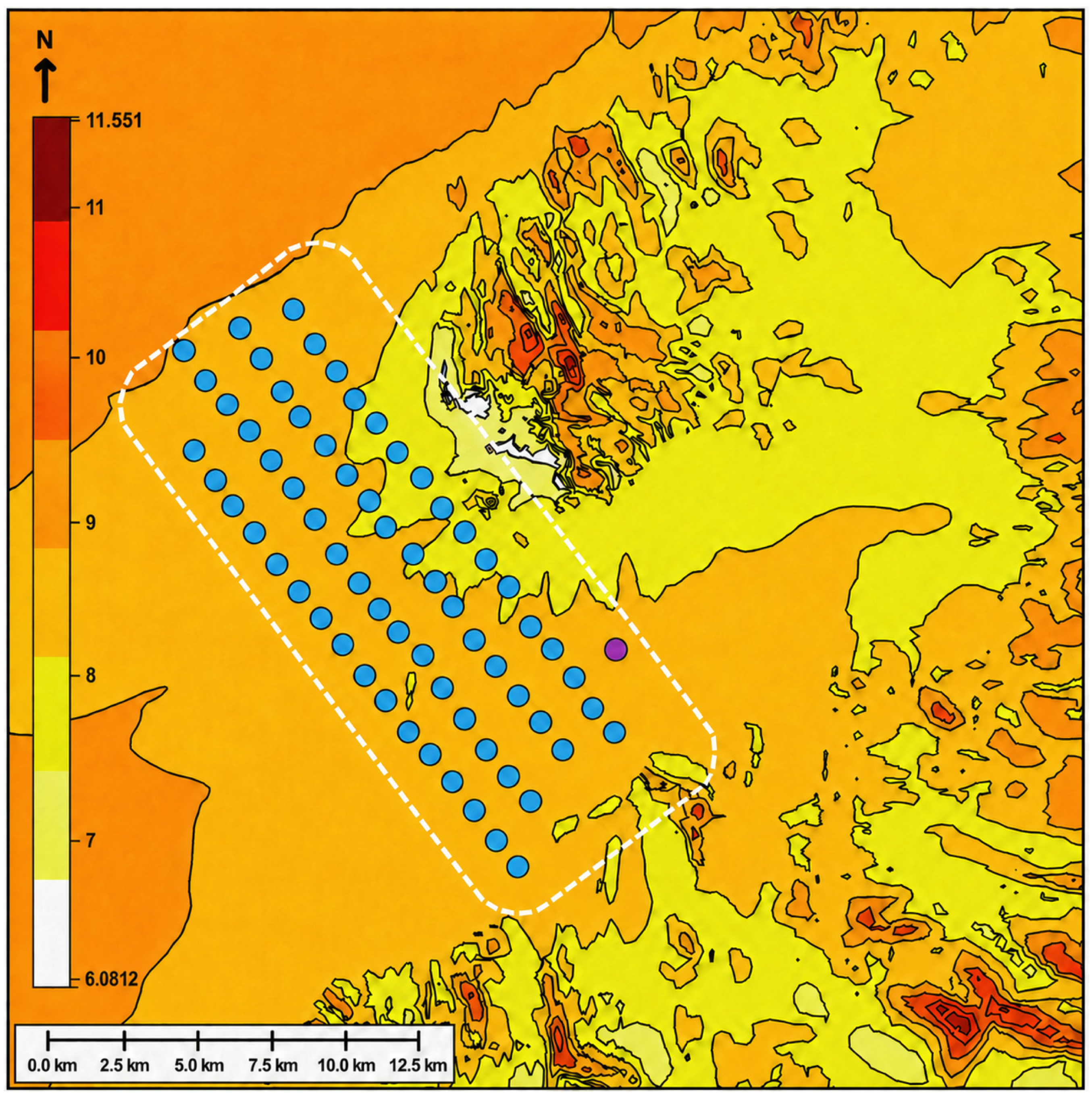
This study presents an integrated framework for offshore wind resource assessment and wind farm micrositing in the Northern Aegean Sea of Türkiye by combining machine learning-assisted measure–correlate–predict (MCP) modelling, long-term reanalysis data and computational fluid dynamics (CFD). One year of measurements from a 41 m meteorological mast on Küçük Ada, offshore Aliağa, İzmir, was analyzed together with a 21-year ECMWF Reanalysis v5 (ERA5) dataset. The measurements indicated a mean annual wind speed of 8.07 m/s, a wind shear exponent of 0.049, a Weibull shape parameter of 2.06 and a persistent northeasterly wind regime. Long-term conditions were reconstructed using 64 meteorological and cyclic predictors derived from four ERA5 grid points and their bilinear interpolation to the mast location. Five H2O algorithm families were evaluated using randomized grid searches and 12-fold temporal cross-validation. Distributed Random Forest provided the best performance for 100 m wind speed, with RMSE = 1.969 m/s, MAE = 1.504 m/s, bias = −0.027 m/s and an out-of-fold Pearson correlation coefficient of r = 0.884. TreeSHAP analysis was applied to interpret predictor contributions. High-resolution WindSim simulations with 28.75 million cells, ALOS PALSAR topography and CORINE land-cover data supported turbine micrositing. The proposed 1.43 GW wind farm yielded 5494.5 GWh/year after wake losses, with a capacity factor of 43.9% and an overall wake loss of 5.2%. The framework provides a robust basis for offshore wind development in Türkiye.
Keywords: offshore wind energy; measure–correlate–predict; machine learning; ERA5 reanalysis; computational fluid dynamics; wind resource assessment; wind farm micrositing; Aegean Sea offshore wind energy; measure–correlate–predict; machine learning; ERA5 reanalysis; computational fluid dynamics; wind resource assessment; wind farm micrositing; Aegean Sea
Graphical Abstract