Proceeding Paper

From Sweeteners to Sleeplessness: The Hidden Effects of Sucralose and Saccharin on the Gut–Brain Axis †

by
Anxo Carreira-Casais
1,2 and
Antia G. Pereira
3,4,*
1
Research Group in Sport Sciences (INCIDE), Faculty of Sport Sciences and Physical Activity, Universidade da Coruña (UDC), Bastiagueiro Campus, 151789 Oleiros, Spain
2
Universitat Carlemany, Av. Verge de Canòlich 47, AD600 Sant Julià de Lòria, Andorra
3
Nutrition and Food Group (NuFoG), Institute of Agroecology and Food Systems (IAA), Universidade de Vigo, Campus Auga, 32004 Ourense, Spain
4
Nutrition and Food Group (NuFoG), Galicia Sur Health Research Institute (IIS Galicia Sur), Servizo Galego de Saúde (SERGAS)–Universidade de Vigo (UVigo), 36213 Vigo, Spain
*
Author to whom correspondence should be addressed.
Presented at the 2nd International Electronic Conference on Medicine, 11–13 November 2025; Available online: https://sciforum.net/event/IECMD2025.
Med. Sci. Forum 2026, 43(1), 1; https://doi.org/10.3390/msf2026043001
Published: 20 January 2026
(This article belongs to the Proceedings of The 2nd International Electronic Conference on Medicine)

Abstract

Sweetener consumption has increased considerably in recent decades, driven by the growing demand from consumers of low-calorie products for weight control and, especially, from diabetic patients who require safe sweetener alternatives without affecting their glucose levels. However, the latest scientific evidence seems to indicate that the continued consumption of various sweeteners could significantly alter the gut microbiota, triggering consequences that go beyond metabolic health and could affect sleep quality. Among the most used non-caloric sweeteners in the food industry are sucralose and saccharin. Several studies have shown that prolonged consumption of these sweeteners can significantly alter the composition of the gut microbiota. In particular, its consumption might lead to a decrease in beneficial bacteria such as Lactobacillus and Bifidobacterium, along with an increase in potentially pathogenic microorganisms such as Clostridium difficile and Escherichia coli. This dysbiosis creates a chronic low-grade inflammatory environment and contributes to the deterioration of glucose metabolism, factors that negatively impact the regulation of the gut–brain axis. Consequently, these alterations could interfere with the neuroendocrine mechanisms involved in sleep, promoting the development of disorders such as insomnia, sleep fragmentation, and decreased subjective sleep quality. The aim of this narrative review is to synthesize the current scientific evidence on the impact of artificial sweeteners on the gut microbiota and their potential involvement in sleep disorders. The underlying biological mechanisms will be analyzed and the clinical relevance of these interactions discussed, laying the groundwork for future research that will contribute to the development of dietary recommendations and therapeutic strategies aimed at modulating the microbiota to improve sleep health.

1. Introduction

In recent decades, there has been an increase in the prevalence of diseases such as obesity, diabetes, and various cardiovascular diseases, which are connected with excessive sugar consumption [1]. This excessive sugar consumption has led to the substitution of simple sugars with non-caloric sweeteners (NNS) in many food products currently available on the market in order to comply with health organizations’ recommendations and the rising demand for low-calorie foods from consumers and governments [2,3].
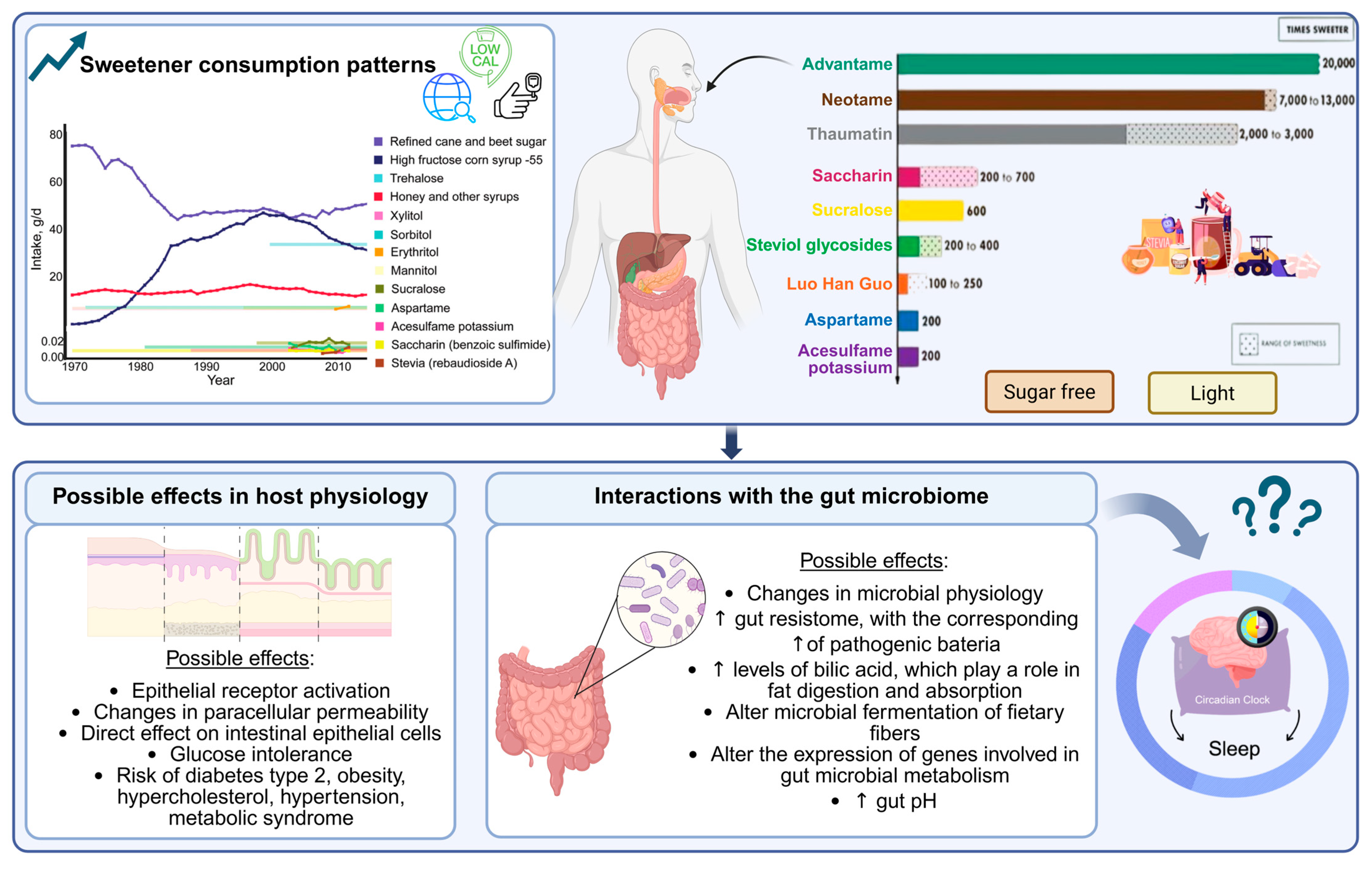
NNS present several advantages including providing sweetness without significant metabolic energy, making them attractive for the diets of people with diabetes or those trying to lose weight [4]. Among the various NNS available on the market, saccharin and sucralose are the most commonly used [5], with an estimated market value of $2.2 million in 2020 and an annual increase of 5.1%. This increase is caused by both a decrease in the concentration of other sweeteners (like aspartame) due to their potential negative health effects and an increase in the consumption of products containing non-sweetened artificial sweeteners (NSAIDs) [6]. These emergent NNS, were considered metabolically inert. However, in recent years, various scientific studies seem to indicate that these NNS are not completely inert, since it has been observed that both saccharin and sucralose can interact with gut microbiota (Figure 1), altering its composition and function, with a consequent impact on host physiology [7].
Simultaneously, gut microbiota has been established as a fundamental regulator of diverse biological functions, including effects on the neuroendocrine, immune, and metabolic systems, as a part of the gut–brain axis (GBA) [10]. The microbiota influences these processes via several pathways, including the production of microbial metabolites (e.g., short-chain fatty acids), the regulation of intestinal permeability, the release of cytokines, and the modulation of intestinal receptors sensitive to nutrients [11,12,13]. These interactions can affect the synthesis of neurotransmitters and hormones, as well as the immune response, contributing to the maintenance of overall homeostasis and participating in neuroimmunological balance, sleep regulation, and circadian rhythms [14,15,16].
On the other hand, sleep and circadian rhythms are essential for maintaining good physical and mental health, as they influence vital processes such as metabolism, cellular repair, immune function, and memory consolidation [17]. It has been observed that inadequate sleep can cause impaired restoration of the central nervous system, disrupted hormonal regulation, and a reduced capacity to eliminate toxic metabolites accumulated during wakefulness [18]. Circadian rhythms, responsible for synchronizing sleep–wake cycles with ambient light and other temporal signals, coordinate physiological activity throughout the day, optimizing metabolic, cardiovascular, and cognitive functions [19,20]. Disruption of these two factors has been associated with an increased risk of developing conditions such as obesity, diabetes, cardiovascular disease, neuropsychiatric disorders, and cognitive decline, highlighting the importance of their regulation for overall health and long-term well-being [17,21,22]. In addition, some of these diseases have been associated with the consumption of NNS, which could constitute an aggravating factor over time.
Therefore, given the growing importance of sleep quality for physical and mental health, and the relevance of the gut microbiota as a modulator of multiple physiological axes, it is reasonable to propose that modifications induced by NNS in the microbiota could ultimately have repercussions on the processes that regulate sleep. Despite this, the current literature appears fragmented, with numerous studies on the impact of sucralose and saccharin on the microbiota, but almost no articles directly exploring the relationship between the consumption of these molecules and sleep disturbances. Given this gap in knowledge, this study aims to: (1) synthesize the current evidence on the effects of sucralose and saccharin on the gut microbiota; (2) analyze the potential biological mechanisms by which these alterations could influence the gut–brain axis; (3) assess the feasibility of extending this hypothesis to the field of sleep disorders; and (4) identify knowledge gaps and propose future research directions. This interdisciplinary approach could provide the theoretical basis for experimental or clinical–epidemiological studies, leading to dietary recommendations or therapeutic strategies targeting the microbiota to improve sleep health.

2. Search Strategy and Data Collection

Due to the exploratory nature of this proceeding, a critical narrative synthesis was carried out rather than a quantitative meta-analysis. To carry it out, the main databases of the biomedical literature (PubMed, Medline, and Google Scholar) were consulted. The keywords employed in the literature search include “sucralose,” “saccharin,” “non-nutritive sweeteners (NNS),” “artificial sweeteners,” “gut microbiota,” “intestinal microbiota,” “microbiome,” “human,” “animal model,” “in vitro,” “sleep,” and “gut–brain axis.” Only peer-reviewed articles in English presenting experimental or analytical information on CBA were retained. Publications focused exclusively on other sweeteners, non-English sources, non-peer-reviewed materials, opinion articles, letters to the editor, and non-peer-reviewed articles were excluded. The scarcity of information made it unfeasible to establish the exclusion criterion of studying only recent literature. Following PRISMA recommendations, duplicates were removed, and the remaining records were screened through titles, abstracts, and full texts to ensure the inclusion of studies providing reliable and relevant evidence. The results were grouped by type of evidence (preclinical vs. clinical) and by type of effect (composition, function, implications for the gut–brain axis), which allowed for the identification of consistencies, contradictions, and knowledge gaps.

3. Discussion

Natural sweeteners (e.g., sucrose, glucose, thaumatin, steviol glucosides, monellin, polyols) are digestible carbohydrates that are either absorbed in the small intestine or, when reaching the colon, can serve as fermentable substrates for commensal bacteria. Several studies have shown that these sugars can support the growth of beneficial microbial taxa, particularly lactic acid bacteria such as Lactobacillus spp. and Bifidobacterium spp., through enhanced carbohydrate availability and increased production of short-chain fatty acids [23,24]. In particular, trehalose has been reported to promote the growth of probiotic strains and improve microbial metabolic activity, contributing to gut homeostasis [25].
In contrast, artificial sweeteners such as sucralose and saccharin are non-nutritive compounds that are poorly metabolized by host enzymes and often reach the colon largely intact. Their presence in the gut has been associated with significant changes in the gut microbiota, with the degree and duration of these changes varying depending on the experimental models studied [7,23]. The strongest evidence has been obtained in in vitro models and laboratory animals, in which a significant reduction in gut microbiota diversity has been observed [26,27]. Furthermore, some studies have shown that continued consumption of these sweeteners promotes the growth of opportunistic and/or harmful bacteria (e.g., Proteobacteria such as Escherichia coli) and a decrease in the number of bacteria associated with the production of short-chain fatty acids (e.g., Lactobacillus acidophilus) [28,29]. For instance, saccharin consumption has been associated with an increased abundance of Bacteroides spp. and members of the phylum Proteobacteria, alongside a reduction in beneficial Firmicutes, including Clostridiales involved in short-chain fatty acid production. These microbial shifts have been linked to altered glucose metabolism and inflammatory responses [30]. Conversely, sucralose exposure has been shown to reduce populations of Lactobacillus and Bifidobacterium while increasing Enterobacteriaceae, suggesting a selective inhibitory effect on beneficial fermentative bacteria [31]. In a similar study, it was observed that continued consumption of acceptable daily intake of sucralose in rats generated a reduction of probiotics abundance (Lachnoclostridium, Lachnospiraceae, and Akkermansiaceae) in cecum and rectum, and an increase in Acidaminoccaceae (genus Phascolarctobacteriam), Allobaculum (which was reported positively correlated with diabetes), and the potential pathogens Tenacibaculum, Ruegeria, Staphylococcus in jejunum, ileum and colon [32,33]. According to available scientific evidence, the mechanism of action of sucralose consists of its persistence within the intestinal lumen, where it directly interacts with the gut microbiota. This interaction disrupts intestinal barrier function and mucosal immune homeostasis, thereby altering host–microbe signaling. As a consequence, selective ecological pressures emerge that reshape microbial composition and promote dysbiosis [32]. Additional studies have reported decreased levels of Clostridiumcluster cluster XIVa in feces following chronic sucralose intake, potentially affecting gut barrier integrity and host–microbiota interactions [34]. This could be associated with a loss of various metabolic functions considered protective for the integrity of the intestinal mucosa, including reduced short-chain fatty acid production, changes in microbial gene expression, and impaired microbial network stability. Such alterations in the gut microbiota can actively influence host physiology by modulating immune responses, intestinal barrier function, and metabolic homeostasis, thereby highlighting the microbiome as a key upstream regulator of downstream physiological processes [28,29]. Together, these findings indicate that some artificial sweeteners can selectively inhibit or promote specific microbial taxa through metabolic and ecological mechanisms, thereby influencing gut–brain axis signaling pathways.
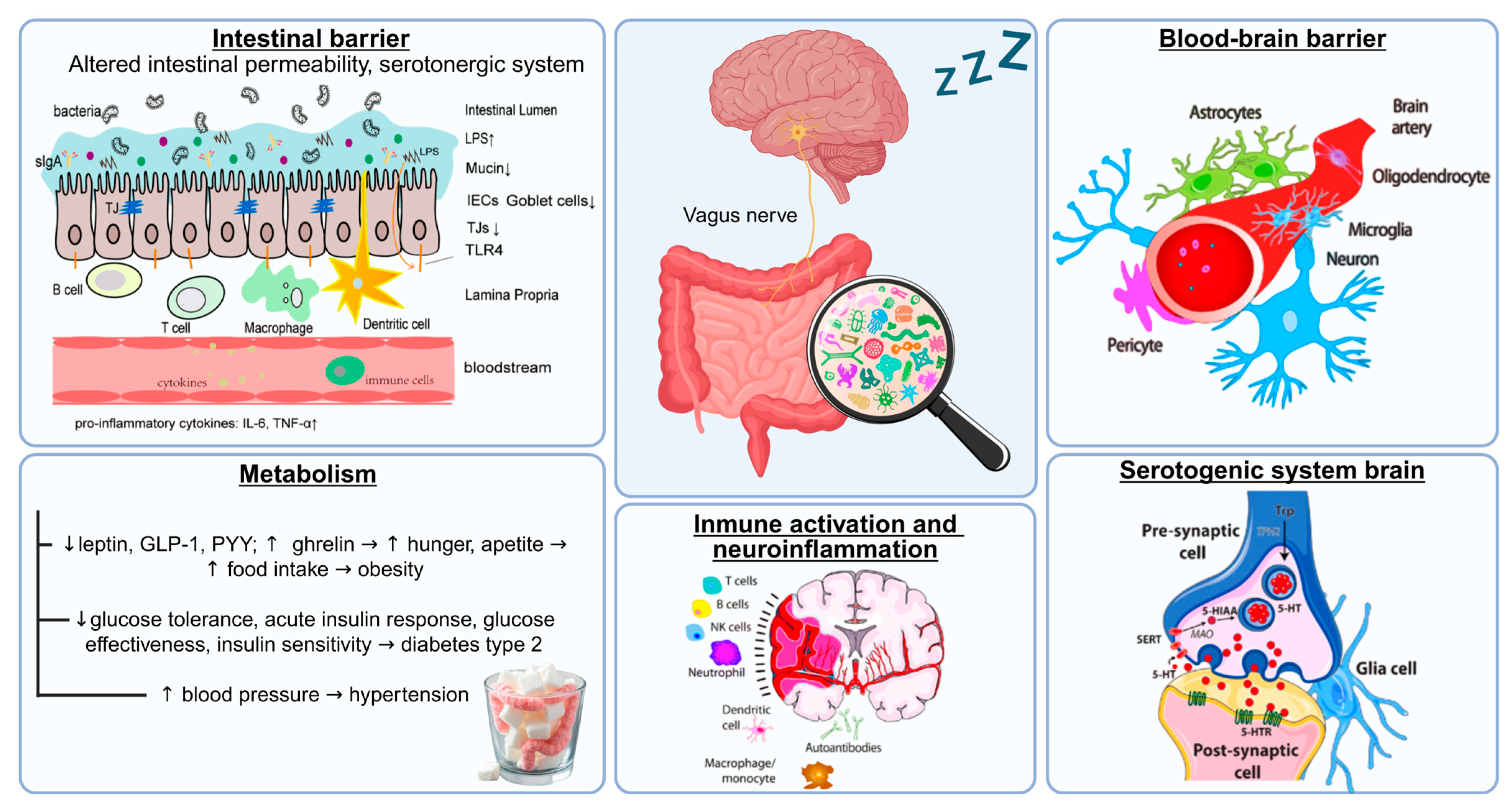
At a functional level, available studies demonstrate that the effects of prolonged consumption of these artificial sweeteners are not limited to a change in the composition of the gut microbiota but that this change also has a significant impact on the consumer’s metabolism [35], as well as greater probability of other diseases, coupled with an unexpected increase in body weight, adverse gestational outcomes, and possible risks for individuals prone to seizures [28,29]. For example, the consumption of these sweeteners is associated with a lower production of metabolites such as butyrate and propionate, compounds essential for maintaining epithelial homeostasis and regulating local immune processes [36]. Some studies also describe changes in intestinal permeability and in the expression of molecules involved in the inflammatory response, which raises the possibility that repeated consumption of sucralose and saccharin may have broader repercussions on host physiology [7,37]. The main impacts can be seen in Figure 2.
However, it should be noted that all these studies were carried out with controlled models, so the results obtained may vary significantly when analyzing real cases since these models fully reproduce the complexity of the human diet, although they are considered a good approximation to processes that could also occur, while more attenuated, in real consumption situations. Nevertheless, although these changes are more subtle in humans, the latest scientific evidence seems to indicate that these moderate alterations can cause significant alterations in various physiological functions. For example, a reduction in short-chain fatty acids or a slight increase in local inflammatory markers could affect communication between the gut and the central nervous system, since the microbiota plays an active role in regulating the immune response, producing neurotransmitters, and modulating hormones linked to energy metabolism and stress [37,38]. In all cases, the studies conducted in humans are characterized by more heterogeneous findings and several limitations. The first of these is that the available clinical trials are of short duration. Furthermore, these studies analyze doses of sweeteners within the recommended limits, which may underestimate the average amounts ingested by a population [39,40]. These reasons could explain why studies conducted in humans did not detect significant changes in microbial diversity or the relative abundance of the main bacterial genera, while others described discrete variations affecting specific microbial subpopulations. Furthermore, in these in vivo studies, it is necessary to consider individual variability since subjects exhibit intrinsic variability in their gut microbiota, which will also generate variability in the results obtained [41]. This suggests that susceptibility to sweeteners could depend on both the pre-existing microbial composition as well as dietary and lifestyle factors. In all cases, the changes observed in humans tend to be more subtle than in experimental models.
Regarding the impact of sucralose and saccharin consumption on sleep parameters in humans, some authors suggest that a sustained modification of the gut ecosystem could influence the stability of circadian rhythms and processes linked to nighttime rest, especially in individuals with a vulnerable gut microbiota or unbalanced dietary patterns [7]. These effects have already been demonstrated in in vivo studies in rats, in which prolonged consumption of saccharin (0.1% w/v) disrupted the circadian sleep–wake cycle and caused behavioral inactivity [42]. A similar study concluded that doses of sweeteners considered safe (equivalent to 7–28% of the FDA-recommended human DIV) caused changes on memory, rhythm behaviors, and modifications at the molecular level in the brains in mice [43]. In another study, it was observed that sucralose induced hyperactivity, insomnia, and reduced sleep quality (patterns that align with a mild starvation- or fasting-like state) with comparable sleep-related effects previously observed in human research [44]. For instance, the consumption of beverages with artificial sweeteners has shown an interaction between their consumption and the modification of sleep patterns [45]. In guinea pigs, it was observed that saccharin consumption increased the abundance of Firmicutes and Lactobacillasceae in the ileum, and subsequently increased levels of lactic acid and short-chain fatty acids, regulating the microbiota–hypothalamus–gut axis, via activating sweet receptor signaling in the gut and growth-hormone-releasing peptide hormone secretion [46].
Regarding the mechanism by which these artificial sweeteners alter the gut microbiota and consequently the gut–brain axis, changes in microbial composition and metabolite production, such as short-chain fatty acids and bile acids, can affect signaling to the central nervous system through the bloodstream and the vagus nerve [37]. These microbial signals also modulate systemic immune and inflammatory responses, influencing gene expression in hypothalamic centers involved in circadian and sleep regulation. In animal models, alterations in microbial metabolites have been associated with changes in neural activity and neuroinflammation that affect sleep architecture, providing a mechanistic framework in which sweetener-induced dysbiosis can modulate gut–brain axis physiology and sleep patterns [29,47]. Another study suggested that exposure to saccharin during the perinatal period was linked to alterations in glucose regulation and reduced insulin sensitivity in both male and female progeny. These metabolic disturbances were accompanied by modifications in gut–brain communication and by dysregulation of hypothalamic pathways involved in glucose control and appetite regulation, predominantly affecting GLP-1, leptin, and insulin signaling mechanisms [48]. Together, these observations suggest potential effects of sucralose and saccharin on the gut–brain axis, indicating that even commonly consumed artificial sweeteners may influence sleep and other physiological processes, although further studies are needed to confirm these findings.

4. Conclusions

Taken together, the findings indicate that exposure to sucralose and saccharin could modify, to varying degrees, both the composition and functional activity of the gut microbiota. These alterations are more significant in experimental models, making it necessary to analyze individual variability as well as the dietary context in humans. However, the similarity in some patterns (e.g., decrease in bacteria that produce beneficial metabolites, variations in the metabolic capacity of microorganisms) suggests that these sweeteners are not entirely inert to the gut ecosystem. Although it is still too early to determine their effect on complex functions such as sleep regulation, current evidence seems to indicate a link between variations in the microbiota, metabolites, inflammatory markers, and circadian parameters, which will help us better understand the systemic implications of their regular intake.

Author Contributions

Conceptualization, A.G.P.; methodology, A.C.-C. and A.G.P.; software, A.G.P.; validation, A.G.P.; formal analysis, A.C.-C. and A.G.P.; investigation, A.C.-C. and A.G.P.; resources, A.G.P.; data curation, A.G.P.; writing—original draft preparation, A.C.-C. and A.G.P.; writing—review and editing, A.G.P.; visualization, A.G.P.; supervision, A.G.P.; project administration, A.C.-C. and A.G.P.; funding acquisition, A.G.P. All authors have read and agreed to the published version of the manuscript.

Funding

The research leading to these results was supported by Xunta de Galicia for supporting the post-doctoral grant of A.G. Pereira (IN606B-2024/011).

Institutional Review Board Statement

Not applicable.

Informed Consent Statement

Not applicable.

Data Availability Statement

All related data are presented in this paper. Additional inquiries should be addressed to the corresponding author.

Conflicts of Interest

The authors declare no conflicts of interest.

References

  1. Rippe, J.M.; Angelopoulos, T.J. Relationship between Added Sugars Consumption and Chronic Disease Risk Factors: Current Understanding. Nutrients 2016, 8, 697. [Google Scholar] [CrossRef] [PubMed]
  2. Liu, Z.; Li, S.; Peng, J. Exploring the Relationship between Sugar and Sugar Substitutes-Analysis of Income Level and Beverage Consumption Market Pattern Based on the Perspective of Healthy China. Nutrients 2022, 14, 4474. [Google Scholar] [CrossRef]
  3. Dragomir, N.; Grigore, D.-M.; Pogurschi, E.N. Beyond Sugar: A Holistic Review of Sweeteners and Their Role in Modern Nutrition. Foods 2025, 14, 3182. [Google Scholar] [CrossRef] [PubMed]
  4. Sylvetsky, A.C.; Rother, K.I. Nonnutritive Sweeteners in Weight Management and Chronic Disease: A Review. Obesity 2018, 26, 635–640. [Google Scholar] [CrossRef]
  5. Gardner, C.; Wylie-Rosett, J.; Gidding, S.S.; Steffen, L.M.; Johnson, R.K.; Reader, D.; Lichtenstein, A.H. Nonnutritive sweeteners: Current use and health perspectives: A scientific statement from the American Heart Association and the American Diabetes Association. Diabetes Care 2012, 35, 1798–1808. [Google Scholar] [CrossRef]
  6. Sylvetsky, A.C.; Rother, K.I. Trends in the consumption of low-calorie sweeteners. Physiol. Behav. 2016, 164, 446–450. [Google Scholar] [CrossRef]
  7. Del Pozo, S.; Gómez-Martínez, S.; Díaz, L.E.; Nova, E.; Urrialde, R.; Marcos, A. Potential Effects of Sucralose and Saccharin on Gut Microbiota: A Review. Nutrients 2022, 14, 1682. [Google Scholar] [CrossRef]
  8. Shah, S.I.A.; Nawaz, H.; Nadeem, N. Historical and current perspectives on the human consumption of non-nutritive sweeteners (NNS). J. Akhtar Saeed Med. Dent. Coll. 2023, 5, 4. [Google Scholar]
  9. Di Rienzi, S.C.; Britton, R.A. Adaptation of the Gut Microbiota to Modern Dietary Sugars and Sweeteners. Adv. Nutr. 2020, 11, 616–629. [Google Scholar] [CrossRef] [PubMed]
  10. Farzi, A.; Fröhlich, E.E.; Holzer, P. Gut Microbiota and the Neuroendocrine System. Neurother. J. Am. Soc. Exp. Neurother. 2018, 15, 5–22. [Google Scholar] [CrossRef]
  11. Silva, Y.P.; Bernardi, A.; Frozza, R.L. The Role of Short-Chain Fatty Acids From Gut Microbiota in Gut-Brain Communication. Front. Endocrinol. 2020, 11, 25. [Google Scholar] [CrossRef]
  12. O’Riordan, K.J.; Collins, M.K.; Moloney, G.M.; Knox, E.G.; Aburto, M.R.; Fülling, C.; Morley, S.J.; Clarke, G.; Schellekens, H.; Cryan, J.F. Short chain fatty acids: Microbial metabolites for gut-brain axis signalling. Mol. Cell. Endocrinol. 2022, 546, 111572. [Google Scholar] [CrossRef]
  13. Banfi, D.; Moro, E.; Bosi, A.; Bistoletti, M.; Cerantola, S.; Crema, F.; Maggi, F.; Giron, M.C.; Giaroni, C.; Baj, A. Impact of Microbial Metabolites on Microbiota–Gut–Brain Axis in Inflammatory Bowel Disease. Int. J. Mol. Sci. 2021, 22, 1623. [Google Scholar] [CrossRef] [PubMed]
  14. Zhao, D.; Zou, B.; Do, Q.L.; Wu, S.-K.; Shen, Y.; Yang, Y.; Kang, J.; Su, K.-P.; Wang, B. Circadian rhythms and gut microbiota Dysbiosis: Emerging gut-brain axis pathways in insomnia pathophysiology and Therapeutics. Brain. Behav. Immun. 2025, 132, 106203. [Google Scholar] [CrossRef] [PubMed]
  15. Lin, Z.; Jiang, T.; Chen, M.; Ji, X.; Wang, Y. Gut microbiota and sleep: Interaction mechanisms and therapeutic prospects. Open Life Sci. 2024, 19, 20220910. [Google Scholar] [CrossRef] [PubMed]
  16. Park, J.C.; Chang, L.; Kwon, H.-K.; Im, S.-H. Beyond the gut: Decoding the gut–immune–brain axis in health and disease. Cell. Mol. Immunol. 2025, 22, 1287–1312. [Google Scholar] [CrossRef]
  17. Desai, D.; Momin, A.; Hirpara, P.; Jha, H.; Thaker, R.; Patel, J. Exploring the Role of Circadian Rhythms in Sleep and Recovery: A Review Article. Cureus 2024, 16, e61568. [Google Scholar] [CrossRef]
  18. Posey Norris, S.M.; Childers, E.; Bain, L. (Eds.) Exploring Sleep Disturbance in Central Nervous System Disorders: Proceedings of a Workshop; National Academies Press: Washington, DC, USA, 2023; Volume National A. [Google Scholar]
  19. Ruan, W.; Yuan, X.; Eltzschig, H.K. Circadian rhythm as a therapeutic target. Nat. Rev. Drug Discov. 2021, 20, 287–307. [Google Scholar] [CrossRef]
  20. Rahmati, H.; Garmabi, B.; Ghazvini, H.; Seyedhosseini Tamijani, S.M.; Niroumand Sarvandani, M.; Rafaiee, R. Circadian rhythms and human studies: Methodology, challenges, and future directions in research. Biol. Rhythm Res. 2025, 1–30. [Google Scholar] [CrossRef]
  21. Figorilli, M.; Velluzzi, F.; Redolfi, S. Obesity and sleep disorders: A bidirectional relationship. Nutr. Metab. Cardiovasc. Dis. 2025, 35, 104014. [Google Scholar] [CrossRef]
  22. Minami, Y.; Kishi, A.; Ueda, H.R. Preventive circadian medicine: Improving health with sleep checkups. npj Biol. Timing Sleep 2025, 2, 31. [Google Scholar] [CrossRef]
  23. Ruiz-Ojeda, F.J.; Plaza-Díaz, J.; Sáez-Lara, M.J.; Gil, A. Effects of Sweeteners on the Gut Microbiota: A Review of Experimental Studies and Clinical Trials. Adv. Nutr. 2019, 10, S31–S48. [Google Scholar] [CrossRef]
  24. Grilc, N.K.; Stojanov, S.; Rijavec, T.; Lapanje, A.; Berlec, A.; Zupančič, Š. Viability of potential probiotics incorporated into nanofibers: Influence of genera, storage conditions, stabilizers and their solid-state. Int. J. Pharm. 2025, 673, 125327. [Google Scholar] [CrossRef] [PubMed]
  25. Wu, Y.-T.; Yang, W.-Y.; Samuel Wu, Y.-H.; Chen, J.-W.; Chen, Y.-C. Modulations of growth performance, gut microbiota, and inflammatory cytokines by trehalose on Salmonella Typhimurium-challenged broilers. Poult. Sci. 2020, 99, 4034–4043. [Google Scholar] [CrossRef] [PubMed]
  26. Kamareddine, L.; Najjar, H.; Sohail, M.U.; Abdulkader, H.; Al-Asmakh, M. The Microbiota and Gut-Related Disorders: Insights from Animal Models. Cells 2020, 9, 2401. [Google Scholar] [CrossRef] [PubMed]
  27. Calvigioni, M.; Mazzantini, D.; Celandroni, F.; Ghelardi, E. Animal and In Vitro Models as Powerful Tools to Decipher the Effects of Enteric Pathogens on the Human Gut Microbiota. Microorganisms 2024, 12, 67. [Google Scholar] [CrossRef]
  28. Meenatchi, M.; Vellapandian, C. Exploring the Long-Term Effect of Artificial Sweeteners on Metabolic Health. Cureus 2024, 16, e70043. [Google Scholar] [CrossRef]
  29. Coccurello, R. Disrupting the Gut–Brain Axis: How Artificial Sweeteners Rewire Microbiota and Reward Pathways. Int. J. Mol. Sci. 2025, 26, 220. [Google Scholar] [CrossRef]
  30. Suez, J.; Korem, T.; Zeevi, D.; Zilberman-Schapira, G.; Thaiss, C.A.; Maza, O.; Israeli, D.; Zmora, N.; Gilad, S.; Weinberger, A.; et al. Artificial sweeteners induce glucose intolerance by altering the gut microbiota. Nature 2014, 514, 181–186. [Google Scholar] [CrossRef]
  31. Abou-Donia, M.B.; El-Masry, E.M.; Abdel-Rahman, A.A.; McLendon, R.E.; Schiffman, S.S. Splenda alters gut microflora and increases intestinal p-glycoprotein and cytochrome p-450 in male rats. J. Toxicol. Environ. Health A 2008, 71, 1415–1429. [Google Scholar] [CrossRef]
  32. Zheng, Z.; Xiao, Y.; Ma, L.; Lyu, W.; Peng, H.; Wang, X.; Ren, Y.; Li, J. Low Dose of Sucralose Alter Gut Microbiome in Mice. Front. Nutr. 2022, 9, 848392. [Google Scholar] [CrossRef]
  33. Zhang, M.; Chen, J.; Yang, M.; Qian, C.; Liu, Y.; Qi, Y.; Feng, R.; Yang, M.; Liu, W.; Ma, J. Low Doses of Sucralose Alter Fecal Microbiota in High-Fat Diet-Induced Obese Rats. Front. Nutr. 2021, 8, 787055. [Google Scholar] [CrossRef]
  34. Uebanso, T.; Ohnishi, A.; Kitayama, R.; Yoshimoto, A.; Nakahashi, M.; Shimohata, T.; Mawatari, K.; Takahashi, A. Effects of Low-Dose Non-Caloric Sweetener Consumption on Gut Microbiota in Mice. Nutrients 2017, 9, 560. [Google Scholar] [CrossRef]
  35. Pang, M.D.; Goossens, G.H.; Blaak, E.E. The Impact of Artificial Sweeteners on Body Weight Control and Glucose Homeostasis. Front. Nutr. 2020, 7, 598340. [Google Scholar] [CrossRef]
  36. Tini, S.; Baima, J.; Pigni, S.; Antoniotti, V.; Caputo, M.; De Palma, E.; Cerbone, L.; Grosso, F.; La Vecchia, M.; Bona, E.; et al. The Microbiota–Diet–Immunity Axis in Cancer Care: From Prevention to Treatment Modulation and Survivorship. Nutrients 2025, 17, 2898. [Google Scholar] [CrossRef]
  37. Hetta, H.F.; Sirag, N.; Elfadil, H.; Salama, A.; Aljadrawi, S.F.; Alfaifi, A.J.; Alwabisi, A.N.; AbuAlhasan, B.M.; Alanazi, L.S.; Aljohani, Y.A.; et al. Artificial Sweeteners: A Double-Edged Sword for Gut Microbiome. Diseases 2025, 13, 115. [Google Scholar] [CrossRef]
  38. Tarasiuk-Zawadzka, A.; Fichna, J. Interaction between nutritional factors and the enteric nervous system in inflammatory bowel diseases. J. Nutr. Biochem. 2025, 144, 109959. [Google Scholar] [CrossRef] [PubMed]
  39. Diaz, C.; Rezende, L.F.M.; Sabag, A.; Lee, D.H.; Ferrari, G.; Giovannucci, E.L.; Rey-Lopez, J.P. Artificially Sweetened Beverages and Health Outcomes: An Umbrella Review. Adv. Nutr. 2023, 14, 710–717. [Google Scholar] [CrossRef] [PubMed]
  40. Kossiva, L.; Kakleas, K.; Christodouli, F.; Soldatou, A.; Karanasios, S.; Karavanaki, K. Chronic Use of Artificial Sweeteners: Pros and Cons. Nutrients 2024, 16, 3162. [Google Scholar] [CrossRef]
  41. Pedroza Matute, S.; Iyavoo, S. Exploring the gut microbiota: Lifestyle choices, disease associations, and personal genomics. Front. Nutr. 2023, 10, 1225120. [Google Scholar] [CrossRef] [PubMed]
  42. Oishi, K.; Higo-Yamamoto, S.; Yasumoto, Y. Moderately high doses of the artificial sweetener saccharin potentially induce sleep disorders in mice. Nutrition 2016, 32, 1159–1161. [Google Scholar] [CrossRef] [PubMed]
  43. Bai, H.; Zuo, X.; Zhao, C.; Zhang, S.; Feng, X. Non-nutritive Sweetener Aspartame Disrupts Circadian Behavior and Causes Memory Impairment in Mice. J. Agric. Food Chem. 2024, 72, 23478–23492. [Google Scholar] [CrossRef]
  44. Wang, Q.-P.; Lin, Y.Q.; Zhang, L.; Wilson, Y.A.; Oyston, L.J.; Cotterell, J.; Qi, Y.; Khuong, T.M.; Bakhshi, N.; Planchenault, Y.; et al. Sucralose Promotes Food Intake through NPY and a Neuronal Fasting Response. Cell Metab. 2016, 24, 75–90. [Google Scholar] [CrossRef]
  45. Zhang, Y.; Liu, C.; Xu, Y.; Wang, Y.; Zhang, Y.; Jiang, T.; Zhang, Q. The China National Diabetic Chronic Complications Study Group. The relationship between sugar-sweetened beverages, sleep disorders, and diabesity. Front. Endocrinol. 2023, 13, 1041977. [Google Scholar] [CrossRef]
  46. Li, J.; Zhu, S.; Lv, Z.; Dai, H.; Wang, Z.; Wei, Q.; Hamdard, E.; Mustafa, S.; Shi, F.; Fu, Y. Drinking Water with Saccharin Sodium Alters the Microbiota-Gut-Hypothalamus Axis in Guinea Pig. Animals 2021, 11, 1875. [Google Scholar] [CrossRef] [PubMed]
  47. Berding, K.; Vlckova, K.; Marx, W.; Schellekens, H.; Stanton, C.; Clarke, G.; Jacka, F.; Dinan, T.G.; Cryan, J.F. Diet and the Microbiota–Gut–Brain Axis: Sowing the Seeds of Good Mental Health. Adv. Nutr. 2021, 12, 1239–1285. [Google Scholar] [CrossRef] [PubMed]
  48. Pacheco-Sánchez, B.; Melgar-Locatelli, S.; López-Merchán, R.; Benítez-Marín, M.J.; Blasco-Alonso, M.; González-Mesa, E.; Tovar, R.; Rubio, P.; Suárez, J.; Sanjuan, C.; et al. Gestational saccharin consumption disrupts gut-brain axis glucose homeostasis control in adolescent offspring rats in a sex-dependent manner. Biol. Sex Differ. 2025, 16, 43. [Google Scholar] [CrossRef]
Figure 1. Sweetener consumption patterns and their effects on the gut microbiome and host physiology [8,9]. The figure illustrates how sweeteners may interact with the gut microbiota and how changes in microbial composition or activity may be associated with host physiological responses. The elements and pathways shown represent possible effects based on current evidence and proposed mechanisms, and do not imply direct or definitive causal relationships. These interactions should be interpreted as hypothetical and subject to further validation, highlighting the need for additional experimental and clinical studies.
Msf 43 00001 g001
Figure 2. Main effects of NNS in gut–brain axis.
Msf 43 00001 g002
Disclaimer/Publisher’s Note: The statements, opinions and data contained in all publications are solely those of the individual author(s) and contributor(s) and not of MDPI and/or the editor(s). MDPI and/or the editor(s) disclaim responsibility for any injury to people or property resulting from any ideas, methods, instructions or products referred to in the content.