
Proceeding Paper

Engineered Biochar–Nanocomposites Enhanced Vetiver Growth and Nickel Uptake in Ni-Elevated Ultramafic Soils †

by
Marilou M. Sarong
1,2,*,
Paul Jhon G. Eugenio
3,
Gerald Glenn A. Hernandez
4,
Franz Marielle N. Garcia
1,
Ariel G. Mactal
2,
Fernan T. Fiegalan
2,
Maria Luisa T. Mason
2 and
Juvy J. Monserate
3
1
Crops and Resources Research and Development Center, Central Luzon State University, Science City of Muñoz, Nueva Ecija 3120, Philippines
2
Department of Soil Science, College of Agriculture, Central Luzon State University, Science City of Muñoz, Nueva Ecija 3120, Philippines
3
Department of Chemistry, College of Science, Central Luzon State University, Science City of Muñoz, Nueva Ecija 3120, Philippines
4
Department of Chemistry, College of Arts and Sciences, Batangas State University, Batangas City 4200, Philippines
*
Author to whom correspondence should be addressed.
Presented at the 3rd International Online Conference on Agriculture (IOCAG 2025), 22–24 October 2025; Available online: https://sciforum.net/event/IOCAG2025.
Biol. Life Sci. Forum 2025, 54(1), 26; https://doi.org/10.3390/blsf2025054026
Published: 20 February 2026
(This article belongs to the Proceedings of The 3rd International Online Conference on Agriculture)

Abstract

Ultramafic soils, particularly those affected by mining, often contain toxic nickel (Ni) levels that hinder plant growth and ecosystem recovery. This study assessed engineered biochar–nanocomposite amendments to improve vetiver (Chrysopogon zizanioides) growth, biomass, and Ni phytoextraction in Ni-rich ultramafic soils from Santa Cruz, Zambales, the Philippines. Seven samples were tested: T1—control (no application); T2—biochar; T3—nanocomposite; T4—biochar + nano-silica; T5—biochar + nano-calcium; T6—biochar + nano-chitosan; and T7—biochar + nanocomposite. Biochar combined with nano-silica (T4) significantly enhanced vetiver growth, producing the highest root, shoot, and total biomass (469.97 g plant−1), indicating improved plant tolerance under Ni stress. The highest shoot Ni concentration (24.52 mg kg−1) and translocation factor (0.56) were observed in the biochar + nano-chitosan treatment (T6), suggesting increased Ni bioavailability and uptake. However, translocation factor values remained below unity across all treatments, indicating limited Ni transfer from roots to shoots and a dominant phytostabilization behavior. Overall, nano-silica-engineered + biochar primarily enhanced biomass production, while nano-chitosan influenced Ni uptake dynamics, highlighting the potential of engineered biochar–nanomaterial amendments for sustainable rehabilitation of Ni-contaminated ultramafic soils.

1. Introduction

Ultramafic soils, particularly those found in Zambales, the Philippines, are naturally enriched with heavy metals such as nickel (Ni), chromium (Cr), and cobalt (Co) due to the weathering of serpentinized peridotite and other ultramafic bedrocks. These soils are characterized by nutrient deficiencies, low Ca:Mg ratios, and elevated concentrations of Ni and Cr that limit plant establishment and productivity. In Zambales, extensive nickel laterite mining has further intensified soil metal accumulation, disrupting soil structure, reducing fertility, and degrading ecosystem health. Several studies have documented significant environmental impacts linked to nickel mining in the Santa Cruz–Candelaria region of Zambales, including increased sediment yield, soil erosion, and declines in water quality that collectively degrade terrestrial and aquatic ecosystem health [1]. As one of the country’s major mining zones, Zambales faces significant challenges in restoring these Ni-elevated ultramafic landscapes to productive and ecologically stable conditions hence, the need for recent studies emphasizing the urgency of developing plant amendment-based rehabilitation strategies suited for remediation measures [2,3].
Phytoremediation presents a promising, eco-friendly, and cost-effective strategy for rehabilitating metal-contaminated soils. This approach employs plant species capable of absorbing, stabilizing, or transforming heavy metals. Among these, Chrysopogon zizanioides (vetiver grass) has demonstrated remarkable tolerance to metal stress, high biomass yield, and adaptability to a wide range of soil conditions, including marginal and contaminated sites [4]. Recent investigations in ultramafic and Ni-lateritic soils indicate that vetiver primarily functions as a metal excluder, restricting Ni translocation to shoots while promoting rhizosphere stabilization and soil aggregation [4]. However, in ultramafic soils such as those in Zambales, the combined effects of Ni toxicity, poor nutrient availability, and limited organic matter often hinder vetiver growth and reduce its efficiency in phytoextraction.
In this context, improving the soil–plant system through innovative amendments is necessary to alleviate metal stress while supporting plant establishment and function. Recent studies have highlighted the potential of biochar-based nanocomposites as engineered soil amendments that can enhance both soil health and phytoremediation efficiency. Biochar possesses high porosity, surface area, and cation exchange capacity, which contribute to metal sorption and nutrient retention [5,6,7]. When combined with nanomaterials such as nano-silica, nano-calcium, and nano-chitosan, the resulting engineered biochar exhibits improved surface functionality, reactivity, and metal-binding capacity [8]. Nano-silica has been reported to increase soil pH and reduce DTPA-extractable metals [9]; calcium-enhanced biochar promotes metal precipitation and exchange reactions; while chitosan-based composites provide additional amino and hydroxyl groups that enhance metal adsorption. These modifications significantly enhance heavy metal stabilization and plant growth in contaminated soils compared to unmodified biochar [1,2].
In this study, rice husk biochar, a locally abundant agricultural byproduct in the Philippines, is functionalized with nano-silica, nano-calcium, and nano-chitosan to create an engineered biochar–nanocomposite amendment. The study evaluates its effectiveness in improving soil quality, promoting vetiver growth, and enhancing Ni phytoextraction in Ni-elevated ultramafic soils from Zambales, the Philippines.

2. Materials and Methods

2.1. Soil Collection and Characterization

Ultramafic soil was collected from the top 0–20 cm layer of a mining-impacted site at Sta. Cruz, Zambales. The bulk soil was air-dried, sieved (2 mm) and homogenized following the standard protocol [10,11]. Initial characterization included soil texture, pH (H2O), electrical conductivity (EC), organic matter (loss on ignition), total Ni (extracted by alkaline digestion and analyzed by microwave plasma atomic emission spectroscopy (MP-AES), and cation exchange capacity (CEC).

2.2. Preparation and Characterization of Rice Husk Biochar

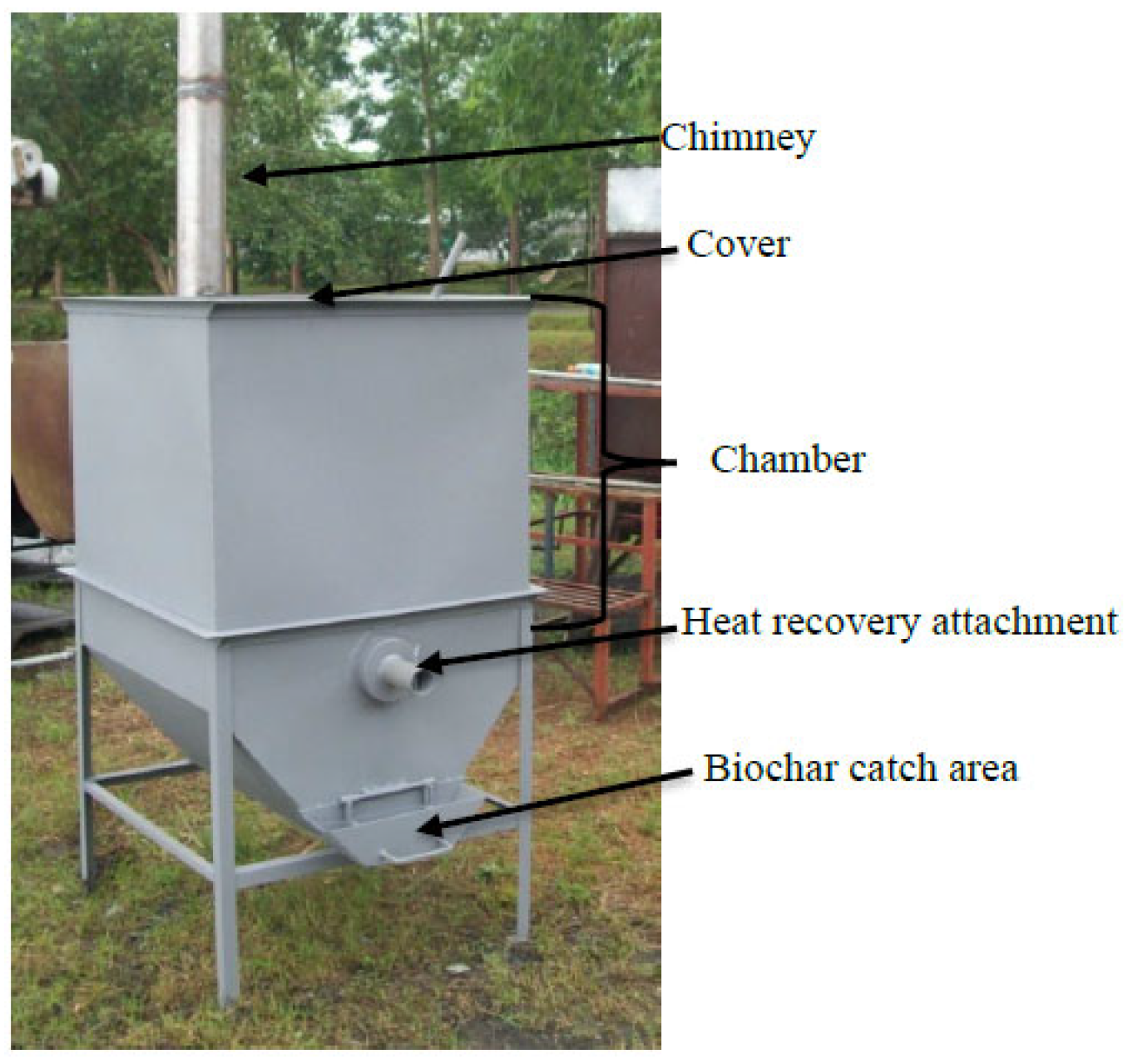
Rice husk biochar was produced using a continuous-type rice hull pyrolizer (CtHRP) produced by the Philippine Rice Research Institute—Central Experiment Station, Science City of Muñoz, Nueva Ecija, Philippines (Figure 1). Briefly, raw rice hulls (10–12% moisture) were loaded into the CtHRP with the following parameters: (a) capacity = 26.2 kg/h; (b) charcoal yield = 42.1% w.b.; (c) temperature = ranging from 300 °C to 500 °C sufficient to induce pyrolysis while preventing combustion; and (d) an effective residence time of 40–60 min. The operation is done until visible smoke and glowing embers completely disappear. The biochar is air-cooled for another 1 h before placing it within a sealed container to prevent moisture uptake and contamination. Prior to application to the soil, the biochar was ground and sieved (<250 µm). The surface morphology of the biochar was analyzed using scanning electron microscopy (SU 3800 SEM) (Hitachi-Hightech Corp, Tokyo, Japan). The elemental composition of the biochar was determined using X-ray fluorescence (XRF) spectroscopy (Horiba XGT-micro XRF analyzer, Tokyo, Japan).

2.3. Preparation and Characterization of Nano-Silica, -Calcium, -Chitosan and Its Nanocomposites

Nano-silica was prepared via a sol–gel method, producing amorphous SiO2 nanoparticles [5]. Nano-calcium was synthesized using chicken eggshells, which were converted into CaO nanoparticles through calcination incineration using a muffle furnace (Daihan, South Korea). Chitosan nanoparticles were formed by ionic gelation using tripolyphosphate (TPP). The biochar nanocomposite (BC-Si/Ca/Ch using 1:1:1) was prepared by dispersing nanoparticles in an aqueous suspension and impregnating the biochar under sonication, followed by drying and mild heat treatment to enhance adhesion.

2.4. Experimental Design

A randomized complete block design pot experiment was performed with five treatments (four replicates each): T1—control (no application); T2—biochar; T3—nanocomposite (SiO2–CaO–chitosan); T4—biochar + nano-silica; T5—biochar + nano-calcium; T6—biochar + nano-chitosan; and T7—biochar + nanocomposite. Each pot received 15 kg of 4 mm-sieved soil; vetiver slips (20 cm) were transplanted after soil equilibration. The experiment ran for 120 days under outdoor shade with regular irrigation to field capacity.

2.5. Chemical Analyses

Soil samples were collected at day 0 and day 180 to evaluate changes in total nickel (Ni) concentration. Total Ni was quantified using microwave plasma atomic emission spectroscopy(Agilent 4200 MP-AES) (Santa Clara, CA, USA) following acid digestion and alkaline extraction procedures. Plant shoots and roots were harvested, thoroughly washed with deionized water, oven-dried at 60 °C, and digested in HNO3/H2O2 for tissue Ni analysis. The scanning electron microscopy coupled with energy-dispersive X-ray (SEM–EDX) (Hitachi SU 3800) (Hitachi-Hightech Corp, Tokyo, Japan) technique was used to examine the surface morphology and Ni elemental distribution of the synthesized nanocomposites, while Fourier-transform infrared spectroscopy (FTIR) (Perkin Elmer Spectrum 2.0) (Shelton, CT, USA) was employed to identify the functional groups involved in Ni adsorption and binding interactions.

2.6. Data Analysis

Statistical differences among treatments were evaluated using one-way ANOVA followed by Tukey’s post hoc test at α = 0.05.

3. Results

3.1. General Characteristics of the Soil in the Sampling Area

The area is suffering from the devastating effects of mining because of its abundant chromite and nickel minerals. The soil type in the study area is bani silty clay, and the soil characteristics are presented in Table 1. The soil was found to be extremely acidic, and low in OM, CEC, N, P, and K content.

3.2. Characterization of Biochar and Nanomaterials

  • Rice Husk Biochar Elemental Analysis and Surface Morphology
Rice husk biochar (RHB) characteristics from XRF are found in Table 2. X-ray fluorescence (XRF) analysis showed that the rice husk biochar was predominantly composed of silicon (50.39%), indicating its silica-rich nature typical of rice residues. Moderate amounts of magnesium (3.57%) and aluminum (1.38%) were also detected, along with trace levels of sodium, phosphorus, sulfur, titanium, chromium, nickel, copper, and zinc. Toxic heavy metals such as cadmium, mercury, lead, and iron were not detected, confirming its safety for agricultural applications. The biochar exhibited an alkaline pH (8.89) and high organic carbon content (28.03%), suggesting its potential to improve acidic soils, enhance nutrient retention, and immobilize heavy metals. The chemical composition and low metal contamination indicate that the rice husk biochar is a silica-rich, environmentally safe amendment suitable for nickel-contaminated soil remediation and sustainable soil management.
It is noteworthy that an original rice husk contains 40–50% carbon content and when converted to biochar only 28% remains (Table 2) and it has greater silica content (~50%), since during the process of pyrolysis the thermal decomposition of cellulose, hemicellulose and lignin results in lower organic carbon content. In contrast, silica is thermally stable and does not volatilize and become relatively enriched during the process [12]. From the experiment conducted, the reported value by the XRF is silicon instead of silica. The results do not specify silicon oxide form since XRF cannot detect molecular species but the silica is inferred from the measured silicon concentration. XRF directly measures silicon atoms regardless of their chemical form. In principle, the oxygen atom has a very low atomic number, which makes it difficult to detect.
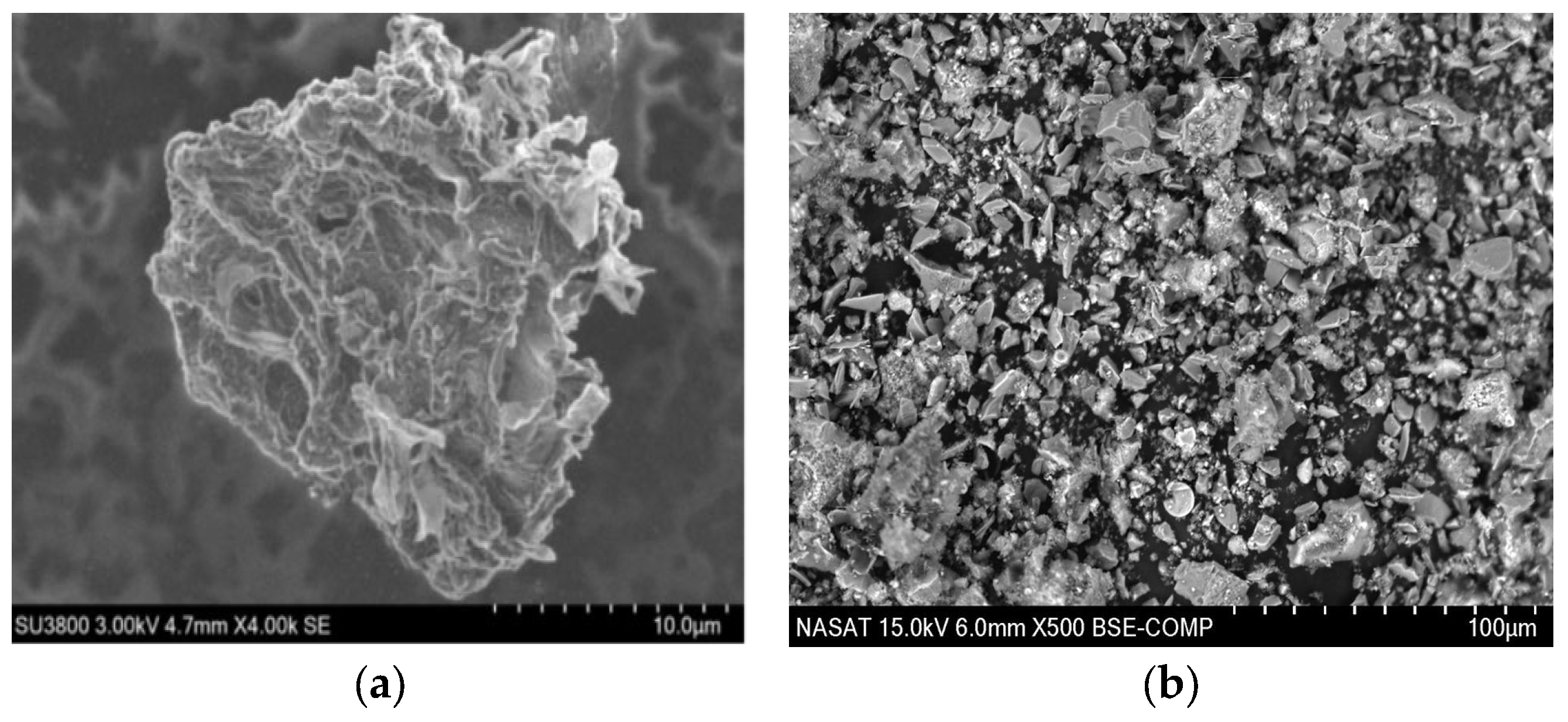
The SEM analysis showed that the microstructure at 100 μm (Figure 2a) and 10 μm (Figure 2b) of the rice husk biochar was highly heterogenous and crystalline in nature. Rice husk biochar particles consisted of higher silicon (Si) mineral agglomerates on lower-carbon-content fibers, with structures typical of its biomass origin.
Nanoparticles and nanocomposites:
  • Particle Size
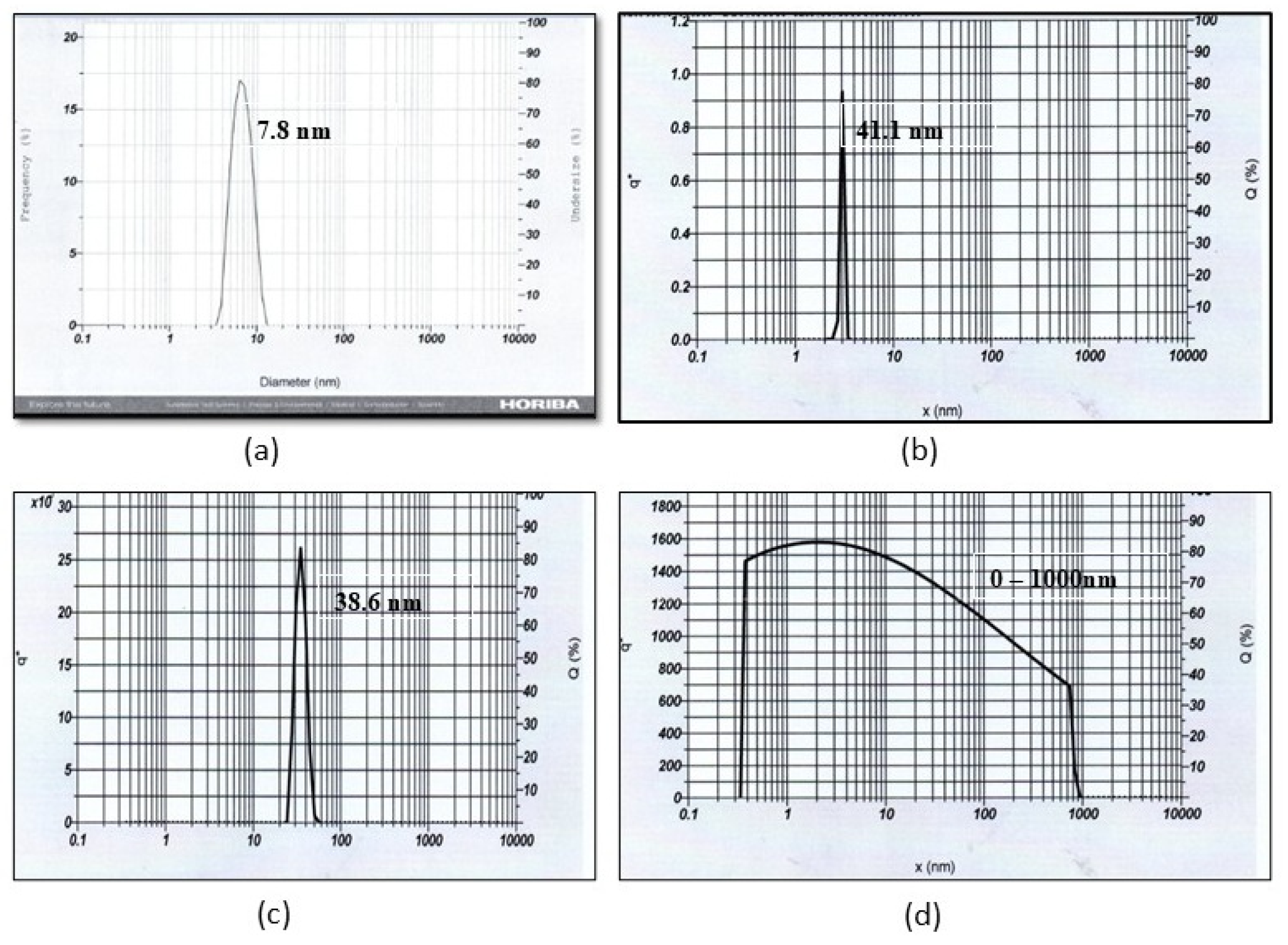
Figure 3 shows the particle size distribution of the synthesized nanomaterials and their composites. Nano-silica (Figure 3a) exhibited a narrow and uniform particle size distribution with an average diameter of approximately 7.8 nm, indicating successful synthesis of fine nanoparticles. Nano-calcium (Figure 3b) showed a slightly larger but still well-defined particle size with a dominant peak at around 41.1 nm, suggesting controlled particle formation. Nano-chitosan (Figure 3c) on the other hand displayed a broader distribution with an average particle size of about 38.6 nm, which can be attributed to the polymer chain interactions and partial aggregation during nanoparticle formation. Upon integration into nanocomposite (Figure 3d), the particle size distribution widened considerably, ranging from the nanometer scale up to approximately 1000 nm, reflecting the successful assembly and interaction of nano-silica, nano-calcium, and nano-chitosan into a composite structure [13]. This increase in apparent particle size is indicative of nanoparticle aggregation and surface coating effects, which are commonly observed in nanocomposites and are favorable for enhanced stability and functional performance in soil- and plant-related applications. In nano-phytoremediation of vetiver, aggregation enhances the effectiveness of biochar nanocomposites by improving nanoparticle retention in biochar, thereby reducing leaching and increasing stability in soil. This aggregation promotes sustained nutrient release and enhances the sorption and immobilization of heavy metals such as Ni.
  • Surface Morphology
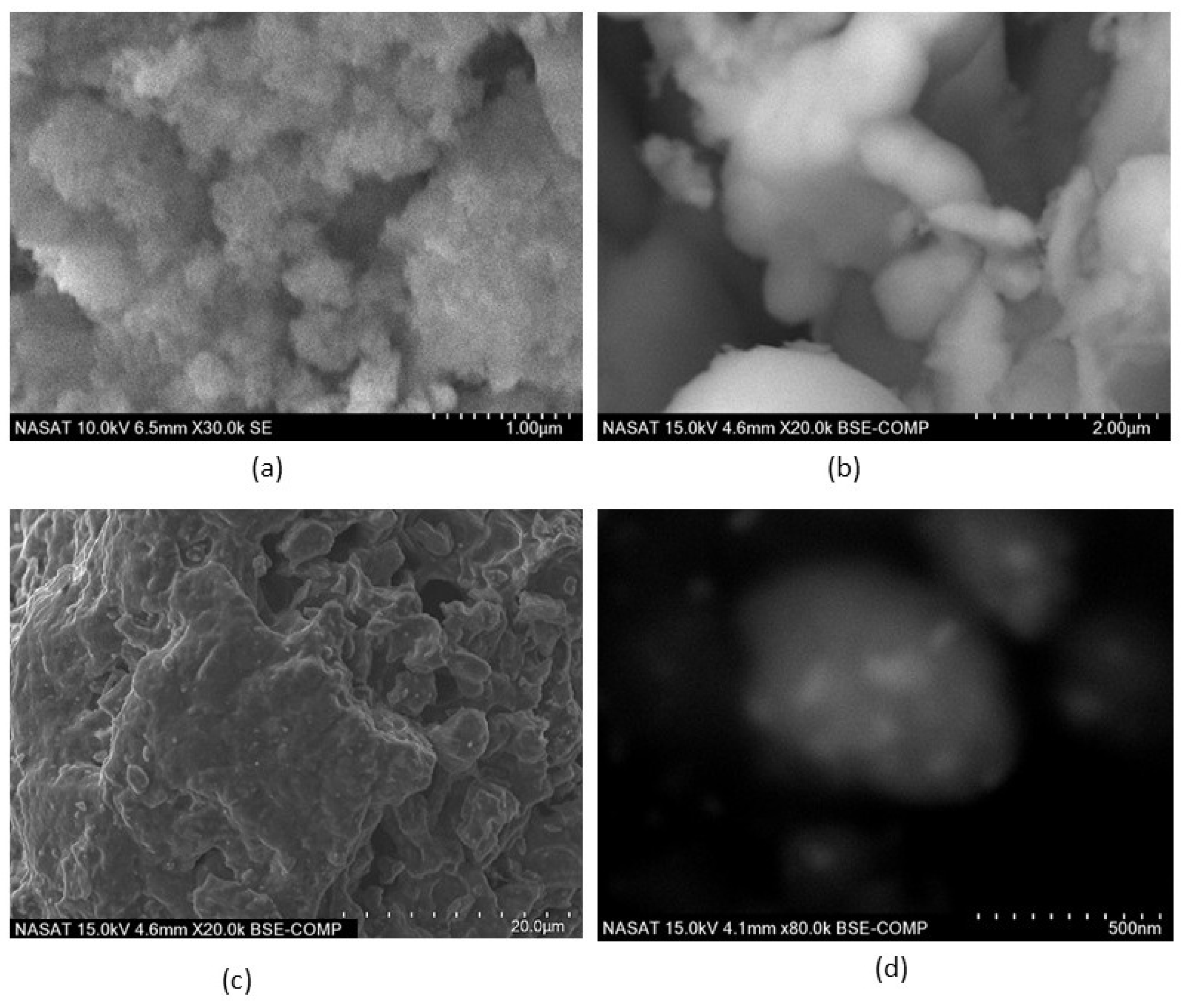
The SEM micrographs (Figure 4) reveal a distinct morphological characteristic of the synthesized nanomaterials and their successful integration into a nanocomposite. The nano-silica (Figure 4a) exhibits fine, quasi-spherical particles with noticeable agglomeration, which is typical of amorphous silica nanoparticles due to their high surface energy and reactive silanol groups. The nano-calcium particles (Figure 4b) appear as relatively larger, irregular, and compact aggregates, suggesting a semi-crystalline domain commonly associated with calcium-based nanoparticles, while chitosan (Figure 4c) shows a rough, flaky, and porous morphology indicative of its polymeric nature and high surface area favorable for adsorption and binding. In contrast, the nanocomposite (Figure 4d) shows poorly defined and indistinct particle boundaries due to high pronounced agglomeration, indicating strong interparticle interaction of nano-silica and nano-calcium within the chitosan matrix.
  • Functional group through FTIR
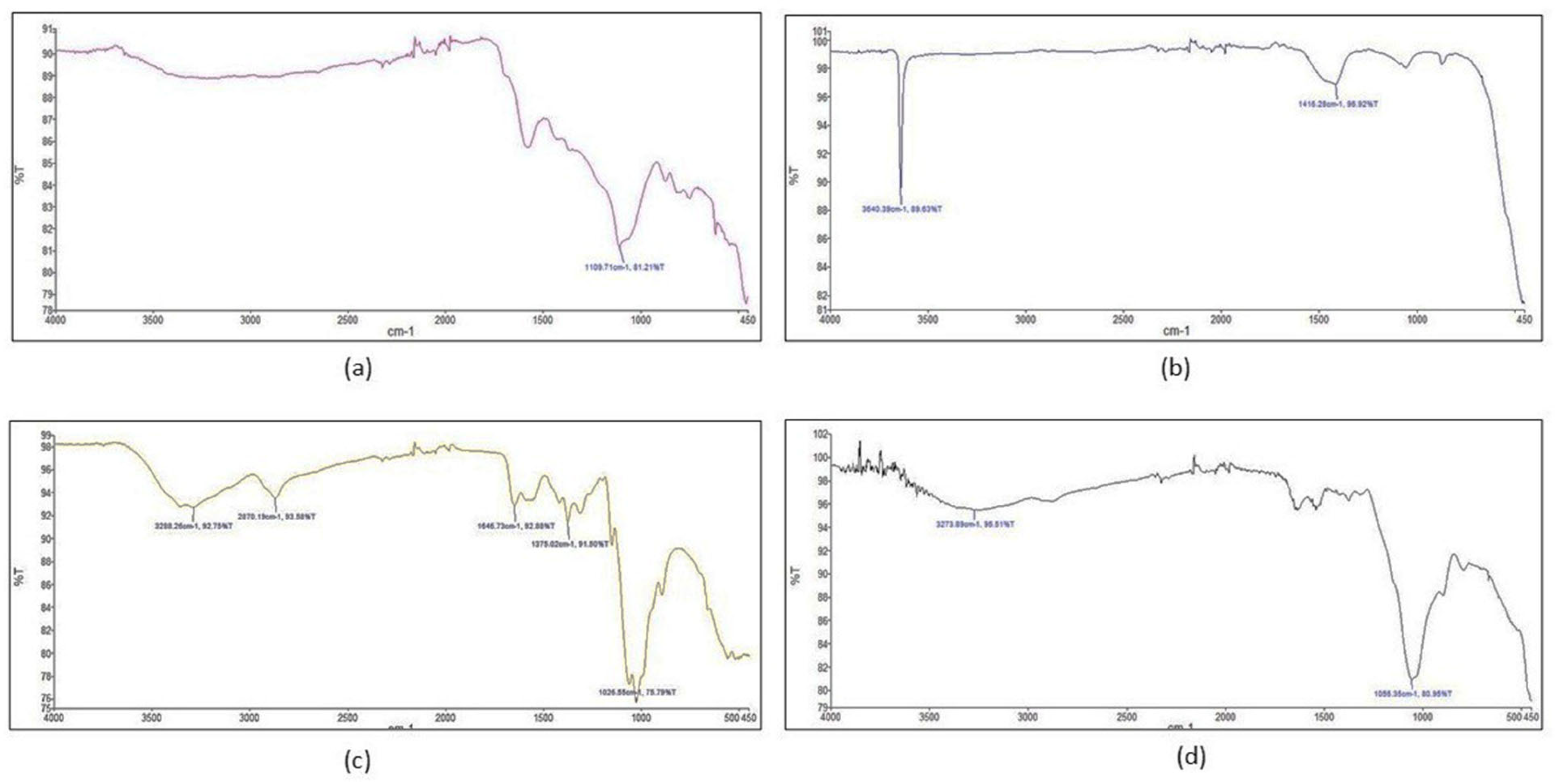
The Fourier-transform infrared (FTIR) spectra confirmed the successful synthesis of nano-silica, nano-calcium, nano-chitosan, and their nanocomposite through the identification of characteristic functional groups (Figure 5). The nano-silica spectrum exhibited a strong absorption band around 1086 cm−1, corresponding to the asymmetric stretching of Si–O–Si, along with peaks at 800 cm−1 and 470 cm−1 attributed to symmetric stretching and bending vibrations, respectively, indicating the amorphous nature of silica. The result is similar to the study of Zhong et al. (2022) [14]. The nano-calcium spectrum showed a broad band near 3432 cm−1 associated with O–H stretching of surface hydroxyl groups and peaks at 1414 cm−1 and 874 cm−1, representing CO32− vibrations characteristic of calcium oxide or calcium carbonate structures [15]. The chitosan nanoparticles exhibited distinct bands at 3422 cm−1 (O–H and N–H stretching), 2921 cm−1 (C–H stretching), and 1657 cm−1 (amide I), confirming the presence of amino and hydroxyl functionalities responsible for metal binding and polymer–nanoparticle interactions.
In the nanocomposite spectrum, the characteristic peaks of Si–O–Si, Ca–O, and N–H/O–H groups appeared with slight shifts and reduced intensity, suggesting strong intermolecular interactions and successful integration of the three nanomaterials into a single matrix. The broad band around 3443 cm−1 reflects hydrogen bonding among hydroxyl and amine groups, while the persistence of the Si–O stretching band near 1080 cm−1 confirms the structural stability of silica within the composite. These spectral features collectively validate the formation of a chemically interactive bio-nanocomposite with potential for enhanced adsorption and metal-binding capacity, particularly for nickel immobilization in soil remediation applications.

3.3. Ni Removal Efficiency of Vetiver Amended with Biochar Nanocomposite

3.3.1. Plant Parameter

There is increasing evidence that biochar and nanoparticles affect crop development and yield in plant tissue. The combined application of biochar with nano-silica (T4) resulted in the highest tiller diameter, root weight and total biomass, demonstrating a clear synergistic effect that surpassed biochar alone and other nano-amendments (Table 3). This superiority of nano-silica has been widely reported by improving nutrient uptake efficiency and overall physiological processes [16].

3.3.2. Nano-Phytoremediation Efficiency Assessment

In Table 4, the results show that the addition of biochar and nanomaterial amendments significantly influenced the phytoremediation parameters of the system, particularly the shoot Ni concentration, total N concentration and translocation factor (TF). For example, treatments combining biochar with nano-chitosan (T6) achieved the highest shoot Ni concentration (24.52 mg kg−1) and a comparatively high TF (0.56) relative to the no application control (15.17 mg kg−1; TF = 0.50). The increase in total N under nano-amended treatments (e.g., T3, T4 and T6) suggests enhanced plant nutrient status that may support greater biomass production and metal uptake. This aligns with emerging evidence that nanomaterials can boost plant growth and heavy metal uptake in phytoremediation systems through improved nutrient use efficiency and root system stimulation [17].
Secondly, the observed pattern of the translocation factor helps to interpret the sink-vs-source behavior of the plants in this system. Generally, TF values below 1 indicate retention of metal within the root system (favoring phytostabilization), whereas values above 1 suggest effective translocation to harvestable shoot tissues (phytoextraction). In this study all TF values were well below 1 (0.28–0.56 range), which implies that although shoot Ni concentrations increased under amendments, much of the Ni may still be either retained in root tissues or partitioned. This behavior is consistent with previous findings in which amendments (e.g., biochar) reduce metal mobility and limit shoot translocation even when uptake is enhanced [18]. Thus, while shoot accumulation improved, the system appears more oriented towards enhanced uptake + limited translocation, which may have implications for disposal of biomass and the overall remediation strategy.
Finally, the synergistic effect of combining biochar with nano-materials (e.g., nano-calcium, nano-chitosan) is notable in the data, suggesting that engineered amendments can modify the bioavailability and partitioning of Ni in ultramafic soil systems. According to recent reviews on nano-phytoremediation, nanoparticles can increase the efficiency of phytoremediation by altering metal speciation, enhancing root absorption surface area, and improving plant stress tolerance under metal toxicity. The highest shoot Ni under T6 (biochar + nano-chitosan) indicates that nano-chitosan may have played a role in making Ni more accessible to the plant. On the other hand, the fact that the TF remains <1 even in that treatment suggests that further work is needed to shift the system towards practical phytoextraction (i.e., shoot removal). To this end, monitoring root Ni concentrations, root vs. shoot partitioning, and assessing removal/disposal of harvested biomass would be important next steps.

4. Conclusions

The study successfully synthesized and characterized nano-silica, nano-calcium, and nano-chitosan using FTIR, SEM, and particle size analyses. These nanomaterials were applied to assess the phytoremediation potential of vetiver grass in heavy metal-contaminated soil. Among the treatments, the combination of biochar and nano-silica yielded the highest plant biomass, demonstrating enhanced growth performance. However, results showed no significant improvement in the nickel absorption efficiency of vetiver when biochar nanocomposites were applied. The findings also highlighted potential risks associated with heavy metal translocation to the harvestable parts of the plant.
The use of nanomaterials influenced the soil’s surface chemistry, underscoring the importance of optimizing plant biomass production for effective phytoremediation. To further understand the mechanisms involved, the study recommends the use of advanced imaging techniques such as Atomic Force Microscopy (AFM) and Transmission Electron Microscopy (TEM) to trace the uptake and transport of nanomaterials within vetiver roots and shoots. Moreover, long-term investigations are needed to determine the environmental behavior and stability of synthesized nanocomposite materials in heavy metal-polluted soils.

Author Contributions

Conceptualization and project administration: M.M.S. and J.J.M.; Methodology: P.J.G.E. and G.G.A.H.; Supervision and project supervision: J.J.M.; Writing—original draft preparation: M.M.S., P.J.G.E. and G.G.A.H.; Writing—review and editing: A.G.M., F.M.N.G., F.T.F. and M.L.T.M. All authors have read and agreed to the published version of the manuscript.

Funding

This work is funded by Department of Science and Technology–Science Education Institute (DOST-SEI) and Central Luzon State University.

Institutional Review Board Statement

Not applicable.

Informed Consent Statement

Not applicable.

Data Availability Statement

The data presented in this study are available on request corresponding author.

Acknowledgments

Special thanks are extended to the Department of Chemistry and the Nanotechnology R&D Facility, Central Luzon State University (CLSU), for the technical assistance and access to laboratory instruments used in the synthesis and characterization of the nanomaterials. The authors also wish to express their sincere appreciation to Ian Navarrete for generously providing the X-ray fluorescence (XRF) analysis of the biochar utilized in this research.

Conflicts of Interest

The authors declare no conflicts of interest.

Abbreviations

The following abbreviations are used in this manuscript:
RHBRice Husk Biochar
CTRHPContinuous-type Rice Husk Biochar
SEMScanning Electron Microscope
DLSDynamic Light Scattering
FTIRFourier-Transform Infrared
AFM Atomic Force Microscopy
TEMTransmission Electron Microscopy

References

  1. Edike, P.C.; Camara, P.G. Evaluating the sediment yield and environmental impact in mining expansion scenarios in Sta. Cruz—Candelaria, Zambales. Technol. A Glob. J. Technol. Dev. Sci. Innov. 2024, 2, 20–28. [Google Scholar] [CrossRef]
  2. Liang, M.; Lu, L.; He, H.; Li, J.; Zhu, Z.; Zhu, Y. Applications of Biochar and Modified Biochar in Heavy Metal Contaminated Soil: A Descriptive Review. Sustainability 2021, 13, 14041. [Google Scholar] [CrossRef]
  3. Mazaraji, M.; Bayero, M.T.; Minkina, T.; Sushukova, S.; Mandzhieva, S.; Bauer, T.V.; Soldatov, A.; Sillanpaa, M.; Wong, M.W. Nanomaterials in Biochar: Review of Their Effectiveness in Remediating Heavy Metal-Contaminated Soils. Sci. Total Environ. 2023, 880, 139366. [Google Scholar] [CrossRef] [PubMed]
  4. Melato, F.A.; Mokgalaka, N.S.; McCrindle, R.I. Adaptation and detoxification mechanisms of Vetiver grass (Chrysopogon zizanioides) growing on gold mine tailings. Int. J. Phytoremediat. 2016, 18, 509–520. [Google Scholar] [CrossRef] [PubMed]
  5. Sarong, M.M.; Orge, R.F.; Eugenio, P.J.G.; Monserate, J.J. Utilization of rice husks into biochar and nanosilica: For clean energy, soil fertility and green nanotechnology. Int. J. Des. Nat. Ecodynamics 2020, 15, 97–102. [Google Scholar] [CrossRef]
  6. Sarong, M.M.; Almendras-Ferraren, A.S.; Orge, R.F. Changes in fertility and microbial respiration in acid sandy soil amended with uncharred and charred poultry litter. WIT Trans. Ecol. Environ. 2016, 210, 325–336. [Google Scholar] [CrossRef]
  7. Sarong, M.M.; Orge, R.F. Effect of rice hull biochar on the fertility and nutrient holding capacity of sandy soils. OIDA Int. J. Sustain. Dev. 2015, 8, 33–44. [Google Scholar]
  8. Bhandari, G.; Gangola, S.; Dhasmana, A.; Rajput, V.; Gupta, S.; Malik, S.; Slama, P. Nano-biochar: Recent progress, challenges, and opportunities for sustainable environmental remediation. Front. Microbiol. 2023, 14, 1214870. [Google Scholar] [CrossRef] [PubMed]
  9. Samani, M.; Ahlawat, Y.K.; Golchin, A.; Alikhani, H.A.; Baybordi, A.; Mishra, S.; Şimşek, O. Nano-Silica Regulates Heavy Metal Uptake and Enhances Tolerance in Calendula officinalis under Metal Stress. BMC Plant Biol. 2024, 24, 598. [Google Scholar] [CrossRef] [PubMed]
  10. Schoeneberger, P.J.; Wysocki, D.A.; Benham, E.C.; Soil Survey Staff. Field Book for Describing and Sampling Soils (Version 3.0); USDA NRCS: Washington, DC, USA, 2012. [Google Scholar]
  11. Landon, J.R. Booker Tropical Soil Manual: A Handbook for Soil Survey and Agricultural Land Evaluation in the Tropics and Subtropics, 1st ed.; Routledge: Oxfordshire, UK, 1991. [Google Scholar] [CrossRef]
  12. Somboon, S.; Schlichenmaier, S.; Thumanu, K.; Palawamot, P.; Yodda, S.; Sukitprapanon, T.S.; Lawongsa, P. Transformations in physicochemical properties and pore structure of biochar derived from rice straw revealed by synchrotron techniques. Sci. Rep. 2025, 15, 23641. [Google Scholar] [CrossRef] [PubMed]
  13. Leonardi, M.; Caruso, G.M.; Carrocio, S.C.; Boninelli, S.; Curcuruto, G.; Zimbone, M.; Allegra, M.; Torrisi, B.; Ferlito, F.; Miritello, M. Smart nanocomposites of chitosan/alginate nanoparticles loaded with copper oxide as alternative nanofertilizers. Environmetal Sci. Nano 2021, 8, 174–187. [Google Scholar] [CrossRef]
  14. Zhong, T.; Xia, M.; Yao, Z.; Han, C. Chitosan/Silica Nanocomposite Preparation from Shrimp Shell and Its Adsorption Performance for Methylene Blue. Sustainability 2022, 15, 47. [Google Scholar] [CrossRef]
  15. Liu, X.; Wang, Z. Chitosan-calcium carbonate scaffold with high mineral content and hierarchical structure for bone regeneration. Smart Mater. Med. 2023, 4, 552–561. [Google Scholar] [CrossRef]
  16. Yan, G.; Huang, Q.; Zhao, S.; Xu, Y.; He, Y.; Nikolic, M.; Nikolic, N.; Liang, Y.; Zhu, Z. Silicon nanoparticles in sustainable agriculture: Synthesis, absorption, and plant stress alleviation. Front. Plant Sci. 2024, 15, 1393458. [Google Scholar] [CrossRef] [PubMed]
  17. Prakas, P.; Chandran, S. Nano-phytoremediation of Heavy Metals from Soil: A critical review. Pollutants 2023, 3, 360–380. [Google Scholar] [CrossRef]
  18. Otunola, B.O.; Aghoghovwia, M.P.; Thwala, M.; Gómez-Arias, A.; Jordaan, R.; Hernandez, J.C.; Ololade, O.O. Influence of Clay Mineral Amendments Characteristics on Heavy Metals Uptake in Vetiver Grass (Chrysopogon zizanioides L. Roberty) and Indian Mustard (Brassica juncea L. Czern). Sustainability 2022, 14, 5856. [Google Scholar] [CrossRef]
Figure 1. The CtRHP pyrolyzer [5].
Blsf 54 00026 g001
Figure 2. SEM of synthesized rice husk biochar at 100 μm (a) and 10 μm (b).
Blsf 54 00026 g002
Figure 3. Particle size distribution of (a) nano-silica, (b) nano-calcium, (c) nano-chitosan, and (d) the synthesized nanocomposite.
Blsf 54 00026 g003
Figure 4. Scanning electron microscope (SEM) of (a) nano−silica, (b) nano−calcium, (c) nano−chitosan, and (d) the synthesized nanocomposite.
Blsf 54 00026 g004
Figure 5. Functional Group through Fourier Transform infrared (FTIR) of (a) nano−silica, (b) nano−calcium, (c) nano−chitosan, and (d) the synthesized nanocomposite.
Blsf 54 00026 g005
Table 1. Physical and chemical properties of the soil used in the study.
PropertyValueRating/Description *
Particle
    % sand7.0-
    % silt43.3-
    % clay49.7-
Textural ClassSilty Clay-
Soil typeBani Silty Clay-
Soil pH (H2O, 1:2.5)4.48Extremely acidic
Soil organic matter (%)1.48Low
Total N (%)0.15Low
Exchangeable Al (cmol+ kg−1)2.88High
Exchangeable acidity (cmol+ kg−1)3.08High
Extractable P (mg kg−1 soil)1.53Low
Exchangeable bases (cmol+ kg−1)
    K0.25Low
    Ca3.57Low
    Mg1.38Low
    Na0.25Low
CECEffective (cmol+ kg−1)8.43Low
Available Cr (mg kg−1)1648.32Very high
Available Ni (mg kg−1)1349.68Very high
* Ratings were based on standard soil fertility and chemical interpretation guidelines [10].
Table 2. Physicochemical and elemental composition of rice husk biochar as determined by X-ray fluorescence (XRF) analysis.
PropertyValue
pH (1:5 biochar to H2O)8.89
OC (%)28.03
Total N (%) 0.55
XRF * Values: Mass (%)
       Na0.25
       Mg3.57
       Al1.38
       Si 50.39
       P0.08
       S0.25
       KND
       Ti0.24
       Cr0.08
       FeND
       Ni0.02
       Cu0.11
       Zn0.02
       CdND
       HgND
       PbND
* Values are reported as average from three-point analysis; ND—not detectable.
Table 3. Effects of biochar and engineered nanomaterial amendments on the growth performance and biomass yield of Vetiveria zizanioides grown in Ni-elevated ultramafic soil.
TreatmentsTiller Diameter (cm)Root Weight (g)Shoot Weight (g)Total Biomass (g)
T1—No Application7.04 c61.33 d130.25 d191.58 e
T2—Biochar Alone7.77 c153.42 bc131.23 cd284.64 cd
T3—Nanocomposite Alone9.59 bc111.96 c127.81 d239.78 de
T4—Biochar + Nano-silica15.52 a284.99 a184.98 a469.97 a
T5—Biochar + Nano-calcium 12.02 ab183.02 b156.07 bc339.09 b
T6—Biochar + Nano-chitosan13.04 ab108.47 b163.32 b343.80 bc
T7—Biochar + Nanocomposite5.84 c185.14 b146.60 c331.74 bc
Tukey’s HSD value (1%)4.0449.322.5248.81
cv (%)17.1012.739.106.65
Different letters within a column indicate significant differences according to Tukey’s HSD test (p ≤ 0.01).
Table 4. Effects of biochar and engineered nanomaterial amendments on nickel (Ni) accumulation and translocation efficiency of Vetiveria zizanioides grown in Ni-elevated ultramafic soil.
TreatmentsPhytoremediation Parameters
Ni Concentration in the Shoot
(mg kg−1)
Ni Concentration in the Root
(mg kg−1)
Total N
Concentration
Translocation Factor
T1—No Application15.17 c30.52 c45.70 d0.50
T2—Biochar Alone19.82 abc50.14 b69.95 c0.40
T3—Nanocomposite Alone18.54 b65.78 a84.32 a0.28
T4—Biochar + Nano-silica18.27 bc64.09 a82.36 a0.29
T5—Biochar + Nano-calcium 20.23 ab43.68 b63.91 c0.46
T6—Biochar + Nano-chitosan24.52 a48.30 b72.81 bc0.56
T7—Biochar + Nanocomposite20.23 ab47.94 b68.17 c0.42
Tukey’s HSD value (1%)4.9510.2510.83-
cv (%)10.848.766.86-
Different letters within a column indicate significant differences according to Tukey’s HSD test (p ≤ 0.01).
Disclaimer/Publisher’s Note: The statements, opinions and data contained in all publications are solely those of the individual author(s) and contributor(s) and not of MDPI and/or the editor(s). MDPI and/or the editor(s) disclaim responsibility for any injury to people or property resulting from any ideas, methods, instructions or products referred to in the content.