Proceeding Paper

A Comparative Study of Plant Growth Affected by Soil Amendments with Recovered Nutrients, Drought Conditions, and Seasonal Temperatures †

by
Jackson Lee Sauers
1,
Kambham Raja Reddy
2 and
Veera Gnaneswar Gude
1,3,4,5,*
1
Richard A Rula School of Civil and Environmental Engineering, Mississippi State University, Mississippi State, MS 39762, USA
2
Department of Plant and Soil Sciences, Mississippi State University, Mississippi State, MS 39762, USA
3
Purdue University Northwest Water Institute, Purdue University Northwest, Hammond, IN 46323, USA
4
Department of Mechanical and Civil Engineering, Purdue University Northwest, Hammond, IN 46323, USA
5
School of Sustainability Engineering and Environmental Engineering, Purdue University, West Lafayette, IN 47906, USA
*
Author to whom correspondence should be addressed.
Presented at the 3rd International Online Conference on Agriculture (IOCAG 2025), 22–24 October 2025; Available online: https://sciforum.net/event/IOCAG2025.
Biol. Life Sci. Forum 2025, 54(1), 27; https://doi.org/10.3390/blsf2025054027
Published: 24 February 2026
(This article belongs to the Proceedings of The 3rd International Online Conference on Agriculture)

Abstract

Nutrients recovered from municipal and dairy wastewaters in a bioelectrochemical system constructed with terracotta and biochar were used in different soil amendments. These amendments included addition of terracotta (TS), biochar (BS), terracotta and biochar nutrient-rich mixtures from bioelectrochemical systems, DWW (dairy wastewater), and SWW (synthetic wastewater), respectively. Corn growth affected by these amendments was compared with control, termed straight soil (SS). The first experimental setup consisted of 60 plants, four replications per group, and nutrient loadings (0%, 50%, and 100% Hoagland Nutrient Solution, HNS) in the fall season. After harvesting, the plants and soil were analyzed for agro-physical characteristics by various methods. At the 100% nutrient treatment, the TS soil had the best yielding plants. Overall, plants grown in DWW and SWW soil amendments with 0% and 50% nutrient treatments had the best results in plant height, total plant dry weight, the average number of leaves per plant, leaf surface area, shoot dry weight, root/shoot ratio, root surface area, and NBI when compared to the control group. Another test was carried out with 80 corn plants grown using five different soil mediums and using four different nutrient treatments in the spring season. Twenty of the plants were put through a simulated drought to evaluate drought resistance (as measured by plant growth) in different soil amendments. In this test, the SWW soil amendment had a negative effect at 0% HNS and in warm weather. The SWW soil medium had large retention in soil moisture, which had a negative growth effect. It is recommended that the irrigation be monitored closely when applying the SWW soil amendment to avoid overwatering. This research provides critical insights into nutrient reuse in crop production.

1. Introduction

Soils may experience a multitude of problems such as being impoverished and degraded over time [1]. An impoverished and degraded soil will be less effective at growing plants and will result in a higher amount of erosion. One of the main goals to replenish and improve soil conditions is to increase the organic matter and soil microbial activities which can help establish a favorable plant environment and increase the plant development [2,3]. Some of the common methods that have been used to increase soil conditions are the addition of soil amendment materials such as biochar, compost and manure. Biochar–soil–plant interactions have been well documented [4]. Benefits of biochar soil amendments such as enhancing soil structure, fertility, increasing nutrient availability and promoting plant growth are well reported [5,6]. Soil amendments have also been shown to improve yields by suppressing migratory pests such as locusts and grasshoppers [7]. To reduce the environmental impacts associated with nitrogen fertilization, soil amendments such as manure, ammonium sulfate and polymer-coated urea were utilized. The combination of cover crops and manure was reported as the best option for the corn yield [8]. Agricultural residue (rice husk)-derived biochar has been reported to improve soil properties leading to improved corn growth [9]. In another study, the effect of biochar amendments and their influence on soil–oxygen dynamics were studied systematically [10]. The size of biochar particles was identified as an influencing factor for improving soil aeration. The application of biochar helped improve acidic soils to neutral or moderately acidic soils. In addition, water-holding capacity, cation exchange capacity, organic carbon, phosphorus and potassium contents increased significantly [11]. Biochar-amended soils also enhanced drought resilience in lettuce as reported by Tang et al. [12]. Similarly, compost addition enhanced corn growth under well-watered and water-stressed conditions [13].
The wastewater that is produced from food production chains can be a solution to over-fertilization with virgin fertilizers. Like wastewater from publicly owned treatment plants, the wastewater from food production is packed with nutrients that can be recovered. The recovered nutrients can be used for soil conditioners, new fertilizers, and carbon storage [14]. Bioelectrochemical systems (BES) are currently being explored for their nutrient recovery potential from wastewater [15,16,17]. Various configurations of BES have been developed and studied to evaluate the feasibility of this approach [16]. If the BES can be constructed with cheaper earthen materials such as terracotta and biochar as reactor construction in lieu of membrane and electrode materials respectively, such natural materials can be processed to serve as soil amendment materials once they are expended. Biochar has been identified as a sustainable and eco-friendly soil amendment [18]. Our recent research has explored this aspect as reported previously [19]. Synthetic dairy and municipal wastewaters were treated in terracotta–biochar BES to adsorb the nutrients from the wastewaters while removing the organic content. This approach facilitated energy-positive wastewater treatment while recovering nutrients such as phosphorous and other micronutrients for potential beneficial uses. Nutrients play an important role in plant growth [20]. Following this research, we have conducted crop growth studies to evaluate the feasibility of using recovered nutrients from the terracotta–biochar-based BES materials as soil amendments [21].
As discussed above, various soil amendments have been shown to be beneficial for improving soil quality, nutrient availability, moisture retention and plant growth. However, studies focusing on terracotta as a soil amendment and its combination with biochar are rarely reported. This study explores the effects of using recovered nutrients from the terracotta–biochar BES and how effective expended BES are as soil amendments for improving corn plant growth through different agro-physical characteristics and amount of nutrients supplied into the soil. In addition to improving corn plant growth, the used BES soil amendment will be investigated to determine if the material can limit the negative effects caused by droughts. This study will also provide comparative views on the effects of seasonal temperatures and drought conditions.

2. Materials and Methods

The first study was conducted during the late fall and early winter at the Environmental Plant Physiology Laboratory at the Rodney Foil Plant Science Research facility of Mississippi Agriculture and Forestry Experiment Station, Mississippi State, MS, USA (33°28′ N 88°47′ W). Details are provided in the following sections.

2.1. Experimental Setup

A total of 60 corn plants were grown using five different soil mediums and using three different nutrient treatments. The plant material is Agri gold A6659 Corn from St. Francisville, IL, USA. The experiment had four replications and five different soil mixtures (control which is straight soil, biochar amended soil, terracotta amended soil, nutrients recovered from dairy wastewater (DWW) and nutrients recovered from synthetic municipal wastewater (SWW)) with each soil mixture being treated with three different nutrient treatments. The soil mixture consisted of 9-parts topsoil and 1-part soil amendment by volume. All 60 pots were thinned to 1 seedling per pot. Thinning took place 21 days to 27 days after sowing. A drip irrigation system was installed to irrigate the experiment with respected nutrient treatment (100% Hoagland nutrition solution, 50% Hoagland nutrition solution, and 0% Hoagland nutrition solution, Starkville City municipal tap water) once per day (7:00 am) for 30 s.

2.2. Root Morphology

The root systems were washed and untangled using a fine paintbrush to minimize root overlap to ensure image quality. An Epson Expression 11000XL scanner captured root morphology images at an 800-dpi resolution (Epson America, Inc., Long Beach, CA, USA). The scans were analyzed by WinRHIZO Pro 2009C software (Regent Instruments, Inc., Québec, QC, Canada).

2.3. Drought Studies

Drought stress impacts plant growth [22] and plants often develop tolerance [23]. The second set of experiments was conducted during early summer conditions. A drip irrigation system was used with 100% Hoagland nutrient solution from day 0 to day 6 after being sown to maximize germination rates. The pots were irrigated once a day for 60 s for the first two days after sowing. The irrigation flow rate was 50 mL per minute. Then it was changed to twice a day for 30 s each irrigation cycle for a total of 60 s per day. Four days after sowing, all 80 pots were moved to a prefabricated mini-hoop module. Seven days after sowing, different nutrient treatments were imposed on the plants. The four nutrient treatments were simulated drought conditions (no additional Hoagland solution was added to the pots), 100% Hoagland nutrition solution, 50% Hoagland nutrition solution, and 0% Hoagland nutrition solution for 30 s twice a day for a total of 1 min per day. 14 days after sowing, the irrigation was changed. The irrigation for the 20 pots in the simulated drought condition received 100% Hoagland nutrient solution for 30 s per day. The 60 remaining pots had their irrigation increased to 1 min twice per day for the 100% Hoagland nutrition solution, 50% Hoagland nutrition solution, and 0% Hoagland nutrition solution. Irrigation increased again at 16 days after sowing; the simulated drought condition pots received 100% Hoagland nutrient solution for 45 s once per day, and the 100% Hoagland nutrition solution, 50% Hoagland nutrition solution, and 0% Hoagland nutrition solution pots received irrigation for 90 s twice per day. Eighteen days after sowing, the irrigation in the simulated drought pots was reduced to 30 s once per day. The pots being treated with 100% Hoagland nutrition solution, 50% Hoagland nutrition solution, and 0% Hoagland nutrition solution irrigation remained the same.

2.4. Statistical Analysis

Four replicates of each condition representing a combination of soil amendment and nutrient treatment were tested and data were evaluated. The analysis was performed in computer software Microsoft Excel add-in with XLSTAT version 2022.1.2. The average results from each variable per soil group and nutrient treatment were compared to one another.

3. Results and Discussion

The following sections will discuss the agro-physical characteristics that were recorded during the harvest and compare the results from the two distinguished studies.

3.1. Soil Amendment Studies in Late Fall and Early Winter Conditions

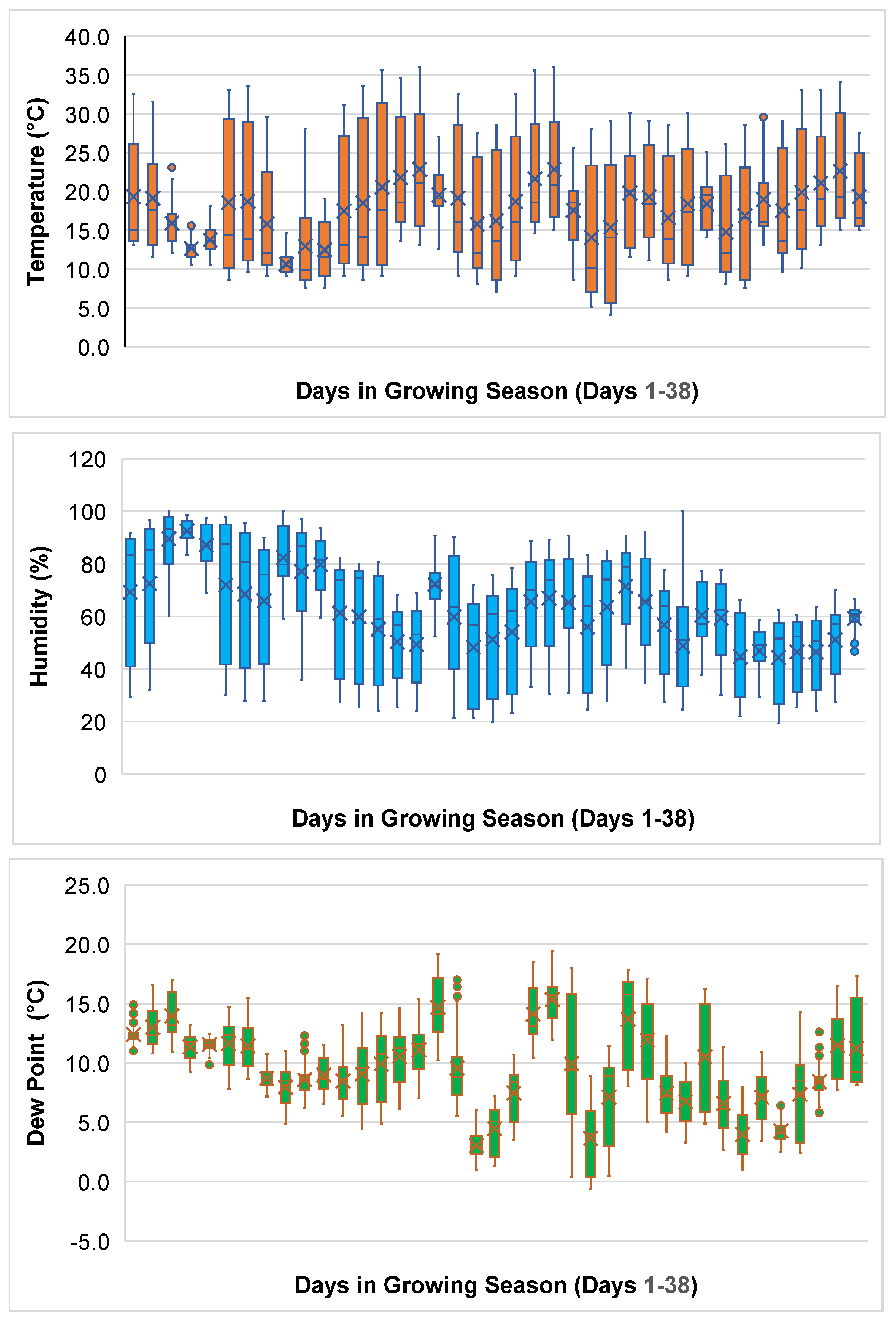
Temperature data for the growing season inside the rain shelter was recorded with button loggers (Spectrum Technologies, Inc. Aurora, IL, USA) of the planter’s box. The minimum and maximum air temperatures in the prefabricated mini-hoop modules during the cropping season were 3.5 °C and 36.1 °C. Figure 1 shows the temperature, humidity, and dew point inside the prefabricated mini-hoop module over the cropping season. The growing degree days is an estimation that is used to determine the growth and development of plants during a growing season based off if the temperature exceeded the minimum development threshold. The growing degree days was calculated using the average temperatures recorded from the two-button logger. The growing degree days for this experiment was 379.5 days.

3.1.1. Plant Height and Leaf Number for Growing Season 1

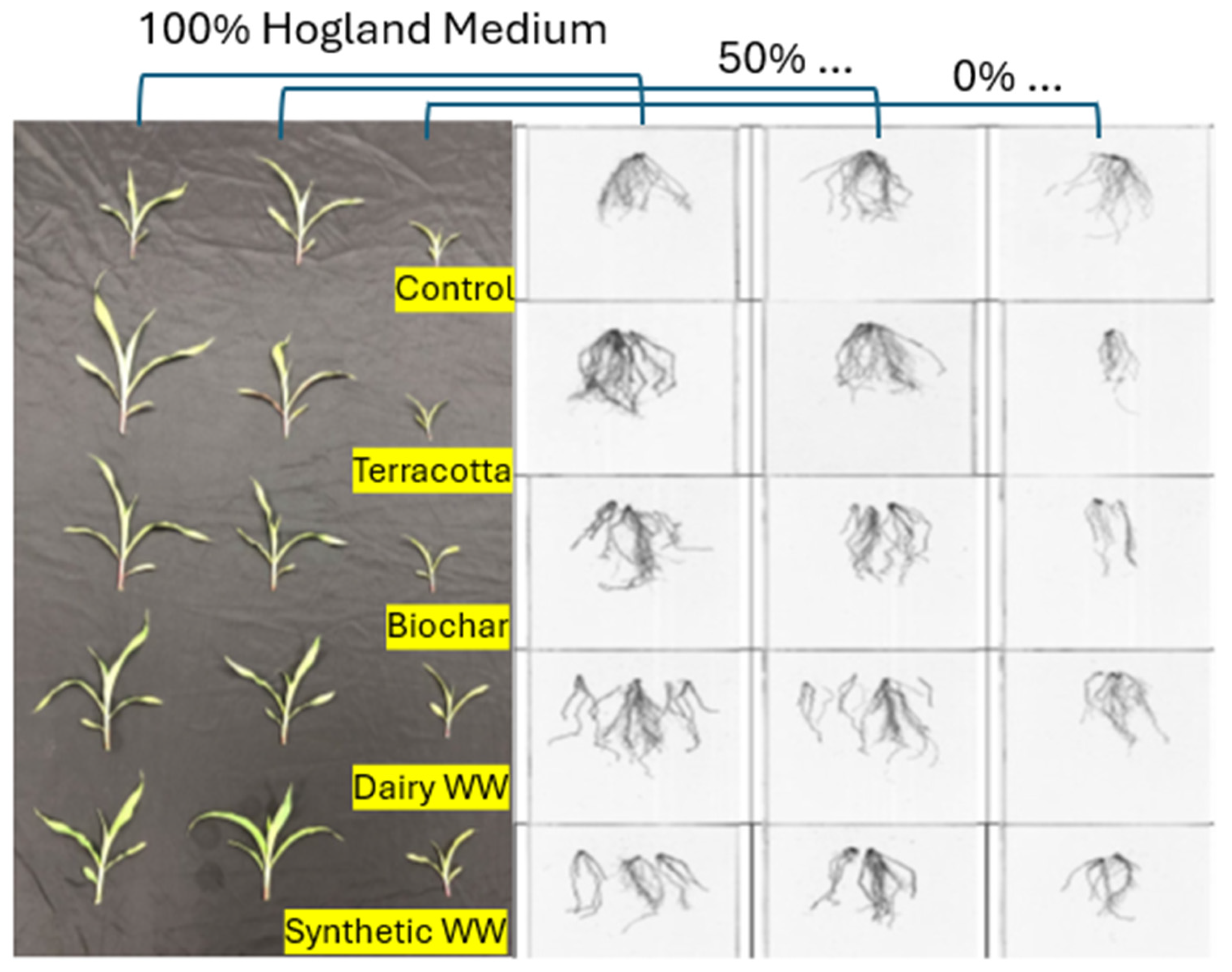
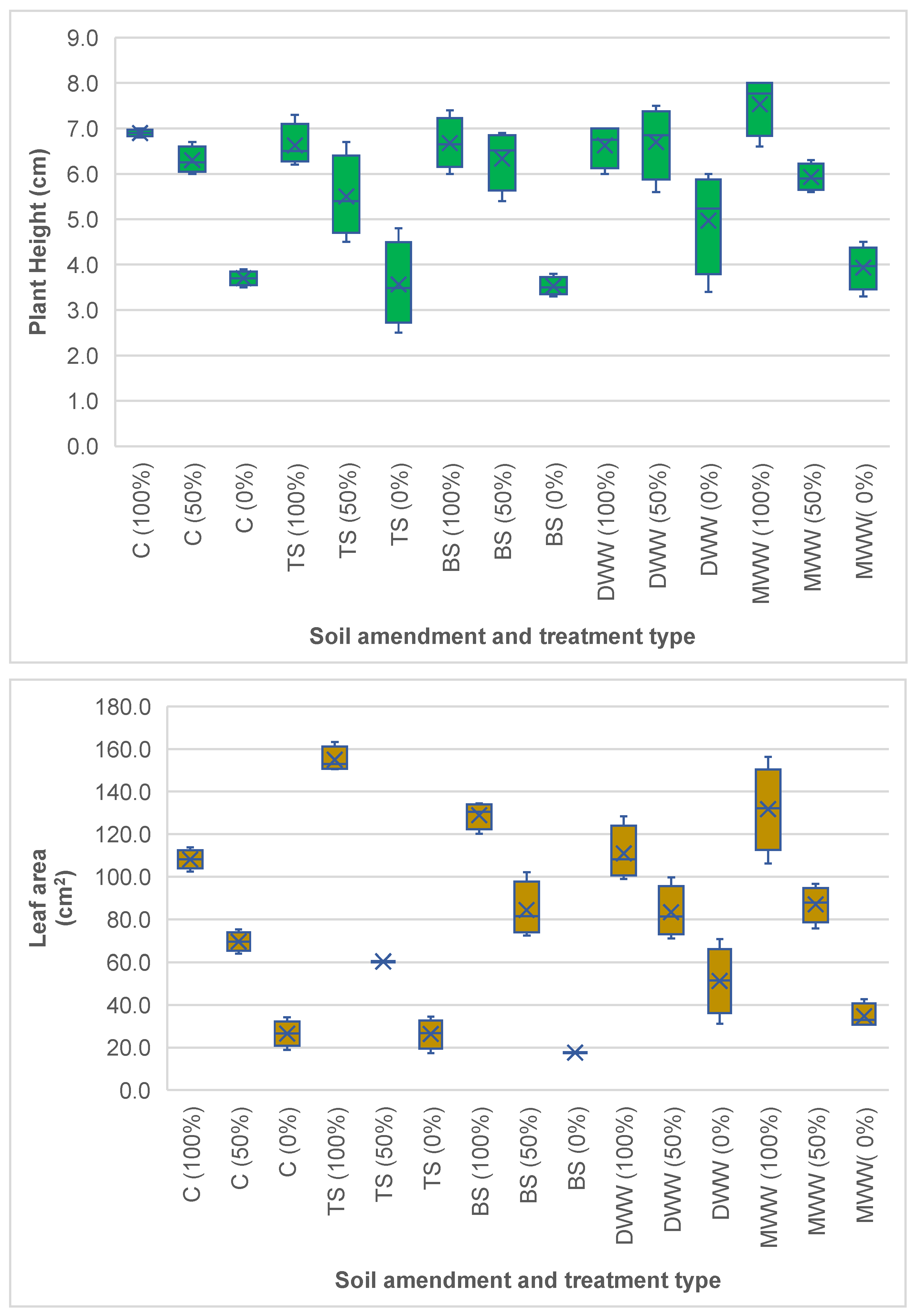
In four out of the five soil groups, the 100% nutrient loading had the tallest plant, and the 0% nutrient loading yielded the smallest plants. The 50% nutrient loading varied in height in all five soil amendments as shown in Figure 2. The soil group with the tallest plants was the SWW at 100% nutrient loading at an average height of 7.53 cm. The rest of the soil amendments at the 100% nutrient concentration varied in height by 0.27 cm. All the soil groups, except the DWW, showed a decrease in plant height as the nutrient loading decreased.

3.1.2. Plant Leaf Surface Area and Weight for Growing Season 1

The average leaf number (of 3 per plant) did not show much variation between the 100% and 50% nutrient concentration for much of the soil, except for the terracotta soil amendment. The average leaf per plant differed by 0.25 leaves between the 100% (3 leaves) and 50% (2.75 leaves) nutrient loading. In all soil groups at the 0% nutrient loading, the average number of leaves per plant dropped. In contrast, the plants from DWW and SWW soil at 0% nutrient treatment had the largest average leaf number at 2.67 leaves, which was a 78% increase. DWW and SWW soil continue to show a positive impact on the corn plants when no extra nutrients are added.
Figure 3 shows the plant height and leaf area for different soil amendments and nutrient treatments. The nutrient loading had direct impact on the leaf area. When nutrient loading was reduced, the leaf area reduced as well. The largest difference in leaf area was in the TS group between the 100% and 50% nutrient loadings. The leaf area dropped by 94.62 cm2. The second largest difference in leaf area (66.8 cm2 decrease) for the soil group was in the BS soil group at 50% and 0% nutrient loading. The three other soils showed a constant decrease in leaf area as the nutrient loading lowered. When the plants were treated with 0% nutrients, the plants from DWW and SWW soil groups still produced the leaves with the largest average surface area. DWW plants recorded a 93.06% increase and SWW plants had a 31.02% increase in surface area when compared to the control group. The plants from the TS or BS soil groups either had their average leaf surface areas close to the control group or less than it. The plants from TS and BS soil groups had a leaf surface area of 26.32 cm2 and 17.62 cm2, respectively. The average leaf surface area for the control was 26.53 cm2.
The total dry weight is the sum of shoot dry weight and the root dry weight. The shoot comprises the stem, leaves, and crown of the plant. The data shows a linear correlation between total dry weight and nutrient loading. In each soil group, the total weight decreased as the nutrient loading decreased. The control group did not have a significant difference in total dry weight between the 100% and 50% nutrient loading. The TS soil group had the largest difference in total dry weight. In every soil group, the largest weight difference occurred when the nutrient loading decreased from 50% to 0%. The plants from DWW and SWW soil groups had the two heaviest total weights at 0% nutrient loading. A reason for the increase in weight is that soil groups had excess nutrients in them that helped in plant growth.

3.2. Soil Amendment Studies in Early Summer Conditions

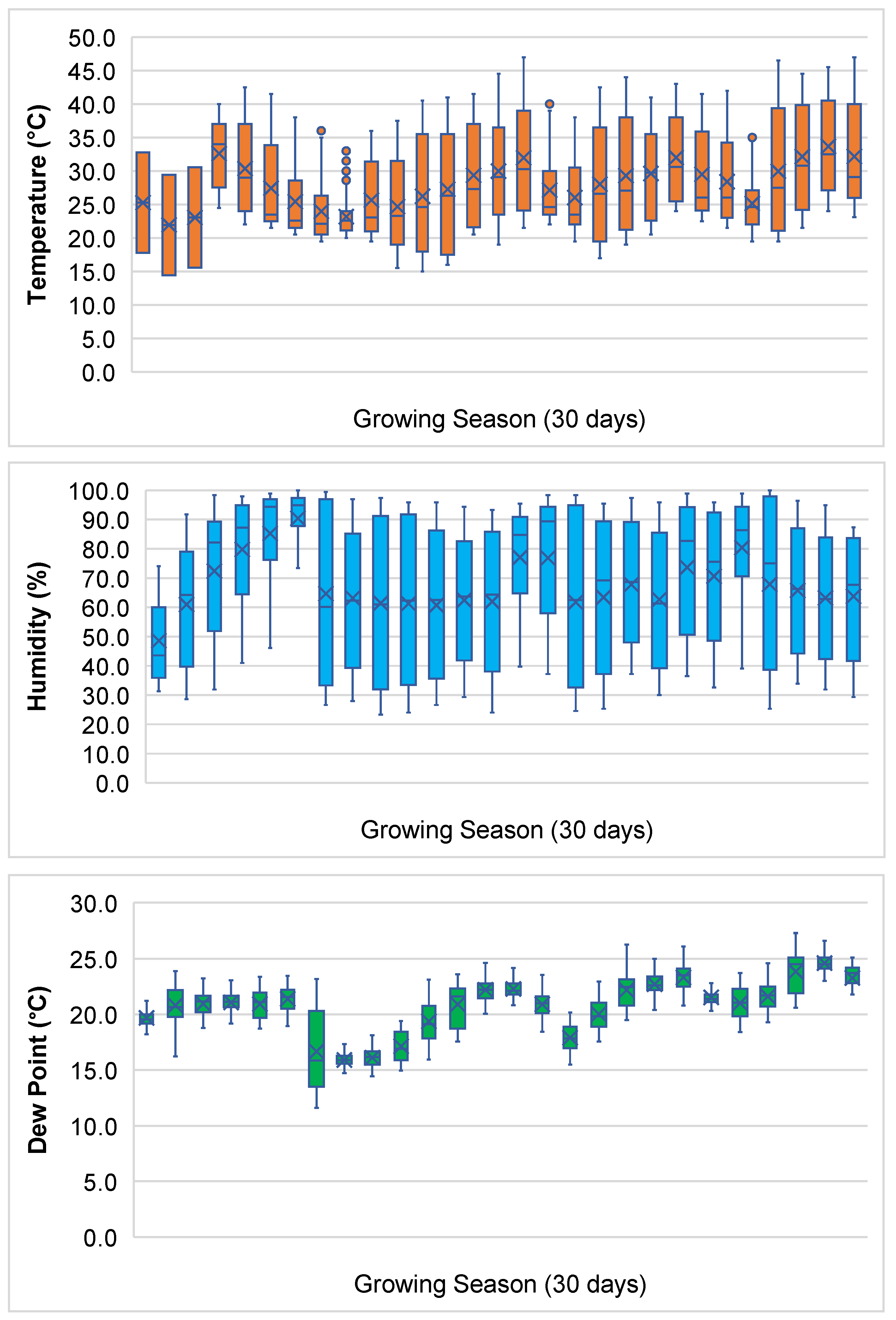
The following section contains the analysis for various agro-physical characteristics that were collected during the harvest. The agro-physical characteristics that are being discussed were chosen because they represented the best overall picture to show how the different soil mediums and nutrient treatments affected each group. Figure 4 shows the temperature, humidity, and dew point inside the prefabricated mini-hoop module over the cropping season. The growing degree days is an estimation that is used to determine the growth and development of plants during a growing season based off if the temperature exceeded the minimum development threshold.

3.2.1. Plant Height and Leaf Number for Growing Season 2

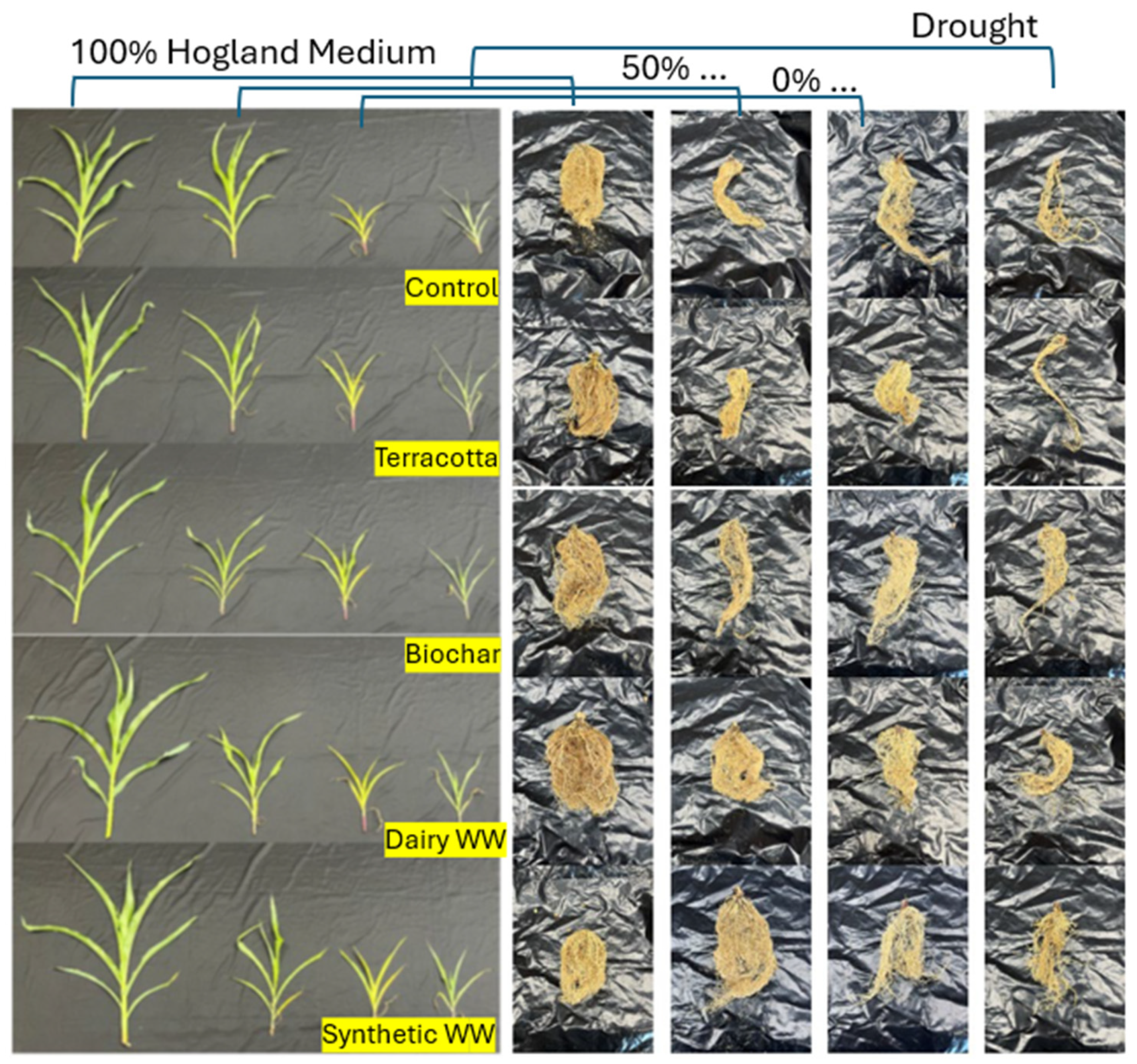
Figure 5 shows the images of plant stems and roots for the five treatments in the second phase. The plants in DWW and SWW soil did not produce the tallest plants when treated with 100% HNS. The plants in the TS and BS soil medium produced taller plants on average. When the nutrient treatment was reduced to 50% HNS, DWW and SWW plants were taller than the remaining plants for that nutrient treatment. The tallest plants in the 50% HNS were SWW plants at an average height of 23.5 cm (60.6% taller than the control). At 0% HNS, SWW plants were the shortest plants on average at 10.25 cm (10.9% shorter than the control). The reduction in height can be attributed to the excess water retained by the pots.

3.2.2. Plant Leaf Surface Area and Weight for Growing Season 2

The 100% HNS plants produced significantly larger leaf surface areas than the remaining nutrient treatments. Unlike the leaf number, the 100% HNS control had the largest leaf surface area at 1355.2 cm2. The 100% HNS-SWW and DWW plants were 1.83% and 3.11% smaller than the control. BS plants had the smallest leaf surface area (10.15% smaller than the control) at 100% HNS. At the reduced nutrient treatment of 50% HNS, SWW and DWW plants had larger average leaf surface areas than the control’s average leaf surface area at 432.4 cm2. SWW and DWW plants were 151.22% and 83.18% larger than the control leaves. The control soil had the largest leaf surface area, different from 100% HNS to 50% at 922.8 cm2. Under the SDC, all four soil amendments had larger leaf surface areas than the control plants (104.22 cm2). SWW and DWW plants had an average leaf surface area of 45.13% and 43.81%, respectively, which is larger than the control.
The plants treated with 100% HNS treatment produced the heaviest leaves out of the four nutrient treatments. The control soil had an average leaf dry weight of 6.53 g. The leaves for SWW and DWW plants were 39.20% and 9.49%, respectively, which is heavier than the control at 100% HNS treatment. When the nutrient treatment was reduced to 50% HNS, the average dry leaf weights for the SWW and DWW were significantly heavier than the control. The SDC plants showed that the SWW and DWW were able to produce heavier leaves than the remaining plants in different soil amendments. SWW and DWW plants were 116.67% and 74.24% heavier than the control leaves (0.66 g). BS leaves were 18.18% heavier than the control. TS leaves had a remarkably similar average dry weight to the control.

3.2.3. Plant Stem and Roots

At 100% HNS treatment, all four soil amendments weighed more than the control stem dry weight (3.72 g). The SWW and DWW stem on average weighed 51.61% and 29.30%, respectively, which is more than the control. The TS stems were 15.52% heavier than the control. The TS stems were 10.34% lighter than the control (0.87 g) when the nutrient treatment was reduced to 50% HNS treatment. The remaining three soil amendments produced on average heavier or roughly the same weight as the control stems. The SDC plants showed comparable results to the SDC leaf dry weights. The SWW and DWW stems (1.01 g and 0.54 g, respectively) were significantly heavier than the control (0.27 g). The TS stems had the same dry weight as the control and the BS stems were double the weight of the control.

3.3. Comparison of Plant Growth Between Late Fall and Early Summer Conditions

There were significant differences in plant growth between the two growing seasons—late fall, early winter; and late spring, early summer conditions. Temperature had played a significant role on plant growth. For example, the tallest plant measured under growing season 1 (late fall) was 7.53 cm, whereas the same for growing season 2 (late spring) was 28 cm. The difference was 3.72-fold. In both growing conditions, SWW and DWW amendments produced better results for all conditions, including different nutrient treatments. The largest leaf surface area for growing season 1 for TS with 100% HNS was 170 cm2. The same for the growing season 2 for SS with 100% HNS was 1355 cm2. The temperature effect was highly pronounced, as shown by the 7.97-fold increase in leaf surface area between the two growing seasons. These numbers are significantly higher when compared with the surface area of plants under drought conditions. A comparison between the control and drought conditions shows that the soil amendments clearly had a positive impact on plant growth. For example, for the same irrigation conditions, SWW and DWW amendments produced 2.4-fold and 1.8-fold bigger plant surface areas, respectively. These results demonstrate that soil amendments also help corn plants to cope with drought stress.

4. Conclusions

This research demonstrates that using recovered nutrients from synthetic municipal wastewater or synthetic dairy wastewater can serve as an effective soil amendment to improve corn growth in the initial stages of the plant’s development in both warm and cold weather. In most nutrient treatments, corn plants grown in SWW and DWW soil amendments produced, on average, a larger plant in height, leaf area, and root area, and were heavier than the rest of the plants. The SWW soil amendment did have a drawback in 0% HNS and warm weather. The SWW soil medium had large retention in soil moisture which had a negative growth effect on the corn plants grown in that soil. It is recommended that the irrigation be monitored closely when applying the SWW soil amendment to make sure the plants are not overwatered if treated with 0% HNS. In addition to improving the plant’s growth, SWW and DWW soil amendments are effective in reducing the negative effects caused by droughts.
SWW and DWW corn plants in the SDC produced a larger plant size and weight than control plants under the SDC. SWW and DWW plants were 116.67% and 74.24% heavier than the control leaves (0.66 g). BS leaves were 18.18% heavier than the control. TS leaves had a remarkably similar average dry weight to the control.
In future testing, a longer-term study should be conducted to evaluate if municipal wastewater and dairy wastewater soil amendments can continue to improve the corn plants’ growth and if the fruit produced is larger than the control at harvest. The SDC test should be expanded in duration for the same reasons listed previously. Additionally, other crops should be grown in SWW and DWW soil amendments to see if equivalent results to the corn can be replicated.

Author Contributions

Conceptualization, V.G.G.; methodology, J.L.S., K.R.R. and V.G.G.; validation, J.L.S., K.R.R. and V.G.G.; formal analysis, J.L.S. and K.R.R.; investigation, V.G.G.; resources, K.R.R., V.G.G.; data curation, J.L.S.; writing—original draft preparation, J.L.S.; writing—review and editing, V.G.G. and K.R.R.; supervision, V.G.G. and K.R.R.; project administration, V.G.G.; funding acquisition, V.G.G. All authors have read and agreed to the published version of the manuscript.

Funding

This research was funded by three competitive research grants from the United States Geological Survey (USGS) and Mississippi Water Resources Research Institute (MWRRI).

Institutional Review Board Statement

Not applicable.

Informed Consent Statement

Not applicable.

Data Availability Statement

Data available upon request.

Acknowledgments

The authors have reviewed and edited the output and take full responsibility for the content of this publication.

Conflicts of Interest

The authors declare no conflicts of interest.

References

  1. Lambers, H.; Martinoia, E.; Renton, M. Plant adaptations to severely phosphorus-impoverished soils. Curr. Opin. Plant Biol. 2015, 25, 23–31. [Google Scholar] [CrossRef] [PubMed]
  2. Chen, L.L.; Zhang, Z.; Mou, Z.; Kang, H.; Shen, Q.; de Tombeur, F.; Liu, S.T.; Finnegan, P.M.; Ranathunge, K.; Lambers, H. Contrasting phosphorus-impoverished habitats influence the species-dependent phosphorus-acquisition strategies of plants. Funct. Ecol. 2025, 39, 3790–3808. [Google Scholar] [CrossRef]
  3. Goglio, A.; Marzorati, S.; Rago, L.; Pant, D.; Cristiani, P.; Schievano, A. Microbial recycling cells: First steps into a new type of microbial electrochemical technologies, aimed at recovering nutrients from wastewater. Bioresour. Technol. 2019, 277, 117–127. [Google Scholar] [CrossRef] [PubMed]
  4. Orlandella, I.; Smith, K.N.; Belcore, E.; Ferrero, R.; Piras, M.; Fiore, S. Monitoring strawberry plants’ growth in soil amended with biochar. AgriEngineering 2025, 7, 324. [Google Scholar] [CrossRef]
  5. Tian, F.; Wang, Y.; Zhao, Y.; Sun, R.; Qi, M.; Wu, S.; Wang, L. A review of Biochar-industrial waste composites for sustainable soil amendment: Mechanisms and perspectives. Water 2025, 17, 2184. [Google Scholar] [CrossRef]
  6. Lima, J.Z.; da Penha Simon, C. Biochar–soil–plant interfaces: A systematic review of the crop performance in tropical climate. Int. J. Environ. Sci. Technol. 2025, 22, 1995–2020. [Google Scholar] [CrossRef]
  7. Touré, M.; Fall, A.; Burnham, A.; Beye, A.; Badiane, S.; Lawton, D.; Cease, A.J. Soil amendments suppress migratory pests and enhance yields. Sci. Rep. 2026, 16, 646. [Google Scholar] [CrossRef]
  8. Saito, K.; Nakashima, T.; Hirata, T. Application of different amendments to optimize nitrogen management in sweet corn (Zea mays L.) with winter cover crops in Hokkaido, Japan. Plant Prod. Sci. 2026, 1–15. [Google Scholar] [CrossRef]
  9. Maharani, P.H.; Maftu’ah, E.; Sulaeman, Y.; Napisah, K.; Masganti, M.; Mukhlis, M.; Anwar, K.; Ningsih, R.D.; Chairuman, N. Integrated rice husk biochar and compost to improve acid sulfate soil properties and corn growth. J. Degrad. Min. Lands Manag. 2025, 12, 8097–8106. [Google Scholar] [CrossRef]
  10. Zhou, L.; Tao, H.; Qiliang, Y.; Feng, H.; Siddique, K.H.; Jin, T. Biochar particle size shapes soil water–oxygen conditions and delays senescence in sweet corn under mulched drip irrigation. Soil Tillage Res. 2026, 258, 107049. [Google Scholar] [CrossRef]
  11. Trujillo-González, J.M.; Mahecha-Pulido, J.D.; Astroz-Cano, A.M.; Torres-Mora, M.A.; Silva-Parra, A.; Serrano-Gómez, M.; Castillo-Monroy, E.F.; García-Navarro, F.J.; Jiménez-Ballesta, R. Application of biochar and impacts on corn (Zea mays L.) agronomic development and nutrient availability in soil under tropical climate. Int. J. Recycl. Org. Waste Agric. 2026, 15, 36–46. [Google Scholar] [CrossRef]
  12. Tang, R.; Mulaka, A.R.; Rong, W.; Yuan, X.; Bao, Y.; Tan, J. Biochar-Amended Soils Enhance Drought Resilience in Lettuce: Integrating Hyperspectral Imaging (HSI) and CNN-Based Moisture Prediction. J. Agric. Food Res. 2026, 26, 102711. [Google Scholar] [CrossRef]
  13. Wang, X.; Sale, P.; Hunt, J.; Clark, G.; Wood, J.L.; Franks, A.E.; Reddy, P.; Jin, J.; Joseph, S.; Tang, C. Enhancing growth and transpiration efficiency of corn plants with compost addition and potential beneficial microbes under well-watered and water-stressed conditions. Plant Soil 2025, 514, 2475–2493. [Google Scholar] [CrossRef]
  14. Rossini-Oliva, S.; Mingorance, M.D.; Peña, A. Effect of two different composts on soil quality and on the growth of various plant species in a polymetallic acidic mine soil. Chemosphere 2017, 168, 183–190. [Google Scholar] [CrossRef] [PubMed]
  15. Gude, V.G. Wastewater treatment in microbial fuel cells–an overview. J. Clean. Prod. 2016, 122, 287–307. [Google Scholar] [CrossRef]
  16. Ghimire, U.; Sarpong, G.; Gude, V.G. Transitioning wastewater treatment plants toward circular economy and energy sustainability. ACS Omega 2021, 6, 11794–11803. [Google Scholar] [CrossRef]
  17. Gude, V.G. Integrating bioelectrochemical systems for sustainable wastewater treatment. Clean Technol. Environ. Policy 2018, 20, 911–924. [Google Scholar] [CrossRef]
  18. Liu, X.; Ma, Y.; Manevski, K.; Andersen, M.N.; Li, Y.; Wei, Z.; Liu, F. Biochar and alternate wetting-drying cycles improving rhizosphere soil nutrients availability and tobacco growth by altering root growth strategy in Ferralsol and Anthrosol. Sci. Total Environ. 2022, 806, 150513. [Google Scholar] [CrossRef]
  19. Ghimire, U.; Gude, V.G.; Magbanua, B.S. Energy and nutrient recovery from dairy and municipal wastewater sources in a terracotta-biochar bioelectrochemical system. Clean Technol. Environ. Policy 2022, 24, 3225–3236. [Google Scholar] [CrossRef]
  20. Hasan, A.; Tabassum, B.; Hashim, M.; Khan, N. Role of plant growth promoting rhizobacteria (PGPR) as a plant growth enhancer for sustainable agriculture: A review. Bacteria 2024, 3, 59–75. [Google Scholar] [CrossRef]
  21. Bhat, M.A.; Mishra, A.K.; Shah, S.N.; Bhat, M.A.; Jan, S.; Rahman, S.; Baek, K.H.; Jan, A.T. Soil and mineral nutrients in plant health: A prospective study of iron and phosphorus in the growth and development of plants. Curr. Issues Mol. Biol. 2024, 46, 5194–5222. [Google Scholar] [CrossRef]
  22. Camaille, M.; Fabre, N.; Clément, C.; Ait Barka, E. Advances in wheat physiology in response to drought and the role of plant growth promoting rhizobacteria to trigger drought tolerance. Microorganisms 2021, 9, 687. [Google Scholar] [CrossRef]
  23. Rosa, A.P.; Barão, L.; Chambel, L.; Cruz, C.; Santana, M.M. Early identification of plant drought stress responses: Changes in leaf reflectance and plant growth promoting rhizobacteria selection-the case study of tomato plants. Agronomy 2023, 13, 183. [Google Scholar] [CrossRef]
Figure 1. Air temperatures, humidity and dew points recorded for the experimental period during the first phase of study in the late fall and early winter conditions. 2019–2022.
Blsf 54 00027 g001
Figure 2. Plant stems and roots for different soil amendments and treatments in fall season.
Blsf 54 00027 g002
Figure 3. Variations in plant height and leaf area for different soil amendments and nutrient treatments.
Blsf 54 00027 g003
Figure 4. Air temperature, humidity, and dew point for the experimental period during the second phase of study in late spring and early summer conditions.
Blsf 54 00027 g004
Figure 5. Plant stems and roots for different treatments in spring season including drought conditions.
Blsf 54 00027 g005
Disclaimer/Publisher’s Note: The statements, opinions and data contained in all publications are solely those of the individual author(s) and contributor(s) and not of MDPI and/or the editor(s). MDPI and/or the editor(s) disclaim responsibility for any injury to people or property resulting from any ideas, methods, instructions or products referred to in the content.