1. Introduction
The protracted conflict in Thailand’s southern border provinces, which has persisted for over two decades, has been associated with significant socio-psychological challenges in the region, particularly among youth who have grown up in contexts characterized by ongoing violence and social mistrust. This environment has been described in the literature as contributing to forms of “intergenerational trauma,” involving the transmission of historical grievances and psychological distress across familial and community contexts (
Sripokangkul, 2021). Such conditions may be associated with constraints on the development of foundational moral values, as repeated exposure to violence may influence perceptions of trust, human relations, and the prospects for peaceful coexistence. This pattern is also discussed in relation to “chronic conflict stress,” which has been linked to potential impacts on executive functioning, including processes associated with the prefrontal cortex that are relevant to self-regulation and decision-making (
Masten, 2021). Within this context, youth in conflict-affected areas may experience developmental challenges, including uncertainty about the future and limited access to stable moral reference frameworks. These conditions may be associated with increased vulnerability to risk behaviors or involvement in cycles of conflict, relative to youth in more stable environments. In addition, social fragmentation may constrain opportunities for developing competencies necessary for participation in pluralistic societies. Under such circumstances, youth may adopt more inward-looking or in-group-oriented moral frameworks, which can be associated with reduced trust toward out-groups. This pattern is consistent with perspectives in the literature suggesting that prolonged conflict contexts may reinforce social boundaries and limit the development of broader prosocial values such as unity and compassion (
Joll, 2022;
Pisuwan, 2023).
The absence of safe environments and the weakening of constructive communication in conflict-affected settings may limit the development of “cultural capital”—particularly indigenous values such as gratitude—into proactive civic virtues, including discipline and social responsibility (
McCargo, 2024;
Ungar, 2022). In response to these structural conditions, the present study focuses on identifying specific developmental gaps through a comprehensive needs assessment. The objective is to examine pathways that may support the development of youth who suggest ethical resilience, rationality, and psychological preparedness to navigate social instability within the framework of the Sufficiency Economy Philosophy (SEP) (
Williams & Mohammed, 2009;
Laeheem et al., 2025a,
2025b;
W. M. Miller & Abdou, 2018). The Sufficiency Economy Philosophy (SEP), developed as a guiding framework for sustainable development in Thailand, is grounded in the principles of moderation, reasonableness, and self-immunity, supported by the conditions of knowledge and morality. Moderation emphasizes balanced and non-excessive behavior; reasonableness refers to careful and ethical decision-making; and self-immunity denotes the capacity to cope with external pressures and internal vulnerabilities. In this study, SEP is conceptualized as a moral and psychological framework that may support resilience, ethical judgment, and socially responsible behavior among youth in conflict-affected contexts. By addressing these gaps, this study may contribute to understanding pathways toward social cohesion in conflict-affected environments, particularly in relation to the development of public service orientation among youth (
Lim, 2020;
Boonpunth & Saheem, 2024;
Southwick et al., 2023). One factor associated with social instability in Thailand is the increasing fragility of relationships within its multicultural context, potentially exacerbated by ethnic and religious tensions. Although the southern border provinces have a long history of pluralism, recent patterns of both symbolic and physical violence appear to have contributed to the reinterpretation of “difference” as a perceived “threat,” a process described as the securitization of identity (
Pisuwan, 2023). As identity becomes increasingly framed in security terms, youth may have fewer opportunities to engage in neutral environments that foster cross-cultural understanding. This may, in turn, be associated with declining levels of social trust and reduced expressions of virtues such as unity and generosity. This interpretation is consistent with Social Identity Theory (
Tajfel & Turner, 1979), which suggests that in conflict contexts, individuals may reinforce in-group boundaries while distancing out-groups, contributing to social and emotional division (
Laeheem et al., 2025a,
2025b;
W. M. Miller & Abdou, 2018).
This issue may be linked to limitations in traditional moral education, which often relies on one-way, top-down instruction that fails to reflect students lived experiences. Such “conflict-blind education” fails to dismantle the barriers of prejudice formed through real-world experience, which may limit youths’ ability to connect abstract ethical principles with real-life multicultural contexts and the complexities of a multicultural lifestyle (
Lim, 2020;
Boonpunth & Saheem, 2024). This fragmented approach may hinder intercultural understanding and contribute to social distance, where groups coexist physically but remain socially disconnected. International research further suggests that, without conflict-sensitive education, young people may exhibit lower empathy and reduced resilience in navigating misinformation and hate speech in digital environments. (
Banks, 2021;
UNESCO, 2021). Bridging this gap requires innovative, experiential learning models that allow youth to explore diverse identities through practical engagement, support the development of alienation into shared understanding grounded in the SEP principles of moderation, reasonableness, and self-immunity (
Sripokangkul, 2021;
Williams & Mohammed, 2009). A review of past efforts to promote youth morality suggests a relatively fragmented approach, often characterized by top-down policies that may not fully reflect the unique historical and multicultural context of the southern provinces (
Lim, 2020;
Boonpunth & Saheem, 2024). A significant limitation in existing literature and practice is the lack of precise academic tools to identify “most urgent needs.” Consequently, intervention projects are frequently implemented based on central government directives or budgetary cycles rather than the empirical needs of the local community. Such development often fails to address the root causes of behavioral or attitudinal shifts (
Sripokangkul, 2021).
The present study aims to address this gap by employing a systematic needs assessment using the PNI
modified index and a Priority Matrix. This approach enables the statistical examination of discrepancies between “current performance” and “ideal importance” across five moral dimensions: gratitude, discipline/responsibility, unity, generosity, and self-sacrifice (
Witkin & Altschuld, 1995;
Thongpakde, 2024). Drawing empirical data from a sample of 1640 participants, the study seeks to inform a shift from subjective assessment toward more evidence-informed approaches to moral development. This methodology allows for the identification of potential “leverage points”—areas where targeted interventions, such as experiential learning and community engagement, may be particularly relevant for supporting behavioral development. The prioritization of dimensions within the “Concentrate Here” quadrant may assist in guiding resource allocation, consistent with the SEP principle of reasonableness, alongside moderation and self-immunity, in policy-oriented contexts (
Mettathamrong et al., 2023;
Mongsawad & Thongpakde, 2016;
Kantabutra, 2019;
Williams & Mohammed, 2009). In contemporary contexts, limited capacity for critical engagement with digital media may represent an additional challenge. Youth in the southern provinces may be exposed to complex information environments in which misinformation and divisive content circulate and reinforce identity-based narratives (
Pisuwan, 2023). Within such environments, insufficient development of “self-immunity,” as conceptualized in SEP, may be associated with increased susceptibility to external influence, with potential implications for discipline and social responsibility. In addition, algorithmic filtering and selective exposure may shape information consumption patterns, which have been linked to attitudinal polarization (
Sripokangkul, 2021).
The limitations of passive learning approaches in schools may further constrain the development of media literacy and critical thinking. This aligns with
UNESCO’s (
2021) conceptualization of vulnerable areas, suggesting that education must move beyond content delivery to the training of “rational” principles used to analyze the intent behind information. The education system may not fully keep pace with the evolving dynamics of online media, representing a potential gap that may limit youth’s capacity for critical engagement and increase their susceptibility to manipulation and exposure to harmful ideologies. This study seeks to address this gap by designing experiential learning processes that emphasize building digital immunity alongside practical morality (
Williams & Mohammed, 2009;
Laeheem et al., 2025a,
2025b;
W. M. Miller & Abdou, 2018). Analysis of the region’s “neglected cultural capital” reveals that values like filial piety remain strong ethical foundations for both Thai Buddhist and Thai Muslim youth. However, a significant gap exists in how this capital is utilized; it is often confined to individual and kinship relationships. Following
Bourdieu’s (
1986) theories on social capital and
Pisuwan’s (
2023) observations, there is an urgent need for a strategic process to elevate these local values into a macro-level social transformation. Cultural capital can only be converted into powerful social capital when mechanisms are created to foster “Bridging Social Capital”—cross-identity relationships that are vital for healing multicultural societies. This research seeks to use the existing virtue of gratitude as a leverage point to expand youth impact into the realms of self-sacrifice and public spirit. This strategy aligns with the SEP principles of self-reliance and internal transformation (
Mettathamrong et al., 2023;
Mongsawad & Thongpakde, 2016;
Kantabutra, 2019). By utilizing familiar cultural capital as a catalyst, the cultivation of subsequent virtues becomes more organic and relevant to the students’ lives than external regulations or enforcement. This may represent an important strategy for supporting resilience and conditions associated with sustainable peace in vulnerable regions (
Lim, 2020;
Boonpunth & Saheem, 2024;
Laeheem et al., 2025a,
2025b;
W. M. Miller & Abdou, 2018).
A structural challenge that emerges from the literature is the “engagement gap,” referring to the limited extent to which youth are positioned as active contributors within their communities. In many cases, youth in the southern provinces are framed primarily as “at-risk groups” or as recipients of state support, rather than as agents capable of shaping their social environments. Such positioning may be associated with constraints on the development of self-efficacy and communal responsibility (
Pisuwan, 2023;
Sripokangkul, 2021). In response, learning approaches that incorporate elements of “service-learning” may offer a potential avenue for enhancing youth engagement. These approaches typically involve collaborative problem-solving in real community contexts and may support the development of a sense of shared community ownership. Such experiences have been associated with reductions in social frustration and more constructive forms of social participation (
Ungar, 2022). In addition, a “philosophical gap” may be observed in the interpretation and application of the Sufficiency Economy Philosophy (SEP). Existing applications are often concentrated in economic or agricultural domains, with comparatively limited attention to their ethical and reflective dimensions. This may reflect a disconnect between the principles of “knowledge” and “morality,” which are central conditions within SEP. Reframing SEP as a moral and reflective framework may provide a lens through which principles such as moderation, reasonableness, and self-immunity can be understood in relation to emotional regulation, decision-making, and resilience to misinformation (
Mettathamrong et al., 2023;
Mongsawad & Thongpakde, 2016;
Kantabutra, 2019;
Wibulswasdi et al., 2020). Furthermore, within what may be described as a “fragmented learning ecosystem,” institutions such as schools, families, and religious organizations often operate with limited integration. This may contribute to a “transfer gap,” in which moral values practiced in private contexts are not consistently enacted in broader social settings. For example, youth may suggest filial respect within family structures but encounter challenges in extending these values to public or intercultural contexts (
Pisuwan, 2023). As a result, moral expression may become context-dependent rather than generalized across social domains (
Epstein, 2021).
This analysis indicates that without the systematic creation of an integrated “ecosystem of goodness” based on the “Bovorn/Bommar” (Home, Temple/Mosque, School) concept, developed morality will lack the continuity required to support a multicultural society. Modern research emphasizes that creating a neutral, inter-institutional space is key to building “positive peace,” ensuring that youth morality remains resilient amidst fluctuating social currents (
Sripokangkul, 2021;
Williams & Mohammed, 2009;
Laeheem et al., 2025a,
2025b;
W. M. Miller & Abdou, 2018). This research aims to bridge this gap by defining SEP as a “Moral Strategy for Peace,” elevating it from a material dimension to an instrument of “inner resilience.” Synthesizing SEP with the five virtues in a multicultural space supports the development of the perspective of Sufficiency Economy from an agricultural principle to a “way of wisdom” applicable in all contexts of conflict. This process helps youth stand firm amidst indoctrination, shifting from vulnerability to “social immunity” that balances self-identity with the acceptance of others. This may contribute to the development of an internal foundation grounded in moderation and mutual understanding, consistent with holistic human development perspectives (
Mongsawad, 2021;
Thongpakde, 2024;
Wibulswasdi et al., 2020). Ultimately, the importance of this study lies in addressing these systemic vulnerabilities using scientific methods. Identifying essential needs across five moral areas through the PNI assessment and Priority Matrix enables the development of an “Area-Based Moral Strategy.” The expected outcome is the creation of “ethical resilience” that may contribute to the development of more stable and socially cohesive environments, utilizing sufficiency as a compass and morality as a driving force to build a truly stable and sustainable society. A more detailed theoretical elaboration of the Philosophy of Sufficiency Economy is presented in the following section.
A key premise of this study is the rejection of a “one-size-fits-all” approach to moral development. Instead, this research adopts a differentiated intervention logic, grounded in empirical needs assessment. Moral dimensions are not treated as uniformly deficient; rather, they are categorized based on their level of internalization into (1) high-priority gaps requiring targeted development and (2) well-established virtues that function as cultural assets. Importantly, these existing strengths are not merely maintained but strategically leveraged to facilitate the development of less internalized moral competencies.
To guide this study, the following research questions are proposed:
RQ1: What are the current and desired levels of moral attributes among youth in Thailand’s Southern Border Provinces, and what priority needs for moral development can be identified based on the PNImodified index?
RQ2: How can moral dimensions be classified using the Priority Matrix to distinguish between urgent development needs and existing strengths?
RQ3: What strategic guidelines can be developed for designing moral learning activities based on the Philosophy of Sufficiency Economy (SEP)?
3. Materials and Methods
3.1. Strategic Research Design and Target Population
This study employed a quantitative research design using a field survey to collect empirical data from youth in Thailand’s Southern Border Provinces, a region characterized by a complex historical background and a multicultural social context. The target population comprised individuals aged 18–25 years residing in Yala, Pattani, and Narathiwat provinces. Although the United Nations defines “youth” as individuals aged 15–24 years (
United Nations, 2013), the term “youth” is used in this study to refer to participants aged 18–25 years, reflecting a broader contextual definition relevant to the study setting. This cohort was selected due to its relevance for examining moral development and the internalization of sufficiency-based values within a conflict-affected environment. To ensure that the findings accurately represent this population across a diverse and pluralistic context, a multi-stage random sampling approach was employed, combining stratified and proportional techniques based on provincial population distribution and religious composition.
The sample size was initially determined using Yamane’s formula, targeting a 95% confidence level. To improve precision, the sample was expanded to 1640 participants, corresponding to a margin of error of 0.025 (2.5%). This larger sample size was intended to support more stable statistical estimates and to enhance the reliability of the analysis at the aggregate level. While this design may reduce the likelihood of sampling error, the findings should be interpreted with caution, as they are based on a cross-sectional survey and a context-specific sample. Accordingly, the results are best understood as reflecting patterns within the study population, rather than as broadly generalizable to all youth populations. Nevertheless, the findings may offer contextually relevant insights that could inform future research in similar conflict-affected or culturally diverse settings.
3.2. Multi-Stage Random Sampling and Target Areas
To ensure that the data collection encapsulated the substantial regional diversity, this study employed a Multi-stage Random Sampling design. This process began by categorizing the study area into districts based on varying population densities, spanning both urban and rural sectors. This stratification was essential to mitigate the impact of educational and informational disparities on the research outcomes. The allocation of the 1640 participants was guided by a Proportional Allocation strategy, with a deliberate emphasis on maintaining a balanced representation of Muslim and Buddhist youth. This balance is a critical sociodemographic variable in the multicultural landscape of Thailand’s Southern Border Provinces. This framework provides a contextually grounded understanding of patterns within the study sample and enables a more nuanced interpretation of the findings. Furthermore, a sample of this magnitude lends substantial statistical weight to the Priority Needs Index (PNImodified) and the distribution within the Priority Matrix, ensuring that policy recommendations derived from this research are both accurate and capable of fostering tangible conflict reduction and moral promotion.
This phase of the research conducted a needs assessment regarding the promotion of morality—based on the Sufficiency Economy Philosophy—among youth aged 18 to 25 in the Southern Border Provinces. The final sample of 1640 was drawn from a total population of 168,935, as recorded by the Bureau of Registration Administration in 2024. This specific cohort was targeted because, while not categorized as a “vulnerable group” in traditional socio-economic terms, empirical evidence suggests they often exhibit lower levels of moral development compared to other age groups (
Laeheem, 2018). The population distribution across the three provinces provides the foundation for this sampling: Narathiwat accounts for 64,918 individuals, Pattani for 60,225, and Yala for 43,792.
The determination of the sample size followed the principles established by
Yamane (
1973), with a strictly defined margin of error of 0.025 (2.5%). According to this calculation, a minimum of 1585 participants was required; however, the researchers opted for a total of 1640 to potentially enhance greater reliability and demographic depth. The multi-stage process was designed as follows to eliminate selection bias and ensure that the findings were truly representative:
Stage 1: Stratified Selection of Districts was first categorized into three strata based on population size: Large (exceeding 70,001 residents), Medium (35,001 to 70,000 residents), and Small (fewer than 35,000 residents). Using Stratified Random Sampling, two districts were selected from each size category within each province. This selection was conducted via Simple Random Sampling using a lottery method without replacement, resulting in a total of 18 districts. This geographical and demographic spread is vital for analyzing moral promotion within areas of differing socio-economic stability.
Stage 2: Selection of Sub-districts (Tambons) Following the district selection, the researchers identified two sub-districts from each selected district using the same Simple Random Sampling method. This resulted in a total of 36 sub-districts. Selecting at this level suggests that the data reflects the micro-social dynamics and community-level nuances that influence moral development in a localized context.
Stage 3: Selection of Individual Youth Participants. In the final stage, 45 to 46 youth participants were randomly selected from each of the 36 sub-districts to reach the total sample of 1640. This stage involved close coordination with local community leaders, including religious authorities, youth coordinators, and local government administrators. Such collaboration was essential to ensure that the participants were appropriate for a study focused on moral development and positive behavioral promotion. This rigorous selection process is paramount to reflecting the cultural, socio-economic, and religious tapestry of the Southern Border Provinces, thereby producing balanced data that serves as a credible foundation for sustainable social application.
The study was designed to provide an overall needs assessment at the aggregate level; therefore, subgroup comparisons (e.g., by gender, religion, or province) were not included in the analytical framework.
3.3. Research Instruments and Academic Quality Assurance
The primary instrument for empirical data collection was a systematically developed assessment designed to measure five dimensions of morality within the framework of the Sufficiency Economy Philosophy (SEP). The instrument comprised five dimensions with a total of 27 items: (1) Discipline and Responsibility (6 items), (2) Gratitude and Filial Piety (5 items), (3) Unity and Social Harmony (5 items), (4) Kindness and Generosity (6 items), and (5) Social Sacrifice (5 items). Each dimension was assessed using multiple indicators reflecting behavioral, cognitive, and affective components. Example items include: “I take responsibility for my actions even when no one is watching” (Discipline), “I feel grateful and express appreciation to those who support me” (Gratitude), and “I am willing to cooperate with people from different cultural or religious backgrounds” (Unity). A 5-point Likert scale was used for both “Current Performance” and “Ideal Importance,” ranging from 1 = very low to 5 = very high.
The instrument was developed with attention to the socio-cultural context of youth in Thailand’s Southern Border Provinces. It employs a dual-response format in which participants evaluate both “Current Performance” and “Ideal Importance” for each item, supporting the calculation of the Modified Priority Needs Index (PNI
modified), which is used to examine perceived gaps between current and desired states. In addition to the quantitative measures, the instrument included open-ended items to collect qualitative data on participants’ perspectives regarding moral development, community engagement, and the application of SEP in everyday contexts. The qualitative data were analyzed thematically and used to complement the quantitative findings, particularly in informing the development of strategic guidelines presented in
Section 4.4 (Strategic Guidelines for Moral Development Learning Activities).
The development and validation of the instrument followed a four-stage psychometric process.
Stage 1: Literature Synthesis and Operational Definition. The foundational phase involved an extensive meta-synthesis of contemporary literature, theories, and global research concerning moral development and the Philosophy of Sufficiency Economy. This theoretical grounding enabled the formulation of precise operational definitions for the specific attributes being measured. These definitions were translated into survey items designed to encompass the socio-cultural nuances of the region. Utmost care was taken to ensure that the language was lucid, culturally sensitive, and directly aligned with the study’s core objectives to minimize cognitive burden on the adolescent respondents.
Stage 2: Content Validity Analysis. To potentially enhance the instrument that measured the intended constructs, the draft questionnaire was subjected to a formal review by a panel of five distinguished experts specializing in multicultural education and Sufficiency Economy Philosophy. Content validity was quantitatively assessed using the Index of Item-Objective Congruence (IOC). Only items achieving an IOC score of 0.5 or higher were retained. For items falling below this threshold or those receiving qualitative critiques, the researcher performed iterative revisions based on expert feedback to achieve maximum conceptual clarity and structural integrity. The expert panel consisted of five specialists in multicultural education, moral development, and Sufficiency Economy Philosophy. The IOC values ranged from 0.60 to 1.00, indicating acceptable to high content validity across all items.
Stage 3: Construct validity. Construct validity was examined using confirmatory factor analysis (CFA) based on an independent dataset from a different sample and geographical context (N = 1640), with further details reported in a separate study currently under review (Moral Identity as a Personality Structure: A Second-Order Validation of the Sufficiency Economy Moral Scale Among Youth in a Multicultural Conflict Zone). The CFA procedures were conducted using R statistical software version 4.3.2 (R Foundation for Statistical Computing, Vienna, Austria), with the lavaan package employed for structural equation modeling and confirmatory factor analysis. This sample size exceeds recommended thresholds for multivariate analysis, which suggests a participant-to-indicator ratio of 10–20:1 (
Hair et al., 2019), given the 27 observed indicators. The model suggested an acceptable fit to the data (χ
2 = 289.42, df = 272,
p = 0.224; χ
2/df = 1.06), with additional fit indices supporting model adequacy (GFI = 0.97; AGFI = 0.95; SRMR = 0.03). These results support the construct validity of the instrument, indicating that the 27 indicators are adequately represented by the five latent dimensions. However, as validation was conducted using a separate sample, the findings should be interpreted with caution, and further validation within the present study context is warranted. Stage 4 4: Reliability Testing. Following the expert validation, the refined instrument underwent a pilot test (try-out) with 30 individuals who shared demographic characteristics with the target population but were not included in the final sample. The internal consistency of the instrument was evaluated using Cronbach’s Alpha Coefficient. This statistical verification ensured that the tool possessed the high level of reliability required for complex multivariate analysis. By maintaining such stringent quality control—from the initial literature review to empirical statistical testing—this research guarantees that the data harvested from the 1640 participants possesses the highest degree of validity and reliability, meeting the exacting standards necessary for international scholarly publication and ensuring the findings accurately reflect the regional reality. The reliability analysis yielded high internal consistency across all dimensions, with Cronbach’s alpha coefficients as follows: Discipline and Responsibility (α = 0.90), Gratitude and Filial Piety (α = 0.88), Unity and Social Harmony (α = 0.89), Kindness and Generosity (α = 0.91), and Social Sacrifice (α = 0.87), with an overall scale reliability of α = 0.86.
3.4. Data Collection Procedures
The data collection methodology and subsequent field protocols were meticulously designed to ensure the highest degree of empirical precision while prioritizing the psychological safety and physical security of both the research team and the participants. Given the socio-political complexities and the sensitive nature of Thailand’s Southern Border Provinces, the process was executed through four distinct, rigorous phases:
Pre-collection Phase and Local Coordination The primary objective of this phase was to establish a systematic access mechanism within the target area. The researchers coordinated extensively with regional educational authorities, local administrative organizations, and religious leaders across Pattani, Yala, and Narathiwat provinces to clarify the study’s objectives and facilitate access to the target sample of 1640 youth. Given the sensitivity of this multicultural conflict context, formal institutional request letters were issued, accompanied by Human Research Ethics Committee (IRB) approval to ensure participant safety and data confidentiality. A key component of this phase involved the recruitment and training of local research assistants (RAs). To ensure linguistic and conceptual equivalence, the instrument was developed in Thai and reviewed for cultural appropriateness. In areas where local Malay dialects were prevalent, trained bilingual RAs provided standardized explanations using a structured translation guide. All RAs underwent training to ensure consistency in wording, tone, and administration procedures, thereby minimizing variability across data collection sites. Their role as culturally embedded facilitators also supported rapport-building and participant trust within the study context. While a multi-stage random sampling approach was employed, the involvement of local community leaders and intermediaries in facilitating access to participants may introduce a degree of selection bias. Participant inclusion may have been influenced by contextual or socially constructed criteria, potentially leading to the overrepresentation of more visible or compliant youth. In addition, the presence or endorsement of community authorities may increase the likelihood of social desirability bias, as respondents may provide answers aligned with perceived expectations. To mitigate these risks, data collection procedures emphasize voluntary participation, confidentiality, and the independence of responses from local authorities; however, these measures may not fully eliminate potential biases. Therefore, the representativeness of the sample should be interpreted with caution, particularly with respect to less visible or marginalized youth populations.
Field Implementation and Execution Fieldwork followed a stratified sampling plan, with data collection occurring primarily in schools, community learning centers, and youth activity hubs. The process commenced with a comprehensive Informed Consent briefing, emphasizing that participation was strictly voluntary and that all data would be used exclusively for academic purposes and is not associated with any anxiety among the vulnerable youth population. To accommodate the diverse infrastructure of the region, a hybrid data collection approach was utilized: physical paper-based questionnaires were administered in remote areas with limited connectivity, while mobile-based digital surveys were deployed in peri-urban zones. The research team maintained close supervision throughout this phase to conduct preliminary screening; any incomplete responses were addressed immediately through follow-up coordination to maintain the integrity of the sample size.
Data Cleaning and Validation Upon completion of the fieldwork, the researchers initiated a rigorous data cleaning protocol for all 1640 returned instruments. This involved systematic coding and the identification of outliers or anomalous response patterns, such as “straight-lining” (uniform responses provided without reading the content) or instruments with missing data exceeding the established threshold. Non-compliant data sets were purged and replaced through supplementary sampling following the original randomized protocols to ensure statistical power. Validated data were then migrated to statistical software for the calculation of the Priority Needs Index (PNI) and the construction of the Priority Matrix. Data cleaning, coding, and statistical analyses were performed using R statistical software version 4.3.2 (R Foundation for Statistical Computing, Vienna, Austria). This phase was fundamental to preserving the research’s integrity, particularly for a large-scale study requiring precise cut-off points across quadrants to determine the direction of moral development strategies.
Ethical Considerations and Participant Protection. Strict adherence to international human research ethical standards was maintained throughout all stages. Given the sensitive security context of the Southern Border Provinces, absolute anonymity was guaranteed; no personally identifiable information (PII), such as names or addresses, was recorded. Data was analyzed in the aggregate to preclude any potential negative repercussions for individual respondents. Furthermore, raw data were secured in an encrypted database with restricted access limited to the principal investigator, with a mandated destruction protocol following the conclusion of the required retention period. This ethical framework not only protected the participants but also established the academic rigor necessary for a study of this international caliber.
3.5. Analysis of Open-Ended Responses for Strategic Activity Development
In addition to the quantitative questionnaire, participants were invited to provide open-ended suggestions regarding appropriate moral development learning activities for youth in multicultural communities. These responses were collected to support the formulation of strategic guidelines presented in
Section 4.4.
The open-ended responses were analyzed using a thematic content analysis approach. All responses were reviewed repeatedly to identify recurring ideas and shared perspectives. Similar statements were grouped into preliminary categories and subsequently synthesized into broader thematic guidelines related to experiential learning, community participation, moral discipline, social harmony, and sufficiency-oriented practices.
The qualitative component was intended to provide contextual support for the proposed strategic guidelines rather than serve as a standalone qualitative investigation. Accordingly, the findings were interpreted as supplementary developmental insights alongside the quantitative results.
3.6. Statistical Analysis and Priority Needs Assessment
To achieve a robust empirical foundation, data analysis was conducted using a combination of descriptive statistics and advanced priority assessment techniques. Statistical analyses were conducted using R statistical software version 4.3.2 (R Foundation for Statistical Computing, Vienna, Austria). Descriptive statistics, PNI
modified calculations, and matrix classifications were performed using relevant statistical and graphical packages within the R environment. Descriptive statistics, including frequencies, percentages, means, and standard deviations, were employed to delineate the baseline characteristics of the sample. For the core analysis of developmental requirements, the Modified Priority Needs Index (PNI
modified) was utilized to quantify the gap between perceived “Ideal Importance” (I) and “Current Performance” (P). The index is calculated using the following formula:
For each item and dimension, mean scores were calculated for both Current Performance (P) and Ideal Importance (I). The PNImodified was then computed to determine the relative priority of each dimension, with higher values indicating greater developmental need.
This index provides a normalized value that may indicate the relative urgency of specific moral dimensions, enabling a more nuanced interpretation compared to simple mean comparisons.
The resulting values were integrated into a Priority Matrix to categorize the five moral dimensions into distinct strategic quadrants. This matrix-based classification allows for a systematic prioritization of interventions:
Concentrate Here (High Urgency): Dimensions where a significant gap exists, requiring immediate developmental focus and resource allocation.
Keep up the Good Work (Maintenance): Virtues that currently exhibit high performance, where existing standards must be sustained.
Low Priority/Asset (Latent Capital): Existing cultural strengths that may require occasional stimulation but do not represent critical developmental deficits.
The Priority Matrix should be interpreted as a multidimensional strategic framework rather than a linear ranking system. PNImodified values indicate relative developmental gaps, whereas quadrant positioning reflects the interaction between current behavioral performance and perceived strategic importance. As such, dimensions with high PNImodified scores may function differently depending on their contextual distribution across the matrix axes.
Importantly, quadrant classification was not determined solely by PNImodified rankings. Instead, dimensions were positioned according to the combined interaction between current performance and ideal expectations using the matrix cut-off criteria. Consequently, a dimension with the highest PNImodified value may not necessarily appear in the highest-priority quadrant if its contextual positioning reflects relatively balanced performance across both analytical axes.
This analytical approach distinguishes the present study from traditional moral research by identifying specific “leverage points” for youth development. By moving beyond descriptive findings to diagnostic insights, the study enables the design of experiential learning activities that embody the core pillars of the Sufficiency Economy Philosophy: rationality in decision-making, moderation in social expression, and the cultivation of self-immunity. This evidence-based strategy suggests that moral promotion within the multicultural context of the Southern Border Provinces is both efficient and sustainable.
The analytical procedures were designed to directly address the research questions. Specifically, the PNImodified analysis was used to examine current and desired levels of moral attributes and to identify priority needs (RQ1), while the Priority Matrix was employed to classify moral dimensions into strategic categories (RQ2). The results of these analyses were subsequently used to inform the development of strategic guidelines for moral learning activities based on the Philosophy of Sufficiency Economy (RQ3). This study did not include subgroup analyses (e.g., by province, religion, gender, or education level). Therefore, all findings are reported and interpreted at the aggregate level of the study sample.
4. Results
4.1. Demographic Profiles and Social Capital Assets
The demographic characteristics of the sample are presented in
Table 1, including category-specific frequencies (1640) and percentages.
Table 1 presents the demographic characteristics of the sample. The distribution shows a balanced representation across the three provinces, with most participants identifying as Muslim and a smaller proportion as Buddhist or other religions. The sample is primarily composed of youth in early adulthood, particularly those aged 20–21 years, and a substantial proportion are engaged in undergraduate education.
Most participants report living with both parents, indicating the continued relevance of family contexts in everyday life. Family is also identified as the most prominent source of moral learning, followed by educational institutions and religious centers, while digital media represents an emerging influence.
In addition, most participants report prior experience in moral-related activities and express a high level of interest in future participation, suggesting a general openness to engagement in structured developmental programs.
4.2. Priority Needs Assessment for Developing Moral Learning Activities Based on the Philosophy of Sufficiency Economy
The primary objective of priority needs assessment in this research is to empirically identify and analyze the gaps between current behavioral realities and the ideal aspirations for moral promotion among youth. This diagnostic data serves as the foundational architecture for designing learning activities that integrate the Philosophy of Sufficiency Economy (SEP) while remaining deeply resonant with the socio-cultural specificities of Thailand’s Southern Border Provinces. Data was harvested from a robust sample of 1640 youth across Pattani, Yala, and Narathiwat, encompassing a diverse demographic spectrum ranging from 18 to early adulthood. The sample includes students from secondary, vocational, and higher education systems, as well as non-formal education participants, ensuring a holistic reflection of growth trajectories in the deep south. This section addresses RQ1 by examining current and desired levels of moral attributes and identifying priority needs using the PNImodified index.
To capture the essential attributes for 21st-century youth potential, the assessment framework was categorized into five core dimensions: Discipline and Responsibility (focusing on self-regulation and integrity); Gratitude and Filial Piety (emphasizing local traditional values and the recognition of benefactors); Unity and Social Harmony (targeting collaborative skills in a pluralistic society and peaceful conflict resolution); Kindness and Generosity (exploring altruistic consciousness); and Social Sacrifice (assessing the public-mindedness required to prioritize the collective good over personal interest). By utilizing a Dual Response Likert Scale to evaluate both “Current Performance” (P) and “Ideal Importance” (I), the research precisely identifies urgent developmental pressure points, facilitating the creation of impactful and sustainable moral learning interventions.
The comprehensive analysis of these five dimensions suggests a notable need for developmental activities. The overall Modified Priority Needs Index (PNImodified) for the entire moral framework was calculated at 0.31. A comparative analysis shows that while the current manifestation of these virtues among youth is at a “moderate” level ( = 3.48), their expectations for the “ideal state” reach the “highest” level ( = 4.56). The analysis of PNImodified values can be further interpreted in alignment with the Priority Matrix framework, categorizing moral dimensions into three strategic groups. Importantly, the Priority Matrix should not be interpreted as a direct linear extension of PNImodified rankings. While PNImodified reflects the relative magnitude of developmental gaps, quadrant placement was determined by the combined interaction between current performance and perceived importance. Accordingly, dimensions with higher PNImodified values may not necessarily appear within the highest-priority quadrant if their contextual positioning differs across the matrix axes.
High-Priority Needs (Quadrant I: Concentrate Here). Discipline and Responsibility are a critical priority requiring immediate intervention. Despite moderate performance ( = 3.42), its high perceived importance ( = 4.60) results in a substantial PNImodified value (0.35). This gap indicates that youth recognize the importance of self-regulation but do not consistently suggest it. Within the SEP framework, this dimension reflects self-immunity—the ability to manage internal and external pressures. Targeted interventions to strengthen intrinsic discipline and ethical decision-making are therefore needed.
Strengths and Cultural Assets (Quadrant II: Keep up the Good Work). Gratitude and Filial Piety, together with Kindness and Generosity, represent well-established moral dimensions with relatively high performance and importance. Gratitude shows the highest performance ( = 3.76) and the lowest PNImodified value (0.24), indicating strong cultural embeddedness, while Kindness also suggests solid performance ( = 3.53) with a moderate gap (0.30). These dimensions function as cultural assets that can be leveraged to support other moral competencies. Rather than requiring intensive intervention, they should be maintained and extended into broader social contexts.
Secondary and Emerging Needs (Quadrant III: Low Priority/Latent Potential). Unity and Social Harmony and Social Sacrifice are categorized as secondary priorities. Unity shows the highest developmental discrepancy, PNImodified value (0.39), indicating a notable gap, but it remains slightly below the matrix threshold. This suggests continued relevance, particularly in a conflict-affected context. Social Sacrifice suggests moderate performance ( = 3.40) and lower perceived importance ( = 4.41), indicating limited internalization. These dimensions may benefit more from experiential and participatory learning than theoretical instruction, enabling the translation of moral awareness into practice. Although Unity and Social Harmony suggested the highest PNImodified value, its matrix positioning reflected a relatively balanced distribution between perceived importance and current behavioral performance. Therefore, within the Priority Matrix framework, this dimension was interpreted as representing a substantial developmental discrepancy rather than the most urgent intervention priority. In contrast, Discipline and Responsibility suggested a more critical imbalance between high perceived importance and comparatively insufficient behavioral internalization, resulting in its placement within the highest-priority quadrant.
Overall, the findings indicate that moral development is uneven and context-dependent. While gratitude and kindness are well established, dimensions related to self-regulation and broader social engagement require targeted support. This classification provides a clear foundation for aligning intervention strategies with empirically identified needs, as further developed in
Section 4.4. See
Table 2.
This prioritization reflects a strategic developmental logic: dimensions with high PNImodified values represent areas where internalization remains insufficient and thus require direct intervention. In contrast, dimensions with lower PNImodified values—such as gratitude—indicate deeply embedded moral foundations. Rather than being deprioritized, these dimensions serve as leverage points that can be mobilized to support the internalization of more underdeveloped virtues.
4.3. Priority Matrix Analysis for the Development of SEP-Based Moral Learning Activities
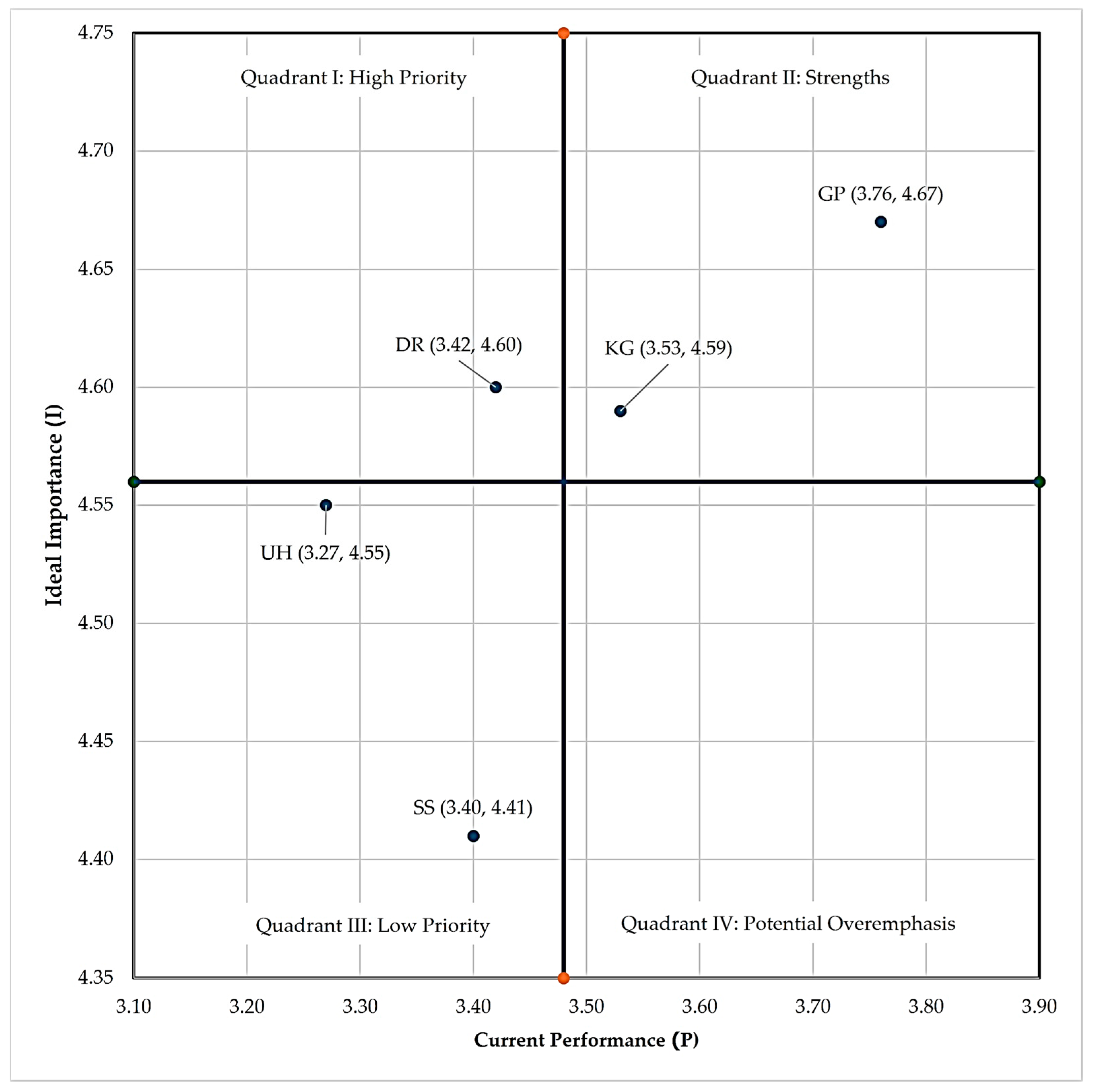
To achieve high-precision prioritization for developing moral learning activities, the researchers utilized an Importance-Performance Matrix (Priority Matrix). In this model, the mean scores of “Current Performance” (Status Quo) were plotted along the horizontal axis (X), while the mean scores of “Ideal Importance” (Expected Condition) were plotted along the vertical axis (Y). The grand means of both dimensions served as the intersection points to bifurcate the data into four strategic quadrants. The grand mean for Performance () was 3.48, and the grand mean for Importance (Ī) was 4.56. These values were used as cut-off points to define the quadrants in the Priority Matrix. Specifically, dimensions with performance below the mean (P < 3.48) and importance at or above the mean (I ≥ 4.56) were classified as Quadrant I (High Priority). Dimensions with both performance and importance at or above the mean (P ≥ 3.48; I ≥ 4.56) were classified as Quadrant II (Strengths). Dimensions with performance below the mean and importance below the mean (P < 3.48; I < 4.56) were classified as Quadrant III (Low Priority). This section addresses RQ2 by classifying moral dimensions into strategic categories using the Priority Matrix. The analysis reveals a nuanced roadmap for intervention:
Critical and Urgent Development (Quadrant I: High Priority). Discipline and Responsibility emerged as a critical priority requiring immediate intervention. While current performance remains at a moderate level ( = 3.42), its perceived importance is high ( = 4.60), indicating a substantial developmental gap. This may reflect a strong demand for internal governance, honesty, and self-regulation among youth. Within the Sufficiency Economy Philosophy (SEP), these attributes are essential for developing “self-immunity,” enabling youth to navigate social pressures and rapid societal changes with stability and integrity.
Maintenance and Reinforcement (Quadrant II: Strengths). This quadrant comprises two dimensions that represent existing “cultural assets” or social capital: Kindness and Generosity (Current = 3.53; Ideal = 4.59) and Gratitude and Filial Piety (Current = 3.76; Ideal = 4.67). Gratitude and Filial Piety stand out as deeply internalized strengths rooted in family and cultural traditions. The findings suggest that youths are ready to extend this value beyond the family to broader social contexts, including schools and communities. Similarly, Kindness and Generosity reflect a strong prosocial orientation. These dimensions should therefore be leveraged as foundational strengths that can support and reinforce the development of higher-priority competencies.
Most Urgent Intervention Priority (Quadrant III: Low Priority). Unity and Social Harmony and Social Sacrifice are positioned in Quadrant III, with values below the grand mean thresholds. Social Sacrifice (Current = 3.40; Ideal = 4.41) reflects moderate engagement but relatively lower perceived importance. In contrast, Unity and Social Harmony (Current = 3.27; Ideal = 4.55) falls slightly below the importance cut-off, indicating proximity to the threshold and continued contextual relevance, particularly in conflict-affected settings. Although these dimensions are not currently prioritized by youth, they remain important for long-term social development. The findings suggest that development should emphasize experiential and participatory approaches rather than additional theoretical instruction. Creating opportunities for active engagement and collaborative interaction may support the translation of moral awareness into concrete prosocial behavior.
In conclusion, the Priority Matrix suggests that moral development needs are uneven and context dependent. Rather than applying a one-size-fits-all approach, interventions should prioritize Discipline and Responsibility as the most urgent need, while leveraging existing strengths such as Gratitude and Kindness. Unity and Social Sacrifice, as secondary priorities, should be supported through gradual and experiential approaches. This differentiated strategy suggests that moral learning activities are responsive to youth needs and aligned with the principles of the Sufficiency Economy Philosophy, as illustrated in
Figure 1.
Figure 1 illustrates the distribution of moral dimensions across the Priority Needs Matrix based on their respective current and ideal scores. The positioning of each dimension reflects its relative priority, with higher discrepancies between current performance and ideal importance indicating greater developmental need. This visual representation supports the classification of dimensions into strategic priority quadrants, which informs the subsequent analysis and recommendations.
4.4. Strategic Guidelines for Moral Development Learning Activities
The strategic guidelines presented in this section were developed from participants’ open-ended responses in combination with the quantitative priority needs assessment. The qualitative responses provided contextual insights into participants’ perceptions of appropriate moral learning approaches for multicultural youth development.
To potentially enhance alignment with the Priority Matrix analysis presented in
Figure 1, the strategic guidelines are organized according to quadrant-based classification. This approach enables a systematic translation of the relative positioning of each moral dimension within the matrix into differentiated intervention strategies that correspond to varying levels of importance and current performance. By explicitly linking analytical outcomes to strategic design, the framework moves beyond descriptive assessment toward a more structured and evidence-informed model of intervention planning. In this context, the Priority Matrix serves as a decision-making tool that guides the allocation of developmental focus, ensuring that dimensions with greater urgency receive targeted support, while well-established strengths are reinforced and extended. At the same time, dimensions with lower priority but contextual relevance are addressed through appropriate activation strategies. This alignment potentially ensures that proposed interventions are not only theoretically grounded but also responsive to the empirical patterns observed in the data, thereby enhancing their relevance, coherence, and potential association in complex socio-cultural settings.
Quadrant I: High Priority (Concentrate Here). Discipline and Responsibility are positioned in Quadrant I, indicating high perceived importance but comparatively lower performance. This positioning reflects a critical developmental gap, suggesting that although youth recognize the value of self-regulation and accountability, these competencies are not consistently translated into practice. Within the framework of the Sufficiency Economy Philosophy (SEP), this dimension corresponds to the principle of self-immunity, which emphasizes the capacity to regulate internal impulses, respond appropriately to external pressures, and maintain ethical consistency in complex and uncertain environments. Strategic interventions should therefore prioritize the development of intrinsic regulation mechanisms rather than reliance on external control. This can be achieved through structured and reflective learning processes that promote self-awareness, behavioral monitoring, and ethical reasoning. For example, self-monitoring tools such as reflective journals or discipline logs may support continuous self-assessment, while scenario-based learning activities can enhance decision-making skills in ethically ambiguous situations. In addition, habit formation strategies embedded within daily routines—such as goal setting, time management, and accountability practices—can reinforce consistent behavioral patterns. Importantly, these interventions should be integrated into authentic social contexts rather than delivered solely through abstract instruction. By linking self-discipline to real-life consequences and social responsibility, youth may develop a more internalized and sustainable form of moral regulation. This approach aligns with SEP principles by fostering moderation, reasonableness, and resilience, ultimately supporting the development of individuals who are capable of navigating social pressures with integrity and stability.
Quadrant II: Strengths (Keep up the Good Work) Gratitude and Filial Piety, together with Kindness and Generosity, are positioned in Quadrant II, reflecting both high importance and strong current performance. These dimensions represent well-established moral strengths that are deeply embedded within familial, cultural, and religious practices in the region. As such, they function as forms of social and cultural capital that contribute to social cohesion and interpersonal trust. Rather than focusing on intensive development, strategic efforts should emphasize reinforcement, extension, and contextual expansion. In particular, these values should be cultivated beyond their traditional expression within family structures and translated into broader social and intercultural contexts. This may involve designing activities that encourage youth to apply gratitude and kindness in community engagement, collaborative problem-solving, and intergroup interaction. For instance, community-based service initiatives, peer-led support systems, and intercultural exchange programs can provide opportunities for youth to operationalize these values in diverse social settings. Through such experiences, gratitude may evolve from a personal or familial sentiment into a broader sense of civic responsibility, while kindness may extend into inclusive and prosocial behaviors across cultural boundaries. In addition, these dimensions can serve as “moral leverage points” that facilitate the development of other competencies. By building upon values that are already internalized, interventions can create more organic and contextually relevant pathways for moral development. This strength-based approach aligns with the SEP emphasis on internal growth and sustainability, ensuring that moral development is grounded in existing cultural foundations rather than imposed externally.
Quadrant III: Secondary/Latent Needs (Low Priority). Unity and Social Harmony and Social Sacrifice are positioned in Quadrant III, reflecting comparatively lower priority within the matrix. However, their placement should not be interpreted as a lack of importance. In particular, Unity and Social Harmony remain close to the importance threshold, indicating latent significance in a conflict-affected and multicultural context where intergroup relations are central to social stability. The findings suggest that these dimensions are not yet fully internalized as behavioral priorities, despite their conceptual relevance. This gap may reflect limited opportunities for meaningful engagement rather than a lack of awareness. Therefore, strategic interventions should move beyond theoretical instruction and instead focus on experiential and participatory learning approaches that facilitate direct social interaction. Key strategies may include service-learning programs, multicultural group projects, and dialogue-based activities that bring youth from diverse backgrounds into collaborative settings. These approaches create “active social spaces” where individuals can engage in shared tasks, negotiate differences, and develop mutual understanding through lived experience. Such environments are particularly important in conflict-sensitive contexts, where structured interaction can help reduce social distance and foster empathy. Furthermore, participatory approaches may support the development of a sense of shared responsibility and collective identity, which are essential components of unity and social cohesion. By engaging in real-world problem-solving and community-based initiatives, youth may gradually internalize the value of social sacrifice as a meaningful and relevant dimension of moral behavior. This experiential activation approach aligns with both experiential learning theory and SEP principles, emphasizing learning through action, reflection, and social engagement. It supports the development of abstract moral concepts into concrete practices, thereby strengthening the role of youth as active contributors to social harmony and sustainable peace.
Overall, the Priority Matrix provides a structured basis for aligning intervention strategies with the relative positioning of moral dimensions. High-priority dimensions require targeted development, strengths should be reinforced, and lower-priority dimensions should be activated through experiential learning. This matrix-based approach potentially ensures that moral development strategies remain context-sensitive and responsive to empirical patterns. This can be summarized in
Table 3.
As the primary objective of this study was to identify overall priority needs, the analysis focused on aggregate patterns rather than subgroup comparisons or inferential statistical testing.
5. Discussion
5.1. Theoretical Foundations for Moral Development in Conflict-Affected Multicultural Societies
The findings indicate differentiated patterns of moral development among youth in conflict-affected multicultural contexts. The PNImodified results show that Unity and Social Harmony (PNI = 0.39) and Discipline and Responsibility (PNI = 0.35) appear to represent one of the most pronounced gaps between current performance and perceived importance, whereas Gratitude and Filial Piety (PNI = 0.24) reflects a comparatively well-established dimension. This pattern suggests that youth may not lack moral awareness but exhibit uneven internalization across dimensions. Competencies related to broader social engagement—such as unity and collective responsibility—show greater developmental gaps than those grounded in family and interpersonal contexts. In contrast, gratitude appears to function as an embedded cultural resource with relatively higher levels of current practice.
These findings further indicate that moral development operates within a context-dependent structure rather than a uniform progression. Dimensions associated with internal regulation and intercultural interaction require greater developmental support, while those rooted in existing socialization systems suggest relative stability. Taken together, the results support a differentiated theoretical perspective in which moral development is shaped by the interaction between individual capacities and socio-cultural environments. In conflict-affected settings, this interaction appears to produce asymmetrical development across moral domains, underscoring the importance of context-sensitive frameworks for understanding youth morality.
The analysis also identifies key priority needs, with Discipline and Responsibility emerging as a primary developmental concern, followed by Unity and Social Harmony, while Gratitude and Kindness remain comparatively strong. These findings align with the study’s research questions, indicating how identified needs (RQ1), classification patterns (RQ2), and strategic implications (RQ3) collectively inform a differentiated approach to moral development in conflict-affected contexts.
Within the framework of the Sufficiency Economy Philosophy (SEP), the findings suggest that youth in this pluralistic setting do not exhibit a deficit of moral values; rather, they face structural constraints and gaps between current conditions and aspirational expectations. The most prominent gap—Unity and Social Harmony—reflects persistent intergroup tension associated with prolonged regional instability. Given the cross-sectional and self-report nature of the data, these findings should be interpreted as perceived patterns rather than causal relationships.
This pattern may be interpreted in relation to Social Identity Theory (
Tajfel & Turner, 1979), which explains how individuals categorize social groups into in-groups and out-groups. In conflict-affected contexts, such categorization may intensify division unless mitigated by conditions outlined in
Allport’s (
1954) Contact Hypothesis, which emphasizes structured intergroup interaction under equal status and shared goals. This interpretation is consistent with
Banks’ (
2019) multicultural education framework and
Sripokangkul’s (
2021) peacebuilding perspective, both of which highlight the role of inclusive engagement in reducing social division and fostering sustainable peace.
Discipline and Responsibility emerge as a second critical dimension, reflecting the importance of internal regulation in high-risk environments. This aligns with
Bandura’s (
1991) Self-Regulation Theory, which emphasizes cognitive and behavioral control in guiding prosocial action. Developmental perspectives further suggest that ongoing maturation of the prefrontal cortex may influence decision-making capacity during adolescence (
Steinberg, 2014). Strengthening this dimension also corresponds with
Kohlberg’s (
1981) framework of moral development, particularly the progression toward autonomous ethical reasoning. In this context, emotional regulation (
Goleman, 1995) may support the application of SEP principles—particularly reasonableness and moderation—in navigating social pressures.
Gratitude and Filial Piety, while demonstrating the lowest priority need, function as a key cultural asset. This finding is consistent with Social Capital Theory, which emphasizes trust and reciprocity as foundational elements of social cohesion (
Putnam, 2000). From the perspective of Cultural Capital (
Bourdieu, 1986), deeply embedded values such as gratitude may be extended beyond the family to support broader civic engagement. This process is further supported by contemplative educational approaches that emphasize reflection and empathy as foundations for moral development (
J. P. Miller, 2019).
The dimension of Social Sacrifice reflects a preference for experiential engagement rather than abstract instruction. This aligns with Experiential Learning Theory (
Kolb, 1984), which suggests that learning emerges through the integration of experience and reflection. Service-learning approaches (
Jacoby, 2014) provide a practical mechanism for translating moral values into action, enabling youth to develop civic engagement through real-world participation. Such engagement may also be understood in relation to higher-order developmental motivations, including self-transcendence (
Maslow, 1943).
Finally, the development of psychological resilience is essential for fostering the “self-immunity” emphasized in SEP. This aligns with
Grotberg’s (
1995) resilience framework, which highlights internal capacities for coping with adversity, and with Post-Traumatic Growth Theory (
Tedeschi et al., 1998), which suggests that individuals may experience positive development following prolonged stress. Expectancy Theory (
Vroom, 1964) further indicates that sustained motivation depends on the perceived linkage between effort and meaningful outcomes.
Overall, moral development within this framework may be understood not merely as value acquisition, but as the construction of a resilient, rational, and socially responsible orientation. This process may support youth in transitioning from passive recipients of social conditions to active contributors to sustainable peace in conflict-affected societies.
5.2. Strategic Analysis of the Priority Needs Matrix: Developmental Trajectories for SEP-Based Morality
The PNImodified results indicate a consistent gap between current performance ( = 3.48) and perceived importance ( = 4.56), reflecting a discrepancy between reported behavior and aspirational standards. Among the five dimensions, Discipline and Responsibility shows a relatively large gap (PNI = 0.35), with moderate current performance and high perceived importance. In contrast, Gratitude and Filial Piety (PNI = 0.24) and Kindness and Generosity (PNI = 0.30) show smaller gaps and relatively higher levels of current performance. Unity and Social Harmony present the largest gap (PNI = 0.39), with moderate current performance ( = 3.27) and high perceived importance ( = 4.55). Social Sacrifice shows a moderate gap (PNI = 0.30), with moderate current performance ( = 3.40) and comparatively lower perceived importance ( = 4.41). Overall, dimensions associated with family and interpersonal relationships report higher levels of current performance, whereas broader social dimensions show greater variation.
The Priority Needs Matrix further illustrates differentiated patterns of moral development within a conflict-affected multicultural context. Overall, the findings support a differentiated model of moral development, suggesting that moral competencies are unevenly distributed and context dependent. This highlights the potential value of targeted strategies that address identified gaps while building on existing strengths (
Banks, 2019;
Sripokangkul, 2021).
Discipline and Responsibility emerge as a high-priority dimension, reflecting a notable gap between current performance and perceived importance (PNI = 0.35). This suggests that youth recognize the relevance of internal regulation but may not consistently enact these competencies. This pattern is broadly consistent with Self-Regulation Theory, which emphasizes cognitive control and behavioral adjustment in shaping socially responsible conduct (
Bandura, 1991). In high-risk environments, limited self-regulation may be associated with increased susceptibility to impulsive behavior and external influences. This interpretation aligns with developmental neuroscience findings on the ongoing maturation of the prefrontal cortex and its implications for decision-making and impulse control (
Steinberg, 2014). Within Kohlberg’s framework, this dimension may also relate to progression toward more autonomous ethical reasoning (
Kohlberg, 1981). In the context of SEP, Discipline and Responsibility correspond to the principle of self-immunity, emphasizing resilience in the face of external pressures (
Wibulswasdi et al., 2020;
Mettathamrong et al., 2023;
Mongsawad & Thongpakde, 2016;
Kantabutra, 2019). Accordingly, this dimension may benefit from structured and reflective learning approaches that support the development of internalized moral reasoning.
Gratitude and Filial Piety, together with Kindness and Generosity, are positioned in Quadrant II, indicating that these dimensions are both highly valued and relatively well developed. These findings point to the presence of cultural and moral resources that may serve as a foundation for further development. This interpretation is consistent with Social Capital Theory, which emphasizes trust, reciprocity, and shared values as key elements of social cohesion (
Maslow, 1943;
Putnam, 2000;
Fukuyama, 2021). Gratitude reflects a form of culturally embedded capital rooted in familial and religious traditions (
Bourdieu, 1986;
Grotberg, 1995;
Woolcock, 2022). Rather than representing static outcomes, these dimensions may function as dynamic resources that can be extended into broader forms of civic engagement. For example, gratitude may be linked to wider social responsibility, while kindness may be expressed through collaborative engagement across cultural boundaries. Within the SEP framework, these strengths align with the principles of moderation and reasonableness, supporting balanced and ethically grounded social interaction. Accordingly, this quadrant may benefit from strategies that sustain and extend existing strengths through experiential and contextually relevant learning approaches.
Unity and Social Harmony, together with Social Sacrifice, are positioned in Quadrant III, indicating comparatively lower perceived importance despite moderate levels of performance. This pattern may reflect latent or context-dependent moral potential rather than a lack of relevance. The relatively lower prioritization of Unity and Social Harmony may be associated with the normalization of social division or limited opportunities for meaningful intercultural interaction. This interpretation is consistent with Social Identity Theory, which suggests that prolonged exposure to conflict may reinforce in-group identification and out-group distancing (
Tajfel & Turner, 1979). In this context, approaches informed by the Contact Hypothesis—emphasizing structured intergroup interaction under conditions of equality and shared goals—may support the development of mutual understanding (
Allport, 1954). These perspectives are further supported by multicultural education frameworks emphasizing inclusivity and dialogue (
Banks, 2019). Within this context, such approaches may contribute to the development of “social immunity,” or the capacity to sustain trust across cultural differences (
Sripokangkul, 2021).
Similarly, Social Sacrifice may reflect a latent readiness for prosocial engagement that has not yet been fully activated. This interpretation is consistent with experiential learning theory, which emphasizes the role of direct experience in the development of moral understanding (
Kolb, 1984). Service-learning approaches provide further support, suggesting that engagement in real-world contexts may enhance civic responsibility and moral commitment (
Jacoby, 2014;
Eyler & Giles, 2021;
Butin, 2023). Such experiences may contribute to the development of agency and social responsibility among youth in conflict-affected settings.
Taken together, these findings highlight the value of a differentiated approach to moral development. Rather than applying uniform interventions, educational strategies may be aligned with the specific profiles of each quadrant. High-priority dimensions may require focused capacity-building, while existing strengths may be leveraged as foundational resources. Lower-priority dimensions may be developed through context-sensitive, opportunity-based approaches emphasizing experiential engagement. This framework is consistent with the principles of the Sufficiency Economy Philosophy—moderation, reasonableness, and self-immunity—and provides a contextually responsive approach to moral development (
Wibulswasdi et al., 2020;
Mettathamrong et al., 2023;
Mongsawad & Thongpakde, 2016;
Kantabutra, 2019).
Overall, this approach reframes moral education as a targeted developmental system that allocates resources strategically while remaining sensitive to socio-cultural complexity. The findings should be interpreted with caution, as the sampling procedure may influence the representation of certain youth groups.
The findings suggest that developmental discrepancy and intervention priority are not conceptually identical constructs. While PNImodified captures the relative magnitude of the gap between current and desired conditions, the Priority Matrix incorporates broader strategic considerations associated with behavioral performance and contextual urgency. This distinction is particularly evident in the case of Unity and Social Harmony, which suggested the highest developmental discrepancy but was not categorized within the most urgent intervention quadrant. The matrix framework therefore provides a more nuanced interpretation of moral development priorities in multicultural and conflict-sensitive contexts.
5.3. Strategic Guidelines for the Development of Moral Learning Activities: A Multicultural Social Action Approach
The findings indicate that moral development patterns, as classified by the Priority Matrix, are uneven and require a differentiated approach. Discipline and Responsibility emerge as a high-priority need, Gratitude and Kindness as established strengths, and Unity and Social Harmony together with Social Sacrifice as secondary but contextually relevant dimensions. Youth suggest high developmental readiness, suggesting that the key constraint lies in the availability of appropriate learning mechanisms rather than motivation. The results further reveal a misalignment between traditional moral education and contemporary learning environments. These findings support a shift toward practice-oriented approaches that emphasize experiential learning, social action, and multicultural engagement to translate moral awareness into sustained behavior.
At the level of high-priority intervention (Quadrant I), the emphasis is placed on strengthening discipline and responsibility through structured and reflective learning processes. These include self-regulation practices, ethical decision-making, and habit formation embedded in real-life contexts. This approach aligns with
Bandura’s (
1991) theory of self-regulation and the SEP principle of self-immunity, which together highlight the importance of internal control mechanisms in guiding behavior under conditions of uncertainty. For dimensions positioned as strengths (Quadrant II), such as gratitude and kindness, the strategic focus shifts toward reinforcement and extension. These values, already embedded within cultural and familial contexts, function as forms of social and cultural capital (
Putnam, 2000;
Bourdieu, 1986). Expanding these strengths into broader social and intercultural domains—through community engagement, peer collaboration, and inclusive activities—may enhance their role in promoting social cohesion. This approach is consistent with
Banks’ (
2019) framework of multicultural education, particularly in relation to prejudice reduction and learner empowerment. In contrast, dimensions classified as secondary or latent needs (Quadrant III), including unity and social sacrifice, require experiential activation rather than theoretical reinforcement. Their positioning suggests that while conceptually recognized, these values are not yet fully internalized as behavioral priorities. Accordingly, learning designs should emphasize participatory and experience-based approaches, such as service-learning, collaborative problem-solving, and dialogue-based interaction. These approaches align with
Allport’s (
1954) Contact Hypothesis, which underscores the importance of structured intergroup interaction, as well as
Kolb’s (
1984) Experiential Learning Theory and
Jacoby’s (
2014) Service-Learning model. Furthermore, contemplative education perspectives (
J. P. Miller, 2019) support the role of reflection and empathy in facilitating deeper moral internalization.
At the individual level, the integration of cultural values with psychological resilience remains essential for sustaining moral development. Gratitude, as a well-established dimension, may function as an intrinsic motivational resource that supports the development of other competencies, particularly discipline and responsibility. Intergenerational learning—such as engagement with elders across cultural and religious contexts—may further reinforce these values while strengthening social capital (
Putnam, 2000). This perspective is also consistent with
Grotberg’s (
1995) resilience framework, which emphasizes the development of internal capacities for coping with adversity. Collectively, these findings support the development of a moral learning ecosystem that integrates cultural diversity, experiential engagement, and psychological resilience. By aligning intervention strategies with the Priority Matrix classification, this approach moves beyond uniform models of moral instruction and instead promotes a differentiated framework that reflects the complexity of multicultural and conflict-affected contexts. Such an approach contributes not only to individual moral development but also to broader processes of social cohesion and adaptive functioning.
These findings also suggest directions for future research and intervention design. In particular, further investigation into targeted interventions for high-priority dimensions, as well as strategies for leveraging existing strengths, would be valuable. Longitudinal and experimental studies may provide additional insight into causal relationships and the association of matrix-based intervention frameworks. Finally, this study is based on cross-sectional, self-reported data, which limits causal inference. The findings should therefore be interpreted as reflecting perceived patterns of moral development rather than suggested effects. While the findings provide valuable insights into perceived moral development needs among youth in multicultural communities, the cross-sectional design does not permit causal interpretation regarding the effects of participation or experiential learning processes. In addition, the reliance on self-reported responses may introduce social desirability bias and subjective interpretation. Therefore, the findings should be interpreted as indicative patterns of association rather than definitive evidence of behavioral transformation.
Furthermore, the qualitative component consisted of brief open-ended responses intended to support the development of strategic activity guidelines. As such, the qualitative findings should be interpreted as contextual and exploratory insights rather than comprehensive qualitative evidence derived from in-depth interviews or extended field engagement.
6. Limitations
This study has several limitations that should be considered when interpreting the findings. First, the data were collected using self-report measures, which may be subject to social desirability bias, particularly given the moral nature of the constructions being assessed. This potential bias may have been further influenced by the sampling process, which involved local intermediaries in facilitating participant access. Such procedures may introduce selection bias and increase the likelihood of overrepresenting more socially visible or complaints, while also encouraging responses aligned with perceived community expectations.
Second, a cross-sectional design limits the ability to draw causal inferences. The findings should therefore be interpreted as reflecting perceived needs and priority patterns rather than causal relationships between variables.
Third, the measurement of “ideal importance” may be influenced by normative responding, whereby participants report socially endorsed ideals rather than personally held priorities. This may affect the interpretation of priority gaps.
Fourth, the generalizability of the findings is limited to the study context, which focuses on youth in the Southern Border Provinces of Thailand. Caution is therefore warranted when extending these findings to other socio-cultural settings.
Finally, the Priority Needs Index (PNI) and matrix analysis are sensitive to mean-based cut-off values used to define quadrant classifications. Small variations in mean scores may influence quadrant placement; therefore, the results should be interpreted as heuristic rather than definitive categorizations. Another limitation concerns the reliance on self-reported measures of moral development, which may be influenced by social desirability tendencies and participants’ subjective self-perceptions. Furthermore, because the study employed a cross-sectional design, the findings cannot establish temporal or causal relationships between experiential factors and moral development outcomes.
7. Conclusions
This study on the development of learning activities to promote morality through the Philosophy of Sufficiency Economy (SEP) for youth in Thailand’s Southern Border Provinces concludes that associate development lies not in theoretical instruction, but in a strategic balance between “restorative” moral interventions and the “preservation” of existing cultural assets. The Priority Needs Matrix analysis reveals that youth are navigating a crisis of social relations within a fragile multicultural context, evidenced by the highest developmental discrepancy in Unity and Discipline and Responsibility. These dimensions represent the psychological and social “immunity” that youth seek to safeguard themselves against regional provocations and protracted conflict. This reality is elucidated by Social Identity Theory, which describes the tendency to seek in-group security at the cost of out-group prejudice. Simultaneously, the findings identify a powerful identity-based strength in Gratitude, a virtue deeply embedded in the lives of youth across all faiths through religious and social upbringing. Within the framework of Social Capital Theory (
Putnam, 2000), this innate gratitude serves as a foundational lever to drive broader moral objectives, facilitating the transition from personal filial piety to collective responsibility and sacrifice for the homeland.
The recommendations of this research advocate for a fundamental paradigm shift in moral education. Operationally, educational institutions and relevant agencies should move away from traditional lecture-based moral instruction toward the creation of “Active Social Spaces.” These spaces must prioritize Service-Learning and experiential processes (
Jacoby, 2014), allowing youth of diverse identities to collaborate as equals toward common community goals. Such a process dismantles deep-seated biases through the Contact Hypothesis and fosters self-worth through altruism—addressing the highest level of human motivation in Maslow’s hierarchy: Self-Transcendence. At the policy level, the state should allocate resources that support localized creative initiatives, fostering a collaborative ecosystem between the family, religious institutions, and schools. By aligning development with the lived realities of the region, we can cultivate youth who possess the rationality, moderation, and ethical immunity required to evolve from “affected parties” into “change agents”. A key contribution of this study lies in demonstrating that associate moral development interventions must move beyond uniform models. By distinguishing between developmental gaps and existing moral assets—and leveraging the latter to support the former—this research provides a context-sensitive and scalable framework for moral education in conflict-affected multicultural societies. These leaders will be equipped to restore the Southern Border Provinces to a state of sustainable peace, guided by the “Middle Path” of Sufficiency Economy.
For future research to maintain this momentum, it may be beneficial to expand into “Digital Learning Innovations for Peace,” tailored to the lifestyles of modern digital natives. Such research may focus on fostering the rationality and self-immunity that may support youth in navigating online narratives that could incite conflict. Furthermore, in-depth qualitative studies are needed to understand the “Ethical Decision-Making Mechanisms” of youth leaders under crisis, utilizing Resilience Theory (
Grotberg, 1995) to identify factors that sustain moral integrity under social pressure. Comparative studies of cultural capital across areas with varying levels of conflict could further refine how social capital is used to address local behavioral needs. Finally, Longitudinal Studies are recommended to evaluate the sustainability of moral behaviors following intervention, alongside the development of a tripartite model—integrating Home, Religion, and School—to build a permanent learning ecosystem capable of nurturing “Sufficiency Multicultural Citizens” who can bridge the gap between their current reality and their ideal social aspirations.
Nevertheless, the findings should be interpreted with caution due to the cross-sectional and self-report nature of the study design, which limits causal inference and may reflect participants’ subjective perceptions rather than objectively verified behavioral outcomes. Accordingly, the proposed learning activities should be understood as contextually informed developmental recommendations rather than definitive intervention outcomes.