3. Results
In this section, the results of several parameter variations are presented. These variations include the area ratios of the respective solar cooling elements in the west and east façades (), the energy efficiency ratio of the compression cooling , and the façade area-to-room volume ratio . These investigations are applied to all four presented scenarios.
The self-sufficiency level
is introduced as the central comparison metric, cf. Equation (
16). It describes to what extent the electrical energy consumption of the considered scenario is lower than that of the reference scenario. It thus represents the ability of a scenario to supply the necessary amount of power independently of the grid. At 100%, no additional external power is needed, the power produced equals the power consumed. At 0%, the considered scenario offers no advantage.
In the first sub chapter, the required energy consumption of the reference scenario at standard conditions are presented. Subsequently, the impact of the parameters (, , , and ) on the self-sufficiency level of all investigated scenarios is examined.
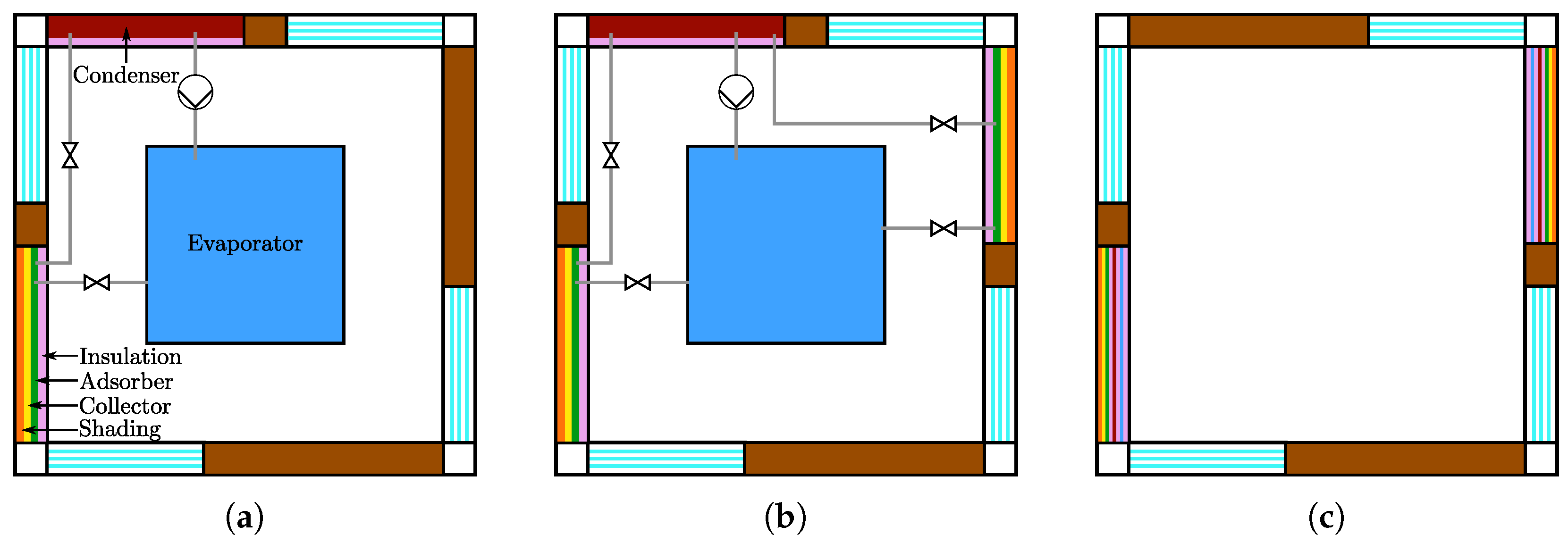
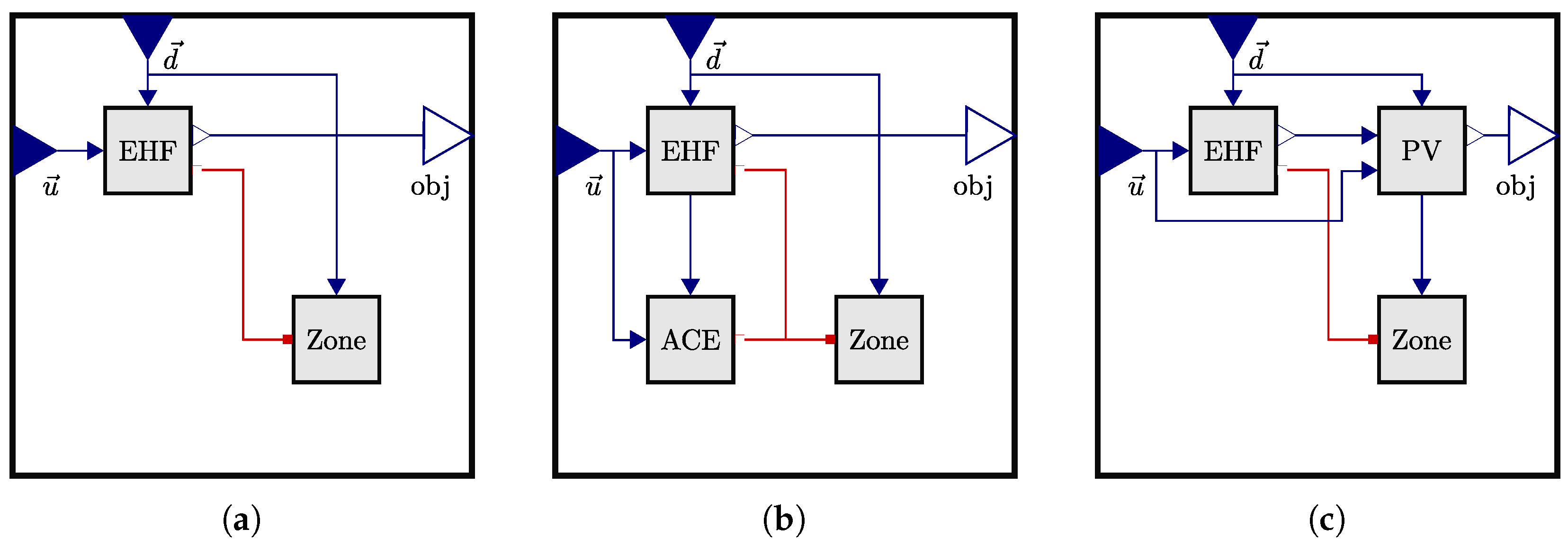
Given that the area ratios ( and ) are the subject of parameter variation, they are determined from intermediate variables that are easier to understand. These intermediate variables are the balance ratio and the total area ratio . The balance ratio indicates how the total area is distributed between the west and east elements. If the total area is assigned to the west element, the balance ratio is . If the focus is solely on the east element, the balance ratio is . The total area ratio indicates the overall capacity for solar cooling. Due to the constant window area ratios with , the area ratios of the solar cooling elements ( and ) are limited. Therefore, not all balance ratios are evaluated for a total area ratio .
3.1. Energy Consumption of the Reference Scenario at Standard Conditions
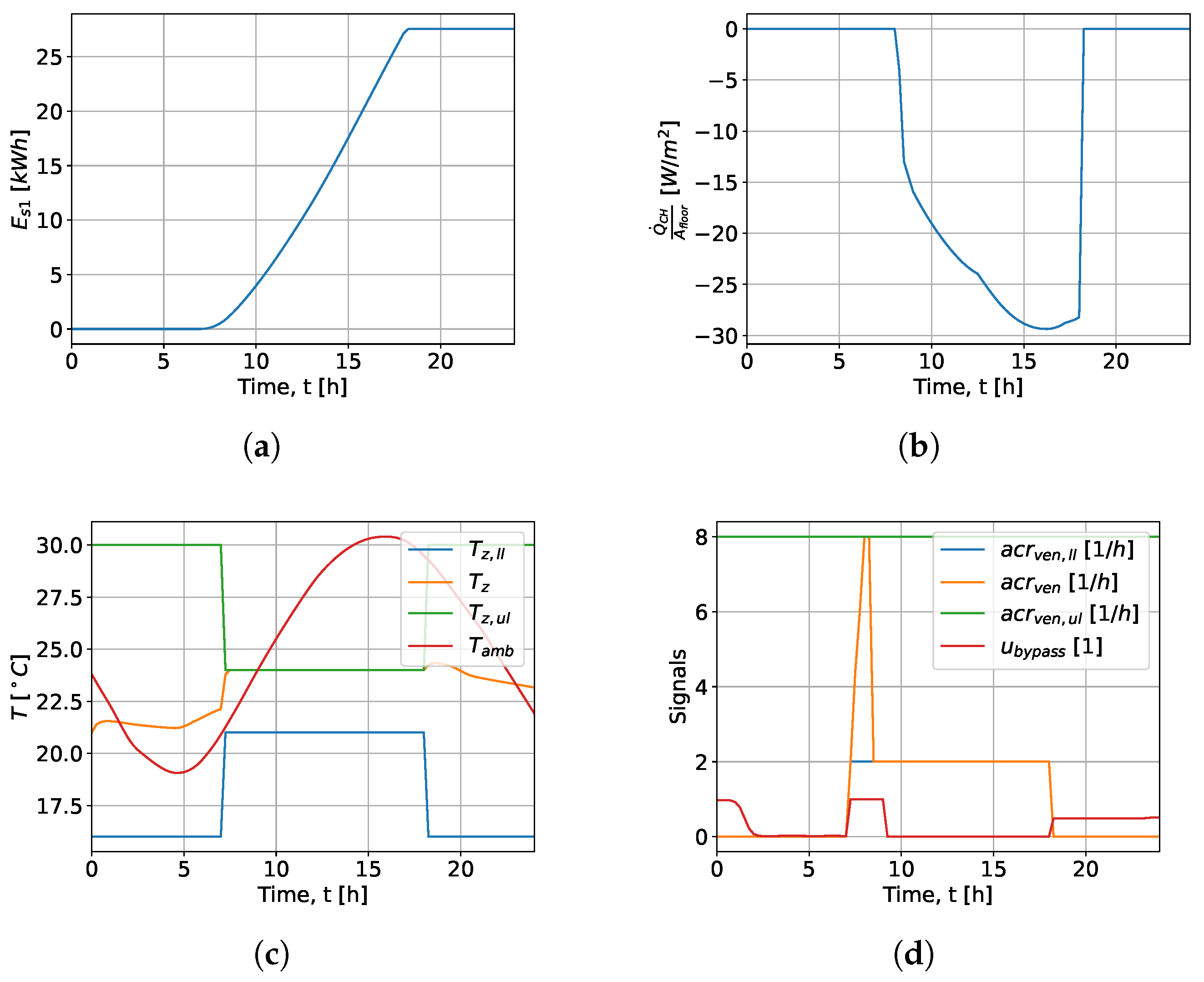
Figure 6 presents the optimal time series of the reference scenario for the standard conditions (
and
).
Figure 6a shows the total electrical energy consumption, which increases during the occupancy period and amounts to
=
kWh by the end of the day.
Figure 6b displays the floor area-specific thermal cooling power of the compression chiller, which only occurs during occupancy. The lowest value is
.
Figure 6c shows the room temperature, the upper and lower room temperature constraints, and the ambient temperature. Starting from the initial value, the room temperature remains near the upper limit for most of the occupancy period, with constraints being met.
Figure 6d depicts the bypass signal, the air change rate, and its upper and lower limits. The air change rate increases when the room temperature reaches the upper limit and cooling power is required. Otherwise, it is tied to the lower constraint. The bypass is fully utilised during the morning cooling period but is not relevant in other time periods when the air change rate is zero.
3.2. Influence of Adsorbent and Both Area Fractions (, ) on the 2ACE Scenario
For this parameter variation, the energy efficiency ratio of the compression chiller and the façade area-to-room volume ratio are kept constant at standard conditions ( and ).
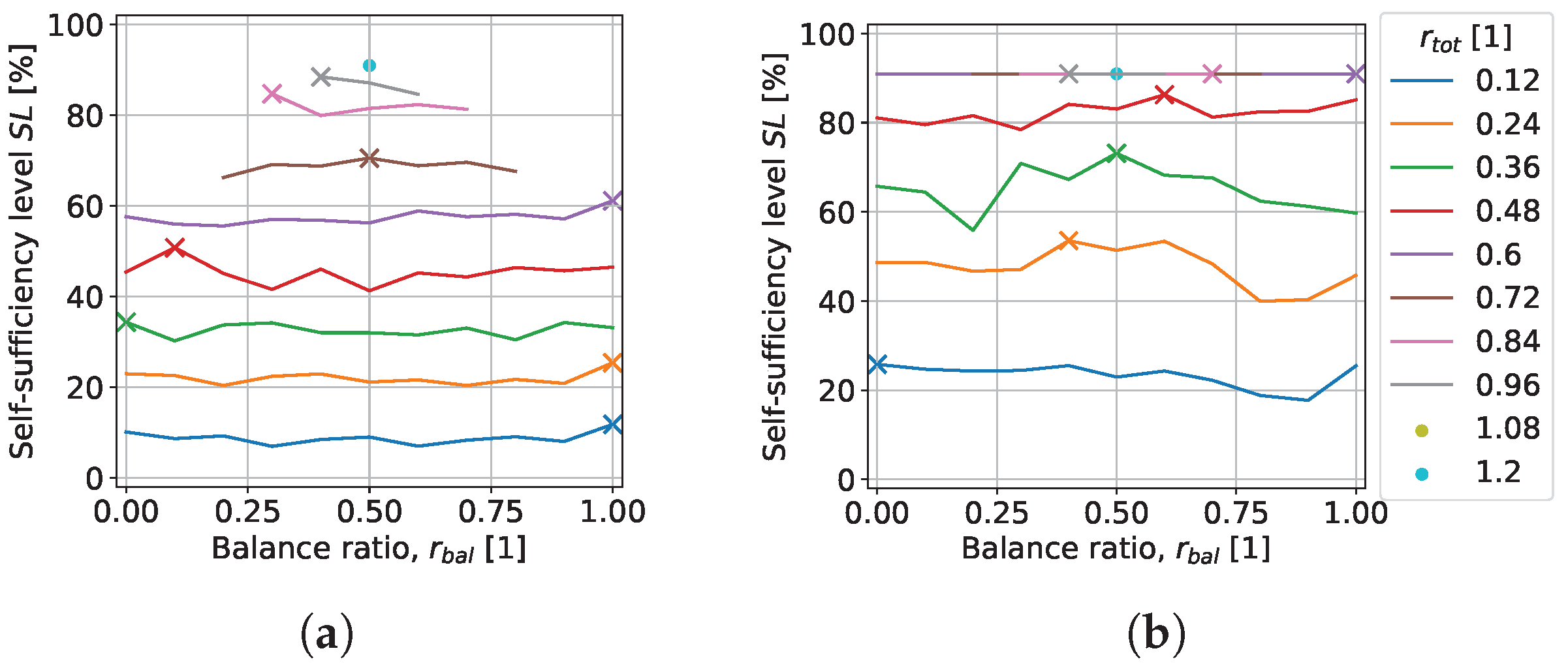
The results for the self-sufficiency level for both adsorbent materials are presented in
Figure 7. The maximum self-sufficiency level at a constant total area fraction is indicated by a star. Applying the initial loading study to all 144 data points in
Figure 7 requires a computation time of 11.8 days.
For the adsorbent Zeolite 13X, cf.
Figure 7a, the self-sufficiency level rises with increasing total surface area ratio
. When
, equivalent to a total area
, the maximum self-sufficiency level
% is attained. At constant total area
, the self-sufficiency level shows no pronounced maximum behaviour. No clear trend is discernible with respect to the balance ratio
.
In comparison, the use of the adsorbent Silica Gel SG123, cf.
Figure 7b, exhibits a greater increase in the self-sufficiency level with total area. Beyond a ratio of
, the same maximum self-sufficiency level
% is achieved. Until the maximum self-sufficiency level is reached, using Silica Gel SG123 therefore results in near twice the self-sufficiency for the same total area
. Regarding the balance ratio, no pronounced maximum behaviour is observed either. A balanced ratio
tends to lead to increased self-sufficiency compared to exclusive distribution on one orientation.
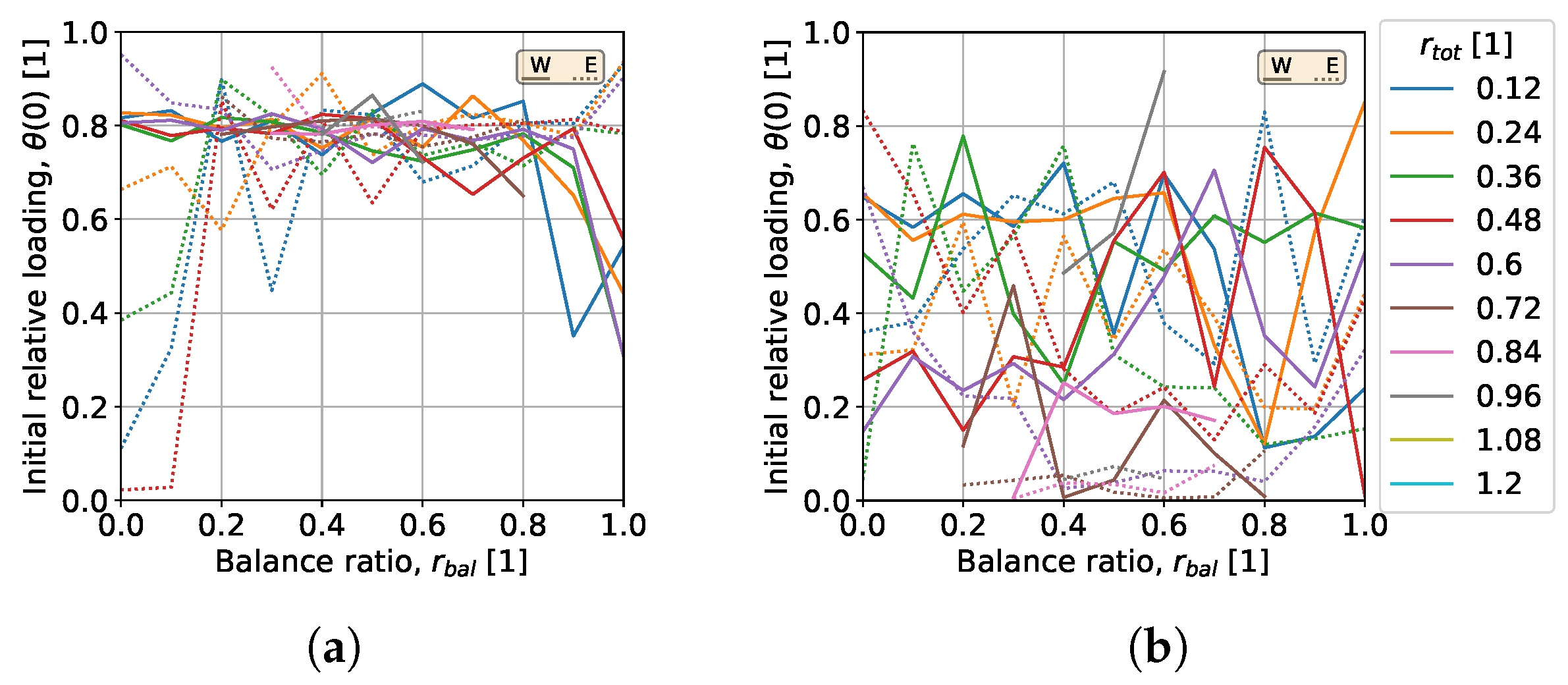
In
Figure 8, the relative initial loadings obtained from the initial loading studies are now considered, with the initial loadings for the west adsorber represented by a solid line and for the east adsorber by a dashed line.
For the adsorbent Zeolite 13X, cf.
Figure 8a, a relative initial loading of
for both the east and west adsorbers tends to yield optimal results within the initial loading studies. However, this applies only to a limited extent within the middle range of the balance ratio
. No clear dependence on the total area ratio
is discernible. For the adsorbent Silica Gel SG123, cf.
Figure 8b, initial loadings
are predominantly chosen, with no clear correlation to the balance ratio
or the total area ratio
observable.
3.3. Influence of Time Step and Heat Transfer Coefficient on the 2ACE Scenario
Table 1 presents the results of the analysis concerning the time step
of the dynamic optimisation problem, cf. Equation (
9). The remaining parameters (
,
,
, and
) were held constant. The heat transfer coefficient
is determined according to
Table A5. Silica Gel SG123 was employed as the adsorbent.
The results in
Table 1 indicate that not all of the 50 trials successfully converged during the initial loading study. This number of successful trials
decreases with a decreasing time step. For a time step of
, only one of 50 samples converges, and none converge for
. Concurrently, the computational time of the initial loading study,
, increases as the time step decreases. Energy consumption decreases from
to
but then increases again. The last two values are placed in brackets due to the small number of successfully converged samples.
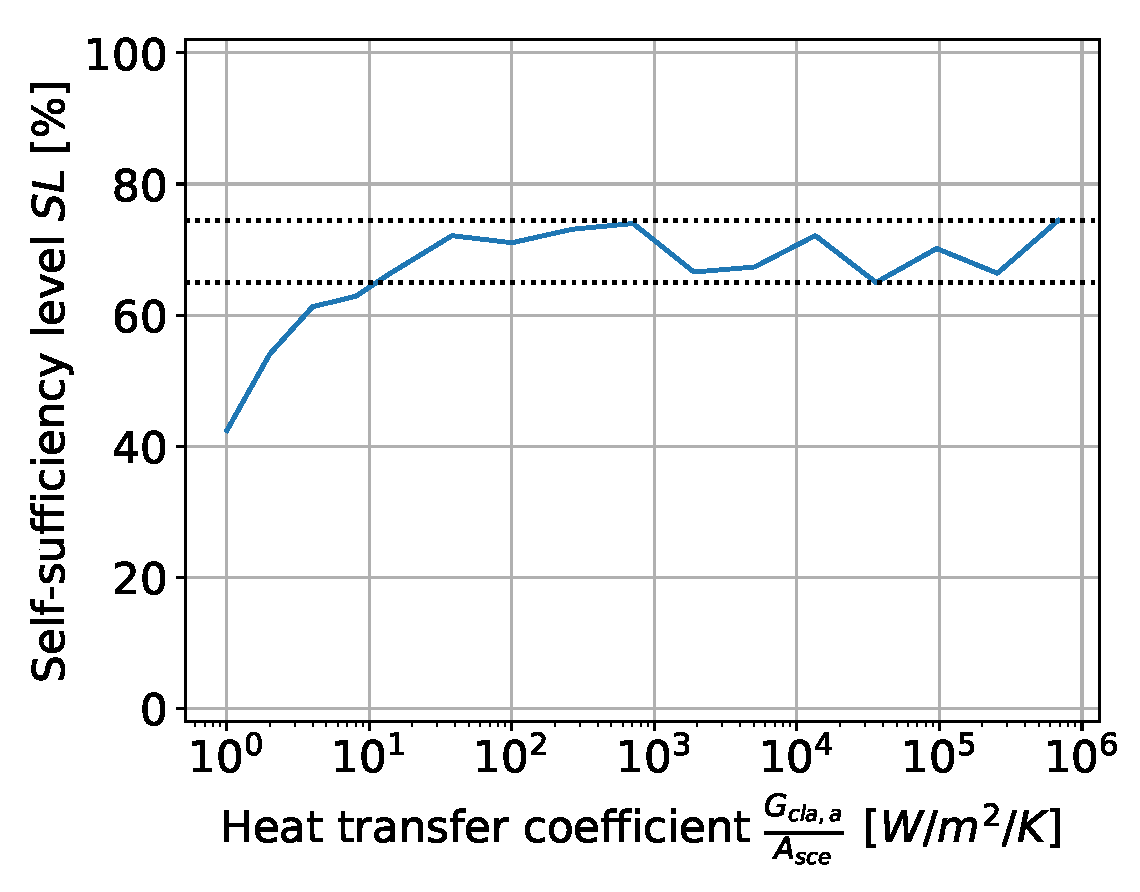
The influence of the critical heat transfer coefficient between collector and adsorbent
is investigated in
Figure 9. For this analysis, the time step is held constant at
.
The results in
Figure 9 demonstrate that the self-sufficiency level of the 2ACE scenario increases with a higher critical heat transfer coefficient
. Beyond a value of
, the self-sufficiency level stabilises within a range of 65.0–74.4%.
3.4. Influence of Both Area Fractions (, ) on the 2PV and 2PVB Scenarios
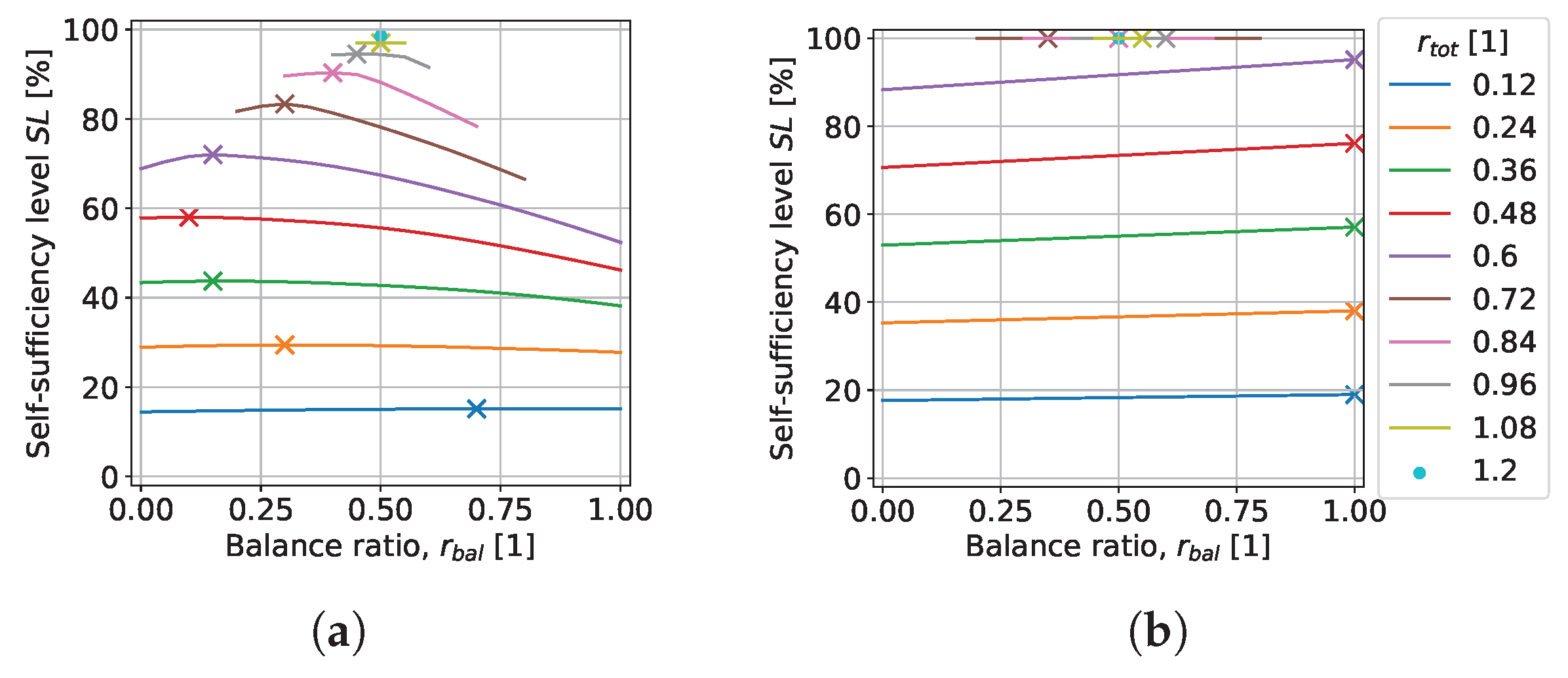
Figure 10 presents the results of the parameter variation in the area fractions (
,
) on the photovoltaic scenarios. Calculating all 272 data points in
Figure 10 requires approximately 5.5 h.
3.4.1. Photovoltaic Scenario (2PV)
Figure 10a shows the results of the self-sufficiency level of the 2PV scenario when varying the balance and total area ratios. As with the adsorption cooling scenario, increasing the total area fraction
generally leads to increased self-sufficiency. The 2PV scenario delivers lower self-sufficiency than the adsorption cooling scenario with the adsorbent Silica Gel SG123, cf.
Figure 7b, for total area ratios
. Subsequently, the self-sufficiency level increases to a value higher than the 2ACE scenario. The maximum self-sufficiency level
% is achieved at the maximum area ratio
. For constant total area ratios, a continuous and pronounced maximum behaviour of the self-sufficiency is observed. The maximum curve is less pronounced for small total surface areas and subsequently more pronounced and shifted towards the western façade element. As the total area ratio continues to increase, the maximum shifts towards an even distribution of element areas
. Generally, a purely eastern distribution of the total area leads to a lower self-sufficiency level than a purely western distribution; the maximum always lies in between.
3.4.2. Photovoltaic Plus Battery Scenario (2PVB)
Figure 10b shows the results for the 2PVB scenario. The self-sufficiency increases with the total area ratio of the two elements, as with the other two scenarios. From a total area ratio
, complete self-sufficiency
% applies consistently. However, up to this total area ratio, a purely eastern distribution results in higher self-sufficiency than for the western element or a balance between them. This maximum prominence increases slightly with the total area ratio
.
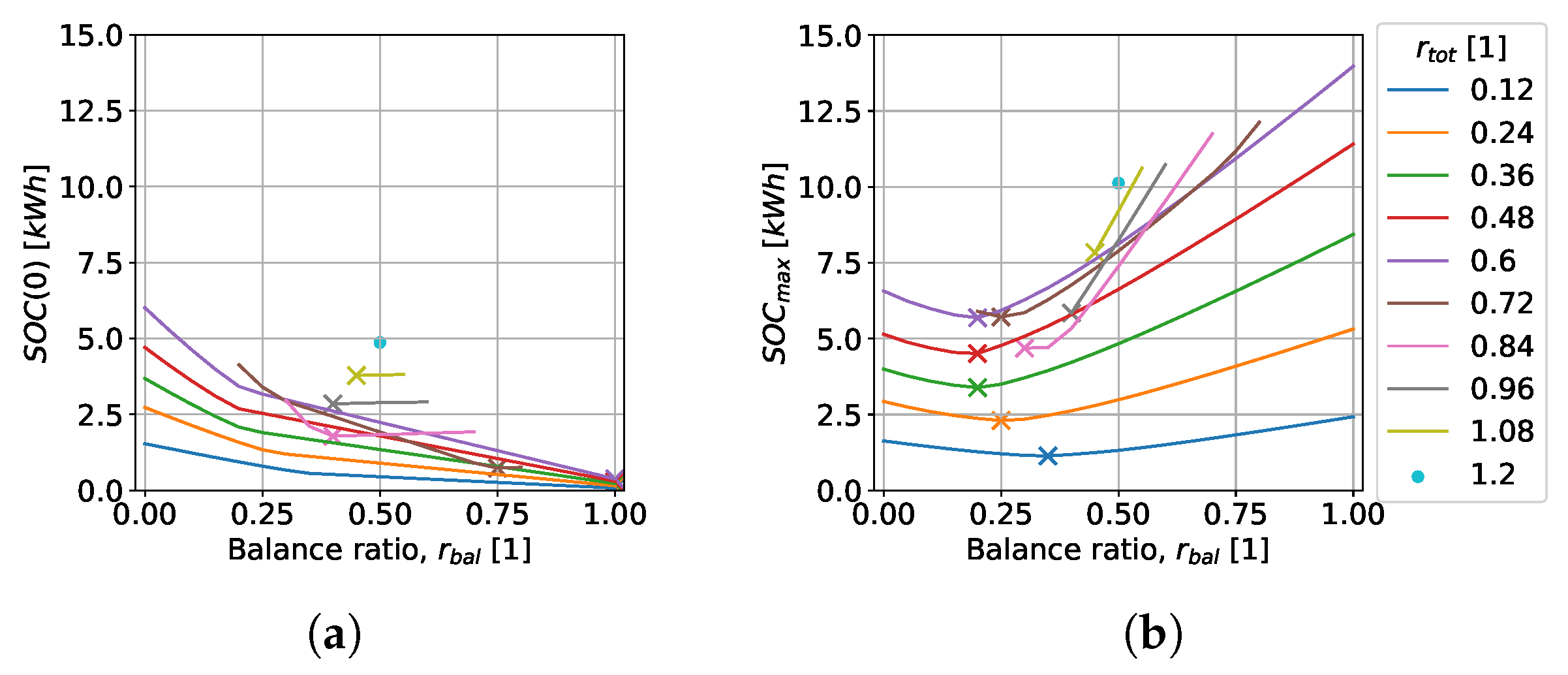
To enable dynamic optimisation without specifying a start and end value for the battery capacity, the start and end capacity were set to zero, and a negative battery capacity was permitted. Following the dynamic optimisation, the state-of-charge profile of the battery is corrected by the minimum value, from which the initial
and maximum
state of charge were derived, cf.
Figure 11.
The behaviour of the initial battery capacity
, cf.
Figure 11a, is divided by the total area ratio
. Up to the ratio
, a clear minimum behaviour is observed with the balance ratio
. The initial battery capacity decreases with an increasing area focus on the east element. Above an area ratio
, a minimum behaviour is observed within the range of the middle balance ratios.
The maximum capacity
is shown in
Figure 11b. For a total area ratio
, it exhibits a pronounced minimum behaviour between a balance ratio of 0.2 to 0.4 and then rises sharply with the balance ratio. Above a total area ratio of
, the initially western focus crosses a saddle point. The minimum now shifts back to a balance ratio
.
3.5. Influence of the Energy Efficiency Ratio ()
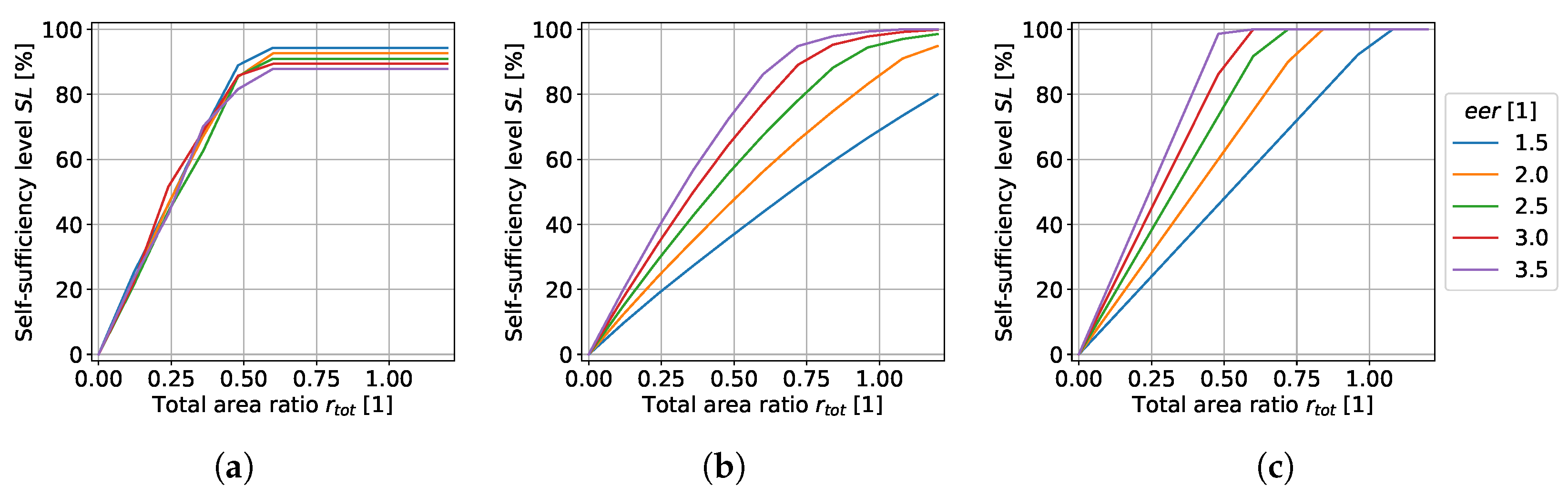
This section investigates the influence of the energy efficiency ratio of the compression chiller. The balance ratio is held constant at and the façade area-to-room volume ratio at . The total area ratio of both elements and the energy efficiency ratio are varied. This analysis serves to enable an assessment of potentially temperature-dependent rather than constant energy efficiency ratios.
The results of the reference scenario are presented in
Table 2. As the energy efficiency ratio increases, the energy consumption of the reference scenario decreases, requiring less electricity for the same cooling capacity.
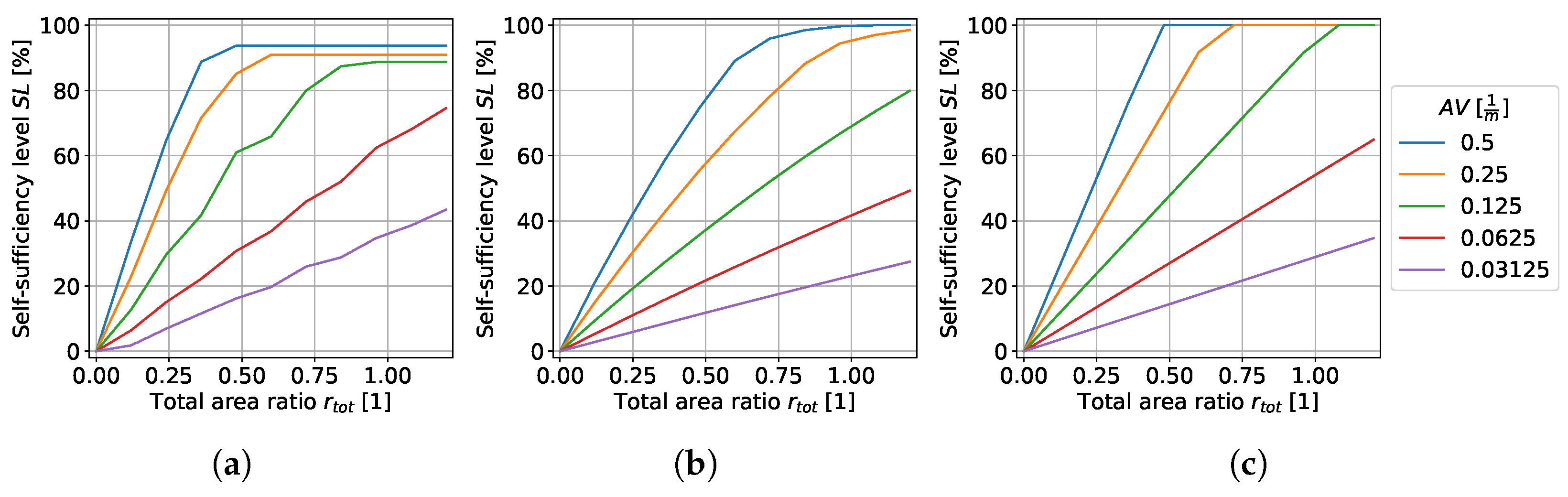
In
Figure 12, the results of the parameter variation are presented for all three scenarios. For the adsorption cooling scenario, the adsorbent Silica Gel SG123 was applied. As in the previous parameter variation, an increase in self-sufficiency is observed with the total area of both elements
. For the 2ACE scenario, a slight influence of the energy efficiency ratio of the supporting compression chiller is shown. With an increasing energy efficiency ratio, the self-sufficiency decreases slightly. For the other scenarios, the energy efficiency ratio
has a significant influence. With an increasing ratio, the self-sufficiency increases. This leads, in the 2PVB scenario, to complete self-sufficiency being achieved with a decreasing total area ratio. In the range
, the 2ACE scenario consistently increases faster than the PV scenario. Consequently, the 2ACE scenario requires less total area to achieve the same self-sufficiency level. This also applies to the 2PVB scenario up to an energy efficiency ratio
. However, compared to the photovoltaic scenarios, the 2ACE scenario is limited and never reaches complete self-sufficiency
%, as is the case with the 2PVB scenario.
3.6. Influence of the Façade Area-to-Room Volume Ratio ()
This section investigates the influence of the building type. The balance ratio is held constant at and the energy efficiency ratio at . The total area ratio of both elements and the façade area-to-room volume ratio are varied. This serves to classify the solar cooling potential for different building types.
The results for the reference scenario are given in
Table 3. With a decreasing
ratio, the building’s edge length, façade area, floor area, and energy consumption increase. The floor area increases more strongly than the façade area.
In
Figure 13, the results of the parameter variation are presented for all three scenarios. The adsorption cooling scenario is also evaluated only for the adsorbent Silica Gel SG123.
As observed in previous parameter variations, self-sufficiency increases with the total area of both elements . For all scenarios investigated, a decrease in the self-sufficiency ratio is observed with a decreasing ratio, or an increasing edge length of the square storey. More total area is required to achieve the same self-sufficiency level. Generally, the self-sufficiency level increases more strongly with the total area for the 2ACE scenario than for the two photovoltaic scenarios. Therefore, less area is required for the same self-sufficiency level. Furthermore, the 2ACE scenario is limited and the 2PVB scenario again achieves complete self-sufficiency %.
4. Discussion
The results in
Figure 7a,b show that Silica Gel SG123 is significantly more suitable for the novel concept 2ACE than Zeolite 13X. This confirms the findings of the study [
17]. Specifically, with the same total area, using Silica Gel SG123 achieves near double the self-sufficiency level compared to Zeolite 13X. In other words, achieving the same self-sufficiency level requires approximately twice the area when using Zeolite 13X. Therefore, hypothesis H2 is confirmed by the present results.
The results in
Figure 7a,b also serve to assess hypothesis H1. For this purpose, the balance ratio
was introduced to examine purely distributing the total area to the east or west element, as represented by the 1ACE concept, and balancing between both sides. The results do not confirm hypothesis H1. Neither solely allocating the total area to the west or east adsorbent, nor distributing it between both sides, leads to a maximum self-sufficiency level. This also indicates that the area focus of the solar cooling elements does not play a decisive role, contradicting the results of the previous study [
12], which found that the orientation of the adsorption cooling element strongly influences self-sufficiency. However, the present study used a control concept based on dynamic optimisation, which presumably offers significantly increased flexibility and reliability when dealing with various system parameters, such as element alignment.
The highly fluctuating initial relative loadings in
Figure 8a,b highlight the issue of convergence assurance within the 2ACE scenario. No clear, consistent trend is discernible. Once the maximum self-sufficiency level is reached, multiple solutions for the initial conditions should consistently be found. The presence of multiple initial conditions below this maximum is likely due to insufficient iterations during optimisation. It is hypothesised that the objective function exhibits a very flat optimum.
The results in
Table 1 offer further insights into the challenges surrounding convergence assurance. Reducing the time step
increases the number of system variables. As model complexity increases, computation time
rises and the convergence rate
decreases. This could be addressed by increasing the number of trials in the initial loading study or raising the maximum number of iterations, although this would further increase computation time.
The heat transfer from the collector to the adsorbent is crucial for achieving the temperatures required for desorption, cf.
Figure 9. Reducing this from the standard value, cf.
Table A5, results in a significant decrease in self-sufficiency once the critical heat transfer coefficient falls below
. Considering the measured thermal conductance reported in the thesis (Table 5.17, [
21]), relative to the inner surface area of the adsorber tube, yields an experimentally determined heat transfer coefficient of
. Accordingly, it should be feasible to implement a heat transfer design such that heat transfer from the collector to the adsorbent is not a limiting factor.
Hypothesis H3 is not confirmed. Replacing the adsorption cooling elements with PV elements results in a significantly lower self-sufficiency level, assuming Silica Gel SG123 is used, at least up to a total area ratio of
. But, the results in
Figure 10a also show that the self-sufficiency of the photovoltaic scenario then continues to increase, while the adsorption cooling scenario stagnates. This is because adsorption cooling can only provide cooling energy and not electrical power for the decentralised ventilation system. In other words, this share of electrical energy consumption cannot be independently compensated for in the adsorption cooling scenario. However, if it is assumed that the conversion efficiency of electrical energy into cooling energy
is lower due to the high ambient temperature on the hottest day of the year, the adsorption cooling scenario is more self-sufficient than the PV scenario, as shown in
Figure 12a,b. Therefore, the adsorption cooling scenario appears more resilient.
Compared to the adsorption cooling scenario, the 2PV scenario, cf.
Figure 10a, demonstrates a greater self-sufficiency for a balanced area distribution than for one element solely oriented in a single direction. Consistent with
Figure 6b, which illustrates cooling power demand, slightly increased cooling capacity is required in the afternoon. Consequently, prioritising area allocation to the west element yields marginally improved self-sufficiency, as demand and cold production are brought closer together. The addition of a small chilled water storage facility could alter this outcome.
Incorporating a battery into the photovoltaic scenario results in a decoupling of power production and cooling energy consumption. The results in
Figure 10b reveal not only a significant increase in self-sufficiency, with the maximum shifting towards an eastern emphasis at constant
, but also that complete self-sufficiency is achieved from an area ratio
. The eastward shift likely stems from the greater electricity generation potential in that direction. This also holds true when a lower energy efficiency ratio
is assumed, as shown in
Figure 12c. To achieve a comparable self-sufficiency level to the adsorption cooling scenario for small total areas
, the 2PVB scenario requires an energy efficiency ratio not falling below
.
The results in
Figure 11a show that solely allocating the PV area to the east adsorbent
leads to a lower initial state of charge
. This is because electricity is generated by the east element in the morning and then depleted as the cooling demand rises. The battery capacity profile is reversed for a purely western allocation, as the battery is first discharged with the onset of cooling performance and then recharged by the west-oriented PV element.
The results in
Figure 11b should be considered in detail, distinguishing between results with and without complete self-sufficiency
%. If complete self-sufficiency is not achieved
, the maximum battery capacity is minimal for a balance ratio
. The eastern PV element should be small and, together with an increased initial capacity, cover the morning cooling demand. The western element then replenishes the energy storage in the afternoon. With complete self-sufficiency for
, it must be assumed that too much electricity is stored in the battery, increasing the maximum capacity. To meet the periodic boundary condition, this excessive storage is discharged at the end of the day by over-conditioning the room, leading to a slight drop in maximum battery capacity after
and then a sharp increase. However, if feeding into the power grid is permitted but not remunerated, the maximum battery capacity could be reduced, and a capacity lower than the saddle point of approximately
could suffice.
The assessment of hypothesis H5 is made with the results in
Figure 13. Generally, energy demand increases with a decreasing
ratio, specifically an increased ratio of floor area to façade area. The heat sources are determined by the façade area, resulting in solar thermal and convective heat gains, and also by the floor area, including heat input from ventilation and internal gains. However, the heat sinks are solely related to the façade area. With a decreasing
ratio, the relationship between façade-related heat sinks and floor area-related heat sources changes. The façade-related heat sources are no longer sufficient, resulting in increased electricity consumption from the grid for compression cooling, thus reducing the self-sufficiency level with a decreasing
ratio. Therefore, regardless of the scenario, slender buildings
can be operated more autonomously than broad or deep buildings. Hypothesis H5 is thus confirmed, consistent with the results of the study (Figure 2, [
13]).
Limitations and Future Work
Various measures were taken in this study to ensure the convergence of the dynamic optimisation of the 2ACE scenario, cf.
Section 2.2.6. Repeating dynamic optimisation fifty times leads to a significant increase in the calculation time for each data point. Future work should therefore focus on the convergence rate of the dynamic optimisation of the adsorption cooling scenario. This could be achieved, firstly, by using different solvers. In the current study, both valve positions are mapped as system inputs. One possibility would be to solve the valve positions as integer variables in the dynamic optimisation via a mixed-integer nonlinear program (MINLP) solver. However, this is currently not possible with Modelon Impact. Another possibility could be to reduce the number of system inputs and constraints by, for example, implementing the valves as self-regulating flap valves. This would eliminate two inputs and two constraints per adsorption cooling element. However, the problem of continuous differentiability of all sub-models caused by flap valves would need to be resolved.
The time step has a direct influence on the number of optimisation variables in the dynamic optimisation problem. Increasing it results in greater flexibility in utilising the potential of the adsorption cooling elements. Therefore, future work should also focus on reducing the time step, which should directly impact the self-sufficiency level.
So far, only one day, the hottest day of the year, has been considered. If the simulation time can be reduced, different prediction horizons deviating from 24 should be considered. This could lead to shifts in the timing of electricity generation and cooling energy consumption, and thus to optimal solar cooling element area allocation, as cloud cover and angles of incidence change. In addition, a model predictive control concept should be derived using this dynamic optimisation and applied to an entire summer or year.
To ensure an even more accurate comparison between the data points, all initial ones should correspond to the final state values, as implemented in the dissertation [
20]. Due to the challenging convergence of the dynamic optimisations, periodic boundary conditions were not implemented for all states but only for the adsorbent loading and battery capacity. Future studies should investigate this aspect further.
In this study, the working pair Zeolite 13X-water and Silica Gel SG123-water were implemented. Future work should investigate the suitability of other working pairs for this façade-integrated adsorption cooling concept. Furthermore, the heat transfer from the collector surface to the adsorbent should be investigated in greater detail.
System models were developed and used for dynamic optimisation in this study. Future work should simultaneously optimise static design parameters and dynamic inputs. This could be done, for example, with the objective of a holistic life cycle assessment combining grey and operational emissions over a defined life cycle period. This may offer advantages over the photovoltaic plus battery scenario, as the adsorption cooling element does not require rare-earth materials. In addition, the availability and recyclability of raw materials should also be included in the decision-making process.
The photovoltaic scenarios present several advantages over the adsorption cooling scenarios. Firstly, complete self-sufficiency can be achieved when coupled with a battery. Secondly, conversion to electrical energy removes the requirement for on-façade localisation of storage and cooling production. The battery for the 2PVB concept could be centralised for a building, reducing costs and maintenance efforts. Cold production could be implemented on a floor-by-floor basis, in conjunction with decentralised ventilation.
5. Conclusions
In this study, various concepts for façade-integrated solar cooling were presented and optimally operated using dynamic optimisation for the hottest day of the year at the considered location.
In the first step, the system models of all considered scenarios are presented. These are the reference scenario without solar cooling elements, the adsorption cooling scenario with two adsorption cooling elements, the photovoltaic scenario with two photovoltaic elements, and the photovoltaic plus battery scenario. For each scenario, the underlying system equations and the dynamic optimisation problem were presented. This includes the description of the objective function, states, inputs, initial conditions, and constraints.
In the results section, the influence of the adsorbent and system parameters on the self-sufficiency level is investigated. These system parameters include the balance ratio , which determines the area focus between the west and east sides of the two solar cooling elements; the total area ratio , which determines the cooling capacity; the energy efficiency ratio of a supporting compression chiller; and the façade area-to-room volume ratio , which represents the slenderness of the building type.
The results show that the adsorbent Silica Gel SG123 is significantly better suited for the present application than Zeolite 13X. By using Silica Gel SG123, the same self-sufficiency level can be provided with half the area of all solar cooling elements.
As in previous studies, the ability to provide off-grid cooling increases strongly with the total area of the solar cooling elements . However, no pronounced optimal area balance between the east and west adsorbers is observed. This is likely due to the flexibility enabled by the control concept of dynamic optimisation.
Compared to the scenario with solely compression cooling and two photovoltaic elements, a significantly lower self-sufficiency level is observed. Adding a battery to the photovoltaic scenario not only significantly increases the self-sufficiency level but also enables complete self-sufficiency with electrical energy.
Up to a total area ratio of , the adsorption cooling scenario usually leads to a higher self-sufficiency than the photovoltaic scenarios. But, the adsorption cooling potential is limited in its ability to provide itself with cooling, as the electrical energy required to operate the ventilation cannot be provided off-grid. This is where the photovoltaic scenarios have a decisive advantage. They produce electrical energy which can be used to operate the ventilation and provide cooling.
For slender buildings with a high AV ratio, relatively less façade area is required for solar cooling elements than for broad buildings with a low AV ratio. This is because the floor area increases more strongly than the façade areas, whereby the heat sources exceed the façade area-related heat sinks.
The main limitations of the adsorption cooling scenario remain its convergence rate. The initial loading study introduced is very time-consuming and should be replaced by a coupled optimisation of dynamic and static system variables. Subsequently, prediction horizon lengths should be analysed and model predictive control concepts should be derived and examined over a period of months of operation.