Article

Short-Term Captivity Restructures the Gut Microbiome of Fundulus heteroclitus

by
Alamea McCarthy
1,
Elisa Torres-Yeckley
1,
Jenna Farris
1,
Jonas Vorbau
1,
Priyal Patel
1,
Richard Feinn
2 and
Lisa A. E. Kaplan
1,*
1
Department of Biological Sciences, Quinnipiac University, Hamden, CT 06518, USA
2
Frank H. Netter MD School of Medicine, Quinnipiac University, North Haven, CT 06473, USA
*
Author to whom correspondence should be addressed.
Hydrobiology 2026, 5(3), 19; https://doi.org/10.3390/hydrobiology5030019 (registering DOI)
Submission received: 6 May 2026 / Revised: 28 May 2026 / Accepted: 3 June 2026 / Published: 23 June 2026

Abstract

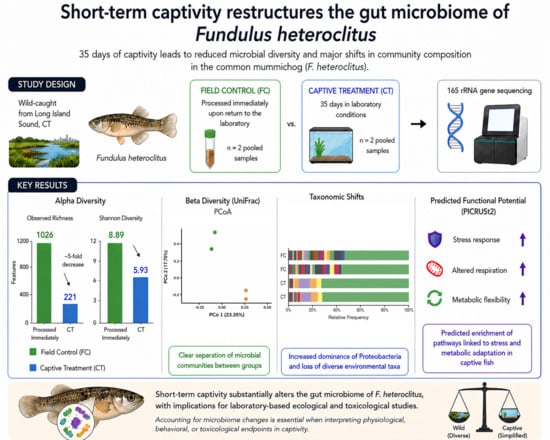
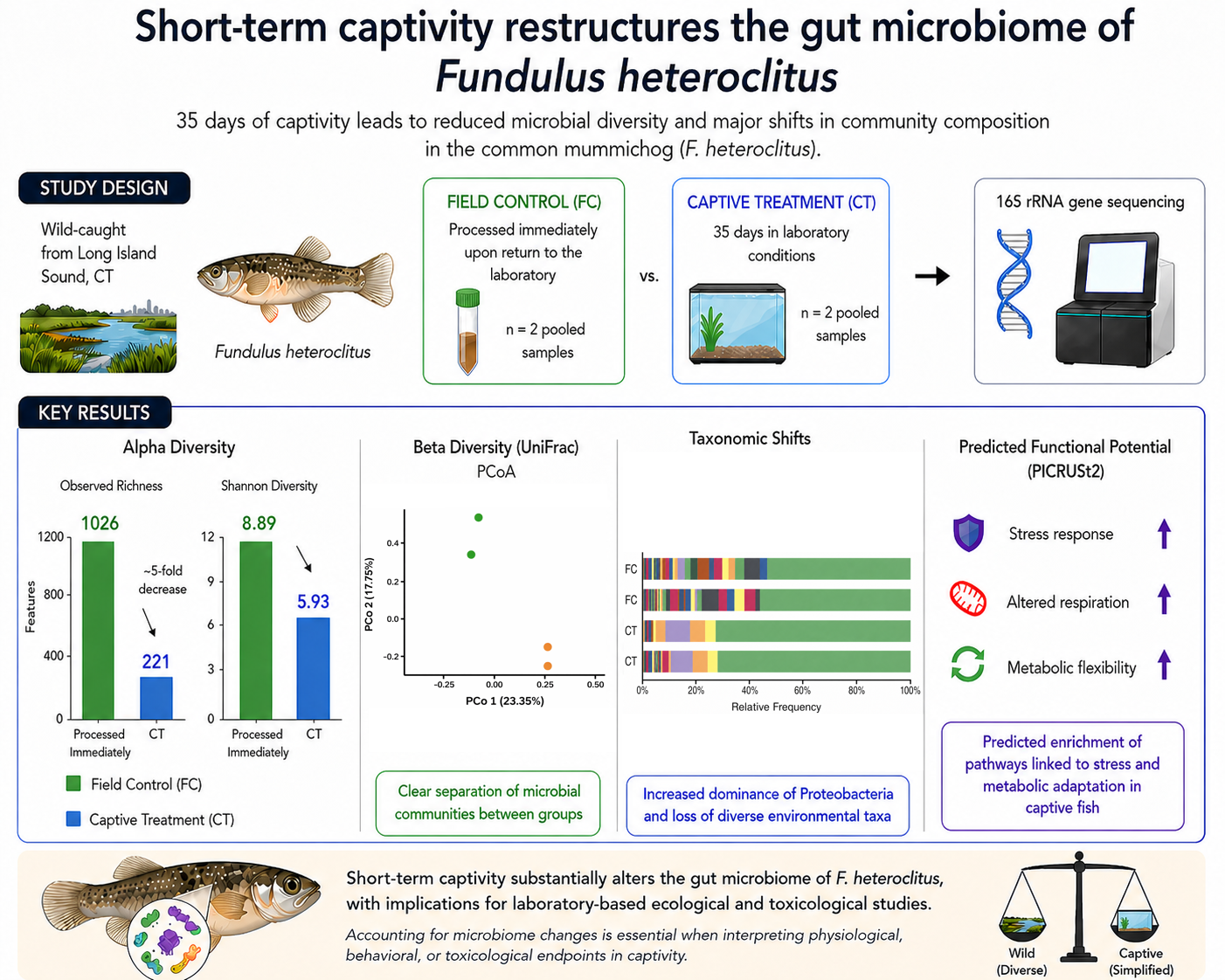
Short-term captivity is widely used in experimental studies but may unintentionally alter host-associated microbiomes, potentially confounding biological interpretation of experimental outcomes. Here, we evaluated the effects of 35 days of captivity on the gut microbiome of Fundulus heteroclitus collected from Long Island Sound (Milford, CT, USA) using 16S rRNA gene sequencing. Comparisons between Field Control (FC) and short-term Captive Treatment (CT) groups revealed a marked reduction in microbial diversity under captive conditions. Observed richness decreased approximately five-fold (Field Control: 1026 features; Captive Treatment: 221 features), and Shannon diversity declined from 8.89 to 5.93. Beta diversity analyses based on UniFrac distances demonstrated clear separation between groups, indicating substantial shifts in community composition. Taxonomic profiling revealed reduced community complexity in captive fish, with increased dominance of Proteobacteria and loss of diverse environmental taxa. Predicted enrichment of pathways associated with stress response, altered respiration, and metabolic flexibility in captivity reflects inferred functional potential rather than direct functional activity. Given the use of pooled samples with limited biological replication, these findings should be interpreted as strong community-level patterns rather than population-level inference. Collectively, these results indicate that short-term captivity alters the F. heteroclitus gut microbiome.

Graphical Abstract

1. Introduction

Fundulus heteroclitus (common mummichog) is a well-established model organism for monitoring environmental contamination in aquatic ecosystems [1,2,3,4]. This species is widely distributed along the Atlantic coast of North America [5,6] and inhabits diverse environmental conditions, including tidal marshes within estuarine systems such as Long Island Sound [7]. Its ecological relevance, ease of collection, and sensitivity to environmental perturbation have established F. heteroclitus as an effective sentinel species for investigating physiological and ecological responses to environmental stressors [8].
Wild populations experience complex ecological pressures, including variable diet, environmental heterogeneity, and diverse microbial exposures. These factors contribute to greater genetic and phenotypic variability relative to captive populations [9,10]. In contrast, captivity imposes controlled environmental conditions that reduce variability in factors such as diet composition, water chemistry, and resource availability, thereby improving experimental reproducibility [11]. While such control is advantageous for isolating the effects of environmental stressors, captivity itself may introduce unintended physiological and ecological changes.
Previous studies demonstrate that captivity can alter fish physiology, behavior, and population dynamics. For example, captive Salmo trutta exhibit altered sensitivity to environmental stimuli [12], while Danio rerio maintained in captivity show reduced genetic diversity and reproductive capacity [13]. These findings suggest that captivity can fundamentally alter organismal responses to environmental perturbation and is increasingly recognized as a driver of microbiome restructuring across taxa [9,14].
The gut microbiome is a critical component of host biology, influencing nutrient metabolism, immune function, and resistance to pathogens [15,16]. In fish, gut microbial communities are shaped by both host factors and environmental conditions, including diet and habitat [10,14]. Disruptions to these communities have been linked to disease susceptibility, altered metabolic function, and reduced resilience to stress [17]. Despite its importance, the extent to which short-term captivity alters gut microbial communities in F. heteroclitus remains poorly understood.
Captivity represents a substantial ecological shift, involving reduced environmental microbial exposure, dietary homogenization, and altered host physiological conditions. These factors may collectively reshape the gut microbiome, potentially confounding interpretation of experimental outcomes in environmental toxicology and ecological studies [18]. However, the magnitude and nature of these microbiome changes, particularly over short-term captivity, have not been fully characterized in this species.
Given the widespread use of F. heteroclitus in contaminant exposure studies, captivity-induced microbiome changes may represent an underappreciated source of experimental variability. Because Fundulus heteroclitus is widely used in laboratory-based ecological and toxicological studies, understanding the extent to which captivity itself alters host-associated microbial communities is important for interpretation of experimental outcomes. In many toxicological studies, wild-caught fish are maintained under short-term laboratory conditions prior to contaminant exposure, yet the microbiome consequences of this acclimation period remain poorly characterized.
The objective of this study was to characterize alterations in the gut microbiome of F. heteroclitus following a 35-day captivity period using next-generation sequencing. This duration was selected because it reflects a time frame commonly used for acclimation and short-term toxicological exposure studies involving wild-caught fishes [3,4]. By comparing field-collected and captive individuals, this study aimed to quantify changes in microbial diversity, community composition, and predicted functional potential. Given the widespread use of F. heteroclitus in environmental and toxicological research, understanding captivity-induced microbiome shifts is essential for improving experimental design and interpretation.

2. Materials and Methods

Female Fundulus heteroclitus (n = 26) were collected at high tide from Long Island Sound (Connecticut Audubon Coastal Center at Milford Point) using minnow traps baited with plain bagel pieces and canned tuna. Fish were transported to the laboratory (Hamden, CT, USA) in ambient water (salinity = 22 ppt); transportation time from the collection site to the laboratory was approximately 25 min and was identical for both Field Control and Captive Treatment groups. Only female fish were included to minimize potential sex-associated variability in microbiome composition and host physiology. In addition, females were generally larger and easier to process consistently during dissections. To minimize stress, a cloth pre-soaked in ambient water was used to cover fish gills and eyes during length and mass measurements. Fish standard length (tip of the snout to the posterior end of the mid-lateral portion of the hypural plate) was measured using digital calipers, and fish mass was determined immediately upon removal of the wet cloth using an electronic balance (Ohaus Adventurer Pro AV213). Somatic Index (SI), calculated as mass divided by standard length, was also recorded. At the end of the 35-day captivity period, additional female F. heteroclitus (n = 10) were captured from the same site to serve as the Field Control (FC) group. FC fish were immediately euthanized and dissected upon arrival at the laboratory.
CT fish were placed into a 100 L glass aquarium with gravel, air supplementation, and two underwater sponge filters. Aquarium water (22 ppt salinity) was inoculated with water (1 L) collected from the field site at the time of fish capture. Fish were held for a seven-day depuration period and an additional 28 days of captivity.
During the depuration and captive periods, fish were fed twice daily with Tetramin® Fish Flake Food (protein 46%, fat 11%, fiber 3%, phosphorus 1%, Vitamin C 446 mg kg−1, omega-3 fatty acids 5000 mg kg−1, and maximum moisture 6%). Food was provided in 0.25 g allotments (weighed on Ohaus Adventurer Pro AV213); when an allotment of food remained untouched for five minutes, uneaten food was removed from the aquarium. Fish typically consumed two to three allotments per feeding. Once a week, Tetramin® Fish Flake Food was supplemented with two live clams (Mya arenaria) from the capture site. Typically, the clams were consumed within five minutes; clam shells were left in the gravel of the aquarium for the duration of captivity.
Aquaria salinity (22–24 ppt), temperature (20–22 °C), and photoperiod (13:11 h light:dark cycle) were held at these fixed values as they were equivalent to those measured from the field collection site at the time of capture. To reduce fish stress and maintain a consistent microorganism population, no water changes were made during the experimental period. Fish capture, handling, and housing followed animal care protocols approved by the Quinnipiac University’s Institutional Animal Care and Use Committee (IACUC).
Fish were euthanized prior to the morning feeding. They were not subjected to prolonged fasting prior to euthanasia because the study aimed to characterize gut microbial communities under conditions representative of normal husbandry and environmental feeding states.
Euthanasia was accomplished via hypothermia followed by decapitation. Prior to dissection, the equipment and the abdominal area of the fish were cleaned with 95% ethanol. A longitudinal midsagittal abdominal incision and an oblique abdominal incision proximal to the head were made to access the full gastrointestinal tract. The gastrointestinal tract or midgut (esophageal sphincter to vent region) was removed. As bacteria found in both the luminal contents and attached to the gut wall are considered part of the gut microbiome [19], whole gut tissue was snap frozen in a dry ice/isopropanol slurry prior to storage at −80 °C.
The primary objective was to determine whether short-term captivity produces broad community-level shifts in gut microbiome composition rather than to quantify individual-level variability. Thus, to assess treatment-level microbiome patterns, gastrointestinal samples were pooled prior to DNA extraction. Each pooled replicate consisted of gastrointestinal tissues from either six or seven individuals (FC replicate 1 = 6 fish; FC replicate 2 = 7 fish; CT replicate 1 = 6 fish; CT replicate 2 = 7 fish), resulting in two pooled replicates per treatment group (n = 2). Pooling was selected to ensure sufficient DNA yield from low-biomass gut samples while reducing technical variability associated with individual extractions. However, this approach limits assessment of inter-individual variability and may reduce observed within-group variation. As a result, analyses are interpreted at the level of pooled community structure rather than individual-level variation.
DNA extraction and amplicon sequencing of the 16S rRNA gene were performed by CD Genomics (Shirley, NY, USA). Following DNA extraction from pooled gut samples, PCR products were purified and used to construct a DNA library. Barcoded adapters were added to allow for multiplexing in a single sequence run.
Negative controls were included during the PCR amplification step (no-template controls, NTCs). These controls were processed in parallel with the samples to monitor potential contamination during amplification. No visible amplification was observed in the negative controls. Negative extraction controls and PCR blanks were not, however, carried forward to library preparation and sequencing.
The V4 region of the 16S rRNA gene was sequenced using a paired-end Illumina MiSeq platform with 515F and 806R primers. Paired-end reads were assigned to samples based on unique barcodes, after which barcode and primer sequences were removed. Reads were merged using FLASH (v1.2.11) to generate raw tags. Quality filtering was then performed on the raw tags using the Fastp quality control pipeline, resulting in high-quality sequences, with >97% and >93% of bases exceeding Q20 and Q30 thresholds, respectively. After filtering, a total of 553,000 reads for Field Control replicates and 593,900 reads for Captive Treatment replicates were retained, corresponding to an average of approximately 275,000 reads per replicate.
Taxonomic assignment of amplicon sequence variants (ASVs) was performed using the SILVA database (release 138.2). Rarefaction was performed to approximately 270,000 reads per replicate, a depth sufficient to capture the majority of observed diversity based on plateauing rarefaction curves. STAMP (open-source GitHub repository, version 2.1.3) was used to assess taxonomic and metabolic profiles. QIIME2 (microbiome multi-omics bioinformatics and data science platform, version 2024.10) and PICRUSt (bioinformatics software package, version 1.1.4) were used to predict metagenome functional content from marker gene surveys and full genomes. LEfSE (linear discriminant analysis effect size, version 1.0) was used to determine the features (clades, operational taxonomic units, genes, or functions) that would most likely explain differences among treatment groups [20].
Microbial alpha diversity was assessed using Observed Features, Shannon diversity, and Faith’s phylogenetic diversity. Beta diversity was evaluated using weighted and unweighted UniFrac distances and visualized via Principal Coordinates Analysis (PCoA).
Differences in community composition were evaluated using PERMANOVA, with homogeneity of dispersion assessed using PERMDISP. Because analyses were conducted using pooled samples with limited biological replication (n = 2 pooled replicates per treatment), these analyses should be interpreted as descriptive indicators of community-level separation rather than definitive inferential statistical tests. Accordingly, observed patterns are interpreted as strong treatment-associated trends rather than population-level conclusions. Taxonomic and functional profiles were analyzed using QIIME2, STAMP, PICRUSt, and LEfSe (LDA threshold > 2.0, p < 0.05). Morphometrics were assessed using descriptive statistics, ANOVA, Tukey HSD, Grubb’s Test for Outliers, and Student T-test (threshold p < 0.05). Because analyses were conducted on pooled samples with limited biological replication (n = 2 per treatment), statistical tests (e.g., PERMANOVA) should be interpreted as descriptive indicators of community separation rather than confirmatory inferential statistics.
Generative Artificial Intelligence software ChatGPT (OpenAI, GPT-5.3) was used for the following purposes: (1) generating a graphical abstract from original (author) text, (2) polishing figures created outside of GenAI for color, contrast, and elimination of extraneous information, (3) reviewing simulations, and (4) formatting citations.

3. Results

3.1. Morphometric Characteristics

No significant differences were observed between Field Control (FC) and Captive Treatment (CT) groups in initial or final mean length (6.65 cm), mass (7.84 g), somatic index (1.17 g/cm) or estimated mean age (1.7 years, calculated using a growth rate of 45 mm per year) [21,22]. Mortality in the Captive Treatment group was low (7%), indicating the observed microbiome differences were not associated with overt host condition.

3.2. Alpha Diversity

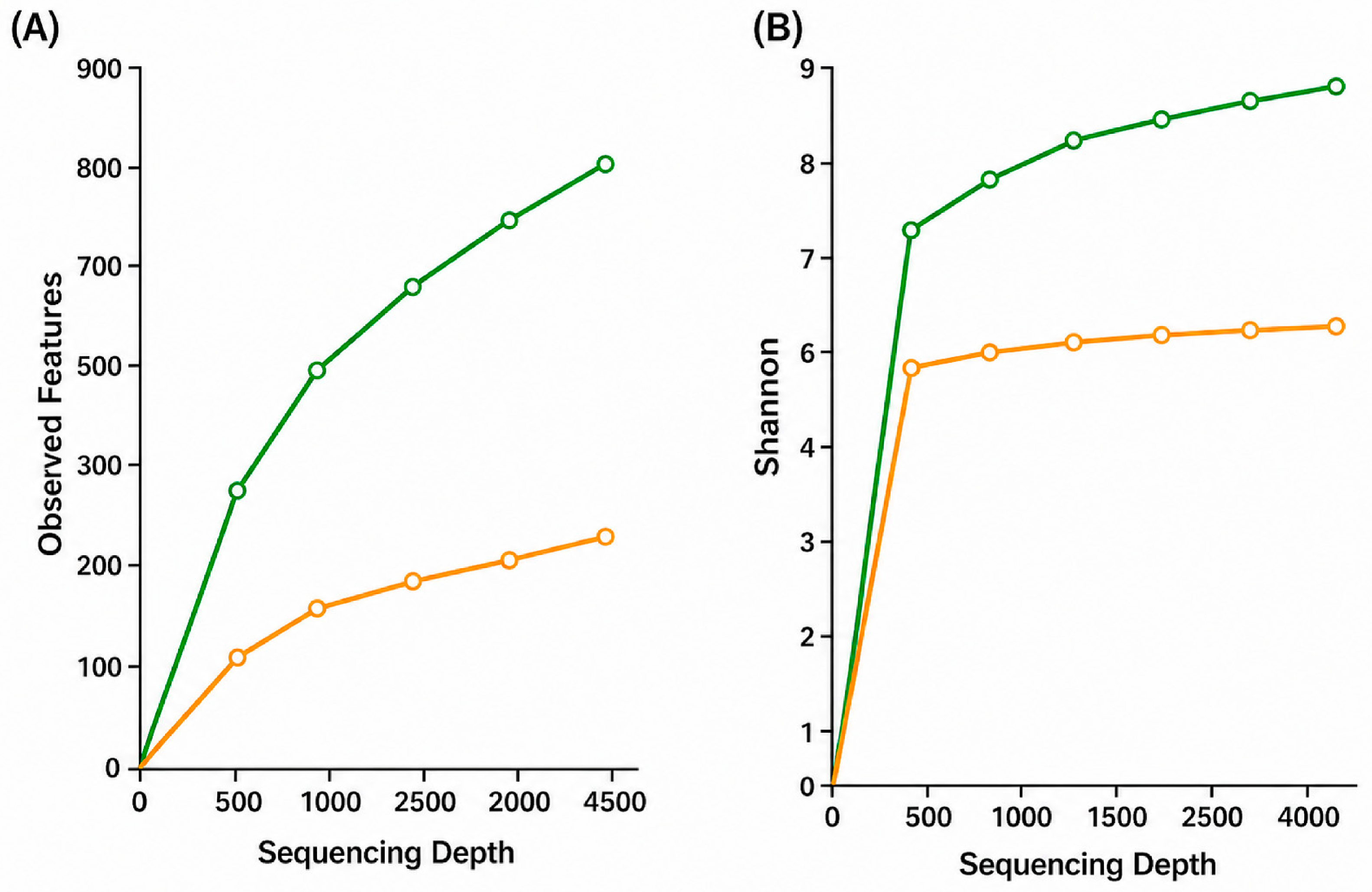
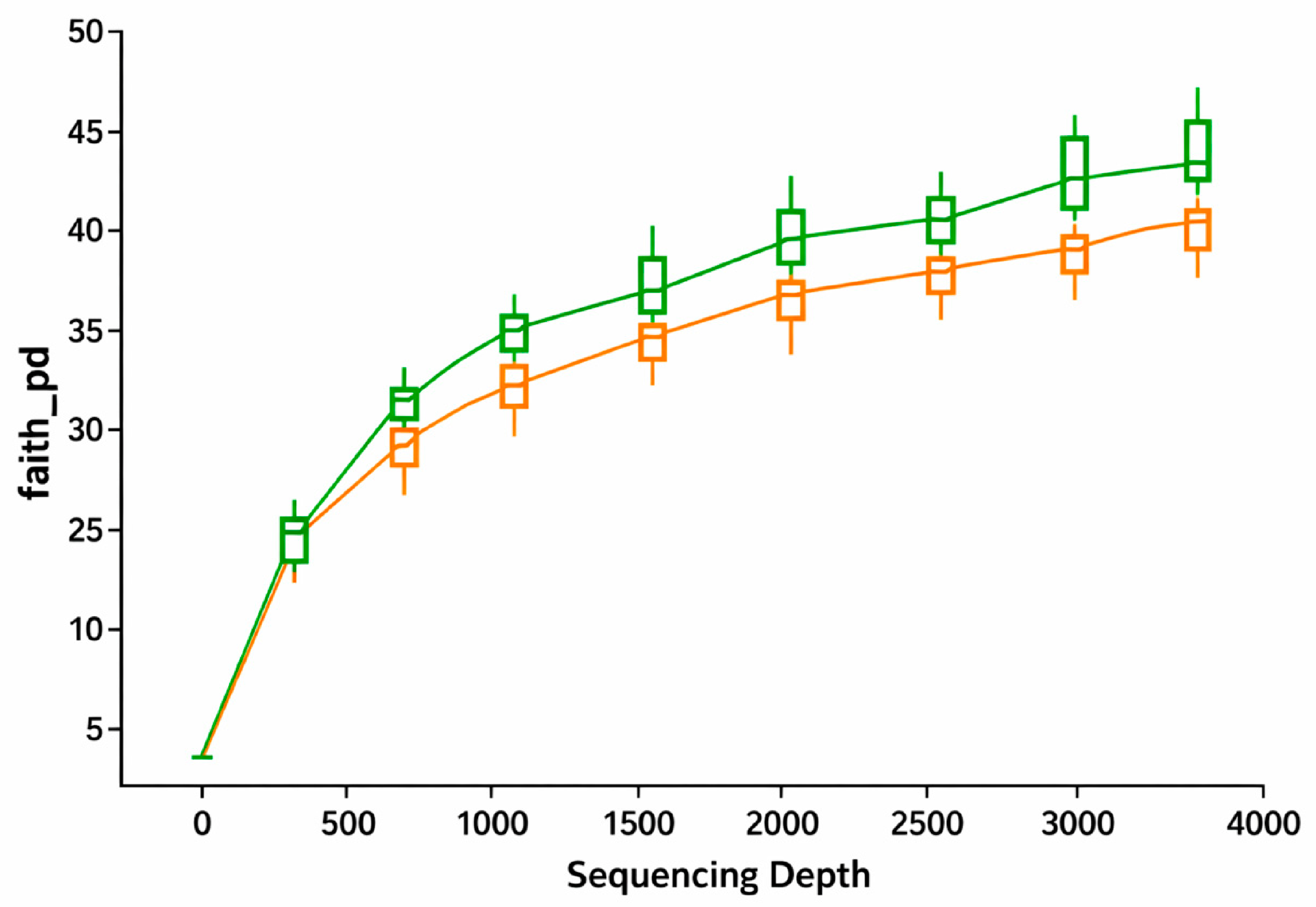
Quality filtering resulted in minimal read loss (~0.6%), indicating high sequencing quality. Rarefaction analyses (Figure 1 and Figure 2) increased rapidly at low sequencing depths and plateaued at higher depths, indicating sufficient sequencing coverage to capture a majority of the microbial diversity within both FC and CT groups. Across all higher sequencing depths, FC samples consistently exhibited higher richness with observed features (Figure 1A) and greater Shannon diversity (Figure 1B). Similarly, Faith’s phylogenetic diversity (Figure 2) increased with sequencing depth and reached asymptotic levels, with FC samples maintaining consistently greater values than CT samples.
Quantitative alpha diversity metrics (Table 1) revealed differences between treatment groups. FC samples exhibited markedly higher richness, as indicated by Observed Features (1026 vs. 221), ACE (1030.5 vs. 221.4), and Chao1 (1027.0 vs. 243.7). Diversity indices followed similar trends, with FC samples displaying higher Shannon diversity (8.89 vs. 5.93) and slightly greater evenness based on Simpson’s index (0.99 vs. 0.97).

3.3. Beta Diversity

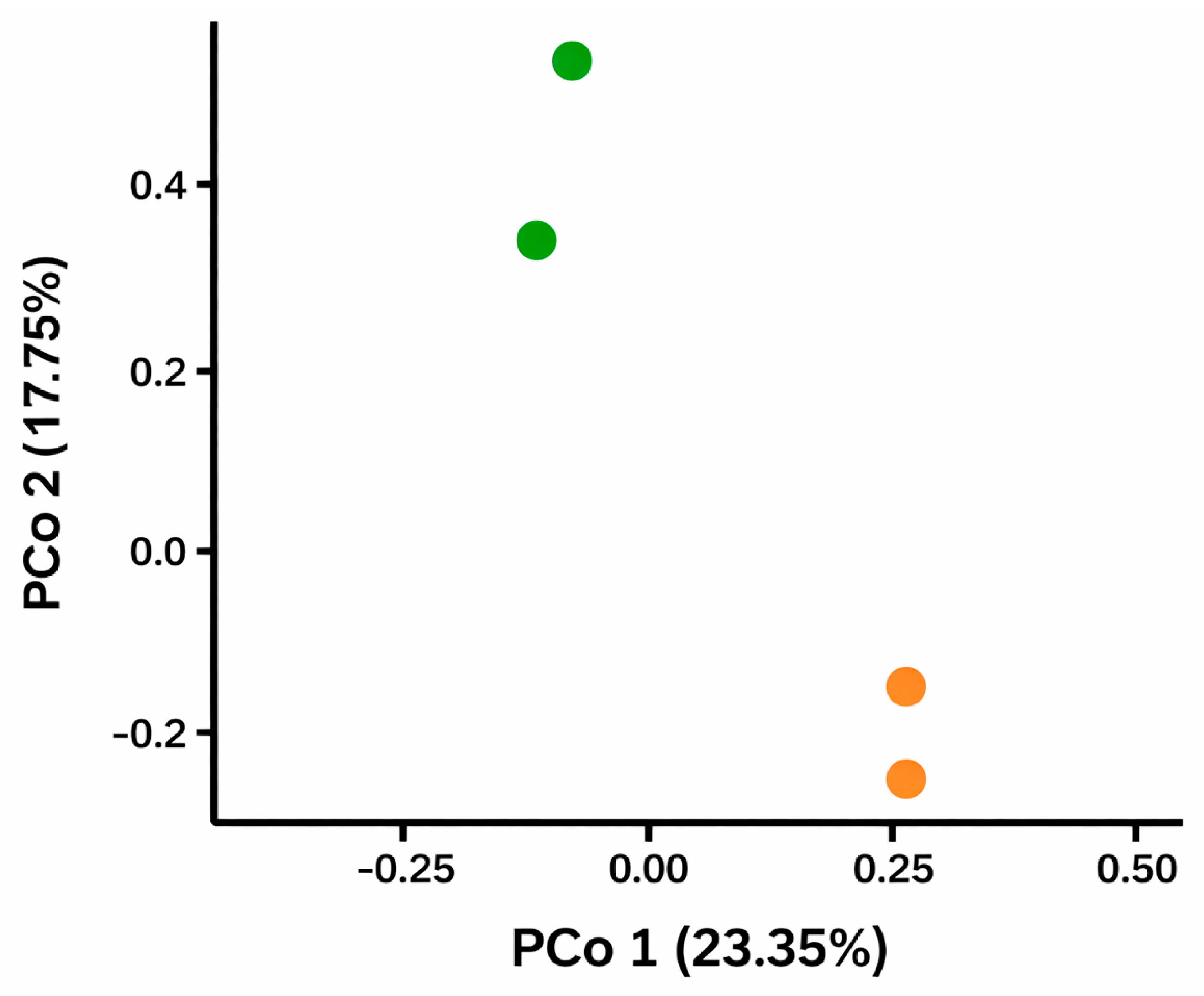
Principal Coordinates Analysis (PCoA) based on UniFrac distances demonstrated consistent clustering by treatment group (Figure 3). Although interpretation is constrained by limited replication, PERMANOVA suggested substantial separation between groups (pseudo-F = 2.47), while PERMDISP detected no evidence of unequal dispersion. Separation along PCo1 (23.35%) clearly distinguished FC from CT samples, with additional separation along PCo2 (17.75%) further supporting divergence between microbial communities under captive conditions.
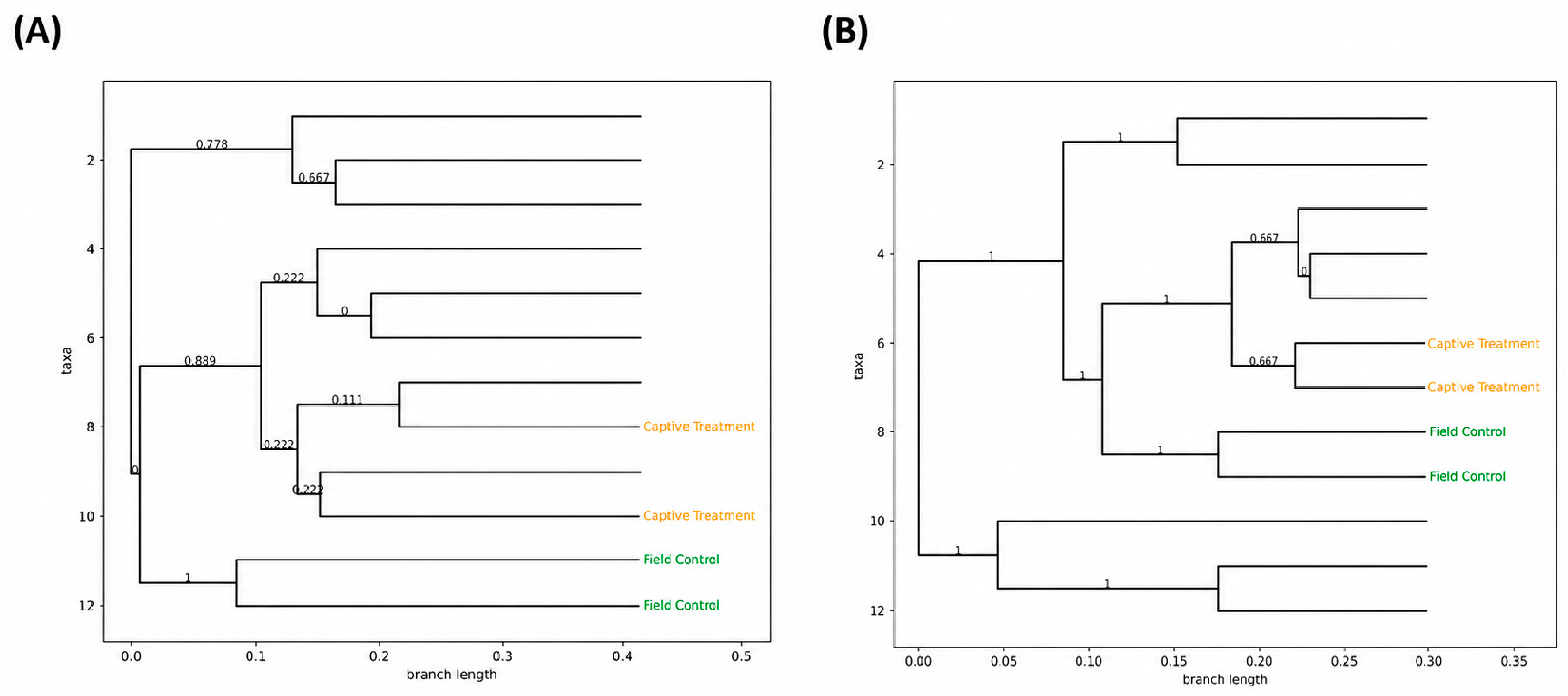
Hierarchical clustering based on unweighted UniFrac distances (Figure 4A), which reflect presence or absence of taxa, showed partial grouping of FC samples, while CT samples were more dispersed across dendrogram branches. This pattern suggests that captivity alters microbial community membership, including low-abundance taxa. In contrast, weighted UniFrac clustering (Figure 4B), which incorporates relative abundance, revealed stronger grouping by treatment. FC samples clustered more tightly, whereas CT samples formed distinct clusters separated by longer branch lengths, indicating that captivity drives changes in the relative abundance of dominant taxa, as well as overall community structure.
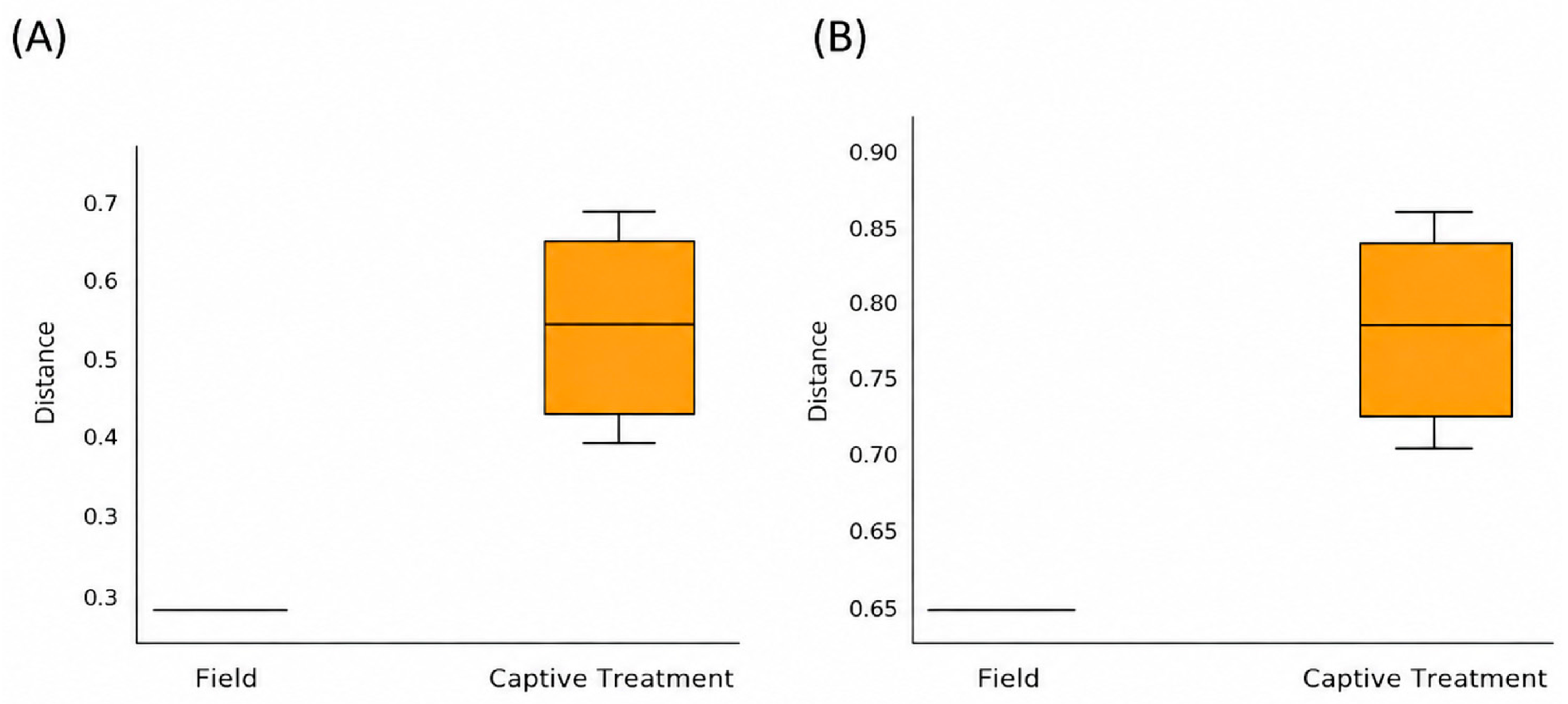
These findings were further supported by boxplot comparisons of distances to FC (Figure 5). CT samples exhibited greater distances from FC than FC samples themselves in both weighted and unweighted analyses, with more pronounced differences observed in the weighted UniFrac distances. This pattern indicates that shifts in dominant taxa contribute substantially to the observed divergence between treatment groups.

3.4. Taxonomic Composition

Among the 31 phyla identified in Field Control samples with ≥99% confidence, substantial compositional shifts were observed under captive conditions (Table 2). Notable changes occurred in Proteobacteria, Actinobacteriota, Planctomycetota, Verrucomicrobiota, Bacteroidota, and Campylobacterota. Additionally, several phyla present in FC samples were absent in CT fish. Overall, captivity was associated with detectable abundance changes or presence/absence shifts in approximately 45.1% of identified bacterial phyla, highlighting substantial restructuring of the gut microbiome.
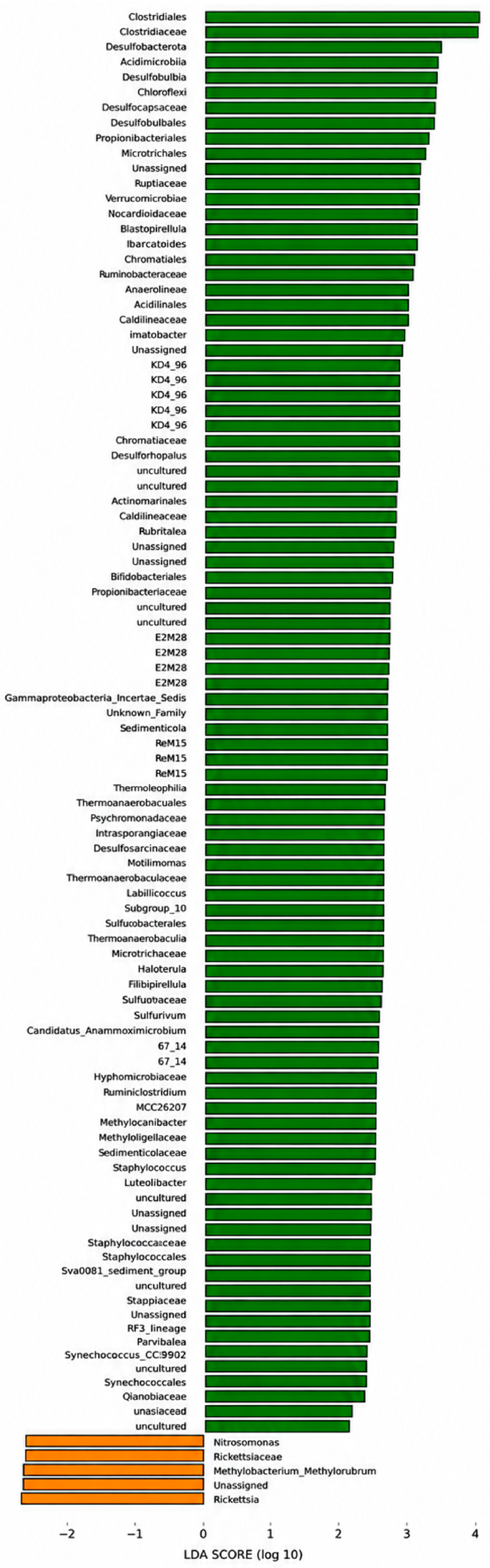
Linear discriminant analysis effect size (LEfSe) further identified differences in taxonomic enrichment between groups (Table 3). A total of 93 taxa were enriched in FC samples (LDA > 2.0), compared to only five taxa enriched in CT samples (Figure 6). Higher LDA scores were predominantly associated with FC taxa, indicating that field conditions support a broader and more influential range of microbial groups.
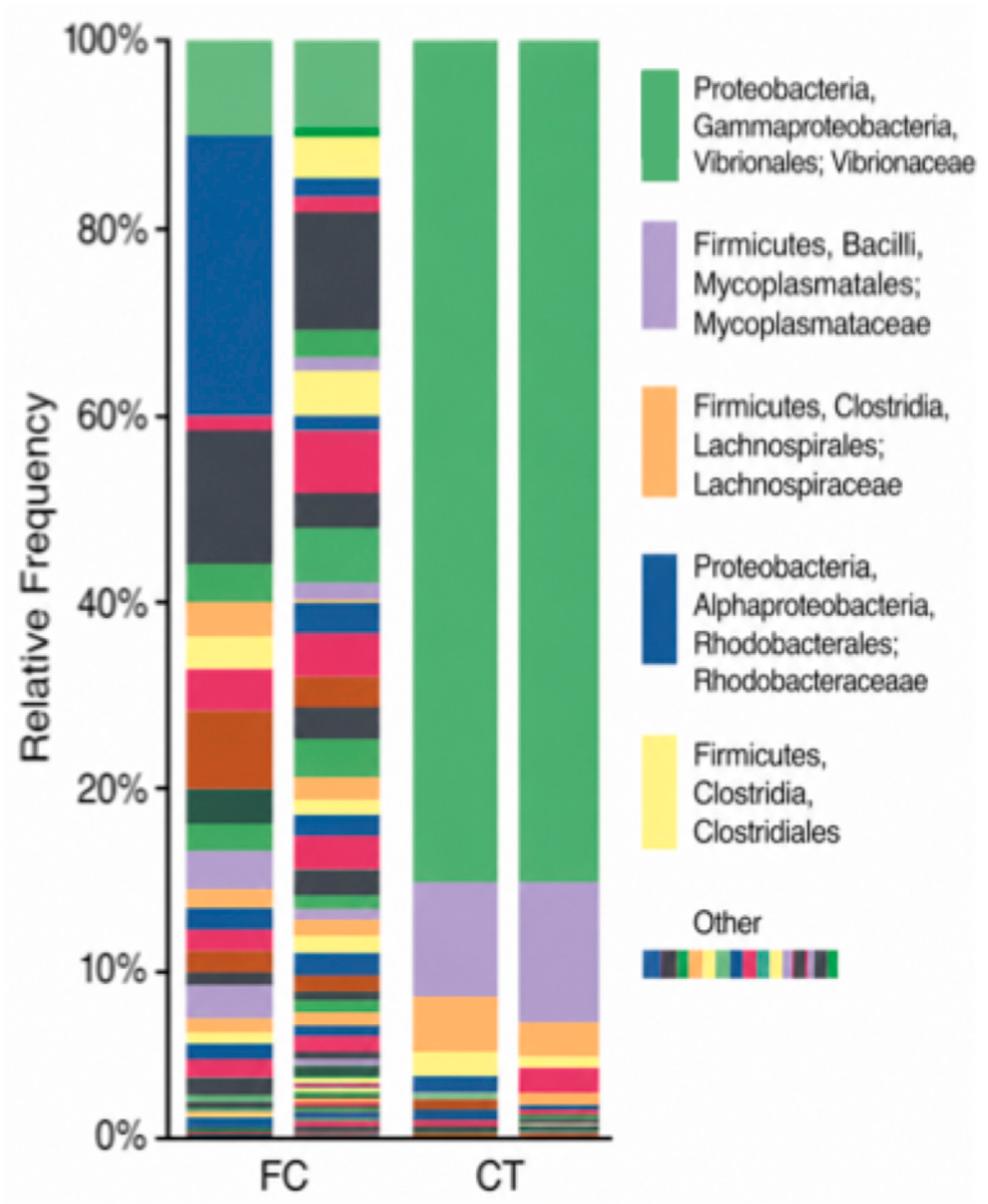
There was overlap in phylum- and class-level composition between FC and CT groups (Table 4), indicating the presence of a conserved baseline microbial community despite treatment effects. However, taxonomic profiling at these taxa levels (Figure 7) revealed that FC samples exhibited a more even distribution across multiple bacterial families, including Vibrionaceae, Mycoplasmataceae, Lachnospiraceae, Rhodobacteraceae, and Clostridiaceae, whereas CT samples were dominated by a smaller subset of taxa.

3.5. Metagenomic Functional Predictions

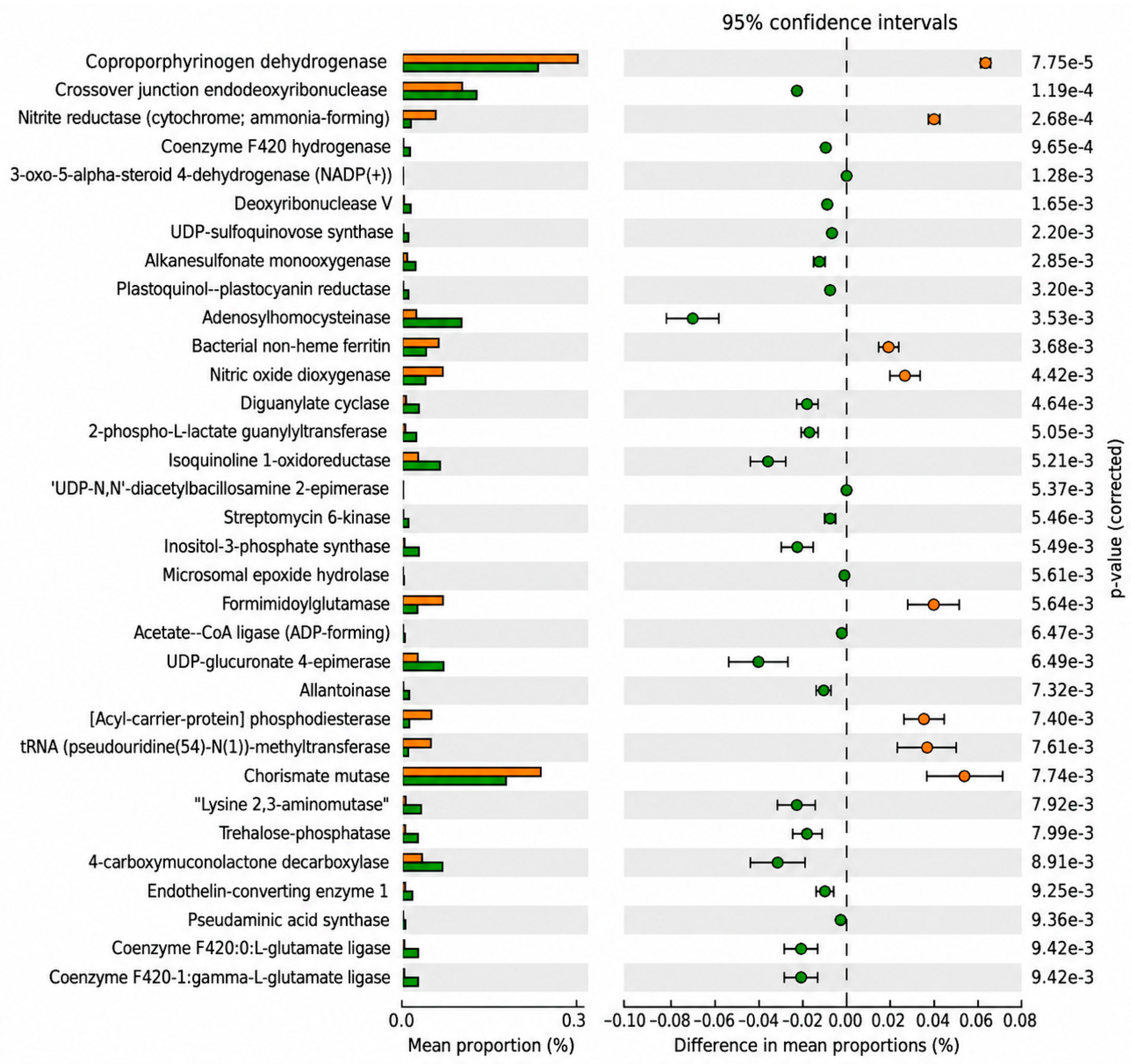
Predictive functional profiling suggested putative metabolic shifts in pathways associated with stress response, altered respiration, and metabolic flexibility in CT samples (Figure 8). Predicted pathways were specifically related to nitrite reduction, heme biosynthesis, oxidative stress mitigation, and amino acid metabolism. This projected enrichment (24% of enzymes assessed; 0.00008 ≤ p ≤ 0.0094) in the CT group suggests a possible association between microbiome functional shifts and short-term captivity. These results represent inferred functional potential based on gene content predictions and should be interpreted cautiously, as they do not reflect direct measurements of microbial activity.

4. Discussion

Short-term captivity resulted in a substantial restructuring of the F. heteroclitus gut microbiome, characterized by reduced diversity, altered community composition, and shifts in predicted functional capacity. These patterns occurred in the absence of detectable differences in host morphology, suggesting that the environmental conditions associated with captivity are primary drivers of microbial change [9,10] rather than host condition alone.
Rarefaction curves for alpha diversity reached asymptotes at relatively low sequencing depths (Figure 1 and Figure 2), indicating sufficient sampling coverage [23,24]. Field Control samples exhibited approximately fivefold greater richness than Captive Treatment samples, along with higher Shannon diversity and Faith’s phylogenetic diversity [25]. Together, these findings suggest that short-term captivity not only reduces taxonomic richness but also constrains the evolutionary breadth of the microbial community, potentially limiting functional capacity. Beta diversity analyses further support this conclusion, demonstrating clear divergence between Field Control and Captive Treatment microbiomes.
Similar captivity-associated reductions in gut microbial diversity have been reported in other fish species, including salmonids, zebrafish, and marine teleosts, where controlled environmental conditions and reduced dietary variability were associated with simplified microbial community structure [26,27,28]. Collectively, these studies support the concept that captivity consistently alters fish-associated microbiomes across diverse taxa.
The observed reduction in microbial diversity is consistent with ecological theory, in which heterogeneous natural environments promote complex microbial communities, whereas controlled environments limit microbial exposure and reduce diversity [10,16,29]. Because multiple environmental variables changed simultaneously under captive conditions, the relative contribution of individual drivers (e.g., diet, water microbiota, or stress) cannot be disentangled. These factors collectively contribute to environmental filtering, favoring generalist taxa and reducing community complexity. Dietary homogenization likely contributed substantially to the observed reduction in microbial diversity and complexity. Wild fish consumed a naturally heterogeneous diet and were exposed to diverse environmental microbial sources, whereas captive fish received a standardized laboratory diet under controlled environmental conditions. Such dietary simplification may promote environmental filtering and favor dominance of a smaller subset of microbial taxa. The increased dominance of Proteobacteria in captive fish is consistent with patterns observed in disturbed or dysbiotic systems.
In natural systems, multiple microbial taxa may perform similar ecological roles, providing resilience against environmental fluctuations [30,31]. A key consequence of diminished diversity is the loss of functional redundancy. The decline in richness and evenness observed under short-term captive conditions potentially diminishes this redundancy, thereby increasing susceptibility to opportunistic taxa and metabolic imbalance. While predictive functional analyses also suggest shifts toward stress-associated pathways, these findings should be interpreted cautiously due to the limitations of inference-based approaches such as PICRUSt and the absence of direct measurements of gene expression or metabolic activity [32,33]. Direct assessment of transcriptomic or metabolomic profiles would provide stronger evidence of functional change.
The observed patterns among Field Control and Captive Treatment F. heteroclitus are consistent with the “Anna Karenina principle” applied to microbiomes, where stable communities exhibit consistent structure while disturbed communities become more variable and less predictable [34]. In this study, Field Control samples clustered tightly, reflecting a relatively stable and diverse microbiome, whereas captivity induced a shift toward a simplified and altered community structure. This transition reflects not only a loss of diversity but also disruption of ecological balance within the microbiome.
While our previous culture-dependent studies identified captivity-induced reductions in F. heteroclitus gut microbiome diversity [35], the present study further clarifies the magnitude and breadth of these effects using culture-independent approaches. There are, however, several limitations that should be considered. Environmental microbial communities were not directly characterized in this study. Inclusion of field water and aquarium-associated microbiome analyses would strengthen interpretation of environmental microbial contributions to gut community restructuring and should be incorporated into future investigations. While the use of pooled samples was appropriate for detecting broad treatment-associated microbial community patterns, this design limits inference regarding individual-level variability and reduces statistical power for population-level conclusions. These results, therefore, should be interpreted as robust community-level patterns rather than definitive population-level effects. Additionally, functional predictions derived from 16S rRNA gene data do not directly reflect realized metabolic activity [32]. Future studies incorporating individual-level sampling and multi-omics approaches will be needed to resolve mechanisms and functional consequences of microbiome restructuring.
Overall, these findings demonstrate that microbiome restructuring can occur within a relatively short captivity period in F. heteroclitus, resulting in a simplified, captivity-adapted microbial state that differs substantially from natural conditions. These changes have important implications for experimental design and interpretation, as microbiome alteration may influence host physiology and responses to environmental stressors [15,17]. Consideration of microbiome integrity is therefore essential when using captive fish as ecological or toxicological models. Because F. heteroclitus is widely used in contaminant exposure studies, captivity-induced microbiome restructuring may confound interpretation of toxicological endpoints by altering host–microbe interactions. These findings support strong community-level trends rather than definitive population-level conclusions, given the limited statistical inference associated with sample pooling.

5. Conclusions

Short-term captivity is strongly associated with restructuring of the gut microbiome of F. heteroclitus, including reduced diversity, altered community composition, and shifts in predicted functional potential. These findings suggest a transition toward a simplified, captivity-adapted microbial state that may influence interpretation of ecological and toxicological studies using captive wild-caught fishes. Consideration of microbiome integrity is therefore important when using laboratory-held fish as experimental models. Future studies incorporating individual-level sampling, environmental microbiome characterization, and direct functional assessment will be essential for understanding the mechanistic consequences of microbiome restructuring during captivity.

Author Contributions

Conceptualization, L.A.E.K.; methodology, L.A.E.K.; formal analysis, L.A.E.K. and R.F.; investigation, A.M., E.T.-Y., J.F., J.V. and P.P.; data curation, A.M. and E.T.-Y.; writing—original draft preparation, A.M., E.T.-Y. and L.A.E.K.; writing—review and editing, A.M., R.F. and L.A.E.K.; supervision, L.A.E.K.; project administration, L.A.E.K.; funding acquisition, L.A.E.K. All authors have read and agreed to the published version of the manuscript.

Funding

This research was funded by Quinnipiac University College of Arts and Sciences, Hamden, CT 06518 grant number Kaplan_CAS Grant-in-Aid_2024-2025.

Institutional Review Board Statement

All procedures performed in this study involving animals were in accordance with the ethical standards of Quinnipiac University, where the studies were conducted, and approved by the Quinnipiac University IACUC, protocol #2024KAP001 (approved 30 November 2024).

Informed Consent Statement

Not applicable.

Data Availability Statement

The datasets presented in this article are not readily available because they are a subset of results from an ongoing study. Requests to access the datasets should be directed to Lisa A. E. Kaplan (lisa.kaplan@quinnipiac.edu).

Acknowledgments

During the preparation of this manuscript, the authors used the Generative Artificial Intelligence software ChatGPT (OpenAI, GPT-5.3) for the purposes of generating the graphical abstract from author-generated text, polishing figures created outside of GenAI, review simulations, and formatting references. The authors have reviewed and edited the output and take full responsibility for the content of this publication. DNA extraction and amplicon sequencing of the 16S rRNA gene was performed by CD Genomics, Shirley, NY, USA. The authors thank Louise Crocco, Maggie Watson, and Ava Michelangelo of the Milford Coastal Center (Milford, CT, USA) for helping with field fish collection and the anonymous reviewers for their thoughtful consideration of this work.

Conflicts of Interest

The authors declare no conflicts of interest.

Abbreviations

The following abbreviations are used in this manuscript:
ASVAmplicon Sequence Variant
CTCaptive Treatment
FCField Control
HSDHonestly Significant Difference
IACUCInstitutional Animal Care and Use Committee
LDALinear Discriminant Analysis
LEfSELinear Discriminant Analysis Effect Size
PCoAPrincipal Coordinate Analysis
PICRUStPhylogenetic Investigation of Communities by Reconstruction of Unobserved States
SISomatic Index

References

  1. Weber, D.N.; Spieler, R.E. Behavioral mechanisms of metal toxicity in fishes. In Molecular Biological Approaches to Aquatic Toxicology; Malins, D.C., Ostrander, G.K., Eds.; CRC Press: Boca Raton, FL, USA, 1994; pp. 421–467. [Google Scholar]
  2. Van Cleef-Toedt, K.A.; Kaplan, L.A.; Crivello, J.F. Killifish metallothionein messenger RNA expression following temperature perturbation and cadmium exposure. Cell Stress Chaperones 2001, 6, 351. [Google Scholar] [CrossRef]
  3. Kaplan, L.A.E.; Nabel, M.; Van Cleef-Toedt, K.; Proffitt, A.R.; Pylypiw, H.M. Impact of benzyl butyl phthalate on shoaling behavior in Fundulus heteroclitus (mummichog) populations. Mar. Environ. Res. 2013, 86, 70–75. [Google Scholar] [CrossRef] [PubMed]
  4. Deegan, A.M.; Steinhauer, R.B.; Feinn, R.S.; Bathula, S.R.; Kaplan, L.A.E. Modulation of brain serotonin by benzyl butyl phthalate in Fundulus heteroclitus (mummichog). Ecotoxicology 2019, 28, 1038–1045. [Google Scholar] [CrossRef] [PubMed]
  5. Abraham, B.J. Species Profiles: Life Histories and Environmental Requirements of Coastal Fishes and Invertebrates (Mid-Atlantic): Mummichog and Striped Killifish; Biological Report 82(11.40); U.S. Fish and Wildlife Service, U.S. Army Corps of Engineers: Washington, DC, USA, 1985. [Google Scholar]
  6. Smith, C.L. The Inland Fishes of New York State; New York State Department of Environmental Conservation: Albany, NY, USA, 1985.
  7. Whitworth, W.R. Freshwater Fishes of Connecticut; State Geological and Natural History Survey of Connecticut, Department of Environmental Protection: Hartford, CT, USA, 1996. [Google Scholar]
  8. Burnett, K.G.; Bain, L.J.; Baldwin, W.S.; Callard, G.V.; Cohen, S.; Di Giulio, R.T.; Evans, D.H.; Gómez-Chiarri, M.; Hahn, M.E.; Hoover, C.A.; et al. Fundulus as the premier teleost model in environmental biology: Opportunities for new insights using genomics. Comp. Biochem. Physiol. D Genom. Proteom. 2007, 2, 257–286. [Google Scholar] [CrossRef] [PubMed]
  9. McKenzie, V.J.; Song, S.J.; Delsuc, F.; Prest, T.L.; Oliverio, A.M.; Korpita, T.M.; Alexiev, A.; Amato, K.R.; Metcalf, J.L.; Kowalewski, M.; et al. The effects of captivity on the mammalian gut microbiome. Integr. Comp. Biol. 2017, 57, 690–704. [Google Scholar] [CrossRef]
  10. Alberdi, A.; Aizpurua, O.; Bohmann, K.; Zepeda-Mendoza, M.L.; Gilbert, M.T.P. Do vertebrate gut metagenomes confer rapid ecological adaptation? Trends Ecol. Evol. 2016, 31, 689–699. [Google Scholar] [CrossRef]
  11. Barton, B.A. Stress in fishes: A diversity of responses with particular reference to changes in circulating corticosteroids. Integr. Comp. Biol. 2002, 42, 517–525. [Google Scholar] [CrossRef]
  12. Sauliutė, G.; Makaras, T.; Pažusienė, J.; Valskienė, R.; Bučaitė, A.; Markuckas, A.; Markovskaja, S.; Stankevičiūtė, M. A comparative analysis of multi-biomarker responses to environmental stress: Evaluating differences in landfill leachate and pathogenic oomycete effects between wild and captive Salmo trutta. Sci. Total Environ. 2023, 897, 165420. [Google Scholar] [CrossRef]
  13. Whiteley, A.R.; Bhat, A.; Martins, E.P.; Mayden, R.L.; Arunachalam, M.; Uusi-Heikkilä, S.; Ahmed, A.T.A.; Shrestha, J.; Clark, M.; Stemple, D.; et al. Population genomics of wild and laboratory zebrafish (Danio rerio). Mol. Ecol. 2011, 20, 4259–4276. [Google Scholar] [CrossRef]
  14. Sullam, K.E.; Essinger, S.D.; Lozupone, C.A.; O’Connor, M.P.; Rosen, G.L.; Knight, R.; Kilham, S.S.; Russell, J.A. Environmental and ecological factors that shape the gut bacterial communities of fish: A meta-analysis. Mol. Ecol. 2012, 21, 3363–3378. [Google Scholar] [CrossRef]
  15. McFall-Ngai, M.; Hadfield, M.G.; Bosch, T.C.G.; Carey, H.V.; Domazet-Lošo, T.; Douglas, A.E.; Dubilier, N.; Eberl, G.; Fukami, T.; Gilbert, S.F.; et al. Animals in a bacterial world, a new imperative for the life sciences. Proc. Natl. Acad. Sci. USA 2013, 110, 3229–3236. [Google Scholar] [CrossRef]
  16. Costello, E.K.; Stagaman, K.; Dethlefsen, L.; Bohannan, B.J.M.; Relman, D.A. The application of ecological theory toward an understanding of the human microbiome. Science 2012, 336, 1255–1262. [Google Scholar] [CrossRef]
  17. Clarke, S.F.; Murphy, E.F.; O’Sullivan, O.; Lucey, A.J.; Humphreys, M.; Hogan, A.; Hayes, P.; O’Reilly, M.; Jeffery, I.B.; Wood-Martin, R.; et al. Exercise and associated dietary extremes impact on gut microbial diversity. Gut 2014, 63, 1913–1920. [Google Scholar] [CrossRef] [PubMed]
  18. Sun, H.; Chen, F.; Zheng, W.; Li, X.; Wang, Y.; Zhang, Q.; Liu, Z.; Xu, P. Impact of captivity and natural habitats on gut microbiome in Epinephelus akaara across seasons. BMC Microbiol. 2024, 24, 239. [Google Scholar] [CrossRef] [PubMed]
  19. Ringø, E.; Zhou, Z.; Vecino, J.G.; Wadsworth, S.; Romero, J.; Krogdahl, Å.; Olsen, R.E.; Dimitroglou, A.; Foey, A.; Davies, S.; et al. Effect of dietary components on the gut microbiota of aquatic animals. A never ending story? Aquacult. Nutr. 2016, 22, 219–235. [Google Scholar] [CrossRef]
  20. Segata, N.; Izard, J.; Waldron, L.; Gevers, D.; Miropolsky, L.; Garrett, W.S.; Huttenhower, C. Metagenomic biomarker discovery and explanation. Genome Biol. 2011, 12, R60. [Google Scholar] [CrossRef] [PubMed]
  21. Kneib, R.T. The role of Fundulus heteroclitus in salt marsh trophic dynamics. Am. Zool. 1986, 26, 259–269. [Google Scholar] [CrossRef]
  22. Fernández-Delgado, C. Life-history patterns of the salt-marsh killifish Fundulus heteroclitus (L.) introduced in the estuary of the guadalquivir river (South West Spain). Estuar. Coast. Shelf Sci. 1989, 29, 573–582. [Google Scholar] [CrossRef]
  23. Chao, A.; Jost, L. Coverage-based rarefaction and extrapolation. Ecology 2012, 93, 2533–2547. [Google Scholar] [CrossRef]
  24. Weiss, S.; Xu, Z.Z.; Peddada, S.; Amir, A.; Bittinger, K.; Gonzalez, A.; Lozupone, C.; Zaneveld, J.R.; Vázquez-Baeza, Y.; Birmingham, A.; et al. Normalization and microbial differential abundance strategies depend upon data characteristics. Microbiome 2017, 5, 27. [Google Scholar] [CrossRef]
  25. Faith, D.P. Conservation evaluation and phylogenetic diversity. Biol. Conserv. 1992, 61, 1–10. [Google Scholar] [CrossRef]
  26. Tarnecki, A.M.; Burgos, F.A.; Ray, C.L.; Arias, C.R. Fish intestinal microbiome: Diversity and symbiosis unraveled by metagenomics. J. Appl. Microbiol. 2017, 123, 2–17. [Google Scholar] [CrossRef]
  27. Navarrete, P.; Mardones, P.; Opazo, R.; Espejo, R.; Romero, J. Oxytetracycline treatment reduces bacterial diversity of intestinal microbiota of Atlantic salmon. J. Aquat. Anim. Health 2008, 20, 177–183. [Google Scholar] [CrossRef]
  28. Neuman, C.; Hatje, E.; Zarkasi, K.Z.; Smullen, R.; Bowman, J.P.; Katouli, M. The effect of diet and environmental temperature on the faecal microbiota of farmed Tasmanian Atlantic salmon (Salmo salar L.). Aquac. Res. 2016, 47, 660–672. [Google Scholar] [CrossRef]
  29. Shade, A.; Peter, H.; Allison, S.D.; Baho, D.; Berga, M.; Bürgmann, H.; Huber, D.H.; Langenheder, S.; Lennon, J.T.; Martiny, J.B.H.; et al. Fundamentals of microbial community resistance and resilience. Front. Microbiol. 2012, 3, 417. [Google Scholar] [CrossRef] [PubMed]
  30. Allison, S.D.; Martiny, J.B.H. Resistance, resilience, and redundancy in microbial communities. Proc. Natl. Acad. Sci. USA 2008, 105, 11512–11519. [Google Scholar] [CrossRef] [PubMed]
  31. Louca, S.; Jacques, S.M.S.; Pires, A.P.F.; Leal, J.S.; Srivastava, D.S.; Parfrey, L.W.; Farjalla, V.F.; Doebeli, M.; Graham, E.B. High taxonomic variability despite stable functional structure across microbial communities. Nat. Ecol. Evol. 2016, 2, 936–943. [Google Scholar] [CrossRef]
  32. Langille, M.G.I.; Zaneveld, J.; Caporaso, J.G.; McDonald, D.; Knights, D.; Reyes, J.A.; Clemente, J.C.; Burkepile, D.E.; Vega Thurber, R.L.; Knight, R.; et al. Predictive functional profiling of microbial communities using 16S rRNA marker gene sequences. Nat. Biotechnol. 2013, 31, 814–821. [Google Scholar] [CrossRef]
  33. Douglas, G.M.; Maffei, V.J.; Zaneveld, J.R.; Yurgel, S.N.; Brown, J.R.M.; Taylor, C.M.; Huttenhower, C.; Langille, M.G.I. PICRUSt2 for prediction of metagenome functions. Nat. Biotechnol. 2020, 38, 685–688. [Google Scholar] [CrossRef]
  34. Zaneveld, J.R.; McMinds, R.; Vega Thurber, R. Stress and stability: Applying the Anna Karenina principle to animal microbiomes. Nat. Microbiol. 2017, 2, 17121. [Google Scholar] [CrossRef]
  35. Battaglia, J.P.; Kearney, C.M.; Guerette, K.; Corbishley, J.; Sanchez, E.; Kent, B.; Storie, H.; Sharp, E.; Martin, S.M.; Saberito, M.; et al. Use of multiple endpoints to assess the impact of captivity on gut flora diversity in Long Island Sound Fundulus heteroclitus. Environ. Biol. Fishes 2022, 105, 867–883. [Google Scholar] [CrossRef]
Figure 1. Rarefaction curves of gut microbial alpha diversity across sequencing depth. Rarefaction analysis showing the relationship between sequencing depth and alpha diversity for Field Control (FC; green) and Captive Treatment (CT; orange) groups. Observed features (A) represent taxonomic richness, whereas the Shannon index (B) incorporates both richness and evenness. Across sequencing depths, FC samples consistently exhibit higher diversity than CT samples for both metrics. The Shannon Index curve approaches an asymptote prior to the maximum sequencing depth, indicating that sampling effort was sufficient to capture the majority of microbial diversity present.
Hydrobiology 05 00019 g001
Figure 2. Rarefaction curves of Faith’s phylogenetic diversity across sequencing depth. Faith’s phylogenetic diversity (PD) plotted as a function of sequencing depth for Field Control (FC; green) and Captive Treatment (CT; orange) groups. Across sequencing depths, FC samples consistently exhibit higher phylogenetic diversity than CT samples. Error bars represent standard deviation among subsampled communities at each sequencing depth. Curves approach asymptotes with increasing depth, indicating that sequencing effort was sufficient to capture the majority of phylogenetic diversity present.
Hydrobiology 05 00019 g002
Figure 3. Unweighted principal coordinate analysis (PCoA) of microbial community composition based upon UniFrac distances. Unweighted PCoA showing clustering of Field Control (FC; green) and Captive Treatment (CT; orange) groups. Each point represents a pooled gut sample from seven fish. The first principal coordinate (PCo1) explains 23.35% of the total variance, and the second principal coordinate (PCo2) explains 17.73%. Samples cluster by treatment group, indicating clear differences in microbial community composition (pseudo-F = 2.47, p = 0.001, 999 permutations).
Hydrobiology 05 00019 g003
Figure 4. UPGMA hierarchical clustering of microbial community composition based on UniFrac distances. Hierarchical clustering dendrograms generated using the unweighted pair group method with arithmetic mean (UPGMA) based on unweighted (A) and weighted (B) UniFrac distance matrices for Field Control (FC) and Captive Treatment (CT) groups. Unweighted UniFrac analysis considers taxa presence/absence and captures contributions from low-abundance taxa, whereas weighted UniFrac incorporates relative abundance and emphasizes dominant taxa. Branch lengths represent dissimilarity between samples, with shorter distances indicating greater similarity. Node values represent bootstrap support.
Hydrobiology 05 00019 g004
Figure 5. Distances to field control (FC) based on UniFrac metrics. Boxplots showing the distribution of distances for both Field Control (FC) and Captive Treatment (CT) groups. Boxes represent the interquartile range (IQR), the central line indicates the median, and whiskers extend to 1.5× IQR. Weighted UniFrac analysis (A) incorporates relative abundance and emphasizes differences in dominant taxa, whereas unweighted UniFrac analysis (B) reflects differences in community membership based on taxa presence/absence. Captive treatment (CT) samples exhibit greater distances from FC under both metrics, indicating divergence in microbial community composition associated with captivity.
Hydrobiology 05 00019 g005
Figure 6. Differentially abundant microbial taxa identified by LEfSe analysis. Linear discriminant analysis effect size (LEfSe) was used to identify taxa that clearly differed in relative abundance between Field Control (FC; green) and Captive Treatment (CT; orange) groups. Bars represent taxa with LDA scores (log10) indicating effect size. Positive LDA scores (green) denote taxa enriched in FC samples, whereas negative scores (orange) indicate taxa enriched in CT samples. Only taxa meeting the significance criteria (Kruskal–Wallis test, p < 0.05; LDA score > 2.0) are shown.
Hydrobiology 05 00019 g006
Figure 7. Relative abundance of microbial families across Field Control (FC) and Captive Treatment (CT) groups. Stacked bar plots showing the relative frequency (%) of microbial taxa at the family level across Field Control (FC) and Captive Treatment (CT) sample replicates, where each replicate represents a pooled gut sample from seven fish. Bars represent the proportional composition of dominant families within each sample. The five most abundant families are indicated in the legend (phylum, class, order, family).
Hydrobiology 05 00019 g007
Figure 8. Differential abundance of predicted enzymatic functions between Field Control and Captive Treatment groups. Differences in predicted enzymatic pathways between Field Control (FC; green) and Captive Treatment (CT; orange) groups. Enzymatic functions are listed along the y-axis. Bar plots (left) represent the mean relative proportion (%) of each enzyme within each group. The forest plot (right) shows the difference in mean proportions, with horizontal error bars indicating 95% confidence intervals and the dashed vertical line representing no difference. Corresponding multiple test-corrected p-values are shown along the right axis (0.00008 ≤ p ≤ 0.0094). Positive values indicate enrichment in CT, whereas negative values indicate enrichment in FC.
Hydrobiology 05 00019 g008
Table 1. Alpha Diversity Metrics of gut microbial communities in Field Control and Captive Treatment F. heteroclitus. Observed Features represent the number of unique taxa detected. Richness estimators (ACE and Chao1) indicate total estimated diversity, including rare and unobserved taxa. Simpson’s dominance index reflects community evenness and the degree of taxonomic dominance, while the Shannon diversity index incorporates both richness and evenness. Field control fish exhibited substantially higher richness (Observed Features, ACE, Chao1) and overall diversity (Shannon index), along with slightly greater evenness (Simpson’s index), compared to captive treatment fish, indicating a more complex and balanced microbial community in field conditions.
Gut
Microbe Source
Observed
Features
ACEChao1Simpson
Index
Shannon
Index
Captive Fish (CT)221.00221.40243.700.975.93
Field Control Fish (FC)1026.001030.501027.000.998.89
Table 2. Effect of treatment on the relative distribution of dominant bacteria phyla. Among bacterial phyla (n = 31) identified with ≥99% confidence, the 10 most prevalent phyla detected in Field Control (FC) samples were ranked in descending order of abundance. Increased values (black), decreased values (red), and phyla not detected (ND) are expressed as a percent difference between Captive Treatment (CT) and Field Control (FC).
Most Prevalent PhylaFC Phyla
Distribution
(%)
Captivity-Induced Percent Change (%)
Proteobacteria38.191
Firmicutes20.40
Actinobacteriota12.191
Planctomycetota9.893
Desulfobacterota4.4ND
Verrucomicrobiota3.281
Bacteroidota2.492
Acidobacteriota0.6ND
Campylobacterota0.580
Fusobacteriota0.36
All Phyla (n)3114
All Phyla (%)10045.1
Table 3. Linear discriminant analysis (LDA) scores of differentially abundant taxa. LDA scores exceeding the default threshold of 2.0 indicate clear differences between groups. Higher LDA scores reflect a greater contribution of a given taxon to group differentiation. A total of 93 taxa were enriched in Field Control (FC) samples, whereas five taxa were enriched in Captive Treatment (CT) samples.
LDA Score
>2.0 (n)>3.0 (n)>4.0 (n)Total (n)
Field Control (FC)7121193
Captive Treatment (CT)5005
Table 4. Fundulus heteroclitus core gut taxa. Core microbiota for F. heteroclitus gut, using taxonomic identification of the 16S rRNA gene amplicon sequencing, was determined at two taxonomic levels: phylum and class. Core taxa include only microbes clearly identified in both Field Control (FC) and Captive Treatment (CT) groups and are listed in alphabetical order.
Core Microbial PhylaCore Microbial Classes
ActinobacteriotaActinobacteria
BacteroidotaAlphaproteobacteria
CampylobacterotaBacilli
ChloroflexiBacteroidia
CyanobacteriaCampylobacteria
FirmicutesClostridia
FusobacteriotaCyanobacteriia
PlanctomycetotaFusobacteriia
ProteobacteriaGammaproteobacteria
VerrucomicrobiotaPlanctomycetes
Disclaimer/Publisher’s Note: The statements, opinions and data contained in all publications are solely those of the individual author(s) and contributor(s) and not of MDPI and/or the editor(s). MDPI and/or the editor(s) disclaim responsibility for any injury to people or property resulting from any ideas, methods, instructions or products referred to in the content.