Article

Seasonal Change in Oxidative Stress Parameters in Amphipods Gammarus lacustris in the Tributaries of Lake Sevan (Armenia) with Different Hydrophysical and Hydrochemical Characteristics


by
Hranush Melkonyan
1,
Grigorii Chuiko
2,
Nadezhda Kholmogorova
3,
Bardukh Gabrielyan
1,*,
Hermine Yepremyan
1,*,
Vardan Asatryan
1,
Marine Dallakyan
1,
Zhanna Mkrtchyan
1,
Gayane Shahnazaryan
4 and
Hripsime Kobelyan
1
1
Scientific Center of Zoology and Hydroecology, National Academy of Sciences of the Republic of Armenia, 7 P.Sevak Str., Yerevan 0014, Armenia
2
Papanin Institute for Biology of Inland Waters, Russian Academy of Sciences, Borok 152742, Russia
3
Department of Nature Sciences, Udmurt State University, 1 Universitetskaya Str., Izhevsk 426034, Russia
4
“Hydrometeorology and Monitoring Center” State Non-Commercial Organisation, 46 Charenc Str., Yerevan 0025, Armenia
*
Authors to whom correspondence should be addressed.
Hydrobiology 2026, 5(2), 17; https://doi.org/10.3390/hydrobiology5020017 (registering DOI)
Submission received: 28 March 2026 / Revised: 30 May 2026 / Accepted: 1 June 2026 / Published: 5 June 2026

Abstract

Freshwater ecosystems are increasingly affected by anthropogenic stressors, necessitating the assessment of sensitive biomarkers of sublethal impact. This study assessed the seasonal variability of oxidative stress parameters in the amphipod Gammarus lacustris from three tributaries of Lake Sevan (Armenia)—the Gavaraget, Karchagbyur, and Argichi Rivers—with contrasting hydrophysical and hydrochemical conditions. During 2022–2024, lipid peroxidation (MDA), antioxidant enzymes (CAT, SOD, GR, and GST), and glutathione (GSH) were measured in specimens collected in May, July, and October and related to temperature, dissolved oxygen, nutrients, major ions, and trace elements. Biomarker levels generally increased from spring to summer and declined in autumn, following temperature and photoperiod patterns. Statistically significant seasonal dynamics were most consistent in the Karchaghbyur River, while, in the Gavaraget and Argichi Rivers, they varied by biomarker and year. Amphipods from the Gavaraget River exhibited consistently elevated levels of oxidative stress biomarkers, consistent with elevated nutrient concentrations and stronger anthropogenic impacts. A short-term increase in all biomarkers in the Argichi River in 2023 indicated episodic acute stress. Overall, the response of oxidative stress biomarkers in G. lacustris reflected both the natural seasonal variability and spatial differences in environmental pressure, confirming their potential as a tool for monitoring Lake Sevan’s tributaries.

1. Introduction

Freshwater ecosystems worldwide are increasingly affected by anthropogenic pressures that undermine ecological integrity and long-term sustainability. Wastewater and runoffs from agricultural and industrial areas introduce organic matter, metals, and organic micropollutants into aquatic systems [1,2,3,4]. These stressors drive the deposition and bioaccumulation of toxic substances, ultimately causing biodiversity loss and ecosystem degradation [5,6]. While physicochemical monitoring provides essential water quality information, it does not fully capture biological responses or cumulative contaminant effects, highlighting the need for integrative biomarker-based approaches [7,8].
Lake Sevan, one of the largest high-mountain freshwater lakes in the world, is Armenia’s principal strategic water resource. It receives inflow from 28 tributaries, including the Gavaraget River, the Karchaghbyur River, and the Argichi River, which provide spawning habitats for endemic fish [9] and sustain sensitive aquatic invertebrates [10]. The lake supports water supply, irrigation, fisheries, hydropower, and tourism [11]. Intensified anthropogenic activities during the 20th century significantly altered the ecological state of the lake and its tributaries [12]. Increased nutrient and organic loading shifted the trophic status from oligotrophic to mesotrophic [13], while river regulation, water abstraction, habitat degradation, and overfishing reduced ecosystem resilience [14]. Ongoing watershed degradation, inadequate wastewater treatment, and diffuse agricultural runoff continue to threaten tributary ecosystems [15], emphasizing the need for sensitive early-warning monitoring tools.
One of the responses of organisms to environment stress caused by toxic substances is the formation of excess reactive oxygen species (ROS) in the body’s cell. This leads to structural and functional disturbances in redox homeostasis in the body, known as a state of oxidative stress (SOS). To detect a SOS, a set of biochemical indicators is used, such as the level of lipid peroxidation products, for example, malondialdehyde (MDA) and the activity of antioxidant enzymes (catalase (CAT), superoxide dismutase (SOD), glutathione reductase (GR), glutathione peroxidase, and glutathione-S-transferase (GST)), which serve as reliable biomarkers of the ecological state of the environment [16]. SOS biomarkers enable the early detection of sublethal effects, before any community-level changes [17].
Amphipods of the genus Gammarus are widely applied in ecotoxicology due to their benthic lifestyle, ecological significance, and high sensitivity to sediment-associated contaminants [18]. Numerous studies have demonstrated their responsiveness to pollution gradients, including changes in antioxidant enzyme activity and oxidative damage [19]. Despite extensive European evidence, ecotoxicological data for Gammarus lacustris in Armenia are scarce. Seasonal dynamics of oxidative stress biomarkers under contrasting hydrophysical and hydrochemical conditions in Lake Sevan tributaries remain uncharacterized, limiting the establishment of region-specific baseline values and the implementation of biomarker-based monitoring for water management.
This study aimed to investigate the seasonal dynamics of SOS biomarkers (MDA, CAT, SOD, GR, GSH, and GST) in Gammarus lacustris from three tributaries to Lake Sevan, the Gavaraget, Karchaghbyur, and Argichi Rivers, in relation to key physicochemical water parameters. Establishing baseline biomarker levels and seasonal patterns will support the development of early-warning tools for ecotoxicological monitoring and contribute to the sustainable, science-based management of water resources in the lake basin.

2. Materials and Methods

Study area. The study was conducted within the catchment area of Lake Sevan (Republic of Armenia; 40°20.700′ N, 45°20.112′ E), a high-altitude freshwater lake situated at approximately 1900 m above sea level. Lake Sevan constitutes a key ecosystem of the Caucasus region and functions as the primary receptor of surface runoff from numerous tributaries exhibiting distinct hydrological regimes and physicochemical characteristics.
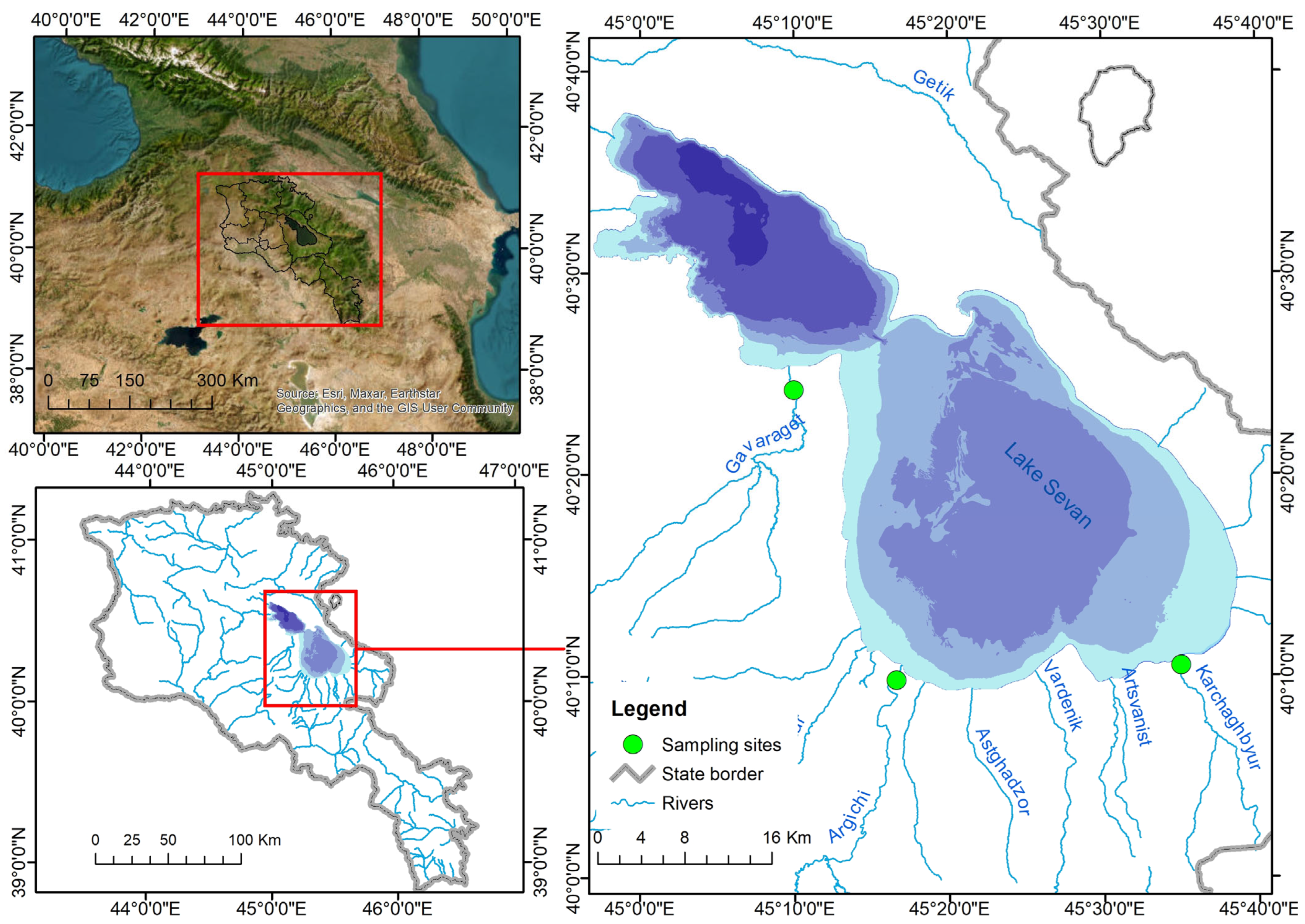
Field studies were carried out in the lower reaches of three main tributaries of Lake Sevan—the Gavaraget, Karchaghbyur, and Argichi Rivers (Figure 1).
The selection of the watercourses was based on differences in their dominant water supply types (snowmelt, spring-fed, and mixed), as well as varying main hydrological characteristics and degrees of anthropogenic pressure, which, together, create contrasting environmental conditions suitable for comparative physiological responses in aquatic organisms (Table 1) [20].
The Gavaraget River flows predominantly through urbanized and agricultural areas and is subjected to multiple forms of stress, including inputs of untreated or insufficiently treated municipal wastewater, diffused agricultural surface runoff, and hydromorphological alterations of the river channel (bank reinforcement and channel regulation). The Karchaghbyur River is predominantly spring-fed and drains forest and semi-agricultural areas in the southeastern part of the basin, resulting in relatively stable hydrological and thermal conditions. The Argichi River, the largest perennial tributary of Lake Sevan, is formed by spring and snowmelt waters originating from the mountain ranges up to 2840 m. The river catchment is extensively used for agricultural purposes and is influenced by hydropower plants [12].
These rivers are characterized by the presence of stable populations of the freshwater amphipod Gammarus lacustris, which was selected as a model organism for the analysis of biochemical markers. Differences in hydrological regimes, water supply types, and land-use patterns generate heterogeneous physicochemical conditions that are relevant for assessing the seasonal dynamics of oxidative stress parameters.
Sampling sites were in the lower reaches of the rivers, approximately 0.5 km upstream from their confluence with Lake Sevan and downstream of the last settlement. This positioning allowed the integrated influence of the entire catchment to be accounted for while minimizing the direct impact of lake waters.
Sampling procedure. Sampling was conducted in May, July, and August 2022–2024. Water samples were collected in sterile containers and transported to the laboratory in refrigerated conditions at +4 to +8 °C to preserve sample integrity. Gammarus lacustris specimens were collected both manually and using a Surber sampler with the mesh size of 500 µm. Then, other species of gammarids were eliminated under the Zeiss stemi 305 microscope (Carl Zeiss Microscopy GmbH, Jena, Germany)and only G. lacustris was used for the research. Collection was made in a way to ensure the presence of both sexes in the sample, but sex was not considered for biochemical analysis. The total number of G. lacustris studied was 405 individuals—15 specimens in each season in each river. The samples included individuals with values of their body length ranging from 16 to 19 mm and weight from 59 to 66 mg.
Hydrochemical and hydrophysical analysis. The following hydrophysical and hydrochemical parameters were analyzed: temperature, pH, dissolved oxygen (DO) concentration, biochemical oxygen demand over 5 days (BOD5), chemical oxygen demand (COD), nutrients (nitrates, nitrites, ammonium ions, and phosphates), and metal concentrations (K, Na, Ca, Mg, total Fe, Cu, Zn, Pb, and Cd). Nitrate ions were quantified using ion chromatography equipped with a photoelectrocolorimetric detector (Metrohm 940 Professional IC Vario, Metrohm AG, Herisau, Switzerland). Concentrations of nitrites, ammonium, and phosphates were determined by a photoelectrocolorimetric method using a Specord 210 PLUS spectrophotometer (Analytic Jena AG, Jena, Germany) and calculated based on nitrogen and phosphorus, respectively. BOD5 measurements were conducted via an electrochemical method following standard protocols.
Metal concentrations were analyzed using an Agilent 7900 ICP-MS inductively coupled plasma mass spectrometer (Aglient Technologies, Santa Clara, CA, USA) which provides high sensitivity and accuracy in the quantitative determination of trace elements.
Biochemical analysis. The samples were placed in a sealed bag and stored at temperature of no more than −86 °C until biochemical analysis was performed. Whole individuals were used for analysis. Each sample was homogenized in ice-cold phosphate buffer pH 7.5 at a 1:5 ratio (weight/volume) for enzyme activity assays (1 g tissue in 5 mL buffer) and a 1:1 ratio for reduced glutathione (GSH) assay (1 g tissue in 1 mL buffer) using an Ultra-Turrax T10 Basic homogenizer (IKA, Staufen im Breisgau, Germany). Homogenates were centrifuged at 12,000 g for 10 min at 4 °C in a Hettich Mikro 22 R (Andreas Hettich GmbH & Co. KG, Tuttlingen, Germany) centrifuge. After centrifugation, the lipid phase was removed, and supernatants were collected for further analysis. Biochemical assays were carried out using MRC Spectro UV-18 spectrophotometer (MRC, Holon, Israel). Each sample was measured in duplicate. Protein contents were measured using the standard Bradford’s method [21].
The contents of MDA or the thiobarbituric acid reactive substance as a measure of lipid peroxidation products’ intensity were assayed by color reaction with 2-thiobarbituric acid [22] using whole homogenate. The content of MDA was calculated as pmol/µg protein. The CAT activity was measured by following the rate of 0.3% H2O2 decomposition, and calculated as pmol/µg protein/min [23]. The SOD activity was measured by the inhibition of nitroblue tetrazolium reduction in reaction with phenazine methosulfate and NADH under basic conditions [24]. Enzyme activity was calculated as the increase in concentration of nitroformazan (ΔE × 10–6) produced per µg protein in the sample per 1 min of reaction time. The GSH concentrations were detected in reaction with 5,5’-dithiobis (2-nitrobenzoic acid) and calculated using a molar extinction coefficient of 13.6 × 10³ M−1 cm−1 and calculated as pmol/µg protein [25]. The GR activity was determined based on the rate of NADPH oxidation during the reduction in oxidized glutathione [26]. Enzyme activity was expressed as nmol NADPH oxidized per minute per µg protein (nmol/µg protein/min). GST activity was determined by monitoring the conjugation of GSH with 1-chloro-2,4-dinitrobenzene used as a substrate [27], and calculated as the concentration of 1-chloro-2,4-dinitrobenzene produced per mg protein in the sample per minute of reaction time (nmol/µg protein/min).
Statistical analysis. The values of all SOS biomarkers at each sampling location were determined for each individual specimen. The data are presented as the means for the 15 specimens with the standard errors (mean ± SEM). The differences between the mean values of each SOS biomarker in Gammarus by season and sampling location were examined using one-way analysis of variance (ANOVA) followed by Tukey post hoc tests or least significant difference (LSD) test at a significance level of p = 0.05.
The conformity of the observed distributions to normality was assessed using the Kolmogorov–Smirnov test [28]. Multivariate analysis was performed using discriminant analysis. Mahalanobis distance (MD) was used as a measure of similarity, and its statistical significance was evaluated using Fisher’s criterion [29]. The following conventional significance levels were applied: p < 0.05, p < 0.01, and p < 0.001. Correlations between the parameters studied were calculated using Spearman’s rank correlation coefficient at a significant level of p = 0.05.
Statistical data processing was carried out using STATISTICA 10.0® for Windows, while preliminary data processing and descriptive statistics were performed using Microsoft ® EXCEL 2003.

3. Results

Hydrochemical and hydrophysical analysis. The water temperature in the three rivers exhibited the same seasonal cyclicity characteristic of this climatic and geographical region: an increase from May to July, and then a decrease by October (Table 2). The seasonal ranges of water temperature fluctuations for this period were 7–19, 7–14.5, and 9.5–21.9 °C in the Gavaraget, Karchaghbyur, and Argichi Rivers, respectively. The average annual temperature for three years in these rivers was 13.1, 10.9, and 15.3 °C. Among the rivers, the highest summer temperatures were recorded in the Argichi River (up to 21.9 °C in July 2022), while the Karchaghbyur River showed the lower temperatures on most occasions.
The pH values changed cyclically during the observed period in the following ranges: the Gavaraget River (7.0–8.35), the Karchaghbyur River (7.2–8.5), and the Argichi River (7.1–8.3) (Table 2). Their average annual values for three years were 7.76, 8.31, and 7.54, respectively. However, seasonal pH dynamics showed different patterns in the rivers. In the Gavaraget and Karchaghbyur Rivers, they were the same and the pH values increased, while, in the Argichi River, they decreased from May to October. According to the national standards of Armenia (http://env.am/en/environment/environmental-monitoring, accessed on 10 April 2025), the pH values in all three rivers generally were in the range of “excellent” water quality (6.5–8.5).
The DO values also changed cyclically during the observed period within the following ranges: the Gavaraget River (7.8–11.2 mg L−1), the Karchagbyur River (7.5–9.9 mg L−1), and the Argichi River (8.8–11.2 mg L−1) (Table 2). Their average annual values in these rivers for three years were 9.67, 9.77, and 8.71 mg L−1. The seasonal DO content dynamics showed different patterns in the rivers. In the Gavaraget and Karchaghbyur Rivers, they first increased from May to July and then decreased to October, while, in the Argichi River, they decreased from May to July and then increased to October. The DO values in all three rivers generally exceeded the national threshold for “excellent” water quality (>7 mg L−1).
The BOD5 values changed in the range of 1.8–4.3, 1.1–3.3, and 2.5–4.9 mg L−1 in the Gavaraget, Karchaghbyur, and Argichi Rivers, respectively (Table 2). Their average annual values in these rivers for three years were 3.09, 3.04, and 2.40 mg L−1. In the summer and autumn months, the BOD5 in all rivers decreased, reflecting the seasonal characteristics of the organic load. In general, according to the national standard of Armenia, the water quality in all three rivers for this parameter during the monitoring period could be classified as “excellent” (<3 mg L−1) or “good” (3–5 mg L−1). However, the water in the Gavaraget River more often demonstrated higher BOD5 values and corresponded to the “good” quality category (5 out of 9 samples) compared to the Karchaghbyur and Argichi Rivers, where the water more often belonged to the “excellent” quality category (7 and 5 out of 9 samples, respectively). At the same time, in July, the water in all rivers for this parameter for the entire observation period was only in the “excellent” category.
The COD, reflecting the concentration of readily oxidizable organic substances in the water, changed throughout the monitoring period in the range of 10–20 mg O L−1 in the Gavaraget and Karchaghbyur Rivers, and 5–20 mg O L−1 in the Argichi River (Table 2). The average annual COD values for three years in these rivers were 13.9, 12.5, and 13.9 mg O L−1. All three rivers exhibited similar seasonal variability in COD average values: an increase from May to July, and then a decrease to October. According to the national surface water quality standards, these values correspond to the “excellent” (<10 mg O L−1) and “good” (10–25 mg O L−1) water quality categories.
The concentrations of ammonium ions (NH4+) changed cyclically among seasons in the range of 0.1061–0.447, 0.0512–0.1731, and 0.0916–0.2455 mg N L−1 (Table 2). The average annual values of this measure for three years in these rivers were 0.2057, 0.0946, and 0.1344 mg N L−1, respectively. The seasonal dynamics of this indicator in the rivers showed different trends. In the Gavaraget and Karchaghbyur Rivers, the pattern was similar: the MH4+ values initially increased from May to July and then decreased from July to October, while, in the Argichi River, they initially decreased and then increased. However, in some months, the seasonal pattern was disrupted. For example, in the Gavaraget River, the values were higher in May 2024, and, in the Argichi River, they were lower in May 2022, compared to the other months of those years. According to the national standards of Armenia, the water quality for this indicator in the rivers during the monitoring period mainly falls into the “excellent” or “good” category (<0.2 or 0.2–0.4 mg N L−1, respectively). However, in July 2022, the water quality in the Gavaraget River corresponded to the “average” category (>0.4 mg N L−1).
The content of nitrates (NO3) in the Gavaraget, Karchaghbyur, and Argichi Rivers changed in seasonal cycles in the range of 1.7024–4.0198, 0.5164–2.0503, and 0.1086–2.7058 mg N L−1, respectively (Table 2). The average annual values of this measure for three years in these rivers were 2.4405, 1.0802, and 1.1628 mg N L−1, respectively. The seasonal dynamics of this indicator in the rivers showed different trends. In the Gavaraget and Karchaghbyur Rivers, the seasonal patterns were similar: the values initially decreased from May to July and then increased from July to October, while, in the Argichi River, they initially increased and then decreased. The highest concentrations of nitrates were recorded in the Gavaraget River, where they often exceeded the upper threshold of the “good” water quality category, passing into the “average” category (2.5–5.6 mg N L−1), especially in spring and autumn. In the Karchaghbyur and Argichi Rivers during the observation period, the water quality for this parameter mostly corresponded to the “excellent” category (<1.0 mg N L−1), but, in some months, it passed into the “good” category (1.0–2.5 mg N L−1) at its lower limit. Moreover, in the Argichi River in October 2024. it even decreased to the category of “average” (Table 2).
The content of nitrites (NO2) in the Gavaraget, Karchaghbyur, and Argichi Rivers changed cyclically among seasons in the range of 0.025–0.0639, 0.0082–0.0240 and 0.0042–0.0175 mg N L−1, respectively (Table 2). The average annual values of this measure for three years in these rivers were 0.0428, 0.0151, and 0.0096 mg N L−1, respectively. Nitrite concentrations in the Gavaraget River were generally within the “good” water quality category (0.01–0.06 mg N L−1) but were often closer to its upper limit. However, in July 2022, they exceeded the lower threshold of the “average” water quality category. In the Karchaghbyur River, nitrite concentrations most often corresponded to the “good” water quality category and only in May 2022 and 2023 did they decrease to the “excellent” category. In the Argichi River, the values of the indicator were the lowest throughout the observation period and corresponded to the water quality category of “excellent” (<0.01 mg N L−1), except for the samples in October 2022 and July 2023, when its values slightly exceeded the upper limit of this category, moving into the “good” category. The seasonal dynamics of this indicator in the rivers showed different trends. In the Gavaraget and Karchaghbyur Rivers, the season patterns were similar: the values initially decreased from May to July and then increased from July to October, while, in the Argichi River, they initially increased and then decreased.
The phosphate content (PO43−) in the Gavaraget, Karchaghbyur, and Argichi Rivers changed cyclically among seasons in the range of 0.4866–0.5781, 0.1339–0.2585, and 0.0739–0.3895 mg P L−1, respectively (Table 2). The average annual values of this measure for three years in these rivers were 0.5365, 0.2128, and 0.2393 mg mg P L−1, respectively. The phosphate concentrations in the rivers belonged to the water quality category “average” (>0.2 mg mg P L−1). However, in the Gavaraget River, the water quality remained at this level constantly, while, in July 2023 and May 2024 in the Karchaghbyur River, and in May 2022 and 2024 in the Argichi River, it had been increasing to the “good” category. The seasonal dynamics of this indicator in the rivers showed different trends. In the Gavaraget and Argichi Rivers, the seasonal patterns were similar: the values increased from May to October, while, in the Karchaghbyur River, no regular noticeable seasonal dynamics of the parameter were observed throughout the monitoring period and its values were approximately the same.
Concentrations of basic cations and some heavy metals. In the Gavaraget River, during the monitoring period, the concentrations of these cations were the highest compared to other rivers and their levels changed as follows: K+—3.48–4.99, Na+—8.49–27.87, Ca2+—18.09–25.48, and Mg2+—9.91–14.51 mg L−1 (Table 3). In October 2024, an abnormally high Na+ concentration of 27.87 mg L−1 was recorded in this river. Except for this anomaly, the average annual values of these measures for three years in the river were 4.52, 13.02, 21.09, and 12.64 mg L−1, respectively. In the Karchaghbyur and Argichi Rivers, the concentration ranges of these cations were as follows: K+—1.85–3.69 and 1.00–3.81, Na+—4.25–8.29 and 3.06–6.81, Ca2+—10.32–17.83 and 13.20–24.65, and Mg2+—2.31–5.09 and 2.15–8.25 mg L−1, respectively. Their means were 3.06 and 2.59, 6.06 and 5.87, 15.66 and 18.97, and 4.04 and 5.33 mg L−1. The strongest differences of these rivers from the Gavaraget River were observed for sodium and magnesium in the rivers belonging to the water quality category “excellent”.
There were no regular seasonal cycles of changes in the concentrations of the major cations in the Gavaraget and Karchaghbyur Rivers. At the same time, a significant seasonal cyclicity of cations was observed in the Argichi River during the monitoring period: in May, as a rule, they were lower than in July and October. However, in 2022, the seasonal cyclicity for calcium was disrupted: in May, the same high concentrations were observed as in July, and they decreased in October.
The total iron concentrations varied consistently between rivers throughout the monitoring period and were classified as “average” and above in the water quality category (Table 3). They were lower in the Gavaraget (0.1209–0.2306 mg L−1) and Karchaghbyur (0.0604–0.2441 mg L−1) Rivers than in the Argichi River (0.2494–0.5473 mg L−1). The average annual values of this measure for three years in these rivers were 0.159, 0.120, and 0.344 mg L−1, respectively. The maximum value of the indicator was recorded in the Argichi River in July 2024 (0.5473 mg L−1), when it was even higher than the upper level of the national standard for the “average” water quality category. No regular seasonal dynamics of the indicator values were recorded. Interannual differences for each river were not pronounced.
The concentrations of some trace elements (copper and zinc) and toxic metals (lead and cadmium) were below detection limits (<0.002 mg L−1), but, in several samples, the former were present, mainly in the Gavaraget and Karchaghbyur Rivers, in very low concentrations (Cu2+ ≤ 0.0024 and Zn2+ ≤ 0.0086 mg L−1), corresponding to the water quality category “excellent”.
Biochemical analysis. In 2022–2024, in the Gavaraget River, the values of all SOS biomarkers in gammarids were statistically significantly higher in most months than in the Karchaghbyur and Argichi Rivers (Table 4). These differences were particularly pronounced between the Gavaraget and Argichi Rivers. The exception was 2023, when the values of most SOS biomarkers in the gammarids from the Argichi River demonstrated the highest levels compared to animals from the other two rivers.
The seasonal dynamics of SOS biomarker values in gammarids showed a similar trend, manifested by the annual minimum SOS biomarker values in May and maximum values in July. However, this trend was not always statistically significant. Furthermore, interannual differences were sometimes observed.
In the Gavaraget River, gammarids demonstrated the least pronounced variability in the values of the parameters studied (Table 4). In terms of the levels of GSH and MDA, the activity of GR and GST exhibited the most stable values during the entire studied period of 2022–2024. They varied within very narrow limits, and statistically significant seasonal differences were not noted for them during each year studied. At the same time, CAT and SOD activities demonstrated statistically significant seasonal variability during all observation periods. There were no interannual differences for the same months for all SOS biomarkers, except for CAT activity, which, in May 2023, was statistically significantly lower than in the same month in other years of observation. The seasonal dynamics of the SOS biomarker values of gammarids, averaged over 3 years of observation, confirm the data obtained in different years.
In the Karchaghbyur River, the seasonal dynamics for all gammarids’ SOS biomarkers studied were mostly confirmed statistically (Table 4). The exception was the GSH content and GR and GST activities in 2022. No interannual differences for all SOS biomarkers were found for the same months. The seasonal dynamics of the SOS biomarker values of gammarids, averaged over 3 years of observation, in general, confirm the data obtained in different years.
In the Argichi River, the seasonal dynamics were confirmed statistically for the MDA content, and GR and GST activities in 2023 and 2024 (Table 4). However, significant interannual differences for all SOS biomarkers were found for the same months, especially in 2023. Among the SOS biomarker values of gammarids, averaged over 3 years of observation, only the GR activity shows significant seasonal dynamics.
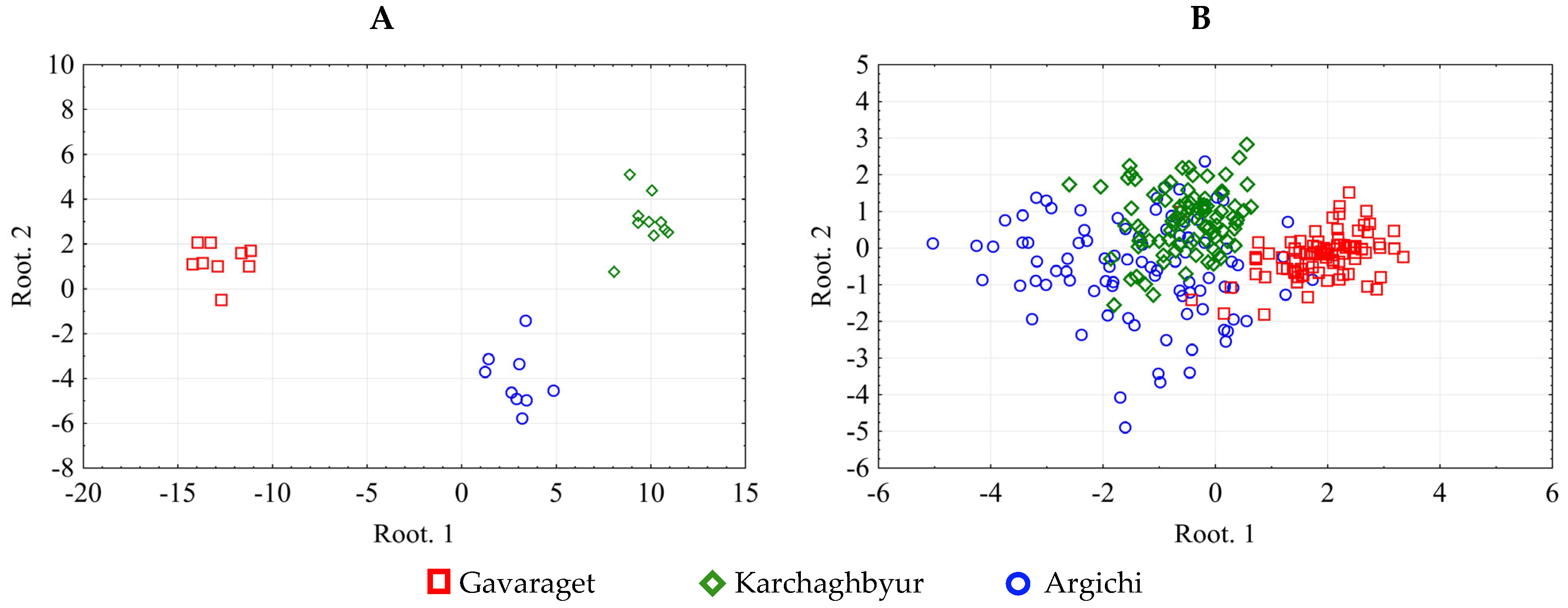
Discriminant analysis of the rivers based on abiotic parameters and SOS biomarkers. Discriminant analysis revealed statistically high differences among the rivers based on abiotic parameters (16 variables: temperatures, pH, DO, BOD5, COD, ammonium ion, nitrate ion, nitrite ion, phosphate ion, K+, Na+, Ca2+, Mg2+, total Fe, Cu2+, and Zn2+) in the space of discriminant functions (Figure 2).
The highest similarity in MD in the plane of canonical discriminant functions for abiotic parameters was observed between the Argichi and Karchaghbyur Rivers (MD = 95.50), and the highest differences were observed with the Gavaraget River: the MD values were 273.33 and 513.86, respectively (Figure 2A). The most significant of the abiotic parameters studied, identified based on standardized coefficients for canonical variables and determining the distance between the rivers in the plane of discriminant function coefficients, were temperature, BOD5, ammonium ion, nitrate ion, nitrite ion, K+, Na+, Ca2+, Mg2+, and total Fe.
A discriminant analysis of SOS biomarkers (six variables: MDA, GSH, GR, GST, CAT, and SOD) in gammarids also demonstrated statistically significant differences among the rivers in the space of discriminant functions (p < 0.001).
The smallest MD in the plane of canonical discriminant functions for SOS biomarkers was noted between the Argichi and Karchaghbyur Rivers (MD = 2.39), and the greatest differences for them were noted with the Gavaraget River: the MD values were 10.50 and 6.65, respectively (Figure 2B). The most significant of the biomarkers studied, identified based on standardized coefficients for canonical variables and determining the distance between rivers in the plane of discriminant functions coefficients, were CAT, GR, and MDA.
A correlation analysis showed that there are statistically significant relationships between the values of the SOS biomarkers of gammarids and some hydrochemical parameters of rivers (Table 5).
Seasonal changes in water temperature had the least effect on SOS biomarkers. A moderately significant correlation (r = 0.31–0.5) with temperature was found only for CAT. Changes in pH also had little effect on biochemical parameters. A significant moderate correlation for pH was recorded only for GST and GR. The most significant correlations (r = 0.51–0.7) were found for CAT and GST, on the one hand, and, for most of the hydrochemical parameters (NH4+, NO2, PO43, K+, and Mg2+), on the other. SOD showed a strong significant correlation with NO2 and K+, and a moderate correlation with NH4+, PO43−, Na+, Ca2+, and Mg2+. No strong significant correlations were found for GR, GSH, and MDA with any of the hydrochemical parameters. For GR and GSH, moderately significant relationships were found with most hydrochemical parameters, with the exception of temperature and pH, for which the relationships were weak (r ≤ 0.3) or absent. For MDA, moderately significant relationships were found with NH4+, PO43−, K+, and Mg2+, whereas the relationships with the remaining parameters were weak or absent.

4. Discussion

In our study, in all cases where seasonal dynamics were detected, even at the trend level, it was expressed in an increase in the SOS biomarkers values from May to July, and then their decrease by October. Previously, a similar seasonal cyclicity of SOS biomarkers was demonstrated by other researchers for amphipod species such as Hyalella pleoacuta, Hyalella castroi [30], and Gammarus roeseli [31]. The seasonal dynamics of SOS biomarkers in G. lacustris that we identified are well-synchronized with the photoperiod in the geographical zone of Lake Sevan (https://www.timeanddate.com/sun/@616250, accessed: 4 August 2025). According to our observations, the dynamics of SOS biomarker values also generally corresponded to the seasonal changes in water temperature in the studied rivers. Our data on the seasonal dynamics of water temperature are in good agreement with data obtained previously by other researchers in the period of 2005–2009 [20]. However, the deviations from the normal seasonal dynamics of SOS biomarkers that we identified indicate the additional influence of some other external factors.
Among the possible factors that can influence the values of SOS biomarkers are pH, DO, BOD5, and COD. However, as it follows from our results, their values in the rivers do not vary significantly within the limits of natural seasonal fluctuations and lie in the ranges that characterize water quality according to the national standards of Armenia as “good” or “excellent”.
Another hydrochemical factor that can influence SOS biomarkers in gammarids is nutrients such as nitrogen forms (ammonium, nitrates, and nitrites) and phosphates. Our results show that, according to national Armenian standards, the water quality in the Karchaghbyur and Argichi Rivers is often classified as “good” or “excellent” for these parameters, indicating a stable hydrochemistry and limited anthropogenic impact on these rivers. In the Gavaraget River, concentrations of all nutrients showed low seasonal variability and were consistently higher than in the other two rivers and were more often classified as “average” water quality, particularly for phosphates and nitrates. Furthermore, in all rivers, the nitrate form predominated in the nitrogen group, indicating the high intensity of nitrification processes.
It is noteworthy that the natural seasonal dynamics of nutrients were disrupted in most cases compared to the natural ones: they were either absent, as in the case of phosphates and nitrates in the Gavaraget River, or their concentrations were higher in summer than in spring and fall. At the same time, it is known that, under natural conditions, in water bodies not subject to anthropogenic load, the seasonal cycle of mineral forms of nitrogen and phosphorus manifests itself as an increase in their concentration in winter and spring and a decrease during the summer and fall growing seasons to minimum values due to uptake by algae and plants. Long-term and high anthropogenic loads on surface waters can lead to a significant disruption of the natural seasonal dynamics of nutrients inherent in environmental conditions [32]. Thus, our data show that, during the summer and autumn, all the rivers, especially the Gavaraget River, are subject to anthropogenic loads of nutrients arriving with surface runoff from the catchment area. Moreover, this load is caused by the influx of mineral compounds such as ammonium and nitrite, especially in summer, rather than organic matter. This is indicated by their higher values in July than in other months, and relatively low BOD5 and COD levels.
The concentrations of the main cations in the water of all the rivers corresponded to the natural levels of these parameters in these rivers over a long period of time. The decrease in concentrations of the main cations in the Argichi River is of a natural seasonal nature and is associated with the predominance of low-mineralized mountain meltwater in the formation of river runoff during the spring flood period. The high proportion of meltwater in the river runoff of this river is also evidenced by the lowest concentrations of main cations among the rivers studied. The increase in their concentrations in the summer–autumn period is due to a decrease in the proportion of meltwater in the river’s water balance and an increase in the proportion of terrigenous runoff. The absence of a pronounced seasonal cyclicity of the main cations in the other two rivers is most likely explained by the predominance of runoff from adjacent flat areas in their water balance and increased anthropogenic load, since the Gavaraget River catchment area is characterized by agricultural and urban landscapes, while the Karchaghbyur River is characterized by forest and semi-agricultural landscapes. This is also confirmed by higher concentrations of the main cations in their water. The elevated concentration of iron in the Argichi River, compared to the Gavaraget and Karchaghbyur Rivers, is likely due to natural geochemical factors, particularly the leaching of iron-rich minerals from volcanic and sedimentary rocks that predominate in the mountainous headwaters of the Argichi catchment. Seasonal snowmelt enhances this process by increasing the water–rock interaction in the upper reaches of the river.
Since copper, zinc, lead, and cadmium were not detected in ecologically dangerous concentrations in the water of any of the rivers during the entire observation period, they can be excluded from the factors that could have any effect on the condition of aquatic organisms. Thus, among the factors analyzed above that could have affected the natural seasonal dynamics of SOS biomarkers in G. lacustris from the rivers, the most likely are nutrients and sex differences. At the same time, one cannot exclude the influence of other anthropogenic factors, such as pesticides, which are actively used in this agricultural region. While the chemical analysis in our study did not include targeted pesticide detection, it is well-documented that agricultural catchments often serve as diffuse sources of pesticide contamination in freshwater systems, especially during spring and early summer [33,34]. Pesticides, even at low environmental concentrations, can cause sublethal physiological stress in aquatic invertebrates, primarily through the induction of oxidative stress mechanisms [35,36]. This is particularly relevant for amphipods, which have been shown to respond to pesticide exposure with elevated levels of MDA, CAT, GST, and other oxidative stress biomarkers [37,38]. In our study, the consistently high levels of GST and GR activity in G. lacustris from the Gavaraget River, particularly during summer, may reflect not only nutrient-induced oxidative stress but also a possible contribution from pesticide runoff. The lack of natural seasonal synchrony in biomarker dynamics, compared to more pristine systems, may also be partially explained by irregular pesticide exposure. Future monitoring should include specific pesticide screening and possibly the use of passive samplers and bioassays to assess their potential contribution to the observed stress profiles.
Overall, higher SOS biomarker values in amphipods from the Gavaraget River indicate an increased activity of their antioxidant defense system and the presence of chronic oxidative stress. This is a consequence of the higher level of anthropogenic load in this river compared to other studied rivers. Similar studies on other amphipod species confirm the diagnostic value of these biomarkers. For example, elevated levels of SOS biomarkers were demonstrated in Gammarus pulex inhabiting heavy metal-polluted rivers in Poland [39]. Similar responses were observed in Gammarus fossarum along a pollution gradient in European rivers [40], pesticide-contaminated water bodies in an agricultural region of France [41] Antioxidant defense in G. lacustris showed coordinated seasonal modulation, particularly noticeable under elevated oxidative stress in summer.
Of note is the anomaly recorded in the Argichi River in 2023, when all biomarkers showed a sharp but short-lived increase, followed by a return to baseline levels in 2024. This indicates the development of acute stress, likely associated with episodic pollution or hydrological disturbances. These results highlight the sensitivity of G. lacustris as a bioindicator capable of capturing both chronic and episodic stressors [42]. Acute SOS has been documented in fish after dredging [43] and in invertebrates exposed to pesticide-contaminated wastewaters [44].
The results of discriminant analysis show that all three rivers differ statistically significantly in both their hydrochemical composition and their SOS biomarkers of gammarids. The largest differences are observed between the Karchaghbyur and Argichi Rivers, on the one hand, and the Gavaraget River, on the other. Moreover, the differences in the hydrochemical composition of the rivers are more pronounced than the differences in the SOS biomarkers, which is consistent with the geographic and hydromorphological features of these rivers. The Gavaraget River, with the largest catchment area, a predominantly flat landscape characterized by numerous agricultural lands and settlements, is subject to the greatest anthropogenic load, the degree of which is also greater than that of the other rivers. This is confirmed by our chemical analysis data: the average concentrations of nitrogenous forms of nutrients and phosphates, as well as basic cations (especially Mg2+), were higher than in the Karchaghbyur and Argichi Rivers. Gammarids inhabiting the Gavaraget River showed higher average values for all SOS biomarkers throughout the observation period than those in the other two rivers. Thus, discriminant analysis supports the hypothesis that amphipods from the Gavaraget River are in a state of chronic oxidative stress associated with a higher level of anthropogenic load in this river compared to other studied rivers.
The correlation analysis data showed that biomarkers such as SOD, CAT, and GST have relatively stronger correlations with certain nutrients (NH4+, NO2, PO43−, K+, Na+, and Mg2+), which may indicate their influence on the a forementioned biochemical parameters. A similar study conducted at Kocabaş Stream (Turkey) showed that, in areas with higher anthropogenic loads, including NO3, PO43−, mineralization, and several metals, three crustaceans species (amphipods Gammarus pulex, isopods Asellus aquaticus, and decapods Potamon ibericum) had elevated levels of total GSH and thiobarbituric acid reactive substances [45]. Therefore, the abiotic water parameters studied during monitoring can be limited, excluding those with low correlations and, therefore, not playing a role in changing the values of the biochemical parameters being studied.
However, the influence of other anthropogenic pollutants on SOS biomarkers, including toxic ones such as pesticides, petroleum products, polycyclic aromatic hydrocarbons, synthetic surfactants, phenols, etc., which were not analyzed in our study, also cannot be ruled out. Further research in this area is needed.
Thus, our study demonstrated that an integrated approach using specific hydrochemical parameters and SOS biomarkers in G. lacustris allowed us to identify differences in the ecological status of the studied rivers. This approach can be applied to the environmental monitoring of rivers from the Lake Sevan basin and other high-mountain water bodies.

Author Contributions

Conceptualization, B.G., H.M., and G.C.; methodology, H.M., V.A., H.Y., G.S., and N.K.; formal analysis, H.M., N.K., B.G., and G.C.; investigation, H.M., H.Y., G.S., Z.M., M.D., V.A., and H.K.; resources, V.A.; writing—original draft preparation, H.M. and G.C.; writing—review and editing, B.G. and V.A.; supervision, B.G.; project administration, V.A.; funding acquisition, V.A. All authors have read and agreed to the published version of the manuscript.

Funding

This research was funded by the Higher Education and Science Committee of Armenia, grants No. 22RL-023 and No. 25RG-1F112.

Institutional Review Board Statement

The study did not require ethical approval.

Informed Consent Statement

Not applicable.

Data Availability Statement

All primary data are available in the manuscript.

Conflicts of Interest

The authors declare no conflicts of interest.

References

  1. Carpenter, S.R.; Caraco, N.F.; Correll, D.L.; Howarth, R.W.; Sharpley, A.N.; Smith, V.H. Nonpoint pollution of surface waters with phosphorus and nitrogen. Ecol. Appl. 1998, 8, 559–568. [Google Scholar] [CrossRef]
  2. Malmqvist, B.; Rundle, S. Threats to the running water ecosystems of the world. Environ. Conserv. 2002, 29, 134–153. [Google Scholar] [CrossRef]
  3. Schwarzenbach, R.P.; Escher, B.I.; Fenner, K.; Hofstetter, T.B.; Johnson, C.A.; von Gunten, U.; Wehrli, B. The challenge of micropollutants in aquatic systems. Science 2006, 313, 1072–1077. [Google Scholar] [CrossRef] [PubMed]
  4. Vörösmarty, C.J.; McIntyre, P.B.; Gessner, M.O.; Dudgeon, D.; Prusevich, A.; Green, P.; Glidden, S.; Bunn, S.E.; Sullivan, C.A.; Reidy Liermann, C.; et al. Global threats to human water security and river biodiversity. Nature 2010, 467, 555–561. [Google Scholar] [CrossRef]
  5. Dudgeon, D.; Arthington, A.H.; Gessner, M.O.; Kawabata, Z.-I.; Knowler, D.J.; Lévêque, C.; Naiman, R.J.; Prieur-Richard, A.H.; Soto, D.; Stiassny, M.L.J.; et al. Freshwater biodiversity: Importance, threats, status and conservation challenges. Biol. Rev. 2005, 81, 163–182. [Google Scholar] [CrossRef]
  6. Reid, A.J.; Carlson, A.K.; Creed, I.F.; Eliason, E.J.; Gell, P.A.; Johnson, P.T.J.; Kidd, K.A.; MacCormack, T.J.; Olden, J.D.; Ormerod, S.; et al. Emerging threats and persistent conservation challenges for freshwater biodiversity. Sci. Total Environ. 2019, 662, 1188–1199. [Google Scholar] [CrossRef]
  7. Chuiko, G.M.; Tomilina, I.I.; Kholmogorova, N.V. Methods of biodiagnostics in water ecotoxicology. Toksikol. Vestn. (Toxicol. Rev.) 2022, 30, 315–322. [Google Scholar] [CrossRef]
  8. Gabrielyan, B.; Asatryan, V.; Kobelyan, H.; Khosrovyan, A. The sediment of a river having “good ecological status” turned out to be toxic to midge Chironomus riparius larvae: Implication for environmental monitoring? Ecotoxicol. Enviro. Saf. 2024, 283, 116855. [Google Scholar] [CrossRef] [PubMed]
  9. Gabrielyan, B.K. Fish of Lake Sevan; Gitutyun: Yerevan, Armenia, 2010; 251p. [Google Scholar]
  10. UNDP Armenia. Integrated Water Resources Management in the Lake Sevan Basin; United Nations Development Programme: New York, NY, USA, 2020; Available online: https://www.am.undp.org/ (accessed on 25 June 2025).
  11. Melkonyan, H.; Chuiko, G.; Barseghyan, N.; Vardanyan, T.; Kobelyan, H.; Ghukasyan, E.; Gabrielyan, B. Assessment of the health status of whitefish (Coregonus lavaretus Linnaeus 1758) and the quality of its habitat in Lake Sevan (Armenia) using a multi-biomarker approach. Water 2024, 16, 2789. [Google Scholar] [CrossRef]
  12. Gabrielyan, B.; Khosrovyan, A.; Schulze, M. A review of anthropogenic stressors on Lake Sevan, Armenia. J. Limnol. 2022, 81, 2061. [Google Scholar] [CrossRef]
  13. Asatryan, V.; Stepanyan, L.; Hovsepyan, A.; Khachikyan, T.; Mamyan, A.; Hambaryan, L. The dynamics of phytoplankton seasonal development and its horizontal distribution in Lake Sevan (Armenia). Environ. Monit. Assess. 2022, 194, 757. [Google Scholar] [CrossRef]
  14. Avetisyan, K.; Mirzoyan, N.; Payne, R.B.; Hayrapetyan, V.; Kamyshny, A. Eutrophication leads to the formation of a sulfide-rich deep-water layer in Lake Sevan, Armenia. Isot. Environ. Health Stud. 2021, 57, 535–552. [Google Scholar] [CrossRef]
  15. Asatryan, V.; Dallakyan, M.; Vardanyan, T.; Barseghyan, N.; Gabrielyan, B. An integrative evaluation of suitability of a river for natural reproduction of trout of Lake Sevan (Armenia). Environ. Sci. Pollut. Res. 2020, 27, 6352–6361. [Google Scholar] [CrossRef] [PubMed]
  16. Lushchak, V.I. Environmentally induced oxidative stress in aquatic animals. Aquat. Toxicol. 2011, 101, 13–30. [Google Scholar] [CrossRef] [PubMed]
  17. Hook, S.; Gallagher, E.; Batlev, G. The role of biomarkers in the assessment of aquatic ecosystem health. Integr. Environ. Assess. Manag. 2014, 10, 327–341. [Google Scholar] [CrossRef] [PubMed]
  18. Maltby, L.; Clayton, S.A.; Wood, R.M.; McLoughlin, N. Evaluation of the Gammarus pulex in situ feeding assay as a biomonitor of water quality: Robustness, responsiveness, and relevance. Environ. Toxicol. Chem. 2002, 2, 361–368. [Google Scholar] [CrossRef]
  19. Alric, B.; Geffard, O.; Chandesris, A.; Ferréol, M.; François, A.; Perceval, O.; Piffady, J.; Villeneuve, B.; Chaumot, A. Multisubstance indicators based on caged Gammarus bioaccumulation reveal the influence of chemical contamination on stream macroinvertebrate abundances across France. Environ. Sci. Technol. 2019, 53, 5906–5915. [Google Scholar] [CrossRef]
  20. Chilingaryan, L.A.; Mnatsakanyan, B.P. Hydrology of the Lake Sevan Basin. In Ecology of Lake Sevan During the Water Level Rise: Results of the Russian-Armenian Biological Expedition on the Hydroecological Survey of Lake Sevan (Armenia); Krylov, A.V., Ed.; Nauka DNC: Makhachkala, Russia, 2010; pp. 14–28. [Google Scholar]
  21. Bradford, M.M. A rapid and sensitive method for the quantitation of microgram quantities of protein utilizing the principal of protein-dye binding. Anal. Biochem. 1976, 72, 248–254. [Google Scholar] [CrossRef]
  22. Buege, J.A.; Aust, S.D. Microsomal lipid peroxidation. Methods Enzymol. 1978, 52, 302–310. [Google Scholar] [CrossRef]
  23. Aebi, H. Catalase in vitro. Methods Enzymol. 1984, 105, 121–126. [Google Scholar] [CrossRef]
  24. Chevari, S.; Chaba, I.; Sekei, I. Role of superoxide dismutase in cellular oxidative processes and the method of its determination in biological materials. Lab. Delo 1985, 11, 678–681. [Google Scholar]
  25. Moron, M.S.; Depierre, J.W.; Mannervik, B. Levels of glutathione, glutathione reductase and glutathione S-transferase activities in rat lung and liver. Biochim. Biophys. Acta 1979, 582, 67–78. [Google Scholar] [CrossRef]
  26. Carlberg, I.; Mannervik, B. Glutathione reductase. Methods Enzymol. 1985, 113, 484–490. [Google Scholar] [CrossRef]
  27. Habig, W.H.; Pabst, M.J.; Jacoby, W.B. Glutathione S-transferases. The first enzymatic step in mercapturic acid formation. J. Biol. Chem. 1974, 249, 7130–7139. [Google Scholar] [CrossRef]
  28. Shitikov, V.K.; Rosenberg, G.S.; Zinchenko, T.D. Quantitative Hydroecology: Methods, Criteria, Solutions; Institute of Ecology of the Volga Basin: Moscow, Russia, 2005; 281p. [Google Scholar]
  29. Tyurin, V.V.; Shcheglov, S.N. Discriminant Analysis in Biology; KSU: Krasnodar, Russia, 2015; 126p. [Google Scholar]
  30. Dutra, B.K.; Castiglioni, D.S.; Santos, R.B.; Bond-Buckup, G.; Oliveira, G.T. Seasonal variations of the energy metabolism of two sympatric species of Hyalella (Crustacea, Amphipoda, Dogielinotidae) in the southern Brazilian highlands. Comp. Biochem. Physiol. Part A Mol. Integr. Physiol. 2007, 148, 239–247. [Google Scholar] [CrossRef]
  31. Sroda, S.; Cossu-Léguille, C. Seasonal variability of antioxidant biomarkers and energy reserves in the freshwater gammarid Gammarus roeseli. Chemosphere 2011, 83, 538–544. [Google Scholar] [CrossRef]
  32. Nikanorov, A.M.; Bryzgalo, V.A. Freshwater Ecosystems in Impacted Regions of Russia; NOK: Rostov-on-Don, Russia, 2006; 275p. [Google Scholar]
  33. Stehle, S.; Schulz, R. Agricultural insecticides threaten surface waters at the global scale. Proc. Natl. Acad. Sci. USA 2015, 112, 5750–5755. [Google Scholar] [CrossRef]
  34. Schönenberger, U.T.; Beck, B.; Dax, A.; Vogler, B.; Stamm, C. Pesticide concentrations in agricultural storm drainage inlets of a small Swiss catchment. Environ. Sci. Pollut. Res. 2022, 29, 43966–43983. [Google Scholar] [CrossRef] [PubMed]
  35. Khatib, I.; Rychter, P.; Falfushynska, H. Pesticide pollution: Detrimental outcomes and possible mechanisms of fish exposure to common organophosphates and triazines. J. Xenobiotics 2022, 12, 236–265. [Google Scholar] [CrossRef] [PubMed]
  36. Bundschuh, M.; Zubrod, J.P.; Petschick, L.L.; Schulz, R. Multiple stressors in aquatic ecosystems: Sublethal effects of temperature, dissolved organic matter, light and a neonicotinoid insecticide on gammarids. Bull. Environ. Contam. Toxicol. 2020, 105, 345–350. [Google Scholar] [CrossRef] [PubMed]
  37. Serdar, O. The effect of dimethoate pesticide on some biochemical biomarkers in Gammarus pulex. Environ. Sci. Pollut. Res. Int. 2019, 26, 21905–21914. [Google Scholar] [CrossRef]
  38. Berezina, N.; Lehtonen, K.; Ahvo, A. Coupled application of antioxidant defense response and embryo development in amphipod Crustaceans in the assessment of sediment toxicity. Environ. Toxicol. Chem. 2019, 38, 2020–2031. [Google Scholar] [CrossRef]
  39. Vranković, J.; Živić, M.; Radojević, A.; Perić-Mataruga, V.; Todorović, D.; Marković, Z.; Živić, I. Evaluation of oxidative stress biomarkers in the freshwater gammarid Gammarus dulensis exposed to trout farm outputs. Ecotoxicol. Environ. Saf. 2018, 163, 84–95. [Google Scholar] [CrossRef] [PubMed]
  40. Dayras, P.; Charmantier, G.; Chaumot, A.; Vigneron, A.; Coquery, M.; Queau, H.; Artells, E.; Lignot, J.-H.; Geffard, O.; Issartel, J. Osmoregulatory responses to cadmium in reference and historically metal contaminated Gammarus fossarum (Crustacea, Amphipoda) populations. Chemosphere 2017, 180, 412–422. [Google Scholar] [CrossRef]
  41. Lebrun, J.D.; El Kouch, S.; Guenne, A.; Tournebize, J. Screening potential toxicity of currently used herbicides in the freshwater amphipod Gammarus fossarum based on multi-level biomarker responses to field-realistic exposures. Environ. Pollut. 2023, 320, 120985. [Google Scholar] [CrossRef]
  42. Drozdova, P.; Rivarola-Duarte, L.; Bedulina, D.; Axenov-Gribalov, D.; Schreiber, S.; Gurkov, A.; Shatilina, Z.; Vereshchagina, K.; Lubyaga, Y.; Madyarova, E.; et al. Comparison between transcriptomic responses to short-term stress exposures of a common holarctic and endemic Lake Baikal amphipods. BMC Genom. 2019, 20, 712. [Google Scholar] [CrossRef]
  43. Sturve, J.; Hasselberg, L.; Fӧrlin, L. Oxidative stress in fish induced by exposure to dredged sediments and a paper mill effluent. Mar. Environ. Res. 2005, 59, 281–291. [Google Scholar] [CrossRef]
  44. Tucca, F.; Díaz-Jaramillo, M.; Cruz, G.; Silva, J.; Bay-Schmith, E.; Chiang, G.; Barra, R. Toxic Effects of antiparasitic pesticides used by the salmon industry in the marine amphipod Monocorophium insidiosum. Arch. Environ. Contam. Toxicol. 2014, 67, 139–148. [Google Scholar] [CrossRef] [PubMed][Green Version]
  45. Akbulut, M.; Selvi, K.; Kaya, H.; Duysak, M.; Akcay, F.; Celik, E.S. Use of oxidative stress biomarkers in three Crustacean species for the assessment of water pollution in Kocabas Stream (Canakkale, Turkey). Mar. Sci. Technol. Bull. 2014, 3, 27–32. [Google Scholar]
Figure 1. Location of sampling sites in the Gavaraget, Argichi, and Karchaghbyur Rivers of Lake Sevan (Armenia).
Hydrobiology 05 00017 g001
Figure 2. Distribution of samples based on abiotic hydrophysical and hydrochemical parameters (A), and SOS biomarkers in G. lacustris (B) from the three rivers in the space of the first (Root 1) and second (Root 2) discriminant functions.
Hydrobiology 05 00017 g002
Table 1. Basic hydrological characteristics of the Argichi, Karchaghbyur, and Gavaraget Rivers.
RiverCoordinatesTotal Length,
km
Catchment Area,
km2
Average Annual Water Flow, m3/sWater Origine TypeCatchment Area Use
Gavaraget40.403053 N, 45.166133 E244673.8MixedUrban, agriculture
Karchaghbyur40.163102 N, 45.276737 E261161.22Spring waterAgriculture, small hydropower plants
Argichi40.1752 N,
45.583572 E
513665MeltwaterAgriculture, small hydropower plants
Table 2. Hydrochemical and hydrophysical parameters in the Gavaraget, Karchaghbyur, and Argichi Rivers for the 2022–2024 years.
Year, MonthTemperature
(°C)
pHDissolved Oxygen
(mg L−1)
BOD5
(mg L−1)
COD
(mg O L−1)
Ammonium Ion
(mg N L−1)
Nitrate Ion
(mg N L−1)
Nitrite Ion
(mg N L−1)
Phosphate Ion
(mg P L−1)
The Gavaraget River
May, 2022118.2511.23.615.00.1672.6640.04070.5781
July, 2022168.357.82.420.00.4472.1670.06390.5124
October, 202278.258.72.215.00.1553.1540.05470.5230
May, 202311.67.811.24.010.00.1062.8040.02500.5039
July, 2023177.37.81.815.00.1421.8520.05290.5741
October, 202312.37.910.03.410.00.1881.7350.03490.5774
May, 2024127.011.14.315.00.2711.8650.02900.4866
July, 2024197.29.52.810.00.1891.7020.04780.5086
October, 202412.17.810.13.315.00.1864.020.03640.5640
The Karchaghbyur River
May, 2022138.438.32.820.00.0741.3340.00860.2495
July, 202214.18.47.52.120.00.1120.5160.02400.2467
October, 202278.58.42.010.00.0511.5520.01320.2386
May, 202310.28.59.12.610.00.0671.3650.00820.2238
July, 202314.58.58.51.120.00.1730.8280.02120.1339
October, 20239.58.48.63.210.00.0840.9390.01550.2585
May, 2024107.29.93.310.00.0670.5230.01300.1396
July, 202412.58.48.72.510.00.1420.6160.01950.2099
October, 20249.28.59.22.410.00.0822.050.01260.2144
The Argichi River
May, 2022118.309.73.220.00.0920.2010.00750.0798
July, 202221.97.59.82.520.00.1041.3320.01000.2714
October, 20229.57.99.72.715.00.1171.790.01750.2888
May, 2023138.09.24.915.00.1760.3160.00420.1739
July, 202321.37.510.02.715.00.1241.7010.01350.3895
October, 202313.67.19.73.15.00.1581.0570.00840.2846
May, 2024137.29.62.515.00.2460.1090.00680.0739
July, 2024187.18.82.510.00.0551.2550.01040.3380
October, 202416.17.311.23.410.00.1392.7060.00770.2541
“average” quality (3rd category) *-6.5–8.5>59.040.01.25.60.120.2
“good” quality (2nd category) *-6.5–8.5>65.025.00.42.50.060.1
“excellent” quality (1st category) *-6.5–8.5>73.010.00.21.00.010.05
Notes: * National surface water quality criteria adopted by the Ministry of Environment of Armenia (http://env.am/en/environment/environmental-monitoring, accessed on 10 April 2025).
Table 3. Concentrations (mg L−1) of select elements present in the water samples of the Gavaraget, Karchaghbyur, and Argichi Rivers for 2022–2024 years.
Year, MonthK+Na+Ca2+Mg2+Fe TotalCu2+Zn2+Pb2+Cd2+
The Gavaraget River
May, 20224.8417.8621.8713.830.13760.00240.0036<dL<dL
July, 20224.9912.6018.8212.290.1456<dL0.0086<dL<dL
October, 20224.5615.2418.0911.740.1651<dL0.0027<dL<dL
May, 20234.3415.6920.8913.370.1209<dL<dL<dL<dL
July, 20234.818.9020.4214.510.1550<dL0.0032<dL<dL
October, 20234.0714.0919.7611.650.1656<dL<dL<dL<dL
May, 20243.488.4922.109.910.1582<dL<dL<dL<dL
July, 20244.8611.3122.3712.630.2306<dL<dL<dL<dL
October, 20244.7227.8725.4813.870.1537<dL0.0028<dL<dL
The Karchaghbyur River
May, 20223.538.2917.835.090.0604<dL<dL<dL<dL
July, 20223.085.5315.674.240.0842<dL<dL<dL<dL
October, 20223.005.7015.813.730.0848<dL<dL<dL<dL
May, 20233.337.4317.264.600.0961<dL<dL<dL<dL
July, 20233.696.2116.804.790.11180.00270.0062<dL<dL
October, 20232.825.1316.673.210.0866<dL<dL<dL<dL
May, 20241.854.2510.322.310.1603<dL<dL<dL<dL
July, 20242.985.4715.033.800.2441<dL<dL<dL<dL
October, 20243.236.4915.574.570.1318<dL0.0064<dL<dL
The Argichi River
May,20221.535.1319.063.560.3603<dL<dL<dL<dL
July, 20222.705.6319.115.950.2500<dL<dL<dL<dL
October, 20222.536.8215.665.330.2494<dL<dL<dL<dL
May, 20231.404.0613.203.080.4004<dL<dL<dL<dL
July, 20233.816.7122.778.250.2716<dL<dL<dL<dL
October, 20233.216.2818.445.710.3033<dL<dL<dL<dL
May, 20241.003.0614.662.150.2842<dL<dL<dL<dL
July, 20243.618.6624.657.080.5473<dL<dL<dL<dL
October, 20243.556.4823.216.900.4276<dL0.0064<dL<dL
“average” quality (3rd category) *4 × B4 × B2001000.50.050.20.0250.00201
“good” quality (2nd category) *2 × B2 × B100502 × BB + 0.020.10.010170.00101
“excellent” quality (1st category) *BBBBBB0.00150.000170.00001
Notes: * Armenia surface water quality guidelines. B—background value of a given element in a local environment; dL—detection limit: 0.002 mg L−1.
Table 4. Seasonal variabilities of lipid peroxidation and antioxidant system values of Gammarus lacustris in different rivers for the 2022–2024 years.
Year, MonthMean Values of Parameters ± SE
MDAGSHGRGSTCATSOD
pmol per 1 μg Proteinnmol per 1 μg Protein per 1 minΔE × 10–6 per
1 μg Protein per 1 min
The Gavaraget River
May, 20225.77 ± 0.08 a,112.77 ± 0.07 a,14.75 ± 0.04 a,18.13 ± 0.08 a,1127.80 ± 0.08 a,123.9 ± 0.0 a,1
July, 20225.98 ± 0.05 a,113.03 ± 0.10 a,14.98 ± 0.04 a,18.34 ± 0.03 a,1134.90 ± 0.07 b,126.1 ± 0.1 b,1
October, 20225.90 ± 0.02 a,112.80 ± 0.03 a,14.79 ± 0.02 a,18.29 ± 0.03 a,1131.40 ± 0.09 c,125.7 ± 0.06 c,1
May, 20235.29 ± 0.31 a,112.10 ± 0.34 a,14.67 ± 0.31 a,17.93 ± 0.23 a,1122.30 ± 0.33 d,123.8 ± 0.22 a,1
July, 20235.57 ± 0.22 a,112.70 ± 0.24 a,14.73 ± 0.37 a,18.03 ± 0.31 a,1133.90 ± 0.30 b,e,125.8 ± 0.51 b,c,1,2
October, 20235.61 ± 0.38 a,112.50 ± 0.21 a,14.38 ± 0.19 a,18.14 ± 0.24 a,1 132.30 ± 0.19 c,f,125.1 ± 0.24 a,b,1
May, 20245.76 ± 0.36 a,112.90 ± 0.31 a,14.97 ± 0.25 a,18.24 ± 0.28 a,1128.80 ± 0.46 a,124.20 ± 0.33 a,1
July, 20246.11 ± 0.24 a,113.40 ± 0.20 a,15.27 ± 0.24 a,18.43 ± 0.25 a,1134.90 ± 0.16 b,126.9 ± 0.27 b,1
October, 20245.99 ± 0.36 a,113.07 ± 0.30 a,14.99 ± 0.24 a,18.31 ± 0.25 a,1132.90 ± 0.38 e,f,126.3 ± 0.25 b,c,1
The Karchaghbyur River
May, 20223.11 ± 0.27 a,29.28 ± 0.27 a,22.28 ± 0.18 a,23.69 ± 0.28 a,2110.20 ± 0.29 a,c,221.20 ± 0.34 a,2
July, 20224.76 ± 0.48 b,29.94 ± 0.42 a,22.83 ± 0.31 a,b,24.23 ± 0.35 a,b,2113.60 ± 0.28 b,d,e,225.30 ± 0.27 b,1
October, 20224.44 ± 0.34 b,29.71 ± 0.43 a,22.69 ± 0.31 a,b,24.06 ± 0.44 a,b,2111.10 ± 0.47 a,223.60 ± 0.52 b,c,2
May, 20233.87 ± 0.22 a,210.30 ± 0.27 a,22.85 ± 0.27 a,b,24.89 ± 0.27 b,2111.80 ± 0.28 a,c,e,222.70 ± 0.21 a,2
July, 20235.56 ± 0.56 b,111.97 ± 0.51 b,13.75 ± 0.39 c,16.10 ± 0.05 c,2115.30 ± 0.47 d,224.60 ± 0.45 b,c,2
October, 20234.78 ± 0.41 b,111.03 ± 0.53 a,b,23.41 ± 0.34 a,b,c,15.73 ± 0.47 b,c,2113.10 ± 0.56 b,e,224.10 ± 0.53 b,c,1
May, 20243.69 ± 0.20 a,29.76 ± 0.29 a,22.53 ± 0.24 a,24.17 ± 0.25 a,b,2111.20 ± 0.31 c,221.90 ± 0.30 a,2
July, 20245.12 ± 0.50 b,111.52 ± 0.53 b,24.28 ± 0.37 c,25.77 ± 0.52 c,2114.40 ± 0.40 b,d,223.12 ± 0.37 b,c,2
October, 20244.61 ± 0.51 b,210.80 ± 0.57 a,b,23.66 ± 0.38 b,c,24.86 ± 0.53 b,c,2112.98 ± 0.52 b,e,222.40 ± 0.52 a,c,2
The Argichi River
May, 20223.01 ± 0.29 a,29.21 ± 0.46 a,22.05 ± 0.19 a,23.45 ± 0.44 a,293.65 ± 0.72 a,318.97 ± 0.46 a,3
July, 20223.48 ± 0.43 a,29.79 ± 0.6 a,22.76 ± 0.29 a,23.92 ± 0.58 a,295.07 ± 0.75 a,319.86 ± 0.54 a,c,2
October, 20223.13 ± 0.30 a,29.31 ± 0.53 a,22.19 ± 0.25 a,23.62 ± 0.49 a,294.25 ± 0.78 a,319.30 ± 0.54 a,c,3
May, 20237.61 ± 0.51 b,313.54 ± 0.5 b,c,35.32 ± 0.38 b,18.39 ± 0.41 b,1122.97 ± 0.46 b,124.10 ± 0.48 b,d,1
July, 202311.08 ± 0.64 c,215.70 ± 0.75 b,28.67 ± 0.44 c,210.28 ± 0.5 b,d,3137.20 ± 0.75 c,326.85 ± 0.78 d,1
October, 202311.50 ± 0.63 c,215.80 ± 0.55 b,38.91 ± 0.44 c,210.90 ± 0.44 d,1136.98 ± 0.82 c,327.50 ± 0.64 d,2
May, 20243.65 ± 0.36 a,29.74 ± 0.51 a,22.51 ± 0.25 a,23.89 ± 0.40 a,2110.94 ± 0.53 d,221.50 ± 0.5 c,e,2
July, 20245.12 ± 0.45 b,111.56 ± 0.61 a,c,24.63 ± 0.34 b,1,25.87 ± 0.43 c,2114.30 ± 0.48 e,223.10 ± 0.63 b,e,2
October, 20244.73 ± 0.39 a,b,210.87 ± 0.58 a,c,23.68 ± 0.54 b,24.85 ± 0.45 a,c,2113.03 ± 0.5 d,e,222.56 ± 0.59 b,e,2
Notes: means and standard errors (x ± SE) are presented; identical superscript symbols indicate the absence of differences between the means for each parameter (one-way ANOVA, LSD test, p = 0.05): between different months and years in each river (letters); and between rivers in the same month of each year (numbers).
Table 5. Correlation coefficients between amphipod biomarker values and abiotic parameters of water across all rivers over the entire observation period.
Indicator T (°C) pH NH4+ NO3 NO2 PO43− K+ Na+ Ca2+ Mg2+
SOD0.244−0.1340.4510.2960.5230.4960.5760.3920.3240.469
CAT0.3280.3060.6040.4210.5720.6430.7030.5400.4700.644
GST0.2220.3150.5350.3850.4400.5850.5570.4800.4290.572
GR0.2990.3270.4430.3310.3310.4830.4950.3900.4210.497
GSH0.276−0.2890.4970.3060.3590.4770.4900.3810.3850.486
MDA0.253−0.2230.4230.2200.2820.3780.3950.2630.2920.365
Notes: r = 0.51–0.7 indicates strong and statistically significant correlation (bold); r = 0.31–0.5 indicates moderate and statistically significant correlation (italic); and r ≤ 0.3 indicates weak statistically significant or non-significant correlation.
Disclaimer/Publisher’s Note: The statements, opinions and data contained in all publications are solely those of the individual author(s) and contributor(s) and not of MDPI and/or the editor(s). MDPI and/or the editor(s) disclaim responsibility for any injury to people or property resulting from any ideas, methods, instructions or products referred to in the content.