
Article

Exploring Artificial Intelligence and Machine Learning Approaches to Legal Reasoning

by
Wullianallur Raghupathi
Gabelli School of Business, Fordham University, 140 W. 62nd Street, New York, NY 10023, USA
AppliedMath 2026, 6(2), 32; https://doi.org/10.3390/appliedmath6020032

Submission received: 6 January 2026 / Revised: 26 January 2026 / Accepted: 5 February 2026 / Published: 12 February 2026

Abstract

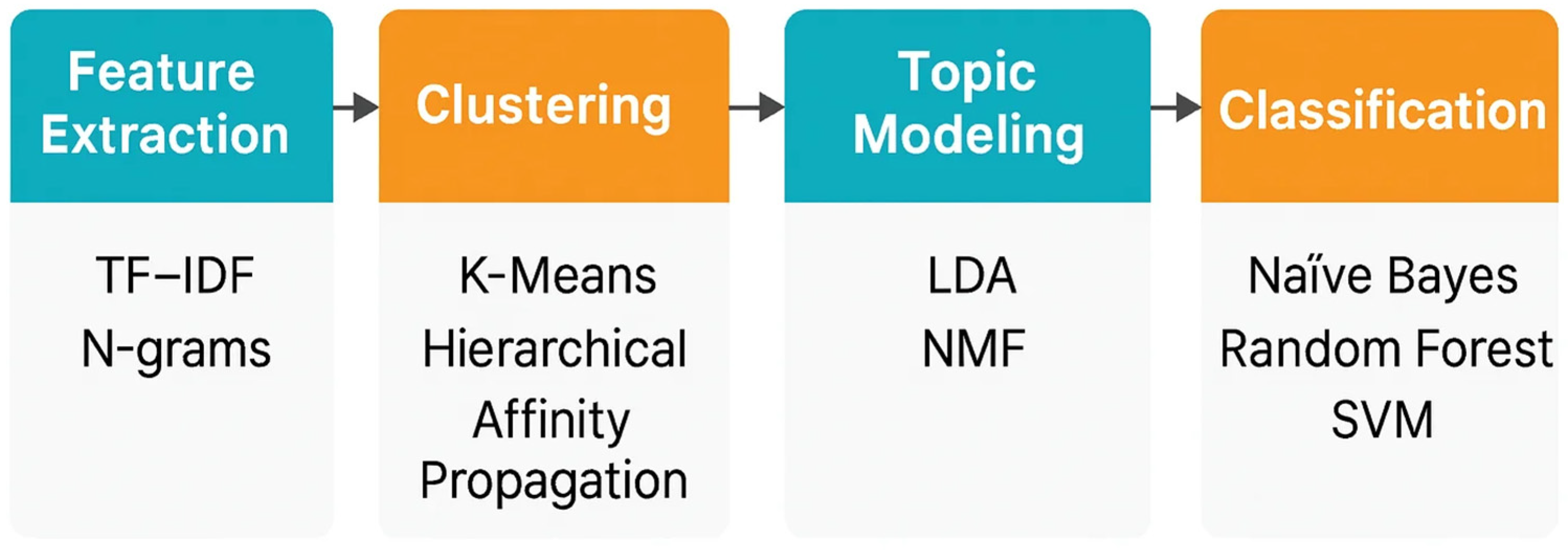
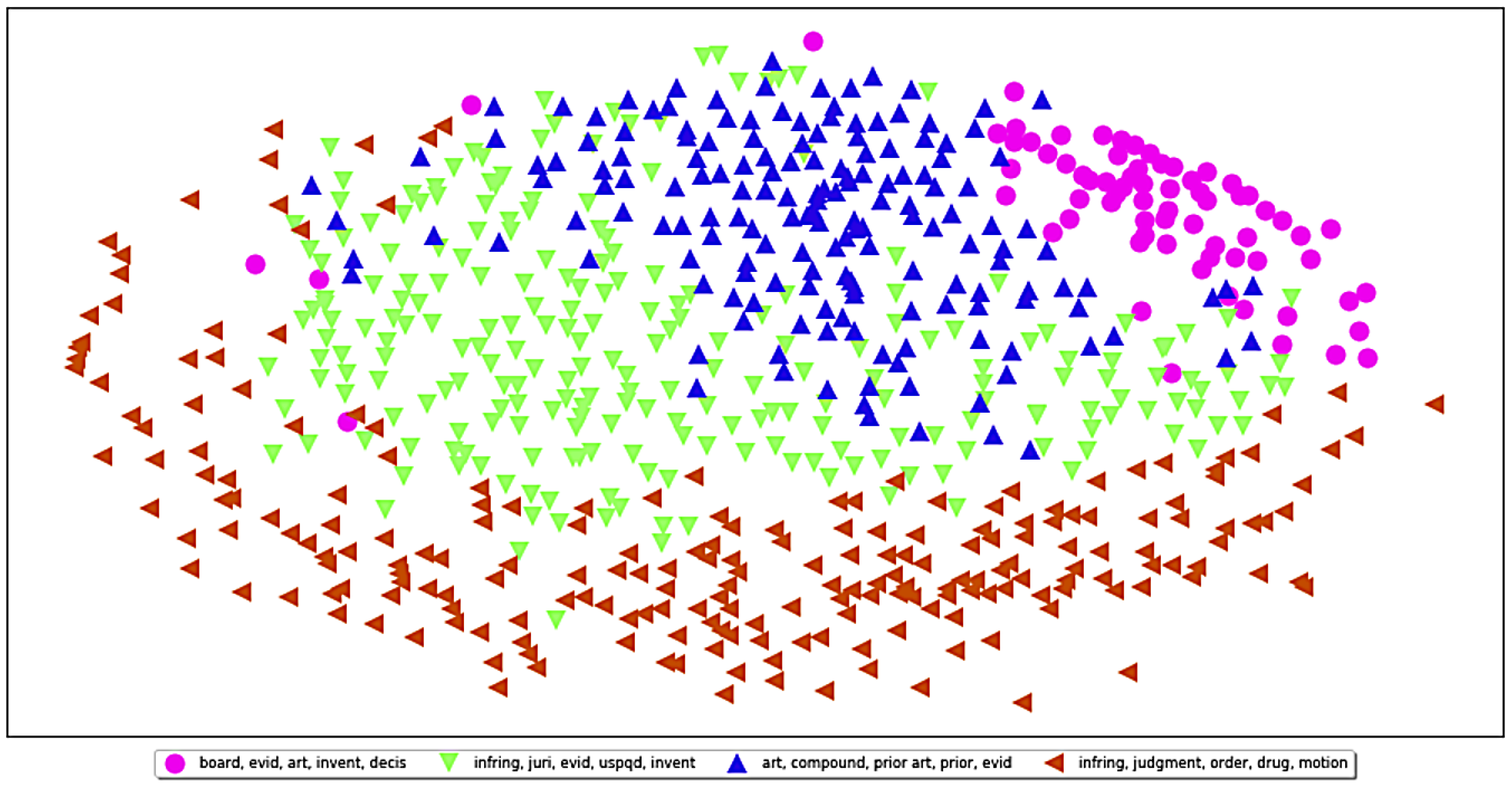
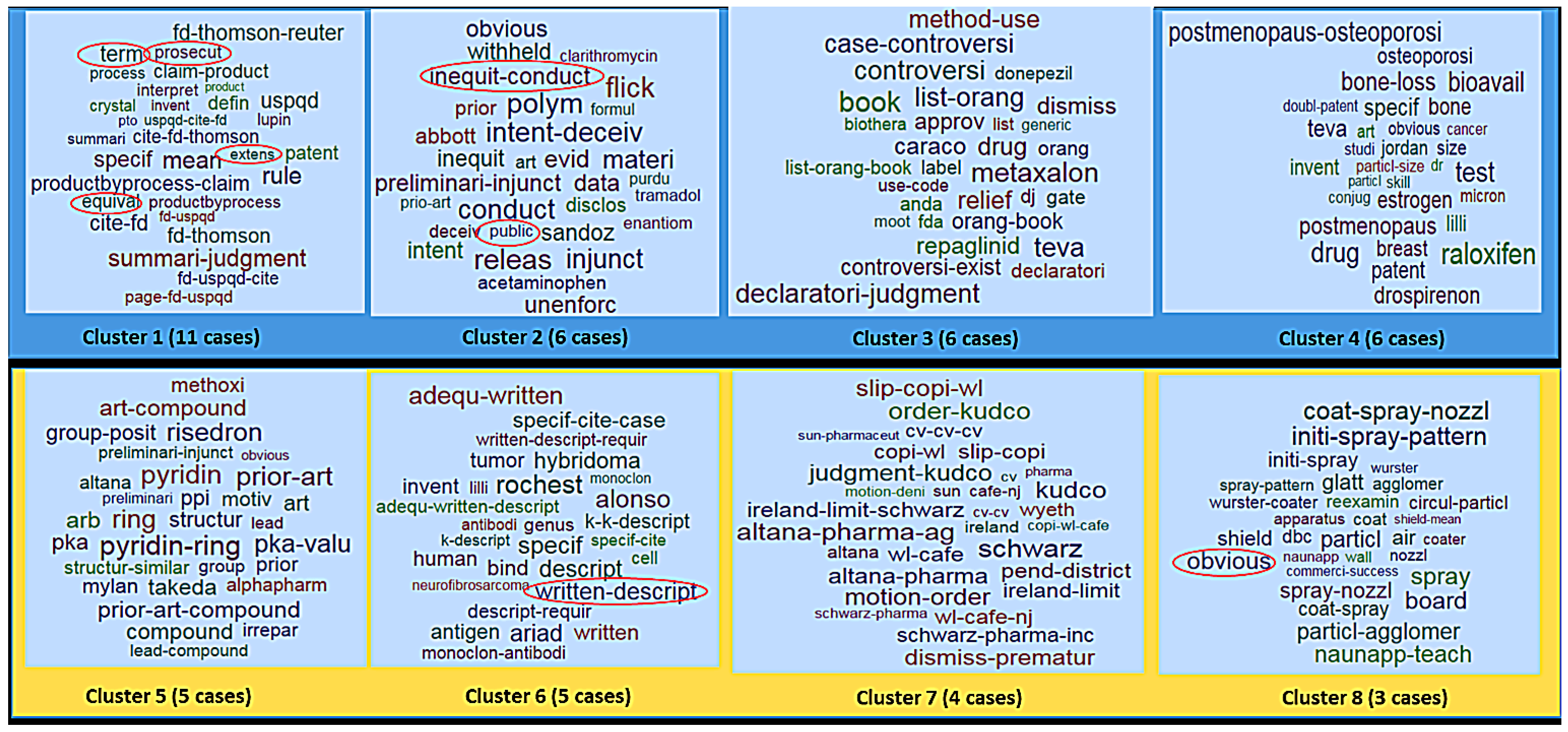
Modeling legal reasoning with artificial intelligence and machine learning presents formidable challenges. Legal decisions emerge from a complex interplay of factual circumstances, statutory interpretation, case precedent, jurisdictional variation, and human judgment—including the behavioral characteristics of judges and juries. This paper takes an exploratory approach to investigating how contemporary ML techniques might capture aspects of this complexity. Using pharmaceutical patent litigation as an illustrative domain, we develop a multi-layer analytical pipeline integrating text mining, clustering, topic modeling, and classification to analyze 698 U.S. federal district court decisions spanning January 2016 through December 2018, comprising substantive validity and infringement rulings under the Hatch-Waxman regulatory framework. Results demonstrate that the pipeline achieves 85–89% prediction accuracy—substantially exceeding the 42% baseline majority-class rate and comparing favorably with prior legal prediction studies—while producing interpretable intermediate outputs: clusters that correspond to recognized doctrinal categories (Abbreviated New Drug Application—ANDA litigation, obviousness, written description, claim construction) and topics that capture recurring legal themes. We discuss what these findings reveal about both the possibilities and limitations of computational approaches to legal reasoning, acknowledging the significant gap between statistical prediction and genuine legal understanding.
Keywords: artificial intelligence; machine learning; legal reasoning; text analytics; natural language processing; patent litigation; pharmaceutical patents; judicial decision-making; predictive modeling artificial intelligence; machine learning; legal reasoning; text analytics; natural language processing; patent litigation; pharmaceutical patents; judicial decision-making; predictive modeling