Review

When Rosuvastatin Meets Curcumin: Preclinical Insight into Novel Synergistic Combination

by
Belma Pehlivanović Kelle
1,*,
Dina Lagumdžija
1,
Tarik Suljić
2,
Aida Hamzić-Mehmedbašić
3,
Jasna Kusturica
4 and
Aida Kulo Ćesić
4,*
1
Department of Pharmacology and Clinical Pharmacy, Faculty of Pharmacy, University of Sarajevo, 71000 Sarajevo, Bosnia and Herzegovina
2
Faculty of Medicine, University of Sarajevo, 71000 Sarajevo, Bosnia and Herzegovina
3
Clinic of Nephrology, Clinical Center University of Sarajevo, 71000 Sarajevo, Bosnia and Herzegovina
4
Department of Pharmacology, Clinical Pharmacology and Toxicology, Faculty of Medicine, University of Sarajevo, 71000 Sarajevo, Bosnia and Herzegovina
*
Authors to whom correspondence should be addressed.
Future Pharmacol. 2026, 6(3), 45; https://doi.org/10.3390/futurepharmacol6030045
Submission received: 24 June 2026 / Revised: 7 August 2026 / Accepted: 10 August 2026 / Published: 18 August 2026
(This article belongs to the Section Drug Discovery, Development and Preclinical Research)

Abstract

Background: Rosuvastatin, a potent lipid-lowering statin, and curcumin, a bioactive naturally occurring polyphenolic phytochemical, both show pleiotropic antioxidant and anti-inflammatory properties. In addition, curcumin shows also antimicrobial, anticancer, hypolipidemic and antifibrotic effects. From the pharmacodynamic point, rosuvastatin and curcumin target overlapping molecular pathways—suggesting possible pharmacodynamic synergy that has emerged as a promising therapeutic approach in the management of various diseases, including cardiovascular, metabolic, kidney, and inflammatory diseases. Objectives: This review aimed to systematically summarize and critically evaluate all available preclinical data concerning the combined use of rosuvastatin and curcumin, emphasizing their possible synergistic effects. Methods: A total of seven preclinical studies that investigated the combination of curcumin and rosuvastatin, three in vitro and four in vivo, conducted between 2017 and 2025, were included in the analysis. Results: While in vitro studies suggested a promising synergy in lipid-lowering, antioxidant, and anti-inflammatory effects, in vivo findings confirmed enhanced lipid-lowering effects, potential hepatoprotection and nephroprotection when two agents are co-administered. In addition to pharmacodynamic interaction, pharmacokinetic studies also revealed that curcumin may increase systemic rosuvastatin exposure by inhibiting hepatic transporters, warranting further investigation into dosing and safety of the combination. Conclusions: While current evidence supports the therapeutic potential of the combined use of rosuvastatin and curcumin, additional pharmacokinetic, mechanistic, and clinical studies are needed to fully assess its translational value.

1. Introduction

The importance of a synergistic approach in pharmacology lies primarily in its potential to enhance therapeutic efficacy of the agents used in combination while concurrently reducing the incidence and severity of their adverse effects [1]. In the context of complex or chronic illnesses, synergistic combinations yield superior outcomes compared to monotherapy by addressing several pathways simultaneously [2]. In the last decade, rosuvastatin, a synthetic statin, and curcumin, a bioactive, naturally occurring polyphenolic phytochemical, have both been highly investigated due to their proven multitherapeutic potential. Moreover, due to their overlapping molecular pathways and possible pharmacodynamic and pharmacokinetic synergy, their combination has emerged as a promising therapeutic approach in various pathophysiological mechanisms and diseases. A comprehensive overview of these independent and shared mechanisms is depicted in Figure 1.

1.1. Rosuvastatin—Pharmacological Profiles

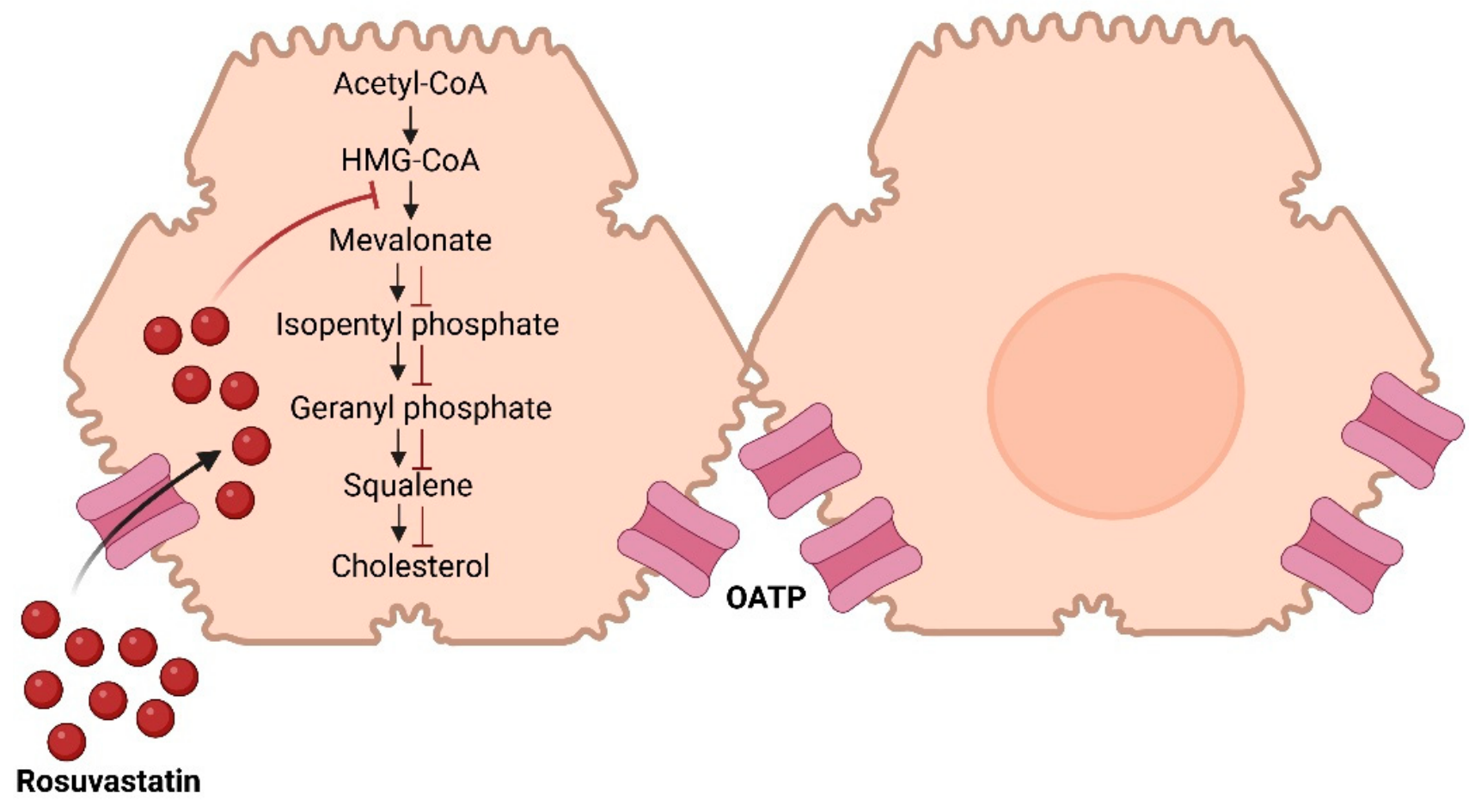
Lipid-lowering effects: Rosuvastatin is a selective and competitive inhibitor of the enzyme 3-hydroxy-3-methylglutaryl coenzyme A (HMG-CoA) reductase, classified as a new-generation statin approved for use in 2003. With its distinct pharmacodynamics and pharmacokinetic properties compared to other statins, rosuvastatin embodies the characteristics of an “ideal statin” [3,4]. This implies that it effectively reduces lipid levels in small doses and achieves maximum inhibition of HMG-CoA reductase at the target site within hepatocytes, while exerting minimal effects outside liver cells. Rosuvastatin also showed pleiotropic, antioxidant, and anti-inflammatory effects [5]. Pleiotropic effects: The HMG-CoA reductase inhibition seems to be one of the central points in rosuvastatin’s pleiotropic properties (Figure 2). Namely, by inhibiting HMG-CoA reductase, rosuvastatin prevents synthesis of farnesyl pyrophosphate and geranyl-geranyl pyrophosphate—both of which are required for the sequestration of membrane-bound proteins such as Ras, Rho, and Rac. They require either farnesyl or geranyl-geranyl lipids to anchor to the membrane to become functional small GTPases. Otherwise, the downstream cascade cannot be initiated.
Antioxidative effects: Several antioxidant mechanisms described below are considered class effects of statins and are also mainly shared by rosuvastatin. In hypoxic environments, the Rho/ROCK/PI3K/Akt molecular pathway is activated, leading to dephosphorylation of eNOS and, consequently, its instability [6,7]. If dephosphorylated, eNOS enzymatic activity decreases, and NO production is minimized. Statins prevent Rho geranyl-geranylation, thus preserving phosphorylated eNOS. Independent of the Rho/ROCK axis, statins can regulate PI3K/Akt through heat shock protein (HSP) 90, which facilitates Akt-mediated eNOS phosphorylation [8]. Furthermore, eNOS phosphorylation is important in stress conditions as it increases the enzymatic activity and NO production. However, eNOS coupling is crucial as it directs eNOS activity either towards ROS production or NO production. Therefore, levels of BH4, eNOS cofactor, must also be considered in such circumstances. Although no direct evidence has demonstrated that rosuvastatin upregulates GTP cyclohydrolase 1 (GCH1) expression and thereby increases BH4 levels, this mechanism has been reported for other statins, particularly lovastatin [9]. Therefore, while a similar pleiotropic effect of rosuvastatin is biologically plausible, it has not been directly established and cannot be assumed based on the current evidence.
Furthermore, statins increase eNOS mRNA expression, and through Rho-mediated actin alteration, they increase eNOS stability. Also, statins have been associated with upregulated RNA polymerase II phosphorylation, which promotes mRNA polyadenylation [10]. In this way, statins not only stabilize the eNOS activity, but they also increase its levels to combat cellular stress. Finally, statins inhibit Rac1 through disabling geranyl-geranylation. The absence of Rac1 leads to lower NADPH oxidase levels and, consequently, lower ROS [11]. Anti-inflammatory effects: There are several targets through which statins exert anti-inflammatory properties. KLF4, for instance, is one of them. It inhibits NF-kB from binding to VCAM-1 promoter. This is consistent with the findings of Yoshida et al. [12] who discovered that fluvastatin promotes KLF4 production to prevent VCAM-1 promoter activation by KLF4. Likewise, Wu et al. [13] found that ERK5 inhibits both TNF-α-triggered VCAM-1 and ICAM-1 transcription. In this way, immune cell infiltration and subsequent damage are prevented. Additionally, statins regulate NF-kB dually, depending on the way of its activation. The first inhibitory mechanism is based on RhoA geranyl-geranylation, as RhoA is required for NF-kB activation, hence hindering the synthesis of pro-inflammatory molecules such as IL-8. Second, if NF-kB is activated through TLR, then statins activate PXR to prevent NF-kB binding to the NLRP3 promoter [14]. The PXR-mediated mechanism remains poorly understood.
These mechanisms, although vaguely understood, have been discovered in different cell types, predominantly in endothelial cells, considering statins’ main therapeutic effect, and they require further validation in other cell types and organs such as the kidney. Regardless, they provide a wider insight into the pleiotropic effects of statins. Further reading into statins’ pleiotropic effects can be found elsewhere [9].
Rosuvastatin demonstrates low systemic bioavailability but undergoes minimal metabolism by cytochrome P450 enzymes and possesses a prolonged elimination half-life. The primary isoenzyme responsible for its metabolism is CYP2C9, whereas the isoenzymes CYP2C19 and CYP2D6 play a supportive role. In contrast to other statins, due to its minimal metabolism by cytochrome P450 enzymes, rosuvastatin rarely engages in interactions with other drugs.
The most frequently reported adverse effects of rosuvastatin are dose-dependent myalgia, increased levels of liver enzymes, and kidney dysfunction. The rhabdomyolysis, its severe adverse effect, was recorded only in patients who, along with rosuvastatin, used drugs that increase its plasma concentrations, such as gemfibrozil, ritonavir, and lopinavir [15].
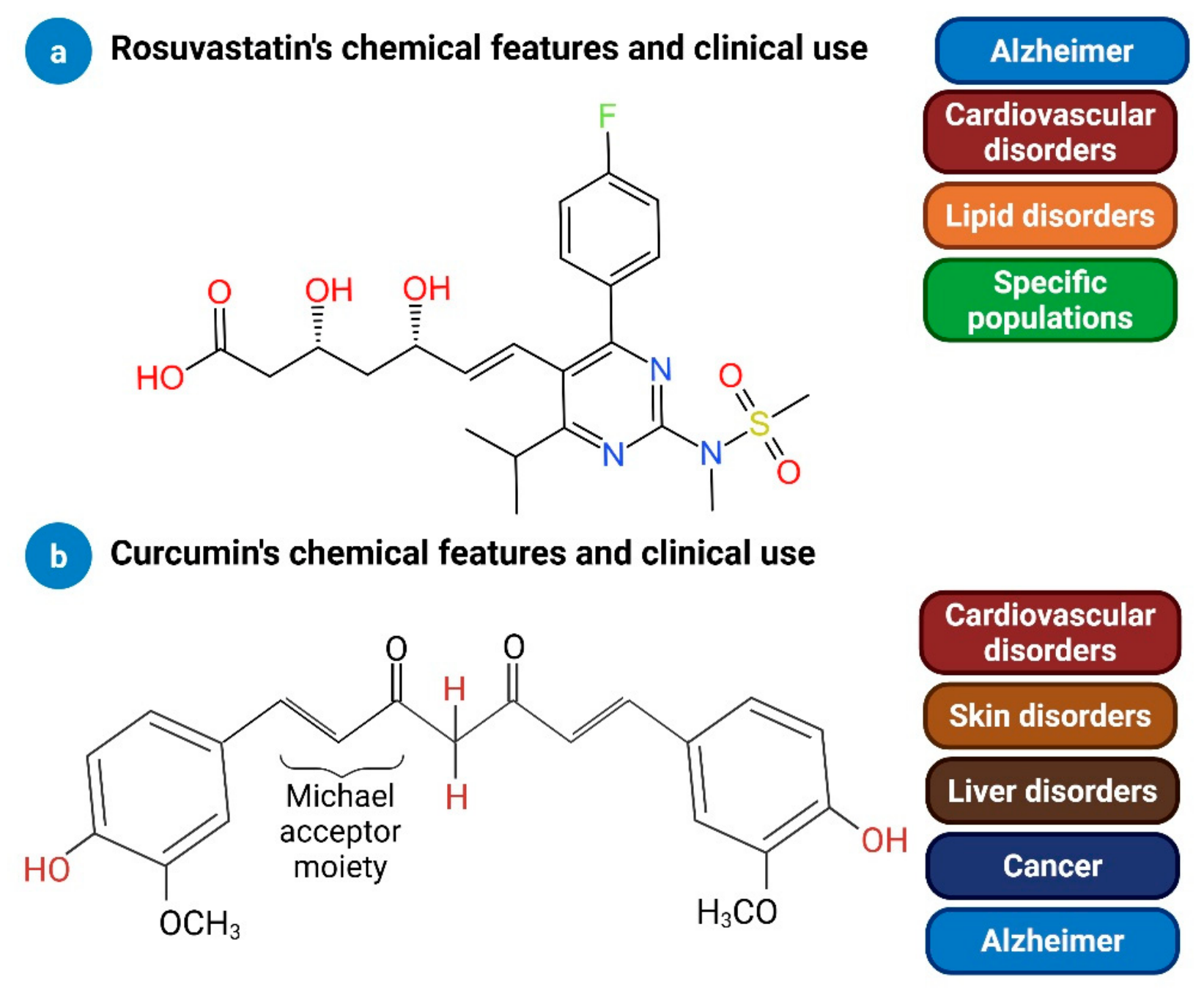
The most common and well-established clinical applications of rosuvastatin as well as structural formula are presented in Figure 3a [16,17,18]. In patients suffering from severe hyperlipidemia, the therapeutic goals cannot be met using rosuvastatin monotherapy, and its combination with other hypolipidemic agents, such as fenofibrate, ezetimibe, and fish oil, is needed [15].

1.2. Curcumin—Pharmacological Profiles

Curcumin or diferuloylmethane is a bioactive phytochemical, derived through extraction from the rhizome of the Curcuma Longa L. plant, Zingiberaceae family [19]. The rhizome of turmeric has been utilized since ancient times in traditional Eastern medicine for the treatment of various ailments, as well as serving as a spice in culinary applications [20]. Curcumin, whose pharmacodynamics and pharmacokinetics have been intensively investigated in recent years, is described as a highly pleiotropic molecule that exhibits a wide range of pharmacological properties such as antioxidant, anti-inflammatory, antibacterial, antiviral, anticancer, hypolipidemic, and antifibrotic properties [21,22,23]. Pleiotropic effects: Unlike statins, curcumin does not participate in a specific biochemical reaction. Rather, curcumin exerts its antioxidative and anti-inflammatory properties in two ways: phenolic hydroxyl groups are responsible for its major antioxidative properties, whilst α, β-unsaturated carbonyls—also known as Michael acceptor moieties—allow it to form covalent and non-covalent bonds with proteins. Figure 3b shows structural features of curcumin [23]. Antioxidative effects: Curcumin’s antioxidative effects mainly depend on phenolic hydroxyl groups and partially on the methylene (CH2) group of the β-ketone part of the molecule. These groups are responsible for redox reactions that curcumin can perform. It has been shown that curcumin can accept up to 4 electrons, followed by regeneration in a redox reaction with mercury [24]. This is the way it exerts antioxidative effects on NO, superoxide, and hydrogen peroxide [25]. Nevertheless, curcumin can also increase the activity of glutathione peroxidase and transferase, superoxide dismutase, and catalase, thus increasing the total antioxidative capacity [25]. Anti-inflammatory effects: In preventing inflammation, curcumin is dedicated to preserving IκBα from degradation, as well as preventing activation of IKK which would, in return, phosphorylate IκBα, and activate the NF-κB. In this way, curcumin inhibits NF-κB through stabilization of its inhibitor. Moreover, a study from 2017 by Xu and Liu [26] demonstrated that curcumin promoted IκBα expression in human macrophages activated by influenza virus. Another study showed that curcumin was able to inhibit macrophage infiltration to kidneys in diabetic nephropathy by modulating the NF-κB molecular pathway [27].
Furthermore, curcumin regulates the JAK/STAT molecular pathway dually: first, it prevents JAK/STAT phosphorylation, and second, it upregulates SOCS proteins, which negatively regulate the JAK/STAT molecular pathway as well. In this way, production of various inflammation-associated molecules such as ICAM, COX2, and iNOS is avoided [28]. Additionally, curcumin prevented dendritic cell maturation through inhibition of phosphorylation of JNK, p38, and ERK in murine microglia exposed to lipopolisacharides, thus exerting its effects on the MAPK pathway [29]. Finally, curcumin downregulated GSK-3β and upregulated β-catenin expression in lipopolysaccharide-exposed bone marrow-derived dendritic cells, which inhibited their activation and differentiation [30].
Despite the promising pharmacological properties of curcumin, its pharmacokinetic profile includes very low aqueous solubility, restricted intestinal absorption, rapid metabolism, and quick elimination through the gastrointestinal system and liver, resulting in low systemic exposure after oral intake [31]. This low bioavailability significantly limits the ability to translate its in vitro effectiveness into clinical applications and has led to the exploration of various formulation strategies, including nanoparticles and phospholipid complexes. Therefore, enhancing the pharmacokinetics of curcumin is crucial for its therapeutic progress and should be considered when analyzing clinical findings [32].
Although curcumin is generally considered safe, few studies have reported its adverse effects, particularly when applied at high doses or with long-term supplementation. The most reported adverse effects are diarrhea, nausea, abdominal pain, bloating, and dyspepsia [20]. The most common and well-established clinical applications of curcumin are presented in Figure 3b [25].

1.3. Integrating Rosuvastatin–Curcumin Synergistic Mechanism

Synergism implies that the effects of combined drugs exceed the effects of their monotherapies. It can be further divided into pharmacokinetic and pharmacodynamic synergism. Pharmacodynamic synergism involves dependent and independent mechanisms through which drugs exert their mutual effects.
Several studies have demonstrated that curcumin and rosuvastatin exert their pharmacological effects through overlapping molecular targets and signaling pathways, suggesting the potential for synergistic therapeutic use in diseases characterized by hyperlipidemia, oxidative stress, inflammation, and endothelial dysfunction [33,34].
Although the future pharmacotherapy for hyperlipidemia is expected to increasingly rely on biologics, statins will remain the cornerstone of treatment. Furthermore, the personalized combination strategies that target multiple mechanisms involved in lipid metabolism and cardiovascular risk, including adjunctive therapies, are being developed to improve lipid control, reduce residual inflammatory risk, and enhance treatment tolerability. In this context, naturally derived bioactive compounds have attracted interest as complementary agents. Curcumin, owing to its reported lipid-lowering, antioxidant, and anti-inflammatory properties, represents a potential adjunct to rosuvastatin therapy rather than a replacement for statins [20]. If future preclinical and clinical studies confirm favorable pharmacodynamic interactions and an acceptable safety profile, this combination may contribute to a multimodal approach for selected patients with hyperlipidemia. However, current evidence remains preliminary, and its clinical role has yet to be established.
Recently, their synergistic therapeutic outcomes have been suggested for treatments of hyperlipidemia due to the curcumin’s influence on the same lipid-regulating pathways as statins [34]. Both curcumin and statins target the low-density lipoprotein receptor (LDLR) pathway to promote the removal of LDL cholesterol (LDL-C) from the bloodstream. They perform it in different ways: rosuvastatin inhibits HMG-CoA reductase which reduces intracellular cholesterol levels and upregulates LDLR expression, and curcumin enhances LDLR function by downregulating proprotein convertase subtilisin/kexin type 9 (PCSK9) through inhibition of hepatocyte nuclear factor-1 alpha (HNF-1α), thereby preventing the degradation of LDLR [35].
In the previous sections, we discussed statins’ and curcumin’s mechanisms of pleiotropic effects. It is clear that they converge on various pathways, but also that they sometimes target different molecules. For instance, they both regulate the NF-κB molecular pathway distinctively: statins rely on RhoA inhibition and intervening NF-κB binding to NLRP inflammasome, whilst curcumin enhances and stabilizes the NF-κB inhibitor (IκBα). Moreover, curcumin prevents phosphorylation of ERK, and statins have the potential to prevent geranyl-geranylation of RAS upstream of the RAS/RAF/MEK/ERK pathway.
Apart from these shared pathways, statins—including rosuvastatin—and curcumin exert similar, if not the same, effects, yet through different mechanisms. For instance, the main way statins are used to maintain eNOS levels is through the inhibition of the Rho/ROCK pathway, which is dependent on the absence of geranyl-geranyl or farnesyl lipid. On the other hand, curcumin maintains eNOS through the Nrf/DDAH/ADMA/NO pathway [36]. Similarly, statins rely on Rac1’s inability to bind to the membrane to inhibit NADPH oxidase activity, whilst curcumin promotes its deacetylation via SIRT1 upregulation, thus disabling it from getting sequestered to the membrane [36]. These examples present both dependent and independent synergistic mechanisms. However, these mechanisms have been observed in different organisms and different cell types. Moreover, different mechanisms may depend on the extended context, including cell type and disease model [9]. This highlights the need for comprehensive molecular pathway analyses in pharmacological experiments of drugs.
The aim of this review was to systematically summarize and critically evaluate all available preclinical data regarding the combined use of curcumin and rosuvastatin, with a focus on their potential synergistic effects. To our knowledge, this is the first review of its kind to comprehensively explore the combination of rosuvastatin and curcumin.

2. Materials and Methods

2.1. Information Sources and Literature Search Strategy

The literature review strategy followed general principles of systematic literature reviews while maintaining flexibility suitable for narrative synthesis, given the limited number of available studies. A literature search was conducted using the databases PubMed, ScienceDirect, Scopus, Cochrane, and Web of Science, encompassing publications up to January 2026. The main outcome assessed was the investigation of the combination of rosuvastatin and curcumin in preclinical studies. The search strategy incorporated a combination of Medical Subject Headings (MeSH) and free-text terms related to rosuvastatin, curcumin, and preclinical or animal studies. Boolean operators (“AND”, “OR”) were applied to combine keywords. This search strategy focused on providing relevant data on the preclinical applications of rosuvastatin and curcumin for various conditions.

2.2. Study Eligibility Criteria

The inclusion and exclusion criteria were defined according to the PICOS (Population, Intervention, Comparator, Outcomes, Study design) framework and are summarized in Table 1. Furthermore, in the discussion part, studies were grouped thematically by type (in vitro vs. in vivo) to facilitate comparative analysis.

2.3. Data Extraction

A standardized data extraction form was developed to collect the following information from each included study: authors, year of publication, animal model, disease model (if applicable), dosage, route, and duration of curcumin and rosuvastatin administration, outcome measures and main results, and any reported synergistic or additive effects. Data extraction was performed independently by two authors.

3. Results

This review included a total of eight preclinical studies, three in vitro (Table 2) and five in vivo (Table 3), that investigated the combination of curcumin and rosuvastatin. Although included studies varied in their objectives, models, experimental conditions, and assessed outcomes, this review demonstrates strong preclinical in vitro and in vivo evidence of the potential synergistic effects of the combination. To improve the structure and interpretability of the discussion, the preclinical evidence reviewed herein is divided into two major categories—findings derived from in vitro studies and findings derived from in vivo studies.

4. Discussion

4.1. Preclinical In Vitro Studies as Evidence of Curcumin and Rosuvastatin Synergy

While curcumin and rosuvastatin monotherapies have been studied in various in vitro models, their co-administration was studied only in three in vitro studies of which one focused on pharmacokinetic interaction mechanisms, one on analytical method development, and one on pharmacological effects such as antioxidant and antimicrobial activity. The studies were conducted between 2017 and 2021.
The first of the three published in vitro studies is the pharmacokinetic study reported by Zhou et al. [37] where the impact of curcumin on the pharmacokinetics of rosuvastatin was investigated by focusing on the role of organic anion transporting polypeptides (OATPs), particularly OATP1B1 and OATP1B3, which are critical for hepatobiliary uptake of rosuvastatin [44]. In this study, in vitro transporter inhibition assay in human embryonic kidney (HEK) 293 cells transfected with human OATP1B1, OATP1B3, OATP2B1, OAT1, OAT3, and empty vector-transfected control cells (mock) were used. The researchers demonstrated that in a concentration-dependent manner curcumin significantly inhibited both OATP1B1 and OATP1B3 leading to the reduction in rosuvastatin hepatic uptake and secretion through the bile, with the consequent increase in its serum concentration. These results were in line with the results of in vivo pharmacokinetic assay in rats and dogs conducted by the same research group as discussed in one of the following sections.
The second study reported by Najat et al. [38] used UV–visible double beam spectrophotometry (Shimadzu Model 1800) with a matched quartz cell for method development and simultaneous estimation for the combination of curcumin (10 μg/mL) and rosuvastatin (10 μg/mL). The primary result showed that the simultaneous estimation enabled the formulation and analysis of both compounds together for any appropriate dosage form in a highly safe and effective manner. The developed method can be utilized for the assay of the drugs in commercially available formulations and is suitable for the routine analysis of curcumin and rosuvastatin in a combined dosage form [38]. However, it is important to note that this was a method development study rather than a biological model that evaluates the synergy or mechanistic interaction between curcumin and rosuvastatin and therefore does not provide biological or pharmacological evidence regarding the synergistic activity of the investigated compounds. Consequently, when considering only studies that evaluate biological effects in vitro, the available evidence is effectively limited to two studies by Zhou et al. [37] and Pehlivanović et al. [39].
The third, most recently published in vitro study conducted by Pehlivanović et al. [39] investigated the potential synergistic antioxidant, anti-inflammatory, and antimicrobial activities of the combination of curcumin and rosuvastatin using various in vitro models. Both curcumin and rosuvastatin were dissolved in dimethyl sulfoxide and prepared at a range of the following concentrations: 0.10, 0.25, 0.50, 0.75, and 1.00 mg/mL. Antioxidant activity was evaluated through a standard in vitro free radical scavenging assay, anti-inflammatory potential by measuring the inhibition of protein denaturation under in vitro conditions, and antibacterial activity against both Gram-positive and Gram-negative bacteria, along with antifungal activity, was assessed using the agar well diffusion method. The results demonstrated that the combined treatment of curcumin and rosuvastatin exhibited dose-dependent free radical scavenging and protein denaturation inhibition, suggesting notable antioxidant and anti-inflammatory effects. It also effectively inhibited the growth of all tested microbial strains, indicating substantial antimicrobial activity [39]. However, this study did not evaluate the synergy between curcumin and rosuvastatin at the cellular level, and well-designed in vitro studies using disease-relevant cell lines are needed to provide critical mechanistic insights and to strengthen the rationale for advancing the combination of curcumin and rosuvastatin toward preclinical in vivo and clinical assessment.

4.2. Preclinical In Vivo Studies as Evidence of Curcumin and Rosuvastatin Synergy

The combination of curcumin and rosuvastatin has been explored in five in vivo studies, primarily focusing on pharmacokinetic interactions, lipid regulation, and organ protection in experimental models of hyperlipidemia, chronic kidney disease (CKD), nephrotoxicity and ototoxicity. Those studies were conducted between 2017 and 2026.

4.2.1. Pharmacokinetic Interactions

As previously discussed, Zhou et al. [37] conducted both in vitro and in vivo studies to investigate the impact of curcumin on the pharmacokinetics of rosuvastatin. The in vivo part of the study included male Sprague–Dawley rats and beagle dogs, in which curcumin (500 mg/kg to rats and 100 mg/kg to dogs) was co-administered with rosuvastatin (5 mg/kg for both rats and dogs), followed by measurement of plasma rosuvastatin concentrations. The simultaneous administration of curcumin resulted in a significant enhancement of systemic rosuvastatin exposure as demonstrated by increased maximum plasma levels, increased area under the curve values and extended half-life in both rats and dogs. The authors suggested that curcumin altered the pharmacokinetic profile of rosuvastatin likely through interference with uptake transporters involved in its hepatic clearance, resulting in elevated rosuvastatin systemic exposure.
To date, this in vivo study by Zhou et al. [37] remains the only one that has explored the pharmacokinetic interactions between curcumin and rosuvastatin. Considering the prevalent use of curcumin as a dietary supplement and rosuvastatin as a frequently prescribed lipid-lowering medication, this research establishes a vital basis for future pharmacokinetic, mechanistic and clinical investigations involving their concurrent administration. Although the interaction between curcumin and rosuvastatin is primarily pharmacokinetic, its clinical implications extend beyond altered drug disposition. By inhibiting the hepatic uptake transporters OATP1B1 and OATP1B3, curcumin may increase the systemic exposure of rosuvastatin. While higher systemic exposure could potentially enhance the lipid-lowering efficacy of rosuvastatin, it may also increase the risk of dose-dependent statin-associated adverse effects, particularly myopathy and, in rare cases, rhabdomyolysis. Therefore, this interaction should be considered not only from a pharmacokinetic perspective but also as a potential safety concern. Careful clinical monitoring and individualized dose titration may be warranted when curcumin is used concomitantly with rosuvastatin.

4.2.2. Hyperlipidemia

Despite the use of highly efficient medications such as statins, hyperlipidemia still represents one of the leading risk factors for the development of cardiovascular disease [45]. A significant proportion of patients on statin therapy fail to reach their target lipid levels even when using the highest recommended doses or are unable to tolerate intensive statin regimens due to adverse effects such as muscle pain (myalgia), and in severe cases, rhabdomyolysis, and liver and kidney dysfunction [46]. These challenges highlight the growing need to enhance statin monotherapy through its combined use with phytochemicals and bioactive compounds that may offer improved lipid control and reduced risk of cardiovascular complications, with a more favorable safety profile.
To date, numerous in vivo studies explored curcumin in combination with various drugs in models of hyperlipidemia, and only two of these studies investigated its potential synergistic or modulatory effects with rosuvastatin. In a study conducted by Sheik et al. [40], the antihyperlipidemic potential of curcumin, both as a monotherapy (300 mg/kg) and in combination with HMG-CoA reductase inhibitors, either simvastatin (10 mg/kg) or rosuvastatin (10 mg/kg), was evaluated using an atherogenic diet model and a carbon tetrachloride (CCl4)-induced hyperlipidemia model in Wistar albino rats. Following seven days of treatment, both curcumin alone and in combination with simvastatin or rosuvastatin significantly reduced serum very-low-density lipoprotein cholesterol (VLDL-C) levels. Experimental groups treated with a combination of curcumin and rosuvastatin demonstrated more effective hypolipidemic activity compared to other experimental groups in both the atherogenic diet-induced model and CCl4-induced model. Furthermore, based on those two different models used, the authors suggested that the underlying mechanism of lipid regulation may vary depending on the pathological context. These findings supported the potential of curcumin, both alone and in combination with statin therapy, in mitigating hyperlipidemia. Moreover, this study provided valuable preliminary evidence of the possibility of a synergistic or additive effect of curcumin and statins, potentially allowing for lower doses of statins and a reduced risk of their adverse effects [40].
Recently, a study conducted by Pehlivanović et al. [41] investigated the potential synergistic effects of curcumin (200 mg/kg) and rosuvastatin (10 mg/kg) in a rat model of 14-day-long atherogenic diet-induced hyperlipidemia. The researchers aimed to evaluate both the lipid-lowering efficacy and the hepatoprotective capacity of the combination of curcumin and rosuvastatin compared to their monotherapies. The findings indicated that compared to their monotherapies, the combination of curcumin and rosuvastatin led to a more pronounced improvement of lipid profiles, specifically reductions in total cholesterol and triglyceride levels. Furthermore, curcumin appeared to mitigate the hepatotoxic effects often associated with statin therapy, as evidenced by biochemical and histological indicators [41]. These results confirmed earlier findings of a potential synergistic or additive interaction between curcumin and rosuvastatin, with curcumin enhancing the rosuvastatin hypolipidemic efficacy while concurrently offering protection against rosuvastatin-induced hepatic damage. This promising therapeutic combination warrants further investigation through additional well-designed in vivo and clinical studies.

4.2.3. Chronic Kidney Disease

As chronic kidney disease is a progressive and incurable condition lacking effective therapies, there is an urgent need for the development of new therapies that would either slow its progression or improve kidney function in these patients. In addition, these patients frequently have dyslipidemia that leads to cardiovascular complications such as atherosclerosis and myocardial infarction, for which statin therapy is recommended. On the other hand, previous studies showed that curcumin, due to its antioxidant, anti-inflammatory and antifibrotic effects may be nephroprotective, thus slowing the development of CKD, as well as cardioprotective [47,48]. Besides oxidative stress, chronic inflammation, and renal fibrosis, the combination of curcumin and rosuvastatin may synergistically target additional aspects implicated in the development and progression of CKD, including endothelial dysfunction. Furthermore, the possibility of lowering the dose of rosuvastatin when combined with curcumin could potentially lead to a reduction in rosuvastatin adverse effects that occur when used in standard doses [37].
A recent study by Lagumdzija et al. [42] has investigated the effects of curcumin alone (100 mg/kg) and in combination with a reduced dose of rosuvastatin (1.25 mg/day) in a model of adenine-induced CKD in rats. The result showed that both curcumin alone and in combination with a reduced dose of rosuvastatin improved kidney function by reducing level of serum creatinine by almost two-fold and ameliorated/prevented structural kidney tissue changes such as inflammation, interstitial fibrosis, and tubule degeneration and dilation seen in the CKD control group. Authors suggested the combination as a promising novel therapeutic option as it seems that curcumin not only potentiates nephroprotection but also compensates for rosuvastatin-related adverse effects.

4.2.4. Nephrotoxicity and Ototoxicity

In our recent study on gentamicin-induced nephrotoxicity and ototoxicity [43], we demonstrated that the combination of reduced dose rosuvastatin (1.25 mg/day) and curcumin (100 mg/kg) provides robust protection against gentamicin-induced acute kidney disease (AKI) and its associated audiovestibular toxicities. Both agents exhibited complementary synergistic inhibitory effects of renal cortex damage and early-phase pro-inflammatory biomarkers such as IL-1β and TNF-α. Moreover, the combination has also shown a superior effect compared to monotherapies in preventing audiotoxicity and vestibulotoxicity. This suggests multi-organ protection through various mechanistic pathways involving oxidative stress and inflammation.
Mechanistically, rosuvastatin inhibits the megalin receptor complex responsible for tubular uptake of protein-bound nephrotoxic drugs such as gentamicin [43], thereby reducing intracellular accumulation and toxicity. While statins can theoretically cause rhabdomyolysis-associated AKI, curcumin co-administration appears to compensate for rosuvastatin’s adverse effects while amplifying its antioxidative and anti-inflammatory efficacy. Consistent with this, our study showed that the combination lowered troponin-T levels, suggesting that it lowers the risk of adverse effects. This interaction not only enhances safety but also widens the therapeutic scope of rosuvastatin beyond lipid lowering.
Clinically, AKI caused by nephrotoxic drugs remains a major challenge, particularly in patients requiring aminoglycosides, cisplatin, or other nephrotoxic therapies, where treatment discontinuation is often not feasible. Given that renal regeneration after AKI is slow and incomplete, preventive approaches like the combination of rosuvastatin and curcumin may enable safer continuation of essential therapies without dose reduction. Moreover, by preventing irreversible hearing and balance impairment, such interventions could substantially reduce the long-term socioeconomic burden of drug-induced toxicities. The irreversible nature of these adverse effects underscores the importance of preventive over curative strategies.
Finally, in light of the synergistic and organ-protective effects observed in our study, this combination emerges as a novel preventive strategy for AKI with potential clinical applicability in settings involving nephrotoxic drug use or systemic inflammation, such as sepsis and chemotherapy. Future research should focus on dose–response optimization, pharmacokinetic and pharmacodynamic profiling, and translational studies to validate these findings and facilitate clinical implementation.

4.3. Limitations

This review is limited by the small number of available studies, their methodological heterogeneity, and the lack of formal quantitative assessments of pharmacological synergy in most included studies. Additionally, the available evidence is derived from a limited number of research groups, and no formal risk-of-bias assessment was performed. Therefore, the findings should be interpreted cautiously, and further well-designed studies are needed to confirm the potential therapeutic interactions and their clinical relevance. An additional limitation of this review is that a considerable proportion of the available in vivo studies cited in this review were conducted by our research group. Although these studies contribute important data to the field, independent replication by external research groups is warranted to confirm the reproducibility and robustness of these findings and to strengthen the overall body of evidence supporting their translational relevance.

5. Conclusions

The preclinical evidence, from both in vitro and in vivo studies, although limited, suggests that the combination of curcumin and rosuvastatin holds significant promise as a synergistic preventive/therapeutic strategy for managing hyperlipidemia, chronic kidney disease and its cardiovascular complications, as well as drug-induced nephrotoxicity and ototoxicity. Their complementary pharmacodynamic actions, involving shared molecular pathways and their favorable pharmacokinetic interactions, may not only enhance their therapeutic efficacy but also allow for rosuvastatin dose reductions that minimize the risk of its adverse effects. However, these findings should be interpreted with caution. Most of the available in vivo studies employed relatively high doses of curcumin which correspond to human equivalent doses that may be difficult to achieve in routine clinical practice using conventional curcumin formulations. Although interspecies differences in pharmacokinetics and pharmacodynamics preclude direct dose extrapolation, this represents an important limitation for the clinical translation of the current preclinical evidence. Moreover, our understanding of the cellular mechanisms underlying the observed synergistic effects remains incomplete, and no clinical studies have yet evaluated the efficacy and safety of this combination. Therefore, future investigations should prioritize rigorously designed preclinical studies using robust interaction analysis, disease-relevant models and clinically relevant dosing regimens, including optimized curcumin formulations with improved bioavailability. These should be complemented by well-designed clinical trials to establish safety, efficacy, and optimal dosing strategies. If these challenges can be successfully addressed, the combination of curcumin and rosuvastatin may represent a novel, multi-targeted, and patient-friendly strategy for the prevention and treatment of a wide range of complex diseases characterized by hyperlipidemia, oxidative stress, inflammation, and organ dysfunction.

Author Contributions

Conceptualization, B.P.K. and A.K.Ć.; methodology, B.P.K., D.L., T.S., A.H.-M., J.K. and A.K.Ć.; software, T.S.; validation, B.P.K., J.K., A.H.-M. and A.K.Ć.; formal analysis, B.P.K., D.L. and T.S.; writing—original draft preparation, B.P.K., D.L., T.S., A.H.-M., J.K. and A.K.Ć.; writing—review and editing, B.P.K., J.K. and A.K.Ć.; visualization, B.P.K.; supervision, J.K. and A.K.Ć. All authors have read and agreed to the published version of the manuscript.

Funding

This research received no external funding.

Institutional Review Board Statement

Not applicable.

Informed Consent Statement

Not applicable.

Data Availability Statement

No new data were created or analyzed in this study. Data sharing is not applicable to this article.

Conflicts of Interest

The authors declare no conflicts of interest.

Abbreviations

The following abbreviations are used in this manuscript:
ADMAAsymmetric dimethylarginine
AktProtein Kinase B
AUCArea under the concentration–time curve
BH4Tetrahydrobiopterin
β-cateninBeta-catenin
CCl4Carbon tetrachloride
CKDChronic kidney disease
COX-2Cyclooxygenase-2
CYPCytochrome P450
CYP2C9Cytochrome P450 2C9
CYP2C19Cytochrome P450 2C19
CYP2D6Cytochrome P450 2D6
DDAHDimethylarginine dimethylaminohydrolase
eNOSEndothelial nitric oxide synthase
ERKExtracellular signal-regulated kinase
ERK5Extracellular signal-regulated kinase 5
GCH1GTP cyclohydrolase 1
GSK-3βGlycogen synthase kinase 3 beta
GTPGuanosine triphosphate
HEK 293Human embryonic kidney 293 cells
HMG-CoA3-Hydroxy-3-methylglutaryl coenzyme A
HNF-1αHepatocyte nuclear factor 1 alpha
HSP90Heat shock protein 90
IκBαNuclear factor kappa B inhibitor alpha
ICAMIntercellular adhesion molecule
ICAM-1Intercellular adhesion molecule 1
IKKIκB kinase
IL-8Interleukin 8
iNOSInducible nitric oxide synthase
JAKJanus kinase
JNKc-Jun N-terminal kinase
KLF4Krüppel-like factor 4
LDL-CLow-density lipoprotein cholesterol
LDLRLow-density lipoprotein receptor
MAPKMitogen-activated protein kinase
MEKMitogen-activated protein kinase
mRNAMessenger ribonucleic acid
NADPHNicotinamide adenine dinucleotide phosphate (reduced form)
NF-κBNuclear factor kappa B
NLRP3NOD-, LRR-, and pyrin domain-containing protein 3
NONitric oxide
Nrf2Nuclear factor erythroid 2-related factor 2
OAT1Organic anion transporter 1
OAT3Organic anion transporter 3
OATPOrganic anion transporting polypeptide
OATP1B1Organic anion transporting polypeptide 1B1
OATP1B3Organic anion transporting polypeptide 1B3
OATP2B1Organic anion transporting polypeptide 2B1
PCSK9Proprotein convertase subtilisin/kexin type 9
PI3KPhosphoinositide 3-kinase
PXRPregnane X receptor
RacRas-related C3 botulinum toxin substrate
RAFRapidly accelerated fibrosarcoma kinase
RasRat sarcoma protein
RhoRas homolog family of small GTPases
ROCKRho-associated coiled-coil-containing protein kinase
ROSReactive oxygen species
SIRT1Sirtuin 1
SOCSSuppressor of cytokine signaling
STATSignal transducer and activator of transcription
TLRToll-like receptor
TNF-αTumor necrosis factor alpha
UVUltraviolet
VCAM-1Vascular cell adhesion molecule 1
VLDL-CVery low-density lipoprotein cholesterol

References

  1. Calzetta, L.; Page, C.; Matera, M.G.; Cazzola, M.; Rogliani, P. Drug-drug interactions and synergy: From pharmacological models to clinical application. Pharmacol. Rev. 2024, 76, 1159–1220. [Google Scholar] [CrossRef] [Scilit] [PubMed]
  2. Hopkins, A.L. Network pharmacology: The next paradigm in drug discovery. Nat. Chem. Biol. 2008, 4, 682–690. [Google Scholar] [CrossRef] [Scilit] [PubMed]
  3. McTaggart, F. Comparative pharmacology of rosuvastatin. Atheroscler. Suppl. 2003, 4, 9–14. [Google Scholar] [CrossRef] [Scilit] [PubMed]
  4. Schachter, M. Chemical, pharmacokinetic and pharmacodynamic properties of statins: An update. Fundam. Clin. Pharmacol. 2005, 19, 117–125. [Google Scholar] [CrossRef] [Scilit] [PubMed]
  5. Liao, J.K.; Laufs, U. Pleiotropic effects of statins. Annu. Rev. Pharmacol. Toxicol. 2005, 45, 89–118. [Google Scholar] [CrossRef] [Scilit] [PubMed]
  6. Ming, X.F.; Viswambharan, H.; Barandier, C.; Ruffieux, J.; Kaibuchi, K.; Rusconi, S.; Yang, Z. Rho GTPase/Rho kinase negatively regulates endothelial nitric oxide synthase phosphorylation through the inhibition of protein kinase B/Akt in human endothelial cells. Mol. Cell. Biol. 2002, 22, 8467–8477. [Google Scholar] [CrossRef] [Scilit] [PubMed]
  7. Shin, H.K.; Salomone, S.; Potts, E.M.; Lee, S.W.; Millican, E.; Noma, K.; Huang, P.L.; Boas, D.A.; Liao, J.K.; Moskowitz, M.A.; et al. Rho-kinase inhibition acutely augments blood flow in focal cerebral ischemia via endothelial mechanisms. J. Cereb. Blood Flow Metab. 2007, 27, 998–1009. [Google Scholar] [CrossRef] [Scilit] [PubMed]
  8. Brouet, A.; Sonveaux, P.; Dessy, C.; Moniotte, S.; Balligand, J.L.; Feron, O. Hsp90 and caveolin are key targets for the proangiogenic nitric oxide-mediated effects of statins. Circ. Res. 2001, 89, 866–873. [Google Scholar] [CrossRef] [Scilit] [PubMed]
  9. Liu, J.C.; Lei, S.Y.; Zhang, D.H.; He, Q.Y.; Sun, Y.Y.; Zhu, H.J.; Qu, Y.; Zhou, S.Y.; Yang, Y.; Li, C.; et al. The pleiotropic effects of statins: A comprehensive exploration of neurovascular unit modulation and blood-brain barrier protection. Mol. Med. 2024, 30, 256. [Google Scholar] [CrossRef] [Scilit] [PubMed]
  10. Kosmidou, I.; Moore, J.P.; Weber, M.; Searles, C.D. Statin treatment and 3’ polyadenylation of eNOS mRNA. Arter. Thromb. Vasc. Biol. 2007, 27, 2642–2649. [Google Scholar] [CrossRef] [Scilit] [PubMed]
  11. Li, Q.; Zhuang, Q.K.; Yang, J.N.; Zhang, Y.Y. Statins exert neuroprotection on cerebral ischemia independent of their lipid-lowering action: The potential molecular mechanisms. Eur. Rev. Med. Pharmacol. Sci. 2014, 18, 1113–1126. [Google Scholar] [PubMed]
  12. Yoshida, T.; Yamashita, M.; Iwai, M.; Hayashi, M. Endothelial Krüppel-like factor 4 mediates the protective effect of statins against ischemic AKI. J. Am. Soc. Nephrol. 2016, 27, 1379–1388. [Google Scholar] [CrossRef] [Scilit] [PubMed]
  13. Wu, K.; Tian, S.; Zhou, H.; Wu, Y. Statins protect human endothelial cells from TNF-induced inflammation via ERK5 activation. Biochem. Pharmacol. 2013, 85, 1753–1760. [Google Scholar] [CrossRef] [Scilit] [PubMed]
  14. Wang, S.; Xie, X.; Lei, T.; Zhang, K.; Lai, B.; Zhang, Z.; Guan, Y.; Mao, G.; Xiao, L.; Wang, N. Statins attenuate activation of the NLRP3 inflammasome by oxidized LDL or TNFα in vascular endothelial cells through a PXR-dependent mechanism. Mol. Pharmacol. 2017, 92, 256–264. [Google Scholar] [CrossRef] [Scilit] [PubMed]
  15. Luvai, A.; Mbagaya, W.; Hall, A.S.; Barth, J.H. Rosuvastatin: A review of the pharmacology and clinical effectiveness in cardiovascular disease. Clin. Med. Insights Cardiol. 2012, 6, CMC.S4324. [Google Scholar] [CrossRef] [Scilit] [PubMed]
  16. Ridker, P.M.; Danielson, E.; Fonseca, F.A.; Genest, J.; Gotto, A.M., Jr.; Kastelein, J.J.; Koenig, W.; Libby, P.; Lorenzatti, A.J.; MacFadyen, J.G.; et al. Rosuvastatin to prevent vascular events in men and women with elevated C-reactive protein. N. Engl. J. Med. 2008, 359, 2195–2207. [Google Scholar] [CrossRef] [Scilit] [PubMed]
  17. U.S. Food and Drug Administration. Crestor (Rosuvastatin Calcium) Prescribing Information; U.S. Food and Drug Administration: Silver Spring, MD, USA, 2010. Available online: https://www.accessdata.fda.gov/drugsatfda_docs/label/2010/021366s016lbl.pdf (accessed on 20 November 2025).
  18. Grundy, S.M.; Stone, N.J.; Bailey, A.L.; Beam, C.; Birtcher, K.K.; Blumenthal, R.S.; Braun, L.T.; de Ferranti, S.; Faiella-Tommasino, J.; Forman, D.E.; et al. Guideline on the Management of Blood Cholesterol: A Report of the American College of Cardiology/American Heart Association Task Force on Clinical Practice Guidelines. Circulation 2019, 139, e1082. [Google Scholar] [CrossRef] [Scilit] [PubMed]
  19. Gupta, S.C.; Patchva, S.; Aggarwal, B.B. Therapeutic roles of curcumin: Lessons learned from clinical trials. AAPS J. 2013, 15, 195–218. [Google Scholar] [CrossRef] [Scilit] [PubMed]
  20. Hewlings, S.; Kalman, D. Curcumin: A review of its effects on human health. Foods 2017, 6, 92. [Google Scholar] [CrossRef] [Scilit] [PubMed]
  21. Pulido-Moran, M.; Moreno-Fernandez, J.; Ramirez-Tortosa, C.; Ramirez-Tortosa, M.C. Curcumin and health. Molecules 2016, 21, 264. [Google Scholar] [CrossRef] [Scilit] [PubMed]
  22. Aggarwal, B.B.; Sung, B. Pharmacological basis for the role of curcumin in chronic diseases: An age-old spice with modern targets. Trends Pharmacol. Sci. 2009, 30, 85–94. [Google Scholar] [CrossRef] [Scilit] [PubMed]
  23. Hatamipour, M.; Johnston, T.P.; Sahebkar, A. One molecule, many targets and numerous effects: The pleiotropy of curcumin lies in its chemical structure. Curr. Pharm. Des. 2018, 24, 2129–2136. [Google Scholar] [CrossRef] [Scilit] [PubMed]
  24. Barik, A.; Mishra, B.; Shen, L.; Mohan, H.; Kadam, R.M.; Dutta, S.; Zhang, H.Y.; Priyadarsini, K.I. Evaluation of a new copper (II)-curcumin complex as superoxide dismutase mimic and its free radical reactions. Free Radic. Biol. Med. 2005, 39, 811–822. [Google Scholar] [CrossRef] [Scilit] [PubMed]
  25. Ghorbani-Nejad, B.; Baghani, M.; Amiri, S.; Delche, N.A.; Darijani, M.H.; Soltani, M.; Nezami, A.; Rahimzadegan, M. Curcumin: Multifaceted biological actions and therapeutic implications-a narrative review. Inflammopharmacology 2025, 33, 6309–6327. [Google Scholar] [CrossRef] [Scilit] [PubMed]
  26. Xu, Y.; Liu, L. Curcumin alleviates macrophage activation and lung inflammation induced by influenza virus infection through inhibiting the NF-κB signaling pathway. Influenza Other Respir. Viruses 2017, 11, 457–463. [Google Scholar] [CrossRef] [Scilit] [PubMed]
  27. Soetikno, V.; Sari, F.R.; Veeraveedu, P.T.; Thandavarayan, R.A.; Harima, M.; Sukumaran, V.; Lakshmanan, A.P.; Suzuki, K.; Kawachi, H.; Watanabe, K. Curcumin ameliorates macrophage infiltration by inhibiting NF-κB activation and proinflammatory cytokines in streptozotocin-induced diabetic nephropathy. Nutr. Metab. 2011, 8, 35. [Google Scholar] [CrossRef] [Scilit] [PubMed]
  28. Kim, H.Y.; Park, E.J.; Joe, E.H.; Jou, I. Curcumin suppresses Janus kinase-STAT inflammatory signaling through activation of Src homology 2 domain-containing tyrosine phosphatase 2 in brain microglia. J. Immunol. 2003, 171, 6072–6079. [Google Scholar] [CrossRef] [Scilit] [PubMed]
  29. Zhang, L.; Wu, C.; Zhao, S.; Yuan, D.; Lian, G.; Wang, X.; Wang, L.; Yang, J. Demethoxycurcumin, a natural derivative of curcumin, attenuates LPS-induced pro-inflammatory responses through down-regulation of intracellular ROS-related MAPK/NF-κB signaling pathways in N9 microglia induced by lipopolysaccharide. Int. Immunopharmacol. 2010, 10, 331–338. [Google Scholar] [CrossRef] [Scilit] [PubMed]
  30. Yang, X.; Lv, J.N.; Li, H.; Jiao, B.; Zhang, Q.H.; Zhang, Y.; Zhang, J.; Liu, Y.Q.; Zhang, M.; Shan, H.; et al. Curcumin reduces lung inflammation via Wnt/β-catenin signaling in a mouse model of asthma. J. Asthma 2017, 54, 335–340. [Google Scholar] [CrossRef] [Scilit] [PubMed]
  31. Sharma, R.A.; Steward, W.P.; Gescher, A.J. Pharmacokinetics and pharmacodynamics of curcumin. Adv. Exp. Med. Biol. 2007, 595, 453–470. [Google Scholar] [CrossRef] [Scilit] [PubMed]
  32. Anand, P.; Kunnumakkara, A.B.; Newman, R.A.; Aggarwal, B.B. Bioavailability of Curcumin: Problems and Promises. Mol. Pharm. 2007, 4, 807–818. [Google Scholar] [CrossRef] [Scilit] [PubMed]
  33. Zhao, J.; Ching, L.; Huang, Y.; Chen, C.; Chiang, A.; Kou, Y.R.; Shyue, S.; Lee, T. Molecular mechanism of curcumin on the suppression of cholesterol accumulation in macrophage foam cells and atherosclerosis. Mol. Nutr. Food Res. 2012, 56, 691–701. [Google Scholar] [CrossRef] [Scilit] [PubMed]
  34. Panahi, Y.; Ahmadi, Y.; Teymouri, M.; Johnston, T.P.; Sahebkar, A. Curcumin as a potential candidate for treating hyperlipidemia: A review of cellular and metabolic mechanisms. J. Cell. Physiol. 2018, 233, 141–152. [Google Scholar] [CrossRef] [Scilit] [PubMed]
  35. Tai, M.H.; Chen, P.K.; Chen, P.Y.; Wu, M.J.; Ho, C.T.; Yen, J.H. Curcumin enhances cell-surface LDLR level and promotes LDL uptake through downregulation of PCSK9 gene expression in HepG2 cells. Mol. Nutr. Food Res. 2014, 58, 2133–2145. [Google Scholar] [CrossRef] [Scilit] [PubMed]
  36. Cui, J.; Li, H.; Zhang, T.; Lin, F.; Chen, M.; Zhang, G.; Feng, Z. Research progress on the mechanism of curcumin anti-oxidative stress based on signaling pathways. Front. Pharmacol. 2025, 16, 1548073. [Google Scholar] [CrossRef] [Scilit] [PubMed]
  37. Zhou, X.; Zhang, F.; Chen, C.; Guo, Z.; Liu, J.; Yu, J.; Xu, Y.; Zhong, D.; Jiang, H. Impact of curcumin on the pharmacokinetics of rosuvastatin in rats and dogs based on the conjugated metabolites. Xenobiotica 2017, 47, 267–275. [Google Scholar] [CrossRef] [Scilit] [PubMed]
  38. Najat, N.; Gidwani, B.; Verma, A.; Dubey, N. Spectrophotometric method development for simultaneous estimation for combination of rosuvastatin and curcumin. Glob. J. Nano 2018, 4, 48–52. [Google Scholar]
  39. Pehlivanović, B.; Čaklovica, K.; Šapčanin, A.; Lagumdžija, D.; Omerović, N.; Smajić, N.Ž.; Škrbo, S.; Bečić, F. Potentially new synergistic combination of curcumin and rosuvastatin: An in vitro study. In CMBEBIH 2021; Badnjevic, A., Gurbeta Pokvić, L., Eds.; IFMBE Proceedings; Springer: Cham, Switzerland, 2021; Volume 84, pp. 433–440. [Google Scholar] [CrossRef] [Scilit]
  40. Sheikh, A.A.; Khan, T.Z.; Sjaid, S.R. Evaluation of antihyperlipidemic activity of HMG-CoA reductase inhibitor and curcumin in combination on diet-induced hyperlipidemic rats. Pharm. Lett. 2016, 8, 109–118. [Google Scholar]
  41. Pehlivanović, B.; Kulo Ćesić, A.; Kusturica, J.; Bečić, F. Curcumin improves hypolipidemic activity of rosuvastatin and prevents rosuvastatin-induced liver damage in a hyperlipidemic model of Wistar rats. FEBS Open Bio 2022, 12, 147. [Google Scholar]
  42. Lagumdžija, D.; Mehmedbašić, A.H.; Jesenković, D.A.; Kudić, B.; Kapić, D.; Ćosović, E.; Lepara, O.; Kelle, B.P.; Prguda-Mujić, J.; Kusturica, J.; et al. Curcumin and its combination with a reduced dose of rosuvastatin: A promising therapy for chronic kidney disease and associated dyslipidemia in rat animal models. Biomol. Biomed. 2024, 25, 1377–1388. [Google Scholar] [CrossRef] [Scilit] [PubMed]
  43. Suljić, T.; Kudić, B.; Pehlivanović-Kelle, B.; Hamzić-Mehmedbašić, A.; Prguda-Mujić, J.; Dervović, J.; Lagumdžija, D.; Kusturica, J.; Alić, A.; Kulo Ćesić, A. Combination of rosuvastatin and curcumin outperforms monotherapies in alleviating gentamicin-induced nephrotoxicity, ototoxicity and vestibulotoxicity in a rat animal model. Biomed. Pharmacother. 2026, 194, 118753. [Google Scholar] [CrossRef] [Scilit] [PubMed]
  44. Kitamura, S.; Maeda, K.; Wang, Y.; Sugiyama, Y. Involvement of multiple transporters in the hepatobiliary transport of rosuvastatin. Drug Metab. Dispos. 2008, 36, 2014–2023. [Google Scholar] [CrossRef] [Scilit] [PubMed]
  45. Karr, S. Epidemiology and management of hyperlipidemia. Am. J. Manag. Care 2017, 23, S139–S148. [Google Scholar] [PubMed]
  46. Krähenbühl, S.; Pavik-Mezzour, I.; von Eckardstein, A. Unmet needs in LDL-C lowering: When statins won’t do! Drugs 2016, 76, 1175–1190. [Google Scholar] [CrossRef] [Scilit] [PubMed]
  47. Ghelani, H.; Razmovski-Naumovski, V.; Chang, D.; Nammi, S. Chronic treatment of curcumin improves hepatic lipid metabolism and alleviates renal damage in adenine-induced chronic kidney disease in Sprague-Dawley rats. BMC Nephrol. 2019, 20, 431. [Google Scholar] [CrossRef] [Scilit] [PubMed]
  48. Ali, B.H.; Al-Salam, S.; Al Suleimani, Y.; Al Kalbani, J.; Al Bahlani, S.; Ashique, M.; Manoj, P.; Al Dhahli, B.; Al Abri, N.; Naser, H.T.; et al. Curcumin ameliorates kidney function and oxidative stress in experimental chronic kidney disease. Basic Clin. Pharmacol. Toxicol. 2018, 122, 65–73. [Google Scholar] [CrossRef] [Scilit] [PubMed]
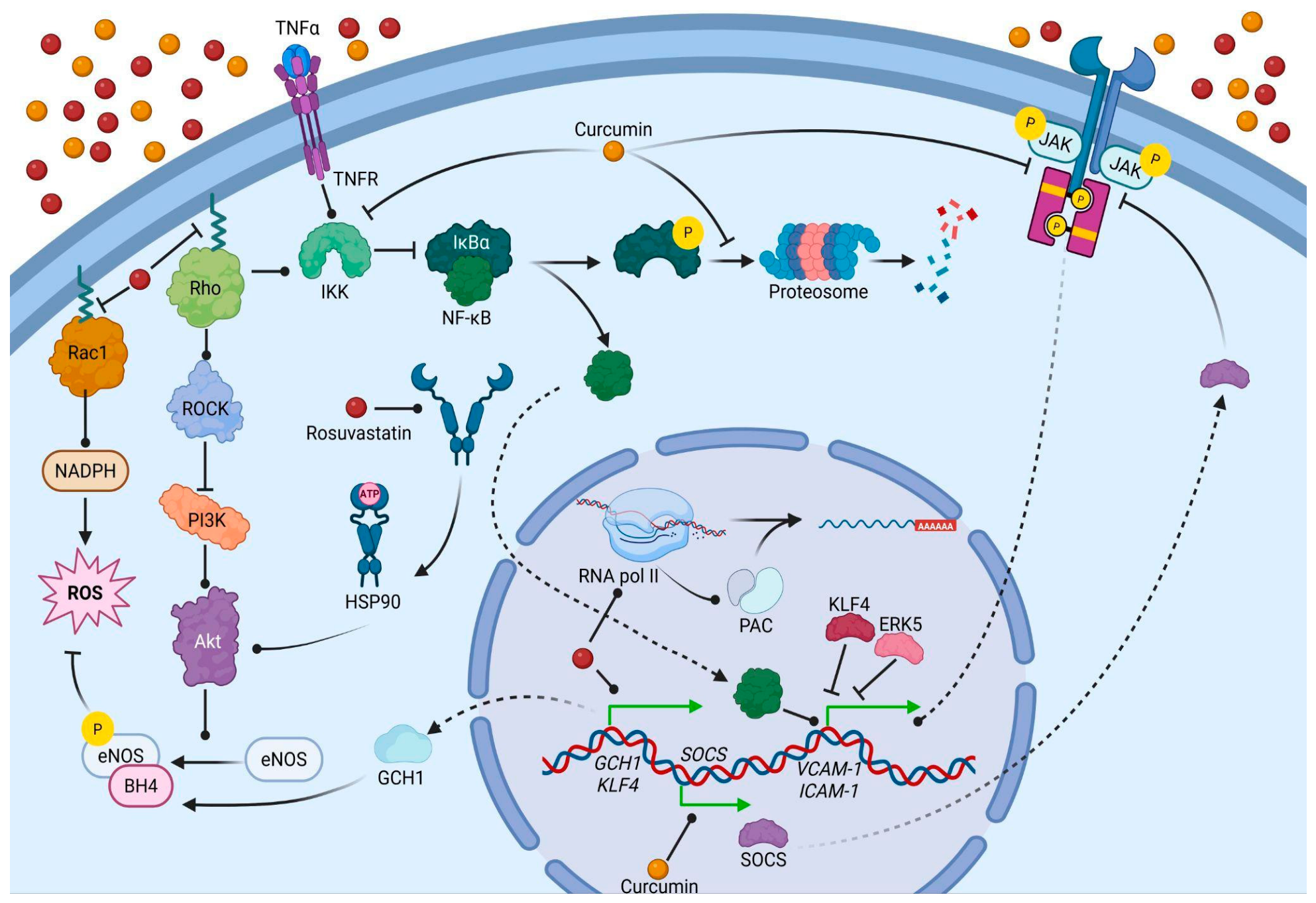
Figure 1. Integrative overview of independent and shared molecular pathways of rosuvastatin and curcumin.
Futurepharmacol 06 00045 g001
Figure 2. Rosuvastatin—Mechanism of action and role of HMG-CoA reductase.
Futurepharmacol 06 00045 g002
Figure 3. Chemical features and clinical applications of rosuvastatin (a) and curcumin (b).
Futurepharmacol 06 00045 g003
Table 1. Study eligibility criteria.
PICOS FrameworkInclusion CriteriaExclusion Criteria
PopulationIn vitro (cell culture, biochemical assays) and in vivo (animal) studies evaluating the pharmacological effects of curcumin and rosuvastatinClinical trials
InterventionCo-administration or combination therapy with curcumin and rosuvastatin, regardless of dosage, duration, or routeStudies evaluating curcumin or rosuvastatin alone without combination treatment
ComparisonIndividual monotherapy groups or untreated control-
OutcomesPharmacological or biochemical outcomes relevant to synergistic activity, such as lipid metabolism, oxidative stress, inflammation, or cardiovascular function-
Study designPreclinical in vitro and in vivo studies published in peer-reviewed journals, conference abstracts, and case reportsClinical trials and data published as non-scientific reports (blogs, patents)
LanguageEnglishNon-English
Table 2. Summary of the preclinical in vitro studies investigating the combination of curcumin and rosuvastatin (chronological order) included in the review.
Author (Year)Study Type/ModelInterventionComparatorOutcomes MeasuredMain Results
Zhou et al., 2017 [37]In vitro HEK-293 cells transfected with human OATP1B1, OATP1B3, OATP2B1, OAT1, OAT3Curcumin (various μM) + rosuvastatinRosuvastatin alone; mock controlOATP transporter activity; rosuvastatin uptakeCurcumin concentration-dependently inhibited OATP1B1/B3, reducing hepatic uptake and biliary secretion of rosuvastatin → potential pharmacokinetic (PK) interaction.
Najat et al., 2018 [38]In vitro analytical method developmentCurcumin 10 µg/mL + rosuvastatin 10 µg/mLIndividual standardsAbsorbance spectra; validation parametersDeveloped and validated UV–VIS method for simultaneous quantification; supports combined formulation analysis but not biological synergy.
Pehlivanović et al., 2021 [39]In vitro chemical assays (antioxidant, anti-inflammatory, antimicrobial)Curcumin + rosuvastatin (concentration rate 0.10–1.00 mg/mL)Each compound aloneFree-radical scavenging; protein-denaturation inhibition; antimicrobial activityCombination showed dose-dependent antioxidant and anti-inflammatory actions and broad antimicrobial effect; mechanistic cellular synergy not tested.
Table 3. Summary of the preclinical in vivo studies investigating the combination of curcumin and rosuvastatin (chronological order) included in the review.
Author (Year)Study Type/ModelInterventionComparatorOutcomes MeasuredMain Results
Sheik et al., 2016 [40]In vivo Wistar rats, atherogenic-diet & CCl4-induced hyperlipidemiaCurcumin 300 mg/kg + rosuvastatin 10 mg/kg (or simvastatin 10 mg/kg)Vehicle; each monotherapySerum TC, TG, VLDL-C, LDL-C, HDL-CCombination produced greater reductions in lipid levels vs. monotherapies in both models → additive/synergistic hypolipidemic activity.
Zhou et al., 2017 [37]In vivo Sprague–Dawley rats & beagle dogs (PK model)Curcumin 500 mg/kg (rats) or 100 mg/kg (dogs) + rosuvastatin 5 mg/kgRosuvastatin alonePlasma rosuvastatin (Cmax, AUC, t½)Co-administration significantly increased systemic rosuvastatin exposure and half-life, confirming curcumin-mediated inhibition of hepatic uptake transporters.
Pehlivanović et al., 2024 [41]In vivo rat model of 14-day atherogenic-diet-induced hyperlipidemiaCurcumin 200 mg/kg + rosuvastatin 10 mg/kgCurcumin alone; rosuvastatin alone; controlLipid profile; hepatic enzymes; histologyCombination showed stronger ↓TC & ↓TG and improved liver histology vs. monotherapies; curcumin mitigated rosuvastatin hepatotoxicity.
Lagumdžija et al., 2024 [42] In vivo adenine-induced chronic kidney disease (CKD) in ratsCurcumin 100 mg/kg + rosuvastatin 1.25 mg/dayCurcumin alone; rosuvastatin 1.25 mg and 5 mg alone;
CKD control
Serum creatinine; kidney histopathology (fibrosis, inflammation, tubular injury)Combination improved kidney function and tissue integrity; curcumin enhanced nephroprotective effects and reduced rosuvastatin-related toxicity.
Suljić et al., 2026 [43]In vivo gentamicin-induced acute kidney injury (AKI) in ratsCurcumin 100 mg/kg + rosuvastatin 1.25 mg/dayCurcumin alone; rosuvastatin 1.25 mg and 5 mg alone;
AKI control
Injury, inflammation, and oxidative stress profiles; Preyer pinna reflex for hearing, vestibular battery test; kidney and cochlear histologyCombination outperformed monotherapies in alleviating gentamicin-induced nephrotoxicity, audiotoxicity and vestibulotoxicity, whilst synergistically attenuating nephrotoxicity and early-phase inflammation.
Disclaimer/Publisher’s Note: The statements, opinions and data contained in all publications are solely those of the individual author(s) and contributor(s) and not of MDPI and/or the editor(s). MDPI and/or the editor(s) disclaim responsibility for any injury to people or property resulting from any ideas, methods, instructions or products referred to in the content.