Review

Advances of the “Miracle Protein” Against Viral Diseases: Lactoferrin in Clinical Trials

by
Gerardo Ramírez-Rico
1,†,
Lucero Ruiz Mazón
2,†,
Magda Reyes-López
2,
Jesús Serrano Lúna
2,
Christian Avalos Gómez
2,
Rosa Isabel Higuera Piedrahita
3,
Cristal Dafne Lonngi Sosa
1,
Mireya de la Garza
2 and
Cynthia González Ruíz
1,*
1
Laboratorio 8, Patología Molecular Veterinaria, Unidad de Investigación Multidisciplinaria, Facultad de Estudios Superiores Cuautitlán, Universidad Nacional Autónoma de México, Cuautitlán Izcalli 54714, Mexico
2
Departamento de Biología Celular, Centro de Investigación y de Estudios Avanzados del Instituto Politécnico Nacional (CINVESTAV-IPN), Ciudad de Mexico 07360, Mexico
3
Laboratorio 3, Unidad de Investigación Multidisciplinaria, Facultad de Estudios Superiores de Cuautitlán, Universidad Nacional Autónoma de México, Cuautitlán Izcalli 54714, Mexico
*
Author to whom correspondence should be addressed.
These authors contributed equally to this work.
Future Pharmacol. 2026, 6(1), 14; https://doi.org/10.3390/futurepharmacol6010014
Submission received: 31 January 2026 / Revised: 4 March 2026 / Accepted: 12 March 2026 / Published: 13 March 2026

Abstract

Antimicrobial resistance is a significant problem that has been studied in recent years. Viral diseases have generated high levels of morbidity and mortality, and recently, the world population faced a highly contagious viral disease (SARS-CoV-2), which caused millions of deaths without an effective drug capable of controlling the infectious process. As a result, various therapeutic alternatives to antimicrobials have emerged that target microorganisms, support the immune system, and reduce inflammation. Lactoferrin is a ultifunctional glycoprotein of the mammalian innate immune system that has shown various benefits, notably its antimicrobial and, primarily, its antiviral effects. No resistance or toxicity to this protein has been reported, which is why it is called a “miracle protein”. This is the first review to focus on the antiviral effects of lactoferrin in clinical trials. In addition, in vitro and in vivo studies evaluating lactoferrin against various viral etiologies are also discussed.

Graphical Abstract

1. Introduction

The morbidity and mortality associated with viral diseases represent a significant public health problem. The World Health Organization (WHO) estimates that antimicrobial resistance causes approximately 700,000 deaths worldwide each year. This figure continues to rise and is expected to reach 10 million deaths annually. The World Bank estimates that antimicrobial resistance could result in US$ 1 trillion additional healthcare costs by 2050, and US$ 1 trillion to US$ 3.4 trillion gross domestic product losses per year by 2030 [1,2]. Specific antiviral resistance values vary for each antimicrobial and for each viral disease [3,4], and there are no reports with specific figures on economic losses or deaths focused solely on antiviral resistance. This situation is further aggravated by resistance to antiviral treatments, which, if not prevented, could compromise the effectiveness of medications used to treat infectious diseases [1].
Antiviral resistance is defined as the ability of viruses to adapt and evade the action of antiviral drugs, reducing their effectiveness in eliminating viral load and rendering previously used treatments ineffective. As a result, viruses may mutate and continue to replicate even in the presence of the antiviral agent [3,5]. This resistance refers to a group of viruses that exhibit variations in their proteins, which negatively affect drug activity because these structures constitute the therapeutic targets. This process is largely unavoidable and directly related to viral replication [6]. Two main principles essentially govern the development of antiviral resistance. First, resistance arises when a microorganism continues to replicate in the presence of a drug. Second, although replication may occur sporadically, a resistant variant can prevail over the common strain, resulting in viral progeny that is no longer sensitive to the medication [7]. In some cases, cross-resistance may also develop against a group of drugs belonging to the same class or family. This often leads to therapeutic failure in the treatment of multiple viral diseases, causing serious consequences for patient health.
These phenomena are driven primarily by the excessive and inappropriate use of antiviral drugs, which promotes the emergence of drug-resistant pathogens, resulting in ineffective viral infection treatment and increased disease severity and spread. In immunocompromised patients, continuous viral replication, combined with prolonged drug exposure, favors the selection of resistant strain [1]. Antiviral resistance is increasingly recognized as a challenge in the clinical management of viral infections. Mutations arising within viral genomes may reduce susceptibility to antiviral drugs, potentially compromising treatment efficacy and clinical outcomes. The WHO has highlighted the importance of this issue through surveillance efforts, particularly those addressing HIV drug resistance and the antiviral susceptibility of influenza viruses. WHO data suggest that resistance-associated mutations in human immunodeficiency virus (HIV) can affect the performance of first-line antiretroviral regimens, while influenza monitoring programs have reported the occasional emergence of strains with reduced sensitivity to neuraminidase inhibitors [8,9].
A considerable number of clinically significant viruses continue to lack selective antiviral agents, a limitation that is especially evident among emerging and re-emerging RNA viruses. Achieving therapeutic activity across different viral families remains challenging, largely due to the pronounced structural diversity of viral targets [10]. The development of effective antiviral therapies remains a major priority in the control of RNA virus infections. While direct-acting antivirals have significantly improved patient management, their durability is frequently challenged by the high mutation rates of RNA viruses, which drive the emergence of resistance-associated variants. Most conventional antivirals target viral proteins or enzymes, including neuraminidase inhibitors for influenza, reverse transcriptase and protease inhibitors for HIV, and polymerase or NS5A inhibitors for hepatitis C virus (HCV). Nevertheless, viral genetic adaptation may reduce drug susceptibility and compromise sustained treatment responses. Host-directed antiviral approaches have therefore attracted increasing interest, as they aim to interfere with cellular processes required for viral replication [11].
Antiviral resistance is increasingly recognized as a critical challenge in the treatment of viral infections, particularly as antiviral therapies become more widely used. Although these agents have transformed clinical outcomes, their efficacy may decline as viruses adapt under sustained drug pressure. Clinical and observational evidence suggests that prescribing practices, such as use outside guideline-recommended indications, delayed treatment initiation, or suboptimal regimen choice, can reduce therapeutic effectiveness and contribute to the selection of resistant variants [12,13]. These concerns became especially evident during the SARS-CoV-2 pandemic, when the rapid implementation of antiviral therapies highlighted challenges related to stewardship and optimal clinical use [12]. Importantly, resistance is not confined to newly emerging pathogens; prolonged antiviral exposure, especially among immunocompromised patients, has long been associated with adaptive mutations of clinical relevance [3]. Collectively, these observations highlight the importance of optimized antiviral use, resistance monitoring, and the development of therapies with robust barriers to resistance.
Antiviral resistance is currently a significant public health threat, as its incidence has increased in recent years. For these reasons, it is essential to seek strategies to prevent its development [14]. Lactoferrin (Lf) has proven to be an effective therapeutic alternative against antimicrobial resistance. Therefore, this review focuses on the effects of lactoferrin on viral diseases in clinical trials; additionally, in vitro and in vivo studies evaluating lactoferrin against various viral etiologies are also discussed.

2. Lactoferrin

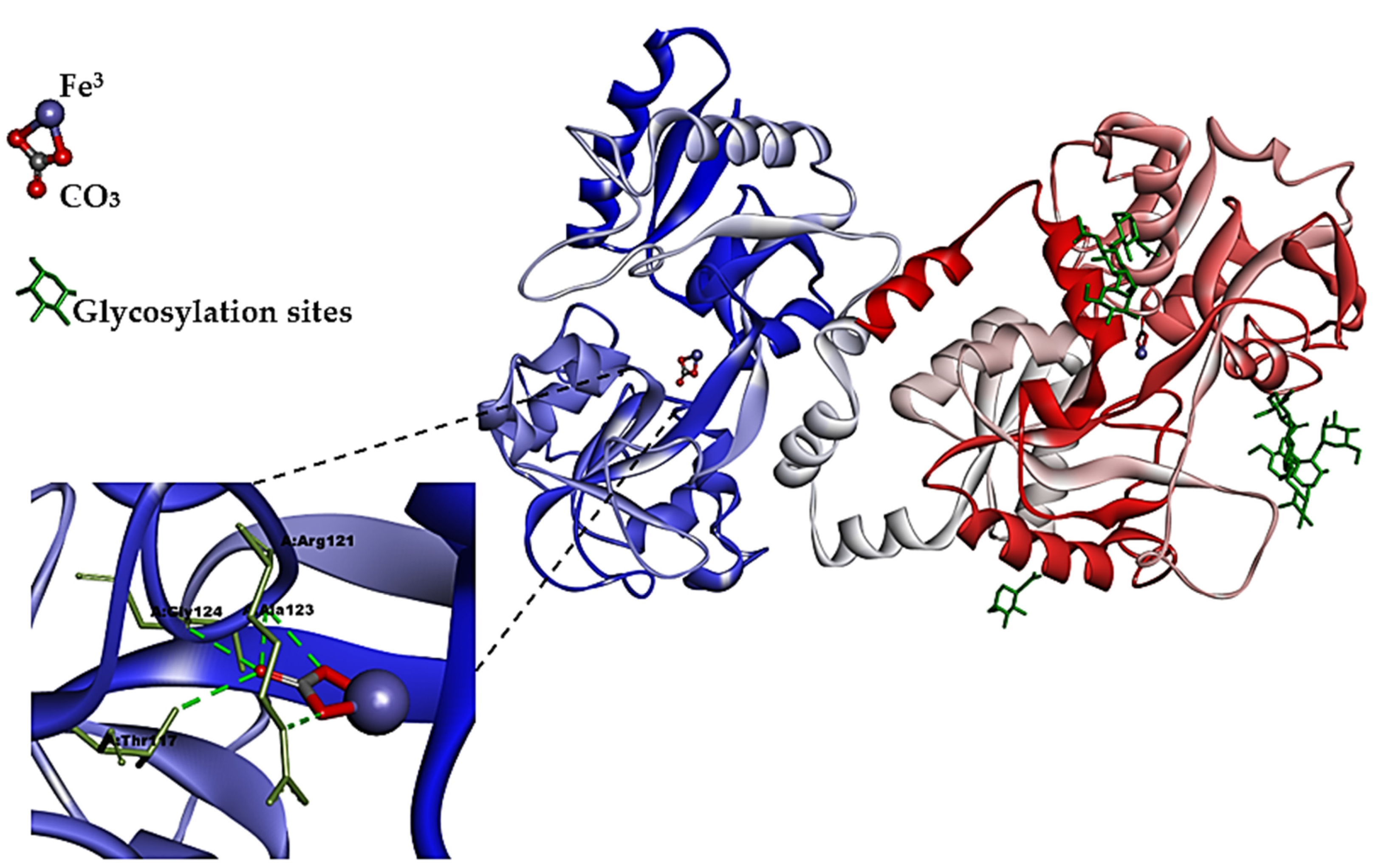
Lactoferrin is a basic iron-binding glycoprotein of the body’s innate immune system. It has attracted attention because of its close relationship with nutrition and biological balance. Its structure has been studied in detail to understand better how this molecule performs its functions at the molecular level. Lactoferrin is an ~80 kDa glycoprotein composed of a single polypeptide chain [15]. Detailed three-dimensional models of human (HLf) and bovine Lf (bLf) obtained through X-ray crystallography [16,17] reveal that the overall fold of Lf is highly conserved (Figure 1). The molecule is divided into two homologous lobular regions: the N-lobe, derived from the amino-terminal segment, and the C-lobe, derived from the carboxyl-terminal segment of the chain. Within each lobe, the polypeptide chain is organized into two structural domains designated N1 and N2 in the N-lobe, and C1 and C2 in the C-lobe; a three-turn α-helix segment connects the two lobes. The interface between the domains creates a cleft that serves as the specific binding site for ferric iron (Fe3+). Metal ion coordination occurs with high specificity. It requires the synergistic presence of a bicarbonate anion, which plays a critical role in stabilizing the resulting metal–protein complex [18]. HLf comprises 691 amino acid residues, whereas bLf contains 689 residues; the sequence identity is approximately 70%. The Lf gene presents polymorphisms, and the Lf molecule undergoes post-transcriptional and post-translational modifications. Three isoforms of Lf have been found. The two main isoforms are secreted: α-Lf (or simply Lf, near 80 kDa), and β-Lf and γ-Lf that express potent RNase activity but lack a significant iron binding capacity [19,20,21]. δ-Lf has been found to be an internal glycoprotein, and its initial sequence and the following 25 amino acids are missing (73 kDa). Furthermore, it can translocate to the nucleus and function as a transcription factor [21].
Lactoferrin levels in human milk are particularly high during early lactation, reaching about 5.3 ± 1.9 mg/mL in colostrum and decreasing to 1 mg/mL after the first month postpartum. By comparison, bovine milk contains substantially lower amounts of Lf, with concentrations around 1.5 mg/mL in colostral whey and typically ranging from 20 to 200 µg/mL in mature milk [22]. Lactoferrin can undergo proteolytic cleavage by pepsin under acidic conditions, releasing bioactive fragments from the N1 domain, collectively known as lactoferricins (Lfcins). Among the earliest identified and most extensively investigated of these peptides, due to their notable antimicrobial properties, are Lfcin B and lactoferrampin. Lfcin B corresponds to amino acid residues 17–41 of bLf [23], whereas lactoferrampin encompasses residues 268–284 of the same protein [24]. A particularly noteworthy feature is that, because they are smaller than the full-length protein, these peptides can more readily reach specific sites within the body and engage more directly with their biological targets.
For instance, it has been shown that Lfcin displays antiviral activity against Herpes simplex virus type 1 (HSV-1), primarily affecting early stages of infection. Exposure to the peptide reduces viral entry into susceptible cells, suggesting interference with events occurring at or before internalization. In addition, viral particles that do enter the cell show delayed transport toward the nucleus, an essential step for replication. Together, these observations indicate that Lfcin impairs both entry and intracellular trafficking of HSV-1 [25].
Furthermore, in vitro studies demonstrated that these lactoferrin-derived fragments can reduce the activity and nuclear translocation of HIV-1 integrase, an enzyme essential for viral DNA integration into host genomes, thereby potentially limiting HIV replication [26]. While the mechanisms by which these peptides interfere with viral processes are still being elucidated, their ability to modulate enzyme function highlights the potential of lactoferrin fragments as molecular scaffolds for the development of novel antiviral agents.

3. Lactoferrin Activities and Its Antiviral Effect

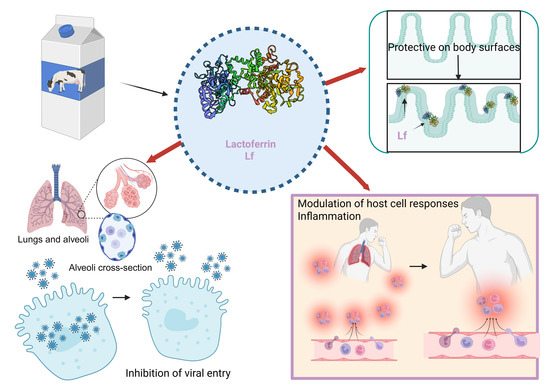
Lactoferrin is a multifunctional natural protein recognized for its diverse biological properties that support host defense, immune regulation, and tissue health. There is substantial evidence demonstrating its biological activities, including immunomodulatory functions [27], promotion of bone regeneration [28], antioxidant activities, binding of several bioactive compounds [29,30,31], and anticancer potential [32]. In addition, it demonstrates broad-spectrum antimicrobial activity, encompassing antibacterial [33], antifungal [34], anti-parasitic [35], and antiviral effects [36]; the latter primarily mediated through inhibition of virus–host interactions and enhancement of host defense mechanisms (Figure 2). With respect to this, Lf exhibits antiviral activity against a wide variety of viruses, including both enveloped and non-enveloped types, by disrupting early steps of infection.
The involvement of lactoferrin in virus-associated immune regulation was first suggested by Lu et al. (1985), who described disrupted myelopoietic regulatory interactions in mice infected with the Friend virus complex, together with alterations in Ia antigen expression on both effector and responding cells [37]. Subsequent work in murine models showed that oral administration of bovine lactoferrin increased natural killer (NK) cell activity, accompanied by elevated production of interleukin-18 (IL-18) and type I interferons in the small intestine; these immunological effects became significant at 300 mg/kg body weight [38]. In parallel, characterization of lactoferrin receptors in bovine intestine revealed greater binding activity in the epithelium overlying Peyer’s patches, a finding consistent with enhanced interaction within gut-associated lymphoid tissue [39]. Taken together, the available data indicate that oral lactoferrin influences intestinal immune signaling and is associated with measurable systemic changes in NK cell function.
Experimental studies have shown that Lf prevents infection by several human coronaviruses (HCoV-229E, HCoV-NL63, HCoV-OC43, and SARS-CoV-2) through interactions with host cell surface molecules such as heparan sulfate proteoglycans (HSPGs), thereby limiting viral attachment [40]. Enhanced antiviral effects have been reported when Lf is delivered in liposomal formulations, which improve cellular uptake and antiviral performance against HCoV-229E and SARS-CoV-2 pseudoviruses in vitro [41]. Additional in vitro work indicates that Lf can alter cytokine production and lower indicators of infection in epithelial models challenged with respiratory syncytial virus and rotavirus [42]. Lf also restricts porcine epidemic diarrhea virus by hindering spike–cell surface interactions and promoting mucosal immune defenses in animal models [43]. Additional support for the antiviral activity of Lf comes from studies on enterovirus E, where it was shown that Lf markedly suppressed viral replication when administered during the adsorption phase and the early period following viral entry, producing a decrease in viral titers of about 1–1.1 log (around 90% reduction). This effect was accompanied by a pronounced drop in intracellular viral RNA levels, with reductions reaching approximately 75% at early stages of infection. These findings indicate that Lf interferes not only with viral attachment but also with intracellular processes required for efficient replication [44]. In 2022, a similar multi-stage antiviral effect has been reported for arboviruses such as Zika and Chikungunya viruses. In cultured cells, Lf led to a significant reduction in infection efficiency in a dose-dependent manner, with inhibition approaching 80%. This activity involved disruption of both viral entry and the release of progeny virions, further supporting the idea that lactoferrin acts at several points in the viral life cycle rather than at a single replication step. Although these findings highlight the broad antiviral potential of lactoferrin, the underlying molecular mechanisms are still not fully understood [45].

4. Lactoferrin Blocks Cell Receptors or Binds to Viral Particles

Since the 1990s, the list of pathogenic human viruses susceptible to Lf inhibition has expanded to include both non-enveloped and enveloped viruses, as well as DNA and RNA viruses. Several antiviral mechanisms of lactoferrin have been reported; Lf can inhibit viral attachment to target cells by binding to external cellular, viral, or both types of biomolecules. It has recently been reported that viral etiology requires different molecules on the surface of the host cell [46]; subsequently, the virus binds to a receptor to initiate cellular translocation [47]. The molecules identified as cellular receptors for viral agents are HSPGs, which increase their expression on the cell surface. Lf has been found to bind to these HSPGs, and Lf can also neutralize the virus by binding to viral surface proteins [48].
For a long time, it has been widely accepted that breastfeeding is beneficial for newborns. Comparative studies of bottle-fed and breast-fed children showed that the latter were less frequently exposed to adverse outcomes, such as diarrhea and respiratory diseases mediated by viral infections [49,50]. Lactoferrin has been shown to be one of the main components of milk with antiviral effects.
Bovine Lf and HLF exhibit high activity against both enveloped and non-enveloped viruses [51]. However, bLf has been reported to be more potent than HLf. In general, no antiviral differences were found between the apo and holo forms; both Lf forms are effective in the early stages of viral disease, inhibiting viral entry into target cells by preventing viral protein binding or blocking receptors [52,53].

5. Lactoferrin Inhibits Different Phases of Viral Replication

Lactoferrin has been shown to interfere with several stages of the viral replication cycle.

5.1. Adenovirus

In 2002, Arnold et al. examined the effects of bLf and HLf in both apo and holo forms, on adenovirus type 2 infection in HEp-2 cells. The apo variants displayed a reduced cytopathic impact compared with native bLf. When the timing of the inhibitory activity was analyzed, lactoferrin was found to interfere with infection at stages preceding and coinciding with viral attachment. Suppression of infection was also observed when lactoferrin remained present during the entire viral replication process, indicating activity primarily at early stages of infection. The authors proposed that interaction between bLf and HSPG could underline this effect by limiting viral binding to host cells [54]. Subsequently, in 2003, Pietrantoni et al. further characterized the antiviral properties of bLf against adenovirus, demonstrating that its activity was not restricted to receptor competition but also involved direct association with viral structural proteins. Overlay assays revealed interactions with proteins of approximately 85 and 66 kDa, corresponding to polypeptides III and IIIa. Transmission electron microscopy supported the capacity of bLf to associate with both HSPG molecules and adenoviral particles [55]. These observations support a twofold mechanism in which bLf both interferes with host cell receptor engagement and impairs viral ligand accessibility. Although adenoviruses can exploit multiple cellular receptors—including the coxsackievirus and adenovirus receptor, integrins, and HSPG—bLf was shown to disrupt at least two of these virus–cell entry pathways.

5.2. Influenza A

Seasonal influenza A viruses, particularly H1N1 and H3N2, continue to cause substantial annual hospitalizations and excess mortality worldwide, affecting mainly older adults and individuals with chronic comorbidities. Although vaccines and antiviral agents are available, their effectiveness is constrained by ongoing antigenic drift and the emergence of resistant variants. These challenges highlight the need for additional therapeutic strategies. In this context, bLf has demonstrated antiviral activity against influenza viruses, an effect that has also been observed with specific peptide fragments derived from the protein. Notably, the C-terminal lobe exhibits strong affinity for the conserved HA2 subunit of hemagglutinin, thereby interfering with viral attachment and membrane fusion in prevalent subtypes such as H1N1 and H3N2, even at low concentrations [56]. Moreover, shorter peptides derived from this region retain inhibitory activity by targeting hemagglutinin and limiting viral entry into host cells [57]. Together, these findings support the potential of lactoferrin-derived peptides as candidates for the development of novel anti-influenza therapies.
Another significant global public health problem is the avian influenza A (H5N1) virus. It was first observed in Southeast Asia in 2003. By 2005, H5N1 had spread to several countries in Europe, Africa, and Asia. This subsequently caused problems with international travel and adversely affected the global economy, particularly tourism [58]. In 2010, Taha et al. tested different whey proteins against avian influenza A (a-lactalbumin, b-lactoglobulin, and Lf) in MDCK cells [59]. Native Lf appears to be the most active antiviral protein among the tested samples at concentrations of 20–80 μg/mL, suggesting its protein structure confers an affinity for viral proteins, causing its antiviral effect. This affinity of Lf could lead to interaction with the PB1-2, PA, and NP proteins, which are nuclear proteins of H5N1 and participate in the transcription of viral RNA [60,61]. Since Lf is a cationic glycoprotein, it allows it to have an affinity for the negative regions of RNA, causing interference in the viral replication stage.

5.3. Hepatitis

Hepatitis C virus (HCV) is a member of the Flaviviridae family [62]. HCV has a unique characteristic that distinguishes it from other viruses: its ability to cause chronic illness. This virus is therefore linked to diseases such as cirrhosis, chronic hepatitis, and hepatocellular carcinoma [63,64,65]. A 2000 report by Ikheda et al. demonstrated the effect of native Lf on HCV. In particular, they found that Lf inhibits viral replication. Additionally, they evaluated whether the generation of peptides after Lf denaturation still preserved the antiviral effect; however, they found no effect, indicating that the native conformation of the protein is essential for its activity. Furthermore, they found that the antiviral effect of Lf is significant when applied before or concurrently with HCV [66]. Lf can prevent adsorption to target cells by the fact that it binds to the envelope proteins of HCV E1 and E2. Both bLf and hLf effectively prevented the cytopathic effect of HCV in a hepatocyte cell culture, showing that bLf exhibited superior effectiveness. The affinity between Lf and the E1 and E2 proteins, which are part of the HCV envelope, was also observed, causing Lf to inhibit viral infection. In subsequent assays, bLf was found to block HCV entry into hepatocytes, confirming the previous findings [66]. Nozaki et al. determined that the carboxyl region of Lf was key to its affinity for the HCV E2 protein. This finding was the first to establish that a peptide derived from the carboxyl region had an antiviral effect and that it specifically binds the HCV E2 protein and prevents HCV infection [67].
Lf also prevents Hepatitis B virus (HBV). Bovine lactoferrin exhibits an antiviral effect when interacting with susceptible cells prior to HBV inoculation, compared with its effect on HCV. The inhibitory effect on replication in infected cells was not fully elucidated. In a recent report, Li et al. demonstrated that the holo-Lf and Zn-bound forms blocked HBV replication in cell culture. However, the apo form did not show inhibitory effects [68].

6. Effect of Lactoferrin in Clinical Trials

6.1. Hepatitis

Tanaka and colleagues designed a study to evaluate the effect of bLf on serum alanine aminotransaminase and HCV RNA levels in patients with chronic hepatitis C. The results showed good tolerability; however, the antiviral effect was inconclusive. In a subsequent trial, the antiviral effect of long-term bLf was evaluated on various serum parameters in individuals with chronic hepatitis C. The findings of this trial demonstrated that bLf stimulates a Th1 cytokine profile, enhancing viral clearance when combined with interferon [69,70,71]. Different findings were reported when bLf therapy was administered at a dose of 3.6 g for 56 days, followed by combination therapy with ribavirin and interferon for 6 months. This trial showed a lower HCV titter with bLf and antiviral combination therapy. However, inoculation with bLf alone did not demonstrate a significant antiviral effect [72].

6.2. Gastroenteritis

Lactoferrin has been shown to promote eubiosis and protect hosts against various infections [73]. Recently, the COVID-19 pandemic catalyzed interest in nutraceuticals as safe, accessible treatments with minimal side effects. Viral gastroenteritis encompasses a range of infections that differ in etiology and clinical presentation, with disease severity shaped by both the infecting virus and host-related factors. Rotaviruses, noroviruses, sapoviruses, astroviruses, and certain adenovirus types are among the viral agents most commonly associated with acute gastroenteritis [74].
Evidence suggests that Lf enhances pediatric immunity against gastrointestinal infections by preventing viral attachment and subsequent binding within intestinal cells [22]. Beyond gastrointestinal health, bLf has been investigated for its ability to modulate immune responses and enhance vaccine efficacy. For instance, in 2022, Habib et al. evaluated the effect of bLf on the oral polio vaccine (OPV) immune response. Although OPV is critical for polio eradication, its effectiveness diminishes in cases of malnutrition, gut barrier dysfunction, or short breastfeeding duration. This study measured the impact of bLf on the intestinal and humoral immune responses to bivalent and trivalent inactivated poliovirus vaccines in healthy term newborns, highlighting its potential as an adjuvant [75].
Rotavirus belongs to the family Reoviridae and possesses a genome formed by multiple segments of double-stranded RNA encased in a triple-layered capsid [76,77]. Diarrheal diseases continue to be a major cause of childhood mortality worldwide, resulting in millions of deaths each year. Among the infectious agents that cause severe dehydrating diarrhea during infancy and early childhood, rotavirus has been a major contributor of several hundred thousand deaths worldwide annually [78]. In addition, rotavirus is recognized as the leading pathogen causing acute non-bacterial gastroenteritis in neonates and young children, representing a substantial and persistent burden on global pediatric health [79]. Lf displayed a potent inhibition of a simian rotavirus SA11 in vitro. In these studies, apo-Lf was as effective as holo-Lf in inhibiting rotavirus; apo-Lf displayed a substantially higher selectivity index, about 600-fold greater. To determine the selectivity index of milk proteins, the ratio between the 50% drug cytotoxicity concentration and the concentration required to inhibit cytopathic effect by 50% was calculated. None of the parameters of cytoxicity were affected by apo-lactoferrin at concentrations up to 30 mg/mL. Evidence indicates that Lf interferes with rotavirus infection at an early stage of the viral cycle by blocking attachment to susceptible cells. Experimental analyses, including flow cytometry, have shown that Lf can associate directly with viral particles, thereby limiting their ability to associate with the cell surface [78].
On the other hand, the first study to apply Lf in children with rotavirus infection was performed by Egashira et al. in 2004. The study population consisted of 298 children younger than five years of age recruited from three nursery schools and one kindergarten in Saga Prefecture, Japan. Participants who met the inclusion criteria were divided into two groups: one group received a daily dose of 100 mg bLf for 12 weeks (L group), while the other group did not consume any Lf-containing products (N group). The bLf used in the study was supplied by Morinaga Milk Industry Co., Ltd., Tokyo Japan. The frequency and duration of vomiting were markedly lower in the L group than in the N group; however, two children in the N group were hospitalized for dehydration, whereas none in the L group required hospitalization for dehydration. The frequency and duration of diarrhea were also significantly lower in the L group than in the N group. These results show that regular consumption of products containing bLf was associated with a reduction in the clinical severity of rotavirus gastroenteritis among children. However, this supplementation did not produce a statistically significant decrease in the overall incidence of rotavirus-associated gastroenteritis [80].
Human noroviruses (HuNoVs) are non-enveloped viruses with a positive-sense, single-stranded RNA genome. They display extensive genetic diversity and are organized into multiple gene groups and genotypes, several of which are responsible for human disease. HuNoVs are widely recognized as the leading cause of outbreak-associated, nonbacterial gastroenteritis worldwide and are associated with significant global morbidity, mortality in young children, and economic losses [81,82]. In the United States, norovirus infections account for tens of millions of cases annually, leading to numerous hospitalizations and hundreds of deaths [83]. Despite their public health impact, clinical management remains supportive, as no licensed vaccines or specific antiviral therapies are currently available. Furthermore, it remains unclear whether candidate antiviral compounds with activity against other enteric RNA viruses are also effective against HuNoVs. Recently, researchers have reported the antiviral effects of Lf on HuNoV replication. In this study, Lf has been shown to reduce human norovirus infection in a B cell culture model, likely via an indirect mechanism by inducing host defenses. The antiviral effect is thought to occur through indirect mechanisms, possibly linked to the activation of innate interferon-dependent pathways rather than direct effects on the virus itself. Consequently, additional research, particularly in clinical settings, is needed to determine the effectiveness of Lf against human norovirus infection [84].
In this sense, the effect of Lf in preventing diarrhea in children was evaluated. In this study, they conducted a trial comparing bLf supplementation in children aged 12–18 months. Children were administered with 0.5 g of bLf or an identical placebo twice daily, with each dose mixed in 25 mL of water. The selected amount of Lf was chosen to approximate the estimated daily intake of a 12-month-old breastfeeding infant, corresponding roughly to the Lf provided by 100 mL of colostrum (about 10 mg/mL) or 1 L of mature breast milk (around 1 mg/mL). The bLf used in the study was a freeze-dried protein preparation obtained from fresh bovine milk, with an iron saturation ranging from 10% to 20%, and was supplied by Tatua Co-operative Dairy Co., Ltd. (Morrinsville, New Zealand). Maltodextrin, a carbohydrate made from corn starch, was used as a placebo. The primary pathogen isolated during diarrheal episodes was HuNoVs, accounting for 35.0% of other enteric pathogens. The incidence of diarrhea did not differ between the Lf and placebo groups. However, the longitudinal prevalence of diarrhea was lower in the Lf group, as was the median episode duration and the proportion of episodes with moderate or severe dehydration [85].
In 2013, Oda Hirotsugu conducted a survey on the incidence of HuNoV-like gastroenteritis among 431 subjects consuming 100 mg of Lf per day for 7 weeks, who consumed products such as yogurt, yogurt-based beverages, and milk-based drinks. Outcome analysis showed that individuals who regularly consumed these Lf-containing products experienced a reduced occurrence of gastroenteritis consistent with norovirus infection than among those that consumed them less frequently. Bovine lactoferrin was provided by Morinaga Milk Industry Co. [86]. On the other hand, related results reported by Moriuchi M. and Moriuchi H. in 2009 showed that daily administration of Lf tablets to children reduced the incidence of norovirus gastroenteritis. In this study, 400 mg of bLf was administered daily for 4 weeks to 91 children. Morinaga Milk Industry Co. was also the supplier of bLf [87].

6.3. Pneumonic Diseases

The most relevant studies on Lf against viral agents have focused on severe acute respiratory syndrome coronavirus 2 (SARS-CoV-2), the etiological agent responsible for coronavirus disease 2019 (COVID-19). Clinical manifestations of this illness include fever, cough, weakness, shortness of breath, abdominal discomfort, hematemesis, nausea, and diarrhea. The progression of this disorder can eventually lead to respiratory failure and death. While this illness is generally associated with the respiratory system’s exchange and transit mechanisms, it can also affect the conduction system [88,89]. In 2020, Serrano et al. studied the effect of liposomal Lf as a potential preventive and curative agent for COVID-19. In this trial, 79 patients with COVID-19 who exhibited typical disease symptoms and tested positive for SARS-CoV-2 were selected. The individuals in this study were monitored remotely, remained at home, and had their findings recorded every 24 h for 30 days. Two formulations were used: a liposomal product containing bLf (LLf), and a liposomal zinc suspension (LZ). Interestingly, close relatives of the patients also received these treatments, receiving lower doses. The control group was inoculated only with LLf. Patients were monitored daily (at least twice daily) for 10 days, and again at 30 days. After the first 48 h of treatment, most of the improvement in symptoms was observed in headache, dry cough, muscle pain, and tiredness/weakness. These patients reported symptom improvement with both Lf formulations. By day 5, the improvement continued, and by day 10, all participants reported complete improvement. Surprisingly, both groups tested showed rapid recovery in all patients during the first week. Furthermore, it had a preventative effect against COVID-19 in healthy individuals who had been in contact with infected people [90].
The efficacy lies in Lf blocks the interaction of the SARS-CoV-2/SARS-CoV-1 spike protein with the angiotensin-converting enzyme 2 (ACE2) receptor and HSPGs receptor; in addition, Lf interferes with RNA-dependent RNA polymerase activity, thereby blocking viral fusion with the cell membrane and replication [40,91,92]. Lf liposomes inhibit viral replication inside the cell. ACE2 receptors are present in the oral cavity, a tropism zone for SARS-CoV-2. Furthermore, Lf acts as an immunomodulator, a key mechanism in this respiratory pathology since a cytokine storm is involved, promoting a protective effect on the respiratory system [29,93,94].
Clinical evaluations of Lf in the context of COVID-19 have yielded controversial results [95,96,97]. While in vitro studies demonstrated that Lf increases neutrophil and natural killer cell activity, boosts interferon responses, and prevents SARS-CoV and SARS-CoV-2 internalization [40], clinical outcomes have been inconsistent. Matino et al. (2023) conducted a trial in which patients with moderate to severe COVID-19 received a daily oral dose of Lf alongside standard care for the infection. The study found no significant differences in clinical recovery or adverse outcomes between the Lf and placebo groups. The authors attributed this lack of efficacy to low bioavailability—potentially due to the limited capacity of human intestinal receptors to internalize bovine Lf—and the timing of administration. While earlier SARS-CoV trials administered Lf at the onset of symptoms, this study-initiated treatment during the late phase (hospitalization), a stage where Lf’s immunomodulatory activity may be less effective [96]. Similarly, Navarro et al. (2023) found no protective effect of Lf in preventing COVID-19 among healthcare workers, although they confirmed its safety profile [97]. In contrast, other viral respiratory infections have shown better responses to Lf-based interventions, which may be attributable to the mechanisms of action of Lf [98].
Mann et al. (2023) found that in a trial using Lf of bovine colostrum powder for restoring iron homeostasis and for avoiding SARS-CoV-2 replication; hen egg ovotransferrin by its antiviral peptides and as an immunomodulator; and with lysozyme that together with Lf regulates immune responses and has been shown to reduce the incidence or severity of viral disease. This mixture was tested in adult patients with mild COVID-19 infections at risk of severe disease. The reported results were favorable, as the symptoms improved. This could be attributed to the immunomodulatory effects of the Lf, ovo-transferrin, and lysozyme mixture [99].

6.4. Common Cold Syndrome

The common cold syndrome is an acute pathological disorder of the respiratory conduction system, involving everything from the nasal cavity to the larynx. The etiology present in this disease is generally of viral origin; however, it is considered a multifactorial disease in which environmental and host factors participate. In winter and spring, common viral causes include rhinovirus, influenza virus, respiratory syncytial virus, and parainfluenza virus [100]. The oral administration of Lf in combination with lactoperoxidase has been evaluated against the symptoms of the common cold in patients; unfortunately, these antibacterial compounds were not able to alleviate the common cold, but they were effective in reducing the incidence and duration of the symptoms as well as in shortening the duration of fever [101].
In other work, various concentrations of aspirin were evaluated in combination with a throat spray containing a mucosal immune complex (MIC) composed of lysozyme, lactoferrin, and aloe, which has been used to support the respiratory mucosa by modulating the rheological properties of the mucosal surface and has been suggested to influence glycoprotein-mediated interactions [102]. Aspirin was compared with other over-the-counter drugs for common cold symptoms, such as ibuprofen and acetaminophen. Only aspirin (with vitamin C) improves the illness severity by about 25–30%. MIC was used due to the observation that reduced quantities of lysozyme and Lf in the mucosa increase susceptibility to infections and lead to severe illness. In this study, healthy adults with common cold symptoms were treated with one of three aspirin concentrations, administered either as tablets alone or in combination with the MIC throat spray. The results showed a substantial reduction in illness severity compared with aspirin alone, as assessed by clinically validated measures, attributable to both reduced inflammation and protection of the respiratory epithelium when aspirin is administered with throat spray. Further studies evaluating aspirin, lysozyme, and lactoferrin individually would be necessary to determine the specific contribution of each component.

6.5. Common Cold and Gastroenteritis

In 2012, the effects of an Lf-containing supplement on cold-like and gastroenteritis symptoms were reported. Two groups of clinically healthy women were established; one group took Lf and the other did not, for three months. The results were based on questionnaires regarding symptoms related to the respiratory and digestive systems, as well as drug use. The nutraceutical Lf significantly improved symptoms in both systems [103]. In the following year, the efficacy of a bLf/whey protein Ig-rich fraction (Lf/IgF) for the common cold was investigated. Participants were provided with a diary to record any common cold symptoms experienced during the 3-month trial. Therefore, the incidence of respiratory illness in the test group was considerably lower than in the placebo group throughout the trial. Furthermore, the number of days with illness and its severity were lower during the clinical trial period for Lf/IgF compared with placebo, but the trend was not statistically significant [104].
The therapeutic contribution of Lf remains controversial and appears highly dependent on the type of infection, disease stage, and severity. In COVID-19, its efficacy is linked to early administration, whereas in the common cold, its role in reducing symptoms and severity is more evident. While Lf is a proven safe immunomodulator and anti-inflammatory agent, further research is required to reach conclusive results regarding its protective action and its potential to enhance vaccine responses, particularly following the promising observations in polio vaccination trials. In Table 1, we show a summary of the clinical trials with the forms of lactoferrin, doses, patients and results obtained in each trial.

7. Conclusions

Lactoferrin exerts antiviral activity through a dual mechanism: direct inhibition of viral entry and modulation of host cell responses, serving as a protective agent that resides on body surfaces, making it harder for viruses to bind to host cells and initiate infection. At the same time, it gives the immune system some support, helping it responds effectively without becoming overactive and causing excessive inflammation. Thanks to this combination of direct protective effects and immune regulation, lactoferrin is increasingly regarded as a promising adjunctive agent in combating a wide range of viral infections. Although lactoferrin exhibits antiviral and immunomodulatory properties in experimental models, these effects have not consistently translated into clinical benefit, highlighting the need for better-designed clinical studies to clarify its therapeutic potential. Future studies should focus on well-defined populations, standardized formulations, and clinically relevant endpoints to better determine the therapeutic or preventive potential of lactoferrin against viral infections.

Author Contributions

Conceptualization, G.R.-R. and M.d.l.G.; investigation, G.R.-R., L.R.M., M.R.-L., J.S.L., C.A.G., R.I.H.P., C.D.L.S., C.G.R. and M.d.l.G.; writing—original draft preparation, G.R.-R., J.S.L. and M.d.l.G.; writing—review and editing, G.R.-R. and L.R.M.; visualization, G.R.-R. M.R.-L. and L.R.M.; project administration, M.d.l.G. All authors have read and agreed to the published version of the manuscript.

Funding

This research was funded by the Programa de Apoyo a Proyectos de Investigación e Innovación Tecnológica (PAPIIT/IT200926), titled: Desarrollo y evaluación de un probiótico acelular basado en microvesículas de Lactiplantibacillus plantarum sobre el proceso de reparación cutánea en un modelo murino; PAPIIT-DGAPA IN210426 titled: Efecto sinérgico del peruvín y del hongo Arthrobotrys oligospora sobre larvas infectantes de Haemonchus contortus and by the COMECYT-CIKAS—FICDTEM-25-012 project, titled: Actividad aditiva in vitro del extracto n-hexánico de Artemisia cina y del hongo Arthrobotrys oligospora sobre larvas infectantes de Haemonchus contortus.

Institutional Review Board Statement

Not applicable.

Informed Consent Statement

Not applicable.

Data Availability Statement

Data sharing is not applicable.

Acknowledgments

We thank all the people in laboratory 52 of the cell biology department for their contributions to this work. The authors have reviewed and edited the output and take full responsibility for the content of this publication.

Conflicts of Interest

The authors declare no conflicts of interest.

Abbreviations

The following abbreviations are used in this manuscript:
(WHO)World Health Organization
(Lf)Lactoferrin
(HLf)Human-Lf
(bLF)Bovine-Lf
(Lfcins)lactoferricins
(NK)natural killer
(IFN-γ)interferon-γ
(IL-18)interleukin-18
(HSPGs)Heparan sulfate proteoglycans
(HCV)Hepatitis C Virus
(HBV)Hepatitis B Virus
(OPV)oral polio vaccine
(HuNoVs)Human Noroviruses
(SARS-CoV-2)Severe Acute Respiratory Syndrome Coronavirus 2
(COVID-19)Coronavirus Disease 2019
(LLf)liposomal bovine lactoferrin
(LZ)liposomal zinc
(ACE2)angiotensin-converting enzyme 2
(MIC)Mucosal Immune Complex

References

  1. Abad Ordoñez, J.N.; Alcívar Zambrano, M.L.; Espinoza Bustos, J.A.; González Merchán, V.E. Capítulo 7. Resistencia antiviral. In Infectología Clínica, 1st ed.; Editorial Puerto Madero: La Plata, Argentina, 2023; pp. 105–117. [Google Scholar]
  2. WHO. Global Antimicrobial Resistance and Use Surveillance System (GLASS) Report: 2023; WHO: Geneva, Switzerland, 2023. [Google Scholar]
  3. Strasfeld, L.; Chou, S. Antiviral drug resistance: Mechanisms and clinical implications. Infect. Dis. Clin. N. Am. 2010, 24, 413–437. [Google Scholar] [CrossRef] [Scilit] [PubMed]
  4. Adongbede, E.M.; Khatiwada, J.R.; Bansode, R.R.; Williams, L.L. Natural Products and Antiviral Resistance. Adv. Microbiol. 2024, 14, 366–388. [Google Scholar] [CrossRef]
  5. De Jesus-Gonzalez, L.A.; Leon-Juarez, M.; Lira-Hernandez, F.I.; Rivas-Santiago, B.; Velazquez-Cervantes, M.A.; Mendez-Delgado, I.M.; Macias-Guerrero, D.I.; Hernandez-Castillo, J.; Hernandez-Rodriguez, X.; Calderon-Sandate, D.N.; et al. Advances and Challenges in Antiviral Development for Respiratory Viruses. Pathogens 2024, 14, 20. [Google Scholar] [CrossRef] [Scilit] [PubMed]
  6. Kausar, S.; Said Khan, F.; Ishaq Mujeeb Ur Rehman, M.; Akram, M.; Riaz, M.; Rasool, G.; Hamid Khan, A.; Saleem, I.; Shamim, S.; Malik, A. A review: Mechanism of action of antiviral drugs. Int. J. Immunopathol. Pharmacol. 2021, 35, 20587384211002621. [Google Scholar] [CrossRef] [Scilit]
  7. Hiscox, J.A.; Khoo, S.H.; Stewart, J.P.; Owen, A. Shutting the gate before the horse has bolted: Is it time for a conversation about SARS-CoV-2 and antiviral drug resistance? J. Antimicrob. Chemother. 2021, 76, 2230–2233. [Google Scholar] [CrossRef] [Scilit]
  8. WHO. Laboratory methodologies for testing the antiviral susceptibility of influenza viruses. In Global Influenza Programme; WHO: Geneva, Switzerland, 2024. [Google Scholar]
  9. Takashita, E.; Wolfe, C.R.; Jones, J.C. Laboratory Methods for Monitoring Influenza Antiviral Resistance. J. Infect. Dis. 2025, 232, S273–S285. [Google Scholar] [CrossRef] [Scilit]
  10. Debing, Y.; Neyts, J.; Delang, L. The future of antivirals: Broad-spectrum inhibitors. Curr. Opin. Infect. Dis. 2015, 28, 596–602. [Google Scholar] [CrossRef] [Scilit]
  11. Taveira, N. Antivirals and Vaccines. Int. J. Mol. Sci. 2023, 24, 315. [Google Scholar] [CrossRef] [Scilit]
  12. Zhu, Y.; Zhang, Y.; Yang, H.; Jiang, C.; Chen, W.; Zhang, H.; Zhang, X.; Wu, H.; Li, J.; An, Z. Prevalence of potentially inappropriate use of antiviral therapy with simnotrelvir-ritonavir versus nirmatrelvir-ritonavir in hospitalised patients: A retrospective study in Beijing, China. BMJ Open Respir. Res. 2025, 12, e003043. [Google Scholar] [CrossRef] [Scilit]
  13. Batool, S.; Chokkakula, S.; Jeong, J.H.; Baek, Y.H.; Song, M.S. SARS-CoV-2 drug resistance and therapeutic approaches. Heliyon 2025, 11, e41980. [Google Scholar] [CrossRef] [Scilit]
  14. Matthew, A.N.; Leidner, F.; Lockbaum, G.J.; Henes, M.; Zephyr, J.; Hou, S.; Rao, D.N.; Timm, J.; Rusere, L.N.; Ragland, D.A.; et al. Drug Design Strategies to Avoid Resistance in Direct-Acting Antivirals and Beyond. Chem. Rev. 2021, 121, 3238–3270. [Google Scholar] [CrossRef] [Scilit] [PubMed]
  15. Pierce, A.; Colavizza, D.; Benaissa, M.; Maes, P.; Tartar, A.; Montreuil, J.; Spik, G. Molecular cloning and sequence analysis of bovine lactotransferrin. Eur. J. Biochem. 1991, 196, 177–184. [Google Scholar] [CrossRef] [Scilit] [PubMed]
  16. Anderson, B.F.; Baker, H.M.; Norris, G.E.; Rice, D.W.; Baker, E.N. Structure of human lactoferrin: Crystallographic structure analysis and refinement at 2.8 A resolution. J. Mol. Biol. 1989, 209, 711–734. [Google Scholar] [CrossRef] [Scilit] [PubMed]
  17. Moore, S.A.; Anderson, B.F.; Groom, C.R.; Haridas, M.; Baker, E.N. Three-dimensional structure of diferric bovine lactoferrin at 2.8 A resolution. J. Mol. Biol. 1997, 274, 222–236. [Google Scholar] [CrossRef] [Scilit]
  18. Steijns, J.M.; van Hooijdonk, A.C. Occurrence, structure, biochemical properties and technological characteristics of lactoferrin. Br. J. Nutr. 2000, 84, S11–S17. [Google Scholar] [CrossRef] [Scilit]
  19. Furmanski, P.; Li, Z.P.; Fortuna, M.B.; Swamy, C.V.; Das, M.R. Multiple molecular forms of human lactoferrin. Identification of a class of lactoferrins that possess ribonuclease activity and lack iron-binding capacity. J. Exp. Med. 1989, 170, 415–429. [Google Scholar] [CrossRef] [Scilit]
  20. Levay, P.F.; Viljoen, M. Lactoferrin: A general review. Haematologica 1995, 80, 252–267. [Google Scholar]
  21. Rybarczyk, J.; Khalenkow, D.; Kieckens, E.; Skirtach, A.G.; Cox, E.; Vanrompay, D. Lactoferrin translocates to the nucleus of bovine rectal epithelial cells in the presence of Escherichia coli O157:H7. Vet. Res. 2019, 50, 75. [Google Scholar] [CrossRef] [Scilit]
  22. Ochoa, T.J.; Cleary, T.G. Effect of lactoferrin on enteric pathogens. Biochimie 2009, 91, 30–34. [Google Scholar] [CrossRef] [Scilit]
  23. Tomita, M.; Bellamy, W.; Takase, M.; Yamauchi, K.; Wakabayashi, H.; Kawase, K. Potent antibacterial peptides generated by pepsin digestion of bovine lactoferrin. J. Dairy Sci. 1991, 74, 4137–4142. [Google Scholar] [CrossRef] [Scilit]
  24. van der Kraan, M.I.; Groenink, J.; Nazmi, K.; Veerman, E.C.; Bolscher, J.G.; Nieuw Amerongen, A.V. Lactoferrampin: A novel antimicrobial peptide in the N1-domain of bovine lactoferrin. Peptides 2004, 25, 177–183. [Google Scholar] [CrossRef] [Scilit]
  25. Marr, A.K.; Jenssen, H.; Moniri, M.R.; Hancock, R.E.; Pante, N. Bovine lactoferrin and lactoferricin interfere with intracellular trafficking of Herpes simplex virus-1. Biochimie 2009, 91, 160–164. [Google Scholar] [CrossRef] [Scilit] [PubMed]
  26. Wang, W.Y.; Wong, J.H.; Ip, D.T.; Wan, D.C.; Cheung, R.C.; Ng, T.B. Bovine Lactoferrampin, Human Lactoferricin, and Lactoferrin 1-11 Inhibit Nuclear Translocation of HIV Integrase. Appl. Biochem. Biotechnol. 2016, 179, 1202–1212. [Google Scholar] [CrossRef] [Scilit] [PubMed]
  27. Teng, H.; Ding, Z.; Wang, Y.; Liu, X.; Tang, X.; Zhang, X. Analysis of the antibacterial and anti-inflammatory functions of bovine lactoferrin functional fragment expressed in Escherichia coli via engineering. Protein Expr. Purif. 2026, 239, 106865. [Google Scholar] [CrossRef] [Scilit] [PubMed]
  28. Trybek, G.; Jedlinski, M.; Jaron, A.; Preuss, O.; Mazur, M.; Grzywacz, A. Impact of lactoferrin on bone regenerative processes and its possible implementation in oral surgery—A systematic review of novel studies with metanalysis and metaregression. BMC Oral Health 2020, 20, 232. [Google Scholar] [CrossRef] [Scilit]
  29. Baveye, S.; Elass, E.; Mazurier, J.; Spik, G.; Legrand, D. Lactoferrin: A multifunctional glycoprotein involved in the modulation of the inflammatory process. Clin. Chem. Lab. Med. 1999, 37, 281–286. [Google Scholar] [CrossRef] [Scilit]
  30. Chierici, R. Antimicrobial actions of lactoferrin. Adv. Nutr. Res. 2001, 10, 247–269. [Google Scholar] [CrossRef] [Scilit]
  31. Wakabayashi, H.; Yamauchi, K.; Takase, M. Lactoferrin research, technology and applications. Int. Dairy J. 2006, 16, 1241–1251. [Google Scholar] [CrossRef] [Scilit]
  32. León-Flores, D.B.; Siañez-Estada, L.I.; Iglesias-Figueroa, B.F.; Siqueiros-Cendón, T.S.; Espinoza-Sánchez, E.A.; Varela-Ramírez, V.; Aguilera, R.J.; Rascón-Cruz, Q. Anticancer potential of lactoferrin: Effects, drug synergy and molecular interactions. Biometals 2025, 38, 465–484. [Google Scholar] [CrossRef] [Scilit]
  33. Ruiz-Mazón, L.; Ramírez-Rico, G.; De la Garza, M. Lactoferrin: A secret weapon in the war against pathogenic bacteria. Explor. Drug Sci. 2024, 2, 734–743. [Google Scholar] [CrossRef] [Scilit]
  34. Fernandes, K.E.; Weeks, K.; Carter, D.A. Lactoferrin Is Broadly Active against Yeasts and Highly Synergistic with Amphotericin B. Antimicrob. Agents Chemother. 2020, 64, e02284-19. [Google Scholar] [CrossRef] [Scilit] [PubMed]
  35. Anand, N. Antiparasitic activity of the iron-containing milk protein lactoferrin and its potential derivatives against human intestinal and blood parasites. Front. Parasitol. 2024, 2, 1330398. [Google Scholar] [CrossRef] [Scilit] [PubMed]
  36. Zarzosa-Moreno, D.; Avalos-Gomez, C.; Ramirez-Texcalco, L.S.; Torres-Lopez, E.; Ramirez-Mondragon, R.; Hernandez-Ramirez, J.O.; Serrano-Luna, J.; de la Garza, M. Lactoferrin and Its Derived Peptides: An Alternative for Combating Virulence Mechanisms Developed by Pathogens. Molecules 2020, 25, 5763. [Google Scholar] [CrossRef] [Scilit] [PubMed]
  37. Lu, L.; Broxmeyer, H.E.; Moore, M.A.; Sheridan, A.P.; Gentile, P. Abnormalities in myelopoietic regulatory interactions with acidic isoferritins and lactoferrin in mice infected with Friend virus complex: Association with altered expression of Ia antigens on effector and responding cells. Blood 1985, 65, 91–99. [Google Scholar] [CrossRef] [Scilit]
  38. Kuhara, T.; Yamauchi, K.; Tamura, Y.; Okamura, H. Oral administration of lactoferrin increases NK cell activity in mice via increased production of IL-18 and type I IFN in the small intestine. J. Interferon Cytokine Res. 2006, 26, 489–499. [Google Scholar] [CrossRef] [Scilit]
  39. Talukder, M.J.; Takeuchi, T.; Harada, E. Characteristics of lactoferrin receptor in bovine intestine: Higher binding activity to the epithelium overlying Peyer’s patches. J. Vet. Med. Ser. A 2003, 50, 123–131. [Google Scholar] [CrossRef] [Scilit]
  40. Hu, Y.; Meng, X.; Zhang, F.; Xiang, Y.; Wang, J. The in vitro antiviral activity of lactoferrin against common human coronaviruses and SARS-CoV-2 is mediated by targeting the heparan sulfate co-receptor. Emerg. Microbes Infect. 2021, 10, 317–330. [Google Scholar] [CrossRef] [Scilit]
  41. Andreu, S.; Ripa, I.; Bello-Morales, R.; Lopez-Guerrero, J.A. Liposomal Lactoferrin Exerts Antiviral Activity against HCoV-229E and SARS-CoV-2 Pseudoviruses In Vitro. Viruses 2023, 15, 972. [Google Scholar] [CrossRef] [Scilit]
  42. Jiang, R.; Du, X.; Lonnerdal, B. Effects of different sources of lactoferrin on cytokine response to SARS-COV-2, respiratory syncytial virus, and rotavirus infection in vitro. Biochem. Cell Biol. 2025, 103, 1–12. [Google Scholar] [CrossRef] [Scilit]
  43. Liu, P.; Zuo, J.; Lu, H.; Zhang, B.; Wu, C. Lactoferrin exhibits PEDV antiviral activity by interfering with spike-heparan sulfate proteoglycans binding and activating mucosal immune response. Vet. Res. 2025, 56, 25. [Google Scholar] [CrossRef] [Scilit]
  44. Wrobel, M.; Malaczewska, J.; Kaczorek-Lukowska, E. Antiviral Effect of Bovine Lactoferrin against Enterovirus E. Molecules 2022, 27, 5569. [Google Scholar] [CrossRef] [Scilit] [PubMed]
  45. Carvalho, C.A.M.; Casseb, S.M.M.; Goncalves, R.B.; Silva, E.V.P.; Gomes, A.M.O.; Vasconcelos, P.F.C. Bovine lactoferrin activity against Chikungunya and Zika viruses. J. Gen. Virol. 2017, 98, 1749–1754. [Google Scholar] [CrossRef] [Scilit] [PubMed]
  46. Spear, P.G. Herpes simplex virus: Receptors and ligands for cell entry. Cell. Microbiol. 2004, 6, 401–410. [Google Scholar] [CrossRef] [Scilit] [PubMed]
  47. Sapp, M.; Bienkowska-Haba, M. Viral entry mechanisms: Human papillomavirus and a long journey from extracellular matrix to the nucleus. FEBS J. 2009, 276, 7206–7216. [Google Scholar] [CrossRef] [Scilit]
  48. Andersen, J.H.; Jenssen, H.; Sandvik, K.; Gutteberg, T.J. Anti-HSV activity of lactoferrin and lactoferricin is dependent on the presence of heparan sulphate at the cell surface. J. Med. Virol. 2004, 74, 262–271. [Google Scholar] [CrossRef] [Scilit]
  49. Lopez-Alarcon, M.; Villalpando, S.; Fajardo, A. Breast-feeding lowers the frequency and duration of acute respiratory infection and diarrhea in infants under six months of age. J. Nutr. 1997, 127, 436–443. [Google Scholar] [CrossRef] [Scilit]
  50. Portelli, J.; Gordon, A.; May, J.T. Effect of compounds with antibacterial activities in human milk on respiratory syncytial virus and cytomegalovirus in vitro. J. Med. Microbiol. 1998, 47, 1015–1018. [Google Scholar] [CrossRef] [Scilit]
  51. Hasegawa, K.; Motsuchi, W.; Tanaka, S.; Dosako, S. Inhibition with lactoferrin of in vitro infection with human herpes virus. Jpn. J. Med. Sci. Biol. 1994, 47, 73–85. [Google Scholar] [CrossRef] [Scilit]
  52. Valenti, P.; Antonini, G. Lactoferrin: An important host defence against microbial and viral attack. Cell. Mol. Life Sci. 2005, 62, 2576–2587. [Google Scholar] [CrossRef] [Scilit]
  53. Superti, F.; Berlutti, F.; Paesano, R.; Valenti, P. Structure and activity of lactoferrin—A multi-functional protective agent for human health. Iron Metab. Dis. 2009, 8, 1–32. [Google Scholar]
  54. Arnold, D.; Maria Di Biase, A.; Marchetti, M.; Pietrantoni, A.; Valenti, P.; Seganti, L.; Superti, F. Antiadenovirus activity of milk proteins: Lactoferrin prevents viral infection. Antivir. Res. 2002, 53, 153–158. [Google Scholar] [CrossRef] [Scilit] [PubMed]
  55. Pietrantoni, A.; Maria Di Biase, A.; Tinari, A.; Marchetti, M.; Valenti, P.; Seganti, L.; Superti, F. Bovine Lactoferrin Inhibits Adenovirus Infection by Interacting with Viral Structural Polypeptides. Antimicrob. Agents Chemother. 2003, 47, 2688–2691. [Google Scholar] [CrossRef] [Scilit] [PubMed]
  56. Ammendolia, M.G.; Agamennone, M.; Pietrantoni, A.; Lannutti, F.; Siciliano, R.A.; De Giulio, B.; Amici, C.; Superti, F. Bovine lactoferrin-derived peptides as novel broad-spectrum inhibitors of influenza virus. Pathog. Glob. Health 2012, 106, 12–19. [Google Scholar] [CrossRef] [Scilit] [PubMed]
  57. Scala, M.C.; Sala, M.; Pietrantoni, A.; Spensiero, A.; Micco, S.D.; Agamennone, M.; Bertamino, A.; Novellino, E.; Bifulco, G.; Gomez-Monterrey, I.M.; et al. Lactoferrin-derived Peptides Active towards Influenza: Identification of Three Potent Tetrapeptide Inhibitors. Sci. Rep. 2017, 7, 10593. [Google Scholar] [CrossRef] [Scilit]
  58. Yingst, S.L.; Saad, M.D.; Felt, S.A. Qinghai-like H5N1 from domestic cats, northern Iraq. Emerg. Infect. Dis. 2006, 12, 1295–1297. [Google Scholar] [CrossRef] [Scilit]
  59. Taha, S.H.; Mehrez, M.A.; Sitohy, M.Z.; Abou Dawood, A.G.; Abd-El Hamid, M.M.; Kilany, W.H. Effectiveness of esterified whey proteins fractions against Egyptian Lethal Avian Influenza A (H5N1). Virol. J. 2010, 7, 330. [Google Scholar] [CrossRef] [Scilit]
  60. Poole, E.; Elton, D.; Medcalf, L.; Digard, P. Functional domains of the influenza A virus PB2 protein: Identification of NP- and PB1-binding sites. Virology 2004, 321, 120–133. [Google Scholar] [CrossRef] [Scilit]
  61. Boulo, S.; Akarsu, H.; Ruigrok, R.W.; Baudin, F. Nuclear traffic of influenza virus proteins and ribonucleoprotein complexes. Virus Res. 2007, 124, 12–21. [Google Scholar] [CrossRef] [Scilit]
  62. Kato, N.; Ikeda, M.; Mizutani, T.; Sugiyama, K.; Noguchi, M.; Hirohashi, S.; Shimotohno, K. Replication of hepatitis C virus in cultured non-neoplastic human hepatocytes. Jpn. J. Cancer Res. 1996, 87, 787–792. [Google Scholar] [CrossRef] [Scilit]
  63. Choo, Q.L.; Kuo, G.; Weiner, A.J.; Overby, L.R.; Bradley, D.W.; Houghton, M. Isolation of a cDNA clone derived from a blood-borne non-A, non-B viral hepatitis genome. Science 1989, 244, 359–362. [Google Scholar] [CrossRef] [Scilit]
  64. Kuo, G.; Choo, Q.L.; Alter, H.J.; Gitnick, G.L.; Redeker, A.G.; Purcell, R.H.; Miyamura, T.; Dienstag, J.L.; Alter, M.J.; Stevens, C.E.; et al. An assay for circulating antibodies to a major etiologic virus of human non-A, non-B hepatitis. Science 1989, 244, 362–364. [Google Scholar] [CrossRef] [Scilit]
  65. Ikeda, M.; Sugiyama, K.; Tanaka, T.; Tanaka, K.; Sekihara, H.; Shimotohno, K.; Kato, N. Lactoferrin markedly inhibits hepatitis C virus infection in cultured human hepatocytes. Biochem. Biophys. Res. Commun. 1998, 245, 549–553. [Google Scholar] [CrossRef] [Scilit] [PubMed]
  66. Ikeda, M.; Nozaki, A.; Sugiyama, K.; Tanaka, T.; Naganuma, A.; Tanaka, K.; Sekihara, H.; Shimotohno, K.; Saito, M.; Kato, N. Characterization of antiviral activity of lactoferrin against hepatitis C virus infection in human cultured cells. Virus Res. 2000, 66, 51–63. [Google Scholar] [CrossRef] [Scilit]
  67. Nozaki, A.; Ikeda, M.; Naganuma, A.; Nakamura, T.; Inudoh, M.; Tanaka, K.; Kato, N. Identification of a lactoferrin-derived peptide possessing binding activity to hepatitis C virus E2 envelope protein. J. Biol. Chem. 2003, 278, 10162–10173. [Google Scholar] [CrossRef] [Scilit] [PubMed]
  68. Li, S.; Zhou, H.; Huang, G.; Liu, N. Inhibition of HBV infection by bovine lactoferrin and iron-, zinc-saturated lactoferrin. Med. Microbiol. Immunol. 2008, 1, 19–25. [Google Scholar] [CrossRef] [Scilit] [PubMed]
  69. Tanaka, K.; Ikeda, M.; Nozaki, A.; Kato, N.; Tsuda, H.; Saito, S.; Sekihara, H. Lactoferrin inhibits hepatitis C virus viremia in patients with chronic hepatitis C: A pilot study. Jpn. J. Cancer Res. 1999, 90, 367–371. [Google Scholar] [CrossRef] [Scilit]
  70. Okada, S.; Tanaka, K.; Sato, T.; Ueno, H.; Saito, S.; Okusaka, T.; Sato, K.; Yamamoto, S.; Kakizoe, T. Dose-response trial of lactoferrin in patients with chronic hepatitis C. Jpn. J. Cancer Res. 2002, 93, 1063–1069. [Google Scholar] [CrossRef] [Scilit]
  71. Ishii, K.; Takamura, N.; Shinohara, M.; Wakui, N.; Shin, H.; Sumino, Y.; Ohmoto, Y.; Teraguchi, S.; Yamauchi, K. Long-term follow-up of chronic hepatitis C patients treated with oral lactoferrin for 12 months. Hepatol. Res. 2003, 25, 226–233. [Google Scholar] [CrossRef] [Scilit]
  72. Kaito, M.; Iwasa, M.; Fujita, N.; Kobayashi, Y.; Kojima, Y.; Ikoma, J.; Imoto, I.; Adachi, Y.; Hamano, H.; Yamauchi, K. Effect of lactoferrin in patients with chronic hepatitis C: Combination therapy with interferon and ribavirin. J. Gastroenterol. Hepatol. 2007, 22, 1894–1897. [Google Scholar] [CrossRef] [Scilit]
  73. Kowalczyk, P.; Kaczynska, K.; Kleczkowska, P.; Bukowska-Osko, I.; Kramkowski, K.; Sulejczak, D. The Lactoferrin Phenomenon-A Miracle Molecule. Molecules 2022, 27, 2941. [Google Scholar] [CrossRef] [Scilit]
  74. Flynn, T.G.; Olortegui, M.P.; Kosek, M.N. Viral gastroenteritis. Lancet 2024, 403, 862–876. [Google Scholar] [CrossRef] [Scilit] [PubMed]
  75. Habib, A.; Nausheen, S.; Nooruddin, S.; Javed, T.; Samejo, T.; Hussain, A.; Namdev, S.; Amirali, S.; Umer, M.; Sheikh, L.; et al. Effect of bovine lactoferrin on seroconversion following polio vaccine administration in children: Protocol for a double-blinded randomised controlled trial. BMJ Open 2022, 12, e050849. [Google Scholar] [CrossRef] [Scilit] [PubMed]
  76. Berkley, J.A.; Mwangi, I.; Mellington, F.; Mwarumba, S.; Marsh, K. Cerebral malaria versus bacterial meningitis in children with impaired consciousness. QJM 1999, 92, 151–157. [Google Scholar] [CrossRef] [Scilit] [PubMed]
  77. Blacklow, N.R.; Greenberg, H.B. Viral gastroenteritis. N. Engl. J. Med. 1991, 325, 252–264. [Google Scholar] [CrossRef] [Scilit]
  78. Superti, F.; Ammendolia, M.G.; Valenti, P.; Seganti, L. Antirotaviral activity of milk proteins: Lactoferrin prevents rotavirus infection in the enterocyte-like cell line HT-29. Med. Microbiol. Immunol. 1997, 186, 83–91. [Google Scholar] [CrossRef] [Scilit]
  79. Kapikian, A.Z.; Kim, H.W.; Wyatt, R.G.; Cline, W.L.; Arrobio, J.O.; Brandt, C.D.; Rodriguez, W.J.; Sack, D.A.; Chanock, R.M.; Parrott, R.H. Human reovirus-like agent as the major pathogen associated with “winter” gastroenteritis in hospitalized infants and young children. N. Engl. J. Med. 1976, 294, 965–972. [Google Scholar] [CrossRef] [Scilit]
  80. Egashira, M.; Takayanagi, T.; Moriuchi, M.; Moriuchi, H. Does daily intake of bovine lactoferrin-containing products ameliorate rotaviral gastroenteritis? Acta Paediatr. 2007, 96, 1242–1244. [Google Scholar] [CrossRef] [Scilit]
  81. Chhabra, P.; de Graaf, M.; Parra, G.I.; Chan, M.C.; Green, K.; Martella, V.; Wang, Q.; White, P.A.; Katayama, K.; Vennema, H.; et al. Updated classification of norovirus genogroups and genotypes. J. Gen. Virol. 2019, 100, 1393–1406. [Google Scholar] [CrossRef] [Scilit]
  82. Patel, M.M.; Widdowson, M.A.; Glass, R.I.; Akazawa, K.; Vinje, J.; Parashar, U.D. Systematic literature review of role of noroviruses in sporadic gastroenteritis. Emerg. Infect. Dis. 2008, 14, 1224–1231. [Google Scholar] [CrossRef] [Scilit]
  83. Hall, A.J.; Lopman, B.A.; Payne, D.C.; Patel, M.M.; Gastanaduy, P.A.; Vinje, J.; Parashar, U.D. Norovirus disease in the United States. Emerg. Infect. Dis. 2013, 19, 1198–1205. [Google Scholar] [CrossRef] [Scilit]
  84. Oda, H.; Kolawole, A.O.; Mirabelli, C.; Wakabayashi, H.; Tanaka, M.; Yamauchi, K.; Abe, F.; Wobus, C.E. Antiviral effects of bovine lactoferrin on human norovirus. Biochem. Cell Biol. 2021, 99, 166–172. [Google Scholar] [CrossRef] [Scilit] [PubMed]
  85. Ochoa, T.J.; Chea-Woo, E.; Baiocchi, N.; Pecho, I.; Campos, M.; Prada, A.; Valdiviezo, G.; Lluque, A.; Lai, D.; Cleary, T.G. Randomized double-blind controlled trial of bovine lactoferrin for prevention of diarrhea in children. J. Pediatr. 2013, 162, 349–356. [Google Scholar] [CrossRef] [Scilit] [PubMed]
  86. Oda, H. The researches on the body defense effect of lactoferrin. Milk Sci. 2013, 62, 105–109. [Google Scholar]
  87. Wakabayashi, H.; Oda, H.; Yamauchi, K.; Abe, F. Lactoferrin for prevention of common viral infections. J. Infect Chemother. 2014, 20, 666–671. [Google Scholar] [CrossRef] [Scilit]
  88. Wang, C.; Horby, P.W.; Hayden, F.G.; Gao, G.F. A novel coronavirus outbreak of global health concern. Lancet 2020, 15, 470–473. [Google Scholar] [CrossRef] [Scilit]
  89. Wang, D.; Hu, B.; Hu, C.; Zhu, F.; Liu, X.; Zhang, J.; Wang, B.; Xiang, H.; Cheng, Z.; Xiong, Y.; et al. Clinical Characteristics of 138 Hospitalized Patients with 2019 Novel Coronavirus-Infected Pneumonia in Wuhan, China. JAMA 2020, 323, 1061–1069. [Google Scholar] [CrossRef] [Scilit]
  90. Serrano, G.; Kochergina, L.; Albors, A.; Diaz, E.; Oroval, M.; Hueso, G.; Serrano, J.M. Liposomal Lactoferrin as PotentialPreventative and Cure for COVID-19. Int. J. Res. Health Sci. 2020, 8, 8–15. [Google Scholar]
  91. He, S.T.; Qin, H.; Guan, L.; Liu, K.; Hong, B.; Zhang, X.; Lou, F.; Li, M.; Lin, W.; Chen, Y.; et al. Bovine lactoferrin inhibits SARS-CoV-2 and SARS-CoV-1 by targeting the RdRp complex and alleviates viral infection in the hamster model. J. Med. Virol. 2023, 95, e28281. [Google Scholar] [CrossRef] [Scilit]
  92. Clausen, T.M.; Sandoval, D.R.; Spliid, C.B.; Pihl, J.; Perrett, H.R.; Painter, C.D.; Narayanan, A.; Majowicz, S.A.; Kwong, E.M.; McVicar, R.N.; et al. SARS-CoV-2 Infection Depends on Cellular Heparan Sulfate and ACE2. Cell 2020, 183, 1043–1057.e1015. [Google Scholar] [CrossRef] [Scilit]
  93. Xu, H.; Zhong, L.; Deng, J.; Peng, J.; Dan, H.; Zeng, X.; Li, T.; Chen, Q. High expression of ACE2 receptor of 2019-nCoV on the epithelial cells of oral mucosa. Int. J. Oral Sci. 2020, 12, 8. [Google Scholar] [CrossRef] [Scilit]
  94. Siqueiros-Cendon, T.; Arevalo-Gallegos, S.; Iglesias-Figueroa, B.F.; Garcia-Montoya, I.A.; Salazar-Martinez, J.; Rascon-Cruz, Q. Immunomodulatory effects of lactoferrin. Acta Pharmacol. Sin. 2014, 35, 557–566. [Google Scholar] [CrossRef] [Scilit] [PubMed]
  95. Jaber, B.A.; Qureshi, R.; Abd-Alrazaq, A.; Rahman, M.A.; Househ, M.; Shah, Z.; Alam, T. Clinical Trials on Alternative Medicines for COVID-19. Stud. Health Technol. Inform. 2022, 295, 366–369. [Google Scholar] [CrossRef] [Scilit] [PubMed]
  96. Matino, E.; Tavella, E.; Rizzi, M.; Avanzi, G.C.; Azzolina, D.; Battaglia, A.; Becco, P.; Bellan, M.; Bertinieri, G.; Bertoletti, M.; et al. Effect of Lactoferrin on Clinical Outcomes of Hospitalized Patients with COVID-19: The LAC Randomized Clinical Trial. Nutrients 2023, 15, 1285. [Google Scholar] [CrossRef] [Scilit] [PubMed]
  97. Navarro, R.; Paredes, J.L.; Tucto, L.; Medina, C.; Angles-Yanqui, E.; Nario, J.C.; Ruiz-Cabrejos, J.; Quintana, J.L.; Turpo-Espinoza, K.; Mejia-Cordero, F.; et al. Bovine lactoferrin for the prevention of COVID-19 infection in health care personnel: A double-blinded randomized clinical trial (LF-COVID). Biometals 2023, 36, 463–472. [Google Scholar] [CrossRef] [Scilit]
  98. Chen, K.; Chai, L.; Li, H.; Zhang, Y.; Xie, H.M.; Shang, J.; Tian, W.; Yang, P.; Jiang, A.C. Effect of bovine lactoferrin from iron-fortified formulas on diarrhea and respiratory tract infections of weaned infants in a randomized controlled trial. Nutrition 2016, 32, 222–227. [Google Scholar] [CrossRef] [Scilit]
  99. Mann, J.K.; Reddy, T.; van der Stok, M.; Ngubane, A.; Mulaudzi, T.; McHunu, N.; Nevhungoni, P.; Manickchund, N.; Manickchund, P.; Louise Cairns, C.H.; et al. Hen egg white bovine colostrum supplement reduces symptoms of mild/moderate COVID-19: A randomized control trial. Future Sci. OA 2023, 9, FSO882. [Google Scholar] [CrossRef] [Scilit]
  100. Pappas, D.E.; Hendley, J.O.; Hayden, F.G.; Winther, B. Symptom profile of common colds in school-aged children. Pediatr. Infect. Dis. J. 2008, 27, 8–11. [Google Scholar] [CrossRef] [Scilit]
  101. Shin, K.; Wakabayashi, H.; Sugita, C.; Yoshida, H.; Sato, K.; Sonoda, T.; Yamauchi, K.; Abe, F.; Kurokawa, M. Effects of orally administered lactoferrin and lactoperoxidase on symptoms of the common cold. Int. J. Health Sci. 2018, 12, 44–50. [Google Scholar]
  102. Pugach, P.; Sadeghi-Latefi, N. Supporting respiratory epithelia and lowering inflammation to effectively treat common cold symptoms: A randomized controlled trial. PLoS ONE 2024, 19, e0301959. [Google Scholar] [CrossRef] [Scilit]
  103. Oda, H.; Nakano, M.; Wakabayashi, H.; Yamauchi, K.; Toida, T.; Iwatsuki, K. Questionnaire survey on the subjective effects of a lactoferrin supplement. J. Jpn. Soc. Complement. Altern. Med. 2012, 9, 121–128. [Google Scholar] [CrossRef] [Scilit]
  104. Vitetta, L.; Coulson, S.; Beck, S.L.; Gramotnev, H.; Du, S.; Lewis, S. The clinical efficacy of a bovine lactoferrin/whey protein Ig-rich fraction (Lf/IgF) for the common cold: A double blind randomized study. Complement. Ther. Med. 2013, 21, 164–171. [Google Scholar] [CrossRef] [Scilit]
Figure 1. The three-dimensional structure of diferric bovine Lactoferrin has been determined by X-ray crystallography. [PDB: 1BLF], modified with BIOVIA Discovery Studio Visualizer 2021, v21.1 (accessed 24 February 2026).
Futurepharmacol 06 00014 g001
Figure 2. Effects of lactoferrin in vitro and viral disease. Created in BioRender. Ramírez, G. (2026) https://BioRender.com/hevp6qn, accessed on 11 March 2026.
Futurepharmacol 06 00014 g002
Table 1. Clinical trials with different formulations of Lf.
DiseaseLactoferrinPatientsResultsReferences
Gastroenteritis by RotavirusApo-bLf 100 mg daily for 12 weeks. Lactoferrin tablets
(100 mg/tablet), lactulose and bifidobacterium, or a 120 g cup of Lactoferrin Yoghurt which contains lactoferrin (100 mg/cup), lactulose and Bifidobacterium.
234 children less than 5 years old.
(136 with Lf-treatment (63 male, 73 female) 98 no treatment 36 male, 62 female).
Decrease in frequency and duration of signs (diarrhea, vomiting and dehydration).[68]
Gastroenteritis by NorovirusApo-bLf
500 mg twice a day (diluted in 25 mL of water), equivalent to the amount of LF in 100 mL of colostrum (10 mg/mL) or one liter of post colostral breast milk (1 mg/mL) for 6 months.
555 (277 to lactoferrin and 278 to placebo), Children of 12–18 months old.Decreased diarrhea and dehydration.[74]
Gastroenteritis by NorovirusApo-bLf 400 mg/body/per day for 4 months.91 children.Reduced the incidence of noroviral gastroenteritis.[76]
Gastroenteritis by Norovirus-likeApo-bLf 100 mg per day for 7 weeks containing products including yogurt, yogurt drinks, and milk-type drinks.461 subjects consuming different ages. 132 male and 329 female.Lower incidence of norovirus-like. [75]
Common coldApo-bLf 600 mg per day.
Tablets (LF 600 mg, Bifidobacterium longum BB536 3 billion, milk oligosaccharide 600 mg) for 3 months.
398 women (199 Lf-treatment, 199 no treatment).Decreases symptoms. [92]
Common coldApo-bLf 200 mg twice a day
Lf (200 mg)/IgF (100 mg) [2 × 300 mg/cap daily] or placebo [2 × 300 mg/cap daily of calcium phosphate] for a total of 90 days.
105 individuals: 53 test group and 52 placebo group. The cold contracted was lower and the days sick with a cold were reduced.[93]
Three different groups with complex mucosal immune (MIC) treatment included 0.5% bLf, 5% lysozyme and 0.2% aloe vera.
Common coldMIC spray with different combinations: Treatment 1, 0.6% aspirin plus placebo tablet.
Treatment 2, 0.6% wintergreen oil plus placebo tablet.
Treatment 3, 0.6% wintergreen oil plus 325 mg aspirin tablet.
180 healthy adults aged 18–65, experiencing a sore throat rated at least 3 on a 10-point scale, and a sore throat duration of less
than 48 h at the time of assessment.
Symptoms of respiratory illness decreased 38–68% depending on treatment. [91]
SARS-CoV-2Apo-bLf 256 and 384 mg/day: A liposomal bLf nutritional syrup food supplement (32 mg of Lf/10 mL plus 12 mg of vitamin C was administered orally every 6 h in 24 h plus a zinc solution (10 mg) was administered every 12 h for 30 days. A control group of 12 patients also received only Lf.75 patients testing positive for SARS-CoV-2. The median age of the patients was 42 years, 45% were female. All family members who had contact with the patients (256 persons) were also treated with half of dose.Decreases symptoms and fast recovery in 100% of patients.[79]
Chewable tablets with 600 mg of bLf or placebo.
SARS-CoV-2Oral daily dose of 2 capsules of Mosiac (200 mg of bLf) twice a day or placebo capsules.104 patients received bLf, 105 patients received placebo.No effect of bLf on COVID-19 incidence.[86]
SARS-CoV-2Daily amount was 24 g egg white (containing ≈ 0.78 g lysozyme and ≈ 2.65 g ovotransferrin) and 40 g colostrum powder (containing ≈ 100 mg lactoferrin). The placebo study product was
corn starch, sugar, and egg yellow powder.
218 patients admitted to the COVID-19 wards were screened for LAC trial. bLf was not useful in moderate to severe.[85]
SARS-CoV-2159 patients with a positive rapid SARS-CoV-2 test result.Symptoms were less frequent and hospitalizations decreased.[88]
Hepatitis CApo-bLf. The initial 7 patients received orally 1.8 g of bLf every 24 h for 2 months and the following 4 patients received 3.6 g of bLf every 24 h for 2 months. After 2 weeks of repeat treatment.11 patients (5 males, 6 females, 35 to 66 years old, mean age 52).Decrease in serum alanine transaminase and hepatitis C virus RNA concentration.[61]
Disclaimer/Publisher’s Note: The statements, opinions and data contained in all publications are solely those of the individual author(s) and contributor(s) and not of MDPI and/or the editor(s). MDPI and/or the editor(s) disclaim responsibility for any injury to people or property resulting from any ideas, methods, instructions or products referred to in the content.