

Perampanel-Induced Psychosis and Psychosis-like Symptoms: A Systematic Review

Abstract
1. Introduction
2. Materials and Methods
2.1. Information Sources and Search Strategy
2.2. Eligibility Criteria
2.2.1. Inclusion Criteria
2.2.2. Exclusion Criteria
2.3. Selection Process and Data Extraction
2.4. Quality Assessment and Statistical Analysis
3. Results
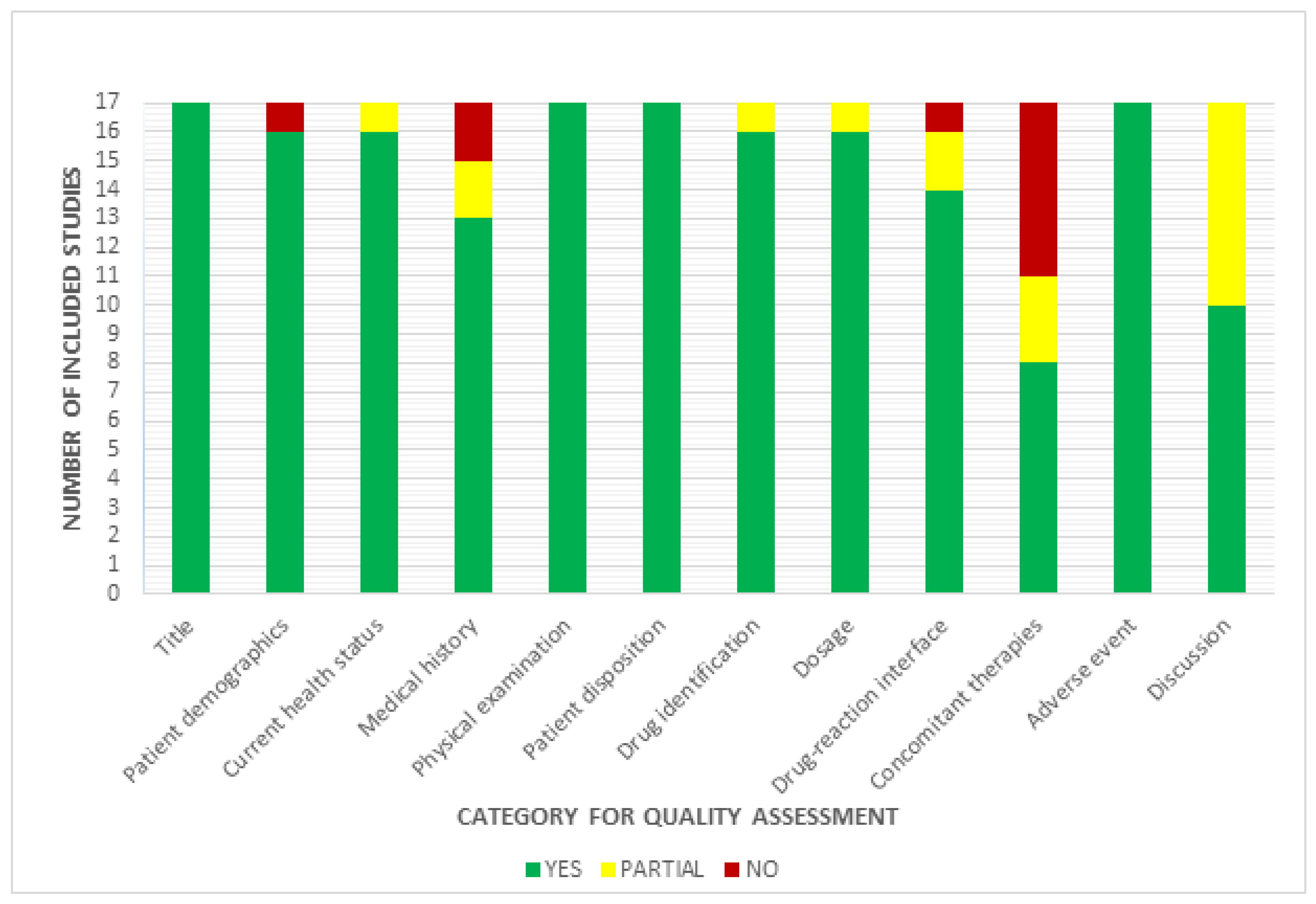
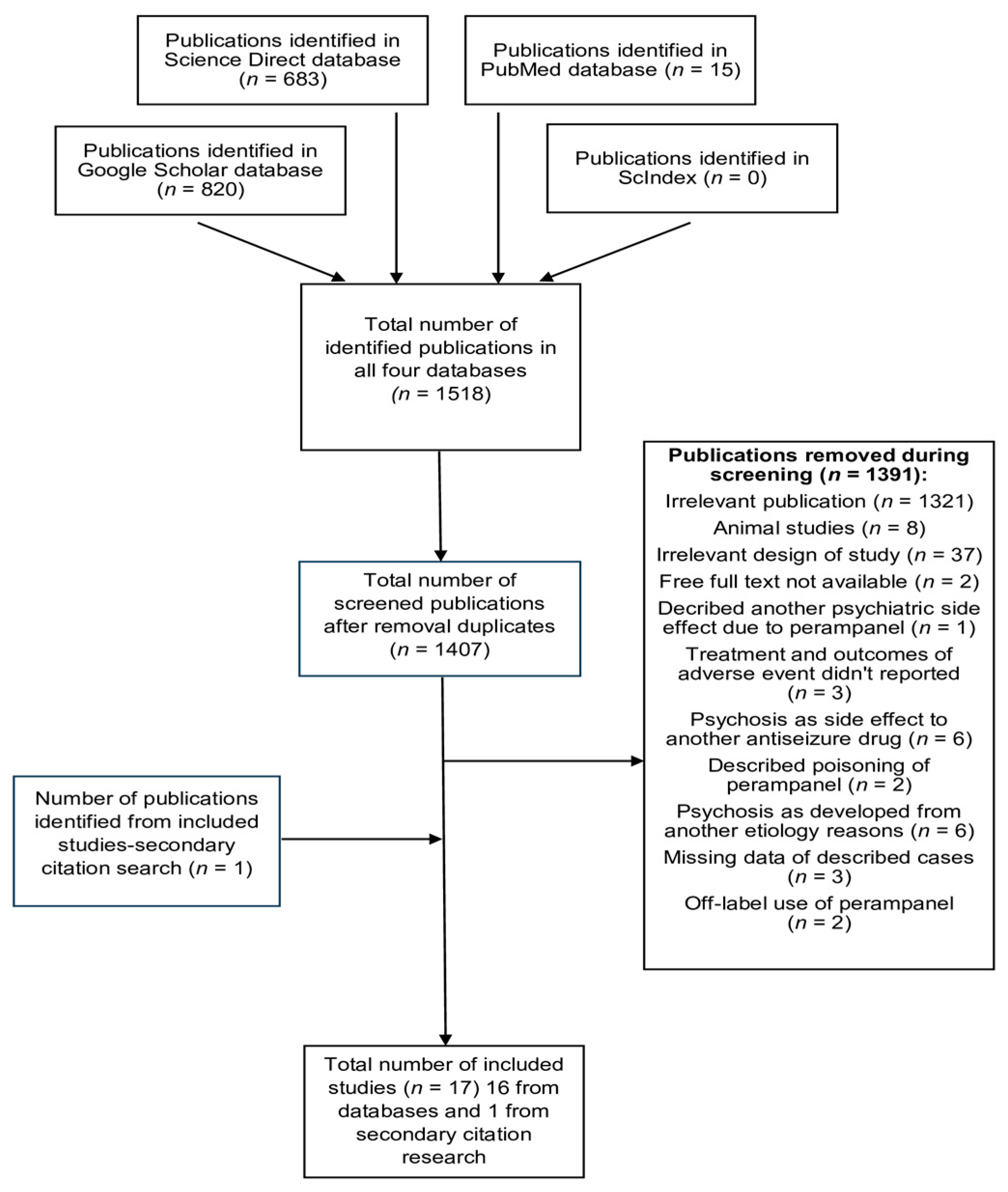
3.1. Study Selection and Results of Quality Assessment
3.2. Excluded Publications
3.3. Characteristics of Included Patients
4. Discussion
5. Conclusions
Supplementary Materials
Author Contributions
Funding
Institutional Review Board Statement
Informed Consent Statement
Data Availability Statement
Conflicts of Interest
Abbreviations
| TNA | Turku Non-Aggressive mice |
| AMPA | α-amino-3-hydroxy-5-methyl-4-isoxazolepropionic acid (AMPA) |
| ILAE | International League Against Epilepsy (ILAE) |
| DSM-5 | Diagnostic and Statistical Manual of Mental Disorders, Fifth Edition |
| PROSPERO | International Prospective Register of Systematic Reviews |
| PRISMA | Preferred Reporting Items for Systematic Reviews and Meta-Analyses |
References
- Boontoterm, P.; Sakoolnamarka, S.; Urasyanandana, K.; Fuengfoo, P. Impact of perampanel for first-episode seizures versus usual care on clinical outcome and safety profile aspects of the Thai experience. J. Epilepsy Res. 2024, 14, 81–93. [Google Scholar] [CrossRef]
- Sills, G.J.; Rogawski, M.A. Mechanisms of action of currently used antiseizure drugs. Neuropharmacology 2020, 168, 107966. [Google Scholar] [CrossRef]
- Abenza-Abildúa, M.J.; Suárez-Gisbert, E.; Thuissard-Vasallo, I.J.; Andreu-Vazquez, C. Perampanel in chronic insomnia. Clin. Neurol. Neurosurg. 2020, 192, 105724. [Google Scholar] [CrossRef] [PubMed]
- Zuberi, S.M.; Wirrell, E.; Yozawitz, E.; Wilmshurst, J.M.; Specchio, N.; Riney, K.; Pressler, R.; Auvin, S.; Samia, P.; Hirsch, E.; et al. ILAE classification and definition of epilepsy syndromes with onset in neonates and infants: Position statement by the ILAE Task Force on Nosology and Definitions. Epilepsia 2022, 63, 1349–1397. [Google Scholar] [CrossRef] [PubMed]
- Mammì, A.; Ferlazzo, E.; Gasparini, S.; Bova, V.; Neri, S.; Labate, A.; Mastroianni, G.; Bianco, C.L.; Cianci, V.; Aguglia, U. Psychiatric and Behavioural Side Effects Associated with Perampanel in Patients with Temporal Lobe Epilepsy. A Real-World Experience. Front. Neurol. 2022, 13, 839985. [Google Scholar] [CrossRef] [PubMed]
- Chen, Z.; Lusicic, A.; O’Brien, T.J.; Velakoulis, D.; Adams, S.J.; Kwan, P. Psychotic disorders induced by antiepileptic drugs in people with epilepsy. Brain 2016, 139, 2668–2678. [Google Scholar] [CrossRef]
- Rugg-Gunn, F. Adverse effects and safety profile of perampanel: A review of pooled data. Epilepsia 2014, 55, 13–15. [Google Scholar] [CrossRef]
- Takeshima, M.; Ishikawa, H.; Ono, T.; Kanbayashi, T.; Shimizu, T. A case of perampanel-induced delirium in a patient with symptomatic epilepsy. Seizure 2018, 58, 154–155. [Google Scholar] [CrossRef]
- Solerdelcoll Arimany, M.; Bruguera, P.; Guzmán, P.; Balcells Oliveiró, M. A case report of an acute confusional state related with perampanel. Eur. Psychiatry 2017, 41, S761. [Google Scholar] [CrossRef]
- Jang, Y.; Kim, T.J.; Moon, J.; Yang, T.-W.; Kim, K.T.; Park, B.-S.; Lim, J.-A.; Jun, J.-S.; Lee, S.-T.; Jung, K.-H.; et al. HLAs associated with perampanel-induced psychiatric adverse effects in a Korean population. Sci. Rep. 2020, 10, 13667. [Google Scholar] [CrossRef]
- European Medicines Agency. Fycompa® Summary of Product Characteristics. 2023. [Last Updated 31 October 2023]. Available online: https://www.ema.europa.eu/en/search?keywords=anyword&search_api_fulltext=fycompa&f%5B0%5D=ema_search_entity_is_document%3ADocumentSite (accessed on 29 January 2026).
- Naranjo, C.A.; Busto, U.; Sellers, E.M.; Sandor, P.; Ruiz, I.; Roberts, E.A.; Janecek, E.; Domecq, C.; Greenblatt, D.J. A method for estimating the probability of adverse drug reactions. Clin. Pharmacol. Ther. 1981, 30, 239–245. [Google Scholar] [CrossRef]
- Kelly, W.N.; Arellano, F.M.; Barnes, J.; Bergman, U.; Edwards, R.I.; Fernandez, A.M.; Freedman, S.B.; Goldsmith, D.I.; Huang, K.A.; Jones, J.K.; et al. International Society for Pharmacoepidemiology; International Society of Pharmacovigilance. Guidelines for submitting adverse event reports for publication. Drug Saf. 2007, 30, 367–373. [Google Scholar] [CrossRef]
- Leite, R.A.; Borges, J.; Macedo, P.; Santos, T. Perampanel-induced psychotic disorder: A case report. Arch. Clin. Psychiatry 2021, 48, 184–185. [Google Scholar]
- Sulais, A.; Alhedaithy, A.; Alghamdi, F.; Ad-Dab’bagh, Y. On Seizures and Knives: Perampanel-Induced Psychosis: A Case Report and Literature Review. J. Epilepsy Res. 2024, 14, 37–41. [Google Scholar] [CrossRef] [PubMed]
- Rogac, Z.; Djurovic, A. Acetazolamide as a solution in pharmacoresistant epilepsy with eyelid myoclonia (Jeavons syndrome). Seizure 2025, 131, 275–279. [Google Scholar] [CrossRef] [PubMed]
- Fujiwara, Y.; Iwata, T.; Terayama, T.; Takeshita, S.; Yoshino, A. Perampanel-associated exacerbation of de novo psychosis and lateralized rhythmic delta activity: A case report. Psychiatry Clin. Neurosci. Rep. 2025, 4, e70208. [Google Scholar] [CrossRef]
- Shelton, A.; Tromans, S.J.; Bhaumik, S.; Kiani, R. Psychosis and epilepsy in ring chromosome 20 syndrome. Adv. Ment. Health Intellect. Disabil. 2017, 11, 8–16. [Google Scholar] [CrossRef]
- Datta, A.N.; Xu, Q.; Sachedina, S.; Boelman, C.; Huh, L.; Connolly, M.B. Clinical Experience with Perampanel for Refractory Pediatric Epilepsy in One Canadian Center. J. Child Neurol. 2017, 32, 834–839. [Google Scholar] [CrossRef]
- Kheloufi, F.; Default, A.; Perrouty, B.; Blin, O.; Micallef, J. Perampanel-associated self-harm ideation after dosage increase. Eur. J. Clin. Pharmacol. 2018, 74, 243–244. [Google Scholar] [CrossRef]
- Dolton, E.; Choudry, A. Perampanel and challenging behaviour in intellectual disability and epilepsy: A management dilemma. Case Rep. Psychiatry 2014, 2014, 409209. [Google Scholar] [CrossRef]
- Kakunje, A.; Pai, S.; Raghavendra, S. Perampanel-associated psychiatric problems. Arch. Med. Health Sci. 2024, 12, 114–115. [Google Scholar] [CrossRef]
- Alvarez-Vazquez, J.; Grande-Seijo, M.; Martinez Agulleiro, L.; Crespo Iglesias, J.M. Aripiprazole for the treatment of Landolt’s forced normalization. J. Clin. Psychopharmacol. 2023, 43, 534–535. [Google Scholar] [CrossRef]
- Yamada, S.M.; Tomita, Y.; Takaya, Y. Features of psychological reactions induced by perampanel: A case report. J. Clin. Pharm. Ther. 2020, 45, 822–824. [Google Scholar] [CrossRef]
- Coyle, H.; Clough, P.; Cooper, P.; Mohanraj, R. Clinical experience with perampanel: Focus on psychiatric adverse effects. Epilepsy Behav. 2014, 41, 193–196. [Google Scholar] [CrossRef]
- Juhl, S.; Rubboli, G. Add-on perampanel and aggressive behaviour in severe drug-resistant focal epilepsies. Funct. Neurol. 2017, 32, 215–220. [Google Scholar]
- Huber, B. Increased risk of suicidality on perampanel (Fycompa®)? Epilepsy Behav. 2014, 31, 71–72. [Google Scholar] [CrossRef]
- Kenaan, K.; Zafar, M.; Bond, R.; Gracious, B.L. Perampanel-induced cataplexy in a young male with generalized epilepsy. HCA Healthc. J. Med. 2020, 1, 283–288. [Google Scholar] [CrossRef] [PubMed]
- Eguchi, Y.; Ishikawa, N.; Izumo, H.; Tateishi, Y.; Kobayashi, Y.; Okada, S. A case of Forced normalization due to perampanel. Brain Dev. Case Rep. 2024, 2, 100009. [Google Scholar] [CrossRef]
- Brigo, F.; Tezzon, F.; Nardone, R. Forced normalization and antiepileptic drugs interacting with glutamatergic neurotransmission: Caution is needed. J. Neurol. Sci. 2017, 379, 14–15. [Google Scholar] [CrossRef] [PubMed]
- Liu, P.; Zhang, Y.; Xu, X.; Zhou, M.; Fei, Y.; Zhang, L. Mining and analysis of adverse drug reactions associated with perampanel based on FAERS database. Epilepsy Behav. 2023, 145, 109283. [Google Scholar] [CrossRef]
- Gui, J.; Wang, L.; Meng, L.; Zhang, X.; Ma, J.; Jiang, L. Psychiatric disorders with antiseizure medications in children: An analysis of the FDA adverse event reporting system database. Acta Epileptol. 2025, 7, 31. [Google Scholar] [CrossRef]
- Porwal, M.H.; Razzak, A.N.; Kumar, V.; Obeidat, A.Z.; Sharma, U. An analysis of suicidal and self-injurious behavior reports with antiseizure medications in the FDA adverse event database. Epilepsy Res. 2024, 203, 107382. [Google Scholar] [CrossRef]
- Ge, C.; Jin, L.; Tian, J.J.; Yang, N.; Xu, J. Comparative safety analysis of lacosamide and perampanel in epilepsy management: Insights from FAERS database. Front. Pharmacol. 2024, 15, 1418609. [Google Scholar] [CrossRef]
- Yamamoto, Y.; Shiratani, Y.; Asai, S.; Usui, N.; Nishida, T.; Imai, K.; Kagawa, Y.; Takahashi, Y. Risk factors for psychiatric adverse effects associated with perampanel therapy. Epilepsy Behav. 2021, 124, 108356. [Google Scholar] [CrossRef] [PubMed]
- Maurousset, A.; Limousin, N.; Praline, J.; Biberon, J.; Corcia, P.; De Toffol, B. Adjunctive perampanel in refractory epilepsy: Experience at tertiary epilepsy care center in Tours. Epilepsy Behav. 2016, 61, 237–241. [Google Scholar] [CrossRef]
- Nuthalapati, P.; DeBonis, D.; Gopaul, M.; Okafor, M.C.; Orner, M.; Jimenez, A.D.; Altalib, H.H. Examining psychiatric and cognitive adverse effects of brivaracetam, clobazam, lacosamide, eslicarbazepine, and perampanel in a veteran population. Epilepsy Behav. 2025, 172, 110557. [Google Scholar] [CrossRef] [PubMed]
- Goji, H.; Kanemoto, K. The effect of perampanel on aggression and depression in patients with epilepsy: A short-term prospective study. Seizure 2019, 67, 1–4. [Google Scholar] [CrossRef]
- Hasegawa, N.; Tohyama, J. Differences in levetiracetam and perampanel treatment-related irritability in patients with epilepsy. Epilepsy Behav. 2021, 116, 107644. [Google Scholar] [CrossRef]
- Lee, S.A.; Jeon, J.Y.; Kim, H.W. Effect of perampanel on aggression in patients with refractory focal epilepsy: A 6-month longitudinal study. Epilepsy Behav. 2020, 102, 106658. [Google Scholar] [CrossRef] [PubMed]
- Kim, J.S.; Kim, W.S.; Sung, W.Y.; Woo, H. Psychiatric and behavioral concerns of perampanel with concomitant levetiracetam in children with epilepsy. Epilepsy Behav. 2024, 154, 109740. [Google Scholar] [CrossRef]
- Matsunuma, S.; Sunaga, S.; Hoshiai, A.; Arai, T.; Jimbo, H.; Yoshimoto, K. Psychiatric disorders of the combination of levetiracetam either with lacosamide or perampanel: A retrospective cohort study. Int. J. Clin. Pharm. 2021, 43, 1516–1522. [Google Scholar] [CrossRef]
- Ettinger, A.B.; LoPresti, A.; Yang, H.; Williams, B.; Zhou, S.; Fain, R.; Laurenza, A. Psychiatric and behavioral adverse events in randomized clinical studies of the noncompetitive AMPA receptor antagonist perampanel. Epilepsia 2015, 56, 1252–1263. [Google Scholar] [CrossRef]
- Chung, S.; Williams, B.; Dobrinsky, C.; PatTen, A.; Yang, H.; Laurenza, A. Perampanel with concomitant levetiracetam and topiramate: Post hoc analysis of adverse events related to hostility and aggression. Epilepsy Behav. 2017, 75, 79–85. [Google Scholar] [CrossRef] [PubMed]
- Kanner, A.M.; Patten, A.; Ettinger, A.B.; Helmstaedter, C.; Meador, K.J.; Malhotra, M. Does a psychiatric history play a role in the development of psychiatric adverse events to perampanel…and to placebo? Epilepsy Behav. 2021, 125, 108380. [Google Scholar] [CrossRef] [PubMed]
- Hasegawa, N.; Tohyama, J. Positive and negative effects of perampanel treatment on psychiatric and behavioral symptoms in adult patients with epilepsy. Epilepsy Behav. 2021, 117, 107515. [Google Scholar] [CrossRef] [PubMed]
- Kawai, M.; Goji, H.; Kanemoto, K. Differences in aggression as psychiatric side effect of levetiracetam and perampanel in patients with epilepsy. Epilepsy Behav. 2022, 126, 108493. [Google Scholar] [CrossRef]
- Shen, S.; Sun, H.; Dong, Z.; Yi, T.; Sander, J.W.; Zhou, D.; Li, J. Prevalence, clinical characteristics, and risk factors for psychosis in people with epilepsy: A multicenter retrospective cohort study. Epilepsia 2025, 66, 2904–2915. [Google Scholar] [CrossRef]
- Stephen, L.J.; Wishart, A.; Brodie, M.J. Psychiatric side effects and antiepileptic drugs: Observations from prospective audits. Epilepsy Behav. 2017, 71, 73–78. [Google Scholar] [CrossRef]
- Abril Jaramillo, J.; Estévez María, J.C.; Girón Úbeda, J.M.; Vega López, Ó.; Calzado Rivas, M.E.; Pérez Díaz, H.; García Martín, G.; Vila Herrero, E.; Chamorro-Muñoz, M.; Vázquez, F.; et al. Effectiveness and safety of perampanel as early add-on treatment in patients with epilepsy and focal seizures in the routine clinical practice: Spain prospective study (PERADON). Epilepsy Behav. 2020, 102, 106655. [Google Scholar] [CrossRef]
- Kawai, M.; Goji, H.; Kanemoto, K. Aggression as psychiatric side effect of newer AEDs in patients with epilepsy: Cross-sectional study based on Buss-Perry Aggression Questionnaire. Epilepsy Behav. 2021, 115, 107546. [Google Scholar] [CrossRef]
- von Wrede, R.; Meschede, C.; Brand, F.; Helmstaedter, C. Levetiracetam, perampanel, and the issue of aggression: A self-report study. Epilepsy Behav. 2021, 117, 107806. [Google Scholar] [CrossRef]
- Chang, H.; Kim, T.J.; Shin, Y.W.; Moon, J.; Lee, A.T.; Park, K.; Chu, K.; Jung, K.Y.; Kim, M.; Lee, K.L. Perampanel-induced psychiatric adverse events: Associated with Human leukocyte antigen subtypes. Epilepsy Behav. 2019, 101, 106801. [Google Scholar] [CrossRef]
- Lagae, L.; Villanueva, V.; Meador, K.J.; Bagul, M.; Laurenza, A.; Kumar, D.; Yang, H. Adjunctive perampanel in adolescents with inadequately controlled partial-onset seizures: A randomized study evaluating behavior, efficacy, and safety. Epilepsia 2016, 57, 1120–1129. [Google Scholar]
- Kanemura, H.; Sano, F.; Aihara, M. Usefulness of perampanel with concomitant levetiracetam for patients with drug-resistant epilepsy. Eur. J. Paediatr. Neurol. 2019, 23, 197–203. [Google Scholar] [CrossRef] [PubMed]
- Krauss, G.L.; Perucca, E.; Ben-Menachem, E.; Kwan, P.; Shih, J.J.; Clément, J.F.; Wang, X.; Bagul, M.; Gee, M.; Zhu, J.; et al. Long-term safety of perampanel and seizure outcomes in refractory partial-onset seizures and secondarily generalized seizures: Results from phase III extension study 307. Epilepsia 2014, 55, 1058–1068. [Google Scholar] [CrossRef] [PubMed]
- Meador, K.J.; Seliger, J.; Le, S.; Li, Y.; Razavi, B.; Falco-Walter, J.; King, A.; Graham, E.; Cunningham, E.; Leeman-Markowski, B.; et al. Cognitive and behavioral effects of perampanel 4 mg. Epilepsy Behav. 2025, 164, 110268. [Google Scholar] [CrossRef] [PubMed]
- Hansen, C.C.; Ljung, H.; Brodtkorb, E.; Reimers, A. Mechanisms Underlying Aggressive Behavior Induced by Antiepileptic Drugs: Focus on Topiramate, Levetiracetam, and Perampanel. Behavioural Neurology. Behav. Neurol. 2018, 2018, 2064027. [Google Scholar]
- Brodie, M.J.; Besag, F.; Ettinger, A.B.; Mula, M.; Gobbi, G.; Comai, S.; Aldenkamp, A.P.; Steinhoff, B.J. Epilepsy, Antiepileptic Drugs, and Aggression: An Evidence-Based Review. Pharmacol. Rev. 2016, 68, 563–602. [Google Scholar] [CrossRef]
- Thigpen, J.; Miller, S.E.; Pond, B.B. Behavioral side effects of antiepileptic drugs. US Pharm. 2013, 38, HS15–HS20. [Google Scholar]
- Afzal, K.I.; Anam, S.; Hunter, S.J. The effects of antiepileptic drugs on pediatric cognition, mood, and behavior. J. Pediatr. Epilepsy 2017, 6, 3–18. [Google Scholar]
- Moavero, R.; Santarone, M.E.; Galasso, C.; Curatolo, P. Cognitive and behavioral effects of new antiepileptic drugs in pediatric epilepsy. Brain Dev. 2017, 39, 464–469. [Google Scholar] [CrossRef]
- Tallian, K. Three clinical pearls in the treatment of patients with seizures and comorbid psychiatric disorders. Ment. Health Clin. 2018, 7, 235–245. [Google Scholar] [CrossRef]
- Fong, Y.O.; Huang, P.; Hsu, C.Y.; Yang, Y.H. Effects of Perampanel on Seizure Control, Cognition, Behavior, and Psychological Status in Patients with Epilepsy: A Systematic Review. J. Clin. Neurol. 2022, 18, 653–662. [Google Scholar] [CrossRef]
- Scorrano, G.; Lattanzi, S.; Salpietro, V.; Giannini, C.; Chiarelli, F.; Matricardi, S. The Cognitive and Behavioural Effects of Perampanel in Children with Neurodevelopmental Disorders: A Systematic Review. J. Clin. Med. 2024, 13, 372. [Google Scholar] [CrossRef] [PubMed]
- Steinhoff, B.J.; Klein, P.; Klitgaard, H.; Laloyaux, C.; Moseley, B.D.; Ricchetti-Masterson, K.; Rosenow, F.; Sirven, J.I.; Smith, B.; Stern, J.M.; et al. Behavioral adverse events with brivaracetam, levetiracetam, perampanel, and topiramate: A systematic review. Epilepsy Behav. 2021, 118, 107939. [Google Scholar] [CrossRef] [PubMed]
- Pintor, L.; Gutiérrez, F.; Kanner, A.M. Interictal psychosis of epilepsy: What is the role of the neurologist? Epilepsy Behav. Rep. 2024, 28, 100708. [Google Scholar] [CrossRef] [PubMed]
- Pinheiro Ramos, C.; Marta, J.; Batista, C.; Freire, M.J.; Mendes, S.; Gamito, A. Post-status epilepticus psychosis: About a clinical case. Neurosci. Appl. 2024, 3, 105343. [Google Scholar] [CrossRef]
- Rajnish, R.; Aaliya, K.; Ahmad, W.Z. Clozapine and Modified Electroconvulsive Therapy Resolving Forced Normalization: A Rare Case Report. J. Ment. Health Hum. Behav. 2024, 29, 44–46. [Google Scholar]
- Endres, D.; Altenmüller, D.M.; Feige, B.; Maier, S.J.; Nickel, K.; Hellwig, S.; Rausch, J.; Ziegler, C.; Domschke, K.; Doerr, J.P.; et al. Myoclonic Jerks and Schizophreniform Syndrome: Case Report and Literature Review. Front. Psychiatry 2018, 9, 161. [Google Scholar] [CrossRef]
- Ishikawa, R.; Sugimoto, T.; Ohno, N.; Iizuka, T.; Nomura, E. A Case of Anti-N-Methyl-D-Aspartate Receptor (NMDAR) Encephalitis with Video-Documented Psychogenic Nonepileptic Seizures (PNES)-Mimicking Episodes Initially Considered as Somatic Symptom Disorder. Cureus 2025, 17, e79384. [Google Scholar] [CrossRef]
- Saito, S.; Taniguchi, G.; Nakata, C.; Kato, H.; Otake, M.; Umeda, M.; Fuji, Y.; Nakagawa, E. Anti-NMDAR Encephalitis with Serial Negative MRI Findings: An Evaluation Using Autoimmune Psychosis Criteria. Case Rep. Neurol. Med. 2025, 2025, 4561447. [Google Scholar] [CrossRef]
- Pujal Rodríguez, E.; Pons-Cabrera, M.T.; Giménez, A.; Colomer, L.; Baldaqui, N.; Gutiérrez, F.; Anmella, G.; Ilzarbe, L.; Madero, S.; Sagué-Vilavella, M.; et al. Perampanel-induced psychosis in a Young Woman: A Case Report. Clin. Neuropharmacol. 2021, 44, 240–242. [Google Scholar] [CrossRef] [PubMed]
- Jesus, T.; Peralta, A.R.; Moreira, M.; Barroso, C.; Almeida, V. New-onset prolonged psychosis from non-convulsive status epilepticus. Pract. Neurol. 2025, 25, 544–548. [Google Scholar] [CrossRef]
- Esteban-Avendaño, I.; Torres Cortés, J.; Padín Calo, J. Early Onset Aggressive Behavior Induced by Perampanel in the Treatment of Chronic Insomnia: A Case Report. Eur. Psychiatry 2023, 66, S1102–S1103. [Google Scholar] [CrossRef]
- Gómez-Arnau, J.; Artieda-Urrutia, P.; Hernández-Huerta, D. Use of perampanel in treatment-resistant insomnia. Actas Esp. Psiquiatr. 2018, 46, 112–116. [Google Scholar]
- Jovic, N.J.; Cekic, B.D.; Babic, M.D. Psychiatric adverse effects associated with adjunctive perampanel for refractory epilepsies. Eur. Neuropsychopharmacol. 2014, 24, S205. [Google Scholar] [CrossRef]
- Blickhan, M.; Intravooth, T.; Staack, A.M.; Kornmeier, R.; Mahn, P.; Schneider, M.; Stockinger, J.; Bacher, M.; Kurth, C.; Steinhoff, B.J. Clinical experience of Abrupt discontinuation of perampanel: A case series. Epileptic Disord. 2021, 23, 148–152. [Google Scholar] [CrossRef]
- Operto, F.F.; Orsini, A.; Sica, G.; Scuoppo, C.; Padovano, C.; Vivenzio, V.; de Simone, V.; Rinaldi, R.; Belfiore, G.; Mazza, R.; et al. Perampanel and childhood absence epilepsy: A real life experience. Front. Neurol. 2022, 13, 952900. [Google Scholar] [CrossRef]
- Yang, H.; Yu, D. Young children with multidrug-resistant epilepsy and vagus nerve stimulation responding to perampanel: A case report. World J. Clin. Cases 2022, 10, 3511–3517. [Google Scholar] [CrossRef]
- Andres, E.; Kerling, F.; Hamer, H.; Kasper, B.; Winterholler, M. Behavioural changes in patients with intellectual disability treated with perampanel. Acta Neurol. Scand. 2017, 136, 645–653. [Google Scholar] [CrossRef]
- Wu, C.C.; McShane, M.; Huttlin, E.A.; Novoa, K.C. Severe Aggression After Perampanel Overdose: Case Report. Psychosomatics 2019, 60, 321–324. [Google Scholar] [CrossRef]
- Brzezinski, A.; Menchaca, C.I.; Gangu, S. Phenobarbital use in pediatric perampanel overdose with coma, respiratory compromise. Toxicol. Rep. 2024, 13, 101809. [Google Scholar] [CrossRef]
- Pinckaers, F.M.E.; Boon, M.E.; Majoie, M.H.J.M. Risk factors predisposing to psychotic symptoms during levetiracetam therapy: A retrospective study. Epilepsy Behav. 2019, 100, 106344. [Google Scholar] [CrossRef]
- Tao, K.; Chen, H.; Chen, Y.; Gu, Y.; Wang, X. Levetiracetam-induced severe psychiatric symptoms in people with epilepsy. Seizure 2024, 116, 147–150. [Google Scholar] [CrossRef]
- Durairaj, T.; Porchezhian, M.; Kumar, M.; Britto, J.R.J.; K, M.; Saravanan, A. Beyond Seizure Control: A Case Series on Levetiracetam Associated Psychiatric Manifestations. Indian J. Psychol. Med. 2025, 15, 02537176251363453. [Google Scholar] [CrossRef]
- Isidoro, M.F.F.; Ong, M.T.; Renato, S.D. Levetiracetam-induced psychosis in a Filipino female diagnosed with anti-N-methyl-D-aspartate receptor encephalitis: A case report. Int. J. Res. Med. Sci. 2023, 11, 3030–3033. [Google Scholar] [CrossRef]
- Stoppa, A.; Anmella, G.; Delgado, L.; Vallès, V.; Pintor, L. A Manic Episode with Psychotic Features Associated with Levetiracetam: A Case Report, a Proposal of Prodromal and Discriminative Symptoms and a Possible Pathophysiological Mechanism. J. Clin. Psychopharmacol. 2022, 42, 316–317. [Google Scholar] [CrossRef] [PubMed]
- Chellappan, B.; Tran, T.; Shukla, V. Possible COVID-19 Psychosis in Patient with Post-Infectious Seizure Disorder: A Case Report. J. Clin. Case Rep. Clin. Study 2021, 12, 1–4. [Google Scholar] [CrossRef] [PubMed]
- Vekovischeva, O.Y.; Aitta-aho, T.; Verbitskaya, E.; Sandnabba, K.; Korpi, E. Acute effects of AMPA-type glutamate receptor antagonists on intermale social behavior in two mouse lines bidirectionally selected for offensive aggression. Pharmacol. Biochem. Behav. 2007, 87, 241–249. [Google Scholar] [CrossRef] [PubMed]
- Shimizu, K.; Kurosawa, N.; Seki, K. The role of the AMPA receptor and 5-HT(3) receptor on aggressive behavior and depressive-like symptoms in chronic social isolation-reared mice. Physiol. Behav. 2016, 153, 70–83. [Google Scholar] [CrossRef]
- Peng, S.X.; Pei, J.; Rinaldi, B.; Chen, J.; Ge, Y.-H.; Jia, M.; Wang, J.; Delahaye-Duriez, A.; Sun, J.-H.; Zang, Y.-Y.; et al. Dysfunction of AMPA receptor GluA3 is associated with aggressive behavior in human. Mol. Psychiatry 2022, 27, 4092–4102. [Google Scholar] [CrossRef] [PubMed]
- Yang, W.; Ma, L.; Hai, D.M.; Liu, N.; Yang, J.-M.; Lan, X.-B.; Du, J.; Yang, L.-S.; Sun, T.; Yu, J.Q. Hippocampal Proteomic Analysis in Male Mice Following Aggressive Behavior Induced by Long-Term Administration of Perampanel. ACS Omega 2022, 7, 19388–19400. [Google Scholar] [CrossRef] [PubMed]


| Characteristic | Value | |
|---|---|---|
| Age, mean (range), (n = 32) | 34.22; (11–70) | |
| Sex, No., (%) | Males | 10; (30.30%) |
| Females | 22; (66.67%) | |
| Not reported | 1; (3.03%) | |
| Country, No., (%) | Denmark | 12; (36.36%) |
| Canada | 5; (15.15%) | |
| United Kingdom | 3; (9.09%) | |
| Japan | 3; (9.09%) | |
| Spain | 2; (6.06%) | |
| Germany | 2; (6.06%) | |
| India | 1; (3.03%) | |
| France | 1; (3.03%) | |
| Saudi Arabia | 1; (3.03%) | |
| Portugal | 1; (3.03%) | |
| USA | 1; (3.03%) | |
| Montenegro | 1; (3.03%) | |
| Perampanel daily dosage during adverse event, No., (%) | 1.5 mg | 1; (3.03%) |
| 2 mg | 2; (6.06%) | |
| 4 mg | 11; (33.33%) | |
| 6 mg | 7; (21.21%) | |
| 8 mg | 9; (27.27%) | |
| 10 mg | 1; (3.03%) | |
| 12 mg | 2; (6.06%) | |
| Number of concomitant antiseizure medications used during adverse event except perampanel, No., (%) | one | 4; (12.12%) |
| two | 8; (24.24%) | |
| three | 10; (30.30%) | |
| four | 5; (15.15%) | |
| Not reported | 6; (18.18%) | |
| Personal history of neuropsychiatric disorders or psychological reactions, No., (%) | Yes | 20; (60.61%) |
| No | 10; (30.30%) | |
| Not reported | 3; (9.09%) | |
| Family history of neuropsychiatric disorders or psychological reactions, No., (%) | Yes | 0; (0%) |
| No | 7; (21.21%) | |
| Not reported | 26; (78.79%) | |
| Types of seizures, No., (%) | Focal; simple partial only | 2; (6.06%) |
| Focal (both simple or complex) with secondary generalization | 10; (30.30%) | |
| Focal; complex partial only | 4; (12.12%) | |
| Generalized only | 6; (18.18%) | |
| Mixed forms | 5; (15.15%) | |
| Not precise | 6; (18.18%) | |
| Outcome, No., (%) | Full recovery | 31; (93.94%) |
| Partial recovery | 2; (6.06%) | |
| Died | 0; (0%) | |
| No. | Study | No. of Patients and Country | Age; Sex | Type of Seizures | Personal Psychiatric History | PER Dosage (Starting Dose; Dose on Which Adverse Event Occurred | Concomitant Antiseizure Medications with Daily Doses | Clinical Signs and Symptoms of Adverse Event with Time of Onset | Dechallenge/ Rechallenge | ST with Daily Doses | Outcome |
|---|---|---|---|---|---|---|---|---|---|---|---|
| 1 | Sulais et al. 2024 [15] | 1; SA | 15; F | GS; tonic–clonic and atonic seizures | Moderate intellectual disability—NS | NS; 4 mg daily | LEV 1600 mg and VAL 1300 mg | About 2 months after PER introduction: irritability, aggression, (physically and verbal), homicide threats, insomnia, psychomotor agitation, disorganized speech, persecutory delusions and hallucinations (auditory and visual) with hallucinatory gestures. | Not completed/not completed; PER continued at the same dose | RIS increased to 1.5 mg | Full recovery after a few days |
| 2 | Takeshima et al. 2018 [8] | 1; JPN | NR | SPS; focal motorseizures | NR | 2 mg daily; 4 mg daily-worsening at 8 mg daily | LEV 3000 mg | A day after increasing PER to 4 mg: drowsiness and irritability; symptoms worsened at the same day after increasing PER to 8 mg (63 days of treatment): cognitive, memory and attentional impairment, worsening irritability, disorientation, confusion during conversation and abnormal movements. | Positive/not completed | None | Full recovery after 17 days |
| 3 | S. Arimany et al. 2017 [9] | 1; ESP | 32; F | GS; juvenile myoclonus seizures | NR | NS; 12 mg daily | NR | Shortly after increasing PER dosage from 6 to 12 mg: insomnia, irritability, aggression, behavioral disturbances, confusion with fluctuations of mental state and level of consciousness (acute confusonal syndrome was diagnosed) | Positive/not completed | RIS (dose NR) | Full recovery after 4 weeks |
| 4 | Leite et al. 2021 [14] | 1; POR | 57; F | PWSG: temporal and left front opercular epilepsy | None | NS; 12 mg daily | TPM 200 mg; CLZ 4 mg and LCM 200 mg | 2 weeks after increasing PER dose to 12 mg: hostility, extreme irritability, disorganized thoughts, persecutory and self-referential delusions combined with multiple delusional interpretations and perplexity and hallucinations (auditory-verbal, olfactory and somatic) | Not completed/not completed; PER was reduced to 6 mg daily | RIS 2 mg and LOR 2.5 mg | Full recovery after 1 week |
| 5 | Rogac et al. 2025 [16] | 1; MON | 11; M | GS; eyelid myoclonia-Jeavons syndrome with tonic–clonic seizures | aggression (LEV, BRV), suicidal ideations with social impairment (TPM), symptoms similar to ADHD (BRV) | 1.5 mg daily; 1.5 mg daily | VAL 40 mg/kg, LTG 5 mg/kg and CLZ 0.3 mg/kg | 2 weeks after PER introduction: severe visual hallucinations | Positive/not completed | None | Full recovery after 1 month |
| 6 | Fujiwara et al. 2025 [17] | 1; JPN | 30; F | Mixed: SPS and PWSG; right temporal lobe epilepsy | Paranoid delusions with auditory hallucinations 5 months after neurosurgery intervention (3 years before adverse event) | 2 mg daily; 6 mg daily | LCM 300 mg; LEV 3000 mg; VAL 800 mg and ACZ 500 mg | 7 months after increasing PER to 6 mg, exacerbating of de novo psychosis: delusions, irritability, aggression, psychomotor agitation, apart attention, disorientation with rigid demeanor (suggested PER induced encephalopathy) presumably responsible for development these symptoms | Positive/not completed | FLN 2 mg—IV injection | Full Recovery after 29 days |
| 7 | Shelton et al. 2017 [18] | 1; UK | 21; F | Mixed: CPS with SG and GS (absence, attacks similar to absence and tonic–clonic seizures) | Intellectual disability due to ring 20 chromosome mosaicism; similar psychosis symptoms (ZNS, ETX), aggression (VAL) and letargia (unknown ASM) | NS; 4 mg daily | LTG 525 mg; ZNS 300 mg and MDZ 10 mg as “rescue medication” | 3 weeks after PER introduction: tactile hallucinations, delusions, self-harm, restlessness, agitation, increase in challenging behavior, significant distress without being confused or disorientated | Not completed/not completed; PER continued at the same dose | RIS 0.75 mg | Partial recovery; patient was on further follow-up |
| 8 | Kheloufi et al. 2017 [20] | 1; FRA | 35; M | PWSG: right temporal epilepsy | None | 2 mg daily; 4 mg daily | OXC 1800 mg | 2 weeks after PER dose increased to 4 mg: compulsive self-mutilation ideation; self-harm ideation without suicidal intention | Positive/not completed | None | Full recovery within a week |
| 9 | Dolton et al. 2014 [21] | 1; UK | 37; F | GS: tonic–clonic seizures | Moderate cognitive disability with history of challenging behavior causing hospital admission—NS symptoms | NS; 8 mg daily | GBP, ZNS and VAL (doses NR) | Since PER was increased to 8 mg: psychomotor agitation, aggression (verbal and especially physical), self-injurious behaviors with worsening symptoms over the weeks | Not completed/ not completed; PER was reduced to 6 and shortly to 4 mg daily | QUT 350 mg; RIS 2 mg; AML 200 mg; ZCP-later excluded due to EXP side effects and replaced with ARP-dose NR | Partial recovery; patient was on further follow-up |
| 10 | Kakunje et al. 2024 [22] | 1; IND | 24; M | PS—NS refractory right hemisfere seizures | None | 2 mg daily; 8 mg daily | CBZ 20 mg; BRV 200 mg and LCM 200 mg | Patient experienced drowsiness initially. After a few weeks of PER introduction: anger, less talking, irritability, aggression (physical and verbal), tremors of hand with exclusion of mood disorder (PER-associated psychiatric adverse event diagnosis) | Positive/not completed | None | Full recovery after few days |
| 11 | A.V. Jose et al. 2023 [23] | 1; ESP | 19; F | GS; juvenile myoclonus seizures | ADHD syndrome | NS; 4 mg daily | VAL 1000 mg and CLZ 3 mg | About 2 years of PER introduction: aggression with significant behavioral changes and fluctuating bizarre behavior, irritability, unmotivated laughter, disorganized speech and thought, delusions and auditory hallucinations. Symptoms improved during 1st admission without any treatment (brief psychotic disorder). A week after discharge patient readmitted with reoccurrence of psychotic episode: bewilderment and slowness of thought when forced normalization was diagnosed. | Not completed/not completed; PER continued at the same dose | CRP 1.5 mg; replaced with ARP due to EXP side effects (dose NR) | Full recovery after 3 weeks |
| 12 | Yamada et al. 2020 [24] | 1; JPN | 70; F | SPS; right hand focal convulsion | NR | 2 mg daily; 4 mg daily | LEV 2000 mg | 2 weeks after PER dosage increased to 4 mg: patient could not walk, aggression, especially verbal, hostility, extremely talkative and suicidal ideation. She was aware herself of the strangeness of her psychological status. | Positive/not completed | None | Full recovery (time NS) |
| 13 | Coyle et al. 2014 [25] | 1; UK | 51; M | Mixed: CPS with SG and GS (tonic–clonic seizures) | None | 2 mg daily; 8 mg daily | CBZ (dose NR) and LEV 4000 mg | Shortly after PER dosage increased to 8 mg: intermittent confusion, aggression and suicidal ideation | Positive/not completed | BNZ drug—NS | Full recovery (time NS) |
| 14 | Kenaan et al. 2020 [28] | 1; USA | 32; M | GS: tonic–clonic seizures | Depression, Anxiety, hospitalization due to mood lability with cognitive and social impairment | 2 mg daily; 10 mg daily | LEV 1000 mg and CAR 400 mg | Initially patient experienced symptoms of cataplexy, which was completely resolved at the 4th day of hospitalization. Due to poor seizure control, PER was reintroduced at the same dose when it was withdrawn at admission (10 mg daily). After several hours patient developed: confusion, visual hallucinations, severe agitation requiring physical restraints with reoccurrence of cataplexy. | Positive/not completed | None | Full recovery after 2 days |
| 15 | Huber et al. 2013 [27] | 2; GER | 21; F | Mixed: SPS, CPS and GS (tonic–clonic seizures) | Cognitive impairment—NS | 2 mg daily; 8 mg daily | LTG and VAL (doses NR) | 1 month after PER increased to 8 mg, she complained due to weight increase, dizziness, and blurred vision. Later, she was unusually sensitive, irritable, would become upset over any minor adversity and suicidal ideas | Positive/not completed | None | Full recovery after few days |
| 22; F | Mixed: SPS, CPS and GS (tonic–clonic seizures | Cognitive impairment—NS; history of suicide attempt by using toxic doses of LEV, 7 years ago | 2 mg daily; 4 mg daily | OXC and RTG (doses NR) | Shortly after PER was increased, patient initially felt dizzy and unwell. About 8 weeks later at the same dose, symptoms worsened, and she felt thin-skinned, abnormally sensitive, irritable, aggressive with suicidal ideas | Positive/not completed | None | Full recovery after few days | |||
| 16 | Datta et al. 2017 [19] | 5; CAN | 20; F | NS | Confirmed for other psychiatric comorbidities; NS | 2 mg daily; 2 mg daily | NR | 1 week after PER introduction: verbal and physical aggression | Positive/not completed | None | Full recovery (time NS) |
| 18; M | NS | Behavioral adverse events-not specified symptoms (LEV, OXC); Confirmed for other psychiatric comorbidities—NS | 2 mg daily; 4 mg daily | NR | 9 weeks after PER introduction: mood swings, irritability, auditory hallucinations, dizziness, and poor appetite | Positive/not completed | None | Full recovery (time NS) | |||
| 14; F | NS | Behavioral adverse events-NS symptoms (LEV); Confirmed for other psychiatric comorbidities—NS | 2 mg daily; 6 mg daily | NR | 9 weeks after PER introduction: verbal and physical aggression, homicidal thoughts | Positive/not completed | None | Full recovery (time NS) | |||
| 17; F | NS | Behavioral adverse events-NS symptoms (VAL); None history for other psychiatric comorbidities. | 2 mg daily; 6 mg daily | NR | 72 weeks after PER introduction: verbal and physical aggression, hair loss | Positive/not completed | None | Full recovery (time NS) | |||
| 21; F | NS | Confirmed for other psychiatric comorbidities—NS | 2 mg daily; 6 mg daily | NR | 15 weeks after PER introduction: verbal and physical aggression, actual self-harm | Positive/not completed | None | Full recovery (time NS) | |||
| 17 | Juhl et al. 2017 [26] | 12; DEN | 50; F | CPS | depression | 2 mg daily; 6 mg daily | LEV, LTG, PGB and CBZ (doses NR) | 28 months after PER introduction: aggression, bad mood, tiredness, dizziness, and concentration difficulties | Not completed/not completed; only PER was reduced to 4 mg daily. | None. | Full recovery (time NS) |
| 32; F | CPS with SG tonic–clonic seizures | Intellectual disability—NS | 2 mg daily; 2 mg daily | TPM, SLT and VAL (doses NR) | 2 months after PER introduction: aggression, tiredness, and mood swings | Positive/not completed | None | Full recovery (time NS) | |||
| 32; M | CPS with SG (tonic–clonic seizures | Intellectual disability—NS | 2 mg daily; 8 mg daily | TPM, SLT, VAL and CBZ (doses NR) | 12 months after PER introduction: aggression and tiredness | Positive/not completed | None | Full recovery (time NS) | |||
| 59; F | CPS | Obsessive-compulsive anxiety disorder | 2 mg daily; 4 mg daily | LEV, CLZ and CAR (doses NR) | 7 months after PER introduction: aggression, bad mood, and difficulty in finding words | Positive/not completed | None | Full recovery (time NS) | |||
| 49; F | CPS | None | 2 mg daily; 8 mg daily | LTG, LCM, CBZ and RTG (doses NR) | 26 months after PER introduction: aggression and mood swings | Not completed/not completed; only PER was reduced to 4 mg daily | None. | Full recovery (time NS) | |||
| 43; F | CPS | None | 2 mg daily; 8 mg daily | LTG, CBZ and RTG (doses NR) | 6 months after PER introduction: aggression and bad mood | Positive/not completed | None | Full recovery (time NS) | |||
| 67; M | CPS with SG tonic–clonic seizures | None | 2 mg daily; 4 mg daily | LCM, CBZ and VAL (doses NR) | 5 months after PER introduction: aggression only | Positive/not completed | None | Full recovery (time NS) | |||
| 51; F | SPS with SG tonic–clonic seizures | None | 2 mg daily; 4 mg daily | LEV and ZNS (doses NR) | 24 months after PER introduction: aggression, bad mood, concentration difficulties, and tiredness | Positive/not completed | None | Full recovery (time NS) | |||
| 48; F | SPS with SG tonic–clonic seizures | None | 2 mg daily; 8 mg daily | LTG (dose NR) | 18 months after PER introduction: aggression, bad mood and concentration difficulties | Positive/not completed | None | Full recovery (time NS) | |||
| 25; M | SG tonic clonic seizures | Intellectual disability—NS | 2 mg daily; 8 mg daily | LEV and VAL (doses NR) | 32 months after PER introduction: aggression only | Positive/not completed | None | Full recovery (time NS) | |||
| 30; F | SPS with SG tonic–clonic seizures | Intellectual disability—NS | 2 mg daily; 6 mg daily | LEV, VAL, TPM and LCM (doses NR) | 10 months after PER introduction: aggression, tiredness and irascibility | Positive/not completed | None | Full recovery (time NS) | |||
| 42; M | CPS with SG tonic–clonic seizures | None | 2 mg daily; 6 mg daily | CBZ, CAR and LCM (doses NR) | 7 months after PER introduction: aggression, tiredness, headache, and double vision | Positive/not completed | None | Full recovery (time NS) |
| Neuropsychiatric Symptoms or Signs | Value |
|---|---|
| Aggression (verbal or physical) | 25; (75.76%) |
| Irritability | 10; (30.30%) |
| Hallucinations (both auditory, tactile, visual, verbal, olfactory, or somatic) | 7; (21.21%) |
| “Bad” or unwell mood | 6; (18.18%) |
| Tiredness | 6; (18.18%) |
| Psychomotor agitation | 5, (15.15%) |
| Delusions (self-referential or persecutory) | 5, (15.15%) |
| Suicide threats or thoughts | 4, (12.12%) |
| Self-harm thoughts or injuries | 4, (12.12%) |
| Dizziness | 4, (12.12%) |
| Challenging or bizarre behavior or behavioral disturbances-unspecified | 3, (9.09%) |
| Disorganized speech or confusion during conversation | 3, (9.09%) |
| Tremors or abnormal or impair movements | 3, (9.09%) |
| Restlessness or anxiety or significant distress | 3, (9.09%) |
| Mood swings | 3, (9.09%) |
| Concentration difficulties | 3, (9.09%) |
| Confusion | 3, (9.09%) |
| Disorientation | 2, (6.06%) |
| Disorganized thought or slowness of thought | 2, (6.06%) |
| Cognitive or memory impairment | 2, (6.06%) |
| Perplexity or bewilderment | 2, (6.06%) |
| Insomnia | 2, (6.06%) |
| Drowsiness | 2, (6.06%) |
| Attention impairment | 2, (6.06%) |
| Vision problems (blurred or double vision) | 2, (6.06%) |
| Homicide threats or thoughts | 2, (6.06%) |
| Abnormal sensitivity | 2, (6.06%) |
| Loss of consciousness | 1, (3.03%) |
| Social impairment | 1, (3.03%) |
| Cataplexy | 1, (3.03%) |
| Feel thin-skinned | 1, (3.03%) |
| Headache | 1, (3.03%) |
| Angry or anger | 1, (3.03%) |
| Irascibility | 1, (3.03%) |
| Poor appetite | 1, (3.03%) |
| Rigid demeanor | 1, (3.03%) |
| Hostility | 1, (3.03%) |
| Extreme talking | 1, (3.03%) |
| Less talking | 1, (3.03%) |
| Unmotivated laughter | 1, (3.03%) |
Disclaimer/Publisher’s Note: The statements, opinions and data contained in all publications are solely those of the individual author(s) and contributor(s) and not of MDPI and/or the editor(s). MDPI and/or the editor(s) disclaim responsibility for any injury to people or property resulting from any ideas, methods, instructions or products referred to in the content. |
© 2026 by the authors. Licensee MDPI, Basel, Switzerland. This article is an open access article distributed under the terms and conditions of the Creative Commons Attribution (CC BY) license.
Share and Cite
Taslaković, P.Z.; Milosavljević, M.N.; Janjić, V.; Stefanović, S. Perampanel-Induced Psychosis and Psychosis-like Symptoms: A Systematic Review. Future Pharmacol. 2026, 6, 10. https://doi.org/10.3390/futurepharmacol6010010
Taslaković PZ, Milosavljević MN, Janjić V, Stefanović S. Perampanel-Induced Psychosis and Psychosis-like Symptoms: A Systematic Review. Future Pharmacology. 2026; 6(1):10. https://doi.org/10.3390/futurepharmacol6010010
Chicago/Turabian StyleTaslaković, Petar Z., Miloš N. Milosavljević, Vladimir Janjić, and Srđan Stefanović. 2026. "Perampanel-Induced Psychosis and Psychosis-like Symptoms: A Systematic Review" Future Pharmacology 6, no. 1: 10. https://doi.org/10.3390/futurepharmacol6010010
APA StyleTaslaković, P. Z., Milosavljević, M. N., Janjić, V., & Stefanović, S. (2026). Perampanel-Induced Psychosis and Psychosis-like Symptoms: A Systematic Review. Future Pharmacology, 6(1), 10. https://doi.org/10.3390/futurepharmacol6010010