Communication

Methemoglobin Activity Might Explain Rapid Increase in Oxygen Saturation Among COVID-19 Patients Healed with Chlorine Dioxide Gas in Solution


by
Enrique A. Martinez Mosqueira
1,*,
Pierrick Martinez
2,
Manuel Aparicio-Alonso
3 and
Antonio Vega-Galvez
4
1
Oasis Santé, Medical Center, 30700 Uzès, France
2
Laboratory Jeunesse-Activité Physique et Sportive, Santé (J-AP2S), University of Toulon, 83000 Toulon, France
3
Centro Médico Jurica, Medical Direction and Health Care Responsibility, Querétaro 76000, Mexico
4
Food Engineering Department, Universidad de La Serena, La Serena 1700000, Chile
*
Author to whom correspondence should be addressed.
Oxygen 2026, 6(2), 12; https://doi.org/10.3390/oxygen6020012
Submission received: 26 March 2026 / Revised: 4 May 2026 / Accepted: 12 May 2026 / Published: 20 May 2026

Abstract

Chlorine dioxide (ClO2) is a neutral oxidant molecule with a short lifespan once in contact with electron donors (organic matter). ClO2 solutions have antiviral, antibacterial, antifungal, anti-protozoan, anti-inflammatory, anticancer, and wound-healing activity and it was used at safe concentrations on patients from different countries during the COVID-19 pandemic. In Mexico, 1067 COVID-19 patients received compassionate treatments with ClO2 during the 2020/2021 pandemic years. We describe the treatments and clinical reports of these patients, as it concerns the oxygen saturation (SpO2) recovery, and provide a biochemical explanation. The number of healed patients was 1057, >99% of the total and SpO2 showed a hyperbolic fast increase. This might happen because ClO2 attracts one electron from the organic matter and produces a chlorite anion ( ClO 2 ). This new molecule is known to exhibit metabolic activity in the blood stream. On the one hand, it will perform the aforementioned antibiotic and healing properties. On the other hand, it will also allow the production of oxygen (O2) to be transported by the Oxyhemoglobin. This reaction is mediated by an intermediate state of a ferryl molecule (Fe=O) in the allosteric heme site of methemoglobin, which behaves as a reductase enzyme. This reaction can explain the rapid and steady increase in O2 saturation in healed patients.

1. Introduction

Chlorine dioxide (ClO2) is a water-soluble mineral gas, discovered in 1811, that is used as an antiviral and antibiotic agent in hospitals [1], as well as for obtaining drinkable water. Thus, the US Environmental Protection Agency recommends 0.8 mg/L of ClO2 for obtaining drinkable water [2]. In an analysis of its toxicity, it has been shown that a human being of 70 K can take up to 210 mg of ClO2/day without risk [3]. Below this dose, it has been hypothesized that the obtained ClO2 would act as an antioxidant and becomes a stronger oxidant agent, particularly on hemoglobin, once above that threshold [4], attributed to a biochemical property called hormesis that is evoked in some molecules exhibiting anticancer activity [5,6]. Thus, the medical use of this gas has started in different clinical cases. For instance, the dermic use of ClO2 has allowed wound healing in complicated cases of comorbidity (including diabetics) and/or patients at risk of feet amputation [7,8]. The pharmacokinetics and pharmacodynamics analysis of ClO2 shows that this neutral molecule is rapidly converted by organic matter into Chlorite anion ( ClO 2 ) [9]. This anion is responsible of further therapeutic benefits including anti-inflammatory properties [10,11,12,13], anti-carcinogenic activity [14,15,16], as well as antibacterial, antifungal, anti-protozoan activities and strong antiviral activity [17,18,19,20,21,22,23,24,25,26,27], even in plants [28], whose detailed mechanisms are given in the Supplementary Material.
Besides testing ClO2 to fight COVID-19 in hospital spaces [1], it was also used on patients who agreed to be treated by this molecule during the global pandemics, particularly in Peru [29], Ecuador [30], and Mexico [31]. In the Mexican case, patients were monitored by medical doctors and nurses to track their daily oxygen saturation (SpO2). In this brief report on such case studies, we transcribe the methodology of the study and their results concerning SpO2, and we give a feasible biochemical explanation for why this blood oxygen saturation might have increased so fast in COVID-19 patients. All of the patients were treated with ClO2 during the 2020/2021 pandemic years in the city of Querétaro, Mexico [31].

2. Materials and Methods Section Transcribed from Part of the Protocol Used with COVID-19 Patients in the Mexican Case [Reference [31]]

From 30 May 2020 to 15 January 2021, the clinical records of 1136 positive/suspected COVID-19 patients (treated by the same physician) who voluntarily requested therapeutic management at home in Mexico were reviewed. The inclusion criteria for the clinical records were as follows: (1) Patients who were diagnosed by molecular tests (Real-Time Reverse Transcriptase (RT)-PCR to SARS-CoV-2, antigen detection, specific Immunoglobulin M (IgM) and Immunoglobulin G (IgG) antibodies against SARS-CoV-2, computed-assisted tomography of the lungs, chest radiographies, or a combination of clinical manifestations such as headache, fever, cough, throat pain, dyspnea, malaise, and fatigue). (2) Patients who were informed of the benefits and possible side effects of ClO2 consumption before starting treatment and had signed an informed consent form. The collected medical records were sex, age, comorbidities, previous medications, date of onset, date of discharge or date of death, secondary effects posterior to a CDS consumption, milliliters of ClO2 consumed per day, partial oxygen saturation (SpO2), oxygen supplementation (O2 L/min), and COVID-19-like symptoms. These parameters allowed us to classify the patients into three groups according to COVID severity and partial oxygen saturation: Mild (>95% SpO2), Moderate (90–95% SpO2), and Severe (<90% SpO2) (Table 1). Thus, we report here the results of previous case studies where ClO2 was given to the Mexican patients [31], but we focus mainly on the oxygen saturation of patients. Afterwards we give the biochemical bases of the observed results.
According to severity, the patients were assigned different protocols of ClO2 intake. Two groups of patients were analyzed: (1) multidrug patients: people consuming drugs usually used for treating COVID-19 (Azytromicine, Dexamethasone, Ivermectin, and Hydroxychloroquine) plus ClO2; (2) exclusively ClO2 patients: people treated only with the ClO2 gas solution. All patients were treated at home by their relatives or nurses while following the instructions of the treating physician. Two types of oral aqueous solutions made with ClO2 at 3000 ppm (3 mg/mL) were used for treating COVID-19: Protocol C (ClO2 in 1000 mL of water, divided in ten intakes of 100 mL that were administered orally every hour, per day) and Protocol F (ClO2 in 500 mL of water, divided in ten intakes of 50 mL that were administered orally every 15 min, 1 to 5 times a day). For intravenous use: Protocol Y (ClO2 in 500 mL of 0.9% sterile saline solution plus 5 mL of 10% calcium gluconate and 10 mL of 7.5% sodium bicarbonate, administered at a mean rate of 70 mL per hour). All patients started treatment with Protocol F and, depending on the severity of the disease, were placed on Protocols C, F, or Y until the symptoms were resolved. After the disappearance of symptoms, they continued with Protocol C for maintenance until the treatment ended (14–21 days, depending on the severity of the disease).
The ClO2 used by patients for oral use was made by oxidation of 28% sodium chlorite (NaClO2) and 4% hydrochloric acid (HCl) as an activator [31]. For intravenous use, ClO2 was produced with the membrane electrolysis method [31]. As per the instructions given to each patient, the ClO2 solution was kept in a closed bottle, protected from direct sunlight, and maintained below 11 °C [31].

3. Results Transcription, Concerning the Observed Oxygen Saturation in Patients of the Mexican Case [Reference [31]

Patients receiving ClO2 treatments were healed in 99.07% of cases (1057 of 1067 patients survived). Fifty-nine (5.19%) abandoned the treatment after 11.43 days (95% CI: 7.98–14.88 days), and ten (0.93%) were hospitalized after 8.6 days (95% CI: 2.08–15.11 days) of treatment, where they died. Of the total number of patients, 77 (6.78%) reported mild-sporadic secondary effects prior to ClO2 intake: headache (2.20%), diarrhea (1.58%), gastritis (1.32%), dizziness (1.14%), nausea (1.05%), vomiting (0.44%), rash (0.44%), throat pain (0.26%), myalgia (0.18%), colitis (0.18%), tachycardia (0.09%), and chills (0.09%). A total of 666 patients (58.63%) were treated exclusively with a CDS, and 470 patients (41.37%) were treated for COVID-19 with five or more drugs in addition to the CDS (Details in Ref. [4]). The duration of symptoms in patients treated solely with a CDS was shorter compared with those treated with various drugs (95% CI: 2.77–3.75 days vs. 7.33–8.97 days, respectively; Wilcoxon Rank Sum Test, p < 0.001).
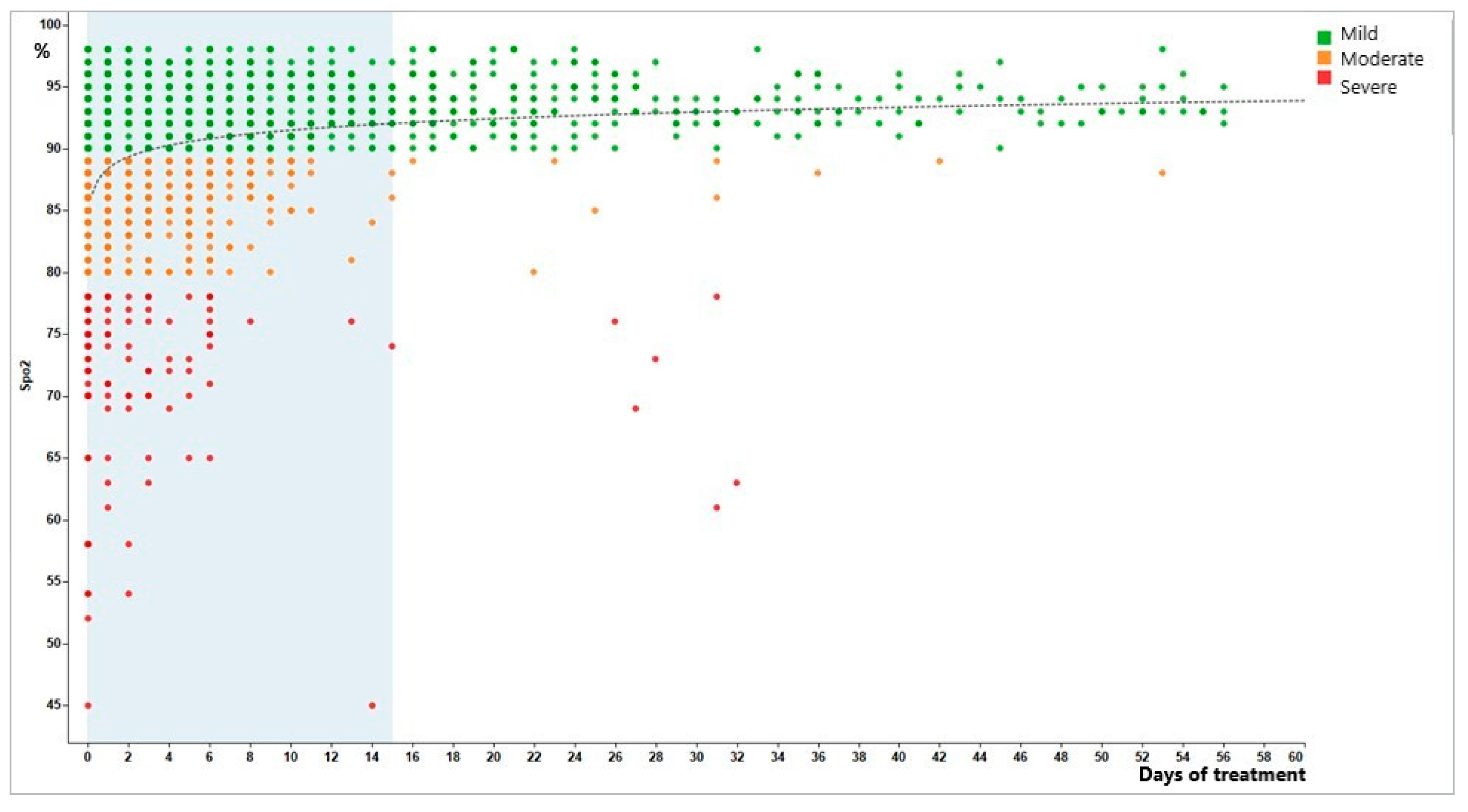
With respect to the response on Oxygen saturation rate, patients began the treatment with a mean SpO2 of 86.05% (95% CI: 85.12–87.17%), increasing the blood oxygen each day of treatment. In total, 126 patients (of which 101/251 [40.24%] with severe symptoms, 21/109 [19.27%] with moderate symptoms and 4/776 [0.51%] with mild symptoms) used supplementary oxygen (mean: 5.77 Liters per minute [95% CI: 5.18–6.36 L/min] for 4.32 days [95% CI: 3.37–5.27 days]). Between days 7 and 8 after the start of treatment, 90% of the patients reported an hyperbolic increase in SpO2 above 90% and above 95% a week later, at a rate of SpO2 = 3.58*ln(duration of treatment) (Figure 1, modified from Ref. [14]).

4. Discussion Aimed at Proposing a Better Understanding of the Oxygen Saturation Increase Observed in Patients of the Mexican Case

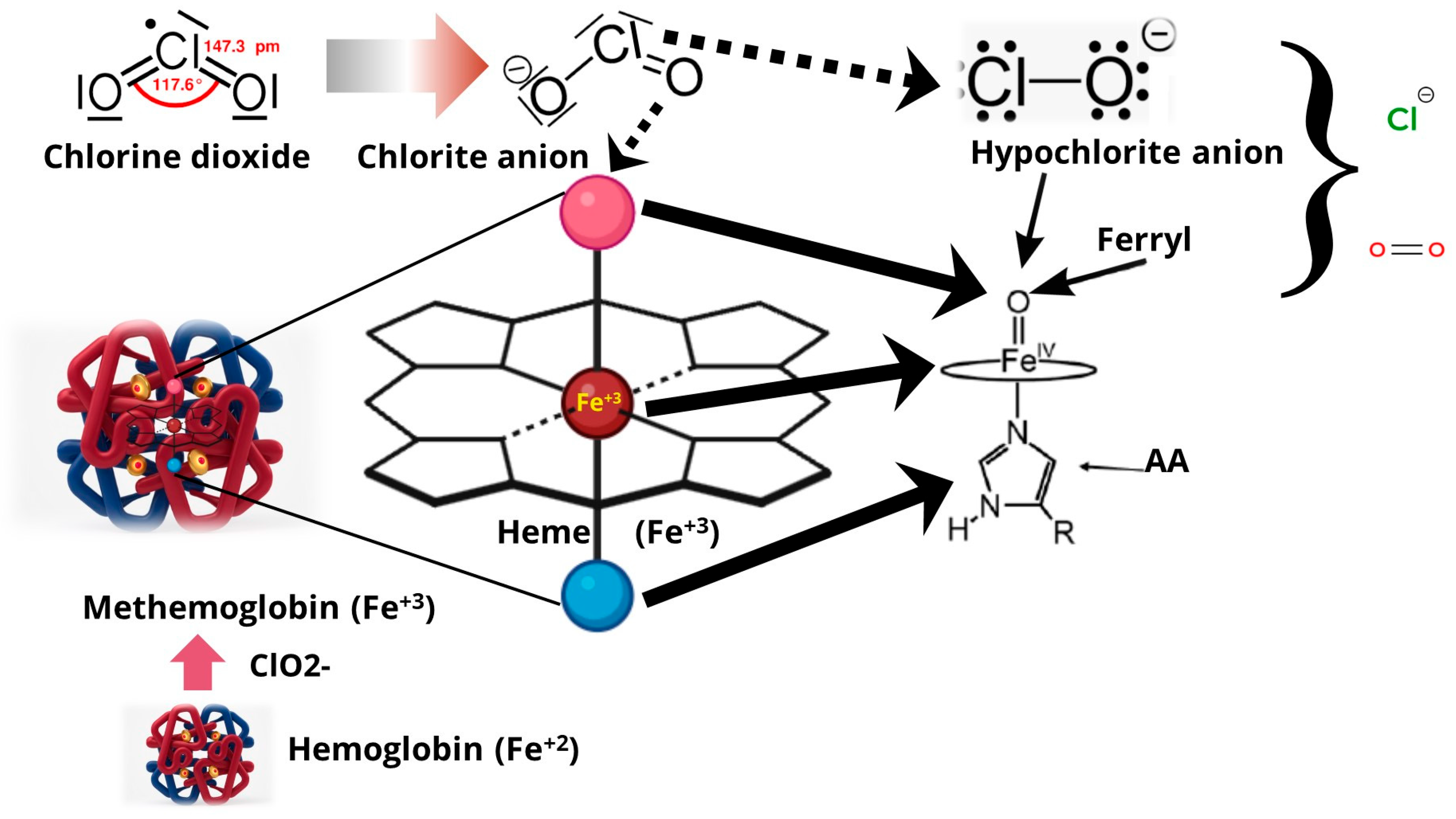
The review of the literature allows us to interpret the surprising results of the observed patients’ increased oxygen saturation as follows: Chlorine dioxide (ClO2), as an oxidant agent, is transformed into chlorite anion ( ClO 2 ), a quite different molecule, once in contact with electron donors (i.e., organic matter). The chlorite anion has known properties that enable interesting biochemical functions in living systems, including the human body. This anion passes to the blood stream through intestinal or other tissues when given orally or applied on the skin, but it can also reach the blood stream directly by appropriate intravenous administration. In the blood stream, the anion is metabolized by a reductase activity of blood methemoglobin, which is normally 1% of total blood hemoglobin [32]. The final step of this reduction is the production of chloride anion (Cl) and oxygen (O2). This reductase activity of the methemoglobin should be similar to the bacterial enzyme chlorite dismutase (CD), which has a heme (Fe+3) core or allosteric site, as is the case for methemoglobin. In fact, just like in some bacteria, where this CD enzyme dissociates ClO2 into Cl and O2 [4,32,33], we can propose such a reductase enzyme-like activity for the methemoglobin. Generally, multivalent hemoglobins are proposed, particularly methemoglobin with Fe + 3, which enable the reaction of Nitric Oxide (NO), another soluble gas of the blood stream, with the βCys93 amino acid of the hemoglobins. It is this Fe3+ of the methemoglobin that supports the redox requirement to form NO+ [34], as is also suggested for the enzyme-like activity on the chlorite anion [35]. Then, we add a fourth oxygen-containing soluble gas molecule ( ClO 2 ) to the three previous known gas molecules reacting with human hemoglobins (O2 itself, CO2, and NO). More precisely, once in contact with ClO 2 , the methemoglobin, containing a Ferric cation (Fe+3) with a higher affinity for oxygen than the hemoglobin, takes one atom of oxygen of the chlorite anion ( ClO 2 ) and releases an intermediary hypochlorite anion (OCl). Then, after this oxygen atom is captured, the methemoglobin allosteric site passes by an intermediary heme molecule, ferryl (Fe=O). This highly reactive molecule, in turn, attracts again the just released hypochlorite anion OCl, finally releasing the chloride anion (Cl) and diatomic oxygen (O2) [4,31] (Figure 2). This reductase activity could at least partially explain the increase in oxygen saturation in medically surveyed COVID-19 patients healed after consumption of chlorine dioxide during the compassionate treatments applied in Mexico in 2020/21 [31] as well as in Peru and the Equator [13,14]. The antiviral effect of ClO 2 anion (see Supplementary File) helps reduce viral reproduction, reducing lung inflammation and thus restoring oxygen absorption by its normal lung CO2/O2 gas exchange, which also contributes to increased oxygen saturation.
This chlorite anion-mediated blood oxygen increase may explain other physiological observations in patients using chlorine dioxide. For instance, the ability of pro-oxidants to capture excess electrons around the mitochondria promotes anti-tumor activity, as is the case also for other molecules such as Methylene Blue [36], thus restoring other RedOx disorders (i.e., ferroptosis) that characterize cancer cells [37]. Oxygen is also important in cancer treatments as shown by the good results of using Hyperbaric Oxygen Treatment (HBOT) for cancer [38] as well as for healing difficult wounds, by using chlorite anion [7,8,39] or HBOT [40].
Figure 2. Proposed chain reactions in methemoglobin reductase-like activity: Once in contact with organic matter, dissolved chlorine dioxide gas (ClO2) gains one electron and mutates into chlorite anion ( ClO 2 ). This anion is attracted to the cavity of the allosteric site of the methemoglobin. Here, it reacts with the ferric cation (Fe+3) of the heme molecule to release an intermediary new anion (hypochlorite anion, ClO) and form a ferryl molecule (Fe=O). This highly reactive ferryl molecule reacts again with the intermediary hypochlorite anion to finish its cleavage into chloride anion (Cl) and oxygen (O2). The axial amino acid (AA) could be either Hystidine or Aspartic acid [41]. Methemoglobin can be augmented by percentage in the blood stream from normal hemoglobin in the presence of chlorite anion (lower left).
Oxygen 06 00012 g002

5. Conclusions

We conclude that oxygen can be obtained in the blood stream by means of an appropriate use of chlorine dioxide (ClO2) in solution, thanks to its rapid conversion to chlorite anion ( ClO 2 ) and the heme group (Fe+3) reductase enzyme-like activity of the methemoglobin, by the intermediate ferryl (Fe=O) molecule. This had allowed the rapid increase on oxygen saturation observed in ClO2-treated and healed COVID-19 patients. A recent study on patients of the same pandemic years [42] has suggested treatments using prompt oxygen administration, control of inflammatory and immune responses, antibiotics, rehydration, erythropoietin and platelet aggregation inhibitors, most of which can be provided by the use of Chlorine Dioxide in solution. The only warning is to keep the concentration of chlorine dioxide equal to or below 3 mg/K/day so that methemoglobin will not increase to over 1–2% in the blood stream, thus making it efficient as an antiviral and for increasing oxygen saturation while avoiding methemoglobinemia and cyanosis.

Supplementary Materials

The following supporting information can be downloaded at: https://www.mdpi.com/article/10.3390/oxygen6020012/s1, Detailed information on Antiviral and anti-inflammatory activities of ClO2/ ClO 2 .

Author Contributions

Conceptualization, E.A.M.M. and M.A.-A.; methodology, M.A.-A.; validation, P.M. and A.V.-G.; formal analysis, E.A.M.M. and P.M.; investigation, M.A.-A.; writing—original draft preparation, E.A.M.M.; writing—review and editing, P.M. and A.V.-G.; visualization, P.M. and M.A.-A.; supervision, E.A.M.M. All authors have read and agreed to the published version of the manuscript.

Funding

This research received no external funding.

Institutional Review Board Statement

The study was based on previously publicly available data and no new experiments involved human participants were conducted during the current work.

Informed Consent Statement

The study was based on previously publicly available data and no new experiments involved human participants were conducted during the current work. Informed consent was obtained from all subjects involved in the previous published study.

Data Availability Statement

The datasets used and analyzed during the current study are available from the corresponding author upon reasonable request and to authors of Ref. [31].

Acknowledgments

We acknowledge the reviewers, all COVID-19 patients for trusting the nurses and allowing ClO2 treatments that are still somewhat unknown in today’s medical practices. We also acknowledge the exchange time and space available for co-working by Marius and Marie-Laure Preschey. The conversations with the ARC Foundation in Mexico were an important step for the biochemical interpretation of the observed results. Figure 2 was created using the free online software Canva (at www.canva.com, accessed on 11 May 2026).

Conflicts of Interest

The authors declare no conflicts of interest.

Abbreviations

The following abbreviations are used in this manuscript:
CDSChlorine Dioxide in Solution
HBOTHyperbaric Oxygen Treatment

References

  1. Helou, M.; Mahdi, A.; Abou Fayad, A.; Sleiman, A.; Matar, G.M.; Zoghbi, S.; Madani, T.; Husni, R. Antimicrobial effects of chlorine dioxide in a hospital setting. Sci. Rep. 2013, 13, 22866. [Google Scholar] [CrossRef]
  2. US-EPA. U.S. Environmental Protection Agency. Toxicological Review of Chlorine Dioxide and Chlorite. 2000. Available online: https://cfpub.epa.gov/ncea/iris/iris_documents/documents/toxreviews/0496tr.pdf (accessed on 11 May 2026).
  3. Michael, G.E.; Miday, R.K.; Bercz, J.P.; Miller, R.G.; Greathouse, D.G.; Kraemer, D.F.; Lucas, J.B. Chlorine Dioxide Water Disinfection: A Prospective Epidemiology Study. Arch. Environ. Health Int. J. 1981, 36, 20–27. [Google Scholar] [CrossRef] [PubMed]
  4. Pichert, A.; Arnhold, J. Interaction of the chlorite-based drug WF10 and chlorite with hemoglobin, methemoglobin and ferryl hemoglobin. Arch. Biochem. Biophys. 2015, 585, 82–89. [Google Scholar] [CrossRef]
  5. Condori Macuri, R.M.; Alzamora-Gonzales, L.; Colona-Vallejos, E.H.; Cruz Riquelme, R.T.; Pecho Chávez, L.I.; Cisneros Gutierrez, J.O.; Montejo Anlas, V.A. Synergistic Anticancer Activity of Fucoidan from Lessonia trabeculata Combined with Chemotherapeutic Agents in 4T1 Breast Spheroids. Mar. Drugs 2025, 23, 451. [Google Scholar] [CrossRef]
  6. Rattan, S.I.S. Hormesis in aging. Ageing Res. Rev. 2008, 7, 63–78. [Google Scholar] [CrossRef]
  7. Callisperis, P.; Franco-Paredes, C.; Liester, M.B. Necrotizing Fasciitis treatment with chlorine dioxide: A case report in patient. Cureus 2025, 17, e88800. [Google Scholar] [CrossRef]
  8. Callisperis, P.; Pineda Aquino, R.; Raj Kota, S.; Vargas, M.; Rodriguez, N.; Liester, M. Chlorine dioxide treatment for diabetic foot ulcers: Three case studies. Int. J. Med. Med. Sci. 2024, 16, 44–49. [Google Scholar] [CrossRef]
  9. Rubio-Casillas, A.; Campras-Madrid, P. Farmacocinética y farmacodinamia del dióxido de cloro. e-CUCBA 2021, 8, 21–35. [Google Scholar] [CrossRef]
  10. Schempp, H.; Reim, M.; Dornisch, K.; Elstner, E. Chlorite-hemoprotein interaction as key role for the pharmacological activity of the chlorite-based drug WF10. Drug Res. 2001, 51, 3–11. [Google Scholar] [CrossRef] [PubMed]
  11. Jang, J.S.; Piao, S.; Cha, Y.N.; Kim, C. Taurine Chloramine Activates Nrf2, Increases HO-1 Expression and Protects Cells from Death Caused by Hydrogen Peroxide. J. Clin. Biochem. Nutr. 2009, 45, 37–43. [Google Scholar] [CrossRef]
  12. Woods, C.G.; Fu, J.; Xue, P.; Hou, Y.; Pluta, L.J.; Yang, L.; Zhang, Q.; Thomas, R.S.; Andersen, M.E.; Pi, J. Dose-dependent transitions in Nrf2-mediated adaptive response and related stress responses to hypochlorous acid in mouse macrophages. Toxicol. Appl. Pharmacol. 2009, 238, 27–36. [Google Scholar] [CrossRef]
  13. Hoang, C.; Nguyen, A.K.; Nguyen, T.Q.; Fang, W.; Han, B.; Hoang, B.X.; Tran, H.D. Application of Dimethyl sulfoxide as a therapeutic agent and drug vehicle for eye diseases. J. Ocul. Pharmacol. Ther. 2021, 37, 441–451. [Google Scholar] [CrossRef]
  14. Schwartz, L. Chlorine dioxide as a possible adjunct to metabolic treatment. J. Cancer Treat. Diagn. 2017, 1, 6–10. [Google Scholar] [CrossRef]
  15. Kim, Y.; Kumar, S.; Cheon, W.; Eo, H.; Kwon, H.; Jeon, Y.; Jung, Y.; Kim, W. Anticancer and antiviral activity by inducing active oxygen production of chlorine dioxide. J. Appl. Biol. Chem. 2016, 59, 31–36. [Google Scholar] [CrossRef]
  16. Aparicio-Alonso, M.; Torres-Solórzano, V. Case Report: Compassionate application of chlorine dioxide-based solution in a patient with metastatic prostate cancer. Salud Cienc. Tecnol. 2024, 4, 699. [Google Scholar] [CrossRef]
  17. Ogata, N.; Shibata, T. Protective effect of low-concentration chlorine dioxide gas against influenza A virus infection. J. Gen. Virol. 2008, 89, 60–67. [Google Scholar] [CrossRef] [PubMed]
  18. Sanekata, T.; Fukuda, T.; Miura, T.; Morino, H.; Lee, C.; Maeda, K.; Araki, K.; Otake, T.; Kawahata, T.; Shibata, T. Evaluation of the antiviral activity of chlorine dioxide and sodium hypochlorite against feline calicivirus, human influenza virus, measles virus, canine distemper virus, human herpesvirus, human adenovirus, canine adenovirus and canine parvovirus. Biocontrol Sci. 2010, 15, 45–49. [Google Scholar] [CrossRef] [PubMed]
  19. Miura, T.; Shibata, T. Antiviral Effect of Chlorine Dioxide against Influenza Virus and Its Application for Infection Control. Open Antimicrob. Agents J. 2010, 2, 71–78. [Google Scholar] [CrossRef]
  20. Ogata, N. Denaturation of protein by chlorine dioxide: Oxidative modification of tryptophan and tyrosine residues. Biochemistry 2007, 46, 4898–4911. [Google Scholar] [CrossRef]
  21. Ogata, N. Inactivation of influenza virus haemagglutin in by chlorine dioxide: Oxidation of the conserved tryptophan 153 residue in the receptor binding site. J. Gen. Virol. 2012, 93, 2558–2563. [Google Scholar] [CrossRef]
  22. Abdel-Rahman, M.S.; Couri, D.; Bull, R.J. Metabolism and pharmacokinetics of alternate drinking water disinfectants. Environ. Health Perspect. 1982, 46, 19–23. [Google Scholar] [CrossRef]
  23. Hati, S.; Bhattacharyya, S. Impact of Thiol-Disulfide Balance on the Binding of Covid-19 Spike Protein with Angiotensin-Converting Enzyme 2 Receptor. ACS Omega 2020, 5, 16292–16298. [Google Scholar] [CrossRef]
  24. Zambrano-Estrada, X.; Domínguez-Sánchez, C.; Banuet-Martínez, M.; Guerrero de la Rosa, F.; García-Gasca, T.; Acevedo-Whitehouse, K. Evaluation of the antiviral effect of chlorine dioxide (ClO2) using a vertebrate model inoculated with avian coronavirus. biorXiv 2020. [Google Scholar] [CrossRef]
  25. Raffanti, S.P.; Schaffner, W.; Federspiel, C.F.; Blackwell, R.B.; Ching, O.A.; Kühne, F.W. Randomized, double-blind, placebo-controlled trial of the immune modulator WF10 in patients with advanced AIDS. Infection 1998, 26, 202–207. [Google Scholar] [CrossRef]
  26. Tao, Y.; Queen, K.; Paden, C.R.; Zhang, J.; Li, Y.; Uehara, A.; Lu, X.; Lynch, B.; Sakthivel, S.K.K.; Whitaker, B.L.; et al. Severe Acute Respiratory Syndrome Coronavirus 2 Isolate 2019-n CoV/USAIL1/2020, Complete Genome. NCBI GenBank. 2020. Available online: https://www.ncbi.nlm.nih.gov/nucleotide/MN988713.1 (accessed on 11 May 2026).
  27. Insignares-Carrione, E.; Bolano-Gómez, B.; Kalcker, A.L. Chlorine Dioxide in COVID-19: Hypothesis about the Possible Mechanism of Molecular Action in SARSCoV-2. J. Mol. Genet. Med. 2020, 14, 1–8. Available online: https://drinsignaresbolano.com/wp-content/uploads/2025/05/Chlorine_Dioxide_in_COVID_19_Hypothesis.pdf (accessed on 6 May 2026).
  28. Antiviral/Antibiotic Treatments on Water, Plants and Animal Care by Clodos Technology. Available online: www.clodos.com (accessed on 11 May 2026).
  29. Insignares-Carrione, E.; Bolano Gómez, B.; Andrade, Y.; Callisperis, P.; Suxo, A.M.; Ajata San Martine, A.B.; Ostria Gonzalez, C. Determination of the Effectiveness of Chlorine Dioxide in the Treatment of COVID 19. J. Mol. Genet. Med. 2021, 15, S1–S11. [Google Scholar] [CrossRef]
  30. Martinez, E.A. A New Perspective for Prevention and to Cure COVID-19 Patients: Encouraging Medical Teams to Contact Healed People Treated with Chlorine Dioxide in Solution (CDS). Integr. J. Med. Sci. 2020, 7, 229. [Google Scholar] [CrossRef]
  31. Aparicio-Alonso, M.; Domínguez-Sánchez, C.A.; Banuet-Martínez, M. Chlorine Dioxide as an Alternative Treatment for COVID-19. J. Infect. Dis. Ther. 2021, 9, 477–484. Available online: https://www.comusav.com/wp-content/uploads/2021/10/Trilogia-del-cds-por-el-Dr.-Manuel-Aparicio.pdf (accessed on 6 May 2026).
  32. David, S.R.; Sawal, N.S.; Bin Hamzah, M.N.; Rajabalaya, R. The blood blues: A review on methemoglobinemia. J. Pharmacol. Pharmacother. 2018, 9, 1–5. [Google Scholar] [CrossRef]
  33. Schaffner, I.; Hofbauer, S.; Krutzler, M.; Pirker, K.F.; Furtmüller, P.G.; Obinger, C. Mechanism of chlorite degradation to chloride and dioxygen by the enzyme chlorite dismutase. Arch. Biochem. Biophys. 2015, 574, 18–26. [Google Scholar] [CrossRef] [PubMed]
  34. Premont, R.T.; Reynolds, J.D.; Zhang, R.; Stamler, J.S. Role of Nitric Oxide Carried by Hemoglobin in Cardiovascular Physiology Developments on a Three-Gas Respiratory Cycle. Circ. Res. 2020, 126, 129–158. [Google Scholar] [CrossRef]
  35. Elstner, E.F. Heme activated oxydations using the chlorine-oxygen complex “TCDO” (Oxyferin)-an overview. J. Biosci. 1988, 43, 893–902. [Google Scholar] [CrossRef]
  36. da Veiga Moreira, J.; Nleme, N.; Schwartz, L.; Leclerc-Desaulniers, K.; Carmona, E.; Mes-Masson, A.-M.; Jolicoeur, M. Methylene Blue Metabolic Therapy Restrains In Vivo Ovarian Tumor Growth. Cancers 2024, 16, 355. [Google Scholar] [CrossRef] [PubMed]
  37. Cañeque, T.; Baron, L.; Müller, S.; Baron, L.; Müller, S.; Carmona, A.; Colombeau, L.; Versini, A.; Solier, S.; Gaillet, C.; et al. Activation of lysosomal iron triggers ferroptosis in cancer. Nature 2025, 642, 492–500. [Google Scholar] [CrossRef]
  38. Cai, T. Hyperbaric oxygen therapy as an adjunt treatment for glioma and brain metastasis: A literature review. Med. Gas Res. 2025, 15, 420–426. [Google Scholar] [CrossRef] [PubMed]
  39. Hinz, J.; Kuhne, F.W.; Stahl, K.W. Local Tetrachlorodecaoxide treatment to improve oxygen supply to non-healing wounds. Lancet 1984, 324, 630. [Google Scholar] [CrossRef]
  40. Dang, S. Efficacy of Hyperbaric Oxygen Therapy on Diabetic Foot Ulcer Healing. PA Dep. J. Med. Sci. 2025. Available online: https://digitalcommons.gardner-webb.edu/pa-department-journal-of-medical-science/14 (accessed on 11 May 2026).
  41. Rydberg, P.; Sigfridsson, E.; Ryde, U. On the role of the axial ligand in heme proteins: A theoretical study. J. Biol. Inorg. Chem. 2004, 9, 203–223. [Google Scholar] [CrossRef]
  42. Zubieta-Calleja, G.; Montelongo, F.d.J.; Romo Sanchez, M.G.; Samaja, M.; Zubieta-DeUrioste, N. The Failure of Pulmonary Oxygen Exchange in Severe Viral Lung Disease: Pneumolysis. Oxygen 2026, 6, 7. [Google Scholar] [CrossRef]
Figure 1. Oxygen saturation (%SpO2) along the period of patients’ treatment for all patients’ levels (mild, moderate, and severe cases) [Ref. [31]. Blue background indicates ending of treatment for the milder severity cases.
Oxygen 06 00012 g001
Table 1. Data of patients included in the study [from Ref. [31].
COVID-19 Severity
MildModerateSevere
SpO2 (%)≥9590–94<90
n%n%n%
Patients77668.311099.5925122.09
Sex
Male35145.234944.9515160.16
Female37548.326055.059035.86
Other506.4400.00103.98
Age
0–9293.7400.0010.40
10–19486.1854.5900.00
20–29384.9065.5062.39
30–39496.3176.4293.58
40–498010.311816.51135.18
50–59648.251917.434216.73
60–69415.28109.17239.16
>70313.991211.013313.15
No info39651.033229.362442.63
MildModerateSevere
Days of symptoms2.52–3.33 a7.89–12.21 bc6.73–9.95 bc
Duration of treatment14.86–15.69 a17.19–21.95 b14.41–17.73 c
ClO2 dose (mg/kg)0.87–0.94 a1.16–1.33 b1.98–2.18 c
ClO2 per day (ml)20.43–21.93 a27.17–30.97 b46.33–50.89 c
Total ClO2 (ml)309.83–337.38 a518.77–619.19 b733.67–828.79 b
a,b,c: Statistically significant differences among columns (ANOVA on disease severity). Values in the table for each variable are presented as 95% Confidence Intervals.
Disclaimer/Publisher’s Note: The statements, opinions and data contained in all publications are solely those of the individual author(s) and contributor(s) and not of MDPI and/or the editor(s). MDPI and/or the editor(s) disclaim responsibility for any injury to people or property resulting from any ideas, methods, instructions or products referred to in the content.