
Article

Long-Term Changes (1993–2022) in Wintering Waders of the Largest Mediterranean Coastal Lagoon: Compositional Reorganization, Dominance Effects and Weak Thermal Signals

1
SELC Soc. Coop., Via dell’Elettricità 3/d, Marghera, 30175 Venice, Italy
2
Museo di Storia Naturale di Venezia Giancarlo Ligabue, Santa Croce 1730, 30135 Venice, Italy
3
Rialto, San Polo 571, 30125 Venice, Italy
*
Author to whom correspondence should be addressed.
Coasts 2026, 6(3), 29; https://doi.org/10.3390/coasts6030029
Submission received: 14 May 2026 / Revised: 7 July 2026 / Accepted: 8 July 2026 / Published: 10 July 2026

Abstract

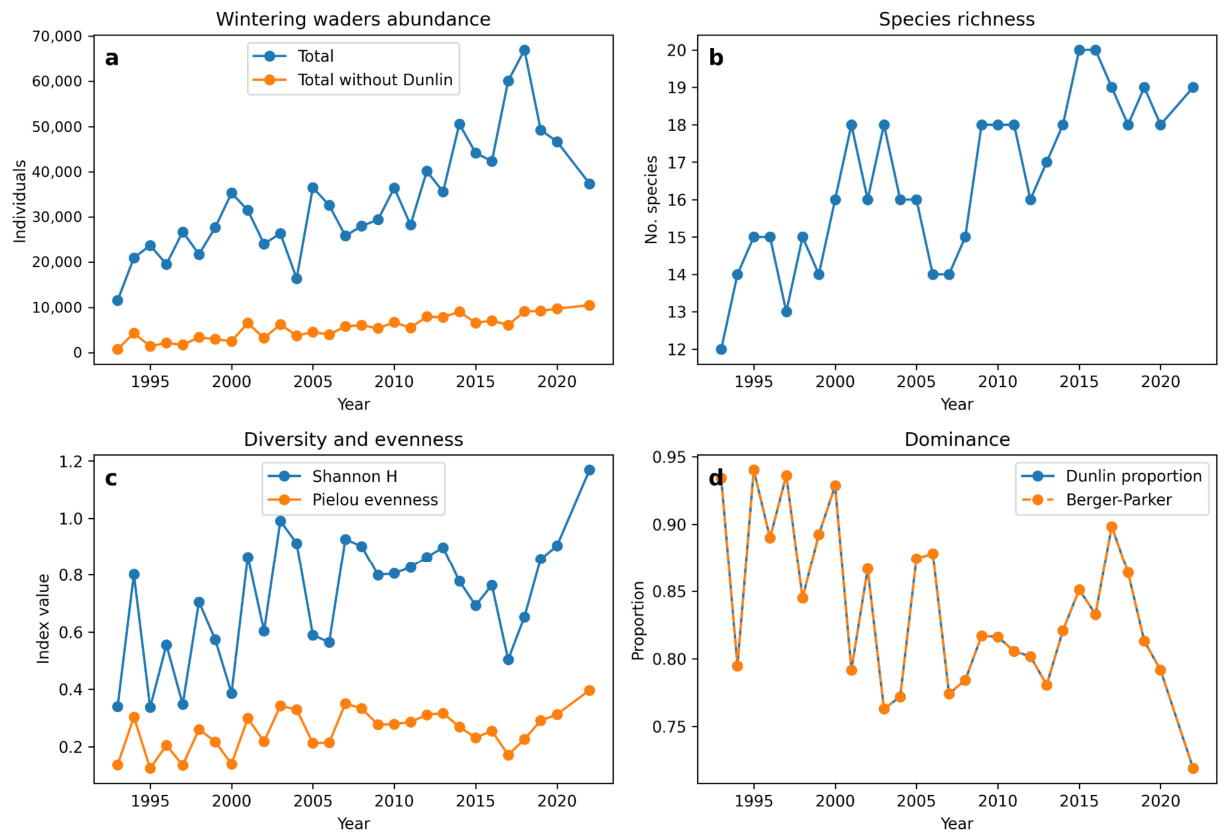
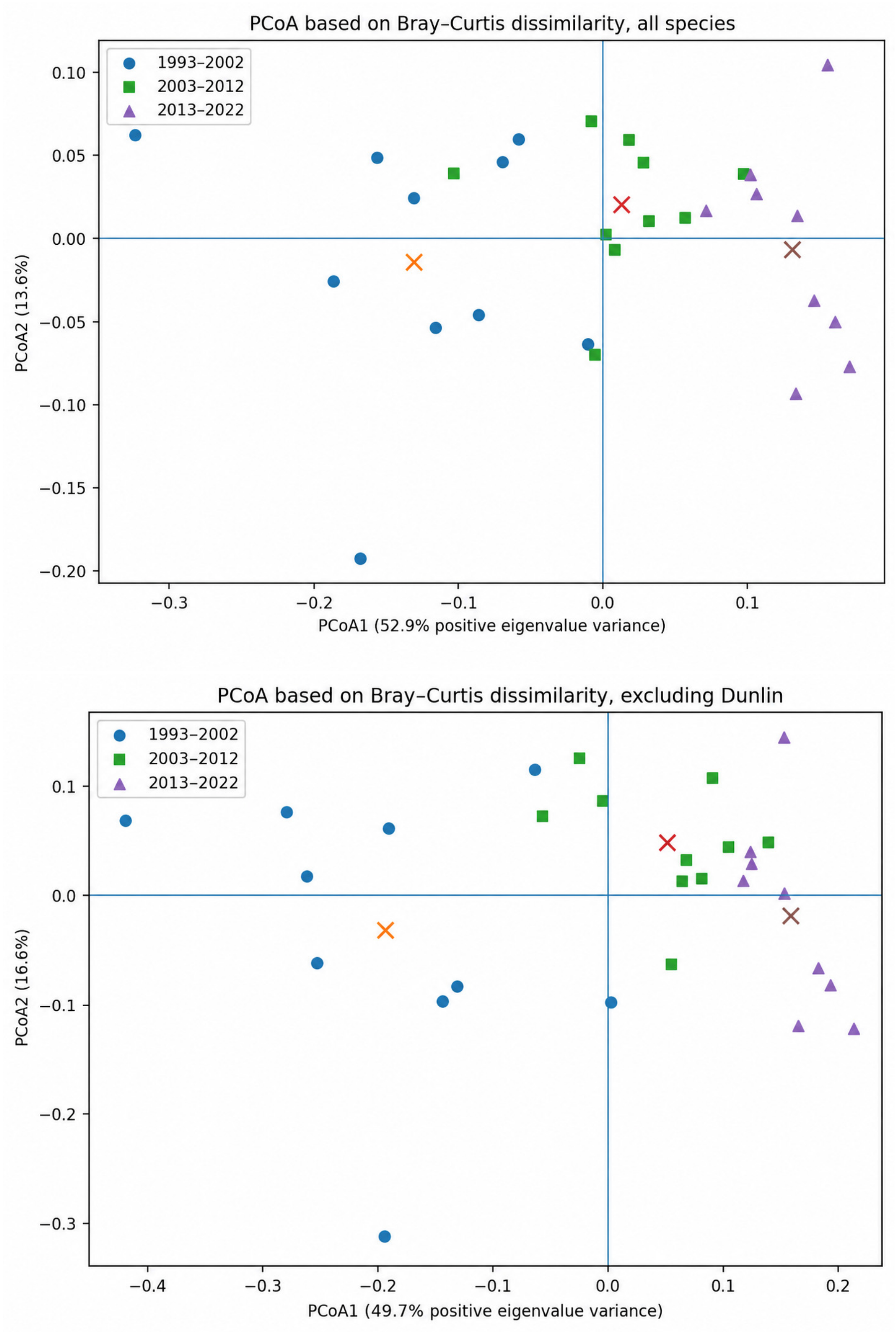
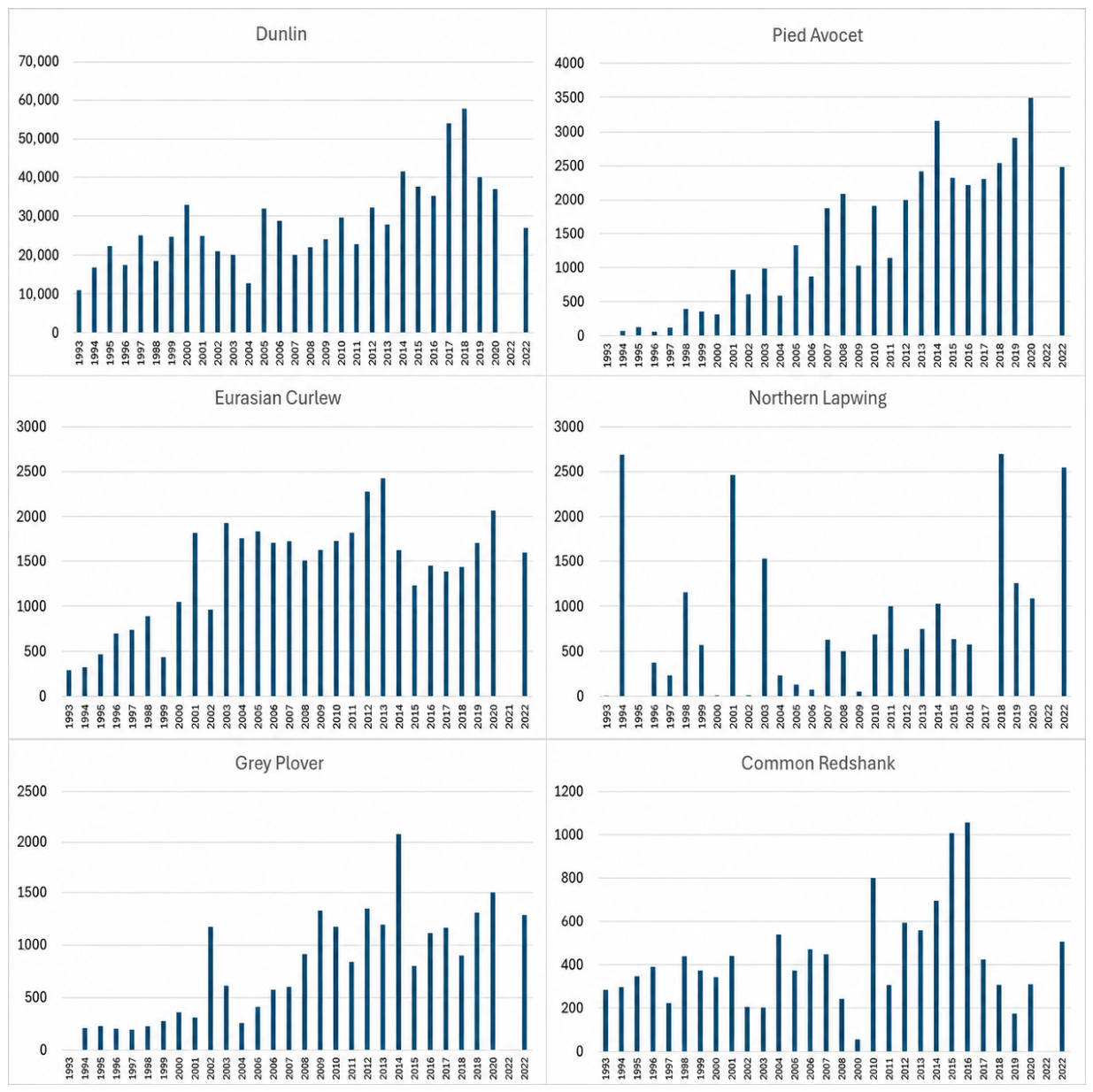
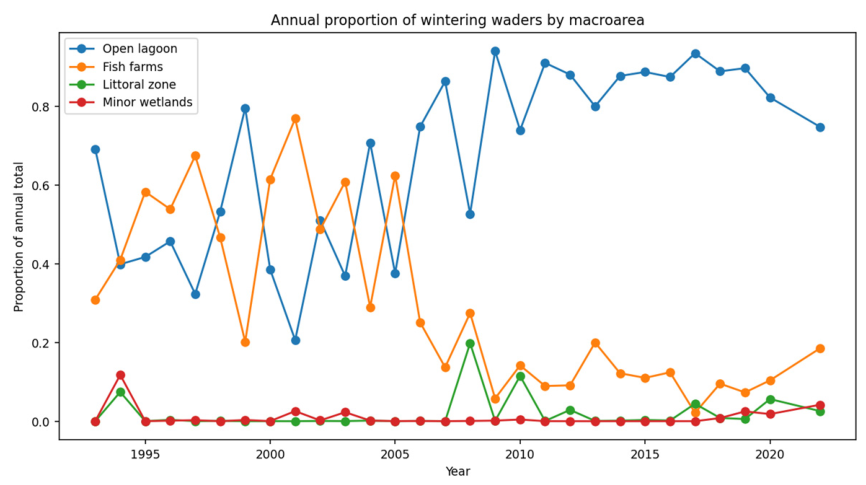
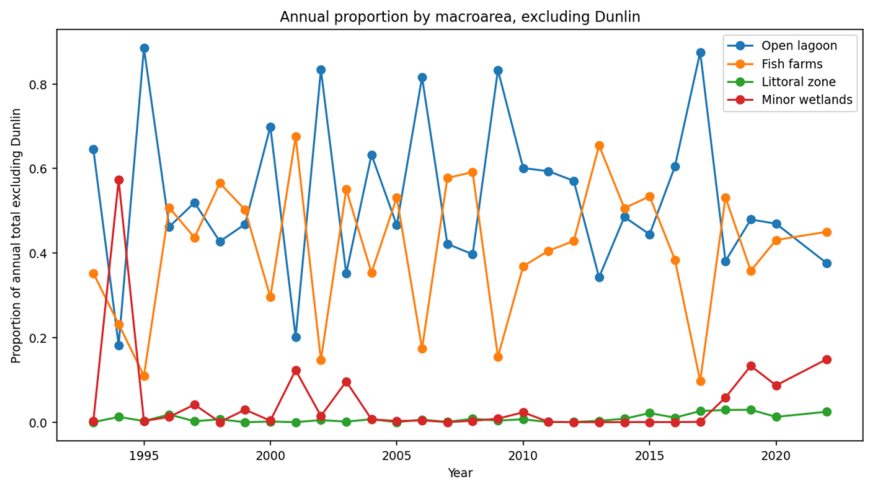
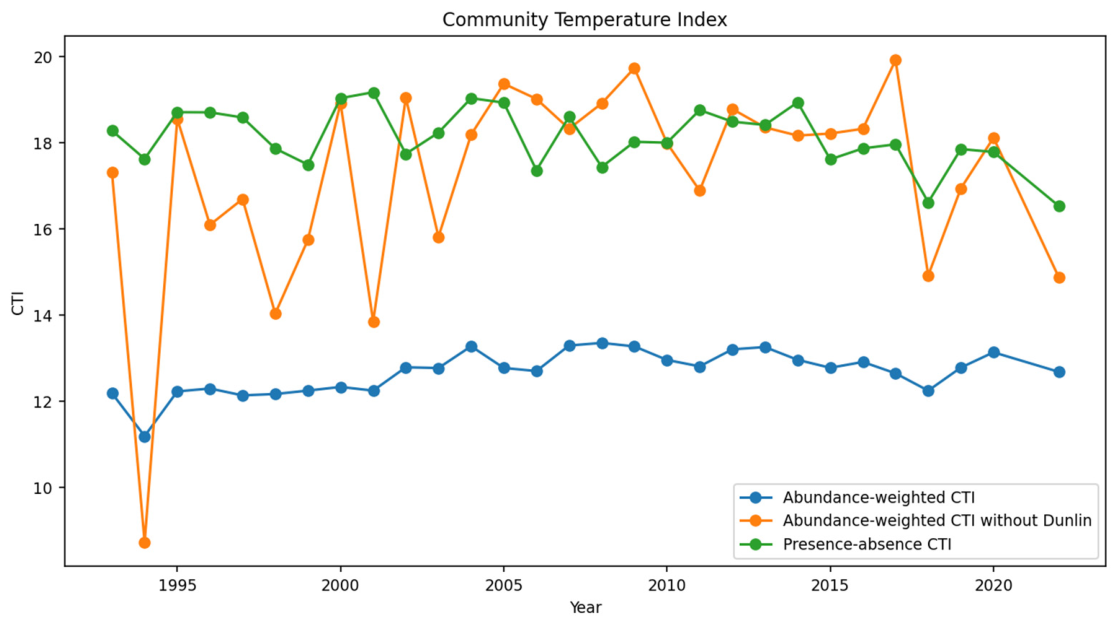
Coastal lagoons are key wintering habitats for waders, yet long-term changes in their community structure remain poorly understood in Mediterranean systems. We analyzed a 30-year dataset (1993–2022, excluding 2021) of wintering waders in the Venice Lagoon to assess trends in abundance, community structure, thermal composition and spatial patterns. Total abundance increased significantly (+3.5% yr−1), while species richness ranged between 12 and 21 species per winter and increased over time. Community structure changed markedly, but the assemblage remained highly dominated by Dunlin Calidris alpina without evidence of increasing dominance or declining evenness. Instead, richness, Shannon diversity and Pielou’s evenness increased, whereas Berger–Parker dominance declined slightly but significantly. Species-level analyses showed a prevalence of increasing trends: ten of the 19 species analyzed increased significantly, three declined, one was stable, and five showed uncertain trends. Multivariate analyses based on Bray–Curtis dissimilarities showed significant compositional differences among approximately decadal periods, both including and excluding Dunlin, indicating that long-term assemblage reorganization was not solely attributable to the dominant species. The Community Temperature Index (CTI) increased significantly (p = 0.001), but this abundance-weighted signal was weak in biological magnitude and contrasted with a declining presence–absence CTI; moreover, this pattern was not robust to the exclusion of Dunlin, indicating dominance-driven dynamics. Spatial analyses revealed a strong increase in the proportion of counted birds recorded in the open lagoon (p < 0.001) and a decline in fish farms (p < 0.001), but this pattern disappeared after excluding Dunlin, suggesting that the apparent spatial redistribution was largely driven by this species. Overall, the assemblage is increasing and compositionally reorganized, while remaining strongly influenced by Dunlin dominance, highlighting the need to integrate species- and community-level approaches when interpreting ecological indicators.
Keywords: community temperature index; fish farms; long-term monitoring; managed wetland; tidal flats; Venice Lagoon community temperature index; fish farms; long-term monitoring; managed wetland; tidal flats; Venice Lagoon