
Article

Ecological Risk in Coastal Ecosystems: Assessment in Two Municipalities in the Gulf of California, Mexico

by
Andrea Escamilla-Trejo
1,
Thelma Michelle Ruiz-Ruiz
1,
Elia Inés Polanco-Mizquez
2,
Luz María Cruz García
3 and
José Alfredo Arreola-Lizárraga
1,*
1
Centro de Investigaciones Biológicas del Noroeste (CIBNOR), Estero de Bacochibampo, Km 2.35 Camino al Tular, Guaymas 85454, Sonora, Mexico
2
Centro Intercultural de Estudios de Desiertos y Océanos, Edif. Agustín Cortéz S/N, Fracc. Las Conchas, Puerto Peñasco 83550, Sonora, Mexico
3
Marine Biology Department, Universidad Autónoma de Baja California Sur (UABCS), Carretera al Sur km 5.5, La Paz 23080, Baja California Sur, Mexico
*
Author to whom correspondence should be addressed.
Coasts 2026, 6(2), 19; https://doi.org/10.3390/coasts6020019
Submission received: 21 December 2025 / Revised: 22 March 2026 / Accepted: 4 May 2026 / Published: 8 May 2026

Abstract

Ecological risk assessment of ecosystems facing anthropogenic pressures informs coastal management. This study evaluated the ecological risk of ecosystems in two coastal municipalities in the Gulf of California, Mexico. The coastal area under study spans 175 km of coastline and includes various ecosystems, as well as the cities of Guaymas and Empalme (~160,000 inhabitants). Ecological risk was assessed by surveying the opinions of experts on local and global activities and influences (climate change), the ecological consequences of hazards, and the resilience (fragmentation) and natural recovery of ecosystems. In addition, potential synergies between human activities and the effects of climate change were identified. The results showed that the main threats are discharges of raw or poorly treated wastewater into the sea, the generation and dumping of garbage, and illegal fishing. Wastewater discharges represent the local threat that interacts most intensively with the effects of climate change. Mangroves, coastal water bodies, and rocky shores face the greatest ecological risk due to continuous exposure to anthropogenic threats, poorly planned urban growth, and industrial development. Approximately 20% of the coastal zone is estimated to correspond to the metropolitan areas of Guaymas and Empalme, where the greatest ecological risk occurs, and these represent opportunities to promote coastal management processes aimed at ecosystem restoration and planned urban development to prevent the loss of coastal ecosystem functions and the services they provide to society.

1. Introduction

Environmental pressures in coastal zones are caused by human activities in agriculture, aquaculture, fisheries, tourism, urbanization, maritime transport, industrial development, and mining, in addition to pressures associated with the effects of climate change, such as rising temperatures, ocean acidification, changes in precipitation patterns, and rising sea levels [1,2]. The combination of natural phenomena and human stressors is the main factor that magnifies coastal dynamics and increases coastal risks under future climate change scenarios [3]. Therefore, ecological risk analyses are pivotal for identifying coastal areas with ecosystems particularly vulnerable to anthropogenic pressures and climate change [4].
Ecological risk estimates the likelihood of an adverse ecological effect in an ecosystem when exposed to one or more anthropogenic threats [5]. The analysis of anthropogenic stressors and their effects on ecosystems informs the prioritization of resource management and allocation [6]. To this end, the participation of experts who provide information on the threats facing ecosystems of a given coastal area is essential [7]. Risk is intrinsically related to the degree of exposure (frequency, duration, and intensity) of ecosystems to a given threat [8], but also depends on the vulnerability of each ecosystem [6].
Halpern et al. [9] assessed the impact of human activities on coastal ecosystems worldwide, considering the following vulnerability factors: spatial scale and frequency of impacts, resistance to threats, and recovery time. Their results provided evidence that rising sea temperatures, trawling, and nutrient pollution are the main threats that affect ecosystems, particularly rocky reefs, coral reefs, mangroves, and pelagic environments.
Specific studies that have assessed ecological risk in coastal ecosystems, such as the one carried out in the Gulf of Spencer (Australia), have shown that those facing a greater risk are intertidal ecosystems, including rocky environments, benthic environments, and mangroves, and the main threats are climate change (ocean acidification, global warming, and extreme weather events) and nutrient inputs from human activities [7]. Similarly, a study addressing the risk level of coastal ecosystems in Colombia based on the criteria of the Red List of Ecosystems showed that mangroves and sandy beaches are the ecosystems facing the greatest ecological risk, and the threats with the highest impact were the transformation of coastal habitats and climate change [10].
A relevant characteristic of previous studies is that ecological risk assessment incorporated expert opinion. In addition, a measure associated with ecological risk assessment is uncertainty, defined as a lack of knowledge or information [5]. Therefore, estimating uncertainty improves decision-making in risk management, thereby facilitating the identification of information gaps and increasing certainty through more precise studies.
The present study, conducted in two municipalities on the east coast of the Gulf of California, applied the approach and considerations outlined above. Specifically, we delimited the coastal zone of two contiguous municipalities, identified the coastal ecosystems, and estimated ecological risk from anthropogenic threats.
The objective was to evaluate ecological risk in ecosystems along the coast of the municipalities of Guaymas and Empalme, Sonora, in the Gulf of California, Mexico.

2. Materials and Methods

2.1. Study Area

The municipalities of Guaymas and Empalme are located on the east coast of the Gulf of California, Mexico, and together encompass a combined coastline of 175 km (Figure 1). The cities of Guaymas and Empalme, along with the San Carlos police station, constitute a metropolitan area along the coastal strip, home to 156,139 inhabitants [11].
The regional climate is BW (h′) h, corresponding to very dry and very warm to warm [12]. The annual air temperature ranges from 16 °C to 33 °C; the annual precipitation is <300 mm, with ~80% of the total rainfall falling from July to September and the rest from December to February [13]. The tidal width in the coastal zone of the municipalities of Guaymas and Empalme (hereafter Guaymas–Empalme coastal area) is 1 m [14] and is therefore classified as a microtidal coast [15].
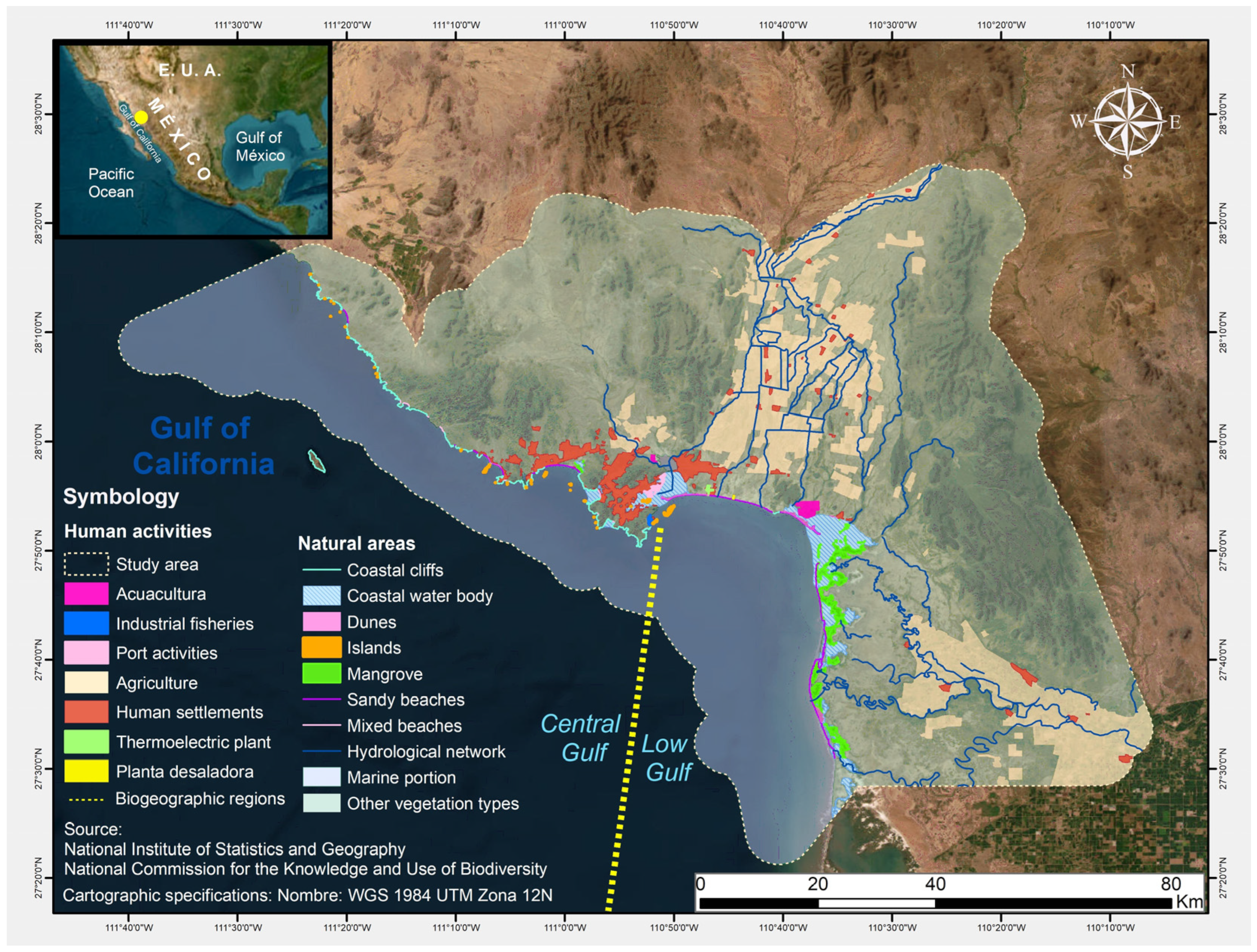
Various human activities take place in the coastal zones of these municipalities, including artisanal and industrial fishing, shrimp farming, tourism, port cargo movements, coastal agriculture, and urban development. Additionally, this area is home to various ecosystems: sandy beaches, rocky shores, mangroves, seagrasses, islands, the pelagic ecosystem, the benthic ecosystem, and coastal water bodies (coastal lagoons and bays) (Figure 2). The distribution of these coastal ecosystems in the study area is consistent with the types of coastline and with two biogeographic regions of the Gulf of California (based on fish distribution), considering that practically 50% of this coastal strip is located in the Central Gulf region (north of Guaymas Bay) and the remaining 50% represents the Low Gulf region (south of Guaymas Bay). The Central Gulf region is mostly rocky with abundant cliffs, whereas the Low Gulf region is characterized by sandy or muddy substrates and numerous estuarine–lagoon systems [16]. In the Guaymas–Empalme coastal area, rocky coasts predominate in the northern portion (Central Gulf) and sandy coasts in the southern portion (Low Gulf).

2.2. Estimation of Ecological Risk

The ecological risk of the coastal ecosystems was estimated following the methodological approach of Doubleday et al. [7]. This approach holds that ecological risk assessments are useful for identifying and prioritizing risks when data are limited. Although quantitative assessments are preferable, they are sometimes not feasible due to a lack of data and resources; thus, assessments based on expert opinion serve as an initial approach to the problem and help guide quantitative assessments. To this end, a survey was designed and administered to experts in coastal and marine environments, including scientists, consultants, and government agency decision-makers.
The survey was distributed electronically to collect expert opinions on local activities and global influences (climate change), the ecological consequences of threats to the ecosystem, resilience capacity (fragmentation), the natural recovery of the ecosystem, and potential synergistic interactions between human activities and climate change.
Experts were selected based on their experience in a particular ecosystem. Scientists were identified based on their publications addressing the study area; consultants, based on their experience in the region; and government officials, according to their professional capacity in environmental, aquaculture, or fisheries matters. The surveys were sent to 71 experts, yielding a 49% response rate (29 experts). The experts answered the survey by identifying the ecosystem or ecosystems based on their experience. The number of responses for each ecosystem is indicated in parentheses: benthic (4), pelagic (4), rocky shores (2), islands (3), coastal water bodies (16), mangroves (2), seagrasses (2), sandy beaches (3). A total of 29 experts responded to the surveys, but some responded regarding more than one ecosystem.
Ecological risk was estimated based on ecosystem vulnerability and the effect of anthropogenic activities (threats), following the methodology of Doubleday et al. [7]. Vulnerability was assessed considering fragmentation level, recovery time, and degree of exposure to disturbances. The effect of human activities on the ecosystem was evaluated based on the degree of change in physical structure, change in species composition, temporal exposure, and spatial coverage (Table 1).
Vulnerability was calculated using the following equation:
Vulnerability = Fragmentation + Recovery + Degree of Exposure to Disturbance
The effect was calculated using the following equation:
Effect = (Changes in physical structure + changes in species composition) × (Temporal exposure + Spatial coverage)
Ecological risk was estimated using the following equation:
Ecological risk = Vulnerability + Effect
Ecological risk ranges from 0 to 1 using the following equation.
Z i = X i min   ( X i ) max ( Xi ) min   ( X i )
where
Zi: ecological risk;
Xi: value I;
min Xi: minimum value;
max Xi: maximum value.
The vulnerability and effect values assigned by the experts and the estimated ecological risk (unscaled and scaled from 0 to 1) for each ecosystem are presented in Supplementary Material Table S1.
Additionally, an independent measure of uncertainty associated with the threat–ecosystem effect was conducted based on activities and influences with the greatest potential to affect environmental conditions.
In order to assess the uncertainty associated with the information provided by the experts in the expert survey, the following question was included at the end of the questions for each variable:
On a scale of 1 to 3, how confident are you in the previous answer? where 1 corresponded to the lowest uncertainty and 3 to the highest uncertainty.
The uncertainty values assigned by the surveyed experts to each vulnerability and effect variable for each ecosystem are presented in Supplementary Material Table S2.
The goal was to identify knowledge gaps that could guide future research priorities to reduce disinformation levels.

3. Results

3.1. Threats and Ecological Risk for Coastal Ecosystems

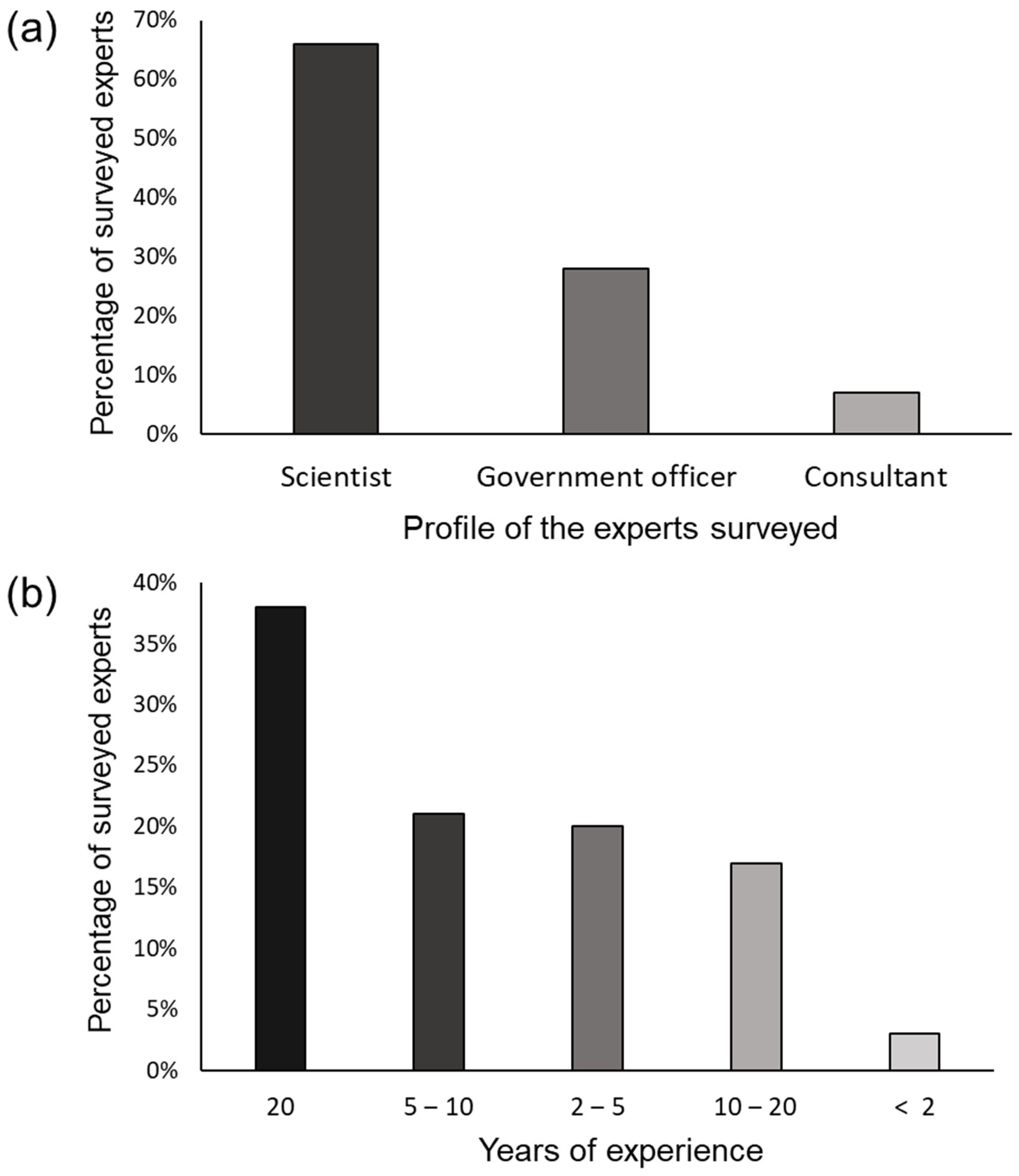
Among the experts surveyed, scientists predominated, and 38% of the participants had more than 20 years of experience (Figure 3).

3.2. Threats to Coastal Ecosystems

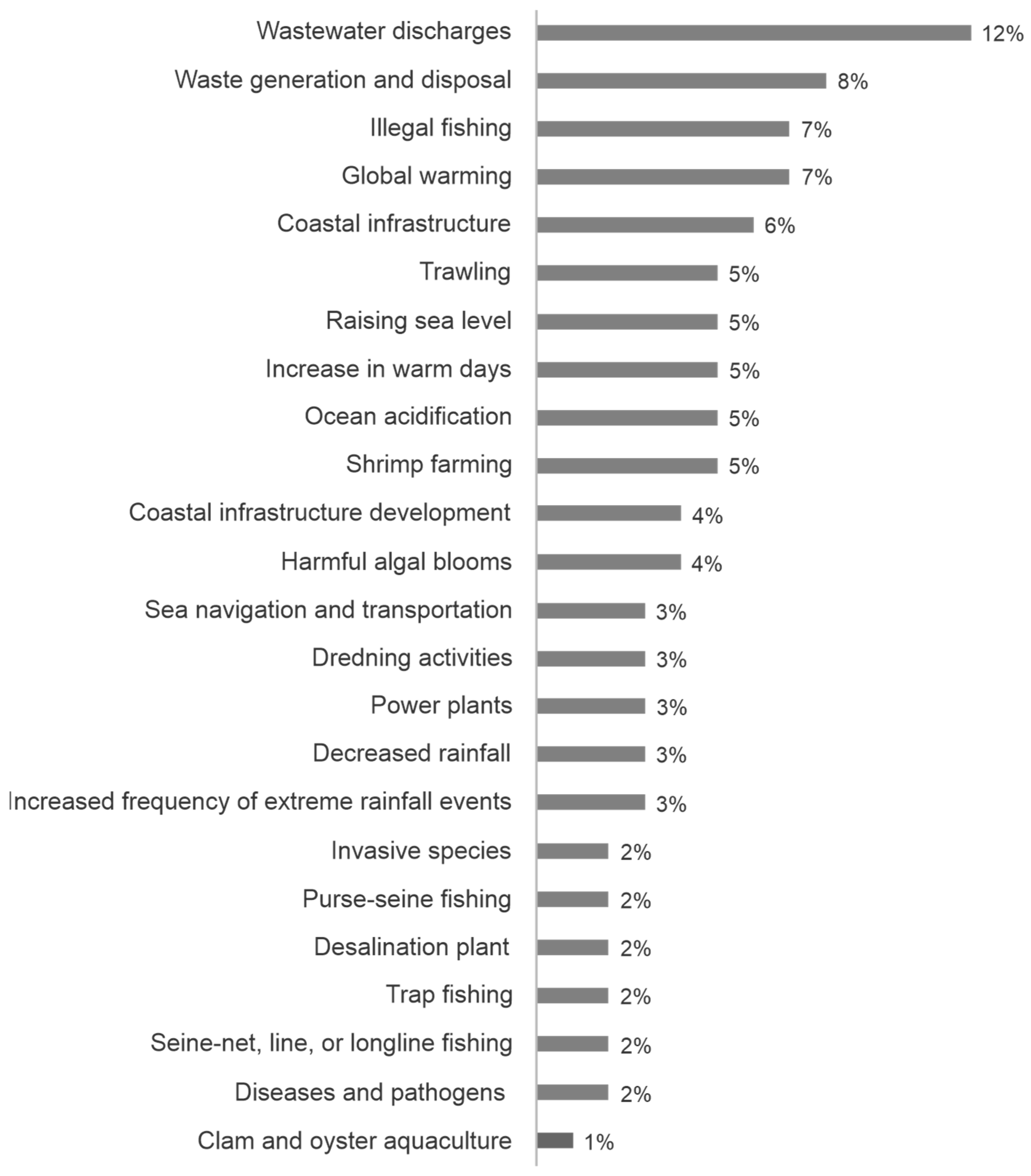
The experts identified several anthropogenic activities and influences that threaten coastal ecosystems in the Guaymas–Empalme area. The most significant threats were wastewater discharges (12%), waste generation and disposal (8%), illegal fishing (7%), global warming (7%), and modification of marine habitats by coastal infrastructure (6%) (Figure 4).
Wastewater discharges were the most frequent threat, with effects observed in four of the eight coastal ecosystems: the benthic ecosystem, coastal water bodies, seagrasses, and sandy beaches (Table 2).
In the ecosystem-based analysis, the benthic ecosystem showed two predominant anthropogenic threats: wastewater discharges (13%) and waste generation and disposal (13%). The main threat identified in islands was waste generation and disposal (14%), whereas wastewater discharges represented the primary threat in coastal water bodies (15%). For their part, mangroves faced risks associated with shrimp aquaculture (50%) and global warming (50%). In seagrasses, wastewater discharges were identified as the main threat (12%); in the pelagic ecosystem, the main threat was illegal fishing (33%). On sandy beaches, the most frequent threat was wastewater discharges (13%), whereas in rocky shores, the predominant threat was the modification of the marine habitat by coastal infrastructure (20%) (Table 2).

3.3. Synergistic Interactions

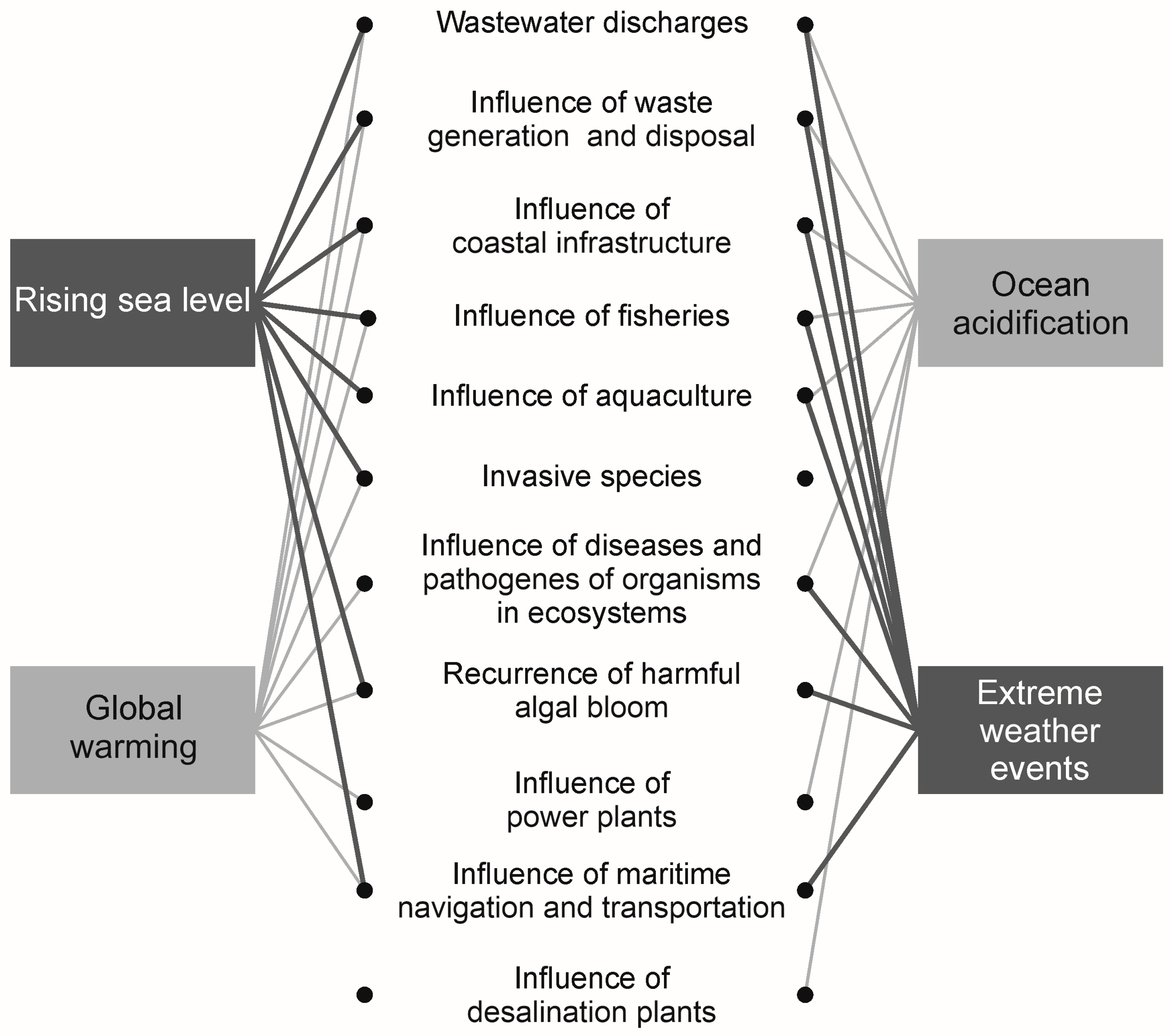
Based on the opinions of the experts surveyed, the effects of climate change (rise in average sea level, global warming, ocean acidification, and extreme weather events) stood out for their synergies with local human activities and influences (Figure 5).

3.4. Ecological Risk

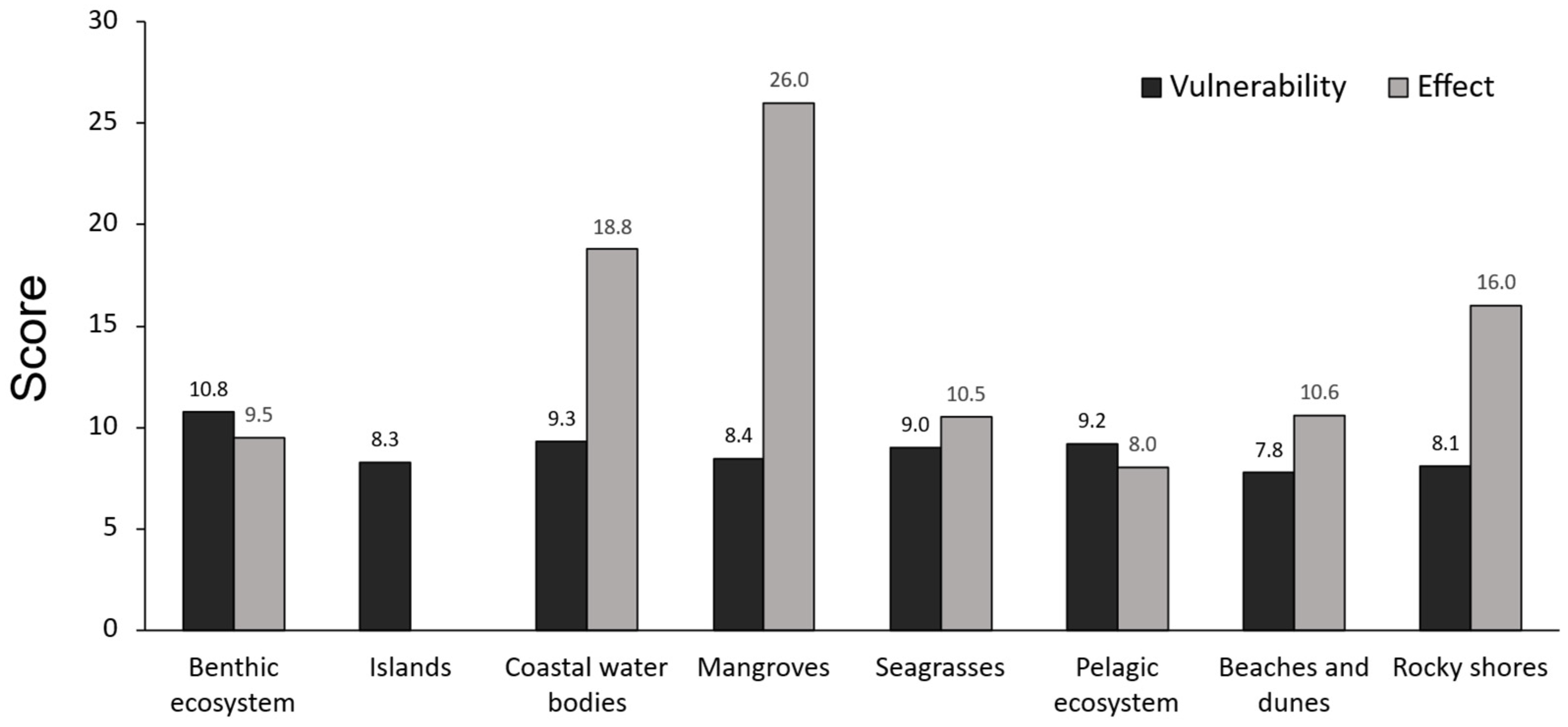
The eight ecosystems showed vulnerability values ranging from 7.8 to 10.8. The effects of threats differed markedly across ecosystems, with the highest scores estimated for mangroves (26), coastal water bodies (≈19), and rocky shores (16) (Figure 6).
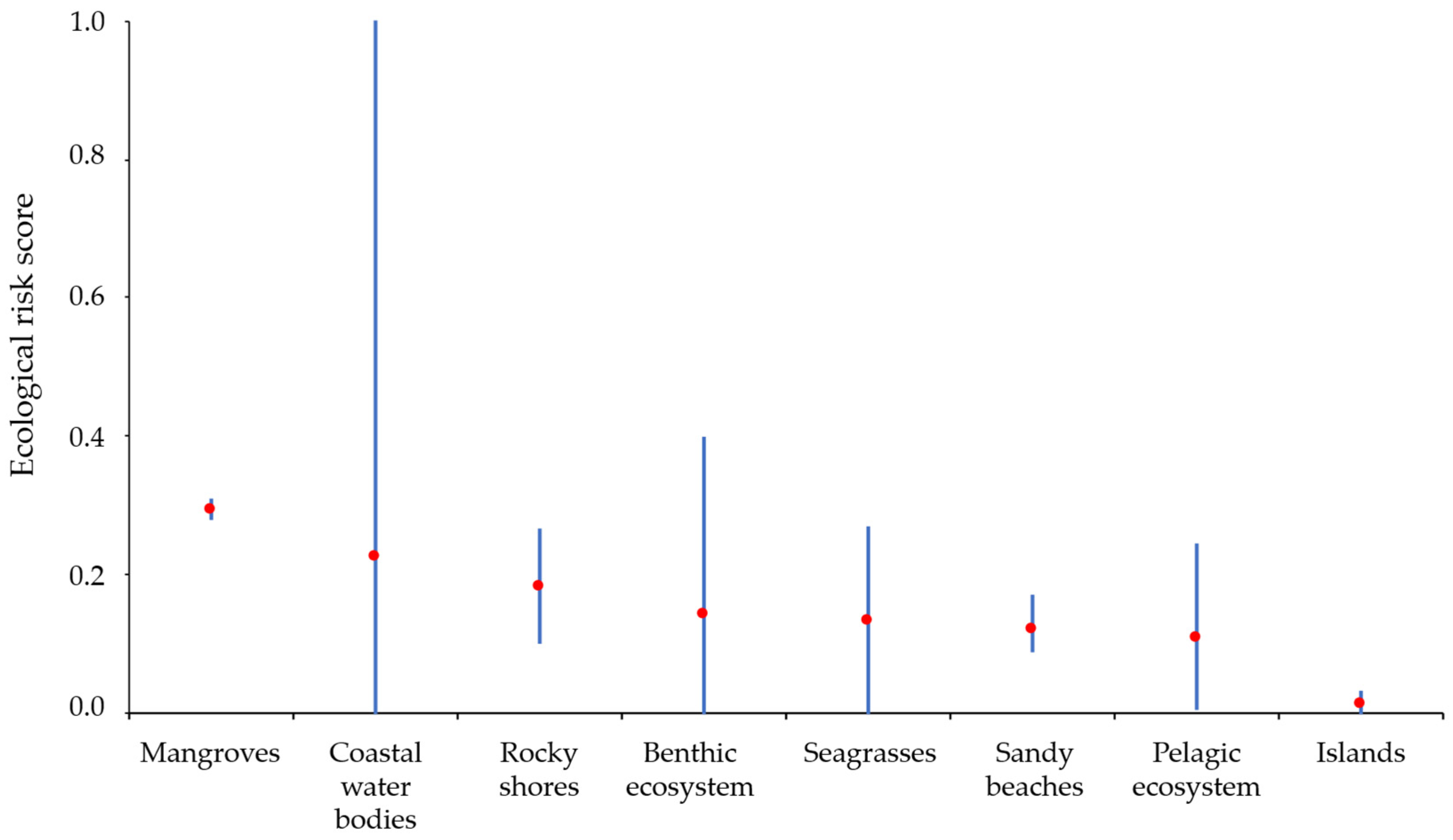
In general, the ecological risks in the Guaymas–Empalme coastal area received low to slightly moderate scores on a 0 to 1 scale, where 0 represents the lowest risk and 1 the highest. The ecosystems with the higher-than-average estimated ecological risk values were mangroves (ER = 0.29), coastal water bodies (ER = 0.23), and rocky shores (ER = 0.18), each exceeding the calculated mean. On the other hand, islands had the lowest ecological risk score (ER = 0.02) (Figure 7).
The experts rated the uncertainty on a scale of 1 (low uncertainty) to 2 (medium uncertainty); no variable was assigned a value of 3 (high uncertainty). The results showed that the ecosystems with information considered to have the lowest uncertainty were: coastal water bodies, pelagic ecosystem, sandy beaches, and rocky shores. The ecosystems that had between 3 and 5 variables rated as having medium uncertainty were: seagrasses, islands, mangroves, and benthic ecosystems; notably, in these ecosystems, the variables rated with medium uncertainty values corresponded primarily to those associated with the effects (Table 3).

4. Discussion

It is important to note that the limitations of this study stem from the fact that the information is not derived from field data or remote sensing. However, input from experts in various disciplines who are familiar with the study area allows us to estimate the scale of the problems, identify gaps in ecological knowledge, and determine which ecosystems require the most attention. This integrated information on ecological risk is useful for initiating coastal management processes, including the generation of knowledge to improve understanding of the environmental condition and trends of ecosystems.
The threats identified by experts for the Guaymas–Empalme coastal area are consistent with the anthropogenic stressors observed in other coastal scenarios worldwide [1], in the Latin America and Caribbean region [17], and at the national level [18], although with differences associated with the magnitude of the threat and the vulnerability of ecosystems in each particular region. These threats stem from the growing demand for space for human activities without proper environmental planning, resulting in the progressive loss of coastal ecosystems and their services to society.
The problems arising from the most important threats to coastal ecosystems in the Guaymas–Empalme area are attributed to population growth and poor urban planning. This is likely due to weak governance systems and the absence of a territorial and environmental planning strategy [19], or to the ineffective implementation of land use planning [20]. In this respect, the Prosperous Cities Index is a measurement tool that enables the identification of opportunities and challenges in cities to support public policy decision-making across different government areas. The application of this index to Guaymas indicated that urban infrastructure has expanded through discontinuous urban structures, empty urban spaces, and ecological alterations [19].
Consequently, a critical factor identified by the experts that jeopardizes ecosystem health in the Guaymas–Empalme coastal area is the discharge of urban and industrial sewage, as agricultural wastewater from the Guaymas and Empalme valleys is not discharged into the sea. There is evidence that wastewater from Guaymas is discharged into the sea either raw (i.e., untreated) or after inefficient treatment [21]. Wastewater with inefficient treatment is also discharged from fishmeal processing [22] and from shrimp farming in land-based culture ponds with effluents discharged into the sea through El Rancho–Empalme and Las Guasimas [23]. The La Salada cove receives 80% of the wastewater discharged by the city of Guaymas, and hypoxia events recorded in this area indicate high inputs of organic matter [21]. Wastewater discharged into Guaymas Bay has also contributed to heavy metal levels, leading to the deterioration of sediment quality and adverse impacts on marine biota [24]. Additionally, wastewater discharges and inadequate sanitary infrastructure have led to fecal contamination of the recreational beaches of Guaymas and Empalme, as indicated by enterococci concentrations that threaten public health [25] and affect tourism.
CEPAL [17] documented that chemical and waste pollution—primarily plastics—is one of the most serious challenges to ocean health in Latin America and the Caribbean. In our study, the experts also pointed to solid waste generation and mismanagement as one of the threats to coastal ecosystems, where plastic pollution is recognized as a serious anthropogenic issue in coastal and marine ecosystems around the world because the continuous accumulation of plastic pollutants from anthropogenic sources causes the direct or indirect disruption of ecosystem structure, functions, and consequently, ecosystem services [26]. This is consistent with the observation that in the municipality of Guaymas (also applicable to Empalme), to advance towards comprehensive and sustainable development, public policies supporting environmental sustainability should be given high priority because they were given low scores based on waste management, air quality, and renewable energy generation criteria [19].
Additionally, the experts highlighted illegal fishing as a major threat that contributes to the loss of marine resources through overexploitation [27]. In Mexico, sustainable and responsible fishing remains an objective yet to be achieved, as some fishers still operate in violation of the regulations in force, failing to properly declare catch volumes or operating to supply the illegal market [28].
The San Carlos, Guaymas, and Empalme urban coast was the area where the greatest threats and ecological risks to coastal ecosystems were identified, due to a gradual shift from a natural to an urban-industrial scenario. In this metropolitan area, mangroves, coastal water bodies, and rocky shores are the ecosystems most at risk of ecological degradation due to continuous exposure to anthropogenic threats.
It is important to note that the average ecological risk values estimated for the group of ecosystems were <0.3; these average values are considered low and can be explained by the fact that the most vulnerable area corresponds to the coastal strip where the Guaymas Metropolitan Zone (GMZ) is located, which includes the cities of Guaymas and Empalme, as well as the tourist destination of San Carlos; this GMZ represents approximately 20% of the coastal strip of the study area (see Figure 2). In other words, there is little development pressure in the rest of the coastal zone, suggesting that the low average ecological risk values are consistent. In particular, it was observed that coastal water bodies scored within a wide range of ecological risk values, which is attributed to the fact that these systems experience varying degrees of anthropogenic pressure, ranging from protected areas to wastewater-receiving bodies [23,24]. The problem lies in that infrastructure development without adequate planning leads to the loss of coastal ecosystems [29]. It has been highlighted that, in environmental matters, the absence of a territorial and environmental planning strategy has led to the accelerated deterioration of natural resources, particularly soil and biodiversity, due to dispersed and unsustainable urbanization practices [19].
The impacts of climate change deserve special attention because current unsustainable development patterns are increasing the exposure of ecosystems and humans to climate hazards. Today, the scope and magnitude of climate change impacts exceed previous estimates from the Intergovernmental Panel on Climate Change [30]. Climate change threatens coastal ecosystem functions and services worldwide [2], and this risk is exacerbated by synergies with local threats, as the adverse effects of climate change tend to intensify with urban development and population growth [31]. In addition, climate change poses a particular threat because it acts on broader temporal and spatial scales than other anthropogenic drivers of change [32]. In the present study, wastewater discharges were identified as the local threat with the strongest interactions with the effects of climate change, particularly global warming and ocean acidification. This is explained by the fact that nutrient inputs associated with wastewater are stressors that can interact with multiple other threats [32].
The above findings suggest that management actions in the Guaymas–Empalme coastal area should focus on regulating wastewater discharges and strengthening urban legislation for efficient land use. Some of the proposed local actions include implementing efficient wastewater treatment plants and reusing treated water to prevent discharges to the sea [21]. Similarly, an index measuring the percentage of treated wastewater [19] has been developed, providing an effective means to regularly monitor the environmental health and sustainability of the affected coastal ecosystems.
Importantly, the regulation of threats must be complemented by actions to reduce the impacts of climate change, thereby maximizing the recovery potential of coastal ecosystems. Specifically, the establishment of protected natural areas, ecosystem restoration, and the management of local threats that interact with climate change are approaches implemented globally to mitigate climate change impacts [2].
The magnitude of the hazards depends on the characteristics of the coast in the region facing threats. Thus, the risk level observed in the Guaymas–Empalme coastal ecosystems was driven primarily by continuous exposure to the threat, as greater exposure increases the likelihood that ecosystems will suffer adverse effects [9]. This is consistent with the geographical and spatial location of ecosystems in the Guaymas–Empalme coastal zone, where the ecosystems facing the greatest pressure are in the areas most strongly influenced by anthropogenic activities, underscoring the role of urban areas as major stressors and wastewater discharges as dispersers of threats to coastal ecosystems. The effects of these threats are magnified by unplanned urban growth, which can reduce the coverage of natural ecosystems and, in turn, increase ecological risk. This is relevant because cities that do not preserve their environmental assets are observed to severely impact the provision of ecosystem services, thereby affecting economic development and the quality of life of their inhabitants [19]. In this regard, the Guaymas Metropolitan Zone received a score of 50.8 on the Sustainable Cities Index (SCI) (on a scale of 0–100), which measures metropolitan zones’ progress toward the Sustainable Development Goals (SDGs) of the 2030 Agenda and integrates information on social, economic, and environmental indicators related to the SDGs. As a benchmark across 63 metropolitan zones in Mexico, the SCI estimates ranged from 44 to 68, with an average score of 56 [33].
It is worth noting that the spatial coverage of human activities associated with transformed land use in urban and industrial development accounts for approximately 20% of the coastal strip in the municipalities of Guaymas and Empalme. This presents an opportunity to implement coastal and marine spatial planning processes to guide the spatial and temporal distribution of human activities, aiming to achieve sustainable use of the coastal zone.
In Mexico, the National Environmental Restoration Program 2025–2030 (NERP) aims to protect and restore natural ecosystems and proposes actions such as: conserving seas and coasts, reducing human impacts, planning land use in an orderly manner, strengthening environmental monitoring and regulatory compliance, and better coordinating urban and ecological plans [34]. This NERP includes Guaymas (site 186) as having the potential to be restored by the year 2050, and the results presented in this paper regarding the identified ecological risks can be applied to establish priorities on the restoration agenda. Furthermore, it will be strategic to consider the link between marine spatial planning [35] and terrestrial spatial planning [36], as well as the urban development planning programs for Guaymas [37] and Empalme [38]. These environmental policy instruments are legally established and represent a governance framework to guide integrated coastal management of the GMZ, which would harmonize its development, environmental restoration, and conservation.

5. Conclusions

In the Guaymas–Empalme coastal area, the main threats are the discharges of raw or poorly treated wastewater into the sea, waste generation and disposal, and illegal fishing.
Wastewater discharges were identified as the threat with the strongest interactions with the effects of climate change, particularly global warming and ocean acidification.
Mangroves, coastal water bodies, and rocky environments are the ecosystems facing the greatest ecological risk due to their continuous exposure to anthropogenic threats, primarily from industrial activities and poorly planned coastal urban growth.
Approximately 20% of the Guaymas–Empalme coastal area within the urban zone faces a higher ecological risk. This represents an opportunity to promote coastal management approaches to restore ecosystems, thereby preventing their loss and preserving the services they provide to society.

Supplementary Materials

The following supporting information can be downloaded at https://www.mdpi.com/article/10.3390/coasts6020019/s1, Table S1: Vulnerability and effect values assigned by experts and estimated ecological risk (unscaled and scaled from 0 to 1) for each ecosystem; Table S2: Uncertainty assessment provided by the surveyed experts.

Author Contributions

A.E.-T.: writing—original draft, conceptualization, data collection, and formal analysis. T.M.R.-R.: writing—review and editing. E.I.P.-M.: writing—review and editing, and cartography. L.M.C.G.: writing—review and editing. J.A.A.-L.: writing—review and editing, writing—original draft, supervision, resources, investigation, formal analysis, and conceptualization. All authors have read and agreed to the published version of the manuscript.

Funding

This research was funded by Centro de Investigaciones Biológicas del Noroeste, S.C., supported by project PPAC-10043.

Data Availability Statement

The original contributions presented in this study are included in the article/Supplementary Material. Further inquiries can be directed to the corresponding author.

Acknowledgments

A.E.-T. was a recipient of a SECIHTI student fellowship No. 79963. At CIBNOR David Urías edited Figure 5. María Elena Sánchez-Salazar translated the manuscript into English.

Conflicts of Interest

The authors declare no conflicts of interest.

References

  1. Newton, A.; Icely, J.; Cristina, S.; Perillo, G.M.E.; Turner, E.; Ashan, R.; Cragg, D.; Luo, S.; Tu, Y.; Li, C.; et al. Anthropogenic, direct pressures on coastal wetlands. Front. Ecol. Evol. 2020, 8, 144. [Google Scholar] [CrossRef]
  2. He, Q.; Silliman, B.R. Climate change, human impacts, and coastal ecosystems in the anthropocene. Curr. Biol. 2019, 29, 1021–1035. [Google Scholar] [CrossRef] [PubMed]
  3. Pasquali, D.; Marucci, A. The Effects of Urban and Economic Development on Coastal Zone Management. Sustainability 2021, 13, 6071. [Google Scholar] [CrossRef]
  4. Mynott, F.; Lonsdale, J.A.; Stamford, T. Developing an Ecological Risk Assessment to Effectively Manage Marine Resources in Data-Limited Locations: A Case Study for St Helena Sand Extraction. Front. Mar. Sci. 2021, 8, 645225. [Google Scholar] [CrossRef]
  5. Rangel-Buitrago, N.; Neal, W.J.; Bonetti, J.; Anfuso, G.; De Jonge, V.N. Vulnerability assessments as a tool for the coastal and marine hazards management: An overview. Ocean. Coast. Manag. 2020, 189, 105134. [Google Scholar] [CrossRef]
  6. Holsman, K.; Samhouri, J.; Cook, G.; Hazen, E.; Olsen, E.; Dillard, M.; Kasperski, S.; Gaichas, S.; Kelble, C.R.; Fogartyy, M.; et al. An ecosystem-based approach to marine risk assessment. Ecosyst. Health Sustain. 2017, 3, e01256. [Google Scholar] [CrossRef]
  7. Doubleday, Z.A.; Jones, A.R.; Deveney, M.R.; Ward, T.M.; Gillanders, B.M. Eight habitats, 38 threats and 55 experts: Assessing ecological risk in a multi-use marine region. PLoS ONE 2017, 12, e0177393. [Google Scholar] [CrossRef]
  8. Gormley, Á.; Pollard, S.; Rocks, S. Guidelines for Environmental Risk Assessment and Management; Department for Environment, Food and Rural Affairs (DEFRA), Collaborative Centre of Excellence in Understanding and Managing Natural and Environmental Risks: London, UK, 2011; pp. 22–40. Available online: https://www.researchgate.net/publication/332471922_Guidelines_for_Environmental_Risk_Assessment_and_Management (accessed on 12 September 2023).
  9. Halpern, B.S.; Selkoe, K.A.; Micheli, F.; Kappel, C.V. Evaluating and ranking the vulnerability of global marine ecosystems to anthropogenic threats. Conserv. Biol. 2007, 21, 1301–1315. [Google Scholar] [CrossRef]
  10. Uribe, E.; Etter, A.; Luna-Acosta, A.; Díaz-Granados, M.C.; Acosta, A.; Alonso, D.; Chasqui, L.; Gómez-López, D.I.; Rodríguez-Rodríguez, J.A.; Osorno-Arango, A.; et al. Lista Roja de Ecosistemas Marinos y Costeros de Colombia, 1st ed.; Conservación Internacional: Arlington, VA, USA; Pontificia Universidad Javeriana: Bogotá, Colombia; INVEMAR: Santa Marta, Colombia, 2020; pp. 5–22, 28–50. Available online: https://cm.iucnrle.org/assets/630b028e-e679-4711-8be0-f140f41e98d3 (accessed on 20 October 2023).
  11. INEGI. Censo Población y Vivienda 2020. Instituto Nacional de Estadística y Geografía. Available online: https://www.inegi.org.mx/programas/ccpv/2020/ (accessed on 2 August 2023).
  12. García, E. Modificaciones al Sistema de Clasificación Climática de Köppen; Instituto de Geografía, Universidad Nacional Autónoma de Mexico: Mexico City, Mexico, 2004; p. 246. [Google Scholar]
  13. Brito-Castillo, L.; Crimmins, M.A.; Díaz, S.C. Clima. In Diversidad Biológica de Sonora; Molina-Freaner, F.E., Van-Devender, T.R., Eds.; Universidad Nacional Autónoma de Mexico: Mexico City, Mexico, 2010; pp. 73–96. [Google Scholar]
  14. Filloux, J.H. Tidal Patterns and Energy Balance in the Gulf of California. Nature 1973, 243, 217–221. [Google Scholar] [CrossRef]
  15. Davies, J.L. A morphogenic approach to world shorelines. Zeit. Geomorphol. 1964, 8, 27–42. [Google Scholar] [CrossRef]
  16. Thomson, D.A.; Findley, L.T.; Kerstitch, A.N. Reef Fishes on the Sea of Cortez; John Wiley and Sons: New York, NY, USA, 1979; p. 302. [Google Scholar]
  17. CEPAL. Panorama del Océano, los Mares y los Recursos Marinos y su Contribución al Desarrollo Sostenible de América Latina y el Caribe; (LC/TS.2025/30); Comisión Económica para América Latina y el Caribe: Santiago, Chile, 2025. [Google Scholar]
  18. Lara-Lara, R.; Sosa-Ávalos, R.; Díaz, V.; Tapia, M. Los ecosistemas marinos. In Capital Natural de Mexico; Conocimiento Actual de la Biodiversidad, Comisión Nacional para el Conocimiento y Uso de la Biodiversidad (CONABIO): Mexico City, Mexico, 2008; Volume I, pp. 135–159. [Google Scholar]
  19. Infonavit-ONU Habitat. Índice Básico de Las Ciudades Prósperas; Instituto del Fondo Nacional de la Vivienda para los Trabajadores (Infonavit): Mexico City, Mexico; ONU Hábitat: Mexico City, Mexico, 2018; p. 129. [Google Scholar]
  20. Arreola-Lizárraga, J.A.; Juárez-Chávez, F.I.; Polanco Mizquez, E.I.; Padilla-Arredondo, G. Análisis de la confluencia de tres ordenamientos en la zona costera de Guaymas, Sonora, Mexico. In Perspectivas del Ordenamiento Territorial y Ecológico en América y Europa; Sorani, V., Alquicira Arteaga, M.L., Eds.; Arlequin Editorial y Servicios: Guadalajara, Mexico, 2015; pp. 87–101. Available online: https://www.researchgate.net/publication/320517464_Analisis_de_la_confluencia_de_tres_ordenamientos_en_la_zona_costera_de_Guaymas_Sonora_Mexico (accessed on 18 January 2023).
  21. Vargas-González, H.H.; Arreola-Lizárraga, J.A.; Mendoza-Salgado, R.; Méndez-Rodríguez, L.; Lechuga-Deveze, C.; Padilla-Arredondo, G.; Cordoba-Matson, M. Effects of sewage discharge on trophic state and water quality in a coastal ecosystem of the Gulf of California. Sci. World J. 2014, 2014, 618054. [Google Scholar] [CrossRef]
  22. Osuna-Ramirez, R.; Arreola-Lizárraga, J.A.; Padilla-Arredondo, G.; Mendoza-Salgado, R.A.; Mendez-Rodriguez, L.C. Toxicity of wastewater from fishmeals production and their influence on coastal waters. Fresenius Environ. Bull. 2017, 26, 6408–6412. [Google Scholar]
  23. Medina-Galván, J.; Osuna-Martínez, C.C.; Padilla-Arredondo, G.; Frías-Espericueta, M.G.; Barraza-Guardado, R.H.; Arreola-Lizárraga, J.A. Comparing the biogeochemical functioning of two arid subtropical coastal lagoons: The effect of wastewater discharges. Ecosyst. Health Sustain. 2021, 7, 1892532. [Google Scholar] [CrossRef]
  24. Méndez, L.; Acosta, B.; Arreola-Lizárraga, J.A.; Padilla, G. Anomalous levels of heavy metals in sediments from Guaymas Bay, Mexico. Bull. Environ. Contam. Toxicol. 2004, 72, 1101–1106. [Google Scholar] [CrossRef]
  25. León-López, C.E.; Arreola-Lizárraga, J.A.; Padilla-Arredondo, G.; Chávez-Villalba, J.E.; Mendoza-Salgado, R.A.; Méndez-Rodríguez, L.; García-Hernández, J. Temporal variability of enterococci and associated sources at three subtropical recreational beaches. Oceanol. Hydrobiol. Stud. 2018, 47, 327–336. [Google Scholar] [CrossRef]
  26. Thushari, G.G.N.; Senevirathna, J.D.M. Plastic pollution in the marine environment. Heliyon 2020, 6, E04709. [Google Scholar] [CrossRef]
  27. Yurkievich, G.; Sánchez-Crispín, A. Estructura territorial de la actividad pesquera en Guaymas, Sonora. Investig. Geogr. Bol. Inst. Geogr. 2016, 91, 152–167. [Google Scholar] [CrossRef]
  28. Crespo, J.M.; Jiménez, A. Hacia el desarrollo sostenible de la pesca y la acuicultura en Mexico. Cuad. Geogr. 2021, 60, 6–28. [Google Scholar] [CrossRef]
  29. Pardal-Souza, A.L.; Muniz Dias, G.; Jenkins, S.R.; Ciotti, Á.M.; Christofoletti, R.A. Shading impacts by coastal infrastructure on biological communities from subtropical rocky shores. J. Appl. Ecol. 2017, 54, 826–835. [Google Scholar] [CrossRef]
  30. IPCC. Climate Change 2022: Impacts, Adaptations, and Vulnerability; Sixth Assessment Report, Summary for Policymakers; Working Group II, Intergovernmental Panel on Climate Change, WMO-UNEP: Bremen, Germany, 2022; pp. 1–35. [Google Scholar]
  31. Ostrowski, A.; Connolly, R.M.; Sievers, M. Evaluating multiple stressor research in coastal wetlands: A systematic review. Mar. Environ. Res. 2021, 164, 105239. [Google Scholar] [CrossRef]
  32. Kennish, M.J. Drivers of Change in Estuarine and Coastal Marine Environments: An Overview. Open J. Ecol. 2021, 11, 224–239. [Google Scholar] [CrossRef]
  33. Citibanamex-Cide-Imco-Cmm. Índice de Ciudades Sostenibles 2021: Desafíos, Rumbo al 2030, de los Objetivos de Desarrollo Sostenible en las Zonas Metropolitanas de Mexico; Banco Nacional de Mexico: Mexico City, Mexico; Centro de Investigación y Docencia Económicas: Mexico City, Mexico; Instituto Mexicano para la Competitividad: Mexico City, Mexico; Centro Mario Molina: Mexico City, Mexico, 2022; p. 189. Available online: https://www.banamex.com/resources/pdf/es/personas/compromiso-social/indice-de-ciudades-sostenibles-2021.pdf (accessed on 25 June 2025).
  34. Semarnat. Programa Nacional de Restauración Ambiental 2025–2030; Secretaría de Medio Ambiente y Recursos Naturales: Metepec, Mexico, 2025; p. 96. Available online: https://www.biodiversidad.gob.mx/media/1/Programa_Nacional_de_Restauraci%C3%B3n_Ambiental_v10_web__1_.pdf (accessed on 21 July 2025).
  35. Diario Oficial de la Federación. Acuerdo por el que se Expide el Programa de Ordenamiento Ecológico Marino del Golfo de California. Secretaria de Medio Ambiente y Recursos Naturales. 2006. Available online: http://www.dof.gob.mx/nota_detalle.php?codigo=4940652&fecha=15/12/2006 (accessed on 17 October 2023).
  36. Semarnat-Cedes. Formulación del Programa de Ordenamiento Ecológico Territorial de Sonora; Secretaría de Medio Ambiente y Recursos Naturales: Metepec, Mexico; Comisión de Ecología y Desarrollo Sustentable del Estado de Sonora: Hermosillo, Mexico, 2011; Available online: https://archivos.cedes.gob.mx/resources/CVRJAUU9YWCVDCG3MUST.76a26a593366dda353052f07e6323a8d.pdf (accessed on 17 October 2023).
  37. Boletin Oficial Gobierno de Sonora. Programa Municipal de Desarrollo Urbano de Guaymas, Sonora; Secretaría de Infraestructura y Desarrollo Urbano: Metepec, Mexico, 2024; Available online: https://boletinoficial.sonora.gob.mx/images/boletines/2024/09/EE27092024.pdf (accessed on 23 May 2025).
  38. Boletin Oficial Gobierno de Sonora. Programa Municipal de Desarrollo Urbano de Empalme, Sonora; Secretaría de Infraestructura y Desarrollo Urbano: Metepec, Mexico, 2024; Available online: https://boletinoficial.sonora.gob.mx/images/boletines/2024/05/2024CCXIII41XVI.pdf (accessed on 23 May 2025).
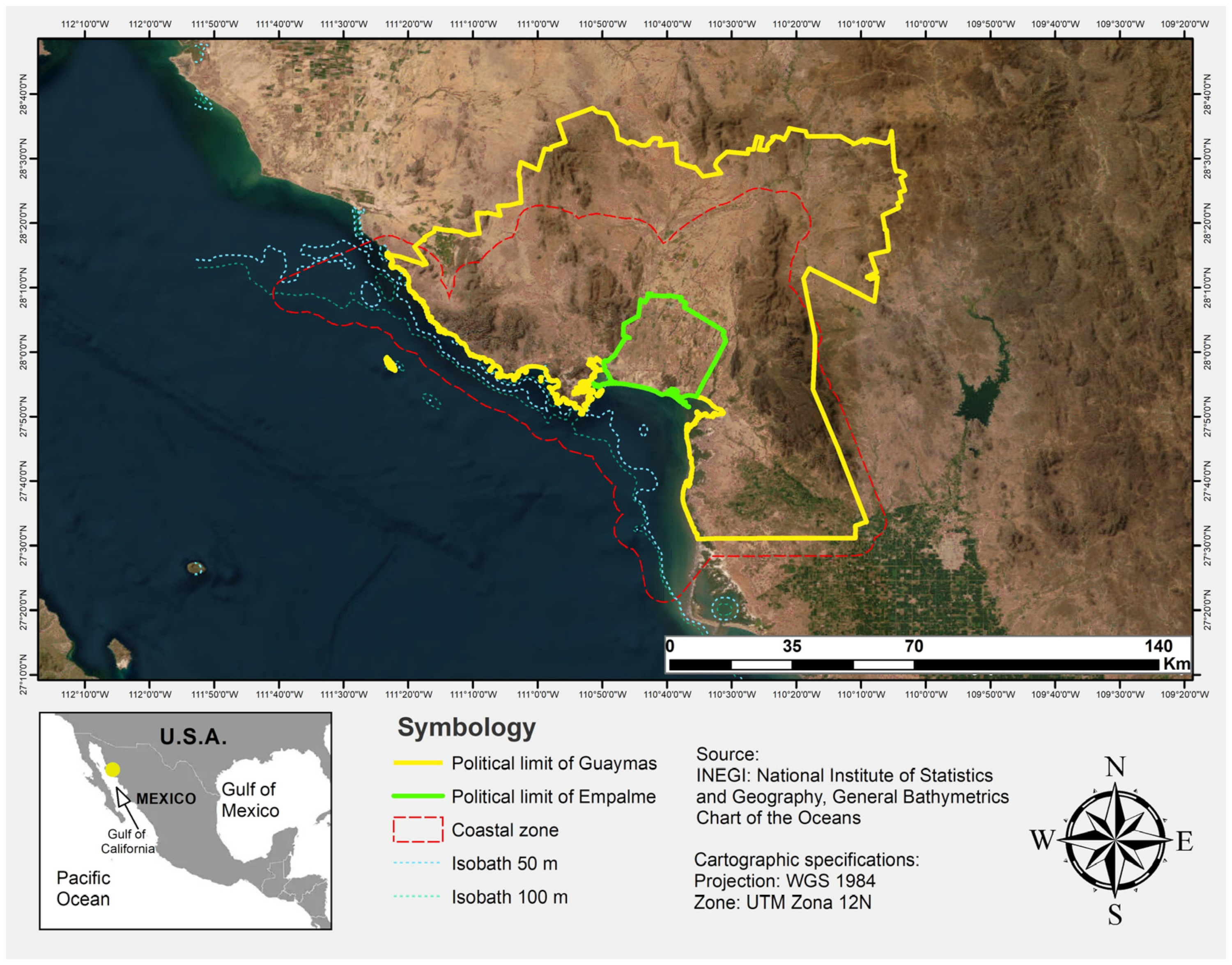
Figure 1. The location of the study area, indicating the coastal zone of the municipalities of Guaymas and Empalme, Sonora.
Coasts 06 00019 g001
Figure 2. The study area, indicating human activities and ecosystems in the coastal zone of the municipalities of Guaymas and Empalme, Sonora, Mexico. The yellow line marks the boundary between two biogeographic regions of the Gulf of California [16] in the coastal zone under study.
Coasts 06 00019 g002
Figure 3. Composition of the profile of the experts surveyed (a) and years of experience (b).
Coasts 06 00019 g003
Figure 4. The main anthropogenic activities and influences identified in the Guaymas–Empalme coastal area that threaten coastal ecosystems.
Coasts 06 00019 g004
Figure 5. The resulting synergies between the effects of climate change and anthropogenic activities and influences in the Guaymas–Empalme coastal area. Prepared based on the opinions of the experts surveyed. The dots indicate activities, and the lines show the incidence of climate change effects.
Coasts 06 00019 g005
Figure 6. The scores for vulnerability and effect of threats in the Guaymas–Empalme coastal ecosystems. The bars show the specific values used to estimate ecological risk.
Coasts 06 00019 g006
Figure 7. An estimation of ecological risk for coastal ecosystems in the Guaymas–Empalme coastal area. The circles indicate the average values. The ends of the lines indicate the estimated minimum and maximum values.
Coasts 06 00019 g007
Table 1. The criteria for assessing ecosystem vulnerability and the effect of anthropogenic activities.
Variable/Score0123
VulnerabilityFragmentationUnfragmentedLowModerateHigh
Recovery time<1 month<1 year1 to 5 years>5 years
Degree of exposure
to disturbance
Once every two or more yearsOnce a yearMore than twice a yearOnce a month
EffectTemporal exposure>6 months per year4 to 6 months per year2 to 3 months per year1 to 30 days per year
Spatial coverture<25%25–49%50–74%75–100%
Changes in the physical structure of the ecosystem<25%25–49%50–74%75–100%
Changes in species composition<25%25–49%50–74%75–100%
Table 2. The main activities and influences by type of ecosystem in the Guaymas–Empalme coastal area.
EcosystemHuman Activities/InfluenceMagnitude (%)
Benthic ecosystemWastewater discharges13
Solid waste generation and discharge13
IslandsSolid waste generation and discharge14
Coastal water bodiesWastewater discharges15
MangrovesShrimp farming50
Climate change: global warming50
SeagrassesWastewater discharges12
Pelagic ecosystemIllegal fishing33
Sandy beachesWastewater discharges13
Rocky shoresModification of marine habitats due to coastal infrastructure20
Table 3. The level of uncertainty associated with the ecological assessment of the coastal ecosystems. Green: minor uncertainty; yellow: major uncertainty.
Variable/EcosystemBenthic EcosystemIslandsCoastal WaterbodiesMangrovesSeagrassesPelagic EcosystemSandy BeachesRocky Shores
VulnerabilityFragmentation
Recovery time
Degree of exposure to disturbance
EffectTemporal exposure
Spatial coverture
Changes in the physical structure
Changes in species composition
Disclaimer/Publisher’s Note: The statements, opinions and data contained in all publications are solely those of the individual author(s) and contributor(s) and not of MDPI and/or the editor(s). MDPI and/or the editor(s) disclaim responsibility for any injury to people or property resulting from any ideas, methods, instructions or products referred to in the content.