Article

Assessment of Wave Data in West Africa for the Estimation of Wave Climate

by
Yusif Owusu
1,*,
Komlan Agbéko Kpogo-Nuwoklo
2,
Anthony Twum
1 and
Bapentire Donatus Angnuureng
3,*
1
Department of Physics, University of Cape Coast, Cape Coast PMB TF0494, Ghana
2
Marine Forecasting and Oceanography Division, Meteo France, 31100 Toulesse, France
3
ACECoR, Centre for Coastal Management, University of Cape Coast, Cape Coast PMB TF0494, Ghana
*
Authors to whom correspondence should be addressed.
Submission received: 15 October 2025 / Revised: 29 December 2025 / Accepted: 12 January 2026 / Published: 3 March 2026

Abstract

Reanalysis wave datasets are essential for understanding wave conditions along the West African coast, a region with over 350 million people and diverse economic activities. This study evaluates the effectiveness of various datasets, including ERA5, WAVERYS, satellite (HY-2B/HY-2C), and buoy measurements, focusing on significant wave height (Hs). WAVERYS was found to better match in situ conditions compared to ERA5, making it the preferred dataset for climate estimation. This study found that wave heights (Hs) of WAVERYS in the region range from 0.5 m to 3.2 m, with waves primarily coming from the south and southwest, having periods between 3.8 s and 25 s. Swell, originating from the South Atlantic Ocean, dominates the wave climate, while local wind waves contribute only about 5% to the overall sea state energy. Seasonal analysis showed that the highest waves occur between June and September, coinciding with the South Atlantic winter and stronger winds. The validation performed in this study confirms that the WAVERYS reanalysis can reliably be used as a source of wave data in the Gulf of Guinea. This recommendation is based on its consistently better agreement with the available in situ observations and its improved representation of wave dynamics in the region. At locations where buoy measurements exist, in situ data should remain the primary reference for site-specific applications; however, such measurements are spatially sparse and temporally limited across West Africa. Consequently, WAVERYS provides a practical and robust alternative for regional-scale analyses, long-term assessments, and operational applications in areas lacking direct observations, making it particularly valuable for coastal risk assessment, engineering design, and marine operations in the region.

1. Introduction

Wave climate defines the long-term statistical characteristics of ocean waves in a specific region or location [1]. It encapsulates vital parameters like wave height, wave period, wave direction, and wave energy distribution. Understanding wave climate serves as the foundation for predicting and mitigating the impacts of waves on coastal regions, maritime operations, and coastal structures [2]. The significance of wave climate cuts across various domains from maritime navigation where an in-depth grasp of wave climate facilitates route optimization, ensuring safe and efficient passage for vessels to coastal engineering and offshore industries that rely on wave climate data to design structures capable of withstanding the forces exerted by waves, storm surges, and coastal erosion [3,4,5]. Moreover, environmental scientists employ wave climate data to assess coastal vulnerability, study beach erosion, and safeguard ecosystems [6,7].
In West Africa, the scarcity of wave data poses significant challenges for coastal management and erosion assessments. This region lacks long-term, consistent wave measurement systems, limiting the accuracy of coastal hazard predictions. To compensate, researchers often rely on offshore coarse datasets [8], such as reanalysis models or satellite data, which lack the resolution and precision needed for localized erosion studies. For instance, these datasets fail to capture nearshore wave dynamics crucial for understanding sediment transport and shoreline changes. Accurate and consistent wave data are essential for effective coastal protection measures and sustainable development along West Africa’s vulnerable coastlines [9]. In light of these considerations, the accurate estimation of wave conditions becomes a fundamental necessity. This accuracy is indispensable for the effective planning, design, and overall management of coastal regions. In essence, comprehending historical wave patterns and predicting future wave behavior is vital for making informed decisions regarding coastal development and safeguarding [10].
Understanding the wave climate within the West Africa area becomes imperative for the sustainable management of coastal zones and the livelihoods of its coastal communities [5]. From previous studies, the evaluation of 5th Generation European ReAnalysis (ERA5) and NCEP-NCAR reanalysis-II (NNR-II) reanalysis datasets in the marine domain of West Africa was examined to identify the reanalysis data that best represents the wind regimes of the sub-region for use in climate studies and ocean wave modeling [11].
Recent studies have assessed the quality of wave height and wave period from ERA5 reanalysis by comparing them to buoy measurements, which reveal several limitations and areas for improvement [12]. For instance, ERA5 significant wave height (SWH) data showed positive biases, indicating an overall overestimation for most locations, and a significant underestimation of maximum SWH during tropical cyclone periods, suggesting that ERA5 data may not be reliable for design applications without site-specific validation [13]. Furthermore, while ERA5 was consistent with the annual mean SWH, its performance for the average wave period was less accurate, particularly in shallow water areas. Similarly, Sun et al. highlighted the limitations of ERA5 by comparing it with Sentinel-1 SAR ocean wave spectra and NDBC buoy data, noting discrepancies in the spectral values and presenting RMSE and bias values that indicated the need for improvement in ERA5’s wave height estimations [14]. Steinkopf et al. emphasized the improvements in ERA5 over ERA-Interim for climate investigations in Africa, particularly in reducing wet biases and better representing the annual precipitation cycle, although their study did not specifically address coastal regions [15].
In the context of West Africa, Almar et al. [16] and Angnuureng et al. [8] investigated coastal changes and erosion management using various satellite and reanalysis data, but their findings suggested that employing reanalysis from the Copernicus Marine Environment Monitoring Service (CMEMS) known as WAVERYS could yield better results [8,13,17].
Although ERA5 and WAVERYS are widely used reanalysis products, their relative performance over the West African coastal region has not been systematically assessed. Existing studies in the region tend to rely on a single dataset or apply these products independently, without a direct, side-by-side evaluation of their ability to represent wave climate characteristics under the same spatial and temporal framework. As a result, there is limited understanding of the uncertainties and potential biases introduced by dataset choice in West African wave studies. This gap motivates the present study, which provides a focused comparison of ERA5 and WAVERYS over West Africa to clarify their differences and added value for regional wave climate analysis.
The main aim of this paper is to therefore assess two global wave datasets at a subregional scale and determine their suitability for coastal studies. This research would focus on region-specific evaluations that directly compare ERA5 and WAVERYS datasets to validate and guide the selection of the appropriate dataset for coastal studies in West Africa. This study encompasses the estimation of wave conditions based on the “best” reanalysis dataset. The wave climate analysis for this research covers a 30-year period, spanning from 1993 to 2022, and is based on both wind sea and swell waves, providing a comprehensive understanding of the wave dynamics in the study region.

2. Study Area

The geographic scope of this study encompasses the coastal regions of multiple West African nations, including Ivory Coast, Ghana, Togo/Benin, and Nigeria. It extends to cover the area between 5° N and 20° S latitude and 20° W and 10° E longitude within this region. West Africa faces significant environmental challenges, particularly in its coastal zones, due to climate change impacts such as flooding, wave overtopping, coastal erosion, and sea-level rise. Wave overtopping, where seawater breaks over barriers due to powerful wave action during storms or high tides, also poses a growing threat. Wave heights can reach over 3 m during extreme events, leading to severe flooding and infrastructure damage. Coastal erosion, accelerated by human activities such as sand mining and deforestation, further compounds these issues, with some regions experiencing erosion rates of up to 30 m per year [18]. Sea-level rise, driven by global warming, exacerbates all these challenges. With projections of up to 1 m of sea-level rise by the end of the century, West Africa’s coastal cities face the risk of permanent inundation and displacement of millions [18]. These interlinked environmental hazards are largely exacerbated by lack of knowledge of the wave conditions experienced in these low-to-middle-income countries. This demands concrete and adaptive measures, including quality data presentation, better urban planning, infrastructure investment, and coastal management.
With regard to the legend in Figure 1, the position of the buoy that was used for the comparative assessment is indicated. Also, Ivory Coast, Ghana, Togo/Benin and Nigeria were the points where the wave climate estimation was based to represent the entire stretch of West African coast. This is because the West African coast is commonly represented by Ivory Coast, Ghana, Togo/Benin, and Nigeria in discussions concerning wave conditions because of their physical continuity along the Gulf of Guinea, shared coastal features, and shared oceanographic impacts [19,20].

3. Materials and Methods

3.1. Reanalyses

ERA5 and WAVERYS share several fundamental characteristics that make them directly comparable for wave climate analysis. Both are global reanalysis products derived from numerical wave models constrained by extensive satellite data assimilation, and both provide consistent long-term records of key wave parameters, including significant wave height, wave period, and wave direction. After harmonizing their spatial and temporal resolutions, the two datasets represent the same physical wave processes over a common period, ensuring that similarities in their outputs reflect comparable model physics and observational constraints rather than differences in data structure. This common framework provides a robust basis for assessing their relative performance and consistency in representing wave conditions along the West African coast.

3.1.1. European Centre for 5th Medium-Range Weather Forecasts (ECMWF) Reanalysis (ERA5) Hindcast

The European Centre for Medium-Range Weather Forecasts’ fifth-generation reanalysis (ERA5) provides a high-resolution, global reconstruction of atmospheric, wave, and oceanic conditions from 1950 onward. It is generated by assimilating a vast suite of historical observations, including satellite data, into advanced numerical models.
For this study, hourly wave parameters, which include significant wave height (Hs), period, and direction, were extracted for the period January 1993 to December 2022. The native spatial resolution of the dataset is approximately 0.5° (~50 km). To ensure a consistent and equitable comparison with the higher-resolution WAVERYS dataset, the ERA5 data underwent spatial and temporal preprocessing. The temporal resolution was first interpolated to a 3 h timestep. Subsequently, the spatial grid was downscaled from 0.5° to 0.2° using bilinear interpolation, aligning it with the WAVERYS grid [3,21]. This downscaling approach, chosen for its suitability for smoothly varying wave fields, preserves large-scale gradients while minimizing interpolation artifacts that could arise from upscaling the finer-resolution data. A land–sea mask from WAVERYS was applied post-interpolation to eliminate spurious values over land.

3.1.2. WAVERYS

WAVERYS is a global wave reanalysis product from the Copernicus Marine Service, covering the period from 1993 onward. It is produced by a numerical wave model that incorporates wave–current interactions, forced by 3-hourly surface currents from the GLORYS ocean reanalysis, and assimilates satellite altimeter wave data.
The dataset provides essential wave parameters, such as Hs, at a 3-hourly temporal resolution. Its spatial resolution was 0.2° (~20 km) from 1993 to 2020 and was enhanced to 0.083° (~8 km) from 2021 to 2022. For consistency across the entire analysis period, the WAVERYS data was regridded to a uniform 0.2° resolution, which served as the reference grid for all comparative analyses.

3.2. Measurements/Observations/Validation Data

3.2.1. HY-2B and HY-2C Satellites

Along-track significant wave height (Hs) data from the HaiYang-2B (HY-2B) and HaiYang-2C (HY-2C) satellite altimeters were used for independent validation. These near-real-time mono-mission data, covering January 2021 to December 2022, feature an along-track resolution of approximately 7 km. The altimeter records were calibrated against in situ buoy measurements, and a filtering process was applied along the satellite ground tracks to minimize noise [22].
A key rationale for selecting HY-2B/2C data is that, unlike data from missions such as TOPEX/Poseidon, Jason series, or Sentinel-3 [17], they had not been assimilated into either the ECWAM (ERA5) or MFWAM (WAVERYS) wave models at the time of this study. Their use thus provides a fully independent assessment of model performance [23].

3.2.2. Buoy Observation

In situ wave data for model validation were sourced from a buoy deployed at the AKPO oil platform, located approximately 130 km offshore Nigeria in deep waters (6.8224° E, 3.1398° N). The buoy recorded hourly significant wave height (Hs) and other sea state parameters from May 2003 to April 2004. To align with the temporal resolution of the reanalysis datasets [20], these hourly records were linearly interpolated to a 3-hourly timestep. Furthermore, to mitigate representativeness errors inherent in point-to-grid comparisons, the reanalysis data were bilinearly interpolated from their native grid (whose nearest point was ~20–25 km from the buoy) to the exact buoy coordinates. This spatial interpolation reduces biases from spatial mismatches, ensuring a more accurate validation against conditions at the in-situ site.

3.3. Data Pre-Processing and Comparative Framework

The core comparative analysis focused on significant wave height (Hs). A unified spatiotemporal framework was established to enable direct comparison between datasets. All data were aligned to a 3-hourly temporal resolution and a common 0.2° spatial grid, with WAVERYS serving as the spatial reference.
For satellite validation, reanalysis Hs values were extracted from the model grid cell containing the altimeter footprint for each HY-2B/2C along-track point. For buoy validation, Hs time series were extracted from the reanalysis grid point closest to the buoy location.
The validation strategy employed two distinct datasets due to availability constraints: the 2003–2004 buoy record was used for a historical evaluation, while the 2021–2022 HY-2B/C altimetry was used for a modern calibration period. This approach introduces a temporal mismatch but was necessitated by the lack of long-term, unassimilated in situ data for the region. It is acknowledged that the offshore location of the buoy (~130 km from shore) limits inferences regarding model skill in near-coastal zones, meaning that the results primarily reflect the performance of the reanalyses in offshore conditions. Furthermore, while the regridding of ERA5 was carefully conducted and confirmed not to introduce systematic biases, it inherently smooths sharp gradients and does not add new small-scale physical information.

4. Results and Discussions

4.1. Comparison of WAVERYS and ERA5 Significant Wave Height

In this section, results of the comparison of WAVERYS and ERA5 with satellite and in situ buoy data were used to validate the one that best described the West African coast. To do this, graphical tools such as the scatter plot and quantile-quantile diagrams, and metrics such as correlation coefficient (CR), mean bias, root mean square error (rms), relative error (RE), and scatter index (SI) were employed.

4.1.1. Comparison of WAVERYS and ERA5 Significant Wave Height Based on Satellite Data

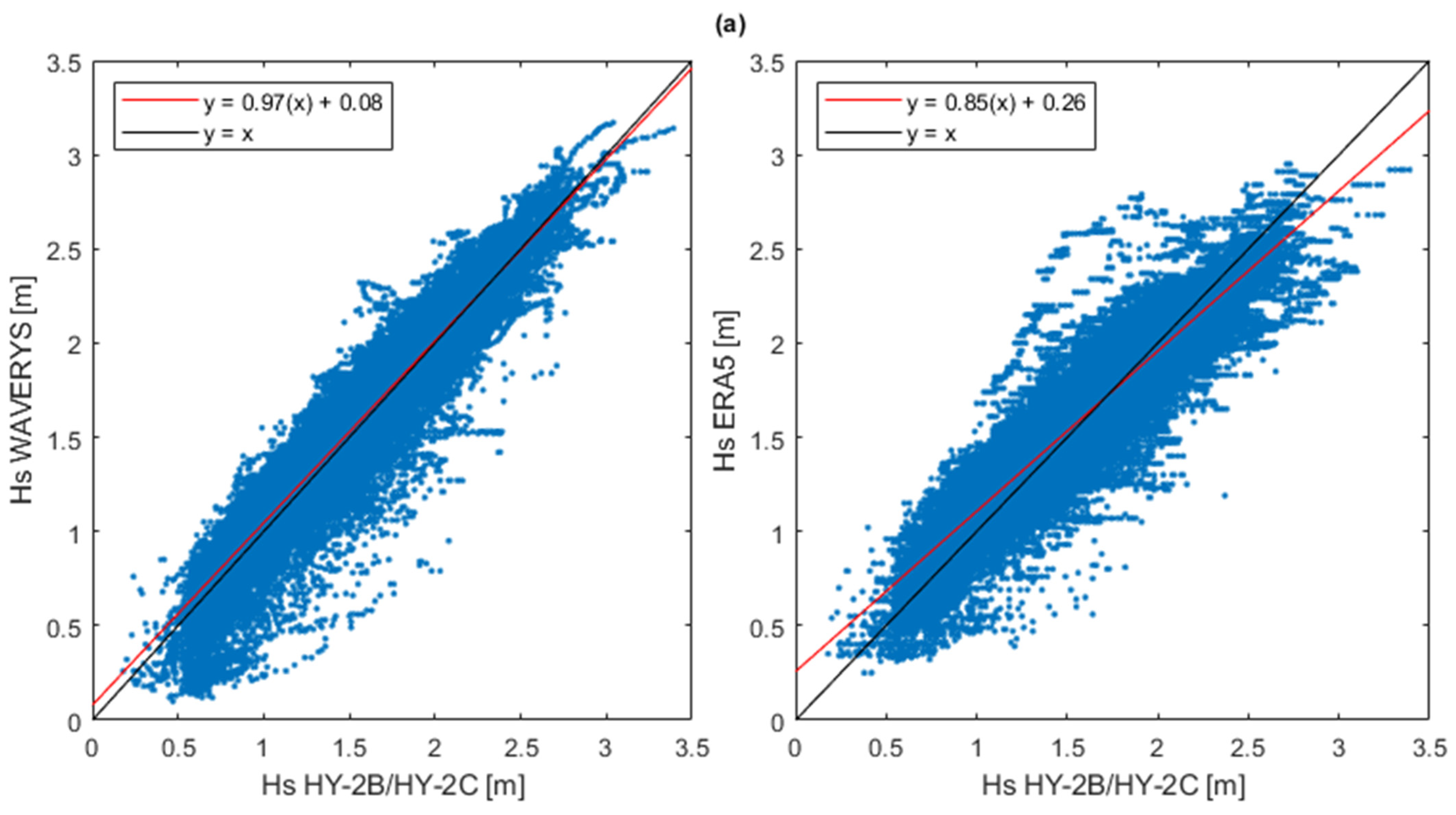
Figure 2a represents a scatter plot of WAVERYS Hs (m) against HY-2B/HY-2C Hs (m) with linear regression fit, and ERA5 Hs (m) against HY-2B/HY-2C Hs (m) with linear regression line. The closeness of points clustered around the linear regression line is observed in both graphs. Even though both graphs in Figure 2a shows a strong relationship to the Hs of HY-2B/HY-2C, the gradient of linear regression line for WAVERYS is closer to the reference line (y = x) than for ERA5, indicating that the Hs of WAVERYS is closer to the altimeter observations.
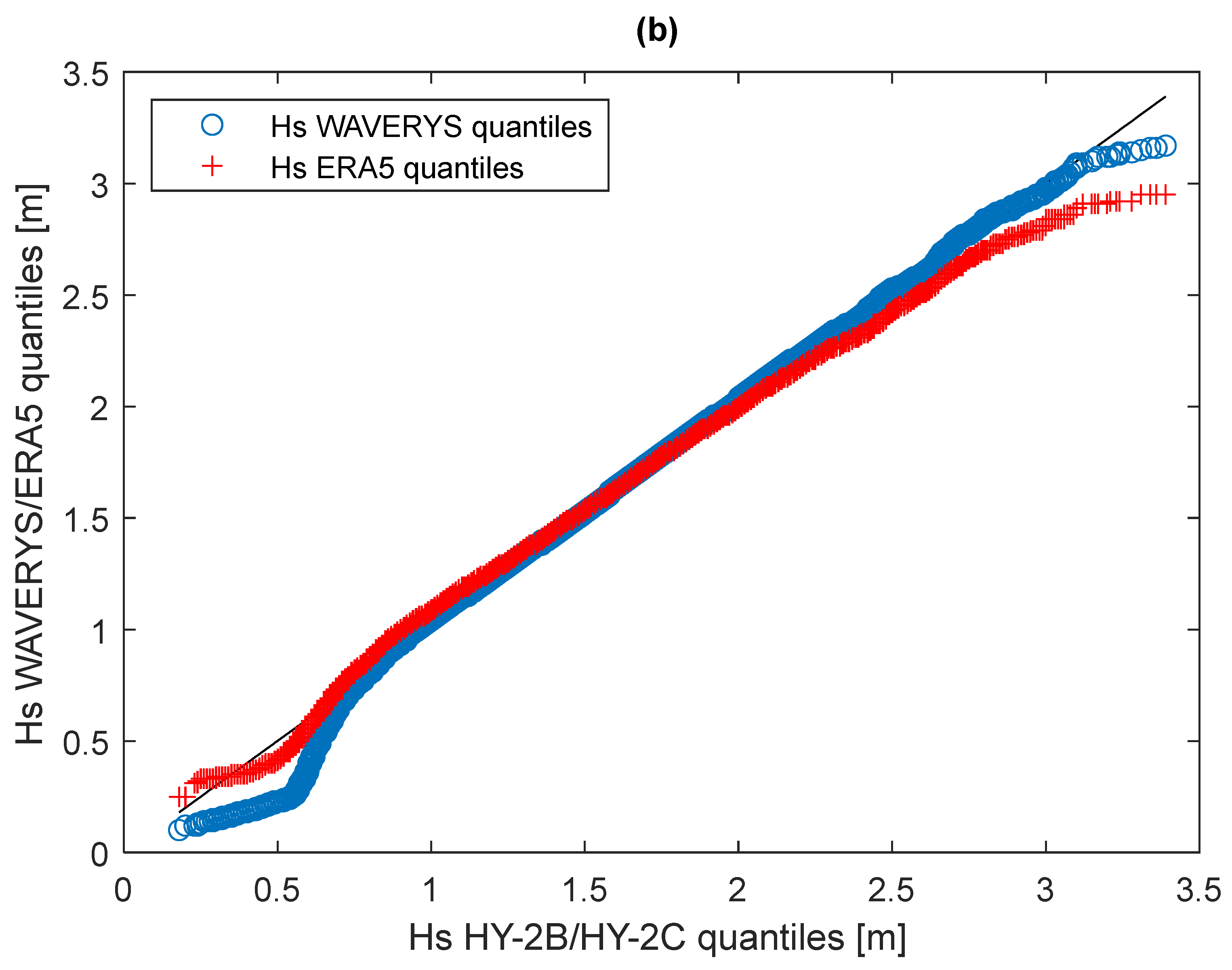
A quantile-quantile (QQ) plot (Figure 2b) was used to assess how the distribution of ERA5 and WAVERYS Hs is close to that of satellites HY-2B/HY-2C. Figure 2b suggests that both the WAVERYS and the ERA5 followed the line of equality despite the little deviation at the tails of the graph (Hs < 0.5 m). It can also be observed that the quantile of ERA5 deviates at Hs > 2.5 m, while that of WAVERYS deviates at Hs > 3.2 m. The Hs of WAVERYS is in line with HY-2B/HY-2C. The graphical analysis shows that WAVERYS and ERA5 display low biases, and the scatter indexes remain low. This shows that there is a good agreement between Hs from these two datasets and altimeter observations. Between the Hs from WAVERYS and that from ERA5, the former, however, shows the best scores, and thus the smallest bias, SI, RE and greater correlation coefficient (Table 1). We can conclude that the Hs from WAVERYS best matches the Hs from the HY-2B/HY-2C satellites as compared to ERA5.
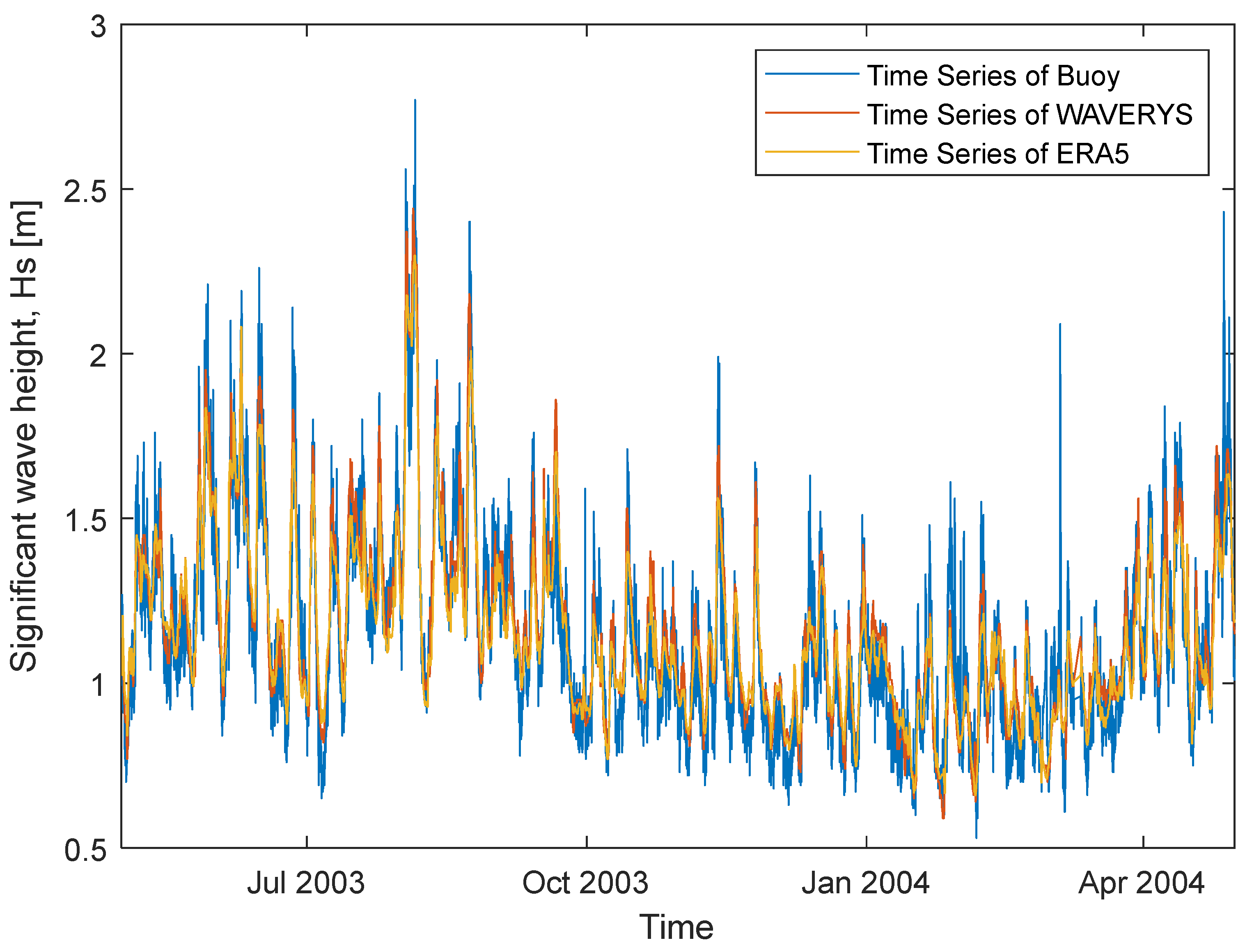
Figure 3 is the time series plot of Hs of buoy, WAVERYS and ERA5. Over a year, the Hs recorded by the buoy, WAVERYS and ERA5 at an interval of three hours is consistent in patterns but varies in magnitude. It can be seen that buoy data is underpredicted by both WAVERYS and ERA5. The buoy data is higher in Hs (m).

4.1.2. Comparison of WAVERYS and ERA5 Significant Wave Height Based on Buoy Data

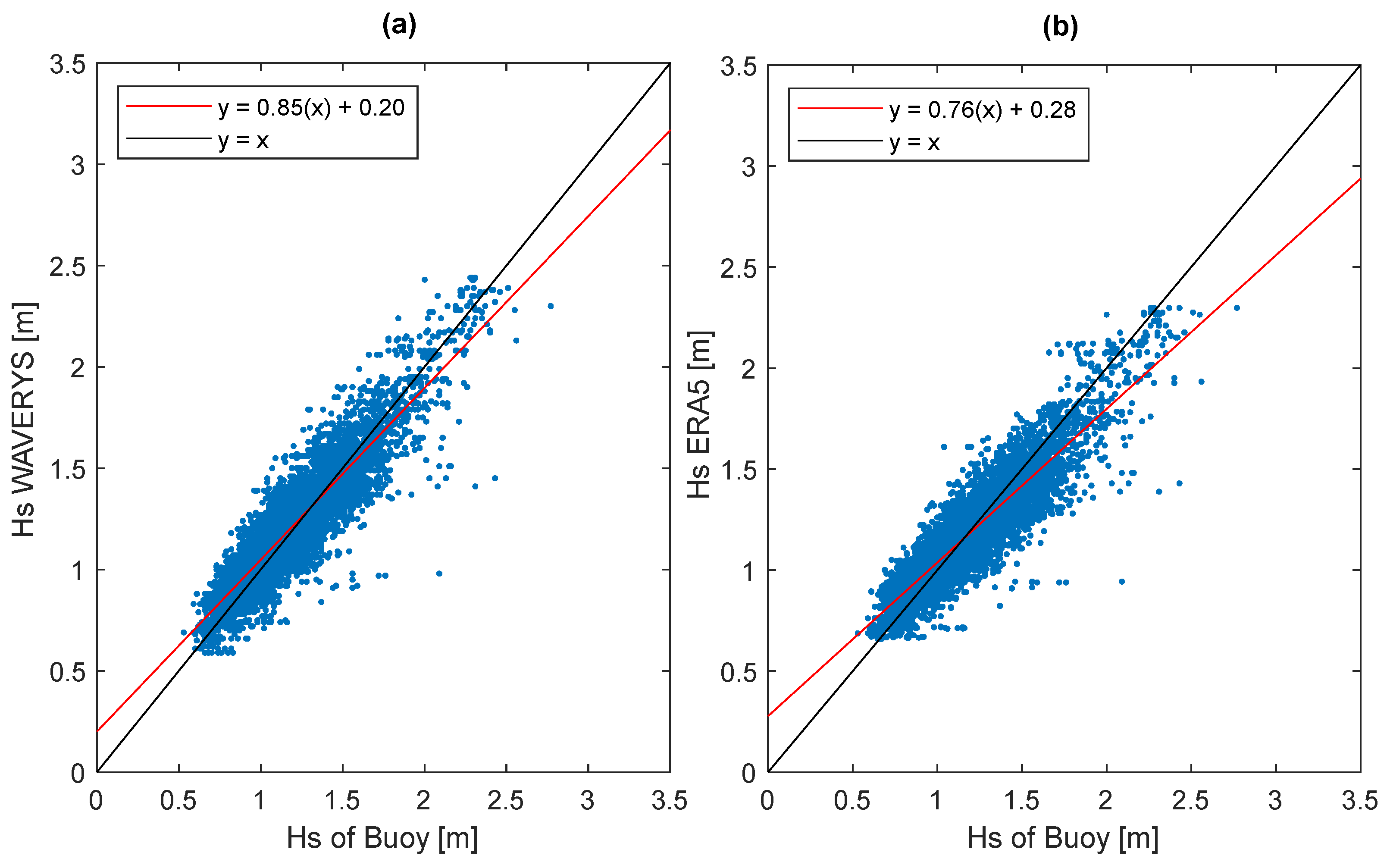
As in the satellite data, the buoy measurements were plotted against WAVERYS Hs and ERA5 Hs (Figure 4) as a scatter plot with linear regression fit and y = x. The figure shows that Hs are clustered around the regression line for both graphs. Both Hs of WAVERYS and ERA5 match well with the Hs of buoy. Even though both graphs (a) and (b) show a strong relationship to the Hs of buoy, the linear regression line for WAVERYS is closer to the equality line than for ERA5, indicating that the Hs of WAVERYS is further closer to the observations. While WAVERYS data is about 85% comparable to the buoy data, only 76% of ERA5 data is comparable to the buoy measurements.
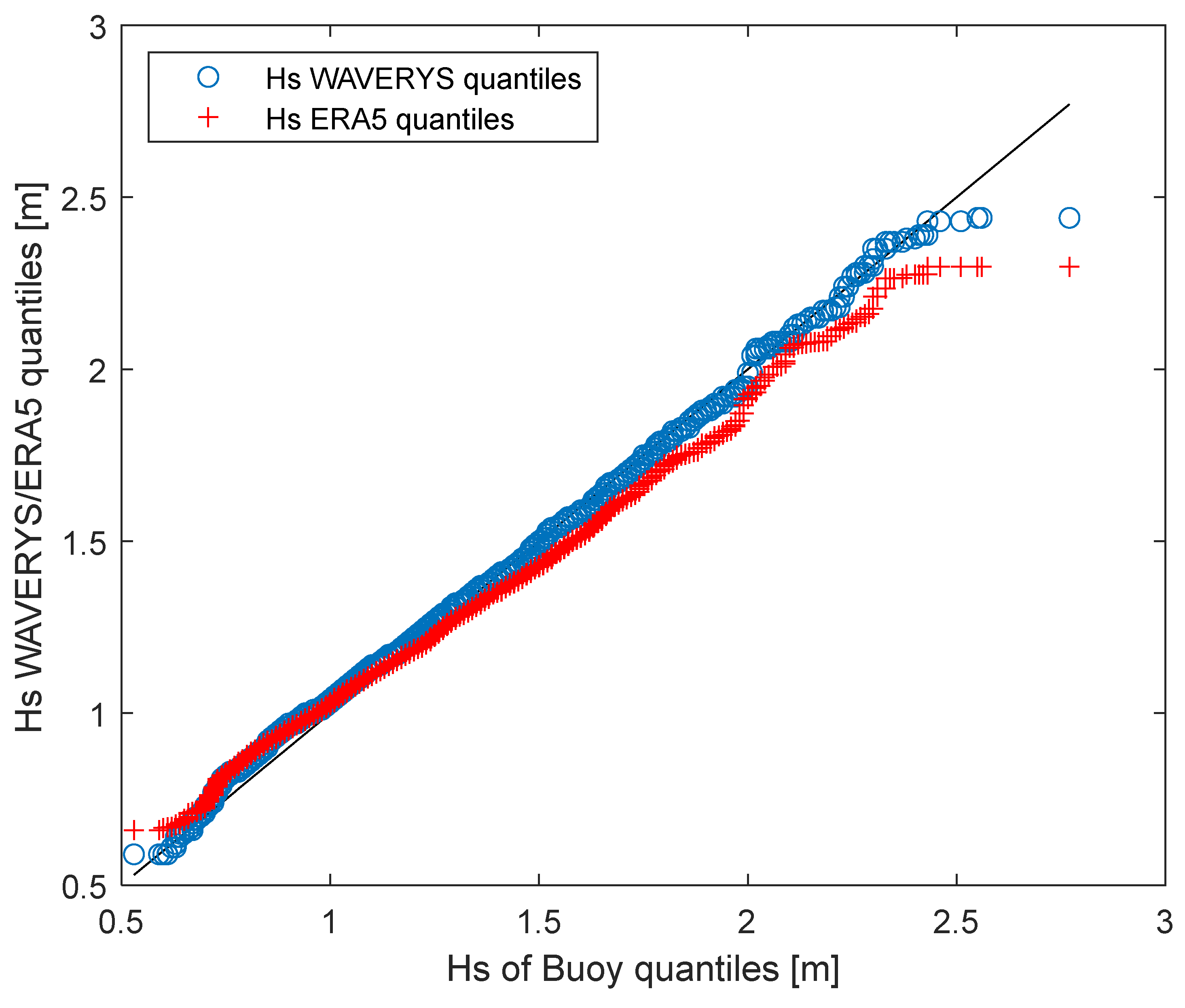
Hs quantiles of WAVERYS and ERA5 were assessed against Hs quantiles of buoy as presented in Figure 5. Both the WAVERYS and the ERA5 closely follow the line of equality despite a little deviation around the regions of Hs~0.6 m. Both data performed well between Hs~0.9 m and Hs~1.5 m. It can, however, be observed that ERA5 deviated from the buoy results at values of Hs~1.7 m, while that of WAVERYS deviated at Hs~2.4 m. Given that the average Hs within the West Africa region is about 1.2–1.7 m, ERA5 will always introduce enormous biases compared to that of WAVERYS. These results are also confirmed by the metrics in Table 2.
Focusing on the significant wave height, Hs, qualitative and quantitative analyses showed that WAVERYS is closer to both HY-2B/HY-2C and the buoy. From the above analysis, it can be concluded that West Africa wave conditions are best described by the WAVERYS dataset. Several factors may explain these results, notably the finer spatial resolution of WAVERYS and the fact that it includes wave–current interactions, and also, WAVERYS assimilates more satellite data as compared to ERA5.

4.2. Assessment of Wave Climate in West Africa Based on WAVERYS Hindcast Data

This study estimated the wave climate of West Africa based on the WAVERYS hindcast data since it was confirmed to perform better in the West Africa region. In this section, (1) the statistical description of global sea state (combined wind sea and swells) was proposed by considering Hs, wave period, and mean wave direction; (2) statistical description of sea state partitions (wind sea and swells); (3) seasonal variability and (4) interannual variability. The countries Ivory Coast, Ghana, Togo/Benin and Nigeria were the points where more of the analysis was focused. This is because the West African coast is commonly represented by Ivory Coast, Ghana, Togo/Benin, and Nigeria in discussions concerning wave conditions because of their physical continuity along the Gulf of Guinea, shared coastal features, and shared oceanographic impacts [24,25,26,27]. When examining regional wave conditions, it is essential to take into account both the oceanic elements and the coastal topography of these countries because they both contribute to similar wave patterns [22].

4.2.1. Marginal Distributions of Sea State Parameters (Combined Swells and Wind Sea)

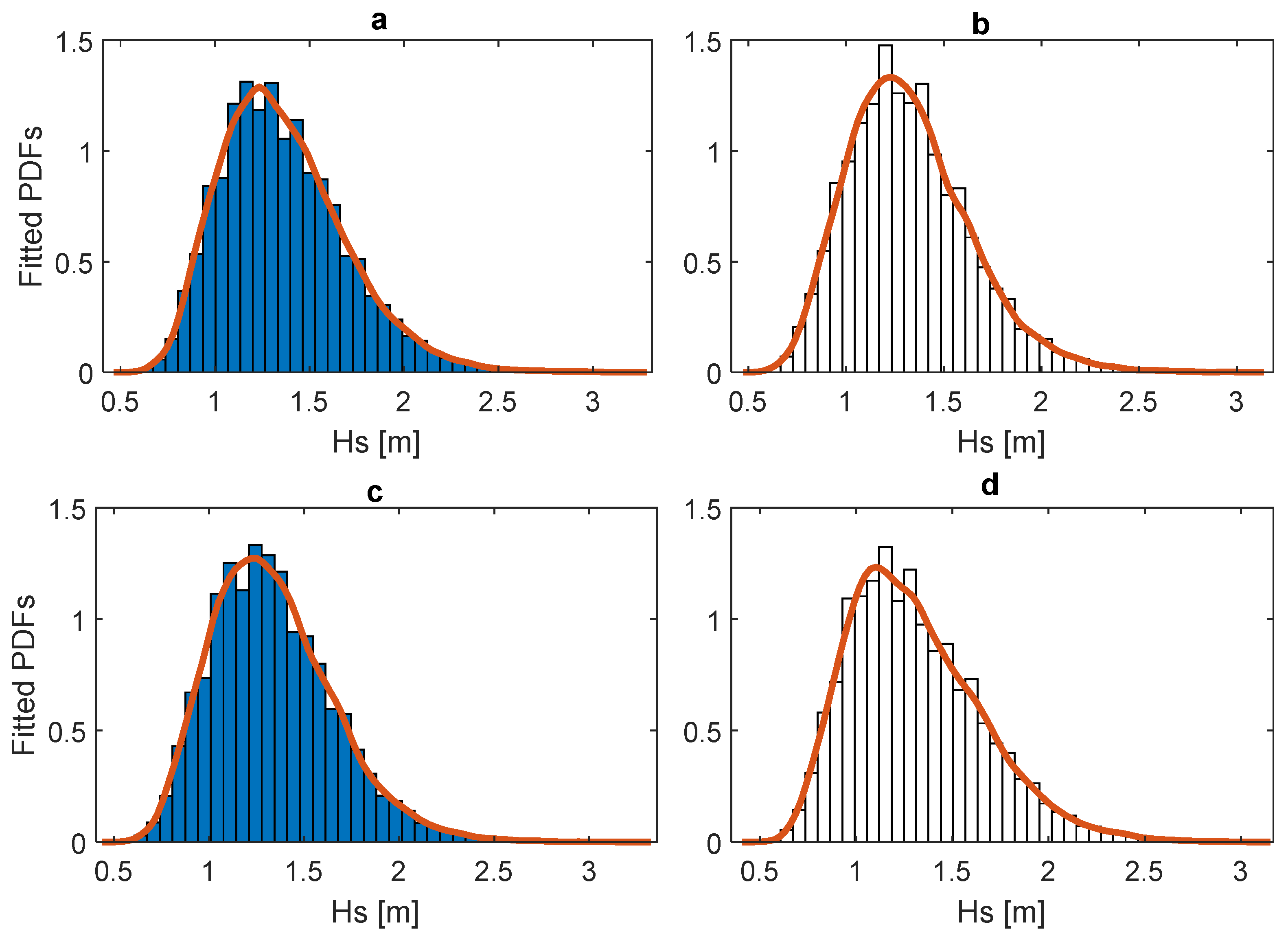
A marginal distribution of global significant wave height, with Fitted Probability Density Distribution Functions (PDFs) for the selected countries, is presented in Figure 6a–d, which depict the countries of Ivory Coast, Ghana, Togo/Benin, and Nigeria, respectively.
The significant wave height of the waves arriving at the coast of West Africa based on the four points is between 0.5 m to 3.1 m. The probability distribution function (pdf) fitting curve suggests a unimodal peak, which is the average mean Hs of the waves coming to the coast of West Africa and is around 1.3 m.
The minimum and maximum values as well as the 50 and 90 quantiles of Hs are shown in Table 3. The minimum Hs was recorded as 0.52 m, which occurred in Nigeria, followed by Togo/Benin with 0.54 m with Ghana and Ivory Coast with 0.57 m. The highest Hs was recorded as 3.22 m at Togo/Benin. Amongst these countries, the mean Hs was 1.3 m with 10% of the waves coming to the coast of these regions being greater than Hs of 1.7 m.
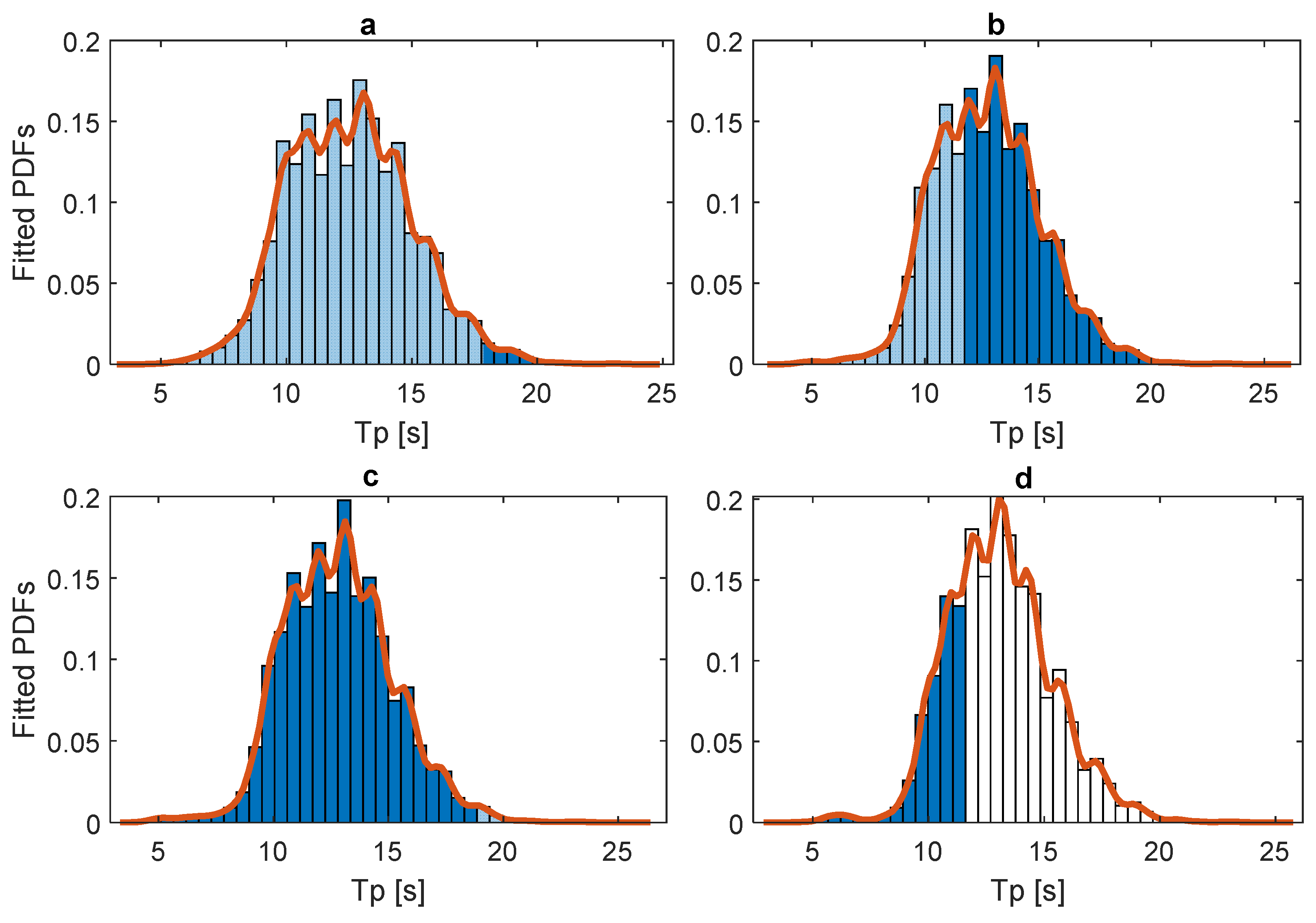
A histogram with a probability density curve was plotted to depict the wave peak period, Tp, of WAVERYS data for the selected regions. Figure 7 is a marginal distribution of wave peak period, Tp with a density curve. Figure 7a–d depict the analysis for the countries Ivory Coast, Ghana, Togo/Benin and Nigeria, respectively.
Across the four regions, the Tp distribution was between 4 and 25 s. The PDF curve depicted that the majority of Tp across these regions (mean Tp) is around 12 s with the most frequent occurring, modal Tp around 13 s, which explains a stable Tp occurrence.
From the statistics presented in Table 4, the range at which the wave period Tp occurred was between 3.59 s and 25.61 s. The minimum Tp, which was 3.59 s, occurred in Nigeria and corresponds to when the lowest Hs was recorded (0.52 m), and the maximum Tp, 25.61 s, also occurred in Togo/Benin, which also corresponds to when the highest Hs was recorded (3.22 m). The average Tp was estimated to be 12.81 s.
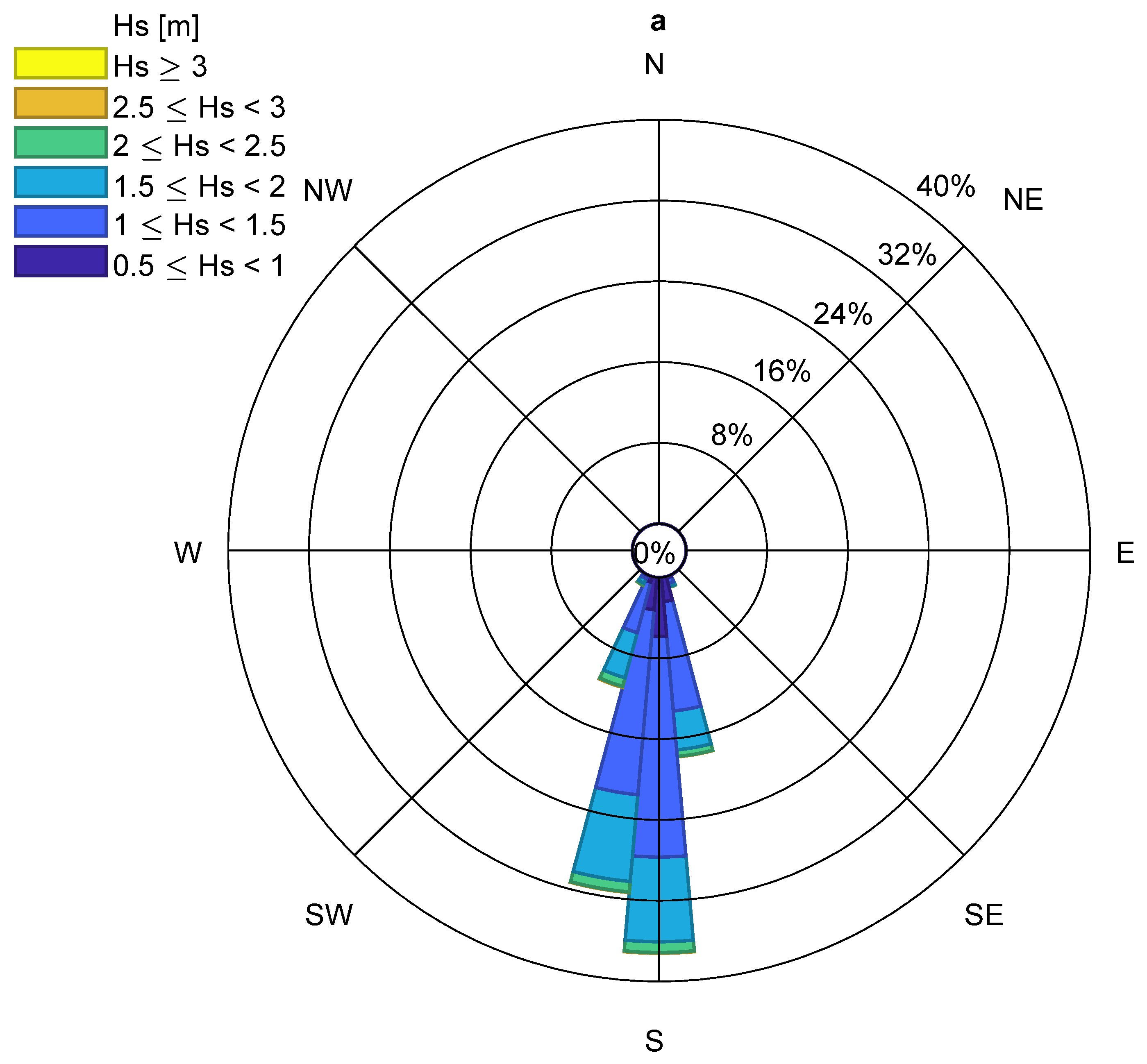
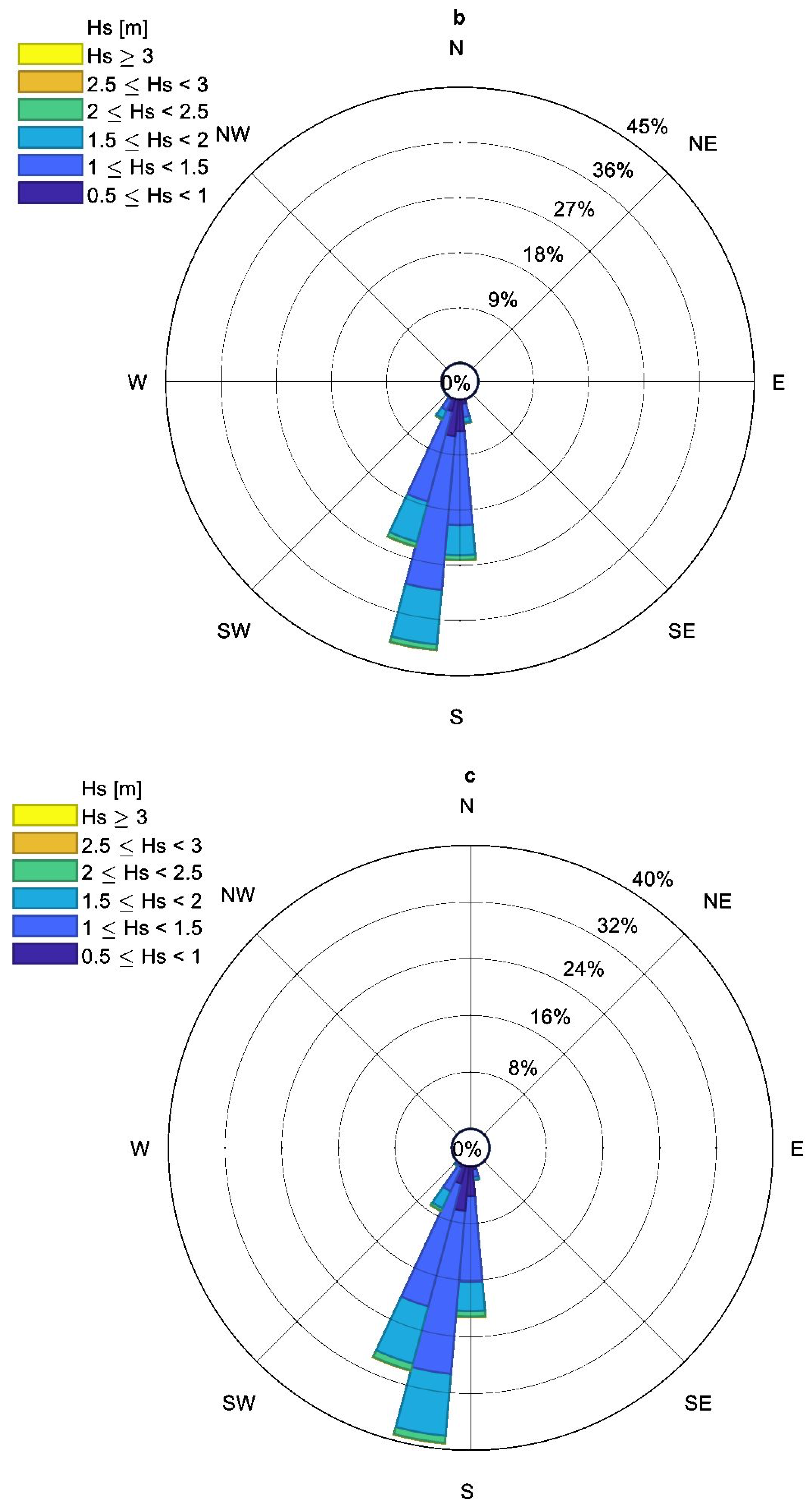
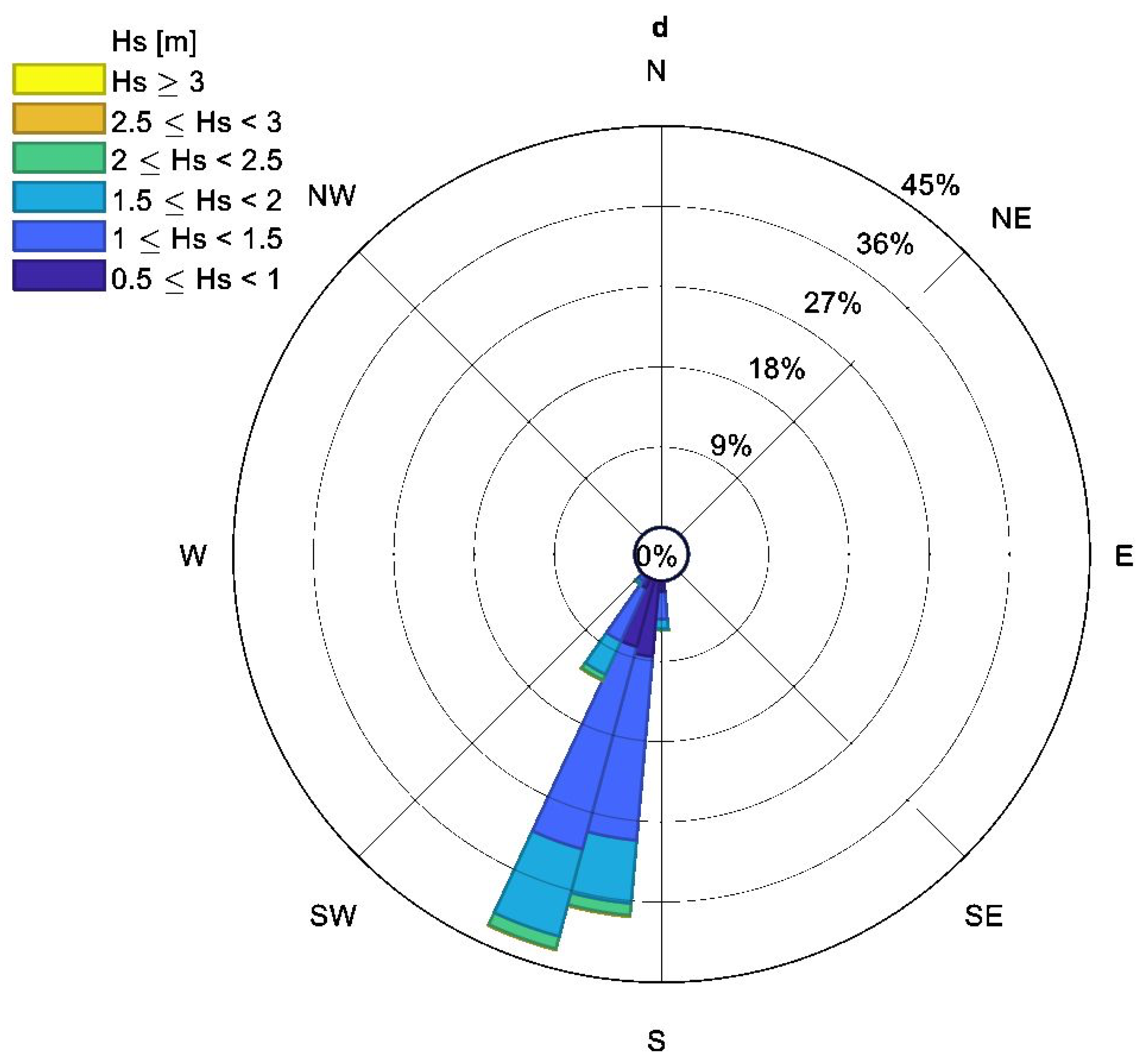
Figure 8a–d are the combined mean wind sea and swell wave directions for the countries Ivory Coast, Ghana, Togo/Benin and Nigeria, respectively, indicating the direction from which the waves are coming.
The waves in these countries primarily originate from the south and southwest of the Atlantic Ocean. This is because the wave climate along the coast of West Africa is predominantly influenced by swell waves, which are generated hundreds of kilometers away in the southern Atlantic. The impact of waves from the southwest is also attributed to locally generated wind seas; however, their influence is minimal compared to the dominant swell waves. Also, both waves with high and low Hs are coming from the same direction.

4.2.2. Marginal Distribution of Wind Sea and Swells

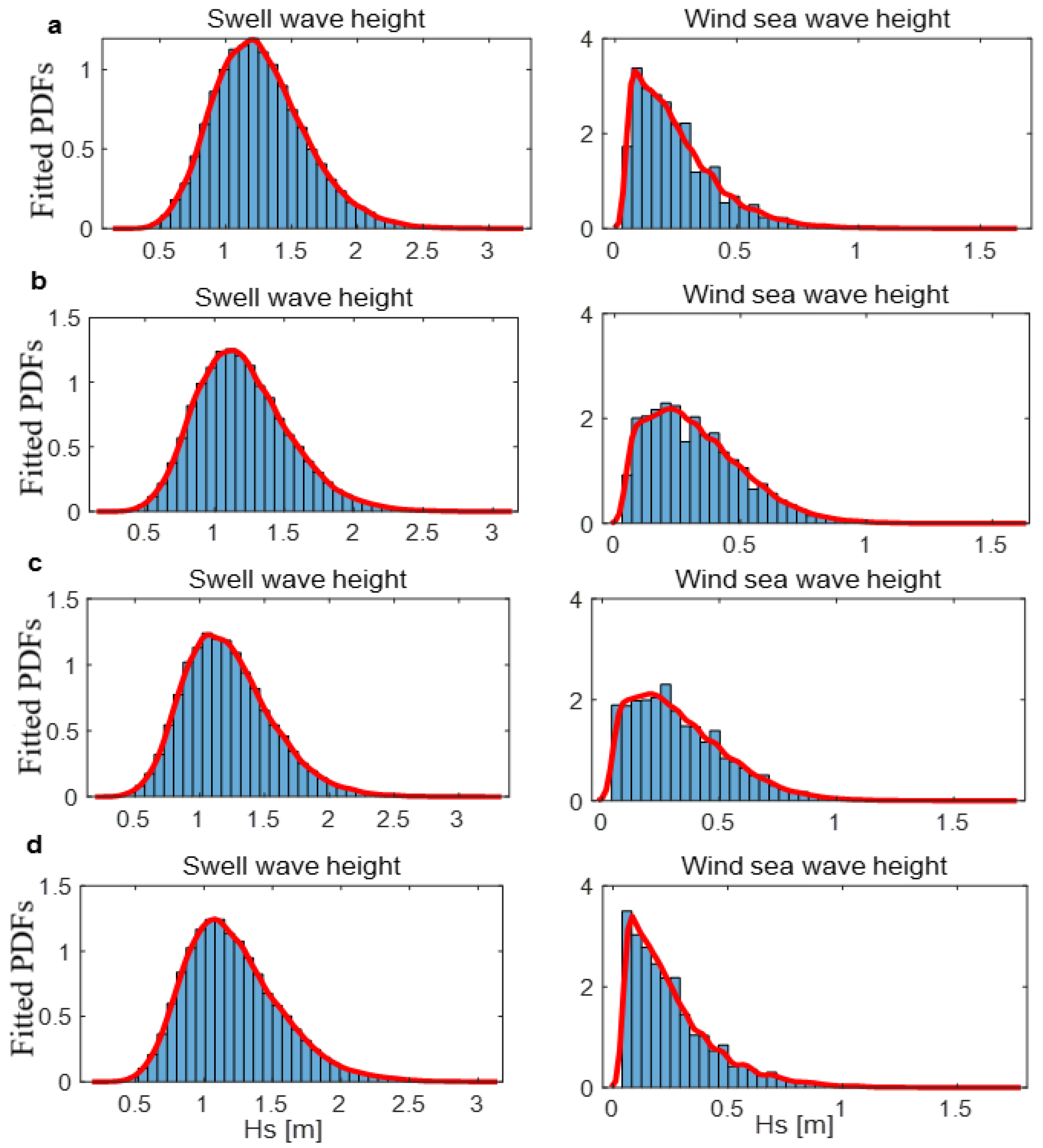
Sea states are mostly composed of several superimposed wave systems, each with its own contribution to the total energy. For some coastal applications such as coastal defense design or erosion, one needs to estimate separately long-term statistics of wind sea (generated by local wind) and swell (generated by distant storms). In addition to global sea state parameters (combined wind sea and swell), WAVERYS also provides significant wave height, peak period and sea direction of wind sea and swells separately. This makes it possible to estimate wave climate in greater detail.
Figure 9 presents the marginal distributions of swell and wind sea Hs across Figure 9a Ivory Coast, Figure 9b Ghana, Figure 9c Togo/Benin and Figure 9d Nigeria, using histograms and fitted probability density functions (PDFs). The swell Hs for all the locations shows unimodal distributions, indicating stable wave climates with most wave heights around 1.1 m and can reach 2.5 m. In contrast, wind sea Hs plots are more skewed, with heavy tails suggesting the presence of occasionally “high” waves. Wind sea Hs values are significantly lower than swell values (see Table 5), indicating that sea states in West Africa are clearly dominated by swells in terms of energy.
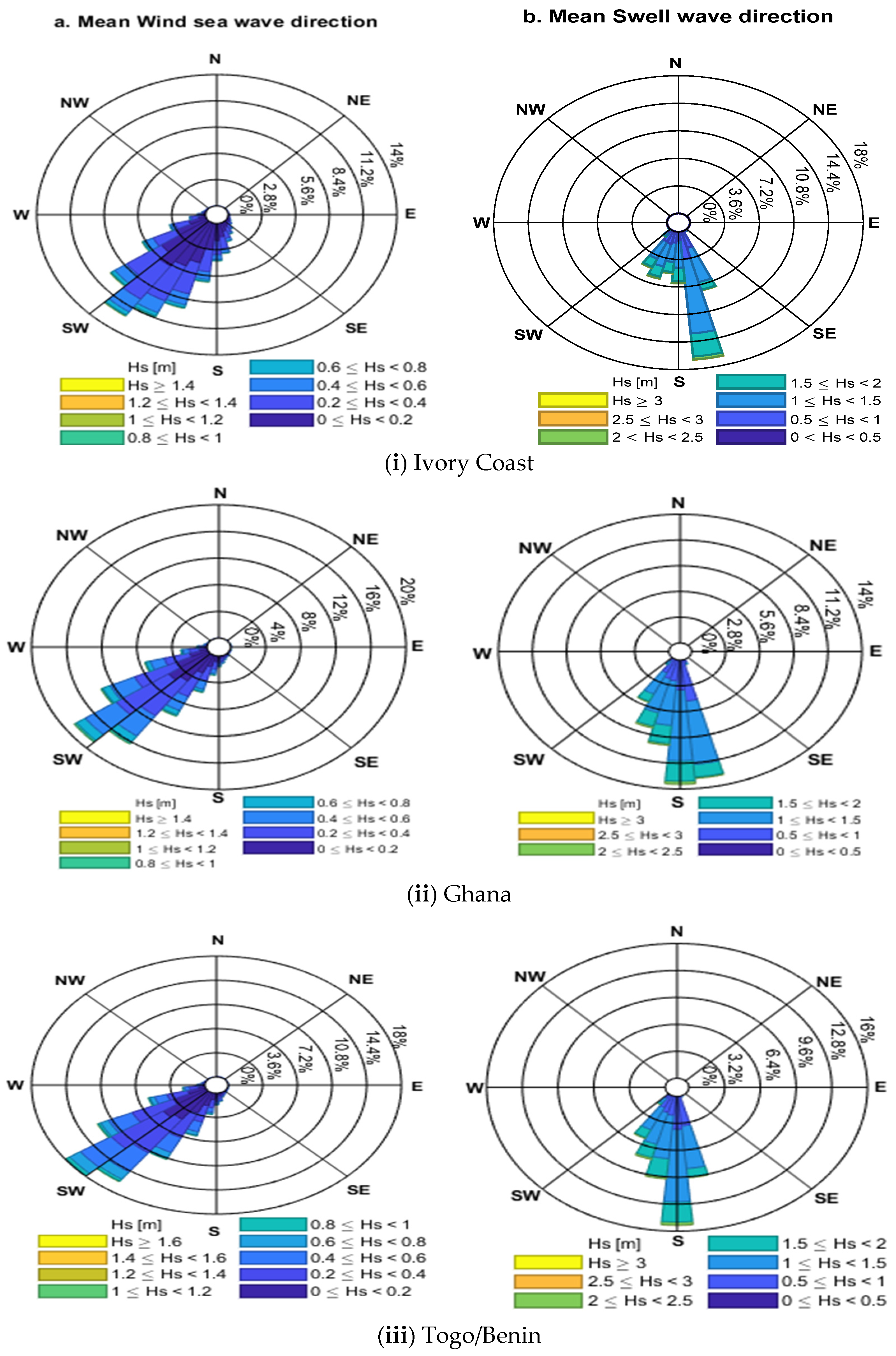
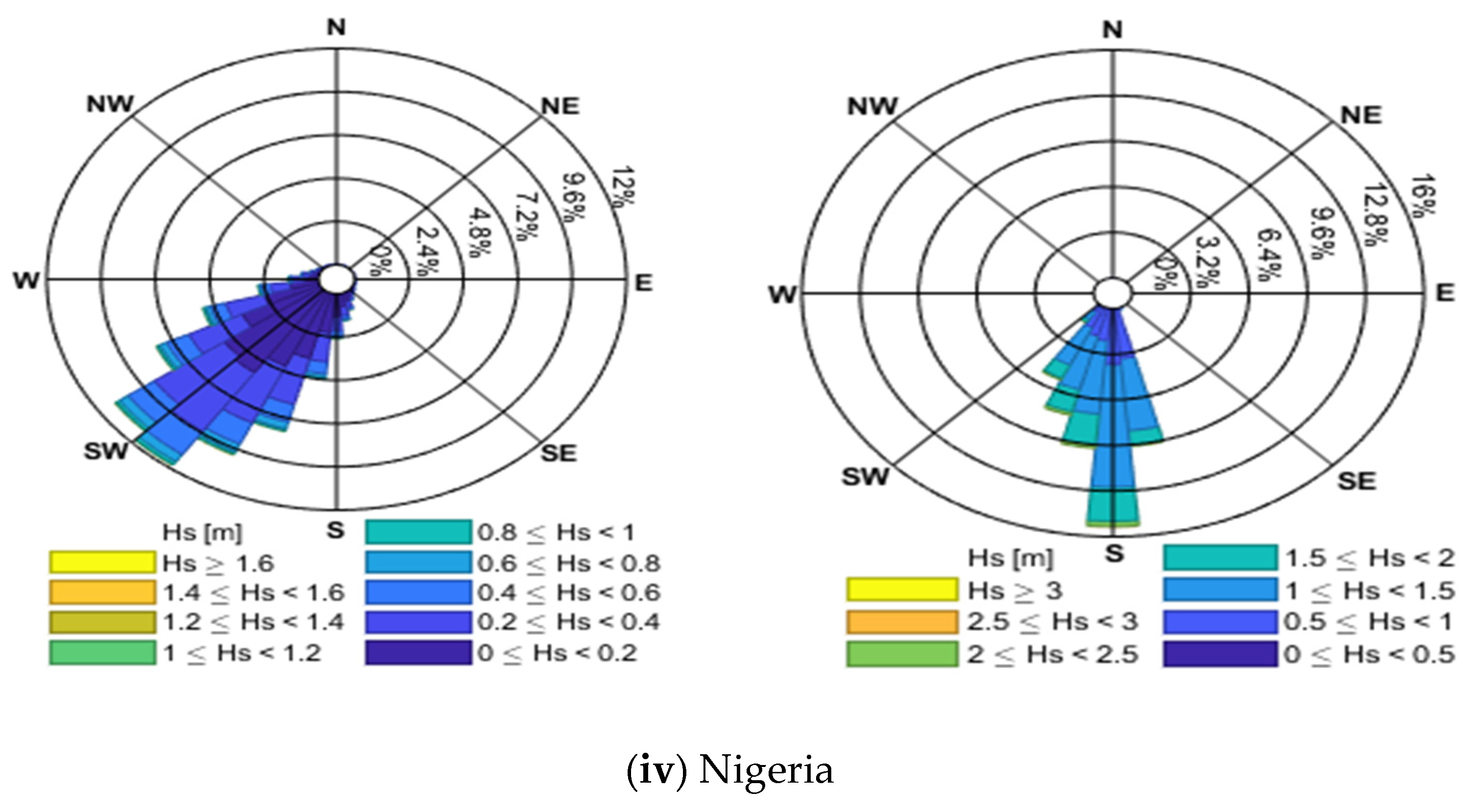
Figure 10 shows the direction of swells and wind sea. Majority of the wind sea coming to this region is from the Southwest, while the majority of the swell waves coming to this region is from the South.
The directional analysis of wave conditions (Figure 10) provides valuable insights into the wave climate across West Africa. The wind sea predominantly arrives from the Southwest, indicating the influence of local wind patterns in generating short-period waves. Meanwhile, the swell waves primarily come from the South, reflecting the influence of distant weather systems, likely from the Southern Hemisphere, generating long-period waves.

4.2.3. Seasonal Variability of Combined Wind Sea and Swell Significant Wave Height

This section discusses seasonal variability in ocean wave conditions, highlighting how it is tied to predictable changes throughout the year in the West African region. Seasonal variation in factors like wind, currents, and weather plays a crucial role in maritime activities. Additionally, this study provides a 30-year seasonal wave pattern in West Africa from 1993 to 2022.
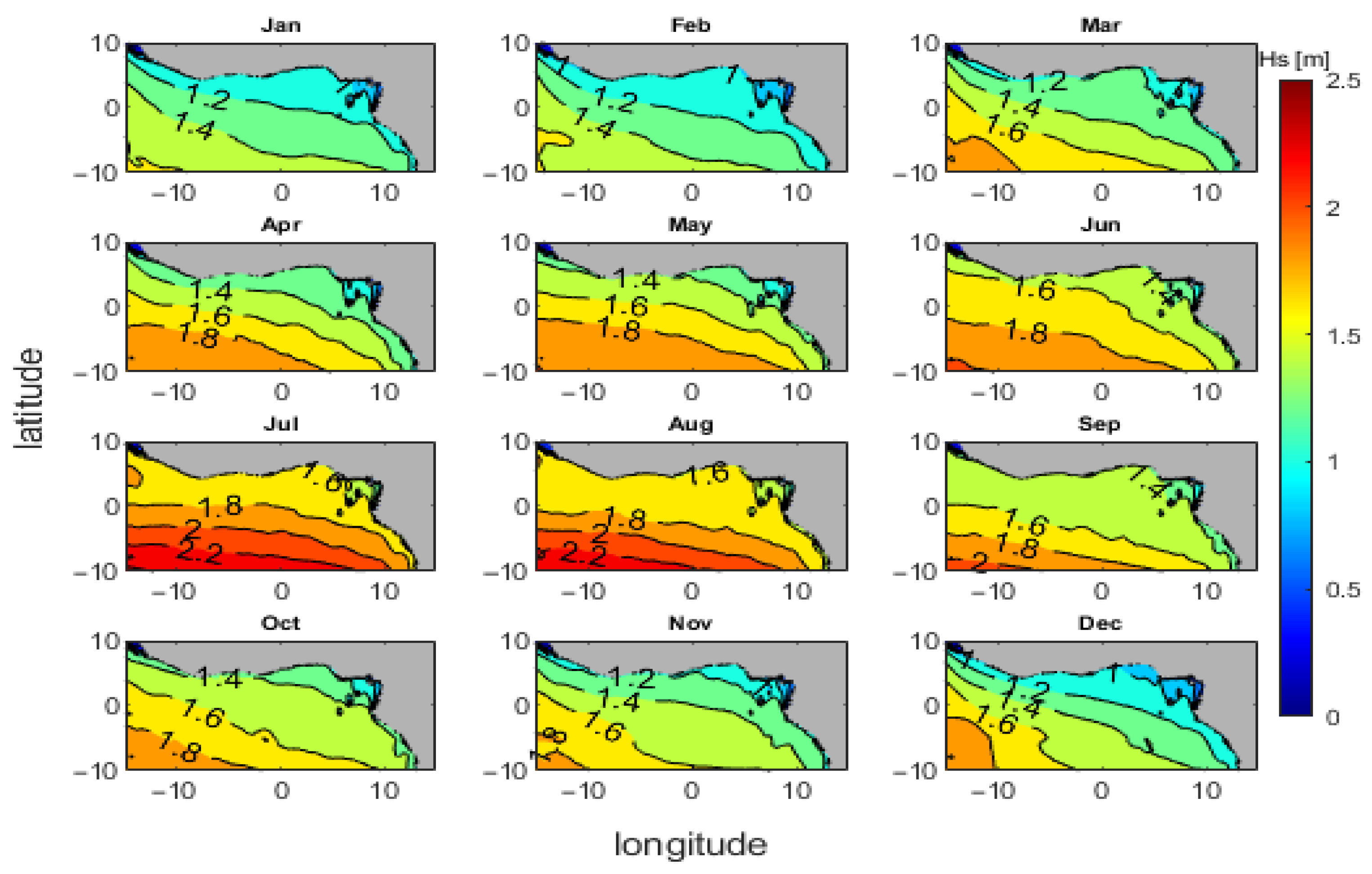
Analysis of the entire West Africa region of Hs was examined to see how the wave conditions vary with respect to seasonal changes. Figure 11 is an averaged monthly map of the global Hs for the duration of 1993 to 2021. It depicts how the global Hs varies according to month.
It can be observed that, in the months of July and August, the global Hs is very high. Even at the coast of this region, Hs of 1.8 m on average is obtained in the month of August, whereas, for January and February, only 1.4 m is obtained in the same area.
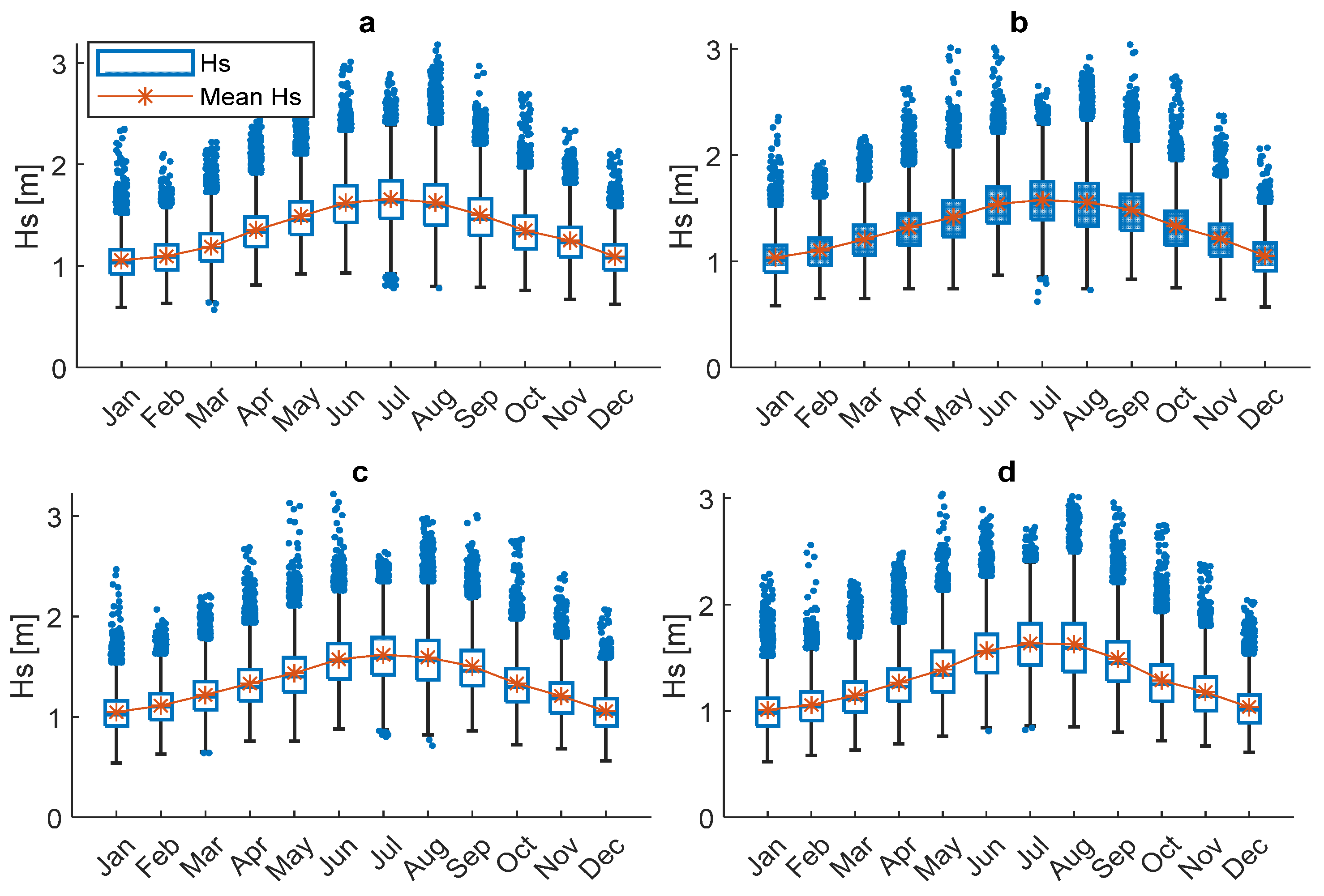
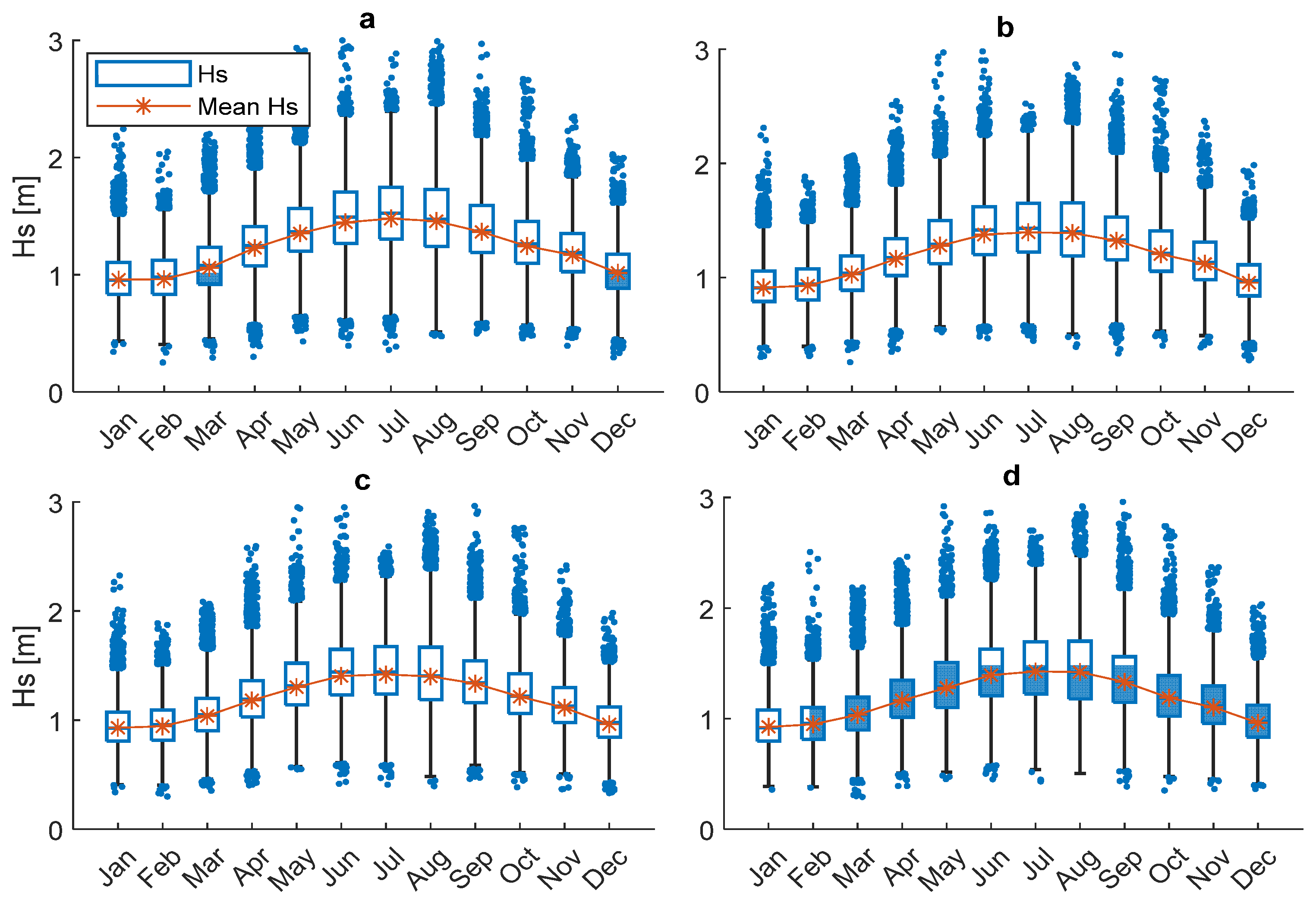
Figure 12 is a monthly distribution of Hs with the monthly mean curve for the four selected regions for the duration of January 1993 to December 2022.
Across all the seasons, there is a clear seasonal trend where wave heights increase during the summer months, particularly in June, July and August, and decrease in the winter months, especially in January and December.
Monthly medians and seasonal trends are similar across regions, but Ivory Coast and Nigeria show slightly higher median values during peak months. Ivory Coast also has the highest overall range, with a maximum wave height of 1.48 m, while Ghana records the lowest maximum at 1.40 m, suggesting regional differences in exposure or topography. Median values are highest in Ivory Coast (1.24 m) and lowest in Ghana and Nigeria (1.18 m), while 90% quantiles range from 1.39 m in Ghana to 1.46 m in Ivory Coast, indicating similar conditions across regions for most wave heights, with Ivory Coast experiencing more frequent higher waves.

4.2.4. Seasonal Variability of Wind Sea and Swells

Seasonal variability analysis of the wave partitions (swell and wind sea) was also examined.
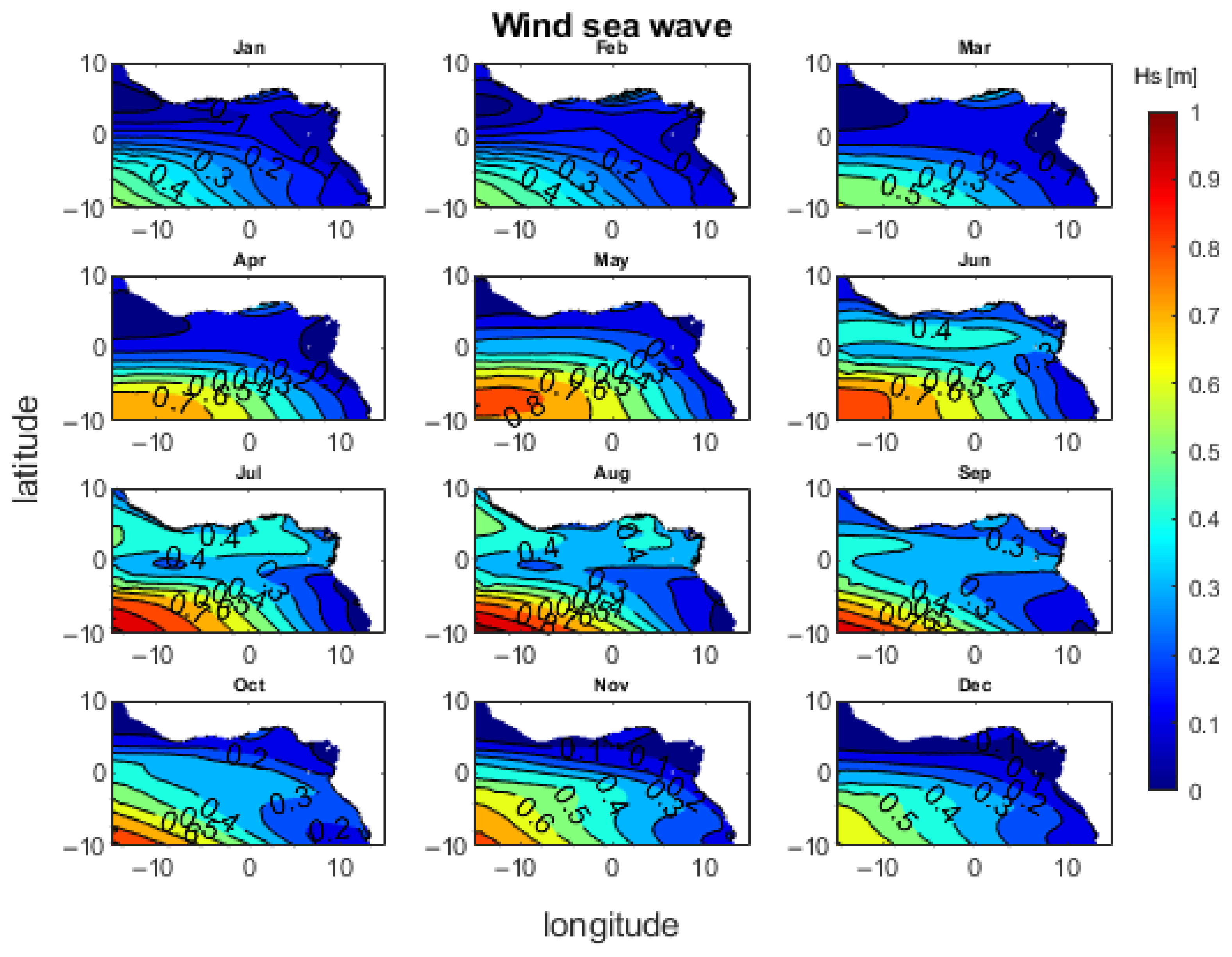
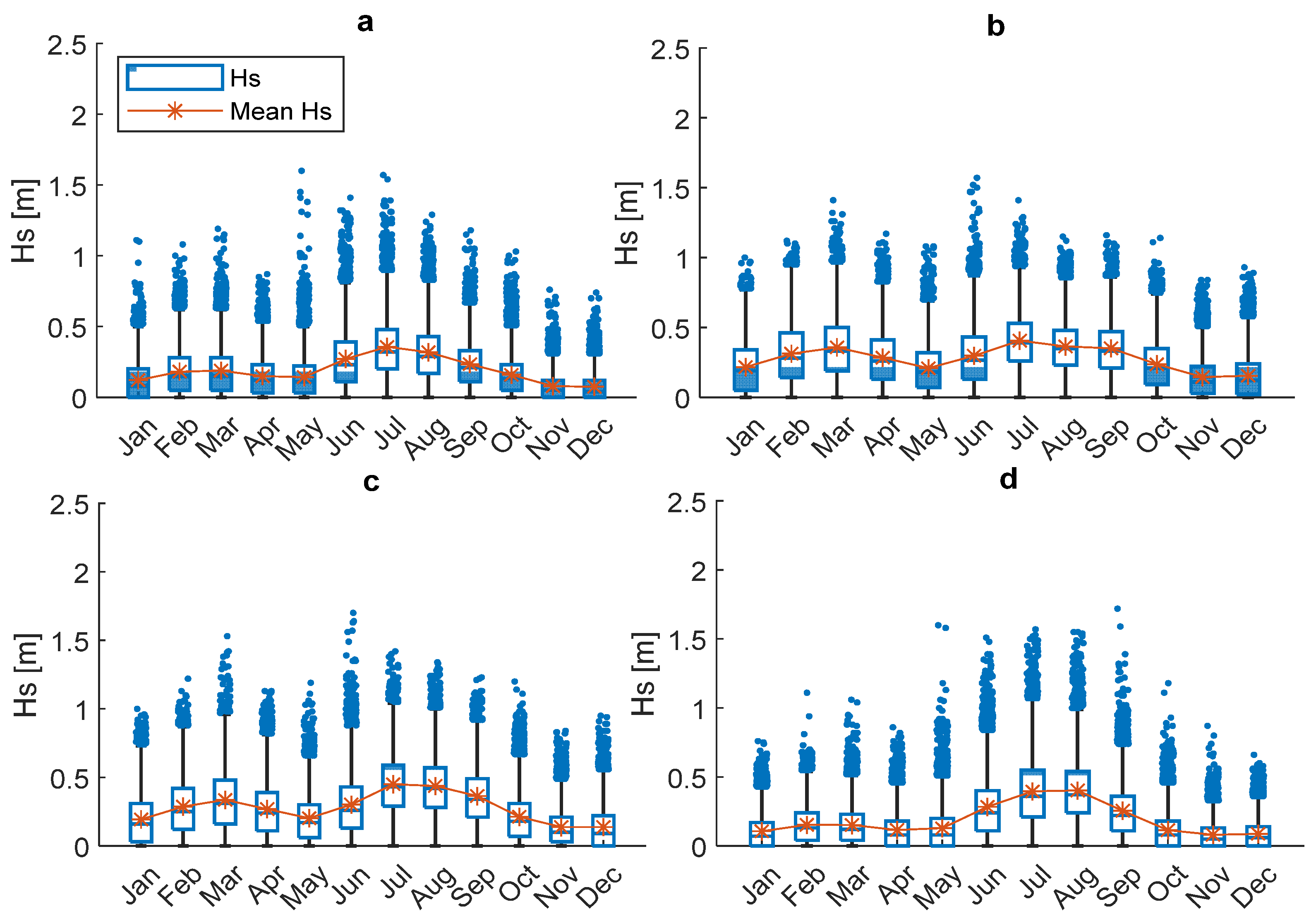
Maps depicting the seasonal variation in swell and wind sea Hs for the entire West Africa region were analyzed to see how they contribute to the global wave height variability. Figure 13 shows the average monthly mean of significant wave height of wind sea for the period January 1993–December 2022. The highest Hs of it was recorded in the months of June, July, and August with mean Hs of 0.4 m even in the coastal regions of West Africa. In the months of December, January, and February, the wind sea at the coastal regions is very low with Hs of 0.1 m on average.
Furthermore, monthly box plots with their mean curve were plotted for the four regions in Figure 14.
The minimum wind sea Hs values are relatively low across all regions, with Ivory Coast and Nigeria having the lowest minima at 0.07 m and 0.08 m, respectively. Maximum wind sea Hs values range from 0.36 m in Ivory Coast to 0.45 m in Togo/Benin, indicating limited variability and low wave energy across these regions. The median wind sea Hs are also modest, with Ghana having the highest median at 0.29 m, followed by Togo/Benin at 0.28 m. This suggests that typical wave conditions are generally calm, especially in Ivory Coast and Nigeria, which have medians of 0.17 m and 0.14 m, respectively. The 90% quantile values, representing the height below which 90% of the wave heights fall, vary across regions, with the highest values in Togo/Benin (0.44 m) and Ghana (0.37 m), indicating slightly higher wave conditions in these areas compared to Ivory Coast (0.33 m) and Nigeria (0.40 m).
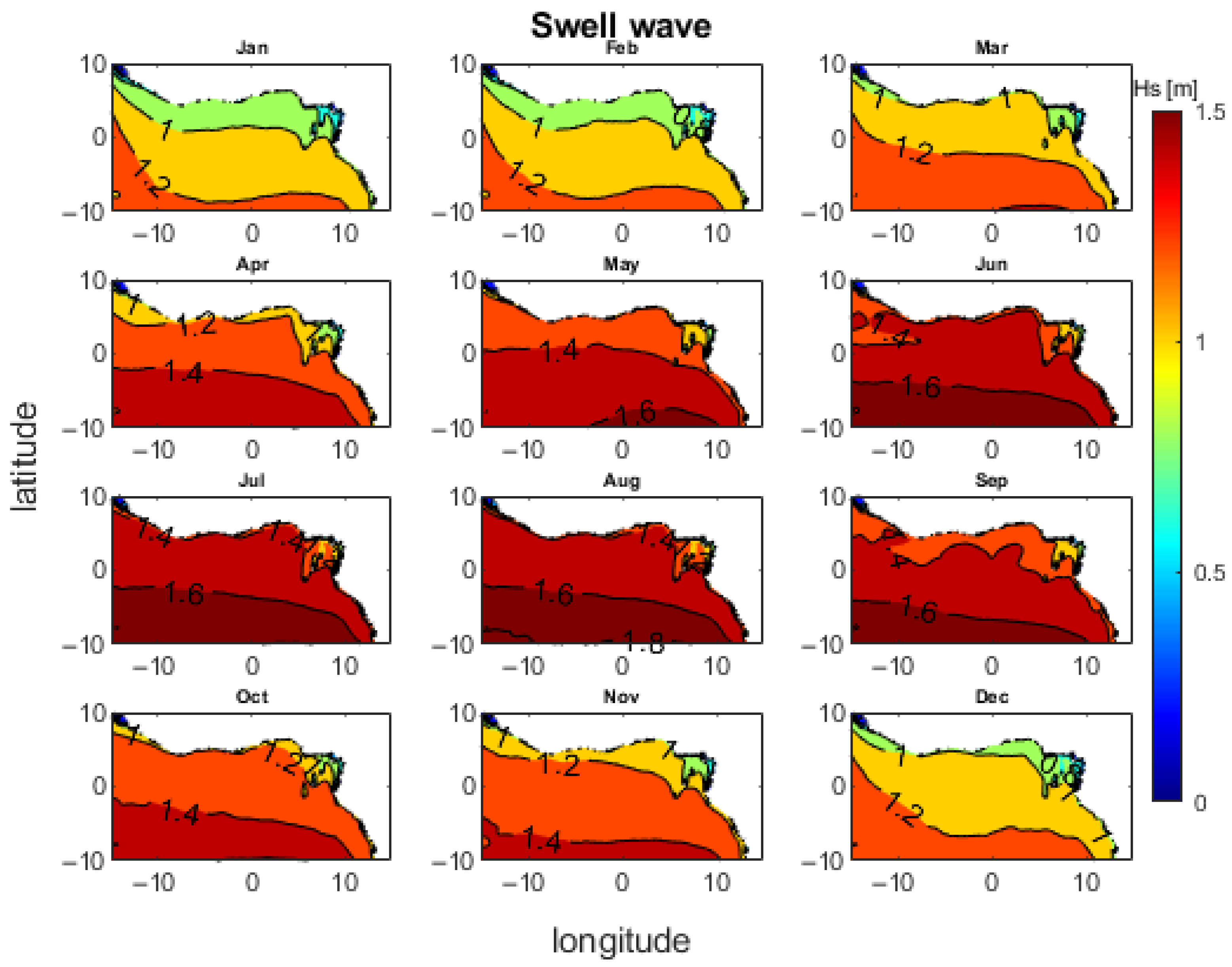
Figure 15 shows the average monthly mean swell significant wave height (Hs) for the period January 1993 to December 2022. Swell wave heights along the West African coast exhibit a pronounced seasonal cycle, with maximum monthly mean values occurring between June and September, when coastal swell Hs reaches approximately 1.4 m. In contrast, the lowest swell wave heights are observed during December, January, and February, with monthly mean Hs decreasing to about 0.6 m. This seasonal pattern is consistent across the region over the study period.
Figure 16a–d presents the monthly distribution of swell significant wave height (Hs) for Ivory Coast, Ghana, Togo/Benin, and Nigeria respectively. All four locations exhibit a clear seasonal cycle, with swell Hs increasing from June and reaching maximum values between July and September. The monthly medians and overall seasonal patterns are broadly consistent across the countries. However, Ivory Coast and Nigeria show slightly higher median swell heights during the peak months. Ivory Coast records the largest variability, with a maximum swell Hs of 1.48 m, whereas Ghana shows the lowest maximum value of 1.40 m. Median swell heights range from 1.18 m in Ghana and Nigeria to 1.24 m in Ivory Coast, while the 90% quantiles vary between 1.39 m (Ghana) and 1.46 m (Ivory Coast), indicating generally similar swell conditions across the region, with relatively more frequent higher swell events along the Ivory Coast.

4.2.5. Interannual Variability of Wave Conditions in West Africa

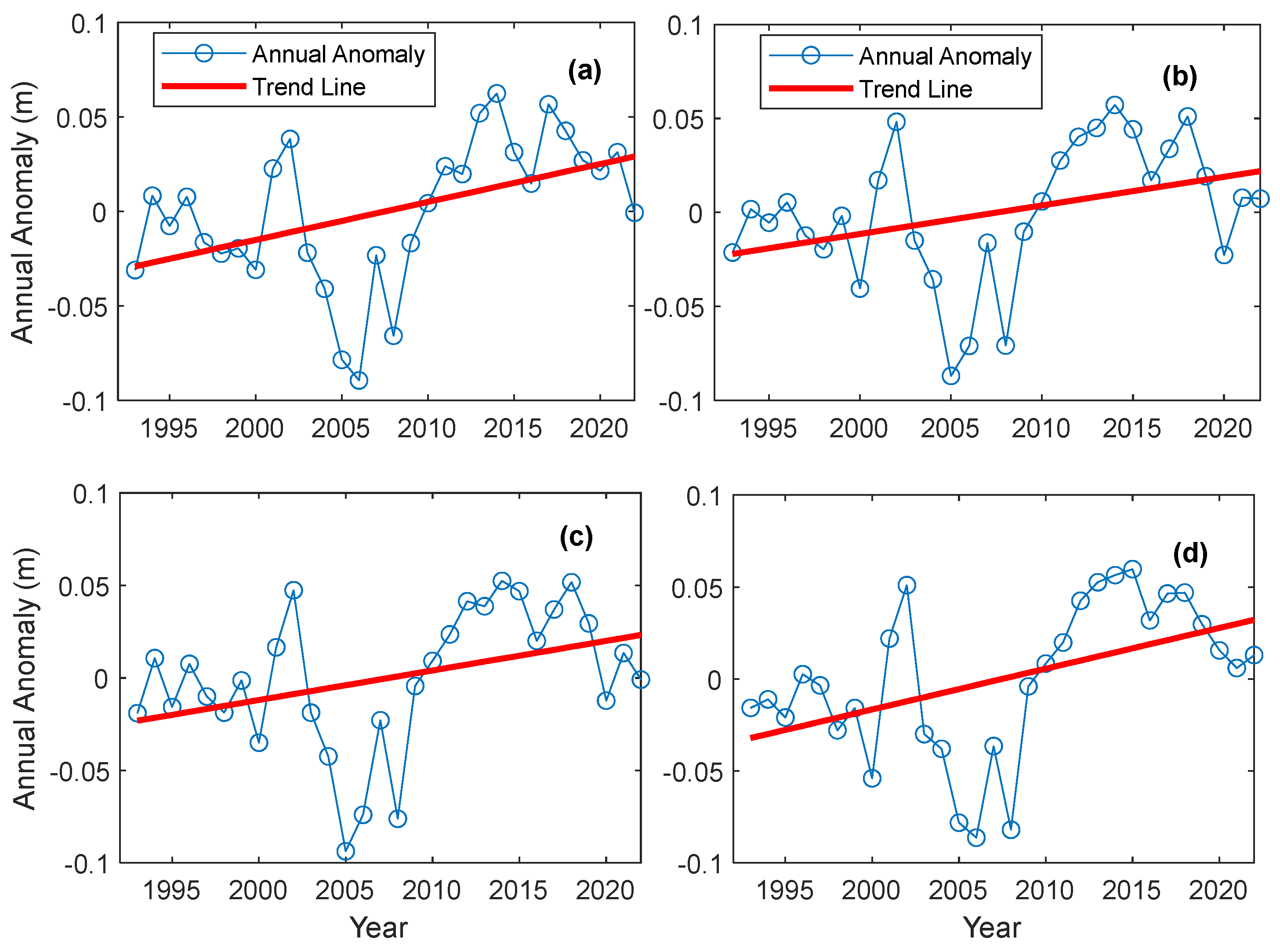
Interannual variability refers to fluctuations in atmospheric, oceanic, or climatic conditions that occur from one year to another, driven by natural cycles. To describe the interannual variability of wave conditions of West Africa, global significant wave height, Hs anomaly, was plotted for the countries of Ivory Coast, Ghana, Togo/Benin, and Nigeria and is illustrated in Figure 17a–d.
These anomalies depict the deviations of wave heights from their long-term averages, highlighting interannual variability, which reveal notable similarities and differences in wave climate patterns over time. All the countries show alternating periods of positive and negative anomalies with no clear long-term trend. All countries experience moderate variability, with more consistent positive anomalies, particularly in recent years, suggesting an overall trend of increasing anomalies compared to the baseline. This could indicate a shift toward higher wave heights or changes in wave dynamics. The anomaly rates for the countries are 0.002005 m/year, 0.0015208 m/year, 0.0015992 m/year, and 0.0022197 m/year for Ivory Coast, Ghana, Togo/Benin and Nigeria, respectively.

5. Discussions

The marginal distributions of sea state parameters along the West African coast reveal a wave climate that is strongly dominated by swell energy, with relatively moderate variability across Ivory Coast, Ghana, Togo/Benin, and Nigeria. The combined wind sea and swell significant wave height (Hs) ranges from approximately 0.5 m to just above 3.0 m, with a clear unimodal probability density function centered around a mean value of about 1.3 m. This unimodal structure suggests a stable and persistent wave regime, where most incoming waves fall within a narrow range of heights, consistent with earlier regional studies of the Gulf of Guinea wave climate [16,28].
Despite the overall similarity in mean conditions across the four locations, regional contrasts are evident in the extremes. The lowest Hs values were observed in Nigeria (0.52 m) and Togo/Benin (0.54 m), while the highest wave heights occurred in Togo/Benin (3.22 m). Approximately 10% of waves exceed 1.7 m across all regions, indicating that, although extreme events are relatively infrequent, they remain relevant for coastal risk assessment and engineering design. These findings align with the understanding that swell-dominated coasts tend to experience fewer but more coherent energetic events compared to wind-sea-dominated environments [29].
Wave period statistics further reinforce the dominance of swell processes along the West African coastline. Peak wave periods (Tp) span a wide range, from about 4 s to over 25 s, but cluster strongly around mean and modal values of approximately 12–13 s. The coincidence of the longest periods (25.61 s) with the highest wave heights in Togo/Benin and the shortest periods with the lowest wave heights in Nigeria reflects the contrasting influence of distant swell systems versus locally generated wind seas. Long-period swells are typically associated with powerful storms in the Southern Ocean and South Atlantic, propagating thousands of kilometers toward the Gulf of Guinea with minimal energy loss [30]. The directional consistency was observed, where both low and high Hs waves arrive predominantly from the south to southwest, which further supports the interpretation that the regional wave climate is controlled primarily by remote forcing rather than local wind variability.
Separating the wave field into wind sea and swell components provides additional insight into the energy balance of the system. Swell Hs distributions at all locations exhibit unimodal behavior with typical values around 1.1 m and maxima approaching 2.5 m, confirming a relatively steady swell climate. In contrast, wind sea Hs distributions are more skewed and characterized by heavier tails, indicating occasional short-lived energetic events driven by local winds. However, wind sea heights remain substantially lower than swell heights across all regions, highlighting the overwhelming contribution of swell energy to total sea state conditions. This clear swell dominance is a defining feature of the West African coast and has been widely documented in observational and modeling studies [16,31].
Directional analysis corroborates these findings, showing that wind seas predominantly arrive from the southwest, reflecting local wind forcing over the Gulf of Guinea, while swells approach mainly from the south, consistent with Southern Hemisphere storm tracks. The persistence of this pattern across all four countries suggests that large-scale atmospheric circulation exerts a uniform control on wave propagation toward West Africa, whereas local winds modulate only the higher-frequency, lower-energy components of the wave spectrum.
Seasonal variability introduces an additional layer of complexity to the regional wave climate. Monthly climatologies of combined wind sea and swell Hs reveal a pronounced seasonal cycle, with wave heights peaking during boreal summer (June–August) and reaching minima during boreal winter (December–February). Average coastal Hs values increase from approximately 1.4 m in January–February to about 1.8 m in August. These seasonal fluctuations are consistent with intensified Southern Hemisphere westerlies during austral winter, which enhance swell generation in the South Atlantic and subsequently increase wave energy reaching the West African coast [28,29].
During peak summer months, wave heights not only increase in magnitude but also exhibit greater variability, as indicated by wider interquartile ranges and more frequent outliers. This suggests a more dynamic wave environment, potentially linked to increased storm activity and variability in swell generation [30]. Although seasonal medians are broadly similar across the four regions, Ivory Coast and Nigeria show slightly higher medians and upper-quantile values during peak months, implying differences in exposure, shelf geometry, or coastal orientation. Such regional contrasts are important for understanding localized erosion hotspots and differential coastal vulnerability [32].
When examined separately, wind sea and swell components display distinct seasonal behaviors. Wind sea Hs remains relatively low throughout the year, with monthly means generally below 0.4 m, even during peak months. Two annual peaks are observed: a smaller one around March and a more pronounced peak in July–August. These peaks are closely linked to the seasonal migration of the Intertropical Convergence Zone (ITCZ), which modulates wind strength over the Gulf of Guinea. As the ITCZ moves northward in boreal spring and reaches its northernmost position in late summer, enhanced wind speeds generate slightly higher wind seas. Conversely, when the ITCZ is positioned over the Bight of Benin, weaker winds result in reduced wave activity and calmer sea states [16].
In contrast, swell Hs exhibits a stronger and more coherent seasonal signal, with peak values occurring between June and September and monthly means reaching approximately 1.4 m along the coast. This timing coincides with austral winter, when intensified winds over the South Atlantic generate long-period swells that propagate toward West Africa. Minimum swell heights, around 0.6 m, occur during December–February, reflecting reduced swell energy during austral summer. The similarity of seasonal swell patterns across all countries underscores the regional-scale control exerted by Southern Hemisphere atmospheric circulation, although Ivory Coast consistently exhibits slightly higher medians and extremes, possibly due to its orientation relative to incoming swell directions.
Beyond the pronounced seasonal cycle, interannual variability in wave conditions provides further insight into long-term fluctuations and the influence of large-scale climate forcing along the West African coast. Anomalies of significant wave height relative to long-term means exhibit alternating positive and negative phases across Ivory Coast, Ghana, Togo/Benin, and Nigeria, with no clear monotonic trend over the study period. However, a tendency toward more frequent positive anomalies in recent years is evident, with estimated anomaly rates ranging from approximately 0.0015 to 0.0022 m/yr. Although these rates are relatively low, their cumulative effect over decadal timescales may be important for coastal processes that are highly sensitive to wave energy, including shoreline erosion and sediment transport [10].
A notable feature of the interannual variability is the pronounced negative anomaly observed around 2005 (Figure 17), which is coherent across all four coastal sectors and indicates a temporary reduction in wave energy relative to the long-term mean. This dip is consistent with large-scale climate variability influencing swell generation in the South Atlantic rather than with localized atmospheric forcing along the West African coast. The 2004–2005 period coincided with anomalous atmospheric circulation linked to a weak El Niño event, which modified wind strength and storm tracks in the Southern Hemisphere mid-latitudes, thereby reducing the intensity and frequency of swells propagating toward the Gulf of Guinea [33]. Similar links between ENSO-related variability, South Atlantic wind forcing, and West African wave climate have been reported in previous studies [29,31]. The spatial coherence of the 2005 anomaly across the region therefore points to a basin-scale climatic control on interannual wave energy, highlighting the sensitivity of West African coastal wave conditions to remote atmospheric processes and underscoring the importance of accounting for such variability in long-term coastal planning and climate adaptation strategies.
Monitoring interannual variability and wave height anomalies is therefore essential for improving early warning systems and refining wave and climate models, especially in data-scarce regions like West Africa. Variations in wave climate can amplify coastal hazards, influence shoreline evolution, and affect marine operations and infrastructure planning. As highlighted in previous studies, incorporating long-term variability into coastal management strategies is critical for enhancing resilience and supporting climate adaptation efforts along vulnerable coastlines [16,32,34].

6. Conclusions

From 1993 to 2022, the Atlantic Ocean wave climate along the West African coast exhibited well-defined spatial and temporal patterns in both wave height and wave period. Through a comprehensive comparison of WAVERYS and ERA5, supported by HY-2B/HY-2C satellite observations and buoy measurements, this study demonstrates that WAVERYS provides the most reliable representation of significant wave height across the region. Its improved performance is largely attributable to its finer spatial resolution, explicit inclusion of wave–current interactions, and more extensive assimilation of satellite data. Beyond methodological comparison, establishing the relative skill of available reanalysis products is crucial for strengthening the scientific foundation of climate risk management and evidence-based policy planning in West Africa.
The analysis shows that significant wave height across the region ranged from 0.57 m to 3.2 m, while wave periods varied between 3.8 s and 25 s, with wave energy predominantly arriving from the South and Southwest. Further partitioning revealed that wind sea components, with wave heights between 0.05 m and 1.5 m, were mainly concentrated in the South, Southeast, and West sectors, whereas swell waves, ranging from 0.25 m to 3.0 m, were the dominant contributors, propagating primarily from the South-Southeast and South-Southwest. Seasonal variability indicated minimum monthly mean wave heights of about 1.0 m during December–January and a peak of approximately 1.6 m between June and September. Swell waves accounted for nearly 95% of the total wave energy, highlighting their central role in shaping the regional wave climate. Long-term trends further suggest a gradual increase in wave height, with anomaly rates of 0.002005 m/year for Ivory Coast, 0.0015208 m/year for Ghana, 0.0015992 m/year for Togo/Benin, and 0.0022197 m/year for Nigeria.
These findings have direct practical relevance for coastal West African countries such as Ivory Coast, Ghana, Togo, Benin, and Nigeria, where dense coastal populations, critical infrastructure, and economic activities are highly exposed to ocean-related hazards. Improved confidence in the most suitable reanalysis product enhances predictive capacity for coastal erosion assessments, marine safety operations, and early warning systems for extreme wave events. Such information is essential for supporting adaptation planning, strengthening disaster risk reduction strategies, and guiding resilient infrastructure design in vulnerable coastal zones.
More broadly, identifying a fit-for-purpose wave reanalysis product provides a foundation for developing operational climate services tailored to regional needs. Sectors such as coastal zone management, urban and port planning, fisheries and aquaculture, sustainable tourism, and offshore energy stand to benefit from reliable, high-quality wave information that is both scientifically robust and locally relevant. By explicitly linking model performance to these real-world applications, this study underscores the broader societal value of wave climate research in West Africa and highlights pathways for future deployment of operational climate services that align with local realities and long-term resilience goals.

Author Contributions

Conceptualization, Y.O.; methodology, Y.O. and K.A.K.-N.; formal analysis, Y.O.; investigation, Y.O., K.A.K.-N. and B.D.A.; resources, K.A.K.-N. and B.D.A.; data curation, K.A.K.-N. and B.D.A.; writing—original draft preparation, Y.O.; writing—review and editing, Y.O., K.A.K.-N. and B.D.A.; visualization, Y.O.; supervision, K.A.K.-N., B.D.A. and A.T. All authors have read and agreed to the published version of the manuscript.

Funding

This research was funded by the Harmony Coast Project (Grant number NGS-97885R-23) from the National Geographic Society grant.

Data Availability Statement

The original contributions presented in this study are included in the article. Below is the link to the data used. https://drive.google.com/drive/folders/1x0M1CdBGZUxjNjrjXWjQ3gxZjOJUw5Tm?usp=drive_link, accessed on 29 December 2025. Further inquiries can be directed to the corresponding author.

Acknowledgments

I would like to express my sincere gratitude to the Global Monitoring for Environment and Security (GMES) and Africa (Marine) project, specifically through the Marine and Coastal Areas Management in North and West Africa (MarCNoWA), for their invaluable support in the development of this research.

Conflicts of Interest

The authors declare no conflict of interest.

References

  1. Camus, P.; Losada, I.J.; Izaguirre, C.; Espejo, A.; Menéndez, M.; Pérez, J. Statistical wave climate projections for coastal impact assessments. Earths Future 2017, 5, 918–933. [Google Scholar] [CrossRef]
  2. Jiang, X.; Xie, B.; Bao, Y.; Song, Z. Global 3-hourly wind-wave and swell data for wave climate and wave energy resource research from 1950 to 2100. Sci. Data 2023, 10, 225. [Google Scholar] [CrossRef]
  3. Kalnay, E. Atmospheric Modeling, Data Assimilation and Predictability; Cambridge University Press: Cambridge, UK, 2003. [Google Scholar]
  4. Boque Ciurana, A.; Menendez, M.; Suarez Bilbao, M.; Aguilar, E. Exploring the climatic potential of somo’s surf spot for tourist destination management. Sustainability 2022, 14, 8496. [Google Scholar] [CrossRef]
  5. Weisse, R.; Bisling, P.; Gaslikova, L.; Geyer, B.; Groll, N.; Hortamani, M.; Matthias, V.; Maneke, M.; Meinke, I.; Meyer, E.M.; et al. Climate services for marine applications in Europe. Earth Perspect. 2015, 2, 3. [Google Scholar] [CrossRef]
  6. Addo, K.A.; Adeyemi, M. Assessing the impact of sea-level rise on a vulnerable coastal community in Accra, Ghana. Jamba-J. Disaster Risk Stud. 2013, 5, 1–8. [Google Scholar]
  7. Rusu, L.; Raileanu, A.; Onea, F. A Comparative Analysis of the Wind and Wave Climate in the Black Sea Along the Shipping Routes. Water 2018, 10, 924. [Google Scholar] [CrossRef]
  8. Angnuureng, D.B.; Brempong, K.E.; Jayson-Quashigah, P.N.; Dada, O.A.; Akuoko, S.G.I.; Frimpomaa, J.; Mattah, P.A.; Almar, R. Satellite, drone and video camera multi-platform monitoring of coastal erosion at an engineered pocket beach: A showcase for coastal management at Elmina Bay, Ghana (West Africa). Reg. Stud. Mar. Sci. 2022, 53, 102437. [Google Scholar] [CrossRef]
  9. Ndour, A.; Laïbi, R.A.; Sadio, M.; Degbe, C.G.; Diaw, A.T.; Oyédé, L.M.; Anthony, E.J.; Dussouillez, P.; Sambou, H.; Dièye, E.H.B. Management strategies for coastal erosion problems in west Africa: Analysis, issues, and constraints drawn from the examples of Senegal and Benin. Ocean Coast. Manag. 2018, 156, 92–106. [Google Scholar] [CrossRef]
  10. Dodet, G.; Melet, A.; Ardhuin, F.; Bertin, X.; Idier, D.; Almar, R. The contribution of wind-generated waves to coastal sea-level changes. Surv. Geophys. 2019, 40, 1563–1601. [Google Scholar] [CrossRef]
  11. Foli, B.A.K.; Appeaning Addo, K.; Ansong, J.K.; Wiafe, G. Evaluation of ECMWF and NCEP Reanalysis Wind Fields for Long-Term Historical Analysis and Ocean Wave Modelling in West Africa. Remote Sens. Earth Syst. Sci. 2022, 5, 26–45. [Google Scholar] [CrossRef]
  12. Wang, J.; Wang, Y. Evaluation of the ERA5 significant wave height against NDBC buoy data from 1979 to 2019. Mar. Geod. 2022, 45, 151–165. [Google Scholar] [CrossRef]
  13. Shi, H.; Cao, X.; Li, Q.; Li, D.; Sun, J.; You, Z.; Sun, Q. Evaluating the Accuracy of ERA5 Wave Reanalysis in the Water Around China. J. Ocean Univ. China 2021, 20, 1–9. [Google Scholar] [CrossRef]
  14. Sun, F.; Yang, J.; Cui, W. Accuracy evaluation of ocean wave spectra from Sentinel-1 SAR based on buoy observations and ERA5 data. Remote Sens. 2024, 16, 987. [Google Scholar] [CrossRef]
  15. Steinkopf, J.; Engelbrecht, F. Verification of ERA5 and ERA-Interim precipitation over Africa at intra-annual and interannual timescales. Atmos. Res. 2022, 280, 106427. [Google Scholar] [CrossRef]
  16. Almar, R.; Stieglitz, T.; Addo, K.A.; Ba, K.; Ondoa, G.A.; Bergsma, E.W.J.; Bonou, F.; Dada, O.; Angnuureng, D.; Arino, O. Coastal Zone Changes in West Africa: Challenges and Opportunities for Satellite Earth Observations. Surv. Geophys. 2023, 44, 249–275. [Google Scholar] [CrossRef]
  17. Law-Chune, S.; Aouf, L.; Dalphinet, A.; Levier, B.; Drillet, Y.; Drevillon, M. WAVERYS: A CMEMS global wave reanalysis during the altimetry period. Ocean Dyn. 2021, 71, 357–378. [Google Scholar] [CrossRef]
  18. Nhantumbo, B.J.; Dada, O.A.; Ghomsi, F.E. Sea Level Rise and Climate Change-Impacts on African Coastal Systems and Cities; IntechOpen: London, UK, 2023. [Google Scholar]
  19. Ankrah, J. Spatial and temporal characteristics of meteorological drought and wetness incidences: A comparative analysis in Ghana, West Africa, and mainland Portugal, Southwestern Europe. Nat. Hazards 2025, 121, 14321–14353. [Google Scholar] [CrossRef]
  20. Kadiri, A.U.; Kijko, A. Seismicity and seismic hazard assessment in West Africa. J. Afr. Earth Sci. 2021, 183, 104305. [Google Scholar] [CrossRef]
  21. Wilks, D.S. Statistical Methods in the Atmospheric Sciences; Academic Press: Cambridge, MA, USA, 2011; Volume 100. [Google Scholar]
  22. Mazzaretto, O.M.; Menéndez, M. A worldwide coastal analysis of the wave systems. In Proceedings of the EGU General Assembly 2023, Vienna, Austria, 23–28 April 2023; Copernicus Meetings: Göttingen, Germany, 2023, Abstract No. EGU23-14402. [Google Scholar]
  23. Hafez, K.A.; Aboul-Fadl, W.; Leheta, H.W. Comparative Dynamic Response Analysis of a Fixed Offshore Platform Using Deterministic and Spectral Wave Approaches. In Proceedings of the ASME 2012 31st International Conference on Ocean, Offshore and Arctic Engineering. Volume 2: Structures, Safety and Reliability, Rio de Janeiro, Brazil, 1–6 July 2012; pp. 525–533. [Google Scholar] [CrossRef]
  24. Folley, M. The Wave Energy Resource. In Handbook of Ocean Wave Energy; Pecher, A., Kofoed, J., Eds.; Ocean Engineering & Oceanography; Springer: Cham, Switzerland, 2017; Volume 7. [Google Scholar] [CrossRef]
  25. Appeaning Addo, K.; Larbi, L.; Amisigo, B.; Ofori-Danson, P.K. Impacts of Coastal Inundation Due to Climate Change in a CLUSTER of Urban Coastal Communities in Ghana, West Africa. Remote Sens. 2011, 3, 2029–2050. [Google Scholar] [CrossRef]
  26. Munoz Sabater, J. ERA5-Land Hourly Data from 1950 to Present. Copernicus Climate Change Service (C3S) Climate Data Store (CDS). 2019. Available online: https://cds.climate.copernicus.eu/datasets/reanalysis-era5-land?tab=overview (accessed on 5 March 2021). [CrossRef]
  27. Tulashie, S.K.; Odai, R.; Dahunsi, A.M.; Atisey, S.; Amenakpor, J. Feasibility Study of Wave Power in Ghana. Int. J. Sustain. Eng. 2022, 15, 299–311. [Google Scholar] [CrossRef]
  28. Dahunsi, A.M. Modelling and Assessing the Trends in Wave Climate Over the Past Four Decades in the Coast of Gulf of Guinea. Doctoral Dissertation, University of Cape Coast, Cape Coast, Ghana, 2021. [Google Scholar]
  29. Semedo, A. Modeling Air-Sea Momentum Exchanging Processes in Swell Dominated Wave Fields; Uppsala Universitet: Uppsala, Sweden, 2010. [Google Scholar]
  30. Dodet, G.; Bertin, X.; Taborda, R. Wave climate variability in the North-East Atlantic Ocean over the last six decades. Ocean Model. 2010, 31, 120–131. [Google Scholar] [CrossRef]
  31. Anfuso, G.; Postacchini, M.; Di Luccio, D.; Benassai, G. Coastal Sensitivity/Vulnerability Characterization and Adaptation Strategies: A Review. J. Mar. Sci. Eng. 2021, 9, 72. [Google Scholar] [CrossRef]
  32. Trenberth, K.E.; Caron, J.M.; Stepaniak, D.P.; Worley, S. Evolution of El Niño–Southern Oscillation and global atmospheric surface temperatures. J. Geophys. Res. Atmos. 2002, 107, 4065. [Google Scholar] [CrossRef]
  33. Wright, L.D.; Thom, B.G. Coastal morphodynamics and climate change: A review of recent advances. J. Mar. Sci. Eng. 2023, 11, 1997. [Google Scholar] [CrossRef]
  34. Popa, V.I.; Rusu, E.; Chirosca, A.M.; Arseni, M. Danube River: Hydrological Features and Risk Assessment with a Focus on Navigation and Monitoring Frameworks. Earth 2025, 6, 70. [Google Scholar] [CrossRef]
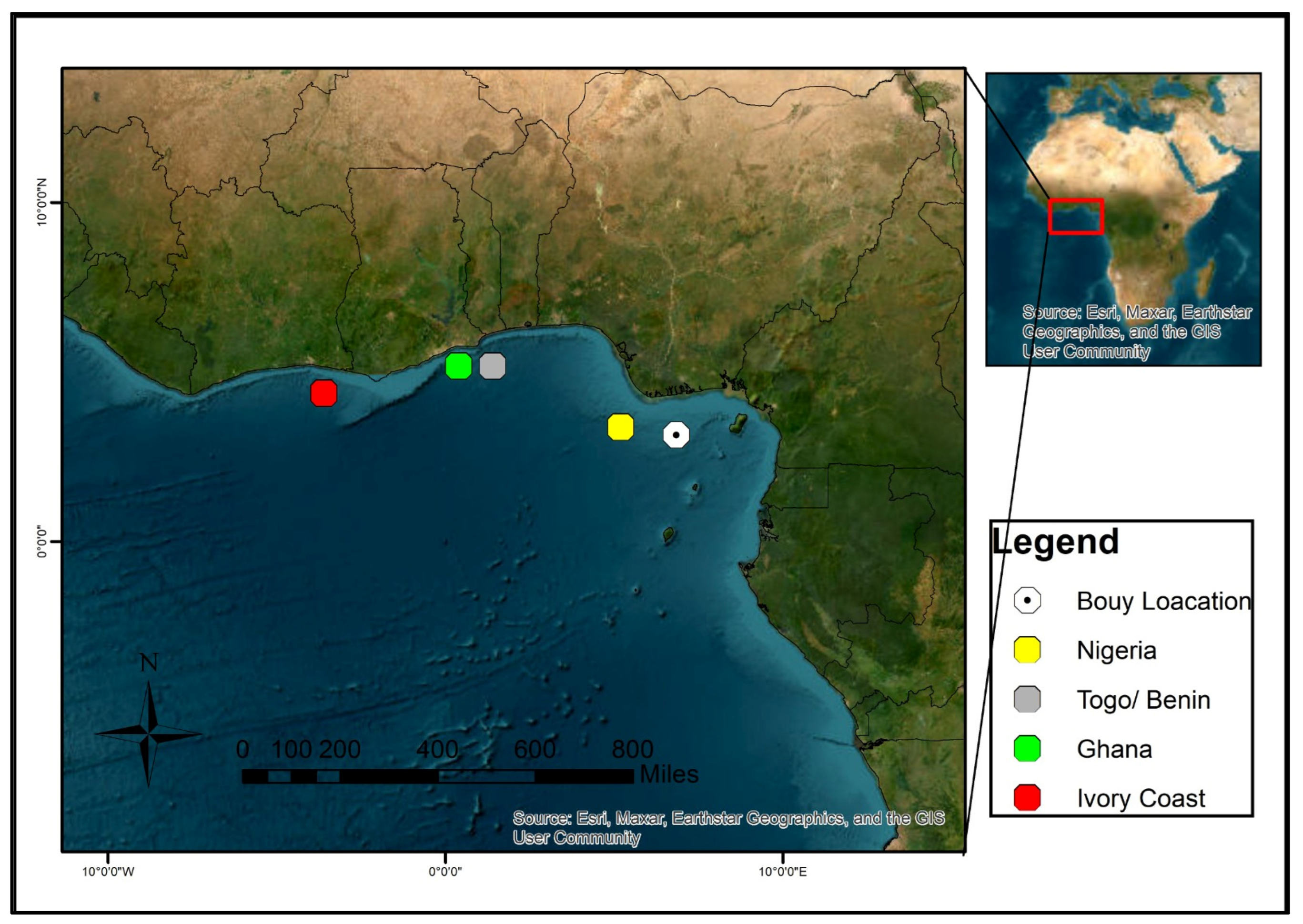
Figure 1. Map of the study area, highlighting key geographical features, including the location of the buoy, which is used as a reference, and relevant data collection points used in the analysis.
Coasts 06 00008 g001
Figure 2. (a) A scatter plot of Hs of WAVERYS/ERA5 against Hs of HY-2B/HY-2C with regression line. (b) Quantile distribution of Hs of WAVERYS/ERA5 against Hs of HY-2B/HY-2C.
Coasts 06 00008 g002aCoasts 06 00008 g002b
Figure 3. A time series plot of Hs of buoy, Hs of WAVERYS and Hs of ERA5.
Coasts 06 00008 g003
Figure 4. A scatter plot of (a) Hs of WAVERYS against the buoy data, (b) Hs of ERA5 against Hs of buoy with regression line (red).
Coasts 06 00008 g004
Figure 5. A quantile-quantile plot of Hs of buoy against Hs of ERA5/WAVERYS.
Coasts 06 00008 g005
Figure 6. Marginal distribution of Hs off (a) Ivory Coast, (b) Ghana, (c) Togo/Benin and (d) Nigeria. Red curves represent the distribution of Probability Density Functions.
Coasts 06 00008 g006
Figure 7. Histogram with fitted probability distribution functions of Tp for (a) Ivory Coast, (b) Ghana, (c) Togo/Benin and (d) Nigeria. Red curves represent the distribution of Probability Density Functions.
Coasts 06 00008 g007
Figure 8. Directional rose of wave off Ivory Coast (a), Ghana (b), Togo/Benin (c) and Nigeria (d).
Coasts 06 00008 g008aCoasts 06 00008 g008bCoasts 06 00008 g008c
Figure 9. Hs of swell and wind sea off (a) Ivory Coast, (b) Ghana, (c) Togo/Benin and (d) Nigeria. Red curves represent the distribution of Probability Density Functions.
Coasts 06 00008 g009
Figure 10. Directional rose for mean Hs for (a) wind sea and (b) swell for (i) Ivory Coast, (ii) Ghana; (iii) Togo/Benin and (iv) Nigeria.
Coasts 06 00008 g010aCoasts 06 00008 g010b
Figure 11. Monthly mean of combined wind sea and swell Hs for the duration of 1993 to 2022.
Coasts 06 00008 g011
Figure 12. Monthly distribution of combined wind sea and swell significant wave height (Hs) off (a) Ivory Coast, (b) Ghana, (c) Togo/Benin, and (d) Nigeria. Blue dots represent individual Hs observations, boxplots show the variability of Hs, and red markers indicate the monthly mean Hs.
Coasts 06 00008 g012
Figure 13. Monthly distribution of mean wind sea Hs off West Africa for the duration of 1993 to 2022.
Coasts 06 00008 g013
Figure 14. Seasonal variation in wind sea Hs of (a) Ivory Coast, (b) Ghana, (c) Togo/Benin and (d) Nigeria. Blue dots represent individual wind sea Hs observations, boxplots show the variability of Hs, and red markers indicate the monthly mean wind sea Hs.
Coasts 06 00008 g014
Figure 15. Monthly distribution of mean swell Hs off West Africa for the duration of 1993 to 2022.
Coasts 06 00008 g015
Figure 16. Seasonal variation in swell Hs of (a) Ivory Coast, (b) Ghana, (c) Togo/Benin and (d) Nigeria Blue dots represent individual swell Hs observations, boxplots show the variability of swell Hs, and red markers indicate the monthly mean swell Hs.
Coasts 06 00008 g016
Figure 17. Annual anomaly plot of global Hs (ad) off Ivory Coast, Ghana, Togo/Benin, and Nigeria, respectively.
Coasts 06 00008 g017
Table 1. Metrics on qualitative analysis between Hs of HY-2B/HY-2C against WAVERYS and ERA5, respectively.
ScoresWAVERYSERA5
Mean Bias/m0.03060.0419
Relative Error, RE6.03718.3682
Root Mean Square Error, RMSE/m0.10760.1444
Scatter Index, SI/%7.488010.0480
Correlation Coefficient, CR0.95980.9245
Table 2. Metrics on qualitative analysis between Hs of Buoy against Hs of WAVERYS and ERA5.
ScoresWAVERYSERA5
Mean Bias/m0.02680.0040
Relative Error8.78598.8829
Root Mean Square Error, RMSE/m0.12480.1287
Scatter Index, SI/%10.936211.2763
Correlation Coefficient, CR0.91370.9057
Table 3. Summary of combined wind sea and swell Hs (combined swell and wind sea Hs) of Figure 6.
Statistical AnalysisIvory CoastGhanaTogo/BeninNigeria
Minimum Hs value (m)0.570.570.540.52
Maximum Hs value (m)3.183.043.223.04
Mean Hs value (m)1.351.321.331.31
Modal Hs value (m)1.221.181.261.15
50% quantile value (m)1.321.291.301.26
90% quantile value (m)1.801.731.761.77
Table 4. Summary of histogram with PDF of Tp for Figure 7.
Statistical AnalysisIvory CoastGhanaTogo/BeninNigeria
Minimum Tp value (s)4.093.834.063.59
Maximum Tp value (s)24.0325.3925.6125.06
Mean Tp value (s)12.5512.7812.8513.07
Modal Tp value (s)13.0813.0413.0313.23
50% quantile value (s)12.4912.7512.8012.97
90% quantile value (s)15.7515.8415.8915.98
Table 5. Summary of the swell and wind sea wave conditions.
Statistical AnalysisIvory CoastGhanaTogo/BeninNigeria
SwellWind SeaSwellWind SeaSwellWind SeaSwellWind Sea
Min. Hs (m)0.250.050.260.050.300.050.290.05
Max. Hs (m)3.151.603.031.573.221.703.031.72
Mode Hs (m)1.200.071.100.211.020.211.100.05
50% Hs quantile (m)1.230.211.170.291.180.291.170.21
90% Hs quantile (m)1.720.481.660.591.670.611.690.53
Disclaimer/Publisher’s Note: The statements, opinions and data contained in all publications are solely those of the individual author(s) and contributor(s) and not of MDPI and/or the editor(s). MDPI and/or the editor(s) disclaim responsibility for any injury to people or property resulting from any ideas, methods, instructions or products referred to in the content.