1. Introduction
The link between green spaces and better human health is well established and broadly accepted. Wetlands are a core element of natural and cultural landscapes and provide many ecosystem services for rural and urban communities [
1]. In recent years, more attention has been given to how urban wetlands interact with city life and the benefits they bring to residents, such as improved mental and physical health, stronger social ties, a greater sense of well-being and attachment to place, and the added value that comes from community participation in urban conservation work [
2].
Even so, urban wetlands have not always been valued or protected in practice. Many have gone through long periods of loss and degradation, although public perceptions have started to change in many cities [
3,
4]. Urban growth has heavily altered wetland hydrology, reduced or broken up vegetation cover, and turned wetlands into places used for dumping, drainage, land filling, and contamination by stormwater and excess nutrients. These pressures have led to local species decline or disappearance, the spread of invasive plants and animals, deterioration of recreational infrastructure, and recurring vandalism [
5,
6,
7]. Because urbanization affects hydrological, geomorphological, and ecological processes in cumulative ways, wetlands in cities often function differently from those in rural settings [
8]. For that reason, urban wetlands are increasingly seen as essential parts of urban systems that should be conserved and restored.
Wetlands are among the most important components of green–blue infrastructure because of the wide range of services they provide. Urban wetlands—including those linked to trees, rivers, lakes, ponds, and engineered vegetated features—form natural green–blue infrastructure that can sustain high biodiversity [
9] and strengthen the social and environmental sustainability of cities. Some of their most relevant roles include:
Flood regulation. A wetland’s ability to reduce flooding depends on its position and configuration in the landscape, soil characteristics, topography, and prior soil moisture. Floodplain wetlands can strongly attenuate floods [
10]. Tropical coastal cities often sit within large, connected wetland networks that provide valuable flood regulation. Evidence from several Asian cities, including cases in India and China, shows that rapid and poorly planned urbanization lowers catchment yield and storage capacity, increases impermeable surfaces, and reduces groundwater recharge [
11,
12,
13,
14]. Frequent urban flooding is often associated with the spread of impervious cover. When wetland-based flood regulation is degraded or lost, tropical storms and hurricanes can more easily translate into severe disasters [
15].
Natural stormwater management. Wetlands are central to natural stormwater management. Core aims include enabling surface drainage, limiting floods, reducing erosion and sedimentation, lowering pollutant loads in runoff, and providing aesthetic and recreational benefits through open spaces and waterfront areas [
16].
Urban temperature regulation. When green–blue infrastructure is lost and built-up areas expand, cities warm and heat islands intensify. A land-use change study in India covering 1973–2009 documented a 632% increase in built-up land, alongside a 79% reduction in surface water and a decline in wetlands from 207 to 93, with a measurable rise in local urban temperatures [
14,
17,
18].
Mexico’s Gulf coast is a low coastal plain with extensive dune fields [
19], estuarine environments, and coastal freshwater wetlands [
20], with the Sierra Madre Oriental mountain range further inland. Surface and groundwater emerge in these lowlands, creating large wetland complexes [
21]. Tamaulipas, bordering Texas (USA), contains the Laguna Madre coastal lagoon along much of its shoreline. Veracruz receives about 13% of Mexico’s annual rainfall, and its rivers carry around 24% of national runoff [
22]. Tabasco includes some of the country’s largest wetland systems, including the Pantanos de Centla Biosphere Reserve.
Natural protected areas (NPAs) mainly aim to conserve biodiversity, protect ecosystems and species, and maintain natural habitats in relatively intact condition. They also play a key role in safeguarding ecosystem services [
23,
24]. Wetlands inside protected areas provide recreational, educational, and cultural values, and support local livelihoods. Urban wetlands have strong cultural and ecological importance [
25], and some have been designated as NPAs to protect those qualities. To strengthen the role of protected areas for ecosystem services, China has proposed a new protected-area category that allows human activities as long as they do not undermine key services [
26].
Along the Gulf of Mexico lowlands, several coastal cities lie near protected wetlands. In some cases, urban growth has taken place directly over wetland systems. Some wetlands have been filled to create land for development; others have been used informally as dumping sites or as receiving bodies for stormwater and treated wastewater; and some have been formally protected under state or federal regimes. Veracruz, which has the largest number of coastal cities and three major ports, also contains many urban wetlands under different levels of protection. These protected areas have helped slow wetland loss and have increased awareness among citizens, decision-makers, and public officials. They also provide a strategic opportunity to apply flood-control measures through nature-based solutions (NbS), reinforce their status as protected areas, and support more sustainable models of coastal urban development.
The Veracruz–Boca del Río–Medellín conurbation—combining a port city, an industrial center, and a tourism hub—has expanded over dunes and wetlands. The importance of wetlands within Veracruz city and nearby areas is recognized in multiple conservation strategies. Four protected natural areas are present in the region: the Arroyo Moreno mangroves (287 ha), the Tembladeras–Laguna Olmeca freshwater marshes (1069 ha), the dune lakes within Veracruz city (944 ha), and the nearby reef system (65,516 ha). This study analyzes wetlands from both landscape and local perspectives, using selected dune lakes within the urban area as case examples.
Dune lakes are shallow, irregular freshwater bodies found in depressions within coastal dune systems. They form through aeolian processes and are filled by rainfall, groundwater seepage, and sometimes surface inflows. In central Veracruz, dune lakes are widespread across extensive dune fields, are not perched systems, and are mainly sustained by groundwater and rainfall [
27]. They are a distinctive type of urban wetland in the coastal city of Veracruz. A set of 33 dune lakes has been designated as a protected area of 944 ha, officially named the Corredor Biológico Multifuncional Archipiélago de Lagunas Interdunarias de la Zona Conurbada de los Municipios de Veracruz y La Antigua [
28], referred to here as the Dune Lakes NPA. Seventeen of these lakes are part of Ramsar Site 1450. However, rapid urbanization before the protected area was created caused extensive soil sealing around many lakes, weakening their natural hydrological regulation, increasing flood risks, and raising pollutant inputs via urban runoff [
29].
Historically, these lakes were surrounded by rural or peri-urban landscapes. During the 1980s, port expansion and coastal tourism accelerated population growth [
30]. Several dune lakes were partly filled with sand, and, in some cases, low-income settlements developed along their margins, often using debris dumping to create more buildable land. In years with heavy rainfall or during tropical storms and hurricanes, lake overflows caused flooding and increased vulnerability for nearby residents. In response, the National Water Commission (CONAGUA) connected several dune lakes to move water out of the city and built additional drainage channels (Canal de la Zamorana and Drenaje Jiménez Sur) to pump stormwater in the rainy season, reducing flooding. The Arroyo Moreno mangroves and the Tembladeras and Laguna Olmeca freshwater wetlands also receive urban stormwater despite being protected. Even so, many low-lying urbanized areas near dune lakes and wetlands still flood repeatedly. In practice, protected wetlands have been expected to regulate floods, filter stormwater, and conserve biodiversity, while at the same time facing strong economic and urban development pressures [
29].
This study proposes an integrated framework for managing urban wetlands by looking at two connected spatial scales. At the landscape scale, we examined the legal status, enforcement tools, and management effectiveness of five protected natural areas across the merged cities of Veracruz, Boca del Río, and Medellín, and proposed governance measures to strengthen protection. At the local scale, we focused on two representative urban dune lakes, assessing (i) day–night patterns in dissolved oxygen and temperature, (ii) biochemical oxygen demand across lakes with different levels of urban pressure, and (iii) links among vegetation composition, organic loading, and water-quality indicators. We also evaluated the 100 m riparian zone for nature-based interventions and held community workshops to build baselines for adaptive co-management. Together, these components provide an evidence-based framework for conserving and managing urban wetlands in coastal cities that face increasing climate adaptation pressures.
Conurbation and Landscape Analysis
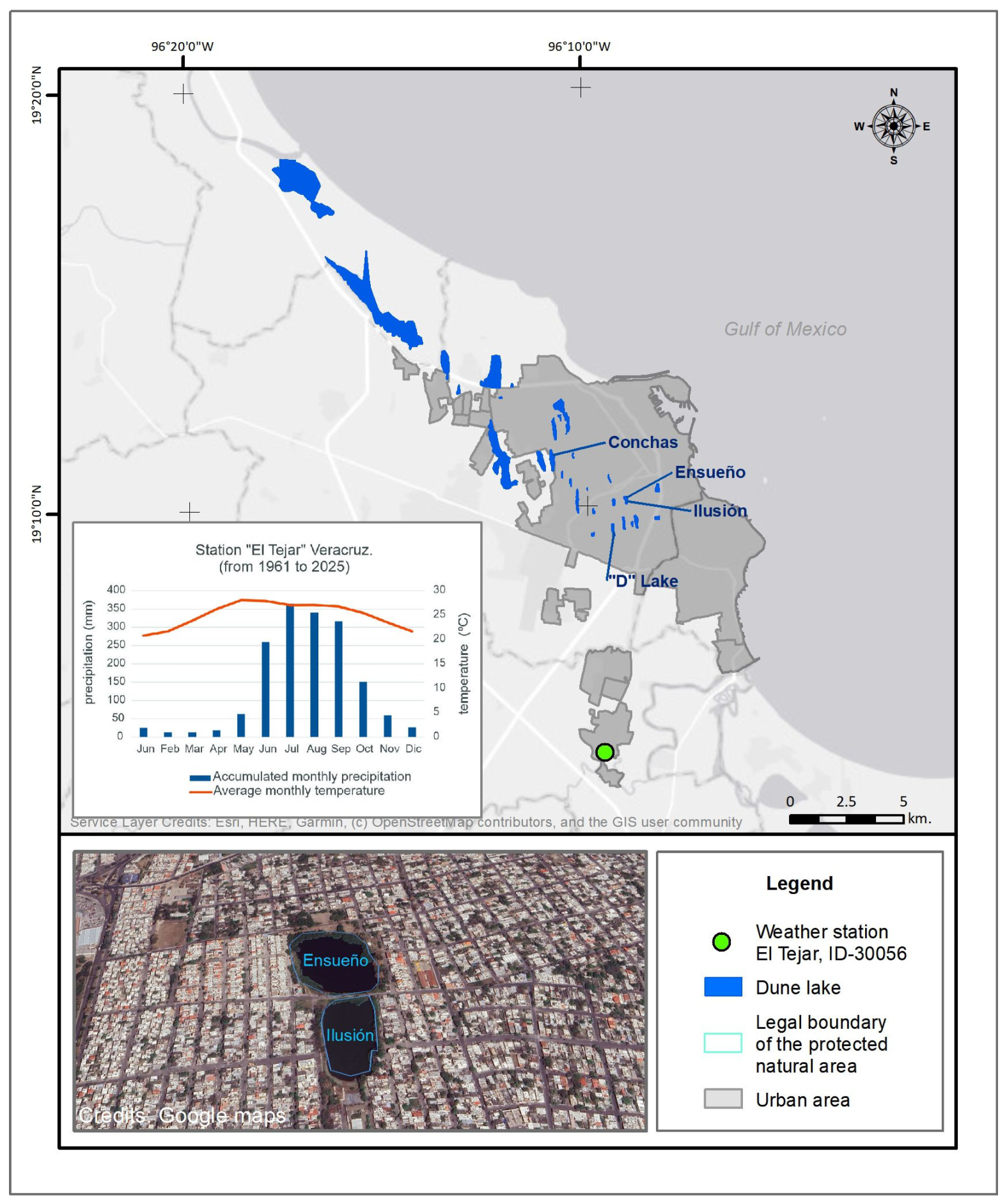
The study took place in the lowlands of the Jamapa River watershed within the Veracruz–Boca del Río–Medellín conurbation. Four dune lakes were selected for their ecological importance and contrasting degrees of human impact: La Ilusión, El Ensueño, Las Conchas, and Laguna D, the last of which receives effluent from a municipal wastewater treatment plant. The presence of a wastewater treatment plant discharging into a Natural Protected Area may appear contradictory; however, this situation reflects the historical priorities that shaped the protection regime. When the dune lake system was initially designated as a protected area, the primary objective was flood control rather than biodiversity conservation. The lakes were hydraulically connected to function as a regulatory basin (vaso regulador) for urban stormwater management, and the continued operation of the treatment plant was permitted within this framework. More recently, the conservation value of the area for biodiversity has gained recognition, yet relocation of the treatment facility has not been considered in current management plans. This institutional path dependency illustrates a broader challenge in urban wetland governance: reconciling legacy infrastructure decisions with evolving conservation priorities. Nature-based solutions were implemented mainly in La Ilusión and El Ensueño as part of the conservation priorities. All are shallow freshwater systems (depth < 2 m) formed between coastal dunes, with seasonal hydroperiods and differing levels of connection to groundwater and surface runoff [
27,
29]. The lakes lie within or near the metropolitan area and are part of the Dune Lakes NPA (
Figure 1). The climate is tropical, with average annual rainfall of 1651 mm and an annual mean temperature of 25 °C.
2. Materials and Methods
2.1. Conurbation and Landscape Analysis
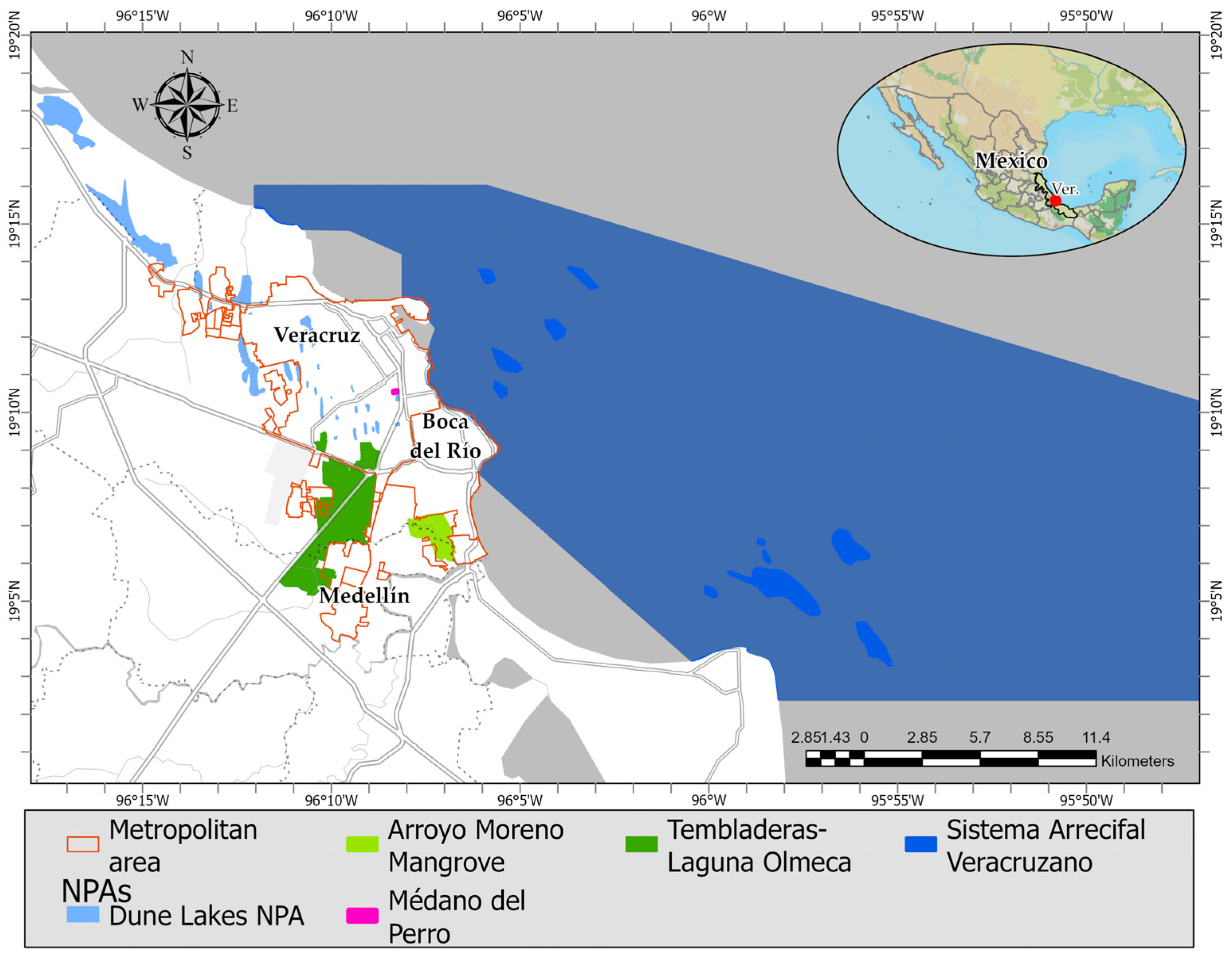
At the landscape scale, we focused on five Natural Protected Areas (NPAs) within the Veracruz–Boca del Río–Medellín metropolitan conurbation: Sistema Arrecifal Veracruzano, Médano del Perro, Arroyo Moreno (hereafter the Arroyo Moreno Mangrove), Tembladeras–Laguna Olmeca, and the Archipiélago de Lagunas Interdunarias (Dune Lakes NPA) (
Figure 2).
We then evaluated the legal status and regulatory options within the 100 m riparian buffer of two dune lakes (El Ensueño and La Ilusión). Managing urban wetlands, especially in coastal settings such as Veracruz, requires reducing human pressures both at the interface between the lake and the surrounding urban area and within the water body itself. For El Ensueño and La Ilusión, the territorial analysis identified a key 100 m-wide strip around each lake. This strip is not only the immediate physical boundary, but also a functional ecotone where processes such as soil sealing and vegetation loss directly weaken wetland services and increase vulnerability to climate change impacts [
29,
31].
The method used was a retrospective legal–territorial review in three sequential phases:
Documentary and legal data collection. We conducted a systematic review of foundational and reform legal instruments using official repositories of the Veracruz State Government (Gaceta Oficial) and the Mexican Federal Government (Diario Oficial de la Federación). The documentary corpus included original establishment decrees, modification decrees, inter-institutional coordination agreements, errata (fe de erratas), and management programs published from 1986 to 2025. We prioritized official primary sources to ensure legal validity and reliability.
Chronological and comparative analysis. We organized information in a chronological analytical matrix for each NPA, focusing on three key variables: (a) Evolution of surface area: comparing the originally decreed areas with current extents after reforms, identifying gains or losses; (b) Management categorization: evaluating changes or continuity in protection categories (e.g., from “Area Subject to Ecological Conservation” to “Ecological Reserve”) and what these shifts meant for allowed land uses; (c) Teleology of conservation: analyzing the preambles (considerandos) and operative articles to extract explicit conservation objectives and to assess how they changed over time, including responses to external pressures such as adding civil protection goals related to flood risk.
Assessment of the environmental rule of law. We applied a critical analysis to assess administrative stability in the NPAs. We contrasted normative legal theory—especially the principle of environmental non-regression—with the territorial dynamics documented in the legal instruments, such as boundary reductions, legalization of irregular settlements, and loosening of allowed activities. This comparison supported a diagnosis of how effective the legal framework has been under sustained urban expansion.
For El Ensueño and La Ilusión, the literature review extended beyond the decrees to include official urban development plans, reports on conservation status, official cartography, and other relevant complementary sources.
2.2. Ecological Analysis of Urban Lakes
Four lakes reflecting a gradient of disturbance were selected for detailed ecological assessment: El Ensueño and La Ilusión (moderate impact, with active community-led restoration), Laguna D (severe impact, receiving effluent from a municipal wastewater plant), and Las Conchas (intermediate impact, with documented temporal variability).
Vegetation analysis. Vegetation was described in September 2024 using visual estimates of dominant species cover. All taxa were assigned to functional groups (submerged, floating-leaved, free-floating, emergent, and riparian) to compare structure among lakes and explore connections between vegetation composition and water quality indicators.
Water quality. Sampling and laboratory determinations followed the Standard Methods for the Examination of Water and Wastewater [
32].
Biochemical Oxygen Demand (BOD5). BOD5 samples were collected in September 2024 at three points per lake (north, center, south). Samples were taken in sterile bottles, transported at 4 °C in coolers, and analyzed within 24 h. The 5-day test used dissolved oxygen measured at Day 0 and Day 5 after incubation at 20 °C ± 1 °C in darkness. Because the sample size was small (n = 3 per lake), results are presented as a rapid assessment with clear limitations in replication and seasonality.
Diel oxygen cycle monitoring. We carried out 24 h monitoring campaigns in Lakes El Ensueño and La Ilusión. Two campaigns were performed: on 23 April 2024 and on 3 May 2024. Dissolved oxygen (DO) and water temperature were measured using the Winkler iodometric method with azide modification. Water was collected in Winkler bottles every 2 h from 06:00 to 06:00 the following day. Samples were fixed immediately in the field using manganese sulfate and alkali-iodide-azide solutions. Because the lakes were close to the laboratory (about 10 min), fixed samples were transported quickly and then acidified with sulfuric acid before being titrated with standardized sodium thiosulfate. Reagents were previously validated. Water temperature was recorded at each sampling time using a calibrated HANNA HI 9829 multiparameter probe (± 0.1 °C) (Woonsocket, RI, USA). The probe was calibrated following the manufacturer’s instructions. Although the probe has dissolved oxygen measurement capability, we relied exclusively on Winkler determinations for all reported DO data due to higher precision requirements for diel cycle analysis.
Nutrient analysis. We compiled historical data (2003–2024) for ammonium nitrogen (N–NH4), nitrate nitrogen (N–NO3), phosphate phosphorus (P–PO4), and total alkalinity. Ammonium was measured by the indophenol method, nitrates by cadmium reduction, phosphates by the ascorbic acid colorimetric method, and total alkalinity by sulfuric acid titration. A metadata table with year/month, sample size (n), station/site, depth, analytical method, LOD/LOQ, and original data source is provided in Table S1 available in the Mendeley Data repository, together with the raw dataset and documentation on how inter-annual comparability was ensured.
Statistical analyses. We calculated descriptive statistics for all variables. For diel cycles, we grouped data into daytime (06:00–18:00) and nighttime (18:00–06:00) periods and compared them using independent t-tests. We used one-way ANOVA to compare BOD5 among lakes. Given the small sample size (n ≈ 3 per group), we also report effect sizes (η2) and 95% confidence intervals. We additionally ran a non-parametric alternative (Kruskal–Wallis with Dunn post hoc) to confirm patterns. Statistical significance was set at α = 0.05.
2.3. Community Engagement
We held community workshops with residents living around El Ensueño and La Ilusión to record local perceptions, identify concerns about water quality, and develop management proposals together. Participants included members of the Grupo Organizado Lagunas Ensueño e Ilusión and other residents who have approached authorities regarding pollution issues. Workshops focused on identifying environmental and social problems, building historical timelines, and co-designing nature-based solutions [
33,
34].
3. Results
In principle, managing wetlands across the metropolitan conurbation should be backed by a solid, progressive legal framework. At the federal level, Article 4 of the Political Constitution of the United Mexican States recognizes the human right to a healthy environment for development and well-being, and obliges the State to guarantee this right and sanction environmental damage [
35]. This mandate is reinforced by binding international instruments, including the Escazú Agreement, ratified by Mexico, which explicitly incorporates the principles of non-regression and progressivity. Under these principles, environmental standards should be strengthened over time, and unjustified rollbacks of prior protection levels are not allowed [
36].
However, when we examined local implementation—specifically under State Environmental Protection Law No. 62 [
37]—and compared it with the chronological review of decrees for the five NPAs, we found a clear gap between formal legal commitments and what is happening territorially. Instead of operating as stable conservation polygons consistent with environmental non-regression, protected areas have shown substantial flexibility in their boundaries, often adjusting to consolidated land uses and dominant economic interests.
The Sistema Arrecifal Veracruzano illustrates this pattern clearly. Although its total area formally increased from 52,238 ha in the original decree to 65,516 ha after the 2012 modification, this numerical expansion hides an important qualitative loss. The redefinition of the polygon removed strategically relevant reef sectors—such as Punta Gorda and Bahía de Vergara—to allow the expansion of the Port of Veracruz, showing how conservation zoning can be reshaped to fit major infrastructure projects [
38,
39]. Earlier, in 1994, the decree had already been modified to permit commercial fishing, reducing the strictness of the original protections [
40].
In terrestrial systems, the Arroyo Moreno Ecological Reserve mangroves show how illegality can be normalized administratively. In 2008, the protected area was reduced from 287 to 249 ha to exclude irregular settlements that had already expanded into the wetland, effectively formalizing the loss of natural capital [
41,
42].
A similar pattern of legal instability occurred in the Tembladeras–Laguna Olmeca Ecological Reserve between 2010 and 2014. Several decrees and errata were needed to correct delimitation mistakes under strong real estate pressure. Although the process ultimately consolidated 1374 ha aimed at protecting hydrological regulation, it also revealed major weaknesses in territorial planning and governance [
43,
44].
The Médano del Perro dune system, created by agreement in 1986, reflects regulatory stagnation. Nearly four decades without being elevated to a higher-ranking legal decree has limited its practical relevance, leaving it as a leftover space within an increasingly dense urban landscape [
45].
Finally, the Ramsar site and protected dune lakes of the Archipiélago de Lagunas Interdunarias reveal a newer challenge: the judicialization of environmental management. Established in 2016 as a Multifunctional Biological Corridor to protect 33 water bodies [
28], its territorial integrity was affected on 6 March 2025. Following a judicial ruling, a new decree partially revoked protection over a small portion of private land (“Río Grande”), removing 97.35 m
2 from the protected polygon [
46]. Although this was a minor quantitative loss, it created an important qualitative precedent of environmental regression imposed by a court decision. It shows how the defense of private property can break ecological continuity even when the broader public interest favors conservation. The figure of 97.35 m
2 was confirmed directly in the primary legal source [
46]; although small relative to the total protected area, it refers to a specific polygon segment that a court ordered excluded following an amparo case concerning a private property known as “Río Grande.”
Overall, these cases suggest that the environmental rule of law in Veracruz faces structural obstacles. Urban growth, technical shortcomings in planning, and increasing litigation continually pressure conservation areas, putting ecosystems and their services at risk and weakening compliance with the constitutional guarantee of a healthy environment. The conservation objectives and current legal status resulting from these trajectories are summarized in
Table 1.
3.1. Wetlands and Regional Water Flow
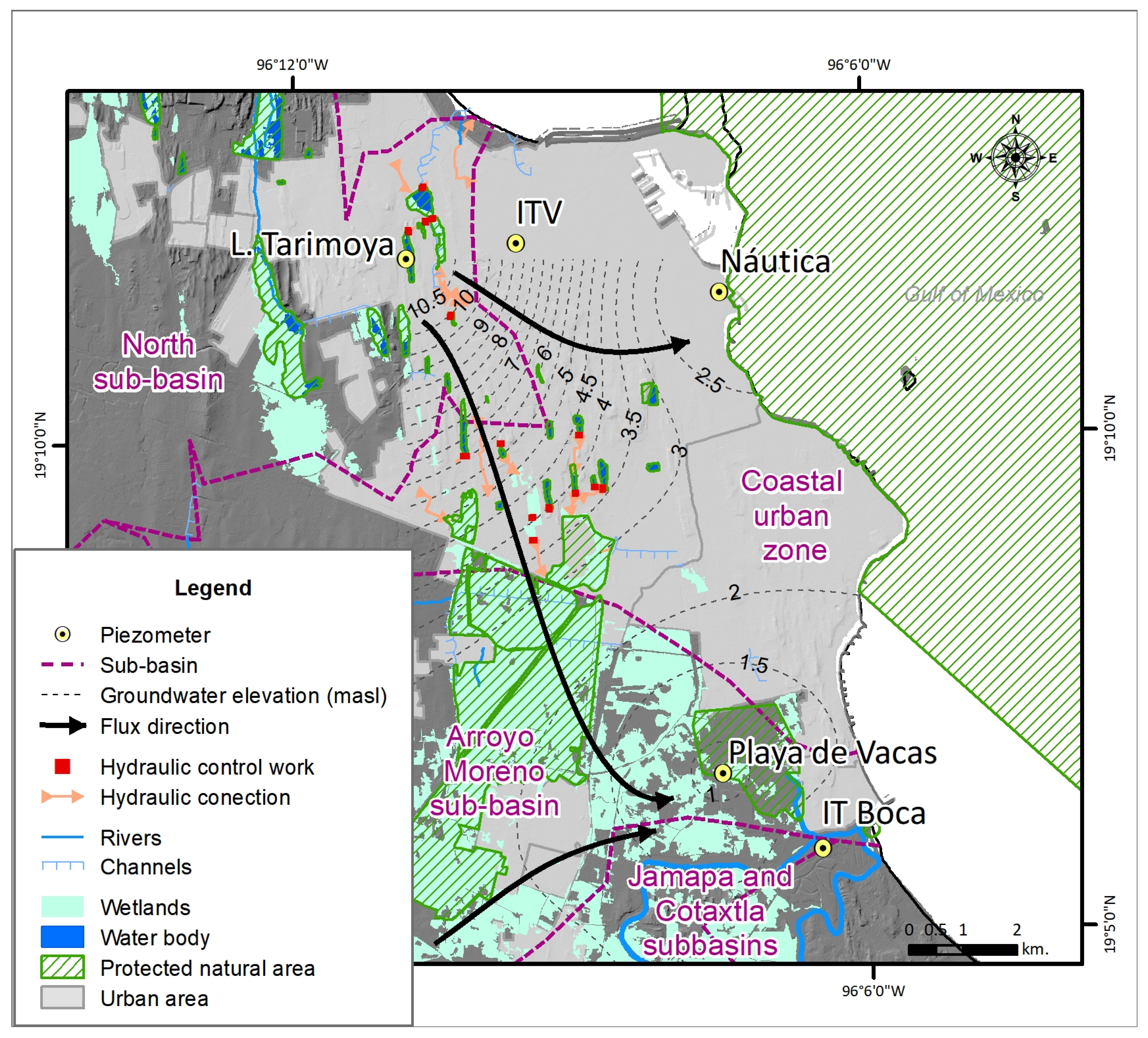
Groundwater flow patterns in the lower basin where the metropolitan conurbation expanded were described by Neri-Flores et al. [
27]. That work identified six sub-basins draining toward the coast: Jamapa, Cotaxtla, Mandinga, Arroyo Moreno, the northern sub-basin, and the coastal urban zone (
Figure 3). The analysis used monthly measurements over one year from 31 piezometers installed across the lower basin. Ten were initially located in the urban zone, and ten more were added later. Another ten piezometers were placed between the Cotaxtla and Jamapa rivers to examine river–aquifer interactions. Seven piezometers were selected to establish precise topographic control for building the groundwater flow network. The resulting dataset, shown in
Figure 3 together with the distribution of urban wetlands—both protected and those used for cattle grazing—highlights urban wetlands as preferential zones of groundwater convergence and discharge toward the coast. These patterns emphasize the hydrological importance of wetlands embedded within the city. Notably, some of the most recurrent flooding occurs in Playa de Vacas, a wetland that has been partly urbanized, illustrating what can happen when natural hydrological pathways are disrupted.
3.2. Community Organization and Environmental Education
Residents have gradually become more aware of the dune lakes and now recognize how they support individual and collective well-being, including subsistence uses (e.g., fishing) and recreation. At the same time, they also point to the persistence of multiple environmental problems [
34]. In several areas, people have shown interest in improving local conditions but lack formal organizational structures, and their initiatives often receive limited responses from public institutions.
Within this project, we began collaborating with a group of residents who had organized informally to remove water hyacinth and to demand improvements in water quality from local authorities. This group has carried out participatory workshops with neighbors to document concerns, supported baseline ecological sampling, and developed initial proposals for a management plan for El Ensueño and La Ilusión. The group is formally known as the Grupo de Trabajo Lagunas Ensueño e Ilusión. The effort is designed as a pilot to restore ecological conditions, strengthen natural filtration, build basic facilities, and recover degraded functions. Their proposals were incorporated into the design framework presented here.
At the same time, environmental education activities were carried out with local high schools. We developed tailored materials about dune lakes, ecosystem services provided by coastal wetlands, and how climate change affects coastal cities. These materials include videos and infographics, but they mainly emphasize interactive games and hands-on demonstrations. The educational experiences have been successful and are reported elsewhere [
51]. The materials are being made available through the platform
https://www.cienagasyhumedales.org/ (accessed on 4 November 2025).
Although a book summarizing work in the area has already been published [
52], there is still a clear need for targeted materials aimed at decision-makers, especially emphasizing the role of urban wetlands in water management and climate adaptation.
3.3. Vegetation Composition and Structure
The four dune lakes showed clear differences in vegetation composition and structure (
Table 2). All values represent the percentage of the total lake surface area, with open water and vegetation components summing to 100% for each lake.
Lakes El Ensueño and La Ilusión maintained relatively diverse assemblages with moderate open water coverage (43.5% and 35.5%, respectively). Native emergent species Typha domingensis covered 1.4% and 3.0% of the total lake area, along with moderate presence of invasive free-floating macrophytes, mainly Eichhornia crassipes (4.8% and 5.9%) and Pistia stratiotes (4.8% in El Ensueño only). Notably, riparian tree cover was substantial, accounting for 43.5% and 53.3% of the lake perimeter in El Ensueño and La Ilusión, respectively.
By contrast, Laguna D showed reduced open water (37.0%) and was strongly dominated by invasive species: E. crassipes covering 7.4% and P. stratiotes 11.1% of the total lake surface, with native aquatic vegetation limited to T. domingensis (9.3%) and Pontederia sagittata (1.9%). Riparian tree cover was present along 33.3% of the shoreline.
Las Conchas exhibited the lowest proportion of open water (27.8%) and the highest native vegetation coverage, with T. domingensis covering 27.8% of the lake surface, P. sagittata 11.1%, and the native floating-leaved macrophyte Nymphaea ampla 16.7%. E. crassipes covered 16.7% of the surface. Notably, this lake lacked riparian tree cover.
El Ensueño, La Ilusión, and Laguna D are surrounded by fully urbanized areas. Even so, El Ensueño, La Ilusión, and Laguna D retain riparian tree cover along 43.5%, 53.3%, and 33.3% of their shorelines, respectively, which provides some buffering against urban pressures.
3.4. Diel Oxygen Dynamics
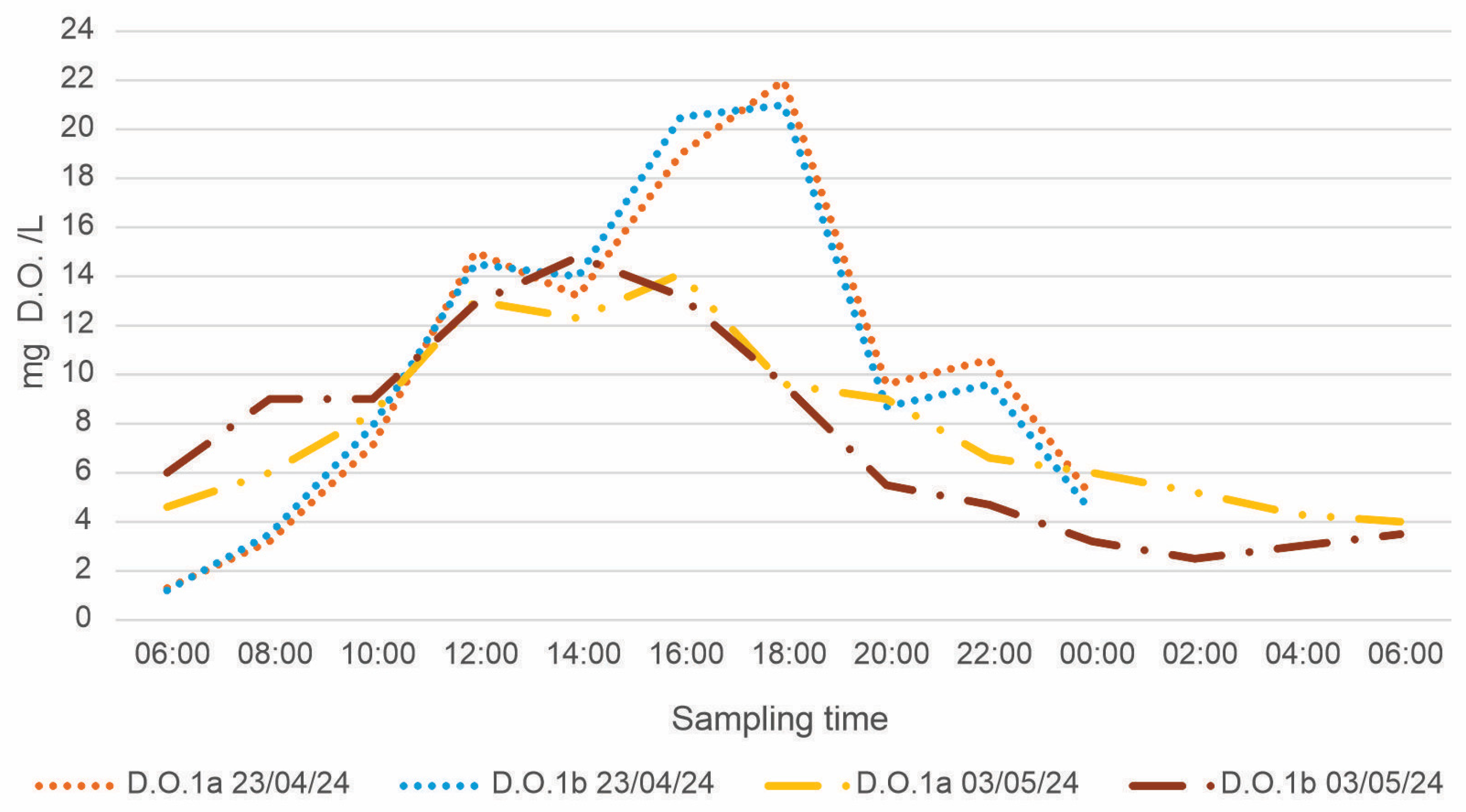
Twenty-four-hour monitoring in El Ensueño and La Ilusión showed strong day–night swings in dissolved oxygen (DO), mainly driven by metabolism of aquatic vegetation (
Figure 4;
Table 3). Two monitoring campaigns were performed: 23 April 2024 (D.O.1a and D.O.1b in
Figure 4) and 3 May 2024 (D.O.1a and D.O.1b in
Figure 4). In El Ensueño, DO ranged from 4.0 to 14.1 mg L
−1 (mean ± SD: 7.93 ± 3.46 mg L
−1), peaking in late afternoon (around 16:00) and reaching minima early in the morning (04:00–06:00). La Ilusión followed the same pattern but with a wider amplitude, with DO from 2.5 to 14.8 mg L
−1 (mean ± SD: 7.45 ± 4.26 mg L
−1) and more pronounced nocturnal hypoxia. These patterns reflect a close coupling among primary production, respiration, and oxygen availability in both lakes.
The significant day–night difference in La Ilusión (p = 0.007), compared with the non-significant difference in El Ensueño (p = 0.167), suggests stronger metabolic dynamics in La Ilusión, potentially linked to denser vegetation or higher nutrient availability. Both lakes showed strong positive correlations between temperature and DO (r > 0.85). This correlation reflects diel co-variation driven by solar radiation influencing both photosynthesis and temperature, rather than temperature directly increasing DO. Under purely physical conditions, warmer water holds less oxygen; in these shallow vegetated lakes, daytime photosynthetic oxygen production outweighs that effect, producing the observed positive relationship.
3.5. Temperature Patterns and Oxygen Relationships
Water temperature followed the expected daily cycle, with minima early in the morning and maxima in mid-afternoon. El Ensueño ranged from 30.0 to 36.0 °C (mean: 32.2 ± 2.4 °C), while La Ilusión ranged from 30.0 to 40.0 °C (mean: 32.7 ± 3.0 °C). DO was strongly and positively correlated with temperature in both lakes (El Ensueño: r = 0.853; La Ilusión: r = 0.859), supporting the interpretation that oxygen dynamics are mainly controlled by daytime photosynthesis linked to light availability and warming during the day.
3.6. Biochemical Oxygen Demand
BOD
5 showed large differences among the four dune lakes (
Table 4). Laguna D had extremely high BOD
5 (mean: 113.59 ± 48.07 mg L
−1; range: 59.17–150.26 mg L
−1), about 8–14 times higher than El Ensueño (13.44 ± 5.82 mg L
−1) and La Ilusión (13.16 ± 4.62 mg L
−1). Differences among sampling points within lakes were not significant (ANOVA:
F = 0.259,
p = 0.775;
η2 = 0.079; Kruskal–Wallis
H = 0.267,
p = 0.875), suggesting organic matter was relatively evenly distributed inside each system. The 95% confidence intervals for mean BOD
5 were: El Ensueño [5.84–21.04 mg L
−1], La Ilusión [7.43–18.89 mg L
−1], and Laguna D [53.97–173.21 mg L
−1]. For Las Conchas, historical data were not available for the 2024 sampling period; this prevents direct comparison with the other lakes and is noted as a limitation.
3.7. Nutrient Concentrations and Temporal Patterns
Historical nutrient data from 2003 to 2024 showed clear contrasts among lakes (
Table 5). Laguna D consistently had the highest nitrate (N–NO
3; mean: 3.09 ± 1.27 mg L
−1), reflecting ongoing inputs from the Grupo MAS wastewater plant. El Ensueño and La Ilusión had lower N–NO
3 (0.05–0.13 mg L
−1) but showed recent increases in ammonium (N–NH
4), especially in La Ilusión (1.08 ± 1.70 mg L
−1), where episodic peaks suggest intermittent pollution events.
For Las Conchas, the time series points to an initial improvement followed by clear deterioration (
Table 6). In 2014–2015, ammonium was very low (0.04 ± 0.03 mg L
−1), but by 2023 it had risen more than 39-fold (1.57 ± 2.24 mg L
−1), showing how improvements can be quickly lost without sustained management. The decline coincided with stronger urbanization and likely clandestine wastewater inputs.
In Laguna D, phosphate increased from 0.06 mg L−1 in 2003 to 1.89 mg L−1 in 2024, a 31-fold rise that implies a shift from mesotrophic to hypereutrophic conditions. This phosphorus build-up, despite changing nitrogen levels, suggests that wastewater effluents may reduce pathogens but do not remove nutrients effectively. The contrasting trends—phosphorus rising 31-fold while nitrate fell from 4.19 to 0.08 mg L−1—can be explained by different biogeochemical pathways. Under anoxic conditions typical of nighttime periods in eutrophic lakes, denitrification removes nitrogen as N2 gas, lowering nitrate. At the same time, anoxia favors the release of sediment-bound phosphorus (internal loading), increasing phosphorus in the water column. Phosphorus tends to bind to iron and manganese under oxic conditions and is released when sediments become reducing. Continuous organic inputs from the wastewater plant stimulate microbial respiration, sustaining reducing sediment conditions that favor ongoing phosphorus release, while nitrogen is lost through coupled nitrification–denitrification processes.
3.8. Relationships Between Vegetation, BOD5, and Nutrients
In Laguna D, dominance by invasive floating macrophytes (Eichhornia and Pistia) coincided with the highest BOD5 and nutrient concentrations. El Ensueño and La Ilusión, which retain more diverse vegetation including native emergent species and riparian trees, showed BOD5 about eight times lower. In Las Conchas, the native rooted floating-leaved Nymphaea ampla (30% cover) may help keep a more balanced production–decomposition dynamic, potentially supporting moderate BOD5 levels, although the lack of recent BOD5 data prevents direct comparison. Overall, the evidence indicates that eutrophication is mainly driven by organic matter inputs carried by stormwater runoff and untreated wastewater discharges from surrounding urban areas.
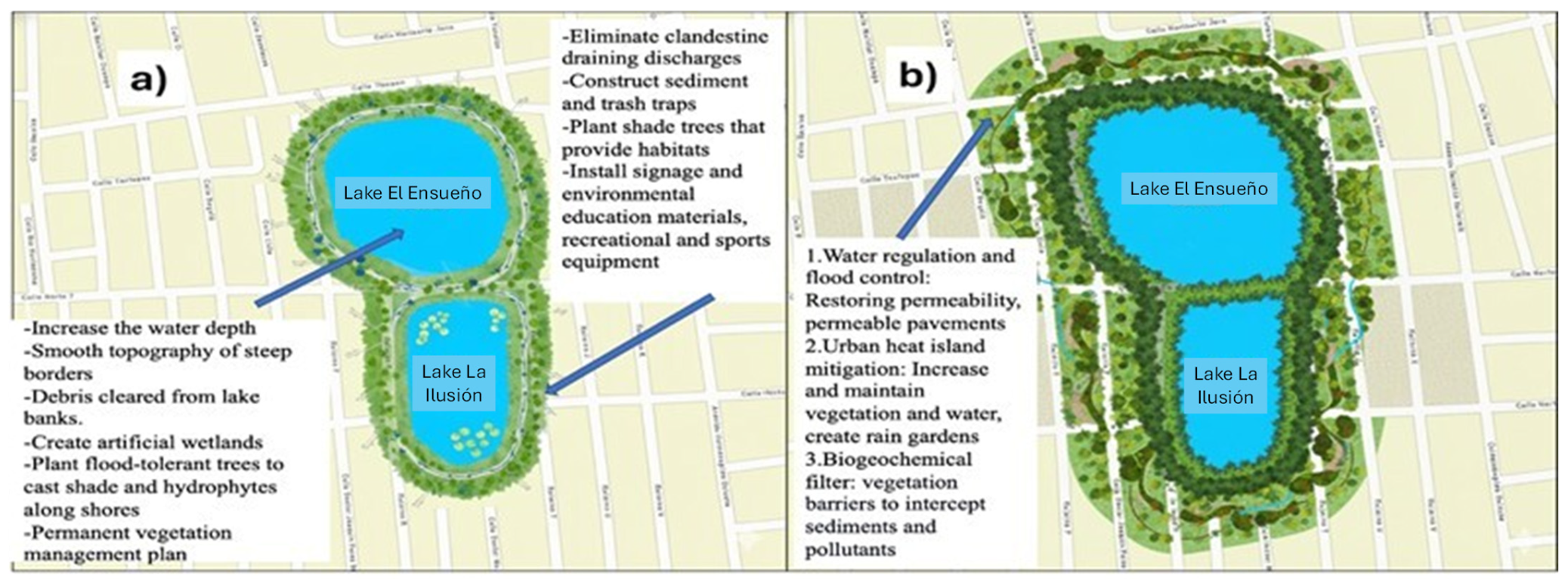
3.9. Nature-Based Solutions in El Ensueño and La Ilusión
Because the area is highly exposed to extreme heat [
54], the design approach prioritizes increasing shade and cooling through evapotranspiration at the urban–wetland interface using green infrastructure and hybrid solutions [
55,
56]. Historically, dune lakes in Veracruz have lost surface area due to landfill linked to informal construction, increasing flood risk for nearby communities [
29]. Rapid urbanization has sealed soils around the lakes, reducing their natural capacity to regulate water and strengthening heat island effects [
55]. Water management should therefore prioritize capturing and filtering surface runoff produced in nearby neighborhoods before it reaches the lakes, protecting protected areas from sediments and pollutants, and improving water quality.
Proposed interventions for the water body, the margins, and the surrounding 100 m buffer are grounded in a hierarchical legal framework that protects environmental public goods. Rivers, lakes, and lagoons, as national assets, are protected under the Federal Water Zone (ZFH) established by the National Water Law [
57]. In addition, state decrees designating these dune lakes as NPAs explicitly ban activities that alter their ecological condition [
28,
50].
Focusing intervention within this perimeter is justified by three central biophysical reasons:
Water regulation and flood control. Urbanization has turned the lakes’ natural regulation capacity into a flood risk. Filling and sealing around the lakes reduces infiltration and speeds runoff into lake basins [
29]. Restoring permeability in this strip is essential to recover the system’s “sponge” function.
Urban heat island mitigation. Surface temperature tends to decrease where vegetation and water are present. Recent studies show water bodies can produce cooling effects reaching up to 180 m, depending on how they connect with surrounding green spaces [
58]. The 100 m buffer is therefore decisive in strengthening or limiting this thermal service.
Biogeochemical filtration. The buffer is the last physical barrier that can intercept sediments and pollutants carried by runoff before they reach the water column, helping protect biodiversity and public health [
59].
To restore the perimeter’s function, we propose a hybrid NbS (
Figure 5) approach aligned with specialized literature:
- (a)
Lake margins and nearshore zones: riparian and wetland restoration guided by Water Sensitive Urban Design (WSUD). WSUD integrates stormwater, groundwater, and wastewater management into urban design to reduce degradation and improve aesthetic and recreational value. Priority actions include stabilizing shorelines by planting native, flood-tolerant species such as
Pachira aquatica and
Annona glabra. These species support soil stability, rebuild habitat structure, and serve as natural biofilters that help maintain water quality [
60,
61,
62].
- (i)
Within the water body: increase depth through targeted dredging of roughly one-quarter of the lake surface to counter siltation and maintain habitat during dry periods; regrade overly steep banks to facilitate natural vegetation establishment and remove debris along selected shores; install contained artificial wetlands to limit invasive species expansion and improve nutrient filtration, especially near stormwater inflows; plant flood-tolerant trees to increase shade, lower water temperature, diversify habitats, and stabilize margins; establish emergent hydrophytes along shores to consolidate banks, trap sediments and debris, and provide wildlife habitat; implement a permanent municipal vegetation management program that selectively removes excessive or undesirable species while encouraging ecologically beneficial aquatic vegetation.
- (ii)
Fluctuating water-level zone: green infrastructure and urban forestry. Creating an urban forest along lake edges is a main tool to reduce heat island impacts. Increased canopy supports evapotranspiration and shade, lowering ambient temperatures compared with paved surfaces [
54]. Additional actions include stopping clandestine sewage discharges through enforcement and citizen monitoring; building sediment and trash traps that combine engineering and green infrastructure; planting trees tolerant to short-term flooding with strong shading and evapotranspiration capacity; and installing environmental education signage and low-impact recreational infrastructure using permeable materials.
- (b)
100 m buffer around El Ensueño and La Ilusión: Sustainable Urban Drainage Systems (SUDS). In roads and built areas up to 100 m from the lakes, conventional drainage should be replaced by systems that mimic natural hydrology. Rain gardens and permeable pavements increase retention and infiltration, reducing polluted runoff entering the lakes [
63,
64]. These strips should be reforested along sidewalks and in rain gardens, with active participation from residents. Green roofs should be promoted to reduce building temperatures and increase local humidity.
Alongside structural measures, non-structural actions are also essential. These include formalizing a participatory environmental monitoring committee—already operating for La Ilusión and El Ensueño [
65]—and developing a community management plan for the Dune Lakes NPA. The committee should be officially recognized and supported by the authorities responsible for the protected area. The management plan should prioritize continuous monitoring, environmental education, and direct reporting channels so residents can document and report recurring problems such as solid waste dumping, vandalism, illegal filling, and poor maintenance of pumping infrastructure, among others [
46]. Committee responsibilities should be defined through a joint workshop with the relevant authorities. Sustained citizen participation and ongoing dialogue among stakeholders are critical, because NbS design and implementation must match the specific sociocultural context where interventions occur [
33,
55,
66].
4. Discussion
4.1. Landscape-Scale Threats and Governance Challenges
The Veracruz–Boca del Río–Medellín conurbation faces intensifying development pressures, compounded by climate change and persistent weaknesses in land-use planning. The main climate-related risks in Veracruz are hydrometeorological hazards, especially hurricanes and floods [
29], as well as higher temperatures linked to the urban heat island [
56]. Even so, the most important human-driven threat to the dune lake system is institutional inaction.
Although multiple wetlands are designated as protected areas, governance has largely focused on water regulation, with less attention to controlling pollution and sedimentation. Locally, degradation is driven not only by stormwater inflows, but also by clandestine domestic sewage discharges and failures in municipal wastewater management. While national and state legal frameworks provide strong grounds for restoring wetlands for both hydrological regulation and biodiversity conservation, implementation has remained limited.
In general, federally protected areas tend to be more strictly regulated because they typically have management programs and technical oversight. State and municipal protected areas, by contrast, vary widely in governance capacity and enforcement. In the study area, management actions often stopped after the initial decree, even though residents widely recognize flood regulation services. On this basis, we argue that these protected areas can be used to strengthen ecosystem services and improve flood mitigation. We recommend: (a) carrying out diagnostic assessments and building science-based management plans that explicitly include NbS; (b) treating protected areas as hydrologically connected landscape units rather than isolated sites; (c) strengthening coordination across municipal, state, and federal levels; (d) actively involving universities, NGOs, and residents in monitoring, conservation, and ecological rehabilitation; and (e) developing environmental education materials for local schools that involve students, teachers, and public officials.
For NPAs without management programs, such as Médano del Perro and Arroyo Moreno Mangroves, we propose a basic management model organized into four schemes: (1) Administrative and Legal Certainty: physical, immutable delimitation of polygons to prevent reductions, with buffer zones of at least 100 m around each water body; (2) Ecological and Structural Intervention: moving from passive protection to active restoration through SUDS and WSUD; (3) Biogeochemical Monitoring and Threat Control: systematic monitoring of BOD5, phosphorus, and nitrogen, and protocols to manage invasive macrophytes; and (4) Participatory Governance and Vigilance: formal participatory vigilance committees made up of residents and academics.
4.2. Dune Lakes as a Gradient of Anthropogenic Impact
The four lakes represent a strong gradient of degradation in a context where published ecological information is still limited. El Ensueño and La Ilusión represent moderate impact, with relatively low nutrients, moderate BOD5 (13.0–13.4 mg L−1), and a vegetation mosaic where native taxa coexist with invasive floating macrophytes. Community participation—especially through the Grupo de Trabajo Lagunas Ensueño e Ilusión—has helped sustain water quality by supporting invasive plant removal and consistently pressing authorities to address illegal discharges.
Laguna D represents the severe end of the gradient. Continuous effluent from the Grupo MAS wastewater plant adds steady nutrient inputs (N–NO
3: 3.09 mg L
−1; P–PO
4: 1.08 mg L
−1), generating hypereutrophic conditions. Although treatment reduces pathogens and improves some indicators, nutrient levels in the effluent remain high enough to exceed the lake’s assimilative capacity. The El Coyol wastewater plant (Laguna D) is an activated sludge facility with an installed capacity of 20.0 L/s but currently treats 15.0 L/s [
67]. For meaningful nutrient removal, it would need an upgrade to tertiary treatment with biological nutrient removal, targeting effluent concentrations below 0.1 mg/L P–PO
4. The very high BOD
5 (113.59 mg L
−1) reflects both organic matter in the effluent and secondary production linked to algae and macrophyte growth driven by nutrient enrichment. These levels are higher than those commonly reported for severely polluted urban water bodies and indicate conditions incompatible with diverse aquatic communities. The same setting aligns with dominance by the cyanobacterium
Microcystis aeruginosa, previously reported in the dune lake system [
68].
Las Conchas represents an intermediate and time-variable case. Improvements in 2014–2015 (N–NH4: 0.04 mg L−1) suggest that recovery is possible, likely due to reduced inputs and/or short-term enforcement. The deterioration by 2023 (N–NH4: 1.57 mg L−1) shows that without continuous monitoring, enforcement, and community involvement, gains can be quickly lost. This pattern is common in urban wetlands, where pollution control depends on ongoing vigilance rather than one-off interventions.
4.3. Vegetation-Mediated Oxygen and Nutrient Dynamics
The strong diel oxygen swings in El Ensueño and La Ilusión (amplitudes of 10.1 and 12.3 mg L−1) are mainly explained by aquatic vegetation metabolism. The strong positive correlations between temperature and DO (r > 0.85) indicate that daytime photosynthetic oxygen production dominates over the physical effect of temperature on oxygen solubility. This is typical of shallow vegetated lakes where primary production is the main driver compared with physical gas exchange.
La Ilusión showed a stronger day–night contrast (p = 0.007) than El Ensueño (p = 0.167), even though mean DO was similar. This points to higher rates of both photosynthesis and respiration in La Ilusión. The difference matches La Ilusión’s lower proportion of open water (60% vs. 90% in El Ensueño) and therefore higher macrophyte density. More biomass increases oxygen production during the day, but it also increases oxygen consumption at night through respiration and decomposition.
Predawn DO below 3 mg L−1 in La Ilusión (minimum: 2.5 mg L−1) is a critical threshold for aquatic fauna. Extended exposure can cause physiological stress, reduce feeding efficiency, and lead to mortality in oxygen-sensitive species. Native fauna historically linked to these lakes—including fish, freshwater turtles (Trachemys venusta), and diverse invertebrates—typically need DO above ~4–5 mg L−1 for optimal functioning. The nocturnal hypoxia in La Ilusión likely reduces biodiversity and favors hypoxia-tolerant organisms. In line with this, a fish die-off occurred in May 2025 during a period of severe drought and high temperatures, when the lake became unusually shallow; the DO regime suggests hypoxia was a proximate cause. These observations support the need for NbS that increase shade, reduce siltation, and maintain adequate water depth.
Although we did not perform continuous 24 h oxygen monitoring in Laguna D, the very high BOD5 and dense floating macrophyte mats strongly suggest severe diel oxygen instability and prolonged nocturnal anoxia. Floating cover blocks light and limits underwater photosynthesis, while decomposition of dead biomass increases oxygen demand. Together, these factors reduce oxygen availability by lowering production and raising consumption. Fish die-offs have also been reported for this lake.
4.4. Phosphorus Accumulation and Internal Loading
The 31-fold rise in phosphate (P–PO
4) in Laguna D from 2003 to 2024 deserves particular focus. Because phosphorus often limits primary production in freshwater systems, sustained accumulation points to hypereutrophic conditions and increases the risk of cyanobacterial blooms. Previous reports of potentially toxic
Microcystis in these lakes [
64] support this concern.
Phosphorus dynamics are complicated by internal loading. Under oxic conditions, phosphorus tends to remain bound in sediments; under anoxic conditions, it can be released back into the water column, maintaining eutrophication even if external inputs decrease. Once sediments store large amounts of legacy phosphorus, they can act as a long-term internal source. This helps explain the continued high P–PO4 even as nitrate decreased (e.g., from 4.19 mg L−1 in 2003 to 0.08 mg L−1 in 2024). These patterns imply nutrient management may require not only source control but also active remediation, potentially including sediment removal.
Even under these pressures, the continuous exchange between dune lake water and groundwater [
27] can be an important purification mechanism that gradually reduces nutrient loads. These lakes are not fully stagnant; if external pollution sources are effectively controlled, water quality should improve progressively.
4.5. Implications for Nature-Based Solutions
The proposed management approach—riparian restoration, SUDS, WSUD, green infrastructure, and 100 m buffer zones—must be designed to intercept, retain, and transform nutrients and organic matter before they reach the dune lakes. Evidence from Las Conchas shows that short-term or isolated improvements are not enough; lasting results require permanent structural measures plus sustained management.
For El Ensueño and La Ilusión, where community engagement exists and water quality is still moderate, priorities are: (1) prevent further degradation by eliminating remaining clandestine discharges through systematic inspection, enforcement, and follow-up; (2) strengthen the riparian buffer by maintaining the current ~90% shoreline tree cover and enriching it with native species chosen for high nutrient uptake and canopy structures that maximize shade; (3) implement SUDS (rain gardens, bioswales, infiltration features) in nearby neighborhoods to filter runoff before it enters the lakes; (4) apply targeted in-lake treatments, such as confined hydrophyte islands at inflow points to trap sediments and nutrients; (5) conduct hydromorphological restoration via partial dredging to increase depth and maintain water during prolonged dry periods; (6) use adaptive vegetation management to control Eichhornia and Pistia before they reach the levels seen in Laguna D, while supporting native species that provide habitat without creating excessive oxygen demand.
For Laguna D, interventions must be much more intensive: (1) improve effluent quality by upgrading the Grupo MAS facility to achieve real nutrient removal, not only pathogen reduction, using biological nutrient removal and/or polishing with constructed wetlands to reach P–PO4 <0.1 mg L−1; (2) remediate sediments with selective dredging to remove nutrient-rich deposits that sustain internal loading; (3) restructure vegetation by removing invasive floating mats and gradually reintroducing native emergent and submerged species; (4) establish monthly water-quality monitoring to track recovery and guide iterative adjustments.
For Las Conchas, the priority is to reestablish the practices associated with the improvements seen in 2014–2015, while adding permanent structural measures that prevent future deterioration.
NbS design in this setting must emphasize multifunctionality [
66]. For example, shoreline planting does more than reduce thermal stress and improve the Urban Climate Index [
49]; it also stabilizes soils, reinforces protected-area boundaries, strengthens riparian support, and can develop into recreational and social amenities. These features should be defined through structured dialogue with residents to ensure acceptance and long-term stewardship. Heat risk from the urban heat island is also a critical issue: cities are warming faster than the global average, and extreme heat is consistently one of the deadliest climate-related hazards affecting human health and well-being [
54].
5. Conclusions
Urban lakes are strategic assets in coastal cities and should be treated as integrated blue–green infrastructure that supports flood regulation, biodiversity conservation, and community well-being. Managing them requires an integrated framework where water quality is a central objective and is addressed through specific management programs embedded within state and municipal planning tools.
Analyses of vegetation structure, water quality, and nutrient dynamics across four representative dune lakes show a clear gradient from moderate impact (El Ensueño and La Ilusión) to severe degradation (Laguna D), with Las Conchas as an intermediate lake that cycles between improvement and deterioration depending on management intensity. Strong diel oxygen swings in El Ensueño and La Ilusión (amplitudes > 10 mg L−1), driven by photosynthesis and respiration mediated by vegetation, create physiologically stressful conditions for aquatic fauna, with predawn hypoxia (<3 mg L−1) posing risks for sensitive species. In contrast, the extremely high BOD5 in Laguna D (113.59 mg L−1), roughly eight times higher than in El Ensueño and La Ilusión, reflects decades of wastewater discharge that reduces pathogens but maintains chronic nutrient loading.
Time-series nutrient data show that recovery is possible—as seen in Las Conchas during 2014–2015—but also that gains can disappear quickly without continuous management. The 31-fold rise in phosphorus in Laguna D between 2003 and 2024 indicates a shift to hypereutrophic conditions, increasing the risk of toxic cyanobacterial blooms and persistent internal loading from nutrient-rich sediments.
Differences in vegetation—dominance of invasive floating macrophytes (Eichhornia crassipes, Pistia stratiotes) in degraded systems versus persistence of native taxa (Typha domingensis, Pontederia sagittata, Nymphaea ampla) in better-quality lakes—highlight a two-way feedback between water quality and vegetation: nutrient enrichment favors invasive plants, and their later decomposition further worsens water quality.
Management, therefore, needs to be tailored to degradation level: prevention of pollution, increased shading, and community-based monitoring for El Ensueño and La Ilusión; intensive remediation (treatment upgrades, sediment removal, and vegetation restructuring) for Laguna D; and reinstatement of effective practices for Las Conchas. The proposed set of solutions—riparian restoration, SUDS, green infrastructure, and 100 m buffer zones—offers a coherent framework, but success depends on site-specific adaptation, institutional commitment, and consistent long-term implementation.
The partial revocation of a small portion of the Dune Lakes NPA polygon after a judicial ruling highlights the tension between the constitutional right to a healthy environment and the defense of private property through amparo in Mexico. This case sets a precedent of court-driven environmental regression and shows how judicialization can fragment ecological continuity. Environmental non-regression holds that protections should not be reduced; however, judicial autonomy can compel authorities to shrink conservation perimeters when violations of individual rights are proven, creating a pathway of vulnerability for urban wetlands.



 ,
,