


Abstract
Caulerpa cylindracea, Indo-Pacific and thermophilic macroalgal species, have spread in Italian coastal waters, especially in the western Mediterranean Sea. Also, along the Calabria coastline, this Invasive Alien Species (IAS) was able to colonize most of the western and eastern seasides of the region. This research was conducted between 1999 and 2021 through a detailed cost-effective citizen science program. The novelty of this research was to determine the overall distribution of Caulerpa cylindracea along Calabria seawaters from the Tyrrhenian to the Ionian coasts. The results of the monitoring survey highlighted the presence of Caulerpa cylindracea in 45 collecting stations throughout the Calabrian coastline. This regional assessment showed the extensive adaptability of the species to different environmental conditions: from exposed to sheltered sites, in shaded and sunny coastal areas and also throughout pristine and polluted waters. The rapid and increasing spread of the species could affect the structure of Mediterranean biota or, otherwise, could lead in time to new ecological niches. As highlighted in the most recent literature, it is necessary to update monitoring and mapping plans for the protection of marine biodiversity through close coordination between scientists, citizens and policy makers, all engaged to ensure effective management of invasive processes.
1. Introduction
1.1. The Entrance of Non-Indigenous Species
Non-Indigenous species (NIS) are faunal and plant species introduced in the Mediterranean Sea by shipping activities, pet commerce and aquarium trade crossing the Strait of Gibraltar and the Suez Canal. In particular, the building of this waterway in 1869 and its following doubling, accomplished in 2015, between the western zone of the Levantine basin and the Gulf of Suez in the eastern area, linked the Atlanto-Mediterranean region with the Indo-Pacific one. As a result, the Mediterranean Sea changed from a semi-enclosed basin to an important hub of shipping activities coming from the Red Sea and, at the same time, it became sensitive to biological invasions arriving into the basin through fouling communities and/or ballast waters. This process was enhanced, also, for entrance into the Mediterranean Sea for some larval stages carried into the basin by the active migrations of many animal and plant species. Some of the NIS, after progressive steps of dispersal and colonization processes [1,2], established themselves in the basin and expanded their populations, becoming Invasive Alien Species (hereafter IAS) able to threaten marine biodiversity and the functioning of coastal ecosystems, having also high impacts on ecosystem services [3,4,5,6,7]. In this way, IAS could affect, in time, native biota, leading to critical changes in coastal ecosystems [8,9,10,11,12]. As mentioned above, the enlargement of the Suez Canal has increased the introduction of NIS from the Red Sea to the Mediterranean [13,14], favoured also by the increased temperatures in the basin [15]. To date, there are a total of 247 alien taxa in the Mediterranean Sea, of which 25 are exotic macrophytes [16,17].
1.2. The Invasive Genus Caulerpa
In the Mediterranean basin, the green algae by genus Caulerpa is represented by seven taxa: C. prolifera (Forsskål) J.V. Lamouroux, C. chemnitzia (Esper) J.V. Lamouroux (known as Caulerpa racemosa var. occidentalis (J.Agardh) Børgesen), C. Mexicana Sonder ex Kützing, C. scalpelliformis (R. Brown ex Turner) C. Agardh, C. taxifolia (M. Vahl) C. Agardh, C. cylindracea Sonder and C. racemosa var. lamourouxii f. requienii (Montagne) Weber van Bosse. Only the species C. prolifera is considered indigenous, while the others are regarded as alien species. Amongst them, the green macroalga Caulerpa cylindracea Sonder (hereafter C. cylindracea) is one of the most invasive species in the Mediterranean [18,19,20], and the species has been included in the 100 worst invaders of the basin [9]. The systematic history of C. cylindracea has been long debated in the scientific community. In fact, this invasive taxa, native to south-western Australian waters, was first reported, as Caulerpa racemosa, along the coasts of Tunisia in 1983 [21]. Afterwards, the species was identified, through a morphological and genetic study, as Caulerpa racemosa var. cylindracea (Sonder) Verlaque and Boudouresque [22]. Finally, molecular investigations stated the genetic independence of the taxa and established the reinstatement of the original binomial as Caulerpa cylindracea Sonder [23]. This Indo-Pacific and thermophilic macroalga is able to colonize every kind of substrate, from sandy to muddy and rocky bottoms [24] and even areas affected by sedimentation [25]. Moreover, the species is widely distributed from surface waters to a depth of 70 m [18], but it is more common in shallow waters sheltered from wave motion [26]. Indeed, C. cylindracea can spread in sunny and shaded locations but also under different environmental conditions such as in pristine and polluted seawaters. Therefore, the high adaptability of the species to different kinds of coastal environments has allowed its rapid spread in the basin [19], having severe effects on marine biodiversity and coastal ecosystems [7,16,27,28]. Along the Italian coast, C. cylindracea has settled all along its coastline, especially in the western Mediterranean Sea [18]. The species was first sighted along the Sicilian coasts [29]. Afterwards, C. cylindracea showed an impressive expansion along the western coasts of Italy, invading many coastal regions such as: Liguria [30], Tuscany [31,32], Sardinia [33], Campania [34] and Sicily [35]. The effects of this invasive trend are not predictable across either short or long time scales. It is difficult to foresee if the presence of C. cylindracea within Mediterranean biota could over time increase marine biodiversity or impact Mediterranean ecosystems. This state of great uncertainty and biological variability suggests the necessity of management directed towards risky situations and suggests the development of a monitoring program and up-to-date mapping of this invasive seaweed. This goal could be realized only through close coordination between the technical, scientific, civil and political sectors, altogether engaged in problem solving.
1.3. Aims and Objectives of the Study
In the Calabria region, the species was first recorded in 1999 [36] and afterwards it showed a rapid expansion to twenty-two stations along the Calabria Tyrrhenian coast [37]. The present study aims to provide the first assessment on a regional scale relating to the presence of C. cylindracea along the entire Calabria coastal region.
2. Materials and Methods
An overall study, concerning the spread of C. cylindracea across the Calabria coast, was conducted between 1999 and 2022 along 788 km of coastline. The 23 years of planned research were divided in two periods. In the first stage, between 1999 and 2009, surveys of C. cylindracea were carried out over 242 km of coastline. Between 2014 and 2022, a survey program was conducted to identify the presence of the species along 546 kms of the Calabrian Ionian coast. The first step of the study was conducted by qualified staff, composed of researchers, technicians and professional divers, through repeat monitoring of sampling stations used for a local program of macroalgal census. Twenty-two sampling sites were chosen in the infralittoral zone from surface waters to a depth of 10 m, where samples were collected by SCUBA diving. The collecting stations were chosen not only for the wide spatial coverage but also for the narrow range of surveyed depths [37]. Between 2010 and 2013, there was a temporary break in the monitoring program due to a lack of financing. Therefore, in the second stage of the study, between 2014 and 2022, surveys were conducted to establish the presence of the species on the Ionian coast using citizens, divers, fishermen and tourists, as a typical model of citizen science. The aim of the second temporal stage of the research was to complete the regional survey of this invasive species along the eastern coastline of the region using a cost-effective citizen science approach. In fact, just from the second half of the 2010s, this new kind of collective approach has become a useful tool for academic and scientific trials, as highlighted by some research programs directly involving citizens, fishermen, divers and tourists working towards the same purpose. So, starting from 2014, many reports, sometimes supplemented with photographic elements produced by citizen scientists, began to inform systematic experts about alien species entering the Mediterranean Sea. Such trend represents a real turning point in the research of marine taxonomists, contributing to the understanding of some ecological processes of difficult comprehension. This novel approach, recently tested in some Mediterranean coastal regions [38,39], involved citizen scientists in the search of C. cylindracea and other alien species along the Calabria Ionian coasts. These spatial data were, afterwards, amended and validated by the authors, confirming the important role of citizen science in the knowledge of this invasive process. To obtain a good spatial representation of the collected information and processed data, the geographical locations, relating to the study area, were collected in various ways such as aerial photographs, GPS points, field surveys, coastal information and other relevant spatial datasets, enabling a complete baseline for cartographic representation to be developed. In this regard, the collected data from diverse sources enable careful processing and integration using ArcGIS software. In particular, spatial data like depths, coastal features and locations were georeferenced and transformed into a standardized coordinate system (WGS 83, UTM 33) to ensure a proper alignment of all data layers, enabling consistent mapping representation. This cartographic environment enabled the monitoring of the study area and its dynamic updates, ensuring that the maps accurately reflected the most current state of the marine environment for future forecasts. Finally, in the graphical representation of the resulting data, a list of abbreviations was used which are more suitable to describe the different kinds of bottoms, specimens and marine areas analysed in the study, as highlighted in the following table (Table 1).
Table 1.
List of abbreviations concerning the type of marine bottoms, specimens and marine areas colonized by C. cylindracea.
3. Results
The collecting stations of C. cylindracea were numbered in an increasing order and in the anticlockwise direction from the northern limit of the western Calabrian coast to the northern boundary of eastern regional coastline. In Table 2, the observational data have been tabulated, indicating the names of the sites where C. cylindracea was observed, relating coordinates, years of their first reporting, density of the meadows, depths of each sighting, habitats, bibliographic references and types of environment detected.
Table 2.
Summary table of C. cylindracea stations in Calabrian coastal waters. (Legend: * first Calabrian report of C. cylindracea).
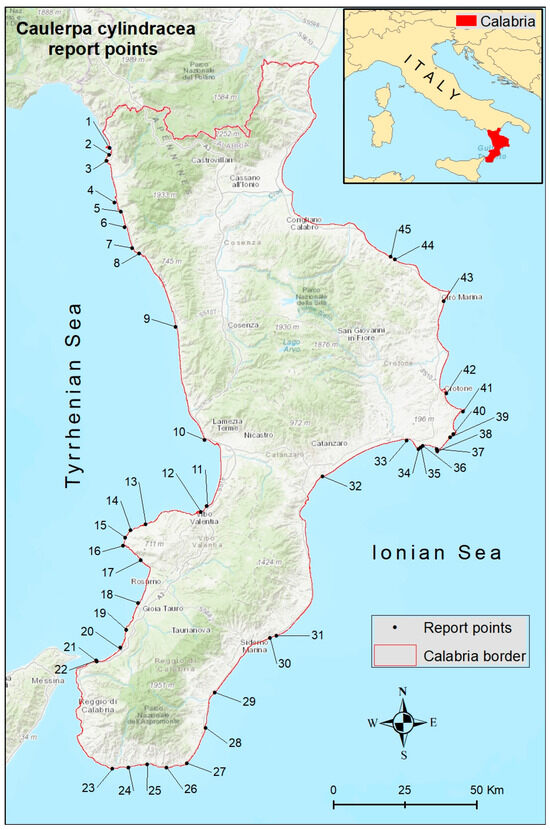
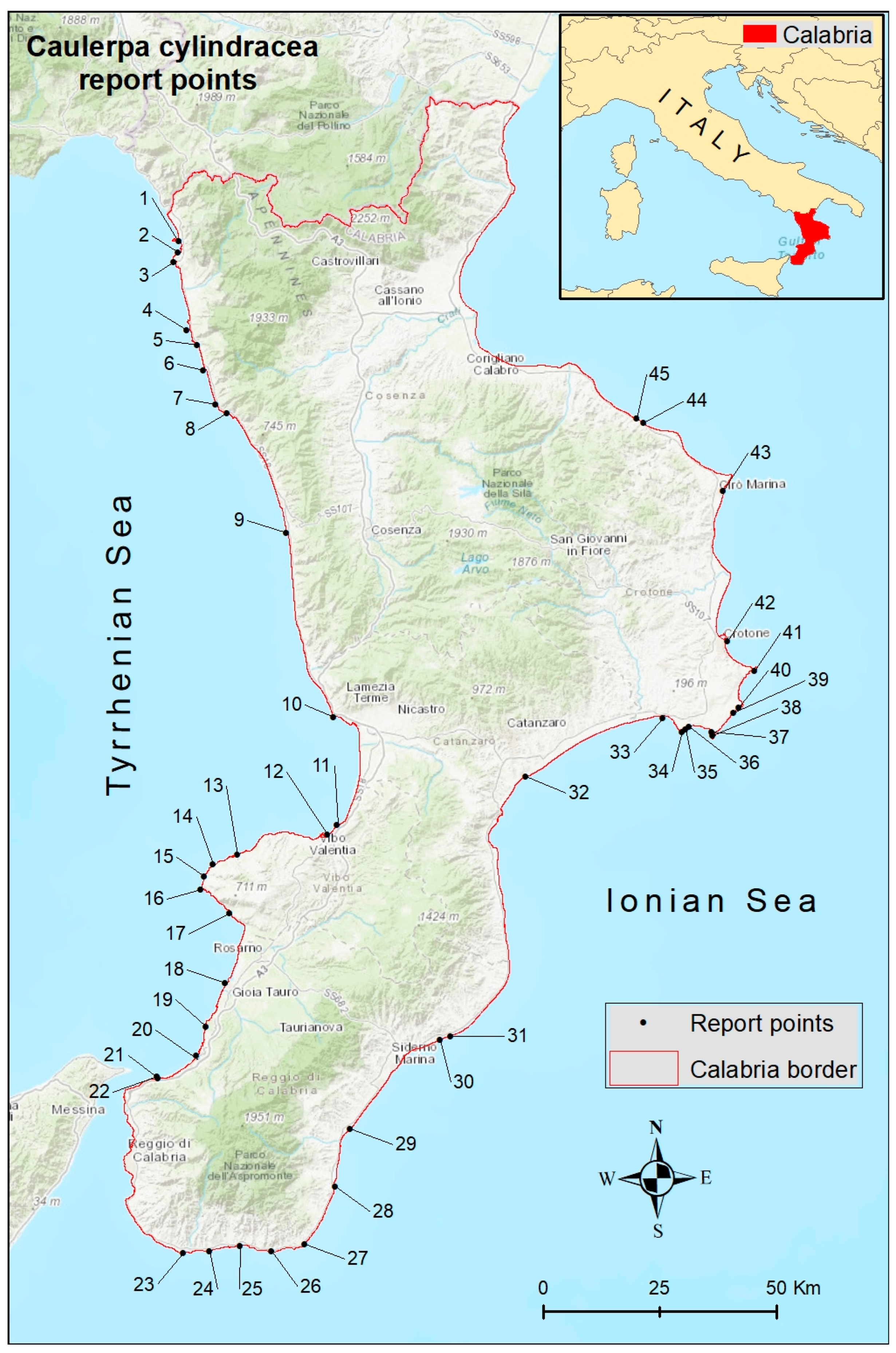
These reports were summarized in a geographical map of Calabria, showing all the collecting stations of C. cylindracea reported along the regional coastline (Figure 1). In this way, the biological invasion of C. cylindracea in the Calabria coastal waters showed an impressive increase from its first regional report from 1999 [36] until now. During the survey, the presence of the species was confirmed in some locations of the western Calabrian coast where it was previously recorded, while new sightings were registered in the eastern regional coastline. As a matter of fact, after a long temporal gap of about twenty years, the species was surveyed in 45 collecting sites along the Calabrian coastline, both on the western and eastern seaside of the region (Figure 1).
Figure 1.
Geographical map of Calabrian coastline reporting the collecting stations of C. cylindracea.
From a morphological point of view, the samples collected in Calabria coastal waters were characterized by a greater length of their fronds and by shorter branchlets when compared with Indo-Pacific and Mediterranean specimens (Table 3).
Table 3.
Comparison of the median morphometric data of C. cylindracea in three biogeographical sectors (Indo-Pacific [22], Mediterranean Basin [40] and Calabria region [36]).
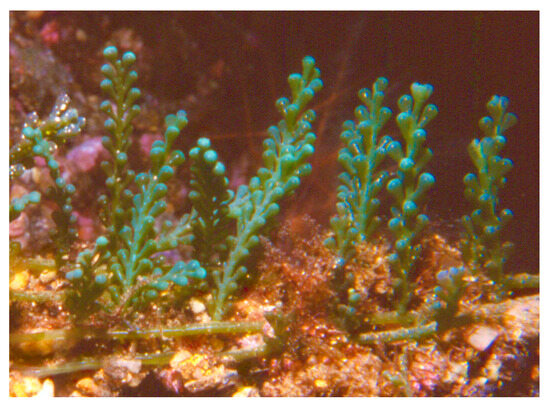
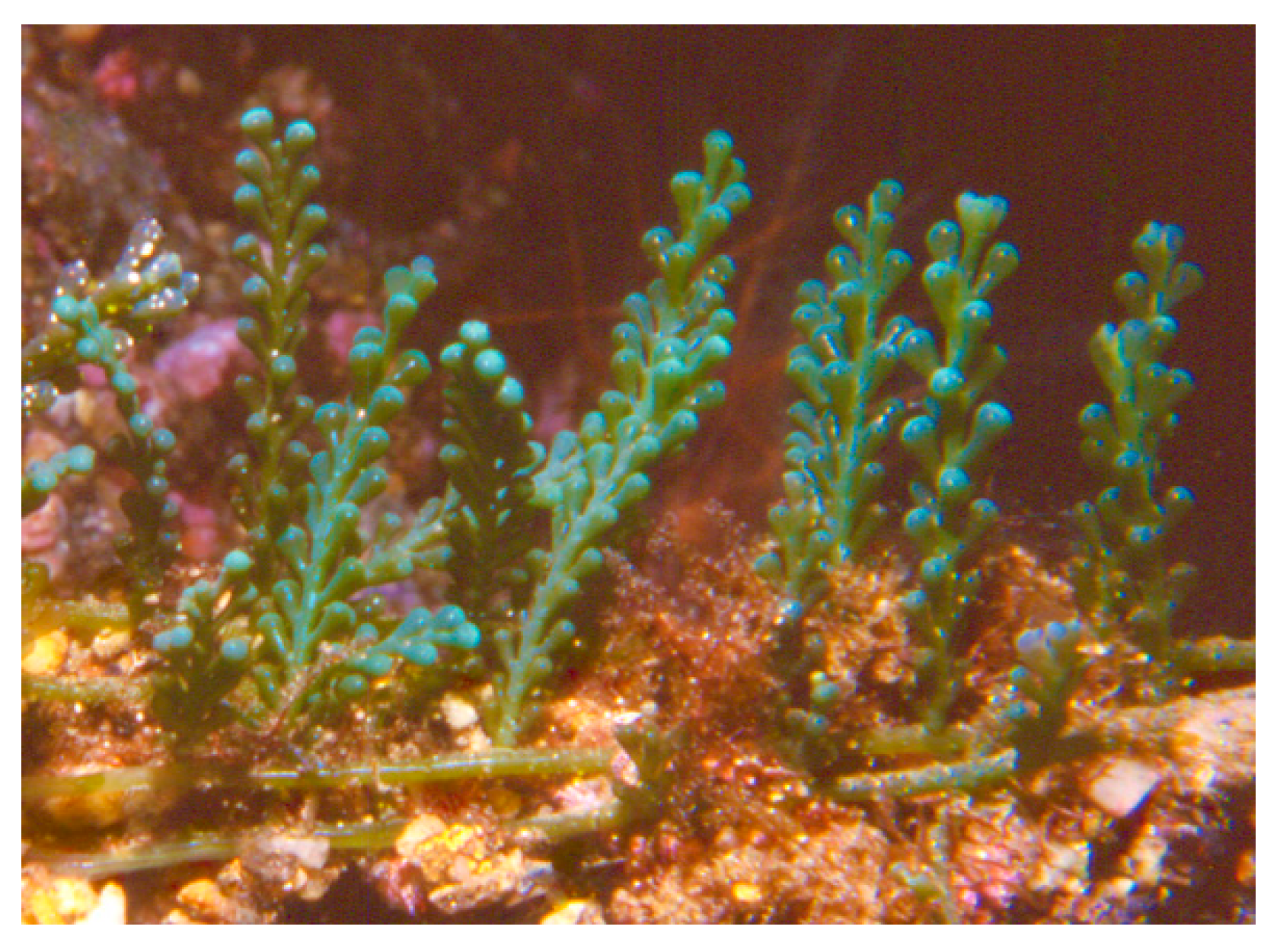
Moreover, the branchlets were clavate, poorly ramified and distichously arranged around the main central axis (Figure 2).
Figure 2.
Habitus of C. cylindracea in Calabrian coastal waters.
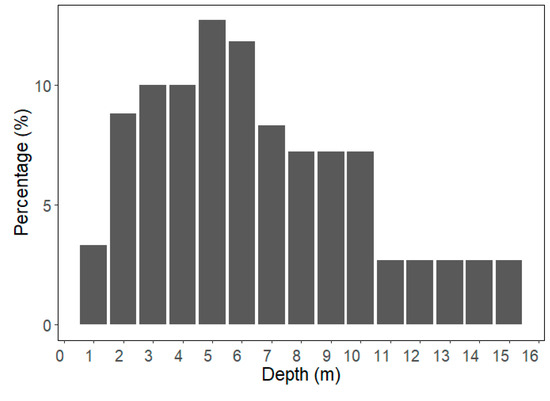
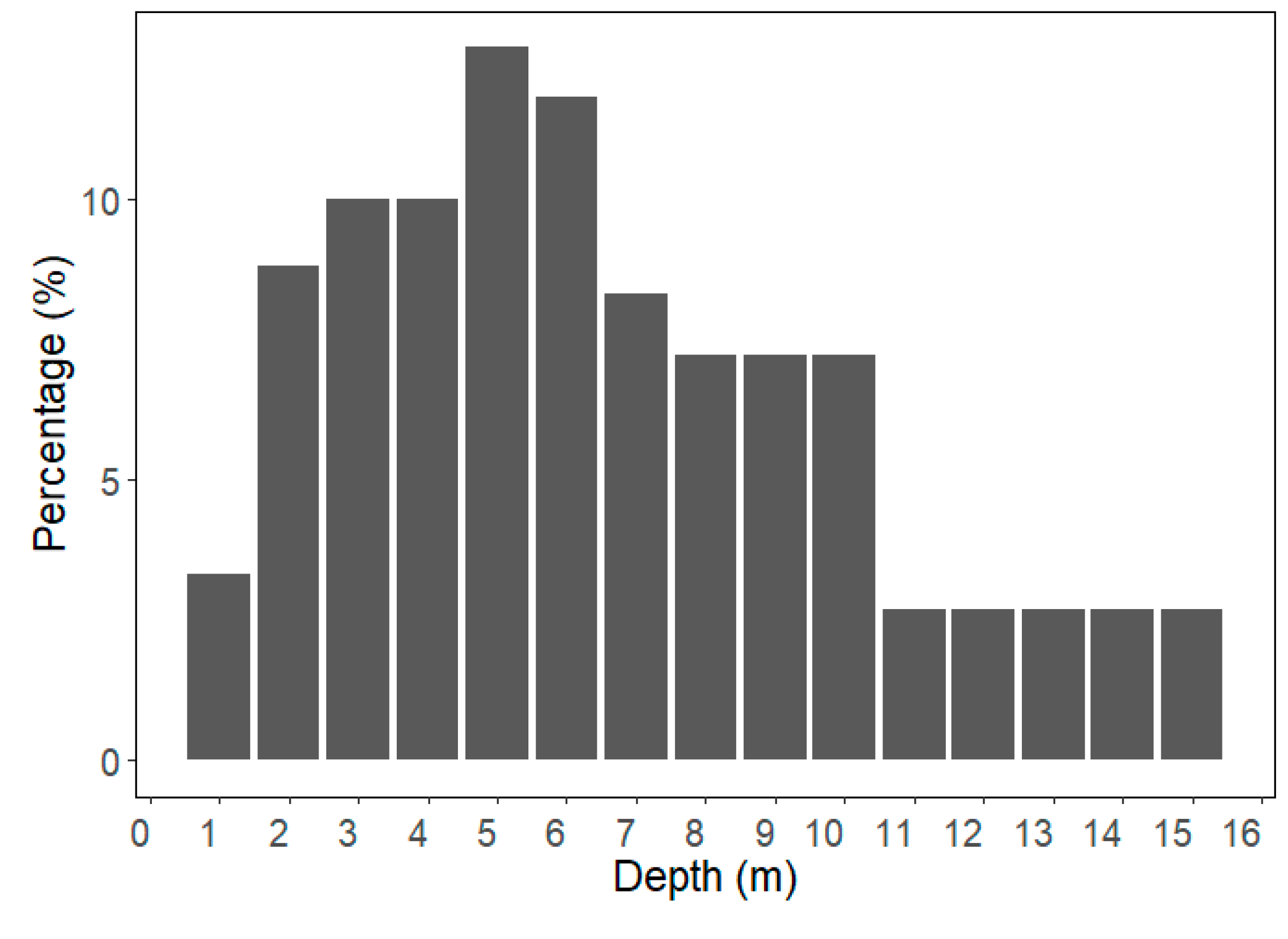
The samples were collected in shallow depths between the surface water and 15 m deep, but the species appeared to be mostly present between 5 and 6 m (Figure 3).
Figure 3.
Bathymetric distribution of C. cylindracea in the collecting sites.
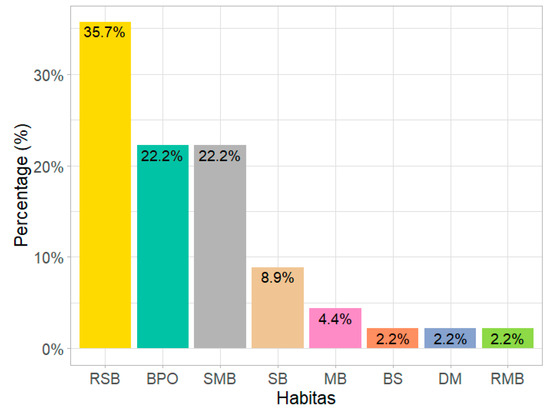
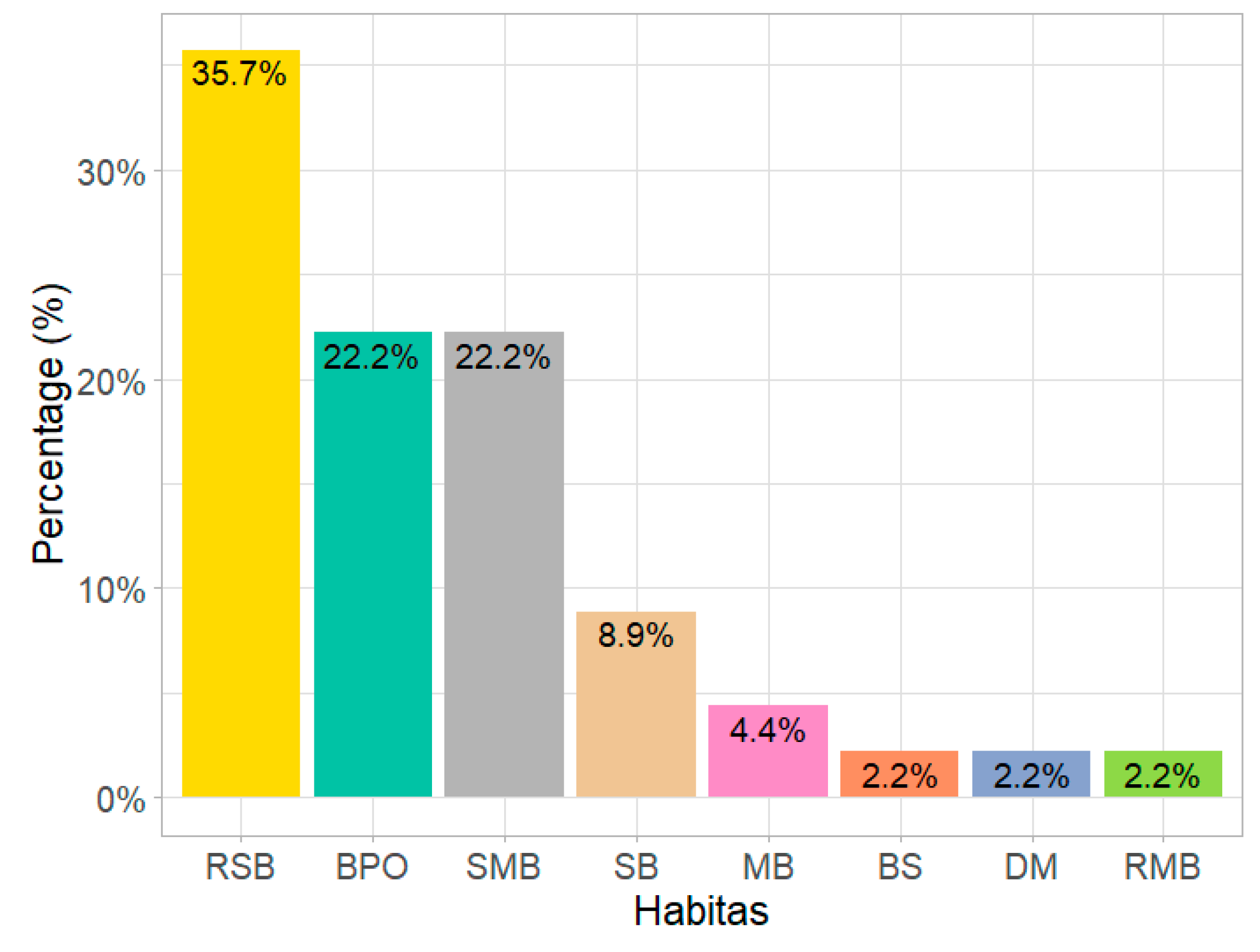
Moreover, this invasive species was able to colonize every kind of substrata from rocky to sandy and muddy bottoms but also the borders of Posidonia oceanica meadows (Figure 4).
Figure 4.
Types of substrata colonized by C. cylindracea in the collecting sites.
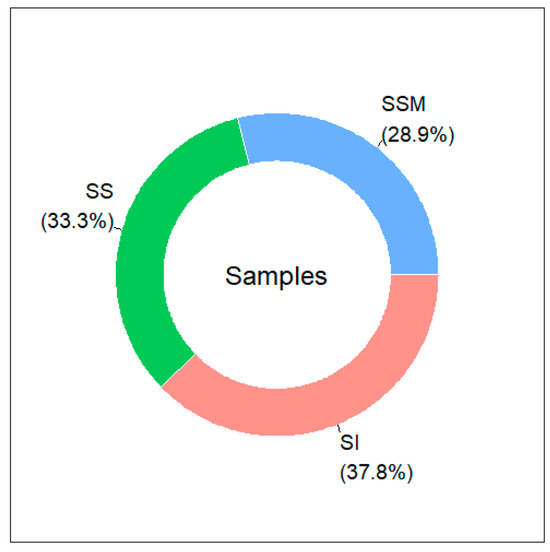
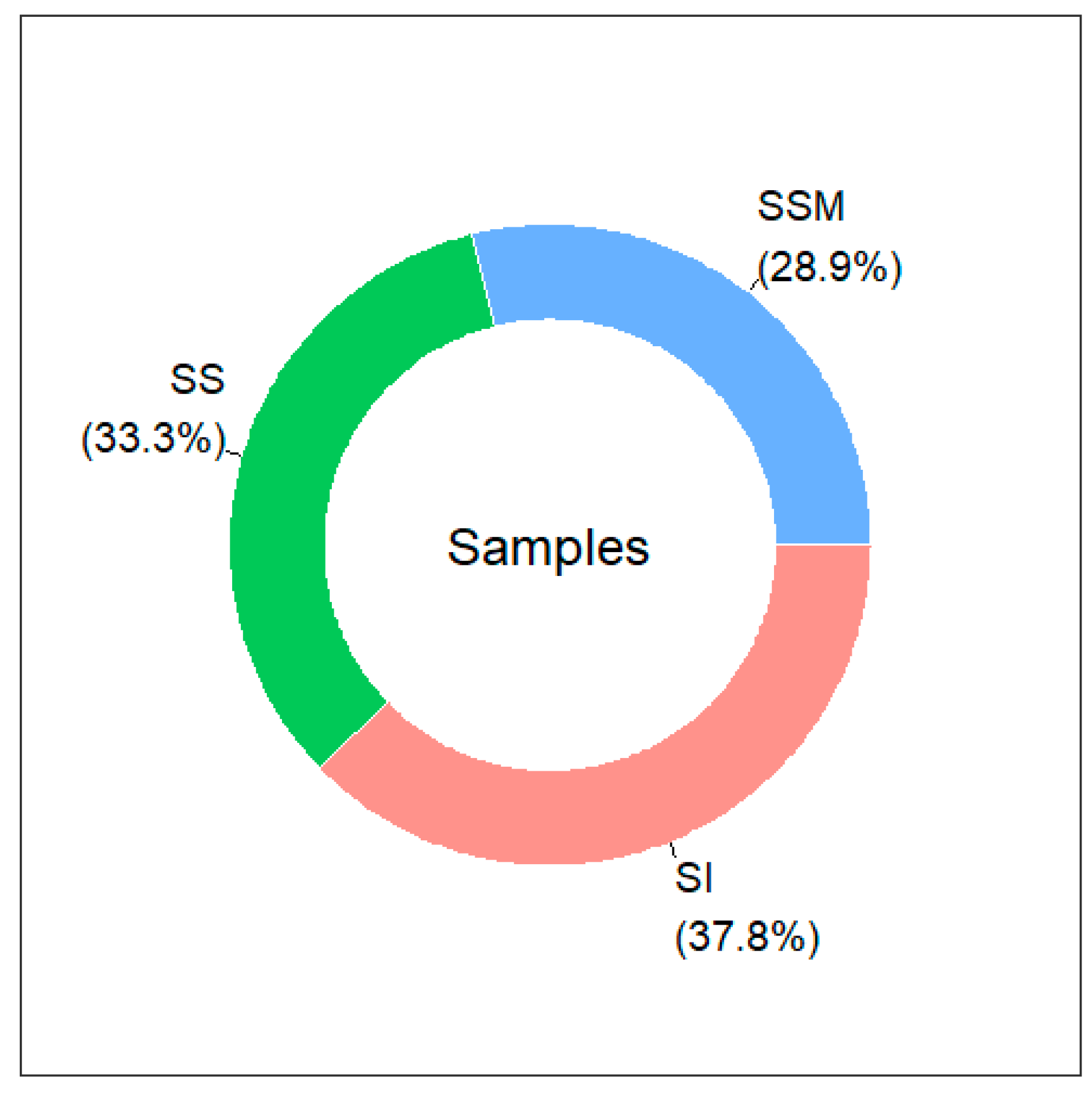
In particular, C. cylindracea showed, in the collecting stations, different population densities, including single stolons which were loosely scattered, small patches, and even dense meadows (Figure 5).
Figure 5.
Kind of specimens in the collecting sites colonized by C. cylindracea.
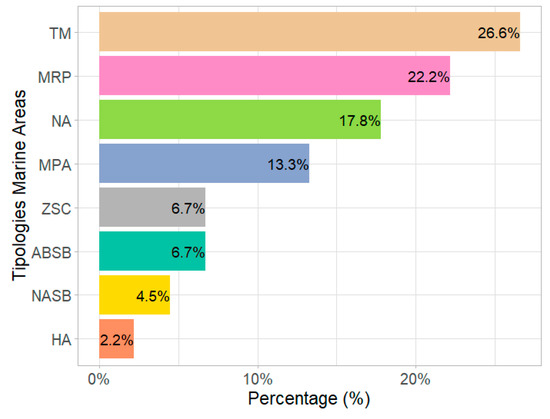
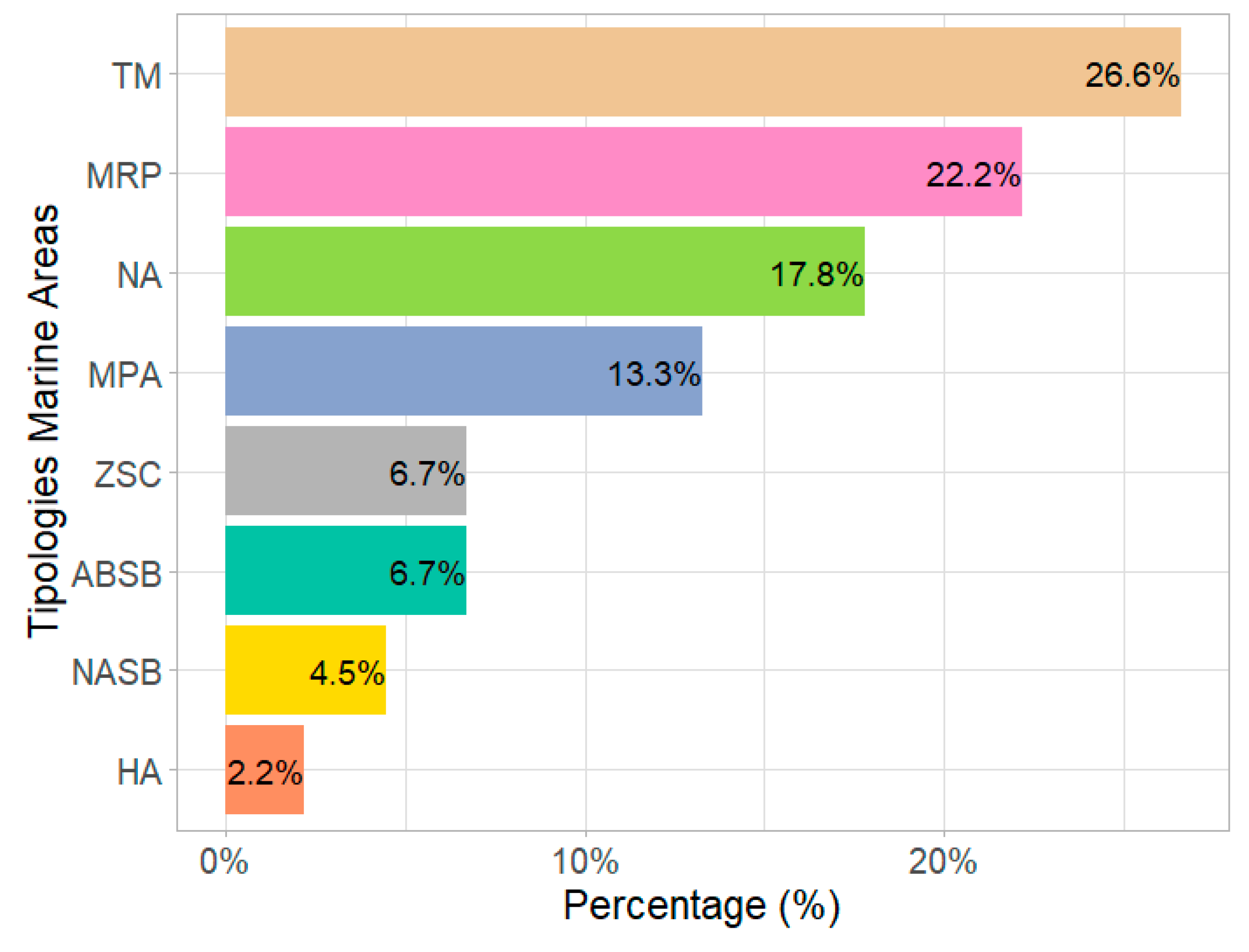
The great adaptability of the species was confirmed, also, by its capability to colonize every type of marine area, from highly anthropized coastal areas and touristic marinas to natural areas, including marine regional parks and marine protected areas (Figure 6).
Figure 6.
Type of marine areas invaded by C. cylindracea.
In summary, C. cylindracea was able to spread along the coastal strip of Calabria and it thrived both in exposed and sheltered sites, in shaded and sunny marine waters, and in uncontaminated areas and in polluted waters, demonstrating a great ability to adapt to variable and extreme environmental conditions.
4. Discussion
Since the first regional report in 1999, C. cylindracea has spread along the entire Calabria coastline, where it has been recorded in 45 collection stations. The observation of the morphological characteristics of C. cylindracea highlighted its great morphological plasticity, especially regarding the length of the phyllodes. In the Calabrian samples, they appear longer than the Mediterranean samples and Indo-Pacific ones (Table 3). As already hypothesized by other authors, this high morphological variability seems to be strictly connected to the environmental conditions of the areas colonized by C. cylindracea [19,29,35]. The analysis of the bathymetric distribution of C. cylindracea meadows, observed in Calabria, made it possible to highlight that they are more frequently present between depths of 5 and 6 m (Figure 3), where it colonizes large areas of bottoms, replacing the native biota of these coastal habitats. Therefore, the species causes significant changes in the structure of benthic populations with a reduction in algal diversity, especially in algal landscapes characterized by Cystoseira sp., Padina sp., Dictyota sp., etc. These conditions, as already reported by the scientific literature, lead to a reduction in macroalgal abundance and to a lower species diversity in ecosystems colonized by C. cylindracea [19,41,42,43]. The observations in Calabria coastal waters confirm the scientific hypothesis [18,44] that this species is able to colonize variable substrata even if the most colonized seabeds were sandy and rocky bottoms covered by sediments, as the 35.7% of the sites surveyed indicate (Figure 4). Further data resulting from the observations regard the density of C. cylindracea meadows. In this case, meadows of very different textures were observed, from simple isolated stolons and small patches to the presence of dense and well-structured meadows (Figure 5). In such conditions, Stolons Isolated (SI = 37.8%) were the most observed along the entire coastal perimeter of Calabria. Indeed, the presence of C. cylindracea, related to coastal regions, highlights a strong correlation between the areas most affected by the colonization of C. cylindracea and the presence of tourist ports and marine areas strongly impacted by human activities (26.6%) such as anchoring, coastal fishing and local navigation [37]. These conditions confirm the high capacity of the species to spread both on seabeds characterized by hypertrophic marine waters and eutrophic environments. At the same time, the species was observed in pristine seawaters but also in Marine Regional Parks (MRP, 22.2%), Natural Areas (NA, 17.8%) and Marine Protected Areas (MPA, 13.3%) (Figure 6). Anyway, the species’ ability to thrive on different seabeds appears closely linked to the structure of local benthic communities. In fact, in degraded habitats, C. cylindracea was able to spread rapidly, forming compact mats that negatively affected macroalgal and infaunal associations [45,46]. Probably, this invasive process was possible thanks to the effective vegetative reproduction of the species, with rates of stolon growth varying from 4.4 mm day−1 to 20.0 mm day−1 [32,47,48,49]. In contrast, when C. cylindracea tries to establish itself in well-structured ecosystems, such as Posidonia oceanica meadows in good health conditions, it is not able to affect the native communities, as stated by the scientific literature [38,47]. As regards the rapid spread and the heavy impact of the species on the ecosystem’s structure, it was considered as “ecosystem engineering” [50,51] or as a “habitat modifier” [52]. Finally, citizen science was a useful tool able to support traditional methods in the monitoring of C. cylindracea along the Calabria coasts. In fact, after the first stage of the survey performed through personal diving activities conducted on the western Calabrian coast, the second step of the research was launched, aiming to complete this regional assessment along the eastern coastline of the region. This stage was accomplished through citizen science activities, involving divers, fishermen, tourists, citizens and local people able to complete the monitoring of alien seaweeds in the Calabrian coastal region, as has also been conducted recently in other marine areas of the Mediterranean Sea, even concerning some marine invasive fishes [39,53,54]. The combined approach between scientific data and citizen science has the dual purpose of improving public awareness of the monitoring of Invasive Alien Species (IAS) [55,56] but also providing important information of their distribution, diffusion dynamics and on the paths of their introduction into the basin. So, citizen science has become very useful to complement scientific data and support decision-making processes in coastal management. This new type of marine planning could help managers, scientists and policy makers to implement preventive and mitigating actions [6,57].
5. Conclusions
The rapid and increasing spread of C. cylindracea observed over the last twenty years in Calabrian coastal waters is further evidence of the current tropicalization of the Mediterranean biome. From the beginning of this long history, the entry of invasive and alien species was supported by the expansion of the Suez Canal. This process, still ongoing, has caused the spread of 122 tropical macrophytes in the Mediterranean Sea which are well adapted to the warmer coastal waters of the basin. Among these thermophilic species, 97 taxa are fully established in Mediterranean waters [58]. Also, climate change can enhance the spread of thermophilic species, decreasing the thermal resistance of native ones. This trend could modify the structure of Mediterranean biota, causing a loss of its biodiversity or, on the contrary, could increase its biological variety, contributing to create new coastal habitats. In reality, the effects of the process are not predictable in the long term and, therefore, it is very important, for effective protection and conservation of Mediterranean ecosystems, to adopt regularly updated monitoring and mapping plans. An example of this are the collective reports produced every two years by the research group coordinated by Katsanevakis [16,17]. Researchers from all Mediterranean countries are involved in this working group, where they report both observations collected by themselves and data provided by citizen scientists. These reports are validated by the same research group in a published data base. Citizen science is essential for IAS monitoring, not only to support decision-making processes but also to provide potential solutions and mitigating actions against the present trend of biological invasions in the Mediterranean Sea [39,59,60]. So, this kind of collective approach could become an important tool to make people aware of marine resources. In conclusion, it is necessary to realize a close coordination between scientists, citizens and policy makers to better understand the spread of this alien species, ensuring effective management of its invasive process.
Author Contributions
Conceptualization, N.C. and V.D.M.; Methodology, N.C., V.D.M. and G.P.; Software, G.P.; Validation, N.C. and V.D.M.; Formal Analysis, G.P.; Investigation, N.C. and V.D.M.; Data Curation, N.C. and V.D.M.; Writing—Original Draft Preparation, N.C.; Writing—Review and Editing, N.C. and V.D.M.; Visualization, N.C. and V.D.M.; Supervision, N.C. All authors have read and agreed to the published version of the manuscript.
Funding
This research received no external funding.
Informed Consent Statement
Not applicable.
Data Availability Statement
Data are contained within the article.
Acknowledgments
The authors thank the reviewers for their suggestions which aimed to improve the quality of the manuscript.
Conflicts of Interest
The authors declare no conflict of interest.
References
- Kolar, C.S.; Lodge, D.M. Progress in invasion biology: Predicting invaders. Trends Ecol. Evol. 2001, 16, 199–204. [Google Scholar] [PubMed]
- Richardson, D.M.; Holmes, P.M.; Esler, K.J.; Galatowitsch, S.M.; Stromberg, J.C.; Kirkman, S.P.; Pyšek, P.; Hobbs, R.J. Riparian vegetation: Degradation, alien plant invasions, and restoration. Divers. Distrib. 2007, 13, 126–139. [Google Scholar] [CrossRef] [Scilit]
- Boudouresque, C.F. Marine biodiversity in the mediterranean: Status of species, population and communities. Sci. Rep. Port-Cros Natl. Park Fr. 2004, 20, 97–146. [Google Scholar]
- Molnar, J.L.; Gamboa, R.L.; Revenga, C.; Spalding, M.D. Assessing the Global Threat of Invasive Species to Marine Biodiversity. Front. Ecol. 2008, 6, 485–492. [Google Scholar] [CrossRef] [Scilit]
- Gallardo, B.; Clavero, M.; Sánchez, M.I.; Vilà, M. Global ecological impacts of invasive species in aquatic ecosystems. Glob. Change Biol. 2016, 22, 151–163. [Google Scholar] [CrossRef] [Scilit]
- Mačić, V.; Albano, P.G.; Almpanidou, V.; Claudet, J.; Corrales, X.; Essl, F.; Evagelopoulos, A.; Giovos, I.; Jimenez, C.; Kark, S.; et al. Biological Invasions in Conservation Planning: A Global Systematic Review. Front. Mar. Sci. 2018, 5, 178. [Google Scholar] [CrossRef] [Scilit]
- Tsirintanis, K.; Azzurro, E.; Crocetta, F.; Dimiza, M.; Froglia, C.; Gerovasileiou, V.; Langeneck, J.; Mancinelli, G.; Rosso, A.; Stern, N.; et al. Bioinvasion impacts on biodiversity, ecosystem services, and human health in the Mediterranean Sea. Aquat. Invasions 2022, 17, 308–352. [Google Scholar] [CrossRef] [Scilit]
- Bax, N.; Williamson, A.; Aguero, M.; Gonzalez, E.; Geeves, W. Marine invasive alien species: A threat to global biodiversity. Mar. Policy 2003, 27, 313–323. [Google Scholar] [CrossRef] [Scilit]
- Streftaris, N.; Zenetos, A. Alien Marine Species in the Mediterranean—The 100 “worst invaders” and their impact. Mediterr. Mar. Sci. 2006, 7, 87–118. [Google Scholar] [CrossRef] [Scilit]
- Occhipinti-Ambrogi, A.; Galil, B. Marine alien species as an aspect of global change. Adv. Oceanogr. Limnol. 2010, 1, 199–218. [Google Scholar] [CrossRef] [Scilit]
- Servello, G.; Andaloro, F.; Azzurro, E.; Castriota, L.; Catra, M.; Chiarore, A.; Crocetta, F.; D’Alesandro, M.; Denitto, F.; Froglia, C.; et al. Marine alien species in Italy: A contribution to the implementation of descriptor D2 of the marine strategy framework directive. Mediterr. Mar. Sci. 2019, 20, 1–48. [Google Scholar] [CrossRef] [Scilit]
- Zenetos, A.; Galanidi, M. Mediterranean non indigenous species at the start of the 2020s: Recent changes. Mar. Biodivers. Rec. 2020, 13, 10. [Google Scholar] [CrossRef] [Scilit]
- Galil, B.S.; Boero, F.; Campbell, M.L.; Carlton, J.T.; Cook, E.; Fraschetti, S.; Gollasch, S.; Hewitt, C.L.; Jelmert, A.; Macpherson, E.; et al. “Double trouble”: The expansion of the Suez Canal and marine bioinvasions in the Mediterranean Sea. Biol. Invasions 2015, 17, 973–976. [Google Scholar] [CrossRef] [Scilit]
- Galil, B.; Marchini, A.; Occhipinti-Ambrogi, A.; Ojaveer, H. The enlargement of the Suez Canal—Erythraean introductions and management challenges. Manag. Biol. Invasions 2017, 8, 141–152. [Google Scholar]
- Raitsos, D.E.; Beaugrand, G.; Georgopoulos, D.; Zenetos, A.; Pancucci-Papadopoulou, A.M.; Theocharis, A.; Papathanassiou, E. Global climate change amplifies the entry of tropical species into the eastern Mediterranean Sea. Limnol. Oceanogr. 2010, 55, 1478–1484. [Google Scholar]
- Katsanevakis, S.; Poursanidis, D.; Hoffman, R.; Rizgalla, J.; Bat-Sheva, S.; Rothman, B.S.; Levitt-Barmats, Y.A.; Hadjioannou, L.; Trkov, D.; Garmendia, J.M.; et al. Unpublished Mediterranean records of marine alien and cryptogenic species. BioInvasions Rec. 2020, 9, 165–182. [Google Scholar] [CrossRef] [Scilit]
- Ragkousis, M.; Zenetos, A.; Ben Souissi, J.; Hoffman, R.; Ghanem, R.; Taşkin, E.; Muresan, M.; Karpova, E.; Slynko, E.; Dağlı, E.; et al. Unpublished Mediterranean and Black Sea records of marine alien, cryptogenic, and neonative species. Bioinvasions Rec. 2023, 12, 339–369. [Google Scholar]
- Piazzi, L.; Meinesz, A.; Verlaque, M.; Alcali, B.; Antolic, B.; Argyrou, M.; Balata, D.; Ballesteros, E.; Calvo, S.; Cinelli, F.; et al. Invasion of Caulerpa racemosa var. cylindracea (Caulerpales, Chlorophyta) in the Mediterranean Sea: An assessment of the spread. Cryptogam. Algol. 2005, 26, 189–202. [Google Scholar]
- Klein, J.; Verlaque, M. The Caulerpa racemosa invasion: A critical review. Mar. Pollut. Bull. 2008, 56, 205–225. [Google Scholar] [CrossRef] [Scilit]
- Katsanevakis, S.; Issaris, Y.; Poursanidis, D.; Thessalou-Legaki, M. Vulnerability of marine habitats to the invasive green alga Caulerpa racemosa var. cylindracea within a marine protected area. Mar. Environ. Res. 2010, 70, 210–218. [Google Scholar]
- Hamza, A.; Bradai, M.N.; Ghorbel, M.; Abdelmoulah, A. New mention of Caulerpa racemosa (Forsskãl) J. Agardh in the Gabes Gulf (Tunisia). Bull. L’Inst. Natl. Sci. Technol. Mer Salammbò 1995, 22, 81–87. [Google Scholar]
- Verlaque, M.; Durand, C.; Huisman, J.M.; Boudouresque, C.F.; Le Parco, Y. On the identity and origin of the Mediterranean invasive Caulerpa racemosa (Caulerpales, Chlorophyta). Eur. J. Phycol. 2003, 38, 325–339. [Google Scholar] [CrossRef] [Scilit]
- Belton, G.S.; Prud’homme van Reine, W.F.; Huisman, J.M.; Draisma, S.G.A.; Gurgel, C.F.D. Resolving phenotypic plasticity and specie designation in the morphologically challenging Caulerpa racemosa-peltata complex (Chlorophyta, Caulerpaceae). J. Phycol. 2014, 50, 32–54. [Google Scholar] [CrossRef] [Scilit] [PubMed]
- Piazzi, L.; Balata, D. Invasion of alien macroalgae in different Mediterranean habitats. Biol. Invasions 2009, 11, 193–204. [Google Scholar] [CrossRef] [Scilit]
- Bulleri, F.; Balata, D.; Bertocci, I.; Tamburello, L.; Benedetti-Cecchi, L. The seaweed Caulerpa racemosa on Mediterranean rocky reefs: From passenger to driver of ecological change. Ecology 2010, 91, 2205–2212. [Google Scholar] [CrossRef]
- Infantes, E.; Terrados, J.; Orfila, A. Assessment of substratum effect the distribution of two invasive Caulerpa (Chlorophyta) species. Estuar. Coast. Shelf Sci. 2011, 91, 434–441. [Google Scholar] [CrossRef] [Scilit]
- Micheli, F.; Halpern, B.S.; Walbridge, S.; Ciriaco, S.; Ferretti, F.; Fraschetti, S.; Lewison, R.; Nykjaer, L.; Rosenberg, A.A. Cumulative Human Impacts on Mediterranean and Black Sea Marine Ecosystems: Assessing Current Pressures and Opportunities. PLoS ONE 2013, 8, e79889. [Google Scholar]
- Azzurro, E.; Sbragaglia, V.; Cerri, J.; Bariche, M.; Bolognini, L.; Ben Souissi, J.; Busoni, G.; Coco, S.; Chryssanthi, A.; Fanelli, E.; et al. Climate change, biological invasions, and the shifting distribution of Mediterranean fishes: A large-scale survey based on local ecological knowledge. Glob. Change Biol. 2019, 25, 2779–2792. [Google Scholar]
- Alongi, G.; Cormaci, M.; Furnari, G.; Giaccone, G. Prima segnalazione di Caulerpa racemosa (Chlorophyceae, Caulerpales) per le coste italiane. Boll. Accad. Gioenia Sci. Nat. 1993, 26, 49–53. [Google Scholar]
- Bussotti, S.; Conti, M.; Guidetti, P.; Martini, E.; Matricardi, G. First record of Caulerpa racemosa (Forsskål) J. Agardh along the coast of Genoa (north-western Mediterranean). Doriana 1996, 6, 1–5. [Google Scholar]
- Piazzi, L.; Balestri, E.; Cinelli, F. Presence of Caulerpa racemosa in the north-western Mediterranean. Cryptogam. Algol. 1994, 15, 183–189. [Google Scholar]
- Piazzi, L.; Balestri, E.; Magri, M.; Cinelli, F. Expansion de l’algue tropicale Caulerpa racemosa (Forsskal) J. Agardh (Bryopsidophyceae, Chlorophyta) le long de la cote toscane (Italie). Cryptogam. Algol. 1997, 18, 343–350. [Google Scholar]
- Cossu, A.; Gazale, V. Sulla presenza di Caulerpa racemosa (Forsskål) J. Agardh in Sardegna. In S.O.S. Caulerpa—Introduzione di Nuove Specie nel Mediterraneo e Compatibilità con Quelle Presenti; Cossu, A., Meloni, M.M., Eds.; Poseidon: Cagliari, Italy, 1996; pp. 87–97. [Google Scholar]
- Gambi, M.C.; Terlizzi, A. Record of a large population of Caulerpa racemosa (Forsskal) J. Agardh (Chlorophyceae) in the Gulf of Salerno (Southern Tyrrhenian Sea, Italy). Biol. Mar. Mediterr. 1998, 5, 553–556. [Google Scholar]
- Giaccone, G.; Di Martino, V. La vegetazione a Caulerpa racemosa (Forsskål) J. Agardh nella baia di S. Panaria (Sicilia Sud-Orientale). Boll. Accad. Gioenia Sci. Nat. 1995, 28, 59–73. [Google Scholar]
- Cantasano, N. Prima segnalazione di Caulerpa racemosa (Forsskal) J. Agardh sulla costa tirrenica calabrese. Inf. Bot. Ital. 2001, 33, 327–329. [Google Scholar]
- Cantasano, N.; Pellicone, G.; Di Martino, V. The spread of Caulerpa cylindracea in Calabria (Italy) and the effects of shipping activities. Ocean Coast. Manag. 2017, 144, 51–58. [Google Scholar]
- Mannino, A.M.; Gambi, M.C.; Dieli, T.; Gianguzza, P. A new contribution to the alien macroalgal flora of the Ustica Island Marine Protected Area (Tyrrhenian Sea, Italy). BioInvasions Rec. 2018, 7, 367–373. [Google Scholar]
- Giovos, I.; Kleitou, P.; Poursanidis, D.; Batjakas, I.; Bernardi, G.; Crocetta, F.; Doumpas, N.; Kalogirou, S.; Kampouris, T.E.; Keramidas, I.; et al. Citizen-science for monitoring marine invasions and stimulating public engagement: A case project from the eastern Mediterranean. Biol. Invasions 2019, 21, 3707–3721. [Google Scholar]
- Ruiz, J.M.; Marín–Guirao, L.; Bernardeau–Esteller, J.; Ramos–Segura, A.; García–Muñoz, R.; Sandoval–Gil, J.M. Spread of the invasive alga Caulerpa racemosa var. cylindracea (Caulerpales, Chlorophyta) along the Mediterranean Coast of the Murcia region (SE Spain). Anim. Biodivers. Conserv. 2011, 34, 73–82. [Google Scholar] [CrossRef] [Scilit]
- Balata, D.; Piazzi, L.; Cinelli, F. A comparison among assemblages in areas invaded by Caulerpa taxifolia and C. racemosa on a subtidal rocky bottom. Mar. Ecol. 2004, 25, 1–13. [Google Scholar] [CrossRef] [Scilit]
- Klein, J.C.; Verlaque, M. Macrophyte assemblage associated with an invasive species exhibiting temporal variability in its development pattern. Hydrobiologia 2009, 636, 369–378. [Google Scholar]
- Piazzi, L.; Balata, D.; Bulleri, F.; Gennaro, P.; Ceccherelli, G. The invasion of Caulerpa cylindracea in the Mediterranean: The known, the unknown and the knowable. Mar. Biol. 2016, 163, 161. [Google Scholar] [CrossRef] [Scilit]
- Balata, D.; Piazzi, L.; Bulleri, F. Sediment deposition dampens positive effects of substratum complexity on the diversity of macroalgal assemblages. J. Exp. Mar. Biol. Ecol. 2015, 467, 45–51. [Google Scholar] [CrossRef] [Scilit]
- Rosenberg, L.N.; Nilsson, H.C. Deterioration of soft-bottom benthos along the Sweedish Skagerrat coast. J. Sea Res. 2005, 54, 231–242. [Google Scholar]
- Burone, L.N.; Venturini, P.; Sprechman, R.; Valente, N.; Muniz, P. Foraminifera responses to polluted sediment in the Montevideo coastal zone, Uruguay. Mar. Pollut. Bull. 2006, 52, 61–73. [Google Scholar] [CrossRef] [Scilit]
- Serio, D.; Pizzuto, F. Studio di un prato a Caulerpa racemosa (Forsskål) J. Agardh (Caulerpales, Chlorophyta) di Brucoli (SR) con osservazioni in coltura della specie. Boll. Accad. Gioenia Sci. Nat. 1998, 31, 201–209. [Google Scholar]
- Piazzi, L.; Cinelli, F. Development et dynamique saisonniere d’un peuplement mediterraneen de l’algue tropicale Caulerpa racemosa (Forsskål) J. Agardh. Cryptogam. Algol. 1999, 20, 295–300. [Google Scholar] [CrossRef] [Scilit]
- Ruitton, S.; Verlaque, M.; Boudouresque, C.F. Seasonal changes of the introduced Caulerpa racemosa var. cylindracea (Caulerpales, Chlorophyta) at the northwest limit of its Mediterranean distribution. Aquat. Bot. 2005, 82, 55–70. [Google Scholar]
- Jones, C.G.; Lawton, J.H.; Shachak, M. Organisms as ecosystem engineers. Oikos 1994, 69, 373–386. [Google Scholar]
- Wright, J.P.; Jones, C.G.; Boeken, B.; Shachak, M. Predictability of ecosystem engineering effects on species richness across environmental variability and spatial scales. J. Ecol. 2006, 94, 815–824. [Google Scholar]
- Wallentinus, I.; Nyberg, C.D. Introduced marine organisms as habitat modifiers. Mar. Pollut. Bull. 2007, 55, 323–332. [Google Scholar]
- Tiralongo, F.; Lillo, A.O.; Tibullo, D.; Tondo, E.; Lo Martire, C.; D’Agnese, R.; Macali, A.; Mancini, E.; Giovos, I.; Coco, S.; et al. Monitoring uncommon and non-indigenous fishes in Italian waters: One year of results for the Alien Fish project. Reg. Stud. Mar. Sci. 2019, 28, 100606. [Google Scholar]
- Bargnesi, F.; Lucrezi, S.; Ferretti, F. Opportunities from citizen science for shark conservation, with a focus on the Mediterranean Sea. Eur. Zool. J. 2020, 87, 20–34. [Google Scholar] [CrossRef] [Scilit]
- Zenetos, A.; Koutsogiannopoulos, D.; Ovalis, P.; Poursanidis, P. The role played by citizen scientists in monitoring marine alien species in Greece. Cah. Biol. Mar. 2013, 54, 419–426. [Google Scholar]
- Galil, B.S.; Marchini, A.; Occhipinti-Ambrogi, A. East is east and West is west? Management of marine bioinvasions in the Mediterranean Sea. Estuar. Coast. Shelf Sci. 2018, 201, 7–16. [Google Scholar]
- Katsanevakis, S.; Coll, M.; Piroddi, C.; Steenbeek, S.; Rais Lasram, F.B.; Zenetos, A.; Cardoso, A.C. Invading the Mediterranean Sea: Biodiversity patterns shaped by human activities. Front. Mar. Sci. 2014, 1, 32. [Google Scholar]
- Zenetos, A.; Gofas, S.; Morri, C.; Rosso, A.; Violanti, D.; García-Raso, J.E.; Çinar, M.E.; Almogi-Labin, A.; Ates, A.S.; Azzurro, E.; et al. Alien species in the Mediterranean Sea by 2012. A contribution to the application of European Union’s Marine Strategy Framework Directive (MSFD). Part 2. Introduction trends and pathways. Mediterr. Mar. Sci. 2012, 13, 328–352. [Google Scholar] [CrossRef] [Scilit]
- Pocock, M.J.O.; Roy, H.E.; August, T.; Kuria, A.; Barasa, F.; Bett, J.; Githiru, M.; Kairo, J.; Kimani, J.; Kinuthia, W.; et al. Developing the global potential of citizen science: Assessing opportunities that benefit people, society and the environment in East Africa. J. Appl. Ecol. 2019, 56, 274–281. [Google Scholar] [CrossRef] [Scilit]
- Ferreira-Rodríguez, N.; Pavel, A.B.; Cogălniceanu, D. Integrating expert opinion and traditional ecological knowledge in invasive alien species management: Corbicula in Eastern Europe as a model. Biol Invasions 2021, 23, 1087–1099. [Google Scholar] [CrossRef] [Scilit]

Disclaimer/Publisher’s Note: The statements, opinions and data contained in all publications are solely those of the individual author(s) and contributor(s) and not of MDPI and/or the editor(s). MDPI and/or the editor(s) disclaim responsibility for any injury to people or property resulting from any ideas, methods, instructions or products referred to in the content. |
© 2024 by the authors. Licensee MDPI, Basel, Switzerland. This article is an open access article distributed under the terms and conditions of the Creative Commons Attribution (CC BY) license (https://creativecommons.org/licenses/by/4.0/).