
Valorization Potential of Oilseed Press Cakes from Pumpkin (Cucurbita pepo) and Hemp (Cannabis sativa)


Abstract
1. Introduction
2. Protein Extraction from Oilseed Cakes
2.1. Chemical Protein Extraction Methods
2.2. Enzyme-Assisted Extraction
2.3. Physical Methods for Protein Extraction
3. Protein Extraction from Pumpkin and Hemp Press Cakes
3.1. Extraction of Pumpkin Seed Protein
3.2. Extraction of Hemp Seed Protein
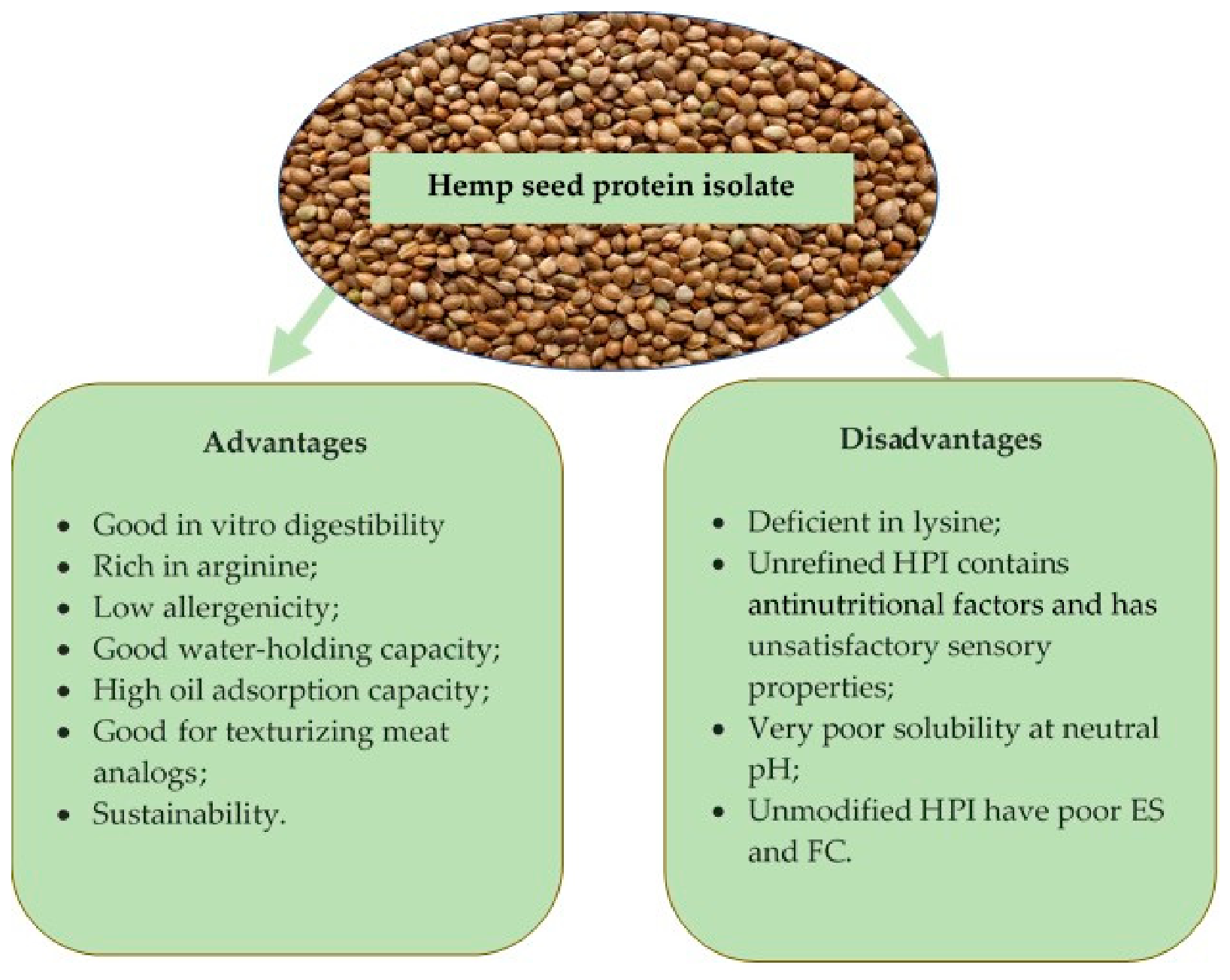
4. Application of Protein Isolates from Pumpkin and Hemp Press Cakes
5. Production and Biological Effects of Protein Hydrolysates from Pumpkin and Hemp Press Cakes
5.1. Antioxidant Properties
5.2. ACE: Inhibition Effects
5.3. Hypoglycemic Effects
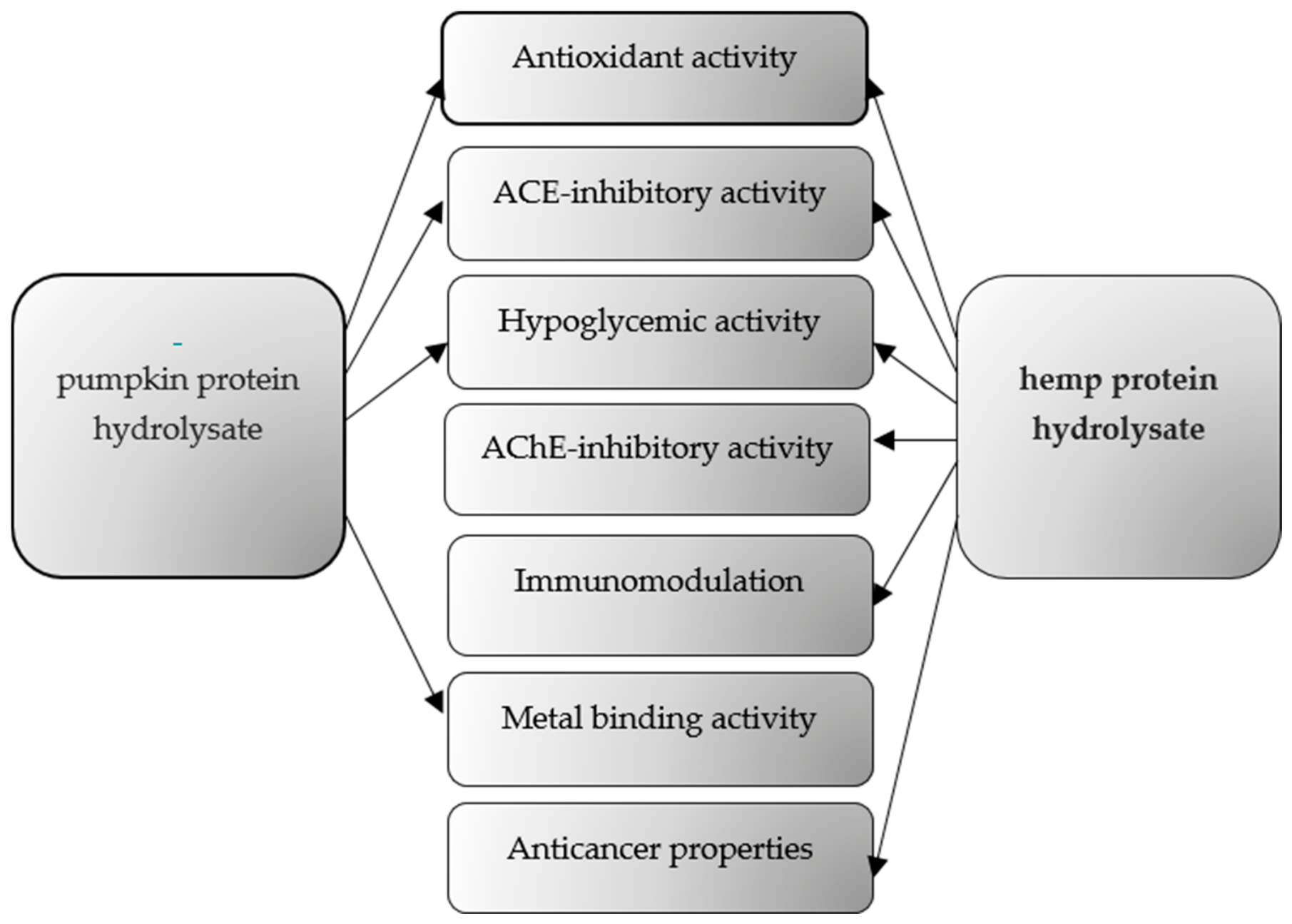
5.4. Other Biological Activities
6. Future Perspectives and Key Challenges
7. Conclusions
Author Contributions
Funding
Institutional Review Board Statement
Informed Consent Statement
Data Availability Statement
Conflicts of Interest
References
- Görgüç, A.; Gençdağ, E.; Yılmaz, F.M. Recovery of Bioactive Peptides from Food Wastes and Their Bioavailability Properties. TURJAF 2020, 8, 855–863. [Google Scholar] [CrossRef] [Scilit]
- Capcanari, T.; Covaliov, E.; Negoița, C.; Siminiuc, R.; Chirsanova, A.; Reșitca, V.; Țurcanu, D. Hemp Seed Cake Flour as a Source of Proteins, Minerals and Polyphenols and Its Impact on the Nutritional, Sensorial and Technological Quality of Bread. Foods 2023, 12, 4327. [Google Scholar] [CrossRef] [Scilit] [PubMed]
- Singh, R.; Langyan, S.; Sangwan, S.; Rohtagi, B.; Khandelwal, A.; Shrivastava, M. Protein for Human Consumption from Oilseed Cakes: A Review. Front. Sustain. Food Syst. 2022, 6, 856401. [Google Scholar] [CrossRef] [Scilit]
- Kumar, M.; Tomar, M.; Potkule, J.B.; Verma, R.; Punia, S.; Mahapatra, A.; Belwal, T.; Dahuja, A.; Joshi, S.; Berwal, M.K.; et al. Advances in the plant protein extraction: Mechanism and recommendations. Food Hydrocoll. 2021, 115, 106595. [Google Scholar] [CrossRef] [Scilit]
- Ma, K.K.; Greis, M.; Lu, J.; Nolden, A.A.; McClements, D.J.; Kinchla, A.J. Functional Performance of Plant Proteins. Foods 2022, 11, 594. [Google Scholar] [CrossRef] [Scilit] [PubMed]
- Tas, O.; Sumnu, S.G.; Oztop, M.H. Effect of Extraction Methods and Preheat Treatments on the Functional Properties of Pumpkin Seed Protein Concentrate. ACS Food Sci. Technol. 2025, 5, 105–117. [Google Scholar] [CrossRef] [Scilit] [PubMed]
- Fetzer, A.; Herfellner, T.; Stabler, A.; Menner, M.; Eisner, P. Influence of process conditions during aqueous protein extraction upon yield from pre-pressed and cold-pressed rapeseed press cake. Ind. Crops Prod. 2018, 112, 236–246. [Google Scholar] [CrossRef] [Scilit]
- Çelik, M.; Güzel, M.; Yildirim, M. Effect of pH on protein extraction from sour cherry kernels and functional properties of resulting protein concentrate. J. Food Sci. Technol. 2019, 56, 3023–3032. [Google Scholar] [CrossRef] [Scilit] [PubMed]
- Albe Slabi, S.; Mathe, C.; Basselin, M.; Framboisier, X.; Ndiaye, M.; Galet, O.; Kapel, R. Multi-objective optimization of solid/liquid extraction of total sunflower proteins from cold press meal. Food Chem. 2020, 317, 126423. [Google Scholar] [CrossRef] [Scilit] [PubMed]
- Lee, S.Y.; Show, P.L.; Ling, T.C.; Chang, J.S. Single-step disruption and protein recovery from Chlorella vulgaris using ultrasonication and ionic liquid buffer aqueous solutions as extractive solvents. Biochem. Eng. J. 2017, 124, 26–35. [Google Scholar] [CrossRef] [Scilit]
- del Mar Contreras, M.; Lama-Muñoz, A.; Gutiérrez-Pérez, J.M.; Espínola, F.; Moya, M.; Castro, E. Protein extraction from agri-food residues for integration in biorefinery: Potential techniques and current status. Bioresour. Technol. 2019, 280, 459–477. [Google Scholar] [CrossRef] [Scilit] [PubMed]
- Zhang, B.; Cui, Y.; Yin, G.; Li, X.; Zhou, X. Alkaline extraction method of cottonseed protein isolate. Mod. Appl. Sci. 2009, 3, 77–82. [Google Scholar] [CrossRef] [Scilit]
- Jain, A.; Prakash, M.; Radha, C. Extraction and evaluation of functional properties of groundnut protein concentrate. J. Food Sci. Technol. 2015, 52, 6655–6662. [Google Scholar] [CrossRef] [Scilit] [PubMed]
- Mechmeche, M.; Kachouri, F.; Chouabi, M.; Ksontini, H.; Setti, K.; Hamdi, M. Optimization of extraction parameters of protein isolate from tomato seed using response surface methodology. Food Anal. Methods 2017, 10, 809–819. [Google Scholar] [CrossRef] [Scilit]
- Uddin, M.S.; Islam, M.A.; Rahman, M.M.; Uddin, M.B.; Mazumder, M.A.R. Isolation of protein from defatted peanut meal and characterize their nutritional profile. Chem. Res. J. 2018, 3, 187–196. [Google Scholar]
- Hou, F.; Ding, W.; Qu, W.; Oladejo, A.O.; Xiong, F.; Zhang, W.; He, R.; Ma, H. Alkali Solution Extraction of Rice Residue Protein Isolates: Influence of Alkali Concentration on Protein Functional and Structural Properties and Lysinoalanine Formation. Food Chem. 2017, 218, 207–215. [Google Scholar] [CrossRef] [Scilit] [PubMed]
- Du, M.; Xie, J.; Gong, B.; Xu, X.; Tang, W.; Li, X.; Li, C.; Xie, M. Extraction, physicochemical characteristics and functional properties of Mung bean protein. Food Hydrocoll. 2018, 76, 131–140. [Google Scholar] [CrossRef] [Scilit]
- Grahovac, N.; Aleksić, M.; Trajkovska, B.; Marjanović Jeromela, A.; Nakov, G. Extraction and Valorization of Oilseed Cakes for Value-Added Food Components—A Review for a Sustainable Foodstuff Production in a Case Process Approach. Foods 2025, 14, 2244. [Google Scholar] [CrossRef] [Scilit] [PubMed]
- Qin, F.; Johansen, A.Z.; Mussatto, S.I. Evaluation of different pretreatment strategies for protein extraction from brewer’s spent grains. Ind. Crops Prod. 2018, 125, 443–453. [Google Scholar] [CrossRef] [Scilit]
- Zhang, Q.H.; Vigier, K.D.; Royer, S.; Jerome, F. Deep eutectic solvents: Syntheses, properties and applications. Chem. Soc. Rev. 2012, 41, 7108–7146. [Google Scholar] [CrossRef] [Scilit] [PubMed]
- Wong, J.C.J.; Khoiroh, I.; Gan, S.; Croft, A.K. Deep eutectic solvents for protein extraction: Mechanisms, performance, and green metrics. J. Mol. Liq. 2025, 438, 128636. [Google Scholar] [CrossRef] [Scilit]
- Wagle, D.V.; Zhao, H.; Baker, G.A. Deep Eutectic Solvents: Sustainable Media for Nanoscale and Functional Materials. Acc. Chem. Res. 2014, 47, 2299–2308. [Google Scholar] [CrossRef] [Scilit] [PubMed]
- Liu, J.; Gasmalla, M.A.A.; Li, P.; Yang, R. Enzyme-assisted extraction processing from oilseeds: Principle, processing and application. Innov. Food Sci. Emerg. Technol. 2016, 35, 184–193. [Google Scholar] [CrossRef] [Scilit]
- Rommi, K.; Hakala, T.K.; Holopainen, U.; Nordlund, E.; Poutanen, K.; Lantto, R. Effect of enzyme-aided cell wall disintegration on protein extractability from intact and dehulled rapeseed (Brassica rapa L. and Brassica napus L.) press cakes. J. Agric. Food Chem. 2014, 62, 7989–7997. [Google Scholar] [CrossRef] [Scilit] [PubMed]
- Rommi, K.; Ercili-Cura, D.; Hakala, T.K.; Nordlund, E.; Poutanen, K.; Lantto, R. Impact of total solid content and extraction pH on enzyme-aided recovery of protein from defatted rapeseed (Brassica rapa L.) press cake and physicochemical properties of the protein fractions. J. Agric. Food Chem. 2015, 63, 2997–3003. [Google Scholar] [CrossRef] [Scilit] [PubMed]
- Sari, Y.W.; Mulder, W.J.; Sanders, J.P.; Bruins, M.E. Towards plant protein refinery: Review on protein extraction using alkali and potential enzymatic assistance. Biotechnol. J. 2015, 10, 1138–1157. [Google Scholar] [CrossRef] [Scilit] [PubMed]
- Ochoa-Rivas, A.; Nava-Valdez, Y.; Serna-Saldívar, S.O.; Chuck-Hernández, C. Microwave and Ultrasound to Enhance Protein Extraction from Peanut Flour under Alkaline Conditions: Effects in Yield and Functional Properties of Protein Isolates. Food Bioprocess Technol. 2017, 10, 543–555. [Google Scholar] [CrossRef] [Scilit]
- Dabbour, M.; He, R.; Ma, H.; Musa, A. Optimization of ultrasound assisted extraction of protein from sunflower meal and its physicochemical and functional properties. J. Food Process Eng. 2018, 41, e12799. [Google Scholar] [CrossRef] [Scilit]
- Malik, M.A.; Sharma, H.K.; Saini, C.S. High intensity ultrasound treatment of protein isolate extracted from dephenolized sunflower meal: Effect on physicochemical and functional properties. Ultrason. Sonochem. 2017, 39, 511–519. [Google Scholar] [CrossRef] [Scilit] [PubMed]
- Golberg, A.; Sack, M.; Teissie, J.; Pataro, G.; Pliquett, U.; Saulis, G.; Stefan, T.; Miklavčič, D.; Vorobiev, E.; Frey, W. Energy Efficient Biomass Processing with Pulsed Electric Fields for Bioeconomy and Sustainable Development. Biotechnol. Biofuels 2016, 9, 94. [Google Scholar] [CrossRef] [Scilit] [PubMed]
- Sarkis, J.R.; Boussetta, N.; Blouet, C.; Tessaro, I.C.; Marczak, L.D.F.; Vorobiev, E. Effect of pulsed electric fields and high voltage electrical discharges on polyphenol and protein extraction from sesame cake. Innov. Food Sci. Emerg. Technol. 2015, 29, 170–177. [Google Scholar] [CrossRef] [Scilit]
- Barba, F.J.; Boussetta, N.; Vorobiev, E. Emerging technologies for the recovery of isothiocyanates, protein and phenolic compounds from rapeseed and rapeseed press-cake: Effect of high voltage electrical discharges. Innov. Food Sci. Emerg. Technol. 2015, 31, 67–72. [Google Scholar] [CrossRef] [Scilit]
- Tang, S.; Hettiarachchy, N.S.; Shellhammer, T.H. Protein extraction from heat-stabilized defatted rice bran. 1. Physical processing and enzyme treatments. J. Agric. Food Chem. 2002, 50, 7444–7448. [Google Scholar] [CrossRef] [Scilit] [PubMed]
- Dong, X.; Zhao, M.; Shi, J.; Yang, B.; Li, J.; Luo, D.; Jiang, G.; Jiang, Y. Effects of Combined High-Pressure Homogenization and Enzymatic Treatment on Extraction Yield, Hydrolysis and Functional Properties of Peanut. Innov. Food Sci. Emerg. Technol. 2011, 12, 478–483. [Google Scholar] [CrossRef] [Scilit]
- Xie, Y.; Wang, Y.; Jin, X.; Zhang, X.; Yang, R. Pumpkin Seed Proteins: The Potentially Alternative Protein Supplements for Food Applications. Foods 2025, 14, 3969. [Google Scholar] [CrossRef] [Scilit] [PubMed]
- Eckhardt, L.; Bu, F.; Franczyk, A.; Michaels, T.; Ismail, B.P. Hemp (Cannabis sativa L.) protein: Impact of extraction method and cultivar on structure, function, and nutritional quality. Curr. Res. Food Sci. 2024, 8, 100746. [Google Scholar] [CrossRef] [Scilit] [PubMed]
- Cabral, E.M.; Zhu, X.; Garcia-Vaquero, M.; Pérez-Vila, S.; Tang, J.; Gómez-Mascaraque, L.G.; Poojary, M.M.; Curtin, J.; Tiwari, B.K. Recovery of Protein from Industrial Hemp Waste (Cannabis sativa L.) Using High-Pressure Processing and Ultrasound Technologies. Foods 2023, 12, 2883. [Google Scholar] [CrossRef] [Scilit] [PubMed]
- Bučko, S.; Katona, J.; Popović, L.; Vaštag, Ž.; Petrović, L.; Vučinić–Vasić, M. Investigation on solubility, interfacial and emulsifying properties of pumpkin (Cucurbita pepo) seed protein isolate. LWT—Food Sci. Technol. 2015, 64, 609–615. [Google Scholar] [CrossRef] [Scilit]
- Rahemizadeh, N.; Gholami, A. Extraction of protein from oilseed meal residues of sesame, hazelnut, almond and pumpkin produced in the oil industry for application in human and animal food. RSC Adv. 2025, 15, 25141. [Google Scholar] [CrossRef] [Scilit] [PubMed]
- Yüncü-Boyacı, Ö.; Serdaroğlu, M. Sustainable plant-based proteins: Physicochemical, techno-functional, and antioxidant properties of flaxseed and pumpkin seed protein isolates. Eur. Food Res. Technol. 2026, 252, 12. [Google Scholar] [CrossRef] [Scilit]
- Sert, D.; Rohm, H.; Struck, S. High-pressure-assisted protein isolation from pumpkin seed press cake. Int. J. Food Sci. Technol. 2024, 59, 368–379. [Google Scholar] [CrossRef] [Scilit]
- Sert, D.; Rohm, H.; Struck, S. Ultrasound-Assisted Extraction of Protein from Pumpkin Seed Press Cake: Impact on Protein Yield and Techno-Functionality. Foods 2022, 11, 4029. [Google Scholar] [CrossRef] [Scilit] [PubMed]
- Tu, G.L.; Bui, T.H.N.; Tran, T.T.T.; Ton, N.M.N.; Le, V.V.M. Comparison of enzymatic and ultrasonic extraction of albumin from defatted pumpkin (Cucurbita pepo) seed powder. Food Technol. Biotechnol. 2015, 53, 479–487. [Google Scholar] [CrossRef] [Scilit] [PubMed]
- Bučko, S.; Katona, J.; Popović, L.; Vaštag, Ž.; Petrović, L. Functional properties of pumpkin (Cucurbita pepo) seed protein isolate and hydrolysate. J. Serbian Chem. Soc. 2016, 81, 35–46. [Google Scholar] [CrossRef] [Scilit]
- Liu, R.-L.; Yu, P.; Ge, X.-L.; Bai, X.-F.; Li, X.-Q.; Fu, Q. Establishment of an Aqueous PEG 200-Based Deep Eutectic Solvent Extraction and Enrichment Method for Pumpkin (Cucurbita moschata) Seed Protein. Food Anal. Methods 2017, 10, 1669–1680. [Google Scholar] [CrossRef] [Scilit]
- Liu, M.; Toth, J.A.; Childs, M.; Smart, L.B.; Abbaspourrad, A. Composition and functional properties of hemp seed protein isolates from various hemp cultivars. J. Food Sci. 2023, 88, 942–951. [Google Scholar] [CrossRef] [Scilit] [PubMed]
- Hadnađev, M.; Dapčević-Hadnađev, T.; Lazaridou, A.; Moschakis, T.; Michaelidou, A.-M.; Popović, S.; Biliaderis, C.G. Hempseed meal protein isolates prepared by different isolation techniques. Part I. physicochemical properties. Food Hydrocoll. 2018, 79, 526–533. [Google Scholar] [CrossRef] [Scilit]
- Cabral, E.M.; Poojary, M.M.; Lund, M.N.; Curtin, J.; Fenelon, M.; Tiwari, B.K. Effect of solvent composition on the extraction of proteins from hemp oil processing stream. J. Sci. Food Agric. 2022, 102, 6293–6298. [Google Scholar] [CrossRef] [Scilit] [PubMed]
- Malomo, S.A.; Aluko, R.E. A comparative study of the structural and functional properties of isolated hemp seed (Cannabis sativa L.) albumin and globulin fractions. Food Hydrocoll. 2015, 43, 743–752. [Google Scholar] [CrossRef] [Scilit]
- Kotecka-Majchrzak, K.; Sumara, A.; Fornal, E.; Montowska, M. Oilseed proteins—Properties and application as a food ingredient. Trends Food Sci. Technol. 2020, 106, 160–170. [Google Scholar] [CrossRef] [Scilit]
- Chen, H.; Xu, B.; Wang, Y.; Li, W.; He, D.; Zhang, Y.; Zhang, X.; Xing, X. Emerging natural hemp seed proteins and their functions for nutraceutical applications. Food Sci. Hum. Wellness 2023, 12, 929–941. [Google Scholar] [CrossRef] [Scilit]
- Vinayashree, S.; Vasu, P. Biochemical, Nutritional and Functional Properties of Protein Isolate and Fractions from Pumpkin (Cucurbita moschata var. Kashi Harit) Seeds. Food Chem. 2021, 340, 128177. [Google Scholar] [CrossRef] [Scilit] [PubMed]
- Hadidi, M.; Tarahi, M.; Innerhofer, G.; Pitscheider, I.; Löscher, A.; Pignitter, M. Pumpkin seed as a sustainable source of plant-based protein for novel food applications. Crit. Rev. Food Sci. Nutr. 2025, 65, 8566–8591. [Google Scholar] [CrossRef] [Scilit] [PubMed]
- Giami, S.Y. Effect of Fermentation on the Seed Proteins, Nitrogenous Constituents, Antinutrients and Nutritional Quality of Fluted Pumpkin (Telfairia occidentalis Hook). Food Chem. 2004, 88, 397–405. [Google Scholar] [CrossRef] [Scilit]
- Wang, X.S.; Tang, C.H.; Yang, X.Q.; Gao, W.-R. Characterization, Amino Acid Composition and In Vitro Digestibility of Hemp (Cannabis sativa L.) Proteins. Food Chem. 2008, 107, 11–18. [Google Scholar] [CrossRef] [Scilit]
- Axentii, M.; Codină, G.G. Exploring the Nutritional Potential and Functionality of Hemp and Rapeseed Proteins: A Review on Unveiling Anti-Nutritional Factors, Bioactive Compounds, and Functional Attributes. Plants 2024, 13, 1195. [Google Scholar] [CrossRef] [Scilit] [PubMed]
- Mirmoghtadaie, L.; Aliabadi, S.S.; Hosseini, S.M. Recent Approaches in Physical Modification of Protein Functionality. Food Chem. 2016, 199, 619–627. [Google Scholar] [CrossRef] [Scilit] [PubMed]
- Pacheco, A.F.C.; Pacheco, F.C.; Cunha, J.S.; dos Santos, F.R.; Pacheco, J.C.C.; Correa, K.P.; Junior, W.A.O.; Paiva, P.H.C.; Junior, B.R.C.L. Bibliometric Analysis of Pumpkin Seed Proteins: A Review of the Multifunctional Properties of Their Hydrolysates and Future Perspectives. Food Biosci. 2024, 59, 104269. [Google Scholar] [CrossRef] [Scilit]
- Santos-Sánchez, G.; Álvarez-López, A.I.; Ponce-España, E.; Carrillo-Vico, A.; Bollati, C.; Bartolomei, M.; Lammi, C.; Cruz-Chamorro, I. Hempseed (Cannabis sativa) Protein Hydrolysates: A Valuable Source of Bioactive Peptides with Pleiotropic Health-Promoting Effects. Trends Food Sci. Technol. 2022, 127, 303–318. [Google Scholar] [CrossRef] [Scilit]
- Craik, D.J.; Fairlie, D.P.; Liras, S.; Price, D. The Future of Peptide-Based Drugs. Chem. Biol. Drug Des. 2013, 81, 136–147. [Google Scholar] [CrossRef] [Scilit] [PubMed]
- Sarmadi, B.H.; Ismail, A. Antioxidative Peptides from Food Proteins: A Review. Peptides 2010, 31, 1949–1956. [Google Scholar] [CrossRef] [Scilit] [PubMed]
- Samaranayaka, A.G.P.; Li-Chan, E.C.Y. Food-Derived Peptidic Antioxidants: A Review of Their Production, Assessment, and Potential Applications. J. Funct. Foods 2011, 3, 229–254. [Google Scholar] [CrossRef] [Scilit]
- Drotningsvik, A.; Mjøs, S.A.; Pampanin, D.M.; Slizyte, R.; Carvajal, A.; Remman, T.; Høgøy, I.; Gudbrandsen, O.A. Dietary Fish Protein Hydrolysates Containing Bioactive Motifs Affect Serum and Adipose Tissue Fatty Acid Compositions, Serum Lipids, Postprandial Glucose Regulation and Growth in Obese Zucker fa/fa Rats. Br. J. Nutr. 2016, 116, 1336–1345. [Google Scholar] [CrossRef] [Scilit] [PubMed]
- Valenzuela-García, P.; Bobadilla, N.A.; Ramírez-González, V.; León-Villanueva, A.; Lares-Asseff, I.A.; Valdez-Ortiz, A.; Medina-Godoy, S. Antihypertensive Effect of Protein Hydrolysate from Azufrado Beans in Spontaneously Hypertensive Rats. Cereal Chem. 2017, 94, 117–123. [Google Scholar] [CrossRef] [Scilit]
- Pihlanto, A.; Virtanen, T.; Korhonen, H. Angiotensin I Converting Enzyme (ACE) Inhibitory Activity and Antihypertensive Effect of Fermented Milk. Int. Dairy J. 2010, 20, 3–10. [Google Scholar] [CrossRef] [Scilit]
- Ricci-Cabello, I.; Olalla, M.; Artacho, R. Possible Role of Milk-Derived Bioactive Peptides in the Treatment and Prevention of Metabolic Syndrome. Nutr. Rev. 2012, 70, 241–255. [Google Scholar] [CrossRef] [Scilit]
- Donkor, O.N.; Henriksson, A.; Vasiljevic, T.; Shah, N.P. Proteolytic Activity of Dairy Lactic Acid Bacteria and Probiotics as Determinant of Growth and In Vitro Angiotensin-Converting Enzyme Inhibitory Activity in Fermented Milk. Lait 2007, 87, 21–38. [Google Scholar] [CrossRef] [Scilit]
- Egger, L.; Ménard, O. Update on Bioactive Peptides after Milk and Cheese Digestion. Curr. Opin. Food Sci. 2017, 14, 116–121. [Google Scholar] [CrossRef] [Scilit]
- Pal, G.K.; Suresh, P.V. Physico-Chemical Characteristics and Fibril-Forming Capacity of Carp Swim Bladder Collagens and Exploration of Their Potential Bioactive Peptides by In Silico Approaches. Int. J. Biol. Macromol. 2017, 101, 304–313. [Google Scholar] [CrossRef] [Scilit]
- Marciniak, A.; Suwal, S.; Naderi, N.; Pouliot, Y.; Doyen, A. Enhancing Enzymatic Hydrolysis of Food Proteins and Production of Bioactive Peptides Using High Hydrostatic Pressure Technology. Trends Food Sci. Technol. 2018, 80, 187–198. [Google Scholar] [CrossRef] [Scilit]
- Memarpoor-Yazdi, M.; Mahaki, H.; Zare-Zardini, H. Antioxidant Activity of Protein Hydrolysates and Purified Peptides from Zizyphus jujuba Fruits. J. Funct. Foods 2013, 5, 62–70. [Google Scholar] [CrossRef] [Scilit]
- Fadimu, G.J.; Le, T.T.; Gill, H.; Farahnaky, A.; Olatunde, O.O.; Truong, T. Enhancing the Biological Activities of Food Protein-Derived Peptides Using Non-Thermal Technologies: A Review. Foods 2022, 11, 1823. [Google Scholar] [CrossRef] [Scilit] [PubMed]
- Qian, J.; Chen, D.; Zhang, Y.; Gao, X.; Xu, L.; Guan, G.; Wang, F. Ultrasound-Assisted Enzymatic Protein Hydrolysis in Food Processing: Mechanism and Parameters. Foods 2023, 12, 4027. [Google Scholar] [CrossRef] [Scilit] [PubMed]
- Lin, S.; Guo, Y.; You, Q.; Yin, Y.; Liu, J. Preparation of Antioxidant Peptide from Egg White Protein and Improvement of Its Activities Assisted by High-Intensity Pulsed Electric Field. J. Sci. Food Agric. 2012, 92, 1554–1561. [Google Scholar] [CrossRef] [Scilit] [PubMed]
- Ozuna, C.; León-Galván, M. Cucurbitaceae Seed Protein Hydrolysates as a Potential Source of Bioactive Peptides with Functional Properties. BioMed Res. Int. 2017, 2017, 2121878. [Google Scholar] [CrossRef] [Scilit] [PubMed]
- Dash, P.; Rath, G.; Ghosh, G. In Vivo Antioxidant Potential of Protein Hydrolysates of Some Cucurbitaceae Seed. J. Drug Deliv. Ther. 2020, 10, 128–132. [Google Scholar] [CrossRef] [Scilit]
- Han, X.; Yu, W.; Zhang, Y.; Zhao, J.; Li, Q. Preparation and Characterization of Antioxidant Peptides from Pumpkin Seeds and Their Protective Effect against H2O2-Induced Damage in Caco-2 Cells. Food Sci. 2025, 46, 146–154. [Google Scholar] [CrossRef]
- Juarez-Cruz, M.V.; Jimenez-Martinez, C.; Vioque, J.; Giron-Calle, J.; Quevedo-Corona, L. Antioxidant and Antiproliferative Activities of Hemp Seed Proteins (Cannabis sativa L.), Protein Hydrolysate, and Its Fractions in Caco-2 and THP-1 Cells. Int. J. Mol. Sci. 2025, 26, 11741. [Google Scholar] [CrossRef] [Scilit] [PubMed]
- Mazloomi-Kiyapey, S.N.; Sadeghi-Mahoonak, A.; Ranjbar-Nedamani, E.; Nourmohammadi, E. Production of Antioxidant Peptides through Hydrolysis of Medicinal Pumpkin Seed Protein Using Pepsin Enzyme and the Evaluation of Their Functional and Nutritional Properties. ARYA Atheroscler. 2019, 15, 218–227. [Google Scholar] [CrossRef] [Scilit] [PubMed]
- Popovic, L.; Pericin, D.; Vastag, Z.; Popovic, S.; Krimer, V.; Torbica, A. Antioxidative and Functional Properties of Pumpkin Oil Cake Globulin Hydrolysates. J. Am. Oil Chem. Soc. 2013, 90, 1157–1165. [Google Scholar] [CrossRef] [Scilit]
- Nourmohammadi, E.; Sadeghi, A.; Alami, M.; Ghorbani, M. Amino Acid Composition and Antioxidative Properties of Hydrolysed Pumpkin (Cucurbita pepo L.) Oil Cake Protein. Int. J. Food Prop. 2017, 20, 3244–3255. [Google Scholar] [CrossRef] [Scilit]
- Tang, C.; Wang, X.; Yang, X. Enzymatic Hydrolysis of Hemp (Cannabis sativa L.) Protein Isolate by Various Proteases and Antioxidant Properties of the Resulting Hydrolysates. Food Chem. 2009, 114, 1484–1490. [Google Scholar] [CrossRef] [Scilit]
- Lu, R.-R.; Qian, P.; Sun, Z.; Zhou, X.-H.; Chen, T.-P.; He, J.-F.; Zhang, H.; Wu, J. Hempseed Protein Derived Antioxidative Peptides: Purification, Identification and Protection from Hydrogen Peroxide-Induced Apoptosis in PC12 Cells. Food Chem. 2010, 123, 1210–1218. [Google Scholar] [CrossRef] [Scilit]
- Girgih, A.T.; Udenigwe, C.C.; Aluko, R.E. In Vitro Antioxidant Properties of Hemp Seed (Cannabis sativa L.) Protein Hydrolysate Fractions. J. Am. Oil Chem. Soc. 2011, 88, 381–389. [Google Scholar] [CrossRef] [Scilit]
- Teh, S.-S.; Bekhit, A.E.-D.A.; Carne, A.; Birch, J. Antioxidant and ACE-Inhibitory Activities of Hemp (Cannabis sativa L.) Protein Hydrolysates Produced by the Proteases AFP, HT, Pro-G, Actinidin and Zingibain. Food Chem. 2016, 203, 199–206. [Google Scholar] [CrossRef] [Scilit] [PubMed]
- Dyankova, S.; Doneva, M.; Terziyska, M.; Metodieva, P.; Nacheva, I. Optimization of the Process for Obtaining Antioxidant Protein Hydrolysates from Pumpkin Seed Oil Cake Using Response Surface Methodology. Appl. Sci. 2024, 14, 1967. [Google Scholar] [CrossRef] [Scilit]
- Doneva, M.; Dyankova, S.; Terziyska, M.; Metodieva, P.; Nacheva, I. Antioxidant Protein Hydrolysates from Hemp Seed Oil Cake—Optimization of the Process Using Response Surface Methodology. Appl. Sci. 2024, 14, 8602. [Google Scholar] [CrossRef] [Scilit]
- Pacheco, A.F.C.; Pacheco, F.C.; Cunha, J.S.; Nalon, G.A.; Gusmão, J.V.F.; Santos, F.R.; Andressa, I.; Paiva, P.H.C.; Tribst, A.A.L.; Leite Junior, B.R.C. Physicochemical Properties and In Vitro Antioxidant Activity Characterization of Protein Hydrolysates Obtained from Pumpkin Seeds Using Conventional and Ultrasound-Assisted Enzymatic Hydrolysis. Foods 2025, 14, 782. [Google Scholar] [CrossRef] [Scilit] [PubMed]
- Ahmad, H.; Khan, H.; Haque, S.; Ahmad, S.; Srivastava, N.; Khan, A. Angiotensin-Converting Enzyme and Hypertension: A Systemic Analysis of Various ACE Inhibitors, Their Side Effects, and Bioactive Peptides as a Putative Therapy for Hypertension. J. Renin-Angiotensin-Aldosterone Syst. 2023, 2023, 7890188. [Google Scholar] [CrossRef] [Scilit] [PubMed]
- Li, X.; Peng, C.; Xiao, S.; Wang, Q.; Zhou, A. Two Novel Angiotensin-Converting Enzyme (ACE) Inhibitory and ACE2 Upregulating Peptides from the Hydrolysate of Pumpkin (Cucurbita moschata) Seed Meal. J. Agric. Food Chem. 2024, 72, 10909–10922. [Google Scholar] [CrossRef] [Scilit] [PubMed]
- Lin, C.T.; Tejano, L.A.; Panjaitan, F.C.A.; Permata, V.N.S.; Sevi, T.; Chang, Y.W. Protein Identification and Potential Bioactive Peptides from Pumpkin (Cucurbita maxima) Seeds. Food Sci. Nutr. 2024, 12, 5388–5402. [Google Scholar] [CrossRef] [Scilit] [PubMed]
- Girgih, A.T.; Udenigwe, C.C.; Li, H.; Adebiyi, A.P.; Aluko, R.E. Kinetics of Enzyme Inhibition and Antihypertensive Effects of Hemp Seed (Cannabis sativa L.) Protein Hydrolysates. J. Am. Oil Chem. Soc. 2011, 88, 1767–1774. [Google Scholar] [CrossRef] [Scilit]
- Malomo, S.A.; Onuh, J.O.; Girgih, A.T.; Aluko, R.E. Structural and Antihypertensive Properties of Enzymatic Hemp Seed Protein Hydrolysates. Nutrients 2015, 7, 7616–7632. [Google Scholar] [CrossRef] [Scilit] [PubMed]
- Orio, L.P.; Boschin, G.; Recca, T.; Morelli, C.F.; Ragona, L.; Francescato, P.; Arnoldi, A.; Speranza, G. New ACE-Inhibitory Peptides from Hemp Seed (Cannabis sativa L.) Proteins. J. Agric. Food Chem. 2017, 65, 10482–10488. [Google Scholar] [CrossRef] [Scilit] [PubMed]
- Lemes, A.C.; Sala, L.; Ores, J.C.; Braga, A.R.C.; Egea, M.R.; Fernandes, K.F. A Review of the Latest Advances in Encrypted Bioactive Peptides from Protein-Rich Waste. Int. J. Mol. Sci. 2016, 17, 950. [Google Scholar] [CrossRef] [Scilit] [PubMed]
- Patil, S.P.; Goswami, A.; Kalia, K.; Kate, A.S. Plant-Derived Bioactive Peptides: A Treatment to Cure Diabetes. Int. J. Pept. Res. Ther. 2020, 26, 955–968. [Google Scholar] [CrossRef] [Scilit] [PubMed]
- Vaštag, Z.; Popovic, L.; Popovic, S. Bioactivity Evaluation of Cucurbitin Derived Enzymatic Hydrolysates. Int. J. Agric. Biol. Eng. 2014, 8, 445–448. [Google Scholar]
- Ren, Y.; Liang, K.; Jin, Y.; Zhang, M.; Chen, Y.; Wu, H.; Lai, F. Identification and Characterization of Two Novel α-Glucosidase Inhibitory Oligopeptides from Hemp (Cannabis sativa L.) Seed Protein. J. Funct. Foods 2016, 26, 439–450. [Google Scholar] [CrossRef] [Scilit]
- Cai, L.; Wu, S.; Jia, C.; Cui, C.; Sun-Waterhouse, D. Active Peptides with Hypoglycemic Effect Obtained from Hemp (Cannabis sativa L.) Protein through Identification, Molecular Docking, and Virtual Screening. Food Chem. 2023, 429, 136912. [Google Scholar] [CrossRef] [Scilit] [PubMed]
- Nongonierma, A.B.; FitzGerald, R.J. Investigation of the Potential of Hemp, Pea, Rice and Soy Protein Hydrolysates as a Source of Dipeptidyl Peptidase IV (DPP-IV) Inhibitory Peptides. Food Dig. Res. Curr. Opin. 2015, 6, 19–29. [Google Scholar] [CrossRef] [Scilit]
- Amigo-Benavent, M.; Rivero-Pino, F.; Villanueva-Lazo, A.; Montserrat-de la Paz, S.; FitzGerald, R.J.; Millan-Linares, M.C. Identification, Characterization and Resistance to Digestion Assessment of Hemp-Derived Dipeptidyl-Peptidase IV Inhibitory Peptides. Food Funct. 2026, 17, 577–587. [Google Scholar] [CrossRef] [Scilit] [PubMed]
- Lu, D.; Peng, M.; Yu, M.; Jiang, B.; Wu, H.; Chen, J. Effect of Enzymatic Hydrolysis on the Zinc Binding Capacity and In Vitro Gastrointestinal Stability of Peptides Derived from Pumpkin (Cucurbita pepo L.) Seeds. Front. Nutr. 2021, 8, 647782. [Google Scholar] [CrossRef] [Scilit] [PubMed]
- Malomo, S.; Aluko, R.E. In Vitro Acetylcholinesterase-Inhibitory Properties of Enzymatic Hemp Seed Protein Hydrolysates. J. Am. Oil Chem. Soc. 2015, 93, 411–420. [Google Scholar] [CrossRef] [Scilit]
- Malomo, S.A.; Aluko, R.E. Kinetics of Acetylcholinesterase Inhibition by Hemp Seed Protein-Derived Peptides. J. Food Biochem. 2019, 43, e12897. [Google Scholar] [CrossRef] [Scilit] [PubMed]
- Rodriguez-Martin, N.M.; Montserrat-de la Paz, S.; Toscano, R.; Grao-Cruces, E.; Villanueva, A.; Pedroche, J.; Millan, F.; Millan-Linares, M.C. Hemp (Cannabis sativa L.) Protein Hydrolysates Promote Anti-Inflammatory Response in Primary Human Monocytes. Biomolecules 2020, 10, 803. [Google Scholar] [CrossRef] [Scilit] [PubMed]
- Wei, L.H.; Dong, Y.; Sun, Y.F.; Mei, X.S.; Ma, X.S.; Shi, J.; Yang, Q.; Ji, Y.R.; Zhang, Z.H.; Sun, H.N.; et al. Anticancer Property of Hemp Bioactive Peptides in Hep3B Liver Cancer Cells through Akt/GSK3β/β-Catenin Signaling Pathway. Food Sci. Nutr. 2021, 9, 1833–1841. [Google Scholar] [CrossRef] [Scilit] [PubMed]
- Zhang, R.; Liu, J.; Chen, L.L.; Liu, J.Q.; Jin, X.Q.; Fu, Z.X.; Xiong, J.-B.; Jia, B.; Shi, J.-L.; Yin, D.C. Bioactive Edestin Peptides from Hemp (Cannabis sativa L.) Seeds Improve Exercise Performance under Hypobaric Hypoxia. Food Res. Int. 2026, 231, 118630. [Google Scholar] [CrossRef] [Scilit]



| Plant Material (By-Product) | Extraction Methods | Optimal Extraction Conditions | Yield/Protein Content (PC) | Characteristic of Protein Isolates | Ref. |
|---|---|---|---|---|---|
| Defatted pumpkin cake | AE | pH 10.0 (with 1.0 M NaOH); room temperature; 30 min. Isoelectric precipitation (pH 5.0), drying. | Yield: 36.5 ± 0.2% PC: 94.3 g/100 g | Protein solubility—max at pH 8.0 (68%); min. at pH 5.0 (11%) Stable emulsions at pH 8.0 and 3.0. | [38] |
| Pumpkin, sesame, hazelnut and almond oilseed meals | AE | pH 10.0; S/L (1:20); room temperature; 1 h. Acidic precipitation (pH 4.0), drying. | Yield: 26.83 ± 0.13% | PPI: total AA (77.67 ± 1.14%) EAA (27.22 ± 0.19%) | [39] |
| Flaxseed and pumpkin seed oilcakes | AE | Pumpkin—extraction at pH 8.5 (with 1.0 M NaOH); S/L—(1:20); 25 °C; 65 min. Acidic precipitation (pH 4.5), freeze—drying. | PC: 85.45% | PPI: All EAAs (44.44%) except histidine; WSI (6.05 ± 0.05); EC (58.51 ± 0.19%); ES (43.44 ± 0.51%); FC (28.33 ±1.53%); FS (46.56 ± 0.51%); RSA-DPPH (37.28 ± 0.25%); RSA-ABTS (19.46 ± 0.28%) | [40] |
| Pumpkin seed press cake | HPH + AE; AE + HPH; AE | AE + 100 MPa HPH; pH 11.0; S/L (1:29); 1 h; room temperature. Isoelectric precipitation (pH 4.5), freeze—drying. | Yield: 61.92 ± 1.06%. PC: 97 g/100 g | PPI: Protein solubility at pH 7.0 (30.21 ± 0.93%); EI (51.14 ± 1.16%); FC (119.17 ± 9.17%); Conserved electrophoretic pattern (main band—35 kDa) | [41] |
| Pumpkin seed press cake | UE + AE; UAE; AE + US | AE followed by US; pH 11; S/L (1:29); 1 h; room temperature. | Yield: 57.8 ± 2.0%. PC: 94.04 ± 0.77% | PPI: Protein solubility at pH 9.0 (46.93 ± 0.61%); increase in FC and FS. | [42] |
| Defatted pumpkin seed flour | Pre-treatment (MW; CH); AE; EA-AE; SE. | MW preheating followed by AE, pH 11; S/L (1:10); 1 h. Isoelectric precipitation (pH 5.0). | Yield: 55.2 ± 0.21% PC: 76.95 ± 0.52 g/100 g | PPI: Protein solubility (15.99 ± 0.04%); WSI (3.45 ± 0.005 w/w); increase in EA, ES, FC and FS. | [6] |
| Defatted pumpkin seed powder | US and EAE of albumin fraction. | USE: 20 W/g; 3 min, 40 min; pH 5.0, 30 °C. EAE: Viscozyme L; pH 5.0; 50 °C; 60 min. | USE—albumin yield: 17.0%; PC: 80–82%. EAE—albumin yield: 19.1%; PC: 80–82%. | Pumpkin albumin (10.5 kDa) USE: EI (0.23 ± 0.02); ES (16.3 ± 0.1 min); FC (47.5 ± 0.6%); FS (66.6 ± 0.5). EAE: EI (0.41 ± 0.04); ES (15.1 ± 0.1 min); FC (45.0 ± 0.7%); FS (64.0 ± 1.0). | [43] |
| Pumpkin seed oil cake | AE; partial enzymatic hydrolysis (pepsin) | AE: pH 10.0; 30 min; room temperature. Pepsin: 0.02 g/1 g; pH 3.0; 90 min; 37 °C. | PC: 94.3 g/100 g | Hydrolyzed PPI: Increased solubility (pH from 3.0 to 8.0); decrease in surface and interfacial tension. | [44] |
| Pumpkin seeds | US-MW extraction with aqueous PEG 200-based DES (optimization) | DES concentration (28% w/w); S/L (1:28); MW (140 W); US (240 W); 43 °C; 4 min. | Yield: 93.95 ± 0.23% | High extraction efficiency, environmental friendliness | [45] |
| Plant Material (By-Product) | Extraction Methods | Optimal Extraction Conditions | Yield/Protein Content (PC) | Characteristic of Protein Isolates | Ref. |
|---|---|---|---|---|---|
| Dehulled and defatted hemp seed | AE with isoelectric precipitation; SE with ultrafiltration. | two-step AE: pH 11.0; S/L (1:20); 1 h; room temperature. two-step SE: 0.75 M NaCl; S/L (1:20); 1 h; 50 °C. | AE: Yield: 87.3%; PC: 88.1%. SE: Yield: 81.6%; PC: 86.6%. | Protein solubility: AE-HPI: 15.5% (pH 7.0) and 57.2% (pH 3.2). SE-HPI: 22.0% (pH 7.0) and 55.0% (pH 3.2). In vitro digestibility: 90.9% (AE-HPI); 87.0% (SE-HPI) | [36] |
| Hemp seed press cakes (7 hemp cultivars) | AE with isoelectric precipitation | pH 10.0; S/L (1:10); 35 °C; 1 h; isoelectric precipitation (pH 5.0). | PC: 96.66–99.22%. | Protein solubility: 14.50–17.50% (pH 7.0); FC (52.9–84.9%); FS (68.1–89.4%); WHC (0.83–1.05 g/g) | [46] |
| Hemp meal, fraction < 250 μm | AE with isoelectric precipitation; SE with ultrafiltration | AE: pH 10.0; 35 °C; 2 h; S/L (1:20); isoelectric precipitation (pH 5.0); SE: 0.8 M NaCl; 35 °C; 2 h; S/L (1:10). | AE: Yield: 50.60% PC: 91.44% SE: Yield: 40.17% PC: 98.87%. | AE-HPI: WHC (0.80 g/g); higher solubility at pH 6.0–9.0; TPC (139.89 mg GAE/100 g); SE-HPI: higher purity, lighter color; WHC (1.59 g/g); higher solubility at pH 3.0–5.0; TPC (101.28 mg GAE/100 g). | [47] |
| Defatted hempseed meal | AE or SE | Solutions of NaOH, KOH, NaCl; S/L (1:20); 24 h; room temperature. | AE: Yield: 60–78%. SE: Yield: 37%. | Extraction with water and 0.25 M NaOH or KOH results protein fraction rich in EAAs. 0.75 M NaCl is suitable solvent for high-molecular-weight proteins. | [48] |
| Defatted hempseed meal | SE | 0.5 M NaCl; S/L (1:10); 1 h; 24 °C; fractionation. | Albumin fraction—Yield: 6.33% Globulin fraction— Yield: 6.07% | Globulin fraction—higher level of hydrophobic amino acids. Albumin fraction—higher solubility and FC (80–100%); ES (80–100%) for both fractions. | [49] |
| Defatted hempseed cake | HPP, AE or UAE | HPP pre-treatments (200 MPa; 8 min) UAE: 100% power for 10 min); S/L (1:20); 0.25 M NaOH. | Yield: 62% PC: 46% | EAA/TAA (30.45–32.86%) | [37] |
| Substrate | Enzyme | Hydrolysis Conditions | Mw Distribution; Peptide Sequences | Properties | Ref. | |||
|---|---|---|---|---|---|---|---|---|
| E:S | pH | T (°C) | Time | |||||
| Globulin fraction of C. moschata seeds | Trypsin | 1:250 | 7.5 | 37 °C | 4 h | Not reported | In vivo antioxidant properties; decrease MDA level, increase catalase level in mice | [76] |
| PPI | Pepsin | 1, 1.5, 2% (w/w) | 2.0 | 30, 35, 40 °C | 2, 3.5 or 5 h | Not reported | In vitro antioxidant activity (DPPH) | [79] |
| PPI | Alcalase, Flavourzyme Pepsin | 0.02 g/1 g | 8.0 7.0 3.0 | 50 °C 50 °C 37 °C, | 0–150 min 0–150 min 0–150 min | 22 and <12 kDa 33, 22, and <12 kDa <12 kDa | In vitro antioxidant activity (ABTS, Fe-reducing power) for Alcalase and pepsin hydrolysates | [80] |
| PPI | Alcalase Trypsin | 1, 1.5, 2% 1, 1.5, 2% | 9.0 8.0 | 45, 50 or, 55 °C; 35, 40 or 45 °C | 2, 3.5 or 5 h | 6.5 kDa | Antioxidant activity— max. in Alcalase samples (optimized parameters: 2% Alcalase, 50 °C, 3.5 h; 1% trypsin, 35 °C, 5 h) | [81] |
| Defatted pumpkin seed cake | Papain (Optimization) | 1, 2, or 3% (w/w protein basis) | 6.5 | 20, 30 or 40 °C | 60, 120 or 180 min | Not reported | In vitro antioxidant activity (DPPH, ABTS) (optimized parameters: 1.0%, 40 °C, 60 min) | [86] |
| PPI | Brauzyn (Papain) Flavourzyme Neutrase | 1:100 | 7.5 | 25, 40 or 60 °C 25, 40 or 55 °C 25, 40 or 50 °C | 45 min or 180 min (US: 38 W/L, 40 kHz) | Not reported | In vitro antioxidant activity (max. in Brauzyn hydrolysates: 46 ± 2% (DPPH); 74 ± 4% (ABTS) | [88] |
| Pumpkin seed meal | Neutrase 5.0 BG | 1% (w/w protein basis) | 7.0 | 50 °C | 2 h | bioactive peptide sequences: SNHANQLDFHP; PVQVLASAYR | In vitro ACE-inhibitory activity; protective function on EA.hy926 cells | [90] |
| PPI | Pepsin Papain Bromelain | 1%, 2%, or 3% (w/w protein basis) | 2.0 7.0 8.0 | 37 °C 55 °C 50 °C | 1–10 h | fractions: <1 kDa, 1–5 kDa, 5–10 kDa | In vitro ACE-inhibitory activity (max. pepsin hydrolysate—70.26%); In vitro DPP-IV inhibitory activity (max. papain hydrolysate—58.62%) | [91] |
| Cucurbitin (pumpkin 12 S globulin) | Pepsin Alcalase | 1:100 | 2.0 8.0 | 37 °C 50 °C | 60 min | Not reported | In vitro antioxidant and ACE-inhibitory activity; α-amylase inhibitory activity (max. pepsin hydrolysate) | [97] |
| PPI | Bromelain Alcalase Flavourzyme Papain Trypsin | 2% w/w | 6.5 8.0 7.0 7.0 7.5 | 37 °C 50 °C 55 °C 55 °C 37 °C | 3 h | mean Mw: 1.463 kDa; 1.022 kDa; 1.167 kDa; 3.312 kDa; 1.582 kDa. | Good Zn-binding capacity (max. papain hydrolysate: 76.3 ± 8.7%) | [102] |
| HPI | Sequentially Pepsin Pancreatin | 4 U/1 g protein 4 U/1 g protein | 2.0 7.5 | 37 °C 37 °C | 1 h 2 h | fractions: 1–3 kDa <1 kDa | Antioxidant activity on cell lines | [77] |
| HPI | Alcalase, Flavourzyme, Neutrase, Protamex, Pepsin Trypsin | 5% (w/w protein basis) | 8.5 7.0 7.0 7.0 1.5 7.0 | 55 °C 50 °C 55 °C 50 °C 37 °C 37 °C | 0–240 min | <14.4 kDa (pepsin) | In vivo antioxidant properties, max. at Neutrase and Protamex hydrolysates DPPH: IC50—2.3 mg/mL (Neutrase, 4 h) | [82] |
| HPI from defatted hempseed meal | Alcalase | 1/50 | 9.4 | 50 °C | 1 h | Purified active peptide sequences: NHAV; HVRETALV | In vitro and in vivo antioxidant properties | [83] |
| Decolorized HPI | Sequentially Pepsin Pancreatin | 4% (w/w protein basis) | 2.0 7.5 | 37 °C 37 °C | 2 h 4 h | fractions: <1 kDa 1–3 kDa, 3–5 kDa, 5–10 kDa. | In vitro antioxidant activity max. < 1 kDa (DPPH; OH−) and 5–10 kDa (ferric reducing power) | [84] |
| two types HPI | AFP 4000 HT Protease G Actinidin Zingibain | 5% (w/w protein basis) | 6.5 6.5 8.0 5.5 6.0 | 45 °C 45 °C 45 °C 45 °C 65 °C | 1, 2 or 4 h | Not reported | In vitro antioxidant and ACE-inhibitory activity max. in HT-hydrolysates 40.65 μM TE/g (ORAC) 76.82 ± 0.06% (ACE—inhibition) | [85] |
| Defatted hemp seed cake | Bromelain (Optimization) | 1, 2, or 3% (w/w protein basis) | 6.5 | 20, 30 or 40 °C | 60, 120 or 180 min | Not reported | In vitro antioxidant activity: 6.227 mg TE/g (DPPH); 26.378 mg TE/g (ABTS) (optimized parameters: 3.0%, 40 °C, 60 min) | [87] |
| HPI | Sequentially Pepsin Pancreatin | 4% (w/w protein basis) | 2.0 7.5 | 37 °C 37 °C | 2 h 4 h | fractions: <1 kDa 1–3 kDa, | In vitro renin and ACE- inhibitory activity; In vivo hypotensive effect (higher in hydrolysate than in peptide fractions) | [92] |
| HPI | Alcalase Papain Pepsin Pancreatin | 1:100 2:100 2/4:100 2:100 | 8.0 6.0 2.0 7.5 | 50 °C 65 °C 37 °C 37 °C | 4 h 4 h 2 h 4 h | peptide sizes: 0.3–9.59 kDa | In vitro renin and ACE- inhibitory activity In vivo hypotensive effect (max. for 1% Alcalase hydrolysate) | [93] |
| Hemp seed protein | Flavourzyme Protamex Neutrase Papain Trypsin Alcalase | 3:100 2.5:100 2.2:100 1.8:100 2.0:100 0.8:100 | 7.0 6.5 7.0 7.0 8.0 8.5 | 50 °C 50 °C 50 °C 65 °C 37 °C 60 °C | 2.5, 3.0, 2.5, 2.0 and 3.0 h | bioactive peptide sequences: Leu-Arg (287.2 Da); Pro-Leu-Met-Leu-Pro (568.4 Da). | In vitro α-glucosidase inhibitory activity (max. inhibition rate 58.26% for Alcalase hydrolysate with DH 27.24%) | [98] |
| Non-dehulled hemp seed meal | Alkaline protease | 1% (w/w protein basis) | 8.0 | 55 °C | 6 h | bioactive peptide sequences: TGLGR; SPVI; FY; FR. | In vitro α-glucosidase inhibitory activity; In vivo hypoglycemic activity | [99] |
| HPI | Corolase Promod Protamex | 2% (w/w protein basis) | 7.0 7.0 7.0 | 50 °C 50 °C 50 °C | 4 h 4 h 4 h | fractions: <1 kDa (65%) 1–5 kDa, 5–10 kDa, | In vitro DPP-IV-inhibitory activity (max. for Promod hydrolysate—IC50 2.10 mg/mL) | [100] |
| HPI | Alcalase Alcalase + Flavourzyme | 0.3 AU/g protein 0.3 AU/g 60 LAPU/g | 8.0 8.0 7.0 | 50 °C 50 °C | 20, 30, 45, 60 min 60 min 15 min | bioactive peptide sequences: TNGPQLIH; GKLDLVKPQ. | In vitro DPP-IV-inhibitory activity (max. after sequential treatment with Alcalase and Flavourzyme—IC50 1.59 mg/mL) | [101] |
| HPI | Alcalase Papain Pepsin Thermoase Flavourzyme Pepsin + Pancreatin | 0.5, 1.0, 2.0, 3.0 or 4.0% (w/w protein basis) | 8.0 6.0 2.0 8.0 8.0 2.0 7.5 | 50 °C 65 °C 37 °C 50 °C 50 °C 37 °C 37 °C | 4 h 4 h 2 h 4 h 4 h 2 h 4 h | bioactive peptides: 244 Da—1009 Da | In vitro AChE-inhibitory activity (max. for 1% pepsin hydrolysate—IC50 0.6 µg/mL) | [103,104] |
| HPI | Alcalase Alcalase + Flavourzyme | 1% (w/w protein basis) | 8.0 8.0 | 50 °C 50 °C | 20 min 60 min +15 min | Not reported | Ex vivo immune-modulatory and anti-inflammatory effects (decrease TNF-α, IL-1β, and IL-6; increase IL-10 and IL-4) | [105] |
| HPI | Papain Neutral protease | 0.4% 3.0% (protein basis) | 5.0 | 70 °C | 3 h | bioactive peptides: Mw < 400 Da | Ex vivo anticancer properties (increased apoptosis, reduced cell migration in Hep3B human liver cancer cell) | [106] |
| Edestin | Alcalase 2.4 L | 0.4 mL/g | 8.0 | 65 °C | 5 h | 325 peptide fragments (Mw 923–2655 Da) | Supplementation with hydrolysate improves hypoxia-related physiological indicators (animal and human trials) | [107] |
Disclaimer/Publisher’s Note: The statements, opinions and data contained in all publications are solely those of the individual author(s) and contributor(s) and not of MDPI and/or the editor(s). MDPI and/or the editor(s) disclaim responsibility for any injury to people or property resulting from any ideas, methods, instructions or products referred to in the content. |
© 2026 by the authors. Licensee MDPI, Basel, Switzerland. This article is an open access article distributed under the terms and conditions of the Creative Commons Attribution (CC BY) license.
Share and Cite
Dyankova, S.; Solak, A.; Miteva, D.; Doneva, M.; Metodieva, P.; Nacheva, I. Valorization Potential of Oilseed Press Cakes from Pumpkin (Cucurbita pepo) and Hemp (Cannabis sativa). AppliedChem 2026, 6, 57. https://doi.org/10.3390/appliedchem6030057
Dyankova S, Solak A, Miteva D, Doneva M, Metodieva P, Nacheva I. Valorization Potential of Oilseed Press Cakes from Pumpkin (Cucurbita pepo) and Hemp (Cannabis sativa). AppliedChem. 2026; 6(3):57. https://doi.org/10.3390/appliedchem6030057
Chicago/Turabian StyleDyankova, Svetla, Ayten Solak, Daniela Miteva, Maria Doneva, Petya Metodieva, and Iliana Nacheva. 2026. "Valorization Potential of Oilseed Press Cakes from Pumpkin (Cucurbita pepo) and Hemp (Cannabis sativa)" AppliedChem 6, no. 3: 57. https://doi.org/10.3390/appliedchem6030057
APA StyleDyankova, S., Solak, A., Miteva, D., Doneva, M., Metodieva, P., & Nacheva, I. (2026). Valorization Potential of Oilseed Press Cakes from Pumpkin (Cucurbita pepo) and Hemp (Cannabis sativa). AppliedChem, 6(3), 57. https://doi.org/10.3390/appliedchem6030057