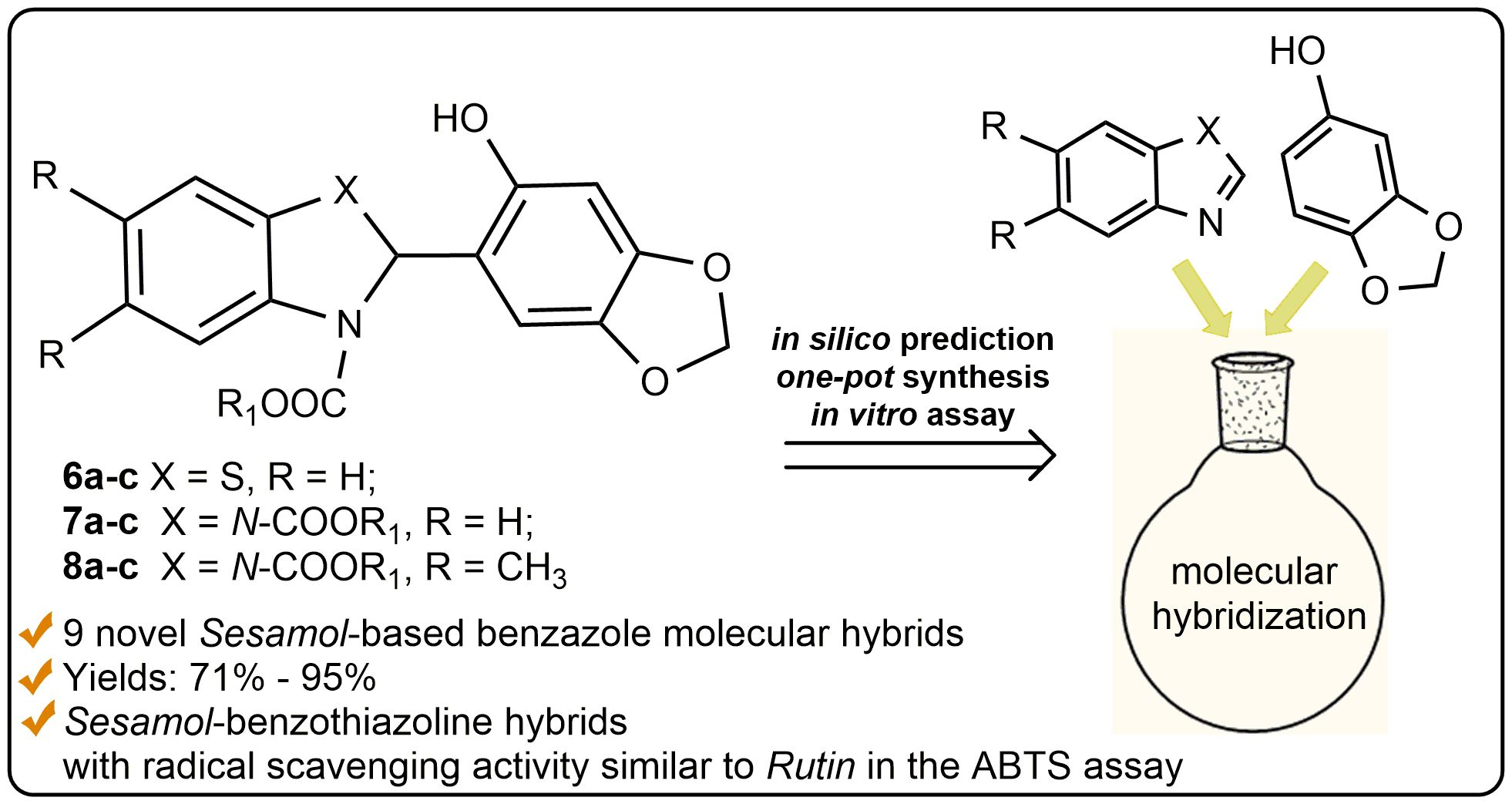

Synthesis of Novel Sesamol-Based Hybrids—In Silico Analysis and In Vitro Evaluation of Radical Scavenging Activity

 ,
,  , ,
, ,  and
and
Abstract
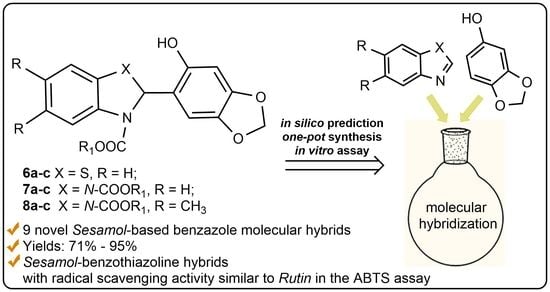
1. Introduction
2. Materials and Methods
2.1. Chemistry
2.1.1. General Information
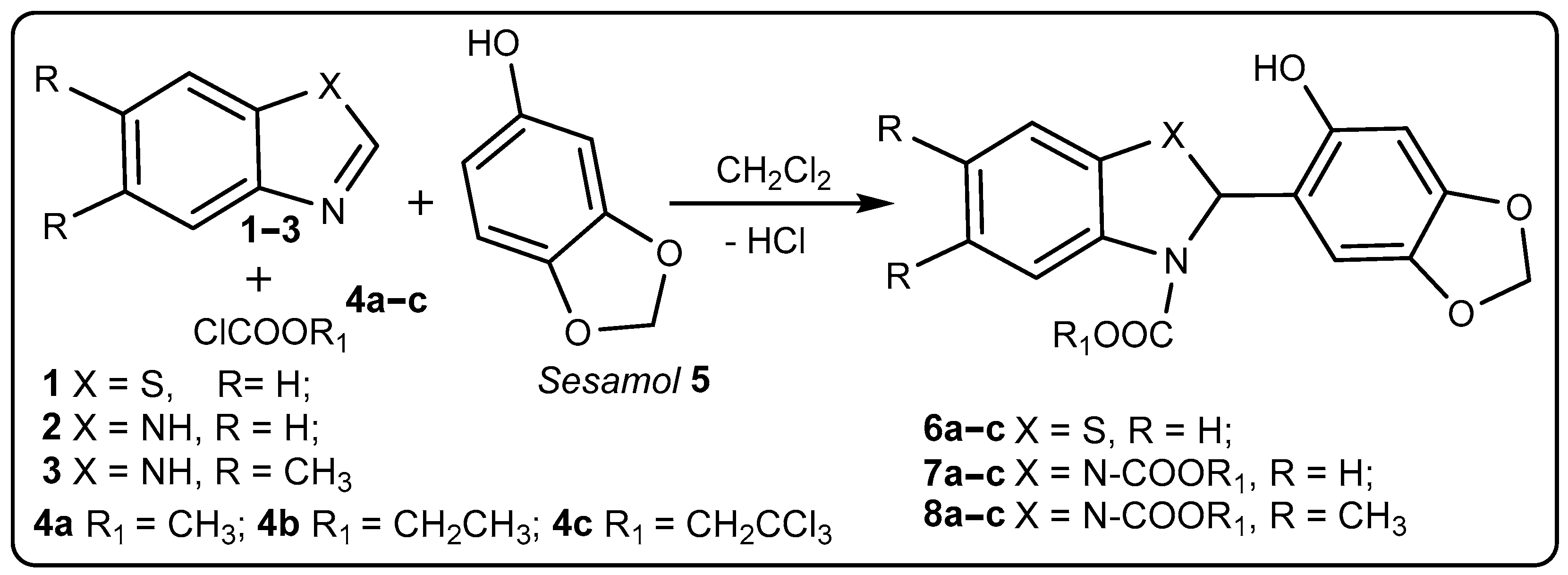
2.1.2. General Procedure for the Synthesis of Benzothiazole–Sesamol Hybrids 6a–c
2.1.3. General Procedure for the Synthesis of Sesamol Hybrids 7a–c or 8a–c Using Benzimidazole or 5,6-Dimethylbenzimidazole
2.1.4. Radical Scavenging Activity Assays
Mehod for DPPH Free Radical Scavenging Evaluation
Method for ABTS Free Radical Scavenging Evaluation
2.1.5. In Silico Prediction of Toxicological Profiles Using QSAR Models
2.1.6. Statistics
3. Results and Discussion
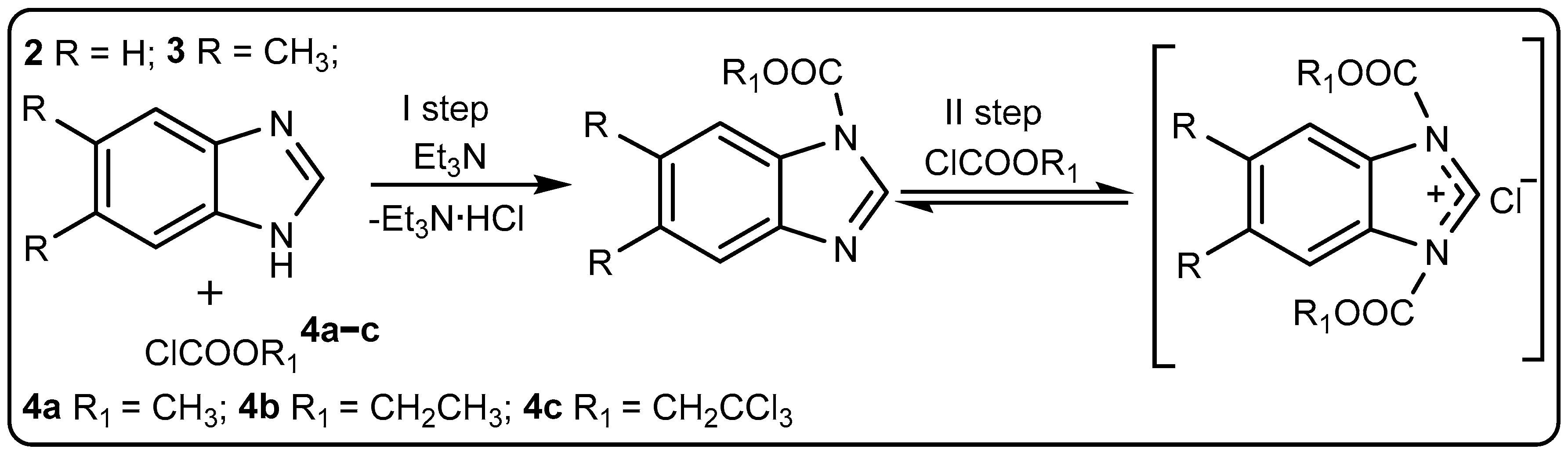
3.1. Molecular Hybridization by α-Amidoalkylation of Sesamol
3.2. In Vitro Radical Scavenging Assay
3.3. In Silico Predictions of Sesamol Hybrids Toxicity
4. Conclusions
Supplementary Materials
Author Contributions
Funding
Institutional Review Board Statement
Informed Consent Statement
Data Availability Statement
Acknowledgments
Conflicts of Interest
References
- Sung, H.; Ferlay, J.; Siegel, R.L.; Laversanne, M.; Soerjomataram, I.; Jemal, A.; Bray, F. Global Cancer Statistics 2020: GLOBOCAN Estimates of Incidence and Mortality Worldwide for 36 Cancers in 185 Countries. CA Cancer J. Clin. 2021, 71, 209–249. [Google Scholar] [CrossRef]
- Zafar, A.; Khatoon, S.; Khan, M.J.; Abu, J.; Naeem, A. Advancements and limitations in traditional anti-cancer therapies: A comprehensive review of surgery, chemotherapy, radiation therapy, and hormonal therapy. Discov. Oncol. 2025, 16, 607. [Google Scholar] [CrossRef]
- Asma, S.T.; Acaroz, U.; Imre, K.; Morar, A.; Shah, S.R.A.; Hussain, S.Z.; Arslan-Acaroz, D.; Demirbas, H.; Hajrulai-Musliu, Z.; Istanbullugil, F.R.; et al. Natural Products/Bioactive Compounds as a Source of Anticancer Drugs. Cancers 2022, 14, 6203. [Google Scholar] [CrossRef]
- Majdalawieh, A.F.; Mansour, Z.R. Sesamol, a Major Lignan in Sesame Seeds (Sesamum indicum): Anti-cancer Properties and Mechanisms of Action. Eur. J. Pharmacol. 2019, 855, 75–89. [Google Scholar] [CrossRef]
- Wu, M.-S.; Aquino, L.B.B.; Barbaza, M.Y.U.; Hsieh, C.-L.; De Castro-Cruz, K.A.; Yang, L.-L.; Tsai, P.W. Anti-inflammatory and anticancer properties of bioactive compounds from Sesamum indicum L.–A review. Molecules 2019, 24, 4426. [Google Scholar] [CrossRef]
- Srisayam, M.; Weerapreeyakul, N.; Barusrux, S.; Kanokmedhakul, K. Antioxidant, Antimelanogenic, and Skin-Protective Effect of Sesamol. J. Cosmet. Sci. 2014, 65, 69–79. [Google Scholar]
- Hayes, J.E.; Allen, P.; Brunton, N.; O’Grady, M.N.; Kerry, J.P. Phenolic Composition and In Vitro Antioxidant Capacity of Four Commercial Phytochemical Products: Olive Leaf Extract (Olea europaea L.), Lutein, Sesamol and Ellagic Acid. Food Chem. 2011, 126, 948–955. [Google Scholar] [CrossRef]
- Koru, I.; Atasever-Arslan, B. Protective Effects of Sesamol against Cigarette Smoke Toxicity on the Blood–Brain Barrier. BMC Complement. Med. Ther. 2025, 25, 68. [Google Scholar] [CrossRef]
- Kumar, C.M.; Singh, S.A. Bioactive Lignans from Sesame (Sesamum indicum L.): Evaluation of Their Antioxidant and Antibacterial Effects for Food Applications. J. Food Sci. Technol. 2015, 52, 2934–2941. [Google Scholar] [CrossRef]
- Li, Z.; Wu, M.; Yan, H.; Meng, Z.; Gao, B.; Dong, Q. Antibacterial Effect and Possible Mechanism of Sesamol against Foodborne Pathogens. Foods 2024, 13, 435. [Google Scholar] [CrossRef]
- Tanim, T.I.; Al-Qaaneh, A.M.; Chowdhury, R.; Bhuia, M.S.; Islam, T.; Akbor, M.S.; Islam, M.T.; Miah, M.M.; Ishaq, A.R.; Abdel-Maksoud, M.A.; et al. Antiemetic Activity of Sesamol Possibly through Serotonergic and Dopaminergic Receptor Interaction Pathways: In Vivo and In Silico Studies. J. Funct. Foods 2025, 126, 106702. [Google Scholar] [CrossRef]
- Ramachandran, S.; Rajendra Prasad, N.; Karthikeyan, S. Sesamol Inhibits UVB-Induced ROS Generation and Subsequent Oxidative Damage in Cultured Human Skin Dermal Fibroblasts. Arch. Dermatol. Res. 2010, 302, 733–744. [Google Scholar] [CrossRef]
- He, M.; Hu, J.; Deng, J.; Chen, X.; Joshua Olatunji, O.; Jayeoye, T.J. A comprehensive review on the anti-cancer properties of sesame lignans: Chemical composition, molecular mechanisms and prospects. RSC Adv. 2025, 15, 45636–45664. [Google Scholar] [CrossRef]
- Siriwarin, B.; Weerapreeyakul, N. Sesamol Induced Apoptotic Effect in Lung Adenocarcinoma Cells through Both Intrinsic and Extrinsic Pathways. Chem. Biol. Interact. 2016, 254, 109–116. [Google Scholar] [CrossRef]
- Liu, Z.; Ren, B.; Wang, Y.; Zou, C.; Qiao, Q.; Diao, Z.; Mi, Y.; Zhu, D.; Liu, X. Sesamol Induces Human Hepatocellular Carcinoma Cells Apoptosis by Impairing Mitochondrial Function and Suppressing Autophagy. Sci. Rep. 2017, 7, 45728. [Google Scholar] [CrossRef]
- Nair, A.B.; Dalal, P.; Kadian, V.; Kumar, S.; Garg, M.; Rao, R.; Almuqbil, R.M.; Alnaim, A.S.; Aldhubiab, B.; Alqattan, F. Formulation Strategies for Enhancing Pharmaceutical and Nutraceutical Potential of Sesamol: A Natural Phenolic Bioactive. Plants 2023, 12, 1168. [Google Scholar] [CrossRef]
- Srisayam, M.; Weerapreeyakul, N.; Barusrux, S.; Tanthanuch, W.; Thumanu, K. Application of FTIR Microspectroscopy for Characterization of Biomolecular Changes in Human Melanoma Cells Treated by Sesamol and Kojic Acid. J. Dermatol. Sci. 2014, 73, 241–250. [Google Scholar] [CrossRef]
- Baek, S.-H.; Lee, S.-H. Sesamol Decreases Melanin Biosynthesis in Melanocyte Cells and Zebrafish: Possible Involvement of MITF via the Intracellular cAMP and p38/JNK Signalling Pathways. Exp. Dermatol. 2015, 24, 761–766. [Google Scholar] [CrossRef]
- Khan, S.; Choudhary, S.; Kumar, A.; Tripathi, A.M.; Alok, A.; Adhikari, J.S.; Rizvi, M.A.; Chaudhury, N.K. Evaluation of Sesamol-Induced Histopathological, Biochemical, Haematological and Genomic Alteration after Acute Oral Toxicity in Female C57BL/6 Mice. Toxicol. Rep. 2016, 3, 880–894. [Google Scholar] [CrossRef]
- Abd Elrazik, N.A.; El-Mesery, M.; El-Shishtawy, M.M. Sesamol Protects against Liver Fibrosis Induced in Rats by Modulating Lysophosphatidic Acid Receptor Expression and TGF-β/Smad3 Signaling Pathway. Naunyn-Schmiedebergs Arch. Pharmacol. 2022, 395, 1003–1016. [Google Scholar] [CrossRef]
- Jayaraj, P.; Narasimhulu, C.A.; Rajagopalan, S.; Parthasarathy, S.; Desikan, R. Sesamol: A Powerful Functional Food Ingredient from Sesame Oil for Cardioprotection. Food Funct. 2020, 11, 1198–1210. [Google Scholar] [CrossRef]
- Kumar, A.; Bajaj, P.; Singh, B.; Paul, K.; Sharma, P.; Mehra, S.; Robin; Kaur, P.; Jasrotia, S.; Kumar, P.; et al. Sesamol as a Potent Anticancer Compound: From Chemistry to Cellular Interactions. Naunyn-Schmiedebergs Arch. Pharmacol. 2024, 397, 4961–4979. [Google Scholar] [CrossRef]
- Elzanaty, K.A.; Omran, G.A.; Elmahallawy, E.K.; Albrakati, A.; Saleh, A.A.; Dahran, N.; Alhegaili, A.S.; Salahuddin, A.; Abd-El-Azim, H.; Noreldin, A.; et al. Design and Optimization of Sesamol Nanosuspensions to Potentiate the Anti-Tumor Activity of Epirubicin against Ehrlich Solid Carcinoma-Bearing Mice. Pharmaceutics 2024, 16, 937. [Google Scholar] [CrossRef]
- Zhang, H.; Chen, M.G.; Lian, C.X.; Yuan, W.C.; Zhang, X.M. Remarkably Mild and Efficient Cetrimonium Bromide-Catalyzed Friedel–Crafts Amidoalkylation of Sesamols with N-Boc Imines Generated in Situ in Aqueous Medium. Synlett 2010, 9, 1415–1417. [Google Scholar] [CrossRef]
- Lalpara, J.N.; Hadiyal, S.D.; Dhaduk, B.B.; Gupta, M.K.; Solanki, M.B.; Sharon, A.; Dubal, G.G. Water Promoted One Pot Synthesis of Sesamol Derivatives as Potent Antioxidants: DFT, Molecular Docking, SAR and Single Crystal Studies. Polycycl. Aromat. Compd. 2023, 43, 4070–4083. [Google Scholar] [CrossRef]
- Yaswanatha Kumar, N.L.; Bharathi, K.K.N.; Mudgal, J.; VasanthaRaju, S.G.; Manohara Reddy, S.A. Synthesis, Characterization of Novel Sesamol Substituted with Thiazolidin-4-One Derivatives and Their Evaluation for Antioxidant and Anti-Cancer Activities. Results Chem. 2021, 3, 100095. [Google Scholar] [CrossRef]
- Buravlev, E.V.; Shevchenko, O.G.; Suponitsky, K.Y. Synthesis and Antioxidant Capacity of Some Derivatives of Sesamol at the C-6 Position. Chem. Biodivers. 2021, 18, e2100221. [Google Scholar] [CrossRef]
- Stremski, Y.; Kirkova, D.; Statkova-Abeghe, S.; Angelov, P.; Ivanov, I.; Georgiev, D. Synthesis and antibacterial activity of hydroxylated 2-arylbenzothiazole derivatives. Synth. Commun. 2020, 50, 3007–3015. [Google Scholar] [CrossRef]
- Kirkova, D.; Stremski, Y.; Statkova-Abeghe, S.; Docheva, M. Quercetin Hybrids—Synthesis, Spectral Characterization and Radical Scavenging Potential. Molbank 2022, 2022, M1329. [Google Scholar] [CrossRef]
- Kirkova, D.; Stremski, Y.; Bachvarova, M.; Todorova, M.; Goranov, B.; Statkova-Abeghe, S.; Docheva, M. New Benzothiazole–Monoterpenoid Hybrids as Multifunctional Molecules with Potential Applications in Cosmetics. Molecules 2025, 30, 636. [Google Scholar] [CrossRef]
- Bachvarova, M.; Kirkova, D.; Stremski, Y.; Suyleyman, E.; Statkova-Abeghe, S.; Docheva, M. Synthesis and Antioxidant Activity of Benzazole-Based Hybrid. Bulg. Chem. Commun. 2024, 56, 167–171. [Google Scholar] [CrossRef]
- Docheva, M.; Dagnon, S.; Statkova-Abeghe, S. Flavonoid content and radical scavenging potential of extracts prepared from tobacco cultivars and waste. Nat. Prod. Res. 2014, 28, 1328–1334. [Google Scholar] [CrossRef]
- Re, R.; Pellegrini, N.; Proteggente, A.; Pannala, A.; Yang, M.; Rice-Evans, C. Antioxidant activity applying an improved ABTS radical cation decolorization assay. Free Radic. Biol. Med. 1999, 26, 1231–1237. [Google Scholar] [CrossRef]
- Manganelli, S.; Benfenati, E.; Manganaro, A.; Kulkarni, S.; Barton-Maclaren, T.S.; Honma, M. New Quantitative Structure–Activity Relationship Models Improve Predictability of Ames Mutagenicity for Aromatic Azo Compounds. Toxicol. Sci. 2016, 153, 316–326. [Google Scholar] [CrossRef]
- Pedretti, A.; Mazzolari, A.; Gervasoni, S.; Fumagalli, L.; Vistoli, G. The VEGA Suite of Programs: An Versatile Platform for Cheminformatics and Drug Design Projects. Bioinformatics 2021, 37, 1174–1175. [Google Scholar] [CrossRef]
- Danieli, A.; Colombo, E.; Raitano, G.; Lombardo, A.; Roncaglioni, A.; Manganaro, A.; Sommovigo, A.; Carnesecchi, E.; Dorne, J.-L.C.M.; Benfenati, E. The VEGA Tool to Check the Applicability Domain Gives Greater Confidence in the Prediction of In Silico Models. Int. J. Mol. Sci. 2023, 24, 9894. [Google Scholar] [CrossRef]
- Stremski, Y.; Bachvarova, M.; Kirkova, D.; Statkova-Abeghe, S. New 2-(2,4-Dihydroxyphenyl)Benzimidazolines. Molbank 2023, 2023, M1602. [Google Scholar] [CrossRef]
- Platzer, M.; Kiese, S.; Tybussek, T.; Herfellner, T.; Schneider, F.; Schweiggert-Weisz, U.; Eisner, P. Radical Scavenging Mechanisms of Phenolic Compounds: A Quantitative Structure–Property Relationship (QSPR) Study. Front. Nutr. 2022, 9, 882458. [Google Scholar] [CrossRef]
- Russell, W.M.S.; Burch, R.L. The Principles of Humane Experimental Technique; Methuen: London, UK, 1960. [Google Scholar]
- Kirk, R.G.W. Recovering the Principles of Humane Experimental Technique: The 3Rs and the Human Essence of Animal Research. Sci. Technol. Hum. Values 2018, 43, 622–648. [Google Scholar] [CrossRef]



| Product | X | R | R1 | Ratio | Time, h | Yield, % |
|---|---|---|---|---|---|---|
| 6a | S | H | CH3 | 2:1 | 2 | 90 |
| 6b | S | H | CH2CH3 | 2:1 | 5 | 78 |
| 6c | S | H | CH2CCl3 | 1:1 | 3 | 71 (95 *) |
| 7a | N-COOR1 | H | CH3 | 1:1 | 24 | 84 |
| 7b | N-COOR1 | H | CH2CH3 | 1:1 | 24 | 86 (93 *) |
| 7c | N-COOR1 | H | CH2CCl3 | 1:1 | 24 | 87 |
| 8a | N-COOR1 | Me | CH3 | 1:1 | 24 | 77 |
| 8b | N-COOR1 | Me | CH2CH3 | 1:1 | 24 | 94 |
| 8c | N-COOR1 | Me | CH2CCl3 | 1:1 | 24 | 92 |
| Compound | MW | DPPH | ABTS |
|---|---|---|---|
| Quercetin [29,32] | 302.24 | 4.60 ± 0.3 | 48.0 ± 4.4 |
| Rutin [29,32] | 610.52 | 5.02 ± 0.4 | 95.3 ± 4.5 |
| Thymol [30] | 150.22 | 506 ± 15 | 92.5 ± 10 |
| Carvacrol [30] | 150.22 | 456 ± 15 | 52.6 ± 5.0 |
| Sesamol | 138.12 | 11.60 ± 1.5 | 46.3 ± 5.0 |
| 6a | 331.34 | 9.20 ± 1.0 | 85.7 ± 7.5 |
| 6b | 345.37 | 11.0 ± 1.0 | 96.7 ± 7.5 |
| 7a | 372.33 | 94.5 ± 7.5 | 151.7 ± 9.5 |
| 7b | 400.39 | 84.8 ± 7.5 | 133.3 ± 9.5 |
| 8a | 400.39 | ND * | 112.9 ± 9.5 |
| 8b | 428.44 | ND * | 105.3 ± 9.5 |
| Compound | Mutagenicity Model (CAESAR) 2.1.14 | Mutagenicity Model (ISS) 1.0.3 | Skin Irritation | Thyroid Receptor Alpha Effect (TRα) and Beta Effect (THRβ) | Reproductive Toxicity |
|---|---|---|---|---|---|
| 6a | Mutagenic | NON-Mutagenic | NON-Sensitizer | Inactive | NON-Toxicant |
| 6b | Mutagenic | NON-Mutagenic | NON-Sensitizer | Inactive | NON-Toxicant |
| 6c | Mutagenic | NON-Mutagenic | NON-Sensitizer | Inactive | NON-Toxicant |
| 7a | Mutagenic | NON-Mutagenic | NON-Sensitizer | Inactive | NON-Toxicant |
| 7b | NON-Mutagenic | NON-Mutagenic | NON-Sensitizer | Inactive | NON-Toxicant |
| 7c | NON-Mutagenic | NON-Mutagenic | NON-Sensitizer | Inactive | NON-Toxicant |
| 8a | NON-Mutagenic | NON-Mutagenic | NON-Sensitizer | Inactive | NON-Toxicant |
| 8b | NON-Mutagenic | NON-Mutagenic | NON-Sensitizer | Inactive | NON-Toxicant |
| 8c | NON-Mutagenic | NON-Mutagenic | NON-Sensitizer | Inactive | NON-Toxicant |
| Sesamol | NON-Mutagenic | NON-Mutagenic | NON-Sensitizer | Inactive | NON-Toxicant |
Disclaimer/Publisher’s Note: The statements, opinions and data contained in all publications are solely those of the individual author(s) and contributor(s) and not of MDPI and/or the editor(s). MDPI and/or the editor(s) disclaim responsibility for any injury to people or property resulting from any ideas, methods, instructions or products referred to in the content. |
© 2026 by the authors. Licensee MDPI, Basel, Switzerland. This article is an open access article distributed under the terms and conditions of the Creative Commons Attribution (CC BY) license.
Share and Cite
Bachvarova, M.; Stremski, Y.; Kirkova, D.; Statkova-Abeghe, S.; Docheva, M. Synthesis of Novel Sesamol-Based Hybrids—In Silico Analysis and In Vitro Evaluation of Radical Scavenging Activity. AppliedChem 2026, 6, 21. https://doi.org/10.3390/appliedchem6020021
Bachvarova M, Stremski Y, Kirkova D, Statkova-Abeghe S, Docheva M. Synthesis of Novel Sesamol-Based Hybrids—In Silico Analysis and In Vitro Evaluation of Radical Scavenging Activity. AppliedChem. 2026; 6(2):21. https://doi.org/10.3390/appliedchem6020021
Chicago/Turabian StyleBachvarova, Maria, Yordan Stremski, Desislava Kirkova, Stela Statkova-Abeghe, and Margarita Docheva. 2026. "Synthesis of Novel Sesamol-Based Hybrids—In Silico Analysis and In Vitro Evaluation of Radical Scavenging Activity" AppliedChem 6, no. 2: 21. https://doi.org/10.3390/appliedchem6020021
APA StyleBachvarova, M., Stremski, Y., Kirkova, D., Statkova-Abeghe, S., & Docheva, M. (2026). Synthesis of Novel Sesamol-Based Hybrids—In Silico Analysis and In Vitro Evaluation of Radical Scavenging Activity. AppliedChem, 6(2), 21. https://doi.org/10.3390/appliedchem6020021