Article

Microwave-Assisted Chemical Recycling of a Polyurethane Foam for Pipe Pre-Insulation and Reusability of Recyclates in the Original Foam Formulation


1
PS Resins GmbH, Lemberger-Str. 94, 66955 Pirmasens, Germany
2
Leibniz-Institut für Verbundwerkstoffe GmbH, Erwin-Schrödinger-Straße 58, 67663 Kaiserslautern, Germany
3
Campus Pirmasens, Kaiserslautern University of Applied Sciences, Carl-Schurz-Str. 10-16, 66953 Pirmasens, Germany
*
Authors to whom correspondence should be addressed.
AppliedChem 2026, 6(1), 2; https://doi.org/10.3390/appliedchem6010002
Submission received: 14 October 2025 / Revised: 10 November 2025 / Accepted: 24 December 2025 / Published: 4 January 2026

Abstract

Considering the high demand for efficient chemical recycling and reusability of polyurethane foams (PUFs), combined microwave-assisted solvolysis routes have been applied to a widely used commercial PUF for pipe pre-insulation, and the reusability of as-received recycled products in the original formulation was studied. The influence of the type and amount of recyclate on the main foaming parameters, shrinkage behavior, density, compression properties, morphology, thermal stability, and humidity uptake was determined. Based on shrinkage as the main exclusion criterion, recycling products of two routes have been evaluated as suitable for reuse in the original formulation without any purification or fractionation. However, a maximum of 5 wt.% of the original polyol compound could be replaced by these recycled products to fulfill the requirement of ≤5% shrinkage, which also resulted in foam performance that is well acceptable for use in pre-insulated pipes. The most beneficial property profiles were achieved by replacing 3 wt.% of the original polyol component.

1. Introduction

Polyurethanes (PUs) are well-known polymer materials that are widely used in the form of foams, composites, coatings, sealants, adhesives, etc. in various industries, such as building and construction, furniture and bedding, packaging, automotive, and medicine [1,2,3,4,5,6,7,8,9,10]. This is thanks to their excellent physical–chemical properties, high chemical resistance, and environmental durability, which fulfil the needs of different application areas. However, they are still predominantly petroleum-based and have a negative environmental impact, including microplastic pollution caused by wear and tear occurring in some applications (e.g., shoe soles, wheels, covers, and coatings), as well as by mechanical recycling, incineration, and, to a large extent, by mechanical and photochemical destruction in landfills (e.g., the landfill disposal of industrial foam residues, old mattresses, or insulation panels) [11,12].
Considering that PU foams (PUFs) belong to the biggest PU market sectors, the chemical recycling of PUFs and the reuse of recycled products as alternative raw materials for the manufacturing of new products is very promising. This can improve the environmental impact of PUs and effectively reduce the amount of waste and microplastic pollution in soil and water. There are many ways to carry out the chemical recycling of PUs (such as hydrolysis, alcoholysis, glycolysis, aminolysis, and/or acidolysis), which are presented in numerous publications and are not limited to those cited here [13,14,15,16,17,18,19,20,21,22,23,24,25].
At first glance, it may seem that the chemical recycling and reuse of PUFs are quite simple, because it is only necessary to destroy the urethane bonds and reintroduce the recycling products into the production process of new materials. However, the research groups and even the companies performing the chemical recycling of PUFs on a pilot level or an industrial scale are faced with some important challenges.
It is worth stressing that PUF formulations are complex mixtures consisting of various polyols containing several additional components, such as chain extenders, various surfactants, emulsifiers, different catalysts, blowing agents, flame retardants, (co-reactive) fillers, etc. (Component A in the PUF industry), as well as isocyanates (Component B in the PUF industry), which are tailored according to certain processing and application requirements. This results in a variety of different PUF products with different compositions and properties, even if they are tailored for similar applications. The incorporation of any further component to such formulations can strongly disbalance both the processing window and material properties. Consequently, the composition of respective recycled products can also vary in a broad range of materials. Furthermore, depending on the type of chemical recycling, related recycling products also have different functional groups, which can differently affect the foaming process. To minimize the effect of functional groups of recyclates on foaming kinetics and remain within the required processing window, it is very often necessary to optimize the composition of Component A, e.g., by better adjustment of additives and/or co-reactive species. This requires an additional development stage. Therefore, the effective reuse of recyclates and the reproducibility of material properties containing them is mostly possible only after long, complicated, and expensive fractionation and adjustment of the foam formulation. It is especially difficult to produce recyclates suitable for further use when different PUF types with unknown compositions are used for recycling. These complexities hinder the successful implementation of recyclates in the foam industry [20,26].
The main idea behind this research was to develop a combined recycling procedure for a single-origin PUF resulting in recylates, which can be easily reused in the original foam formulation with no need for additional purification or adjustment to the original formulation. Many manufacturers of PUFs produce a large amount of foam waste and scraps during production, which are later disposed of. If chemical recycling is done on such sorted out single-origin residues, in the best case directly at the same production factory, the recyclates can be used as part of Component A in the production of new foams without adaptation or changing the existing production lines. This would help to reduce the amount of production waste by using recycled waste as raw materials and reduce the transportation needs for the utilization of generated waste, which could in turn reduce the carbon footprint. Similar strategies can also be applied to the collection and sorting out of many single-origin types of PUFs after their end of life.
A commercial foam formulation that is widely used for pre-insulated pipes was selected as the benchmark. The motivation for selecting this foam relates to the ongoing replacement of many kilometers of old pre-insulated pipes, which usually contain single-origin insulation PUFs. This is often accompanied by the separation of the outer polyethylene pipe and the PUF insulation layer from the metal pipe, in order to collect both polyethylene and metal pipe components for recycling. Unfortunately, PUF is usually disposed of, whereas it could provide an excellent secondary raw material source when utilizing it via suitable chemical recycling routes.
Three different combinations of selected recycling agents have been used for consecutive acidolysis, glycolysis, and/or aminolysis steps as recycling methods. The reusability of developed liquid recyclates was studied by partially replacing Component A with them in the original foam formulation. The influence of the recyclate type and its amount on the foaming parameters, density, mechanical properties, cell morphology, thermostability, and humidity uptake of the new recyclate-containing PUFs was studied and compared to those of reference foam (PUF-Ref).

2. Materials and Methods

2.1. Materials

The industrial fossil-based foam formulation for pre-insulated pipes, which consists of a polyol blend Baytherm 27HK04G as Component A and Lupranat M20S (poly(4,4′-diphenylmethanediisocyanate)) with an NCO-content 31.5 wt.% as Component B, was supplied by BASF (Ludwigshafen, Germany). According to BASF’s recommendation, cyclopentane was also used as an external physical blowing agent. Cyclopentane and all chemicals used for recycling, i.e., urea, glycerol, polyethylene glycol 300 (PEG 300), 2-aminoethan-1-ol, and phytic acid (50 wt.% solution in water), were purchased from Sigma-Aldrich (Darmstadt, Germany) and were used as received.

2.2. Recycling of Reference PUF

A reference PUF (PUF-Ref) was prepared as described in the next section and used for recycling trials. The recycling of PUF-Ref was carried out in a microwave reactor Monowave 400 (Anton Paar GmbH, Graz, Austria) with the 850 W magnetron adjusting its unpulsed microwave power automatically to the sample and an integrated infrared temperature sensor. Firstly, the foam was cut into small pieces (cubes with a side length of ~1 cm), pressed into thin pellets (~1–1.5 mm in thickness) using a preparative hydraulic press, and placed in the 20 mL reaction vessel in this form. Then, respective recycling agents were added and the reaction medium was heated stepwise by microwaves up to maximally 250 °C till full dissolution of the foam upon continuous stirring with a magnet stirrer at 1200 rpm. This screening was necessary to determine the most suitable temperature and time for each recycling agent.
Three different recycling methods were screened to evaluate the recyclability potential of the selected chemicals. According to the observations in the preliminary screening, the authors chose 90 min as the maximum process duration to achieve acceptable process sustainability. Based on the screening results, different combinations of materials and recycling routes were screened at the next stage to select the best performing ones.
Full dissolution of the foam to form a homogeneous liquid was achieved using different consecutive combinations of acidolysis, glycolysis, and/or aminolysis. The three most successful formulations for recycling selected for this publication are presented in Table 1. The numbers in the sample codes PUF-1_R, PUF-2_R, and PUF-3_R refer to the first, second, and third recycling procedures, respectively, and “R” means recyclate. The following six-step temperature program was used for the recycling processes: (1) heating from 20 °C to 150 °C within 10 min, (2) maintenance of 150 °C for 10 min, (3) heating to 180 °C within 10 min, (4) holding the reaction mixture at 180 °C for 10 min, (5) heating to 210 °C during 10 min, and (6) maintenance of the final temperature for 40 min. After finishing this procedure, the system was cooled down to 30 °C by pressurized air connected to a reaction cell within 20 min.

2.3. Preparation of PUFs

The PUFs were prepared using the procedure recommended in the data sheet for PUF-Ref. For this purpose, Component A (Baytherm 27HK04G) was mixed with cyclopentane at 2000 rpm for 5 min in a plastic beaker using a mechanical stirrer. Then, Component B (Lupranat M20S) was added to the mixture of Component A with cyclopentane and stirred with a mechanical stirrer at 2000 rpm for 15 s. The resulting reactive mixture was immediately transferred to an open cylindrical mould and allowed to free rise at room temperature. Preparation of the PUFs containing recyclates was carried out using the same procedure. However, Component A was partially replaced by a certain recyclate, according to the formulations presented in Table 2.
In this investigation, recyclate-containing PUFs were prepared with the following recyclate contents toward Component A (X-values): 1, 2, 3, 5, 7.5, 10, and 15 wt.%. For brevity, the produced foams were named as PUF-N_R_X%, where “N” is the number of the recycling procedure and “X%” is the content of the corresponding recyclate in Component A. For example, “PUF-3_R_1%” means that the prepared PUF contains 1 wt.% of recyclate from the third recycling procedure in Component A.

2.4. Characterization of the PUFs

The influence of recyclates on the foaming parameters of the original PUF formulation was studied. The reusability of recyclates in the original formulation was preliminarily evaluated by determining the horizontal and vertical shrinkage (i.e., reduction in diameter and height over time) in cup tests of the developed PUFs. Foams fulfilling the shrinkage requirement were also subjected to the determination of cream time, start and end of fiber time, rise time, and tack-free time as main foaming parameters using a stopwatch in the cup test experiments. According to the criteria specified for PUFs used in pre-insulated pipes, shrinkage after 72 h following preparation should be less than approximately 5%.
The density of PUFs was determined gravimetrically at 23 °C at 50% relative humidity, according to ASTM D1622-03. The density value reported is the average value of 10 specimens with a size of 30 mm × 30 mm × 30 mm (length × width × thickness).
The compression properties of the PUFs were determined according to DIN EN ISO 844 and were carried out using a Zwick 1445 Retroline machine (ZwickRoell GmbH & Co. KG, Ulm, Germany). The following parameters were used for the measurements: pre-load 0.5 N, testing velocity 10%/min, and maximal deformation 70%. The compression modulus (Emod) in the linear elastic range at small deformations and the compression strength at 10% and 40% strain were determined in both parallel (assigned with the symbol “ǁ”) and perpendicular (assigned with the symbol “┴”) directions to the foam growing. In all experiments, 10 specimens per sample were tested, and an average value was taken along with the standard deviation (std).
The morphological cell structure of the foams was investigated using scanning electron microscopy (SEM), specifically the Supra 40 VP from Carl Zeiss Mikroskopie GmbH (Oberkochen, Germany).
TGA analysis of the PUFs was carried out using a TGA/DSC 3+ STAReSystem (Mettler Toledo, Germany) with 5–10 mg of the powdered sample loaded into a 50 μL aluminium crucible. Thermal degradation behavior was analyzed in an air atmosphere from 30 °C to 580 °C, with a heating rate of 10 °C/min, followed by a 20 min hold at 580 °C, with an air flow of 50 mL/min.
The hydrophobicity of the reference and recyclate-containing PUFs was determined by moisture uptake tests in a humidity chamber at 23 °C and a relative humidity of 90%. The foam samples were dried at 40 °C to constant weight before testing. The samples were weighed at intervals of 24 h to control weight increases due to humidity uptake. The experiments were considered fully completed if the last three weight measurements showed a weight difference of maximum 0.00001 g.

3. Results and Discussion

3.1. Influence of Recyclate Type and Amount on the Foaming Parameters

The main objective of this research was to develop a recycling procedure that would allow the reuse of recyclates in the original PUF formulation as received, i.e., without any additional manipulations. This also required remaining within the existing production process. Therefore, determination of the effect of recyclates on foaming is very important.
The first criterion for evaluating the foaming parameters of foams produced using three different recyclates was to assess shrinkage after manufacturing. Unfortunately, all foams containing the recyclate PUF-3_R showed excessive visible horizontal shrinkage within several hours after preparation, i.e., >>5%. Figure 1 (esp. in red circle) shows a representative visualization of the sample PUF-3_R_2%. Based on this, it was concluded that the PUF-3_R recyclate is not suitable for the partial replacement of Component A in the original foam formulation without additional modifications of the formulation, even in small quantities. For this reason, no further tests were carried out with PUF-3_R-containing foams.
For recyclates PUF-1_R and PUF-2_R, unacceptable shrinkage of the foams (i.e., ≥5%) only occurred when the recyclate content in Component A exceeded 5 wt.%. Therefore, all further investigations were carried out only for foams containing PUF-1_R and PUF-2_R recyclates at 1, 2, 3, and 5 wt.% in Component A.
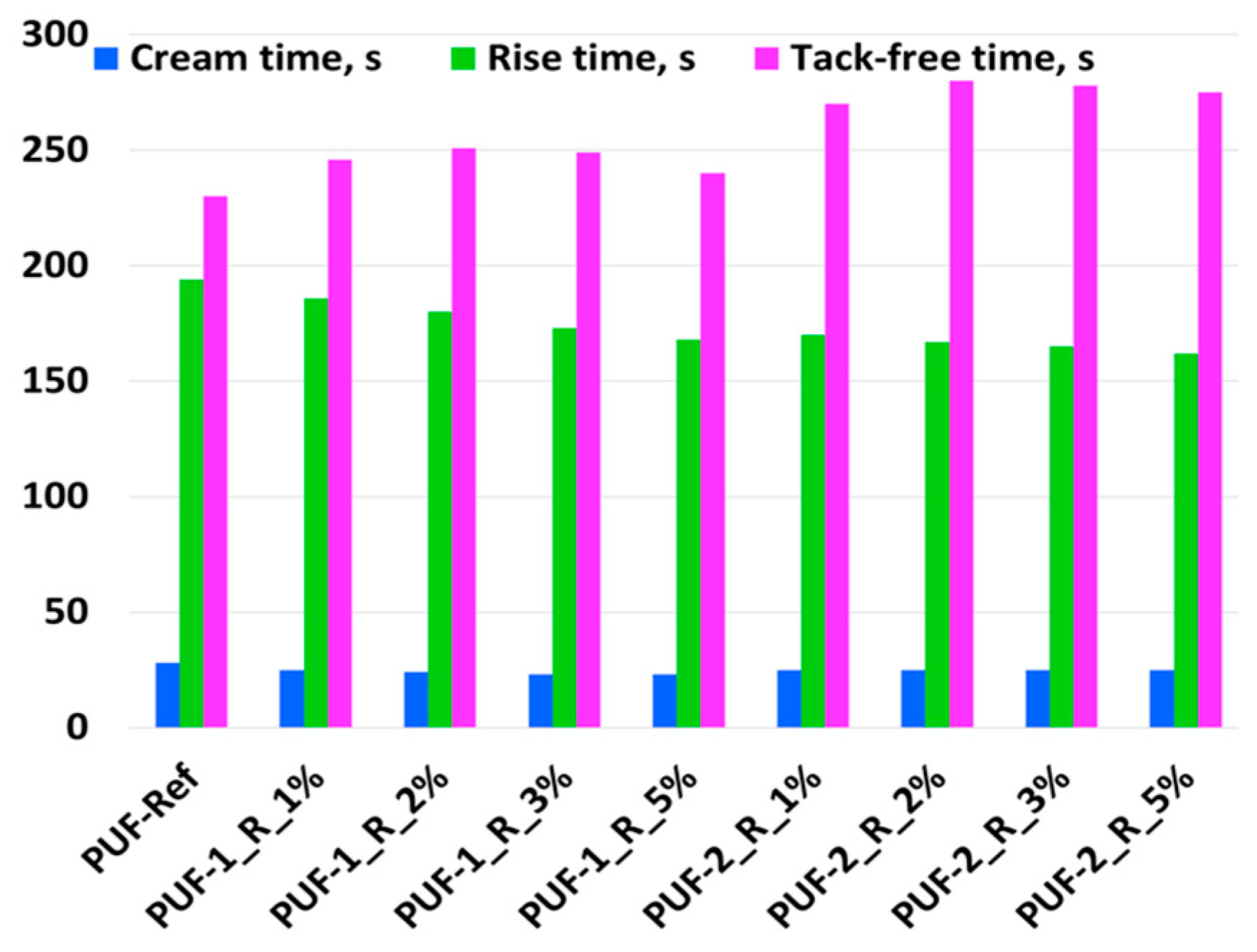
As the next evaluation criteria, foaming parameters such as cream time, the beginning and end of fiber time, the rise time, and the tack-free time, which are characteristic of foams containing recyclates, were evaluated. These were determined in cup-tests and compared with the foaming parameters for PUF-Ref. The respective results are presented in Figure 2. A slight decrease in cream time values was observed for both recyclate types (i.e., PUF-1_R and PUF-2_R) with increasing amounts in Component A from 1 wt.% to 5 wt.%. The rise time values decreased in both cases by increasing the recyclate amount with the same tendency as the cream time values. However, decreasing tendency with content of the recyclate was more obvious in case of the PUF-1_R-containing systems. In contrast, tack-free time values increased strongly in the case of both recyclate types in comparison with the reference value, even with the replacement of only 1 wt.% of the original Component A. Increasing the amount of both recyclate types in Component A to 2 wt.% resulted in maximum values of tack-free times. Further increases in recyclate content up to 3 wt.% and 5 wt.% resulted in a slow decrease in tack-free time values; however, these remained higher than those of the reference system, particularly for recyclate PUF-2_R.
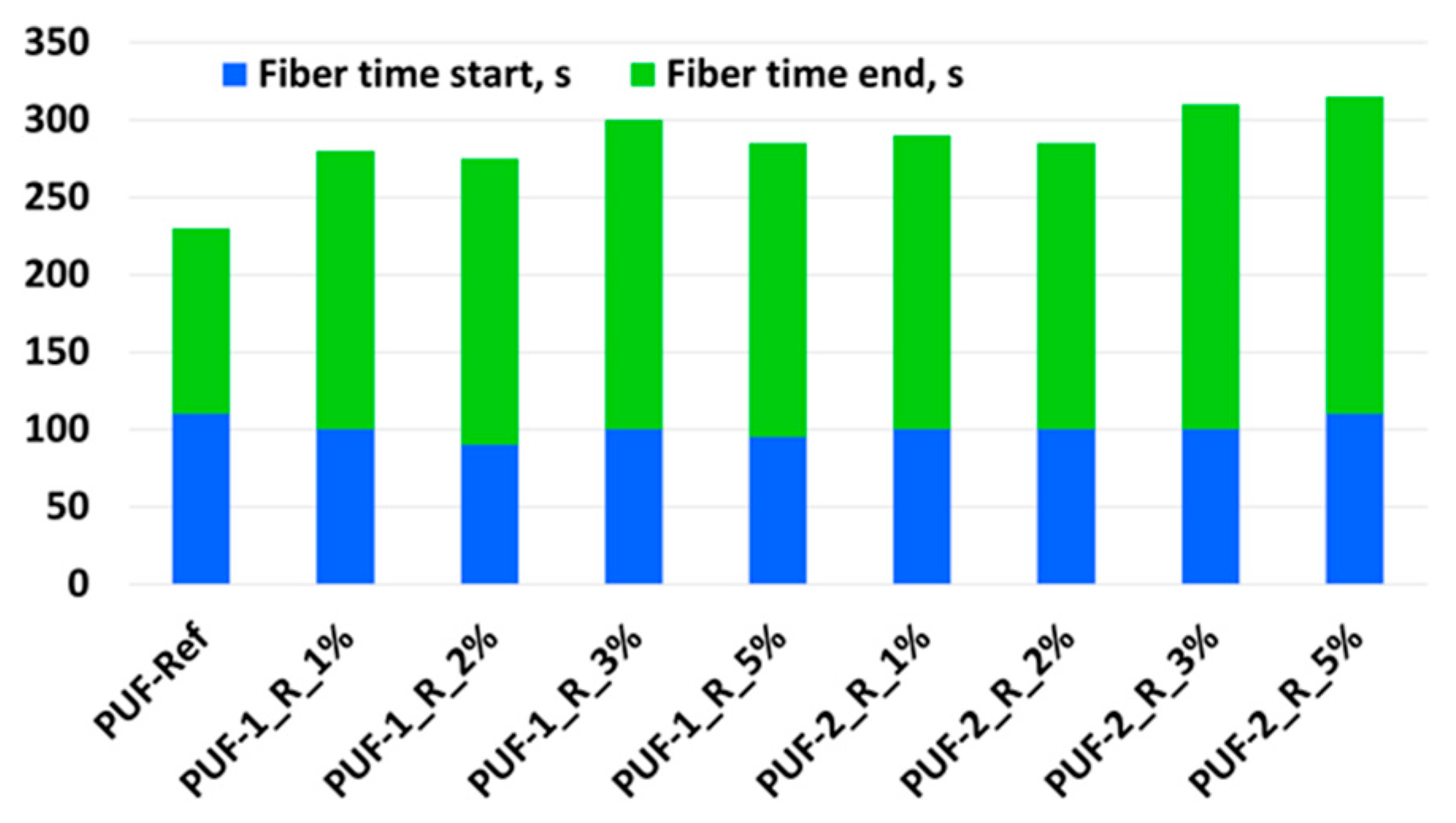
Despite the introduction and increase in the amounts of both recyclates, the respective onsets of fiber times were hardly affected. Prolongation of the end-sets of this parameter was observed compared to the reference values, especially for recyclate PUF-2_R. In both cases, a tendency of further prolongation with the amount of the respective recyclate was observed (Figure 3).

3.2. Influence of Recyclate Type and Amount on the Density and Mechanical Properties of Foams

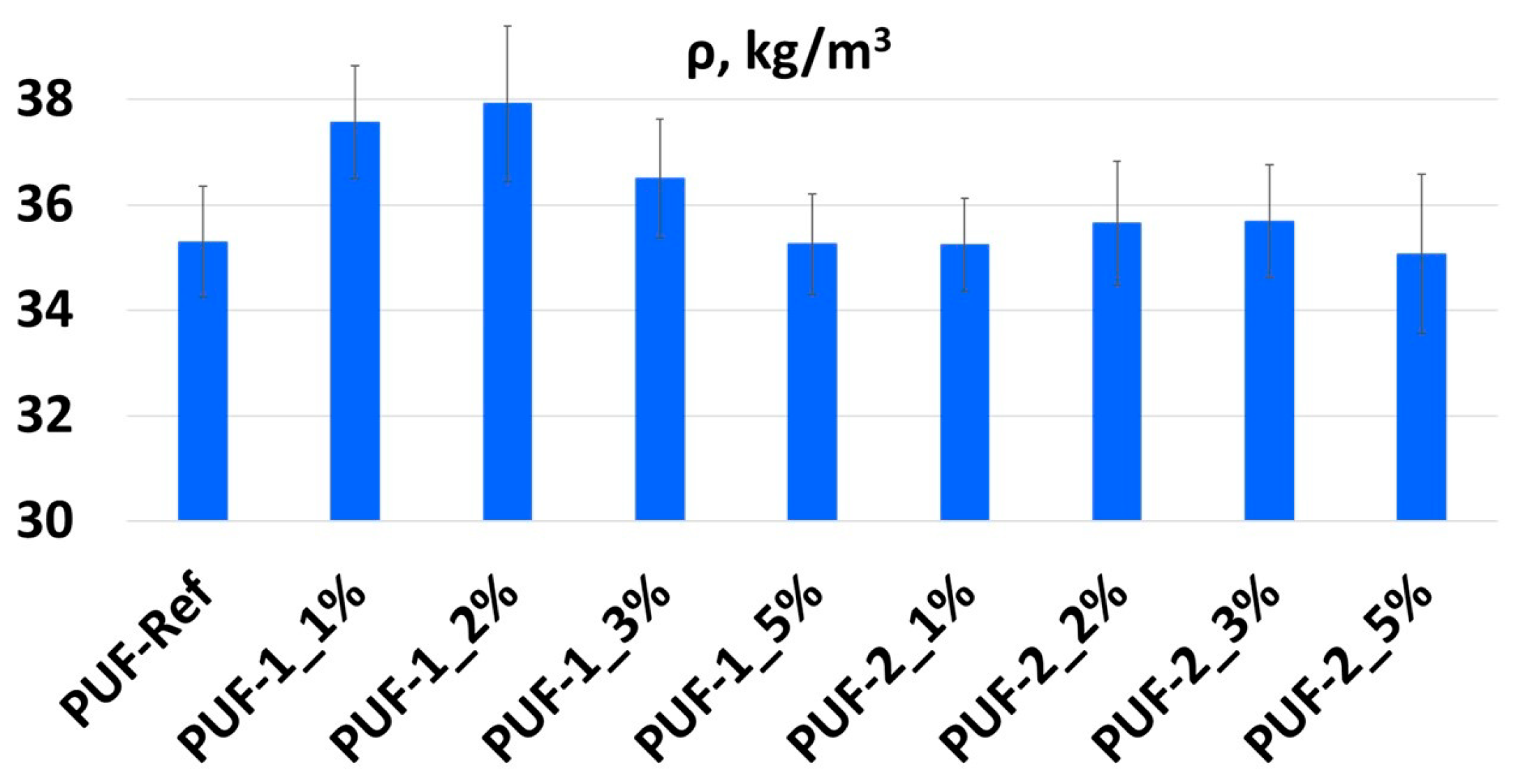
To test the influence of the type and amount of recyclates on the mechanical properties of the developed PUFs, foam density was determined and the compressive strength values were assessed. Figure 4 presents the changes in density with the introduction and increase in the amounts of both recyclates in the PUF-Ref. As can be seen, a small increase in density compared to that of the reference foam was observed for the foams containing 1 and 2 wt.% of recyclate PUF-1_R in Component A, whereas all other systems showed negligible differences compared to the density of the reference foam. These minimal changes in foam density have a negligible effect on the mechanical properties of the foams and allow for better comparability of the related property profiles.
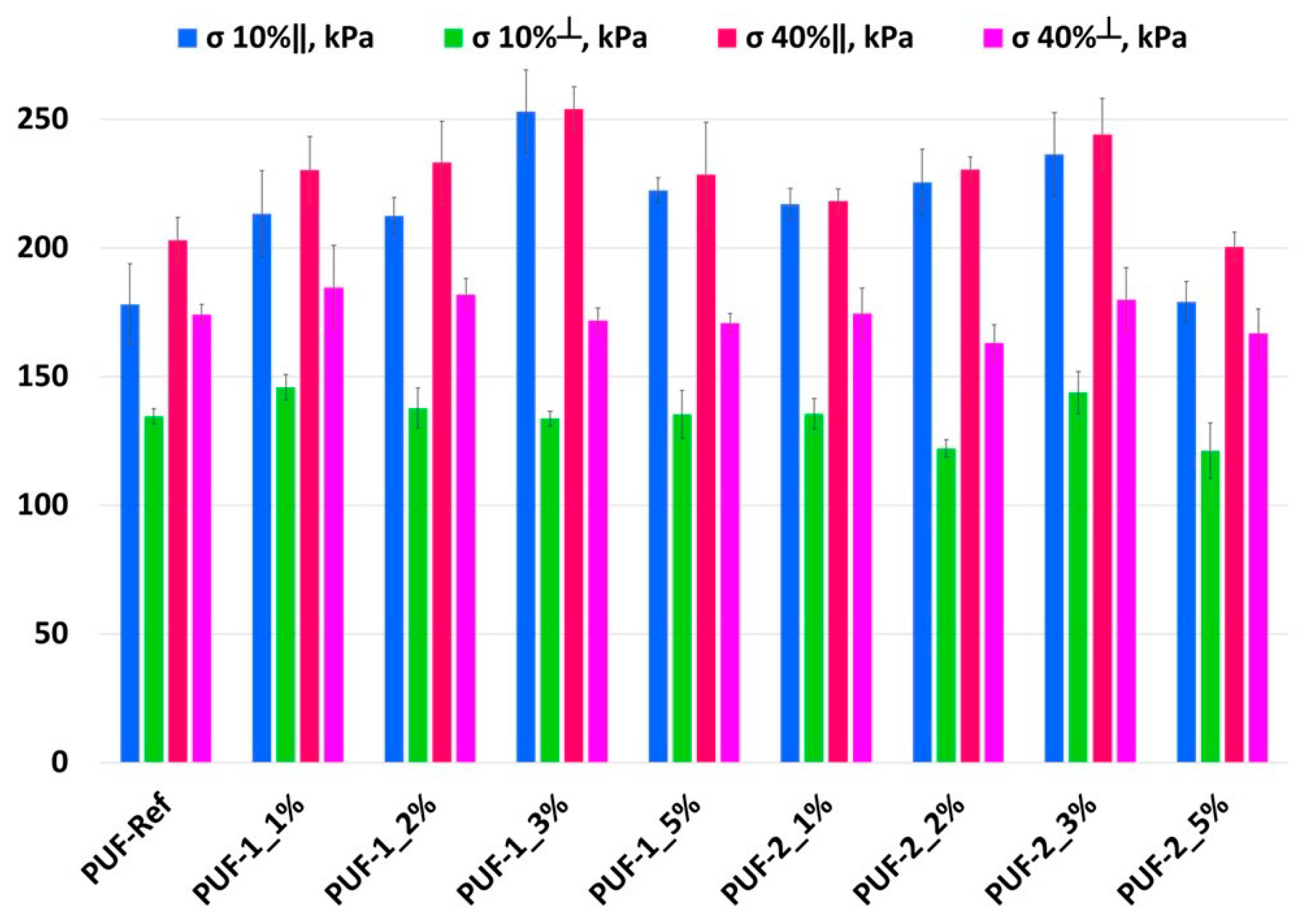
The compression tests for the PUFs containing recycled components demonstrated an obvious increase in the σ10%ǁ- and σ40%ǁ-values, i.e., those measured in the direction of foam growth, compared to the PUF-Ref. Increasing the amounts of both recyclates in Component A up to 3 wt.% increased these values, with PUF-1_R_3% and PUF-2_R_3% foams exhibiting the highest values. Further increasing the amounts of recyclates up to 5 wt.% slightly decreased the σ10%ǁ- and σ40%ǁ-values, but they still remained higher than the respective values of the reference foam. However, the compression strength values measured in the direction perpendicular to foam growth (i.e., σ 10%┴ and σ 40%┴) were either unchanged or slightly reduced compared to those of PUF-Ref (Figure 5).
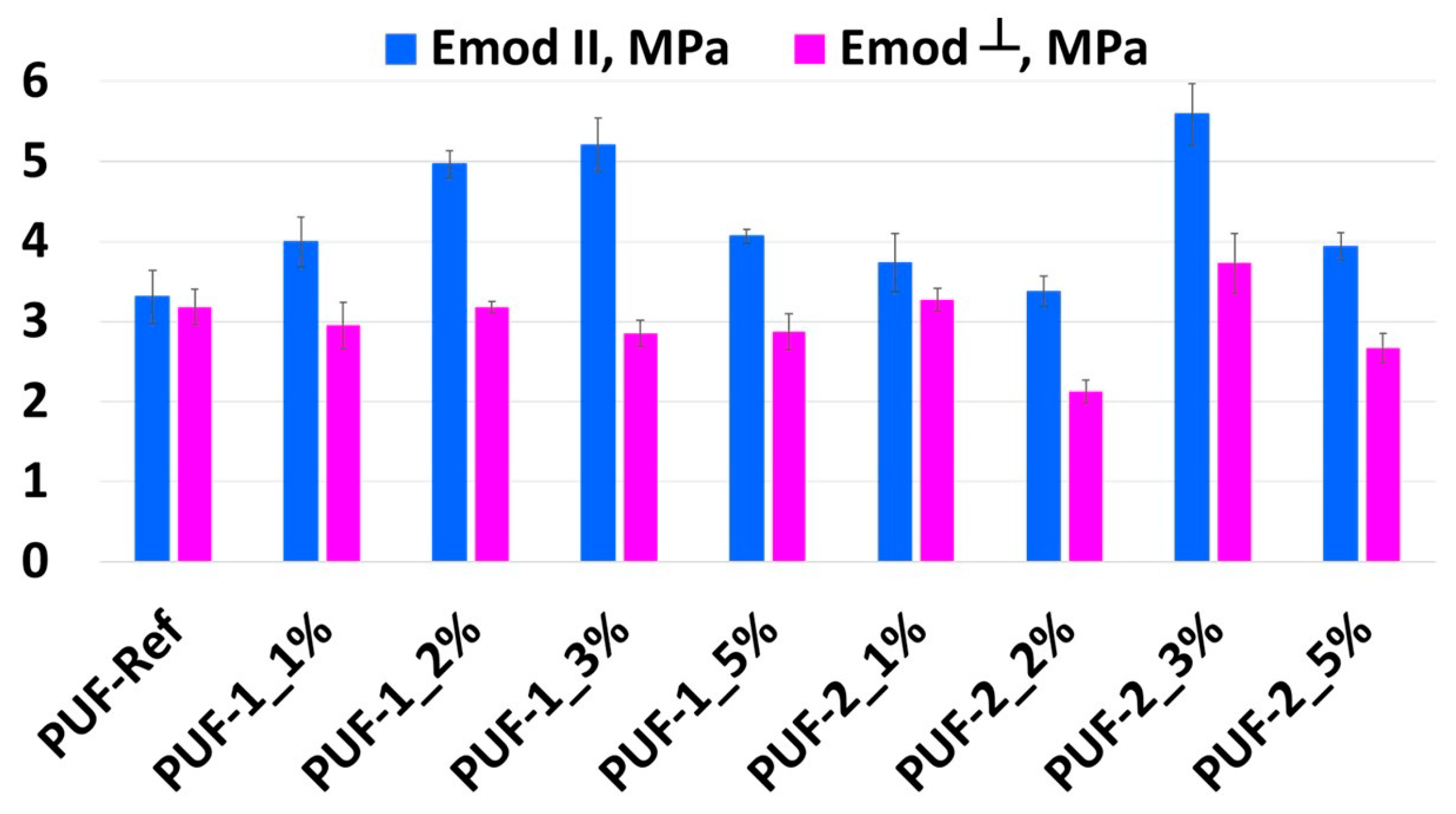
This was accompanied by similar changes in the compression modulus (Emod) values. An increase in Emodǁ by incorporating both PUF-1_R and PUF-2_R recyclates up to 3 wt.% in Component A (especially in the case of PUF-1_R) and a decrease by further increasing the recyclate content to 5 wt.% was observed. This remained higher compared to PUF-Ref. As with compression strength, the foams prepared with 3 wt.% recyclates in Component A demonstrated the highest Emodǁ-values (increasing 1.57- and 1.69-fold compared to the reference for RUF-1_R- and PUF-2_R-based systems, respectively). The values of Emod┴ have been either less affected or demonstrated a slight decrease (Figure 6).
It is worth noting that differences in compression values measured in the parallel and perpendicular directions to the foam growth direction were observed for both reference and recyclate-containing foams. This could indicate some anisotropy in the morphology of the foam cells. Considering that higher differences in compression properties measured in two different directions are characteristic of recyclate-containing samples (compared to PUF-Ref), stronger anisotropy of the cell morphology was expected for these foams.

3.3. Morphology of Developed Recyclate-Containing PUFs

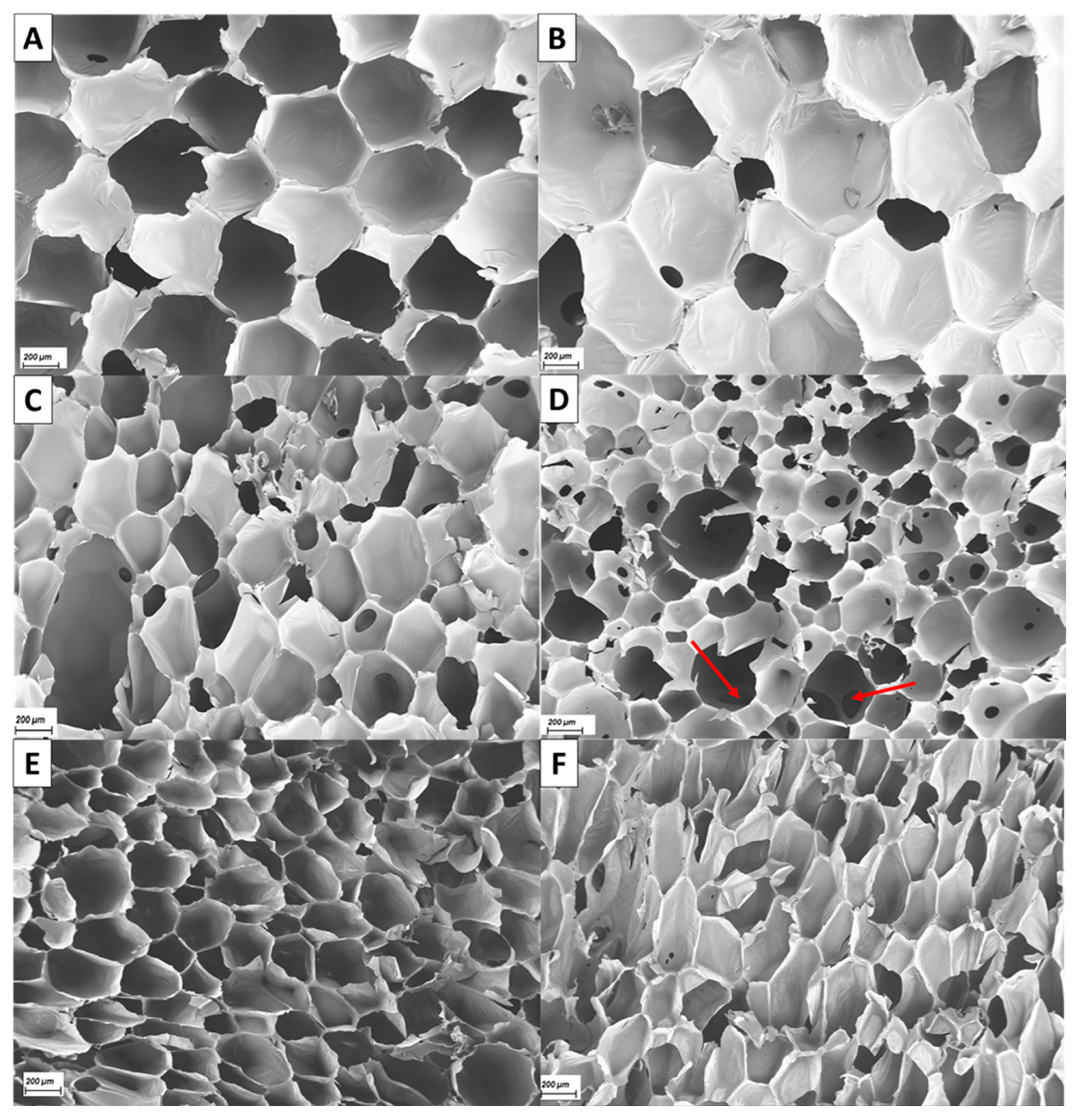
Figure 7 shows the representative morphological structures of recyclate-containing foams, using samples PUF-1_R_1% and PUF-1_R_3% as examples. As expected, a strong difference in morphology was observed for recyclate-containing foams in comparison with PUF-Ref. They demonstrated differences in the cell size and geometry. SEM-images of the reference polyurethane foam (Figure 7A,B) exhibited mostly a closed cell structure, with the cells of a typical regular polyhedron form with minimal anisotropy. When 1 wt.% of Component A was replaced by recyclate, the average foam cell size decreased compared to the reference. However, a comparably higher content of open cells (indicated by the red arrows in Figure 7D) and stronger anisotropy toward the directions parallel and perpendicular to the foam growth was observed, i.e., the cells acquired a more elongated shape (Figure 7C,D). Considering that the density of the investigated foams was negligibly affected by the incorporation of recyclates and that foam morphology has a direct influence on the mechanical properties, the data from the SEM studies explain the results of the mechanical tests described above. The decrease in average cell size and the stronger anisotropy of the cells explain the increase in the values of compression strength and modulus and the observed difference between these values in different directions. The effect of recyclate on the final structure of the foam cells is even more obvious in Figure 7E,F, representing the SEM images of PUF-1_R_3% foam, which demonstrated the highest compression values. The morphological structure of this foam is more regular and the cells are mostly closed, but are smaller compared to the reference foam. However, they are highly elongated in the foam growth direction. The regular structure of the foam and the elongated, small, closed cells result in high σǁ- and Emodǁ-values, and such cell asymmetry also explains the big difference in mechanical properties measured in different directions. It should be noted that a similar trend in changes in morphology, and accordingly in the mechanical properties of the foams, was also observed for samples containing recyclate PUF-2_R.

3.4. Thermal Stability of the Developed Recyclate-Containing PUFs

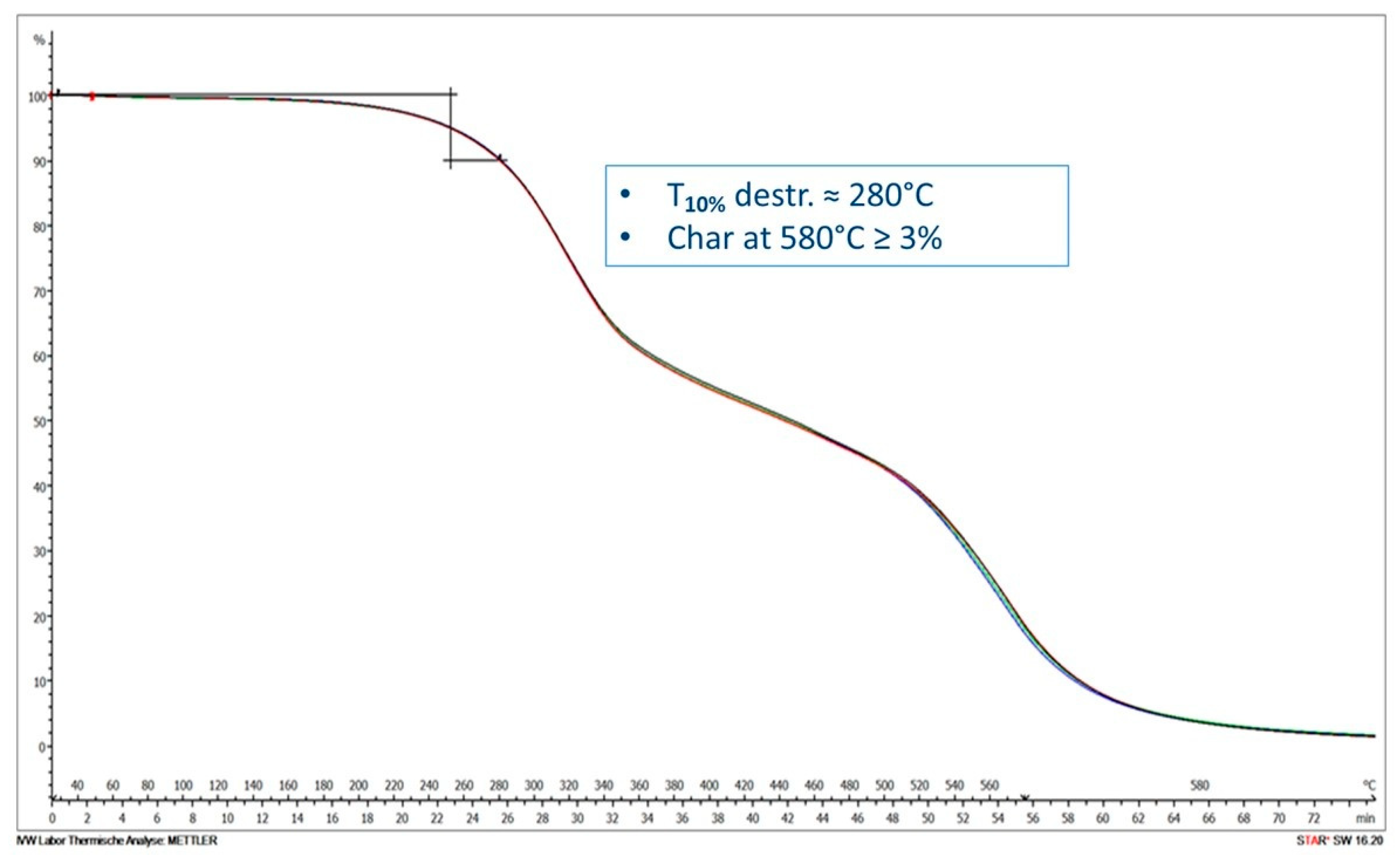
The obtained recyclate-containing products were analyzed by TGA in an air atmosphere to determine their thermo-oxidative stability and to compare it with that of PUF-Ref. Figure 8 presents the TGA-curves for the reference and the recyclate-containing foams PUF-1_R_1%, PUF-1_R_5%, PUF-2_R_1%, and PUF-2_R_5%. All samples investigated demonstrated nearly the same behavior towards thermal decomposition. All systems exhibited decomposition occurring in two main steps in similar temperature ranges and resulted in a char yield at 580 °C of ca. 3%. The temperature at which 10% of weight loss occurred (T10%destr.) was similar for all samples studied (i.e., T10%destr. ≈ 280 °C). In fact, there was no influence of the recyclate type or amount on the thermal stability of the foams, allowing the conclusion that no drastic deterioration of the crosslink density was caused by replacing the original polyol blend with small amounts of the selected recycling products. According to the literature, the following two main degradation steps can be highlighted: (1) preliminary degradation at around 120–340 °C, which can be correlated to oxidation of the urethane segments to produce regenerated polyol, CO2, and H2O species, as well as the oxidation of regenerated polyol to generate char and H2O, CO, CH4, and CO2 gases; and (2) secondary degradation occurring in the range of 340–580 °C, where the remaining organic residues and char are further oxidized in gaseous phases [27,28,29,30].

3.5. Moisture Uptake by Developed Recyclate-Containing PUFs

Finally, the moisture uptake of the reference and recyclate-containing PUFs was determined (see Table 3). Although the PUF-Ref is quite hydrophobic, the incorporation of recyclates (independent from the recyclate type) into its structure further increased the hydrophobicity. At the maximum tested amount of recyclate (i.e., 5 wt.% towards Component A), the moisture uptake decreased in comparison with PUF-Ref by ~26% and ~22% for PUF-1_R_5% and PUF-2_R_5%, respectively.

4. Conclusions

Based on the above results, it can be concluded that the recycled products of commercial PUF-Ref, obtained via consecutive recycling routes 1 and 2 (cf. Table 1), can be used as received (i.e., without any additional purification or fractionation) to replace up to 5 wt.% of the original polyol blend without drastic impact on the shrinkage, density, and thermo-oxidative stability, accompanied by only slight deviations in foaming parameters, mechanical performance, morphology, and hydrophobicity. This allows the applicability of the related foams, i.e., containing ≤ 5 wt.% of recyclates in Component A of PUF-Ref, in pipe pre-insulation.

Author Contributions

Conceptualization, L.G. and S.G.; methodology L.G. and S.G.; investigation, L.G. and W.A.; writing—original draft preparation, L.G.; writing—review and editing, L.G., S.G., W.A. and G.G.; funding acquisition, L.G., S.G. and G.G. All authors have read and agreed to the published version of the manuscript.

Funding

This research was funded by the EU (Horizon 2020 project “An Open Innovation Test Bed for Nano-Enabled Bio-Based PUR Foams and Composites” (BIOMAT), Grant Agreement No.953270, and the Horizon Europe project “New Bio-Based and Sustainable Raw Materials Enabling Circular Values Chains of High Performance Lightweight Biocomposites” (r-LIGHTBIOCOM), Grant Agreement No. 101091691).

Institutional Review Board Statement

Not applicable.

Informed Consent Statement

Not applicable.

Data Availability Statement

All data presented in this study are available on request from the corresponding author.

Conflicts of Interest

Author Liudmyla Gryshchuk was employed by the company PS Resins GmbH and Leibniz-Institut für Verbundwerkstoffe GmbH. The remaining authors declare that the research was conducted in the absence of any commercial or financial relationships that could be construed as a potential conflict of interest.

References

  1. Mistry, M.; Prajapati, V.; Dholakiya, B.Z. Redefining Construction: An In-Depth Review of Sustainable Polyurethane Applications. J. Polym. Environ. 2024, 32, 3448–3489. [Google Scholar] [CrossRef]
  2. Somarathna, H.M.C.C.; Raman, S.N.; Mohotti, D.; Mutalib, A.A.; Badri, K.H. The use of polyurethane for structural and infrastructural engineering applications: A state-of-the-art review. Constr. Build. Mater. 2018, 190, 995–1014. [Google Scholar] [CrossRef]
  3. O’Connor, A.; Kingston, T. Silyl-Terminated Polyurethanes for Construction Sealants. J. ASTM Int. 2004, 1, 1–14. [Google Scholar] [CrossRef]
  4. Naldzhiev, D.; Mumovic, D.; Strlic, M. Polyurethane insulation and household products—A systematic review of their impact on indoor environmental quality. Build. Environ. 2020, 169, 106559. [Google Scholar] [CrossRef]
  5. Kirpluks, M.; Kalnbunde, D.; Benes, H.; Cabulis, U. Natural oil based highly functional polyols as feedstock for rigid polyurethane foam thermal insulation. Ind. Crops Prod. 2018, 122, 627–636. [Google Scholar] [CrossRef]
  6. Zhang, Z.; Tang, X.; Liu, K.; Ye, L.; He, X. Large-scale model testing of high-pressure grouting reinforcement for bedding slope with rapid-setting polyurethane. J. Mt. Sci. 2024, 21, 3083–3093. [Google Scholar] [CrossRef]
  7. Engels, H.-W.; Pirkl, H.-G.; Albers, R.; Albach, R.W.; Krause, J.; Hoffmann, A.; Casselmann, H.; Dormish, J. Polyurethanes: Versatile Materials and Sustainable Problem Solvers for Today’s Challenges. A J. Ger. Chem. Soc. 2013, 52, 9422–9441. [Google Scholar] [CrossRef]
  8. de Souza, F.M.; Choi, J.; Ingsel, T.; Gupta, R.K. High-performance polyurethanes foams for automobile industry. In Micro and Nano Technologies, Nanotechnology in the Automotive Industry; Song, H., Nguyen, T.A., Yasin, G., Singh, N.B., Gupta, R.K., Eds.; Elsevier: New York, NY, USA, 2022; pp. 105–129. ISBN 9780323905244. [Google Scholar] [CrossRef]
  9. Devi, G.D.; Chidambaram, P.K. Evaluation of foam-based composite materials for automotive industry. Mater. Today Proc. 2023; in press. [Google Scholar] [CrossRef]
  10. Barbeau, P.; Loubet, J.-L.; Pavan, S.; Klucker, R. 2K Waterborne Polyurethane Technology for Automotive Clearcoat Applications. Available online: https://www.pcimag.com/articles/92077-2k-waterborne-polyurethane-technology-for-automotive-clearcoat-applications (accessed on 4 November 2024).
  11. Drzeżdżon, J.; Datta, J. Advances in the degradation and recycling of polyurethanes: Biodegradation strategies, MALDI applications, and environmental implications. Waste Manag. 2025, 198, 21–45. [Google Scholar] [CrossRef] [PubMed]
  12. Jafari, A.J.; Tangestani, M.; Zarezadeh, E. Confronting the Environmental Fallout due to Polyurethane Waste and Microplastic Pollution: Mini-review. Shahroud J. Med. Sci. 2025, 11, 57–67. [Google Scholar] [CrossRef]
  13. Gu, X.; Zhu, S.; Liu, S.; Liu, Y. Analysis of the Influencing Factors of the Efficient Degradation of Waste Polyurethane and Its Scheme Optimization. Polymers 2023, 15, 2337. [Google Scholar] [CrossRef]
  14. Simón, D.; Borreguero, A.M.; de Lucas, A.; Rodríguez, J.F. Recycling of polyurethanes from laboratory to industry, a journey towards the sustainability. Waste Manag. 2018, 76, 147–171. [Google Scholar] [CrossRef]
  15. Simón, D.; de Lucas, A.; Rodríguez, J.F.; Borreguero, A.M. Glycolysis of high resilience flexible polyurethane foams containing polyurethane dispersion polyol. Polym. Degrad. Stab. 2016, 133, 119–130. [Google Scholar] [CrossRef]
  16. Simón, D.; Borreguero, A.M.; de Lucas, A.; Rodríguez, J.F. Valorization of crude glycerol as a novel transesterification agent in the glycolysis of polyurethane foam waste. Polym. Degrad. Stab. 2015, 121, 126–136. [Google Scholar] [CrossRef]
  17. Moon, J.; Kwak, S.B.; Lee, J.Y.; Kim, D.; Ha, J.U.; Oh, J.S. Recycling of bio-polyurethane foam using high power ultrasound. Polymer 2020, 186, 122072. [Google Scholar] [CrossRef]
  18. Conversion of Polyurethane Foam Wastes to Polyols. Available online: https://iceberg-project.eu/conversion-of-polyurethane-foam-wastes-to-polyols/ (accessed on 30 November 2024).
  19. Sheppard, D.T.; Jin, K.; Hamachi, L.S.; Dean, W.; Fortman, D.J.; Ellison, C.J.; Dichtel, W.R. Reprocessing Postconsumer Polyurethane Foam Using Carbamate Exchange Catalysis and Twin-Screw Extrusion. ACS Cent. Sci. 2020, 6, 921–927. [Google Scholar] [CrossRef]
  20. Rossignolo, G.; Malucelli, G.; Lorenzetti, A. Recycling of polyurethanes: Where we are and where we are going. Green Chem. 2024, 26, 1132–1152. [Google Scholar] [CrossRef]
  21. Kemona, A.; Piotrowska, M. Polyurethane Recycling and Disposal: Methods and Prospects. Polymers 2020, 12, 1752. [Google Scholar] [CrossRef] [PubMed]
  22. Fonseca, L.P.; Duval, A.; Luna, E.; Ximenis, M.; De Meester, S.; Avérous, L.; Sardon, H. Reducing the carbon footprint of polyurethanes by chemical and biological depolymerization: Fact or fiction? Curr. Opin. Green Sustain. Chem. 2023, 41, 100802. [Google Scholar] [CrossRef]
  23. Thiounn, T.; Smith, R.C. Advances and approaches for chemical recycling of plastic waste. J. Polym. Sci. 2020, 58, 1347–1364. [Google Scholar] [CrossRef]
  24. Liu, B.; Westman, Z.; Richardson, K.; Lim, D.; Stottlemyer, A.L.; Farmer, T.; Gillis, P.; Vlcek, V.; Christopher, P.; Abu-Omar, M.M. Opportunities in Closed-Loop Molecular Recycling of End-of-Life Polyurethane. ACS Sustain. Chem. Eng. 2023, 11, 6114–6128. [Google Scholar] [CrossRef]
  25. Alhazmi, H.; Almansour, F.H.; Aldhafeeri, Z. Plastic Waste Management: A Review of Existing Life Cycle Assessment Studies. Sustainability 2021, 13, 5340. [Google Scholar] [CrossRef]
  26. Polyurethane (PU) Recycling: Growing Challenge and Innovation. Available online: https://www.plasticsengineering.org/2024/06/polyurethane-pu-recycling-growing-challenge-and-innovation-005198/#! (accessed on 23 December 2025).
  27. Pau, D.S.W.; Fleischmann, C.M.; Delichatsios, M.A. Thermal decomposition of flexible polyurethane foams in air. Fire Saf. J. 2020, 111, 102925. [Google Scholar] [CrossRef]
  28. Oprea, S. Effect of structure on the thermal stability of crosslinked poly(ester-urethane). Polimery 2009, 54, 120–125. Available online: https://www.ichp.vot.pl/index.php/p/article/view/1183 (accessed on 23 December 2025). [CrossRef]
  29. Coccia, F.; Gryshchuk, L.; Moimare, P.; Bossa, F.d.L.; Santillo, C.; Barak-Kulbak, E.; Verdolotti, L.; Boggioni, L.; Lama, G.C. Chemically Functionalized Cellulose Nanocrystals as Reactive Filler in Bio-Based Polyurethane Foams. Polymers 2021, 13, 2556. [Google Scholar] [CrossRef]
  30. Zieleniewska, M.; Leszczynski, M.K.; Szczepkowski, L.; Bryskiewicz, A.; Bien, K.; Ryszkowska, J. Development and applicational evaluation of the rigid polyurethane foam composites with egg shellwaste. Polym. Degrad. Stab. 2016, 132, 78–86. [Google Scholar] [CrossRef]
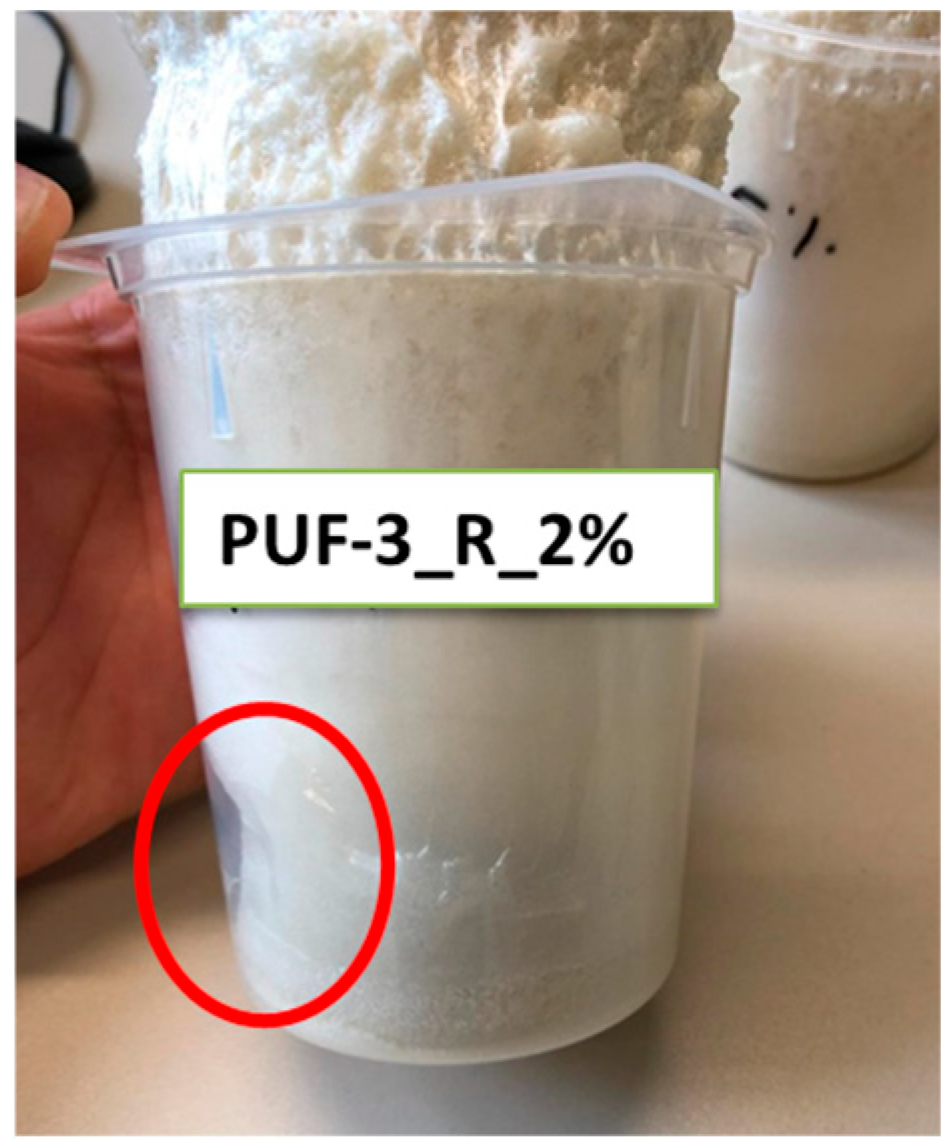
Figure 1. Shrinkage of PUF-3_R_2% after 4 h.
Appliedchem 06 00002 g001
Figure 2. Cream, rise, and tack-free times determined for the reference and recyclate-containing PUFs.
Appliedchem 06 00002 g002
Figure 3. Fiber time for the reference and recyclate-containing PUFs.
Appliedchem 06 00002 g003
Figure 4. Density of the reference and recyclate-containing PUFs (max. std 4.38%).
Appliedchem 06 00002 g004
Figure 5. Compression strength of the reference and recyclate-containing PUFs (max. std 8.89%).
Appliedchem 06 00002 g005
Figure 6. Emod values for the reference and recyclate-containing polyurethane foam (max. std 10.02%).
Appliedchem 06 00002 g006
Figure 7. SEM images (×100 magnification) of PUF-Ref (A,B) and foams PUF-1_R_1% (C,D) and PUF-1_R_3% (E,F), taken on perpendicular (A,C,E) and parallel cross-sections along the foam growth direction (B,D,F).
Appliedchem 06 00002 g007
Figure 8. TGA curves for the reference and recyclate-containing PUFs (i.e., PUF-1_R_1%, PUF-1_R_5%, PUF-2_R_1%, and PUF-2_R_5%).
Appliedchem 06 00002 g008
Table 1. Formulations used for the chemical recycling of PUF-Ref.
Component, gPUF-1_RPUF-2_RPUF-3_R
Foam0.60.60.6
Phytic acid, 50%0.30.30.3
Urea0.05------------------------
Glycerol333
PEG 300333
2-Aminoethan-1-ol------------0.5------------
Table 2. Formulation for the master and recyclate-containing PUFs.
ComponentsMaster Foam, Amounts in gRecyclate-Containing Foams, Amount in g
Component A100100-X
Recyclate-/-X
Cyclopentane1212
Component B160160
Table 3. Moisture uptake for the reference and recyclate-containing polyurethane foams.
SampleMoisture Uptake, %SampleMoisture Uptake, %
PUF-Ref4.04 ± 0.44
PUF-1_R_1%3.68 ± 0.23PUF-2_R_1%3.76 ± 0.42
PUF-1_R_2%3.54 ± 0.19PUF-2_R_2%3.59 ± 0.61
PUF-1_R_3%3.28 ± 0.58PUF-2_R_3%3.33 ± 0.30
PUF-1_R_5%2.99 ± 0.34PUF-2_R_5%3.16 ± 0.27
Disclaimer/Publisher’s Note: The statements, opinions and data contained in all publications are solely those of the individual author(s) and contributor(s) and not of MDPI and/or the editor(s). MDPI and/or the editor(s) disclaim responsibility for any injury to people or property resulting from any ideas, methods, instructions or products referred to in the content.