Article

Interaction of Soluble and Insoluble Dietary Fibers with Syringic Acid: Adsorption, Kinetics and Antioxidant Activity


Department of Applied Chemistry and Ecology, Faculty of Food Technology Osijek, Josip Juraj Strossmayer University of Osijek, Franje Kuhača 18, 31000 Osijek, Croatia
*
Author to whom correspondence should be addressed.
AppliedChem 2026, 6(1), 14; https://doi.org/10.3390/appliedchem6010014
Submission received: 29 November 2025 / Revised: 28 January 2026 / Accepted: 22 February 2026 / Published: 1 March 2026

Abstract

The positive effects of phenolic compounds in the gastrointestinal tract are influenced by dietary fibers. The aim of this work was to study the interactions between syringic acid and soluble and insoluble dietary fibers from the β-glucan group, including laminarin from Laminaria digitata, zymosan A from Saccharomyces cerevisiae and β-glucan from Euglena gracilis. Kinetic models of the pseudo-first and pseudo-second order were applied to describe the interactions in time. The stability of the complexes between syringic acid and dietary fibers was monitored at different times by the DPPH method. The water holding capacity, water swelling capacity and water solubility of dietary fibers were determined. FTIR spectra were recorded to characterize the possible binding of syringic acid and dietary fibers. The results showed that syringic acid adsorbed onto dietary fibers with different adsorption capacities. The highest adsorption capacity was observed for zymosan A (431 mg g−1), followed by laminarin (382 mg g−1) and β-glucan from Euglena gracilis (336 mg g−1). The parameters of the kinetic models showed good agreement with the experimental data. The highest antiradical activity was found for the complex of syringic acid—β-glucan from Euglena gracilis. The FTIR spectrum confirmed the bonding of syringic acid onto dietary fibers. The interactions of polyphenols and dietary fibers are important to understand the role of dietary fibers as carriers of polyphenols.

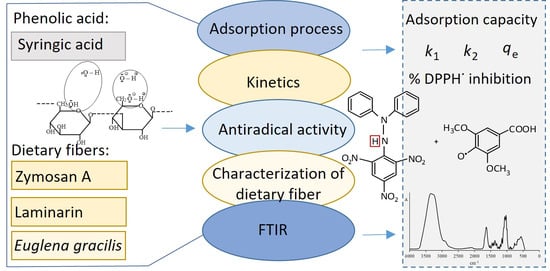
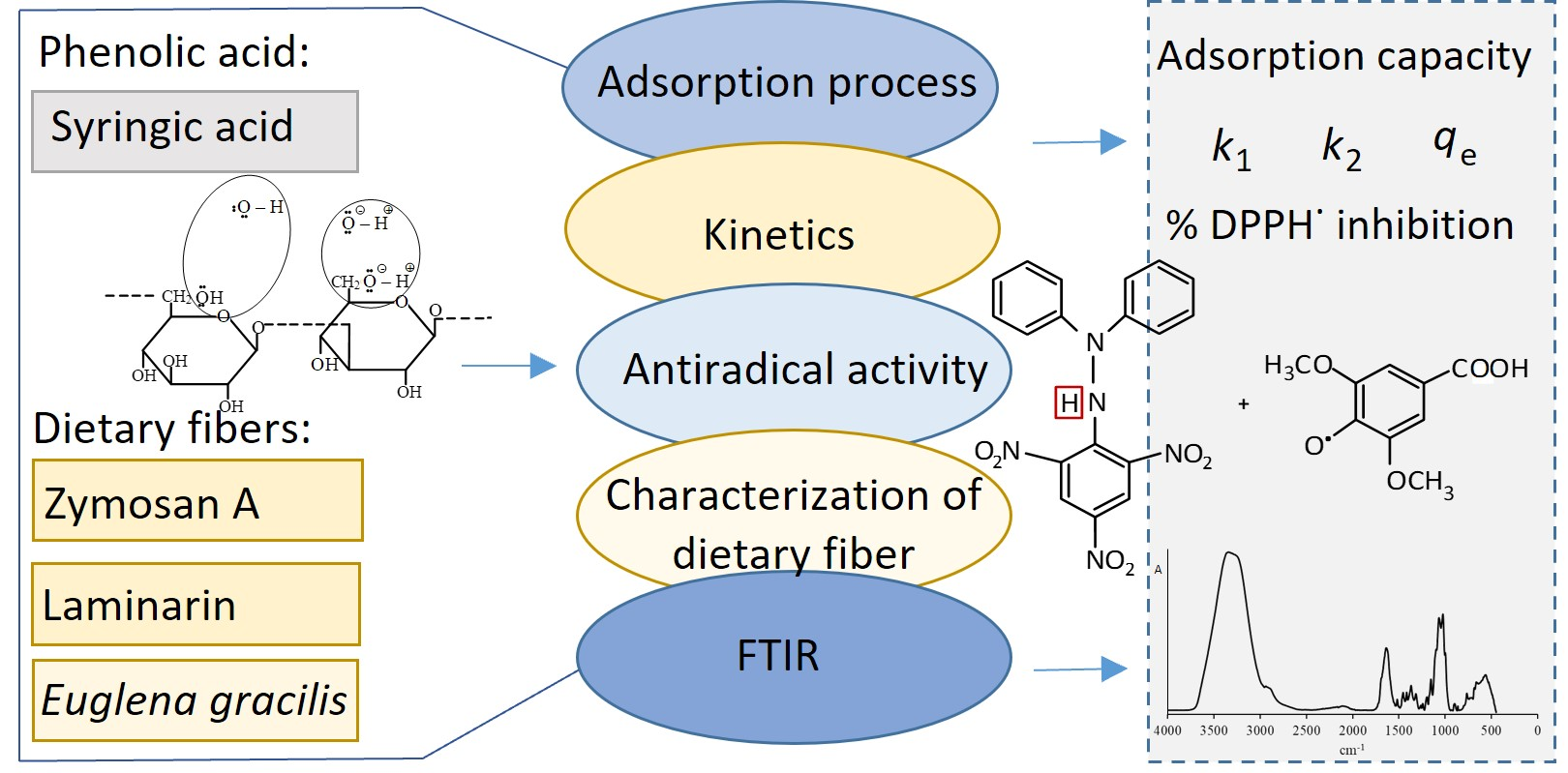
Graphical Abstract

1. Introduction

Since polyphenols are found in many plants, such as fruits and vegetables, they are a part of the daily diet and are being increasingly investigated. Syringic acid belongs to the group of phenolic acids and can be found in many plants and plant-derived foods, such as olives, dates, grapes, spices, pumpkins, honey and red wine. It has shown many potentially positive types of bioactivity, such as antiradical, antimicrobial and anticancer activity [1]. Syringic acid’s bioactivity in the human organism depends on its accessibility for absorption in the digestive tract. Certain factors, like chemical instability, degradation and metabolism in the upper gastrointestinal tract, can influence the accessibility of syringic acid for absorption [2]. Syringic acid shows good stability for 48 h, but, after 72 h, degradation occurs [3]. The behavior of syringic acid in the gastrointestinal tract should be investigated to better understand its various types of bioactivity.
Dietary fibers can be found in various fruits, vegetables, and grains [4]. They are plant carbohydrates, which can be found in oats, barley, mushrooms, or algae. Fibers can affect health, which depends on their physicochemical structure and physiological properties [5]. To date, they have shown many positive characteristics, including antioxidant activity, glucose adsorption capacity and cholesterol adsorption capacity [6]. Dietary fibers differ in their solubility in water, size, and chemical structure, with chemical structure variations including anomeric configurations (α or β), branching, and the presence of functional groups [7,8]. One of their characteristics is that they can interact with polyphenols, “carry” them through the digestive tract and deliver them to the lower parts of the digestive tract. Delivery systems with dietary fibers [2,3] have gained interest in recent years. In other words, dietary fibers can adsorb polyphenolic compounds in the gastrointestinal tract [6]. The interaction between dietary fibers and syringic acid, which can result in the adsorption of syringic acid onto dietary fibers, could potentially protect syringic acid during digestion and deliver it to the lower parts of the digestive tract. However, this activity could affect the accessibility of syringic acid for absorption in the upper gastrointestinal tract, its bioavailability and consequently its nutritional and potential health benefits [9].
Dietary fibers can be differentiated according to whether they are soluble or insoluble in water [10]. Solubility in water, and other physicochemical properties of dietary fibers, such as their hydration properties, particle size, water holding capacity and water swelling capacity, are important for their behavior in the gastrointestinal tract [3,6]. Understanding these properties can also help to understand their behavior during digestion and their binding with phenolic compounds. Dietary fibers can absorb water, swell during digestion and disperse or aggregate into colloidal particles [6]. Soluble dietary fibers can increase the viscosity in the gastrointestinal tract, decrease the rate of gastric emptying, reduce the rate of macronutrient absorption and have a positive influence on blood lipids [11]. Since they are not digested in the small intestine, with partial or complete fermentation in the colon [12], dietary fibers have the possibility to bind to syringic acid and form a dietary fiber—syringic acid complex and to carry syringic acid through the gastrointestinal tract.
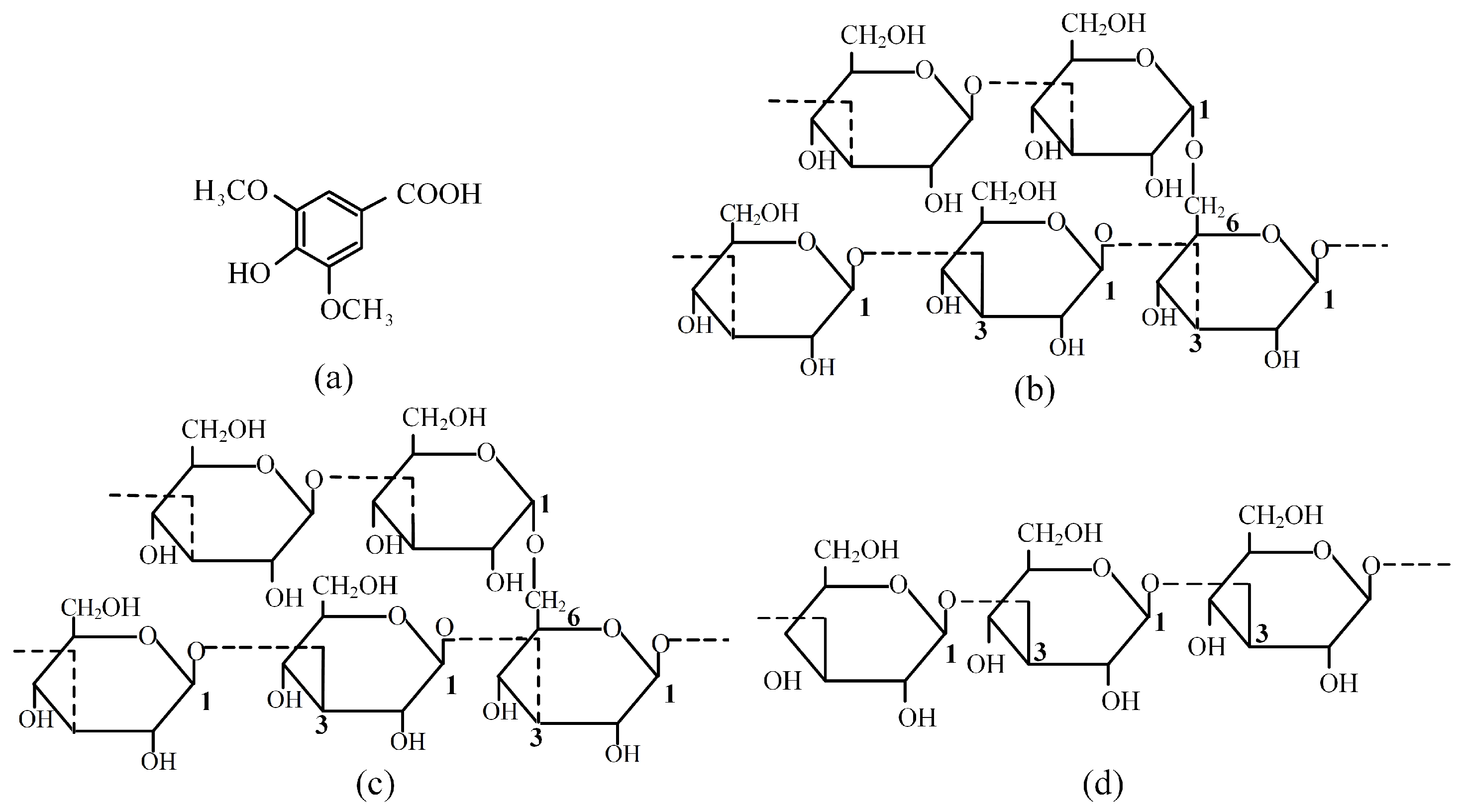
Interactions between dietary fibers and syringic acid can be studied through the adsorption process, where syringic acid is an adsorbate and a β-glucan is an adsorbent. Specifically, β-glucan fibers, found in many plant sources, can be investigated for their adsorption of syringic acid. The adsorption process can be described using adsorption isotherms that express the relationship between the adsorption capacity (the amount of adsorbate adsorbed per unit mass of adsorbent) and equilibrium concentration. Furthermore, kinetic models, such as pseudo-first-order and pseudo-second-order models, can be applied to study the adsorption mechanisms of syringic acid and dietary fibers [13]. β-glucans are dietary fibers [7] found in cereals (oat or barley), mushrooms, seaweed (laminarin from Laminaria digitata), yeasts (zymosan A from Saccharomyces cerevisiae) or microalgae (β-glucan from Euglena gracilis) (Figure 1). β-glucans from cereals, mushrooms and seaweeds are typically soluble, whereas those from yeasts and microalgae are insoluble [10]. Dietary fibers and syringic acid show antiradical activity. Antiradical activity can be determined using various in vitro methods, including DPPH, FRAP, ABTS and others. These assays are based on different reaction mechanisms, such as hydrogen atom transfer or single-electron transfer. The DPPH and ABTS methods involve both hydrogen and electron transfer, whereas the FRAP assay relies on an electron transfer mechanism [14]. The DPPH method was used in our study for the determination of the antiradical activity of syringic acid, dietary fibers and their complexes.
The aim of this work was to study the interactions between syringic acid and soluble and insoluble dietary fibers from the β-glucan group (laminarin from Laminaria digitata, zymosan A from Saccharomyces cerevisiae and β-glucan from Euglena gracilis). These interactions were studied through the analysis of the adsorption process using adsorption kinetics. Antiradical activity was investigated as one of the functions of phenolic compounds in the gastrointestinal tract to determine whether interactions with dietary fibers affect their antiradical activity. Moreover, some physicochemical properties of dietary fibers were determined (their water holding capacity, water swelling capacity and water solubility). The scanning of FTIR spectra was used to investigate possible bonding between syringic acid and fibers.

2. Materials and Methods

2.1. Reagents and Solutions

Dietary fibers (laminarin from Laminaria digitata, zymosan A from Saccharomyces cerevisiae, β-glucan from Euglena gracilis), syringic acid (≥95%), sodium hydrogen phosphate dodecahydrate, sodium dihydrogen phosphate dihydrate and 2,2-diphenyl-1-picryl-hydrazyl (DPPH˙) were purchased from Sigma Aldrich (St. Louis, MO, USA). Sodium carbonate was purchased from Gram-Mol (Zagreb, Croatia) and Folin–Ciocalteu reagent from Merck (Darmstadt, Germany). A phosphate buffer solution (0.1 M) was used at pH 7.0.

2.2. Folin–Ciocalteu Spectrophotometric Method

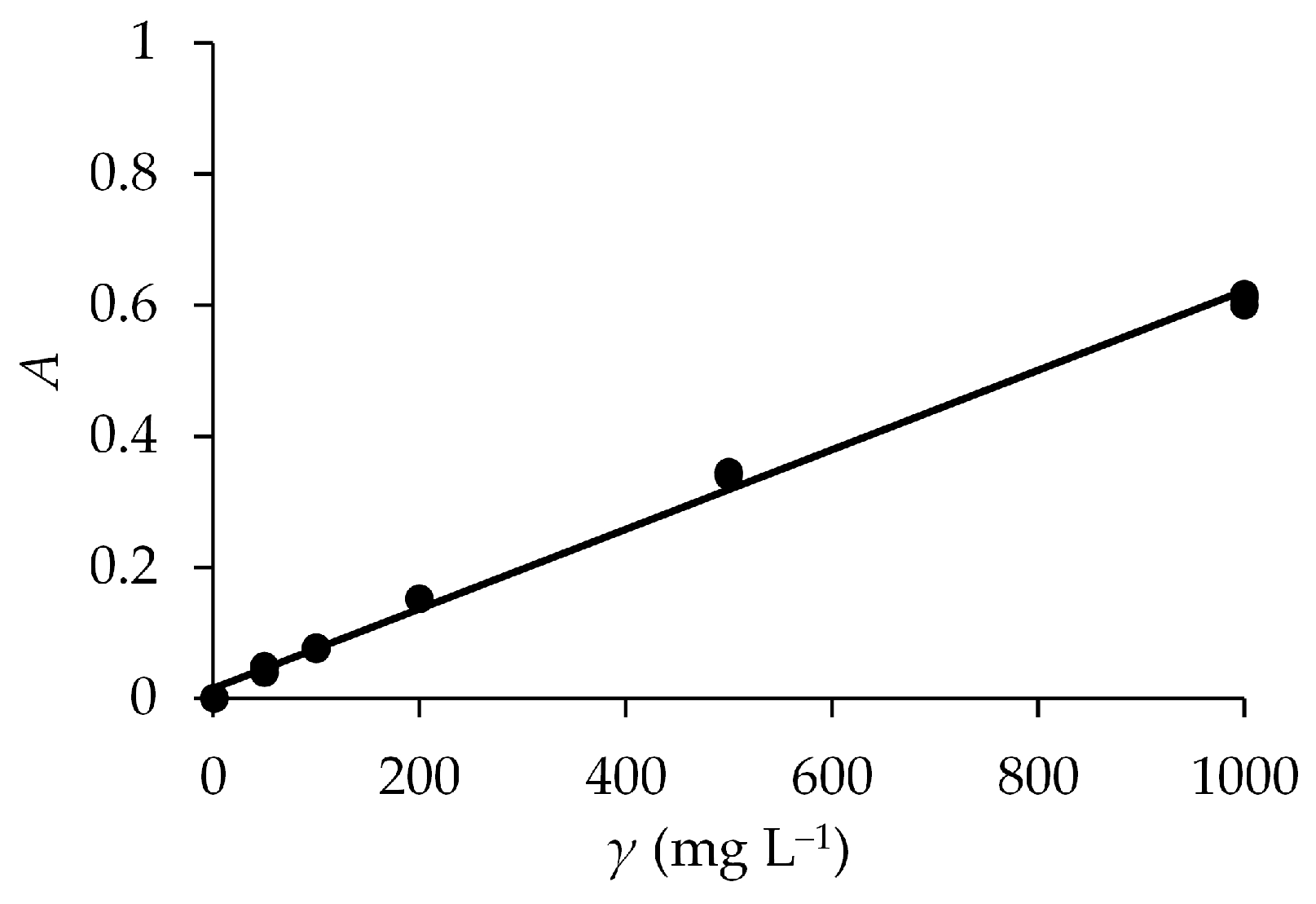
To obtain the calibration curve of syringic acid, a stock solution of syringic acid (1000 mg L−1) was prepared at pH 7.0. Dilutions of 1, 50, 100, 200 and 500 mg L−1 were prepared from the stock solution, also at pH 7.0. The procedure was as follows: 30 μL of sample, 2370 μL of distilled water, 150 μL of Folin–Ciocalteu reagent and 450 μL of sodium carbonate (200 g L−1) were added to a plastic tube. After 30 min at 40 °C in an incubator, the absorbance was measured at 765 nm with a spectrophotometer (Shimadzu, UV-1280, Kyoto, Japan). The calibration curve, coefficient of determination, limit of detection, limit of quantification and accuracy were determined. The concentration of syringic acid in the adsorption process was determined with the described Folin–Ciocalteu method, using the prepared calibration curve of syringic acid. Matrix blanks containing a buffer and each fiber type without syringic acid were processed identically as in the adsorption process, including filtration. There was no detectable response of the matrix blanks in the Folin–Ciocalteu assay, confirming that the fibers themselves did not contribute to the measured signal.

2.3. Adsorption of Syringic Acid on Dietary Fibers

The adsorption processes of syringic acid and various dietary fibers (soluble: laminarin from Laminaria digitata, insoluble: zymosan A from Saccharomyces cerevisiae, β-glucan from Euglena gracilis) were investigated at 37 °C and pH 7.0, with initial concentrations of both syringic acid and dietary fibers of 500 mg L−1. The appropriate mass of syringic acid and the dietary fiber was weighed directly into an adsorption solution with a total volume of 10 mL and pH 7.0. The solution was then placed on a rotator (Grant-bio PTR-35, Oxon, UK), which was placed in an incubator (Memert, IN 30, Schwabach, Germany) to ensure a constant temperature, for 30 min, 1 h, 2 h, 3 h and 4 h. After this, the solutions were filtered through a vacuum filtration unit with Whatman nylon membrane filters at 0.2 µm. The syringic acid concentration at each of the indicated times was determined in a supernatant (non-adsorbed syringic acid) using the calibration curve of syringic acid. The amount, in mg, of syringic acid adsorbed per g of dietary fiber (adsorption capacity) was calculated using Equation (1):
q t = γ 1 γ 2 · V s m d
where qt is the measured adsorption capacity (mg g−1) at time t, γ1 is the initial mass concentration of syringic acid (mg L−1), γ2 is the (non-adsorbed) mass concentration of syringic acid (mg L−1), md is the mass of the dietary fiber in the adsorption solution (g), and Vs is the total volume of the adsorption solution (L).

2.4. Kinetic Study

Non-linear forms of adsorption kinetic models, like the pseudo-first-order reaction (Equation (2)) and pseudo-second order reaction (Equation (3)), were applied:
q t = q e 1 e k 1 · t
q t = q e 2 · k 2 · t q e · k 2 · t + 1
where qt represents the amount (mg) of syringic acid adsorbed per mass (g) of dietary fiber at reaction time t, qe represent the amount (mg) of syringic acid adsorbed per mass (g) of dietary fiber at equilibrium, t is the reaction time (h), k1 is the pseudo-first-order rate constant (h−1), and k2 is the pseudo-second-order rate constant (g mg−1 h−1). The parameters of the pseudo-first-order and pseudo-second-order models (qe, k1, k2) were obtained by non-linear regression using the Solver tool in MS Excel (Microsoft Corporation, Redmond, WA, USA) by minimizing the sum of squared differences between the measured and modeled values of qt.

2.5. Determination of Antiradical Activity

Antiradical activity was determined with the DPPH˙ method using a DPPH˙ free radical (1 mmol L−1 solution prepared in methanol). Antiradical activity was determined for syringic acid (concentrations 500, 400 and 300 mg L−1 in a 2.7 mL volume with pH 7), dietary fibers (500 mg L−1 in a 2.7 mL volume with pH 7) and the complex of syringic acid−dietary fiber. These solutions were kept in the same conditions as described for the adsorption and for the same time periods (30 min, 1, 2, 3, 4, h). After this, 300 μL of DPPH˙ solution was added to the solutions. The solutions were placed in the dark for 30 min on a rotator, and the absorbance was measured at 517 nm with a spectrophotometer. The antiradical activity was also measured for the syringic acid−dietary fiber complex. The syringic acid−dietary fiber complex was obtained after the adsorption process with 500 mg L−1 syringic acid and 500 mg L−1 dietary fiber in a 10 mL solution at pH 7 and 37 °C for the same indicated times (0.5 h, 1 h, 2 h, 3 h, 4 h). After vacuum filtration, the complexes collected from the filters were placed in 2700 µL of solution at pH 7.0. The antiradical activity of solutions that contained complexes was determined with the same procedure. Blank solutions were prepared with the same procedure. The sample used for the syringic acid blank solution contained the same syringic acid concentration as for adsorption, dissolved in buffer at pH 7; fiber blanks contained the same fiber concentration in buffer at pH 7; and complex blanks contained the complex in buffer at pH 7 for a total volume of 2700 μL. The blank solutions were kept in the same conditions as for adsorption at different times. After this, 300 µL methanol was added instead of the DPPH˙ radical. The absorbance of the blank solution was measured at 517 nm. Inhibition of the DPPH˙ radical (%) was determined using Equation (4):
I n h i b i t i o n = A D P P H A s a m p l e A b l a n k A D P P H × 100   ( % )
where ADPPH is the absorbance of the DPPH˙ radical at t = 0 min, Asample is the absorbance of the sample with the DPPH˙ radical, and Ablank is the absorbance of the blank solution.

2.6. Characterization of Dietary Fibers

For the characterization of the insoluble dietary fiber (zymosan A from Saccharomyces cerevisiae, β-glucan from Euglena gracilis), the water holding capacity (WD, g g−1) (the amount of water in the fiber after removing the water with centrifugation [15]) was determined with Equation (5); the water swelling capacity (WSC, g g−1) (the amount of water remaining in the fiber without centrifugation [16]) with Equation (6) [17]; and the water solubility (WS, g g−1) [17] with Equation (7). The dietary fiber was weighed (m0) to final concentration of 500 mg L−1 in 1 mL of solution with pH 7 and placed in an incubator at 37 °C for 4 h. After this, the solutions were placed on a centrifuge (Eppendorf Minispin, Eppendorf, Hamburg, Germany) for 5 min at 10,000 rpm, the pH 7 solution was pipetted out and the remaining fiber was weighed (m1). Additionally, a solution with pH 7 was pipetted out without centrifugation, and the remaining dietary fiber was weighed (m2). All remaining dietary fibers were dried at 80 °C for 24 h in the incubator and weighed (m3).
WD = m 1 m 3 m 0   ( g   w a t e r   g 1   f i b e r )
WSC = m 2 m 3 m 0   ( g   w a t e r   g 1   f i b e r )
WS = m 0 m 3 m 0   ( g   w a t e r   g 1   f i b e r )

2.7. FTIR Spectra

FTIR spectra were recorded for syringic acid, dietary fibers (laminarin from Laminaria digitata, zymosan A from Saccharomyces cerevisiae, β-glucan from Euglena gracilis) and the syringic acid−dietary fiber complex. The complexes were prepared with 500 mg L−1 syringic acid and 500 mg L−1 dietary fiber in a 10 mL solution at pH 7 at 37 °C for 4 h and then filtered through the vacuum filtration unit with Whatman nylon membrane filters at 0.2 µm, where the complex was retained on the filter. The complex was dried out and the FTIR spectrum was recorded in the range of 450−4000 cm−1 with a scanning resolution of 4 cm−1 using FTIR (PerkinElmer UATR, Waltham, MA, USA). The FTIR spectra were baseline-corrected.

2.8. Statistical Analysis

The MS Excel (Redmond, WA, USA) software was used for the data analysis. Non-linear regression analysis of the adsorption kinetic models was conducted with the Solver in MS Excel, and the standard error (SE) of the regression was calculated:
S E = i = 1 n q t , m e a s u r e d q t , m o d e l 2 n a
where n is the total number of data points, qt,measured is the qt measured and qt,model is the qt obtained by the model, and a = 2 is the number of parameters of the model. The calibration curves were based on two replicate samples of each standard concentration, each measured three times. All adsorption experiments and kinetic analyses were performed in two parallels with each concentration measured three times (n = 6). Antiradical activity measurement and the characterization of dietary fibers were performed in two parallels, each measured once (n = 2). All results are expressed as means ± standard deviations (SDs).
To determine the correlations among the experimentally obtained adsorption capacities of syringic acid and dietary fibers, the root mean square error (RMSE) was calculated (Equation (9)):
R M S E = i n q e , m e a s u r e d , i q e , m o d e l , i 2 n

3. Results

3.1. Validation of Folin–Ciocalteu Method

Since the adsorption of syringic acid and dietary fibers was studied in a solution with pH 7, the calibration curve (Figure 2) of syringic acid was also prepared at the same pH. Validation parameters were obtained (Table 1).
Syringic acid showed a linear calibration curve (R2 is 0.9957), with a reasonably low LOD (1.56 mg L−1) and LOQ (4.71 mg L−1). The accuracy of the method was confirmed by the absence of systematic errors, as indicated by the confidence interval for the slope (which contained 1) and the intercept (which contained 0). The prepared calibration curve was used in the experiment regarding the adsorption of syringic acid onto dietary fibers.

3.2. Adsorption of Syringic Acid on Dietary Fibers

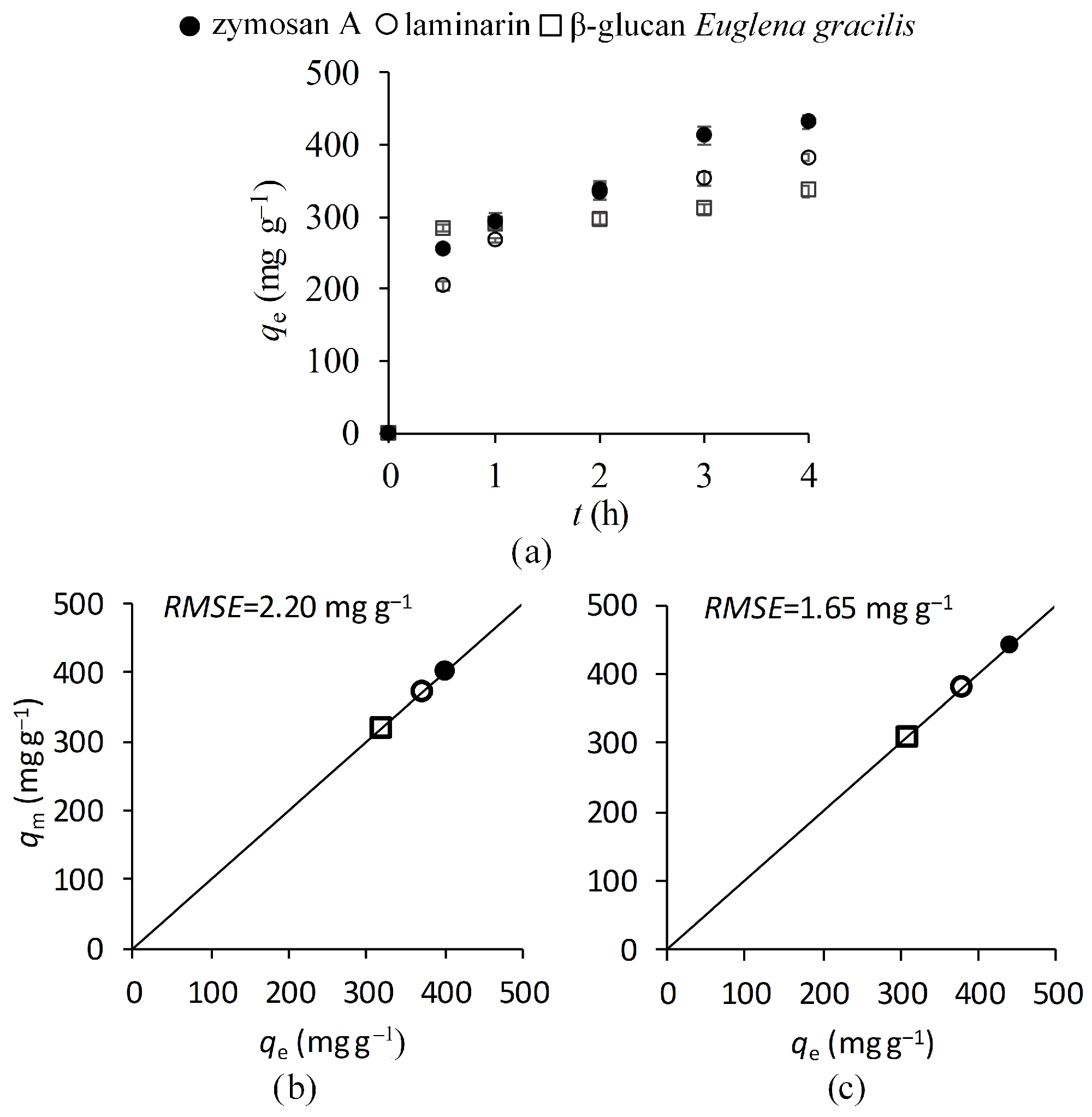
In order to explain the interactions between syringic acid and dietary fibers, an adsorption process was carried out. The adsorption process was conducted between syringic acid and soluble/insoluble dietary fibers, namely β-glucan from seaweed (laminarin from Laminaria digitata), yeast (zymosan A from Saccharomyces cerevisiae) and microalgae (β-glucan from Euglena gracilis). In order to explain interactions in the gastrointestinal tract, a temperature of 37 °C was chosen because it is the body temperature, and a pH 7 was used because this pH prevails in the lower parts of the gastrointestinal tract. The amount of syringic acid adsorbed per mass of dietary fiber (qe, mg g−1) is shown in Figure 3a.
The highest adsorption capacity was found for zymosan A (431 mg g−1), followed by laminarin (382 mg g−1) and β-glucan from Euglena gracilis (336 mg g−1) (Figure 3a), similarly to an earlier study that obtained an adsorption capacity of 407 mg g−1 between syringic acid and polymeric resin [18]. To understand the interactions in time, a kinetic study was performed.

3.3. Kinetic Study

Table 2 presents the kinetic parameters of the pseudo-first- and pseudo-second-order models and the half-reaction times for syringic acid and dietary fibers.
Parameters k1 and qe obtained with the pseudo-first-order model were within the ranges of 1.40 to 3.00 h−1 and 320 to 402 mg g−1. Parameters k2 and qe obtained with the pseudo-second-order model ranged from 0.0054 to 0.068 g mg−1 h−1 and from 308 to 439 mg g−1, respectively. The adsorption capacities obtained from both models were the highest for zymosan A, which was in accordance with the experimentally obtained adsorption capacities (Figure 3a).
To evaluate the agreement between the adsorption capacity predicted by the model and the experimentally obtained capacity, the two were compared directly, and the RMSE was calculated (Figure 3b,c). The adsorption capacities obtained by the models and experimentally showed good agreement (RMSE was 2.20 mg g−1 for pseudo-first order and 1.60 mg g−1 for pseudo-second order). The RMSE was lower for the pseudo-second-order kinetic model, and the model showed a better correlation with the experimentally obtained values of the adsorption capacity.

3.4. Antiradical Activity

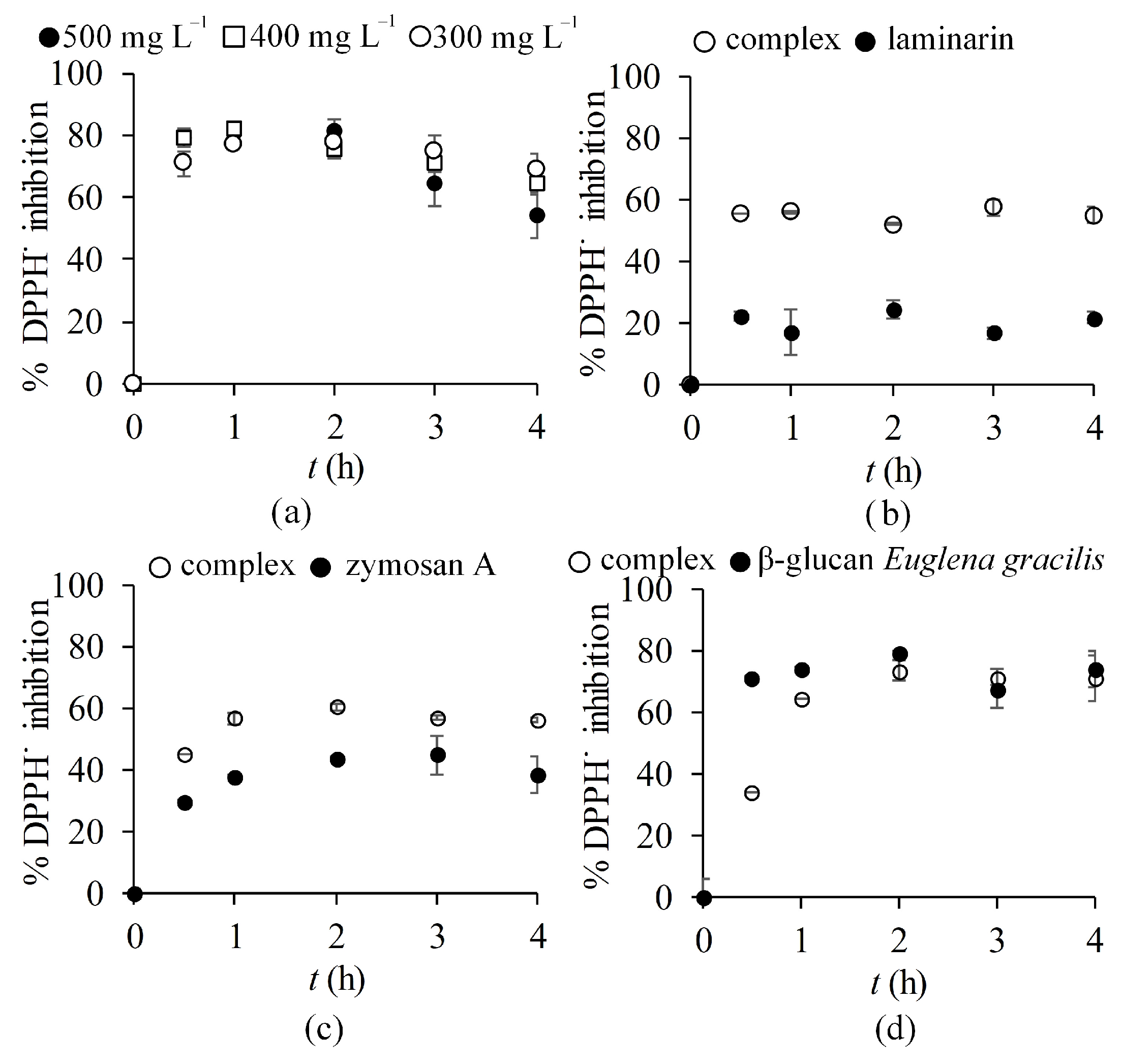
The antiradical activity was measured for different concentrations of syringic acid, for dietary fibers and for the complex of syringic acid−dietary fiber in time at 37 °C and pH 7 (Figure 4). Syringic acid showed high radical scavenging activity across all tested concentrations. Syringic acid has the ability to scavenge free radicals. The antiradical activity of phenolic acids depends on the number of hydroxyl moieties attached to the benzene ring. Syringic acid shows high antiradical activity among other phenolic acids [1] due to its methoxy groups, which act as electron-donating moieties [19]. When comparing the dietary fibers, β-glucan from Euglena gracilis showed higher antiradical activity than zymosan A and laminarin. Among the complexes, the syringic acid–β-glucan complex from Euglena gracilis showed the highest antiradical activity (71% DPPH˙ inhibition). A previous study also showed that phenolic compounds from tea and β-glucan can scavenge free radicals in a mixture or in complexes [20].

3.5. Characterization of Dietary Fibers

β-Glucan from seaweed (laminarin from Laminaria digitata), yeast (zymosan A from Saccharomyces cerevisiae) and microalgae (β-glucan from Euglena gracilis) (Figure 1) were used in this study to determine how differences in their chemical structure and physicochemical properties influenced the bonding with syringic acid and the stability of the complexes. In this study, the water holding capacity, water swelling capacity and water solubility (Table 3) were determined for the insoluble dietary fibers. The water holding capacity depends on the dietary fiber’s structure, and it ranges from 2.01 to 25.03 g g−1 [4]. If a dietary fiber has more hydrophilic groups, a larger contact area and a higher branching degree, its water holding capacity increases due to the retention of water in the hydrophilic part [4,8]. This is in accordance with our results, where the water holding capacity was higher for zymosan A (0.87 g g−1) and lower for Euglena gracilis (0.62 g g−1) (Table 3). The water swelling capacity of dietary fibers ranges from 0.95 to 23.90 mL g−1 [4]. In our study, the water swelling capacity for zymosan A was 14.58 g g−1 and it was 5.66 g g−1 for Euglena gracilis. The water solubility of zymosan A was 0.068 g g−1 and that for Euglena gracilis was 0.022 g g−1 (Table 3). The ability of dietary fibers to retain water suggests that they may facilitate the uptake and incorporation of syringic acid into the fiber.

3.6. FTIR Spectra

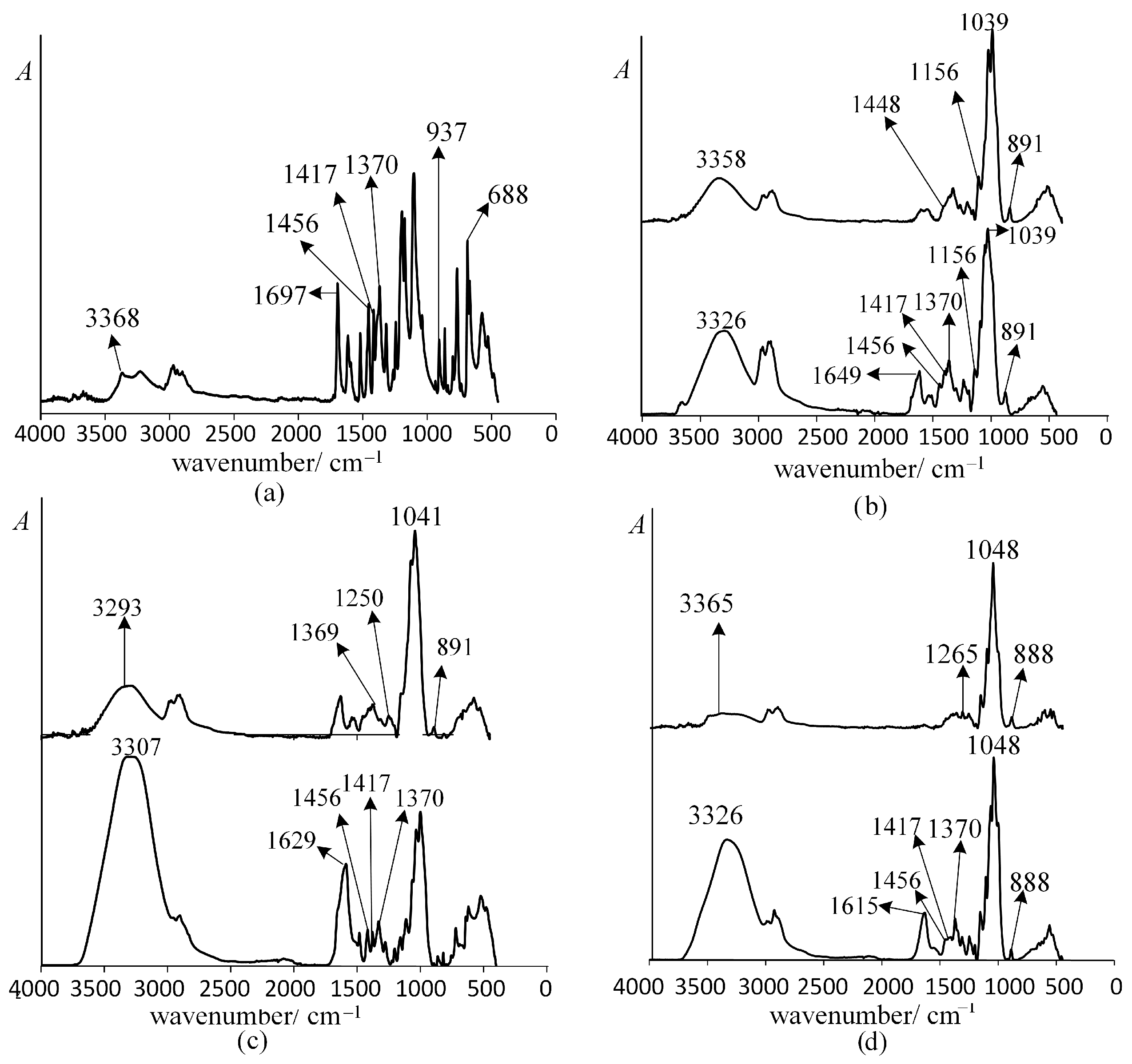
FTIR spectra were recorded for syringic acid, dietary fibers and the dietary fiber−syringic acid complexes. Syringic acid showed peaks on the FTIR spectrum (Figure 5a) at 3368 cm−1 (OH groups), 1697 cm−1 (C=O), 1456, 1417 and 1370 cm−1 (OH and the presence of methoxy groups), 937 cm−1 (C−COOH) and 688 cm−1 [21].
Laminarin (Figure 5b) showed peaks at 3358 cm−1 (OH stretching groups), 1448 cm−1 (presence of carboxyl groups), 1156 cm−1 (presence of CC stretching vibrations in glycosidic bonds), 1039 cm−1 (presence of CO stretching vibrations in pyranoid ring) and 891 cm−1 (anomeric structure of glucose) [22]. In the laminarin−syringic acid complex, peaks for laminarin (1156, 891 cm−1) and syringic acid (1370, 1417, 1456 cm−1) could be found. The peaks on the FTIR spectrum of zymosan A (Figure 5c) occurred at 3293 cm−1 (OH stretching groups), 1369 cm−1 (C−H bonds), 1250 cm−1 (CH2OH stretching), 1041 cm−1 (C−O−C stretching) and 891 cm−1 (anomeric structure of glucose). The FTIR spectrum of zymosan A agreed with those published in the literature [23]. In the zymosan A−syringic acid complex, peaks for zymosan A (1370 cm−1) and syringic acid (1456, 1417 cm−1) could be found. The β-glucan from Euglena gracilis (Figure 5d) showed peaks at 3365 cm−1 (OH stretching groups), 1265 cm−1 (CH2OH stretching), 1048 cm−1 (presence of C−O−C stretching vibrations on sugar ring) and 888 cm−1 (β-glycosidic bonds) [24,25]. In the β-glucan Euglena gracilis−syringic acid complex, peaks for β-glucan (1048, 888 cm−1) and syringic acid (1456, 1417, 1370 cm−1) could be found (Figure 5d). The peaks for dietary fibers and syringic acid in their complexes indicated the presence of dietary fibers and syringic acid (Figure 5). In the FTIR spectra of the dietary fiber–syringic acid complexes, all peaks showed a low intensity (1000–1500 cm–1), which could have been due to reduced OH bending mobility. The FTIR spectrum of syringic acid showed a strong band at 1697 cm−1, assigned to the C=O stretching vibration of the carboxyl group. In the dietary fiber–syringic acid complexes, this band was shifted and appeared at 1649, 1629 and 1615 cm−1, respectively, indicating a decrease in the C=O stretching frequency. In addition, the band at 937 cm−1, assigned to the C–COOH vibration of the carboxylic group in syringic acid, exhibited a very low intensity in the spectra of the complexes. Such a shift to lower wavelengths could suggest the interaction of syringic acid with the functional groups of the dietary fibers. Further studies are necessary to confirm this bonding.

4. Discussion

Since syringic acid is found in various fruits and vegetables, it can interact with dietary fibers in the gastrointestinal tract. Various factors can influence the interactions between syringic acid and dietary fibers, such as the chemical structures of syringic acid and the dietary fiber, their solubility in water, solution properties such as the pH, the molecular weight of the dietary fiber and others. The chemical structure of syringic acid consists of a benzene ring, two OCH3 groups, an OH group and a COOH group (Figure 1). The OCH3 groups can have an effect on the biological activity of syringic acid [1]. In our study, the adsorption process was studied at pH 7 to determine interactions between syringic acid and dietary fibers in the lower parts of the gastrointestinal tract and to assess the stability of the formed complex. Different pH values can influence the chemical structure of syringic acid. Since the pKa value of syringic acid is 4.34 [3], syringic acid is in a deprotonated form at pH 7. Deprotonated groups can bind to dietary fibers via ionic bonds. Previous studies also showed that polyphenols could bind with non-covalent bonds to dietary fibers, such as hydrogen bonds, ionic bonds, electrostatic interactions and hydrophobic effects [5,12,26]. Hydrogen bonds can be formed between a hydroxyl group of syringic acid and oxygen atoms of the glycosidic linkages of a dietary fiber [27].
Adsorption is often used to study interactions between polyphenols and dietary fibers [26,28]. Therefore, we also applied an adsorption process. To determine the amount of syringic acid adsorbed onto dietary fibers, the adsorption capacity was calculated. The highest adsorption capacity was found for zymosan A, followed by laminarin and β-glucan from Euglena gracilis. Differences in adsorption capacity can be influenced by the chemical structure, the solubility/insolubility of dietary fibers and other factors. Dietary fibers can be linear or branched. Linear dietary fibers have limited solubility, branched dietary fibers are water soluble, and dietary fibers with charged or polarized groups are water-soluble but their solubility depends on the pH of the medium [6]. Insoluble β-glucans from yeast, like zymosan A, are large molecules and consist of a linear β-(1,3)-glucose backbone with 30-residue side chains, which are connected to the linear chain with a β-(1,6)-glycosidic bond. Soluble β-glucans from seaweed, like laminarin, consist of a β-(1,3)-glucose chain and a small percentage of backbone attached by a β-(1,6)-glycosidic bond and a β-(1,6)-glycosidic bond in the side chain. Besides glucose, they may contain other monosaccharides. Insoluble β-glucans from microalgae, like Euglena gracilis, consist of a β-(1,3)-glucose chain without branching [10]. This suggests that the highest adsorption capacity seen for zymosan A was due to its insolubility in water and that of syringic acid. Syringic acid is also insoluble in water and soluble in ethanol, methanol or ethyl ether [1]. Studies have shown that insoluble dietary fibers prefer to interact with insoluble polyphenols [29]. This suggests that the solubility/insolubility of the dietary fibers in our study affected the adsorption process. To obtain more information about the mechanisms of the adsorption reaction, adsorption can be monitored over different time periods, and kinetic models like pseudo-first-order and pseudo-second-order models can be applied. These models enable the determination of the reaction rate constants for both pseudo-first-order and pseudo-second-order kinetics, as well as the calculation of the corresponding half-reaction time. In this study, the adsorption kinetics followed the pseudo-second-order model, which is consistent with the assumption that the rate of adsorption controls the overall kinetics.
One aspect of the bioactivity of syringic acid is its antiradical activity. In our study, syringic acid showed free radical scavenging activity with the DPPH˙ radical. Dietary fibers also showed antiradical activity. Syringic acid adsorbs onto fibers, resulting in the formation of a complex. To observe the stability of the complex, the antioxidant activity was determined. All complexes showed antiradical activity, but with different percentages of DPPH˙ inhibition. The complex of syringic acid−β-glucan from Euglena gracilis showed the highest antiradical activity. The high antiradical activity is possibly due to the insolubility of β-glucan from Euglena gracilis in water. It has been shown that long-chain β-glucans with a high molecular weight can absorb water and form viscous gels [11,30]. In addition, due to β-glucans’ viscosity, the antiradical activity can be lower, because polyphenols cannot reach the free radicals. Overall, syringic acid can be adsorbed onto β-glucans, forming a complex that remains stable over time. This stability may protect syringic acid during passage through the gastrointestinal tract, allowing its targeted release in the lower parts of the gastrointestinal tract. When the complex reaches the lower parts of the gastrointestinal tract, the dietary fiber can undergo partial or complete fermentation and release bioactive syringic acid, which forms an antioxidant environment. This mechanism suggests that the dietary fiber–syringic complex may serve as a delivery system through the gastrointestinal tract.
Variations in pH can significantly affect the stability of syringic acid, thereby influencing its bioactivity and potential bioavailability within different regions of the gastrointestinal tract. In this work, the interactions were specifically investigated at pH 7.0 to simulate conditions in the lower intestinal environment and to assess potential binding phenomena in vitro. Future research should extend these investigations to other physiologically relevant pH conditions, such as those found in the stomach and upper intestinal segments, to provide a more comprehensive understanding of syringic acid–dietary fiber interactions throughout the entire digestive process. In our study, antioxidant activity was evaluated using the DPPH assay under in vitro conditions, which do not fully replicate the complex physiological environment in vivo. Further studies are necessary to investigate the interactions between syringic acid and dietary fibers.
These studies could contribute to a deeper understanding of the binding of polyphenols to soluble and insoluble fibers, as well as the stability of the resulting complexes, all of which are important due to their beneficial effects within the digestive tract [27]. The interactions between polyphenols and dietary fibers have recently been gaining increasing attention due to their wide range of applications. These interactions have found applications in various fields, including the food industry [31], functional foods, nutraceuticals and cosmetics [32,33]. However, further research is needed to clarify these interactions and their mechanisms.

5. Conclusions

Syringic acid was adsorbed onto soluble and insoluble dietary fibers, but with different adsorption capacities. The highest adsorption capacity was found for insoluble zymosan A, followed by soluble laminarin, and the lowest for the insoluble β-glucan from Euglena gracilis. Different factors, like the physicochemical properties of dietary fibers, the solubility/insolubility of dietary fibers and syringic acid, the chemical structure or the solution pH, affected the adsorption. Antiradical activity was measured for syringic acid, dietary fibers and complexes. Complex stability is presented here as an indirect inference based on sustained DPPH antiradical activity. Dietary fibers showed antiradical activity. The complex of syringic acid and β-glucan from Euglena gracilis showed the highest antiradical activity, followed by insoluble zymosan A, and the lowest was found for the soluble laminarin. The insoluble β-glucan from Euglena gracilis showed the highest antiradical activity, followed by the insoluble zymosan A, and the soluble laminarin showed the lowest. A possible reason for the high antiradical activity of β-glucan from Euglena gracilis and its complex is its insolubility. The water holding capacity, water swelling capacity and water solubility were lower for β-glucan from Euglena gracilis than for zymosan A. Since β-glucans can absorb water and form viscous gels, the antiradical activity of the complex can be lower, because syringic acid cannot reach the free radicals. This could explain the lower antiradical activity of complexes with insoluble zymosan A. The present study may help to understand the interactions of syringic acid and dietary fibers in the gastrointestinal tract and the formation and stability of their complexes, which can aid in the development of ingredients for functional foods or dietary supplements. Future work will investigate whether dietary fibers form viscous gels and examine possible aggregation phenomena to better understand the role of dietary fibers as carriers of polyphenols and their applications in functional foods.

Author Contributions

Conceptualization, P.M.; methodology, P.M. and V.S.; software, P.M.; validation, P.M.; formal analysis, P.M., V.S., and L.J.; investigation, P.M. and V.S.; resources, P.M.; data curation, P.M.; writing—original draft preparation, P.M. and L.J.; writing—review and editing, P.M. and L.J.; visualization, P.M.; supervision, L.J. All authors have read and agreed to the published version of the manuscript.

Funding

This research was funded by the Croatian Science Foundation, grant number IP-2025-02-2244.

Institutional Review Board Statement

Not applicable.

Informed Consent Statement

Not applicable.

Data Availability Statement

The original contributions presented in this study are included in the article. Further inquiries can be directed to the corresponding author.

Acknowledgments

We are grateful to Jasika d.o.o. for supplying the FTIR spectrometer.

Conflicts of Interest

The authors declare no conflicts of interest.

References

  1. Cheemanapalli, S.; Mopuri, R.; Golla, R.; Anuradha, C.M.; Chitta, S.K. Syringic acid (SA)—A review of its occurrence, biosynthesis, pharmacological and industrial importance. Biomed. Pharmacother. 2018, 108, 547–557. [Google Scholar]
  2. Tang, H.-Y.; Fang, Z.; Ng, K. Dietary fiber-based colon-targeted delivery systems for polyphenols. Trends Food Sci. Technol. 2020, 100, 333–348. [Google Scholar] [CrossRef]
  3. Li, J.; Zhang, Q.; Hu, W.; Yang, X.; He, H. Stability of phenolic acids and the effect on weed control activity. J. Korean Soc. Appl. Biol. Chem. 2015, 58, 919–926. [Google Scholar] [CrossRef]
  4. He, Y.; Wang, B.; Wen, L.; Wang, F.; Yu, H.; Chen, D.; Su, X.; Zhang, C. Effects of dietary fiber on human health. Food Sci. Hum. Wellness 2022, 11, 1–10. [Google Scholar] [CrossRef]
  5. Fernandes, A.; Mateus, N.; de Freitas, V. Polyphenol-dietary fiber conjugates from fruits and vegetables: Nature and biological fate in a food and nutrition perspective. Foods 2023, 12, 1052. [Google Scholar] [CrossRef]
  6. Capuano, E. The behavior of dietary fiber in the gastrointestinal tract determines its physiological effect. Crit. Rev. Food Sci. Nutr. 2017, 57, 3543–3564. [Google Scholar] [CrossRef]
  7. Ferreira, S.S.; Passos, C.P.; Madureira, P.; Vilanova, M.; Coimbra, M.A. Structure–function relationships of immunostimulatory polysaccharides: A review. Carbohydr. Polym. 2015, 132, 378–396. [Google Scholar] [CrossRef]
  8. Ruthes, A.C.; Cantu-Jungles, T.M.; Cordeiro, L.M.C.; Iacomini, M. Prebiotic potential of mushroom D-glucans: Implications of physicochemical properties and structural features. Carbohydr. Polym. 2021, 262, 117940. [Google Scholar] [CrossRef]
  9. Phan, A.D.T.; Flanagan, B.M.; D’Arcy, B.R.; Gidley, M.J. Binding selectivity of dietary polyphenols to different plant cell wal components: Quantification and mechanism. Food Chem. 2017, 233, 216–227. [Google Scholar] [CrossRef]
  10. Nakashima, A.; Yamada, K.; Iwata, O.; Sugimoto, R.; Atsuji, K.; Ogawa, T.; Ishibashi-Ohgo, N.; Suzuki, K. β-glucan in foods and its physiological functions. J. Nutr. Sci. Vitaminol. 2018, 64, 8–17. [Google Scholar] [CrossRef]
  11. Céspedes, N.V.; Laguna, L.; Zura, L.; Puente, L.; Muñoz, L.A. Evaluation of the physical changes of different soluble fibres produced during an in vitro digestion. J. Funct. Foods 2019, 62, 103518. [Google Scholar] [CrossRef]
  12. Li, F.; Zeng, K.; Ming, J. Lowering glycemic levels via gastrointestinal tract factors: The roles of dietary fiber, polyphenols, and their combination. Crit. Rev. Food Sci. Nutr. 2025, 65, 575–611. [Google Scholar]
  13. Limchoowong, N.; Sricharoen, P.; Chanthai, S. A novel bead synthesis of the Chiron-sodium dodecyl sulfate hydrogel and its kinetics-thermodynamics study of superb adsorption of alizarin red S from aqueous solution. J. Polym. Res. 2019, 26, 265. [Google Scholar] [CrossRef]
  14. Keawbankrud, W.; Techaoei, S.; Thungmungmee, S.; Jamkom, K.; Chamutpong, S.; Rachawat, P.; Sricharoen, P.; Pheedee, N.; Phetkeereerat, S.; Seekhaw, S.; et al. Mimusops elengi flower hydroethanolic extract as a safe antioxidant ingredient for cosmeceutical applications. Trends Sci. 2025, 22, 9261. [Google Scholar] [CrossRef]
  15. Liu, Y.; Zhang, H.; Yi, C.; Quan, K.; Lin, B. Chemical composition, structure, physicochemical and functional properties of rice bran dietary fiber modified by cellulase treatment. Food Chem. 2021, 342, 128352. [Google Scholar] [CrossRef]
  16. Karim, A.; Raji, Z.; Habibi, Y.; Khalloufi, S. A review on the hydration properties of dietary fibers derived from food waste and their interactions with other ingredients: Opportunities and challenges for their application in the food industry. Crit. Rev. Food Sci. Nutr. 2024, 64, 11722–11756. [Google Scholar]
  17. Miao, Z.; Zhang, Y.; Lu, P. Novel active starch films incorporating tea polyphenols-loaded porous starch as food packaging materials. Int. J. Biol. Macromol. 2021, 192, 1123–1133. [Google Scholar] [CrossRef]
  18. Mota, M.I.F.; Barbosa, S.; Rodrigues Pinto, P.C.; Ribeiro, A.M.; Ferreira, A.; Loureiro, J.M.; Rodrigues, A.E. Adsorption of vanillic and syringic acids onto a macroporous polymeric resin and recovery with ethanol:water (90:10%V/V) solution. Sep. Purif. Technol. 2019, 217, 108–117. [Google Scholar] [CrossRef]
  19. Zhao, Z.; Yang, Q.; Sun, Y.; Ruan, X. Unveiling the antioxidant and anti-inflammatory potential of syringic acid: Mechanistic insights and pathway interactions. Front. Pharmacol. 2025, 16, 1615294. [Google Scholar] [CrossRef]
  20. Wu, Z.; Ming, J.; Gao, R.; Wang, Y.; Liang, Q.; Yu, H.; Zhao, G. Characterization and antioxidant activity of the complex of tea polyphenols and oat β-glucan. J. Agric. Food Chem. 2011, 59, 10737–10746. [Google Scholar] [CrossRef]
  21. Espina, A.; Sanchez-Cortes, S.; Jurašeková, Z. Vibrational Study (Raman, SERS, and IR) of Plant Gallnut Polyphenols Related to the Fabrication of Iron Gall Inks. Molecules 2022, 27, 279. [Google Scholar] [CrossRef] [PubMed]
  22. Rajauria, G.; Ravindran, R.; Garcia-Vaquero, M.; Rai, D.K.; Sweeney, T.; O’Doherty, J. Molecular characteristics and antioxidant activity of laminarin extracted from the seaweed species Laminaria hyperborea, using hydrothermal-assisted extraction and a multi-step purification procedure. Food Hydrocoll. 2021, 112, 106332. [Google Scholar] [CrossRef]
  23. Venkatachalam, G.; Arumugam, S.; Doble, M. Synthesis, characterization, and biological activity of aminated zymosan. ACS Omega 2020, 5, 15973. [Google Scholar] [CrossRef] [PubMed]
  24. Bhattad, T.; Koradiya, A.; Prakash, G. Prebiotic activity of paramylon isolated from heterotrophically grown Euglena gracilis. Heliyon 2021, 7, e07884. [Google Scholar] [CrossRef]
  25. Gao, L.; Zhao, X.; Zhao, X. The characterization and functional properties of Euglena gracilis paramylon treated with different methods. Int. J. Anal. Chem. 2022, 2022, 7811014. [Google Scholar] [CrossRef]
  26. Chen, H.; Liu, X.; Liu, J.; Fan, H.; Ren, J.; Liu, H.; Liu, T. Study on the structure and adsorption characteristics of the complex of modified Lentinus edodes stalks dietary fiber and tea polyphenol. Food Chem. 2025, 468, 142321. [Google Scholar] [CrossRef]
  27. Zheng, S.; Zhang, Y.; Chen, Q.; Fu, X.; Huang, Q.; Zhang, B.; Dong, H.; Li, C. Exploring the synergistic benefits of insoluble dietary fiber and bound phenolics: Unveiling the role of bound phenolics in enhancing bioactivities of insoluble dietary fiber. Trends Food. Sci. Technol. 2024, 149, 104554. [Google Scholar] [CrossRef]
  28. Phan, A.D.T.; Netzel, G.; Wang, D.; Flanagan, B.M.; D’Arcy, B.R.; Gidley, M.J. Binding of dietary polyphenols to cellulose: Structural and nutritional aspects. Food Chem. 2015, 171, 388–396. [Google Scholar] [CrossRef]
  29. Jakobek, L.; Matić, P. Non-covalent dietary fiber—Polyphenol interactions and their influence on polyphenol bioaccessibility. Trends Food Sci. Technol. 2019, 83, 235–247. [Google Scholar] [CrossRef]
  30. Kaur, R.; Sharma, M.; Ji, D.; Xu, M.; Agyei, D. Structural features, modification, and functionalities of beta-glucan. Fibers 2020, 8, 1. [Google Scholar] [CrossRef]
  31. Shahidi, F.; Athiyappan, K.D. Polyphenol-polysaccharide interactions: Molecular mechanisms and potential applications in food systems—A comprehensive review. Food Prod. Process. Nutr. 2025, 7, 42. [Google Scholar] [CrossRef]
  32. Kozarski, M.; Klaus, A.; van Griensven, L.; Jakovljevic, D.; Todorovic, N.; Wan-Mohtar, W.A.A.Q.I.; Vunduk, J. Mushroom β-glucan and polyphenol formulations as natural immunity boosters and balancers: Nature of the application. Food Sci. Hum. Wellness 2023, 12, 378–396. [Google Scholar] [CrossRef]
  33. Ran, Y.; Li, F.; Xu, Z.; Zeng, K.; Ming, J. Recent advances in dietary polyphenols (DPs): Antioxidant activities, nutrient interactions, delivery systems, and potential applications. Food Funct. 2024, 15, 10213. [Google Scholar] [CrossRef]
Figure 1. Chemical structures of syringic acid (4-hydroxy-3, 5-dimethoxybenzoic acid) (a) and dietary fibers: laminarin from Laminaria digitata (b), zymosan A from Saccharomyces cerevisiae (c) and β-glucan from Euglena gracilis (d).
Appliedchem 06 00014 g001
Figure 2. Calibration curve of syringic acid at pH 7.0.
Appliedchem 06 00014 g002
Figure 3. Adsorption capacities of syringic acid and dietary fibers at 37 °C and pH 7.0 at different times (data represent mean ± SD) (a); correlations of experimentally obtained adsorption capacities of syringic acid onto dietary fibers (qe, mg g−1) and adsorption capacities obtained with kinetic models (qm, mg g−1) of pseudo-first order (b) and pseudo-second order (c).
Appliedchem 06 00014 g003
Figure 4. Inhibition (%) of DPPH˙ radicals at 37 °C and pH 7 versus time t (h) for different concentrations of syringic acid (a), laminarin and a syringic acid−laminarin complex (b), zymosan A and a syringic acid−zymosan A complex (c), and β-glucan Euglena gracilis and a syringic acid−β-glucan Euglena gracilis (d). The intervals represent mean ± SD (n = 2).
Appliedchem 06 00014 g004
Figure 5. FTIR spectra of syringic acid (a) and pure compounds and complexes: laminarin and laminarin−syringic acid complex (b), zymosan A and zymosan A−syringic acid complex (c) and β-glucan Euglena gracilis and β-glucan Euglena gracilis−syringic acid complex (d).
Appliedchem 06 00014 g005
Table 1. Validation parameters of Folin–Ciocalteu method for the determination of syringic acid at pH 7.0.
Validation Parameter 1pH 7.0
Calibration curve:
Range/mg L−11–1000
Calibration equationy = 0.0006 + 0.0155
R20.9957
LOD/mg L−11.56
LOQ/mg L−14.71
Accuracy 2:
Slope1.0153
95% confidence interval0.9704–1.060
Intercept−0.5043
95% confidence interval−20.0386–19.0299
1 Results are based on two replicate samples of each standard concentration, each measured three times. 2 Accuracy was determined by performing a regression analysis with a confidence interval of 95%.
Table 2. Kinetic parameters of pseudo-first- and pseudo-second-order models describing the adsorption of syringic acid onto dietary fibers and half-reaction times for pseudo-first- and pseudo-second-order models. Data are presented as mean ± SD (n = 6).
Dietary FiberPseudo-First Ordert1/2
(h)
Pseudo-Second Ordert1/2
(h)
k1
(h−1)
qe
(mg g−1)
SER2k2
(g mg−1 h−1)
qe
(mg g−1)
SER2
Laminarin1.40 ± 0.00372 ± 2.61130.99090.49 ± 0.0110.0068 ± 0.00380 ± 4.24120.98930.72 ± 0.023
Zymosan A1.56 ± 0.04402 ± 4.12290.95690.44 ± 0.0110.0054 ± 0.00439 ± 1.33190.99740.72 ± 0.069
β-Glucan Euglena gracilis3.00 ± 0.00320 ± 3.53210.97130.23 ± 0.000.068 ± 0.00308 ± 3.5440.98930.05 ± 0.02
Table 3. Water holding capacity (WD, g g−1), water swelling capacity (WSC, g g−1) and water solubility (WS, g g−1) for insoluble dietary fibers. Data represent mean ± SD (n = 2).
Dietary FiberWD
(g Water g−1 Fiber)
WSC
(g Water g−1 Fiber)
WS
(g Water g−1 Fiber)
Zymosan A0.87 ± 0.002814.58 ± 0.00490.068 ± 0.0018
β-Glucan Euglena gracilis0.62 ± 0.0115.66 ± 0.00220.022 ± 0.0071
Disclaimer/Publisher’s Note: The statements, opinions and data contained in all publications are solely those of the individual author(s) and contributor(s) and not of MDPI and/or the editor(s). MDPI and/or the editor(s) disclaim responsibility for any injury to people or property resulting from any ideas, methods, instructions or products referred to in the content.