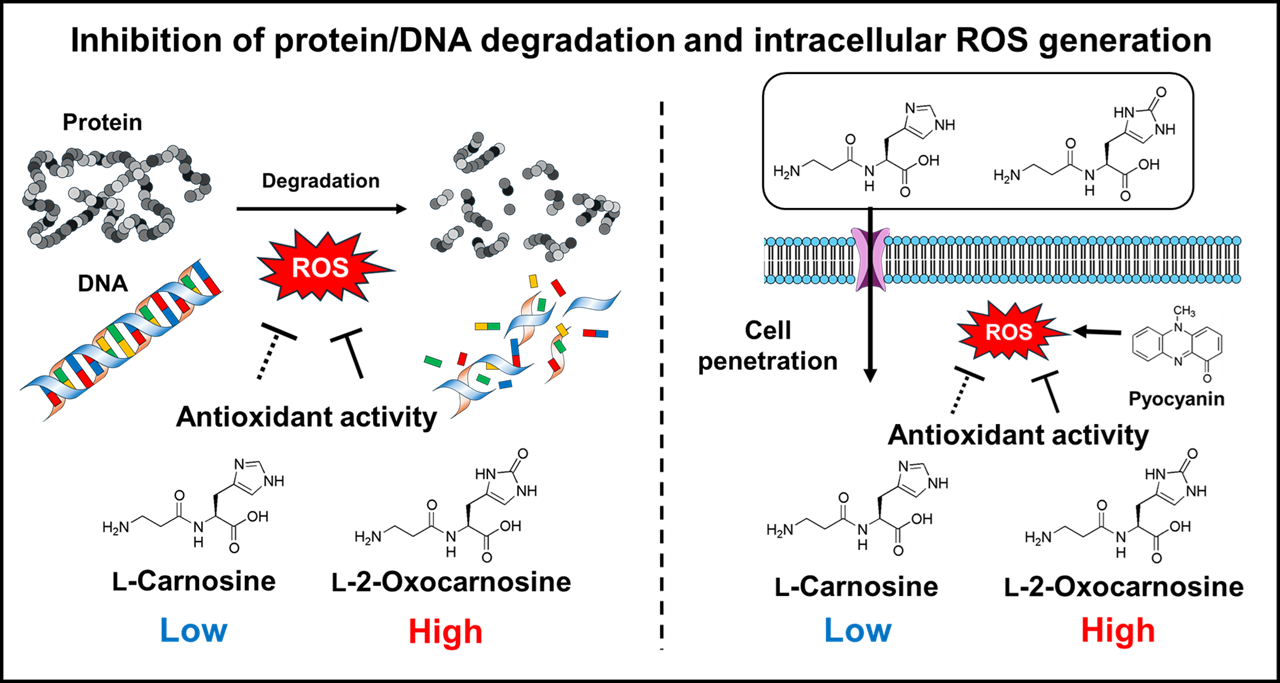

Inhibitory Effects of Imidazole Dipeptides and 2-Oxo-Imidazole Dipeptides on Intracellular ROS Generation and Degradation of Protein and DNA

 , , , , ,
  and
and
Abstract
1. Introduction
2. Materials and Methods
2.1. Materials
2.2. HPLC Analysis for IDP Reagents and 2-Oxo-IDPs
2.3. DPPH Radical-Scavenging Assay
2.4. FRAP Assay
2.5. Chelating Capacity Assay
2.6. Preparation of ROS Solutions
2.7. Protein Degradation Assay
2.8. Preparation of λ DNA Solution
2.9. DNA Degradation Assay
2.10. Cell Culture
2.11. Cell Viability Assay
2.12. Confirmation of Intracellular IDPs and 2-Oxo-Car by LC–MS
2.13. LC–MS Measurements
2.14. Confirmation of Penetration of IDPs and 2-Oxo-Car
2.15. Measurement of Intracellular ROS Production
2.16. Statistical Analyses
3. Results and Discussions
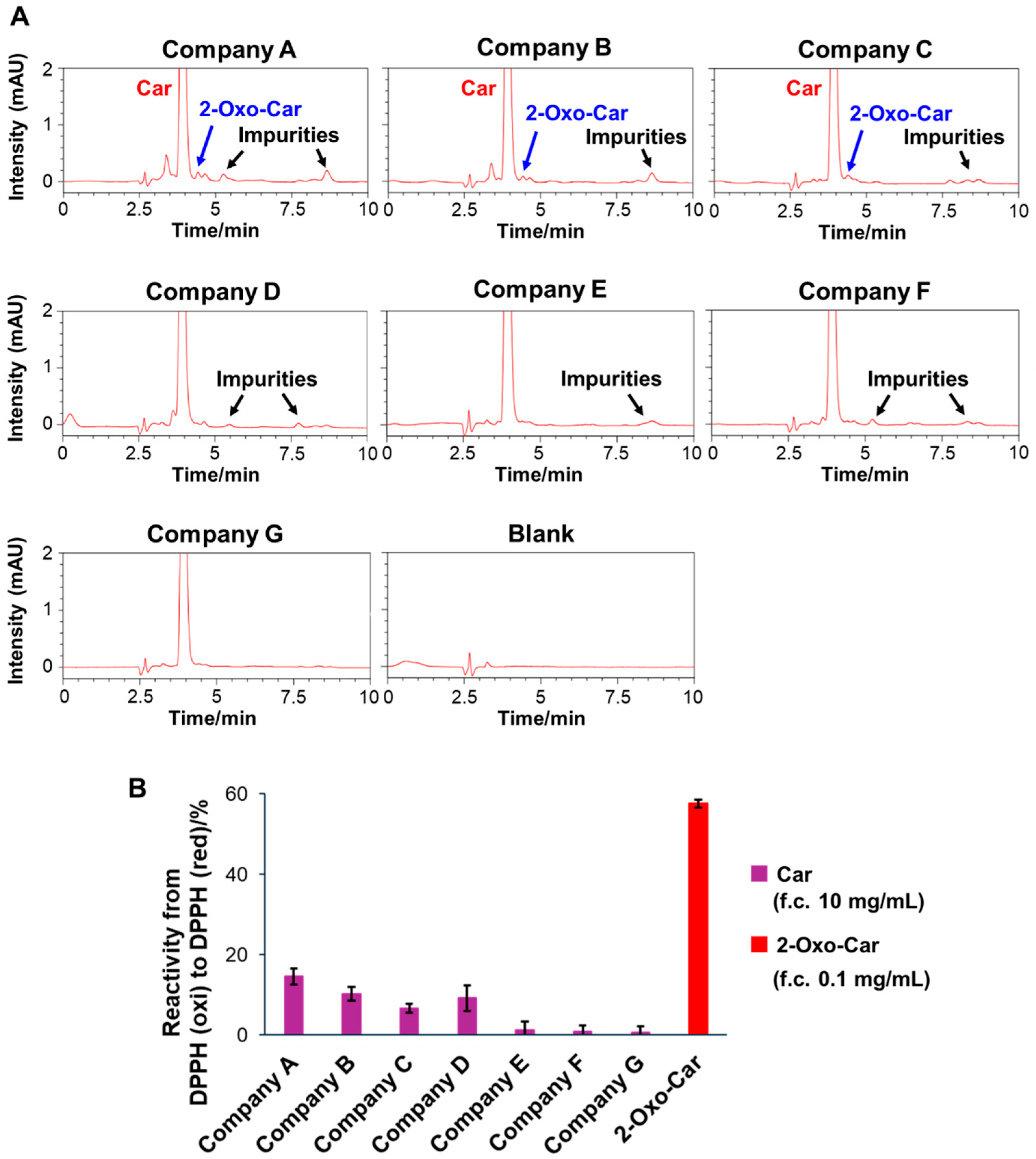
3.1. Effect of Trace Amounts of 2-Oxo-IDPs Contained in IDP Reagents on Antioxidant Activity
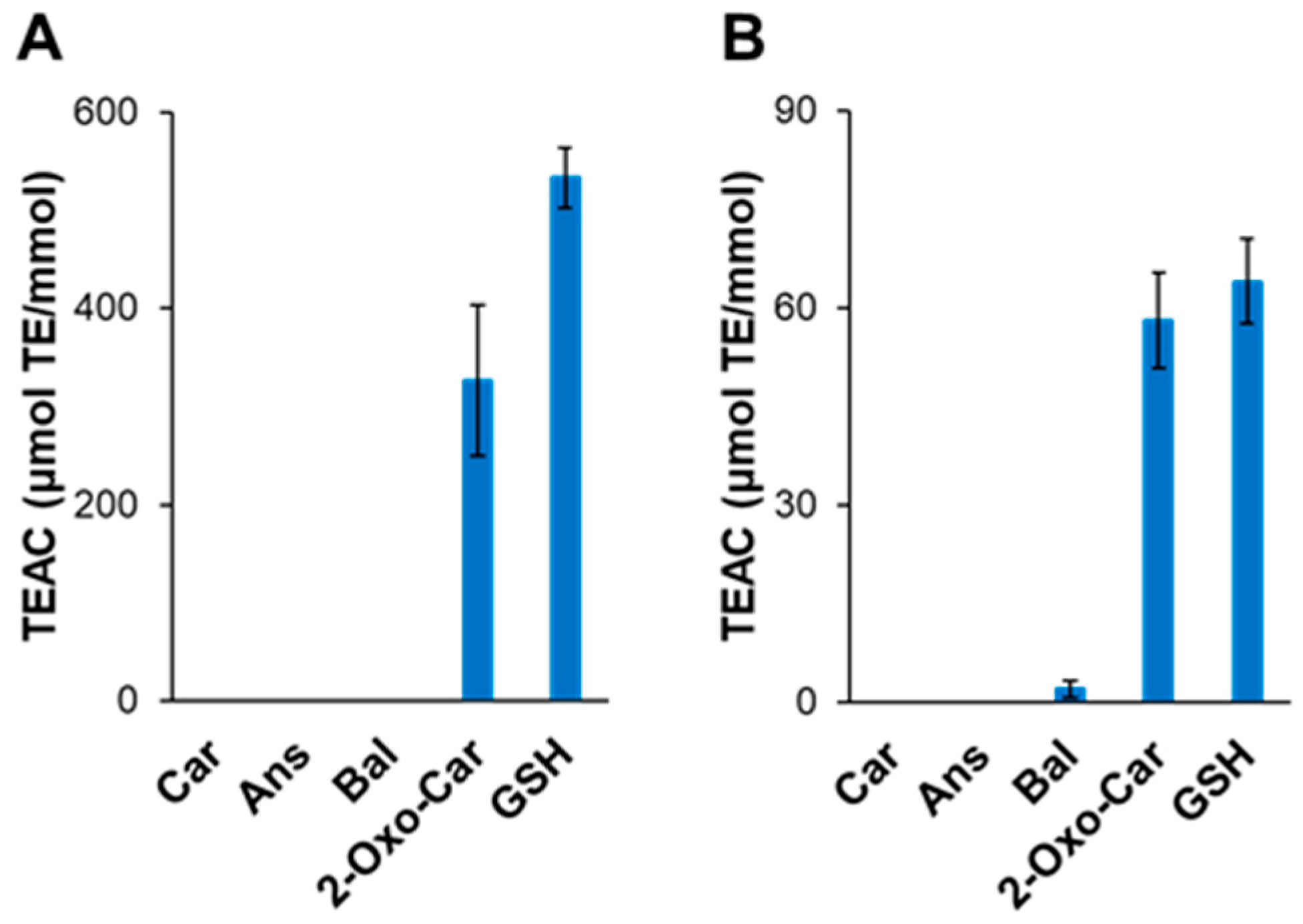
3.2. Antioxidant Capacity of Highly Purified IDPs and 2-Oxo-Car
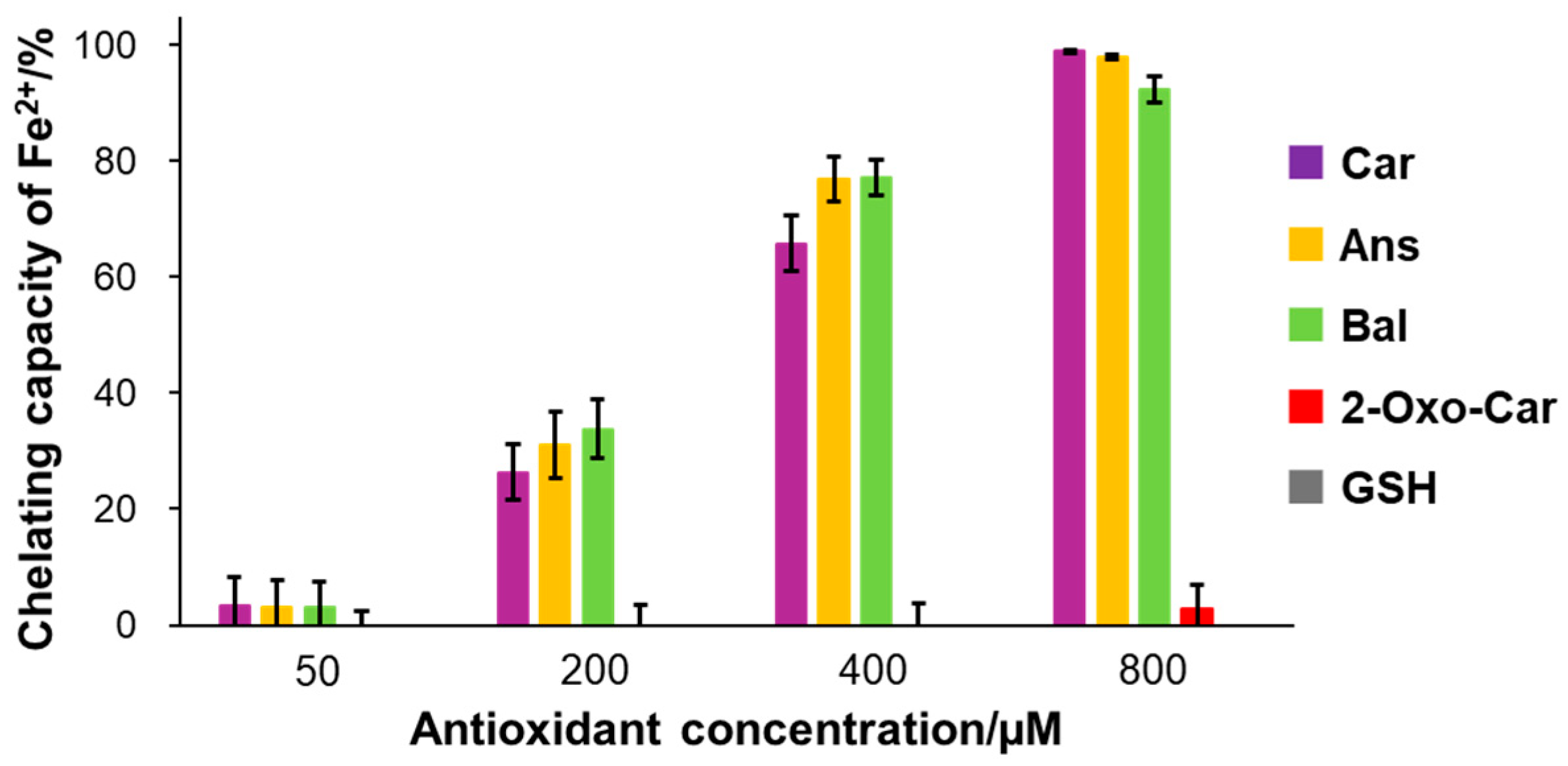
3.3. Chelating Capacity of High-Purified IDPs and 2-Oxo-Car
3.4. Inhibition of ROS-Induced Protein Degradation by IDPs and 2-Oxo-Car
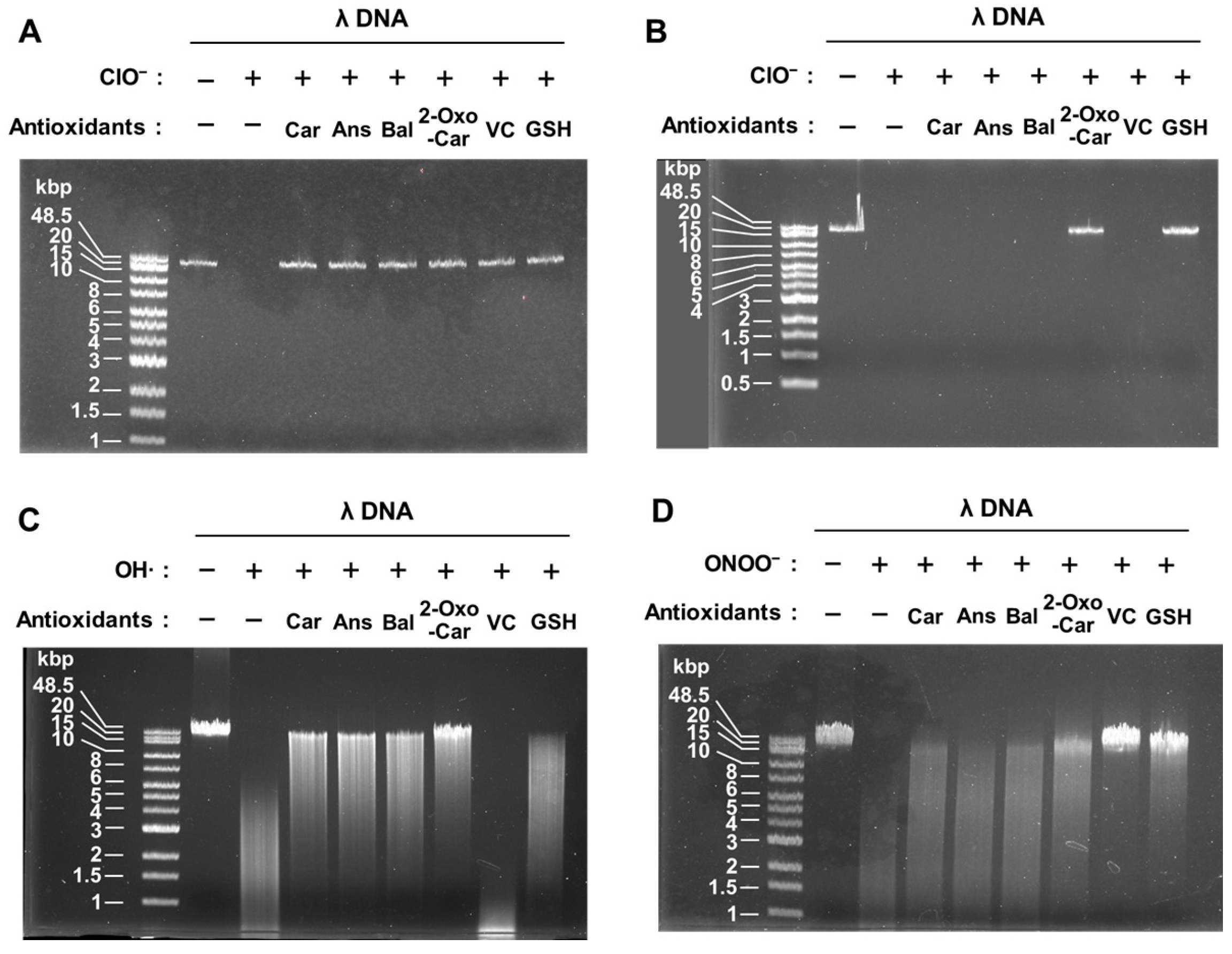
3.5. Inhibition of ROS-Induced DNA Degradation by IDPs and 2-Oxo-Car
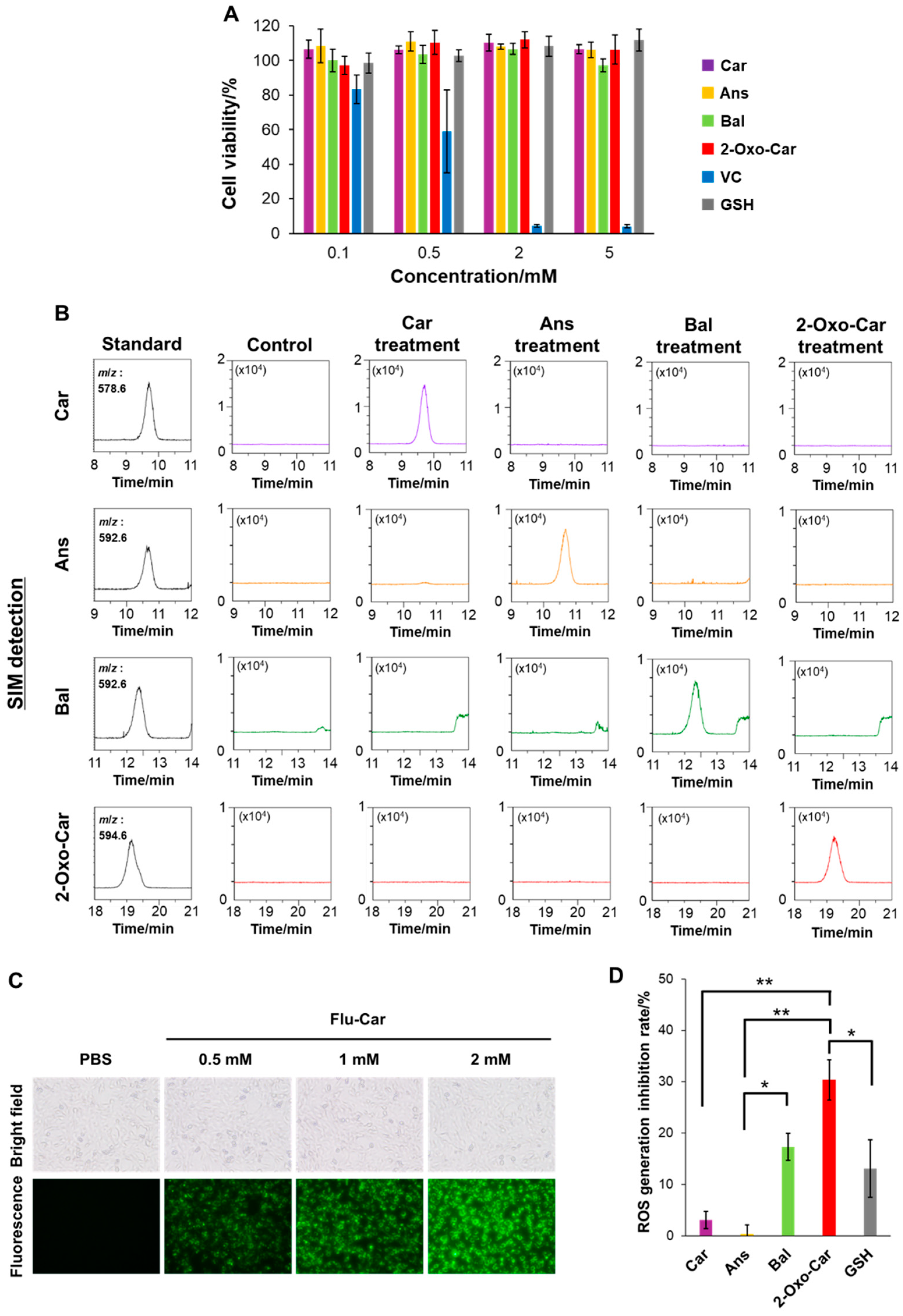
3.6. Suppression of Intracellular ROS by IDPs and 2-Oxo-Car
4. Conclusions
Supplementary Materials
Author Contributions
Funding
Institutional Review Board Statement
Informed Consent Statement
Data Availability Statement
Conflicts of Interest
Abbreviations
| HPLC | high performance liquid chromatography |
| LC-MS | liquid chromatography-mass spectrometry |
| LC-MS/MS | liquid chromatography–tandem mass spectrometry |
| SDS-PAGE | sodium dodecyl-sulfate polyacrylamide gel electrophoresis |
| ROS | reactive oxygen species |
| ClO− | chlorine monoxide |
| OH∙ | hydroxyl radical |
| ONOO− | peroxynitrite |
| O2− | superoxide anion |
| NO | nitric oxide |
| TFA | trifluoroacetic acid |
| DPPH assay | 2,2-diphenyl-1-picrylhydrazyl assay |
| FRAP assay | ferric reducing/antioxidant power assay |
| ORAC assay | oxygen radical absorbance capacity assay |
References
- Decker, E.A.; Crum, A.D.; Calvert, J.T. Differences in the antioxidant mechanism of carnosine in the presence of copper and iron. J. Agric. Food Chem. 1992, 40, 756–759. [Google Scholar] [CrossRef] [Scilit]
- Babizhayev, M.A.; Seguin, M.C.; Gueyne, J.; Evstigneeva, R.P.; Ageyeva, E.A.; Zheltukhina, G.A. L-Carnosine (β-alanyl-L-histidine) and carcinine (β-alanylhistamine) act as natural antioxidants with hydroxyl-radical-scavenging and lipid-peroxidase activities. Biochem. J. 1994, 304, 509–516. [Google Scholar] [CrossRef] [Scilit] [PubMed]
- Hipkiss, A.R. Carnosine, a protective, anti-ageing peptide? Int. J. Biochem. Cell Biol. 1998, 30, 863–868. [Google Scholar] [CrossRef] [Scilit] [PubMed]
- Reddy, V.P.; Garrett, M.R.; Perry, G.; Smith, M.A. Carnosine: A versatile antioxidant and antiglycating agent. Sci. Aging Knowl. Environ. 2005, 2005, pe12. [Google Scholar] [CrossRef] [Scilit]
- Derave, W.; Ozdemir, M.S.; Harris, R.C.; Pottier, A.; Reyngoudt, H.; Koppo, K.; Achten, E. β-Alanine supplementation augments muscle carnosine content and attenuates fatigue during repeated isokinetic contraction bouts in trained sprinters. J. Appl. Physiol. 2007, 103, 1736–1743. [Google Scholar] [CrossRef] [Scilit]
- Caruso, G.; Godos, J.; Castellano, S.; Micek, A.; Murabito, P.; Galvano, F.; Caraci, F. The therapeutic potential of carnosine/anserine supplementation against cognitive decline: A systematic review with meta-analysis. Biomedicines 2021, 9, 253. [Google Scholar] [CrossRef] [Scilit]
- Boldyrev, A.A.; Aldini, G.; Derave, W. Physiology and pathophysiology of carnosine. Physiol. Rev. 2013, 93, 1803–1845. [Google Scholar] [CrossRef] [Scilit] [PubMed]
- Kohen, R.; Yamamoto, Y.; Cundy, K.C.; Ames, B.N. Antioxidant activity of carnosine, homocarnosine, and anserine present in muscle and brain. Proc. Natl. Acad. Sci. USA 1988, 85, 3175–3179. [Google Scholar] [CrossRef] [Scilit]
- Ozaki, M.; Nakade, T.; Yamada, Y.; Hirose, T.; Shimotsuma, M.; Tomonaga, S. Rapid separation and quantification of imidazole dipeptides in meats using a PBr column packed with 3-(pentabromobenzyloxy) propyl group modified silica gel. J. Chromatogr. B 2025, 1262, 124660. [Google Scholar] [CrossRef] [Scilit]
- Ozaki, M.; Nakade, T.; Sekiguchi, M.; Shimotsuma, M.; Hirose, T.; Kawase, T.; Tsuji, A.; Kuranaga, T.; Kakeya, H.; Tomonaga, S. Simultaneous analysis of imidazole dipeptides, constituent amino acids, and taurine in meats using the highly sensitive labeling reagent L-FDVDA and PBr column. J. Agric. Food Chem. 2024, 72, 27538–27548. [Google Scholar] [CrossRef] [Scilit]
- Stellingwerff, T.; Decombaz, J.; Harris, R.C.; Boesch, C. Optimizing human in vivo dosing and delivery of β-alanine supplements for muscle carnosine synthesis. Amino Acids 2012, 43, 57–65. [Google Scholar] [CrossRef] [Scilit] [PubMed]
- Stenesh, J.J.; Winnick, T. Carnosine–anserine synthetase of muscle. 4. Partial purification of the enzyme and further studies of β-alanyl peptide synthesis. Biochem. J. 1960, 77, 575. [Google Scholar] [CrossRef] [Scilit] [PubMed]
- Crush, K.G. Carnosine and related substances in animal tissues. Comp. Biochem. Physiol. 1970, 34, 3–30. [Google Scholar] [CrossRef] [Scilit]
- Yanai, Y.; Shiotani, S.; Hagiwara, S.; Nabetani, H.; Nakajima, M. Antioxidant combination inhibits reactive oxygen species mediated damage. Biosci. Biotechnol. Biochem. 2008, 72, 3100–3106. [Google Scholar] [CrossRef] [Scilit]
- Klebanov, G.I.; Teselkin, Y.O.; Babenkova, I.V.; Popov, I.N.; Levin, G.; Tyulina, O.V.; Vladimirov, A.A. Evidence for a direct interaction of superoxide anion radical with carnosine. IUBMB Life 1997, 43, 99–106. [Google Scholar] [CrossRef] [Scilit]
- Tamba, M.; Torreggiani, A. Hydroxyl radical scavenging by carnosine and Cu(II)-carnosine complexes: A pulse-radiolysis and spectroscopic study. Int. J. Radiat. Biol. 1999, 75, 1177–1188. [Google Scholar]
- Nicoletti, V.G.; Santoro, A.M.; Grasso, G.; Vagliasindi, L.I.; Giuffrida, M.L.; Cuppari, C.; Rizzarelli, E. Carnosine interaction with nitric oxide and astroglial cell protection. J. Neurosci. Res. 2007, 85, 2239–2245. [Google Scholar] [CrossRef] [Scilit]
- Artioli, G.G.; Gualano, B.; Smith, A.; Stout, J.; Lancha, A.H. Role of beta-alanine supplementation on muscle carnosine and exercise performance. Med. Sci. Sports Exerc. 2010, 42, 1162–1173. [Google Scholar] [CrossRef] [Scilit]
- Harris, R.C.; Tallon, M.J.; Dunnett, M.; Boobis, L.; Coakley, J.; Kim, H.J.; Wise, J.A. The absorption of orally supplied β-alanine and its effect on muscle carnosine synthesis in human vastus lateralis. Amino Acids 2006, 30, 279–289. [Google Scholar] [CrossRef] [Scilit] [PubMed]
- Lei, S.; Zhang, Z.; Wang, J.; Yu, X.; Jiang, J.; Wang, Y.; Wang, S. Carnosine-copper chelator-modified small-diameter vascular grafts for the promotion of anticoagulation and endothelial regeneration. Chem. Eng. J. 2024, 493, 152468. [Google Scholar] [CrossRef] [Scilit]
- Kawahara, M.; Tanaka, K.I.; Kato-Negishi, M. Zinc, carnosine, and neurodegenerative diseases. Nutrients 2018, 10, 147. [Google Scholar] [CrossRef] [Scilit]
- Zhao, J.; Posa, D.K.; Kumar, V.; Hoetker, D.; Kumar, A.; Ganesan, S.; Baba, S.P. Carnosine protects cardiac myocytes against lipid peroxidation products. Amino Acids 2019, 51, 123–138. [Google Scholar]
- Budzeń, S.; Rymaszewska, J. The biological role of carnosine and its possible applications in medicine. Adv. Clin. Exp. Med. 2013, 22, 739–744. [Google Scholar]
- Sale, C.; Artioli, G.G.; Gualano, B.; Saunders, B.; Hobson, R.M.; Harris, R.C. Carnosine: From exercise performance to health. Amino Acids 2013, 44, 1477–1491. [Google Scholar] [CrossRef] [Scilit]
- Banerjee, S.; Poddar, M.K. Carnosine research in relation to aging brain and neurodegeneration: A blessing for geriatrics and their neuronal disorders. Arch. Gerontol. Geriatr. 2020, 91, 104239. [Google Scholar] [CrossRef] [Scilit] [PubMed]
- Babizhayev, M.A.; Deyev, A.I.; Savel’Yeva, E.L.; Lankin, V.Z.; Yegorov, Y.E. Skin beautification with oral non-hydrolized versions of carnosine and carcinine: Effective therapeutic management and cosmetic skincare solutions against oxidative glycation and free-radical production as a causal mechanism of diabetic complications and skin aging. J. Dermatol. Treat. 2012, 23, 345–384. [Google Scholar]
- Hisatsune, T.; Kaneko, J.; Kurashige, H.; Cao, Y.; Satsu, H.; Totsuka, M.; Matsuda, H. Effect of anserine/carnosine supplementation on verbal episodic memory in elderly people. J. Alzheimer’s Dis. 2016, 50, 149–159. [Google Scholar] [CrossRef] [Scilit]
- Dursun, N.; Taşkın, E.; Öztürk, F. Protection against adriamycin-induced cardiomyopathy by carnosine in rats: Role of endogenous antioxidants. Biol. Trace Elem. Res. 2011, 143, 412–424. [Google Scholar] [CrossRef] [Scilit] [PubMed]
- Attanasio, F.; Cataldo, S.; Fisichella, S.; Nicoletti, S.; Nicoletti, V.G.; Pignataro, B.; Savarino, A.; Rizzarelli, E. Protective effects of L- and D-carnosine on alpha-crystallin amyloid fibril formation: Implications for cataract disease. Biochemistry 2009, 48, 6522–6531. [Google Scholar]
- Hipkiss, A.R. Depression, diabetes and dementia: Formaldehyde may be a common causal agent; could carnosine, a pluripotent peptide, be protective? Aging Dis. 2017, 8, 128. [Google Scholar] [CrossRef] [Scilit]
- Caruso, G.; Pietro, L.; Cardaci, V.; Maugeri, S.; Caraci, F. The therapeutic potential of carnosine: Focus on cellular and molecular mechanisms. Curr. Res. Pharmacol. Drug Discov. 2023, 4, 100153. [Google Scholar] [CrossRef] [Scilit]
- Abdelkader, H.; Longman, M.; Alany, R.G.; Pierscionek, B. On the anticataractogenic effects of L-carnosine: Is it best described as an antioxidant, metal-chelating agent or glycation inhibitor? Oxidative Med. Cell. Longev. 2016, 2016, 3240261. [Google Scholar]
- Ihara, H.; Kakihana, Y.; Yamakage, A.; Kai, K.; Shibata, T.; Nishida, M.; Yamada, K.; Uchida, K. 2-Oxo-histidine-containing dipeptides are functional oxidation products. J. Biol. Chem. 2019, 294, 1279–1289. [Google Scholar] [CrossRef] [Scilit]
- Kakihana, Y.; Kasamatsu, S.; Uchida, K.; Ihara, H. Distribution and quantitative analysis of homoanserine and its 2-oxo derivative in mouse tissues. Free Radic. Res. 2021, 55, 579–588. [Google Scholar]
- Komae, S.; Kasamatsu, S.; Ihara, H. 2-Oxo-imidazole dipeptides in meat. Biosci. Biotechnol. Biochem. 2022, 86, 1576–1580. [Google Scholar] [CrossRef] [Scilit] [PubMed]
- Kasamatsu, S.; Komae, S.; Matsukura, K.; Kakihana, Y.; Uchida, K.; Ihara, H. 2-Oxo-imidazole-containing dipeptides play a key role in the antioxidant capacity of imidazole-containing dipeptides. Antioxidants 2021, 10, 1434. [Google Scholar] [CrossRef] [Scilit] [PubMed]
- Matsukura, K.; Komae, S.; Kasamatsu, S.; Ihara, H. 2-Oxo-imidazole dipeptides inhibit peroxynitrite-dependent tyrosine nitration. Biochem. Biophys. Res. Commun. 2023, 668, 77–81. [Google Scholar] [CrossRef] [Scilit]
- Takahashi, M.; Yanai, N.; Shiotani, S.; Endo, J.; Hagiwara, S.; Nabetani, H. The degradation of DNA molecules by reactive oxygen species and the protective activity of naturally occurring antioxidants derived from foods. J. Jpn. Soc. Food Sci. 2011, 58, 208–215. [Google Scholar]
- Radi, R. Peroxynitrite, a stealthy biological oxidant. J. Biol. Chem. 2013, 288, 26464–26472. [Google Scholar] [CrossRef] [Scilit]
- Ozaki, M.; Shimotsuma, M.; Hirose, T. Separation of nicotinamide metabolites using a PBr column packed with pentabromobenzyl group modified silica gel. Anal. Biochem. 2022, 655, 114837. [Google Scholar] [CrossRef] [Scilit]
- Xiao, F.; Xu, T.; Lu, B.; Liu, R. Guidelines for antioxidant assays for food components. Food Front. 2020, 1, 60–69. [Google Scholar] [CrossRef] [Scilit]
- Manhiani, P.; Northcutt, J.K.; Dawson, P.L. Comparative study of antioxidant activity between carnosine and its amino acid constituents. J. Food Res. 2023, 12, 69–76. [Google Scholar] [CrossRef] [Scilit]
- Tehrani, H.S.; Moosavi-Movahedi, A.A. Catalase and its mysteries. Prog. Biophys. Mol. Biol. 2018, 140, 5–12. [Google Scholar] [CrossRef] [Scilit]
- Orino, K.; Lehman, L.; Tsuji, Y.; Ayaki, H.; Torti, S.V.; Torti, F.M. Ferritin and the Response to Oxidative Stress. Biochem. J. 2001, 357, 241. [Google Scholar] [CrossRef]
- Hipkiss, A.R.; Michaelis, J.; Syrris, P. Non-enzymatic glycosylation of the dipeptide L-carnosine, a potential anti-protein-cross-linking agent. FEBS Lett. 1995, 371, 81–85. [Google Scholar] [CrossRef] [Scilit]
- Hipkiss, A.R.; Brownson, C. A possible new role for the anti-ageing peptide carnosine. Cell Mol. Life Sci. 2000, 57, 747–753. [Google Scholar]
- Kuranaga, T.; Minote, M.; Morimoto, R.; Pan, C.; Ogawa, H.; Kakeya, H. Highly sensitive labeling reagents for scarce natural products. ACS Chem. Biol. 2020, 15, 2499–2506. [Google Scholar] [CrossRef] [Scilit]
- Morimoto, R.; Matsumoto, T.; Minote, M.; Yanagisawa, M.; Yamada, R.; Kuranaga, T.; Kakeya, H. Highly sensitive determination of amino acids by LC-MS under neutral conditions. Chem. Pharm. Bull. 2021, 69, 265–270. [Google Scholar] [CrossRef] [Scilit] [PubMed]
- Rada, B.; Leto, T.L. Pyocyanin effects on respiratory epithelium: Relevance in Pseudomonas aeruginosa airway infections. Trends Microbiol. 2013, 21, 73–81. [Google Scholar] [CrossRef] [Scilit] [PubMed]
- Muller, M. Glutathione modulates the toxicity of, but is not a biologically relevant reductant for, the Pseudomonas aeruginosa redox toxin pyocyanin. Free Radic. Biol. Med. 2011, 50, 971–977. [Google Scholar] [CrossRef] [Scilit]
- Ishihara, K.; Watanabe, R.; Kato, T.; Seko, T.; Matsuda, T.; Omura, Y.; Maegawa, T. Isolation of balenine from opah (Lampris megalopsis) muscle and comparison of antioxidant and iron-chelating activities with other major imidazole dipeptides. Food Chem. 2021, 364, 130343. [Google Scholar] [CrossRef] [Scilit] [PubMed]
- Leinsoo, T.A.; Abe, H.; Boldyrev, A.A. Carnosine and related compounds protect the double-chain DNA from oxidative damages. J. Evol. Biochem. Phys. 2006, 42, 570–574. [Google Scholar]
- Yang, M.; Sun, L.; Kawabata, Y.; Maegawa, T.; Taniyama, S.; Tachibana, K.; Hirasaka, K. Balenine, imidazole dipeptide, induces activation of superoxide dismutase in myotubes. Fish. Sci. 2021, 87, 403–409. [Google Scholar] [CrossRef] [Scilit]




Disclaimer/Publisher’s Note: The statements, opinions and data contained in all publications are solely those of the individual author(s) and contributor(s) and not of MDPI and/or the editor(s). MDPI and/or the editor(s) disclaim responsibility for any injury to people or property resulting from any ideas, methods, instructions or products referred to in the content. |
© 2026 by the authors. Licensee MDPI, Basel, Switzerland. This article is an open access article distributed under the terms and conditions of the Creative Commons Attribution (CC BY) license.
Share and Cite
Yamada, Y.; Hayashi, K.; Yoshimochi, K.; Hirose, T.; Shimotsuma, M.; Kuranaga, T.; Kakeya, H.; Tomonaga, S.; Ozaki, M. Inhibitory Effects of Imidazole Dipeptides and 2-Oxo-Imidazole Dipeptides on Intracellular ROS Generation and Degradation of Protein and DNA. AppliedChem 2026, 6, 15. https://doi.org/10.3390/appliedchem6010015
Yamada Y, Hayashi K, Yoshimochi K, Hirose T, Shimotsuma M, Kuranaga T, Kakeya H, Tomonaga S, Ozaki M. Inhibitory Effects of Imidazole Dipeptides and 2-Oxo-Imidazole Dipeptides on Intracellular ROS Generation and Degradation of Protein and DNA. AppliedChem. 2026; 6(1):15. https://doi.org/10.3390/appliedchem6010015
Chicago/Turabian StyleYamada, Yasunari, Kohei Hayashi, Kenji Yoshimochi, Tsunehisa Hirose, Motoshi Shimotsuma, Takefumi Kuranaga, Hideaki Kakeya, Shozo Tomonaga, and Makoto Ozaki. 2026. "Inhibitory Effects of Imidazole Dipeptides and 2-Oxo-Imidazole Dipeptides on Intracellular ROS Generation and Degradation of Protein and DNA" AppliedChem 6, no. 1: 15. https://doi.org/10.3390/appliedchem6010015
APA StyleYamada, Y., Hayashi, K., Yoshimochi, K., Hirose, T., Shimotsuma, M., Kuranaga, T., Kakeya, H., Tomonaga, S., & Ozaki, M. (2026). Inhibitory Effects of Imidazole Dipeptides and 2-Oxo-Imidazole Dipeptides on Intracellular ROS Generation and Degradation of Protein and DNA. AppliedChem, 6(1), 15. https://doi.org/10.3390/appliedchem6010015