1. Introduction
Michael Polanyi’s seminal assertion that “we can know more than we can tell” underscores the fundamental distinction between tacit knowledge and the explicit, codifiable forms of knowledge recognized within formal knowledge management systems. Building on Polanyi’s insight, Nonaka and Takeuchi [
1] positioned tacit knowing at the core of organizational innovation and capability development, proposing the SECI cycle (Socialization, Externalization, Combination, and Internalization) as a mechanism for transforming deeply embedded experiential knowledge into shareable organizational knowledge. They argue that tacit knowledge, in its various forms, underpins much of human decision-making and everyday learning—processes that are essential for organizational adaptation and innovation under rapidly changing conditions. In contrast to traditional knowledge management systems that privilege documents, data, and codified representations, tacit knowing refers to forms of understanding that are enacted through practice rather than formally articulated [
1]. Subsequent scholarship, however, has consistently shown that tacit knowledge cannot be fully reduced to codified documents or verbal descriptions [
2,
3]. Tacit knowing is not merely a form of ‘latent explicitness’ awaiting extraction. More simply, it is an embodied, situated, context-specific phenomenon linked with perception, emotion, and social context [
2,
4]; thus, it could help expose an epistemological tension between embodied logics of knowledge and algorithmic logics of knowledge: the former resists communication and explicit articulation, while the latter is fundamentally grounded in formalized knowledge representation through encoded data structures.
Irrespective of the practical value that the SECI theory suggests, the challenge of eliciting tacit knowledge is fraught with difficulty. Tacit knowledge is personal, individualized and situated; it is typically expressed outside the conscious awareness of the knower in routines, perceptual judgement, and informal conversations.; therefore, it is not amenable to traditional elicitation methods such as interviews, focus groups or mentoring [
4,
5,
6,
7]. Such elicitation methods may work effectively in settings underpinned by trust, such as small teams or stable shared experiences; however, they are less effective in larger, more dispersed, and rapidly changing organizations, where the context-dependence and complexity of knowledge undermine both the reliability of earlier findings and the transferability of previously unearthed tacit knowledge.
Extracting tacit knowledge presents significant methodological and practical challenges. First, its individualized and subjective features and the fact that it is often non-verbal make it especially time-consuming, taxing and difficult to elicit, if not impossible under some circumstances, and typically require involving some labor-intensive methods such as ethnographic, narrative inquiry, or cognitive-task analysis [
8]. Second, both mentoring and SECI approaches to knowledge production and conversion commonly fail [
9] at scale due to limited scalability in dynamic settings. Third, tacit knowledge retention remains a significant concern for organizations in industries heavily reliant on tacit knowledge, particularly where high rates of employee turnover lead to its premature loss [
10]. Finally, once tacit knowledge and related insights are integrated into organizational systems, the complexities of doing so accurately—without eroding contextual richness—remain a challenge, in that codifying tacit knowledge may result in inappropriate or mis-notional unintentional narratives [
11]. These challenges underscore the need for scalable, context-sensitive, and cognitively informed extraction methods.
In recent years, researchers have begun to employ advanced computing solutions to influence how tacit knowledge is captured and diffused. By using Natural Language Processing (NLP) and machine learning (ML) architectures to mine unstructured text, conversations, and process logs, researchers can denaturalize implicit forms of practice; however, ontology-based systems and knowledge graphs are designed to preserve contextual meaning in structured, machine-readable forms [
12,
13,
14]. Despite advances in AI, epistemological tension remains: AI systems can detect and recognize patterns but are not yet capable of preserving “living context” [
15] of tacit knowing required to identify where and when the structuration occurs. Additionally, until valid inference methods or operational standard taxonomies for tacit insights are developed, the scalability and interpretability of tacit knowing remain limited, as only constrained inferences can be drawn from experiential knowing. An interdisciplinary approach is required to converge cognitive psychology, organizational learning theory, and AI research in order to leverage tacit knowing as a foundation for innovation and resilience. Addressing these limitations requires an interdisciplinary fusion of cognitive psychology, organizational learning, and AI research to develop approaches that are both scalable and contextually faithful.
Recent developments in AI, particularly in machine learning, NLP, deep learning (DL), and knowledge representation, have opened new research avenues for tacit knowledge extraction. These technologies have substantial capabilities for detecting latent relations, modeling expert behavior, and simulating experiential knowledge through large-scale corpora and real-time data. For example, NLP-based approaches have been applied to extract organizational know-how from textual records, maintenance logs, and reports [
16]; knowledge graphs and semantic ontologies have made latent conceptual relationships explicit and navigable [
17,
18,
19,
20]; and systems such as case-based reasoning [
21], expert systems [
22,
23], and trust-aware AI agents [
24,
25] have demonstrated the potential to replicate or transfer human expertise in healthcare, engineering, and education. Nonetheless, notable gaps remain. To start, there is no uniform basis for the synthesizing of AI-oriented approaches with established knowledge management frameworks, resulting in fragmented interoperability. Next, the ability of AI to document the entirety of the contextual and cultural wealth of tacit knowledge has yet to be addressed systematically. Third, empirical evidence across industries remains limited, raising concerns regarding generalizability and external validity. Finally, ethical considerations from data privacy to overreliance on inference from algorithms are rarely addressed in a systematic way.
This study presents a systematic bibliometric review of how artificial intelligence has been applied to surface, externalize, and support tacit knowledge across organizational and technical settings. The review examines both the computational techniques and the epistemological assumptions that underpin this work, attending to the practical tensions that arise when experiential insight is modeled through automated systems. Rather than evaluating the strength of evidence in individual studies, the analysis focuses on the intellectual structure and evolution of the field to clarify how different research strands converge or diverge over time. In doing so, the study makes two complementary contributions. First, the review brings together the thematic strands, methodological tendencies, and practical contexts that have shaped AI-related work on tacit knowledge. By doing so, it offers a clearer picture of a field that is expanding quickly yet remains scattered across different research communities. In parallel, the study also contributes to theory by developing the AI–Tacit Knowledge Co-Evolution Framework. This perspective illustrates how human interpretive expertise and machine intelligence can evolve together, preserving the contextual grounding essential to tacit knowing while still making it possible to extend knowledge practices to larger scales. Together, these contributions clarify the state of scholarship and establish a structured foundation for future inquiry and method development.
This review is structured according to the following research questions:
RQ 1. Which AI-driven techniques enable the extraction and externalization of tacit knowledge, and how do they conceptually map onto established theories of knowledge creation and cognition?
RQ 2. How does the literature position AI-driven and traditional tacit-knowledge extraction approaches across the dimensions of scalability, contextual fidelity, and interpretability?
RQ 3. What obstacles and limitations exist on their use?
RQ 4. What future directions exist to support a more ethical and epistemologically sound meaning of AI in tacit knowledge management?
This review seeks to answer the above questions to provide a pathway to more-human-centered, explainable, and ethically deliberated AI systems that can engage with the deeply contextual and lived aspects of tacit knowing.
2. Materials and Methods
This study employs bibliometrics as a methodological approach to systematically map and assess the research landscape of AI-assisted tacit knowledge extraction methods. The methodological intention is to provide a holistic and quantitative account of authorship, publication practices, influential works, and thematic structures in the research design, through the methodological good practices of bibliometrics [
26]. The analysis relies on VOSviewer (version 1.6.20) and Biblioshiny (version 5.0.0, R package
bibliometrix) to represent and communicate the bibliographic data, providing insights into key authors/contributors, research clusters, networks, and isolating research gaps. This section provides an overview of the research design, data collection, inclusion and exclusion criteria, data analysis, and ethical considerations.
2.1. Research Design
Through the use of a bibliometric methodology, the study undertakes the challenging task of identifying and articulating the intellectual structure of the existing literature and its trends, focusing on AI-led tacit knowledge extraction. The bibliometric quantitative study utilizes various indicators of citations, co-authorship networks, and co-occurring keyword analyses to identify notable works, trends for developing research questions, emergent topics, and cognitive mappings of the related research. Network maps are produced using VOSviewer, and documented co-authored articles, co-citation and co-occurrence charts are analyzed using Biblioshiny to support descriptive statistics, thematic mapping, and trend studies. The overall methodological process is considered a replicable pipeline, led with structure from the study, that correlates with the objectives and constructs of the study: understanding how AI techniques of focused study extract tacit knowledge, develop a context of disciplined inquiry specific to tactics of tacit knowledge extraction, and identify gaps in the previous research. The proposed design provides transparency, replicability, and robustness to the findings.
To support reproducibility at the tool level, bibliometric networks were constructed using VOSviewer and Biblioshiny with explicitly defined analytical parameters. For keyword co-occurrence analysis in VOSviewer, the fractional counting method was applied with association strength normalization. Keywords with a minimum occurrence threshold of one were included. Network layout was generated using an attraction parameter of 5, a repulsion parameter of 1, and 200 iterations. Clustering was performed using the modularity-based algorithm with the resolution parameter set to 5.0. Biblioshiny was used for descriptive statistics and thematic mapping, applying Callon’s centrality and density measures with keywords appearing at least three times, and clustering based on the Louvain algorithm. Prior to analysis, keyword normalization was performed using OpenRefine (version 3.9.0), employing open-source fingerprint, n-gram fingerprint, and Levenshtein distance algorithms to merge spelling variants and semantically equivalent terms.
In this study, a consistent conceptual distinction is maintained between tacit knowing as an embodied, situated process of human sensemaking, and tacit knowledge as the more stable, though still context-dependent, outcome of those processes. The term epistemic partner is also used to describe AI’s role as a cognitive collaborator in knowledge creation, avoiding “epistemological partner”, which concerns meta-theoretical inquiry. Finally, the term knowledge ecosystems is used to denote the broader sociotechnical environment in which human–AI knowledge processes unfold.
2.2. Data Collection
The data collection process was systematically constructed for comprehensiveness and methodological rigor and conducted in accordance with the Preferred Reporting Items for Systematic Reviews and Meta-Analyses (PRISMA) framework. Consistent with the nature of a systematic bibliometric review, the primary unit of analysis is the literature as a networked field rather than individual study outcomes. Not only did the PRISMA approach allow for a transparent and reproducible identification of literature on AI-based tacit knowledge extraction, but it also provided a methodological framework for comprehensive bibliometric evaluation using VOSviewer and Biblioshiny. A multi-section search strategy was developed, including equivalent database-level filtering, search query creation, and screening procedures.
Two leading academic databases, Scopus and Web of Science (WoS), were selected for coverage of interdisciplinary research in artificial intelligence, knowledge management, and related fields, as well as compatibility with bibliometric tools. Both databases provide high-quality and peer-reviewed records with full metadata necessary for co-citation, co-authorship, and keyword analyses [
27]. The same Boolean query was applied to titles, abstracts, and author keywords in both databases to ensure operational equivalence:
(“tacit knowledge” OR “implicit knowledge” OR “experiential knowledge”) AND (“artificial intelligence” OR “machine learning” OR “natural language processing” OR “deep learning” OR “knowledge-based systems” OR “expert systems” OR “ontologies”) AND (“extraction” OR “elicitation” OR “capture” OR “management”)
The search was completed on 10 April 2025. Publication years were not restricted, as the aim was to observe how the area has evolved over time. To maintain consistency with bibliometric analysis tools, database filters were applied to limit results to English-language sources with full metadata.
The initial search yielded a total of 555 records, including 95 from the Web of Science, and 461 from Scopus. Duplicates were detected and removed using a Python (v3.11)-based metadata harmonization and merging workflow designed to align fields across Scopus and WoS before consolidation (WOS Format Converter Script:
https://github.com/NasserKhalili/wos-format-converter (access on 12 April 2025), WoS–Scopus Metadata Merger Script:
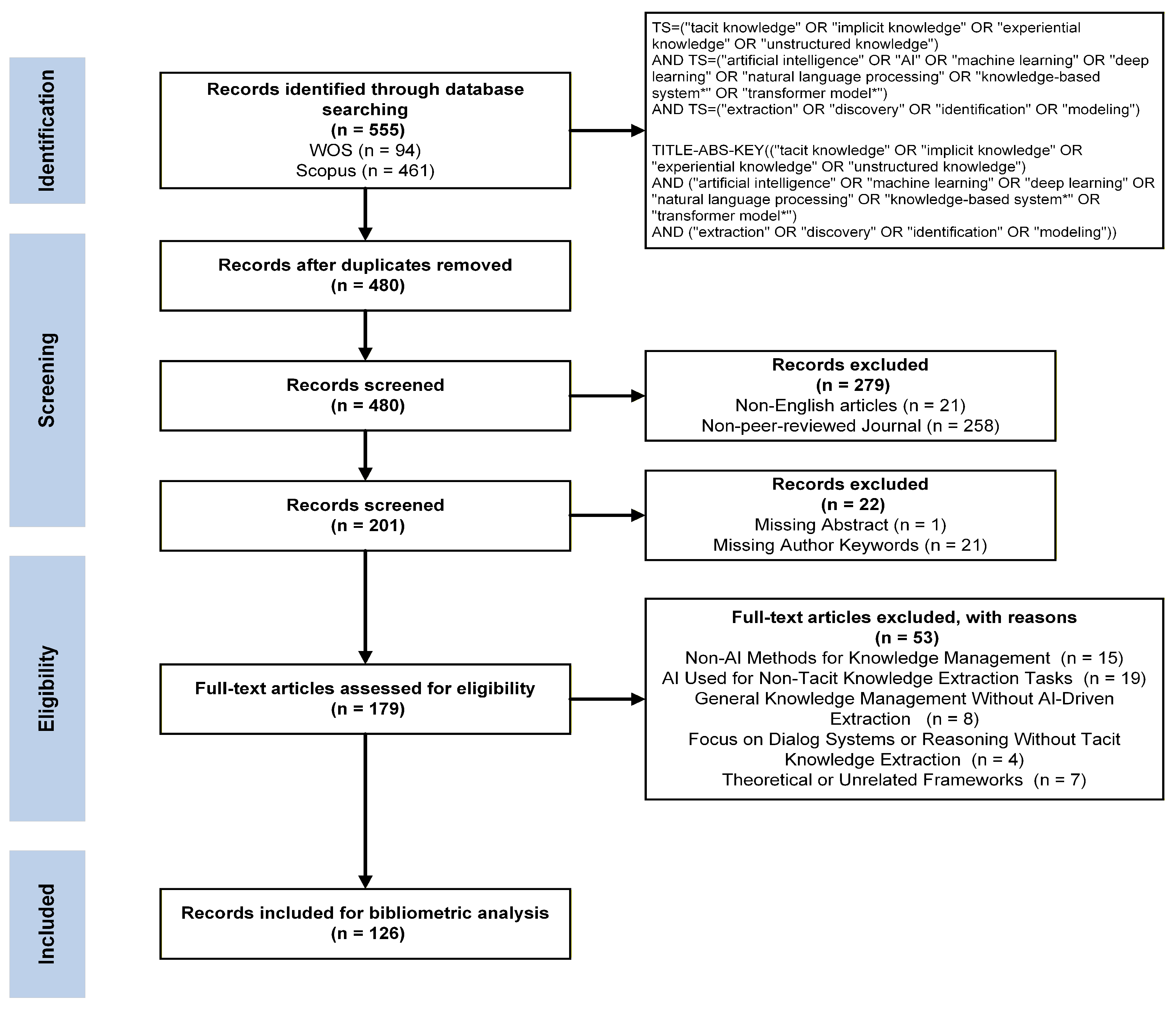
https://github.com/NasserKhalili/wos-scopus-merger (access on 12 April 2025)). Where both a conference proceeding and a later journal article of the same work were indexed, the journal version was preferentially retained to preserve the most accurate and complete metadata. After this process, 480 unique records remained. Screening occurred in two phases. The first step was a review of titles and abstracts. To continue in the process, a study needed to involve an AI technique aimed at tacit knowledge in some form (for example, NLP, machine learning, or a knowledge-based system) and also provide metadata that could be used in the bibliometric stage. Quite a number did not meet these conditions: 21 were written in languages other than English, and 258 corresponded to non–peer-reviewed document types indexed within WoS or Scopus (e.g., editorials, letters, meeting abstracts, corrections, news items, and similar categories as defined by database metadata, including indexed doctoral and master’s theses when classified under such document types), so 279 items were removed here. We also noticed that some entries lacked essential bibliographic details before full-text screening; another 22 records were dropped for that reason (one without an abstract and 21 without author keywords). That left 179 items with the information required for both the qualitative and bibliometric components of the study. The second phase of the review included a full-text review to examine whether the studies’ content aligned with the aims of the study. During this phase, articles were excluded if they conducted knowledge management using a non-AI-based method (n = 15), utilized an AI method for knowledge extraction not related to tacit knowledge (n = 19), conducted studies on knowledge management practices in general rather than tacit knowledge management with an explicit extraction component (n = 8), studied dialog or reasoning systems but were unrelated to tacit knowledge (n = 4), or discussed purely theoretically based frameworks that did not empirically or methodologically engage in the research (n = 7). After exclusions, a total of 126 records remained for the final bibliometric review.
To confirm that each record genuinely engaged with tacit knowledge, an operational definition of the concept was followed while screening. A study was kept only if tacit knowledge served as a key focus—whether through experiential expertise, embodied forms of knowing, perceptual judgment, or unspoken practice. Items were excluded when the term appeared incidentally or was treated as interchangeable with explicit knowledge or general knowledge management. Records were screened independently by two reviewers, who then compared their decisions as the review progressed. Any differences in how a study’s relevance or methodological suitability was judged were discussed until a shared view was reached; a third reviewer was consulted when the first two could not immediately resolve a point. This process helped ensure confidence in the final set of included studies and supported conceptual consistency across the review.
This systematic and rigorous process—developed into the PRISMA flow diagram (
Figure 1)—enables methodological transparency, reproducibility, and confidence, and ensures that the final dataset accurately reflects the empirical and methodological contours of AI-based tacit knowledge extraction suitable for network-based bibliometric analysis.
Consistent with the objectives of a systematic bibliometric review, the primary unit of analysis in this study is the literature as a scholarly field rather than the outcomes of individual studies. Accordingly, no formal study-level quality or risk-of-bias assessment was conducted. Instead, rigor is ensured at the level of dataset construction through clearly defined inclusion criteria, independent screening procedures, and the requirement for complete bibliographic metadata prior to analysis. This review therefore maps the intellectual and methodological structure of research on AI-enabled tacit knowledge rather than evaluating the causal strength or performance claims of individual investigations. This clarification aligns the methodological scope of the review with its intended contribution as a field-level synthesis.
3. Results
This section presents the results of a detailed bibliometric analysis that maps the intellectual and thematic landscape of AI-driven tacit knowledge extraction. A dataset of 126 publications, gathered from Scopus and the Web of Science, served as the basis for the analysis. Using VOSviewer and Biblioshiny, the study quantitatively summarizes publication trends, influential sources, and thematic groups. It answers research questions about AI techniques, their effectiveness, related challenges, and new research paths. The analytical framework uses descriptive statistics, network visualizations, and thematic maps, providing a broad view of the evolution and current state of the field. First, descriptive analysis outlined trends in publication over time, leading journals, and patterns of journal and country-level connections. This established the context of the research domain. Additionally, a three-field plot connecting countries, author keywords, and journals showed the global, conceptual, and disciplinary relationships shaping the field’s development. To further address the research questions, the analysis progressed to thematic mapping and evolution. It identified both core and emerging thematic clusters.
These analyses indicated how the field has moved from discussing tacit knowledge to using AI methods for its operationalization. The following sections build on these findings, systematically explaining how the thematic structures inform the knowledge state, research frontiers, and future directions in this rapidly changing field.
3.1. Descriptive Analysis
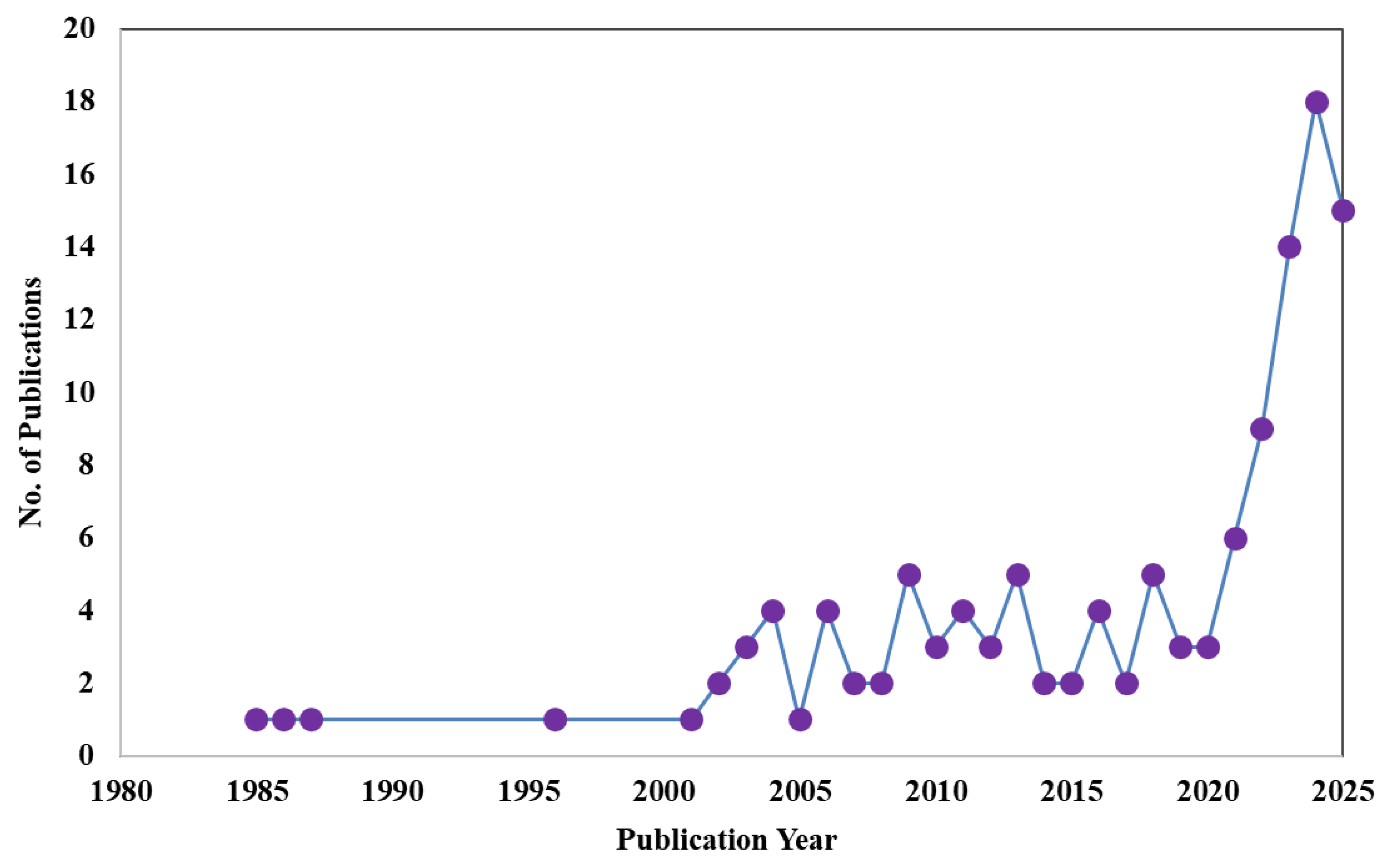
The descriptive analysis offers a quantitative overview of how research on AI-driven tacit knowledge extraction has evolved, been distributed, and been structured. The bibliometric data shows a clear timeline over four decades. This timeline highlights how this interdisciplinary field has grown from its early concepts to complex technological applications. The temporal distribution of publications (
Figure 2) shows three main phases of development. The
emergence phase (1985–2008) marks the initial years. During this time, foundational studies focused on expert systems, rule-based reasoning, and the early ideas of tacit knowledge within knowledge management frameworks. Most contributions in this phase were theoretical. They explored how tacit dimensions could be captured using symbolic and ontology-driven methods. The
acceleration phase (2009–2018) signifies a major growth period. This growth coincided with the rise of machine learning and the broader use of computational intelligence in knowledge engineering. The increase in publications indicates a shift from static knowledge recording to dynamic, data-driven knowledge extraction. Finally, the
consolidation phase (2019–2025) shows rapid growth in both the number of publications and the diversity of themes. This growth is driven by progress in deep learning, NLP, and hybrid human-AI models. In this stage, various fields come together. AI, cognitive science, and organizational learning collectively shape the understanding of tacit knowledge as something that can be enhanced computationally, rather than being just a human trait.
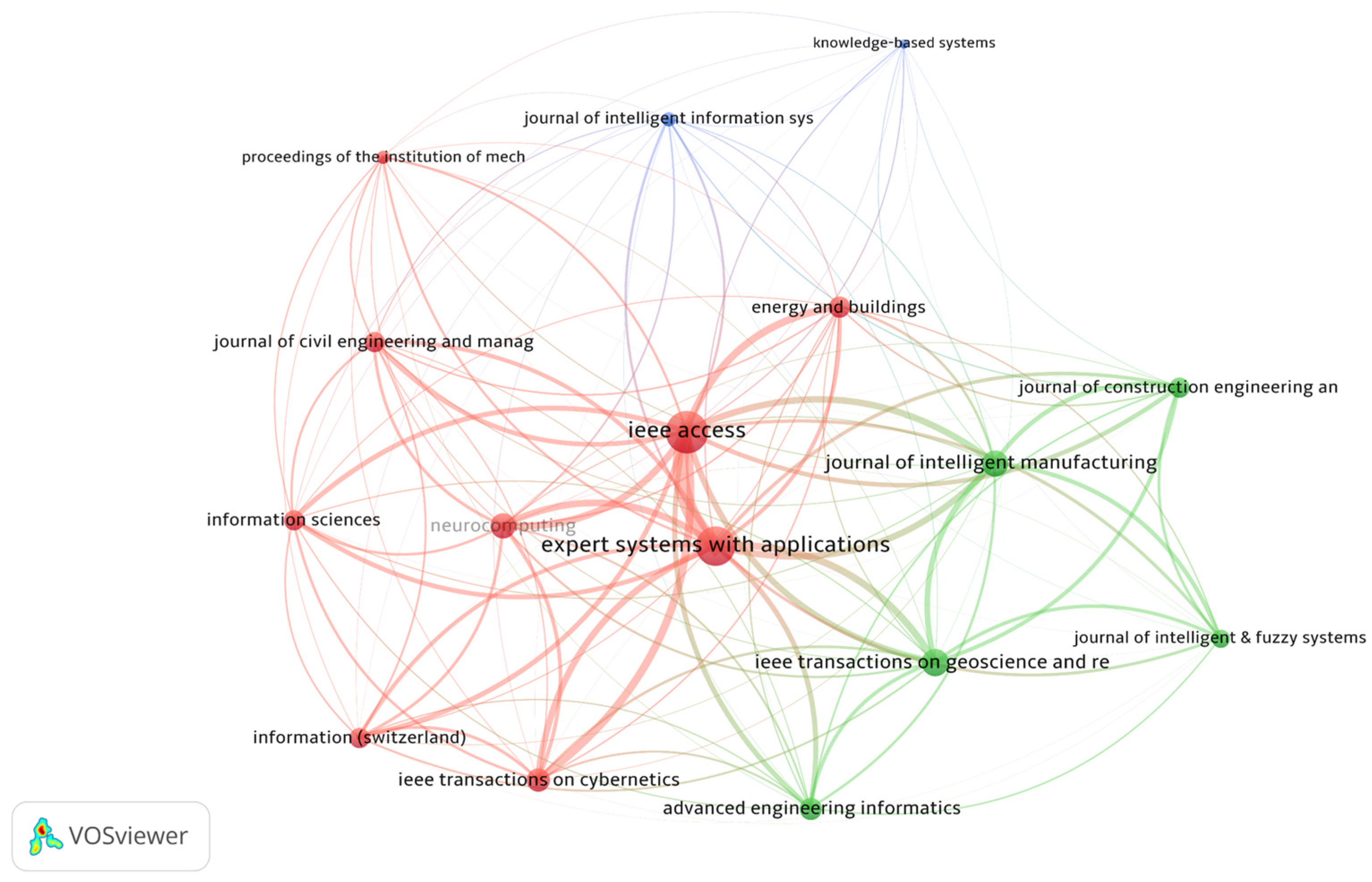
Bibliographic coupling analysis of journals, conducted with VOSviewer, showed the relationships among the 97 journals that published the 126 articles on AI-driven tacit knowledge extraction. It revealed distinct clusters of shared intellectual focus and discipline.
Expert Systems with Applications was the top publication venue with seven articles, followed by
IEEE Access with five contributions. Other notable outlets included
Information (Switzerland),
Journal of Intelligent Information Systems,
Journal of Intelligent Manufacturing,
Knowledge-Based Systems, and
Neurocomputing, each contributing three articles. Nine journals published two articles each, while most journals (81) contributed just one publication. This reflects a fragmented but highly interdisciplinary research field. The bibliographic coupling network (
Figure 3) displayed three major clusters with complementary but distinct themes. Cluster 1 (red cluster), led by
Expert Systems with Applications and
IEEE Access, showed strong links with
IEEE Transactions on Cybernetics and Applied Intelligence. This indicates a focus on AI methods and computational applications for knowledge extraction and decision support. Cluster 2 (green cluster), centered on
Advanced Engineering Informatics and the
Journal of Construction Engineering and Management, was closely connected to specific outlets like the
Journal of Intelligent Manufacturing and Automation in Construction. This highlights the engineering and applied systems view, where tacit knowledge is used in industrial or technical settings. Cluster 3 (blue cluster), led by
Knowledge-Based Systems and the
Journal of Intelligent Information Systems, included journals that focus on knowledge representation, ontological modeling, and intelligent information systems. This aligns with the knowledge management and cognitive computing framework.
This three-part structure highlights the field’s interdisciplinary nature. It connects the methodological precision of AI research with the contextual understanding found in organizational and engineering sciences. The observed distribution points to a split in the literature. One path focuses on computational formalization and algorithmic scalability, while the other stresses human-centered, context-sensitive views of tacit knowledge. This duality shows an ongoing effort among scholars to balance the symbolic and experiential aspects of knowledge in the age of artificial intelligence.
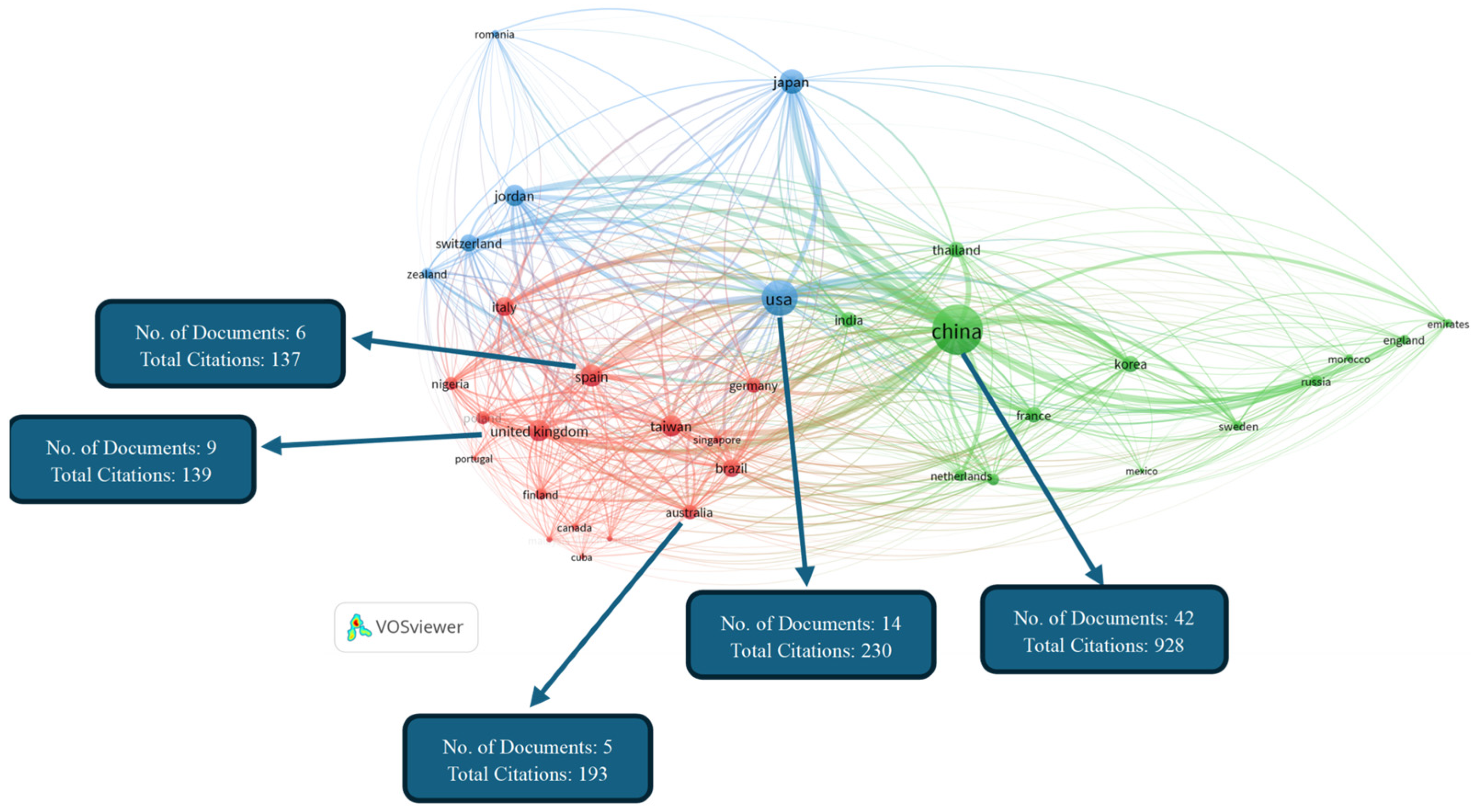
The country coupling analysis (
Figure 4) shows a research landscape that is varied but unbalanced. In
Figure 4, node colors represent country clusters identified through bibliographic coupling. China and the United States lead in publications and citation impact, making up over 40% of total contributions. European countries, especially the United Kingdom, Germany, and Spain, play a vital role as intermediaries, promoting collaborations across disciplines and institutions. At the same time, rising research activity from Japan, South Korea, and India indicates an increasing interest in applying AI to culturally specific ways of knowledge transfer and human–machine co-learning. The visualization demonstrates how geopolitical and institutional strengths in AI research affect the way tacit knowledge is framed around the world.
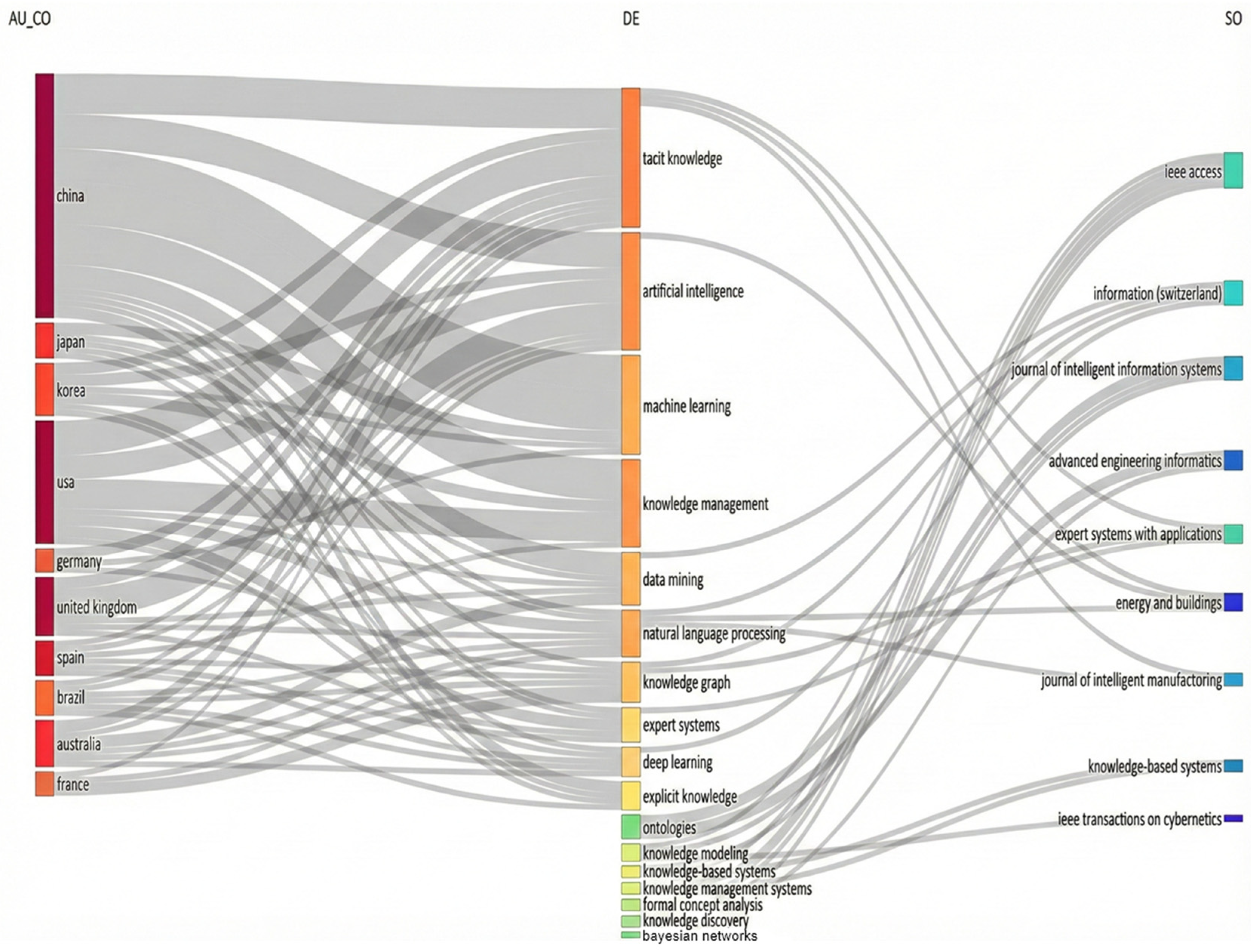
The three-field plot (
Figure 5) connects countries, author keywords, and journals, giving a broad view of the geographical and intellectual landscape of AI-driven tacit knowledge extraction research. In
Figure 5, colors distinguish the three fields (countries, keywords, and journals), while gray lines represent the linkage strength between elements across the fields based on co-occurrence relationships. On the left, countries like China, the USA, and the United Kingdom show the strongest connections, highlighting their leading roles in the field, as noted in the country bibliographic coupling analysis. The central column of author keywords reveals key themes, with “knowledge management” (the highest frequency, linked to China and the USA), “artificial intelligence” (connected to the USA and the United Kingdom), and “machine learning” (associated with China and South Korea) forming the main research focus. This is alongside more specialized terms like “natural language processing” and “ontologies” (related to Japan and Germany). On the right, journals such as
Expert Systems with Applications and
IEEE Access show the strongest links to keywords like “machine learning” and “artificial intelligence.” The
Journal of Knowledge Management is mainly linked to “knowledge management,” reflecting its thematic focus. The plot highlights the field’s interdisciplinary nature, with China and the USA leading AI research across multiple journals. Smaller contributors like Italy and Thailand connect to niche themes such as “deep learning” and “knowledge sharing,” showing diverse global participation.
Beyond journals and countries, the studies cover a fairly wide set of application contexts. To show this distribution more clearly, we grouped the 126 papers into broader domains by considering their WoS categories, stated research areas, and topical focus (
Table 1). A large share—about 42 percent—takes a general or cross-domain perspective, proposing methods, frameworks, or conceptual models without anchoring them to a specific sector. Among the more applied fields, manufacturing and industrial systems appear most often (16 studies, 12.7 percent), and ICT or software and information systems follow closely (14 studies, 11.1 percent). Construction and civil infrastructure (11 studies, 8.7 percent) and energy or environmental applications in a similarly sized group (11 studies, 8.7 percent) come next. Business and management settings include 9 studies (7.1 percent), while healthcare and medical applications are represented by 7 studies (5.6 percent). A smaller number of papers focus on maintenance and safety, agriculture, and space or aerospace, though these remain visible areas of interest. Overall, this distribution signals where research activity has concentrated so far and where opportunities exist for further, domain-specific exploration of AI-driven tacit knowledge approaches.
3.2. AI-Driven Techniques for Tacit Knowledge Extraction
The present section addresses RQ1 by mapping methodological trends onto the theoretical foundations that underpin tacit-knowledge research [
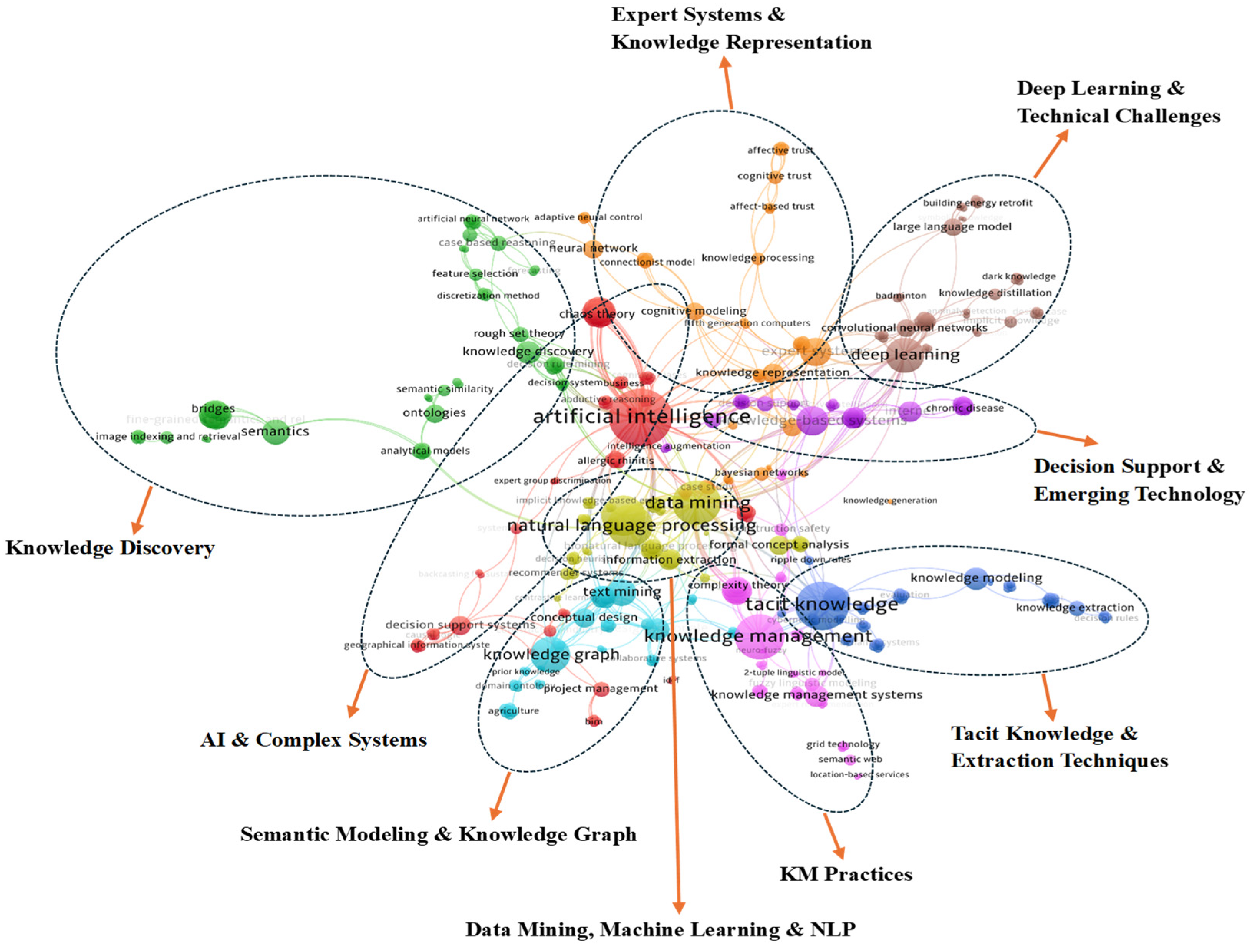
28]. The keyword co-occurrence analysis (
Figure 6) revealed nine major clusters that together delineate this theoretical and technological landscape: (1) Knowledge Management Practices, (2) AI and Complex Systems, (3) Data Mining, ML, and NLP, (4) Tacit Knowledge and Extraction Techniques, (5) Semantic Modeling and Knowledge Graphs, (6) Expert Systems and Knowledge Representation, (7) Knowledge Discovery, (8) DL and Technical Challenges, and (9) Decision Support and Emerging Technologies. These clusters are not isolated domains but rather stages along the knowledge externalization continuum described in Nonaka and Takeuchi’s SECI model (1995)—moving from the socialization of implicit know-how, through externalization and combination into structured knowledge, to internalization within intelligent systems.
At the foundational level, clusters such as
Knowledge Management Practices (Cluster 1) and
Tacit Knowledge & Extraction Techniques (Cluster 4) embody the theoretical roots of this domain. Drawing on the Knowledge-Based View [
29], these studies situate tacit knowledge as a strategic resource, emphasizing processes of knowledge transfer, organizational learning, and innovation [
16,
30,
31]. Research in this cluster often applies explainable AI (XAI) and rule-based inference systems as mechanisms to bridge the gap between human reasoning and machine interpretability [
32,
33,
34].
Moving upward, the
AI & Complex Systems cluster (Cluster 2) reflects the Complex Adaptive Systems (CAS) perspective [
35], conceptualizing knowledge as an emergent property of dynamic, nonlinear interactions among agents, technologies, and contexts [
10,
36,
37]. Methods such as digital twins, system dynamics, and chaos-theoretic modeling serve to capture the situated emergence of tacit insights within evolving environments. These models align closely with Situated Learning Theory [
38], where knowledge creation is inseparable from its social and environmental context—an aspect AI attempts to operationalize via contextual learning architectures.
The
Expert Systems and Knowledge Representation cluster (Cluster 6) historically embodies the cognitive and connectionist traditions. Early symbolic AI drew from cognitive psychology’s representational theory of mind, translating human expertise into rule-based systems. Later, the rise of connectionism provided the theoretical bridge between tacit cognition and neural architectures—where distributed representations and pattern recognition mirror the subconscious processing mechanisms underlying human intuition [
8,
9,
22]. This theoretical lineage directly links Polanyi’s ineffable “tacit knowing” to machine learning models capable of learning without explicit rule articulation.
The
Semantic Modeling and Knowledge Graphs cluster (Cluster 5) marks the semantic turn in AI-driven tacit knowledge extraction. Ontology-based and graph-embedded models attempt to recreate the
contextual interdependencies that define tacit knowledge structures. These techniques resonate with the Extended Mind Theory [
39], suggesting that cognition extends into external symbolic systems—here, represented by AI architectures that store and infer relational knowledge [
10,
16,
40]. Recent applications of knowledge graph embeddings and quantum-inspired reasoning illustrate how the boundary between human cognition and artificial inference is becoming increasingly porous [
18].
Parallel to this, the
Knowledge Discovery and
Deep Learning clusters (Clusters 7 and 8) signify a paradigmatic transformation from symbolic to subsymbolic reasoning. The emergence of deep learning, transformer models, and large language models (LLMs) has operationalized what Polanyi viewed as unarticulable—patterned yet nonverbal cognition. These architectures embody the connectionist epistemology of tacit knowing, learning from data correlations without explicit formalization [
25,
41,
42,
43]. However, as Complex Adaptive Systems theory predicts, the opacity of such models introduces new epistemological challenges: while they can replicate intuition-like performance, their internal representations remain difficult to interpret, prompting renewed emphasis on explainability and hybrid symbolic–subsymbolic frameworks.
The
Decision Support and Emerging Technologies cluster (Cluster 9) represents the application layer of this theoretical synthesis. It combines insights from the Knowledge-Based View and Extended Mind Theory. This cluster shows how AI works as an external cognitive system within socio-technical infrastructures. It improves human decision-making through feedback, contextual reasoning, and real-time learning [
44,
45,
46]. In this context, AI does not just record tacit knowledge; it becomes part of the ongoing process of knowledge enactment, continuously evolving alongside human actors and organizational settings.
Table 2 summarizes the nine clusters, including their top keywords, related AI techniques, main applications, and supporting references. This table offers a clear overview of the AI-driven techniques identified for extracting tacit knowledge.
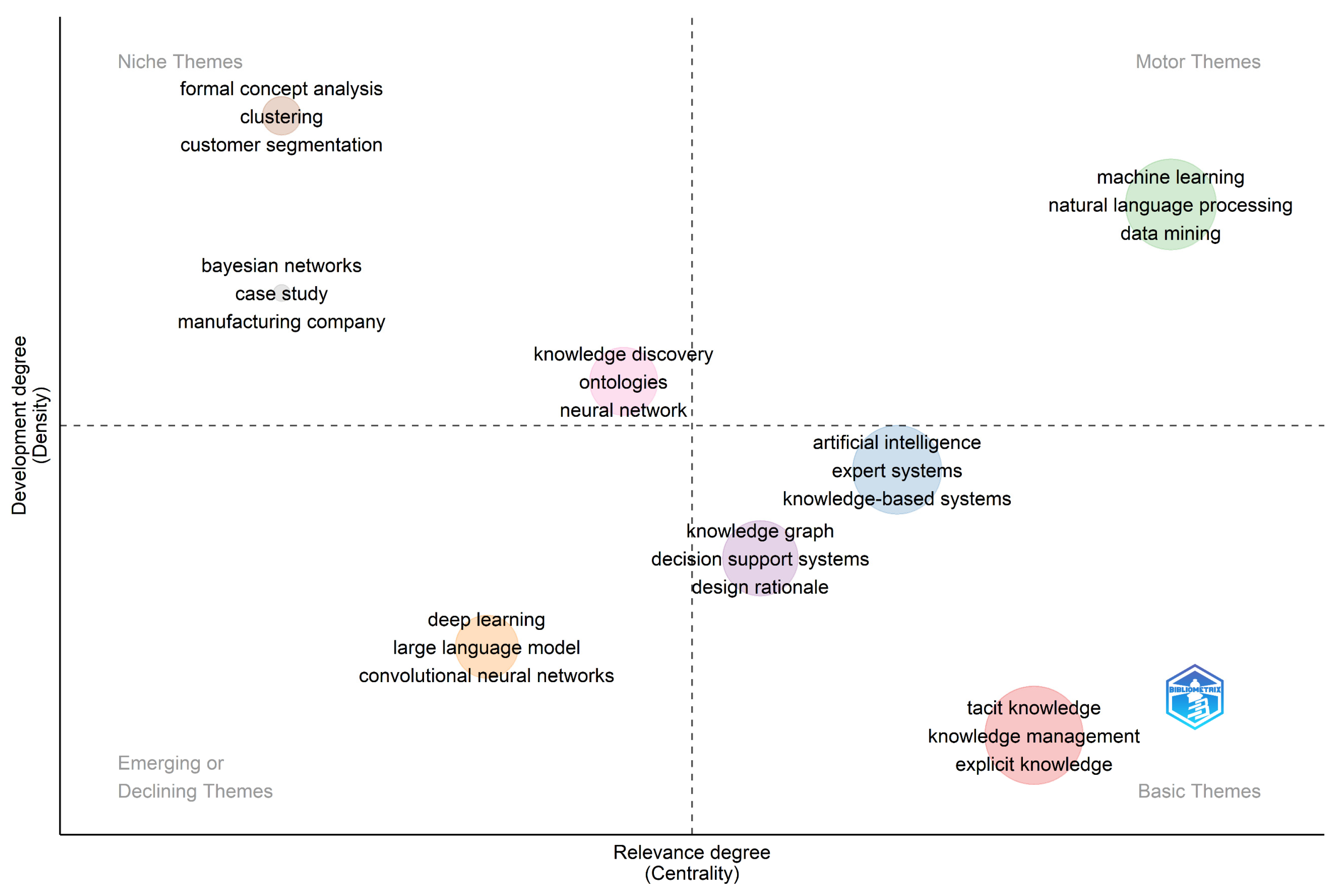
The thematic map (
Figure 7) derived from Biblioshiny further clarifies the structural relationships among these clusters. In
Figure 7, circle size reflects the relative importance of themes, text color (black and gray) distinguishes primary and secondary themes, and dashed lines indicate the thematic quadrants. The Motor Themes—including
machine learning,
natural language processing, and
data mining—constitute the methodological engines that drive the externalization and combination phases of tacit knowledge creation. The Basic Themes—
tacit knowledge,
knowledge management, and
knowledge graph—represent the epistemological backbone connecting human knowing with AI cognition. Niche Themes, such as
formal concept analysis and
Bayesian networks, reflect specialized attempts to formalize tacit reasoning under uncertainty, while Emerging Themes—notably
deep learning and
transformers—illustrate the accelerating integration of contextual and generative intelligence since 2021.
The integrated framework (
Table 3) synthesizes the bibliometric clusters by positioning AI-driven techniques within established theories of tacit knowledge. It highlights how knowledge perspectives range from embodied and experiential knowing [
28] to distributed and hybrid cognition [
39], demonstrating that AI increasingly participates in the environments where tacit knowledge is generated and applied. Each class of methods corresponds to a different moment in the SECI framework. Techniques in machine learning and NLP help with combination by surfacing patterns in language and behavior that are not immediately observable. Deep learning, in turn, has been used to approximate forms of intuitive and context-dependent reasoning that resemble internalization. Semantic models and knowledge graphs help in a different way, making the links among concepts visible and, as a result, helping externalization take place. Seen together, these technical directions reflect a move away from purely symbolic and rule-based systems toward approaches that are more sensitive to context and often mixed in their design. Instead of simply translating expertise into formal code, the newer approaches position tacit knowledge as something that grows through interaction between people and intelligent tools. This perspective offers a theoretical basis for seeing AI not only as a means of accessing knowledge, but as part of the ongoing formation of tacit knowing itself.
3.3. Effectiveness of AI-Driven Techniques vs. Traditional Methods
Addressing RQ2, this section provides a conceptual and qualitative comparison between traditional elicitation approaches, symbolic AI systems, and data-driven machine learning techniques. Rather than synthesizing empirical performance metrics across studies, the comparison focuses on scalability, contextual fidelity, and interpretability as analytically meaningful dimensions for mapping methodological differences in the field.
Table 4 provides a qualitative contrast of these approaches without implying cross-study comparability of accuracy, precision, or efficiency, given the heterogeneity of domains, tasks, datasets, and evaluation settings across the reviewed literature. This comparison demonstrates a clear historical progression: methods evolve from context-rich but labor-intensive elicitation, to semantically structured but rigid symbolic systems, and finally toward scalable architectures capable of approximating human-like intuition—albeit with unresolved interpretability and generalization challenges.
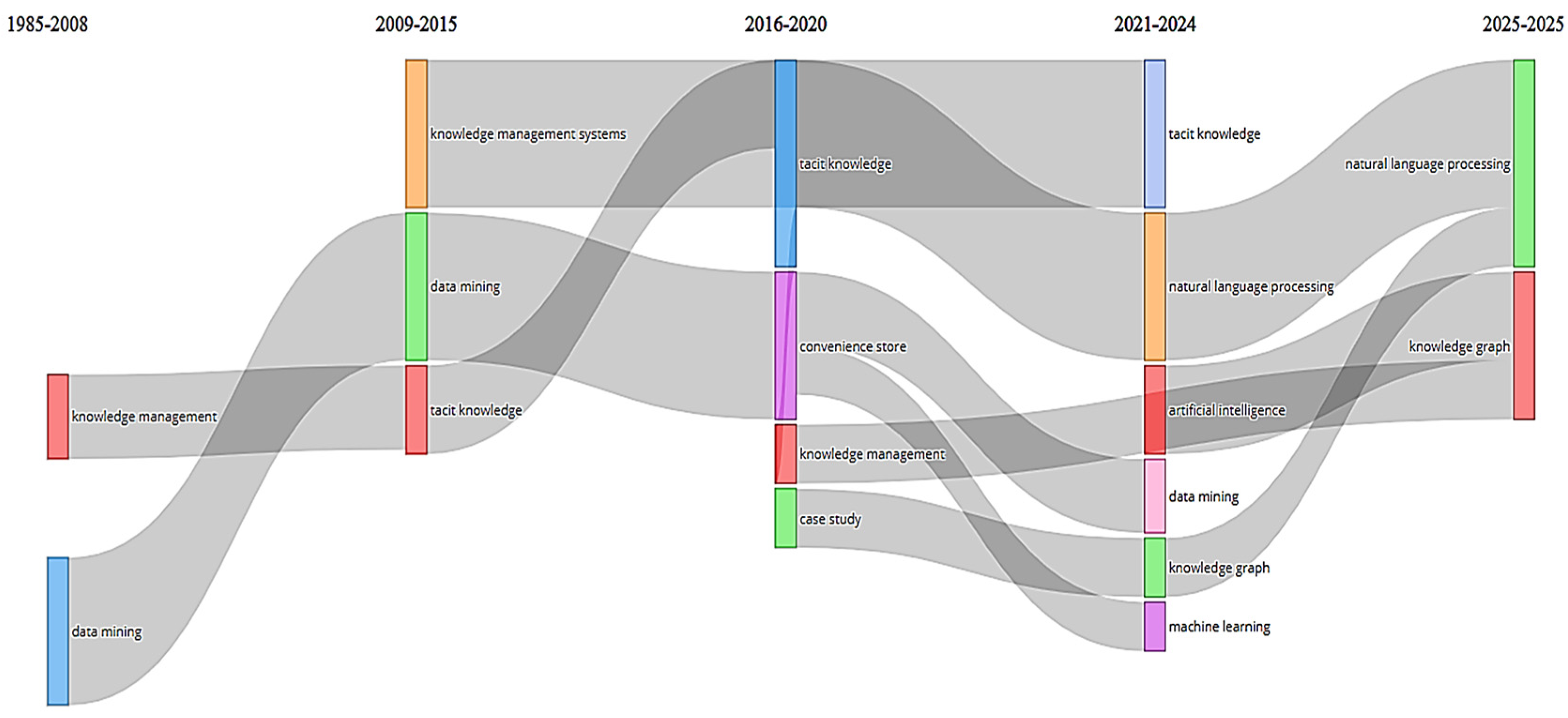
To contextualize these shifts, the thematic evolution analysis (
Figure 8) identifies four developmental phases in the field’s methodological advancement. In
Figure 8, colors denote thematic groupings within each time period, while gray lines represent the evolutionary links between themes across successive phases, which together structure the four phases discussed below.
Phase 1 (1985–2008): The Symbolic and Manual Era.
Research activity was limited and dominated by traditional knowledge management systems and rule-based expert systems grounded in early Knowledge-Based View assumptions [
29]. Performance was constrained by scalability issues and the inability to model the contextual and experiential character of tacit knowing [
22,
36,
51].
Phase 2 (2009–2015): Emergence of Data-Driven Intelligence.
Growing computational power enabled data mining and early NLP to detect latent regularities in structured and semi-structured data. These systems demonstrated measurable effectiveness in identifying actionable patterns in application contexts such as retail analytics [
9,
45]. Although dependent on structured inputs, they demonstrated the first scalable assistance for tacit-oriented inference. Conceptually, this period marks the early stage of AI augmenting human expertise rather than simply encoding it.
Phase 3 (2016–2020): The Rise of Machine Learning and Semantic Cognition.
Machine learning and semantic modeling shifted the research focus toward computational modeling of tacit inference. Models such as SVMs and NLP-based classifiers demonstrated higher reliability and analytical consistency than manual approaches in domains including construction safety and industrial knowledge extraction [
52,
53,
54,
55,
56]. AI began internalizing hidden structures in data, aligning with the methodological transitions discussed in
Section 3.2.
Phase 4 (2021–2025): Cognitive Integration and Intelligent Augmentation.
Deep learning, LLMs, and generative AI have enabled new forms of contextual and adaptive reasoning. Transformer-based models demonstrate strong capability in extracting implicit insights from unstructured data sources, such as social media [
16,
25,
41,
42,
43,
57]. Knowledge graphs provide fast semantic integration across heterogeneous environments, in some cases fifty times faster than earlier ontology-driven methods [
16]. These advances suggest a maturing co-adaptation between human interpretive judgment and intelligent analytical systems.
Collectively, the thematic evolution in
Figure 8 indicates that AI-based approaches have improved both scalability and attention to context when compared with earlier symbolic systems. This trend marks a movement away from manual codification toward more dynamic and shared processes of knowledge development.
3.4. Challenges and Limitations of AI-Driven Techniques for Tacit Knowledge Extraction
Addressing RQ3, this section synthesizes persistent challenges evidenced in the thematic map (
Figure 7), thematic evolution (
Figure 8), and keyword co-occurrence network (
Figure 6). Despite notable progress, several theoretical and technical limitations remain.
Emerging or declining themes such as “DL,” “NLP,” and “CNN” indicate high innovation coupled with unresolved issues relating to contextual reasoning. Large language models, while demonstrating strong performance in structured settings, exhibit notable limitations in commonsense inference tasks [
16]. This reflects persistent difficulty representing embodied and situational aspects of tacit knowing originally emphasized by Polanyi [
28]. Niche Themes including “formal concept analysis,” “clustering,” and “Bayesian networks” reveal challenges in preserving nuanced domain-specific context, especially in industrial and healthcare settings [
55,
56,
58]. These struggles align with the theoretical expectation that removing tacit knowledge from its socio-cognitive environment can diminish its meaning.
The evolution analysis also shows shifts in challenge profiles: early manual methods suffered from interpretability and scalability limits [
28,
36,
51]; more recent ML-based approaches raise privacy and ethical issues, particularly in applications analyzing sensitive organizational or personal texts [
52,
55]. Knowledge graphs introduce maintenance complexity as they scale dynamically across contexts [
20]. These findings resonate with Socio-Technical Systems Theory [
59], emphasizing that technical solutions to knowledge problems must co-evolve with social and ethical systems to remain effective and legitimate.
Additional concerns appear in emerging topics such as “dark knowledge” and “prompt engineering,” which foreground opacity and accountability risks in deep learning. Growing integration of AI systems with human decision processes raises epistemic questions regarding whether AI authentically extends human understanding or merely simulates it.
Overall, these patterns indicate that limitations are not solely technical. They arise from the cognitive, social, and ethical nature of tacit knowing, motivating the need for approaches that maintain situational depth while offering scalability and transparency.
3.5. Future Research Directions
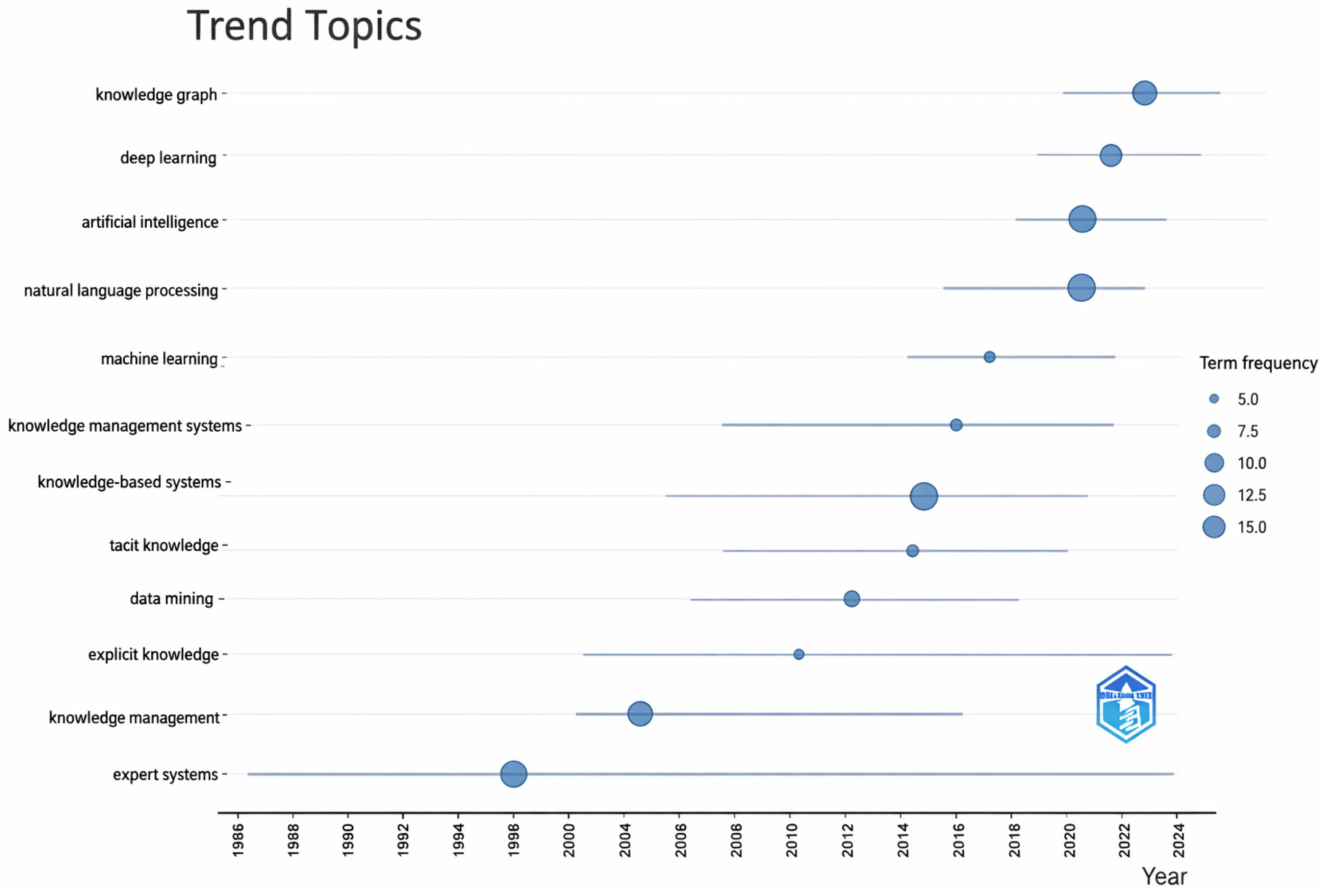
Addressing RQ4, this study triangulated insights from keyword co-occurrence analysis (
Figure 6), thematic evolution mapping (
Figure 8), and trend topics analysis (
Figure 9). Results indicate a convergence between methodological innovation and epistemological concerns, with several promising fronts for future research.
The prominence of emerging concepts such as “XAI,” “quantum machine learning,” and “prompt engineering” suggests a shift toward transparent and cognitively aligned models that better support the externalization and combination of tacit insights. This trajectory aligns with strategic needs identified in Knowledge-Based View and Dynamic Capabilities Theory, emphasizing adaptability and interpretability in fast-changing knowledge environments.
Trend patterns also highlight that “deep learning” and “knowledge graph” applications have intensified since 2021, reflecting a move toward semantically enriched and context-aware forms of knowledge representation. Yet their continued difficulty with commonsense and contextual inference indicates the need for integrated neuro-symbolic and ontology-aware architectures.
Beyond methodological refinement, Responsible AI frameworks and data-ethics perspectives call for explicit governance structures to mitigate privacy, fairness, and explainability concerns in tacit-knowledge contexts.
Based on these findings, four research priorities emerge:
Advancing XAI techniques to improve interpretability in tacit-knowledge extraction processes.
Integrating symbolic reasoning with deep learning to strengthen contextual and commonsense inference.
Enhancing knowledge-graph-based systems for dynamic and relational modeling of tacit knowledge across domains.
Establishing ethical and human-centered principles for AI-driven knowledge infrastructures to ensure accountability and contextual integrity.
These directions point toward AI systems that work with—rather than around—the inherently situated nature of tacit knowing, expanding both scientific understanding and practical organizational capability.
3.6. Conceptual Framework
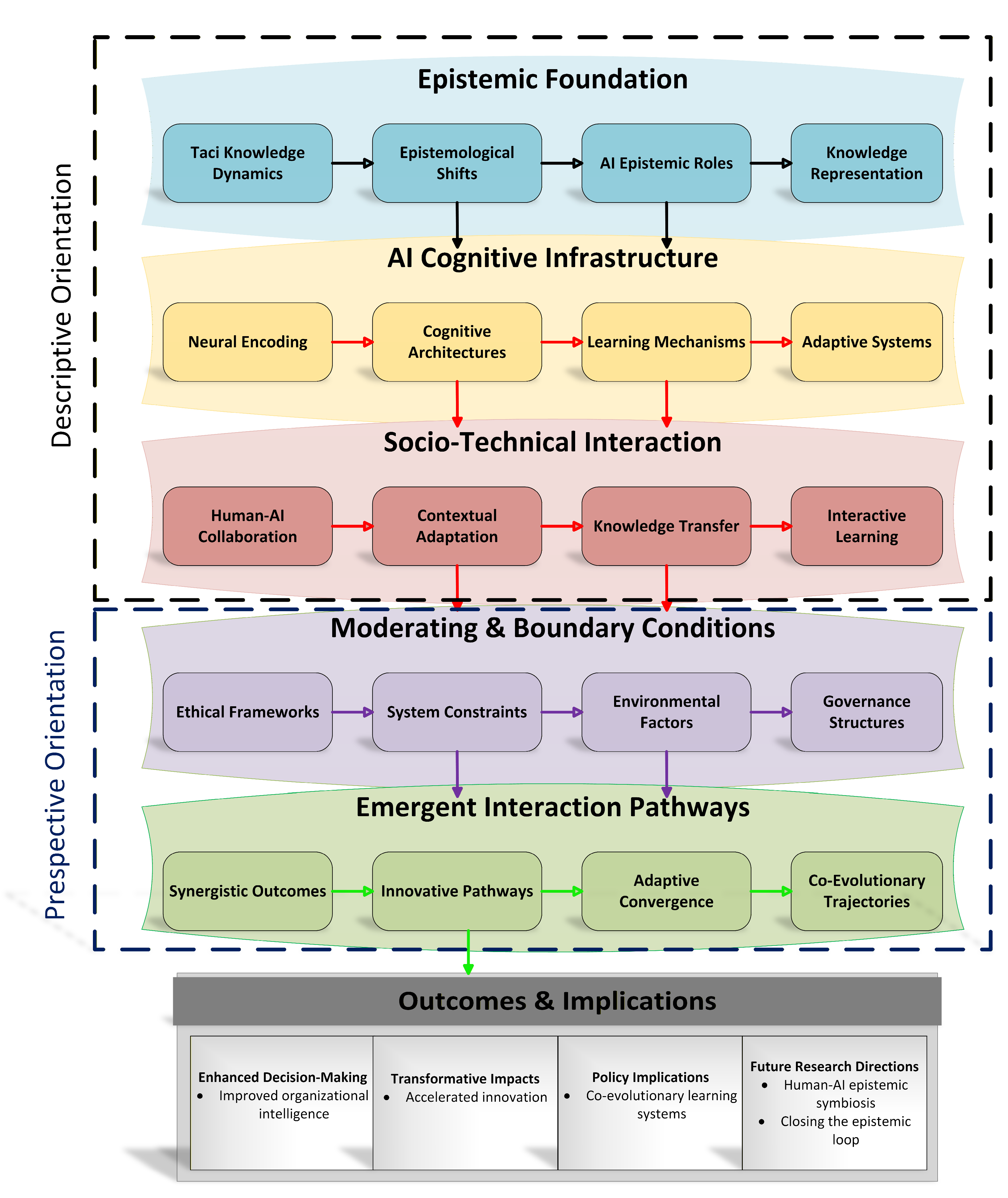
The proposed conceptual framework (
Figure 10), the AI-Tacit Knowledge Co-Evolution Model, connects knowledge, technology, and organization. It shows how artificial intelligence affects the way we capture, transform, and use tacit knowledge. Rather than viewing AI as just a tool, the framework presents it as a flexible cognitive system that works closely with human thought and organizational learning. It expands our understanding of tacit knowledge management as a complex, ongoing, and context-driven system shaped by the interactions between humans and AI. To address both current practice and future design, the upper three layers of the model (Epistemic Foundation, AI Cognitive Infrastructure, and Socio-Technical Interaction) are predominantly descriptive in showing how AI-enabled tacit knowledge systems operate today, whereas the lower two layers (Moderating & Boundary Conditions and Emergent Interaction Pathways) are prescriptive in identifying how such systems ought to be responsibly and adaptively developed.
At the center of the model is the understanding of tacit knowledge, based on Polanyi’s theory of personal knowledge and Nonaka’s SECI model of knowledge creation. Tacit knowledge is experiential, embodied, and shaped by social interactions. It develops through human interaction, perception, and engagement with context. It goes beyond simply unexpressed or messy information; it is an active process of knowing that is shaped by practice, reflection, and shared meaning. In this layer, the framework shows an important change in understanding. As AI systems try to mimic human thinking, they face difficulties in using computational reasoning to copy embodied understanding.
This conflict shapes the role of AI in knowledge. It is not a replacement for human intuition; instead, it is a supportive agent that can help convert parts of tacit knowledge into recognizable forms. Consequently, representing knowledge in AI-driven settings becomes fluid and relational. It emphasizes the evolution of knowing processes instead of fixed data storage.
The second layer, the AI Cognitive Infrastructure, captures the technological methods that extract, organize, and recontextualize tacit knowledge through algorithms. This infrastructure works through neural encoding processes, embodied in methods like NLP, ML, and DL. These methods detect hidden patterns, associations, and meanings in unstructured text and multimodal data. In addition, cognitive architectures such as Knowledge Graphs act as artificial knowledge agents. They integrate scattered knowledge elements into clear semantic structures that mimic human contextual reasoning. These systems use probabilistic learning methods to make implicit knowledge explicit, although they lack the depth of human experience. With ongoing adaptation, this layer provides the algorithmic foundation for modern knowledge management, capable of evolving through feedback, retraining, and contextual adjustment. In empirical or design studies, this layer can be operationalized through measurable indicators such as learning architecture type, semantic richness, multimodality of data inputs, and frequency of adaptive retraining cycles.
The Socio-Technical Interaction layer highlights the area where human thinking and AI systems connect within organizational environments. Based on theories of socio-materiality and dynamic capabilities, this layer sees knowledge creation as a co-evolutionary process between humans and AI. Knowledge here is not just human or machine-generated; it emerges through contextual adaptation, feedback, and mutual learning. In this ongoing system, knowledge transfer becomes an interactive cycle of validation, reinterpretation, and integration. This process generates organizational learning agility, which is the ability to continuously adjust routines and strategic practices in response to changes in the environment. The collaboration between human insight and AI computation allows organizations to shift from fixed knowledge repositories to adaptable knowledge ecosystems. Variables at this layer may include human-AI task allocation ratios, decision-override authority structures, feedback loop latency, and measures of organizational learning agility.
The Moderating and Boundary Conditions layer recognizes the real-world limits that affect how AI fits into tacit knowledge management. Organizations deal with ethical issues like privacy, bias, and moral responsibility. They need strong ethical guidelines for using AI. On a broader scale, gaps in basic reasoning show that AI struggles to understand meaning beyond what it sees in the data. Also, limits in computing power can hinder its ability to scale and be inclusive. Environmental and cultural factors influence how knowledge gets shared, expressed, and understood. This shows that tacit knowledge is closely tied to its context. These factors underline the tension between symbolic understanding and statistical inference. This tension shapes the interaction between humans and AI regarding knowledge. Therefore, governance structures must find a way to balance innovation with responsibility. They need to make sure that technological progress reflects human values and stays true to the context. Operational indicators here include ethical compliance frameworks, governance maturity level, data stewardship quality, environmental constraints, and cultural considerations in interpretive accuracy.
At the leading edge of the framework are the Emergent Integration Pathways. They represent transformative directions in the co-evolution of AI and tacit knowledge systems. XAI aims to improve interpretability and trust by offering transparency in how tacit insights are derived algorithmically. Symbolic-Neural Hybrid Models combine logic-based reasoning with the flexibility of neural architectures. This brings AI closer to mimicking human thinking. Quantum Machine Learning further builds on these abilities by processing complex, high-dimensional knowledge structures that traditional algorithms cannot handle. These innovations together define adaptive convergence paths. Here, technological progress works with ethical governance frameworks to ensure value consistency and social responsibility. The shift from knowledge extraction to knowledge co-evolution marks a major change. It positions AI as an active participant in human knowledge processes instead of just a passive analytical tool. Progress along these pathways can be evaluated through innovation throughput, interpretability improvements, time-to-capability gains, and evidence of stable co-learning trajectories.
To further illustrate how the layers function in practice, consider an AI-enabled maintenance system in smart manufacturing. At the Epistemic Foundation level, operators’ experiential sensing of machine anomalies is recognized as embodied tacit knowing. AI Cognitive Infrastructure uses neural encoders and knowledge graphs to model vibration signatures and contextual fault histories. Through Socio-Technical Interaction, operators validate system suggestions and correct model errors, enabling co-learning. Boundary Conditions ensure human-override authority in safety-critical decisions and ethical oversight of sensor data use. Over time, these interactions create an Emergent Pathway wherein expert intuition improves model reasoning, while AI accelerates anomaly detection and preserves expertise that would otherwise dissipate with workforce turnover.
3.7. Implications
The dynamics described in the conceptual framework (
Figure 10) reshape how organizations should think about designing and governing AI-enabled knowledge systems. Although the framework draws directly on Polanyi and Nonaka, it has been deliberately formulated at a general epistemic level so that it remains compatible with wider perspectives on situated knowing. Practice theory would interpret AI–human interaction as a transformation of shared routines and sociometrical practices; activity theory would view AI as a mediating artifact within collective activity systems; and ethnomethodology would highlight how knowing becomes accountable through interaction. Incorporating these lenses shows that the model does not bind tacit knowing to one philosophical lineage but provides a flexible structure that can be adapted across traditions concerned with embodied and contextual knowledge.
Once tacit knowledge becomes even partially traceable through computational techniques, the distribution of knowing itself changes. Expertise is no longer housed exclusively in people or in what has been formally documented; instead, it takes shape within a shared environment where lived experience and algorithmic inference meet. This can accelerate the recognition of subtle patterns in practice and help retain expertise that would otherwise dissipate as people move or roles shift. Adaptation to new circumstances may also become less dependent on slow processes of collective learning. Yet, in practice, these benefits only hold when systems are embedded in routines that keep human interpretation at the center and protect the contextual nuance that makes tacit knowing valuable.
Such shifts immediately raise governance questions. Tacit knowledge is inseparable from the histories, identities, and communities through which it develops. Treating it merely as data to be extracted risks reducing personal and professional experience to something useful but detached from those who give it meaning. For that reason, algorithmic outputs have to be regarded as provisional, always in need of discussion rather than taken as authoritative accounts. Decision-makers require visibility into how conclusions are formed, and those who hold relevant expertise should be involved in refining and correcting what the system infers. Maintaining these dialogic processes helps ensure that interpretation remains situated and accountable.
Safeguards, when approached in this spirit, become a basis for responsible innovation rather than constraints on it. Data stewardship that recognizes provenance and the limits of consent helps preserve not only individual rights but the fidelity of the knowledge being mobilized. Likewise, governance mechanisms that foreground fairness, cultural variation, and uncertainty can reduce distortions that silently accumulate in automated reasoning. Under such conditions, AI contributes by extending human expertise—not by averaging or replacing it.
Taken together, these arguments suggest that organizations need a form of knowledge management that aims high technologically, while still pausing to consider what makes tacit knowing distinct in the first place. AI clearly has the capacity to broaden access to experiential insight and to support decisions in settings where complexity or pace would otherwise overwhelm people. Even so, its success depends on whether the systems involved remain attentive to the social and embodied sources from which that knowledge originates. A purely computational account will always miss something essential. Treating intelligent tools as contributors in an ongoing exchange of perspectives—rather than as final arbiters—offers a practical route forward: knowledge practices that scale when needed adapt over time. and remain grounded in human experience.
4. Conclusions
This literature review examines how AI has changed how we get tacit knowledge, connecting years of study in areas such as knowledge management, cognitive systems, and machine learning. Using a multi-dimensional approach on 126 papers published from 1985 to 2025, the study employed keyword analysis, thematic mapping, and trend analysis to examine the evolution of AI methods and their effectiveness in identifying tacit knowledge. The results reveal a field that has evolved from foundational knowledge management to complex, AI-enhanced systems that increasingly integrate human cognition with computational reasoning. The shift in knowledge management theory underlies this change. The KBV conceptualizes knowledge as a central source of competitive advantage, and this review demonstrates that AI functions as a mechanism for leveraging and expanding that knowledge. The SECI model of Nonaka and Takeuchi, which usually shows how tacit and explicit knowledge change, has been viewed differently: AI, through NLP, knowledge graphs, and machine learning, helps automate externalization and combination, allowing knowledge to flow beyond individual thinking. Earlier approaches, including manual codification and expert systems, were constrained by bias, limited scalability, and contextual rigidity. As computational and semantic capabilities advanced, AI began to augment human sensemaking, enabling the large-scale identification of tacit patterns in unstructured data.
A comparison between AI-driven and traditional approaches reveals a marked shift in methodological performance. Earlier systems, which relied heavily on manual elicitation, exhibited limited precision and struggled with complex, unstructured data. In contrast, newer AI ways—mainly those using deep learning, transformers, and semantic networks—have greatly increased how correct, expandable, and fast they are. These developments reflect the principles of Dynamic Capabilities Theory, where groups create flexible, learning-focused systems that can sense and change information as needed. Machine learning and NLP have proven instrumental in uncovering patterns in human knowledge, transforming unstructured documents, reports, and textual interactions into actionable insights. Nonetheless, these advances introduce significant constraints: high computational demands, data quality requirements, and the need for interpretability mechanisms necessitate continued human oversight in knowledge-intensive processes.
Even though there has been great advancement, tacit knowledge’s complexity still causes problems in the area. Tacit knowledge relates to experience, understanding, and wisdom gained from practice. It is not just hidden information, but it is also located and depends on the situation. Although AI can spot patterns, it finds it hard to emulate the depth of human contextual reasoning. The results show problems that continue to exist, such as not having common sense, having trouble keeping context, being worried about data privacy, and advanced models needing a lot of computing power. These things relate to ideas about society and the mind that say that real learning happens when people work together to make shared sense of things in a context they share, instead of by computers just following steps. As artificial intelligence takes a central role in decision-making and knowledge flow within groups, morals about being open, fair, and responsible are becoming more important. This calls for changing theories to focus on artificial intelligence that is responsible, emphasizing the need to explain things and be responsible, and agreeing with human values.
Based on these points, this study suggests some clear and theoretically grounded directions for future work. It would be helpful to build XAI models that explain how tacit, or unspoken, knowledge is taken out and to make this process reliable. Combining symbolic reasoning (using symbols to make logical steps) with deep learning is also important to fix the limits of only using statistics. Better semantic technologies, like knowledge graphs, can give context and show how different pieces of knowledge relate. A helpful approach is to use hybrid systems that mix computer thinking with ways to understand the results. These “human-AI co-creation systems” would not just extract knowledge by themselves but would also let humans and computers talk to each other. This would allow unspoken insights to be found and properly understood. Ethics are key, too. Using NLP that protects privacy, having rules for data use, and making sure learning models are fair are musts to keep the trust of the public and organizations. These steps all lead to hybrid intelligence ideas where human thinking and computer power work together to help workplaces learn, grow, and be strong.
This study contributes to theory and practice in several significant ways. Theoretically, it integrates the Knowledge-Based View, SECI model, Dynamic Capabilities, and Responsible AI paradigms into a unified framework that explains how AI transforms the processes of knowledge creation, sharing, and utilization. It demonstrates that AI does not merely replicate human knowledge functions but fundamentally redefines the epistemological infrastructure of organizations—shifting them from repositories of expertise to dynamic learning ecosystems. Methodologically, it illustrates how bibliometric synthesis can serve as a rigorous lens for capturing emerging interdisciplinarity at the intersection of AI, knowledge science, and organizational theory. Practically, it provides organizations with actionable insights for implementing AI-driven systems that balance efficiency and interpretability, promoting knowledge processes that are both technologically advanced and ethically sound.
Taken together, the review delivers a pair of contributions that we see as complementary. One concerns the state of the field: by bringing dispersed studies into a single analytical view, the review clarifies how AI techniques have been used to work with tacit knowledge, which methodological lines have gained traction, and where important conceptual questions remain unsettled. The other contribution is theoretical. Through the AI–Tacit Knowledge Co-Evolution Framework, we suggest a way of understanding how human interpretive expertise and machine reasoning might develop alongside each other, allowing tacit knowing to retain its contextual depth even as knowledge practices scale. Linking these elements—empirical patterns on the one hand and a more unified conceptual account on the other—helps set firmer ground for future inquiry and guides the design of AI systems that remain sensitive to the ethical and situated nature of expertise.
Nevertheless, it is important to acknowledge some limitations. While the bibliometric method allowed for a structured overview of scholarly trends, it does not address the subtle, qualitative factors of how knowledge is applied inside organizations. Future studies might use mixed methods, combining bibliometric and ethnographic methods to see how tacit knowledge extraction driven by AI happens practically, mainly in healthcare, manufacturing, and innovation-heavy settings. Also, as AI advances faster, regularly updating bibliometric datasets will be key to include changes after 2025, like improvements in multimodal AI, federated learning, and quantum-based models. Future bibliometric research could also concentrate on networks of keywords related to challenges or ethics to better understand the evolving frontiers of research.
This review concludes that AI methods are changing how we handle tacit knowledge. These methods let us know, record, and share more, but they also bring up fresh questions about what we know and what is ethical. The progress of taking tacit knowledge will rely on both AI’s skill and human understanding. If researchers and workers create AI systems that are easier to understand, mix different approaches, and know the situation, we can create knowledge in a new way. In this method, unspoken ideas are taken, understood, believed, and saved as important parts of teamwork between people and machines. Combining how we think, organize, and compute shows an important step toward a smarter, more ethical future that uses knowledge well.