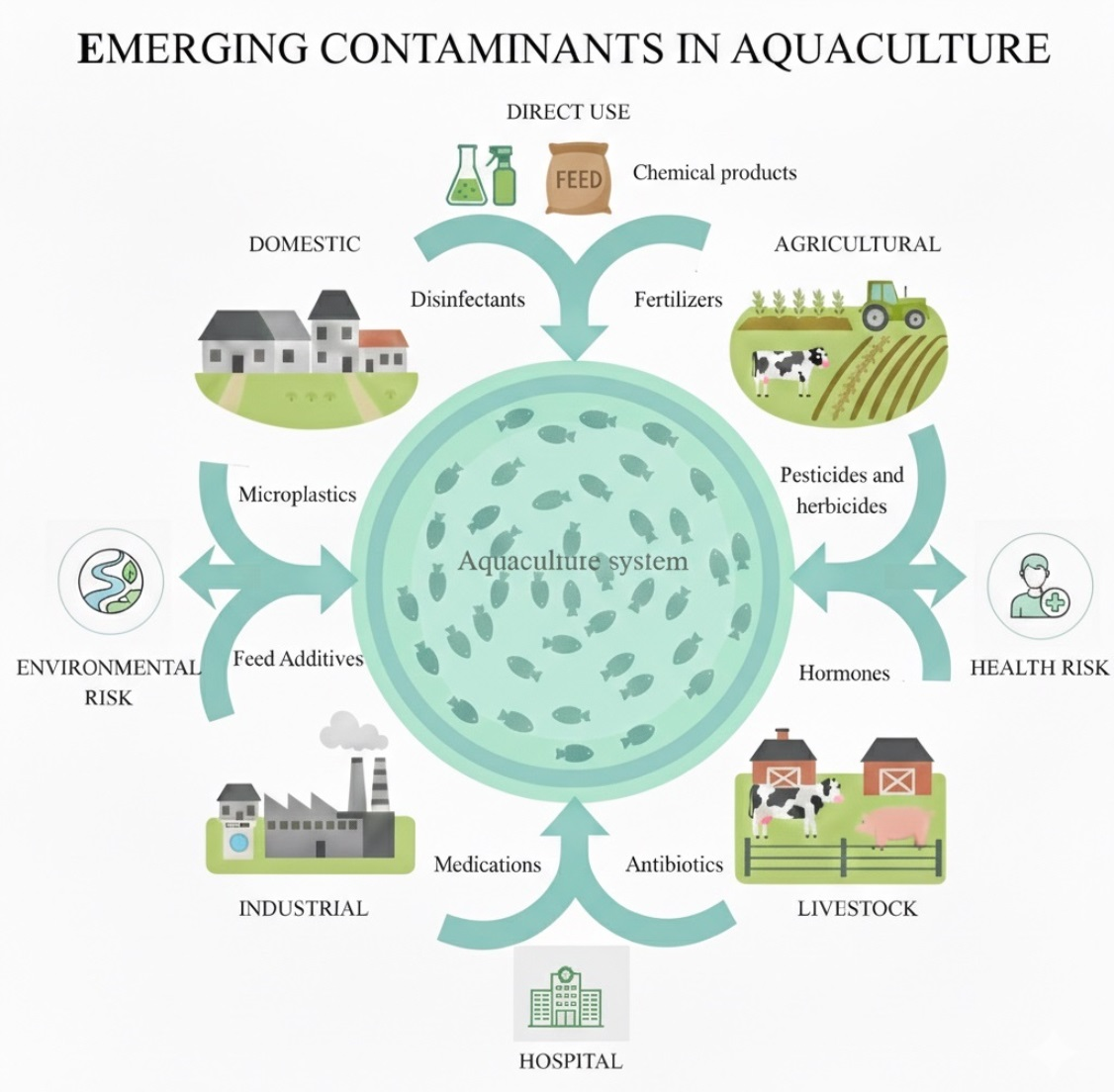

Emerging Contaminants in Aquaculture Production: Environmental and Human Health Risks

 ,
,  ,
,  ,
,
Abstract
1. Introduction
2. Materials and Methods
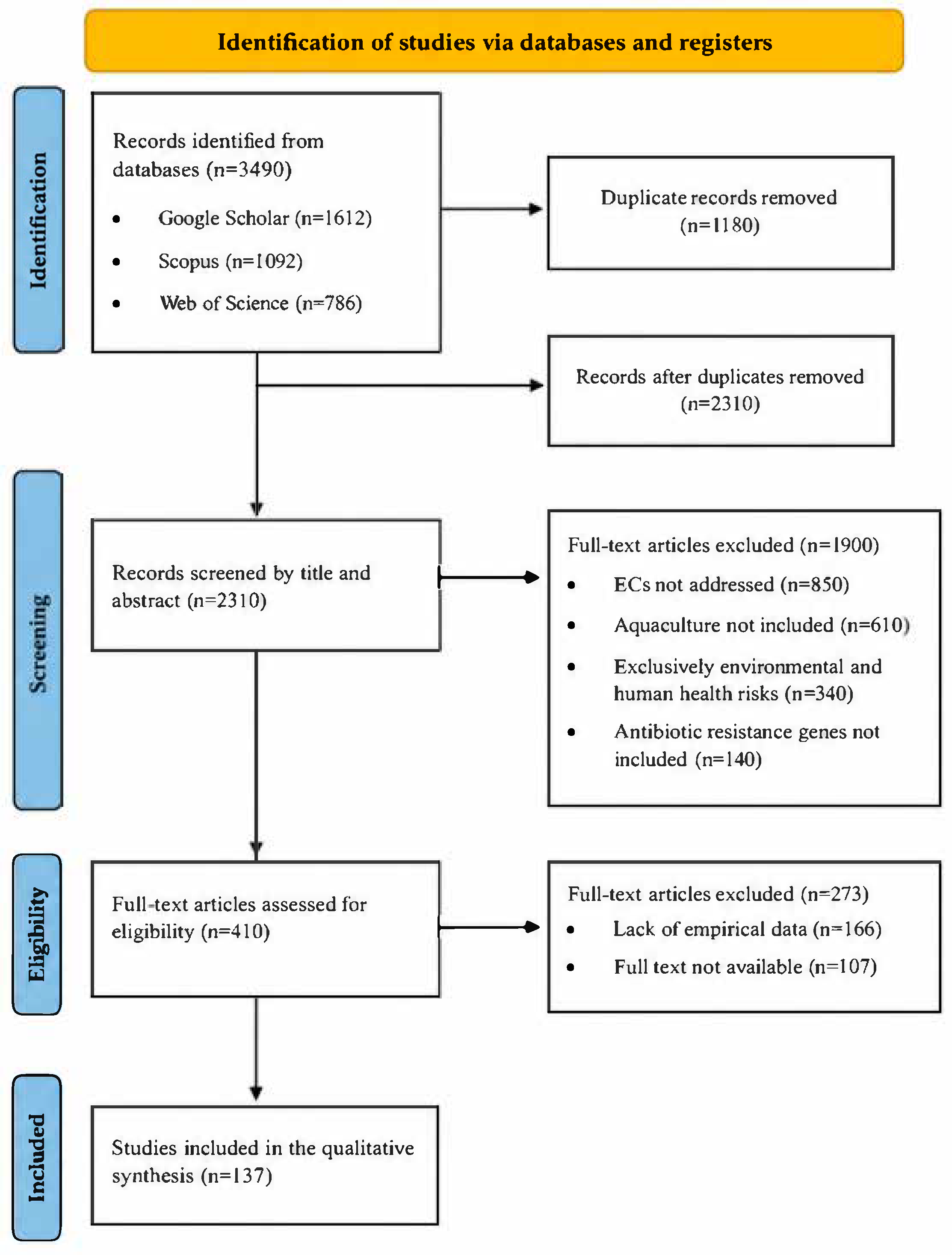
2.1. Data Collection and Extraction
2.2. Inclusion and Exclusion Criteria
3. Emerging Contaminants
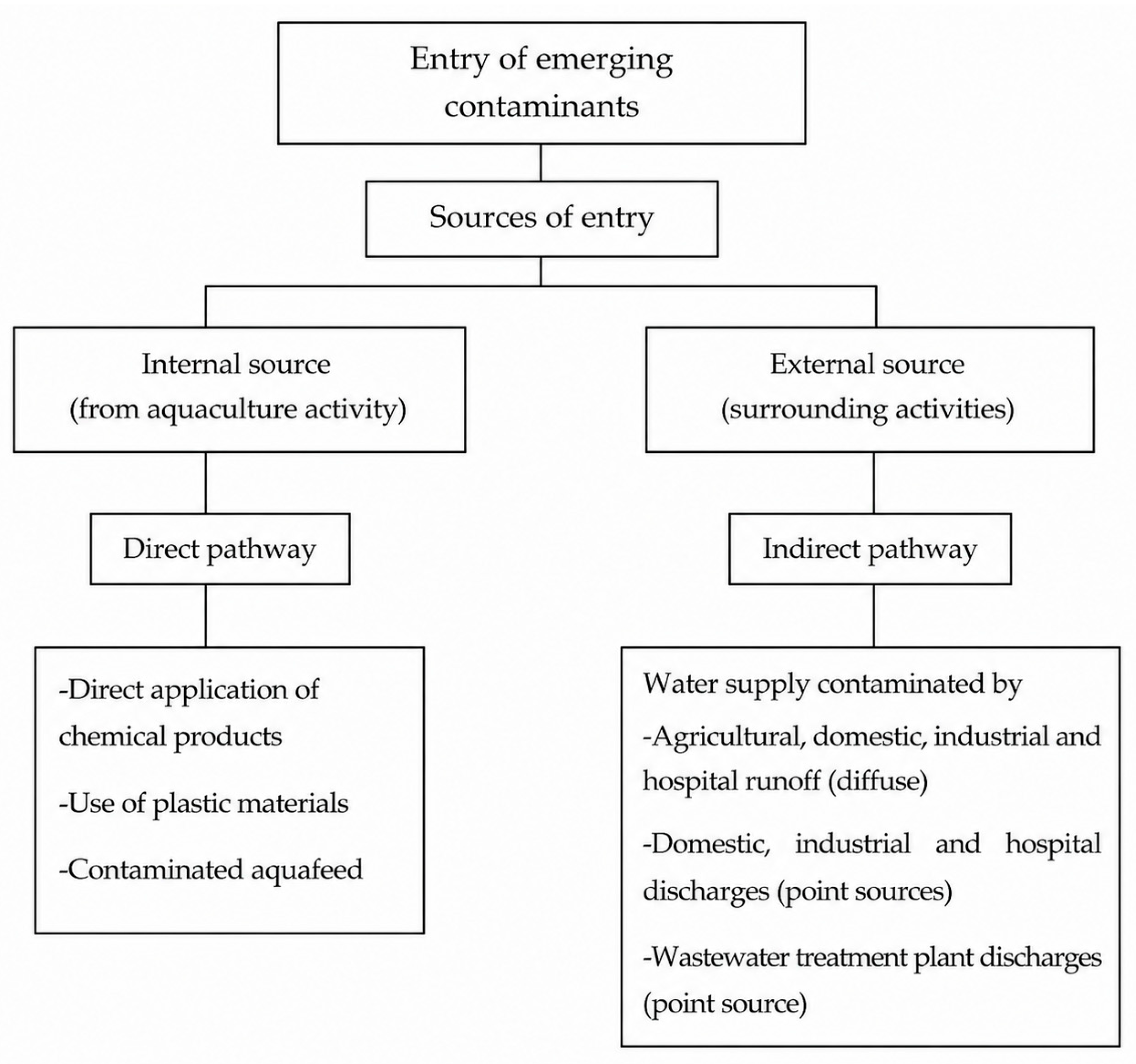
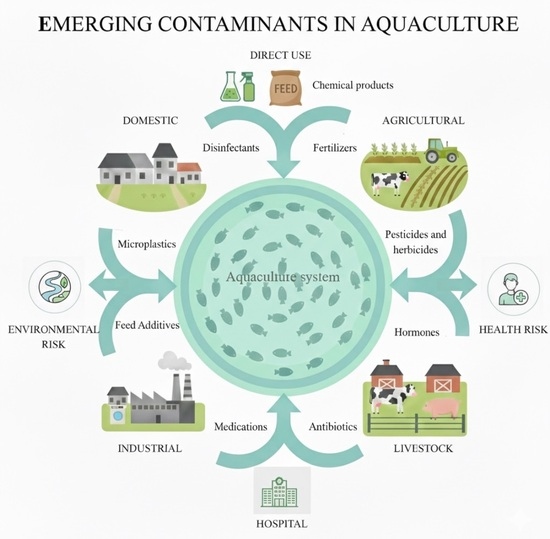
Sources and Pathways of Entry into Aquaculture Systems
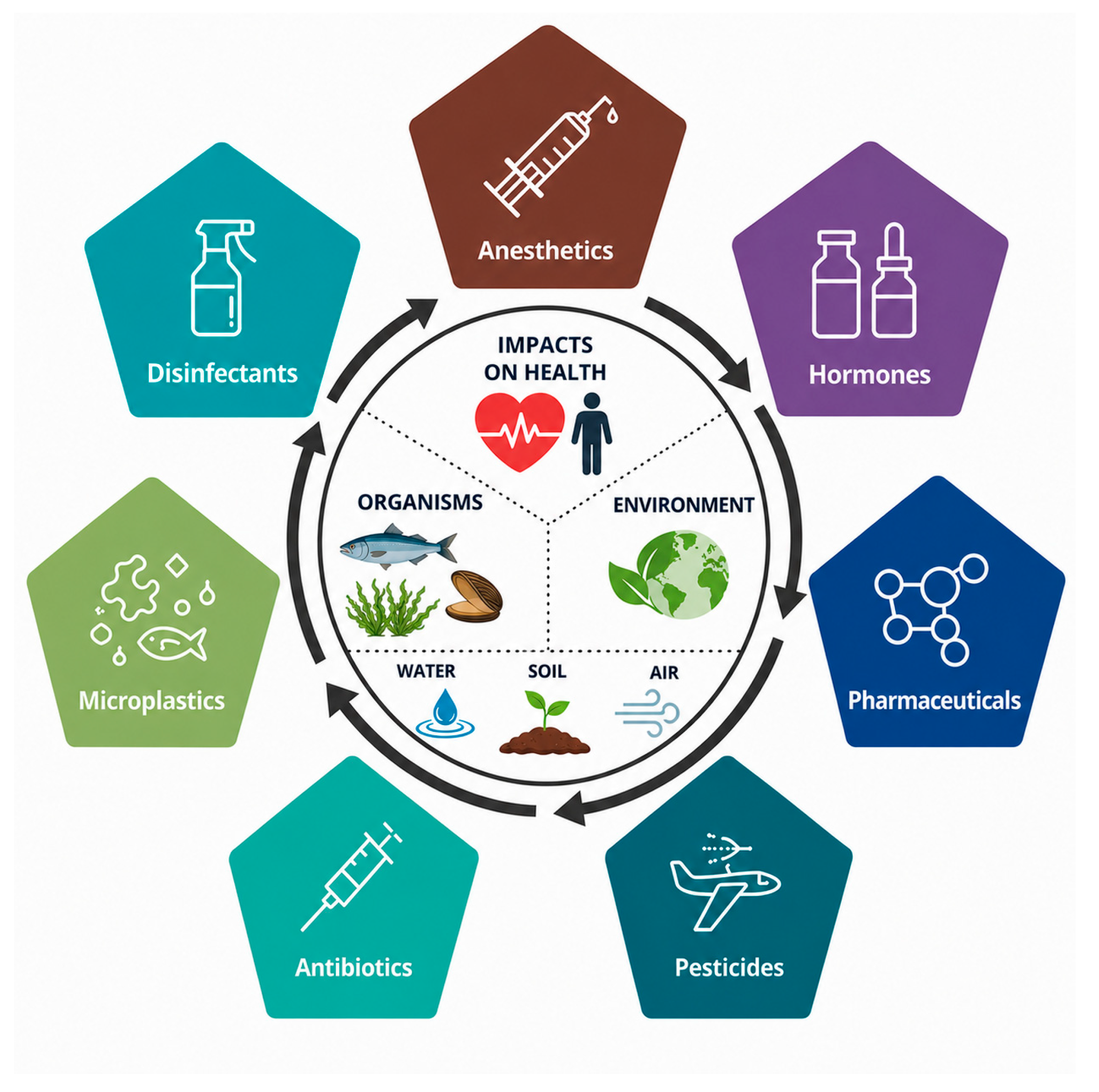
4. Emerging Contaminants in Aquaculture
4.1. Disinfectants
4.2. Pharmaceutical Products
4.2.1. Anesthetics
4.2.2. Antibiotics
4.2.3. Hormones
4.3. Pesticides
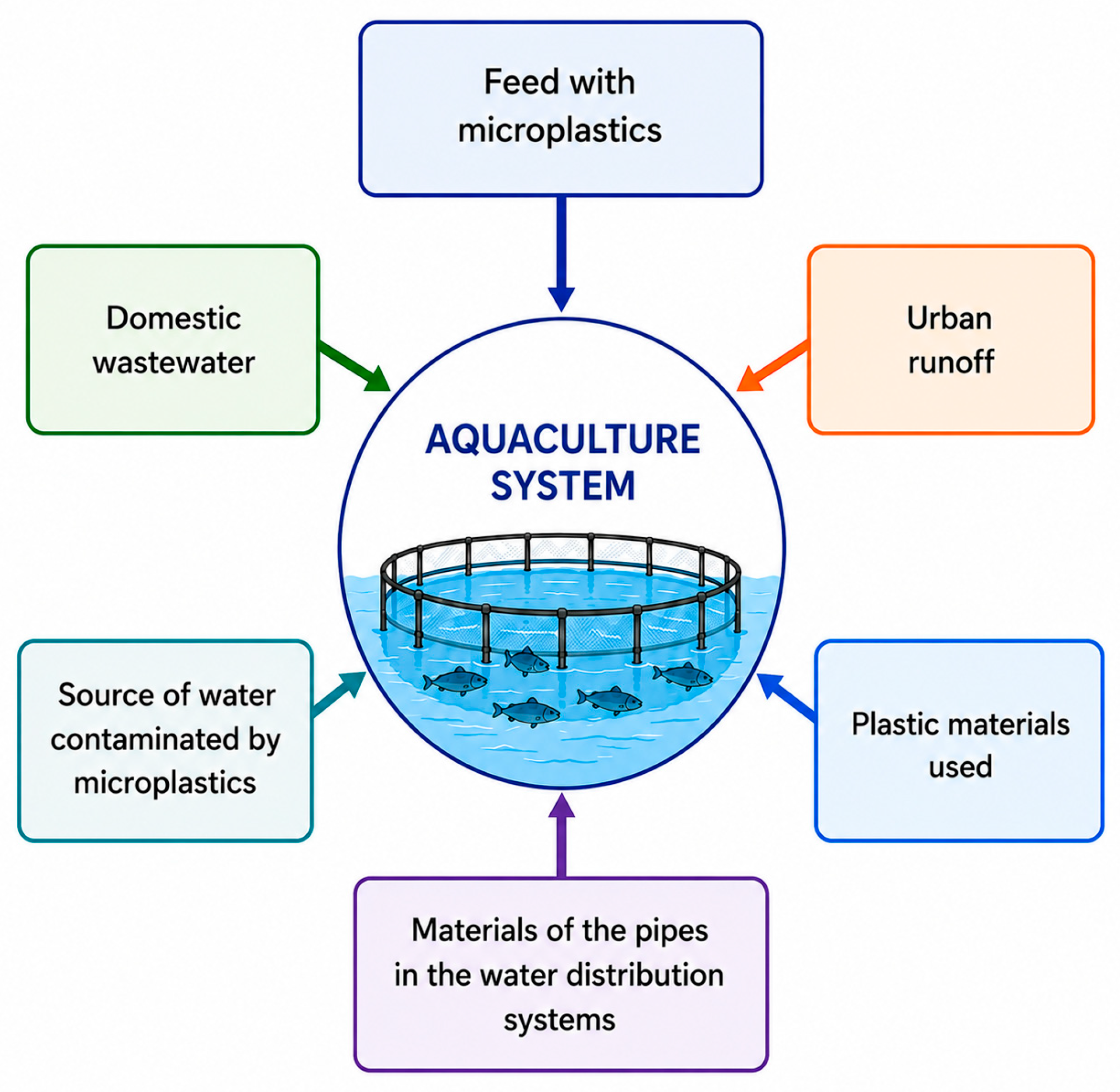
4.4. Microplastics
5. Mitigation Strategies and Degradation Technologies for Emerging Contaminants
6. Future Perspectives
7. Conclusions
Supplementary Materials
Author Contributions
Funding
Institutional Review Board Statement
Informed Consent Statement
Data Availability Statement
Acknowledgments
Conflicts of Interest
Abbreviation
| ECs | Emerging contaminants |
References
- Pradeepkiran, J.A. Aquaculture role in global food security with nutritional value: A review. Transl. Anim. Sci. 2019, 3, 903–910. [Google Scholar] [CrossRef] [Scilit] [PubMed]
- Bari, S.M.; Hassan, M.N.; Ahmed, K.T.; Islam, M.M.; Mahmud, M.N.; Razzak, M.A.; Ahammad, B. Aqua drugs and chemicals used in commercial aquaculture in Mymensingh, Bangladesh. Arch. Agric. Environ. Sci. 2024, 9, 280–288. [Google Scholar] [CrossRef] [Scilit]
- Onomu, A.J.; Okuthe, G.E. The role of functional feed additives in enhancing aquaculture sustainability. Fishes 2024, 9, 167. [Google Scholar] [CrossRef] [Scilit]
- Chan, H.L.; Cai, J.; Leung, P.S. Aquaculture production and diversification: What causes what? Aquaculture 2024, 583, 740626. [Google Scholar] [CrossRef] [Scilit]
- Food and Agriculture Organization of the United Nations. FAO Report: Global Fisheries and Aquaculture Production Reaches a New Record High [Internet]; FAO: Rome, Italy, 2024; Available online: https://www.fao.org/newsroom/detail/fao-report-global-fisheries-and-aquaculture-production-reaches-a-new-record-high/es (accessed on 30 June 2026).
- Ali, H.; Rico, A.; Murshed-e-Jahan, K.; Belton, B. An assessment of chemical and biological product use in aquaculture in Bangladesh. Aquaculture 2016, 454, 199–209. [Google Scholar] [CrossRef] [Scilit]
- Rico, A.; Satapornvanit, K.; Haque, M.M.; Min, J.; Nguyen, P.T.; Telfer, T.C.; Van den Brink, P.J. Use of chemicals and biological products in Asian aquaculture and their potential environmental risks: A critical review. Rev. Aquac. 2012, 4, 75–93. [Google Scholar] [CrossRef] [Scilit]
- Sapkota, A.; Sapkota, A.R.; Kucharski, M.; Burke, J.; McKenzie, S.; Walker, P.; Lawrence, R. Aquaculture practices and potential human health risks: Current knowledge and future priorities. Environ. Int. 2008, 34, 1215–1226. [Google Scholar] [CrossRef] [Scilit] [PubMed]
- Iheanacho, S.; Ogbu, M.; Bhuyan, M.S.; Ogunji, J. Microplastic pollution: An emerging contaminant in aquaculture. Aquac. Fish. 2023, 8, 603–616. [Google Scholar] [CrossRef] [Scilit]
- Liu, D.; Straus, D.L.; Pedersen, L.F.; Good, C.; Lazado, C.C.; Meinelt, T. Towards sustainable water disinfection with peracetic acid in aquaculture: A review. Rev. Aquac. 2024, 16, 1621–1646. [Google Scholar] [CrossRef] [Scilit]
- Ahmad, A.; Kurniawan, S.B.; Abdullah, S.R.S.; Othman, A.R.; Hasan, H.A. Contaminants of emerging concern (CECs) in aquaculture effluent: Insight into breeding and rearing activities, alarming impacts, regulations, performance of wastewater treatment unit and future approaches. Chemosphere 2022, 290, 133319. [Google Scholar] [CrossRef] [Scilit] [PubMed]
- Suman, T.Y.; Kim, S.Y.; Yeom, D.H.; Jeon, J. Transformation products of emerging pollutants explored using non-target screening: Perspective in the transformation pathway and toxicity mechanism—A review. Toxics 2022, 10, 54. [Google Scholar] [CrossRef] [Scilit] [PubMed]
- Das, S.; Parida, V.K.; Tiwary, C.S.; Gupta, A.K.; Chowdhury, S. Emerging contaminants in the aquatic environment: Fate, occurrence, impacts, and toxicity. In Bioremediation of Emerging Contaminants in Water, 1st ed.; American Chemical Society: Washington, DC, USA, 2024; Volume 1, pp. 1–32. [Google Scholar] [CrossRef] [Scilit]
- Jiang, T.; Wu, W.; Ma, M.; Hu, Y.; Li, R. Occurrence and distribution of emerging contaminants in wastewater treatment plants: A global review over the past two decades. Sci. Total Environ. 2024, 951, 175664. [Google Scholar] [CrossRef] [Scilit] [PubMed]
- Zhu, X.; Liu, S.; Gao, X.; Gu, Y.; Yu, Y.; Li, M.; Yu, Y. Typical emerging contaminants in sewage treatment plant effluent, and related watersheds in the Pearl River Basin: Ecological risks and source identification. J. Hazard. Mater. 2024, 476, 135046. [Google Scholar] [CrossRef] [Scilit] [PubMed]
- García-Fernández, A.J.; Espín, S.; Gómez-Ramírez, P.; Sánchez-Virosta, P.; Navas, I. Water quality and contaminants of emerging concern (CECs). In Chemometrics and Cheminformatics in Aquatic Toxicology; Kunal, R., Ed.; John Wiley & Sons, Inc.: Hoboken, NY, USA, 2021; pp. 1–21. [Google Scholar] [CrossRef] [Scilit]
- Hiranmai, R.Y.; Kamaraj, M. Occurrence, fate, and toxicity of emerging contaminants in a diverse ecosystem. Phys. Sci. Rev. 2023, 8, 2219–2242. [Google Scholar]
- Hossain, M.M.; Rahman, M.H.; Tina, F.W.; Shahjahan, M. Present scenario and prospects of the use of aquatic plants in aquaculture: A review. Aquac. Int. 2024, 32, 6791–6825. [Google Scholar] [CrossRef] [Scilit]
- Shitu, A.; Tadda, M.A.; Zhao, J.; Danhassan, U.A.; Ye, Z.; Liu, D.; Zhu, S. Review of recent advances in utilising aquaculture wastewater for algae cultivation and microalgae-based bioproduct recovery. Environ. Geochem. Health 2024, 46, 485. [Google Scholar] [CrossRef] [Scilit] [PubMed]
- Liu, X.; Wang, Y.; Liu, H.; Zhang, Y.; Zhou, Q.; Wen, X.; Zhang, Z. A systematic review on aquaculture wastewater: Pollutants, impacts, and treatment technology. Environ. Res. 2024, 262, 119793. [Google Scholar] [CrossRef] [Scilit] [PubMed]
- Li, X.; Shen, X.; Jiang, W.; Xi, Y.; Li, S. Comprehensive review of emerging contaminants: Detection technologies, environmental impact, and management strategies. Ecotoxicol. Environ. Saf. 2024, 278, 116420. [Google Scholar] [CrossRef] [Scilit] [PubMed]
- Zhang, X.; Liu, X.; Zhan, C. Emerging contaminants in aquatic ecosystems: Sources, effects, and mitigation approaches. Int. J. Aquac. 2024, 14, 232. [Google Scholar] [CrossRef] [Scilit]
- Hidayati, N.V.; Syakti, A.D.; Asia, L.; Lebarillier, S.; Khabouchi, I.; Widowati, I.; Doumenq, P. Emerging contaminants detected in aquaculture sites in Java, Indonesia. Sci. Total Environ. 2021, 773, 145057. [Google Scholar] [CrossRef] [Scilit] [PubMed]
- Hossein, M. Toxicological aspects of emerging contaminants. In Emerging and Eco-Friendly Approaches for Waste Management, 1st ed.; Springer: Singapore, 2018; pp. 33–58. [Google Scholar]
- Geissen, V.; Mol, H.; Klumpp, E.; Umlauf, G.; Nadal, M.; Van Der Ploeg, M.; Ritsema, C.J. Emerging pollutants in the environment: A challenge for water resource management. Int. Soil Water Conserv. Res. 2015, 3, 57–65. [Google Scholar] [CrossRef] [Scilit]
- Wang, J.; Wang, S. Activation of persulfate (PS) and peroxymonosulfate (PMS) and application for the degradation of emerging contaminants. Chem. Eng. J. 2018, 334, 1502–1517. [Google Scholar] [CrossRef] [Scilit]
- Talreja, N.; Hegde, C.; Kumar, E.M.; Chavali, M. Emerging environmental contaminants: Sources, consequences and future challenges. In Green Technologies for Industrial Contaminants; John Wiley & Sons: Hoboken, NJ, USA, 2025; pp. 119–149. [Google Scholar] [CrossRef] [Scilit]
- Nilsen, E.; Smalling, K.L.; Ahrens, L.; Gros, M.; Miglioranza, K.S.B.; Picó, Y.; Schoenfuss, H.L. Critical review: Grand challenges in assessing the adverse effects of contaminants of emerging concern on aquatic food webs. Environ. Toxicol. Chem. 2018, 38, 46–60. [Google Scholar] [CrossRef] [Scilit] [PubMed]
- van Hamelsveld, S.; Jamali-Behnam, F.; Alderton, I.; Kurenbach, B.; McCabe, A.W.; Palmer, B.R.; Midwinter, A.C.; Biggs, P.J.; Heinemann, J.A. Effects of selected emerging contaminants found in wastewater on antimicrobial resistance and horizontal gene transfer. Emerg. Contam. 2023, 9, 100257. [Google Scholar] [CrossRef] [Scilit]
- Mohsen, M.; Gündoğdu, S.; Wang, Q.; Zhou, H.; Zhang, C. Impact of micro- and nanoplastics on aquaculture animals: A systematic review. Aquac. Int. 2025, 33, 655. [Google Scholar] [CrossRef] [Scilit]
- Tom, A.P.; Jayakumar, J.S.; Biju, M.; Somarajan, J.; Ibrahim, M.A. Aquaculture wastewater treatment technologies and their sustainability: A review. Energy Nexus 2021, 4, 100022. [Google Scholar] [CrossRef] [Scilit]
- Cheng, X.; Jiang, X.; Liu, L.; Huang, J. Analysis of emerging contaminants in surface water, aquaculture ponds and wastewater treatment facilities in the Taige Canal Basin. Chem. Res. Chin. Univ. 2023, 39, 516–524. [Google Scholar] [CrossRef] [Scilit]
- Hussain, F.; Ahmed, S.; Naqvi, M.Z.A.; Awais, M.; Zhang, Y.; Zhang, H.; Hu, J. Agricultural non-point source pollution: Comprehensive analysis of sources and assessment methods. Agriculture 2025, 15, 531. [Google Scholar] [CrossRef] [Scilit]
- Newman, S.G. Disinfectant use in aquaculture, an underappreciated element of biosecurity? In The Shrimp Book II, 1st ed.; CABI: Wallingford, UK, 2021; pp. 562–576. [Google Scholar]
- Van Asselt, A.J.; te Giffel, M.C. Pathogen resistance to sanitisers. In Handbook of Hygiene Control in the Food Industry, 1st ed.; Woodhead Publishing: Cambridge, UK, 2005; pp. 69–92. [Google Scholar] [CrossRef] [Scilit]
- Burridge, L.; Weis, J.S.; Cabello, F.; Pizarro, J.; Bostick, K. Chemical use in salmon aquaculture: A review of current practices and possible environmental effects. Aquaculture 2010, 306, 7–23. [Google Scholar] [CrossRef] [Scilit]
- Terpak, C.H.; Verstraete, F.J. Instrumentation, patient positioning and aseptic technique. In Oral and Maxillofacial Surgery in Dogs and Cats, 1st ed.; Saunders Elsevier: Edinburgh, UK, 2012; pp. 55–67. [Google Scholar] [CrossRef] [Scilit]
- Madhavi, A.; Srinivasulu, M.; Chandra, M.S.; Rangaswamy, V. Disinfectants. In Environmental Micropollutants, 1st ed.; Elsevier: Amsterdam, The Netherlands, 2022; pp. 91–115. [Google Scholar] [CrossRef] [Scilit]
- Zhu, Z.; Gross, A.; Brown, P.B.; Luo, G. Disinfection by-products in aquaculture: Sources, impacts, removal and future research. Rev. Aquac. 2025. [Google Scholar] [CrossRef] [Scilit]
- Straus, D.L.; Meinelt, T.; Farmer, B.D.; Beck, B.H. Acute toxicity and histopathology of channel catfish fry exposed to peracetic acid. Aquaculture 2012, 342, 134–138. [Google Scholar] [CrossRef] [Scilit]
- Pedersen, L.F.; Meinelt, T.; Straus, D.L. Peracetic acid degradation in freshwater aquaculture systems and possible practical implications. Aquac. Eng. 2013, 53, 65–71. [Google Scholar] [CrossRef] [Scilit]
- Dewey, H.M.; Jones, J.M.; Keating, M.R.; Budhathoki-Uprety, J. Increased use of disinfectants during the COVID-19 pandemic and its potential impacts on health and safety. ACS Chem. Health Saf. 2022, 29, 27–38. [Google Scholar] [CrossRef] [Scilit]
- Rahimimoghadam, S.; Soleymani-Ghoozhdi, D.; Javan, S.; Jalali, M. Health risk assessment of occupational exposure to hydrogen peroxide (H2O2) among dairy processing plant workers. Toxicol. Ind. Health 2025, 41, 543–549. [Google Scholar] [CrossRef] [Scilit] [PubMed]
- Pechacek, N.; Osorio, M.; Caudill, J.; Peterson, B. Evaluation of the toxicity data for peracetic acid in deriving occupational exposure limits: A minireview. Toxicol. Lett. 2015, 233, 45–57. [Google Scholar] [CrossRef] [Scilit] [PubMed]
- Rovira, J.; Roig, N.; Nadal, M.; Schuhmacher, M.; Domingo, J.L. Human health risks of formaldehyde indoor levels: An issue of concern. J. Environ. Sci. Health A Tox. Hazard. Subst. Environ. Eng. 2016, 51, 357–363. [Google Scholar] [CrossRef] [Scilit] [PubMed]
- Chatterjee, A. Use of hypochlorite solution as disinfectant during COVID-19 outbreak in India: From the perspective of human health and atmospheric chemistry. Aerosol Air Qual. Res. 2020, 20, 1516–1519. [Google Scholar] [CrossRef] [Scilit]
- Apostolopoulou, G.; Bel Mokhtar, N.; Asimakis, E.; Dionyssopoulou, E.; Toskas, K.; Koumoundouros, G.; Stathopoulou, P. The impact of tank disinfectants on the development of microbiota in gilthead seabream (Sparus aurata) larviculture systems. Microorganisms 2025, 13, 1359. [Google Scholar] [CrossRef] [Scilit] [PubMed]
- Russell Danner, G.; Merrill, P. Disinfectants, disinfection, and biosecurity in aquaculture. In Aquaculture Biosecurity: Prevention, Control, and Eradication of Aquatic Animal Disease; Scarfe, A.D., Lee, C., O’Bryen, P.J., Eds.; Blackwell Publishing: Armes, IA, USA, 2005; pp. 91–128. [Google Scholar] [CrossRef] [Scilit]
- Verner-Jeffreys, D.W.; Joiner, C.L.; Bagwell, N.J.; Reese, R.A.; Husby, A.; Dixon, P.F. Development of bactericidal and virucidal testing standards for aquaculture disinfectants. Aquaculture 2009, 286, 190–197. [Google Scholar] [CrossRef] [Scilit]
- Dinesh, R.; Anand, C.; John, K.R.; George, M.R.; Bharathi, S.; Kumar, J.S.S. An overview of chemicals and drugs in aquaculture disease management. Indian J. Anim. Health 2022, 62, 1–20. [Google Scholar] [CrossRef] [Scilit]
- Roy, A.; Ghosh, S.K.; Hauzoukim, S.S.; Bhattacharya, K.; Mukherjii, D.; Bardhan, A. Aqua drugs and chemicals used in freshwater aquaculture: A review. Pharma Innov. J. 2021, 10, 317–324. [Google Scholar]
- Valdez-Carrillo, M.; Abrell, L.; Ramírez-Hernández, J.; Reyes-López, J.A.; Carreón-Diazconti, C. Pharmaceuticals as emerging contaminants in the aquatic environment of Latin America: A review. Environ. Sci. Pollut. Res. 2020, 27, 44863–44891. [Google Scholar] [CrossRef] [Scilit] [PubMed]
- Punginelli, D.; Maccotta, A.; Savoca, D. Biological and environmental impact of pharmaceuticals on marine fishes: A review. J. Mar. Sci. Eng. 2024, 12, 1133. [Google Scholar] [CrossRef] [Scilit]
- Sedyaaw, P.; Bhatkar, V.R. A review on application of aquaculture drugs for sustainable aquaculture. J. Dev. Res. 2024, 14, 66685–66690. [Google Scholar]
- Strus, D. Endocrine pharmacology: Managing hormonal imbalances and disorders. J. Pharma Rep. 2024, 8, 216. [Google Scholar]
- Yang, J.; Bhassu, S.; Rajamanikam, A. Charting the Future: Advanced Technologies for Sustainable Parasite Control in Aquaculture. Int. J. Mol. Sci. 2025, 26, 10738. [Google Scholar] [CrossRef] [Scilit] [PubMed]
- Schroeder, P.; Lloyd, R.; McKimm, R.; Metselaar, M.; Navarro, J.; O’Farrell, M.; Mocho, J.P. Anaesthesia of laboratory, aquaculture and ornamental fish: Proceedings of the first LASA-FVS symposium. Lab. Anim. 2021, 55, 317–328. [Google Scholar] [CrossRef] [Scilit] [PubMed]
- Fayaz, I.; Qadiri, S.S.N.; Shah, F.A.; Dar, S.A.; Amin, A.; Mukhtar, K.; Ahmad, I.; Wali, A. Anaesthetics in aquaculture: Comprehensive insights into agents, mechanisms, and applications. Fish Physiol. Biochem. 2026, 52, 16. [Google Scholar] [CrossRef] [Scilit] [PubMed]
- Kümmerer, K. The presence of pharmaceuticals in the environment due to human use–present knowledge and future challenges. J. Environ. Manag. 2009, 90, 2354–2366. [Google Scholar] [CrossRef] [Scilit] [PubMed]
- Larsson, D.G.J.; Flach, C.F. Antibiotic resistance in the environment. Nat. Rev. Microbiol. 2022, 20, 257–269. [Google Scholar] [CrossRef] [Scilit] [PubMed]
- Jia, B.Z.; Rui, X.Y.; Wang, Y.; Zeng, X.; Sheng, S.J.; Zeng, B.J.; Xu, Z.L.; Luo, L. Fishery anesthetics in aquaculture products: Safety concerns and analytical methods. Foods 2025, 14, 3928. [Google Scholar] [CrossRef] [Scilit] [PubMed]
- Romero, J.; Feijoó, C.G.; Navarrete, P. Antibiotics in aquaculture: Use, abuse and alternatives. In Health and Environment in Aquaculture; Carvalho, E.D., David, G.S., Silva, R.J., Eds.; Intech: London, UK, 2012; pp. 159–198. [Google Scholar] [CrossRef] [Scilit] [PubMed]
- Yasin, I.S.M.; Mohamad, A.; Azzam-Sayuti, M. Control of fish diseases using antibiotics and other antimicrobial agents. In Recent Advances in Aquaculture Microbial Technology, 1st ed.; Academic Press: London, UK, 2023; pp. 127–152. [Google Scholar] [CrossRef] [Scilit]
- Mog, M.; Ngasotter, S.; Tesia, S.; Waikhom, D.; Panda, P.; Sharma, S.; Varshney, S. Problems of antibiotic resistance associated with oxytetracycline use in aquaculture: A review. J. Entomol. Zool. Stud. 2020, 8, 1075–1082. [Google Scholar] [CrossRef] [Scilit]
- Phu, T.M.; Scippo, M.L.; Phuong, N.T.; Tien, C.T.K.; Son, C.H.; Dalsgaard, A. Withdrawal time for sulfamethoxazole and trimethoprim following treatment of striped catfish (Pangasianodon hypophthalmus) and hybrid red tilapia (Oreochromis mossambicus × Oreochromis niloticus). Aquaculture 2015, 437, 256–262. [Google Scholar] [CrossRef] [Scilit]
- Ranjan, A.; Sahu, N.A.; Gupta, S.; Aklakur, M. Prospects of medicated feed in aquaculture. Nutr. Food Sci. Int. J. 2017, 3, 555617. [Google Scholar] [CrossRef] [Scilit]
- Rosa, J.; Leston, S.; Crespo, D.; Freitas, A.; Pouca, A.S.V.; Barbosa, J.; Ramos, F. Uptake of enrofloxacin from seawater to the macroalgae Ulva and its use in IMTA systems. Aquaculture 2020, 516, 734609. [Google Scholar] [CrossRef] [Scilit]
- Zhang, Q.; Zhang, Y.; Zhang, X.; Rabbi, M.H.; Guo, R.; Shi, S.; Liu, Y. Effects of dietary florfenicol contained feeds on growth and immunity of European seabass (Dicentrarchus labrax) in flow-through and recirculating aquaculture system. Aquac. Rep. 2021, 19, 100602. [Google Scholar] [CrossRef] [Scilit]
- Liu, Y.; Chen, J.; Hu, H.; Qu, K.; Cui, Z. A low-cost electrochemical method for the determination of sulfadiazine in aquaculture wastewater. Int. J. Environ. Res. Public Health 2022, 19, 16945. [Google Scholar] [CrossRef] [Scilit] [PubMed]
- Manage, P.M. Heavy use of antibiotics in aquaculture: Emerging human and animal health problems—A review. Sri Lanka J. Aquat. Sci. 2018, 23, 13–27. [Google Scholar] [CrossRef] [Scilit]
- Luthman, O.; Robb, D.H.; Henriksson, P.J.; Jørgensen, P.S.; Troell, M. Global overview of national regulations for antibiotic use in aquaculture production. Aquac. Int. 2024, 32, 9253–9270. [Google Scholar] [CrossRef] [Scilit]
- Gemechu, R. Review on antibiotic resistance and its economic impacts. J. Pharmacol. Clin. Res. 2018, 5, 555675. [Google Scholar]
- Dai, Y.; Peng, J.J.; Zhang, T.Y.; Xie, X.P.; Luo, S.S.; Liu, W.C.; Ma, Y. Effects of antibiotics (enrofloxacin) on microbial community of water and sediment in an aquatic ecological model. Front. Vet. Sci. 2023, 10, 1151988. [Google Scholar] [CrossRef] [Scilit] [PubMed]
- Chen, J.; Sun, R.; Pan, C.; Sun, Y.; Mai, B.; Li, Q.X. Antibiotics and food safety in aquaculture. J. Agric. Food Chem. 2020, 68, 11908–11919. [Google Scholar] [CrossRef] [Scilit] [PubMed]
- Watts, J.E.M.; Schreier, H.J.; Lanska, L.; Hale, M.S. The rising tide of antimicrobial resistance in aquaculture: Sources, sinks and solutions. Mar. Drugs 2017, 15, 158. [Google Scholar] [CrossRef] [Scilit] [PubMed]
- Oliveira, N.A.; Gonçalves, B.L.; Lee, S.H.; Oliveira, C.A.F.; Corassin, C.H. Use of antibiotics in animal production and its impact on human health. J. Food Chem. Nanotechnol. 2020, 6, 40–47. [Google Scholar] [CrossRef] [Scilit]
- Bardhan, A.; Abraham, T.J.; Singha, J.; Rajisha, R.; Krishna, E.K.N.; Panda, S.K.; Patil, P.K. Impacts of oral florfenicol medication and residues on the kidney and liver of Nile tilapia Oreochromis niloticus (L.). Vet. Sci. 2023, 10, 36. [Google Scholar] [CrossRef] [Scilit] [PubMed]
- Tian, D.; Zhang, W.; Lu, L.; Yu, Y.; Yu, Y.; Zhang, X.; Yang, Y.; Liu, G. Enrofloxacin exposure undermines gut health and disrupts neurotransmitters along the microbiota-gut-brain axis in zebrafish. Chemosphere 2024, 356, 141971. [Google Scholar] [CrossRef] [Scilit]
- Diogo, B.S.; Rodrigues, S.; Antunes, S.C. Mixture matters: Exploring the overlooked toxicity of sulfamethoxazole and trimethoprim in aquatic environments. Environ. Toxicol. 2025, 40, 1277–1293. [Google Scholar] [CrossRef] [Scilit] [PubMed]
- Miranda, C.D.; Godoy, F.A.; Lee, M.R. Current status of the use of antibiotics and the antimicrobial resistance in the Chilean salmon farms. Front. Microbiol. 2013, 4, 459. [Google Scholar]
- Serrano, P.H. Responsible Use of Antibiotics in Aquaculture; FAO: Rome, Italy, 2005; Volume 469. [Google Scholar]
- Okocha, R.C.; Olatoye, I.O.; Adedeji, O.B. Food safety impacts of antimicrobial use and their residues in aquaculture. Public Health Rev. 2018, 39, 21. [Google Scholar] [CrossRef] [Scilit] [PubMed]
- Rasul, M.G.; Majumdar, B.C. Abuse of antibiotics in aquaculture and its effects on humans, aquatic animals and the environment. Saudi J. Life Sci. 2017, 2, 81–88. [Google Scholar] [CrossRef]
- Hamid, A.A.; Issa, M.B.; Nizar, N.N.A. Hormones. In Preparation and Processing of Religious and Cultural Foods, 1st ed.; Woodhead Publishing: Cambridge, UK, 2018; pp. 253–277. [Google Scholar] [CrossRef] [Scilit]
- Budd, A.M.; Banh, Q.Q.; Domingos, J.A.; Jerry, D.R. Sex control in fish: Approaches, challenges and opportunities for aquaculture. J. Mar. Sci. Eng. 2015, 3, 329–355. [Google Scholar] [CrossRef] [Scilit]
- Islam, P.; Hossain, M.I.; Khatun, P.; Masud, R.I.; Tasnim, S.; Anjum, M.; Islam, M.A. Steroid hormones in fish, caution for present and future: A review. Toxicol. Rep. 2024, 13, 101733. [Google Scholar] [CrossRef] [Scilit] [PubMed]
- Chakraborty, A.; Rao, A.; Ray, R.R. Introduction to hormones. In Hormone and Biofilm Interplay, 1st ed.; CRC Press: Boca Raton, FL, USA, 2025; pp. 1–17. [Google Scholar]
- Guzmán, J.M.; Ramos, J.; Mylonas, C.C.; Mañanós, E.L. Comparative effects of human chorionic gonadotropin (hCG) and gonadotropin-releasing hormone agonist (GnRHa) treatments on the stimulation of male Senegalese sole (Solea senegalensis) reproduction. Aquaculture 2011, 316, 121–128. [Google Scholar] [CrossRef] [Scilit]
- Quiniou, S.M.; Bosworth, B.; Chatakondi, N.; Oberle, D. Evaluation of a gonadotropin releasing hormone analog of cGnRH II as a spawning aid for channel catfish versus analogs of mGnRH I and sGnRH III. N. Am. J. Aquac. 2014, 76, 281–288. [Google Scholar] [CrossRef] [Scilit]
- Berhanu, B.; BalkewWorkagegn, K.; Pavanasam, N. Effect of 17α-methyl testosterone on sex reversal and growth performance of Nile tilapia (Oreochromis niloticus). East Afr. J. Biophys. Comput. Sci. 2023, 4, 31–42. [Google Scholar] [CrossRef] [Scilit]
- Azizi-Lalabadi, M.; Pirsaheb, M. Investigation of steroid hormone residues in fish: A systematic review. Process Saf. Environ. Prot. 2021, 152, 14–24. [Google Scholar] [CrossRef] [Scilit]
- Wojnarowski, K.; Podobiński, P.; Cholewińska, P.; Smoliński, J.; Dorobisz, K. Impact of estrogens present in environment on health and welfare of animals. Animals 2021, 11, 2152. [Google Scholar] [CrossRef] [Scilit] [PubMed]
- Deanesly, R.; Parkes, A.S. Factors influencing the effectiveness of administered hormones. Proc. R. Soc. Lond. B Biol. Sci. 1937, 124, 279–298. [Google Scholar] [CrossRef] [Scilit]
- Dokkaew, S.; Songdum, K.; Prachom, N.; Boonyung, W.; Kitikiew, S.; Khamphet, K.; Kantha, P. The effects of hormone diets with different 17β-estradiol levels on growth and feminization in long-whiskered catfish (Mystus gulio) larvae using conventional and microencapsulated feed. Animals 2026, 16, 268. [Google Scholar] [CrossRef] [Scilit] [PubMed]
- Guarnotta, V.; Amodei, R.; Frasca, F.; Aversa, A.; Giordano, C. Impact of chemical endocrine disruptors and hormone modulators on the endocrine system. Int. J. Mol. Sci. 2022, 23, 5710. [Google Scholar] [CrossRef] [Scilit] [PubMed]
- Yazdan, M.M.S.; Kumar, R.; Leung, S.W. The environmental and health impacts of steroids and hormones in wastewater effluent, as well as existing removal technologies: A review. Ecologies 2022, 3, 206–224. [Google Scholar] [CrossRef] [Scilit]
- Liu, S.S.; Li, Y.F.; Ning, J.J.; Xu, L.; Wang, L.G.; Huang, D.L.; Wang, X.H.; Tang, Q.H.; Du, F.Y. Occurrence, bioaccumulation, and potential risks of steroid hormones in freshwater aquaculture ponds in South China. Water 2024, 16, 2872. [Google Scholar] [CrossRef] [Scilit]
- Rivero-Wendt, C.L.G.; Miranda-Vilela, A.L.; Domingues, I.; Oliveira, R.; Monteiro, M.S.; Moura-Mello, M.A.; Grisolia, C.K. Steroid androgen 17 alpha methyltestosterone used in fish farming induces biochemical alterations in zebrafish adults. J. Environ. Sci. Health A Tox. Hazard. Subst. Environ. Eng. 2020, 55, 1321–1332. [Google Scholar] [CrossRef] [Scilit] [PubMed]
- Grzegorzek, M.; Wartalska, K.; Kowalik, R. Occurrence and sources of hormones in water resources—Environmental and health impact. Environ. Sci. Pollut. Res. 2024, 31, 37907–37922. [Google Scholar] [CrossRef] [Scilit] [PubMed]
- Abubakar, Y.; Tijjani, H.; Egbuna, C.; Adetunji, C.O.; Kala, S.; Kryeziu, T.L.; Patrick-Iwuanyanwu, K.C. Pesticides, history, and classification. In Natural Remedies for Pest, Disease and Weed Control; Academic Press: Cambridge, MA, USA, 2020; pp. 29–42. [Google Scholar] [CrossRef] [Scilit]
- Riaz, U.; Rafi, F.; Naveed, M.; Mehdi, S.M.; Murtaza, G.; Niazi, A.G.; Mehmood, H. Pesticide pollution in an aquatic environment. In Freshwater Pollution and Aquatic Ecosystems, 1st ed.; Apple Academic Press: Palm Bay, FL, USA, 2021; pp. 131–163. [Google Scholar]
- Kumar, P.; Kumar, R.; Thakur, K.; Mahajan, D.; Brar, B.; Sharma, D.; Sharma, A.K. Impact of pesticides application on aquatic ecosystem and biodiversity: A review. Biol. Bull. 2023, 50, 1362–1375. [Google Scholar] [CrossRef] [Scilit]
- Heckman, C.W. Pesticide effects on aquatic habitats. Environ. Sci. Technol. 1982, 16, 48A–57A. [Google Scholar] [CrossRef] [Scilit] [PubMed]
- Clearwater, S.; Hickey, C.W.; Martin, M.L. Overview of potential piscicides and molluscicides for controlling aquatic pest species in New Zealand; Science & Technical Pub, Dept. of Conservation: Wellington, New Zealand, 2008; p. 70.
- Rahman, M.S.; Sumon, K.A.; Uddin, M.J.; Shahjahan, M. Toxic effects of fenitrothion on freshwater microcosms in Bangladesh. Toxicol. Rep. 2020, 7, 1622–1630. [Google Scholar] [CrossRef] [Scilit] [PubMed]
- Rowe, D.K. Rotenone-based approaches to pest fish control in New Zealand. In Managing Invasive Freshwater Fish in New Zealand; Munro, R., Ed.; Department of Conservation: Hamilton, New Zealand, 2001. [Google Scholar]
- Kalsoom, R.; Sial, N.; Maqbool, F.; Mubeen, A.; Khan, T.; Sharif, A.; Zafar, A. Impact of pesticide (fenitrothion) on aquatic and terrestrial animals: A review. J. Glob. Innov. Agric. Sci. 2021, 9, 127–138. [Google Scholar] [CrossRef] [Scilit]
- Matthews, G.A.; Bateman, R.; Miller, P. Pesticide Application Methods; John Wiley & Sons: Hoboken, NJ, USA, 2014. [Google Scholar]
- Shah, Z.U.; Parveen, S. Distribution and risk assessment of pesticide residues in sediment samples from river Ganga, India. PLoS ONE 2023, 18, e0279993. [Google Scholar] [CrossRef] [Scilit] [PubMed]
- Akhter, S.; Naik, V.K.; Naladi, B.J.; Rathore, A.; Yadav, P.; Lal, D. The ecological impact of pesticides on non-target organisms in agricultural ecosystems. Adv. Biores. 2024, 15, 322–334. [Google Scholar]
- Ray, S.; Shaju, S.T. Bioaccumulation of pesticides in fish resulting toxicities in humans through food chain and forensic aspects. Environ. Anal. Health Toxicol. 2023, 38, e2023017. [Google Scholar] [CrossRef] [Scilit] [PubMed]
- Zhou, W.; Li, M.; Achal, V. A comprehensive review on environmental and human health impacts of chemical pesticide usage. Emerg. Contam. 2025, 11, 100410. [Google Scholar] [CrossRef] [Scilit]
- Stock, V.; Fahrenson, C.; Thuenemann, A.; Dönmez, M.H.; Voss, L.; Böhmert, L.; Sieg, H. Impact of artificial digestion on the sizes and shapes of microplastic particles. Food Chem. Toxicol. 2020, 135, 111010. [Google Scholar] [CrossRef] [Scilit] [PubMed]
- Khan, A.; Qadeer, A.; Wajid, A.; Ullah, Q.; Rahman, S.U.; Ullah, K.; Horky, P. Microplastics in animal nutrition: Occurrence, spread, and hazard in animals. J. Agric. Food Res. 2024, 17, 101258. [Google Scholar] [CrossRef] [Scilit]
- Zhou, Z.; Song, X.; Dong, D.; Li, X.; Sun, Y.; Wang, L.; Li, M. Occurrence, distribution and sources of microplastics in typical marine recirculating aquaculture system (RAS) in China: The critical role of RAS operating time and microfilter. Water Res. 2024, 255, 121476. [Google Scholar] [CrossRef] [Scilit] [PubMed]
- Huntington, T. Best Practice Framework for the Management of Aquaculture Gear Initiative; Poseidon Aquatic Resources Management Ltd. for GGGI: Surrey, UK, 2021; p. 81, plus appendices. [Google Scholar] [CrossRef]
- Lusher, A.L.; Hollman, P.C.; Mendoza-Hill, J.J. Microplastics in Fisheries and Aquaculture: Status of Knowledge on Their Occurrence and Implications for Aquatic Organisms and Food Safety; FAO: Rome, Italy, 2017. [Google Scholar]
- Andrady, A.L.; Koongolla, B. Degradation and fragmentation of microplastics. In Plastics and the Ocean: Origin, Characterization, Fate, and Impacts; Elsevier: Amsterdam, The Netherlands, 2022; pp. 227–268. [Google Scholar] [CrossRef] [Scilit]
- Cai, Z.; Li, M.; Zhu, Z.; Wang, X.; Huang, Y.; Li, T.; Yan, M. Biological degradation of plastics and microplastics: A recent perspective on associated mechanisms and influencing factors. Microorganisms 2023, 11, 1661. [Google Scholar] [CrossRef] [Scilit] [PubMed]
- Wang, W.; Ge, J.; Yu, X. Bioavailability and toxicity of microplastics to fish species: A review. Ecotoxicol. Environ. Saf. 2020, 189, 109913. [Google Scholar] [CrossRef] [Scilit] [PubMed]
- Zhou, A.; Zhang, Y.; Xie, S.; Chen, Y.; Li, X.; Wang, J.; Zou, J. Microplastics and their potential effects on the aquaculture systems: A critical review. Rev. Aquac. 2021, 13, 719–733. [Google Scholar] [CrossRef] [Scilit]
- Huang, J.N.; Yang, B.T.; Wen, B.; Gao, J.Z.; Chen, Z.Z. Occurrence and characteristics of microplastics contamination in different intensive aquaculture systems nearby the Yangtze Estuary, China. Bull. Environ. Contam. Toxicol. 2023, 110, 1. [Google Scholar] [CrossRef] [Scilit] [PubMed]
- Jeong, E.; Lee, J.Y.; Redwan, M. Animal exposure to microplastics and health effects: A review. Emerg. Contam. 2024, 10, 100369. [Google Scholar] [CrossRef] [Scilit]
- Egbeocha, C.O.; Malek, S.; Emenike, C.U.; Milow, P. Feasting on microplastics: Ingestion by and effects on marine organisms. Aquat. Biol. 2018, 27, 93–106. [Google Scholar] [CrossRef] [Scilit]
- Zhang, S.; Wu, H.; Hou, J. Progress on the effects of microplastics on aquatic crustaceans: A review. Int. J. Mol. Sci. 2023, 24, 5523. [Google Scholar] [CrossRef] [Scilit] [PubMed]
- Kardgar, A.K.; Doyle, D.; Warwas, N.; Hjelleset, T.; Sundh, H.; Almroth, B.C. Microplastics in aquaculture: Potential impacts on inflammatory processes in Nile tilapia. Heliyon 2024, 10, e30403. [Google Scholar] [CrossRef] [Scilit] [PubMed]
- Yusoff, F.M.; Umi, W.A.; Ramli, N.M.; Harun, R. Water quality management in aquaculture. Camb. Prism. Water 2024, 2, e8. [Google Scholar] [CrossRef] [Scilit]
- Rojoni, S.A.; Ahmed, M.T.; Rahman, M.; Hossain, M.M.M.; Ali, M.S.; Haq, M. Advances of microplastics ingestion on the morphological and behavioral conditions of model zebrafish: A review. Aquat. Toxicol. 2024, 272, 106977. [Google Scholar] [CrossRef] [Scilit] [PubMed]
- Li, Z.; Junaid, M.; Chen, G.; Wang, J. Interactions and associated resistance development mechanisms between microplastics, antibiotics and heavy metals in the aquaculture environment. Rev. Aquac. 2022, 14, 1028–1045. [Google Scholar] [CrossRef] [Scilit]
- Rochman, C.M.; Browne, M.A.; Halpern, B.S.; Hentschel, B.T.; Hoh, E.; Karapanagioti, H.K.; Rios-Mendoza, L.M.; Takada, H.; Teh, S.; Thompson, R.C. Ingested plastic transfers hazardous chemicals to fish and induces hepatic stress. Sci. Rep. 2013, 3, 3263. [Google Scholar] [CrossRef] [Scilit] [PubMed]
- Gallo, F.; Fossi, C.; Weber, R.; Santillo, D.; Sousa, J.; Ingram, I.; Nadal, A.; Romano, D. Marine litter plastics and microplastics and their toxic chemicals components: The need for urgent preventive measures. Environ. Sci. Eur. 2018, 30, 13. [Google Scholar] [CrossRef] [Scilit] [PubMed]
- Petroody, S.S.A.; Hashemi, S.H.; van Gestel, C.A. Transport and accumulation of microplastics through wastewater treatment sludge processes. Chemosphere 2021, 278, 130471. [Google Scholar] [CrossRef] [Scilit] [PubMed]
- Ghosh, S.; Sinha, J.K.; Ghosh, S.; Vashisth, K.; Han, S.; Bhaskar, R. Microplastics as an emerging threat to the global environment and human health. Sustainability 2023, 15, 10821. [Google Scholar] [CrossRef] [Scilit]
- Da Mota, J.B.; Neves, T.D.A.; da Costa, D.P.; Starling, M.C.V.M.; de Amorim, C.C.; Miranda-Filho, K.C. Emerging contaminants related to Brazilian aquaculture. Rev. Aquac. 2025, 17, e12967. [Google Scholar] [CrossRef] [Scilit]
- Su, H.; Xu, W.; Hu, X.; Xu, Y.; Wen, G.; Cao, Y. The impact of microplastics on antibiotic resistance genes, metal resistance genes, and bacterial community in aquaculture environment. J. Hazard. Mater. 2025, 489, 137704. [Google Scholar] [CrossRef] [Scilit] [PubMed]
- Xie, S.; Hamid, N.; Zhang, T.; Zhang, Z.; Peng, L. Unraveling the nexus: Microplastics, antibiotics, and ARGs interactions, threats and control in aquaculture—A review. J. Hazard. Mater. 2024, 471, 134324. [Google Scholar] [CrossRef] [Scilit] [PubMed]
- Sun, Q.; Zhang, J.; Zheng, Z.; Yu, Q.; Wei, T.; Diao, J.; Wang, T. Bioaccumulation and sources of typical emerging pollutants via farming activities: Insight from risk assessment and mitigation. Environ. Int. 2025, 198, 109399. [Google Scholar] [CrossRef] [Scilit] [PubMed]



| Disinfectant | Compounds | Applications | Advantages | Disadvantages |
|---|---|---|---|---|
| Chlorinated compounds | Sodium hypochlorite, calcium hypochlorite | Water disinfection. Equipment and facility sanitation. Foot baths. | Broad-spectrum antimicrobial activity. Cost-effective. | Highly toxic to fish and shrimp. Formation of disinfection by products (DBPs). Hazardous to workers. |
| Peroxides | Hydrogen peroxide | Water disinfection. Control of bacterial and fungal infections. Algaecide. | Decomposes into water and oxygen, leaving no harmful residues. Effective against a broad range of microorganisms. | Caustic at high concentrations. Potentially hazardous to workers. |
| Peracetic acid (PAA) | Peracetic acid | Water disinfection. Control of off-flavors. Treatment of disease outbreaks. | Effective at low concentrations. Decomposes into non- toxic by-products. | Can reduce nitrification rates in biofilters. Potential stress response in fish with frequent use. |
| Aldehydes | Formaldehyde, glutaraldehyde | Control of parasites and protozoa. Surface disinfection. | Broad-spectrum antimicrobial activity. | Potentially hazardous to workers. Residual toxicity concerns. |
| Dyes | Malachite green, methylene blue | Treatment of fungal infections. Control of external parasites. | Effective against specific pathogens. | Some are banned due to toxicity and environmental concerns. |
| Anesthetics | Advantages | Disadvantages |
|---|---|---|
| Tricaine methanesulfonate (MS-222) | Provides rapid, effective, and reversible anaesthesia. Used for sorting, sampling, tagging, transport, broodstock anaesthesia, gamete collection, blood sampling, vaccination, and invasive surgeries. Inhibits neuronal signal transmission, inducing general anaesthesia and immobilisation. | Potential carcinogenicity. Requires a 21-day withdrawal period before consumption or fish release. Lowers water pH and causes irritation in fish. Induces stress responses. May cause hypoxaemia, hypercapnia, respiratory acidosis, and hyperglycaemia in some species. Presents side effects related to physiological alterations. Caustic at high concentrations. Potentially hazardous to workers. |
| Metomidate | Induces sedation and hypnosis via GABA receptor regulation. Reduces stress response by inhibiting cortisol production. Diminishes stress associated with handling and capture. Effective for prolonged sedation and anaesthesia in various fish species. | Provides minimal analgesia and immobilisation. Decreases respiration and circulation, leading to hypoxaemia and reduced blood pH. Acts as a stressor in some species. Increases pigmentation and may cause muscle tremors or involuntary movements. |
| Benzocaine | Effective with rapid induction and adequate recovery. Presents a good safety margin for salmonids. Suitable for short-term tasks such as fish handling and sorting. May reduce circulating cortisol and glucose concentrations under certain conditions. | Powder may cause respiratory irritation during handling. Efficacy depends on fish size and water temperature. Some concentrations may generate stress responses with increased glucose and cortisol. May present prolonged induction times under certain conditions. |
| Quinaldine | Cost-effective and efficient at low concentrations. Presents low toxicity and rapid recovery in fish. Used for wild fish capture and surgical implantation of transponders. Induction occurs within minutes, and recovery is typically rapid. | May cause tachycardia followed by bradycardia and reduced respiration. May generate elevated stress levels during the process. High concentrations can delay recovery and alter haematological, biochemical, and antioxidant parameters. May cause gill tissue damage at elevated concentrations. |
| 2-Phenoxyethanol | Reduces metabolic activity and mortality during fish transport. Presents short induction time and rapid recovery with limited exposure. Does not alter pH when used in seawater. Widely used in closed fish transport systems. | Physiological stress response may vary depending on duration, concentration, and species. Compliance with safety standards is required due to its toxicity. Prolonged exposure may cause fatigue, drowsiness, and neuropsychological syndrome in handlers. |
| Propofol | Produces rapid anaesthesia via GABA receptor modulation. Suitable for farm handling, surgeries, and vaccinations. Provides deep, prolonged anaesthesia for complex procedures. Helps maintain ionic and respiratory balance. Protects against peroxidative damage in some fish organs. Causes no genotoxic effects in Nile tilapia at low concentrations. | No specific adverse effects associated with propofol use in fish have been reported. |
| Impact Category | Specific Effects |
|---|---|
| Human health | Allergy and toxicity issues in consumers and unprotected industry workers. Emergence of resistant bacterial infections in humans. |
| Animal health | Ingestion of invisible residues in fish, altering intestinal flora and increasing susceptibility to infections. Acute renal failure and pericardial oedema (renal toxicity). Modification and reduction of fish intestinal microbiota diversity, enabling the proliferation of opportunistic bacteria. |
| Environment | Leaching of antibiotics from unconsumed feed and faeces into the sediment, transported by currents to distant sites. Selective pressure altering the microbial composition of sediment and water. |
| Impact Category | Domain/System | Specific Effects |
|---|---|---|
| Human Health | Critical Systems | Liver cancer, lung cancer, and Diabetes. |
| Nervous System | Neurological disorders (Parkinson’s, Alzheimer’s). | |
| Fetal Development | Autism, ADHD, and neural tube defects. | |
| Reproductive System | Infertility and embryonic malformations. | |
| Specific Organs | Liver injury, bronchitis, asthma, and ocular irritation. | |
| Environment | Water | Residues in drinking water and reduced dissolved oxygen. |
| Atmosphere | Persistent aerosols and contribution to climate change. | |
| Land | Leaching, loss of soil fertility, and crop yield reduction. | |
| Ecosystem | Mortality of flora/fauna and ecological balance disruption. |
| Impact Category | Domain/System | Specific Effects |
|---|---|---|
| Human Health | Respiratory | Chronic respiratory diseases (e.g., asthma and Chronic Obstructive Pulmonary Disease (COPD). |
| Gastrointestinal | Microplastic accumulation in the digestive tract, intestinal wall damage, and alteration of gut microbiota. | |
| Nervous | Sleep disorders, development of neurodegenerative diseases. | |
| Metabolic | Development of obesity. | |
| Endocrine | Increased risk of diabetes. | |
| Animal Health | Physiological | Alteration of physiology. |
| Metabolic system | Malnutrition. | |
| Reproductive system | Interference with reproductive systems. | |
| Internal anatomy | Damage to internal organs. | |
| Survival | Mortality. | |
| Environment | Water | Alteration of the food web. Deterioration of aquatic animal health. |
| Land | Alteration of soil properties. Reduction in water retention capacity. Impact on nutrient cycling. |
| Reference | Emerging Contaminants (ECs) | Ecological and Health Implications | Mitigation and Remediation Strategies | Recommendations and Future Outlook |
|---|---|---|---|---|
| Da Mota et al., 2025 [134] | Pharmaceuticals, Personal care products, Pesticides, Hormones, Licit drugs, Caffeine, Bisphenol A. | Decreased O2 consumption; Altered swimming patterns; Histopathology; Spermatogenesis inhibition; Cardiac edema; Spinal deformity; antimicrobial resistance. | Advanced Oxidation Processes (AOPs); Biological treatment; Adsorbent materials. | Expand EC research; Continuous monitoring at culture sites; Improve wastewater treatment technologies; Establish ECs legislation. |
| Su et al., 2025 [135] | Microplastics (MPs); ARGs; Metal resistance genes (MRGs); Antibiotic-resistant bacteria (ARB); Exogenous additives (BPA); Heavy metals. | MPs act as vectors for ARG/MRG propagation; Alteration of bacterial communities; Resistant pathogens (Brucella, Pseudomonas); Health risks via aquatic products; Increased AMR; Potential risk to human health and sustainability. | Monitor MPs and resistance genes; Reduce plastic and antibiotic use; Optimise polymer manufacturing; Improve plastic additive composition. | Evaluate synergistic effects of MP particles and additives; Mitigate ARG propagation; Address dual challenges of MPs and ARGs in aquaculture settings. |
| Iheanacho et al., 2023 [9] | Microplastics (MPs) | Growth reduction and mortality; Organ accumulation; Oxidative stress; Neurotoxicity; Reproductive, immuno-, and embryotoxicity; Accumulation in gastrointestinal extract. | Improve wastewater treatment plants; Pond water filtration; Fine-mesh filter screening; Substitution of plastics for natural materials (coconut husk, bamboo); Bioremediation via microorganisms/enzymes; Alt protein use; Single-use plastic policies. | Plastic use regulatory policy; Microorganisms for biodegradation; Awareness of plastic pollution; Single-use legislation; Routine evaluation plans; Accidental plastic leak recovery; Prohibit micro-beads. |
| Ali et al., 2016 [6] | Antibiotics (oxytetracycline, etc.); Pesticides/toxicants (rotenone, etc.); Disinfectants (KmnO4, H2O2, Chlorine); Malachite green; Methylene blue; Feed/water additives (vitamins, probiotics); Zeolite; Liming materials; Yucca extract. | Pathogen antibiotic resistance; Compromised human and animal health; Zooplankton decrease; Moderate/high toxicity for invertebrates and primary producers; Carcinogenic properties. | Probiotic use; Improve water quality and immunological state; Safe alternatives to prophylactic antibiotics. | Additional regulation and impact evaluation; Test efficacy under rigorous conditions; Cost–benefit analysis; Producer technical training; Improve registration and evaluation systems. |
| Liu et al., 2024 [20] | Contaminants (N, P, BOD, TSS); Organic compounds (antibiotics, hormones, pesticides, pharmaceuticals, PCPs); Heavy metals (Hg, Pb, Cd, Cu, Zn); Biological contaminants (bacteria, viruses, parasites); Metabolic waste. | Occupational risks; Food security and public health hazards; Environmental damage (eutrophication, toxicity, resistance). | Application of biological and physicochemical methods; Recirculating Aquaculture Systems (RAS). | Establish robust legislation for the aquaculture industry; Standardise wastewater discharge standards. |
| Hidayati et al., 2021 [23] | Analgesics (paracetamol) and Antibiotics (trimethoprim, oxytetracycline, sulfamethoxazole). | OTC poses high risks for algae; ACM, TMP, and SMX present insignificant risks for algae, invertebrates, and fish. | Improve pharmaceutical waste management; Monitor concentrations in water bodies; Implement strict antibiotic regulations; Sustainable aquaculture practices; Regulate sulfamethoxazole use. | |
| Xie et al., 2024 [136] | Antibiotics; Microplastics (MPs); ARGs; Heavy metals and pathogens. | MPs act as vectors for food web transfer; MPs lead to ARGs under selective pressure; Horizontal gene transfer (HGT) facilitated by bacterial communities; Ecological and health risks. | Membrane technologies; Coagulation; Advanced Oxidation Processes (AOPs); Ecological treatment technology development. | Research on ecological treatment of ECs in aquaculture wastewater; Develop integrated systems for effective treatment. |
| Zhang, 2024 [22] | Pharmaceuticals; PCPs; Heavy metals; Pesticides; Microplastics; Endocrine disruptors (hormones); Nanomaterials; Biological contaminants; Drug residues; E1, E3, EE2; Mercury. | Endocrine disruption; Bioaccumulation; Fish feminisation; Fertility reduction; Sex ratio alteration; Growth inhibition; Disease susceptibility; Biodiversity loss; Human health risks via seafood; Neurological issues; Food web chemical interactions. | Advanced treatment technologies; Membrane filtration; Adsorption via biochar; Biological treatment (microalgae); Enzyme/biosensor biodegradation; Effect-Based Methods (EBMs). | Global adaptive policies; Long-term monitoring; Strict regulatory implementation; Awareness campaigns; Incentives for Green Chemistry; “Cradle-to-grave” normative design. |
| Sun et al., 2025 [137] | Phenols (prevalent in water near activities); Antibiotics (predominant in terrestrial farms) | Bioaccumulation in aquatic organisms; Ecological risks and impact on biodiversity. | Risk assessment (identification and quantification); Sustainable agricultural practices; Adequate effluent treatment. | Continuous monitoring; Surveillance programmes for ECs detection; Regulatory policies for potentially toxic substances in agriculture. |
Disclaimer/Publisher’s Note: The statements, opinions and data contained in all publications are solely those of the individual author(s) and contributor(s) and not of MDPI and/or the editor(s). MDPI and/or the editor(s) disclaim responsibility for any injury to people or property resulting from any ideas, methods, instructions or products referred to in the content. |
© 2026 by the authors. Licensee MDPI, Basel, Switzerland. This article is an open access article distributed under the terms and conditions of the Creative Commons Attribution (CC BY) license.
Share and Cite
Villalbazo-García, T.d.C.; Ortiz-Muñiz, B.; Castañeda-Chávez, M.d.R.; Lango-Reynoso, F.; Huerta-Estévez, A.; Castellanos-Onorio, O.P. Emerging Contaminants in Aquaculture Production: Environmental and Human Health Risks. Aquac. J. 2026, 6, 27. https://doi.org/10.3390/aquacj6030027
Villalbazo-García TdC, Ortiz-Muñiz B, Castañeda-Chávez MdR, Lango-Reynoso F, Huerta-Estévez A, Castellanos-Onorio OP. Emerging Contaminants in Aquaculture Production: Environmental and Human Health Risks. Aquaculture Journal. 2026; 6(3):27. https://doi.org/10.3390/aquacj6030027
Chicago/Turabian StyleVillalbazo-García, Tania del Carmen, Benigno Ortiz-Muñiz, María del Refugio Castañeda-Chávez, Fabiola Lango-Reynoso, Antonio Huerta-Estévez, and Olaya Pirene Castellanos-Onorio. 2026. "Emerging Contaminants in Aquaculture Production: Environmental and Human Health Risks" Aquaculture Journal 6, no. 3: 27. https://doi.org/10.3390/aquacj6030027
APA StyleVillalbazo-García, T. d. C., Ortiz-Muñiz, B., Castañeda-Chávez, M. d. R., Lango-Reynoso, F., Huerta-Estévez, A., & Castellanos-Onorio, O. P. (2026). Emerging Contaminants in Aquaculture Production: Environmental and Human Health Risks. Aquaculture Journal, 6(3), 27. https://doi.org/10.3390/aquacj6030027