
Review

Anesthetic Driven Hematological Dynamics in Farmed Fish: What Do We Know?

by
Avishek Bardhan
1,*,
Shivananda H. Murthy
1,
Karthik Pulugurtha
2,
Haven King-Nobles
2,
Camelia Chattopadhyay
1 and
Debapriyo Mukherjee
3
1
Faculty of Fisheries Science, The Neotia University, Sarisha, Diamond Harbour 743368, West Bengal, India
2
Fish Welfare Initiative India Foundation, Prahladnagar, Ahmedabad 380015, Gujarat, India
3
Faculty of Fisheries Science, West Bengal University of Animal and Fishery Sciences, Chakgaria, Kolkata 700094, West Bengal, India
*
Author to whom correspondence should be addressed.
Aquac. J. 2026, 6(3), 26; https://doi.org/10.3390/aquacj6030026
Submission received: 2 June 2026 / Revised: 29 June 2026 / Accepted: 7 July 2026 / Published: 9 July 2026

Abstract

Anesthetic agents are widely used in aquaculture to facilitate handling, transport, surgery, vaccination, tagging, and other husbandry procedures. However, most previous reviews have primarily focused on induction time, recovery duration, and welfare outcomes, with comparatively limited emphasis on blood physiology as an indicator of systemic anesthetic safety. The present review synthesizes current evidence regarding hematological, hemato-biochemical, blood gas, and immunohematological alterations induced by major anesthetic classes in aquaculture species. Literature published between 2000 and 2026 was retrieved from Scopus, Web of Science, Google Scholar, PubMed, ScienceDirect, and Springer Nature databases, with approximately 150 studies included following structured screening. Available evidence indicates that anesthetic exposure frequently alters erythrocyte and leukocyte profiles, cortisol secretion, glucose and lactate metabolism, hepatic enzyme activity, electrolyte balance, acid–base regulation, and blood oxygen transport. Respiratory depression, hypercapnia, hypoxemia, and transient metabolic acidosis were recurrent consequences of deep anesthesia, particularly during prolonged exposure or unfavorable environmental conditions. Several anesthetics also modulated innate immune responses through alterations in complement activity, respiratory burst function, cytokine signaling, and leukocyte redistribution. Collectively, the review highlights blood physiology as an essential framework for evaluating anesthetic safety and improving welfare-oriented aquaculture practices.

1. Introduction

Anesthesia is an essential component of contemporary aquaculture and fisheries research because it minimizes handling stress, facilitates routine husbandry procedures, and improves animal welfare during invasive and non-invasive interventions [1,2,3]. Depending on the intended application, fish may be subjected to varying depths of anesthesia ranging from light sedation to surgical and deep anesthesia, each characterized by progressive changes in behavioural and physiological responses, including equilibrium, opercular movements, swimming activity, and reflexes [1,2,4]. The onset and progression of anesthesia are influenced by species, body size, water quality, environmental conditions, and the pharmacological characteristics of the anesthetic agent, making species-specific evaluation essential for safe and effective anesthetic protocols [2,5]. Consequently, anesthetics are routinely employed during handling, transportation, artificial breeding, vaccination, tagging, surgery, tissue sampling, and other aquaculture management procedures to reduce stress and improve operational efficiency [2,3,5]. Their expanding use parallels rapid global growth in aquaculture production documented by FAO-linked analyses. Rapid global expansion of aquaculture documented in FAO related reports has been accompanied by widespread adoption of anesthetics as essential tools for handling, transport, vaccination, biopsy, spawning work, slaughter preparation, tagging, and research [3].
Although previous reviews have provided valuable guidance on anesthetic selection and application in aquaculture, they have primarily emphasized operational aspects such as anesthetic dosage, induction and recovery times, survival, and welfare outcomes for commonly used agents including MS-222, eugenol, 2-phenoxyethanol, and benzocaine [1,2]. Comparatively less attention has been given to blood physiology as an integrated measure of anesthetic safety, despite the direct influence of anesthetics on respiration, oxygen transport, metabolic regulation, endocrine stress responses, and immune function. Blood is a critical physiological matrix for evaluating anesthetic effects because it provides immediate and integrative insights into systemic responses occurring during and after exposure. Hematological, biochemical, and blood gas parameters are widely used to assess respiratory function, metabolic status, stress responses, and overall physiological health in diverse aquaculture species, including carp, tilapia, salmonids, seabass, sturgeons, and ornamental fishes [2,4]. Experimental studies across these species have demonstrated that anesthetic exposure can differentially influence erythrocyte indices, leukocyte profiles, plasma metabolites, endocrine responses, and acid–base balance depending on the anesthetic agent, species, and exposure conditions [5]. Consequently, blood-based biomarkers provide a comprehensive framework for evaluating anesthetic safety beyond behavioural induction and recovery alone. Therefore, the present review synthesizes current evidence on anesthetic-induced alterations in hematological, hemato-biochemical, blood gas, and immunohematological responses across aquaculture species to provide a more comprehensive assessment of anesthetic safety beyond conventional performance metrics.

2. Review Methodology

To improve methodological transparency and reproducibility, this narrative review followed a structured literature search and study selection approach to identify publications examining anesthesia-induced alterations in blood physiology across aquaculture species. Relevant literature was retrieved from Scopus, Web of Science, PubMed, Google Scholar, ScienceDirect, and Springer Nature. The primary search covered publications from 2000 to 2026. Earlier publications published before 2000 were identified through backward citation tracking of key review articles and reference lists and were included only when they provided seminal information on classical anesthetic agents, respiratory physiology, hematological responses, pharmacological mechanisms, or immunological alterations that continue to underpin current knowledge. The search strategy employed Boolean operators with database-specific modifications while maintaining a consistent conceptual framework. A representative search string included: (“fish anesthesia” OR “fish anesthesia” OR “aquaculture anesthesia” OR “fish anesthetics” OR “fish sedatives”) AND (“hematology” OR “haematology” OR “blood physiology” OR “blood biomarkers” OR “hemato-biochemistry” OR “blood gas”) AND (“stress” OR “cortisol” OR “lactate” OR “oxygen transport” OR “immune response” OR “oxidative stress”) AND (“aquaculture” OR “cultured fish” OR “aquaculture species” OR “finfish” OR “shellfish” OR “crustaceans”). Additional keywords including hemolymph, erythrocytes, leukocytes, pharmacokinetics, acid–base balance, endocrine responses, transcriptomics, metabolomics, and biosensor-guided anesthesia were incorporated where appropriate to broaden literature retrieval. Eligible studies were peer-reviewed full-text articles published in English that investigated anesthetic exposure in aquaculture species and reported measurable hematological, biochemical, endocrine, respiratory, cardiovascular, blood gas, immunological, transcriptomic, metabolomic, or hemolymph-related outcomes. Studies limited exclusively to anesthetic induction or recovery times without accompanying physiological evaluation, duplicate records, conference abstracts, inaccessible full texts, and non-English publications lacking reliable translations were excluded. Studies involving ornamental fish were retained only when they investigated conserved physiological mechanisms or blood-based responses considered broadly applicable to commercially cultured aquaculture species, including anesthetic pharmacodynamics, respiratory physiology, stress endocrinology, hematological alterations, immunological responses, or pharmacokinetic behaviour. The literature search identified approximately 580 records, of which about 430 remained after duplicate removal. Titles and abstracts of these studies were screened for relevance, resulting in approximately 210 articles selected for detailed full-text evaluation. Following assessment against the predefined eligibility criteria, studies lacking relevant blood physiological endpoints or sufficient methodological detail were excluded, yielding 147 publications that formed the evidence base for the present review. From each eligible study, information was extracted regarding fish species, anesthetic agent, dosage, exposure duration, sampling interval, recovery period, blood biomarkers evaluated, mortality observations, and the principal physiological findings. As the present work is a structured narrative review rather than a systematic review or meta-analysis, a formal risk-of-bias assessment of individual studies was not performed. Instead, greater emphasis was placed on peer-reviewed investigations with clearly described experimental methodologies, appropriate controls, and reproducible physiological outcome measures. During interpretation of the evidence, consideration was also given to interspecific variability, differences in anesthetic agents and exposure protocols, environmental conditions, water quality, sampling intervals, and study design, all of which may contribute to heterogeneity among reported findings and should be considered when comparing physiological responses across studies.

3. Pharmacological Classes of Anesthetics in Aquaculture

A range of drugs are used in aquaculture to sedate, immobilize, or fully anaesthetize fish for handling, transport, surgery, and euthanasia. These agents fall into several pharmacological classes with different modes of action, welfare profiles, and residue concerns.

3.1. Amine Derivatives (MS-222, Benzocaine, Lidocaine)

Amine-derived anesthetics such as MS-222, benzocaine (BZC), and lidocaine (LDC) are among the most widely used anesthetic agents in aquaculture and primarily act through reversible blockade of voltage-gated Na+ channels, thereby preventing neuronal depolarization and propagation of action potentials [6,7]. MS-222, an ester-type benzocaine derivative with increased water solubility due to its sulfonate moiety, is rapidly absorbed across the gills and distributed through blood to the central nervous system, peripheral nerves, liver, kidney, and muscle [8,9]. Pharmacokinetic studies conducted in several cultured fish species, including L. calcarifer, have demonstrated rapid branchial absorption and distribution of MS-222 to the CNS and peripheral tissues. In L. calcarifer, uptake through the gills occurs within approximately 5 min, while elimination is primarily branchial and is accelerated at higher water temperatures, where the serum half-life decreases from approximately 37 h at 22 °C to 18 h at 28 °C [9]. Electrophysiological studies further showed that MS-222 suppresses Na+ conductance more strongly than K+ conductance and preferentially inhibits neural rather than skeletal muscle excitability, producing reversible sensory, motor, sedative, and analgesic effects without acting as a neuromuscular paralytic [7,10]. Recent neurophysiological investigations in larval zebrafish have demonstrated that MS-222 effectively suppresses sensorimotor responses through reversible inhibition of neural excitability, further supporting its role as a central nervous system depressant [6]. At higher doses, MS-222 may induce systemic physiological alterations affecting respiratory, cardiovascular, metabolic, and endocrine functions. These responses are discussed comprehensively in Section 5, Section 6, Section 7 and Section 8 [11,12,13].

3.2. Phenolic Compounds (Eugenol, Isoeugenol)

Phenolic anesthetics such as eugenol and isoeugenol are widely used in aquaculture because of their anesthetic, sedative, analgesic, and stress-mitigating properties during handling, transport, and surgical procedures [14]. Their primary pharmacological action involves modulation of γ-aminobutyric acid (GABA) receptors, whereby eugenol enhances GABA-mediated inhibitory neurotransmission, resulting in suppression of neuronal excitability and sensory processing [15]. Electrophysiological studies have demonstrated dose-dependent inhibition of pacemaker nucleus oscillation and electric organ discharge frequency, supporting their role in suppressing central neuronal activity [16]. Network pharmacology analyses further suggest interactions with cannabinoid (Cnr1), opioid (Oprk1), glucocorticoid (Nr3c1), and muscarinic (Chrm5a) receptors, indicating broader modulation of calcium signalling, synaptic transmission, and neuroactive ligand-receptor pathways [17]. In goldfish, isoeugenol preferentially suppresses auditory and visual responses while producing comparatively limited depression of Mauthner neuron excitability at practical anesthetic concentrations, suggesting selective sensory inhibition rather than profound central neural depression [18]. Owing to their high lipophilicity, eugenol and related clove oil constituents are rapidly absorbed through the gills and skin and distributed to the brain and other lipid-rich tissues [14,19]. Nanoemulsion formulations further improve branchial absorption and anesthetic efficacy by enhancing bioavailability [14]. Effective concentrations vary considerably among species, ranging from approximately 10–15 mg L−1 for sedation in Siamese fighting fish to 50–80 mg L−1 for deep anesthesia in several freshwater fishes [20]. Although phenolic anesthetics may induce dose- and species-dependent physiological alterations, including changes in hematological, metabolic, respiratory, and endocrine parameters, these responses are discussed comprehensively in Section 5, Section 6, Section 7 and Section 8 [21,22,23]. Likewise, their reported effects on oxidative stress, ammonia excretion, and transport-associated physiological disturbances are addressed in the subsequent sections where systemic physiological responses are evaluated in detail [24,25].

3.3. Glycol Ether Compounds (Phenoxyethanol)

2-phenoxyethanol (2-PE) is a glycol-ether anesthetic extensively used in aquaculture for fish handling, transport, tagging, and minor invasive procedures because of its rapid induction, relatively short recovery period, and ease of immersion application [26]. Chemically, 2-PE is an ethylene glycol monophenyl ether possessing both hydrophilic and lipophilic properties, allowing rapid absorption across the gills and skin followed by distribution through arterial blood to the central nervous system and peripheral tissues [19,27]. Although its precise molecular target remains incompletely resolved, current evidence suggests that phenoxyethanol alters neuronal membrane fluidity and ion permeability, thereby suppressing neuronal excitability and higher central nervous system activity [19,28]. Electroencephalographic studies in common carp demonstrated reduced responsiveness to nociceptive stimuli and a shift toward lower-frequency brain activity during anesthesia, confirming CNS depression and impaired sensory processing [27]. These neurophysiological effects result in progressive loss of equilibrium, righting reflexes, and responsiveness accompanied by reduced ventilation and heart rate [27]. Elimination occurs primarily through passive diffusion across the gills and skin, resulting in relatively rapid recovery that is often independent of exposure duration. In rainbow trout, the reported biological half-life is approximately 30 min [19,29]. Effective anesthetic concentrations generally range from 0.2 to 0.9 mL L−1, with induction time decreasing as water temperature and anesthetic concentration increase [30,31,32]. Although 2-PE may induce dose-dependent physiological alterations affecting hematological, metabolic, respiratory, and tissue integrity, these responses are discussed comprehensively in Section 5, Section 6, Section 7 and Section 8 [33,34,35]. At recommended concentrations, available evidence indicates that adverse effects are generally transient and reversible, supporting its continued application as an effective immersion anesthetic in aquaculture [35].

3.4. Imidazole Derivatives (Etomidate and Metomidate)

Etomidate (ETM) and metomidate (MTM) are imidazole-based non-barbiturate hypnotics widely used as immersion anesthetics in aquaculture due to their potent sedative effects and marked suppression of stress-induced cortisol release [36]. Both compounds primarily act through positive allosteric modulation of GABA receptors, enhancing chloride influx and neuronal hyperpolarization, thereby inducing central nervous system depression, loss of equilibrium, immobilization, and anesthesia in a dose-dependent manner [36,37]. Clinically, MTM additionally inhibits interrenal 11β-hydroxylase (CYP11B1), preventing conversion of 11-deoxycortisol to cortisol and thereby markedly suppressing handling-associated endocrine stress responses [38]. In channel catfish, MTM maintained plasma cortisol near baseline whereas MS-222 and quinaldine induced approximately 4–8-fold cortisol increases [39]. Both anesthetics are highly lipophilic and are rapidly absorbed through the gills and skin before distribution to the brain and peripheral tissues [36,37,40]. In turbot and Atlantic halibut, MTM exhibited rapid uptake and elimination with half-lives of approximately 2.2 h and 5.8 h, respectively [40], while zebrafish studies identified extensive hydroxylation, dealkylation, dehydrogenation, and glucuronidation pathways during metabolism [36]. Physiologically, these agents may induce reversible respiratory depression and bradycardia; ETM baths (2–4 mg L−1) in tambaqui reduced heart rate by approximately 69% and respiratory frequency by approximately 41% during anesthesia [37].

3.5. Quinolone Derivatives (Quinaldine)

Quinaldine (QD; 2-methylquinoline) is a lipophilic quinoline-derived immersion anesthetic that has been used in aquaculture for fish capture, transport, tagging, and short-term handling procedures [41]. Owing to its fused aromatic quinoline structure and basic nitrogen moiety, QD readily permeates biological membranes, facilitating rapid absorption across the gills and skin followed by distribution to the brain and central nervous system [19]. Although its precise molecular target remains incompletely defined, QD primarily depresses sensory centres of the central nervous system, producing loss of equilibrium, reduced responsiveness, and anesthesia comparable to that induced by MS-222, although certain reflex responses may persist during exposure [42]. Neurophysiological studies in larval zebrafish have demonstrated widespread suppression of stimulus-evoked neuronal activity, affecting sensory, motor, and integrative neural pathways [43]. QD sulfate, a more water-soluble derivative, provides faster induction and recovery than the parent compound and is effective at concentrations of approximately 6–35 mg L−1 in carp, tilapia, seabass, red drum, and several larval and juvenile fish species, with induction typically achieved within 2–3 min and recovery occurring within 10–15 min depending on species and environmental conditions [44,45]. Although quinaldine may produce dose-dependent alterations in respiratory, hematological, metabolic, oxidative, and branchial physiological parameters, these responses are discussed comprehensively in Section 5, Section 6, Section 7 and Section 8. At appropriate concentrations (approximately 20 mg L−1), quinaldine has been reported to provide effective anesthesia with minimal adverse physiological effects in carp fingerlings [41]. Despite its anesthetic efficacy, incomplete information regarding toxicological safety, tissue residues, and environmental persistence continues to limit its regulatory approval for use in food-fish aquaculture [19].

3.6. Benzodiazepine Derivatives (Diazepam)

Diazepam (DM) is a long-acting benzodiazepine sedative occasionally used in aquaculture as an anxiolytic and adjunct anesthetic, particularly in combination with other immersion agents [3]. Pharmacologically, DM acts primarily as a positive allosteric modulator of GABA receptors, enhancing GABA-mediated chloride influx and thereby suppressing neuronal excitability, stress responsiveness, and motor activity [19,46]. Teleost fish possess functional benzodiazepine-sensitive GABA receptors similar to mammals, and in zebrafish, DM induces dose-dependent anxiolysis, sedation, and anesthesia-like immobility, with low concentrations (~1–10 mg L−1) reducing freezing behavior and increasing exploration, while higher concentrations (~20–30 mg L−1) produce hypolocomotion and complete immobility through both classical and non-classical benzodiazepine binding sites [47,48]. DM additionally suppresses hypothalamic–pituitary–interrenal axis activity, significantly reducing stress-induced cortisol responses in zebrafish [49], although chronic or repeated exposure may lead to persistent alterations [50]. Pharmacokinetic studies in crucian carp demonstrated rapid systemic absorption with peak plasma and tissue concentrations occurring within approximately 1 h, extensive distribution to kidney, liver, gill, and muscle tissues, and biotransformation to active metabolites including nordiazepam and temazepam [51,52]. However, elimination from edible tissues is extremely slow, with muscle and skin half-lives approaching approximately 619 h and detectable residues persisting for more than 70 days, raising substantial food-safety concerns [19,51,52]. Beyond CNS effects, DM may also exert immunosuppressive activity; in Amur catfish, exposure to 1–10 mg L−1 reduced macrophage phagocytosis and downregulated Toll-like receptor, MAPK, PI3K-Akt, and phagosome-associated pathways [53]. DM further potentiates anesthetic efficacy of plant-derived essential oils in silver catfish through GABAergic interactions reversible by flumazenil, confirming benzodiazepine-site involvement in aquatic anesthesia [54,55].

3.7. Essential Oil Extracts and Other Plant Extracts

Plant-derived anesthetics and essential oils (EOs) are increasingly explored in aquaculture as alternatives to synthetic immersion anesthetics because of their rapid sedative action, stress-reducing potential, and comparatively lower environmental persistence (Table 1). Most available mechanistic evidence centers on monoterpenes, which primarily act through modulation of GABA receptors, enhancing inhibitory neurotransmission and inducing neuronal hyperpolarization and central nervous system depression [56,57,58]. Lipophilic EO compounds rapidly penetrate through gills and skin and accumulate in neural tissues, while nanoemulsion formulations further enhance branchial uptake and brain delivery [58,59]. Beyond CNS depression, several plant anesthetics also modulate hypothalamic–pituitary–interrenal axis activity, stress endocrinology, and antinociceptive pathways; however, responses remain strongly species-, chemotype-, and dose-dependent [56]. Many EO anesthetics induce rapid sedation and recovery within minutes, reduce handling-associated cortisol, glucose, and lactate responses, and may cause less branchial damage than some synthetic agents [56]. Nevertheless, several compounds can also provoke oxidative stress, genotoxicity, seizure-like activity, or elevated cortisol at higher concentrations, while receptor-level mechanisms remain incompletely resolved for most plant extracts [60]. However, broader commercial adoption remains limited because variability in the composition of bioactive constituents among plant extracts, together with insufficient information on pharmacokinetics, toxicological safety, tissue residue depletion, and withdrawal periods, continues to hinder regulatory standardization and widespread use in food-fish aquaculture.

3.8. Nanoformulations

Nanoformulated anesthetics represent a recent advancement in aquaculture pharmacology aimed at improving the delivery, solubility, stability, and safety of poorly water-soluble anesthetic agents, particularly essential oils and lipophilic sedatives. Current systems include nanoemulsions (NE), self-micro/nano-emulsifying drug delivery systems (SMEDDS/SNEDDS), polymeric nanocapsules, pickering emulsions, lipid nanoparticles, and β-cyclodextrin nanoencapsulation developed for clove oil, BZC, Alpinia galanga oil, holy basil oil, Magnolia denudata oil, and other plant anesthetics [2,14,59,65,66]. Pharmacologically, nanoformulations do not fundamentally alter the primary mechanism of action of anesthetics, but instead enhance tissue delivery and bioavailability by increasing aqueous miscibility, branchial permeability, mucoadhesion, and controlled release [2,14]. Fluorescent-tracing studies demonstrated accumulation of nanoformulated clove oil and Alpinia galanga oil within gills, skin, and brain tissues, confirming rapid uptake through branchial and cutaneous routes followed by CNS distribution [14,66]. Nano-scale droplet sizes (~20–200 nm) substantially increase epithelial interaction and anesthetic flux, resulting in faster induction, reduced external anesthetic concentrations, decreased reliance on ethanol or DMSO solvents, and improved physicochemical stability of volatile compounds [66,67]. Benzocaine-loaded PLGA–chitosan nanocapsules further demonstrated prolonged mucosal residence time and sustained anesthetic release, while eugenol Pickering emulsions and β-cyclodextrin clove oil systems reduced hematological and biochemical stress responses and improved slaughter quality and shelf life [2,67]. In beluga sturgeon, nanoemulsified clove and lemon beebrush oils produced faster induction at lower doses than MS-222 while improving nonspecific immune responses without elevating cortisol [68]. Nevertheless, despite their promising pharmacokinetic and welfare advantages, nano-anesthetic systems remain an emerging field with limited long-term toxicological, residue, environmental fate, and regulatory evaluation, and most formulations remain experimentally validated only under laboratory conditions.

4. Blood Pharmacokinetics of Anesthetic Uptake

In immersion-based aquaculture anesthesia, anesthetic uptake occurs primarily across the gill epithelium, where dissolved anesthetic molecules rapidly diffuse into systemic circulation and establish plasma concentration gradients that govern induction rate, anesthetic depth, tissue distribution, and recovery kinetics [69]. Following branchial absorption, anesthetics are rapidly transported to highly perfused organs including the brain, gills, liver, and kidneys, where central nervous system depression and systemic physiological responses are initiated [70]. The rate of uptake and elimination is strongly influenced by anesthetic lipophilicity, water temperature, exposure concentration, branchial perfusion, metabolic transformation, and species-specific physiological characteristics [71]. Most anesthetics exhibit rapid plasma accumulation during the induction phase followed by biphasic decline after transfer to anesthetic-free water, characterized by an initial redistribution phase and subsequent metabolic or branchial elimination [71]. Pharmacokinetic behavior varies considerably among compounds, with lipophilic anesthetics such as eugenol, propofol, and S-(+)-linalool generally demonstrating rapid tissue penetration and shorter elimination profiles, whereas MS-222 may exhibit comparatively prolonged plasma persistence depending on environmental temperature (Table 2). Blood anesthetic concentrations are also directly associated with anesthetic efficacy, as distinct plasma thresholds are required to achieve surgical anesthesia among compounds and species. Tissue redistribution studies further demonstrate preferential accumulation within gills and neural tissues during early exposure phases, whereas muscle tissues generally show slower uptake and prolonged residue persistence [70,71,72]. Henceforth, branchial absorption efficiency, plasma pharmacokinetics, tissue redistribution, and elimination dynamics are central determinants of both anesthetic performance and subsequent hematological or biochemical disturbances in aquaculture species.

5. Hematological Alterations Induced by Aquaculture Anesthetics

Hematological disturbances are among the most sensitive indicators of anesthetic-induced physiological disruption because they directly reflect changes in oxygen transport, erythrocyte integrity, immune competence, and systemic stress adaptation [77]. Across aquaculture species, exposure to anesthetics has been associated with significant alterations in red blood cell dynamics, Hb concentration, Ht, leukocyte profiles, thrombocyte activity, and oxidative stability of blood cells [78]. However, the magnitude and direction of these responses vary considerably depending on anesthetic type, concentration, exposure duration, species tolerance, and environmental conditions.
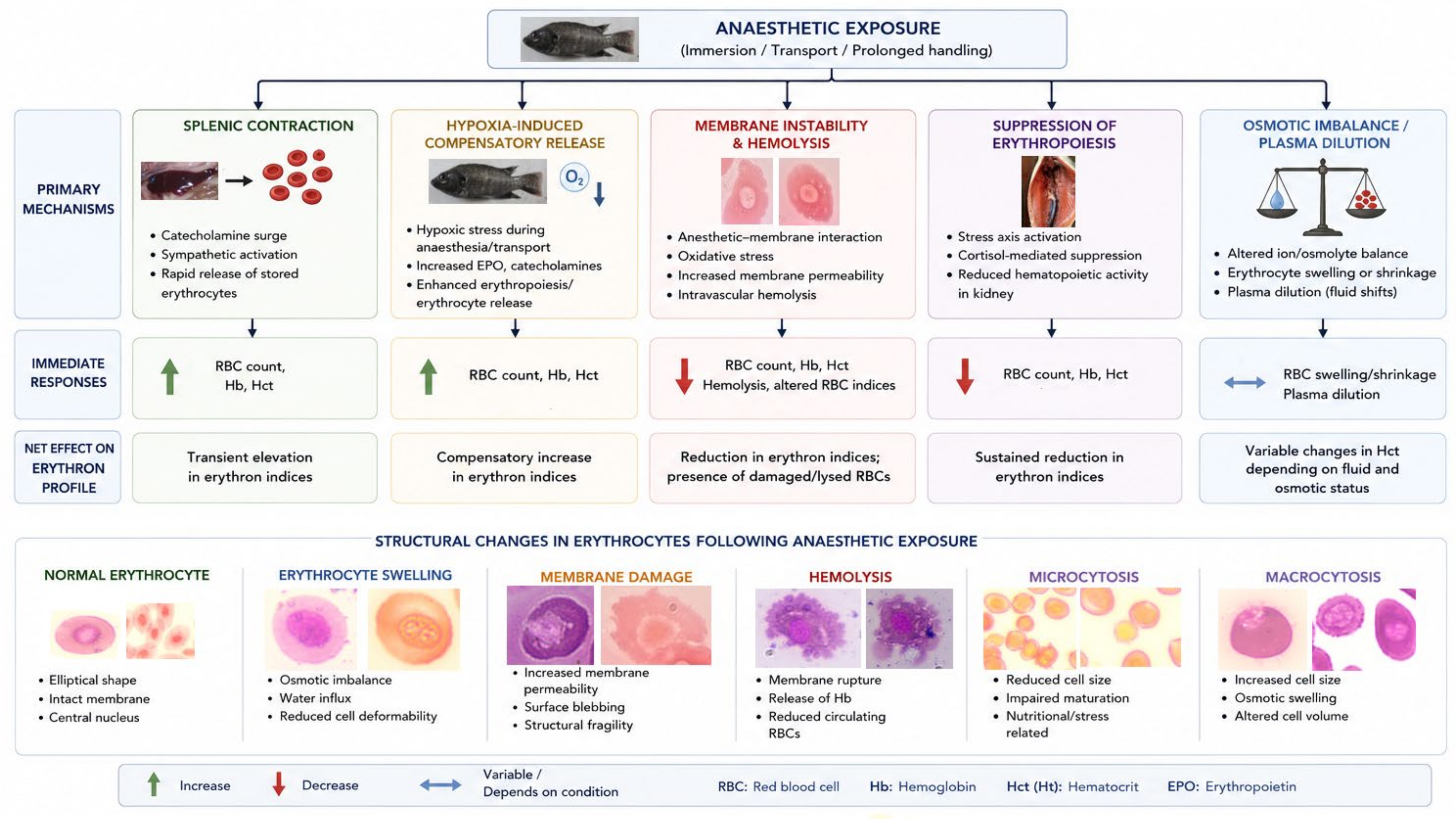
Anesthetic exposure frequently alters erythrocyte profiles through mechanisms involving splenic contraction, hypoxia-induced compensatory erythrocyte release, membrane instability, hemolysis, or suppression of erythropoiesis (Figure 1; [79]). QD exposure in common carp significantly reduced erythrocyte count, Hb, Ht, mean corpuscular hemoglobin (MCH), and mean corpuscular hemoglobin concentration (MCHC), particularly at 60 mg L−1, indicating impaired oxygen-carrying capacity and possible erythrocyte destruction [41]. In contrast, exposure to 1,8-cineole, citronellal, nutmeg oil, and other herbal anesthetic mixtures resulted in transient elevations in erythrocyte count, Hb, and Ht in rainbow trout, common carp, and Caspian trout, which were interpreted as catecholamine-mediated splenic erythrocyte mobilization under hypoxic stress [64,80,81,82,83]. These values generally normalized within 8–24 h following recovery. During transport studies involving Russian sturgeon and Siberian sturgeon, fish not treated with 2-PE exhibited reduced erythrocyte counts and Ht due to transport-induced hematopoietic suppression, whereas anesthetized groups maintained comparatively stable erythrocyte indices [84]. Changes in Hb and Ht largely mirror erythrocyte fluctuations but also reflect changes in hydration status, respiratory efficiency, and blood viscosity [80,82]. In prolonged anesthesia, altered Ht may also arise from osmotic imbalance, erythrocyte swelling, or plasma dilution [79,84,85]. White blood cell responses often reflect anesthetic-induced immunomodulation. During sturgeon transport, fish not anesthetized with 2-PE showed leukocytosis and neutrophilia, whereas treated groups exhibited comparatively stabilized leukocyte profiles [84]. These findings hinted that some anesthetics may suppress stress-mediated immune disruption, whereas others may directly impair leukocyte function.
Several anesthetics induce oxidative injury that directly compromises blood cell integrity. High doses of QD caused gill epithelial sloughing along with elevated superoxide dismutase (SOD) and catalase (CAT) activities in liver and gill tissues, indicating oxidative stress [41]. Suboptimal doses of cineole and citronellal increased AST, ALP, LDH, CPK, and malondialdehyde (MDA), suggesting tissue injury, oxidative hemolysis, and membrane instability [64,80,81]. Nutmeg oil exposure caused concentration-dependent gill hyperplasia, necrosis, and detectable DNA damage in blood cells through comet assay analysis [83]. In contrast, microalgal-derived anesthetic compounds in Atlantic salmon produced negligible alterations in hematological and oxidative biomarkers over 72 h, suggesting comparatively lower systemic toxicity [86].

6. Hemato-Biochemical Responses to Anesthetic Exposure in Fish

Hemato-biochemical biomarkers provide a broader understanding of anesthetic-induced physiological disturbances beyond cellular hematological alterations, as they reflect endocrine stress activation, energy metabolism, hepatic function, renal integrity, and osmoregulatory homeostasis. Although anesthetics are routinely used to reduce handling-associated stress, growing evidence suggests that many compounds simultaneously trigger secondary biochemical disturbances, the magnitude of which depends on anesthetic type, dose, exposure duration, recovery time, and species-specific physiological tolerance. Activation of the hypothalamic–pituitary–interrenal (HPI) axis remains one of the most consistently reported biochemical consequences of anesthetic exposure [87]. Elevated plasma cortisol concentrations have been documented following exposure to several anesthetics across multiple fish species, particularly when induction periods are prolonged or lower anesthetic concentrations are used [80,88,89,90,91,92,93,94]. However, not all anesthetic regimens intensify endocrine stress. High-dose 1,8-cineole (800 ppm) in Caspian trout prevented stress-induced cortisol elevation, while Lippia alba oils and clove basil oil microemulsions maintained cortisol concentrations lower than handling controls, suggesting improved stress attenuation under optimized dosing conditions [87,89,95]. At the molecular level, sedative transport doses of clove oil and MS-222 altered steroidogenic genes such as star and cyp11b1, indicating prolonged endocrine modulation even after apparent behavioral recovery [33,96]. Plasma glucose and lactate are the most frequently reported secondary stress biomarkers. Hyperglycemia is commonly reported following exposure to MS-222, cineole, 2-phenoxyethanol, and numerous essential oils due to glycogenolysis and catecholamine-mediated metabolic mobilization [90,92,93]. Similarly, elevated lactate concentrations have been observed after exposure to eugenol, thymol, cineole, Myrcia sylvatica, Curcuma longa, and clove basil oil, reflecting increased anaerobic metabolism, respiratory suppression, and transient hypoxia during anesthesia [90,95,97]. Table 3 documents all available literature on hemato-biochemical biomarkers and their alterations following anesthetic introduction. Anesthetic exposure frequently alters intermediary metabolism through shifts in amino acid utilization, glycogen depletion, lipid mobilization, and protein turnover. Sedated transport studies in gilthead seabream demonstrated that clove oil promoted amino acid catabolism, whereas MS-222 favored hepatic glycogen utilization and triglyceride mobilization [91]. Recent transcriptomic and metabolomic analyses further demonstrated that MS-222 and 2-phenoxyethanol significantly altered pyruvate metabolism, amino acid metabolism, fatty acid pathways, nucleotide metabolism, and arachidonic acid signaling pathways, indicating broad metabolic reprogramming under anesthetic stress [92,94]. These hemato-biochemical alterations indicate that anesthetic exposure induces coordinated metabolic adaptation to maintain physiological homeostasis during transient respiratory and neuroendocrine depression. Activation of the HPI axis promotes cortisol- and catecholamine-mediated glycogenolysis, gluconeogenesis, and lipid mobilization, whereas elevated lactate and altered intermediary metabolism reflect temporary anaerobic compensation caused by respiratory suppression and tissue hypoxia, which under prolonged exposure may contribute to oxidative stress, impaired recovery, immunosuppression, and reduced aquaculture performance.
Despite the documented alterations in hematological, biochemical, and blood gas parameters following MS-222 exposure, it remains the anesthetic of choice for laboratory fish research because of its rapid induction and recovery, high water solubility, reproducible anesthetic depth, and well-characterized pharmacokinetic and safety profiles [2,3,9,74]. Most physiological changes, including alterations in plasma glucose, cortisol, acid–base balance, and hematological indices, are transient and dose-dependent when recommended anesthetic protocols are followed [89,90,91,92,93,94,95]. In contrast, commercial aquaculture operations often favor eugenol, clove oil, and 2-PE because of their lower cost, ease of administration, and suitability for routine husbandry, transport, grading, and vaccination procedures [2,3]. Thus, anesthetic selection is primarily determined by the intended application, balancing experimental standardization in laboratory studies with operational practicality and economic feasibility in commercial aquaculture.
The liver remains a primary site for anesthetic detoxification and therefore exhibits pronounced biochemical sensitivity. Elevated AST, ALT, ALP, LDH, creatine kinase (CK), and malondialdehyde (MDA) levels have frequently been reported following exposure to anesthetics, indicating hepatocellular leakage, oxidative stress, and membrane damage [80,90,98]. Conversely, certain essential oils stimulated antioxidant defense systems including superoxide dismutase (SOD), catalase (CAT), glutathione peroxidase (GPx), glutathione-S-transferase (GST), and thiol activity, thereby reducing lipid peroxidation despite transient metabolic stress [96,99]. Multi-omics studies further indicate that MS-222 may induce endoplasmic reticulum stress and alter detoxification pathways even in the absence of overt enzyme leakage [94].
Direct nephrotoxicity appears less frequently reported compared to hepatic disturbances. Most studies involving cineole and 2-PE reported minimal changes in plasma creatinine and uric acid, suggesting that therapeutic anesthetic doses generally do not induce severe renal dysfunction [93,97]. However, oxidative modulation within renal tissues has been reported following exposure to Lippia alba oils [99]. Electrolyte disturbances are often subtle but physiologically important. While bulk plasma concentrations of Na+, K+, Cl, Ca2+, Mg2+, and phosphate frequently remain stable, several anesthetics alter branchial ion transport mechanisms. Essential oils from Lippia alba and Hesperozygis ringens significantly altered Na+/K+-ATPase and H+-ATPase activity in silver catfish, alongside changes in plasma sodium, potassium, and ammonia concentrations during recovery [87]. In zebrafish larvae, anesthetic exposure reduced ATPase activity and cardiac rate, indicating a hypometabolic response during transport stress [100]. Increased plasma phosphate has also been reported following exposure to eugenol, thymol, and cineole, suggesting transient disruptions in phosphate metabolism and cellular integrity [88,90,91].
Collectively, the available evidence indicates that erythrocyte-related parameters are among the most sensitive indicators of anesthetic-induced physiological disturbance. While transient reductions in erythrocyte count, hemoglobin, and hematocrit are consistently reported following exposure to MS-222, QD, and high concentrations of eugenol, these responses are generally reversible when recommended anesthetic doses are employed. Nevertheless, the magnitude of change varies considerably among species, reflecting differences in metabolic rate, branchial physiology, and anesthetic pharmacokinetics.

7. Blood Gas Physiology During Anesthesia in Fish

7.1. Respiratory Degression and Hypoxemia

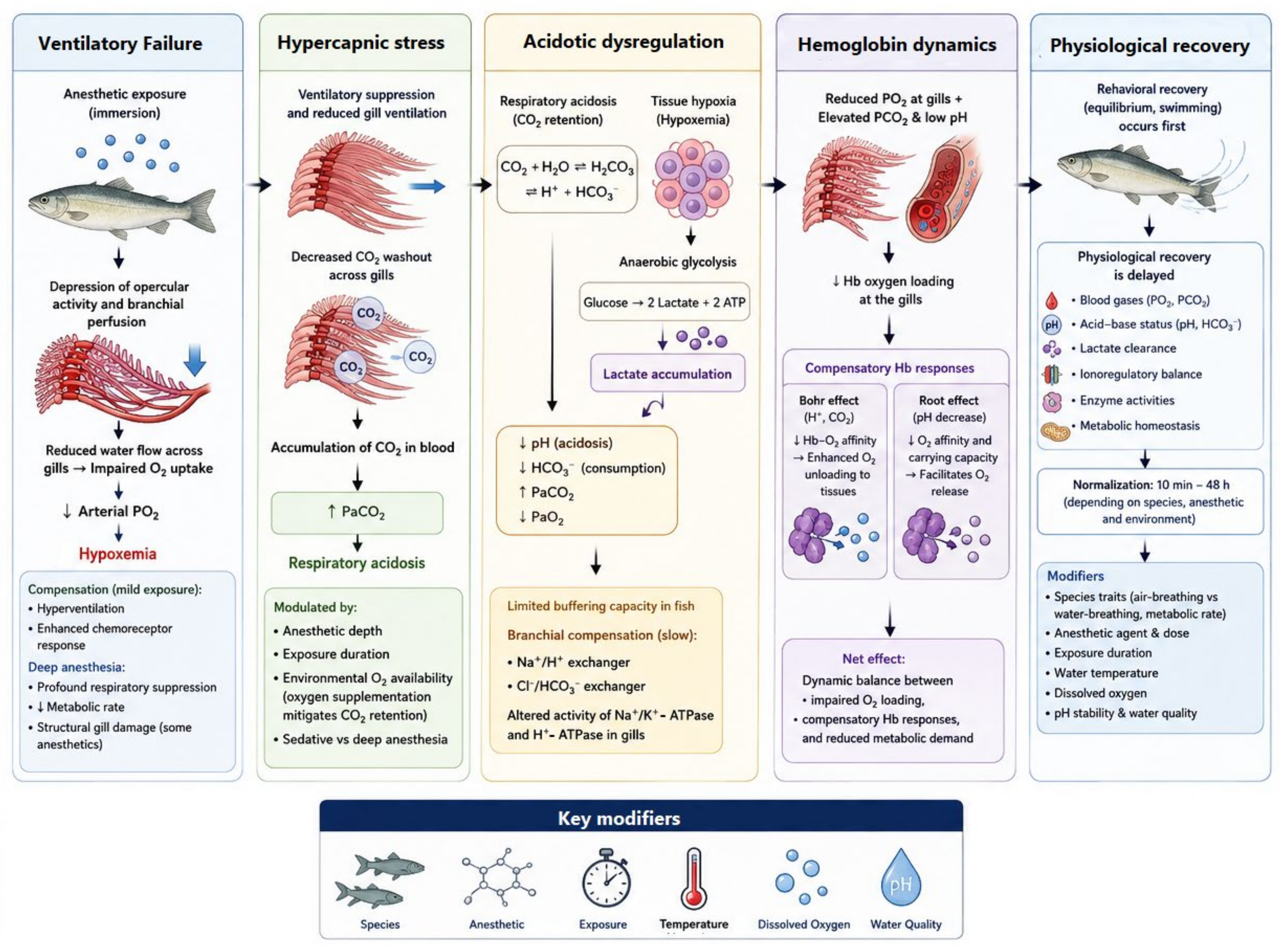
Respiratory depression is one of the earliest physiological consequences of immersion anesthesia because most anesthetic agents suppress opercular activity, reduce branchial perfusion, and ultimately impair oxygen uptake (Figure 2). In Lophiosilurus alexandri, menthol (50 mg L−1) significantly reduced ventilatory frequency during both induction and recovery in a concentration-dependent manner [101]. Similar reductions in ventilatory frequency were reported in Piaractus brachypomus anesthetized with eugenol and menthol where respiratory suppression persisted into recovery despite achieving deep anesthesia [102]. Essential oils derived from Hesperozygis ringens and Lippia alba also reduced ventilatory rates during recovery in silver catfish [97]. In contrast, compensatory hyperventilation has been reported under lighter sedative exposures likely reflecting compensatory responses to impaired gas exchange or altered chemoreceptor signaling [103]. However, deeper anesthesia often progresses toward pronounced respiratory suppression. In common carp exposed to etomidate, higher doses caused progressive ventilatory failure and bradycardia, with hypoxia identified as the primary cause of cardiac depression [104]. Similarly, juvenile tambaqui exposed to etomidate showed a 40.7% reduction in opercular rate during induction, although respiration normalized during recovery [37]. Comparable metabolic suppression was reported in juvenile hybrid sturgeon, where oxygen consumption remained below 1 mg O2 g−1 h−1 across dissolved CO2 concentrations ranging from 8.5 to 67.85 mg L−1 [105]. Beyond functional suppression, certain anesthetics may also compromise respiratory efficiency through structural gill damage, like clove oil, which caused greater lamellar hypertrophy and clubbing than MS-222 in spotted knifejaw [106]. Certain high concentrations of ginger essential oil caused irreversible gill lesions in Astyanax lacustris [107].

7.2. Hypercapnia and Carbon Dioxide Retention

Anesthetic-induced ventilatory suppression frequently impairs branchial CO2 elimination, resulting in hypercapnia and subsequent respiratory acidosis (Figure 2). Hypercapnia is a frequent but often overlooked consequence of deep anesthesia and is highly dependent on anesthetic depth, exposure duration, and respiratory support conditions. In koi anesthetized with MS-222 (100–150 mg L−1), prolonged exposure and higher concentrations significantly increased blood pCO2 while simultaneously reducing pH and pO2, confirming progressive CO2 retention during anesthesia [108]. Similar responses were reported in red pacu exposed to tricaine and eugenol, where both anesthetics caused elevated blood PCO2 alongside declines in PO2 and pH, indicating that respiratory acidosis was primarily driven by anesthetic-induced ventilatory depression rather than agent-specific toxicity [109]. The severity of hypercapnia is strongly influenced by environmental oxygen availability. Conventional long-duration CO2 anesthesia caused rapid mortality in several fish species despite oxygen-saturated water, whereas supplementation with ultrafine oxygen bubbles prolonged survival by improving gas exchange efficiency [110]. In contrast, mild sedative protocols using Lippia alba and basil oil produced minimal ventilatory disturbances and avoided overt CO2 retention, suggesting that carefully optimized sedation protocols may reduce hypercapnic risk [97,103,111].

7.3. Acid–Base Disturbances

Acid–base imbalance is a major physiological consequence of fish anesthesia and typically arises from combined respiratory and metabolic disturbances. Reduced ventilation during deep anesthesia promotes CO2 retention, leading to respiratory acidosis, while concurrent tissue hypoxia enhances anaerobic glycolysis and lactate accumulation, further contributing to metabolic acidosis (Figure 2). Reductions in pH accompanied increased PCO2 and reduced PO2 in red pacu exposed to MS-222 and eugenol [109], whereas buffered MS-222 in koi produced dose-dependent acid–base disturbances with greater severity at 150 mg L−1 than 100 mg L−1 [108]. Mixed respiratory-metabolic acidosis has also been documented in striped catfish anesthetized with BZC, MS-222, and AQUI-S, where elevated PCO2 and lactate reduced both extracellular and intracellular erythrocyte pH, although most parameters normalized within 24–48 h [112]. Elevated lactate concentrations were similarly reported in rainbow trout exposed to citronellal and in surgically anesthetized yellow perch, walleye, and koi, where higher lactate levels were associated with poorer short-term survival [82]. Fish possess comparatively limited bicarbonate buffering capacity, making them highly susceptible to rapid pH shifts during anesthesia. Although branchial Na+/H+ and Cl/HCO3 exchangers contribute to acid–base compensation, these responses are often too slow to fully correct acute anesthetic-induced acidosis [82]. Altered Na+/K+-ATPase and H+-ATPase activity in silver catfish exposed to Hesperozygis ringens and Lippia alba oils further highlights the role of branchial ion transport in post-anesthetic recovery [97]. However, the normalization of behavioral responses does not necessarily reflect restoration of acid–base homeostasis.

7.4. Blood Oxygen Transport During Anesthesia

Beyond altering ventilation and acid–base balance, anesthesia directly influences the efficiency of blood oxygen transport by modifying Hb saturation, oxygen affinity, and tissue oxygen delivery (Figure 2). In several anesthetic protocols involving MS-222, BZC, AQUI-S, and eugenol, reductions in arterial PO2 coupled with elevated PCO2 compromise Hb oxygen loading at the gills, thereby increasing the risk of systemic hypoxemia [108,109,112]. However, the physiological consequences are often moderated by unique properties of teleost Hb. Elevated PCO2 and reduced blood pH can trigger the Bohr effect, lowering Hb–oxygen affinity and facilitating oxygen unloading to peripheral tissues, while Root-effect Hb may further enhance tissue oxygen delivery during acidotic stress [113]. Transient reductions in blood PO2 observed in silver catfish exposed to Lippia alba essential oils normalized during recovery as ventilation resumed [58]. In air-breathing striped catfish and juvenile cobia, blood oxygen transport parameters generally returned to baseline within 24–48 h, indicating that most anesthesia-induced disruptions in oxygen transport are reversible under properly managed exposure conditions [112]. Thus, oxygen transport during anesthesia reflects a dynamic balance between impaired branchial oxygen loading, compensatory Hb responses, and reduced metabolic demand.

7.5. Recovery Physiology and Species-Environmental Modifiers

Behavioral recovery following anesthesia often precedes complete physiological recovery, and restoration of equilibrium or swimming activity should not be interpreted as full normalization of internal homeostasis (Figure 2). In striped catfish anesthetized with BZC, MS-222, and AQUI-S, marked disturbances in blood gases, lactate, and both extracellular and intracellular pH persisted despite rapid behavioral recovery, with complete normalization requiring 24–48 h [112]. Similarly, silver catfish exposed to Lippia alba essential oils showed recovery of opercular activity and normalization of pO2/pCO2 within 10 min, yet metabolic and ionoregulatory disturbances continued for several hours [58,97]. Although tambaqui anesthetized with ETM demonstrated rapid normalization of opercular and cardiac rhythms, the absence of blood gas measurements prevented confirmation of complete physiological recovery [37]. Substantial interspecific variation further influences post-anesthetic recovery. Air-breathing striped catfish exhibited delayed recovery [112], whereas oscar fish and koi anesthetized with alfaxalone showed minimal alterations in most blood gas variables, except lactate [114,115]. Environmental conditions further modulate recovery outcomes. In silver catfish anesthetized with eugenol, significant alterations in pO2, pCO2, and blood pH were observed only at 30 °C, indicating that elevated temperature exacerbates respiratory disturbances [116]. Recovery water quality, particularly dissolved oxygen, temperature, and pH stability, therefore remains critical for minimizing post-anesthetic mortality and accelerating physiological restoration [117]. These tell us that recovery from anesthesia is a prolonged physiological process shaped by species-specific traits and environmental conditions rather than behavioral recovery alone.

8. Immunohematological Changes

Anesthetic exposure can transiently alter both circulating immune cell profiles and innate immune function through stress-mediated leukocyte redistribution, oxidative modulation, and endocrine signaling. In pikeperch, ETM significantly reduced total leukocyte counts at 10 min and/or 24 h post-anesthesia, indicating transient leukopenia [118]. Similarly, BZC with sodium citrate induced leukopenia, lymphopenia, and leukocyte morphological abnormalities in tambaqui, whereas eugenol caused comparatively fewer alterations [119]. In rohu, MS-222, tobacco extract, Propiscin (ETM) and clove oil altered WBC counts within 10 min, with most parameters recovering by 24 h, particularly under clove oil exposure [5]. These changes are largely attributed to cortisol- and catecholamine-driven redistribution of leukocytes from circulation to lymphoid tissues and inflammatory sites. Functional immune responses may also be altered independent of cell counts. Exposure of bighead carp to 2-PE induced dose-dependent primary and secondary stress responses characterized by elevated cortisol and glucose concentrations alongside significant alterations in WBC whereas electrolyte balance and hepatic enzyme activities (AST, ALT, ALP) remained largely stable, with 0.9 mL L−1 producing the least overall hematological disturbance despite effective deep anesthesia induction [32]. Conversely, cineole increased lysozyme and bactericidal activity without affecting complement activity [120], while clove oil and MS-222 altered myeloperoxidase, superoxide production, and antiprotease activity in rohu [121]. Although anesthesia may reduce handling stress, inappropriate exposure can compromise immune competence and potentially influence disease resistance and vaccination outcomes.
Anesthetic-induced immunomodulation in fish is primarily mediated through activation of the HPI axis and subsequent cortisol release, which alters leukocyte trafficking, suppresses phagocytic activity, and downregulates complement and lysozyme-mediated defense pathways [122]. A detailed list of innate immune alterations upon Anesthetic exposure is found in Table 4.
Exposure to anesthetics damages immune-sensitive tissues such as the gills and head kidney. Certain anesthetics may additionally alter antigen presentation pathways, cytokine signaling, and mucosal immune function through direct effects on cellular metabolism and membrane stability [120]. However, mild or optimized anesthetic exposure may induce hormetic responses characterized by transient enhancement of bactericidal activity or antioxidant-associated immune activation [125]. Consequently, the immunological outcome of anesthesia depends on the balance between stress attenuation and anesthetic-induced physiological disruption, ultimately determining whether host defense mechanisms are preserved or compromised during aquaculture procedures.
Evidence on anesthetic effects on phagocyte function in fish remains limited, but available studies indicate that anesthetics can either suppress or preserve innate cellular defense depending on agent and dose. In fathead minnow, MS-222 reduced neutrophil degranulation (myeloperoxidase release) to approximately 60–75% of control levels during handling stress, whereas eugenol and metomidate prevented this decline, suggesting improved preservation of neutrophil function through reduced cortisol-mediated stress signaling [128]. Cineole increased serum bactericidal activity at both 400 and 1000 µL L−1 and elevated lysozyme activity at 1000 µL L−1, while complement activity remained unchanged, indicating mild immunostimulatory effects likely mediated through hormetic oxidative signaling and transient activation of innate defense pathways [120]. However, direct evaluations of phagocytosis rate, NADPH oxidase-dependent respiratory burst (NBT assays), macrophage killing, and neutrophil killing remain largely absent in fish anesthesia studies. Collectively, current evidence suggests that anesthetic-induced modulation of phagocyte function is likely mediated through interactions among stress endocrinology, oxidative balance, and leukocyte signaling, but remains a major research gap in aquaculture anesthesia.
Anesthetic exposure can modulate inflammatory signaling at both transcriptional and tissue levels by altering stress endocrine pathways, oxidative balance, and antigen-recognition mechanisms. In C. carpio, cineole (400 μL L−1) immediately downregulated hepatic tnfα and il1β, whereas 1000 μL L−1 increased oxidative damage while simultaneously stimulating innate defenses, indicating dose-dependent immunomodulation likely mediated through reactive oxygen signaling and cortisol-induced suppression of pro-inflammatory pathways [120]. In S. salar, repeated exposure to MS-222 upregulated tnfα3 in the head kidney, while AQUI-S and MTM produced minimal cytokine disruption, suggesting anesthetic-specific inflammatory sensitivity under repeated exposure [129]. Transcriptomic studies in crucian carp further showed that MS-222 (100 mg L−1) and eugenol (20 mg L−1) altered genes involved in antigen processing and presentation, including MHC I, MHC II, CD74, and LRRFIP2, while even lower transport doses of MS-222 (30 mg L−1) and eugenol (8 mg L−1) produced similar chronic immune modulation [126]. In largemouth bass, MS-222 altered TLR signaling pathways [94], while both MS-222 and eugenol induced oxidative stress, apoptosis, immune dysregulation, and ion transport disturbances in the gills of Chinese sea bass following 20 min exposure [127,130]. These responses likely arise because anesthetic-induced hypoxia, ROS generation, and cortisol release redirect cellular resources toward stress adaptation, thereby transiently suppressing or remodeling inflammatory pathways.

9. Repeated Anesthesia and Chronic Exposure

Repeated and chronic anesthetic exposure represents an increasingly important but relatively understudied aspect of modern aquaculture, as fish are frequently subjected to multiple anesthetic events throughout the production cycle. Repeated anesthesia is routinely required during artificial breeding, vaccination, biometric measurements, PIT tagging, health inspections, disease diagnosis, fin clipping, transportation, grading, broodstock management, surgical implantation of telemetry devices, and experimental sampling in research facilities. In intensive aquaculture systems, valuable broodstock and experimental fish may undergo several anesthetic procedures within weeks or months, raising concerns regarding cumulative physiological stress, delayed recovery, hematological disturbances, oxidative injury, and impaired growth or immune function [129,130,131,132]. Consequently, understanding the effects of repeated anesthetic exposure has become increasingly important for optimizing fish welfare and refining anesthetic protocols in both laboratory and commercial aquaculture settings. Despite concerns regarding cumulative stress, chronic anemia, oxidative injury, and growth impairment, current evidence suggests that repeated exposure primarily induces drug-specific and tissue-specific transient disturbances rather than clear progressive systemic damage, although long-term datasets remain scarce. In post-smolt Atlantic salmon repeatedly anesthetized seven times over 28 days with MS-222, MTM, or AQUI-S, no cumulative increase in plasma glucose or inflammatory gene expression was observed compared with single exposure; however, repeated MS-222 and AQUI-S altered gill osmoregulatory gene expression, and AQUI-S caused persistent low-level gill epithelial lifting following both single and repeated exposures, indicating localized branchial sensitivity [129]. Similarly, adult zebrafish exposed daily for 10 consecutive days to MS-222, eugenol, or ETM showed rapid recovery with no significant cumulative cortisol elevation or progressive behavioral deterioration, although etomidate-treated fish displayed comparatively poorer behavioral responses [131]. In zebrafish, repeated eugenol exposure across three consecutive days prolonged recovery times and progressively reduced swimming activity, whereas buffered MS-222 produced minimal behavioral disruption [132]. Mechanistically, repeated anesthesia may trigger cumulative oxidative stress, repeated gill irritation, transient neurobehavioral suppression, and recurring metabolic adjustments due to repeated activation of cortisol signaling, detoxification pathways, and tissue repair processes. However, the current literature remains heavily biased toward short-term experimental models, and robust evidence linking repeated anesthesia to chronic anemia, long-term growth suppression, reproductive impairment, or persistent systemic immunosuppression is still lacking. This represents a critical knowledge gap, particularly for intensive aquaculture systems where repeated anesthetic exposure is routine but long-term physiological consequences remain poorly defined.

10. Shellfish Hemolymph Responses

Although shellfish possess hemolymph rather than vertebrate blood and their physiological responses cannot be directly equated with teleost hematology, they represent an important component of global aquaculture. Consequently, a brief discussion is warranted to provide a broader perspective on anesthetic safety in farmed aquatic species. Available studies indicate that anesthetics such as magnesium salts (MgCl2), eugenol, and 2-PE induce transient alterations in hemocyte profiles, glycogen reserves, antioxidant defenses, and immune-related biomarkers, although most responses appear reversible under recommended exposure conditions [133,134,135,136]. Nevertheless, compared with teleosts, evidence remains limited, highlighting the need for further investigations into anesthetic-induced hemolymph physiology in commercially cultured shellfish.

11. Emerging Technologies for Physiological Monitoring During Anesthesia

Although behavioral observations and hematological biomarkers remain the primary indicators of anesthetic safety in fish, emerging physiological monitoring technologies may provide valuable complementary information during anesthetic exposure. Electrocardiographic (ECG) monitoring has shown that anesthetics including eugenol, etomidate, MS-222, geraniol, citronellol, menthol, and camphor produce dose-dependent cardiovascular responses that are largely reversible at recommended concentrations but may result in persistent cardiac depression or delayed recovery at higher doses [37,137,138,139,140]. Cardiac monitoring has also been applied to welfare assessment during slaughter, where continuous recording of cardiac activity provides a more objective measure of loss of consciousness than behavioral observations alone [141,142]. Furthermore, remote heart-rate biologgers and optical photoplethysmography (PPG) systems have demonstrated the feasibility of continuously monitoring cardiovascular performance in freely swimming fish under aquaculture conditions [143]. Likewise, wearable biosensors capable of monitoring heart rate, ventilation, blood flow, glucose, and lactate, together with artificial intelligence and machine-learning algorithms, offer opportunities to integrate real-time physiological monitoring with conventional hematological and biochemical assessments, thereby improving anesthetic dose optimization and welfare management in precision aquaculture [144,145,146]. Nevertheless, these technologies remain largely investigational and require further validation before routine implementation in laboratory or commercial aquaculture.

12. Research Gaps

Despite the expanding use of anesthetics in aquaculture, current safety frameworks remain fragmented and are still largely based on induction time, recovery duration, and survival rather than comprehensive physiological validation. Many studies continue to optimize dose efficiency without evaluating cortisol, glucose, hematology, oxidative stress, genotoxicity, or long-term health outcomes, and several explicitly acknowledge these limitations [36,145]. Most investigations remain short-term and single-exposure based, with limited assessment of repeated anesthesia, chronic growth impacts, reproductive performance, or delayed immunological consequences. Where deeper endpoints have been evaluated, important toxicological risks have emerged, including DNA damage associated with benzocaine and eugenol exposure and oxidative and hepatic alterations following lidocaine-based combinations, yet these findings are rarely incorporated into practical dosing guidelines. A major limitation is the strong species- and context-specific variability in anesthetic responses, as optimal doses differ across species depending on body size, water temperature, and farming purpose. Similarly, anesthetics such as MS-222, 2-PE, eugenol, ETM, and herbal anesthetics exhibit markedly different behavioral, cardiorespiratory, and toxicological profiles, yet they are often treated as interchangeable agents. Shellfish data remain particularly weak despite the commercial importance of Pacific white shrimp, black tiger shrimp, and mud crab, while transcriptomic, metabolomic, and proteomic integration remains scarce. Most protocols are also developed under controlled laboratory settings and rarely validated under real farm conditions involving transport stress, crowding, fluctuating temperature, salinity variation, disease burden, and residue concerns in food fish [19]. Collectively, future research must shift from simple dose–response trials toward standardized biomarker frameworks, long-term physiological assessments, omics-driven mechanistic studies, and field-validated anesthesia protocols that better reflect commercial aquaculture realities.

13. Conclusions

The expanding use of anesthetics in aquaculture has substantially improved fish handling, transport, vaccination, surgery, sampling, and welfare-oriented management practices. However, the present review demonstrates that anesthetic exposure is not merely a reversible behavioral event, but a complex physiological process involving interconnected hematological, biochemical, respiratory, metabolic, and immunological responses. Current anesthetic research in aquaculture has progressed considerably in terms of optimizing induction efficiency, recovery kinetics, transport sedation, and welfare assessment, with substantial attention given to operational suitability of anesthetic compounds. Emerging advances further indicate that aquaculture anesthesia is gradually moving toward more precise and physiology-oriented applications. Despite these developments, major knowledge gaps still persist regarding the systemic physiological consequences of anesthetic exposure. Most available studies continue to prioritize induction time, recovery duration, survival, and behavioral responses, whereas comparatively limited attention has been directed toward blood physiology, despite blood representing one of the most sensitive indicators of respiratory compromise, endocrine stress, oxidative imbalance, metabolic disturbance, and immune modulation. The evidence synthesized in this review indicates that anesthetic exposure can significantly alter erythrocyte integrity, leukocyte distribution, cortisol secretion, glucose and lactate metabolism, acid–base balance, blood oxygen transport, and innate immune defense pathways. These alterations are highly species-specific and are further influenced by anesthetic concentration, exposure duration, water quality, and recovery conditions. Importantly, behavioral recovery frequently precedes complete physiological restoration, suggesting that visually normal fish may still experience underlying metabolic, respiratory, or immunological disturbances following anesthesia. The review also highlights that certain anesthetics may attenuate handling stress and improve welfare when appropriately optimized, whereas excessive or poorly managed exposure may compromise immune competence, recovery capacity, osmoregulatory stability, and post-transport performance. Collectively, this review emphasizes that future aquaculture anesthesia research should transition from purely operational evaluation toward integrated physiological assessment involving hematology, hemato-biochemistry, blood gas physiology, oxidative stress, and immunological biomarkers. Standardized biomarker frameworks, long-term exposure studies, crustacean hemolymph investigations, multi-omics integration, and field-scale validation remain urgently needed. By consolidating current evidence across diverse anesthetic classes and aquaculture species, this review provides a physiological foundation for the development of safer, welfare-oriented, and precision-guided anesthetic strategies capable of supporting sustainable aquaculture practices in the future.

Author Contributions

Conceptualization, A.B. and S.H.M.; methodology, A.B.; validation, A.B., S.H.M. and C.C.; formal analysis, A.B.; investigation, C.C.; resources, S.H.M.; data curation, A.B., C.C. and D.M.; writing—original draft preparation, A.B.; writing—review and editing, A.B., S.H.M., K.P., H.K.-N., C.C. and D.M.; visualization, A.B.; supervision, S.H.M.; project administration, K.P. and H.K.-N.; funding acquisition, K.P. and H.K.-N. All authors have read and agreed to the published version of the manuscript.

Funding

This research was funded by Fish Welfare Initiative India Foundation, grant number FWI IF dated 13 February 2025.

Institutional Review Board Statement

Not applicable.

Informed Consent Statement

Not applicable.

Data Availability Statement

No new data were created.

Acknowledgments

The authors sincerely acknowledge the support provided by the Fish Welfare Initiative India Foundation for their assistance and cooperation during the preparation of this work. The authors also express their gratitude to Rajdip Gupta, FEO, Frazerganj under the Frazerganj Fisheries Project (SFDC), for his valuable support and guidance. During the preparation of this manuscript, the authors used AI for the purposes of improving grammar and sentence construction. The authors have reviewed and edited the output and take full responsibility for the content of this publication.

Conflicts of Interest

The authors declare no conflicts of interest. The funders had no role in the design of the study; in the collection, analyses, or interpretation of data; in the writing of the manuscript; or in the decision to publish the results.

References

  1. Minaz, M.; Félix, L. Trends and advancements in fish anesthesia over the last decade. Aquaculture 2025, 612, 743147. [Google Scholar]
  2. Fayaz, I.; Qadiri, S.S.N.; Shah, F.A.; Dar, S.A.; Amin, A.; Mukhtar, K.; Mandu, S.M.; Wali, A. Anesthetics in aquaculture: Comprehensive insights into agents, mechanisms, and applications. Fish Physiol. Biochem. 2026, 52, 16. [Google Scholar] [CrossRef] [Scilit] [PubMed]
  3. Food and Agriculture Organization of the United Nations (FAO). The State of World Fisheries and Aquaculture 2024: Blue Transformation in Action; FAO: Rome, Italy, 2024. [Google Scholar] [CrossRef] [Scilit]
  4. Chen, H.; Luo, D. Application of haematology parameters for health management in fish farms. Rev. Aquac. 2023, 15, 704–737. [Google Scholar]
  5. Habib, S.S.; Naz, S.; Batool, A.I.; Rehman, F.U.; Ullah, M.; Kesbiç, O.S.; Maricchiolo, G.; Fazio, F. Effect of different Anesthetics on hematology and blood biochemistry of Labeo rohita. Aquac. Stud. 2023, 24, 1–10. [Google Scholar] [CrossRef] [Scilit]
  6. Leyden, C.; Brüggemann, T.; Debinski, F.; Simacek, C.A.; Dehmelt, F.A.; Arrenberg, A.B. Efficacy of Tricaine (MS-222) and Hypothermia as Anesthetic Agents for Blocking Sensorimotor Responses in Larval Zebrafish. Front. Vet. Sci. 2022, 9, 864573. [Google Scholar] [CrossRef] [Scilit] [PubMed]
  7. Attili, S.; Hughes, S.M. Anesthetic tricaine acts preferentially on neural voltage-gated sodium channels and fails to block directly evoked muscle contraction. PLoS ONE 2014, 9, e103751. [Google Scholar] [CrossRef] [Scilit] [PubMed]
  8. Topic Popovic, N.; Strunjak-Perovic, I.; Coz-Rakovac, R.; Barisic, J.; Jadan, M.; Persin Berakovic, A.; Sauerborn Klobucar, R. Tricaine methane-sulfonate (MS-222) application in fish anesthesia. J. Appl. Ichthyol. 2012, 28, 553–564. [Google Scholar] [CrossRef] [Scilit]
  9. Hsu, J.C.N.; Rairat, T.; Lu, Y.P.; Chou, C.C. The use of tricaine methanesulfonate (MS-222) in Asian seabass (Lates calcarifer) at different temperatures: Study of optimal doses, minimum effective concentration, blood biochemistry, immersion pharmacokinetics, and tissue distributions. Vet. Sci. 2023, 10, 539. [Google Scholar] [CrossRef] [Scilit] [PubMed]
  10. Perrot-Minnot, M.J.; Balourdet, A.; Musset, O. Optimization of anesthetic procedure in crustaceans: Evidence for sedative and analgesic-like effect of MS-222 using a semi-automated device for exposure to noxious stimulus. Aquat. Toxicol. 2021, 240, 105981. [Google Scholar] [PubMed]
  11. Liu, Y.; Zhou, X.W.; Ding, H.T.; Dong, X.J.; Zhang, J.J.; Zheng, Y.C.; Chen, X.N.; Cheng, H.L.; Ding, Z.J.; Xu, J.H. Effects of tricaine methanesulfonate (MS-222) on sedation and responses of yellow catfish (Pelteobagrus fulvidraco) subjected to simulated transportation stress. Aquaculture 2022, 549, 737789. [Google Scholar] [CrossRef] [Scilit]
  12. de Souza, A.D.S.L.; Gimbo, R.Y.; da Fonseca, S.M.; de Souza, R.A.L.; Barbas, L.A.L.; Hamoy, M.; Almeida, D.V. Electromyography and oculomotricity as markers of benzocaine anesthesia in juvenile tambaqui (Colossoma macropomum). Aquaculture 2025, 595, 741565. [Google Scholar]
  13. Vieira, L.R.; Pereira, Y.L.G.; Diniz, L.A.; Nascimento, C.P.; Silva, A.L.M.; Azevedo, J.E.C.; de Mello, V.J.; Muto, N.A.; Barbas, L.A.L.; Hamoy, M. Graded concentrations of lidocaine hydrochloride in the modulation of behavioral, cardiac, and muscular responses of the Amazon freshwater fish tambaqui (Colossoma macropomum). Aquaculture 2023, 563, 738985. [Google Scholar] [CrossRef] [Scilit]
  14. Kheawfu, K.; Pikulkaew, S.; Wellendorph, P.; Jørgensen, L.V.G.; Rades, T.; Müllertz, A.; Okonogi, S. Elucidating pathway and anesthetic mechanism of action of clove oil nanoformulations in fish. Pharmaceutics 2022, 14, 919. [Google Scholar] [CrossRef] [Scilit] [PubMed]
  15. Nuanmanee, S.; Sriwanayos, P.; Boonyo, K.; Chaisri, W.; Saengsitthisak, B.; Tajai, P.; Pikulkaew, S. Synergistic effect between eugenol and 1,8-cineole on anesthesia in guppy fish (Poecilia reticulata). Vet. Sci. 2024, 11, 165. [Google Scholar] [CrossRef] [Scilit] [PubMed]
  16. Lehotzky, D.; Eske, A.I.; Zupanc, G.K. The effect of eugenol anesthesia on the electric organ discharge of the weakly electric fish Apteronotus leptorhynchus. Fish Physiol. Biochem. 2023, 49, 1321–1338. [Google Scholar] [CrossRef] [Scilit] [PubMed]
  17. Zeng, X.; Zheng, X.; Wu, J.; Dong, H.; Zhang, J. Assessment of the molecular mechanism in fish using eugenol as anesthesia based on network pharmacology. Fish Physiol. Biochem. 2024, 50, 2191–2205. [Google Scholar] [CrossRef] [Scilit] [PubMed]
  18. Machnik, P.; Biazar, N.; Schuster, S. Recordings in an integrating central neuron reveal the mode of action of isoeugenol. Commun. Biol. 2023, 6, 309. [Google Scholar] [CrossRef] [Scilit] [PubMed]
  19. Jia, B.Z.; Rui, X.Y.; Wang, Y.; Zeng, X.; Sheng, S.J.; Zeng, B.J.; Xu, Z.L.; Luo, L. Fishery anesthetics in aquaculture products: Safety concerns and analytical methods. Foods 2025, 14, 3928. [Google Scholar] [CrossRef] [Scilit] [PubMed]
  20. Jiang, L.; Tang, J.; Huang, B.; Zhang, C.; Jiang, P.; Chen, D. Effect of vanillin on the anesthesia of crucian carp: Effects on physiological and biochemical indices, pathology, and volatile aroma components. Foods 2023, 12, 1614. [Google Scholar] [CrossRef] [Scilit] [PubMed]
  21. Barbas, L.A.L.; Torres, M.F.; da Costa, B.M.P.; Feitosa, M.J.M.; Maltez, L.C.; Amado, L.L.; Toda, Y.P.S.; dos Santos Batista, P.; Cabral, D.A.C.; Hamoy, M. Eugenol induces body immobilization yet evoking an increased neuronal excitability in fish during short-term baths. Aquat. Toxicol. 2021, 231, 105734. [Google Scholar] [CrossRef] [Scilit] [PubMed]
  22. Jiang, L.; Huang, B.; Tang, J.; Jiang, P.; Chen, D.; Zhang, C. Comprehensive analysis of physiological, biochemical and flavor characteristics changes in crucian carp (Carassius auratus) under different concentrations of eugenol. Foods 2023, 12, 2820. [Google Scholar] [CrossRef] [Scilit] [PubMed]
  23. Adel, M.; Shekarabi, S.P.H.; Gomułka, P.; Amiri, A.B.; Multisanti, C.R.; Faggio, C. Short-term anesthesia with clove oil and propofol: Physiological responses in Persian sturgeon (Acipenser persicus). Fishes 2025, 10, 286. [Google Scholar] [CrossRef] [Scilit]
  24. Bagheri, S.; Gholamhosseini, A.; Yaghoobpour, T.; Adel, M. Uses of eugenol in aquaculture: Benefits and applications—A review. Ann. Anim. Sci. 2025, 25, 945–953. [Google Scholar] [CrossRef] [Scilit]
  25. Pattanasiri, T.; Taparhudee, W.; Suppakul, P. Acute toxicity and Anesthetic effect of clove oil and eugenol on Siamese fighting fish, Betta splendens. Aquac. Int. 2017, 25, 163–175. [Google Scholar]
  26. Martino, J.C.; Suthers, I.M.; Nguyen, J.; Hewitt, D.E.; Evans, S.M.; Schilling, H.T. Anesthetic performance of AQUI-S and 2-phenoxyethanol in fish for field applications. Rev. Fish Biol. Fish. 2026, 36, 45. [Google Scholar] [CrossRef] [Scilit]
  27. Lambooij, B.; Pilarczyk, M.; Bialowas, H.; Reimert, H.; Andre, G.; Van De Vis, H. Anesthetic properties of Propiscin (Etomidate) and 2-phenoxyethanol in the common carp (Cyprinus carpio L.), neural and behavioural measures. Aquac. Res. 2009, 40, 1328–1333. [Google Scholar] [CrossRef] [Scilit]
  28. Pounder, K.C.; Mitchell, J.L.; Thomson, J.S.; Pottinger, T.G.; Sneddon, L.U. Physiological and behavioural evaluation of common anesthesia practices in the rainbow trout. Appl. Anim. Behav. Sci. 2018, 199, 94–102. [Google Scholar] [CrossRef] [Scilit]
  29. Rairat, T.; Chi, Y.; Hsieh, C.Y.; Liu, Y.K.; Chuchird, N.; Chou, C.C. Determination of optimal doses and minimum effective concentrations of tricaine methanesulfonate, 2-phenoxyethanol and eugenol for laboratory managements in Nile tilapia (Oreochromis niloticus). Animals 2021, 11, 1521. [Google Scholar] [CrossRef] [Scilit] [PubMed]
  30. Akgül, E.; Can, E. The anesthetic effects of 2-phenoxyethanol on Munzur trout fingerlings (Salmo munzuricus Turan et al., 2017) at different temperatures. Iran. J. Fish. Sci. 2020, 19, 195–203. [Google Scholar]
  31. Mylonas, C.C.; Cardinaletti, G.; Sigelaki, I.; Polzonetti-Magni, A. Comparative efficacy of clove oil and 2-phenoxyethanol as anesthetics in the aquaculture of European sea bass (Dicentrarchus labrax) and gilthead sea bream (Sparus aurata) at different temperatures. Aquaculture 2005, 246, 467–481. [Google Scholar] [CrossRef] [Scilit]
  32. Watanabe, K.I.; Takahashi, M.; Nakagawa, M.; Ohta, K.; Satoh, J.; Hotta, T. Effectiveness of 2-phenoxyethanol anesthesia of fish cultured in Japan. Aquac. Sci. 2006, 54, 255–263. [Google Scholar]
  33. Akbary, P.; Pirbeigi, A.; Jahanbakhshi, A. Analysis of primary and secondary stress responses in bighead carp (Hypophthalmichthys nobilis) by anesthetization with 2-phenoxyethanol. Int. J. Environ. Sci. Technol. 2016, 13, 1009–1016. [Google Scholar] [CrossRef] [Scilit]
  34. Shaluei, F.; Hedayati, A.; Jahanbakhshi, A.; Baghfalaki, M. Physiological responses of great sturgeon (Huso huso) to different concentrations of 2-phenoxyethanol as an anesthetic. Fish Physiol. Biochem. 2012, 38, 1627–1634. [Google Scholar] [CrossRef] [Scilit] [PubMed]
  35. Priborsky, J.; Velisek, J. A review of three commonly used fish anesthetics. Rev. Fish. Sci. Aquac. 2018, 26, 417–442. [Google Scholar] [CrossRef] [Scilit]
  36. Reis, T.D.S.; Araújo, D.B.D.; Paz, C.A.D.; Santos, R.G.; Barbosa, A.D.S.; Souza, L.V.D.; Deiga, Y.D.S.; Garcia, V.L.D.O.; Barbosa, G.B.; Rocha, L.L.D.; et al. Etomidate as an anesthetic in Colossoma macropomum: Behavioral and electrophysiological data complement each other as a tool to assess anesthetic safety. PLoS ONE 2024, 19, e0305093. [Google Scholar] [CrossRef] [Scilit] [PubMed]
  37. Tang, Y.; Xu, L.; Zhao, J.; Qian, X.; Qiang, H.; Xiang, P.; Yan, H. Metabolic profile of etomidate and its three analogs in zebrafish, human liver microsomes, human urine and hair samples using UHPLC-Q Exactive Orbitrap-HRMS. Drug Test. Anal. 2025, 17, 1662–1674. [Google Scholar] [CrossRef] [Scilit] [PubMed]
  38. Valk, B.I.; Struys, M.M. Etomidate and its analogs: A review of pharmacokinetics and pharmacodynamics. Clin. Pharmacokinet. 2021, 60, 1253–1269. [Google Scholar] [CrossRef] [Scilit] [PubMed]
  39. Small, B.C. Anesthetic efficacy of metomidate and comparison of plasma cortisol responses to tricaine methanesulfonate, quinaldine and clove oil anesthetized channel catfish Ictalurus punctatus. Aquaculture 2003, 218, 177–185. [Google Scholar] [CrossRef] [Scilit]
  40. Hansen, M.K.; Nymoen, U.; Horsberg, T.E. Pharmacokinetic and pharmacodynamic properties of metomidate in turbot (Scophthalmus maximus) and halibut (Hippoglossus hippoglossus). J. Vet. Pharmacol. Ther. 2003, 26, 95–103. [Google Scholar] [CrossRef] [Scilit] [PubMed]
  41. Ahad, N.; Dar, S.A.; Shah, F.A.; Dar, R.A.; Mukhtar, K.; Mandu, S.M.; Wali, A.; Asimi, O.A.; Bhat, B.A. Evaluation of quinaldine anesthesia in common carp (Cyprinus carpio): Induction, recovery, and physiological responses. Aquat. Toxicol. 2025, 286, 107437. [Google Scholar] [CrossRef] [Scilit] [PubMed]
  42. Mohamed, S.J. Comparative efficacy of four anesthetics on common carp Cyprinus carpio L. Acta Ichthyol. Piscat. 1999, 29, 91–97. [Google Scholar] [CrossRef] [Scilit]
  43. Dimitriadou, S.; Miller, M.; Pilehvar, A.; Sneddon, L.U.; Bamsey, J.L.; Hogan-Bassey, D.; Trznadel, M.; Ball, J.S.; Takesono, A.; Hillman, C.; et al. Evaluating anaesthetics for improving scientific research and welfare using larval zebrafish. bioRxiv 2025. [Google Scholar] [CrossRef] [Scilit]
  44. Yanar, M.; Kumlu, M. The Anesthetics effects of quinaldine sulphate and/or diazepam on sea bass (Dicentrarchus labrax) juveniles. Turk. J. Vet. Anim. Sci. 2001, 25, 185–189. [Google Scholar]
  45. Yanar, M.; Genç, E. Anesthetic effects of quinaldine sulphate together with the use of diazepam on Oreochromis niloticus L. 1758 (Cichlidae) at different temperatures. Turk. J. Vet. Anim. Sci. 2004, 28, 1001–1005. [Google Scholar]
  46. Huerta, B.; Margiotta-Casaluci, L.; Rodríguez-Mozaz, S.; Scholze, M.; Winter, M.J.; Barceló, D.; Sumpter, J.P. Anti-anxiety drugs and fish behavior: Establishing the link between internal concentrations of oxazepam and behavioral effects. Environ. Toxicol. Chem. 2016, 35, 2782–2790. [Google Scholar] [CrossRef] [Scilit] [PubMed]
  47. Bencan, Z.; Sledge, D.; Levin, E.D. Buspirone, chlordiazepoxide and diazepam effects in a zebrafish model of anxiety. Pharmacol. Biochem. Behav. 2009, 94, 75–80. [Google Scholar] [CrossRef] [Scilit] [PubMed]
  48. Devyashin, A.S.; Blazhenko, A.A.; Lebedev, V.A.; Lebedev, A.A.; Bychkov, E.R.; Shabanov, P.D. Assessment of dose-dependent effects of anxiolytics of benzodiazepine structure with diazepam as an example in Danio rerio. Rev. Clin. Pharmacol. Drug Ther. 2020, 18, 43–49. [Google Scholar] [CrossRef] [Scilit]
  49. Abreu, M.S.D.; Koakoski, G.; Ferreira, D.; Oliveira, T.A.; Rosa, J.G.S.D.; Gusso, D.; Giacomini, A.C.V.; Piato, A.L.; Barcellos, L.J.G. Diazepam and fluoxetine decrease the stress response in zebrafish. PLoS ONE 2014, 9, e103232. [Google Scholar] [CrossRef] [Scilit] [PubMed]
  50. Hu, Y.; Hou, W.; Zhang, Y.; Zhu, H. Bioconcentration, biotransformation, oxidative stress and neurochemical response of environmental concentration diazepam in yellowbelly pufferfish. Aquat. Toxicol. 2025, 289, 107620. [Google Scholar] [CrossRef] [Scilit] [PubMed]
  51. Yang, Z.; Xu, X.; Li, Y.; Hu, X.; Xu, J.; Qiao, L.; Sun, H.; Mu, Y. Bioaccumulation and elimination, and risk assessment of diazepam in carp (Cyprinus carpio). Bull. Environ. Contam. Toxicol. 2026, 116, 71. [Google Scholar] [CrossRef] [Scilit] [PubMed]
  52. Cui, J.; Wang, J.; Zhong, S.; Hong, M.; Lu, C.; Fang, J.; Jiang, H. Study on the residual dynamics of diazepam in freshwater fish of Zhejiang, China and its implications for human health. Environ. Pollut. 2025, 384, 127038. [Google Scholar] [CrossRef] [Scilit] [PubMed]
  53. Han, S.; Seong, M.; Kim, G.; Jeong, D.; Lim, S.; Park, Y. Diazepam exerts immunosuppressive effects on macrophages isolated from the head kidney of catfish (Silurus asotus). Fish Shellfish Immunol. 2025, 169, 111055. [Google Scholar] [CrossRef] [Scilit] [PubMed]
  54. Heldwein, C.G.; Silva, L.L.; Reckziegel, P.; Barros, F.M.C.; Bürger, M.E.; Baldisserotto, B.; Mallmann, C.A.; Schmidt, D.; Caron, B.O.; Heinzmann, B.M. Participation of the GABAergic system in the anesthetic effect of Lippia alba (Mill.) NE Brown essential oil. Braz. J. Med. Biol. Res. 2012, 45, 436–443. [Google Scholar] [CrossRef] [Scilit] [PubMed]
  55. Dos Santos, A.C.; Junior, G.B.; Zago, D.C.; Zeppenfeld, C.C.; da Silva, D.T.; Heinzmann, B.M.; Baldisserotto, B.; da Cunha, M.A. Anesthesia and anesthetic action mechanism of essential oils of Aloysia triphylla and Cymbopogon flexuosus in silver catfish (Rhamdia quelen). Vet. Anaesth. Analg. 2017, 44, 106–113. [Google Scholar] [CrossRef] [Scilit] [PubMed]
  56. Visoni, B.M.; de Melo, T.P.; Descovi, S.N.; Heinzmann, B.M.; Baldisserotto, B. Essential oils and their use as anesthetics and sedatives for Nile tilapia (Oreochromis niloticus): A systematic review. Fishes 2025, 11, 19. [Google Scholar] [CrossRef] [Scilit]
  57. Felix, L.; Vieira, R.; Monteiro, S.M.; Venancio, C. A meta-analytic review of monoterpene for fish anesthesia. Fish Fish. 2023, 24, 367–380. [Google Scholar]
  58. Souza, C.D.F.; Baldissera, M.D.; Baldisserotto, B.; Heinzmann, B.M.; Martos-Sitcha, J.A.; Mancera, J.M. Essential oils as stress-reducing agents for fish aquaculture: A review. Front. Physiol. 2019, 10, 785. [Google Scholar] [CrossRef] [Scilit] [PubMed]
  59. Kheawfu, K.; Chittasupho, C.; Pikulkaew, S.; Chaisri, W.; Junmahasathien, T. Comparative stability and anesthetic evaluation of Holy Basil essential oil formulated in SNEDDS and microemulsion systems in Cyprinus carpio var. Koi. Pharmaceutics 2025, 17, 997. [Google Scholar] [CrossRef] [Scilit] [PubMed]
  60. Fortes, C.H.M.; Ferrari, F.T.; Baldisserotto, B.; Schmidt, D.; Sutili, F.J.; Heiznmann, B.M. Anesthetic potential of essential oils from Brazilian native plants in Rhamdia quelen juveniles (silver catfish). Neotrop. Ichthyol. 2024, 22, e240034. [Google Scholar] [CrossRef] [Scilit]
  61. Bodur, T.; Oktavia, I.S.; Sulmartiwi, L. Effective concentration of herbal Anesthetics Origanum vulgare L. oil and its effects on stress parameters in Nile tilapia (Oreochromis niloticus). Vet. Med. Sci. 2024, 10, e1492. [Google Scholar] [CrossRef] [Scilit] [PubMed]
  62. Bodur, T.; León-Bernabeu, S.; Navarro, A.; Tort, L.; Afonso, J.M.; Montero, D. Effects of new plant based anesthetics Origanum sp. and Eucalyptus sp. oils on stress and welfare parameters in Dicentrarchus labrax and their comparison with clove oil. Aquaculture 2018, 495, 402–408. [Google Scholar] [CrossRef] [Scilit]
  63. Zeng, X.; Dong, H.; Wu, J.; Wang, W.; Duan, Y.; Chen, J.; Zhang, J. Essential oil of Magnolia denudata is an effective anesthetic for spotted seabass (Lateolabrax maculatus): A test of its effect on blood biochemistry, physiology, and gill morphology. Fish Physiol. Biochem. 2022, 48, 1349–1363. [Google Scholar] [CrossRef] [Scilit] [PubMed]
  64. Minaz, M. A new herbal anesthetic agent for common carp (Cyprinus carpio) sedation and anesthesia: Nutmeg (Myristica fragrans) essential oil. Front. Vet. Sci. 2024, 11, 1477357. [Google Scholar] [CrossRef] [Scilit] [PubMed]
  65. Khumpirapang, N.; von Gersdorff Jørgensen, L.; Müllertz, A.; Rades, T.; Okonogi, S. Formulation optimization, anesthetic activity, skin permeation, and transportation pathway of Alpinia galanga oil SNEDDS in zebrafish (Danio rerio). Eur. J. Pharm. Biopharm. 2021, 165, 193–202. [Google Scholar] [CrossRef] [Scilit] [PubMed]
  66. Charlie-Silva, I.; Feitosa, N.M.; Gomes, J.M.M.; Hoyos, D.C.D.M.; Mattioli, C.C.; Eto, S.F.; Fernandes, D.C.; Belo, M.A.D.A.; Silva, J.D.O.; Barros, A.L.B.D.; et al. Potential of mucoadhesive nanocapsules in drug release and toxicology in zebrafish. PLoS ONE 2020, 15, e0238823. [Google Scholar] [CrossRef] [Scilit] [PubMed]
  67. Rodrigues, P.; Ferrari, F.T.; Barbosa, L.B.; Righi, A.; Laporta, L.; Garlet, Q.I.; Baldisserotto, B.; Heinzmann, B.M. Nanoemulsion boosts anesthetic activity and reduces the side effects of Nectandra grandiflora Nees essential oil in fish. Aquaculture 2021, 545, 737146. [Google Scholar] [CrossRef] [Scilit]
  68. Kanani, H.; Hooshmand, P.; Harsij, M.; Gholamalipour Alamdari, E. Applying new formulated herbal anesthetic comparing to tricaine methanesulfonate (MS-222) in beluga (Huso huso). Sustain. Aquac. Health Manag. J. 2018, 4, 109–123. [Google Scholar] [CrossRef] [Scilit]
  69. Oda, A.; Messenger, K.M.; Carbajal, L.; Posner, L.P.; Gardner, B.R.; Hammer, S.H.; Cerreta, A.J.; Lewbart, G.A.; Bailey, K.M. Pharmacokinetics and pharmacodynamic effects in koi carp (Cyprinus carpio) following immersion in propofol. Vet. Anaesth. Analg. 2018, 45, 529–538. [Google Scholar] [CrossRef] [Scilit] [PubMed]
  70. Xu, Y.; Jiao, Y.; Yang, J.; Tan, A.; Ou, D.; Song, X.; Lv, S. The pharmacokinetic and residue depletion study of eugenol in carp (Cyprinus carpio). Front. Vet. Sci. 2023, 9, 1097812. [Google Scholar] [CrossRef] [Scilit] [PubMed]
  71. Ventura, A.S.; de Castro Silva, T.S.; Zanon, R.B.; Inoue, L.A.K.A.; Cardoso, C.A.L. Physiological and pharmacokinetic responses in neotropical Piaractus mesopotamicus to the essential oil from Lippia sidoides (Verbenaceae) as an anesthetic. Int. Aquat. Res. 2019, 11, 1–12. [Google Scholar] [CrossRef] [Scilit]
  72. Farias, C.F.S.; Ventura, A.S.; Jerônimo, G.T.; Cardoso, C.A.L.; de Matos, L.V.; da Silva, G.S.; Gonçalves, L.U.; Povh, J.A.; Martins, M.L. Pharmacokinetics and metabolism of basil (Ocimum basilicum) essential oil as an anesthetic for tambaqui (Colossoma macropomum). Aquac. Int. 2024, 32, 2923–2938. [Google Scholar]
  73. Kiessling, A.; Johansson, D.; Zahl, I.H.; Samuelsen, O.B. Pharmacokinetics, plasma cortisol and effectiveness of benzocaine, MS-222 and isoeugenol measured in individual dorsal aorta-cannulated Atlantic salmon (Salmo salar) following bath administration. Aquaculture 2009, 286, 301–308. [Google Scholar] [CrossRef] [Scilit]
  74. Meinertz, J.R.; Greseth, S.L.; Schreier, T.M.; Bernardy, J.A.; Gingerich, W.H. Isoeugenol concentrations in rainbow trout (Oncorhynchus mykiss) skin-on fillet tissue after exposure to AQUI-STM at different temperatures, durations, and concentrations. Aquaculture 2006, 254, 347–354. [Google Scholar] [CrossRef] [Scilit]
  75. Iversen, M.; Finstad, B.; McKinley, R.S.; Eliassen, R.A. The efficacy of metomidate, clove oil, Aqui-STM and Benzoak® as Anesthetics in Atlantic salmon (Salmo salar L.) smolts, and their potential stress-reducing capacity. Aquaculture 2003, 221, 549–566. [Google Scholar] [CrossRef] [Scilit]
  76. Rairat, T.; Chi, Y.; Chang, S.K.; Hsieh, C.Y.; Chuchird, N.; Chou, C.C. Differential effects of aquatic Anesthetics on the pharmacokinetics of antibiotics: Examples using florfenicol in Nile tilapia (Oreochromis niloticus). J. Fish Dis. 2021, 44, 1579–1586. [Google Scholar] [CrossRef] [Scilit] [PubMed]
  77. Treves-Brown, K.M. Anesthetics. In Applied Fish Pharmacology; Springer: Dordrecht, The Netherlands, 2000; pp. 206–219. [Google Scholar]
  78. Duman, S. The effect of anesthetic (2-phenoxyethanol) application on some biochemical and hematological parameters in Russian sturgeon (Acipenser gueldenstaedtii) and Siberian sturgeon (Acipenser baerii) during transport. Turk. J. Vet. Anim. Sci. 2019, 43, 825–833. [Google Scholar] [CrossRef] [Scilit]
  79. Weinert, N.C.; Volpato, J.; Costa, Á.; Antunes, R.R.; de Oliveira, A.C.; Mattoso, C.R.S.; Saito, M.E. Hematology of Nile tilapia (Oreochromis niloticus) subjected to anesthesia and anticoagulation protocols. Semin. Ciênc. Agrár. 2015, 36, 4237–4250. [Google Scholar] [CrossRef] [Scilit]
  80. Mirghaed, T.A.; Ghelichpour, M.; Zargari, A.; Yousefi, M. Anesthetic efficacy and biochemical effects of 1,8-cineole in rainbow trout (Oncorhynchus mykiss, Walbaum, 1792). Aquac. Res. 2018, 49, 2156–2165. [Google Scholar] [CrossRef] [Scilit]
  81. Mirghaed, T.A.; Hoseini, S.M.; Aydın, B.; Paolucci, M.; Hoseinifar, S.H.; Van Doan, H. Effects of anesthesia with 1,8-cineole on haematological and plasma stress responses in Caspian trout, Salmo caspius, subadults. Aquac. Res. 2022, 53, 893–900. [Google Scholar]
  82. Hoseini, S.M.; Taheri Mirghaed, A.; Pagheh, E.; Hoseinifar, S.H.; Van Doan, H. Anesthesia of rainbow trout with citronellal: Efficacy and biochemical effects. J. Exp. Zool. Part A Ecol. Integr. Physiol. 2022, 337, 227–237. [Google Scholar]
  83. dos Santos, P.C.; Lopes, E.M.; Ventura, A.S.; Cardoso, C.A.L.; da Silva, A.V.; Costa, D.S.; Tedesco, M.; Jerônimo, G.T.; Martins, M.L. Temperature-induced changes in the hematological and biochemical parameters of Nile tilapia anesthetized with Ocimum basilicum. Aquac. Int. 2025, 33, 8. [Google Scholar]
  84. Witeska, M.; Dudyk, J.; Jarkiewicz, N. Haematological effects of 2-phenoxyethanol and etomidate in carp (Cyprinus carpio L.). Vet. Anaesth. Analg. 2015, 42, 537–546. [Google Scholar] [CrossRef] [Scilit] [PubMed]
  85. Witeska, M.; Teodorczuk, B.; Lugowska, K. Hematological effects of etomidate and tricaine in common carp. Turk. J. Vet. Anim. Sci. 2017, 41, 93–98. [Google Scholar] [CrossRef] [Scilit]
  86. Gonçalves, A.T.; Llanos-Rivera, A.; Ruano, M.; Avello, V.; Gallardo-Rodriguez, J.J.; Astuya-Villalón, A. Physiological response of Atlantic salmon (Salmo salar) to long-term exposure to an anesthetic obtained from Heterosigma akashiwo. Toxins 2022, 14, 575. [Google Scholar] [CrossRef] [Scilit] [PubMed]
  87. de Freitas Souza, C.; Descovi, S.; Baldissera, M.D.; Bertolin, K.; Bianchini, A.E.; Mourão, R.H.V.; Schmidt, D.; Heinzmann, B.M.; Antoniazzi, A.; Baldisserotto, B.; et al. Involvement of HPI-axis in anesthesia with Lippia alba essential oil citral and linalool chemotypes: Gene expression in the secondary responses in silver catfish. Fish Physiol. Biochem. 2019, 45, 155–166. [Google Scholar] [CrossRef] [Scilit] [PubMed]
  88. Zahl, I.H.; Samuelsen, O.; Kiessling, A. Anesthesia of farmed fish: Implications for welfare. Fish Physiol. Biochem. 2012, 38, 201–218. [Google Scholar] [PubMed]
  89. Toni, C.; Becker, A.G.; Simões, L.N.; Pinheiro, C.G.; de Lima Silva, L.; Heinzmann, B.M.; Caron, B.O.; Baldisserotto, B. Fish anesthesia: Effects of the essential oils of Hesperozygis ringens and Lippia alba on the biochemistry and physiology of silver catfish (Rhamdia quelen). Fish Physiol. Biochem. 2014, 40, 701–714. [Google Scholar] [PubMed]
  90. Yousefi, M.; Hoseinifar, S.H.; Ghelichpour, M.; Hoseini, S.M. Anesthetic efficacy and biochemical effects of citronellal and linalool in common carp (Cyprinus carpio Linnaeus, 1758) juveniles. Aquaculture 2018, 493, 107–112. [Google Scholar] [CrossRef] [Scilit]
  91. Jerez-Cepa, I.; Fernández-Castro, M.; Del Santo O’Neill, T.J.; Martos-Sitcha, J.A.; Martínez-Rodríguez, G.; Mancera, J.M.; Ruiz-Jarabo, I. Transport and recovery of gilthead seabream (Sparus aurata L.) sedated with clove oil and MS-222: Effects on stress axis regulation and intermediary metabolism. Front. Physiol. 2019, 10, 612. [Google Scholar] [CrossRef] [Scilit] [PubMed]
  92. Wang, T.; Wang, Y.; Liu, X.; Gao, X.; Hu, K. Combined transcriptomics and metabolomics analyses in grass carp under anesthetic stress. Front. Cell. Infect. Microbiol. 2022, 12, 931696. [Google Scholar] [CrossRef] [Scilit] [PubMed]
  93. Lam, P.H.; Vo, H.D.N.; Truong, L.M.T.; Dang, D.M.T.; Dang, C.M.; Doan, T.C.D.; Mollaamin, F.; Monajjemi, M. Anesthetic effects of clove basil essential oil (Ocimum gratissimum) microemulsion on Asian redtail catfish (Hemibagrus wyckioides) and its biochemical stress indicators. Fishes 2025, 10, 104. [Google Scholar] [CrossRef] [Scilit]
  94. Gao, P.; Chen, R.; Lin, S.; Yu, H.; Zhang, X. Effects of MS-222 on the physiological and biochemical response, histomorphology, gut microbiota, and flesh quality in largemouth bass (Micropterus salmoides). Fish Physiol. Biochem. 2025, 51, 176. [Google Scholar] [CrossRef] [Scilit] [PubMed]
  95. Félix, L.; Correia, R.; Sequeira, R.; Ribeiro, C.; Monteiro, S.; Antunes, L.; Silva, J.; Venâncio, C.; Valentim, A. MS-222 and propofol sedation during and after the simulated transport of Nile tilapia (Oreochromis niloticus). Biology 2021, 10, 1309. [Google Scholar] [CrossRef] [Scilit] [PubMed]
  96. Saccol, E.M.; Toni, C.; Pês, T.S.; Ourique, G.M.; Gressler, L.T.; Silva, L.V.; Mourao, R.H.; Oliveira, R.B.; Baldisserotto, B.; Pavanato, M.A. Anesthetic and antioxidant effects of Myrcia sylvatica (G. Mey.) DC. and Curcuma longa L. essential oils on tambaqui (Colossoma macropomum). Aquac. Res. 2017, 48, 2012–2031. [Google Scholar]
  97. Toni, C.; Martos-Sitcha, J.A.; Baldisserotto, B.; Heinzmann, B.M.; de Lima Silva, L.; Martínez-Rodríguez, G.; Mancera, J.M. Sedative effect of 2-phenoxyethanol and essential oil of Lippia alba on stress response in gilthead sea bream (Sparus aurata). Res. Vet. Sci. 2015, 103, 20–27. [Google Scholar] [CrossRef] [Scilit] [PubMed]
  98. Soldatov, A.A. Functional effects of the use of anesthetics on teleostean fishes. Inland Water Biol. 2021, 14, 67–77. [Google Scholar] [CrossRef] [Scilit]
  99. Vieira, R.S.; Rocha, C.A.; Venâncio, C.A.; Félix, L.M. Monoterpenes as natural anesthetics to mitigate stress in fish: Advances using the zebrafish larvae model. Fishes 2026, 11, 289. [Google Scholar] [CrossRef] [Scilit]
  100. Al-Taee, S.K.; Annaz, M.T.; Al-Badrany, M.S.; Al-Hamdani, A.H. Biochemical and behavioral responses in carp fish exposed to tricaine methane sulfonate (MS-222) as anesthetic drug under transport conditions. Iraqi J. Vet. Sci. 2021, 35, 719–723. [Google Scholar] [CrossRef] [Scilit]
  101. Ananias, I.D.M.C.; de Melo, C.L.; Costa, D.C.; Ferreira, A.L.; Martins, E.D.F.F.; Takata, R.; Luz, R.K. Menthol as anesthetic for juvenile Lophiosilurus alexandri: Induction and recovery time, ventilatory frequency, hematology and blood biochemistry. Aquaculture 2022, 546, 737373. [Google Scholar] [CrossRef] [Scilit]
  102. Ferreira, A.L.; Bonifácio, C.T.; e Silva, W.D.S.; Takata, R.; Favero, G.C.; Luz, R.K. Anesthesia with eugenol and menthol for Piaractus brachypomus (Cuvier, 1818): Induction and recovery times, ventilation frequency and hematological and biochemical responses. Aquaculture 2021, 544, 737076. [Google Scholar] [CrossRef] [Scilit]
  103. Simões-Bueno, L.N.; Copatti, C.E.; Gomes, L.C.; Val, A.L.; Amanajás, R.D.; Caron, B.O.; Heinzmann, B.M.; Baldisserotto, B. Linalool chemotype essential oil from Lippia alba in the anesthesia of fat snook (Centropomus parallelus): Ventilatory rate, biochemical, antioxidant, and oxidative status parameters. Neotrop. Ichthyol. 2024, 22, e230114. [Google Scholar] [CrossRef] [Scilit]
  104. Hajek, G.J.; Kłyszejko, B. The effects of Propiscin (etomidate) on the behaviour, heart rate, and ventilation of common carp, Cyprinus carpio L. Acta Ichthyol. Piscat. 2004, 34, 129–143. [Google Scholar] [CrossRef] [Scilit]
  105. Bi, B.; Zhang, S.; Yuan, Y.; Zhang, F.; Gao, Y. Changes of oxygen consumption rates in response to various environmental factors and different anesthetic methods in juvenile hybrid sturgeon, Acipenser baeri♀ × Acipenser schrencki♂. Aquac. Rep. 2024, 37, 102225. [Google Scholar] [CrossRef] [Scilit]
  106. Jia, Y.; Xie, T.; Gao, Y.; Qin, H.; Guan, C. Anesthetics efficacy and physiological response of MS222 and clove oil in spotted knifejaw Oplegnathus punctatus. Aquac. Rep. 2022, 25, 101201. [Google Scholar] [CrossRef] [Scilit]
  107. Silva, B.A.D.O.; Ferreira, A.L.; Acunha, R.M.G.; Almeida, R.G.D.S.; dos Santos, J.G.; Fernandes, C.E.; Chaves, F.C.M.; Chagas, E.C.; Cardoso, C.A.L.; de Campos, C.M.; et al. Anesthetic efficiency of essential oil of Zingiber officinale for Astyanax lacustris: Induction time, recovery time, ventilatory frequency, and gill histopathology. Aquac. Int. 2024, 32, 3733–3746. [Google Scholar] [CrossRef] [Scilit]
  108. Parker-Graham, C.A.; Lima, K.M.; Soto, E. The effect of anesthetic time and concentration on blood gases, acid-base status, and electrolytes in koi (Cyprinus carpio) anesthetized with buffered tricaine methanesulfonate (MS-222). J. Zoo Wildl. Med. 2020, 51, 102–109. [Google Scholar] [CrossRef] [Scilit] [PubMed]
  109. Sladky, K.K.; Swanson, C.R.; Stoskopf, M.K.; Loomis, M.R.; Lewbart, G.A. Comparative efficacy of tricaine methanesulfonate and clove oil for use as anesthetics in red pacu (Piaractus brachypomus). Am. J. Vet. Res. 2001, 62, 337–342. [Google Scholar] [CrossRef] [Scilit] [PubMed]
  110. Kugino, K.; Tamaru, S.; Hisatomi, Y.; Sakaguchi, T. Long-duration carbon dioxide anesthesia of fish using ultra fine (nano-scale) bubbles. PLoS ONE 2016, 11, e0153542. [Google Scholar] [CrossRef] [Scilit] [PubMed]
  111. Ventura, A.S.; Jerônimo, G.T.; de Oliveira, S.N.; de Araújo Gabriel, A.M.; Cardoso, C.A.L.; Teodoro, G.C.; Corrêa Filho, R.A.C.; Povh, J.A. Natural anesthetics in the transport of Nile tilapia: Hematological and biochemical responses and residual concentration in the fillet. Aquaculture 2020, 526, 735365. [Google Scholar] [CrossRef] [Scilit]
  112. Phuong, L.M.; Damsgaard, C.; Huong, D.T.T.; Ishimatsu, A.; Wang, T.; Bayley, M. Recovery of blood gases and haematological parameters upon anesthesia with benzocaine, MS-222 or Aqui-S in the air-breathing catfish Pangasianodon hypophthalmus. Ichthyol. Res. 2017, 64, 84–92. [Google Scholar]
  113. Rummer, J.L.; Brauner, C.J. Root effect haemoglobins in fish may greatly enhance general oxygen delivery relative to other vertebrates. PLoS ONE 2015, 10, e0139477. [Google Scholar] [CrossRef] [Scilit] [PubMed]
  114. Bugman, A.M.; Langer, P.T.; Hadzima, E.; Rivas, A.E.; Mitchell, M.A. Evaluation of the anesthetic efficacy of alfaxalone in oscar fish (Astronotus ocellatus). Am. J. Vet. Res. 2016, 77, 239–244. [Google Scholar] [CrossRef] [Scilit] [PubMed]
  115. Minter, L.J.; Bailey, K.M.; Harms, C.A.; Lewbart, G.A.; Posner, L.P. The efficacy of alfaxalone for immersion anesthesia in koi carp (Cyprinus carpio). Vet. Anaesth. Analg. 2014, 41, 398–405. [Google Scholar] [CrossRef] [Scilit] [PubMed]
  116. Gomes, D.P.; Chaves, B.W.; Becker, A.G.; Baldisserotto, B. Water parameters affect anesthesia induced by eugenol in silver catfish, Rhamdia quelen. Aquac. Res. 2011, 42, 878–886. [Google Scholar] [CrossRef] [Scilit]
  117. Brønstad, A. Good anesthesia practice for fish and other aquatics. Biology 2022, 11, 1355. [Google Scholar] [CrossRef] [Scilit] [PubMed]
  118. Rożyński, M.; Demska-Zakęś, K.; Sikora, A.; Zakęś, Z. Impact of inducing general anesthesia with Propiscin (etomidate) on the physiology and health of European perch (Perca fluviatilis L.). Fish Physiol. Biochem. 2018, 44, 927–937. [Google Scholar] [CrossRef] [Scilit] [PubMed]
  119. Sousa, A.G.; Pacheco, A.H.; Siqueira-Pinto, G.A.; dos Reis, G.T.; Fugimura, M.M.; Vaz, L.J.; Marcusso, P.F.; Ramos-Espinoza, F.C.; da Silva Claudiano, G. Comparative study of hematological parameters of Colossoma macropomum anesthetized with benzocaine and eugenol by using different anticoagulants. Aquac. Int. 2021, 29, 977–988. [Google Scholar] [CrossRef] [Scilit]
  120. Hoseini, S.M.; Rajabiesterabadi, H.; Khalili, M.; Yousefi, M.; Hoseinifar, S.H.; Van Doan, H. Antioxidant and immune responses of common carp (Cyprinus carpio) anesthetized by cineole: Effects of anesthetic concentration. Aquaculture 2020, 520, 734680. [Google Scholar] [CrossRef] [Scilit]
  121. Devi, A.A.; Kamilya, D. Efficacy and effects of clove oil and MS-222 on the immune-biochemical responses of juvenile rohu Labeo rohita. Aquac. Res. 2019, 50, 957–963. [Google Scholar] [CrossRef] [Scilit]
  122. Ortuno, J.; Esteban, M.A.; Meseguer, J. Effects of four Anesthetics on the innate immune response of gilthead seabream (Sparus aurata L.). Fish Shellfish Immunol. 2002, 12, 49–59. [Google Scholar] [CrossRef] [Scilit] [PubMed]
  123. Bahi, A.; Guardiola, F.A.; Esteban, M.A. A time course study of glucose levels and innate immune response in gilthead seabream (Sparus aurata L.) after exposure to clove oil-eugenol derived Anesthetic. Fish Shellfish Immunol. 2018, 77, 280–285. [Google Scholar] [CrossRef] [Scilit] [PubMed]
  124. Kanani, H.G.; Soltani, M.; Mirzargar, S.S. Effect of tricaine methanesulfonate (MS-222), clove oil and electro-anesthesia on respiratory burst activity in whole blood and serum alternative complement response in rainbow trout (Oncorhynchus mykiss) during the narcosis stage. Fish Shellfish Immunol. 2013, 34, 692–696. [Google Scholar] [CrossRef] [Scilit] [PubMed]
  125. Soltanian, S.; Hoseinifar, S.H.; Gholamhosseini, A. Modulation of rainbow trout (Oncorhynchus mykiss) cutaneous mucosal immune responses following anesthesia: A comparative study on different anesthetic agents. Fish Shellfish Immunol. 2018, 80, 319–324. [Google Scholar] [CrossRef] [Scilit] [PubMed]
  126. Cao, X.; Wang, Y.; Yu, N.; Le, Q.; Hu, J.; Yang, Y.; Kuang, S.; Zhang, M.; Sun, Y.; Gu, W.; et al. Transcriptome analysis reveals the influence of Anesthetic stress on the immune system of crucian carp (Carassius auratus) under the process of treatment and low concentration transport by MS-222 and Eugenol. Aquac. Res. 2019, 50, 3138–3153. [Google Scholar] [CrossRef] [Scilit]
  127. Wang, W.; Dong, H.; Sun, Y.; Sun, C.; Duan, Y.; Gu, Q.; Li, Y.; Xie, M.; Zhang, J. Immune and physiological responses of juvenile Chinese sea bass (Lateolabrax maculatus) to eugenol and tricaine methanesulfonate (MS-222) in gills. Aquac. Rep. 2020, 18, 100554. [Google Scholar] [CrossRef] [Scilit]
  128. Palić, D.; Herolt, D.M.; Andreasen, C.B.; Menzel, B.W.; Roth, J.A. Anesthetic efficacy of tricaine methanesulfonate, metomidate and eugenol: Effects on plasma cortisol concentration and neutrophil function in fathead minnows (Pimephales promelas Rafinesque, 1820). Aquaculture 2006, 254, 675–685. [Google Scholar] [CrossRef] [Scilit]
  129. Chance, R.J.; Cameron, G.A.; Fordyce, M.; Noguera, P.; Wang, T.; Collins, C.; Secombes, C.J.; Collet, B. Effects of repeated anesthesia on gill and general health of Atlantic salmon, Salmo salar. J. Fish Biol. 2018, 93, 1069–1081. [Google Scholar] [CrossRef] [Scilit] [PubMed]
  130. Dong, H.; Wang, W.; Duan, Y.; Li, H.; Liu, Q.; Sun, Y.; Zhang, J. Transcriptomic analysis of juvenile Chinese sea bass (Lateolabrax maculatus) anesthetized by MS-222 (tricaine methanesulfonate) and eugenol. Fish Physiol. Biochem. 2020, 46, 909–920. [Google Scholar] [CrossRef] [Scilit] [PubMed]
  131. Narumanchi, S.; Perttunen, S.; Laine, P.; Kosonen, R.; Lakkisto, P.; Laine, M.; Tikkanen, I.; Paavola, J. Tricaine, eugenol and etomidate for repetitive procedural anesthesia in adult zebrafish, Danio rerio: Effect on stress and behavior. Front. Vet. Sci. 2025, 12, 1562425. [Google Scholar] [CrossRef] [Scilit] [PubMed]
  132. Ayala-Soldado, N.; Mora-Medina, R.; Molina-López, A.M.; Lora-Benítez, A.J.; Moyano-Salvago, R. Evaluation of the effectiveness of Eugenol and MS-222 as anesthetics in zebrafish in repeated exposures and post-anesthesia behaviour. Animals 2024, 14, 2418. [Google Scholar] [CrossRef] [Scilit] [PubMed]
  133. Suquet, M.; De Kermoysan, G.; Araya, R.G.; Queau, I.; Lebrun, L.; Le Souchu, P.; Mingant, C. Anesthesia in Pacific oyster, Crassostrea gigas. Aquat. Living Resour. 2009, 22, 29–34. [Google Scholar] [CrossRef] [Scilit]
  134. Song, J.; Langley, A.A.; Banks, M.A.; Calla, B. Effects of repeated hemolymph sampling from adductor muscles of relaxed Pacific oysters (Magallana gigas). PLoS ONE 2025, 20, e0333208. [Google Scholar] [CrossRef] [Scilit] [PubMed]
  135. Rojas-Figueroa, A.; Angulo, C.; Araya, R.; Granados-Amores, A.; Guardiola, F.A.; Saucedo, P.E. Comparative analysis of anesthetic agents used in pre-operative therapy for pearl culture in the red abalone Haliotis rufescens (Swainson, 1822). Aquaculture 2023, 574, 739623. [Google Scholar] [CrossRef] [Scilit]
  136. Rojas-Figueroa, A.; Lastra, P.E.S.; Valadez, C.E.A. Modulación Fisiológica e Inmunológica del Abulón Rojo Haliotis Rufescens (Swainson, 1822) Durante la Anestesia e Injerto en el Proceso Inicial de Formación de Perlas. 2024. Available online: https://cibnor.repositorioinstitucional.mx/jspui/handle/1001/3017?utm_source=chatgpt.com (accessed on 6 July 2026).
  137. da Paz, C.A.; da Costa, B.M.P.A.; Hamoy, M.K.O.; Dos Santos, M.F.; da Rocha, L.L.; da Silva Deiga, Y.; de Sousa Barbosa, A.; do Amaral, A.L.G.; Câmara, T.M.; Barbosa, G.B.; et al. Establishing a safe anesthesia concentration window for Nile tilapia (Oreochromis niloticus) (Linnaeus 1758) by monitoring cardiac activity in eugenol immersion baths. Comp. Biochem. Physiol. C Toxicol. Pharmacol. 2024, 278, 109839. [Google Scholar] [CrossRef] [Scilit] [PubMed]
  138. de Sousa Reis, T.; da Paz, C.A.; Quirino, L.E.; de Araújo, D.B.; Barbosa, G.B.; Santos, R.N.O.; de Campos, A.L.C.; Amoras, L.H.B.; dos Santos Brito, M.V.; Hamoy, M. Behavioral, electrocardiographic, and opercular beat recording characterization of tilapia (Oreochromis niloticus) in immersion bath with different concentrations of tricaine (MS-222). Aquaculture 2025, 596, 741700. [Google Scholar] [CrossRef] [Scilit]
  139. De Araújo, E.R.L.; Torres, M.F.; Da Costa, B.M.P.A.; Hamoy, M.; Sampaio, L.A.; Barbas, L.A.L. Electroencephalographic response in juvenile tambaqui, Colossoma macropomum, exposed to short-term Anesthetic baths with geraniol and citronellol. Biology 2023, 12, 90. [Google Scholar] [CrossRef] [Scilit] [PubMed]
  140. Funnell, T.R.; Binder, T.R.; Vandergoot, C.S. Cardiac and behavioral responses to chemical and electrical immobilization in Lake Trout. Trans. Am. Fish. Soc. 2025, 154, 205–213. [Google Scholar] [CrossRef] [Scilit]
  141. Hoyo-Alvarez, E.; Cabrera-Álvarez, M.J.; Ginés, R.; Roque, A.; Arechavala-Lopez, P. Cardiac activity cessation during slaughtering combinations in farmed European seabass. J. World Aquac. Soc. 2026, 57, e70062. [Google Scholar]
  142. Reid, C.H.; Faust, M.D.; Raby, G.D.; Brenden, T.O.; Cooke, S.J.; Vandergoot, C.S. Postrelease survival and migration behavior of adult Walleye following intracoelomic transmitter implantation using two methods of electro-immobilization. Trans. Am. Fish. Soc. 2022, 151, 100–111. [Google Scholar] [CrossRef] [Scilit]
  143. Svendsen, E.; Føre, M.; Randeberg, L.L.; Alfredsen, J.A. Design of a novel biosensor implant for farmed Atlantic salmon (Salmo salar). In Proceedings of the 2021 IEEE Sensors, Sydney, Australia, 31 October–3 November 2021; IEEE: Piscataway, NJ, USA, 2021; pp. 1–4. [Google Scholar]
  144. Liu, T.; Han, R.; Jiang, Y.; Sun, J.; Wu, H.; Liu, Q. Biosensor-based comparison of stress responses in Qingtian paddy field carp (Cyprinus carpio var. qingtianensis) and Xingguo red carp (Cyprinus carpio var. singuonensis) under acute shallow water conditions. Biology 2025, 14, 1303. [Google Scholar] [CrossRef] [Scilit] [PubMed]
  145. Minaz, M.; Alparslan, C.; Er, A. Using machine learning to predict anesthetic dose in fish: A case study using nutmeg oil. Front. Vet. Sci. 2025, 12, 1652115. [Google Scholar] [CrossRef] [Scilit] [PubMed]
  146. Antonucci, F.; Costa, C. Precision aquaculture: A short review on engineering innovations. Aquac. Int. 2020, 28, 41–57. [Google Scholar]
Figure 1. Hematological changes in erythron profile and structure in fish following anesthetic exposure. RBC: red blood cell; Hb: hemoglobin; Hct (Ht): hematocrit; EPO: erythropoietin; O2: oxygen; ROS: reactive oxygen species. Green upward arrows (↑) indicate an increase in the indicated hematological parameter; red downward arrows (↓) indicate a decrease; blue bidirectional arrow (↔) indicate responses that vary depending on anesthetic type, dose, exposure duration, fish species, physiological status, and environmental conditions. The pathways shown summarize the predominant mechanisms reported in the literature and should not be interpreted as occurring simultaneously in every species or with every anesthetic.
Aquacj 06 00026 g001
Figure 2. Mechanisms of blood-gas physiology during anesthesia in fish. PO2: partial pressure of oxygen; PCO2: partial pressure of carbon dioxide; PaO2: arterial partial pressure of oxygen; PaCO2: arterial partial pressure of carbon dioxide; pH: hydrogen ion concentration; HCO3: bicarbonate ion; H+: hydrogen ion; ATP: adenosine triphosphate; CO2: carbon dioxide; O2: oxygen; Na+/H+ exchanger: sodium-hydrogen exchanger; Cl/HCO3 exchanger: chloride-bicarbonate exchanger; Na+/K+-ATPase: sodium-potassium adenosine triphosphatase.
Aquacj 06 00026 g002
Table 1. Major EOs and plant-derived anesthetics used in aquaculture and their principal pharmacological actions.
Essential Oil/Plant SourceMajor Active CompoundsPrincipal Pharmacological ActionsKey ObservationsReferences
clove oil (Syzygium spp.)EugenolGABA modulation, CNS depression, stress reductionRapid anesthesia and reduced stress responses[57]
Lippia alba EOCitral, linaloolHPI-axis modulation and stress reductionPrevented cortisol elevation in silver catfish[58]
Pilocarpus pennatifolius and Cordia verbenacea EOMixed terpenoidsSedative and anesthetic activitySpecies- and dose-dependent responses in tilapia[60]
Oregano oil (Origanum spp.)CarvacrolSedative and stress-gene modulationFast anesthesia and altered glucocorticoid signaling[61]
Eucalyptus oil (Eucalyptus spp.)1,8-CineoleCNS depression and endocrine modulationEffective anesthesia but possible cortisol elevation[61,62]
Magnolia denudata EOMixed monoterpenesSedative and branchial protective effectsLower gill damage than eugenol[63]
Nutmeg EO (Myristica fragrans)α-/β-pineneSedative and anesthetic effectsHigh doses associated with histological and genotoxic alterations[64]
Table 2. Comparative blood pharmacokinetic characteristics of major aquaculture anesthetics.
AnestheticRoutePharmacokinetic CharacteristicsEffects on Blood BiochemistryRegulatory StatusReferences
MS-222
Tricaine methanesulfonate
Immersion bathfirst-order elimination
Cmax = ~70–78 µg/mL
Tmax = Within 5 min of bath exposure
eliminated 2× faster at 28 °C vs. 22 °C in seabass
moderate to large tissue distribution
earliest peak in brain and gill and lowest in muscle
Body clearance fastest among compared Anesthetics
Branchial and renal excretion
hepatic metabolism by acetylation and deacetylation
↑ (blood lactate, glucose, Ca2+, Mg2+, Na+)
↓ blood pH
↑ plasma cortisol at end of exposure
Recovery parallels plasma clearance
FDA Approved
21-day withdrawal; Ictaluridae, Salmonidae, Esocidae, Percidae only
[8,9,73]
Benzocaine
Ethyl para-aminobenzoate
Immersion bathTwo-compartment open model
first-order elimination
three-compartment model after i.a. bolus in trout
Cmax = Rapid, highly variable initial distribution peak
near/below LOQ by 90 min in trout
Tmax = within minutes of bath initiation
rapid initial phase elimination followed by slow terminal phase
pharmacokinetic parameters increase with water temperature
largest Vd among the compared agents
dose-dependency of clearance rate
body clearance rapid in highly perfused tissues
MRT similar across doses
Branchial elimination (primary) of parent drug and acetylated metabolite
polar de-ethylated and de-ethylated-acetylated metabolites excreted slowly via urine
metabolised by acetylation and hydrolysis into ≥3 compounds
↑ plasma cortisol, catecholamines
recovery time parallels plasma clearance
↓ blood cortisol and glucose vs. unsedated controls in transport studies
Unapproved for food fish
no MRL established
used in non-food fish research
[8,9,73]
Eugenol
4-Allyl-2-methoxyphenol and the active constituent of clove oil
Immersion bath (75 mg/L, 15 min)
Also studied in Litopenaeus vannamei (Pacific white shrimp)
Biphasic elimination curve
non-compartmental analysis in shrimp
Cmax = 10.53 µg/mL (trout plasma); 15.05 µg/mL (shrimp haemolymph, 8 h sustained-release formulation)
Tmax = ~0.25 h (15 min) post-exposure in trout; ~8 h in shrimp (sustained-release nano-emulsion)
Rapid elimination; t½z 1.3 h (hepatopancreas) and 11 h (muscle) in shrimp after 300 mg/L × 5 min immersion
AUC0–t 16.55 µg·h/mL; AUC0–∞ 17.04 µg·h/mL (trout)
Widely distributed to visceral organs
high lipophilicity facilitates tissue partitioning
highest residue in muscle > liver in carp
rapid absorption across gills
hepatic metabolism via glucuronide and sulfate conjugates
excreted in bile and urine
Generally lower cortisol stress response than MS-222
gill irritation at high doses
rapid Anesthetic induction
minimal haematological changes at recommended doses
Approved as AQUI-S 20E (10% eugenol) in several countries.
Withdrawal period required for food fish
[24]
Isoeugenol
trans-2-Methoxy-4-propenylphenol and the active constituent of AQUI-S™
Immersion bathTwo-compartment open model
first-order elimination
Rapid uptake during bath
peak plasma coincides with end of exposure
Slowest elimination among commercial anesthetics
tissue half-life in salmon fillet substantially longer
smallest Vd among compared agents, yet prolonged tissue retention due to lipophilicity
slowest clearance among compared agents
recovery time parallels slow plasma clearance
prolonged sedation relative to MS-222 and benzocaine
muscle residue depletion requires extended withdrawal
↑ plasma cortisolWithdrawn or restricted in several jurisdictions (e.g., NZ, EU) due to prolonged muscle residues.
AQUI-S approved in limited contexts
[74]
Metomidate
Methyl 1-(1-phenylethyl)-1H-imidazole-5-carboxylate
IV and immersion bathMulti-compartmental
rapid uptake, distribution, and excretion
oral bioavailability 100% in turbot
Cmax = 9.5 mg/L (halibut, end of 5 min bath); 13.3 mg/L (turbot, end of 5 min bath); 7.8 mg/L (turbot, 1 h post oral dose)
Tmax = Immediately post-bath (immersion); ~1 h after oral administration in turbot
species- and temperature-dependent elimination
shorter t½ at higher water temperature
smaller Vd vs. local Anesthetics
consistent with lower lipophilicity relative to eugenol/benzocaine
rapid immobilisation within 1 min, slow recovery
Inhibits 11β-hydroxylase
suppresses cortisol synthesis (unique among fish Anesthetics)
↓ heart rate, respiration
muscle twitching at higher doses
Approved in Norway for salmon
investigational use in USA (INAD)
not approved EU food fish
requires withdrawal period
[75]
2-PE
Ethylene glycol monophenyl ether
Immersion bath (200–600 µL/L range across species)Limited formal PK characterisation in fish plasma
dose-independent recovery time suggests first-order-like kinetics
rapid absorption across gills inferred from fast induction (<3 min at optimal doses)
recovery times 1–5 min at optimal doses suggest rapid elimination
residue and withdrawal data lacking for food fish approval
high lipid solubility
wide tissue distribution inferred
metabolised to phenoxyacetic acid (major metabolite) and other products
metabolism by hepatic enzymes
urinary excretion of metabolites
↑ plasma cortisol and catecholamines
bactericidal and fungicidal properties at Anesthetic concentrations
mucus and gill irritation at high doses
wide effective concentration range (0.2–0.6 mL/L)
No analgesia
Not approved for food fish
EU Reg. 2377/90; no MRL; no FDA approval
used widely in non-food ornamental and research contexts
[76]
↑ indicates an increase or elevation relative to baseline or control values; ↓ indicates a decrease or reduction relative to baseline or control values. Abbreviations: Cmax, maximum plasma concentration; Tmax, time to reach maximum plasma concentration; t½, elimination half-life; Vd, volume of distribution; MRT, mean residence time; AUC, area under the concentration-time curve; LOQ, limit of quantification; MRL, maximum residue limit; FDA, U.S. Food and Drug Administration; EU, European Union; INAD, Investigational New Animal Drug; i.a., intra-arterial; PK, pharmacokinetics.
Table 3. Major hemato-biochemical responses following anesthetic exposure in fish.
BiomarkerCommon Response PatternAssociated AnestheticsPhysiological ImplicationReferences
Cortisol↑ (occasionally ↓ under optimized doses)Eugenol, MS-222, cineole, linalool, citronellal, 2-PEHPI-axis activation or stress mitigation[89,90]
GlucoseMS-222, cineole, 2-PE, essential oilsGlycogenolysis, secondary stress response[92,93]
LactateEugenol, thymol, cineole, clove basil oilAnaerobic metabolism, hypoxia[90,95]
Hepatic glycogen↑/alteredMyrcia, Curcuma oilsEnergy redistribution[96]
ASTEugenol, cineole, MS-222Hepatic stress[80]
ALTEssential oils, eugenolHepatocellular damage[98]
ALPCineole, herbal anestheticsHepatobiliary disturbance[80]
Creatinine/Uric acidMostly unchangedCineole, 2-PELimited renal toxicity at therapeutic doses[93,97]
Na+/K+/Cl/Ca2+Mild fluctuationsEssential oils, MS-222Osmoregulatory disturbance[87]
Na+/K+-ATPaseAlteredLippia alba, Hesperozygis ringensIon transport disruption[97]
↑ indicates an increase relative to the baseline or control group; ↓ indicates a decrease relative to the baseline or control group; ↑/altered indicates either an increase or a significant alteration in the biomarker depending on the anesthetic, dose, species, or experimental conditions. Abbreviations: AST, aspartate aminotransferase; ALT, alanine aminotransferase; ALP, alkaline phosphatase; HPI axis, hypothalamic-pituitary-interrenal axis; 2-PE, 2-phenoxyethanol; Na+/K+-ATPase, sodium-potassium adenosine triphosphatase.
Table 4. Immunohematological and innate immune alterations following anesthetic exposure in fish.
SpeciesAnestheticImmunological Responses ObservedPhysiological InterpretationReference
Gilthead seabream
Sparas aurata L.
BZC↓ Complement activity, phagocytosis, lysozyme, ROS production, pinocytosis within 1 hAcute innate immunosuppression and reduced leukocyte functional capacity[122]
2-PE↓ Complement activity and phagocytosis within 1 hTransient suppression of humoral and cellular innate immunity[122]
MS-222Minimal alteration in innate immune parametersComparatively lower immunophysiological disturbance[122]
QD sulphateMinor immune alterations relative to benzocaineMild immunomodulatory effect[122]
Clove oil↓ Hemolytic complement activity at 1 h; ↑ head kidney myeloperoxidase activity at 24 hInitial immune suppression followed by compensatory leukocyte activation[123]
Rainbow trout
Onchorhynchus mykiss
MS-222↓ Whole-blood respiratory burst activity at 24 h; complement unchangedReduced oxidative leukocyte activity without major humoral suppression[124]
Clove oil↓ Respiratory burst activity at 24 hTemporary reduction in phagocyte oxidative response[124]
Electro-anesthesia↓ Respiratory burst activity at 1 and 24 h; complement unchangedSustained suppression of leukocyte oxidative defense[124]
Clove oil↑ Mucosal immune enzyme activity after 24 hEnhanced mucosal defense response[125]
2-Phenoxyethanol↓ Mucosal immune responsesSuppression of mucosal innate immunity[125]
MS-222Minimal mucosal immune changesLower immunotoxic potential[125]
Common carp
Cyprinus carpio
1,8-Cineole↑ Lysozyme activity and bactericidal activity at 24 h (1000 µL L−1)
↑ bactericidal activity immediately and at 24 h at 400 µL L−1
complement unchanged
Mild stress-induced hormetic immune stimulation[120]
Crucian carp
Carassius auratus
MS-222Altered expression of MHC I, MHC II, CD74, LRRFIP2Modulation of antigen presentation and adaptive immune signaling[126]
EugenolAltered antigen-presentation gene expression with weaker effects than MS-222Transient immune signaling modulation[126]
Chinese sea bass
Lateolabrax maculatus
MS-222 and eugenolOxidative stress, apoptosis, and gill immune disturbance after 20 min exposureAnesthetic-induced epithelial oxidative injury and immune dysregulation[127]
↑ indicates an increase relative to the baseline or control group; ↓ indicates a decrease relative to the baseline or control group. Abbreviations: BZC, benzocaine; 2-PE, 2-phenoxyethanol; MS-222, tricaine methanesulfonate; QD sulphate, quinaldine sulphate; ROS, reactive oxygen species; MHC I, major histocompatibility complex class I; MHC II, major histocompatibility complex class II; CD74, major histocompatibility complex class II invariant chain; LRRFIP2, leucine-rich repeat flightless-interacting protein 2. Units: µL L−1, microlitres per litre. All immunological responses are reported relative to untreated or baseline controls at the indicated post-anesthetic sampling times.
Disclaimer/Publisher’s Note: The statements, opinions and data contained in all publications are solely those of the individual author(s) and contributor(s) and not of MDPI and/or the editor(s). MDPI and/or the editor(s) disclaim responsibility for any injury to people or property resulting from any ideas, methods, instructions or products referred to in the content.