
An Exploration of Aquatic Food Production and Marketing Mix in the Coastal States of Nigeria

 , , and
Abstract
1. Introduction
2. Materials and Methods
2.1. Conceptual Framework
2.2. Ethical Approval
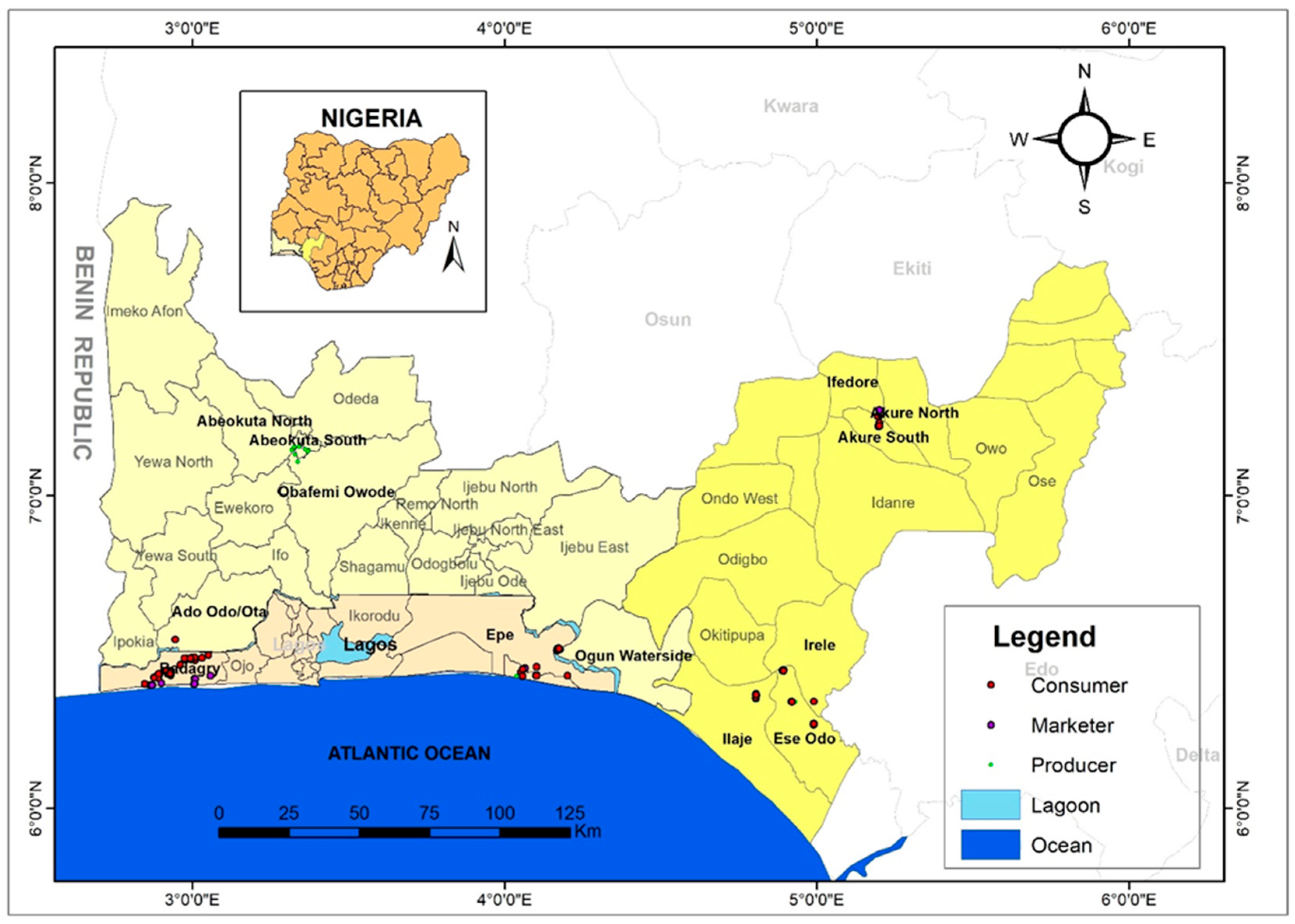
2.3. Study Areas
2.3.1. Lagos State
2.3.2. Ogun State
2.3.3. Ondo State
2.4. Questionnaire Design and Data Collection
2.5. Sampling Techniques
2.6. Data Analysis
3. Results
3.1. Interpretation and Visualization
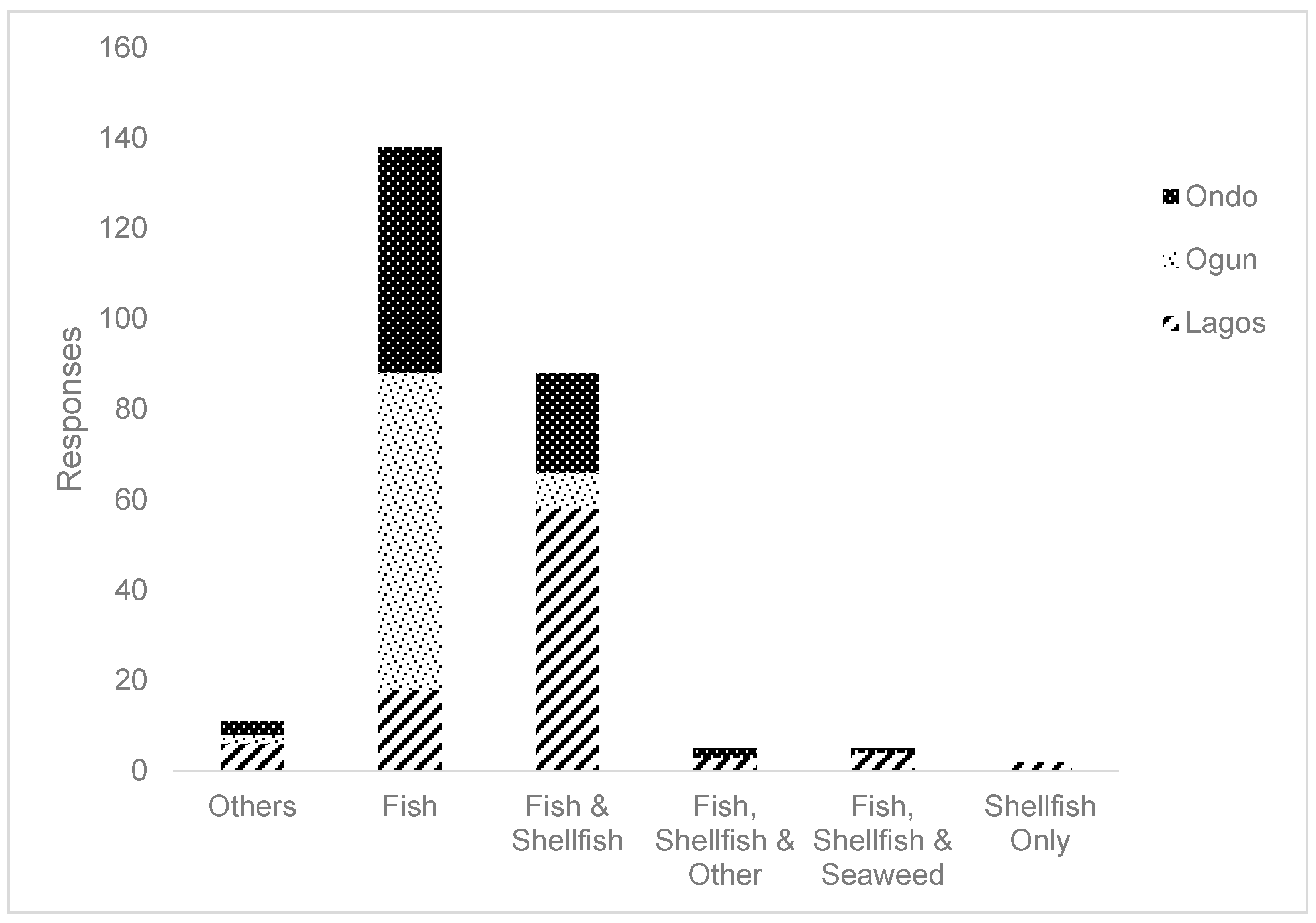
3.2. Aquatic Foods by Coastal and Marine
3.3. Information on Marketing Channels of Aquatic Food Across the Coastal States
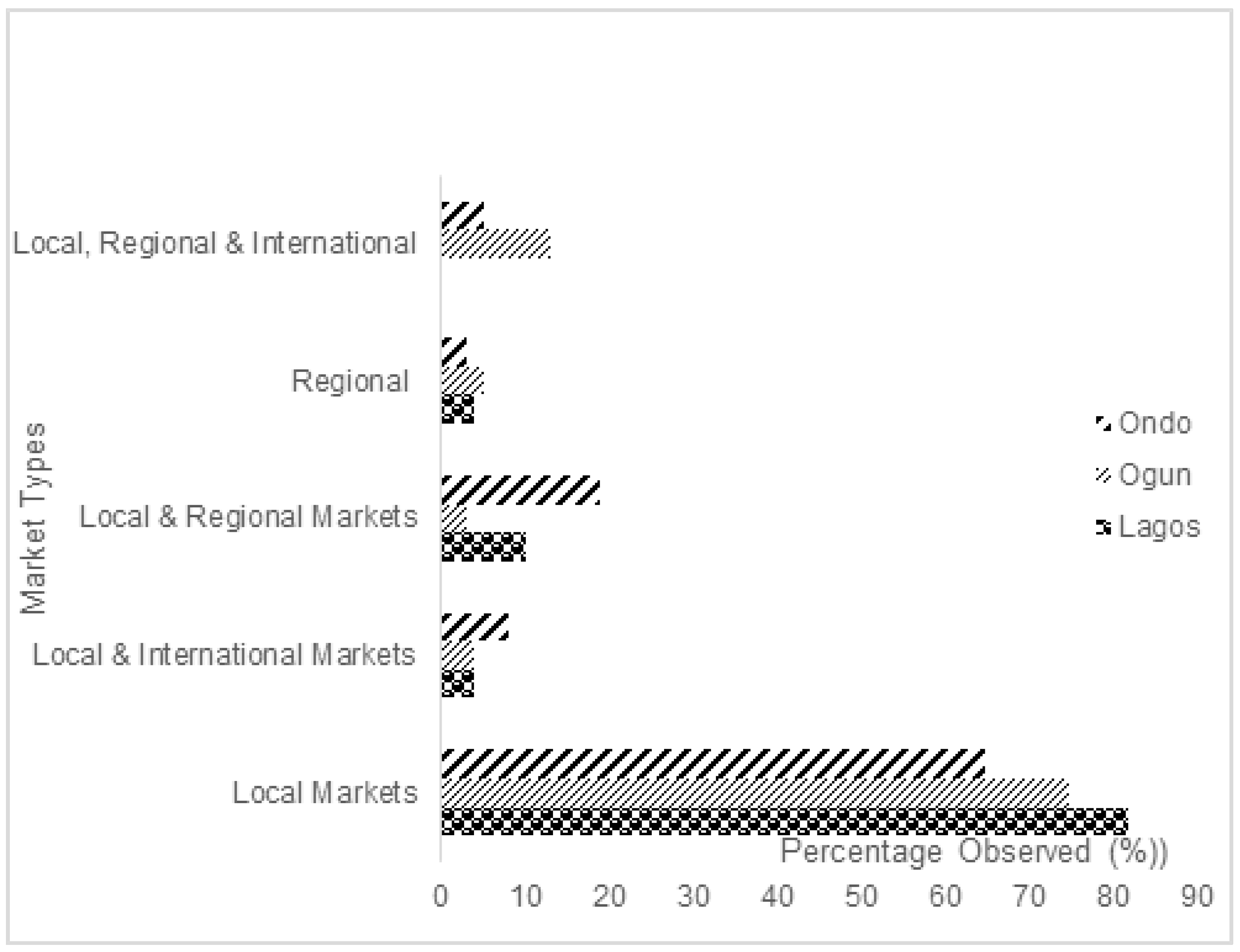
3.4. Aquatic Food Market Types in the Three Coastal States
3.5. Estimated Quantity of Aquatic Food Sales
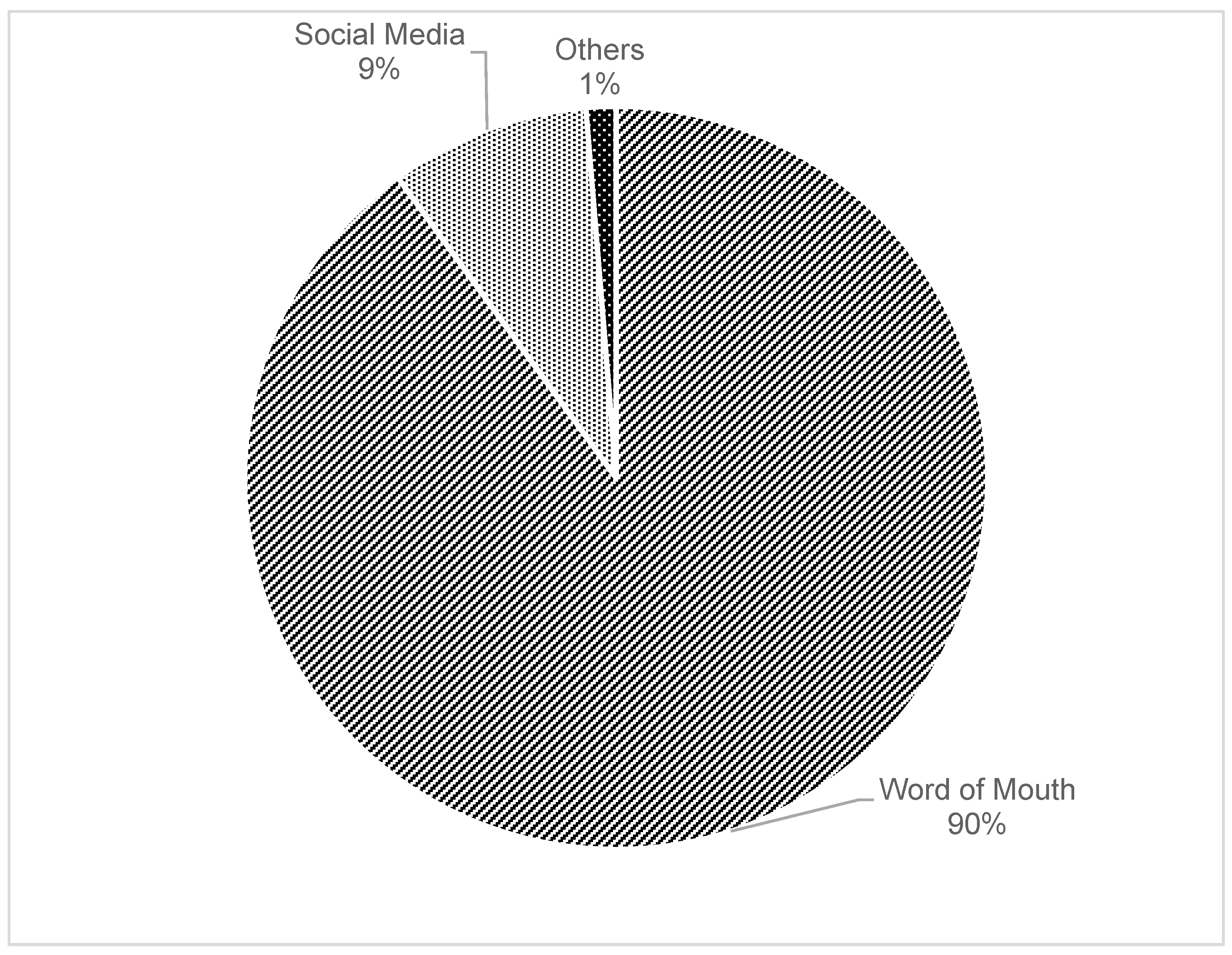
3.6. Promotion Methods by Traders
3.7. Postharvest Practices Across the Three Coastal States
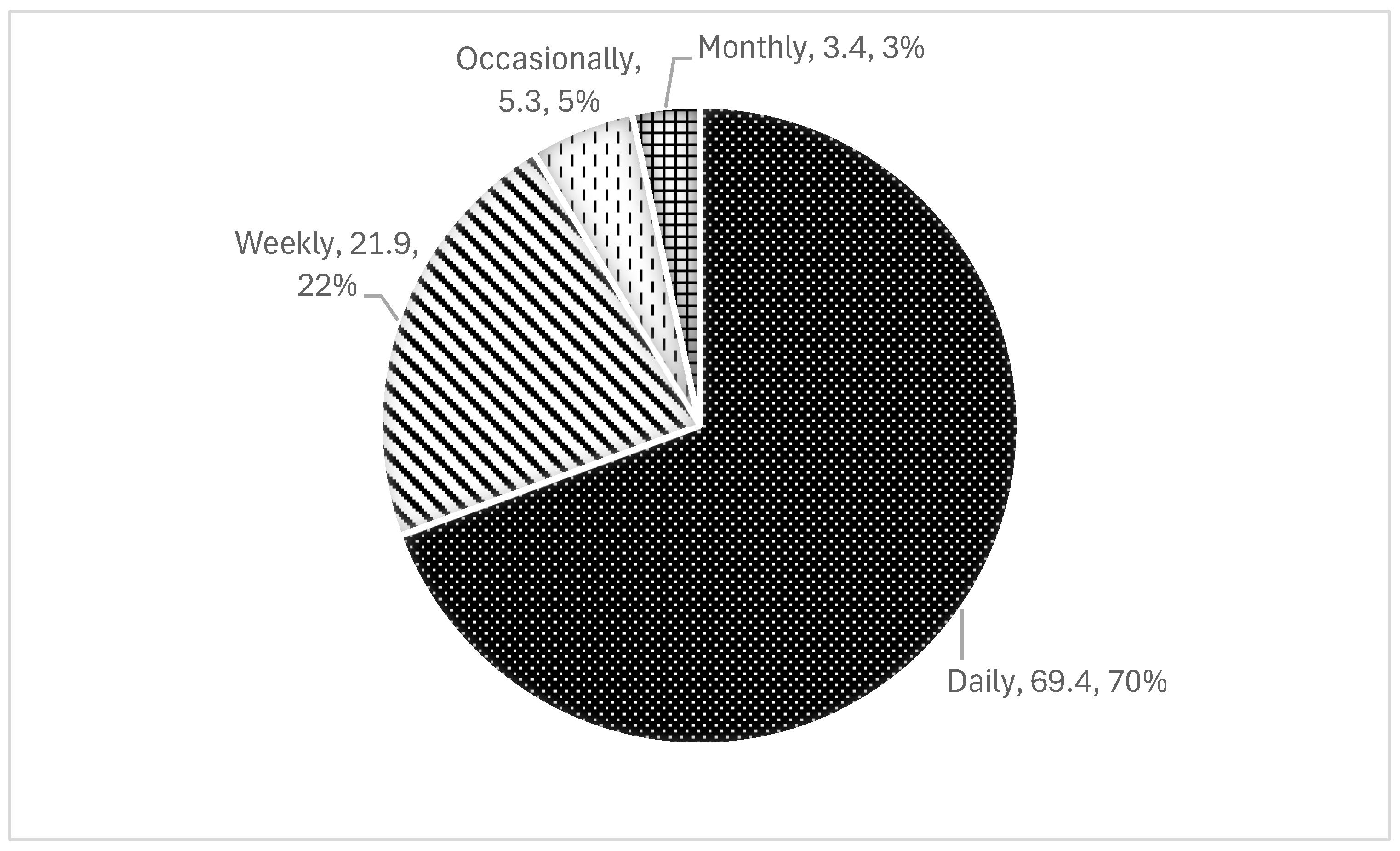
3.8. Aquatic Food Consumption Across the Three Coastal States
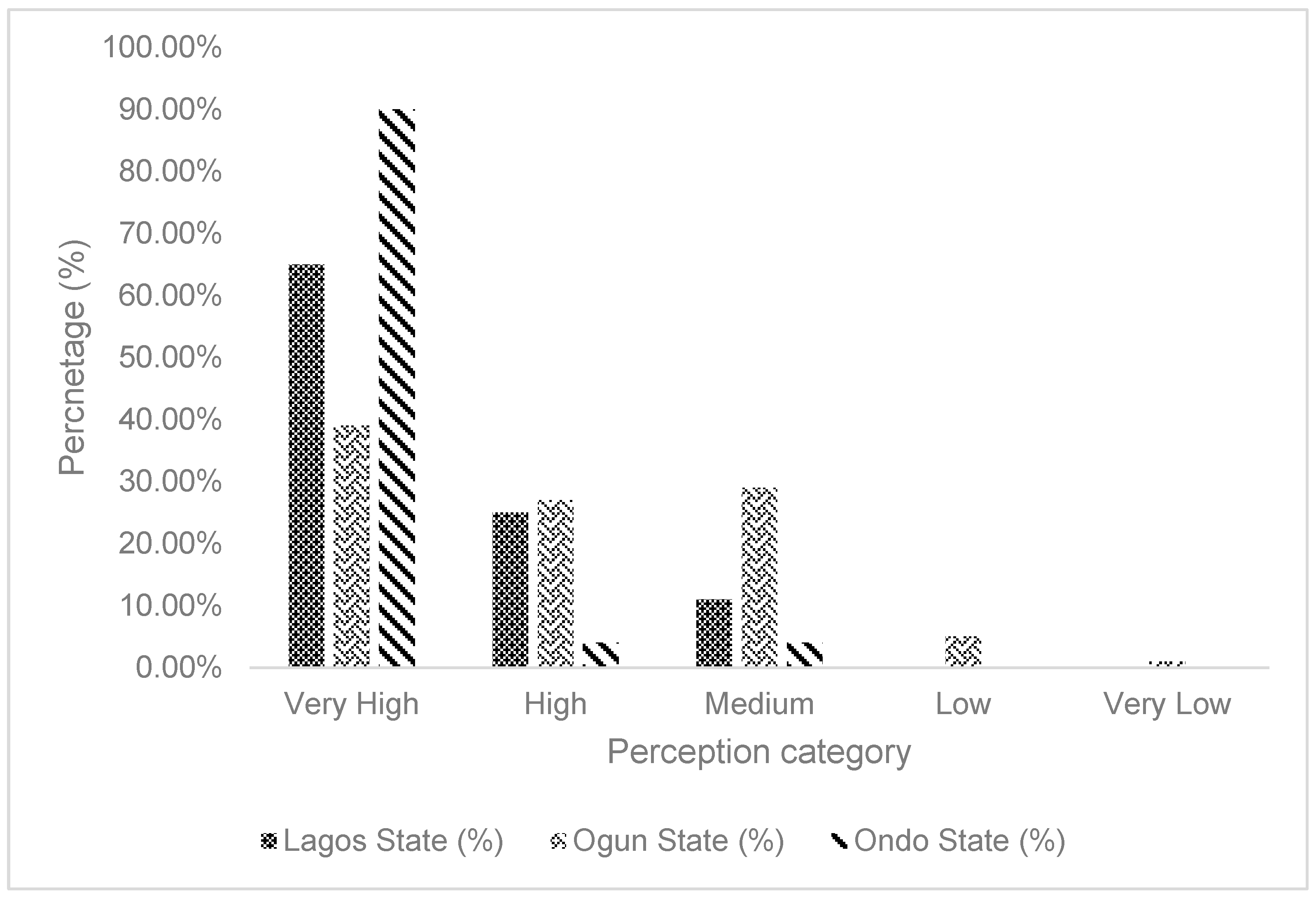
3.9. Consumers’ Perception of the Quality of Local Aquatic Food
3.10. Consumers’ Perception of Imported Aquatic Foods, New Products (Seaweeds), and Willingness to Pay for Sustainable Aquatic Foods
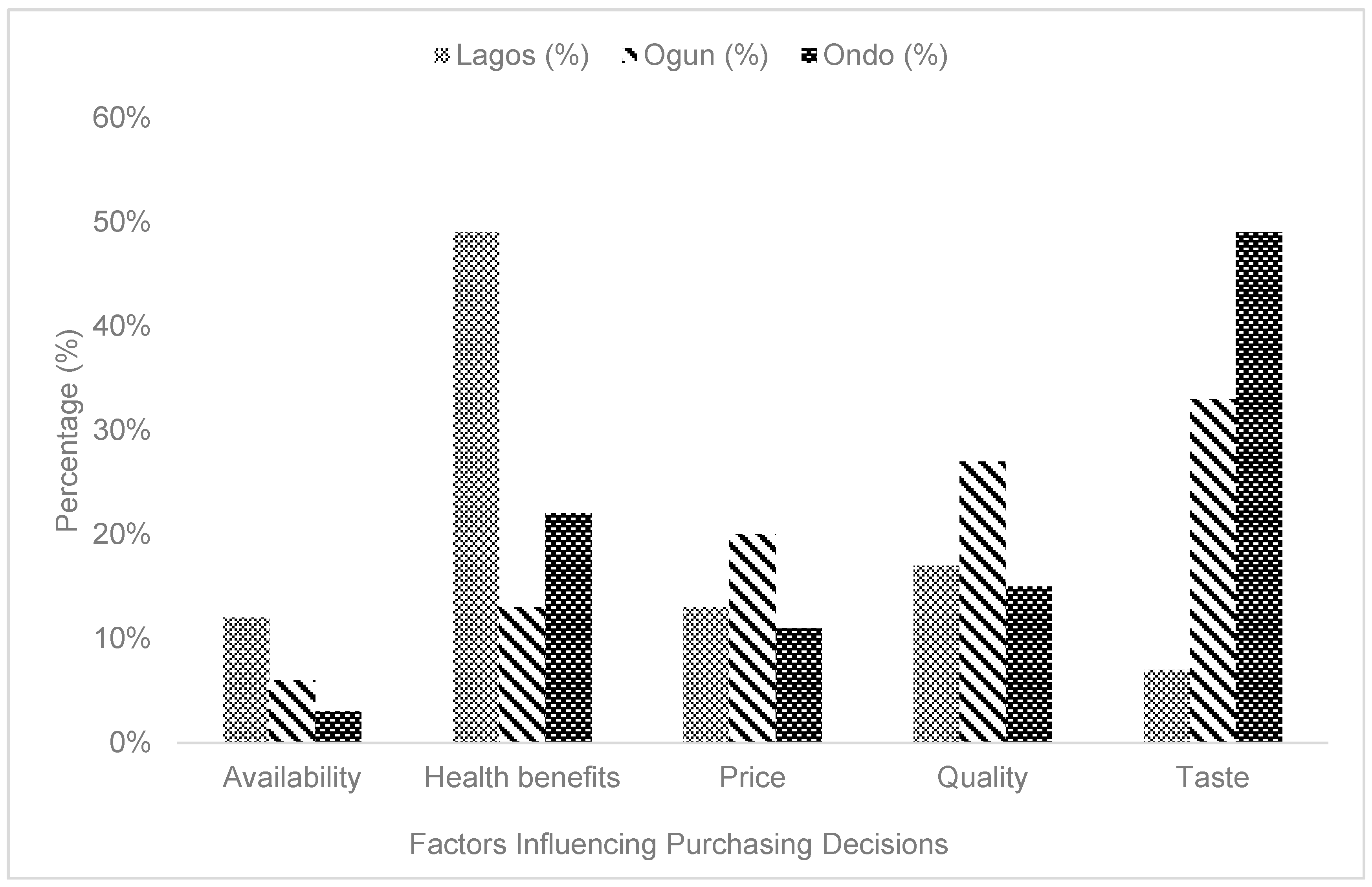
3.11. Factors Influencing Consumers’ Decisions on Aquatic Foods Across Coastal States
4. Discussion
5. Conclusions
6. Recommendations
- Strengthen Cold Chain Infrastructure: Post-harvest losses are a concern, and Nigeria could benefit from activities and outcomes related to climate-smart technologies for reducing aquatic food loss and waste.
- Promote and Scale Up Aquatic Plants: Aquatic plants need to be promoted for their use, especially for phytoremediation, as reported in the earlier study. Local variants suitable for each study location should be adopted in the second phase of the IMTA project in Nigeria.
- Facilitate Access to New and Broader Markets: With existing sales largely focused on local markets, policy and infrastructural support are needed to develop niche regional and international markets. This can be achieved through branding, certification, and standardization of aquatic food products to meet export requirements. IMTA would be expected to broaden cultured species diversity.
- Leverage Digital Marketing and E-commerce: The dominance of word-of-mouth (WOM) communication in the marketing mix should be augmented with digital platforms such as mobile applications, social media, and e-commerce channels to reach a broader consumer base, especially among younger and tech-savvy demographics. It is expected that innovative strategies would be included in the WOM by investors in IMTA.
- Consumer Awareness and Nutrition Education: Given the strong influence of perceived health benefits and taste on consumer preferences, public awareness campaigns should be intensified to promote the nutritional advantages of diverse aquatic foods, including lesser-known products like aquatic plants, which are a major feature of IMTA.
- Support Local Traders and Producers through Policy Interventions: Government policies that provide financial assistance, input subsidies, and cooperative frameworks for existing small-scale fishers, farmers, and traders should be maintained to safeguard community support for investors in IMTA. These measures are vital for boosting productivity and strengthening resilience against environmental and economic pressures.
- Encourage Value Addition and Product Diversification: Investments in value-added processing, such as ready-to-cook or ready-to-eat aquatic food products, should be promoted to improve profitability and attract diverse consumer segments.
Supplementary Materials
Author Contributions
Funding
Data Availability Statement
Acknowledgments
Conflicts of Interest
Abbreviations
| AABS | Asia–Africa BlueTech Superhighway—WorldFish |
| IMTA | Integrated multi-trophic aquaculture |
| LGAs | Local Government Areas |
| LCDAs | Local Council Development Areas |
| WOM | Word of Mouth |
References
- Liverpool-Tasie, L.S.O.; Wineman, A.; Amadi, M.U.; Gona, A.; Emenekwe, C.C.; Fang, M.; Olunuga, O.; Onyeneke, R.U.; Norbert, S.; Adenike, T.M.; et al. Rapid transformation in aquatic food value chains in three Nigerian states. Front. Aquac. 2024, 3, 1302100. [Google Scholar] [CrossRef]
- Tezzo, X.; Bush, S.R.; Oosterveer, P.; Belton, B. Food system perspective on fisheries and aquaculture development in Asia. Agric. Hum. Values 2021, 38, 73–90. [Google Scholar] [CrossRef]
- Food and Agriculture Organisation of the United Nations. FAOStat Fisheries and Aquaculture Database, 2023. Available online: https://www.fao.org/fishery/en/information (accessed on 9 April 2025).
- Chopin, T.; Buschmann, A.H.; Halling, C.; Troell, M.; Kautsky, N.; Neori, A.; Kraemer, G.P.; Zertuche-González, J.A.; Yarish, C.; Neefus, C. Integrating seaweeds into marine aquaculture systems: A key toward sustainability. J. Phycol. 2001, 37, 975–986. [Google Scholar] [CrossRef]
- Ghosh, A.K.; Hasanuzzaman, A.F.M.; Islam, S.S.; Sarower, M.G.; Mistry, S.K.; Arafat, S.T.; Huq, K.A. Integrated multi-trophic aquaculture (IMTA): Enhancing growth, production, immunological responses, and environmental management in aquaculture. Aquac. Int. 2025, 33, 336. [Google Scholar] [CrossRef]
- Lee, C.S. Challenges and opportunities of IMTA in Hawaii and beyond. Bull. Jpn. Fish. Res. Educ. Agency 2019, 49, 129–134. [Google Scholar]
- Alexander, K.A.; Angel, D.; Freeman, S.; Israel, D.; Johansen, J.; Kletou, D.; Meland, M.; Pecorino, D.; Rebours, C.; Rousou, M.; et al. Improving sustainability of aquaculture in Europe: Stakeholder dialogues on Integrated Multi-trophic Aquaculture (IMTA). Environ. Sci. Policy 2016, 55, 96–106. [Google Scholar] [CrossRef]
- Sickander, O.; Filgueira, R. Factors affecting IMTA (integrated multi-trophic aquaculture) implementation on Atlantic salmon (Salmo salar) farms. Aquaculture 2022, 557, 738716. [Google Scholar] [CrossRef]
- Subasinghe, R.P.; Siriwardena, S.N.; Byrd, K.A.; Chan, C.; Dizyee, K.; Shikuku, K.M.; Tran, N.; Adegoke, A.; Adeleke, M.; Anastasiou, K.; et al. Nigeria Fish Futures: Aquaculture in Nigeria—Increasing Income, Diversifying Diets and Empowering Women; WorldFish: Penang, Malaysia, 2021. [Google Scholar]
- Hala, A.F.; Chougule, K.; Cunha, M.E.; Mendes, M.C.; Oliveira, I.; Bradley, T.; Forbes, J.; Speranza, L.G. Life cycle assessment of integrated multi-trophic aquaculture: A review on methodology and challenges for its sustainability evaluation. Aquaculture 2024, 590, 741035. [Google Scholar] [CrossRef]
- Kodama, M. Overview and History of IMTA, from Ancient to Modern Times; The Southeast Asian Fisheries Development Center: Bangkok, Thailand, 2022; pp. 2–5. [Google Scholar]
- Ryther, J.H.; Goldman, J.C.; Gifford, C.E.; Huguenin, J.E.; Wing, A.S.; Clarner, J.P.; Williams, L.D.; Lapointe, B.E. Physical models of integrated waste recycling marine polyculture systems. Aquaculture 1975, 5, 163–177. [Google Scholar] [CrossRef]
- Troell, M.; Halling, C.; Neori, A.; Chopin, T.; Buschmann, A.H.; Kautsky, N.; Yarish, C. Integrated mariculture: Asking the right questions. Aquaculture 2003, 226, 69–90. [Google Scholar] [CrossRef]
- Loayza-Aguilar, R.E.; Huamancondor-Paz, Y.P.; Saldaña-Rojas, G.B.; Olivos-Ramirez, G.E. Integrated Multi-Trophic Aquaculture (IMTA): Strategic model for sustainable mariculture in Samanco Bay, Peru. Front. Mar. Sci. 2023, 10, 1151810. [Google Scholar] [CrossRef]
- Radhakrishnan, K.; Dheeran, P.; Rajeshkannan, R.; Seenivasan, P.; Raghuvaran, N.; Naveenkumar, R.; Thapa, A.; Anantharaja, K. Integrated Multi-Trophic Aquaculture: A balanced system for sustainable aquaculture. In Fisheries Biology, Aquaculture and Post-Harvest Management; NIPA® GENX Electronic Resources & Solutions, P. Ltd.: New Delhi, India, 2023; Volume 1. [Google Scholar]
- Khanjani, M.H.; Zahedi, S.; Mohammadi, A. Integrated multitrophic aquaculture (IMTA) as an environmentally friendly system for sustainable aquaculture: Functionality, species, and application of biofloc technology (BFT). Environ. Sci. Pollut. Res. 2022, 29, 67513–67531. [Google Scholar] [CrossRef]
- Knowler, D.; Chopin, T.; Martínez-Espiñeira, R.; Neori, A.; Nobre, A.; Noce, A.; Noce, A.; Reid, G. The economics of Integrated Multi-Trophic Aquaculture: Where are we now and where do we need to go? Rev. Aquac. 2020, 12, 1579–1594. [Google Scholar] [CrossRef]
- Camilleri, M.A.; Cricelli, L.; Mauriello, R.; Strazzullo, S. Consumer perceptions of sustainable products: A systematic literature review. Sustainability 2023, 15, 8923. [Google Scholar] [CrossRef]
- Mouchtaropoulou, E.; Mallidis, I.; Giannaki, M.; Koukaras, K.; Früh, S.; Ettinger, T.; Benmehaia, A.M.; Kacem, A.; Achour, L.; Detzel, A.; et al. Consumer willingness to pay for fair and sustainable foods: Who profits in the agri-food chain? Front. Sustain. Food Syst. 2024, 8, 1504985. [Google Scholar] [CrossRef]
- Tran, N.; Shikuku, K.M.; Hoffmann, V.; Lagerkvist, C.J.; Pincus, L.; Akintola, S.L.; Fakoya, K.A.; Olagunju, O.F.; Bailey, C. Are consumers in developing countries willing to pay for aquaculture food safety certification? Evidence from a field experiment in Nigeria. Aquaculture 2022, 550, 737829. [Google Scholar] [CrossRef]
- Ababouch, L.; Nguyen, K.A.T.; de Souza, M.C.; Fernandez-Polanco, J. Value chains and market access for aquaculture products. J. World Aquac. Soc. 2023, 54, 527–553. [Google Scholar] [CrossRef]
- Lu, J.; Xiao, Y.; Zhang, W. Taste, sustainability, and nutrition: Consumers’ attitude toward innovations in aquaculture products. Aquaculture 2024, 587, 740834. [Google Scholar] [CrossRef]
- Ali, H.; Belton, B.; Haque, M.M.; Murshed-e-Jahan, K. Transformation of the feed supply segment of the aquaculture value chain in Bangladesh. Aquaculture 2023, 576, 739897. [Google Scholar] [CrossRef]
- Adam, R.; Njogu, L. A review of gender inequality and women’s empowerment in aquaculture using the reach-benefit-empower-transform framework approach: A case study of Nigeria. Front. Aquac. 2023, 1, 1052097. [Google Scholar] [CrossRef]
- Chilaka, Q.M.; Nwabeze, G.O.; Odili, O.E. Challenges of inland artisanal fish production in Nigeria: Economic perspective. J. Fish. Aquat. Sci. 2014, 9, 501–505. [Google Scholar] [CrossRef][Green Version]
- Nwokedi, T.C.; Odumodu, C.U.; Anyanwu, J.O.; Ndikom, O.C. Gap analysis evaluation of Nigeria’s fish demand and production: Empirical evidences for investment in and policy development for offshore mariculture practices. Int. J. Fish. Aquat. Stud. 2020, 8, 384–894. [Google Scholar]
- Akintola, S.L.; Fakoya, K.A. Small-scale fisheries in the context of traditional post-harvest practice and the quest for food and nutritional security in Nigeria. Agric. Food Secur. 2017, 6, 34. [Google Scholar] [CrossRef]
- Olagunju, O.F.; Kristófersson, D.; Tómasson, T.; Kristjánsson, T. Profitability assessment of catfish farming in the Federal Capital Territory of Nigeria. Aquaculture 2022, 555, 738192. [Google Scholar] [CrossRef]
- Mukaila, R.; Ukwuaba, I.C.; Umaru, I.I. Economic impact of disease on small-scale catfish farms in Nigeria. Aquaculture 2023, 575, 739773. [Google Scholar] [CrossRef]
- Gona, A.; Woji, G.; Norbert, S.; Muhammad, H.; Liverpool-Tasie, L.S.; Reardon, T.; Belton, B. The Rapid Transformation of the Fish Value Chain in Nigeria: Evidence from Kebbi State; Feed the Future Innovation Lab for Food Security Policy Research Paper: East Lansing, MI, USA, 2018; Volume 118. [Google Scholar]
- Kotler, P.; Keller, K.L. Marketing Management, 16th ed.; Pearson: London, UK, 2022. [Google Scholar]
- Chan, H.L.; Cai, J.; Leung, P. Aquaculture production and diversification: What causes what? Aquaculture 2024, 570, 740487. [Google Scholar] [CrossRef]
- Tanrattanaphong, B. Value chain upgrading and seafood exports: Lessons from developing countries. Humanit. Soc. Sci. Commun. 2025, 12, 4790. [Google Scholar] [CrossRef]
- Sun, L.; Kumar, G.; Engle, C. Factors influencing seafood sales in US retail markets. J. World Aquac. Soc. 2025, 56, e70000. [Google Scholar] [CrossRef]
- Adam, R.; Njogu, L.G.; Ouko, K.O.; Rajaratnam, S.; Adeleke, L.; Ogunya, L.; Akuwa, E.I.; Farnworth, C.R.; Fregene, B. Unveiling gender dynamics and disparities in the aquaculture value chain: Evidence from Ogun and Delta States, Nigeria. Aquac. Int. 2025, 33, 343. [Google Scholar] [CrossRef]
- Lagos State Ministry of Agriculture and Food Systems. Lagos Fisheries Programme. 2025. Available online: https://lagosagric.com/lagos-fisheries-programme/ (accessed on 25 May 2025).
- Yesufu, O.A.; Adejobi, A.O.; Ekpo-Ufot, U.; Adeogun, O.I. Economics of fresh fish marketing among fish farmers in Lagos State, Nigeria. Ife J. Agric. 2014, 27, 81–93. [Google Scholar]
- Adewuyi, S.A.; Phillip, B.B.; Ayinde, I.A.; Akerele, D. Analysis of profitability of fish farming in Ogun State, Nigeria. J. Hum. Ecol. 2010, 31, 179–184. [Google Scholar] [CrossRef]
- Agbeja, Y.; Oluyede, E.; Oyedepo, V. Socio-economic characteristics assessment and livelihood coping strategies of small-scale fisheries in Ogun Waterside Local Government Area, Nigeria. Int. J. Fish. Aquat. Stud. 2021, 9, 266–276. [Google Scholar] [CrossRef]
- Agbebi, F.O.; Adetuwo, K.I. Analysis of socio-economic factors affecting fish marketing in Igbokoda fish market, Ondo State, Nigeria. Int. J. Environ. Agric. Biotechnol. 2018, 3, 239094. [Google Scholar] [CrossRef]
- Abbas, A.M.; Aiyedun, E.A.; Ebukiba, E.S.; Otitoju, M.A.; Iduseri, E.O.; Olutumise, A.I.; Adole, S.; Agbonika, D. Technical efficiency and profitability analysis of catfish farming in Ondo State, Nigeria. J. Agric. Sci. Environ. 2025, 25, 39–56. [Google Scholar]
- Akingba, O.; Afolabi, A.; Ayodele, P. A study of the socio-economic indices of the fisher folks in five fishing communities in Ondo State, Nigeria. Afr. J. Fish. Sci. 2017, 5, 222–228. [Google Scholar]
- Mwendwa, R.; Wawire, M.; Kahenya, P. Potential for use of seaweed as a fish feed ingredient: A review. J. Agric. Sci. 2023, 15, 96–106. [Google Scholar] [CrossRef]
- Ajana, A.M. Fishery of the mangrove oyster, Crassostrea gasar, Adanson (1757), in the Lagos area, Nigeria. Aquaculture 1980, 21, 129–137. [Google Scholar] [CrossRef]
- GlobeFish. Nigeria Market Profile, Food and Agriculture Organization of the United Nations, 2020. Available online: https://openknowledge.fao.org/server/api/core/bitstreams/8abfe048-7709-4ba7-a710-19256147af11/content (accessed on 19 April 2025).
- Kalio, G.A.; Amadi, E.E.; Feniobu, F.T. Preliminary studies on the factors influencing consumers’ preference for shrimp and prawn in Degema Local Government Area of Rivers State, Nigeria. Direct. Res. J. Agric. Food Sci. 2020, 8, 303–310. [Google Scholar]
- Kadiene, E.U.; Biaoku, D.O.; Bolaji, D.A.; Ekele, S.; Adewunmi, E.K.; Oluwatobi, A.; Akerele, O. Exploration of the seaweed resources in Nigeria: A case study of Lagos coastal waters. Open J. Mar. Sci. 2025, 15, 13–34. [Google Scholar] [CrossRef]
- US International Trade Administration. Distribution and Sales Channels, 2025. Available online: https://www.trade.gov/country-commercial-guides/nigeria-distribution-and-sales-channels (accessed on 19 April 2025).
- Business Innovation Facility, Nigeria Market Analysis and Strategy: Aquaculture, 2014. Available online: https://www.nipc.gov.ng/wp-content/uploads/2020/07/Market-Analysis-and-Strategy-Aquaculture-1.pdf (accessed on 20 April 2025).
- Liverpool-Tasie, L.S.O.; Sanou, A.; Reardon, T.; Belton, B. Demand for imported versus domestic fish in Nigeria. J. Agric. Econ. 2021, 72, 782–804. [Google Scholar] [CrossRef]
- Akintola, S.L.; Fakoya, K.A.; Elegbede, I.O.; Odunsi, E.; Jolaosho, T. Postharvest practices in small-scale fisheries. In Sustainable Fish Production and Processing; Galanakis, C., Ed.; Academic Press: Cambridge, MA, USA, 2022; pp. 79–110. [Google Scholar] [CrossRef]
- Food and Agriculture Organization of the United Nations. Report of the First Regional Workshop on Aquaculture Planning in Africa, Accra, Ghana, 30 June–11 July 1975 (ADCP/REP/75/1); United Nations Development Programme: New York, NY, USA; Food and Agriculture Organization of the United Nations: Rome, Italy, 1975. [Google Scholar]
- Boccia, F.; Tohidi, A. Analysis of green word-of-mouth advertising behavior of organic food consumers. Appetite 2024, 198, 107324. [Google Scholar] [CrossRef] [PubMed]
- Chang, S.H.; Chang, C.W. Tie strength, green expertise, and interpersonal influences on the purchase of organic food in an emerging market. Br. Food J. 2017, 119, 284–300. [Google Scholar] [CrossRef]
- Li, S.; Jaharuddin, N.S. Influences of background factors on consumers’ purchase intention in China’s organic food market: Assessing the moderating role of word-of-mouth (WOM). Cogent Bus. Manag. 2021, 8, 1876296. [Google Scholar] [CrossRef]
- CGIAR Research Program on Aquatic Agricultural Systems. Resilient Livelihoods and Food Security in Coastal Aquatic Agricultural Systems: Investing in Transformational Change; Project Report: AAS-2012-28; CGIAR: Penang, Malaysia, 2012. [Google Scholar]



| S/N | State | LGA/LCDA | Producers | Traders | Consumers | Total |
|---|---|---|---|---|---|---|
| 1 | Lagos | Lekki | 40 | 24 | 23 | 87 |
| 2 | Badagry | 49 | 86 | 135 | ||
| 3 | Olorunda LCDA | 6 | 10 | 16 | ||
| Sub-Total | 40 | 79 | 119 | 238 | ||
| 1 | Ogun | Ogun Waterside | 38 | 40 | 39 | 117 |
| 2 | Odeda | 5 | 6 | |||
| 3 | Abeokuta North | 19 | 18 | 37 | ||
| 4 | Obafemi Owode | 22 | 23 | |||
| 5 | Abeokuta South | 19 | 30 | 49 | ||
| Sub-Total | 38 | 78 | 114 | 230 | ||
| 1 | Ondo | Ese Odo | 26 | 37 | 60 | 123 |
| 2 | Ilaje | 9 | 31 | 48 | 88 | |
| 3 | Akure South | 2 | 9 | 16 | 27 | |
| Sub-Total | 37 | 77 | 124 | 238 | ||
| 115 | 236 | 362 | 713 |
| Lagos | Ogun | Ondo | ||||
|---|---|---|---|---|---|---|
| Frequency (n = 79) | Percentage (%) | Frequency (n = 78) | Percentage (%) | Frequency (n = 77) | Percentage (%) | |
| How do you sell your product? | ||||||
| Direct sales to consumers | 30 | 37.5 | 45 | 57.5 | 64 | 82.5 |
| Sales to wholesalers/retailers | 49 | 62.5 | 33 | 42.5 | 13 | 17.5 |
| How frequently do you sell your product? | ||||||
| Daily | 65 | 82.7 | 59 | 75 | 48 | 62.5 |
| Monthly | 3 | 3.8 | 0 | 0 | 13 | 16.2 |
| Weekly | 11 | 13.5 | 19 | 25 | 16 | 21.3 |
| What scale of marketing operations are you involved with | ||||||
| Wholesale | 12 | 15 | 3 | 3.7 | 1 | 1.3 |
| Both wholesale and retail | 40 | 50 | 32 | 41.3 | 34 | 43.8 |
| Retail | 27 | 35 | 43 | 55 | 42 | 54.9 |
| Quantity Category | Lagos (n = 79) | Lagos (%) | Ogun (n = 78) | Ogun (%) | Ondo (n = 77) | Ondo (%) |
|---|---|---|---|---|---|---|
| 0.001–1 tonne | 42 | 53.13 | 16 | 20.51 | 64 | 82.86 |
| 1–10 tonnes | 37 | 46.87 | 56 | 71.80 | 13 | 17.14 |
| 11–20 tonnes | 0 | 0.00 | 5 | 6.41 | 0 | 0.00 |
| 21–30 tonnes | 0 | 0.00 | 1 | 1.28 | 0 | 0.00 |
| Total | 79 | 100 | 78 | 100 | 77 | 100 |
| Questions | Lagos State | Ogun State | Ondo State | |||
|---|---|---|---|---|---|---|
| n = 79 | % | n = 78 | % | n = 77 | % | |
| Do you have access to proper storage facilities? | ||||||
| Yes | 71 | 90 | 39 | 50 | 31 | 40 |
| No | 8 | 10 | 39 | 50 | 46 | 60 |
| If no, what storage methods do you use? | ||||||
| Cold room facility | 0 | 30 | 38.5 | 7 | 9 | |
| Ice boxes | 0 | 7 | 8.9 | 0 | ||
| Open-air storage | 71 | 90 | 35 | 44.9 | 62 | 80 |
| Smoking method | 8 | 10 | 6 | 7.7 | 8 | 10 |
| Do you face any power outages that affect your business operations? | ||||||
| Yes | 32 | 40 | 68 | 87.2 | 69 | 90 |
| No | 47 | 60 | 10 | 12.8 | 8 | 10 |
| How do you add value to the fish you market/sell? | ||||||
| Adding salt and pepper | 8 | 10 | 15 | 19.2 | 15 | 19 |
| Sun-drying | 15 | 19 | 7 | 8.9 | 23 | 30 |
| Clean with red oil | 0 | 0 | 6 | 7.7 | 0 | 0 |
| Sun-drying with salt and pepper | 8 | 10 | 7 | 8.9 | 0 | 0 |
| Unique packaging | 0 | 0 | 5 | 6.4 | 17 | 22 |
| Smoking | 24 | 30 | 38 | 48.7 | 12 | 16 |
| Processing | 24 | 30 | 0 | 0 | 10 | 13 |
| Questions | Lagos State | Ogun State | Ondo State | |||
|---|---|---|---|---|---|---|
| n = 79 | % | n = 78 | % | n = 77 | % | |
| How do you perceive the quality of imported aquatic foods? | ||||||
| Very High | 5 | 5.8 | 8 | 10.3 | 4 | 5.0 |
| High | 17 | 21.7 | 25 | 32.1 | 33 | 43.3 |
| Medium | 23 | 29.2 | 38 | 48.7 | 12 | 15 |
| Low | 28 | 35.8 | 7 | 8.9 | 7 | 9.2 |
| Very low | 06 | 7.5 | 0 | 0 | 21 | 27.5 |
| Would you be interested in trying new types of aquatic foods? | ||||||
| No | 5 | 5.8 | 3 | 3.8 | 8 | 10.4 |
| Yes | 74 | 94.2 | 75 | 96.2 | 69 | 89.2 |
| Are you willing to pay more for sustainable aquatic foods? | ||||||
| No | 14 | 17.5 | 16 | 20.5 | 12 | 15 |
| Yes | 65 | 82.5 | 62 | 79.5 | 65 | 85 |
Disclaimer/Publisher’s Note: The statements, opinions and data contained in all publications are solely those of the individual author(s) and contributor(s) and not of MDPI and/or the editor(s). MDPI and/or the editor(s) disclaim responsibility for any injury to people or property resulting from any ideas, methods, instructions or products referred to in the content. |
© 2026 by the authors. Licensee MDPI, Basel, Switzerland. This article is an open access article distributed under the terms and conditions of the Creative Commons Attribution (CC BY) license.
Share and Cite
Akintola, S.L.; Badmos, L.A.; Ojo, A.S.; Ajepe, G.R.; Ajibade, M.A.; Gbadamosi, M.A.; Okomoda, V.T.; Fasakin, I.J.; Siriwardena, S.; Iyangbe, C.; et al. An Exploration of Aquatic Food Production and Marketing Mix in the Coastal States of Nigeria. Aquac. J. 2026, 6, 18. https://doi.org/10.3390/aquacj6020018
Akintola SL, Badmos LA, Ojo AS, Ajepe GR, Ajibade MA, Gbadamosi MA, Okomoda VT, Fasakin IJ, Siriwardena S, Iyangbe C, et al. An Exploration of Aquatic Food Production and Marketing Mix in the Coastal States of Nigeria. Aquaculture Journal. 2026; 6(2):18. https://doi.org/10.3390/aquacj6020018
Chicago/Turabian StyleAkintola, Shehu L., Lateef A. Badmos, Akinkunmi S. Ojo, Gbenga R. Ajepe, Matthew A. Ajibade, Mary A. Gbadamosi, Victor T. Okomoda, Idowu J. Fasakin, Sunil Siriwardena, Charles Iyangbe, and et al. 2026. "An Exploration of Aquatic Food Production and Marketing Mix in the Coastal States of Nigeria" Aquaculture Journal 6, no. 2: 18. https://doi.org/10.3390/aquacj6020018
APA StyleAkintola, S. L., Badmos, L. A., Ojo, A. S., Ajepe, G. R., Ajibade, M. A., Gbadamosi, M. A., Okomoda, V. T., Fasakin, I. J., Siriwardena, S., Iyangbe, C., Magondu, E. W., & Yossa, R. (2026). An Exploration of Aquatic Food Production and Marketing Mix in the Coastal States of Nigeria. Aquaculture Journal, 6(2), 18. https://doi.org/10.3390/aquacj6020018