
Sustainability in Ponds Management: Recent Developments, Challenges and Prospects

Abstract
1. Introduction
2. Understanding Pond Ecosystems
2.1. Ponds as Stables and Pastures
2.2. Nutrient Cycling in Ponds
2.3. Ponds as Sources and Sinks of Carbon
2.4. Other Factors Affecting Energy Flow in Ponds
3. Optimizing In Situ Pond Productivity: Emerging Strategies and Perspectives
3.1. Demand-Oriented Feeding: Can This Carp Model Be Adaptable to Other Species [48]?
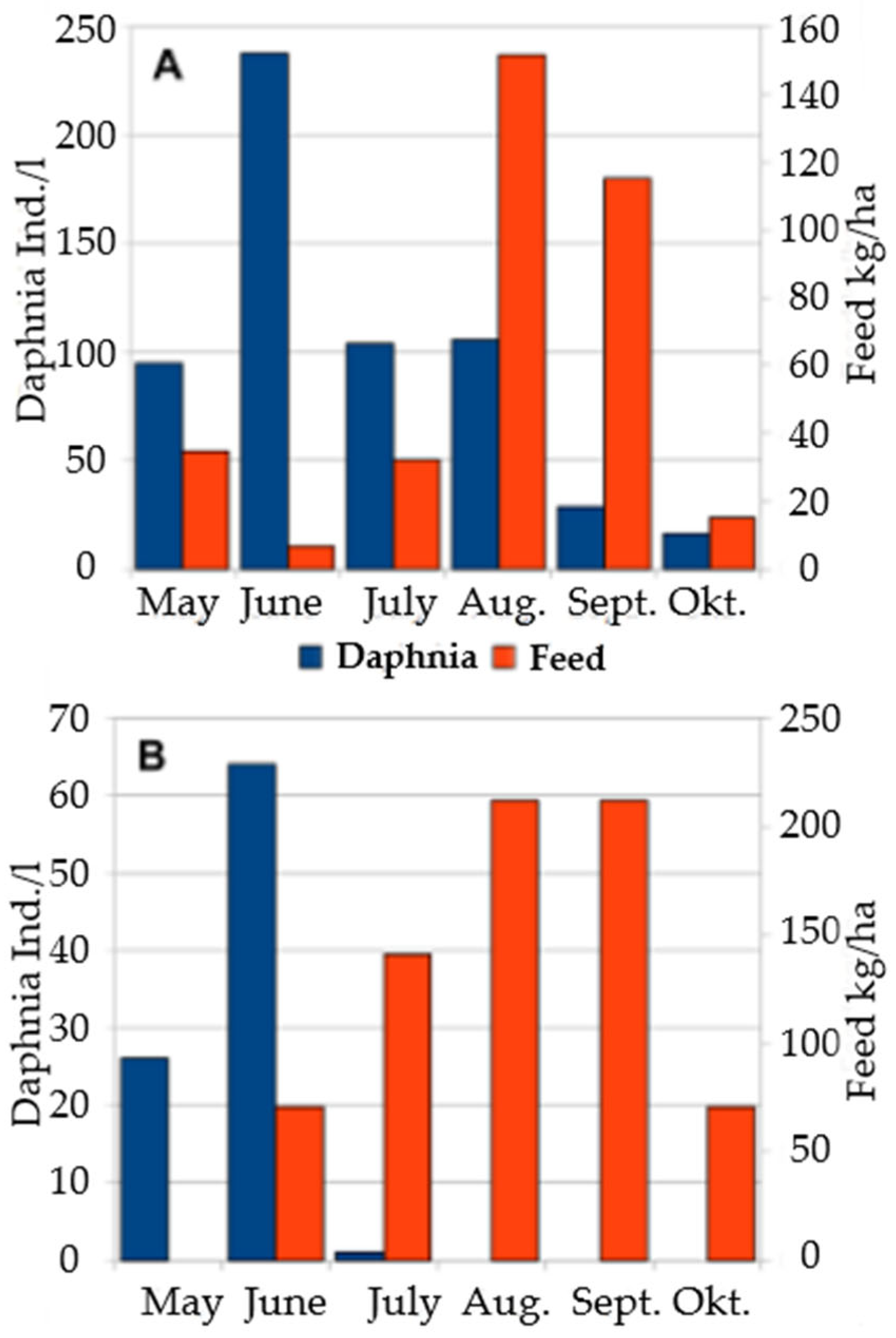
3.1.1. Daphnia as a Proxy for Natural Productivity
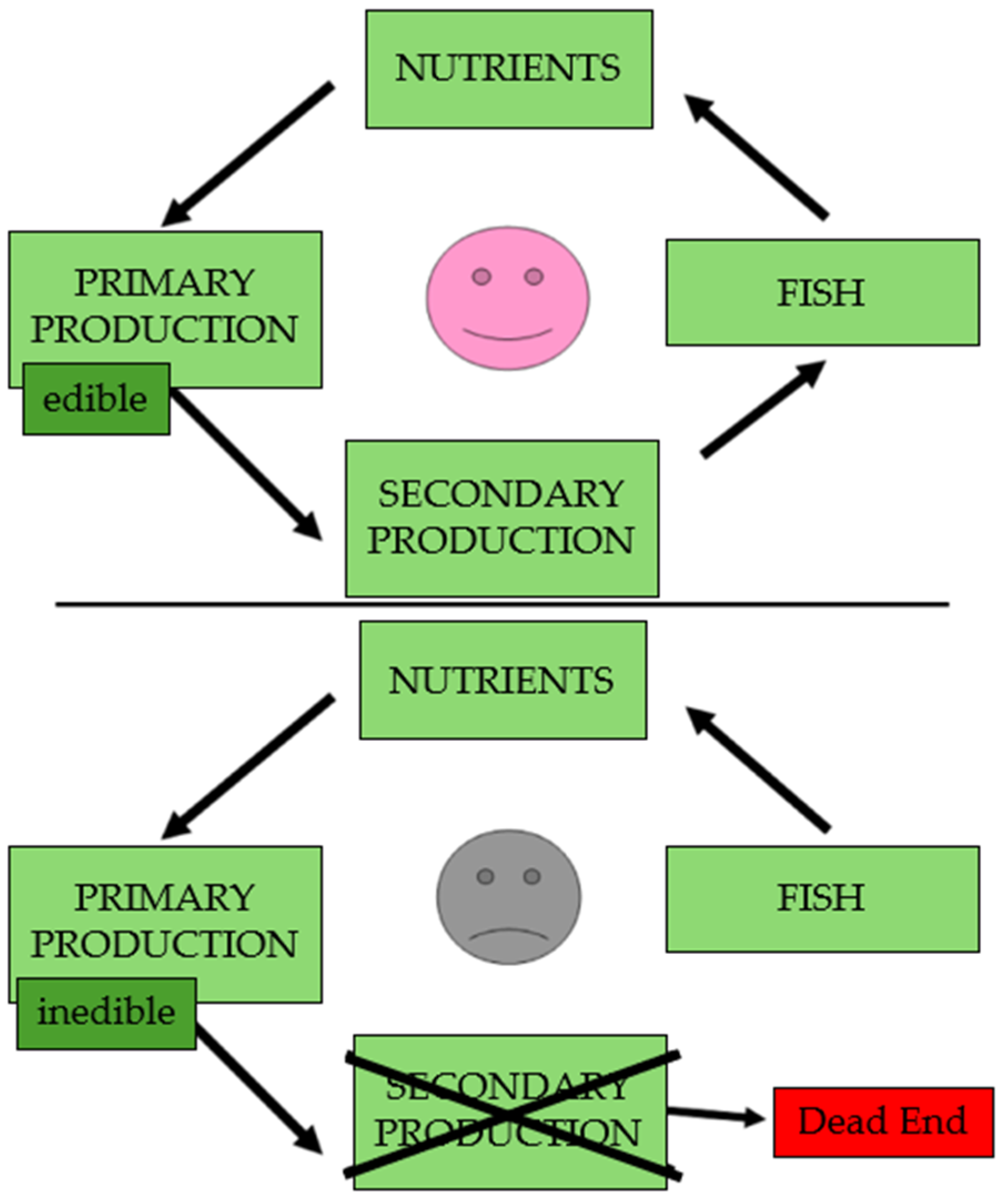
- When fish population density and feeding rates are balanced, a stable population of large-bodied zooplankton and phytoplankton will emerge, fostering their reproductive success.
- At high fish stocking densities, intense grazing on large/edible zooplankton shifts zooplankton communities towards smaller taxa, reducing their ability to control phytoplankton and promoting the formation of algal blooms [47].
- Similarly, when fish density is too low to exert pressure on zooplankton, the persistence of large-bodied zooplankton (e.g., Daphnia spp.) can increase water clarity, which in turn promotes plant growth, leading to turbid conditions and recurrent algal blooms [51].
3.1.2. Linking Natural Food Assessment to Feeding Actions
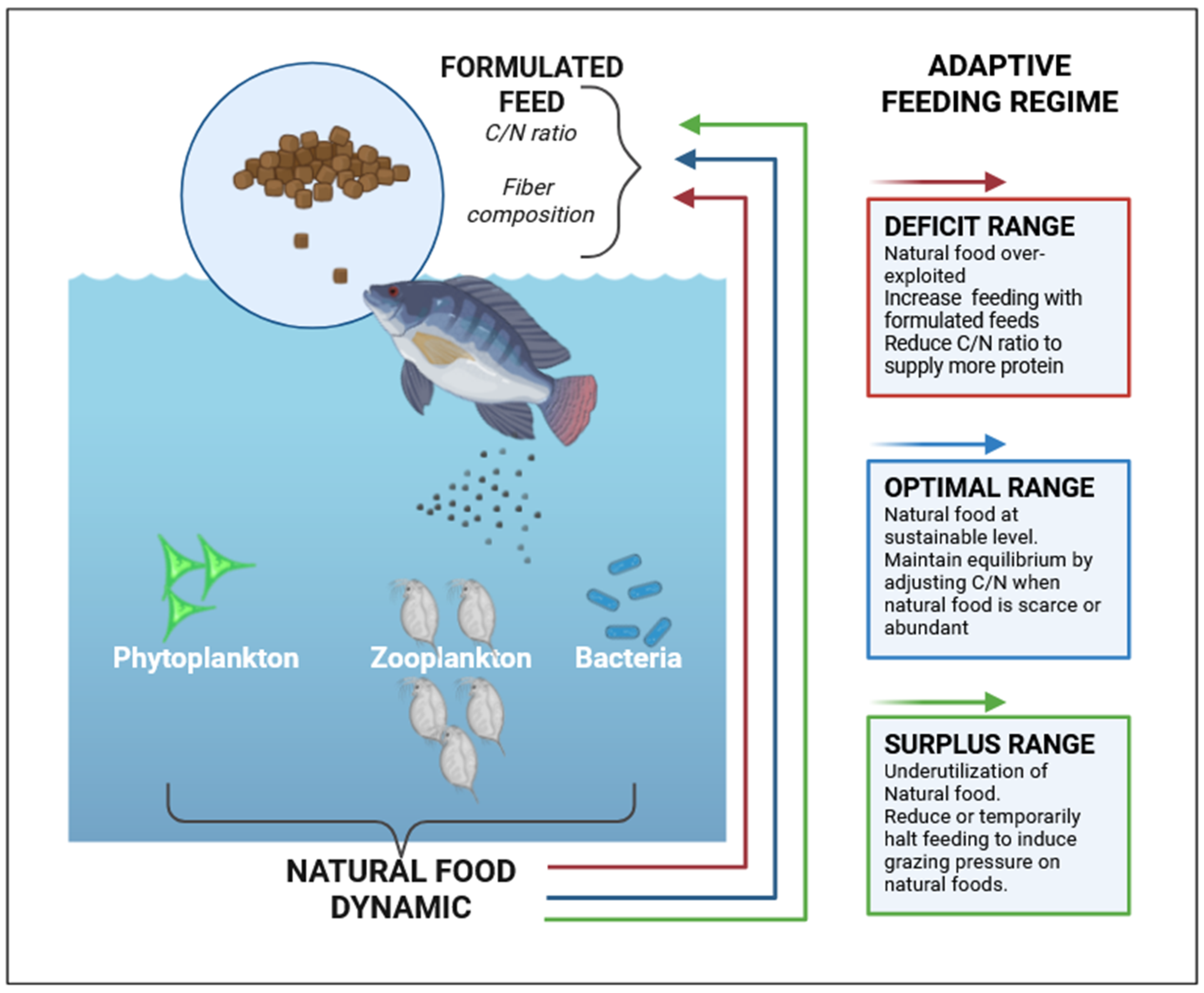
- 20–40 Ind./L (optimal range): Natural food resources are at sustainable levels. Supplemental feeding should maintain this equilibrium by providing a balanced diet of protein-rich natural foods and carbohydrate-based grains. This consists of reducing supplemental grain feeding when natural food is abundant and increasing it when natural food becomes scarce to balance fish nutrition and preserve pond resources.
- <20 Ind./L (deficit range): This indicates a lack of natural food sources. There is a risk of overexploitation and reproductive impairment in Daphnia. Feeding pressure must be reduced, and high-quality commercial feeds should be used to supplement missing protein sources. This results in indirect fertilization via nutrient release from uneaten feed and fish waste, stimulating algal growth and thereby supporting Daphnia recovery. However, caution is necessary to avoid excessive organic loading and oxygen depletion.
- >40 Ind./L (surplus range): This represents an underutilization of natural food resources, a risk of overpopulation, and possible oxygen depletion. In this scenario, supplemental feeding should be reduced or temporarily halted because natural food is not being adequately utilized.
3.1.3. Implication and Significance
- Species- and environment-specific thresholds: Because fish differ in feeding mode, prey size preference, and grazing intensity, while pond systems differ in productivity, temperature, nutrient availability, and predation pressure, zooplankton density benchmarks may need to be recalibrated for different species or pond systems, which poses practical difficulties, as they require extensive research and validation for each new species or pond system. In contrast to the carp model, benchmarks for species like Nile tilapia may be lower due to their opportunistic omnivory, while intensive shrimp systems may require benchmarks that balance natural food availability with the stringent water quality demands of high-density production. This process demands significant time and resources, and incorrect calibration or application can result in suboptimal management decisions and reduced production efficiencies.
- Standardized monitoring methods: A universally applicable, low-cost method for assessing natural productivity is needed. While the settling volume technique is a practical option, innovations such as AI-powered near-infrared (NIR) sensors could significantly enhance precision monitoring. By moving beyond simple settling measurements, AI-NIR systems can directly detect real-time biological indicators such as algal biomass, pigment concentration, and physiological status. When integrated with environmental data (e.g., temperature and oxygen), AI can distinguish true biological changes from physical noise, predict productivity trends, and provide early warnings of imbalances like algal blooms, enabling continuous, spatially detailed, and more accurate pond productivity assessment with reduced reliance on manual sampling.
- Knowledge transfer: Challenges in disseminating protocols for low-cost sampling equipment may limit adoption among small- and medium-scale farmers in developing countries. Barriers such as low literacy, weak extension services, cultural resistance, and insufficient training programs may further hinder effective implementation.
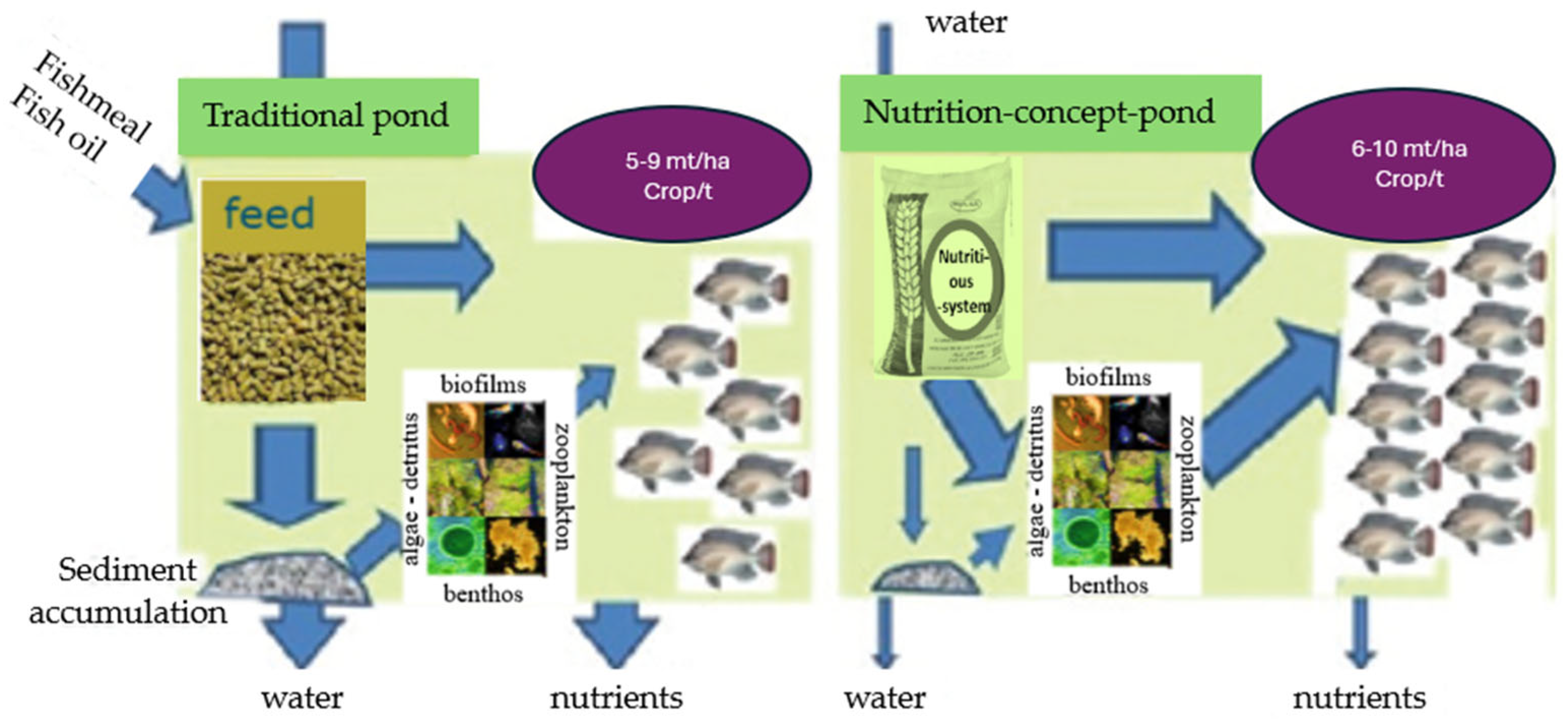
3.2. The Nutritious Pond Concept
3.2.1. C:N Ratio as Central Regulatory Lever
3.2.2. Feces as a Crucial Nutrient Input
3.2.3. Substrate Type and the Role of NSP Fibers
3.2.4. Implications and Significance
- Experimental scope: To date, most findings have been derived from a limited number of nutritious pond studies, raising concerns about scalability across diverse species and production systems.Table 1 lists the existing studies.Table 1. Existing nutritious pond studies.
Species Setting C:N Substrate Metrics Source Pacific White Shrimp Indoor Mesocosms 11.8–20.5 Wheat bran, Non-Starch Polysaccharides Survival 78–87%, FCR 1.2–2.5 [78] 12–20 FCR 0.6–1.1 [79] 17–21 Survival 87–88%, FCR 0.89–1.24 [80] 12–20 Survival 87–88%, FCR 1.18–1.70 [81] Nile Tilapia Pond 10 NA Survival 81–96%, FCR 1.54–1.81 [82] 10.8–12.3 Survival 76–98%, FCR 1.13–2.45 [71] 8–11 Survival 71–74%, FCR 0.95–1.12 [68] 8.8–11.8 Survival 52–86%, FCR 0.8–1.3 [62] - Survival variability: In some pond trials, fish fed a low P:E diet with an increased C:N ratio of 11.8 reported reduced survival (up to 40% loss), indicating possible trade-offs in pond ecology [67].
- Quantifying natural food contributions: Estimating the exact role of microbial–planktonic foods in fish growth remains methodologically challenging, and a clearer partitioning of feed versus natural inputs is required. In addition, natural food production is governed by site-specific pond ecological factors, including light penetration, temperature regimes, dissolved oxygen concentration, nutrient dynamics, and plankton community composition, in addition to seasonal variability and water source characteristics.
- Natural food production capacity: The capacity of ponds to produce sufficient natural food for farmed species may vary widely, limiting the generalizability of the concept. Reliance on natural food, although ecologically sound, presents a limitation concerning the precise nutritional requirements of cultured species, especially during critical life stages. Natural food sources may exhibit variability in their essential nutrient profiles (e.g., specific amino acids, fatty acids, and vitamins), which could lead to nutritional deficiencies if not carefully balanced with supplemental feed. This is particularly challenging for species with complex dietary needs or during periods of rapid growth, where the exact composition of natural food contributing to growth and health is difficult to quantify and to control.
- Variability in fiber decomposition rate: The type of dietary fiber influences digestion, fecal composition, and fecal production by fish [83]. Understanding the variability in fiber decomposition is therefore crucial for ensuring that microorganisms recycle nutrients efficiently while maintaining pond ecosystem stability, as the goal is to achieve a moderate, steady fiber decomposition rate that aligns with primary production and nutrient uptake.
- Balancing greenhouse gas emissions: Although NSP reduces immediate CO2 release, the long-term carbon cycling dynamics in ponds require more rigorous quantification.

3.3. Bridging the Strategies
4. Polyculture: An Ecological Strategy for Maximizing the Food Web in Aquaculture
4.1. Synergistic Mechanisms in Polyculture
4.2. Food Web Dynamics and the Role of Microbial Pathways
5. Conclusions
Author Contributions
Funding
Institutional Review Board Statement
Data Availability Statement
Conflicts of Interest
Abbreviations
| AICCRA | Accelerating Impacts of CGIAR Climate Research for Africa |
| BFT | Consultative Group on International Agricultural Research |
| CGIAR | Consortium of International Agricultural Research Centers |
| CH4 | Methane |
| CO2 | Carbone Dioxide |
| C:N | Carbon/Nitrogen |
| DO | Dissolved Oxygen |
| FCR | Feed Conversion Ratio |
| GIFT | Genetically Improved Farmed Tilapia |
| IDA | International Development Association |
| IMTA | Integrated Multi-Trophic Aquaculture |
| NSP | Non-Starch Polysaccharide |
References
- Kousoulaki, K.; Sveen, L.; Norén, F.; Espmark, Å. Atlantic Salmon (Salmo Salar) Performance Fed Low Trophic Ingredients in a Fish Meal and Fish Oil Free Diet. Front. Physiol. 2022, 13, 884740. [Google Scholar] [CrossRef] [Scilit]
- FAO. The State of World Fisheries and Aquaculture 2024 Blue Transformation in Action; FAO: Rome Italy, 2024. [Google Scholar]
- Ahmed, N.; Thompson, S. The Blue Dimensions of Aquaculture: A Global Synthesis. Sci. Total Environ. 2019, 652, 851–861. [Google Scholar] [CrossRef] [Scilit] [PubMed]
- Ebeling, J.M.; Timmons, M.B. Recirculating Aquaculture; Cayuga Aqua Ventures: Ithaca, NY, USA, 2010; ISBN 0-9712646-2-7. [Google Scholar]
- Dalbem Barbosa, A.P.; Kosten, S.; Muniz, C.C.; Oliveira-Junior, E.S. From Feed to Fish—Nutrients’ Fate in Aquaculture Systems. Appl. Sci. 2024, 14, 6056. [Google Scholar] [CrossRef] [Scilit]
- Hasan, M.R.; New, M.B. On-Farm Feeding and Feed Management in Aquaculture. In FAO Fisheries and Aquaculture Technical Paper; Food and Agriculture Organization of the United Nations: Rome, Italy, 2013; p. I. [Google Scholar]
- Barrett, L.T.; Theuerkauf, S.J.; Rose, J.M.; Alleway, H.K.; Bricker, S.B.; Parker, M.; Petrolia, D.R.; Jones, R.C. Sustainable Growth of Non-Fed Aquaculture Can Generate Valuable Ecosystem Benefits. Ecosyst. Serv. 2022, 53, 101396. [Google Scholar] [CrossRef] [Scilit]
- Avnimelech, Y. Feeding with Microbial Flocs by Tilapia in Minimal Discharge Bio-Flocs Technology Ponds. Aquaculture 2007, 264, 140–147. [Google Scholar] [CrossRef] [Scilit]
- Emerenciano, M.; Gaxiola, G.; Cuzon, G. Biofloc Technology (BFT): A Review for Aquaculture Application and Animal Food Industry; IntechOpen: London, UK, 2013; ISBN 953-51-1106-X. [Google Scholar]
- Roy, K.; Vrba, J.; Kaushik, S.J.; Mraz, J. Feed-based Common Carp Farming and Eutrophication: Is There a Reason for Concern? Rev. Aquac. 2020, 12, 1736–1758. [Google Scholar] [CrossRef] [Scilit]
- Park, H.-K.; Byeon, M.-S.; Choi, M.-J.; Yun, S.-H.; Jeon, N.-H.; You, K.-A.; Lee, H.-J. Water Quality Improvement through the Interaction of Biotic and Abiotic Variables within the Rhizospheric Zone of an Artificial Floating Vegetation Island. J. Freshw. Ecol. 2018, 33, 57–72. [Google Scholar] [CrossRef] [Scilit]
- Aly, S.M.; ElBanna, N.I.; Fathi, M. Chlorella in Aquaculture: Challenges, Opportunities, and Disease Prevention for Sustainable Development. Aquacult. Int. 2024, 32, 1559–1586. [Google Scholar] [CrossRef] [Scilit]
- Suarez-Puerto, B.; Delgadillo-Díaz, M.; Sánchez-Solís, M.J.; Gullian-Klanian, M. Analysis of the Cost-Effectiveness and Growth of Nile Tilapia (Oreochromis Niloticus) in Biofloc and Green Water Technologies during Two Seasons. Aquaculture 2021, 538, 736534. [Google Scholar] [CrossRef] [Scilit]
- Bosma, R.H.; Tendencia, E.A. Comparing Profits from Shrimp Aquaculture with and without Green-Water Technology in the Philippines. J. Appl. Aquac. 2014, 26, 263–270. [Google Scholar] [CrossRef] [Scilit]
- Tendencia, E.A.; Bosma, R.H.; Verdegem, M.C.J.; Verreth, J.A.J. The Potential Effect of Greenwater Technology on Water Quality in the Pond Culture of Penaeus Monodon Fabricius. Aquac. Res. 2015, 46, 1–13. [Google Scholar] [CrossRef] [Scilit]
- Boyd, C.E. Decomposition of Organic Matter in Aquaculture Systems. Responsible Seafood Advocate 2020. Available online: https://www.globalseafood.org/advocate/decomposition-of-organic-matter-in-aquaculture-systems/ (accessed on 24 November 2025).
- Liu, G.; Verdegem, M.; Ye, Z.; Zhao, J.; Xiao, J.; Liu, X.; Liang, Q.; Xiang, K.; Zhu, S. Advancing Aquaculture Sustainability: A Comprehensive Review of Biofloc Technology Trends, Innovative Research Approaches, and Future Prospects. Rev. Aquac. 2025, 17, e12970. [Google Scholar] [CrossRef] [Scilit]
- Zhang, Z.; Liu, H.; Jin, J.; Zhu, X.; Han, D.; Xie, S. Towards a Low-Carbon Footprint: Current Status and Prospects for Aquaculture. Water Biol. Secur. 2024, 3, 100290. [Google Scholar] [CrossRef] [Scilit]
- Emerenciano, M.; Martínez-Córdova, L.; Martínez-Porchas, M.; Miranda-Baeza, A. Biofloc Technology (BFT): A Tool for Water Quality Management in Aquaculture. Water Qual. 2017, 5, 92–109. [Google Scholar]
- Verdegem, M.; Kabir, K.; Phillips, M. Nutritious Pond: Enhancing Protein Use Efficiency in Aquaculture Systems. In Our Future Proteins; VU University Press: Amsterdam, The Netherlands, 2023; pp. 163–173. ISBN 90-8659-883-8. [Google Scholar]
- Bosma, R.H.; Verdegem, M.C. Sustainable Aquaculture in Ponds: Principles, Practices and Limits. Livest. Sci. 2011, 139, 58–68. [Google Scholar] [CrossRef] [Scilit]
- Boyd, C.E.; D’Abramo, L.R.; Glencross, B.D.; Huyben, D.C.; Juarez, L.M.; Lockwood, G.S.; McNevin, A.A.; Tacon, A.G.; Teletchea, F.; Tomasso, J.R., Jr. Achieving Sustainable Aquaculture: Historical and Current Perspectives and Future Needs and Challenges. J. World Aquac. Soc. 2020, 51, 578–633. [Google Scholar] [CrossRef] [Scilit]
- Stone, N.M.; Engle, C.R.; Kumar, G.; Li, M.H.; Hegde, S.; Roy, L.A.; Kelly, A.M.; Dorman, L.; Recsetar, M.S. Factors Affecting Feed Conversion Ratios in US Commercial Catfish Production Ponds. J. World Aquac. Soc. 2024, 55, e13053. [Google Scholar] [CrossRef] [Scilit]
- Hargreaves, J.A.; Tucker, C.S. Defining Loading Limits of Static Ponds for Catfish Aquaculture. Aquac. Eng. 2003, 28, 47–63. [Google Scholar] [CrossRef] [Scilit]
- Ajiboye, A.O.; Awogbade, A.A.; Babalola, O.A. Effects of Water Exchange on Water Quality Parameters, Nutrient Utilization and Growth of African Catfish (Clarias Gariepinus). Int. J. Livest. Prod. 2015, 6, 57–60. [Google Scholar]
- Gaber, M.; Omar, E.; Abdel-Rahim, M.; Nour, A.; Zaki, M.; Srour, T. Effects of Stocking Density and Water Exchange Rates on Growth Performance of Tiger Shrimp, Penaeus Semisulcatus Cultured in Earthen Ponds. J. Aquac. Res. Dev. 2012, 3, 1–5. [Google Scholar]
- Checa, D.; Macey, B.M.; Bolton, J.J.; Brink-Hull, M.; O’Donohoe, P.; Cardozo, A.; Poersch, L.H.; Sánchez, I. Circularity Assessment in Aquaculture: The Case of Integrated Multi-Trophic Aquaculture (IMTA) Systems. Fishes 2024, 9, 165. [Google Scholar] [CrossRef] [Scilit]
- Levizou, E.; Mourantian, A.; Chatzinikolaou, M.; Feka, M.; Karapanagiotidis, I.; Mente, E.; Athanassiou, C.; Kormas, K.K.A.; Katsoulas, N. A Circular Tri-Trophic System Incorporating Plants, Fish, and Insects Turns Waste into a Resource: Case Study with the Cultivation of Cucumber. Front. Plant Sci. 2025, 16, 1638443. [Google Scholar] [CrossRef] [Scilit]
- Avnimelech, Y. Bio-Filters: The Need for a New Comprehensive Approach. Aquac. Eng. 2006, 34, 172–178. [Google Scholar] [CrossRef] [Scilit]
- Kolek, L.; Inglot, M. Integrated Cage-Pond Carp Farming for Increased Aquaculture Production. Fish. Aquat. Life 2023, 31, 87–94. [Google Scholar] [CrossRef] [Scilit]
- Khalil, H.S.; Momoh, T.; Al-Kenawy, D.; Yossa, R.; BadrEldin, A.M.; Roem, A.; Schrama, J.; Verdegem, M. Metabolic Growth, Plankton Selectivity, Haemato-Biochemical and Intestinal Morphometry of Nile Tilapia (Oreochromis Niloticus) Fed a Lysine-Deficient Diet in Earthen Ponds. Aquac. Rep. 2022, 24, 101122. [Google Scholar]
- Ekram-Ul-Azim, M. The Potential of Periphyton-Based Aquaculture Production Systems; Wageningen University and Research: Wageningen, The Netherlands, 2001; ISBN 979-8-5160-2332-3. [Google Scholar]
- Ray, A.J.; Shuler, A.J.; Leffler, J.W.; Browdy, C.L. Microbial Ecology and Management of Biofloc Systems. In The Rising Tide. Proceedings of the Special Session on Sustainable Shrimp Farming; The World Aquaculture Society: Baton Rouge, LA, USA, 2009; pp. 255–266. [Google Scholar]
- Campanati, C.; Willer, D.; Schubert, J.; Aldridge, D.C. Sustainable Intensification of Aquaculture through Nutrient Recycling and Circular Economies: More Fish, Less Waste, Blue Growth. Rev. Fish. Sci. Aquac. 2022, 30, 143–169. [Google Scholar] [CrossRef] [Scilit]
- Matveev, V.; Robson, B.J. Aquatic Food Web Structure and the Flow of Carbon. Freshw. Rev. 2014, 7, 1–24. [Google Scholar] [CrossRef] [Scilit]
- Wetzel, R.G. Limnology: Lake and River Ecosystems; Gulf Professional Publishing: Houston, TX, USA, 2001; ISBN 0-12-744760-1. [Google Scholar]
- Girard, L.; Davidson, T.A.; Tolon, V.; Bucak, T.; Rouifed, S.; Wezel, A.; Robin, J. The Balance of Carbon Emissions versus Burial in Fish Ponds: The Role of Primary Producers and Management Practices. Aquac. Rep. 2024, 39, 102456. [Google Scholar] [CrossRef] [Scilit]
- Zhu, Z.; Yogev, U.; Goddek, S.; Yang, F.; Keesman, K.J.; Gross, A. Carbon Dynamics and Energy Recovery in a Novel Near-Zero Waste Aquaponics System with Onsite Anaerobic Treatment. Sci. Total Environ. 2022, 833, 155245. [Google Scholar] [CrossRef] [Scilit]
- Hu, Z.; Lee, J.W.; Chandran, K.; Kim, S.; Khanal, S.K. Nitrous Oxide (N2O) Emission from Aquaculture: A Review. Environ. Sci. Technol. 2012, 46, 6470–6480. [Google Scholar] [CrossRef] [Scilit]
- Hornbach, D.J.; Schilling, E.G.; Kundel, H. Ecosystem Metabolism in Small Ponds: The Effects of Floating-Leaved Macrophytes. Water 2020, 12, 1458. [Google Scholar] [CrossRef] [Scilit]
- Birmachu, A.B.; Feyissa, T.A.; Tukura, N.G. Assessment of Effects of Turbidity Variation on Water Temperature and Evaporation of Gilgel Gibe I Reservoir, Omo-Gibe River Basin, Ethiopia. J. Eng. 2024, 2024, 8891990. [Google Scholar]
- Nunes, P.; Roland, F.; Amado, A.M.; Resende, N.D.S.; Cardoso, S.J. Responses of Phytoplanktonic Chlorophyll-a Composition to Inorganic Turbidity Caused by Mine Tailings. Front. Environ. Sci. 2022, 9, 605838. [Google Scholar] [CrossRef] [Scilit]
- Hall, R.O., Jr.; Yackulic, C.B.; Kennedy, T.A.; Yard, M.D.; Rosi-Marshall, E.J.; Voichick, N.; Behn, K.E. Turbidity, Light, Temperature, and Hydropeaking Control Primary Productivity in the c Olorado River, g Rand c Anyon. Limnol. Oceanogr. 2015, 60, 512–526. [Google Scholar] [CrossRef] [Scilit]
- Mramba, R.; Kahindi, E. Pond Water Quality and Its Relation to Fish Yield and Disease Occurrence in Small-Scale Aquaculture in Arid Areas. Heliyon 2023, 9, E16753. [Google Scholar] [CrossRef] [Scilit]
- Rutegwa, M.; Potužák, J.; Hejzlar, J.; Drozd, B. Carbon Metabolism and Nutrient Balance in a Hypereutrophic Semi-Intensive Fishpond. Knowl. Manag. Aquat. Ecosyst. 2019, 49, 420. [Google Scholar] [CrossRef] [Scilit]
- Connell, P.E.; Campbell, V.; Gellene, A.G.; Hu, S.K.; Caron, D.A. Planktonic Food Web Structure at a Coastal Time-Series Site: II. Spatiotemporal Variability of Microbial Trophic Activities. Deep Sea Res. Part I Oceanogr. Res. Pap. 2017, 121, 210–223. [Google Scholar] [CrossRef] [Scilit]
- Vrba, J.; Šorf, M.; Nedoma, J.; Benedová, Z.; Kröpfelová, L.; Šulcová, J.; Tesařová, B.; Musil, M.; Pechar, L.; Potužák, J. Top-down and Bottom-up Control of Plankton Structure and Dynamics in Hypertrophic Fishponds. Hydrobiologia 2024, 851, 1095–1111. [Google Scholar] [CrossRef] [Scilit]
- Scholtt, K.; Scholtt, G.; Gratzl, G.; Fichtenbauer, M.; Bauer, C. Demand-Oriented Feeding in Carp Pond Farming—The Settling Volume of Zooplankton; Gebharts: Werl, Germany, 2023. [Google Scholar]
- Gatlin, D.M. Principles of Fish Nutrition; SRAC Publication: Stoneville, MS, USA, 2010; pp. 2355–2368. [Google Scholar]
- Azim, M.; Little, D. Intensifying Aquaculture Production through New Approachesto Manipulating Natural Food. CABI Rev. 2007, 1, 23. [Google Scholar] [CrossRef] [Scilit]
- Potužák, J.; Hůda, J.; Pechar, L. Changes in Fish Production Effectivity in Eutrophic Fishponds—Impact of Zooplankton Structure. Aquac. Int. 2007, 15, 201–210. [Google Scholar] [CrossRef] [Scilit]
- Müller-Navarra, D.C.; Brett, M.T.; Liston, A.M.; Goldman, C.R. A Highly Unsaturated Fatty Acid Predicts Carbon Transfer between Primary Producers and Consumers. Nature 2000, 403, 74–77. [Google Scholar] [CrossRef] [Scilit]
- Hargreaves, J.A. Photosynthetic Suspended-Growth Systems in Aquaculture. Aquac. Eng. 2006, 34, 344–363. [Google Scholar] [CrossRef] [Scilit]
- Wang, L.; Chen, J.; Su, H.; Ma, X.; Wu, Z.; Shen, H.; Yu, J.; Liu, J.; Wu, Y.; Ding, G. Is Zooplankton Body Size an Indicator of Water Quality in (Sub) Tropical Reservoirs in China? Ecosystems 2022, 25, 308–319. [Google Scholar] [CrossRef] [Scilit]
- Sangeetha, R.; Raj, V.M.; George, S. An Overview of the Freshwater Cladoceran Daphnia Magna (Straus, 1820) and Its Application in Fish Larviculture. Asian J. Fish. Aquat. Res. 2024, 26, 180–185. [Google Scholar] [CrossRef] [Scilit]
- Vereshchaka, A. Navigating the Zooplankton Realm: Oceans of Diversity beneath the Sea Surface. Diversity 2024, 16, 717. [Google Scholar] [CrossRef] [Scilit]
- Hansson, L.-A.; Hylander, S. Size-Structured Risk Assessments Govern Daphnia Migration. Proc. R. Soc. B 2009, 276, 331–336. [Google Scholar] [CrossRef] [Scilit] [PubMed]
- Li, L.; Yakupitiyage, A. A Model for Food Nutrient Dynamics of Semi-Intensive Pond Fish Culture. Aquac. Eng. 2003, 27, 9–38. [Google Scholar] [CrossRef] [Scilit]
- d’Oultremont, T.; Gutierrez, A.P. A Multitrophic Model of a Rice-Fish Agroecosystem: I. A Tropical Fishpond Food Web. Ecol. Model. 2002, 156, 123–142. [Google Scholar] [CrossRef] [Scilit]
- Tarigan, N.B.; Verdegem, M.; Ekasari, J.; Keesman, K.J. Natural Food Web in Farm Scale Models in Fish Aquaculture. Rev. Aquac. 2025, 17, e70044. [Google Scholar] [CrossRef] [Scilit]
- Verdegem, M.C. Nutrient Discharge from Aquaculture Operations in Function of System Design and Production Environment. Rev. Aquac. 2013, 5, 158–171. [Google Scholar] [CrossRef] [Scilit]
- Kabir, K.; Phillips, M.; Verdegem, M. Reducing the Carbon Footprint from Pond Aquaculture in a Changing World. J. Indian Soc. Coast. Agric. Res. 2020, 38, 127–136. [Google Scholar]
- Oosting, S.; van der Lee, J.; Verdegem, M.; de Vries, M.; Vernooij, A.; Bonilla-Cedrez, C.; Kabir, K. Farmed Animal Production in Tropical Circular Food Systems. Food Secur. 2022, 14, 273–292. [Google Scholar]
- Joffre, O.; Verdegem, M. Feeding Both Pond and Fish: A Pathway to Ecological Intensification of Aquaculture Systems; INFOFISH International: Kuala Lumpur, Malaysia, 2019. [Google Scholar]
- Bartley, D.M.; Beveridge, M.C.; Phillips, M.J.; Tacon, A.G.; Verdegem, M. Enhancing the Nutritional Values of Farmed Fish Production Systems. Rev. Aquac. 2023, 15, 3–6. [Google Scholar] [CrossRef] [Scilit]
- Asaduzzaman, M.; Rahman, M.; Azim, M.; Islam, M.A.; Wahab, M.; Verdegem, M.; Verreth, J. Effects of C/N Ratio and Substrate Addition on Natural Food Communities in Freshwater Prawn Monoculture Ponds. Aquaculture 2010, 306, 127–136. [Google Scholar] [CrossRef] [Scilit]
- Kabir, K.; Schrama, J.W.; Verreth, J.A.; Phillips, M.J.; Verdegem, M.C. Effect of Dietary Protein to Energy Ratio on Performance of Nile Tilapia and Food Web Enhancement in Semi-Intensive Pond Aquaculture. Aquaculture 2019, 499, 235–242. [Google Scholar] [CrossRef] [Scilit]
- Kabir, K.; Verdegem, M.; Verreth, J.; Phillips, M.; Schrama, J. Effect of Dietary Protein to Energy Ratio, Stocking Density and Feeding Level on Performance of Nile Tilapia in Pond Aquaculture. Aquaculture 2019, 511, 634200. [Google Scholar] [CrossRef] [Scilit]
- Avnimelech, Y. Biofloc Technology-A Practical Guide Book; The World Aquaculture Society: Sorrento, LA, USA, 2009. [Google Scholar]
- Asaduzzaman, M.; Wahab, M.; Verdegem, M.; Huque, S.; Salam, M.; Azim, M. C/N Ratio Control and Substrate Addition for Periphyton Development Jointly Enhance Freshwater Prawn Macrobrachium Rosenbergii Production in Ponds. Aquaculture 2008, 280, 117–123. [Google Scholar] [CrossRef] [Scilit]
- Kabir, K.; Verdegem, M.C.; Verreth, J.A.; Phillips, M.J.; Schrama, J.W. Dietary Non-Starch Polysaccharides Influenced Natural Food Web and Fish Production in Semi-Intensive Pond Culture of Nile Tilapia. Aquaculture 2020, 528, 735506. [Google Scholar]
- Schiettekatte, N.M.; Casey, J.M.; Brandl, S.J.; Mercière, A.; Degregori, S.; Burkepile, D.; Van Wert, J.C.; Ghilardi, M.; Villéger, S.; Parravicini, V. The Role of Fish Feces for Nutrient Cycling on Coral Reefs. Oikos 2023, 2023, e09914. [Google Scholar] [CrossRef] [Scilit]
- Van Wert, J.C.; Ezzat, L.; Munsterman, K.S.; Landfield, K.; Schiettekatte, N.M.; Parravicini, V.; Casey, J.M.; Brandl, S.J.; Burkepile, D.E.; Eliason, E.J. Fish Feces Reveal Diverse Nutrient Sources for Coral Reefs. Ecology 2023, 104, e4119. [Google Scholar] [CrossRef] [Scilit]
- Sharitt, C.A.; González, M.J.; Williamson, T.J.; Vanni, M.J. Nutrient Excretion by Fish Supports a Variable but Significant Proportion of Lake Primary Productivity over 15 Years. Ecology 2021, 102, e03364. [Google Scholar] [CrossRef] [Scilit] [PubMed]
- Dey, B.K.; Verdegem, M.C.J.; Nederlof, M.A.J.; Mas-Muñoz, J.; Schrama, J.W. Energy Utilisation Efficiencies of Digestible Starch and Non-Starch Polysaccharide in Nile Tilapia. Animal 2025, 19, 101696. [Google Scholar] [CrossRef] [Scilit] [PubMed]
- Roy, K.; Vrba, J.; Kajgrova, L.; Mraz, J. The Concept of Balanced Fish Nutrition in Temperate European Fishponds to Tackle Eutrophication. J. Clean. Prod. 2022, 364, 132584. [Google Scholar] [CrossRef] [Scilit]
- Haidar, M.N.; Petie, M.; Heinsbroek, L.T.; Verreth, J.A.; Schrama, J.W. The Effect of Type of Carbohydrate (Starch vs. Nonstarch Polysaccharides) on Nutrients Digestibility, Energy Retention and Maintenance Requirements in Nile Tilapia. Aquaculture 2016, 463, 241–247. [Google Scholar] [CrossRef] [Scilit]
- Vinasyiam, A.; Kabir, K.; Ekasari, J.; Schrama, J.W.; Verreth, J.A.; Verdegem, M.C. Dietary Supplementation of Non Starch Polysaccharides Affects Digestibility and Growth of Pacific White Shrimp (Litopenaeus Vannamei) in Biofloc and RAS Systems; EAS: Singapore, 2021; pp. 1355–1356. [Google Scholar]
- Vinasyiam, A.; Verdegem, M.C.; Ekasari, J.; Schrama, J.W.; Kokou, F. Prokaryotic and Eukaryotic Microbial Community Dynamics in Biofloc Systems Supplemented with Non-Starch Polysaccharides. Aquaculture 2025, 594, 741396. [Google Scholar] [CrossRef] [Scilit]
- Vinasyiam, A.; Ekasari, J.; Schrama, J.W.; Verdegem, M.C.; Kokou, F. Wheat Bran Addition Methods in Pacific White Shrimp (Litopenaeus Vannamei) Biofloc Systems. Aquac. Eng. 2024, 106, 102437. [Google Scholar] [CrossRef] [Scilit]
- Vinasyiam, A.; Kokou, F.; Ekasari, J.; Schrama, J.W.; Verdegem, M.C. Effects of High Wheat Bran Input on the Performance of a Biofloc System for Pacific White Shrimp (Litopenaeus Vannamei). Aquac. Rep. 2023, 33, 101853. [Google Scholar] [CrossRef] [Scilit]
- Kabir, K.; Verdegem, M.C.; Verreth, J.A.; Phillips, M.J.; Schrama, J.W. Effect of Dietary Carbohydrate to Lipid Ratio on Performance of Nile Tilapia and Enhancement of Natural Food in Pond Aquaculture. Aquac. Res. 2020, 51, 1942–1954. [Google Scholar] [CrossRef] [Scilit]
- Amirkolaie, A.K.; Leenhouwers, J.I.; Verreth, J.A.J.; Schrama, J.W. Type of Dietary Fibre (Soluble versus Insoluble) Influences Digestion, Faeces Characteristics and Faecal Waste Production in Nile Tilapia (Oreochromis Niloticus L.). Aquac. Res. 2005, 36, 1157–1166. [Google Scholar] [CrossRef] [Scilit]
- Akter, M.; Schrama, J.W.; Uddin, M.; Adhikary, U.; Mamun Ur Rashid, M.; Verdegem, M. Effect of Feed Carbon-nitrogen (C:N) Ratio and Carbohydrate Type (Starch vs. Non-Starch Polysaccharides) on Fish Performance and Natural Food Utilization in Pond Polyculture. Aquaculture 2026, 614, 743528. [Google Scholar] [CrossRef] [Scilit]
- Rahman, M.M.; Verdegem, M.C.J.; Nagelkerke, L.A.J.; Wahab, M.A.; Milstein, A.; Verreth, J.A.J. Growth, Production and Food Preference of Rohu Labeo Rohita (H.) in Monoculture and in Polyculture with Common Carp Cyprinus Carpio (L.) under Fed and Non-Fed Ponds. Aquaculture 2006, 257, 359–372. [Google Scholar] [CrossRef] [Scilit]
- Rahman, M.M. Food Web Interactions and Nutrients Dynamics in Polyculture Ponds; Wageningen University and Research: Wageningen, The Netherlands, 2006; ISBN 979-8-5160-2816-8. [Google Scholar]
- Xiao, S.; Liu, X.; Zhou, R.; Zhao, Y.; Sun, Z. Energy Flow Analysis of Grass Carp Pond System Based on Ecopath Model. Environ. Sci. Pollut. Res. 2024, 31, 10184–10197. [Google Scholar] [CrossRef] [Scilit] [PubMed]
- Šimek, K.; Grujčić, V.; Nedoma, J.; Jezberová, J.; Šorf, M.; Matoušů, A.; Pechar, L.; Posch, T.; Bruni, E.P.; Vrba, J. Microbial Food Webs in Hypertrophic Fishponds: Omnivorous Ciliate Taxa Are Major Protistan Bacterivores. Limnol. Oceanogr. 2019, 64, 2295–2309. [Google Scholar] [CrossRef] [Scilit]
- Neori, A. “Green Water” Microalgae: The Leading Sector in World Aquaculture. J. Appl. Phycol. 2011, 23, 143–149. [Google Scholar] [CrossRef] [Scilit]
- Asaduzzaman, M.; Wahab, M.; Verdegem, M.; Benerjee, S.; Akter, T.; Hasan, M.; Azim, M. Effects of Addition of Tilapia Oreochromis Niloticus and Substrates for Periphyton Developments on Pond Ecology and Production in C/N-Controlled Freshwater Prawn Macrobrachium Rosenbergii Farming Systems. Aquaculture 2009, 287, 371–380. [Google Scholar] [CrossRef] [Scilit]
- Akter, M.; Schrama, J.W.; Adhikary, U.; Alam, M.S.; Mamun-Ur-Rashid, M.; Verdegem, M. Effect of Pellet-Size on Fish Growth, Feeding Behaviour and Natural Food Web in Pond Polyculture. Aquaculture 2024, 593, 741342. [Google Scholar] [CrossRef] [Scilit]
- Akter, M.; Schrama, J.W.; Rashid, M.M.U.; Verdegem, M. Effect of Feed Pellet Buoyancy and Stocking Ratio of Tilapia on Fish and Natural Food in Carp-Tilapia Polyculture Ponds. Aquac. Eng. 2025, 110, 102537. [Google Scholar] [CrossRef] [Scilit]


Disclaimer/Publisher’s Note: The statements, opinions and data contained in all publications are solely those of the individual author(s) and contributor(s) and not of MDPI and/or the editor(s). MDPI and/or the editor(s) disclaim responsibility for any injury to people or property resulting from any ideas, methods, instructions or products referred to in the content. |
© 2026 by the authors. Licensee MDPI, Basel, Switzerland. This article is an open access article distributed under the terms and conditions of the Creative Commons Attribution (CC BY) license.
Share and Cite
Dossou, S.; Owen, M.A.G.; Yossa, R. Sustainability in Ponds Management: Recent Developments, Challenges and Prospects. Aquac. J. 2026, 6, 11. https://doi.org/10.3390/aquacj6020011
Dossou S, Owen MAG, Yossa R. Sustainability in Ponds Management: Recent Developments, Challenges and Prospects. Aquaculture Journal. 2026; 6(2):11. https://doi.org/10.3390/aquacj6020011
Chicago/Turabian StyleDossou, Serge, Matthew Alun Griffiths Owen, and Rodrigue Yossa. 2026. "Sustainability in Ponds Management: Recent Developments, Challenges and Prospects" Aquaculture Journal 6, no. 2: 11. https://doi.org/10.3390/aquacj6020011
APA StyleDossou, S., Owen, M. A. G., & Yossa, R. (2026). Sustainability in Ponds Management: Recent Developments, Challenges and Prospects. Aquaculture Journal, 6(2), 11. https://doi.org/10.3390/aquacj6020011