1. Introduction
Aquaculture arose as a viable alternative to industrial fisheries, given the stagnation of industrial fisheries’ total harvests [
1,
2,
3,
4]. Industrial fisheries utilize several different kinds of technologies to efficiently harvest wild-caught aquatic species, while aquaculture utilizes tanks or netting and feed to artificially propagate desired aquatic species [
1,
4,
5,
6]. The farming of these species is required to answer the ever-increasing global demand for aquatic species, given industrial fisheries would need to travel further out into the seas and oceans to find new populations to harvest, which would in turn increase the price of seafood for the consumer [
1,
4,
7]. Globally, aquaculture generates hundreds of billions of dollars annually in sales, making this part of the food sector highly lucrative from an economic perspective [
1]. Aquaculture has proven to be effective in reliably propagating large quantities of aquatic specimens in relatively small volumes of water; however, this food production method also brings many negative considerations and consequences along with it [
8,
9]. First, aquaculture currently depends heavily on forage fish (i.e., small, wild-caught prey fish), which is growing more unsustainable as aquaculture production continues to increase while, again, industrial fishery harvests have largely remained stagnant for some time and there is a growing concern of ecosystem disruption for the wild life remaining in the oceans [
10,
11]. Second, aquaculture operations output nutrient dense effluent water which is currently considered a waste stream, causing further concern for consequences such as eutrophication (i.e., nutrient runoff which collects in waterways and causes algae blooms and weeds) [
5,
12]. Since demand for aquatic species continues to increase and the downsides related to aquaculture exist, other production alternatives are essential for more sustainable freshwater and marine species production.
Sustainability is the amalgamation of economic, environmental, and social considerations for products and processes, where the goal is to minimize environmental impact while maintaining proper profit margins and consumer demand [
13]. As discussed earlier, aquaculture leads to several environmental concerns, leaving significant room for improvements when considering sustainability, making aquaponics a reasonable successor. Aquaponics uses the symbiotic relationship between aquaculture and hydroponics (i.e., generally a water-based method for growing plants) for the purpose of using the outputs produced in aquaculture to hydrate and fertilize the plant production section which then acts as a natural nutrient filtration system for the fish tank [
14,
15,
16,
17]. This food production methodology has proven to be effective in reducing the need for synthetic fertilizer, waste streams, and water use when compared to aquaculture, thus improving the overall sustainability of farmed fish while also producing a secondary product [
18]. Though promising on some fronts, aquaponics can be energy intensive and the use of conventional aquafeeds is also commonplace [
14,
19,
20,
21,
22]. As renewable energy and alternative feeds are being investigated, ensuring a stable and fruitful industry and market in the meantime is critical [
23].
While aquaponics is becoming increasingly popular in the United States (US), many venturing into the aquaponics industry seem to be floundering with the general business model under the current economic system, especially in light of the recent pandemic [
17,
24]. Love et al. [
24] conducted an international survey of aquaponics practitioners which investigated baseline operational information. For example, information on plant and fish species, annual harvest quantities, purpose of the operations, facility information, energy sources, and more were collected to better understand the overall landscape of aquaponics globally [
24]. The authors found that many of these operations were small-scale hobby projects, showing interest for this type of food production, but producers also did not have the necessary tools to scale up the operation to make it into a formal business [
24]. With this perspective in tow, more literature on economic value is needed for this work’s region of interest.
In another related paper by Quagrainie et al. [
17], a comprehensive economic analysis of hydroponics versus aquaponics in the Midwest (a region in the US) was conducted. A separate analysis of three different scales of aquaponics operations was also conducted to better understand the current financial landscape of the industry in that region and the repercussions of choosing a certain scale of operation. The authors investigated four active operations along with conducting a literature review of other operations analyzed in published work [
17]. The authors found that the largest farm tended towards more consistent success due to lower production costs (i.e., economies of scale); however, with proper operational choices, such as certified organic plant production, most aquaponics businesses can be successful in the Midwest. The authors identify the limitations of this work as having no consideration for distribution and marketing, two crucial factors for a fruitful business in the US. Though production is a major aspect of an aquaponics operation, sales and distribution are other major considerations relative to overall business success in the industry.
Since economic success can be difficult to bring to fruition in the aquaponics industry, the use of value-added and value-recovered products (VRPs) has been proposed to help stimulate revenue generation and increase the potential for more stable product distribution [
24,
25,
26]. Value-added products (VAPs) are produced using post-harvest processes for the original desired products (e.g., smoking, dehydration, freezing techniques, etc.) to make the final distributed product more valuable. VRPs are produced using operation byproducts or waste streams and performing processes (e.g., drying, grinding, digestion, etc.) to make a valuable product. The implementation of processes to produce VAPs and VRPs is conceptually advanced in the context of aquaponics given the age of the industry in the US, often minimal investment for producers relative to gained value, further reduction in waste streams, increase in product diversity from the business and in distribution potential, and they introduce the ability to cater towards the consumer who largely consume convenience foods [
25,
26]. The listed novelties of these products should give these businesses more resilience when markets inevitably shift and anomalies arise.
Several studies have investigated options for byproducts produced in aquaponics. For example, Shahidi and Ambigaipalan [
27] discuss the many different substances and products that could come out of seafood byproduct. They discuss omega-3s, chitin, collagen, protein, vitamins, and more as several options for VRPs for the purpose of describing the nuance of each one and how they could be used, and discussed where these substances would come from relative to seafood byproducts [
27]. However, the authors do not consider the viability and economics of said products or the processes to make the products, and no other study exists investigating VAPs and VRPs in the aquaponics industry, requiring further investigation.
The goal of this study is to investigate US cold climate aquaculture and aquaponics operations’ general operating parameters as well as quantify their willingness to invest in the addition of value-added and value-recovered processes to their current operations using a survey.
2. Methods
While the survey conducted by Love et al. [
24] was thorough in gaining a peripheral understanding of many operations across the world, the survey did not consider certain noteworthy areas, such as distribution decisions and gauging interest in VAPs and VRPs. The literature on current and former aquaculture and aquaponics operations is somewhat limited, but investigation into US cold climate operations is even more so, making the survey a fruitful endeavor.
The main country of focus was the US as investigation into aquaponics sustainability is extremely limited and interest in the methodology is increasing. US cold climate operations were specifically the target population for the survey as these operations have an additional layer of complexity given the higher dependence on energy (from increased heating and lighting demands) for the cold months of the year, which is an additional expense for these producers to consider. Wisconsin, Minnesota, and Michigan were the US states chosen for survey deployment given the interest in local impact and the ease of access to permits and mailing information. The survey was approved by the University of Wisconsin–Madison Institutional Review Board (ID: 2023-0285). Informed consent was described at the beginning of the survey, was assumed if the respondent completed and submitted the survey and was only applicable for adult producers. Aquaculture producers were also included in the deployment for multiple reasons. First, aquaculture producers with already intensive (i.e., dedicated tanks for propagation) operations could transition to aquaponics, making it an interesting avenue to explore in the survey. The transition would also benefit aquaculture operators through nutrient transformation, which aids in reducing fish waste outputs and energy intensive processes to produce synthetic nitrogen and phosphorous for conventionally grown plants. Lastly, though the plant side of aquaponics is generally more fiscally productive (some waste from plant production can be produced but is generally sporadic and minimal), one of the main waste streams leaving these systems (aside from the effluent water and solids) are the carcasses produced by the fish, making aquaculture producers’ opinions and interest in VRPs equally valuable. Mailing paper surveys was the main mode of deployment, given the information available from the licenses; however, the survey was also made into an online version to be distributed using social media to ensure minimal operations were missing in the three states.
The initial part of the survey was developed using the support of the survey deployed by Love et al. [
24], given the lack of standardization of surveys in the aquaculture industry. The survey consists of a total of eighty-three questions with separate sections for aquaculture and aquaponics operations (full survey instrument in SI). The first and third sections of the survey ask questions related to overall operational information for aquaculture (first section) and aquaponics (third section) operations. General operation questions were posed (e.g., types of fish, annual harvest amounts, distribution methods, changes to their operation over time, etc.) to gain some interesting parameters so comparisons can be made amongst all respondents. The general information section also allows for analysis to include the exploration trends relative to financial success as well as allowing for a better understanding of potential external factors which would make the producer more inclined to make changes to their operations to achieve overall success. Other lesser components (e.g., impact of the pandemic) are also contained within this section and will be discussed further in the subsequent sections.
The second section explores interest by aquaculture producers in transitioning to aquaponics operations, which aims to understand potential interest in transitioning into aquaponics and any potential challenges related to the transition, and quantifies the rate of return these producers would like to see if they were to make the transition.
The fourth section examines producers’ willingness to invest in the addition of value-added and value-recovered processes for the purpose of making their final product more valuable without requiring high capital investments. This section utilized related literature to better inform the proper formatting of questions and types of questions [
28,
29,
30]. This work focuses on broader products; however, similar outcomes were desired when compared to this work. The section initially investigates how an operation’s products are currently sold and asks about VAPs and VRPs that have already been considered by producers and the potential challenges with these post-harvest processes. Questions related to willingness to invest in VAPs and desired product characteristics from a producer’s perspective were also posed.
The fifth section surveys the producers themselves. This section aims to understand their previous education and experience related to agriculture. The purpose of this section is to gain some insight into how previous education and experience can impact an aquaculture or aquaponics operation and its success. The final section collects some general demographic information to understand any trends related to considerations such as age, gender, or region and their potential relations with choices in fish types, distribution method, etc.
3. Results
On 5 May 2023, three hundred and eighty paper surveys were disseminated to aquaculture license holders in Wisconsin (one hundred seventy-nine), Minnesota (one hundred twenty-six), and Michigan (forty), with an online version being published on 5 May 2023 and closed on 25 July 2023. Based on investigation into the license holders, twenty-five operations in Wisconsin, one operation in Michigan, and nine operations in Minnesota are likely aquaponics operations. After working through address corrections and other errors, eight paper surveys could not be delivered for various reasons. Three paper surveys were returned, and four emails were received from those who did not wish to take the survey, or felt the survey was not applicable to them.
From the deployment, forty-seven total responses were collected, mostly from the distribution of the paper survey. Due to incomplete responses or inadequate information given, only twenty-five were able to be analyzed and compared. Of the twenty-five responses (n = 25), twenty-three were from aquaculture producers and two were from aquaponics producers. Given the sample size, the results and discussion focus more on an exploratory framework, and covariate analysis and inferential statistics were not calculated though there is some discussion on what the results could mean for operations in the assessed states and VAPS and VRPs.
3.1. General Operational Background Information Section
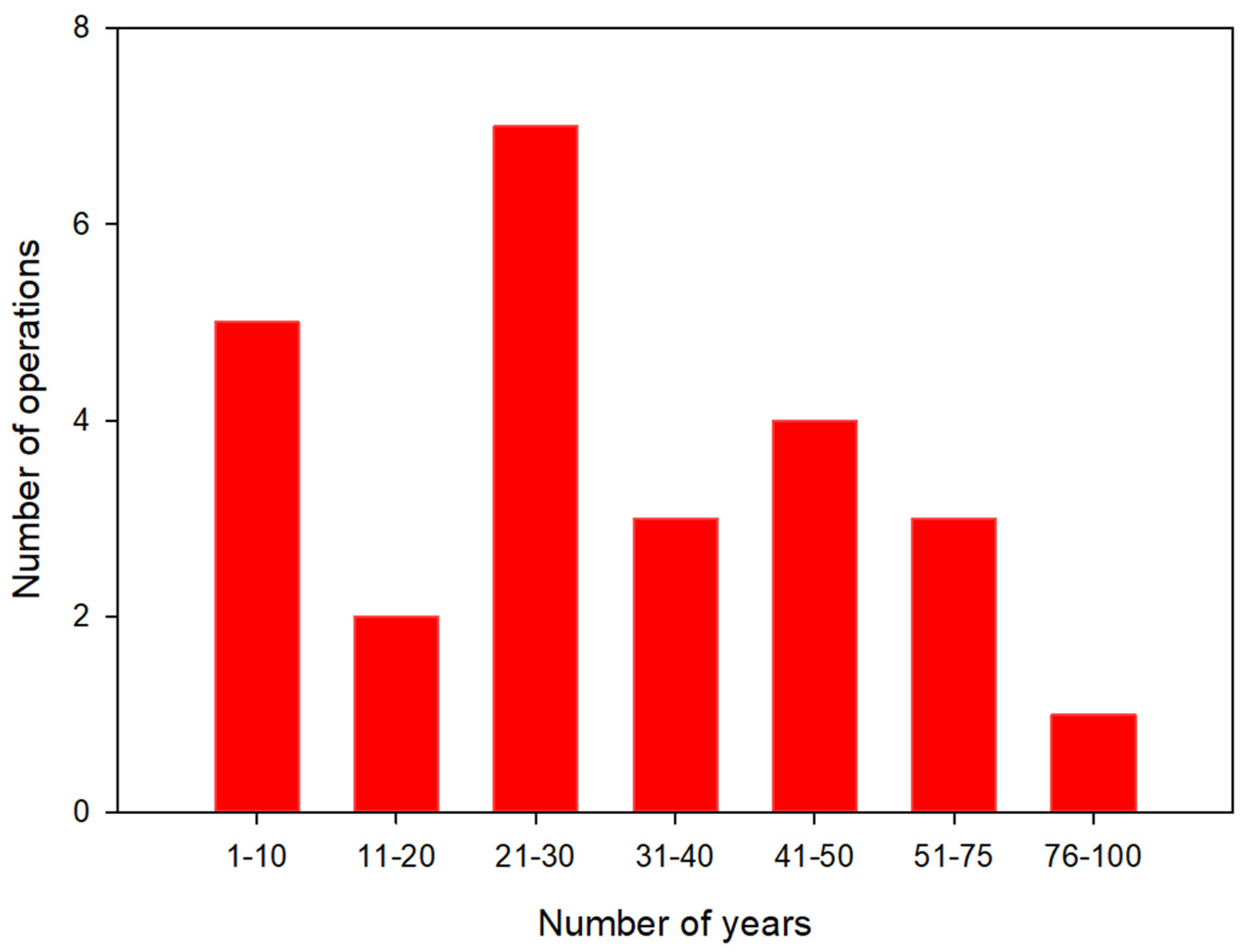
The goal of this section is to better understand the different factors and constraints under which these producers are working. Exploring years of operation was one of the necessary bases of the survey and this section aims to better understand the age of the industry in the region, as established in
Figure 1.
Figure 1 shows the surveyed operations have been/were in business for a wide variety of durations, with “21–30 years” being the most common and “76–100 years” being the least common. The figure shows the relative success in terms of time for these operations, though three aquaculture operations are no longer in operation for various reasons. One operation was seemingly forced to close due to a loss of equipment because of a missed loan payment, while another struggled to sell their product in general. The causes for the closure of these operations are all within the confines of reason, though VAPs and VRPs are aiming to help avoid these failures in the future. Both aquaponics operations were in the “1–10 years” range (one of the operations is also no longer in operation), expressing the relative infancy of aquaponics in these states.
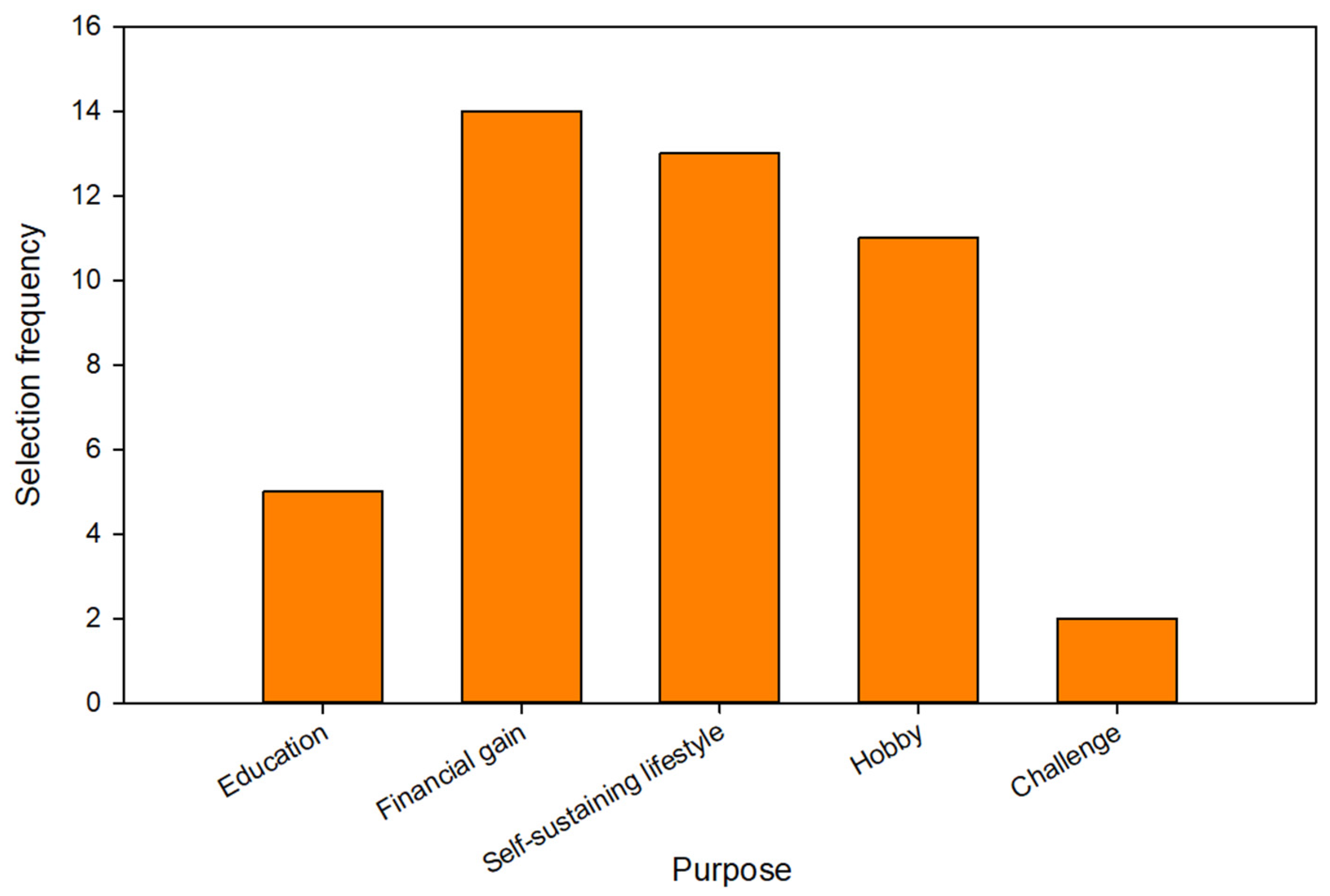
Another point of interest in the survey was to better understand the original purpose and motivation of the operations, which helps to better understand what drives these businesses and potentially link these motivations to interest in VAPs and VRPs (See
Table S1 in the SM).
Figure 2 shows the original purpose of the surveyed operations, with “financial gain” being the most selected option (fourteen) and “self-sustaining lifestyle” being a close second at thirteen times selected. Wanting a challenge and “education” were the two least selected options. Another question asked in the survey was similar to the previous one but was meant to further distinguish their motivations. The highest motivators were “economic benefit” (six), “grow your own food” (six), and “improve community food security” (five). Interestingly, “economic benefit” was also one of the lowest ranked motivators for five operations.
Figure 2 illustrate these producers’ desire to turn a profit, while also working to benefit both themselves and their communities, which further emphasizes the necessity for additions such as VAPs and VRPs for these operations.
Following the operational timeline, purpose, and motivation, delving into the particulars of the operation was the next step. For the aquaculture operations, five were intensive systems, eight were extensive (i.e., utilizing netting and waterways to farm aquatic species), and eight were a mixture of both intensive and extensive systems. In these different systems, many types of fish were propagated in the same operation, with eight operations opting to focus on one (see
Figure S1 in SM). Surprisingly, over half of the operations had two or more species being propagated, which expresses promise for success using multiple species in the aquaculture industry, given different consumers may prefer one species over the other. For example, some operations were growing fish such as catfish, bluegill, bass and others, which would imitate a particular trophic level in bodies of freshwater while also allowing the business to sell multiple products (e.g., some sold as fresh filets, some sold for stocking, some could be processed further).
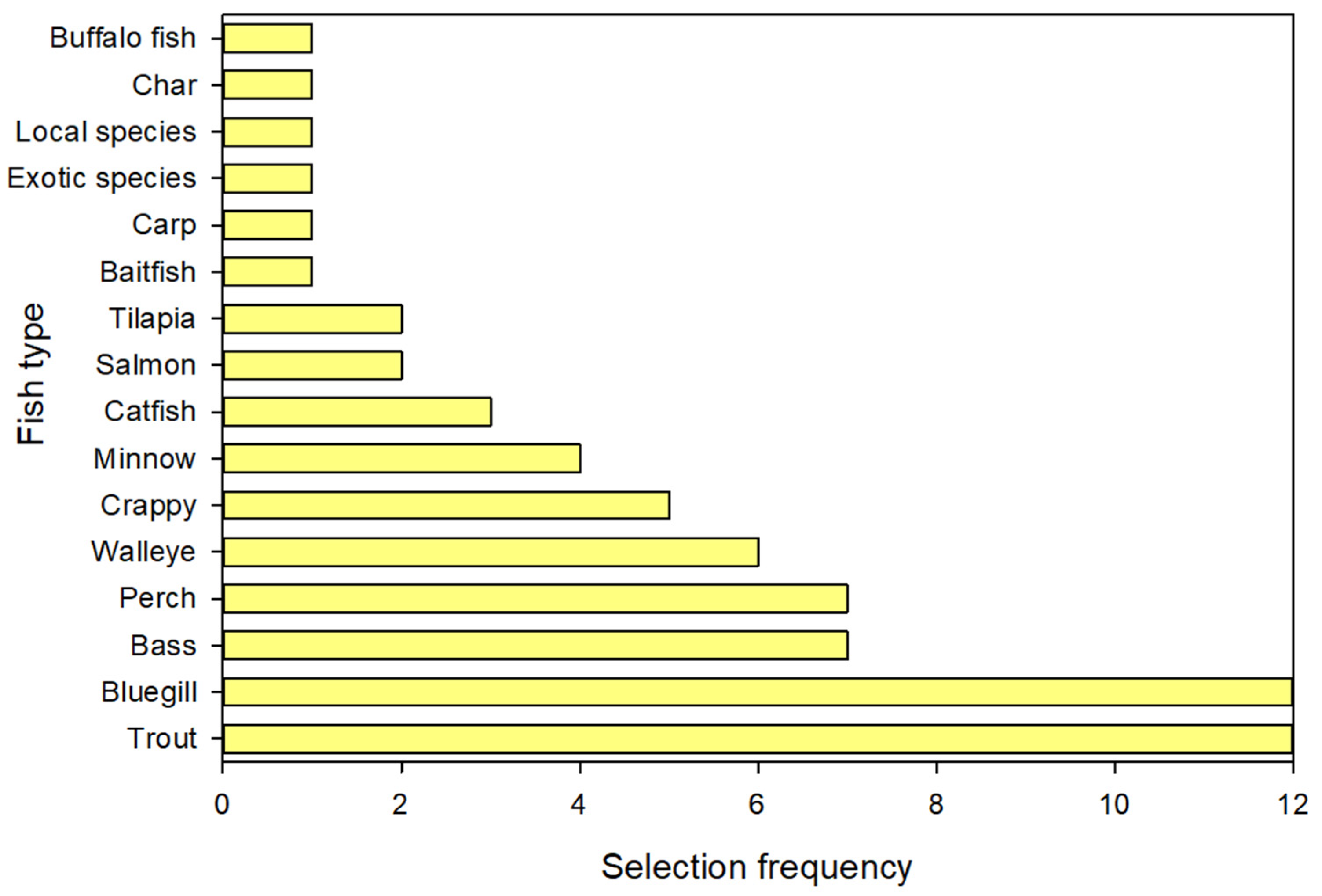
Figure 3 displays the different kinds of fish grown by the surveyed operations. The two most propagated types were bluegill and trout (twelve each) with perch and bass following those, implying demand serviced by these operations is mainly for local species, though a decent variety of fish are currently being grown in cold climates (shown through the other operations). The choice of local species is noteworthy because concerns with importation permits and contamination with natural bodies of water would largely be mitigated. The choice of local species helps with reducing operating costs as these species are already acclimated to cold climates, unlike tilapia. One of the two aquaponics systems grew bluegill and lettuce, while the other grew tilapia and several kinds of vegetables and leafy greens (e.g., lettuce, cucumbers, herbs, and edible flowers). The choice of combinations by the aquaponics producers is interesting because while both chose commonly propagated fish in aquaculture, one chose a textbook type of plant (lettuce) and the other seemingly explored many different options, which allowed them to sell into a few different markets (i.e., schools, restaurants, grocery stores, and specialty shops).
Another point of exploration was the estimated annual harvests of the previously investigated fish (
Figure S2 in SM). First, estimated annual fish harvests were highly varied amongst surveyed operations. Six operations harvest an estimated “10,000+ pounds” annually, while six produced forty-nine pounds or less. For the two aquaponics operations, their estimated annual fish harvests were both “100–499 lbs,” along with estimated annual plant harvests of “100–499 lbs” and “5000–9999 lbs.” The stark difference in plant harvest quantities is unsurprising given the latter operation produced many plants, including vegetables. Though the plant annual harvests were vastly different, harvest quantities of the fish were similar, causing curiosity regarding nutrient cycling and stocking densities of the fish.
How the products were prepared for sale and the distribution of the producers’ products is an additional point of interest explored by the survey. First, many producers sold their fish live for the purpose of stocking local bodies of water. Other producers were propagating baitfish for stocking and recreational fishermen, while the rest were growing fish for consumption. The producers growing fish for consumption prepared for sale in different ways. Most operations sold their product directly as filets, while one other sold their fish whole, and two others already sold VAPs. Four operations did not sell their fish, either because they had a particular license where sale was excluded or they only produced enough for their own consumption. Product types and distribution choices by these producers are interesting because choices such as selling directly can be easily disrupted when compared to selling into food services and grocery stores. Two operations already producing VAPs also demonstrate some promise in the market by showing consumer interest in relevant products.
Along with current standings, the survey explored any scaling that had occurred while these operations were in business. Thirteen operations reported to have scaled up, three operations scaled down, and seven operations stayed the same. Reported challenges related to scaling include having more to manage, limitations due to regulations, and increased staffing costs. The scaling of these operations is fascinating because it shows an upward trajectory for many, which allows for reduced production costs (i.e., economies of scale) to take place.
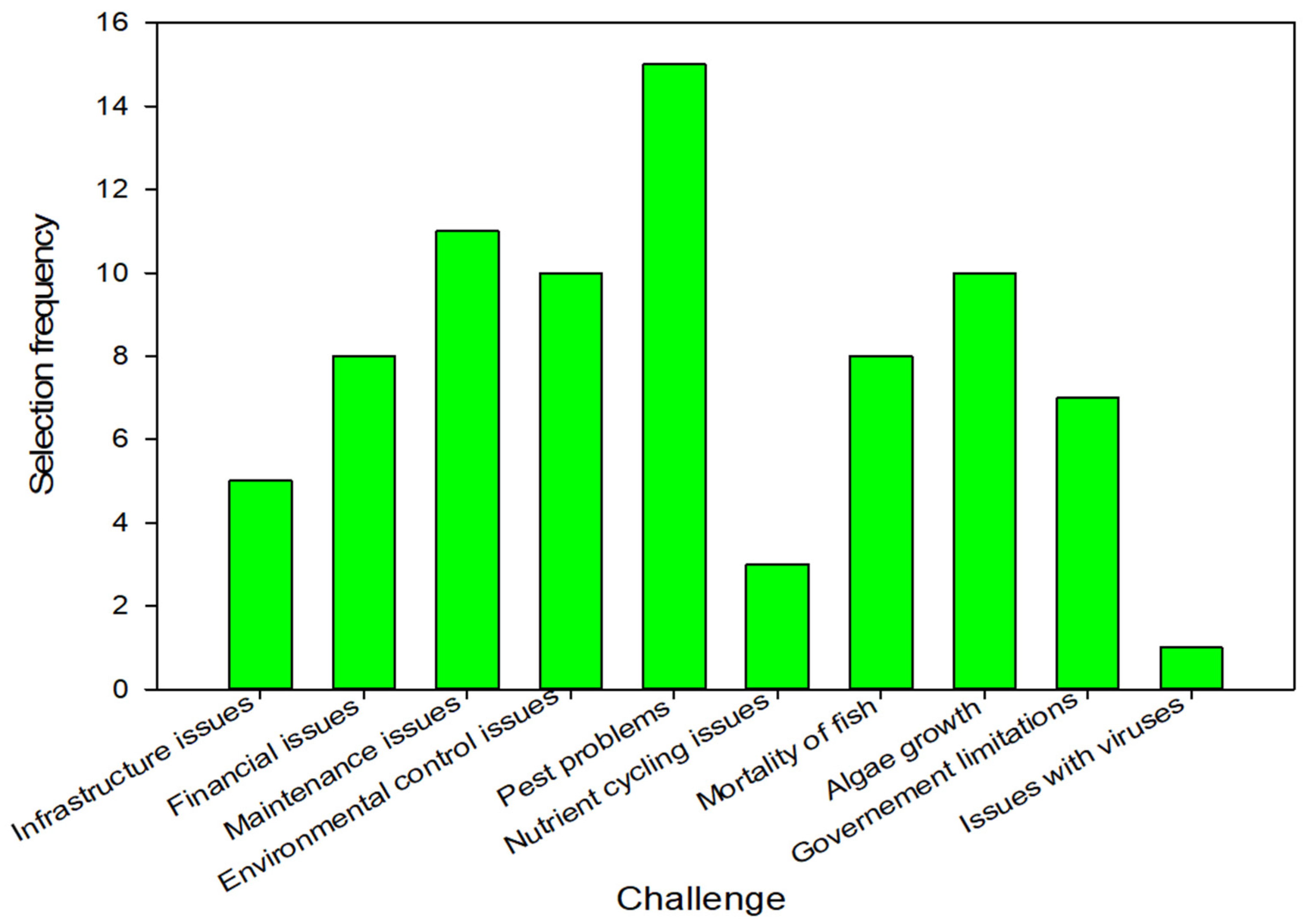
Exploring the many challenges faced by the surveyed producers is useful for informing future ventures in the aquaculture and aquaponics industries.
Figure 4 displays the many different operational challenges the respondents have had to overcome. The main issues reported were “pest problems” and “maintenance issues.” One aquaponics operation reported dealing with a virus plaguing their plants. The other least selected challenges were “nutrient cycling issues” and “infrastructure issues.” All these challenges are worthy of note because one (“pest problems”) is largely out of the producer’s control once operation begins, especially if the products are certified organic. Producers also cannot control when their operations have issues; however, regular checks and tests could help to alleviate the negative repercussions of a component failing. The set of challenges faced by the producers demonstrates the nuances of owning and operating aquaculture and aquaponics businesses, though they are not the only potential challenges.
Another set of challenges was realized during the COVID-19 pandemic and was explored by the survey. The pandemic was an extraordinary event which brought to light many pitfalls in many different industries. All but two operations were operating during the pandemic and the main issue reported was, unsurprisingly, the disruption of distribution and sales. The next most common responses were delayed funding/loans, their associated business shutting down, workforce limitations, and the loss of necessary equipment. The responses to this part of the survey were interesting because it showed this industry was also heavily impacted by the pandemic and showed the importance of further investigation into practical ways to prevent future disruptions.
Exploring the idea of transitioning the aquaculture operations to aquaponics was also investigated. Based on other questions, seven operations should be able to physically make the change, though more creative techniques could be used to allow all operations to be transitioned. Eight producers responded that they would be interested in making the transition. With an overall goal of sustainability in mind, aquaculture operations introducing a hydroponics section to their operation would help to mitigate nutrient loss and waste streams, while also opening a new market and revenue source to the operation with minimal effort.
3.2. Agricultural Previous Knowledge and Experience Section
The goal of this section was to learn more about the producers themselves and better understand their prior studies and experiences related to agriculture. The first set of questions focused on the prior educational opportunities and experiences with various agricultural topics prior to the start of their operations (
Figure S3 in the SM). The topics offered were “general agriculture,” “hydroponics,” “horticulture,” “aquaculture,” and “controlled environment agriculture.” There were a wide variety of responses to this set of questions, though most respondents reported a decent amount of schooling relative to general agriculture and aquaculture. The next set of questions focused on the prior “hands-on” experiences of the respondents in various agricultural applications.
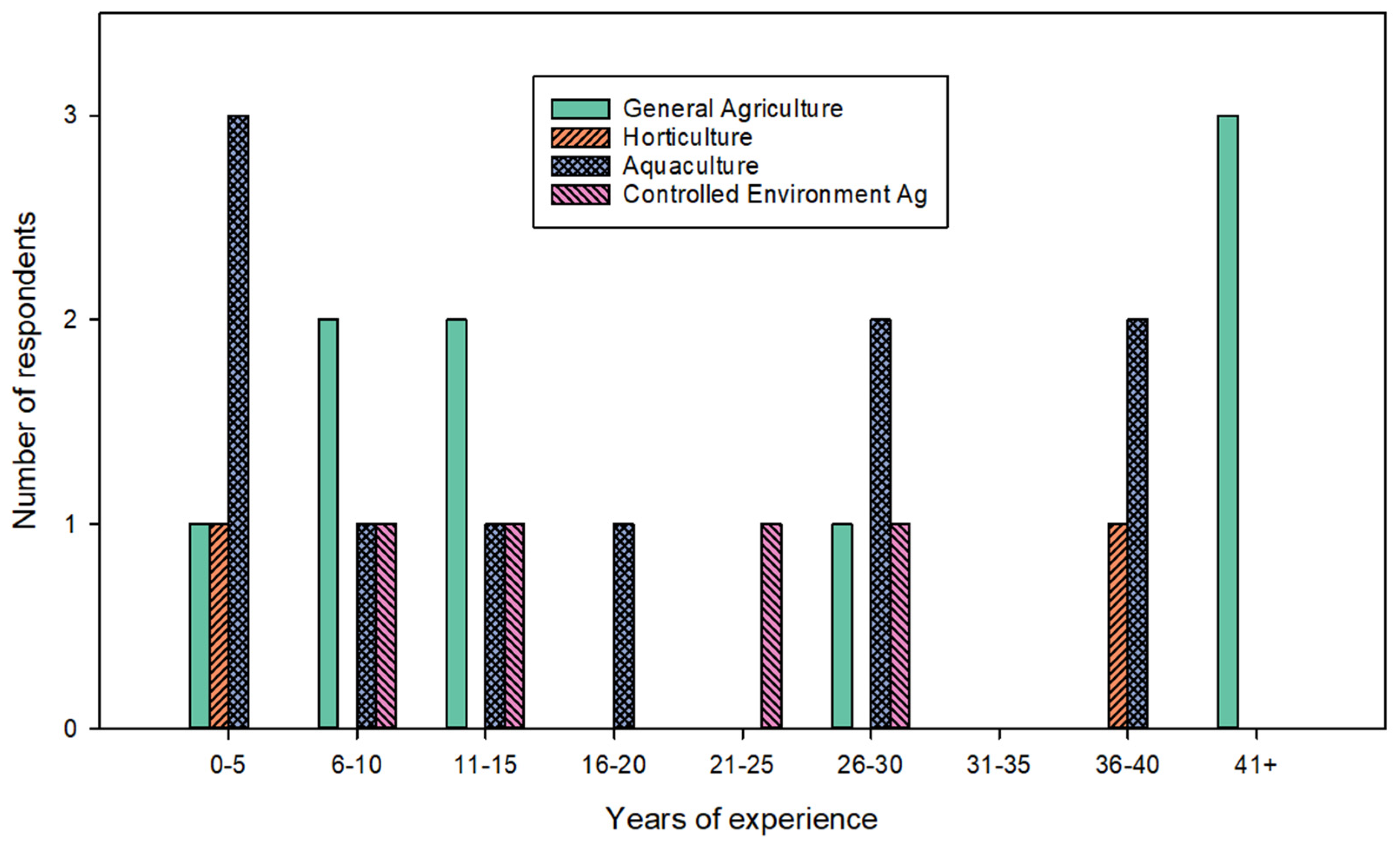
Figure 5 is the culmination of the responses to these questions. The figure shows a wide array of prior experiences over a wide expanse of time. Based on the two sets of results from the section, producers seemed to have had at least some experiences around agriculture and aquaculture and some experience in other parts of the agriculture sector or with other aquaculture operations before starting/investing in their own.
Asking the opinions of the producers was essential for better understanding the resources they used and those that would have helped them when beginning their aquaculture/aquaponics operations. First, the surveyed producers reported to have used many different resources to aid in their entrepreneurial endeavors such as the use of manuals, online forums, and mentoring (see
Figure S4 in SM). The most reported resource was simply various classes either through school or third-party organizations. Next, the producers’ most suggested resource was grants offered to this industry, which will be discussed further in the discussion of permits and policy. The other two suggestions were related to an increase in relevant classes offered, which will also be discussed further in a future section. Some useful online resources for aquaponics include tutorials from Iowa State University and online forums run by The Aquaponics Association, which both help to raise the curtain on aquaponics as an operation and a business [
31,
32]. Schools are also beginning to recognize the utility of aquaculture and aquaponics, so parts of classes are being allotted to these subjects. Based on their responses and recommendations, these producers clearly recognized the importance of education and experience prior to their endeavors, but it is also clearly not the only factor for success in this industry.
3.3. Aquaculture and Aquaponics Value-Added and Value-Recovered Products Section
The goal of this section is to gauge interest in VAPs and VRPs for the purpose of helping to improve the stability of general aquaponics businesses in the current market. The section explores any prior interest in VAPs and VRPs along with potential challenges producers could foresee with said products. Eight producers reported having considered producing VAPs and VRPs, while one operation did smoke some of their product already. For the challenges, the most common responses were related to government regulations around the processes used to create the products, which was also a key reason why many respondents were hesitant to invest. The other challenges reported were the need for additional employees, initial costs, and the increase in time needed. The challenges that concern the producers are reasonable; however, if done correctly, the government should not interfere if the proper permits are attained and the quality of the products is ensured.
To quantify the producers’ interest in VAPs, they were asked for the desired return on investment for a VA filet (
Figure S5 in SI). The responses (seven) show limited interest in these products in general, though those that were most interested tended to have a reasonable desired extra revenue with an average of
$2.50 ± 0.53/lb (between
$2 and
$12 per pound though
$12/lb was excluded in the average given the respondent’s justification), given the general sale per pound of typical raw fish filet is anywhere from an estimated one to twenty-five dollars per pound or more depending on the species of fish [
33]. Eighteen respondents either chose not to answer or answered they would not invest no matter the increase in revenue. The latter would not invest for multiple reasons, with the main one being the old age of respondents and unwillingness to further invest in the business. Other reasons include having limited time and wanting a more stable market, which was assumed to mean having a consistent distribution of their products. Based on earlier answers, the producers recognize the potential of VAPs; however, for many reasons, they are not currently able to invest into a new and challenging endeavor.
To further quantify interest in VAPs, the producers were asked for their desired payback periods for a
$100,000 initial investment into VAPs (
Figure S6 in SM). The purpose of this question was to see if producers would be willing to wait a reasonable amount of time for recuperation of invested funds for value-added products. The most selected years were two, three, and five, with an average of 3.33 ± 1.52 years, requiring a sizeable amount of return in a short period of time. However, when looking back at the ages of these operations, some operations have not even been in business for the above amounts of time, reasonably making the venture seem less achievable, given they likely do not have capital to reinvest yet.
Desirable characteristics of VAPs from a producer’s perspective were also explored to qualitatively understand if there are more desirable types of products.
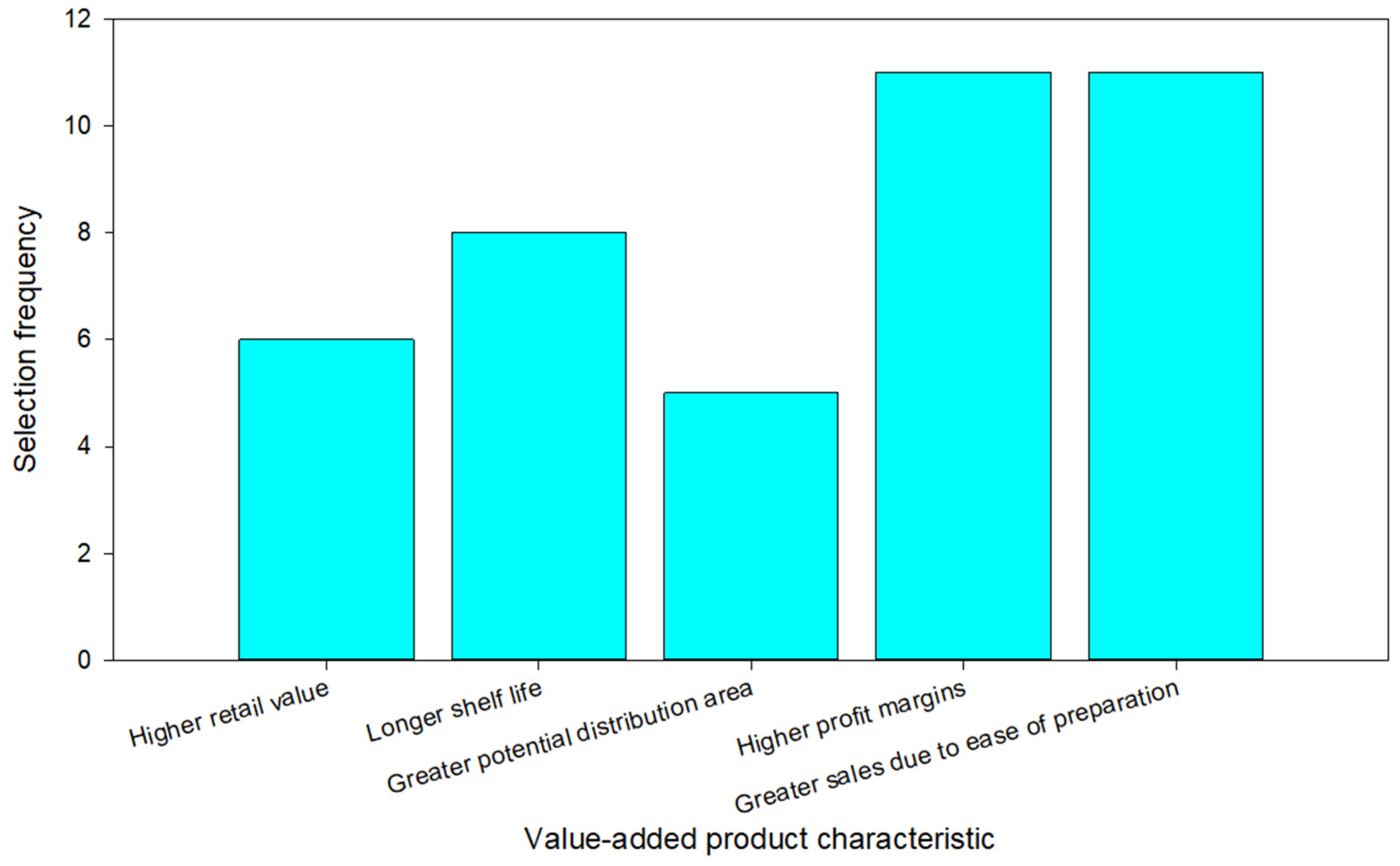
Figure 6 explores various advantageous VAP characteristics of which they were asked to choose the ones most desirable to them. The two most selected options are related to the economic side of the characteristics, suggesting less of an issue with storing or distribution. This is important because economic gains were the original reasoning for investigating interest in VAPs for aquaculture and aquaponics to aid the stability of the individual business. The figure also shows that investigated products should lean more towards a higher value product rather than one that can be sold to more places or stored for longer, though, ideally, all characteristics would be found in an optimized VAP.
Willingness to pay and payback period were not explored for VRPs as the finances of these products are less straightforward. Quantifying interest in VRPs was not included in the survey as technologies necessary to make these products such as micro-scale anaerobic digestors are still in their infancy, making estimating the cost and value of the products fruitless. Exploring desirable characteristics is, however, useful so products (with these attributes) could be explored in the future. Disposing of aquaculture byproduct can be a costly endeavor, so VRPs could also help in alleviating disposal costs [
34].
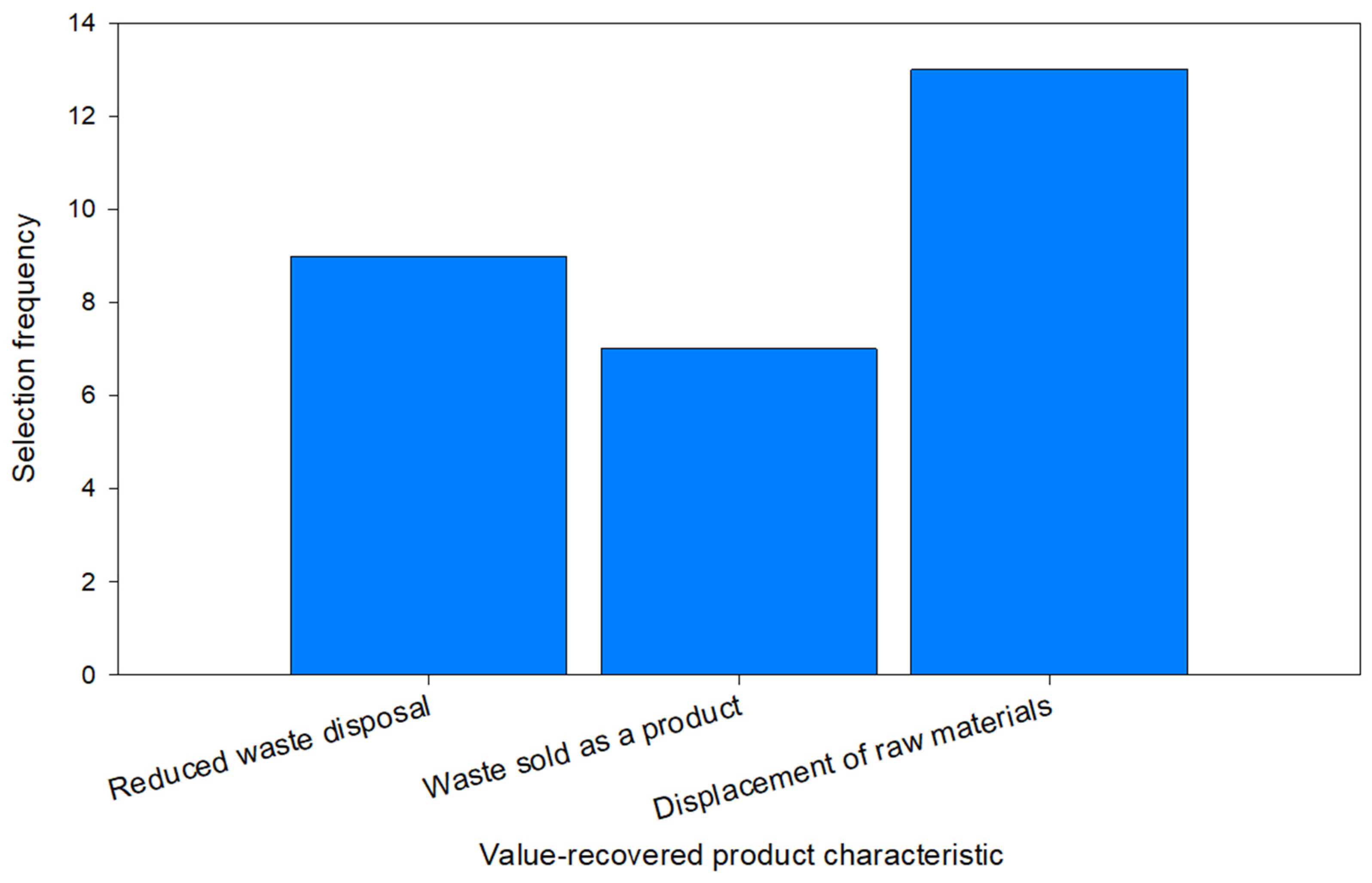
Figure 7 lastly explores desirable VRP characteristics, and the survey again asked respondents to choose those most interesting to them. The most selected option was “displacement of raw materials,” suggesting unified interest in reducing the waste streams produced in the operations, while also selling new products.
4. Discussion
The purpose of this study was to gain insight into aquaculture and aquaponics as a business venture and assess producers’ attitudes towards value-added and value-recovered products.
Learning more about the surveyed operations and producers was needed to not only determine the state of the industries in the assessed states but to also determine if there are any links between parameters and interest in VAPs and VRPs. Based on the results of the survey, the aquaculture industry seems to be a productive venture regardless of production purpose, motivation, aquatic species, or distribution, which is unsurprising given the age of many of these businesses. Surveyed aquaculture operations could still benefit from VAPs since the products could expand their product portfolio and increase revenue generation, but it does not seem that the additions of these processes and products are necessarily needed to stabilize many of the evaluated aquaculture businesses. For the two surveyed aquaponics operations, both producers reported many difficulties spanning from large heating bills to environmental issues. With consideration of their responses to the scaling of their operations, challenges they have faced, and harvest quantities when compared to the aquaculture operations, it is clear that these producers need a low investment change to their operations to boost revenue generation and overall business resilience.
As suggested earlier, VAPs and VRPs could help these aquaponics businesses and some of the surveyed aquaculture businesses; however, there are also many considerations that could impact the producers’ interest in investment. Many operators reported several operational challenges which disrupted production and in turn influenced their overall interest in VAPs and VRPs. For example, those producers who reported having the most issues with operation and distribution were not interested in these products at any value, which implies their need to stabilize their operation as it stands before adding more complexity. Developing a US-centric manual for producers to use when challenges arise could aid in reducing general challenges and increase interest in VAPs and VRPs. Of the two aquaponics operations, the operation with the most reported challenges was also not interested in VAPs at any increase in revenue. Again, standardizing production and introducing guides could help with baseline operation resilience to make investment into VAPs and VRPs more enticing.
According to the literature on the payback period of an aquaponics operation in general and in the “Dfb” zone of the Köppen climate classification, a range of 1 to 27 years is expected [
35,
36,
37]. The large range is due to specific parameters for these studies, such as plant and fish species, country of origin, and type of aquaponics setup. Based on the article by Folorunso, Gebauer, and Mraz [
35], the “Dfb” climate zone has an estimated payback period of 3.5 years. When comparing the literature to the average payback period determined in this work (approximately 3.33 years), the payback period in this study is rather reasonable given the initial investment (a reported estimated range of
$450,000 to
$620,000) into the aquaponics operation itself should be greater than the investment into value-added and value-recovered processes [
35,
37]. In terms of revenue gain and local product prices, a raw salmon filet costs
$15.49/lb while a Cajun seasoned raw salmon filet costs
$24.19/lb which is a
$8.70/lb difference or a 56.2% increase in value, making the reported
$2.50/lb desired revenue gain an achievable value for many species of fish. The payback period and desired revenue gain were also broken down further based on the demographics of the respondents.
Averages for both the producers’ willingness to invest and payback periods relative to their demographics were also investigated (See
Tables S2 and S3 in the SM). Based on age, all ages, with the exception of 70+ years old, need
$2.50/lb in gained value per
$1.00/lb invested on average. A similar trend can be seen in regard to the payback period with three years being the average for a
$100,000 investment into VAPs and VRPs processing. Respondents who were 70+ years old declared they were either too old or unwilling to invest more into their operation, leading to higher desired gained value for the VAP. Based on gender, women required more gained value (
$2.83/lb) when compared to their male counterparts (
$2.40/lb) and a similar trend is also observed for the payback period. Regarding education, there does not seem to be an obvious trend. Those who have had some college education require the most gained value for a VAP (
$3.00/lb), while the respondents with a doctorate degree were willing to wait the most amount of time for return on their investment (6 years). These results show that there are some specific demographics (men and those with either an undergraduate or doctorate degree) which are more likely to perceive VAPs as a promising investment to help with their operations’ revenue generation, though the small sample size limits any strong conclusions.
The results of producers’ interest in VAPs and VRPs showed hesitation from producers to implement these products, regardless of revenue generation. This is likely due to the current stability of these businesses, age of operators, or an inability to invest, which means that a larger-scale survey is needed to determine if this is a regional issue or a country-wide one. Introducing a proof-of-concept operation that producers could visit in person or virtually could aid in improving interest in producing these products.
Aquaculture and Aquaponics Legislation and Permitting Discussion
One essential, and arguably the most perplexing, part of almost any agricultural operation in the US (and which was a reported issue amongst some of the surveyed operations) is acquiring permits, licenses, certificates along with abiding by all statutes and regulations set forth by federal, state, and local governments, which can cause delays and disruptions in operations that can lead to failure for some. Based on investigation, there is not one single resource to understand all the different rules and regulations around aquacultural and aquaponic activities, leaving tremendous room for error.
Table 1 explores some applicable statutes and policies, while also displaying the parts of governments involved and the many permits, licenses, and certifications required before even beginning operation. Dane county, Wisconsin was used as the example location because the rules and permitting could be different depending on the state and county. The main governmental stakeholders involved are the USDA, EPA, and FDA as they are concerned with considerations such as the health of the fish, what the operation considers waste streams, how much water is being used, the quality of the food produced, etc. The list of federal legislation is not a complete list; however, these policies and acts are the most relevant to aquaculture, which is also the part of aquaponics with the most restrictions in the US.
As discussed previously, surveyed producers recommended increased access to grants, which would aid in the success of aquaculture and aquaponics. Today, many financial aid options exist from both federal and state governments in the form of loans and grants. First, loans and grants from the USDA and NOAA are currently available [
38,
39]. Lastly, as a part of the 2000 Farm Bill, a value-added grant program was introduced, recognizing the potential in the additions [
40]. The grant program aims to ensure businesses’ success in their value-added investment, alleviating some financial pressure with initial investments. In 2023, the grant programs made
$31 million available for this endeavor [
41].
5. Future Work and Recommendations
Since aquaponics is in its relative infancy in the US, there are many routes for future research to go. First, conducting in-person interviews would allow for a more comprehensive understanding of an operation over time, enable more nuance around operational and business challenges and explore avenues such as life cycle assessments of the operation. Second, investigating the “complete” economics (i.e., initial investment, operating costs, profitability, etc.) around operations (with more responses) would allow for a better understanding of the landscape in the US. Lastly, because so little investigation into current markets and trends exists, gaining more high-level information (e.g., relative operation locations, fish types, distribution methods, etc.) from the US relative to the industry is necessary to better understand where the successes and potential improvements are.
To explore aquaponics VAPs and VRPs further, there are experiments needed to determine the true viability of the products. For VAPs, developing and operating a pilot-scale operation of an aquaponics operation and the subsequent processes to produce select VAPs is necessary for proof of concept as well as gauging consumers’ interest and willingness to pay. Since many VRPs are a relatively new concept in the aquaculture industry, techno-economic modeling of these products is needed before any physical production to provide low-stakes evidence for their viability.
6. Conclusions
Working to address food security in a sustainable manner is imperative with an ever-growing global population. In the name of sustainability, ensuring economic viability of sustainable food production is equally important. This study focuses on gaining insight into value-added and value-recovered aquaculture and aquaponics products from the perspective of the producers. A survey sent to Midwest aquaculture and aquaponics producers was utilized to fulfill the purpose of the study while also exploring various operational parameters and future directions. The results of the survey found operations of all scales, economic movement, and design. Though many variables were different, challenges such as pests and algae growth were common amongst them. At minimum, most producers recognized the utility in value-added and value-recovered products, while a few seemed genuinely interested in making the investment. Interest in these products by these producers is a dim light only gradually brightening, but all new things come with reluctance.