
Article

Seawater Temperature at Harvest Shapes Fillet Proteolytic Activity at Chilled Storage in Three Mediterranean-Farmed Fish

by
Rafael Angelakopoulos
1,
Alexia E. Fytsili
1,
Arkadios Dimitroglou
2,
Leonidas Papaharisis
3 and
Katerina A. Moutou
1,*
1
Laboratory of Genetics, Comparative and Evolutionary Biology, Department of Biochemistry and Biotechnology, University of Thessaly, Biopolis, 41500 Larissa, Greece
2
Laboratory of Applied Hydrobiology, Department of Animal Science, Agricultural University of Athens, Iera Odos 75, 11855 Athens, Greece
3
Avramar Aquaculture SA, 19002 Athens, Greece
*
Author to whom correspondence should be addressed.
Aquac. J. 2026, 6(1), 2; https://doi.org/10.3390/aquacj6010002
Submission received: 29 December 2025 / Revised: 16 January 2026 / Accepted: 26 January 2026 / Published: 28 January 2026

Abstract

Fish is highly prone to spoilage due to a combination of intrinsic biochemical processes and microbial proliferation, which together drive rapid quality deterioration during post-harvest handling and storage. These processes are further accelerated by factors such as elevated temperatures, mechanical damage, and suboptimal handling. In Mediterranean aquaculture, ice slurry is the standard harvesting method. This study aimed to characterize the initial post-harvest enzymatic activity of key proteolytic enzymes, calpain, collagenase, cathepsin B (CTSB), and cathepsin L (CTSL), in the white muscle of three commercially important species (Sparus aurata, Dicentrarchus labrax, and Pagrus major) harvested under standard practices across three seawater harvest temperatures (low, medium, and high). Muscle samples were collected over a 13-day chilled storage period post-harvest, and enzymatic activity was assessed using standardized fluorometric assays. Our findings establish the basal post-mortem proteolytic profiles for each species and reveal marked species-specific differences in enzyme activity patterns. Calpain and collagenase exhibited early and parallel activation, while CTSB and CTSL showed a coordinated increase during storage. Harvest temperature emerged as a critical factor, with the highest enzymatic activities consistently observed during the moderate temperature period. These results underscore the importance of species-specific physiology and seasonal conditions in shaping post-harvest filet degradation, offering a basis for refining harvest strategies to enhance quality management in Mediterranean aquaculture.

1. Introduction

Fish is highly prone to spoilage due to a combination of intrinsic biochemical processes and microbial proliferation, which together drive rapid deterioration of quality during post-harvest handling and storage, directly reducing product sensory characteristics and shelf life, undermining consumer confidence, and compromising both sustainability and profitability [1]. Among the intrinsic processes that shape post-mortem flesh quality, proteolysis is a central driver of muscle softening, gaping, and textural degradation [2]. Proteolytic systems in fish muscle include calpains, collagenases, and lysosomal cathepsins, which target myofibrillar and connective tissue proteins during chilled storage [3]. Their activity patterns not only determine the rate and extent of muscle degradation but also interact with microbial processes to influence shelf life and consumer acceptability [4]. Understanding how these systems are regulated in farmed fish species is therefore critical to developing strategies that stabilize filet texture and optimize storage potential.
Following capture and slaughter, the interruption of blood circulation in fish muscle initiates a cascade of post-mortem biochemical events, including oxygen depletion, a rapid shift to anaerobic glycolysis, ATP exhaustion, and progressive intracellular acidification [5,6]. The decline in ATP levels impairs the function of ion-regulating systems, particularly Ca2+-ATPases in the sarcoplasmic reticulum, leading to the loss of calcium homeostasis. As a consequence, Ca2+ leaks into the sarcoplasm, activating Ca2+-dependent proteases, primarily calpains [7].
Concurrently, post-mortem stress, pH decline, and structural destabilization of cellular membranes increase lysosomal membrane permeability, facilitating the release of intrinsic proteases such as cathepsins into the sarcoplasmic matrix. These proteolytic systems act synergistically during the early post-mortem period, targeting key myofibrillar and cytoskeletal proteins, including myosin heavy and light chains, actin, desmin, and troponin T. The progressive degradation of these structural components results in myofibril fragmentation, Z-disk weakening, and disruption of muscle fiber integrity. Collectively, these post-mortem proteolytic processes underpin the softening of fish flesh and the deterioration of textural quality during chilled storage [8].
Harvest practice and environmental conditions represent important but underexplored modulators of post-mortem proteolysis [9,10]. In Mediterranean aquaculture, harvesting in ice slurry is standard practice due to its efficiency in immobilizing fish and reducing immediate handling stress. However, this practice may also influence muscle biochemistry by altering the dynamics of post-mortem enzyme activation [11,12]. Seawater temperature further adds complexity, as it directly affects metabolic status at harvest, stress physiology, and enzyme activity. These environmental and physiological factors together have the potential to generate marked variability in filet degradation patterns across species and seasons [13,14].
To date, most studies investigating post-mortem proteolysis in fish muscle have focused on enzymatic activity trajectories during storage, without explicitly accounting for the thermal conditions at harvest. As a result, the potential role of harvest temperature as a determinant of the initial state and subsequent temporal regulation of proteolytic systems remains scarce [9,13].
Most available work has focused on single species or restricted temperature ranges, leaving unresolved the relative contributions of species-specific muscle physiology and harvest environment to post-mortem degradation [15,16]. This knowledge gap has direct implications for both science and industry. From a biological perspective, understanding how intrinsic proteolytic systems respond to environmental and physiological contexts is essential to explain species-specific differences in flesh stability. From an applied standpoint, such insights are critical to managing product quality, minimizing post-harvest losses, and reducing the environmental footprint of farmed fish. Fish spoilage not only represents an economic burden but also contributes to global food waste, undermining the efficiency of aquaculture value chains, driving the sector to also seek monitoring frameworks that can serve as safeguards against quality deterioration and resource inefficiency [17]. By refining harvest and storage strategies to better account for seasonal and species-specific dynamics, producers can extend shelf life, improve resource utilization, and help meet sustainability goals of farmed seafood [4,13,18,19,20,21,22].
The present study addresses this gap by characterizing post-mortem proteolytic enzyme activity in the white muscle of three commercially important Mediterranean aquaculture species: gilthead seabream (Sparus aurata), European seabass (Dicentrarchus labrax), and red seabream (Pagrus major). Specifically, we aimed to (i) quantify initial post-harvest enzymatic activity (day 0) of calpains, collagenases, CTSB, and CTSL in fish harvested at three different seawater temperatures and (ii) track the trajectories of these enzymes at different time points during 13 days of chilled storage.

2. Materials and Methods

2.1. Ethics Statement

All examined biological materials were derived from fish reared and harvested at commercial farms, registered for aquaculture production in EU countries. Animal sampling followed routine procedures, and samples were collected by a qualified staff member from standard production cycles. The legislation and measures implemented by the commercial producers complied with existing national and EU (Directive 1998/58/EC) legislation (protection of animals kept for farming).

2.2. Fish Sampling

The experiment was performed in a commercial unit of Avramar S.A. at Astakos, Aitoloakarnania, Greece. All three species, i.e., red seabream (Pagrus major, PMA), gilthead seabream (Sparus aurata, SA), and European seabass (Dicentrarchus labrax, DL), were of commercial weight, reproductively immature, and were harvested using the common harvest method of immersion in ice slurry. Sampling was conducted during commercial harvest in three distinct time periods: August 2020 (H: 26 °C, sea water temperature), March 2020 (C: 15.8 °C, sea water temperature), and June 2021 (M: 21 °C, sea water temperature) at the same installation. Whole fishes were packed in polystyrene boxes with ice flakes and transported to the Department of Biochemistry and Biotechnology, University of Thessaly. Upon arrival, they were stored at 0 °C (±0.2 °C) in high-precision low-temperature incubators.
Muscle samples (~200 mg) were collected from the dorsal (epaxial) white muscle region, directly beneath the dorsal fin. At harvest (day 0) and subsequently at days 1, 2, 5, 7, and 13 post-harvest. This region was selected to minimize variability associated with regional differences in muscle function, since the dorsal epaxial muscle is characterized by relatively homogeneous fast-twitch glycolytic fibers. The samples were immediately snap-frozen in liquid nitrogen and stored at −80 °C until analysis. A total of eight individuals were sampled per condition. In total, 432 fishes were used in the analysis.

2.3. Preparation of Enzyme Extracts

For cathepsin assays, minced muscle was homogenized with ice-cold distilled water (1:2, w/v) and processed at 4 °C. The homogenate was centrifuged at 14,600× g for 20 min, and the resulting supernatant was stored at −80 °C until use [23]. Calpain and collagenase extracts were prepared by homogenizing samples in 500 mM Tris-HCl buffer (pH 7.5) containing 10 mM β-mercaptoethanol and 1 mM EDTA (1:3, w/v). These homogenates were centrifuged at 10,000× g for 40 min at 10 °C, and the supernatants were frozen at −80 °C for later analysis [24].

2.4. Enzyme Activity Assays

Activities of calpain, collagenase, CTSB, and CTSL were determined fluorometrically following the method of Barrett and Kirschke, with minor adjustments [25]. Calpain activity was measured using L-methionine-AMC trifluoroacetic salt as the substrate, and collagenase activity with Suc-Gly-Pro-Leu-Gly-Pro-AMC; both substrates were dissolved in DMSO and combined with enzyme extracts in 100 mM bis-Tris buffer (pH 6.5) containing 5 mM CaCl2. CTSB and CTSL activities were assessed using Z-Arg-Arg-AMC·HCl and Z-Phe-Arg-AMC·HCl, respectively, in 100 mM Tris-HCl buffer (pH 6.5) supplemented with 20 mM EDTA and 4 mM DTT. In all cases, the release of 7-amino-4-methylcoumarin (AMC) was monitored using a multimode microplate spectrofluorometer (Varioskan™ LUX, Thermo Fisher, Waltham, MA, USA) at an excitation wavelength of 360 nm and emission at 460 nm.
Protein concentration in crude extracts was determined using the Bradford method (bovine serum albumin as standard) [26]. Enzyme activities were expressed as the change in fluorescence units per minute per mg protein. Each sample was assayed in duplicate. The described protocol was adapted from previously established methods and has been refined and standardized in our laboratory in earlier studies [4,11,13].

2.5. Statistical Analysis

Statistical analysis of enzymatic activity was conducted in R Studio (R version 4.2.0, RStudio version: 2022.12.0) [27,28]. Data distribution was assessed using the Shapiro–Wilk test [29]. As the assumption of normality was not met, non-parametric methods were applied. Pairwise differences between groups were evaluated using the Wilcoxon rank-sum test (Mann–Whitney U test), which is appropriate for comparing two independent groups. To account for multiple pairwise comparisons, p-values were adjusted using the Benjamini–Hochberg false discovery rate (FDR) correction. Statistical significance was set at an adjusted p-value < 0.05. Prior to analysis, all values were square-root transformed to standardize scales across variables [30].
Multivariate patterns in enzymatic activity profiles were explored using principal coordinates analysis (PCoA) based on Bray–Curtis dissimilarities. Group differences in multivariate space were tested by permutational multivariate analysis of variance (PERMANOVA) using the adonis2 function in the vegan package, with 999 permutations, and the proportion of variation explained (R2) was reported for each term [31,32,33].

3. Results

3.1. Initial Post-Harvest Enzymatic Activity: Proteolytic Activity at Harvest (Day 0)

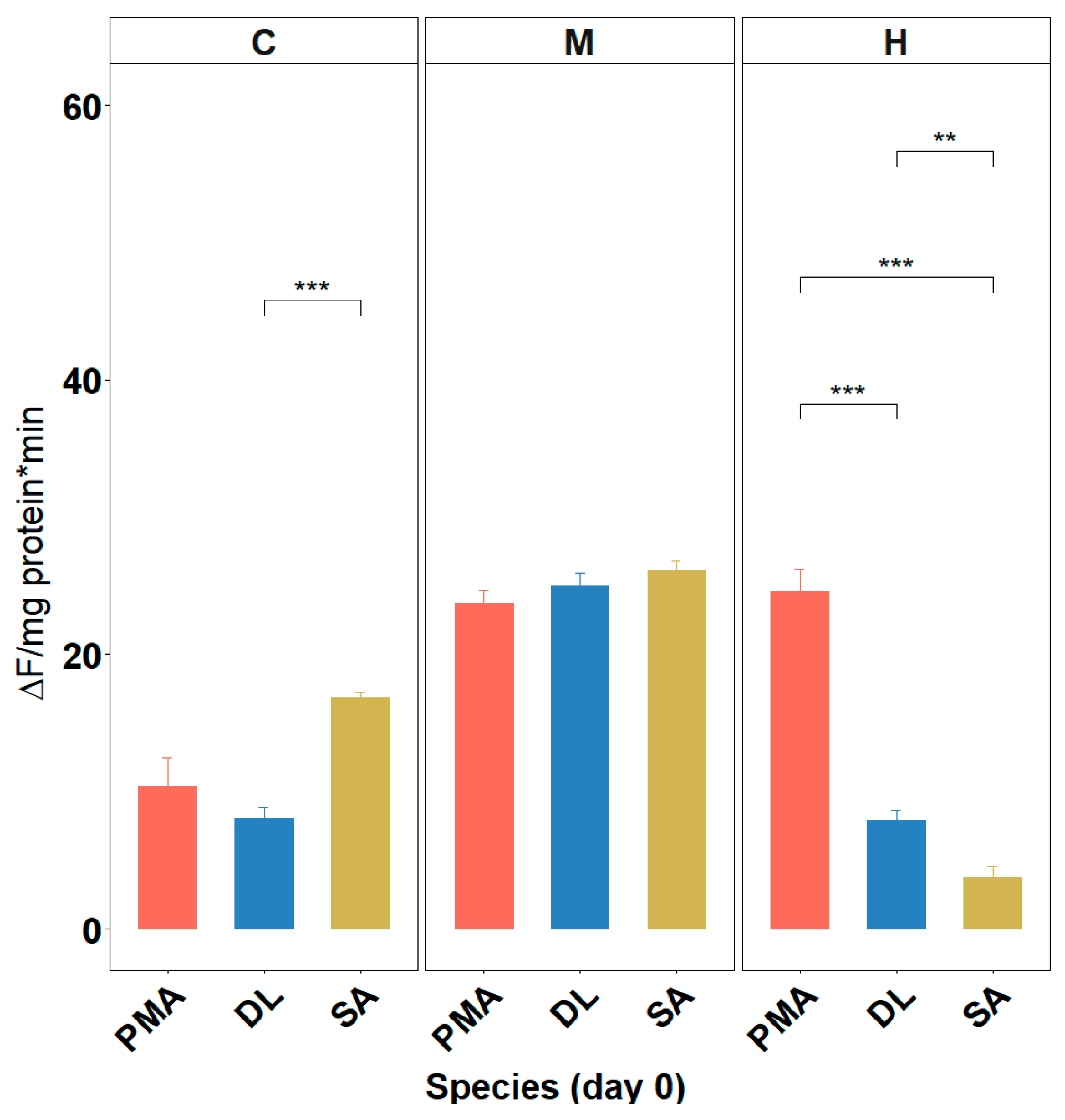
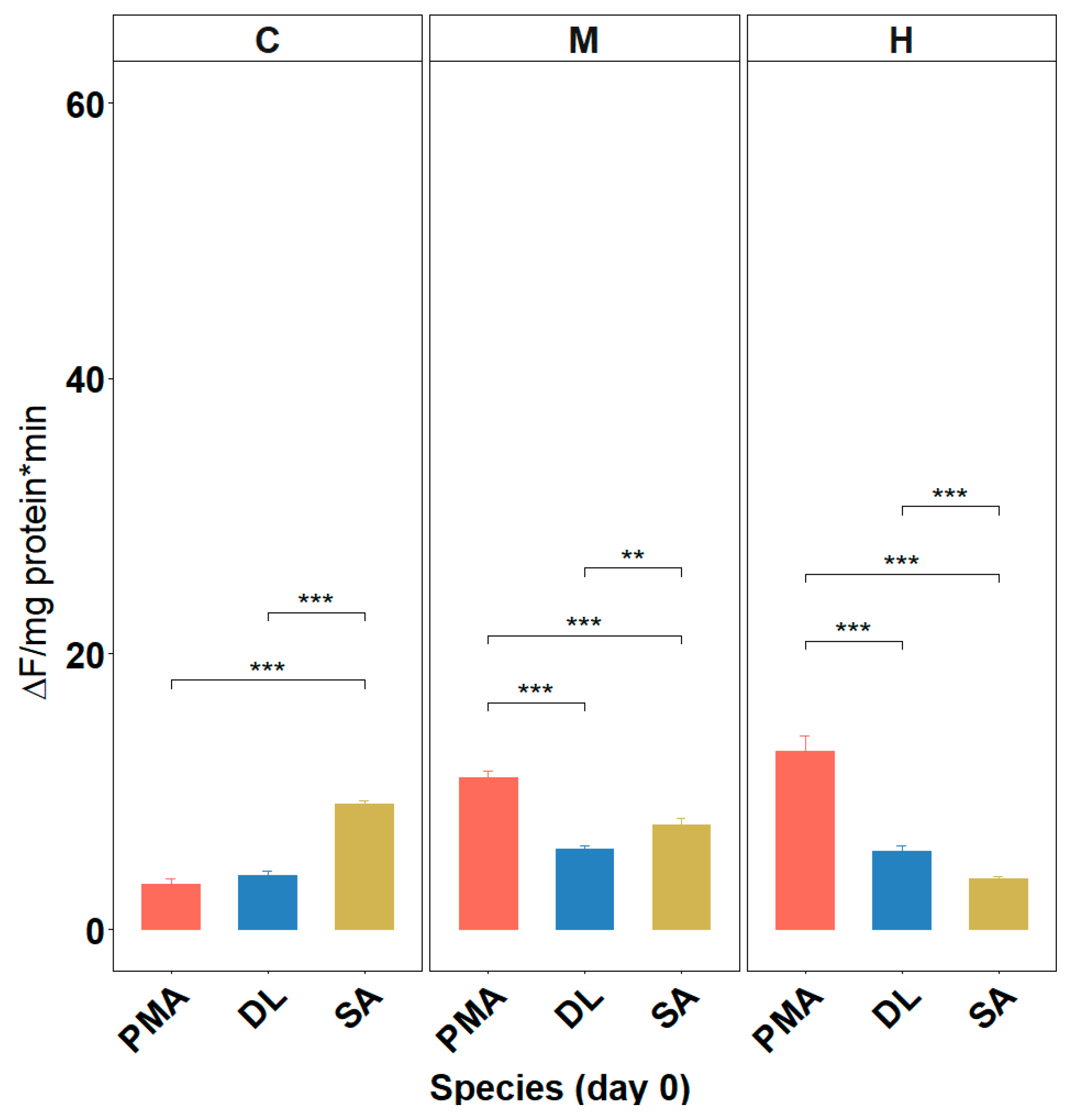
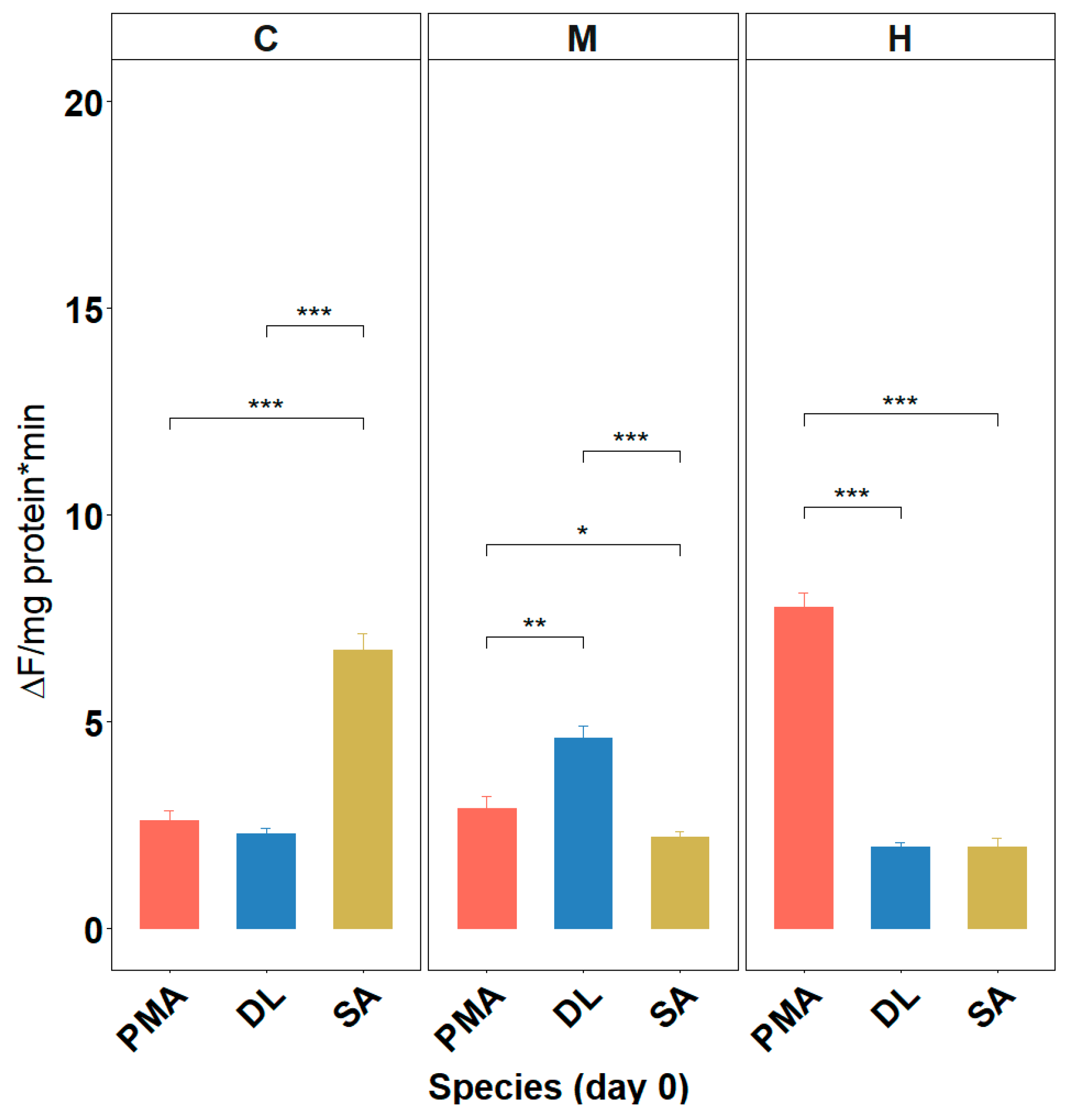
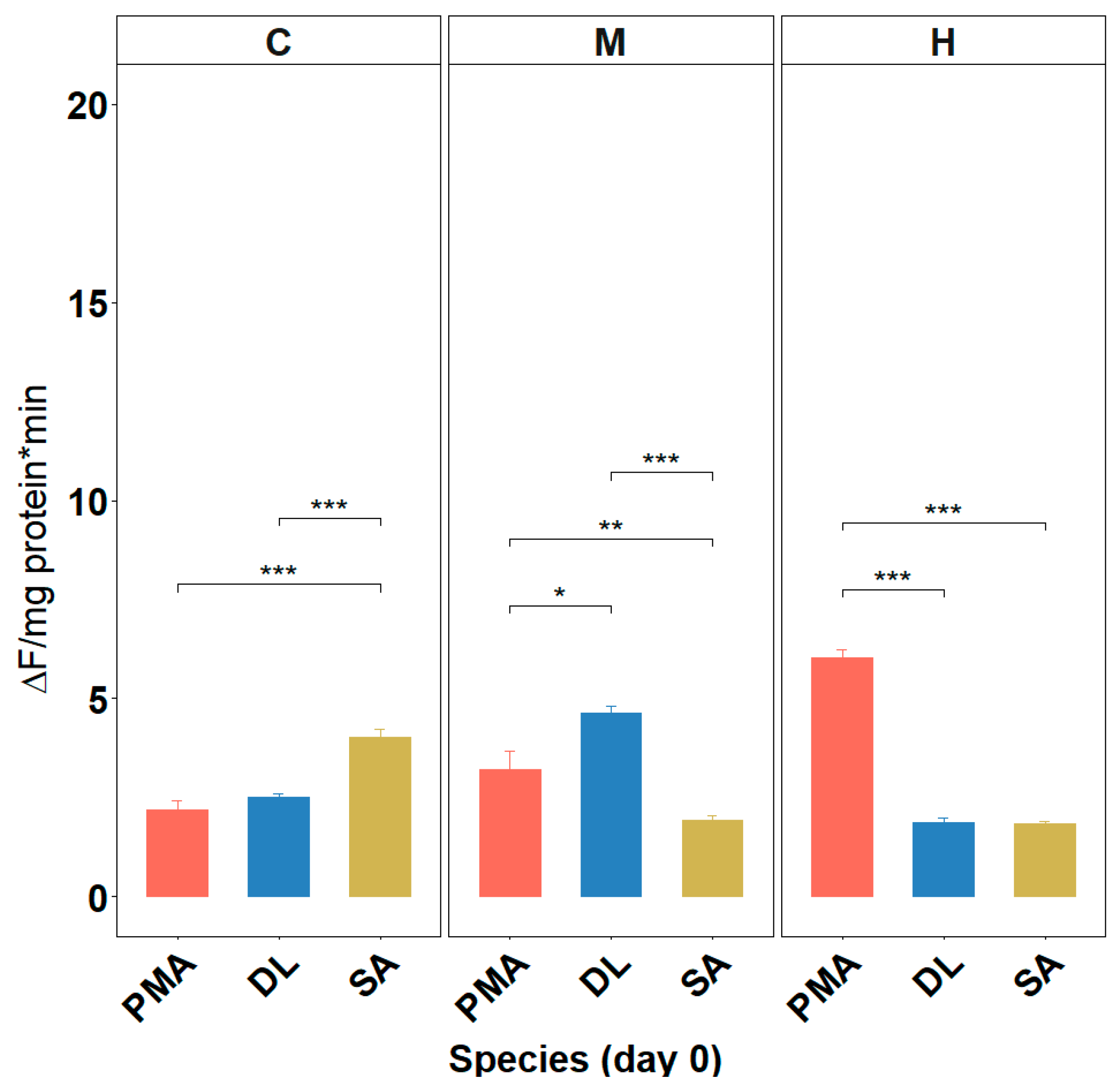
Significant differences in initial post-harvest enzymatic activity were observed among the three species. The differences were temperature-dependent (Figure 1, Figure 2, Figure 3 and Figure 4). Overall, enzyme activities increased with increasing rearing temperature in red seabream (Pagrus major, PMA). At low seawater temperature, gilthead seabream (Sparus aurata, SA) exhibited the highest enzyme activities among the three species, whereas at high water temperature, it exhibited the lowest. European seabass (Dicentrarchus labrax, DL) showed the highest calpain and cathepsin activities at medium water temperature. These profiles of enzymatic activity indicate distinct species-specific capacities for post-mortem proteolysis, which is further conditioned by environmental temperature.

3.2. Enzymatic Activity During Chilled Storage

All enzymes in all three fish species showed marked changes in activity during the 13-day storage period; the temporal pattern of activity differentiated with species and harvest temperature.
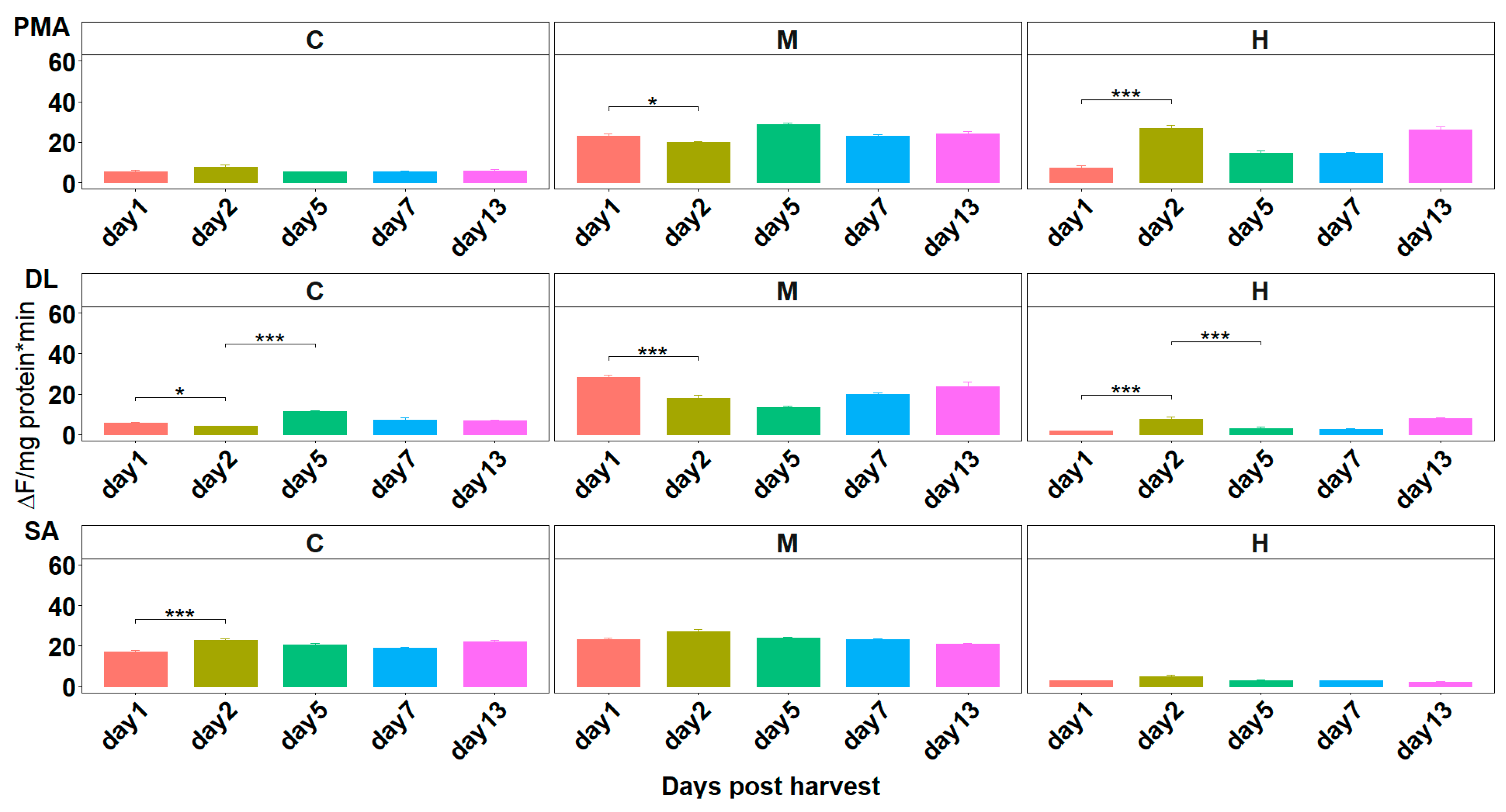
Calpain activity increased in SA harvested at low seawater temperature after day 2 and remained high throughout the storage period. On the contrary, no fluctuation in calpain activity was observed in SA harvested at medium and high temperatures (Figure 5). Similarly, no fluctuation in calpain activity was observed in PMA harvested at low seawater temperature, whereas significant temporal variation during storage was recorded in PMA harvested at medium and high temperatures (Figure 5). Calpain activity exhibited significant variation between days of storage in DL at all harvest temperatures (Figure 5).
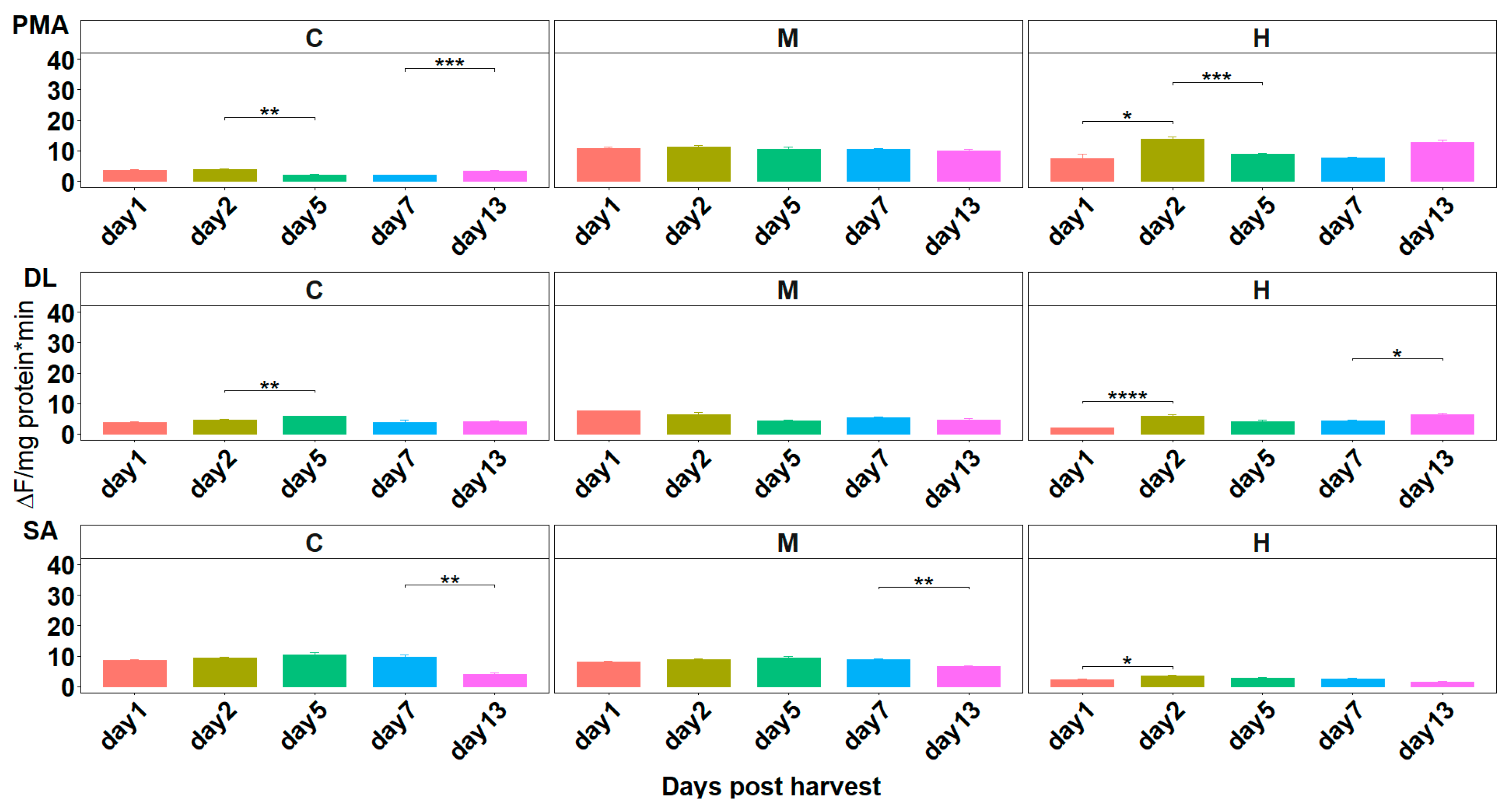
Collagenase activity exhibited significant differences between days of storage in DL harvested at medium and high temperatures and in SA, irrespective of harvest temperature (Figure 6). Notably, collagenase activity increased by day 5 and decreased thereafter in SA harvested at low and medium seawater temperatures. Collagenase activity did not differentiate during storage in PMA harvested at medium temperature, whereas significant differences between days of storage were observed in PMA harvested at low and high seawater temperatures (Figure 6).
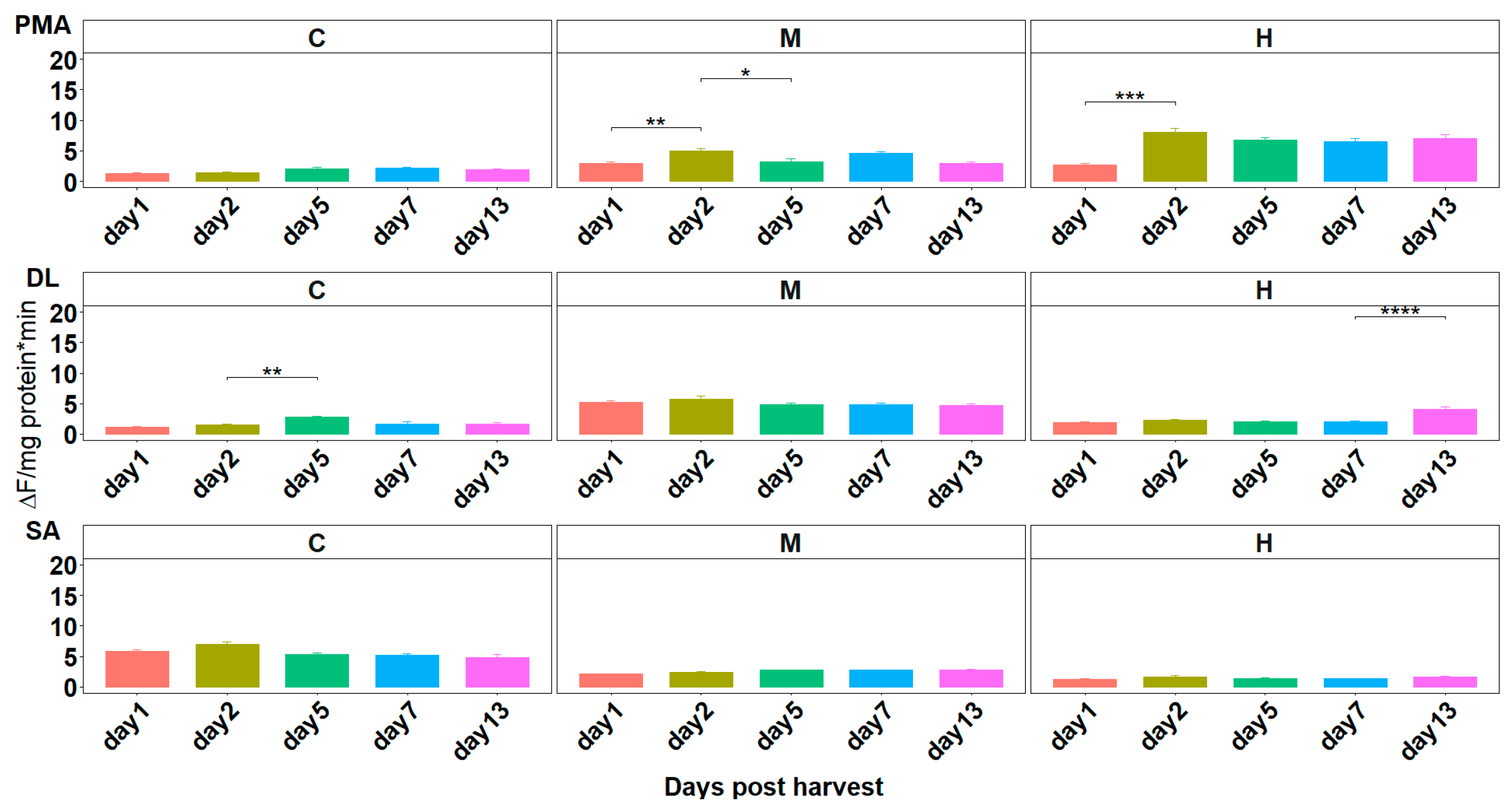
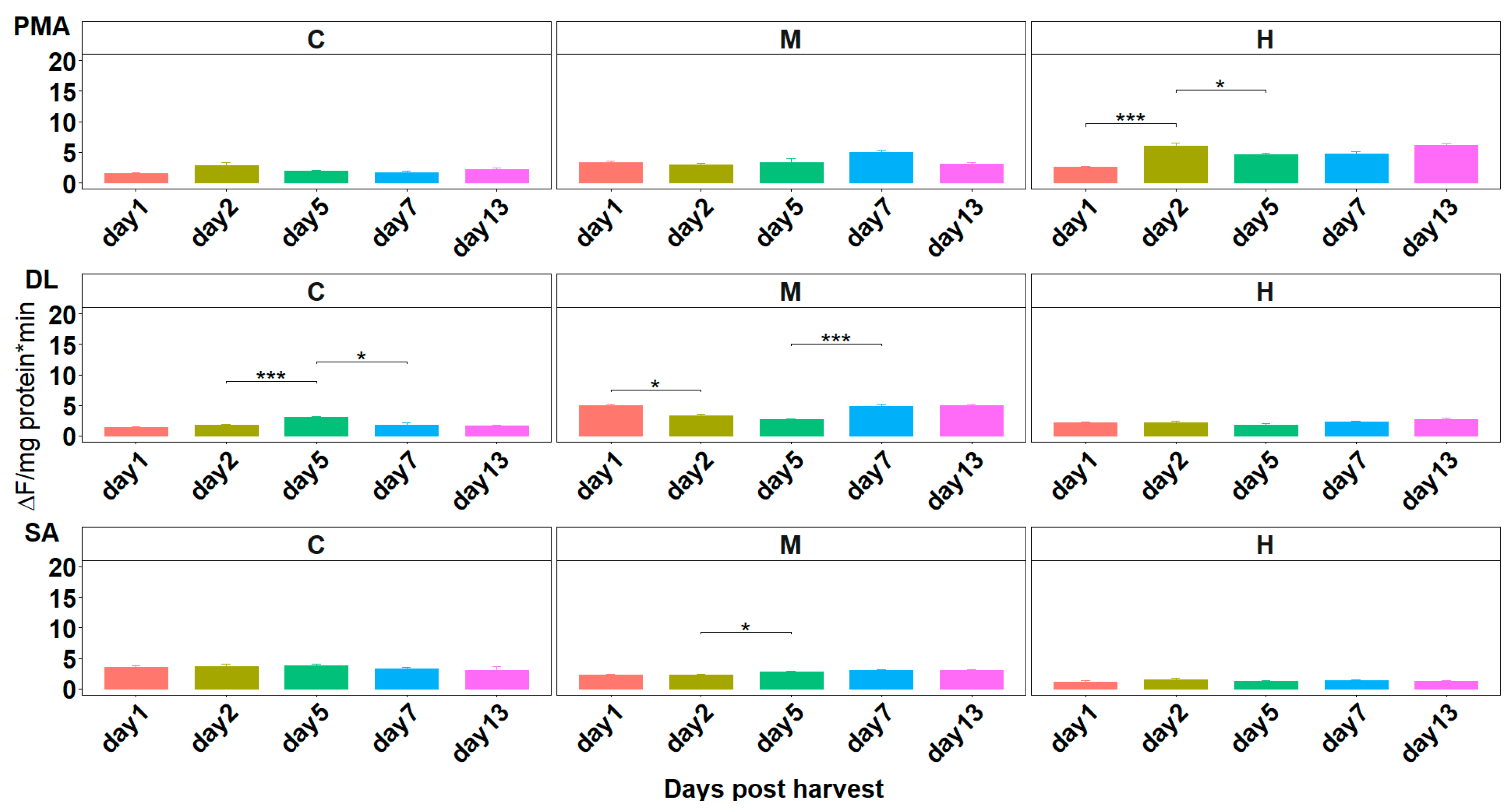
CTSB activity did not change significantly during storage in SA, whereas CTSL exhibited a late, significant increase by day 5 and up to day 13 only in SA harvested at medium temperature (Figure 7 and Figure 8). An early increase in CTSB was observed in PMA harvested at medium temperature (Figure 7). More significant changes in CTSB and CTSL activities were recorded in DL harvested in low and medium seawater temperatures (Figure 7 and Figure 8).
Notably, species differences persisted over storage, with SA overall activities decreasing with increasing harvest temperature in contrast to PMA, which maintained higher activities at higher harvest temperatures (Figure 5, Figure 6, Figure 7 and Figure 8 and Supplementary Figures S1–S3).

3.3. Influence of Seawater Temperature at Harvest

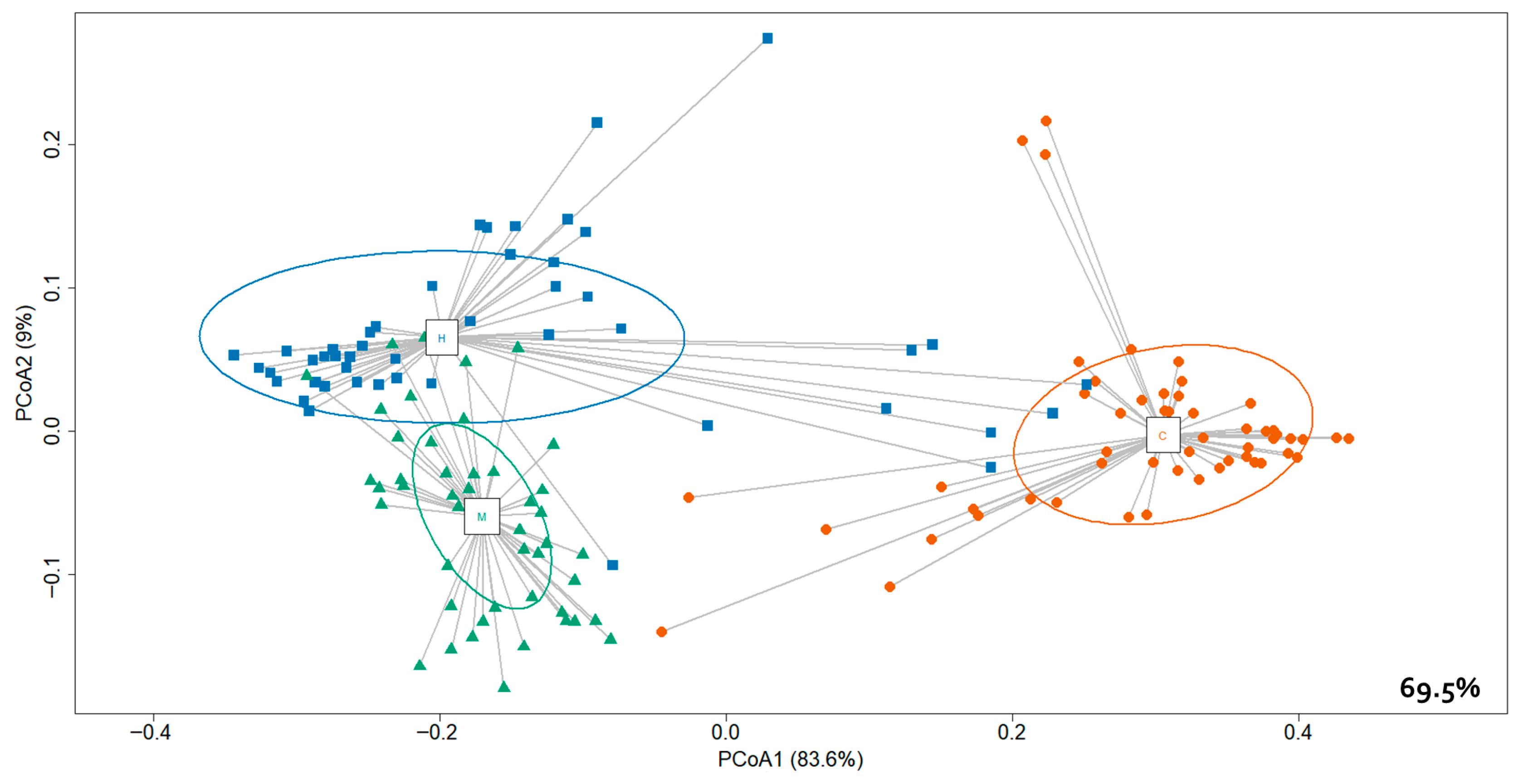
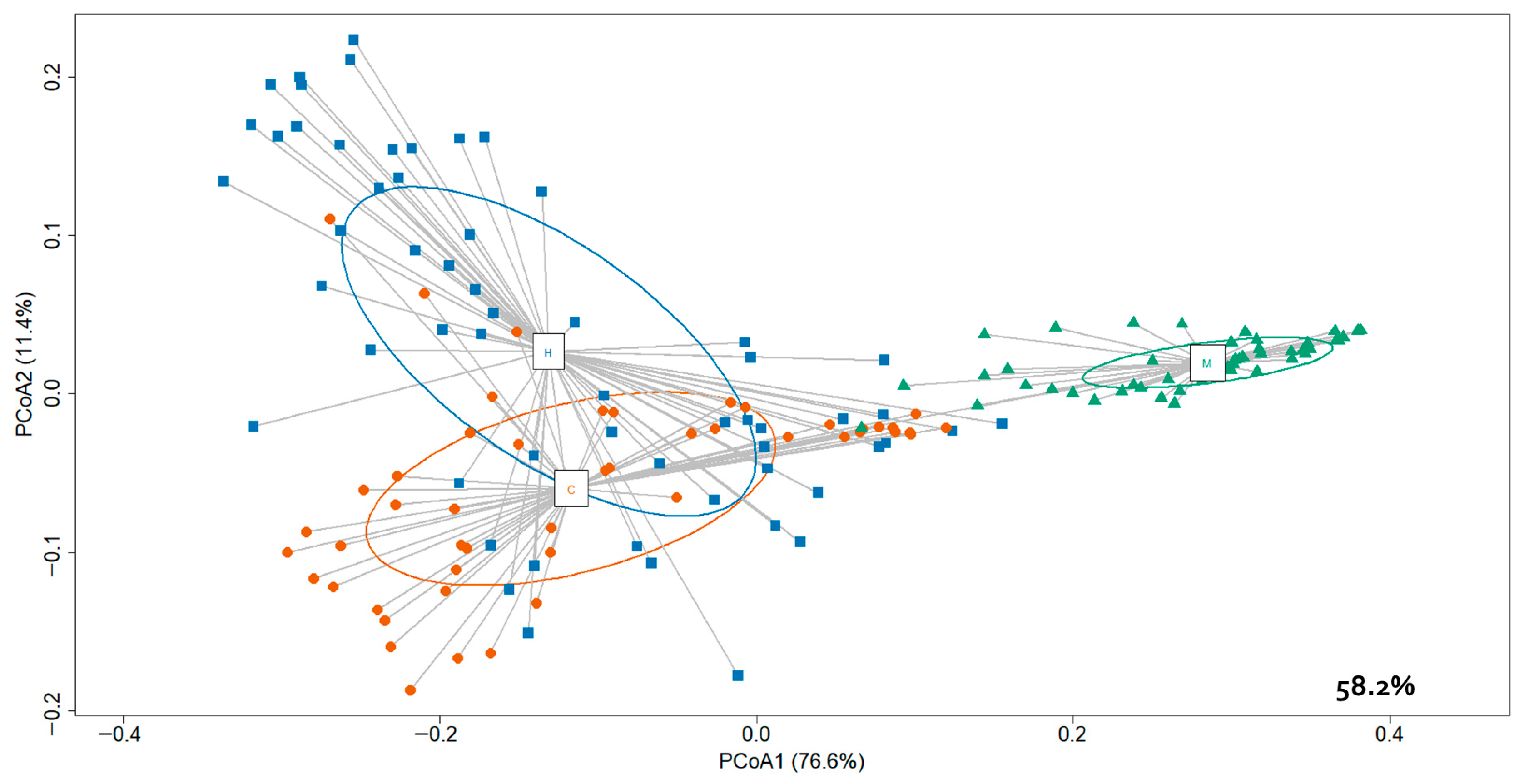
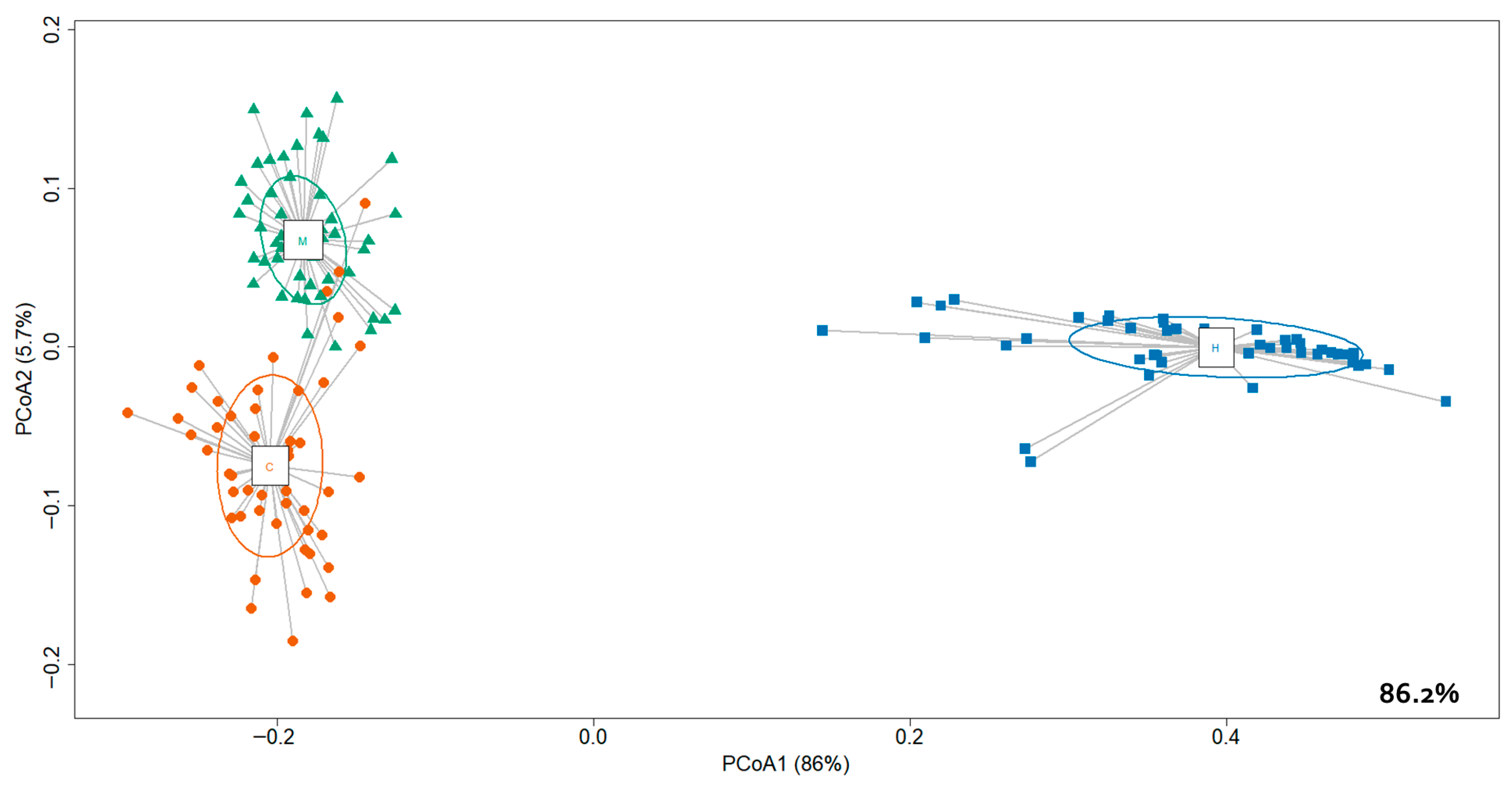
Multivariate analysis (PCoA) revealed that harvest temperature was a primary driver of post-mortem proteolytic profiles. Samples clustered consistently according to low (C), medium (M), and high (H) seawater temperature, regardless of species. Seawater temperature at harvest explained a substantial proportion of the observed variation in proteolytic enzyme activity (SA: 86.2%; PMA: 69.5%; DL: 58.2%), indicating that fish harvested under these conditions exhibited the most pronounced proteolytic signatures. While species contributed to differences in absolute activity levels, temperature clearly structured the overall enzyme trajectories and multivariate patterns, highlighting its dominant role in shaping post-harvest proteolysis in Mediterranean aquaculture (Figure 9, Figure 10 and Figure 11).

4. Discussion

This study compared post-mortem proteolytic activity during chilled storage in three Mediterranean aquaculture species across three harvest seawater temperatures. Pronounced species-specific differences were already evident at harvest (day 0), with significantly different initial post-harvest enzymatic activity between species at all harvest temperatures. Across chilled storage, all four proteolytic enzymes followed distinct, species-specific response patterns. In DL, enzymatic activity showed a non-linear response to harvest temperature, with intermediate activity at low seawater temperature, a marked increase at medium temperature, and reduced activity at high temperature. In contrast, PMA exhibited a progressive increase in enzymatic activity with rising harvest temperature, following a clear rise from low to high seawater temperature (C < M < H). Gilthead seabream (SA) displayed the opposite trend, with enzymatic activity decreasing steadily from low to high seawater temperature (C > M > H). Taken together, these contrasting temperature-dependent responses highlight pronounced interspecific differences in the regulation and activation of post-mortem proteolytic systems, with important implications for post-harvest muscle degradation dynamics and flesh quality during storage [4,11,13,34]. It should be noted that variation associated with harvest temperature represented the dominant source of the observed enzymatic activity patterns; however, these patterns should be interpreted in the context of seasonally conditioned physiology rather than as isolated thermal effects.
These species-specific patterns likely reflect underlying variation in muscle architecture and connective tissue composition, including differences in myofibrillar organization, collagen content, and the abundance and cross-linking of extracellular matrix components, all of which influence the mechanical resistance of muscle tissue to post-mortem proteolysis [35,36]. Harvest temperature may also modulate proteolytic dynamics by altering muscle membrane integrity and osmotic balance. The pronounced calpain activity observed at 21 °C across all three species likely reflects a temperature range that promotes sufficient sarcolemmal permeability and calcium release while maintaining enzymatic stability. Gilthead seabream muscle contains relatively high connective tissue content and muscle fibers of smaller diameter, features that may facilitate accessibility of structural proteases to their substrates. In contrast, European seabass muscle is characterized by larger fibers and lower connective tissue density, potentially explaining its lower basal enzyme activity [37,38,39]. The apparent attenuation of calpain activity at 26 °C, particularly in gilthead seabream, may result from accelerated post-mortem metabolic exhaustion and a more rapid decline in muscle pH, which can shorten the effective activation window of calcium-dependent proteases. Elevated temperatures may also promote early destabilization of the sarcolemma and endomysium, leading to transient calcium leakage followed by enzyme inactivation due to unfavorable pH and thermal conditions [13]. Such effects could explain why higher harvest temperature does not necessarily translate into sustained calpain activity despite increased physiological stress. Although detailed comparative histological data for red seabream are limited, the intermediate enzymatic activity observed here is consistent with a muscle organization that lies between that of gilthead seabream and European seabass. A more developed epimysium and perimysium, combined with distinct collagen composition and cross-linking patterns, may enhance mechanical resistance and water retention, thereby promoting osmotic stress and improved accessibility of calpains to their substrates during early post-mortem stages [40]. Similar structural features may also account for the higher collagenase activity observed in red seabream relative to gilthead seabream, as a more abundant or structurally complex extracellular matrix would provide both increased substrate availability and stronger activation signals for collagen-degrading enzymes.
Beyond structural factors, interspecific variation may also be influenced by differences in the primary structure and regulatory properties of key proteolytic enzymes, including calpains, collagenases, and cathepsins, as different numbers of genes encoding these enzyme families are present among species and were identified through reciprocal BLAST analyses (link: https://blast.ncbi.nlm.nih.gov/Blast.cgi?PROGRAM=blastn&PAGE_TYPE=BlastSearch&LINK_LOC=blasthome, accessed on: 10 November 2025) of available genome assemblies in the NCBI database (calpains–cathepsins–collagenases: P. major 27–19–6; D. labrax 22–17–6; S. aurata 29–23–6) [41]. Such variation may affect calcium sensitivity, substrate specificity, activation thresholds, and functional redundancy. Genetic variation may further modulate proteolytic dynamics by influencing enzyme expression levels and endogenous inhibitors, shaping the balance between proteolysis and inhibition during the post-mortem period [41]. In addition, post-translational modifications, particularly phosphorylation, may regulate protease activation, localization, and interactions with regulatory proteins, while interspecific differences in enzyme stability under declining pH, oxidative stress, and temperature fluctuations may influence the duration and intensity of proteolytic activity [7,42]. In support of the biological relevance of these mechanisms, Yu et al. (2024) reported that phosphorylation was positively associated with muscle hardness and Ca2+-ATPase activity in Nile tilapia, highlighting a potential link between phosphorylation-dependent calcium regulation and calpain activation during post-mortem proteolysis [43]. Collectively, these intrinsic traits may plausibly suggest that susceptibility to post-mortem degradation, and consequently shelf-life potential, is at least partly species-dependent.
Interestingly, harvest temperature was associated with distinct temporal patterns of post-mortem proteolysis in a species-dependent manner, rather than uniformly scaling proteolytic activity across conditions. In DL and PMA, temperature altered the timing and distribution of enzymatic activity across early, mid, and late storage phases, effectively redistributing proteolytic intensity over time. In contrast, SA exhibited a more constrained response, particularly under high seawater temperature, where proteolytic activity was globally reduced across enzyme systems.
This temporal pattern was most strongly associated with cathepsin activity. In DL, cathepsin activity increased earlier under cold harvest conditions, whereas under high seawater temperature, activation was delayed until late storage. In contrast, PMA showed accelerated lysosomal proteolysis at higher harvest temperatures (M and H), with early increases evident under high seawater temperature, while lower seawater temperatures delayed activation. SA exhibited generally lower and more constrained cathepsin activity, with minimal timing shifts and marked suppression under high seawater temperature. Although less pronounced, similar temperature-dependent timing effects were observed for calpains and collagenases, supporting species-specific differences.
The biochemical characteristics and subcellular localization of the proteases examined are consistent with these patterns. Calpains, as calcium-dependent cysteine proteases, are rapidly activated post mortem by cytosolic Ca2+ influx and target key structural proteins such as titin, nebulin, and desmin [44,45]. Collagenases contribute to early connective tissue weakening [13], whereas CTSB and CTSL, with acidic pH optima and broad substrate specificity, become increasingly active as autolysis progresses and muscle pH declines [11,46]. These features underscore the importance of pre-mortem handling and early post-mortem pH trajectories in shaping degradation dynamics.
Harvest temperature emerged as a major modulator of proteolytic activity, with the medium temperature (21 °C) producing the highest or near-highest enzyme levels across species. Fish harvested at this temperature are likely to possess adequate glycogen reserves and experience a controlled early post-mortem pH decline, conditions favorable for calpain and collagenase activation [7,46,47,48]. Moreover, the observed patterns may also reflect alternative mechanisms, including temperature-dependent differences in pre-harvest stress exposure [9,11], circulating stress hormones [49], membrane stability, and the timing of rigor mortis onset [50], all of which are known to influence calcium homeostasis, lysosomal permeability, and proteolytic activation during the early post-mortem period [9]. In contrast, hotter harvest conditions may impose cumulative thermal and handling stress, leading to depleted energy reserves, rapid pre-rigor pH decline, and early alteration or suppression of some enzymatic activities [15,16,51,52,53], while lower seawater temperature suppresses metabolic and enzymatic processes overall [35,54,55].
Although direct texture or sensory measurements were not collected, the enzymatic trajectories observed provide strong indications of species- and season-specific differences in filet integrity. The higher calpain and collagenase activities observed in SA are in line with earlier studies reporting faster post-mortem softening and increased gaping incidence relative to DL, suggesting a stronger contribution of structural proteolysis in this species [56]. The prominence of medium harvest temperatures in enhancing proteolytic activity further suggests that fish harvested at approximately 21 °C may undergo accelerated post-mortem degradation, potentially reducing shelf life even under controlled storage [13].
These findings highlight opportunities to refine harvest and storage strategies according to species and season. Gilthead seabream harvested at medium seawater temperature (~21 °C) emerged as a particularly sensitive combination, exhibiting consistently high calpain and collagenase activities both at harvest and during early storage, suggesting enhanced susceptibility to rapid structural protein degradation. Similarly, red seabream harvested at medium and high seawater temperatures showed early and pronounced activation of both myofibrillar and lysosomal proteolytic systems, indicating an increased risk of connective tissue weakening and textural deterioration. In contrast, European seabass displayed a broader tolerance window, with comparatively lower basal enzyme activities and more distributed proteolytic responses across storage. The consistent observation that medium harvest temperatures (~21 °C) were associated with the highest enzymatic activities across species suggests that this seasonal window may warrant particular attention in quality management. Although not extreme from a thermal stress perspective, intermediate temperatures likely reflect a physiological state characterized by sufficient glycogen reserves, moderate stress exposure, and enzymatic conditions that may favor protease activation. Under such conditions, standard chilling protocols may be insufficient, indicating that accelerated chilling, modified slurry-ice regimes, or optimized harvest practices could be beneficial during this period. Pre-slaughter interventions such as electrical stunning, optimized slurry-ice systems, or CO2 anesthesia may further modulate post-mortem proteolysis and warrant targeted evaluation [56,57,58,59].
This study represents one of the first multi-species, seasonally replicated assessments of proteolytic activity in Mediterranean aquaculture species using a comprehensive enzyme panel. Nonetheless, microbial activity, pH decline, rigor progression, and physical texture traits were not assessed, limiting direct linkage between biochemical changes and quality outcomes. Future studies integrating biochemical, microbial, and physical metrics will be essential for fully resolving species- and season-specific degradation trajectories and their implications for shelf life.

5. Conclusions

This study provides the first multi-species, seasonally replicated assessment of post-mortem proteolytic activity in three major Mediterranean aquaculture species. Clear species-specific differences were identified, with gilthead seabream exhibiting higher initial post-harvest and storage-phase activity of calpains and collagenases, European seabass showing the lowest levels, and red seabream displaying an intermediate phenotype. Seasonal harvest seawater temperature emerged as a dominant driver of enzyme behavior, with the medium temperature (~21 °C) consistently producing the highest proteolytic activities. These findings suggest that fish harvested at intermediate seasonal temperatures may be particularly susceptible to accelerated quality loss, highlighting the need to adapt handling and chilling strategies according to harvest conditions. The integration of species- and season-specific proteolytic profiles provides a mechanistic basis for filet stability and supports the development of tailored harvest protocols. Such information is valuable for refining quality-management practices, minimizing post-harvest losses, and improving product consistency in Mediterranean aquaculture.

Supplementary Materials

The following supporting information can be downloaded at: https://www.mdpi.com/article/10.3390/aquacj6010002/s1, Figure S1: Enzymatic activity of calpain in five time points post-harvest in three farmed fish species (PMA, Pagrus major; DL, Dicentrarchus labrax; SA, Sparus aurata). Fishes were harvested at three different periods in the year at seawater temperatures of C: 15.8 °C, M: 21 °C, and H: 26 °C. Values are square-rooted. Superscripts indicate statistically significant differences between days. (*: p < 0.05, **: p < 0.01, ***: p < 0.001, ****: p < 0.0001); Figure S2: Enzymatic activity of collagenase in five time points post-harvest in three farmed fish species (PMA, Pagrus major; DL, Dicentrarchus labrax; SA, Sparus aurata). Fishes were harvested at three different periods in the year at seawater temperatures of C: 15.8 °C, M: 21 °C, and H: 26 °C. Values are square-rooted. Superscripts indicate statistically significant differences between days. (*: p < 0.05, **: p < 0.01, ***: p < 0.001, ****: p < 0.0001); Figure S3: Enzymatic activity of CTSB in five time points post-harvest in three farmed fish species (PMA, Pagrus major; DL, Dicentrarchus labrax; SA, Sparus aurata). Fishes were harvested at three different periods in the year at seawater temperatures of C: 15.8 °C, M: 21 °C, and H: 26 °C. Values are square-rooted. Superscripts indicate statistically significant differences between days; Figure S4: Enzymatic activity of CTSL in five time points post-harvest in three farmed fish species (PMA, Pagrus major; DL, Dicentrarchus labrax; SA, Sparus aurata). Fishes were harvested at three different periods in the year at seawater temperatures of C: 15.8 °C, M: 21 °C, and H: 26 °C. Values are square-rooted. Superscripts indicate statistically significant differences between days.

Author Contributions

Conceptualization, K.A.M. and L.P.; methodology, L.P., A.E.F., A.D. and R.A.; sampling, A.D. and R.A.; investigation, R.A.; data curation, K.A.M. and R.A.; writing—original draft preparation, R.A.; writing—review and editing, K.A.M.; visualization, R.A.; supervision, K.A.M.; project administration, L.P. All authors have read and agreed to the published version of the manuscript.

Funding

This research was co-financed by Greece and the European Union, the European Maritime and Fisheries Fund, in the context of the implementation of the Greek Operational Programme for Fisheries, Priority Axis “Innovation in Aquaculture”, project title “Development and industrial scale evaluation of an innovative humane slaughter system and assessment of welfare in aquaculture marine fish species” MIS 5010690.
Aquacj 06 00002 i001

Institutional Review Board Statement

Animals used in this study were reared in commercial installations registered for aquaculture production in EU countries, following certified procedures (GLOBAL GAP) of commercial production. The legislation and measures implemented by the commercial producers complied with existing national and EU (Directive 1998/58/EC) legislation (protection of animals kept for farming). The ultimate objective of the study was to avoid unnecessary pain and suffering during harvest.

Data Availability Statement

All data is provided in the article.

Conflicts of Interest

Author Leonidas Papaharisis is employed by the company Avramar Aquaculture SA. The remaining authors declare that the research was conducted in the absence of any commercial or financial relationships that could be construed as a potential conflict of interest.

References

  1. Sriket, C. Proteases in Fish and Shellfish: Role on Muscle Softening and Prevention. Int. Food Res. J. 2014, 21, 433–445. [Google Scholar]
  2. Delbarre-Ladrat, C.; Verrez-Bagnis, V.; Noël, J.; Fleurence, J. Relative Contribution of Calpain and Cathepsins to Protein Degradation in Muscle of Sea Bass (Dicentrarchus labrax L.). Food Chem. 2004, 88, 389–395. [Google Scholar] [CrossRef]
  3. Ladrat, C.; Verrez-Bagnis, V.; Noël, J.; Fleurence, J. In Vitro Proteolysis of Myofibrillar and Sarcoplasmic Proteins of White Muscle of Sea Bass (Dicentrarchus labrax L.): Effects of Cathepsins B, D and L. Food Chem. 2003, 81, 517–525. [Google Scholar] [CrossRef]
  4. Ntzimani, A.; Angelakopoulos, R.; Semenoglou, I.; Dermesonlouoglou, E.; Tsironi, T.; Moutou, K.; Taoukis, P. Slurry Ice as an Alternative Cooling Medium for Fish Harvesting and Transportation: Study of the Effect on Seabass Flesh Quality and Shelf Life. Aquac. Fish. 2023, 8, 385–392. [Google Scholar] [CrossRef]
  5. Chéret, R.; Hernández-Andrés, A.; Delbarre-Ladrat, C.; de Lamballerie, M.; Verrez-Bagnis, V. Proteins and Proteolytic Activity Changes during Refrigerated Storage in Sea Bass (Dicentrarchus labrax L.) Muscle after High-Pressure Treatment. Eur. Food Res. Technol. 2006, 222, 527–535. [Google Scholar] [CrossRef]
  6. Ertbjerg, P.; Puolanne, E. Muscle Structure, Sarcomere Length and Influences on Meat Quality: A Review. Meat Sci. 2017, 132, 139–152. [Google Scholar] [CrossRef] [PubMed]
  7. Goll, D.E.; Thompson, V.F.; Li, H.; Wei, W.; Cong, J. The Calpain System. Physiol. Rev. 2003, 83, 731–801. [Google Scholar] [CrossRef]
  8. Roth, B.; Moeller, D.; Veland, J.O.; Imsland, A.; Slinde, E. The Effect of Stunning Methods on Rigor Mortis and Texture Properties of Atlantic Salmon (Salmo salar). J. Food Sci. 2002, 67, 1462–1466. [Google Scholar] [CrossRef]
  9. Papaharisis, L.; Tsironi, T.; Dimitroglou, A.; Taoukis, P.; Pavlidis, M. Stress Assessment, Quality Indicators and Shelf Life of Three Aquaculture Important Marine Fish, in Relation to Harvest Practices, Water Temperature and Slaughter Method. Aquac. Res. 2019, 50, 2608–2620. [Google Scholar] [CrossRef]
  10. Erikson, U.; Truong, H.T.M.; Le, D.V.; Pham, P.D.; Svennevig, N.; Phan, V.T. Harvesting Procedures, Welfare and Shelf Life of Ungutted and Gutted Shortfin Pompano (Trachinotus falcatus) Stored in Ice. Aquaculture 2019, 498, 236–245. [Google Scholar] [CrossRef]
  11. Angelakopoulos, R.; Dimitroglou, A.; Papaharisis, L.; Moutou, K.A. Electrical Stunning Has the Potential to Delay Fillet Degradation Post-Harvest in Red Seabream (Pagrus major). Aquac. J. 2022, 2, 302–315. [Google Scholar] [CrossRef]
  12. Hultmann, L.; Phu, T.M.; Tobiassen, T.; Aas-Hansen, O.; Rustad, T. Effects of Pre-Slaughter Stress on Proteolytic Enzyme Activities and Muscle Quality of Farmed Atlantic Cod (Gadus morhua). Food Chem. 2012, 134, 1399–1408. [Google Scholar] [CrossRef] [PubMed]
  13. Ntzimani, A.; Angelakopoulos, R.; Stavropoulou, N.; Semenoglou, I.; Dermesonlouoglou, E.; Tsironi, T.; Moutou, K.; Taoukis, P. Seasonal Pattern of the Effect of Slurry Ice during Catching and Transportation on Quality and Shelf Life of Gilthead Sea Bream. J. Mar. Sci. Eng. 2022, 10, 443. [Google Scholar] [CrossRef]
  14. Hurtado-Rodríguez, R.; Fountoulaki, E.; Grigorakis, K.; Alexis, M.; Flos, R. Season and Size Effects: Changes in the Quality of Gilthead Sea Bream (Sparus aurata L.). Mediterr. Mar. Sci. 2010, 11, 117–132. [Google Scholar] [CrossRef]
  15. Johnston, I.A.; Bower, N.I.; Macqueen, D.J. Growth and the Regulation of Myotomal Muscle Mass in Teleost Fish. J. Exp. Biol. 2011, 214, 1617–1628. [Google Scholar] [CrossRef]
  16. Overturf, K.; Gaylord, T.G. Determination of Relative Protein Degradation Activity at Different Life Stages in Rainbow Trout (Oncorhynchus mykiss). Comp. Biochem. Physiol. Part B Biochem. Mol. Biol. 2009, 152, 150–160. [Google Scholar] [CrossRef]
  17. Zhang, J.; Gu, L.; Zhao, Y.; Nawaz, M.H.; Xia, W.; Wang, P.; Yang, G.; Shen, X.; Fan, C.; Kong, C. Fluorescence-Enhanced Carbon Dots/Silica Aerogel-Loaded PVA Sensor for On-Site Detection of Biogenic Amines in Aquatic Products. Food Anal. Methods 2025, 18, 2470–2486. [Google Scholar] [CrossRef]
  18. Parlapani, F.F. Microbial Diversity of Seafood. Curr. Opin. Food Sci. 2021, 37, 45–51. [Google Scholar] [CrossRef]
  19. Cheng, Y.T.; Huang, P.H.; Lu, W.C.; Chu, S.C.; Wang, P.M.; Ko, W.C.; Li, P.H. Physicochemical Properties of Rainbow Trout (Oncorhynchus mykiss) Filet Treated with High-Voltage Electrostatic Field under Different Storage Temperatures. Front. Sustain. Food Syst. 2023, 7, 1158953. [Google Scholar] [CrossRef]
  20. Rucinque, D.S.; Biscaia, A.G.C.; Watanabe, A.L.; Molento, C.F.M. Electrical Stunning in South American Catfish (Rhamdia quelen) Using Direct Current Waveform: Welfare and Meat Quality. Ciência Rural 2021, 51, e20200547. [Google Scholar] [CrossRef]
  21. Morzel, M.; Sohier, D.; Van De Vis, H. Evaluation of Slaughtering Methods for Turbot with Respect to Animal Welfare and Flesh Quality. J. Sci. Food Agric. 2003, 83, 19–28. [Google Scholar] [CrossRef]
  22. Veland, J.O.; Torrissen, O.J. The Texture of Atlantic Salmon (Salmo Salar) Muscle as Measured Instrumentally Using TPA and Warner-Brazler Shear Test. J. Sci. Food Agric. 1999, 79, 1737–1746. [Google Scholar] [CrossRef]
  23. Lakshmanan, R.; Patterson, M.; Piggot, J. Effects of High-Pressure Processing on Proteolytic Enzymes and Proteins in Cold-Smoked Salmon during Refrigerated Storage. Food Chem. 2005, 90, 541–548. [Google Scholar] [CrossRef]
  24. Chéret, R.; Delbarre-Ladrat, C.; de Lamballerie-Anton, M.; Verrez-Bagnis, V. Calpain and Cathepsin Activities in Post Mortem Fish and Meat Muscles. Food Chem. 2007, 101, 1474–1479. [Google Scholar] [CrossRef]
  25. Barrett, A.J.; Kirschke, H. [41] Cathepsin B, Cathepsin H, and Cathepsin L. Methods Enzymol. 1981, 80, 535–561. [Google Scholar] [CrossRef]
  26. Bradford, M.M. A Rapid and Sensitive Method for the Quantitation of Microgram Quantities of Protein Utilizing the Principle of Protein-Dye Binding. Anal. Biochem. 1976, 72, 248–254. [Google Scholar] [CrossRef]
  27. R Core Team. R: A Language and Environment for Statistical Computing; R Foundation for Statistical Computing: Vienna, Austria, 2020. [Google Scholar]
  28. RStudio Team. RStudio: Integrated Development Environment for R; RStudio, PBC: Boston, MA, USA, 2020. [Google Scholar]
  29. Shapiro, S.S.; Wilk, M.B. An Analysis of Variance Test for Normality (Complete Samples). Biometrika 1965, 52, 591–611. [Google Scholar] [CrossRef]
  30. Peterson, R.A.; Cavanaugh, J.E. Ordered Quantile Normalization: A Semiparametric Transformation Built for the Cross-Validation Era. J. Appl. Stat. 2020, 47, 2312–2327. [Google Scholar] [CrossRef]
  31. Oksanen, J.; Simpson, G.; Blanchet, F.; Kindt, R.; Legendre, P.M.P.; O’Hara, R.; Solymos, P.; Stevens, M.; Szoecs, E.; Wagner, H.B.M.; et al. Vegan: Community Ecology Package, Version 2.6-4; R Foundation for Statistical Computing: Vienna, Austria, 2022.
  32. Anderson, M.J. Permutational Multivariate Analysis of Variance (PERMANOVA). In Wiley StatsRef: Statistics Reference Online; John Wiley and Sons: Hoboken, NJ, USA, 2017; pp. 1–15. [Google Scholar] [CrossRef]
  33. Zapala, M.A.; Schork, N.J. Multivariate Regression Analysis of Distance Matrices for Testing Associations between Gene Expression Patterns and Related Variables. Proc. Natl. Acad. Sci. USA 2006, 103, 19430. [Google Scholar] [CrossRef]
  34. Hernández-Herrero, M.M.; Duflos, G.; Malle, P.; Bouquelet, S. Collagenase Activity and Protein Hydrolysis as Related to Spoilage of Iced Cod (Gadus morhua). Food Res. Int. 2003, 36, 141–147. [Google Scholar] [CrossRef]
  35. Delbarre-Ladrat, C.; Chéret, R.; Taylor, R.; Verrez-Bagnis, V. Trends in Postmortem Aging in Fish: Understanding of Proteolysis and Disorganization of the Myofibrillar Structure. Crit. Rev. Food Sci. Nutr. 2006, 46, 409–421. [Google Scholar] [CrossRef]
  36. Singh, R.; Singh, A.; Sachan, S. Enzymes Used in the Food Industry: Friends or Foes? In Enzymes in Food Biotechnology; Academic Press: Cambridge, MA, USA, 2019; pp. 827–843. [Google Scholar] [CrossRef]
  37. Ayala, M.D.; Abdel, I.; Santaella, M.; Martínez, C.; Periago, M.J.; Gil, F.; Blanco, A.; Albors, O.L. Muscle Tissue Structural Changes and Texture Development in Sea Bream, Sparus aurata L., during Post-Mortem Storage. LWT—Food Sci. Technol. 2010, 43, 465–475. [Google Scholar] [CrossRef]
  38. Valente, L.M.P.; Cornet, J.; Donnay-Moreno, C.; Gouygou, J.P.; Bergé, J.P.; Bacelar, M.; Escórcio, C.; Rocha, E.; Malhão, F.; Cardinal, M. Quality Differences of Gilthead Sea Bream from Distinct Production Systems in Southern Europe: Intensive, Integrated, Semi-Intensive or Extensive Systems. Food Control 2011, 22, 708–717. [Google Scholar] [CrossRef]
  39. López-Albors, O.; Gil, F.; Ramírez-Zarzosa, G.; Vázquez, J.M.; Latorre, R.; García-Alcázar, A.; Arencibia, A.; Moreno, F. Muscle Development in Gilthead Sea Bream (Sparus aurata, L.) and Sea Bass (Dicentrarchus labrax, L.): Further Histochemical and Ultrastructural Aspects. Anat. Histol. Embryol. 1998, 27, 223–229. [Google Scholar] [CrossRef]
  40. Fairgrieve, M.; DenHartigh, A.; Lood, C.; Fink, S.; Yakovenko, O.; Thomas, W.; Duvvuri, B.; Gale, M.; Davis, M. Calpain Drives Pyroptotic Vimentin Cleavage, Intermediate Filament Loss, and Cell Rupture That Mediates Immunostimulation. Proc. Natl. Acad. Sci. USA 2019, 116, 5061–5070. [Google Scholar] [CrossRef]
  41. Angelakopoulos, R.; Tsipourlianos, A.; Giannoulis, T.; Mamuris, Z.; Moutou, K.A. MassArray Genotyping as a Selection Tool for Extending the Shelf-Life of Fresh Gilthead Sea Bream and European Seabass. Animals 2024, 14, 205. [Google Scholar] [CrossRef]
  42. Turk, B.; Turk, D.; Turk, V. Lysosomal Cysteine Proteases: More than Scavengers. Biochim. Biophys. Acta—Protein Struct. Mol. Enzymol. 2000, 1477, 98–111. [Google Scholar] [CrossRef]
  43. Yu, Y.; Wei, Y.; Chen, S.; Wang, Y.; Huang, H.; Li, C.; Wang, D.; Shi, W.; Li, J.; Zhao, Y. Correlation Analysis of Phosphorylation of Myofibrillar Protein and Muscle Quality of Tilapia during Storage in Ice. Food Chem. 2024, 451, 139502. [Google Scholar] [CrossRef] [PubMed]
  44. Bao, Y.; Wang, K.; Yang, H.; Regenstein, J.M.; Ertbjerg, P.; Zhou, P. Protein Degradation of Black Carp (Mylopharyngodon piceus) Muscle during Cold Storage. Food Chem. 2020, 308, 125576. [Google Scholar] [CrossRef] [PubMed]
  45. Tang, M.; Dai, H.; Ma, L.; Yu, Y.; Liu, T.; Feng, X.; Hu, W.; Li, Y.; Zhang, Y. Degradation of Structural Proteins and Their Relationship with the Quality of Mandarin Fish (Siniperca chuatsi) during Post-Mortem Storage and Cooking. Int. J. Food Sci. Technol. 2020, 55, 1617–1628. [Google Scholar] [CrossRef]
  46. Hultmann, L.; Tobiassen, T.; Aas-Hansen, Ø.; Phu, T.M.; Rustad, T. Muscle Quality and Proteolytic Enzymes of Farmed Atlantic Cod (Gadus morhua) During Storage: Effects of Pre-Slaughter Handling and Increased Storage Temperature. J. Aquat. Food Prod. Technol. 2016, 25, 540–554. [Google Scholar] [CrossRef]
  47. Wang, X.; Zheng, Z. Mechanistic Insights into Fish Spoilage and Integrated Preservation Technologies. Appl. Sci. 2025, 15, 7639. [Google Scholar] [CrossRef]
  48. Hematyar, N.; Policar, T.; Rustad, T. Importance of Proteins and Mitochondrial Changes as Freshness Indicators in Fish Muscle Post-Mortem. J. Sci. Food Agric. 2025, 105, 5163–5172. [Google Scholar] [CrossRef]
  49. Molina, A.; Dettleff, P.; Valenzuela-Muñoz, V.; Gallardo-Escarate, C.; Valdés, J.A. High-Temperature Stress Induces Autophagy in Rainbow Trout Skeletal Muscle. Fishes 2023, 8, 303. [Google Scholar] [CrossRef]
  50. Digre, H.; Erikson, U.; Misimi, E.; Lambooij, B.; van de Vis, H. Electrical Stunning of Farmed Atlantic Cod Gadus morhua L.: A Comparison of an Industrial and Experimental Method. Aquac. Res. 2010, 41, 1190–1202. [Google Scholar] [CrossRef]
  51. Nemova, N.N.; Lysenko, L.A.; Kantserova, N.P. Degradation of Skeletal Muscle Protein during Growth and Development of Salmonid Fish. Russ. J. Dev. Biol. 2016, 47, 161–172. [Google Scholar] [CrossRef]
  52. Guderley, H.; St-Pierre, J. Going with the Flow or Life in the Fast Lane: Contrasting Mitochondrial Responses to Thermal Change. J. Exp. Biol. 2002, 205, 2237–2249. [Google Scholar] [CrossRef]
  53. Cai, X.; Liu, Y.; Hu, Y.; Liu, X.; Jiang, H.; Yang, S.; Shao, Z.; Xia, Y.; Xiong, L. ROS-Mediated Lysosomal Membrane Permeabilization Is Involved in Bupivacaine-Induced Death of Rabbit Intervertebral Disc Cells. Redox Biol. 2018, 18, 65–76. [Google Scholar] [CrossRef]
  54. Giyatmi; Irianto, H.E. Enzymes in Fermented Fish. Adv. Food Nutr. Res. 2017, 80, 199–216. [Google Scholar] [CrossRef]
  55. Singh, A.; Benjakul, S. Proteolysis and Its Control Using Protease Inhibitors in Fish and Fish Products: A Review. Compr. Rev. Food Sci. Food Saf. 2018, 17, 496–509. [Google Scholar] [CrossRef]
  56. De La Rosa, I.; Castro, P.L.; Ginés, R.; Herrera, M.; Vargas-Chacoff, L. Twenty Years of Research in Seabass and Seabream Welfare during Slaughter. Animals 2021, 11, 2164. [Google Scholar] [CrossRef] [PubMed]
  57. Gräns, A.; Cabrera-Álvarez, M.J.; Oliveira, G.D.C.; Saraiva, J.L.; Arechavala-Lopez, P.; Bortoletti, M.; Schwerte, T.; Brijs, J. Stunning Challenges: Operational Indicators Flag Failures, but Neurological Validation Is Needed to Confirm Stunning Effectiveness in Seabass and Seabream. Aquac. Rep. 2025, 45, 103189. [Google Scholar] [CrossRef]
  58. Pavlidis, M.; Papaharisis, L.; Adamek, M.; Steinhagen, D.; Jung-Schroers, V.; Kristiansen, T.; Theodoridi, A.; Otero-Lourido, F. Animal Welfare of Farmed Fish; Policy Department for Structural and Cohesion Policies Directorate-General for Internal Policies: Brussels, Belgium, 2023. [Google Scholar]
  59. Algers, B.; Blokhuis, H.J.; Bøtner, A.; Broom, D.M.; Costa, P.; Domingo, M.; Greiner, M.; Hartung, J.; Koenen, F.; Müller-Graf, C.; et al. Species-Specific Welfare Aspects of the Main Systems of Stunning and Killing of Farmed Atlantic Salmon. EFSA J. 2009, 7, 1011. [Google Scholar] [CrossRef]
Figure 1. Enzymatic activity of calpain in three farmed fish species on harvest day (day 0). Fishes were harvested at three different periods in the year at seawater temperatures of C: 15.8 °C, M: 21 °C, and H: 26 °C. Values are square-rooted. PMA (coral red): Pagrus major, DL (steel blue): Dicentrarchus labrax, SA (gold-olive): Sparus aurata. Superscripts indicate statistically significant differences between species at harvest (**: p < 0.01, ***: p < 0.001).
Aquacj 06 00002 g001
Figure 2. Enzymatic activity of collagenase in three farmed fish species on harvest day (day 0). Fishes were harvested at three different periods in the year at seawater temperatures of C: 15.8 °C, M: 21 °C, and H: 26 °C. Values are square-rooted. PMA (coral red): Pagrus major, DL (steel blue): Dicentrarchus labrax, SA (gold-olive): Sparus aurata. Superscripts indicate statistically significant differences between species at harvest (**: p < 0.01, ***: p < 0.001).
Aquacj 06 00002 g002
Figure 3. Enzymatic activity of cathepsin Β (CTSB) in three farmed fish species on harvest day (day 0). Fishes were harvested at three different periods in the year at seawater temperatures of C: 15.8 °C, M: 21 °C, and H: 26 °C. Values are square-rooted. PMA (coral red): Pagrus major, DL (steel blue): Dicentrarchus labrax, SA (gold-olive): Sparus aurata. Superscripts indicate statistically significant differences between species at harvest (*: p < 0.05, **: p < 0.01, ***: p < 0.001).
Aquacj 06 00002 g003
Figure 4. Enzymatic activity of cathepsin L (CTSL) in three farmed fish species on harvest day (day 0). Fishes were harvested at three different periods in the year at seawater temperatures of C: 15.8 °C, M: 21 °C, and H: 26 °C. Values are square-rooted. PMA (coral red): Pagrus major, DL (steel blue): Dicentrarchus labrax, SA (gold-olive): Sparus aurata. Superscripts indicate statistically significant differences between species at harvest (*: p < 0.05, **: p < 0.01, ***: p < 0.001).
Aquacj 06 00002 g004
Figure 5. Enzymatic activity of calpain at five time points post-harvest in three farmed fish species (PMA, Pagrus major; DL, Dicentrarchus labrax; SA, Sparus aurata). Fishes were harvested at three different periods in the year at seawater temperatures of C: 15.8 °C, M: 21 °C, and H: 26 °C. Values are square-rooted. Superscripts indicate statistically significant differences between sequential days (*: p < 0.05, ***: p < 0.001).
Aquacj 06 00002 g005
Figure 6. Enzymatic activity of collagenase in five time points post-harvest in three farmed fish species (PMA, Pagrus major; DL, Dicentrarchus labrax; SA, Sparus aurata). Fishes were harvested at three different periods in the year at seawater temperatures of C: 15.8 °C, M: 21 °C, and H: 26 °C. Values are square-rooted. Superscripts indicate statistically significant differences between sequential days (*: p < 0.05, **: p < 0.01, ***: p < 0.001, ****: p < 0.0001).
Aquacj 06 00002 g006
Figure 7. Enzymatic activity of CTSB at five time points post-harvest in three farmed fish species (PMA, Pagrus major; DL, Dicentrarchus labrax; SA, Sparus aurata). Fishes were harvested at three different periods in the year at seawater temperatures of C: 15.8 °C, M: 21 °C, and H: 26 °C. Values are square-rooted. Superscripts indicate statistically significant differences between sequential days (*: p < 0.05, **: p < 0.01, ***: p < 0.001, ****: p < 0.0001).
Aquacj 06 00002 g007
Figure 8. Enzymatic activity of CTSL in five time points post-harvest in three farmed fish species (PMA, Pagrus major; DL, Dicentrarchus labrax; SA, Sparus aurata). Fishes were harvested at three different periods in the year at seawater temperatures of C: 15.8 °C, M: 21 °C, and H: 26 °C. Values are square-rooted. Superscripts indicate statistically significant differences between sequential days (*: p < 0.05, ***: p < 0.001).
Aquacj 06 00002 g008
Figure 9. Principal coordinate analysis (PCoA, =multidimensional scaling, MDS): 69.5% of the data showed dissimilarities, indicating an effect of seawater temperature on enzymatic activities of Pagrus major post-harvest. Orange represents the values of enzymatic activity at 15.8 °C (C), green represents the values of enzymatic activity at 21 °C (M), and blue represents the values of enzymatic activity at 26 °C (H).
Aquacj 06 00002 g009
Figure 10. Principal coordinate analysis (PCoA, =multidimensional scaling, MDS): 58.2% of the data showed dissimilarities, indicating an effect of seawater temperature on the enzymatic activities of Dicentrarchus labrax post-harvest. Orange represents the values of enzymatic activity at 15.8 °C (C), green represents the values of enzymatic activity at 21 °C (M), and blue represents the values of enzymatic activity at 26 °C (H).
Aquacj 06 00002 g010
Figure 11. Principal coordinate analysis (PCoA, =multidimensional scaling, MDS): 86.2% of the data showed dissimilarities, indicating an effect of water temperature on the enzymatic activities of Sparus aurata post-harvest. Orange represents the values of enzymatic activity at 15.8 °C (C), green represents the values of enzymatic activity at 21 °C (M), and blue represents the values of enzymatic activity at 26 °C (H).
Aquacj 06 00002 g011
Disclaimer/Publisher’s Note: The statements, opinions and data contained in all publications are solely those of the individual author(s) and contributor(s) and not of MDPI and/or the editor(s). MDPI and/or the editor(s) disclaim responsibility for any injury to people or property resulting from any ideas, methods, instructions or products referred to in the content.