Article

Exploring Circulating Irisin as a Biomarker: An Analysis in Relationship with Glucose and Bone Status Evaluation in Adults with Vitamin D Deficient Versus Sufficient Status


1
Internal Medicine Department, State “Nicolae Testemiţanu” University of Medicine and Pharmacy, 2004 Chisinau, Moldova
2
Department of Research, “C.I. Parhon” National Institute of Endocrinology, 011863 Bucharest, Romania
3
Department of Family Medicine, State “Nicolae Testemiţanu” University of Medicine and Pharmacy, 2004 Chisinau, Moldova
4
Department of Endocrinology V, “C.I. Parhon” National Institute of Endocrinology, 011863 Bucharest, Romania
5
PhD Doctoral School of “Carol Davila” University of Medicine and Pharmacy, 020021 Bucharest, Romania
6
Department of Endocrinology, “Iuliu Hatieganu” University of Medicine and Pharmacy, 400012 Cluj-Napoca, Romania
7
Department of Endocrinology, County Emergency Clinical Hospital, 400347 Cluj-Napoca, Romania
8
Department of Endocrinology, “Carol Davila” University of Medicine and Pharmacy, 020021 Bucharest, Romania
9
Occupational Medicine Department, University of Medicine and Pharmacy of Craiova, 200349 Craiova, Romania
*
Authors to whom correspondence should be addressed.
These authors contributed equally to this work.
Physiologia 2026, 6(1), 7; https://doi.org/10.3390/physiologia6010007
Submission received: 30 October 2025 / Revised: 8 January 2026 / Accepted: 10 January 2026 / Published: 15 January 2026

Abstract

Background: Irisin, a muscle-derived hormone, enhances the energy metabolism by activating the brown adipose tissue and acts as a bone-forming agent across the entire life span. No consistent clinical data in humans have been published so far to highlight if blood irisin as glucose/bone biomarker should be refined based on the vitamin D status (deficient or sufficient). Therefore, we aimed to objectively assess the level of irisin in female adults with abnormal and normal vitamin D status, as reflected by the level of 25-hydroxyvitamin (25OHD) in relationship with glucose and bone metabolic parameters. Methods: This pilot, prospective, exploratory study included eighty-nine menopausal women aged over 50. We excluded subjects with malignancies, bone and metabolic disorders, insulin treatment, and active endocrine disorders. Fasting profile included glycaemia, insulin, and glycated haemoglobin A1c (HbA1c). Then, 75 g oral glucose tolerance test (OGTT) included glycaemia and insulin assay after 60 and 120 min. Bone status involved bone turnover markers and central dual-energy X-ray absorptiometry providing bone mineral density (BMD) and trabecular bone score. Results: Eighty-nine subjects were included in the following two groups depending on 25OHD: vitamin D-deficient (VDD) group (N = 48; 25OHD < 30 ng/mL) and vitamin D-sufficient (VDS) group (N = 41; 25OHD ≥ 30 ng/mL). The two groups had similar age and menopausal period (62.29 ± 10.19 vs. 63.56 ± 8.16 years, respectively; 15.82 ± 9.55 vs. 16.11 ± 9.00 years, p > 0.5 for each). A statistically significant higher body mass index (BMI) was found in VDD vs. VDS group (32.25 ± 5.9 vs. 28.93 ± 4.97 kg/m2, p = 0.006). Circulating irisin was similar between the groups as follows: median (IQR) of 91.85 (44.76–121.76) vs. 71.17 (38.76–97.43) ng/mL, p = 0.506. Fasting profile and OGTT assays showed no between-group difference. Median HOMA-IR in VDD group pointed out insulin resistance of 2.67 (1.31–3.29). Lowest mean/median T-scores at DXA for both groups were consistent with osteopenia category, but they were confirmed at different central sites as follows: femoral neck in both groups [VDD versus VDS group: −1.1 (−1.20–−0.90) vs. −1.1 (−1.49–−0.91), p = 0.526, respectively], only at lumbar spine for VDS group (T-score of −1.18 ± 1.13). The correlations between irisin and the mentioned parameters displayed a different profile when the analysis was performed in the groups with different 25OHD levels. In VDD group, irisin levels statistically significantly correlated with serum phosphorus (r = −0.32, p = 0.022), osteocalcin (r = −0.293, p = 0.038), P1NP (r = −0.297, p = 0.04), HbA1c (r = 0.342, p = 0.014), and BMI (r = 0.408, p = 0.003). Conclusions: This pilot study brings awareness in the analysis of irisin in relationship with glucose and bone-related biomarkers correlates, showing a distinct type of association depending on 25OHD level, which might represent an important crossroad in the multitude of irisin-activated signal transduction pathways.

1. Introduction

Irisin represents a muscle-derived hormone that was discovered a decade ago and a limited number of studies in humans have been published so far, noting that the multi-layered roles of myokines (cytokines or hormones produced by skeletal muscle, also labelled as exerkines, e.g., myostatin, myonectin, follistatin, activin A, etc.) are currently regarded as cutting-edge exploration of various physiological and pathological models [1,2,3].

1.1. Physiological Irisin Release

Irisin is released by the muscle during physical exercise, training, physical rehabilitation, and/or cold exposure. The protein is generated by the cleavage of its precursor, a larger protein named fibronectin type III domain-containing 5 (FNDC5) [4,5,6]. Both acute and chronic exercise induce irisin increase, which further plays multiple endocrine, autocrine, and paracrine roles [7]. Irisin has peripheral actions in relationship with muscle, bone, and adipose tissue, as well as central effects due to the fact that the molecule penetrates the blood–brain barrier. However, central irisin receptors are currently less understood. Notably, irisin elevates the positive effects of the physical activity via, among others, increasing the production of brain-derived neurotrophic factor (BDNF) [8,9,10,11].

1.2. Irisin and Glycaemic Metabolism

Irisin enhances the energy metabolism by activating the brown adipose tissue, which then maintains thermogenesis during cold exposure [12,13,14]. Further on, irisin is part of the crossroads that interplay with the beige/brite adipocytes in addition to other adipokines and exerkines [15,16]. Moreover, the modulation of inflammation represents another crossroad of intermediary metabolisms’ connection [17,18]. Both obesity and diabetes/hyperglycaemia increase liver-released insulin-like growth factor 1 (IGF-1), which then interferes with phosphoinositide 3-kinase (PI3K)—protein kinase B (Akt)—mammalian target of rapamycin (mTOR) pathway, thus representing another point of interference with irisin actions [19,20]. Current data suggest that blood irisin might serve as a biomarker amid the exploration of glucose metabolism in daily practice, particularly in pre-diabetic/diabetic population, despite heterogeneous results and no general consensus with regard to being a glycaemic pointer [21,22].

1.3. Irisin and Bone Health

While muscle diseases such as sarcopenia have been placed in relationship with anomalies of the exerkines (also named miokines or muscle-produced factors/molecules/hormones) panel, recently, irisin was shown to act as a bone-forming agent [23,24,25], starting with peak bone mass [26]. Irisin promotes bone growth and formation by stimulating osteoblasts proliferation and differentiation. The hormone inhibits bone resorption by inhibiting osteoclasts differentiation via c-Jun N-terminal kinases (JNK), canonical Wnt/β-catenin, and receptor activator of nuclear factor kappa-B ligand (RANKL)/RANK/osteoprotegerin signalling pathways. Moreover, it helps the mineralization process via an active interplay with extracellular signal-regulated kinase (ERK), p38, and AMK-activated protein kinase (AMPK) signal transduction pathways [27,28,29]. Irisin might be similar to osteocalcin, noting that osteocalcin was previously found as an integrator of the bone and glucose metabolism. Osteocalcin is currently assessed as a bone-formation marker in daily practice. Osteocalcin was found to be lower in type 2 diabetic individuals when compared to the general (non-diabetic) population [30,31,32].

1.4. Irisin and Vitamin D System: An Open Matter

The majority of circulating irisin originates from the muscle but, recently, other tissues (e.g., fat tissue, pancreas, etc.) have been found to release the molecule to a lesser extent. This brings up potential interferences with other proteins/hormones that similarly act at these levels in the overall landscape of muscle–fat–bone crosstalk, such as vitamin D system, noting that 25-hydroxyvitamin D (25OHD) represents the best marker to evaluate the vitamin D status in humans [33,34,35].
Both irisin and vitamin D have been shown to provide multi-levelled interference with chronic inflammation, cytokines release, and oxidative stress, as found in obesity, osteoporosis, osteoarthritis, or diabetes, as well as the physiological ageing [36,37,38,39,40].
To date, there have been no distinct guidelines to place irisin in daily practice of these mentioned diseases so far, but the research is massively expanding [41]. Moreover, no consistent data have been published to highlight if blood irisin value as glucose/bone biomarker should be refined based on the vitamin D status (deficient or sufficient).
Therefore, we aimed to objectively assess the level of circulating irisin in female adults with deficient versus sufficient vitamin D, in relationship with glucose and bone metabolic parameters.

2. Results

Eighty-nine subjects were included in the following two groups depending on the value of 25OHD: vitamin D-deficient (VDD) group included forty-eight participants with 25OHD < 30 ng/mL and vitamin D-sufficient (VDS) group included forty-one subjects with 25OHD ≥ 30 ng/mL (25OHD: 23.93 ± 4.19 versus 36.51 ± 6.11 ng/mL, p < 0.001). The two groups had similar age and menopausal period (62.29 ± 10.19 versus 63.56 ± 8.16 years, respectively; 15.82 ± 9.55 versus 16.11 ± 9.00 years, p > 0.5 for each). A statistically significant higher body mass index (BMI) was found in VDD group versus VDS group (32.25 ± 5.9 versus 28.93 ± 4.97 kg/m2, p = 0.006). Hormonal panel in terms of blood-circulating irisin [median (interquartile interval (IQR) was 91.85 (44.76–121.76) versus 71.17 (38.76–97.43), p = 0.506], as well as thyroid and adrenal function, was similar between the groups (Table 1).

2.1. Cluster 1: Fasting Glucolipid Metabolism Evaluation

Fasting profile showed no between-group difference. Notably, median HOMA-IR in VDD group pointed out insulin resistance of 2.67, with interquartile interval between 1.31 and 3.29 (insulin resistance being considered at HOMA-IR above 2) [42] (Table 2).

2.2. Cluster 2: Assays During Oral Glucose Tolerance Test

Oral glucose tolerance test (OGTT) showed similar glycaemia and insulin levels after one hour and two hours since glucose administration between the two groups (Table 3).

2.3. Cluster 3: Bone Status Evaluation

The bone panel evaluation amid the study showed a similar between-groups profile. Lowest mean/median T-scores at central dual-energy X-ray absorptiometry (DXA) for both groups were consistent with osteopenia category (between −1 and −2.5) [43], but they were confirmed at different central sites as follows: femoral neck in both groups [VDD versus VDS group: −1.10 (−1.20–−0.90) versus −1.10 (−1.49–−0.91), p = 0.526, respectively], only at lumbar spine for VDS group (T-score of −1.18 ± 1.13) (Table 4).

2.4. Irisin Correlations with Study Parameters

The correlations between irisin and the mentioned parameters displayed a different profile when the analysis was performed in the groups with different 25OHD levels (Table 5). In VDD group, irisin levels statistically significantly and negatively correlated with serum phosphorus (r = −0.320, p = 0.022), osteocalcin (r = −0.293, p = 0.038), and P1NP (r = −0.297, p = 0.04), respectively, and positively with glycated haemoglobin A1c (r = 0.342, p = 0.014) and BMI (r = 0.408, p = 0.003) (Figure 1).
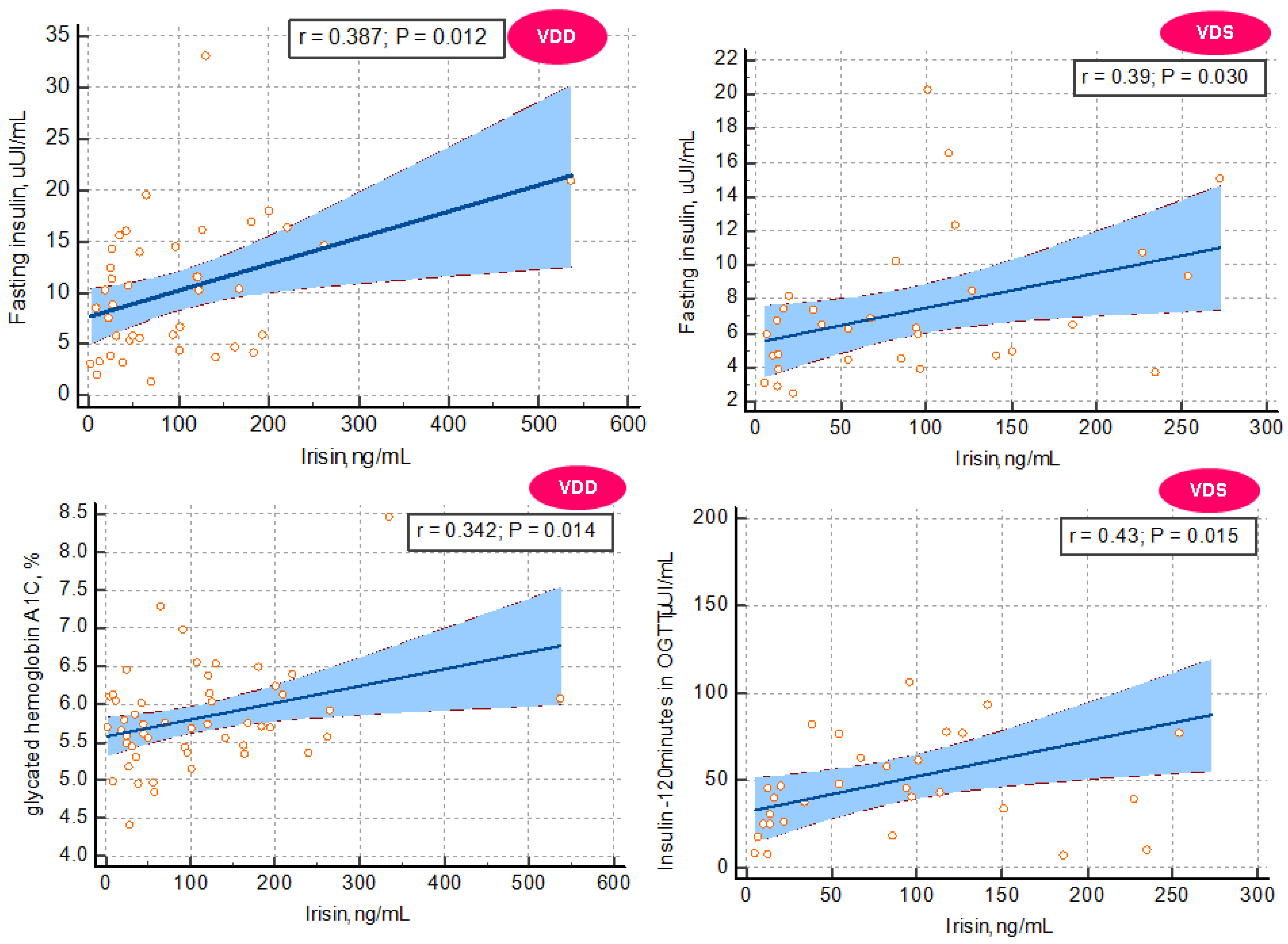
In VDS group, irisin statistically significantly and positively correlated with insulin at two hours during OGTT (r = 0.43, p = 0.015). Interestingly, both study groups showed a positive statistically significant correlation coefficient between irisin and fasting insulin (VDD group: r = 0.387, p = 0.012, respectively, VDS group: r = 0.39, p = 0.03) (Figure 2).
After adjusting for BMI in a multivariable linear regression analysis, the correlations between irisin and bone markers/metabolic parameters were no longer statistically significant.

3. Discussion

The interrelationship between circulating irisin, vitamin D, glucose metabolism, and bone status is complex and involves multiple physiological pathways. Regular physical activity boosts irisin levels, which positively affects both glucose metabolism and bone health. Meanwhile, sufficient vitamin D supports mineralization and muscle strength, indirectly contributing to glucose regulation and skeletal integrity. Maintaining optimal levels of vitamin D and irisin through lifestyle factors like exercise and nutrition can promote better glucose control and bone strength. Therefore, the study indirectly shows the value of exercise although this is not the scope of this exploratory study. This observation should be integrated into the general landscape of myokines that show pleiotropic effects via receptors in various organs as follows: from the muscle release, a cascade of metabolic signalling pathways is activated with respect to numerous proteins expression and cells differentiation (e.g., glucose and energy metabolism or bone cells, etc.) [44].
Our findings are limited to the menopausal population, but most data agree that after menopause there is a higher risk of developing vitamin D deficiency when compared to pre-menopausal women or age-matched male (apparently healthy) population, while the associated role of this vitamin/hormone becomes crucial for the overall skeletal health [45,46,47,48]. Moreover, a higher BMI is correlated with a lower 25OHD, and obesity has been found to associate with an increased risk of vitamin D deficiency, despite the fact that the true pathogenic connection is still less understood [49,50,51].
In addition, vitamin D replacement might help the overall weight loss process, but it does not function as a single intervention strategy to improve a high BMI, most probably due to the fact that there are multiple other mechanisms involved in the weight gain/loss [50,51,52]. In this study, BMI was statistically significantly higher in VDD group (32.25 ± 5.90 kg/m2) versus VDS group (28.93 ± 4.97 kg/m2, p = 0.006). Notably, the average BMI was abnormal in each group (obesity and overweight for VDD and VDS group, respectively).
Interestingly, other than BMI (and, as expected by the study design, 25OHD levels), there was no statistically significant between-group difference in the analysed parameters. Irisin statistically significantly correlated with BMI in VDD group, and not in VDS group (r = 0.408, p = 0.003). One study also showed that irisin correlated with BMI in a study on 145 female patients and identified a higher irisin in the obese group versus the non-obese group (which included normal-weighted and anorexic participants) [53]. A study on forty subjects revealed that obese participants had an increased irisin when compared to those diagnosed with anorexia nervosa (mean BMI of 12.6 ± 0.7 kg/m2) and to those who were normal-weighted controls (average BMI of 22.6 ± 0.9 kg/m2). The irisin–BMI correlation with medium strength was confirmed in this analysis (r = 0.5, p < 0.001) too [54], similarly to VDD group. Also, we mention a study from 2022 that pointed significant differences in irisin between obese and over-weight children and teenagers (boys and girls), which suggested that refining circulating irisin based on BMI should not be restricted to adult population [55].
Here, we pinpoint for the first time, to the best of our knowledge, the issue of identifying irisin correlations with BMI based on 25OHD level in menopausal population. Potentially, vitamin D supplementation might change this dynamics and further interventional studies are required. Notably, a randomised controlled trial regarding physical rehabilitation and vitamin D supplementation with potential impact of irisin panel was launched in 2024 and the results of this study are expected to highlight the improvement of vitamin D status in association with exerkines changes, including irisin, [56]. Expanding the irisin–vitamin D frame even more, we mention another interesting observation from a 2024 study—maternal 25OHD was inversely associated with irisin levels in neonates (N = 67 healthy mother–newborn pairs in Greece) as follows: β = −73.46 (−140.573–−6.341), p = 0.034 [57]. This suggests that regulation of the gestational mineral metabolism might involve irisin actions.
Additionally, both irisin and 25OHD may correlate with the presence of sarcopenia, which was out of our scope, since we included only apparently healthy, active participants (however, no specific tests of sarcopenia diagnosis were performed, nor did we apply any distinct scale to measure the daily physical activity of each participant). For instance, one study detected in 393 older adults diagnosed with chronic diseases and 117 of them confirmed with sarcopenia that sarcopenia severity [as reflected by appendicular skeletal mass index (ASMI) or grip strength] correlated with both circulating irisin (r = 0.47 and r = 0.44) and 25OHD (r = 0.35 and r = 0.38, p < 0.05 for each) [58].
Another potential pathogenic connection between irisin and vitamin D was described in C2C12 myoblast cell line, which was treated with active vitamin D (1,25-dihydroxyvitamin D3). Irisin statistically significantly increased (p = 0.031), as reflected by higher FNDC5 (messenger of ribonucleic acid) mRNA expression after 48 h since vitamin D exposure (p = 0.013), as well as higher mRNAs of sirtuin 1 (Sirt1) (p = 0.041), which suggests that vitamin D might modulate irisin release via Sirt1 [59].
Moreover, in VDD group, irisin levels statistically significantly and negatively correlated with serum phosphorus, osteocalcin, and P1NP. The correlation with bone-formation markers seems to connect with bone-forming aspects, which have been found in murine experiments, by inducing changes in BMD and TBS [60,61]. Notably, the panel of bone turnover markers largely varies in humans under physiological and pathological circumstances, and irisin correlation with them was not recorded in many of these studies [62,63]. As mentioned, irisin exhibits pro-osteoblastic actions via p38 MAPK pathway as opposite to myostatin (which inhibits bone formation). On the other hand, the other exerkine, namely, myonectin, plays a dual role with regard to osteoblast and osteoclast differentiation; a role that is currently confirmed based on animal models and further human research is mandatory [44]. These rather antagonising bone effects due to myokines release might vary with an individual, and this aspect should be clarified [44,63].
Additionally, in VDD group, irisin positively correlated with glycated haemoglobin A1c and fasting insulin, while in VDS group, irisin positively correlated with fasting insulin and insulin at two hours amid 75 g OGTT. A higher haemoglobin A1c level represents the hallmark of a worse glucose status, while a higher insulin might belong to the larger picture of hyperinsulinemia, as found in prediabetes and early stages of type 2 diabetes [64,65,66]. Noting that not all studies agree, there is a dual relationship between muscle-released irisin and glucose profile: either a chronic hyperglycaemia and hyperinsulinemia induce a diabetes-associated muscle wasting or a lower irisin aggravates insulin resistance in type 2 diabetes, especially in menopausal and ageing population [67,68,69,70].
Limitations of the study are as follows: a larger population is needed to expand the current sample size and to enrol women of reproductive age and adult males. We limited the pilot data to menopause since DXA-based anomalies of BMD and TBS might be expected, while in other population groups (e.g., young adults) DXA might not be affected at all or it may vary with the physiological timing of peak bone mass, rather than vary with ageing process or oestrogens/testosterone status. An additional body composition analysis might help navigating BMI scale with respect to irisin testing, noting that BMI might be a confounder factor. Notably, there is no general consensus with regard to optimum irisin kits of detection and their adjustment to a certain population group or a certain study outcome, an issue which is yet to be explored. Circulating irisin can be influenced by multiple physiological and pre-analytical factors, including hydration status, plasma volume shifts, and sample handling [49]. Other confounder factors should be named, such as physical activity, circadian variation, or dietary factors [13,22]. For instance, the observed negative correlation between irisin and phosphorus in VDD group might pinpoint other nutritional and dietary influences that are not taken into account in this exploratory setting. Moreover, irisin was generally found (in animal studies, but not all authors agree in human studies) as a bone-forming factor that stimulates osteoblasts. However, in the VDD group, the following significant negative correlations were found between irisin and bone formation markers: osteocalcin (r = −0.293, p = 0.038) and P1NP (r = −0.297, p = 0.04). A plausible physiological mechanism might be an irisin resistance or the influence of pro-inflammatory cytokines, which are derived from the adipose tissue. Notably, there is no standard assay for irisin, nor a specific choice of analytical method, while most clinical studies use ELISA, as in the present study. This might seem limited when compared to gold-standard techniques such as mass spectrometry.
Future studies may include larger, more diverse cohorts/study population subgroups and control groups for hydration and other confounders, standardised irisin assays, and they might explore causal and mechanistic links between vitamin D status and muscle activity.

4. Material and Methods

4.1. Study Design

The study design was a prospective, pilot, exploratory, and cross-sectional in 89 adult, Caucasian, apparently healthy active females during menopause, who were assessed for the glucose and bone metabolism, between December 2024 and September 2025.

4.2. Study Population

Inclusion criteria involved female gender; confirmed menopausal status (secondary amenorrhea for at least 12 months); age of 50 years or older; and signed informed consent for the study participation. Exclusion criteria were previous diagnosis (and specific therapy) for ailments such as osteoporosis, osteopenia, malignancies, bone metabolic disorders, chronic kidney disease, primary hyperparathyroidism, Cushing’s syndrome, acromegaly, and type 1 and secondary forms of diabetes mellitus; current and prior exposure to glucocorticoid therapy, insulin therapy, anti-obesity drugs, bariatric surgery, hormone replacement therapy (for menopause), and anti-osteoporotic medication [bisphosphonates (zoledronate, alendronate, risendronate, ibandronate, teriparatide, denosumab, and calcitonin], as well vitamin D replacement.

4.3. Study Protocol

Study protocol was initiated with the screening of the participants with respect to the mentioned panel of inclusion and exclusion criteria based on their medical records and evaluation amid a hospitalisation in a tertiary referral hospital of endocrinology. Then, the participants signed the informed consent for the study on point, followed by fasting (morning) blood assays (after 8 to 12 h of overnight fasting).
Then, 75 g OGTT was performed (with blood assays of glycaemia and insulin after one hour and two hours). All participants underwent central DXA (Lunar Prodigy machine) evaluation, which provided BMD and T-score at L1–L4 lumbar spine, total hip, and femoral neck (central sites), in addition to lumbar–DXA-based TBS (TBS iNsight software (v.3), which is incorporated in the DXA device—a GE Lunar Prodigy machine).
After performing the analysis of these mentioned blood assays, the participants who displayed abnormally high calcium and PTH (consistent with the diagnosis of primary hyperparathyroidism), abnormal renal, adrenal, and thyroid function were ruled out.
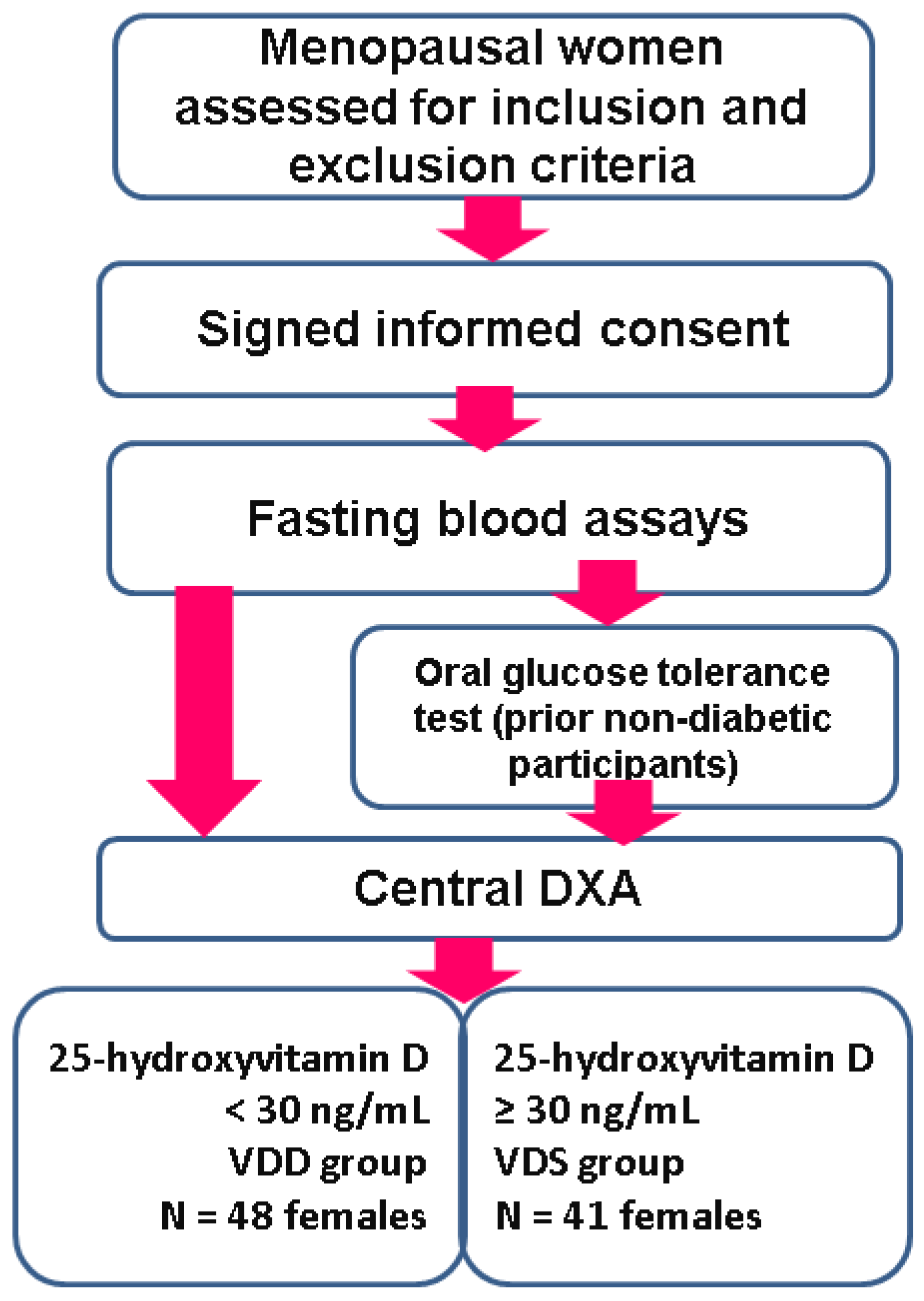
Final analysis included 89 participants who were assigned as vitamin D deficient group (VDD) if 25OHD level was less than 30 ng/mL (N = 48) or vitamin D sufficient (VDS), if 25OHD was of 30 ng/mL or above (N = 41) (Figure 3).
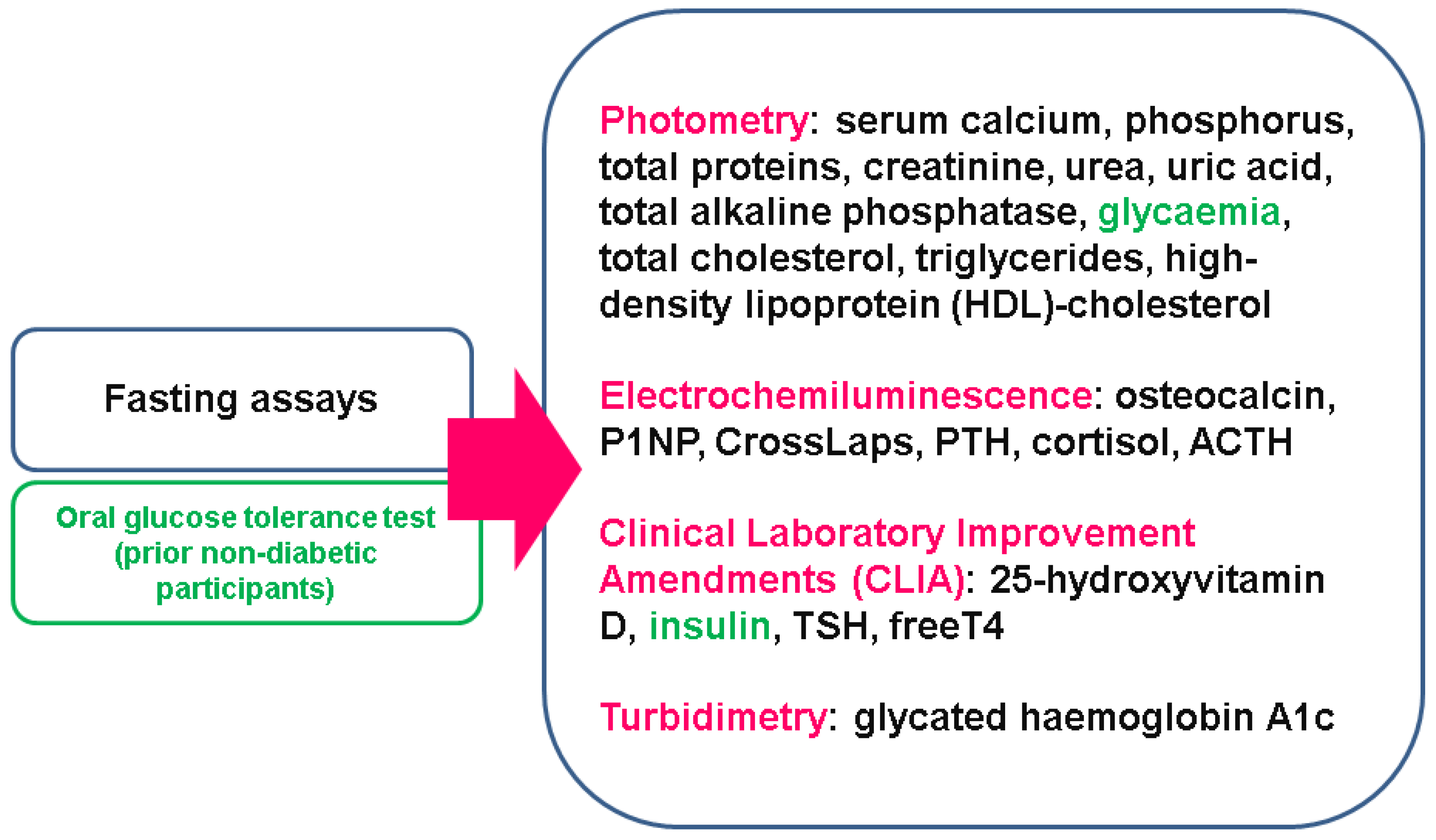
The panel of blood parameters included biochemistry elements [serum calcium, phosphorus, total proteins, creatinine, urea, uric acid, glycaemia, total cholesterol, triglycerides, and HDL cholesterol]; bone-formation markers (total alkaline phosphatase, osteocalcin, and P1NP); bone resorption marker CrossLaps; and the following hormones: insulin, 25OHD, thyroid-stimulating hormone (TSH), free thyroxine (T4), cortisol, and adrenocorticotropic hormone (ACTH) (Figure 4).
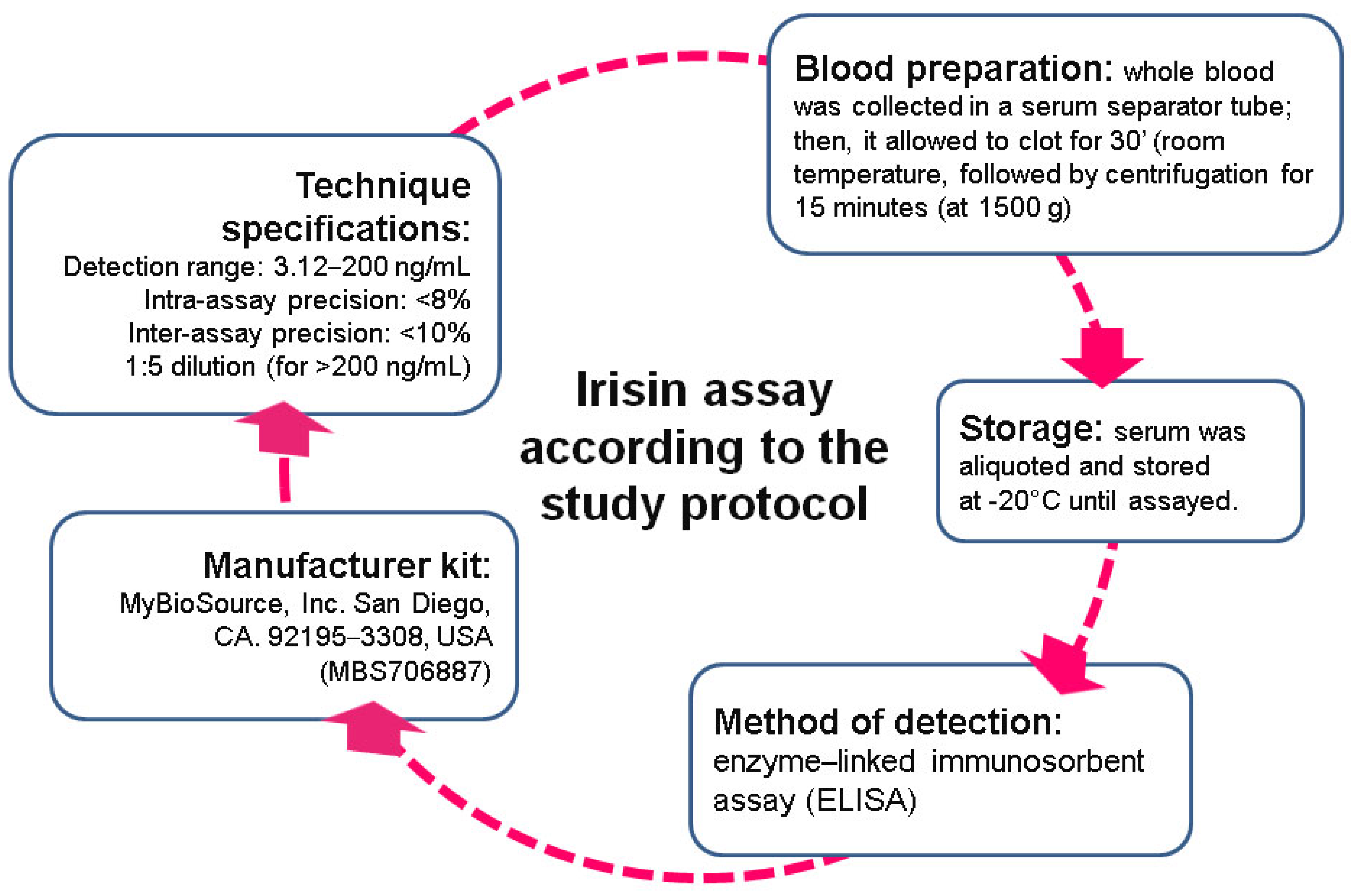
All individuals underwent fasting blood irisin testing based on enzyme-linked immunosorbent assay (ELISA) as method of detection (Figure 5).
Additional analysed parameters included BMI (kg/m2) and the measurement of insulin resistance by providing HOMA-IR. These parameters were assigned in the following three clusters of interest: fasting glucolipid metabolism (cluster 1), assays during OGTT (cluster 2), and bone status evaluation (cluster 3).

4.4. Statistical Analysis

Statistical evaluation was provided by MedCalc® (Statistical Software version 23.3.7; MedCalc Software Ltd., Ostend, Belgium, 2025). The following tests were used in the study: Kolmogorov–Smirnov test for normality, t-test for comparison of independent samples with normal distribution, and Mann–Whitney test for comparison of independent samples with non-normal distribution. The descriptive analysis included the mean ± standard deviation in case of normal distribution and median (interquartile interval) for the parameters with non-normal distribution. The following two types of correlation tests were applied (r–correlation coefficient): Pearson correlation (for normal distribution) or Spearman rank correlation (for non-normal distribution). The cut-off for statistical significance was p < 0.05.

4.5. Ethical Aspects

Ethical aspects included the following: the study followed the Declaration of Helsinki for medical research, all patients signed the informed consent, and the Ethical Committee approved the study (number 32 from 30 September 2024, and number 97 from 20 November 2024).

5. Conclusions

To conclude, this pilot, prospective, cross-sectional study aimed at assessing circulating irisin levels in post-menopausal women in relation to their vitamin D status (deficiency vs. sufficient levels), as well as analysing correlations between irisin and parameters of glucose metabolism and bone metabolism. The study included eighty-nine patients, divided into two groups based on serum 25OHD levels (<30 ng/mL and ≥30 ng/mL). The main findings indicated that although irisin concentrations themselves did not differ significantly between groups, the correlation profiles differed. In the vitamin D-deficient group, negative correlations were observed between irisin and markers of bone formation (osteocalcin, P1NP) as well as phosphorus, and positive correlations with HbA1c and BMI. In the vitamin D-sufficient group, only a positive correlation with insulin levels at 120 min of the OGTT was reported. A growing body of research on exerkines and the crosstalk between muscle, adipose tissue, and bone is part of the modern scientific approach nowadays and further larger studies are mandatory.

Author Contributions

Conceptualization, A.P., L.S., N.L.-O., S.V.S., V.C., M.C., A.-M.G., O.-C.S., A.V., N.I., A.-I.T. and D.M.; methodology, A.P., L.S., N.L.-O., S.V.S., V.C., M.C., A.-M.G., O.-C.S., A.V., N.I., A.-I.T. and D.M.; software, A.P., L.S., N.L.-O., S.V.S., V.C., M.C., A.-M.G., O.-C.S., A.V., N.I., A.-I.T. and D.M.; validation, A.P., L.S., N.L.-O., S.V.S., V.C., M.C., A.-M.G., O.-C.S., A.V., N.I., A.-I.T. and D.M.; formal analysis, A.P., L.S., N.L.-O., S.V.S., V.C., M.C., A.-M.G., O.-C.S., A.V., N.I., A.-I.T. and D.M.; investigation, A.P., L.S., N.L.-O., S.V.S., V.C., M.C. and D.M.; resources, A.P., L.S., N.L.-O., S.V.S., V.C., M.C., O.-C.S., A.V., N.I., A.-I.T. and D.M.; data curation, A.P., L.S., N.L.-O., S.V.S., V.C., M.C., A.-M.G., O.-C.S. and D.M.; writing—original draft preparation, D.M. and M.C.; writing—review and editing, M.C.; visualisation, L.S., N.L.-O., S.V.S., V.C., M.C., A.-M.G., A.V., N.I., A.-I.T., O.-C.S. and D.M.; supervision, M.C.; project administration, M.C.; funding acquisition, M.C. All authors have read and agreed to the published version of the manuscript.

Funding

This work was supported by a grant of the Ministry of Research, Innovation and Digitization, UEFISCDI “Crossroad of metabolism and bone: the impact of irisin, bone turnover and inflammatory markers in patients with menopausal osteoporosis and obesity”; PN-IV-P8-8.3-ROMD-2023-0262.

Institutional Review Board Statement

The research was conducted in accordance with the Declaration of Helsinki. The study was approved by the Ethical Boards of both centres (number 32 from 30 September 2024—Bucharest, Romania, and number 97 from 20 November 2024—Chisinau, Moldova, respectively).

Informed Consent Statement

The patients signed the informed consent to participate to this study.

Data Availability Statement

All available data are in the article.

Acknowledgments

This is part of the project PN-IV-P8-8.3-ROMD-2023-0262 and a collaboration amid PhD research—contract number 28374 from 2 October 2024.

Conflicts of Interest

The authors declare no conflicts of interest.

Abbreviations

The following abbreviations are used in this manuscript:
AktProtein kinase B
ACTHAdrenocorticotropic hormone
AMPKAMK-activated protein kinase
ASMIAppendicular skeletal mass index
BMIBody mass index
BMDBone mineral density
BDNFBrain-derived neurotrophic factor
CLIAClinical laboratory improvement amendments
DXADual-energy X-ray absorptiometry
ELISAEnzyme-linked immunosorbent assay
ERKExtracellular signal-regulated kinase
FNDC5Fibronectin type III domain-containing 5
HOMA-IRHomeostasis model assessment of insulin resistance
HDLHigh density lipoprotein
IQRInterquartile interval
IGF-1Insulin-like growth factor 1
JNKc-Jun N-terminal kinases
25OHD25-hydroxyvitamin D
mRNAMessenger of ribonucleic acid
mTORMammalian target of rapamycin
NNumber of patients
OGTTOral glucose tolerance test
PI3KPhosphoinositide 3-kinase
PTHParathyroid hormone
P1NProcollagen-N-terminal-peptide 1
RANKLReceptor activator of nuclear factor kappa-B ligand
Sirt1Sirtuin 1
TSHThyroid-stimulating hormone
T4Thyroxine
TBSTrabecular bone score
VDSVitamin D sufficient
VDDVitamin D deficient

References

  1. Kaji, H. Crosstalk between muscle and bone. J. Bone Miner. Metab. 2024, 42, 391–398. [Google Scholar] [CrossRef]
  2. Sheng, R.; Cao, M.; Song, M.; Wang, M.; Zhang, Y.; Shi, L.; Xie, T.; Li, Y.; Wang, J.; Rui, Y. Muscle-bone crosstalk via endocrine signals and potential targets for osteosarcopenia-related fracture. J. Orthop. Translat. 2023, 43, 36–46. [Google Scholar] [CrossRef]
  3. Heitkamp, H.C. Paracrine and endocrine functions of muscles. MMW Fortschr. Med. 2023, 165, 13–19. [Google Scholar] [CrossRef] [PubMed]
  4. Zhang, Y.; Wang, L.; Kang, H.; Lin, C.Y.; Fan, Y. Unlocking the Therapeutic Potential of Irisin: Harnessing Its Function in Degenerative Disorders and Tissue Regeneration. Int. J. Mol. Sci. 2023, 24, 6551. [Google Scholar] [CrossRef] [PubMed]
  5. Plácido, A.I.; Azevedo, D.; Herdeiro, M.T.; Morgado, M.; Roque, F. Understanding the Role of Irisin in Longevity and Aging: A Narrative Review. Epidemiologia 2025, 6, 1. [Google Scholar] [CrossRef] [PubMed]
  6. Liu, S.; Cui, F.; Ning, K.; Wang, Z.; Fu, P.; Wang, D.; Xu, H. Role of irisin in physiology and pathology. Front. Endocrinol. 2022, 13, 962968. [Google Scholar] [CrossRef]
  7. Inyushkin, A.N.; Poletaev, V.S.; Inyushkina, E.M.; Kalberdin, I.S.; Inyushkin, A.A. Irisin/BDNF signaling in the muscle-brain axis and circadian system: A review. J. Biomed. Res. 2023, 38, 1–16. [Google Scholar] [CrossRef]
  8. Zhan, R.; Yang, J.; Wan, Q.; Zhang, J.; Liu, L.; Jiang, J.; Mo, L.; Bai, Y. Irisin-Treg crosstalk: Unveiling a mechanism in neural cognitive regulation. Ann. Med. 2025, 57, 2594281. [Google Scholar] [CrossRef]
  9. Ali, N.H.; Alhamdan, N.A.; Al-Kuraishy, H.M.; Al-Gareeb, A.I.; Elekhnawy, E.; Batiha, G.E. Irisin/PGC-1alpha/FNDC5 pathway in Parkinson’s disease: Truth under the throes. Naunyn Schmiedebergs Arch. Pharmacol. 2024, 397, 1985–1995. [Google Scholar] [CrossRef]
  10. Zhang, Y.; Zhang, X.; Lin, S. Irisin: A bridge between exercise and neurological diseases. Heliyon 2022, 8, e12352. [Google Scholar] [CrossRef]
  11. Marmondi, F.; Ferrando, V.; Filipas, L.; Codella, R.; Ruggeri, P.; La Torre, A.; Faelli, E.L.; Bonato, M. Exercise-Induced Biomarker Modulation in Sarcopenia: From Inflamm-Aging to Muscle Regeneration. Sports 2025, 13, 444. [Google Scholar] [CrossRef]
  12. Lisco, G.; Disoteo, O.E.; De Tullio, A.; De Geronimo, V.; Giagulli, V.A.; Monzani, F.; Jirillo, E.; Cozzi, R.; Guastamacchia, E.; De Pergola, G.; et al. Sarcopenia and Diabetes: A Detrimental Liaison of Advancing Age. Nutrients 2023, 16, 63. [Google Scholar] [CrossRef] [PubMed]
  13. Sobreviela Sánchez, S.; Giusfredi Quevedo, R.; Fernandes, T.; da Fonseca, G.W.P. The role of exercise and nutrition in modulating inflammatory cytokines activity for obesity management. Front. Endocrinol. 2025, 16, 1618360. [Google Scholar] [CrossRef] [PubMed]
  14. Shintaku, E.; Vantini, D.; Ting, J.G.B.; Zuniga, R.D.D.R.; Luciano da Veiga, G.; Alves, B.D.C.A.; Encinas, J.F.; Fonseca, F.L.A. Assessment of Exercise-Stimulated Irisin in Kidney Disease: A Systematic Review. Endocr. Metab. Immune Disord. Drug Targets 2025. Online ahead of print. [Google Scholar] [CrossRef]
  15. Ma, M.; Jing, G.; Tian, Y.; Yin, R.; Zhang, M. Irisin: Emerging Therapeutic Targets for Cognitive Impairment-Related Diseases. Expert. Rev. Mol. Med. 2025, 27, e23. [Google Scholar] [CrossRef]
  16. Guo, W.; Peng, J.; Su, J.; Xia, J.; Deng, W.; Li, P.; Chen, Y.; Liu, G.; Wang, S.; Huang, J. the role and underlying mechanisms of irisin in exercise-mediated cardiovascular protection. Peer J. 2024, 12, e18413. [Google Scholar] [CrossRef]
  17. Han, C.; Guan, R.; Zhao, J.; Sun, P. Irisin: Its significance in the diagnosis and treatment of post-stroke depression. J. Psychiatr. Res. 2025, 191, 285–293. [Google Scholar] [CrossRef]
  18. Sandoval, E.Y.H.; Gómez, Z.J.D. Irisin and neuroinflammation: Challenges and opportunities. Exp. Mol. Pathol. 2024, 140, 104941. [Google Scholar] [CrossRef]
  19. Li, J.; Zhao, Y.; Wang, Z.; Ma, A.; Ni, Y.; Wu, D.; Zhou, Y.; Zhang, N.; Zhang, L.; Chang, Y.; et al. Irisin Alleviates Impaired Mitochondrial Fusion via Enhancing PKA/SIRT3/mTOR Pathway in Hepatic Steatosis. J. Gastroenterol. Hepatol. 2025, 40, 1616–1630. [Google Scholar] [CrossRef] [PubMed]
  20. Qi, F.; Deng, Y.; Huang, W.; Cai, Y.; Hong, K.; Xiang, S. Irisin suppresses PDGF-BB-induced proliferation of vascular smooth muscle cells in vitro by activating AMPK/mTOR-mediated autophagy. Eur. J. Histochem. 2024, 68, 4104. [Google Scholar] [CrossRef]
  21. Lyu, J.X.; Guo, D.D.; Song, Y.C.; Zhang, M.R.; Ge, F.Q.; Zhao, J.; Zhu, H.; Hang, P.Z. Circulating Myokines as Novel Biomarkers for Cardiovascular Diseases. Rev. Cardiovasc. Med. 2024, 25, 56. [Google Scholar] [CrossRef]
  22. Iglesias, P. Muscle in Endocrinology: From Skeletal Muscle Hormone Regulation to Myokine Secretion and Its Implications in Endocrine-Metabolic Diseases. J. Clin. Med. 2025, 14, 4490. [Google Scholar] [CrossRef]
  23. Xu, L.; Ng, J.K.; Fung, W.W.; Chan, G.C.; Chow, K.M.; Szeto, C.C. Circulating Muscle Markers for Sarcopenia in Peritoneal Dialysis. Int. J. Nephrol. 2025, 2025, 8817404. [Google Scholar] [CrossRef]
  24. Knapik, M.; Kuna, J.; Chmielewski, G.; Jaśkiewicz, Ł.; Krajewska-Włodarczyk, M. Alterations in the Myokine Concentrations in Relation to Sarcopenia and Sleep Disturbances: A Narrative Review. J. Clin. Med. 2025, 14, 6527. [Google Scholar] [CrossRef]
  25. Popa, F.L.; Boicean, L.C.; Iliescu, M.G.; Stanciu, M. The importance of association between sex steroids deficiency, reduction of bone mineral density and falling risk in men with implications in medical rehabilitation. Balneo PRM Res. J. 2021, 12, 318–322. [Google Scholar] [CrossRef]
  26. Faienza, M.F.; Urbano, F.; Chiarito, M.; Lassandro, G.; Giordano, P. Musculoskeletal health in children and adolescents. Front. Pediatr. 2023, 11, 1226524. [Google Scholar] [CrossRef]
  27. Hu, X.; Wang, Z.; Wang, W.; Cui, P.; Kong, C.; Chen, X.; Lu, S. Irisin as an agent for protecting against osteoporosis: A review of the current mechanisms and pathways. J. Adv. Res. 2024, 62, 175–186. [Google Scholar] [CrossRef] [PubMed]
  28. Roggio, F.; Petrigna, L.; Trovato, B.; Di Rosa, M.; Musumeci, G. The Role of Lubricin, Irisin and Exercise in the Prevention and Treatment of Osteoarthritis. Int. J. Mol. Sci. 2023, 24, 5126. [Google Scholar] [CrossRef]
  29. Zhao, R.; Chen, Y.; Wang, D.; Zhang, C.; Song, H.; Ni, G. Role of irisin in bone diseases. Front. Endocrinol. 2023, 14, 1212892. [Google Scholar] [CrossRef]
  30. Dumitru, N.; Carsote, M.; Cocolos, A.; Petrova, E.; Olaru, M.; Dumitrache, C.; Ghemigian, A. The Link Between Bone Osteocalcin and Energy Metabolism in a Group of Postmenopausal Women. Curr. Health Sci. J. 2019, 45, 47–51. [Google Scholar] [CrossRef] [PubMed]
  31. Chang, X.; Xu, S.; Zhang, H. Regulation of bone health through physical exercise: Mechanisms and types. Front. Endocrinol. 2022, 13, 1029475. [Google Scholar] [CrossRef]
  32. Tsourdi, E.; Anastasilakis, A.D.; Hofbauer, L.C.; Rauner, M.; Lademann, F. Irisin and Bone in Sickness and in Health: A Narrative Review of the Literature. J. Clin. Med. 2022, 11, 6863. [Google Scholar] [CrossRef] [PubMed]
  33. Jia, S.; Yu, Z.; Bai, L. Exerkines and osteoarthritis. Front. Physiol. 2023, 14, 1302769. [Google Scholar] [CrossRef] [PubMed]
  34. Wang, Y.; Wang, M.; Wang, Y. Irisin: A Potentially Fresh Insight into the Molecular Mechanisms Underlying Vascular Aging. Aging Dis. 2023, 15, 2491–2506. [Google Scholar] [CrossRef]
  35. Trettel, C.D.S.; Pelozin, B.R.A.; Barros, M.P.; Bachi, A.L.L.; Braga, P.G.S.; Momesso, C.M.; Furtado, G.E.; Valente, P.A.; Oliveira, E.M.; Hogervorst, E.; et al. Irisin: An anti-inflammatory exerkine in aging and redox-mediated comorbidities. Front. Endocrinol. 2023, 14, 1106529. [Google Scholar] [CrossRef]
  36. Bičíková, M.; Máčová, L.; Jandová, D.; Třískala, Z.; Hill, M. Movement as a Positive Modulator of Aging. Int. J. Mol. Sci. 2021, 22, 6278. [Google Scholar] [CrossRef] [PubMed]
  37. Lombardi, G.; Ziemann, E.; Banfi, G.; Corbetta, S. Physical Activity-Dependent Regulation of Parathyroid Hormone and Calcium-Phosphorous Metabolism. Int. J. Mol. Sci. 2020, 21, 5388. [Google Scholar] [CrossRef]
  38. Zhou, Y.; Shu, J.; Zhao, Y.; Wu, X.; He, Z.; Lyu, X.; Zhou, Y.; Ma, L. Vitamin D(3) promotes white fat beige through IL-27/P38MAPK/PGC-1alpha pathway. Front. Nutr. 2025, 12, 1661072. [Google Scholar] [CrossRef]
  39. Brennan, S.C.; Gunton, J.E.; Conigrave, A.D.; Mason, R.S.; Girgis, C.M. In D-fence of vitamin D sufficiency—A perspective. Bone 2025, 201, 117657. [Google Scholar] [CrossRef]
  40. Rivera, F.B.; Adizas, A.; Cubarrubias, D.; Bantayan, N.R.; Choi, S.; Carado, G.P.; Yu, M.G.; Lerma, E.; Vijayaraghavan, K. The Roles of Non-Pharmacologic and Emerging Pharmacologic Management of Non-alcoholic Fatty Liver Disease and Sarcopenia: A Narrative Review. J. ASEAN Fed. Endocr. Soc. 2024, 39, 84–94. [Google Scholar] [CrossRef]
  41. Gao, L.; Sun, W.; Shi, H.; Zhu, W.; Wang, H.; Wang, J. Irisin Research Landscape (2012–2024): A Bibliometric and Visual Analysis of Evolving Hotspots and Future Trends. Biologics 2025, 19, 595–611. [Google Scholar] [CrossRef] [PubMed]
  42. Ballena-Caicedo, J.; Zuzunaga-Montoya, F.E.; Loayza-Castro, J.A.; Bustamante-Rodríguez, J.C.; Vásquez Romero, L.E.M.; Tapia-Limonchi, R.; De Carrillo, C.I.G.; Vera-Ponce, V.J. Global prevalence of insulin resistance in the adult population: A systematic review and meta-analysis. Front. Endocrinol. 2025, 16, 1646258. [Google Scholar] [CrossRef] [PubMed]
  43. Gregson, C.L.; Armstrong, D.J.; Avgerinou, C.; Bowden, J.; Cooper, C.; Douglas, L.; Edwards, J.; Gittoes, N.J.L.; Harvey, N.C.; Kanis, J.A.; et al. The 2024 UK clinical guideline for the prevention and treatment of osteoporosis. Arch. Osteoporos. 2025, 20, 119. [Google Scholar] [CrossRef]
  44. Jaśkiewicz, Ł.; Romaszko-Wojtowicz, A.; Chmielewski, G.; Kuna, J.; Krajewska-Włodarczyk, M. Effect of myokines on bone tissue metabolism: A systematic review. Bone 2025, 201, 117654. [Google Scholar] [CrossRef]
  45. Lerchbaum, E. Vitamin D and menopause—A narrative review. Maturitas 2014, 79, 3–7. [Google Scholar] [CrossRef]
  46. Korkmaz, H.; Pehlivanoğlu, B. Is Vitamin D a Crucial Molecule for Musculoskeletal and Cardiovascular Systems in Postmenopausal Women? Front. Biosci. 2024, 29, 281. [Google Scholar] [CrossRef]
  47. Holick, M.F. Vitamin D and bone health: What vitamin D can and cannot do. Adv. Food Nutr. Res. 2024, 109, 43–66. [Google Scholar] [CrossRef]
  48. Sharma, M.; Kalra, S. Vitamin D and Menopause. J. Pak. Med. Assoc. 2024, 74, 815–817. [Google Scholar] [CrossRef]
  49. Kasiak, P.; Kowalski, T.; Faiss, R.; Malczewska-Lenczowska, J. Hemoglobin mass is accurately predicted in endurance athletes. J. Sports Sci. 2025, 43, 289–298. [Google Scholar] [CrossRef] [PubMed]
  50. Peng, T.; Zhang, Z.; Liang, W.; Zhang, J. Can Vitamin D supplementation enhance the effectiveness of exercise-induced weight loss in overweight or obese adults? Evidence from integrated transcriptomic and meta-analysis. Front. Nutr. 2025, 12, 1664960. [Google Scholar] [CrossRef]
  51. Legrand, M.A.; Paccou, J.; Lecerf, J.M.; Thomas, T.; Chapurlat, R.; Cortet, B.; Biver, E.; Papageorgiou, M. Bone Health Following Lifestyle-Induced Weight Loss in Individuals with Overweight/Obesity: A Narrative Review. Obesity 2025, 34, 19–35. [Google Scholar] [CrossRef]
  52. Palermo, A.; Tsourdi, E.; Yavropoulou, M.P.; Naciu, A.M.; Tabacco, G.; Makras, P.; Paccou, J.; Anastasilakis, A.D. The Effects of Obesity and Weight Loss Interventions on Bone Health: A Narrative Review. Curr. Diab Rep. 2025, 25, 52. [Google Scholar] [CrossRef] [PubMed]
  53. Pardo, M.; Crujeiras, A.B.; Amil, M.; Aguera, Z.; Jiménez-Murcia, S.; Baños, R.; Botella, C.; de la Torre, R.; Estivill, X.; Fagundo, A.B.; et al. Association of irisin with fat mass, resting energy expenditure, and daily activity in conditions of extreme body mass index. Int. J. Endocrinol. 2014, 2014, 857270. [Google Scholar] [CrossRef]
  54. Stengel, A.; Hofmann, T.; Goebel-Stengel, M.; Elbelt, U.; Kobelt, P.; Klapp, B.F. Circulating levels of irisin in patients with anorexia nervosa and different stages of obesity--correlation with body mass index. Peptides 2013, 39, 125–130. [Google Scholar] [CrossRef] [PubMed]
  55. Zhang, L.; Peng, X.; Wang, Y.; Cao, R.; Zhang, Z.; Fu, L. What Is the Relationship Between Body Mass Index, Sex Hormones, Leptin, and Irisin in Children and Adolescents? A Path Analysis. Front. Pediatr. 2022, 10, 823424. [Google Scholar] [CrossRef] [PubMed]
  56. Li, W.; Chen, M.; Chen, F.; Li, Y.; Zhong, Y.; Lu, Y.; Zhang, K.; Yang, F. Vitamin D combined with whole-body vibration training for the treatment of osteo-sarcopenia: Study protocol for a randomized controlled trial. Trials 2024, 25, 638. [Google Scholar] [CrossRef]
  57. Arabi, T.Z.; Fakhoury, H.M.A.; Tamim, H.; Chun, R.F.; Hewison, M.; AlAnouti, F.; Pilz, S.; Annweiler, C.; Tzimagiorgis, G.; Haitoglou, C.; et al. Associations between total, free and bioavailable 25-hydroxyvitamin D forms with adiponectin and irisin in maternal-neonatal pairs at birth from Greece. Front. Endocrinol. 2024, 15, 1397869. [Google Scholar] [CrossRef]
  58. Ma, Y.; Liu, Y.; Zheng, J.; Zheng, Z.; Li, J. Clinical significance of serum irisin, 25(OH)D3 and albumin in older adults with chronic disease and sarcopenia. Aging Clin. Exp. Res. 2025, 37, 153. [Google Scholar] [CrossRef]
  59. Sanesi, L.; Dicarlo, M.; Pignataro, P.; Zerlotin, R.; Pugliese, F.; Columbu, C.; Carnevale, V.; Tunnera, S.; Scillitani, A.; Grano, M.; et al. Vitamin D Increases Irisin Serum Levels and the Expression of Its Precursor in Skeletal Muscle. Int. J. Mol. Sci. 2023, 24, 4129. [Google Scholar] [CrossRef]
  60. Zerlotin, R.; Oranger, A.; Pignataro, P.; Dicarlo, M.; Sanesi, L.; Suriano, C.; Storlino, G.; Rizzi, R.; Mestice, A.; Di Gioia, S.; et al. Irisin prevents trabecular bone damage and tumor invasion in a mouse model of multiple myeloma. JBMR Plus 2024, 8, ziae066. [Google Scholar] [CrossRef]
  61. Zhang, Y.; He, X.; Wang, K.; Xue, Y.; Hu, S.; Jin, Y.; Zhu, G.; Shi, Q.; Rui, Y. Irisin alleviates obesity-induced bone loss by inhibiting interleukin 6 expression via TLR4/MyD88/NF-kappaB axis in adipocytes. J. Adv. Res. 2025, 69, 343–359. [Google Scholar] [CrossRef]
  62. Gil-Cosano, J.J.; Ubago-Guisado, E.; Llorente-Cantarero, F.J.; Marmol-Perez, A.; Rodriguez-Solana, A.; Pascual-Gazquez, J.F.; Mateos, M.E.; Molina-Hurtado, J.R.; Garcia-Fontana, B.; Narciso, P.H.; et al. Movement Behaviors and Bone Biomarkers in Young Pediatric Cancer Survivors: A Cross-Sectional Analysis of the iBoneFIT Project. Nutrients 2024, 16, 3914. [Google Scholar] [CrossRef]
  63. Kim, S.H.; Kim, S.E.; Kim, S.; Ahn, M.B.; Cho, W.K.; Cho, K.S.; Jung, M.H. The association of serum irisin with anthropometric, metabolic, and bone parameters in obese children and adolescents. Front. Endocrinol. 2024, 14, 1326851. [Google Scholar] [CrossRef]
  64. Wang, Y. Triglycerides, Glucose Metabolism, and Type 2 Diabetes. Int. J. Mol. Sci. 2025, 26, 9910. [Google Scholar] [CrossRef] [PubMed]
  65. de Oliveira, L.B.; de Oliveira E Silva, V.; Jucá, Í.C.L.; Dos Santos Torres, J.V.G.; Dos Santos Torres, M.R.; Moura, F.; Bandeira, F. Myosteatosis and Type 2 Diabetes Mellitus. Acta Medica 2025, 68, 37–44. [Google Scholar] [CrossRef]
  66. Zarkasi, Z.; Mudaliar, R.N.; Majeed, W.A.; Syed, A.A. Obesity and Metabolic Syndrome: Current Insights and Future Directions. Br. J. Hosp. Med. 2025, 86, 1–20. [Google Scholar] [CrossRef] [PubMed]
  67. Qiao, R.; Guo, J.; Zhang, C.; Wang, S.; Fang, J.; Geng, R.; Kang, S.G.; Huang, K.; Tong, T. Diabetes-induced muscle wasting: Molecular mechanisms and promising therapeutic targets. Crit. Rev. Food Sci. Nutr. 2025, 65, 4007–4023. [Google Scholar] [CrossRef] [PubMed]
  68. Parkin, R.A.; Murray, A.J. The therapeutic potential of irisin to mitigate the risk of metabolic syndrome in postmenopausal women. Front. Reprod. Health 2024, 6, 1355922. [Google Scholar] [CrossRef]
  69. Rentflejsz, J.; Wojszel, Z.B. Diabetes Mellitus Should Be Considered While Analysing Sarcopenia-Related Biomarkers. J. Clin. Med. 2024, 13, 1107. [Google Scholar] [CrossRef]
  70. Barbagallo, F.; Cannarella, R.; Garofalo, V.; Marino, M.; La Vignera, S.; Condorelli, R.A.; Tiranini, L.; Nappi, R.E.; Calogero, A.E. The Role of Irisin throughout Women’s Life Span. Biomedicines 2023, 11, 3260. [Google Scholar] [CrossRef]
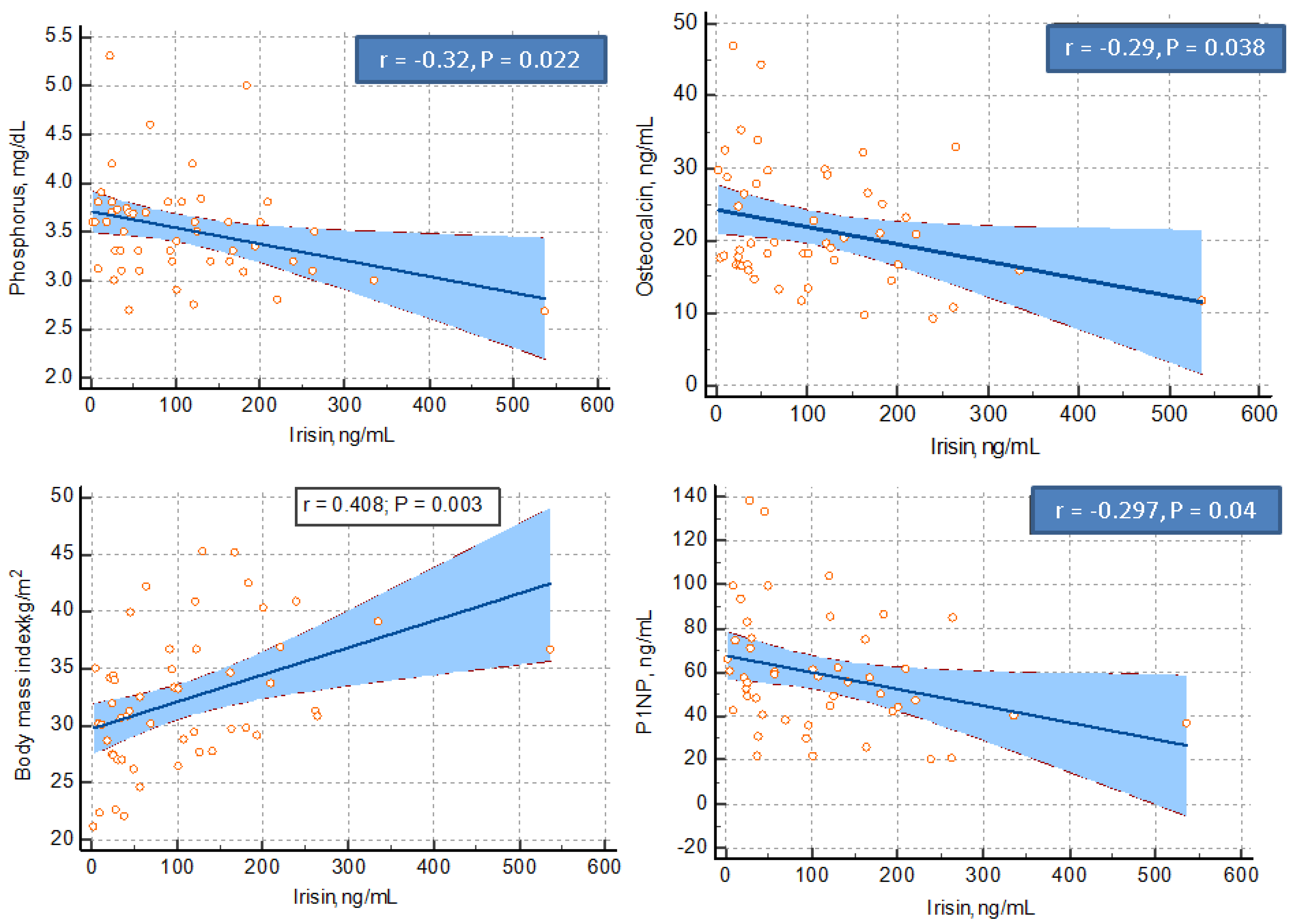
Figure 1. Statistically significant correlations between irisin and bone-formation markers (osteocalcin and P1NP), serum phosphorus, and body mass index in the group of females with vitamin D deficiency.
Physiologia 06 00007 g001
Figure 2. Glucose metabolism correlations with irisin: glycated haemoglobin A1c (group VDD), fasting insulin in both groups, and insulin after 2 h in OGTT (VDS group).
Physiologia 06 00007 g002
Figure 3. The study protocol (abbreviations: DXA = dual-energy X-ray absorptiometry; N = number of participants; VDD = vitamin D deficient; and VDS = vitamin D sufficient).
Physiologia 06 00007 g003
Figure 4. Study assessments based on fasting blood assays (red font highlights the method of detection; green font means the parameter was tested during oral glucose tolerance test, as well as fasting; abbreviations: ACTH = adrenocorticotropic hormone; PTH = parathyroid hormone; TSH = thyroid-stimulating hormone; and T4 = thyroxine).
Physiologia 06 00007 g004
Figure 5. Irisin assay according to the study protocol (kit/method/manufacturer).
Physiologia 06 00007 g005
Table 1. Demographic features, irisin, and thyroid and adrenal assessments in the study groups; VDD versus VDS.
Parameter (Units)VDD Group (N = 48)
Mean ± SD
[or Median (IQR)]
VDS Group (N = 41)
Mean ± SD
[or Median (IQR)]
p-ValueNormal Ranges
Age (years)62.29 ± 10.1963.56 ± 8.160.525
Menopausal period of time (years)15.82 ± 9.5516.11 ± 9.000.887
BMI (kg/m2)32.25 ± 5.9028.93 ± 4.970.006<25
Circulating irisin (ng/mL)91.85 (44.76–121.76)71.17 (38.76–97.43)0.506
TSH (µIU/mL)1.44 (1.23–1.98)1.51 (1.30–2.09)0.8510.35–4.94
FreeT4 (thyroxine) (pmol/L)13.55 (13.13–14.46)14.18 (13.57–14.97)0.0989–19
Morning plasma cortisol (µg/dL)10.09 (9.11–13.26)9.61 (7.24–10.50)0.0824.82–19.5
ACTH (pg/mL)13.59 (8.86–20.79)10.59 (9.76–13.46)0.1677.2–63
Abbreviations: BMI = body mass index; TSH = thyroid-stimulating hormone; FreeT4 = thyroxine; and ACTH = adrenocorticotropic hormone.
Table 2. The panel of fasting assays amidst the exploration of glucose and lipid metabolism (cluster 1).
Parameter (Units)VDD Group (N = 48)
Mean ± SD
[or Median (IQR)]
VDS Group (N = 41)
Mean ± SD
[or Median (IQR)]
p-ValueNormal Ranges
Fasting glycaemia (mg/dL)103.76 ± 13.96102.37 ± 10.910.62780–115
Fasting insulin (µUI/mL)10.19 (5.85–11.73)6.31 (4.71–7.34)0.0741.9–23
Glycated haemoglobin A1C (%)5.70 (5.58–5.92)5.71 (5.63–5.85)0.9404.8–5.9
HOMA-IR 2.67 (1.31–3.29)1.58 (1.22–1.94)0.110<2
Creatinine (mg/dL)0.72 (0.69–0.75)0.77 (0.70–0.85)0.0980.5–1.2
Urea (mg/dL)38.00 (34.03–39.00)36.50 (32.92–41.00)0.88022–43
Uric acid (mg/dL)5.10 (4.46–5.30)5.30 (4.68–5.67)0.4152.6–6
Total cholesterol (mg/dL)199.01 ± 54.60188.90 ± 42.000.3290–200
Triglycerides (mg/dL)106.00 (90.09–132.00)92.00 (84.92–106.17)0.2500–150
HDL cholesterol (mg/dL)55.22 ± 14.5360.80 ± 14.200.09435–65
Abbreviations: HOMA-IR = homeostasis model assessment of insulin resistance; HDL = high density lipoprotein.
Table 3. OGTT-based assessments in the study groups (cluster 2).
Parameter (Units)TimingVDD Group (N = 48)
Mean ± SD
[or Median (IQR)]
VDS Group (N = 41)
Mean ± SD
[or Median (IQR)]
p-Value
Glycaemia (mg/dL)After 1 h178.31± 47.67179.23 ± 40.800.933
After 2 h 128.72 ± 33.00133.49 ± 41.970.598
Insulin (µUI/mL) After 1 h72.95 (50.31–100.65)53.12 (43.26–67.38)0.224
After 2 h 45.99 (26.49–72.99)42.93 (32.23–59.24)0.563
Table 4. Bone and mineral metabolism assessments, including central DXA evaluation, in the study population (cluster 3).
Parameter (Units)VDD Group (N = 48)
Mean ± SD
[or Median (IQR)]
VDS Group (N = 41)
Mean ± SD
[or Median (IQR)]
p-ValueNormal Ranges
Mineral metabolism basal biochemistry assays
Total serum calcium (mg/dL)9.21 ± 0.99.30 ± 0.460.1738.8–10.2
Phosphorus (mg/dL)3.53 ± 0.533.73 ± 0.490.0672.3–4.7
Total proteins (g/dL)7.44 ± 0.447.39 ± 0.530.5966.4–8.6
Hormones of the mineral metabolism
PTH (pg/dL)40.32 (37.58–45.28)41.88 (35.40–48.57)0.94317.3–74.1
25OHD (ng/dL)23.93 ± 4.1936.51 ± 6.11<0.000130–100
Bone formation markers
Total alkaline phosphatase (U/L)71.70 (62.60–83.89)74.00 (65.92–82.71)0.58835–104
Osteocalcin (ng/mL)19.26 (17.62–22.85)21.06 (18.08–23.67)0.51015–46
P1NP (ng/dL)56.48 (47.90–60.90)59.16 (50.54–64.43)0.60220.25–76.31
Bone resorption marker
CrossLaps (mg/dL)0.39 ± 0.190.40 ± 0.160.7650.33–0.782
DXA assessment
Lumbar BMD (g/cm2)1.08 ± 0.191.03 ± 0.150.196
Lumbar T-score −0.77 ± 1.51−1.18 ± 1.130.177>−1
Femoral neck BMD
(g/cm2)
0.84 (0.81–0.87)0.85 (0.81–0.89)0.818
Femoral neck T-score −1.10 (−1.20–−0.90)−1.10 (−1.49–−0.91)0.526>−1
Total hip BMD (g/cm2)0.96 ± 0.140.94 ± 0.120.496
Total hip T-score −0.38 ± 1.21−0.55 ± 0.990.498>−1
TBS 1.36 ± 0.101.35 ± 0.070.887≥1.350
Abbreviations: PTH = parathyroid hormone; 25OHD = 25-hydroxyvitamin D; P1NP = procollagen-N-terminal-peptide 1; BMD = bone mineral density; and TBS = trabecular bone score.
Table 5. Correlations between irisin and study parameters within VDD group and VDS group.
Circulating Irisin (ng/mL) Correlation with the Following ParametersVDD Group VDS Group
Total calcium (mg/dL)r = −0.049, p = 0.734r = −0.066, p = 0.691
Phosphorus (mg/dL)r = −0.320, p = 0.022r = 0.113, p = 0.498
PTH (pg/mL)r = −0.062, p = 0.674r = −0.073, p = 0.657
25OHD (ng/mL)r = −0.081, p = 0.573r = −0.050, p = 0.761
Total alkaline phosphatase (U/L)r = −0.065, p = 0.651r = −0.143, p = 0.386
Osteocalcin (ng/mL)r = −0.293, p = 0.038r = −0.108, p = 0.511
P1NP (ng/mL)r = −0.297, p = 0.040r = −0.036, p = 0.828
CrossLaps (ng/mL)r = −0.193, p = 0.180r = −0.108, p = 0.511
Fasting glycaemia (mg/dL)r = −0.119, p = 0.427r = 0.074, p = 0.672
Glycaemia—at 60′ during OGTT (mg/dL)r = 0.086, p = 0.612r = 0.180, p = 0.332
Glycaemia—at 120′ during OGTT (mg/dL)r = 0.097, p = 0.573r = −0.092, p = 0.624
Fasting insulin (µUI/mL)r = 0.387, p = 0.012r = 0.390, p = 0.030
Insulin—at 60′during OGTT (µUI/mL)r = 0.144, p = 0.407r = 0.180, p = 0.332
Insulin—at 120′during OGTT (µUI/mL) r = 0.111, p = 0.506r = 0.430, p = 0.015
Glycated haemoglobin A1C (%)r = 0.342, p = 0.014r = −0.022, p = 0.894
HOMA-IR r = 0.301, p = 0.055r = 0.347, p = 0.056
Total cholesterol (mg/dL)r = −0.254, p = 0.071r = −0.121, p = 0.464
Triglycerides (mg/dL)r = 0.143, p = 0.318r = 0.062, p = 0.709
HDL cholesterol (mg/dL)r = −0.127, p = 0.404r = 0.158, p = 0.379
Age (years)r = 0.207, p = 0.145r = 0.149, p = 0.365
Menopause time (years)r = 0.117, p = 0.418r = 0.015, p = 0.929
Body mass index (kg/m2)r = 0.408, p = 0.003r = 0.277, p = 0.092
Lumbar BMD (g/cm2)r = −0.010, p = 0.949r = −0.090, p = 0.594
Lumbar T-score r = −0.071, p = 0.635r = −0.106, p = 0.532
Femoral neck BMD (g/cm2)r = 0.036, p = 0.809r = −0.103, p = 0.543
Femoral neck T-score r = 0.052, p = 0.732r = −0.064, p = 0.705
Total hip BMD (g/cm2)r = 0.097, p = 0.516r = 0.045, p = 0.795
Total hip T-score r = 0.098, p = 0.511r = 0.046, p = 0.789
TBSr = −0.156, p = 0.336r = 0.135, p = 0.483
Abbreviations: BMD = bone mineral density; PTH = parathyroid hormone; 25OHD = 25-hydroxyvitamin D; OGTT = oral glucose tolerance test; and TBS = trabecular bone score.
Disclaimer/Publisher’s Note: The statements, opinions and data contained in all publications are solely those of the individual author(s) and contributor(s) and not of MDPI and/or the editor(s). MDPI and/or the editor(s) disclaim responsibility for any injury to people or property resulting from any ideas, methods, instructions or products referred to in the content.