Article

Oxidative Stress-Mediated Effects of Conventional Cigarettes and Heated Tobacco Products on Erythrocyte Membrane Integrity and Regulatory Signaling Pathways

1
Department of Chemical, Biological, Pharmaceutical and Environmental Sciences, University of Messina, 98122 Messina, Italy
2
Biomarkers Unit, Center for Gender-Specific Medicine, Istituto Superiore di Sanità, 00161 Rome, Italy
3
Complex Operational Unit of Clinical Pathology of Papardo Hospital, 98122 Messina, Italy
4
Department of Biomedical, Dental and Morphological and Functional Imaging, University of Messina, 98122 Messina, Italy
*
Author to whom correspondence should be addressed.
These authors shared senior authorship.
Physiologia 2026, 6(1), 17; https://doi.org/10.3390/physiologia6010017
Submission received: 16 January 2026 / Revised: 12 February 2026 / Accepted: 19 February 2026 / Published: 25 February 2026

Abstract

Introduction: cigarette smoking is a major source of systemic oxidative stress and a well-established risk factor for cardiovascular disease. Heated tobacco products (HTPs) are increasingly promoted as reduced-risk alternatives, yet their cellular effects remain incompletely understood. Methods: this study compared the oxidative stress-mediated effects of conventional cigarette smoking and HTP use on human erythrocytes. Erythrocytes from healthy non-smokers, conventional smokers, and HTP users were analyzed using biochemical, functional, and cytological approaches to assess redox status, membrane and cytoskeletal organization, anion exchanger 1 (AE1) function, antioxidant response, and redox-sensitive signaling pathways. Results: conventional smokers exhibited higher intracellular reactive oxygen species (ROS) levels, thiol depletion, methemoglobin and hemichrome formation, whereas HTP users showed marked lipid peroxidation despite lower ROS availability. Both groups instead displayed altered expression and distribution of key membrane and cytoskeletal proteins, including glycophorin A, AE1, spectrin, ankyrin, and band 4.1, indicating impaired membrane–cytoskeleton interactions. Functional analyses revealed an accelerated AE1-mediated anion exchange in erythrocytes from conventional smokers, whereas cells from HTP users exhibited a reduced sulfate accumulation, indicating altered transport capacity. In both groups, G6PDH activity was significantly increased, and redox-sensitive signaling pathways involving ERK, AKT, and eNOS were activated, accompanied by sex-dependent alterations in estrogen receptor expression and distribution. Conclusions: collectively, these findings identify erythrocytes as sensitive biomarkers of tobacco-related systemic damage and indicate that smoking-induced erythrocyte dysfunction, including that associated with HTP use, may actively contribute to vascular impairment. This evidence challenges the assumption that heated tobacco products confer a substantially reduced cardiovascular risk compared with conventional cigarettes.

1. Introduction

Cigarette smoking remains one of the most prevalent harmful lifestyle behaviors worldwide and represents a major public health concern, accounting for more than eight million deaths annually, including a substantial proportion attributable to passive exposure [1]. Although smoking prevalence has gradually declined in recent years, tobacco consumption still involves over one billion individuals globally [2]. Smoking is a well-established risk factor for numerous pathological conditions, including multiple types of cancer, chronic respiratory diseases, and cardiovascular disorders, thereby contributing substantially to global morbidity and mortality [3]. The most commonly used tobacco-related products currently include conventional cigarettes, electronic cigarettes (e-cigarettes), and heated tobacco products (HTPs). Nicotine is the primary psychoactive compound shared by these products. It exerts its addictive effects through activation of dopaminergic pathways in the central nervous system, reinforcing reward-related behaviors and sustaining dependence. Chronic nicotine exposure induces neuroadaptive changes, including upregulation of nicotinic acetylcholine receptors and alterations in neural circuitry, which ultimately hinder smoking cessation. In addition, nicotine and tobacco products contain a wide range of toxic substances that exert deleterious effects at both cellular and systemic levels [4,5,6]. Conventional cigarette smoke is a complex mixture of thousands of chemical compounds, distributed between a particulate phase enriched in carcinogenic and redox-active substances and a gaseous phase containing highly reactive toxic molecules [7]. Together, these components promote excessive production of reactive oxygen species (ROS), leading to persistent oxidative stress and disruption of redox homeostasis. HTPs are designed to heat tobacco at temperatures lower than those required for combustion, thereby reducing the formation of several toxic compounds; however, they still deliver nicotine and emit potentially harmful substances, including aldehydes and fine particulate matter, which may contribute to oxidative stress [8]. Similarly, e-cigarettes generate aerosols through the vaporization of liquids primarily composed of propylene glycol, vegetable glycerol, and flavoring agents. Despite the absence of combustion-derived constituents such as tar and carbon monoxide, e-cigarettes cannot be considered risk-free, as their aerosols can generate ROS, toxic aldehydes, and metal contaminants during heating [9]. Collectively, these findings indicate that both conventional and alternative tobacco products can disrupt redox balance, highlighting oxidative stress as a central mechanism of tobacco-related toxicity.
Oxidative stress represents a central pathogenic mechanism linking tobacco exposure to systemic and vascular complications, with erythrocytes emerging as particularly vulnerable cellular targets and sensitive indicators of tobacco-related toxicity [10,11]. Due to their continuous exposure to high oxygen tension and circulating toxicants, erythrocytes are uniquely positioned at the interface between inhaled tobacco products and peripheral tissues [12]. Excessive ROS generation induced by conventional cigarettes, HTPs, and e-cigarettes can overwhelm erythrocyte antioxidant defenses, thereby inducing a clinically relevant redox imbalance. At the cellular level, oxidative stress compromises erythrocyte membrane integrity through lipid peroxidation and oxidative modification of membrane and cytoskeletal proteins. These alterations impair erythrocyte deformability and mechanical resilience [13,14,15]. As a consequence, erythrocytes exhibit a reduced ability to efficiently traverse the microvasculature [16]. Clinically, diminished erythrocyte deformability has been associated with impaired tissue oxygen delivery, microcirculatory dysfunction, and increased cardiovascular risk, particularly in smokers and individuals with pre-existing cardiometabolic conditions [17,18]. In addition to structural damage, oxidative stress disrupts erythrocyte signaling and regulatory functions that play an important role in vascular homeostasis [19,20]. Redox-sensitive signaling pathways modulate erythrocyte-endothelium interactions, nitric oxide bioavailability, and ion transport processes; their dysregulation may contribute to endothelial dysfunction, altered blood rheology, and a pro-thrombotic milieu, all of which are characteristic features of smoking-related cardiovascular disease [21]. From a translational perspective, tobacco-induced oxidative stress may also accelerate eryptosis, a programmed erythrocyte death process characterized by phosphatidylserine exposure and enhanced cell clearance. Increased eryptosis may contribute to subclinical anemia, elevated circulating procoagulant surfaces, and chronic low-grade inflammation, thereby providing a mechanistic link between smoking, altered erythrocyte turnover, and systemic pathology [22,23]. Importantly, oxidative damage and signaling alterations in erythrocytes may serve as early, minimally invasive biomarkers of tobacco-related harm [24]. Accordingly, the assessment of erythrocyte membrane stability, redox status, and regulatory signaling pathways may provide valuable, minimally invasive tools for evaluating individual susceptibility, monitoring disease progression, and assessing the biological impact of both conventional and alternative tobacco products in clinical and public health settings.
In this framework, erythrocytes represent a highly relevant and accessible cellular model to investigate the biological effects of tobacco-related oxidative stress [25]. This study aims to evaluate the impact of oxidative stress induced by conventional cigarette smoking and heated tobacco products on adult erythrocytes by assessing (i) the structural integrity and functional status of a major erythrocyte membrane protein and selected cytoskeletal components; (ii) the expression and modulation of estrogen receptors expressed in erythrocytes; and (iii) changes in redox-sensitive signaling pathways involved in erythrocyte responses to oxidative stress. Overall, this study aims to determine whether and to what extent exposure to conventional cigarettes and HTPs compromises erythrocyte membrane integrity and regulatory mechanisms, testing the hypothesis that both products induce oxidative stress-driven erythrocyte dysfunction, albeit through distinct patterns of cellular alteration.

2. Materials and Methods

2.1. Preparation of Human Erythrocyte Samples

The research protocol was approved by the Institutional Ethics Committee of the University of Messina, Italy (protocol 52-22). All procedures were carried out with informed consent and in accordance with the Declaration of Helsinki. Venous blood was collected into K2-EDTA tubes from healthy male volunteers aged 20–70 years and healthy female volunteers aged 20–50 years. Female donors were of reproductive age, were not using oral contraceptives, and blood samples were collected during the follicular phase of the menstrual cycle, when estrogen levels are comparable to those observed in males. The study population was restricted to Caucasian participants, as this group provided the largest number of well-characterized samples, ensuring adequate statistical power. The study cohort (n = 157) consisted of conventional cigarette smokers (n = 49; 25 females and 24 males), heated tobacco product (HTP) users (n = 35; 21 females and 14 males), and non-smoking controls (n = 73; 39 females and 34 males). Smokers reported consuming 8–40 products per day for at least two years, as recorded via self-administered questionnaires. Participants exhibited no evidence of chronic diseases, endocrine disorders, infections, or ongoing hormonal therapy. Notably, samples from electronic cigarette users were excluded to prevent confounding effects related to the variability of e-liquid composition, vaping patterns, and exposure levels [26,27]. Initially, male and female populations were analyzed separately; however, no significant sex-related differences were observed, except for estrogen receptors (ERs), which are reported in the following sections.
Human erythrocytes were first rinsed in an isotonic buffer composed of 150 mM NaCl, 5 mM HEPES, and 5 mM glucose, adjusted to pH 7.4 with an osmolarity of 300 mOsm/kgH2O [28]. Cells were then centrifuged (Neya 16R, 1200× g for 5 min) to remove plasma and the buffy coat. Subsequently, erythrocytes were resuspended in the same isotonic solution, at a hematocrit of 3%, according to the specific experimental protocols described below.

2.2. Assessment of Oxidative Stress Parameters

2.2.1. Detection of Ros Levels

The ROS levels were evaluated by the cell-permeable indicator 2’,7’-dichlorofluorescein diacetate (H2DCFDA, D6883, Sigma-Aldrich, Milan, Italy), according to the manufacturer’s instructions. As a positive control, human erythrocytes were incubated with 20 mM H2O2 at 25 °C for 30 min. Reactive oxygen species (ROS) production was quantified using a microplate reader (Fluostar Omega, BMG Labtech, Ortenberg, Germany) set at 485 nm for excitation and 535 nm for emission. Background fluorescence was subtracted from all measurements, as reported in [29]. Results are expressed in arbitrary units.

2.2.2. Measurement of Tbars Levels

Levels of thiobarbituric acid (TBA)-reactive substances (TBARS) were measured as reported by Mendanha and colleagues [30]. Human erythrocytes were suspended in isotonic solution (3% hematocrit, 100 µL), treated with 200 µL of SDS 8.1%, 1.5 mL of 20% (v/v) acetic acid, and 1 mL of TBA 1%, and the mixture was incubated at 95 °C for 30 min. As a positive control, an aliquot of erythrocytes was incubated with 50 mM AAPH for 1 h at 37 °C. Sample absorbance was measured at 532 nm (ONDA, Giorgio Bormac S.r.l, Spectrophotometer, UV-21, Padua, Italy). Results are indicated as µM TBARS levels (1.56 × 10⁵ M−1 cm−1 molar extinction coefficient).

2.2.3. Measurement of Total Sulfhydryl (-Sh) Groups

The quantification of -SH groups was carried out according to the method described by Aksenov and Markesbery [31]. Human erythrocytes were centrifuged (Neya 16R, 1200× g, 5 min), and 8.5 µL of the resulting pellet was lysed in 1 mL of distilled water. From this lysate, 20 μL was mixed with 940 μL of phosphate-buffered saline (PBS, 0.1 M, pH 7.4) containing 1 mM EDTA. The reaction was initiated by adding 30 μL of 50 mM 5,5′-dithiobis(2-nitrobenzoic acid) (DTNB), and samples were incubated for 40 min at 25 °C in the dark. Parallel control samples lacking either DTNB or cell lysate were processed under identical conditions. Following incubation, absorbance was recorded at 412 nm using an ONDA UV-21 Spectrophotometer. The concentration of 3-thio-2-nitrobenzoic acid (TNB) was calculated after subtracting the background absorbance of DTNB-only blanks. For the positive control, an aliquot of erythrocytes was treated with 50 mM AAPH for 1 h at 37 °C to fully oxidize thiol groups. Results were expressed as μM TNB per mg of protein.

2.2.4. Measurement of Methemoglobin (Methb) Content

The methemoglobin (MetHb) levels were determined as reported by Naoum and colleagues [32]. The method relies on spectrophotometric detection of MetHb and oxyhemoglobin at 630 nm and 540 nm, respectively. A 100 μL aliquot of the cell suspension was lysed in 6 mL of hypotonic buffer (15 mM NaH2PO4, 10 mM KH2PO4) supplemented with 100 μL of 1% SDS (hemolysate A). Then, 300 μL of hemolysate A was further diluted in 3 mL of the same hypotonic solution (hemolysate B). To generate a fully oxidized reference sample, a separate aliquot of erythrocytes was incubated with 4 mM NaNO3 for 1 h at 25 °C, a known inducer of MetHb formation. Absorbance readings of hemolysates A and B were taken at 630 nm and 540 nm, respectively, using an ONDA UV-21 Spectrophotometer. Methemoglobin levels were calculated using the following formula: % MetHb = (OD 630 nm × 100)/(OD 630 nm + (OD 540 × 10)).

2.3. Analytical Cytology

Erythrocytes were fixed in 3.7% formaldehyde in PBS (pH 7.4) for 10 min at room temperature. After washing with the same buffer, cells were permeabilized with 0.5% Triton X-100 (Sigma-Aldrich, Milan, Italy) in PBS (pH 7.4) for 5 min at room temperature. Following a PBS wash, the samples were incubated for 30 min at 37 °C with the following mouse monoclonal antibodies: anti-AE1 (1:500; B9277, Milan, Italy), anti-α/β-spectrin (1:500; sc-271130, Santa Cruz Biotechnology, Milan, Italy), anti-glycophorin A (1:500; G7900, Sigma-Aldrich, Milan, Italy); anti-ankyrin (1:500; Invitrogen, 33-8800, Milan, Italy); anti-band 4.1 (1:500; Santa Cruz Biotechnology, Milan, Italy, sc- 398983), anti-actin (SC-8432 Santa Cruz Biotechnology, Milan, Italy) anti-ERα (1:500; sc- 8002, Santa Cruz Biotechnology); anti-Erβ (1:500; sc -3494, Santa Cruz Biotechnology, Milan, Italy); anti-phosphorylated ERK1/2 (1:500; BD Transduction Laboratories, 612358, Milan, Italy); anti-peNOS (phospho S-1177, Sigma-Aldrich, Milan, Italy); anti-nitrotyrosine (mAb 487923, Sigma-Aldrich, Milan, Italy) and anti-phosphorylated AKT (1:500; sc-271966, Santa Cruz Biotechnology, Milan, Italy). Successively, all samples were washed thrice in PBS (pH 7.4) and incubated for 30 min at 37 °C with anti-mouse IgG (H + L) Highly Cross-Adsorbed Secondary Antibody (1:500; Alexa Fluor™ 488, Milan, Italy). All samples were then washed three times with PBS (pH 7.4) and incubated for 30 min at 37 °C with an anti-mouse IgG (H + L) Highly Cross-Adsorbed Secondary Antibody conjugated to Alexa Fluor™ 488 (Milan, Italy, 1:500). Fluorescence analysis was performed using an Olympus BX51 Microphot microscope or a FACScan flow cytometer (Becton Dickinson, Mountain View, CA, USA) equipped with a 488–544 nm argon laser. A minimum of 20,000 events per sample were acquired. Fluorescence intensity histograms are presented to provide a semi-quantitative assessment of staining.

2.4. Measurement of So42− Uptake

Anion exchanger 1 activity was determined as the uptake of SO42− in human erythrocytes, as previously reported [33,34,35,36,37,38,39,40]. Briefly, after washing, human erythrocytes were resuspended in 35 mL of SO42− medium (composition in mM: Na2SO4 150, HEPES 5, glucose 5; pH 7.4; osmolarity 300 mOsm/kg H2O) and incubated at 25 °C for 5, 10, 15, 30, 45, 60, 90, and 120 min. At each time point, 10 µL of DIDS (10 µM), an AE1 inhibitor [41], was added to 5 mL aliquots, which were immediately kept on ice; then samples were washed three times with cold isotonic solution and centrifuged (Neya 16R, 4 °C, 1200× g, 5 min) to remove extracellular SO42−. The cell pellet was lysed by adding distilled water, and proteins were precipitated using 4% (v/v) perchloric acid. After centrifugation (Neya 16R, 4 °C, 2500× g, 10 min), the supernatant containing the SO42− accumulated by erythrocytes during the incubation period was analyzed turbidimetrically. For the assay, 500 µL of the supernatant was mixed sequentially with 500 µL of glycerol diluted 1:1 in distilled water, 1 mL of 4 M NaCl, and 500 µL of 1.24 M BaCl2·2H2O. Absorbance was measured at 425 nm (ONDA Spectrophotometer, UV-21). A calibration curve, prepared by precipitating known SO42− concentrations in a separate experiment, was used to convert absorbance values to [SO42−] in L cells × 10−2. The SO42− uptake rate constant (min−1) was calculated using the following equation: Ct = C (1 − e−rt) + C0, where Ct, C, and C0 indicate the intracellular SO42− concentrations measured at time t, ∞, and 0, respectively, e represents the Neper number (2.7182818), r indicates the rate constant of the process, and t is the specific time at which the SO42− concentration was measured. The rate constant corresponds to the inverse of the time required to reach approximately 63% of the total intracellular SO42− [33]. Data are reported as [SO42−] L cells × 10−2, representing the micromolar concentration of SO42− internalized by 10 mL erythrocytes at 3% hematocrit.

2.5. Measurement of Glucose-6-Phosphate Dehydrogenase (G6pdh) Activity Assay

Glucose-6-phosphate dehydrogenase (G6PDH) activity was measured using a commercial G6PDH activity assay kit (Sigma-Aldrich, Milan, Italy) following the manufacturer’s protocol. The assay relies on fluorescence intensity, which is directly proportional to G6PDH activity in the samples. The reaction rate was monitored using a plate spectrophotometer (ONDA Spectrophotometer, UV-21) by measuring the rate of NADPH production, which absorbs light at 340 nm, over a 30 min period. The resulting reaction rates, expressed as a percentage, were then normalized to total protein content, determined spectrophotometrically at 540 nm to account for hemoglobin absorbance.

2.6. Experimental Data and Statistics

All data are presented as the arithmetic mean ± standard deviation (SD). Statistical analyses and graphical representations were performed using GraphPad Prism (version 8.0, GraphPad Software, San Diego, CA, USA) and Microsoft Excel (Version 2019, Redmond, WA, USA). Differences between group means were assessed using one-way or two-way analysis of variance (ANOVA) followed by Bonferroni’s post hoc test, or by Student’s t-test where appropriate. A p-value of less than 0.05 was considered statistically significant. The symbol (n) indicates the number of biological replicates.

3. Results

3.1. Detection of Glycophorin A Expression Levels and Distribution

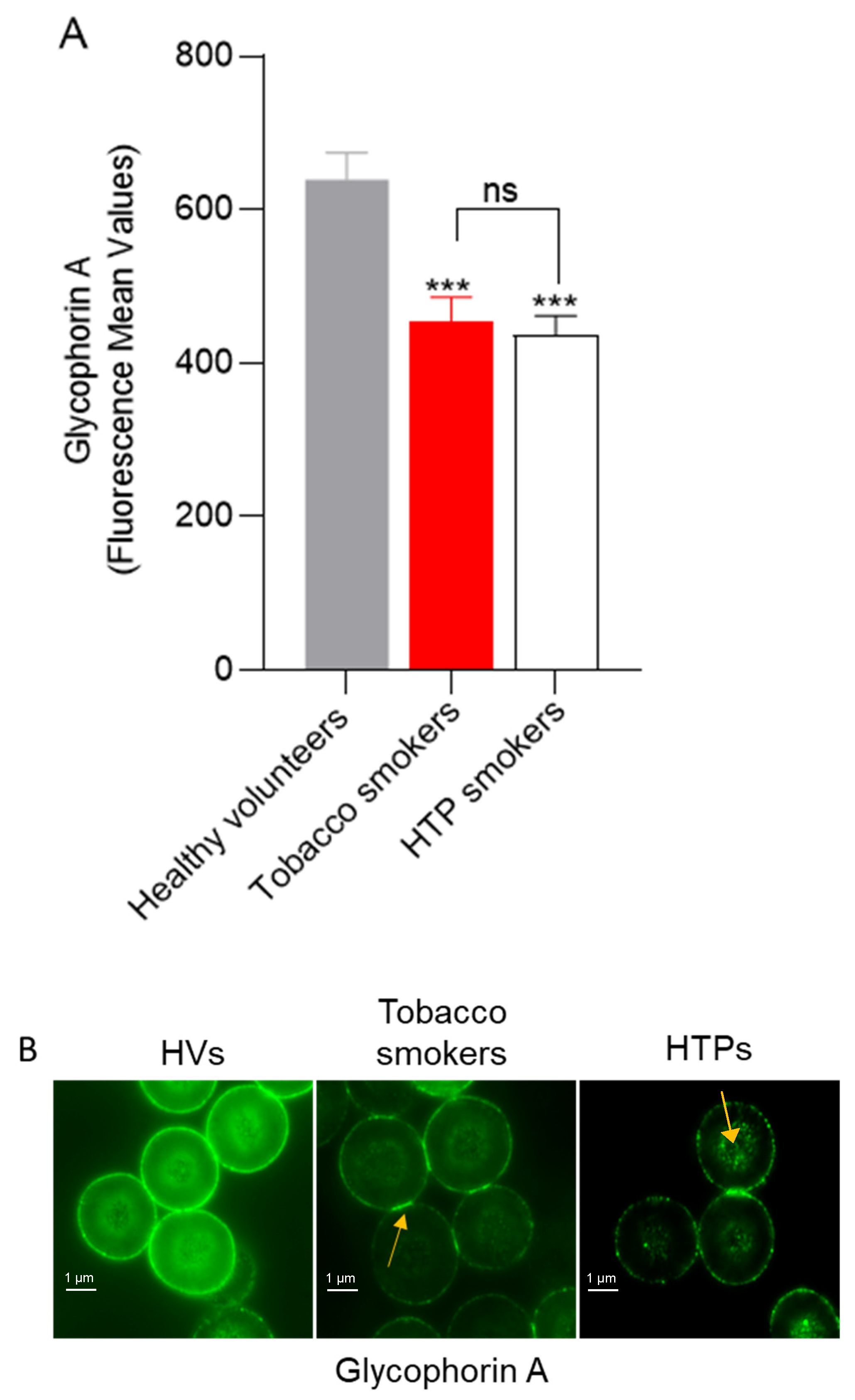
Flow cytometry analysis revealed a significant reduction in glycophorin A expression levels in both smoker donors compared to controls (Figure 1A). Immunofluorescence analysis also detected changes in glycophorin A distribution upon the plasma membrane (Figure 1B) in both experimental groups (tobacco smokers and HTP users). Specifically, in cells from smoker donors, glycophorin A appeared redistributed and clustered along the plasma membrane (arrows) with respect to samples from the control condition (Figure 2B).

3.2. Assessment of Oxidative Stress Parameters

3.2.1. Detection of ROS Levels

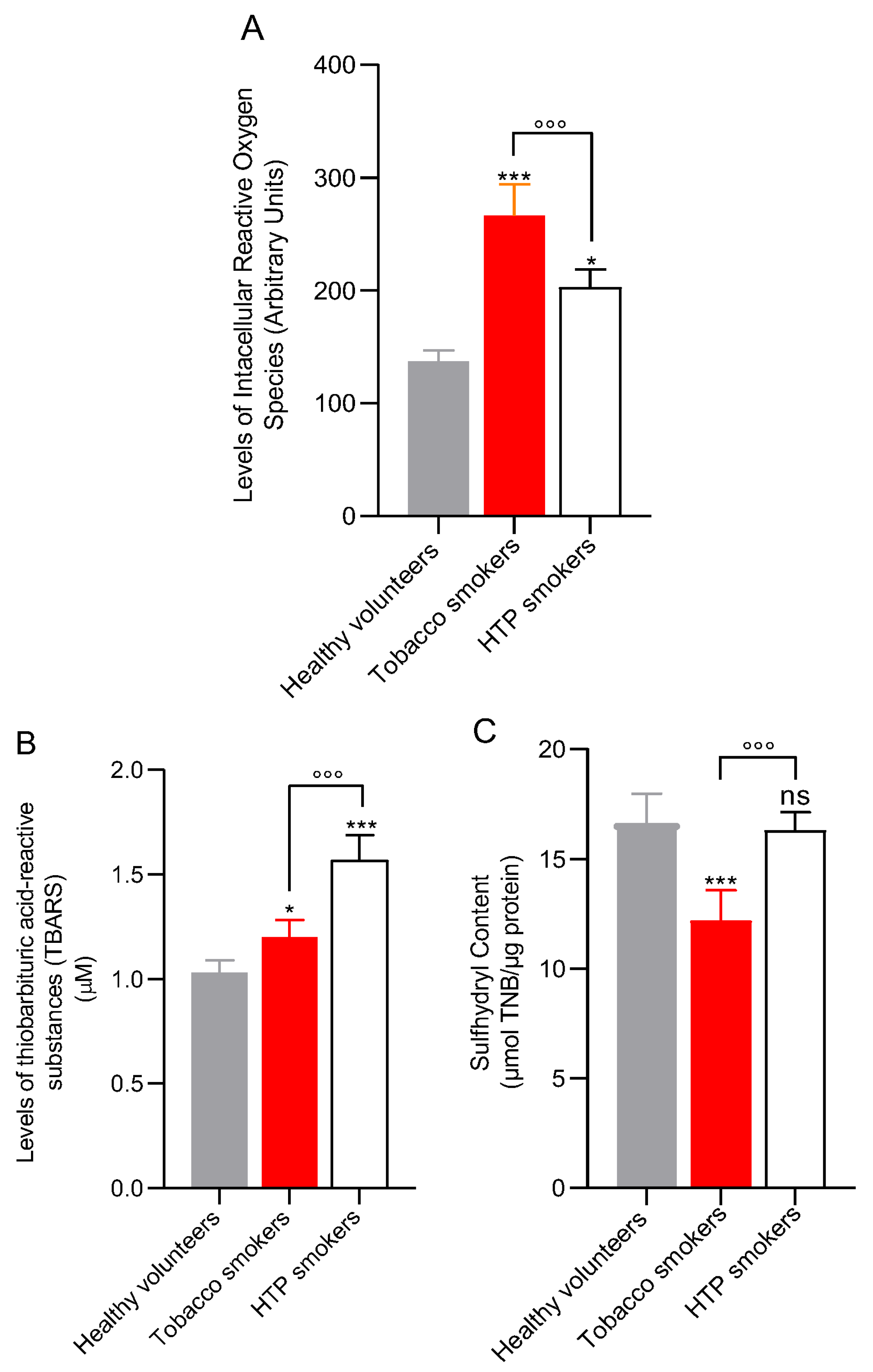
In both smoker donors, erythrocyte samples exhibited a marked increase in intracellular ROS levels compared to the control cells (Figure 2A). However, the amount of intracellular ROS was lower in HTP users than in cells derived from conventional tobacco smokers (Figure 2A).

3.2.2. Evaluation of TBARS Levels

In Figure 2B, TBARS levels were significantly elevated in samples from both groups of smokers compared to controls. Notably, this increase was more pronounced in samples derived from HTP smokers than in those from conventional tobacco smokers.

3.2.3. Evaluation of Total -SH Group Content

Sulfhydryl (–SH) group content was significantly reduced in samples from conventional tobacco smokers compared with control cells (Figure 2C). In contrast, total –SH levels in HTP smokers were significantly higher than those observed in conventional tobacco smokers and were comparable to control values. Indeed, no significant differences were detected between HTP smokers and healthy controls (Figure 2C).

3.2.4. Detection of MetHb Levels

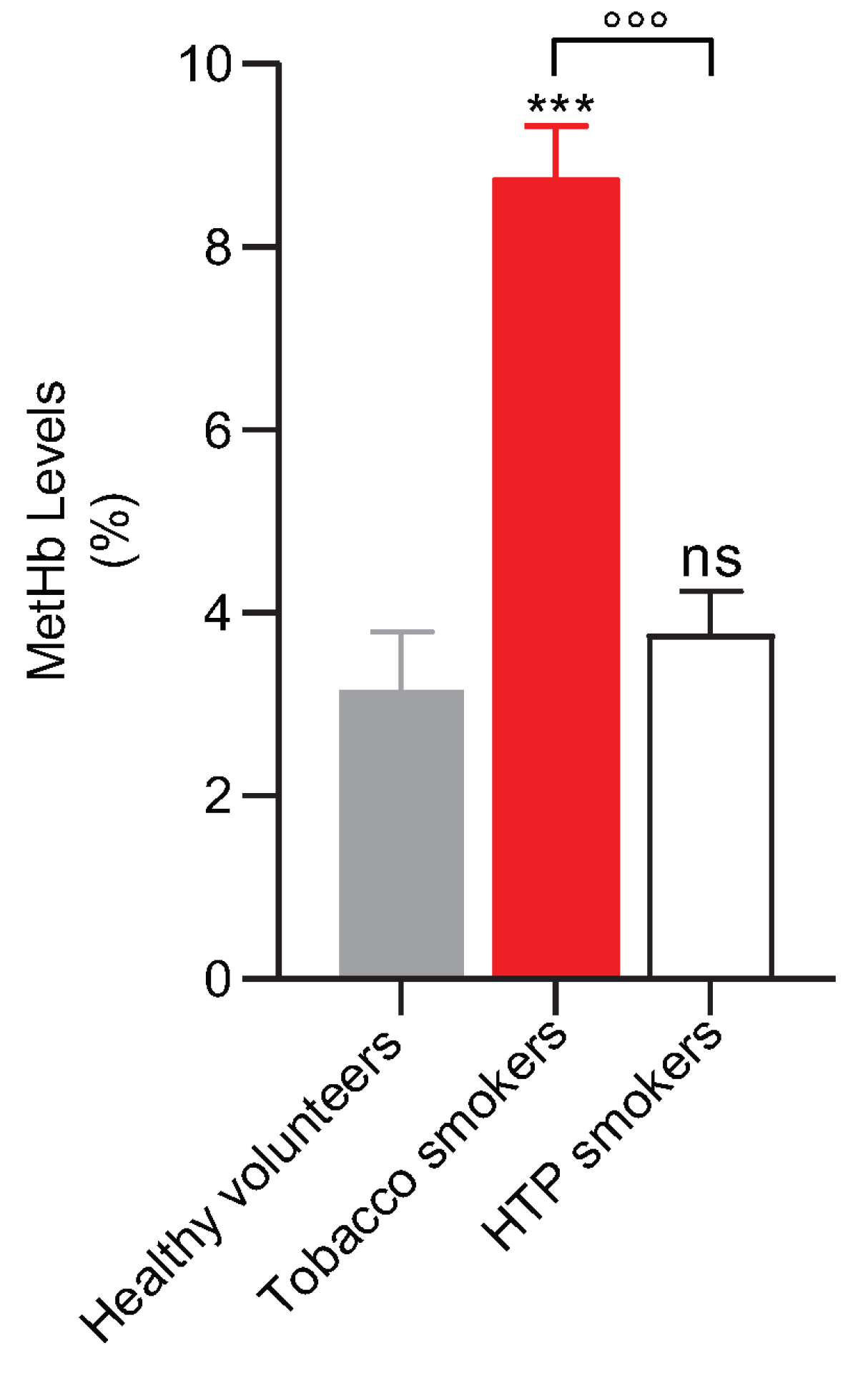
MetHb levels were significantly increased in erythrocytes from conventional tobacco smokers compared with those from healthy controls (Figure 3). In contrast, MetHb levels in HTP users did not differ significantly from those observed in healthy volunteers (Figure 3).

3.3. Detection of Band 3 Protein (Ae1) Expression Levels and Distribution

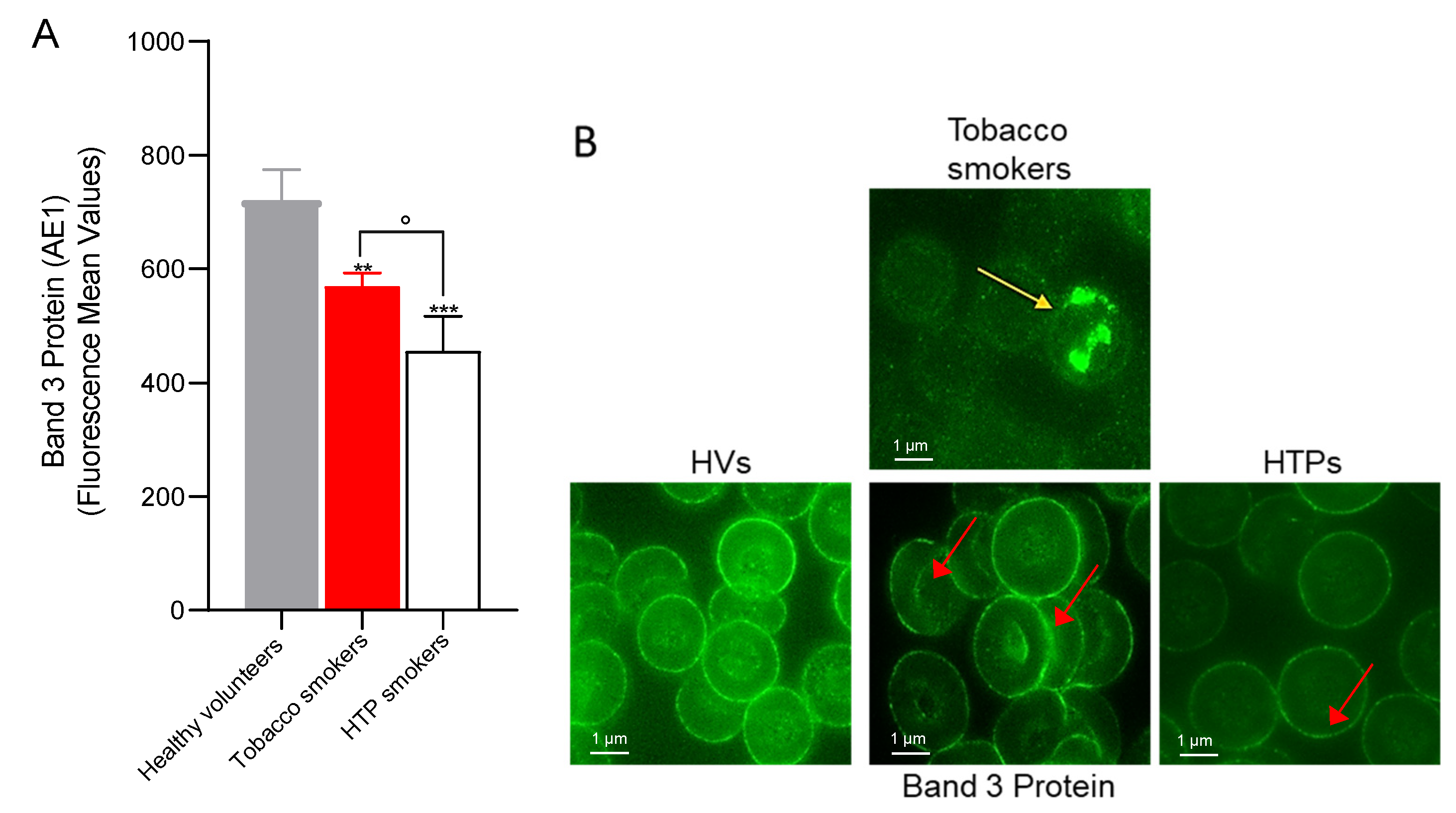
Figure 4A illustrates AE1 protein expression levels in cells from healthy volunteers, conventional tobacco, and HTP smokers. Both smoker groups exhibited a pronounced decrease in AE1 levels, accompanied by minor protein redistribution on the plasma membrane (Figure 4A,B). Notably, the reduction in AE1 expression was more pronounced in HTP users compared to conventional tobacco smokers. Importantly, the production of hemichromes, which occurred in 3% of cells, has been observed exclusively in cells from conventional tobacco smokers (Figure 4B).

Anion Exchanger-Mediated SO42− Uptake

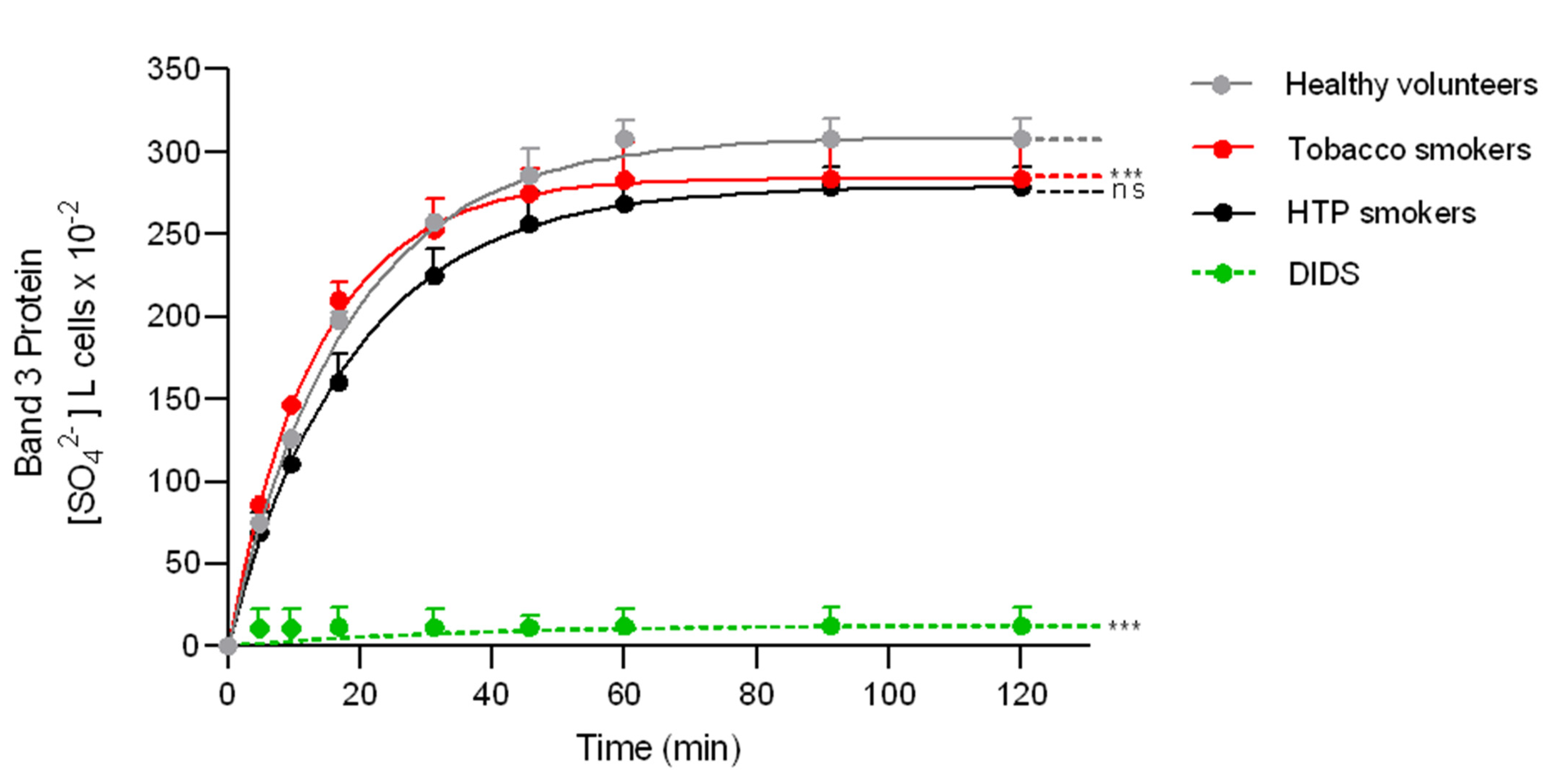
The anion exchange function of the Band 3 protein was evaluated by measuring SO42− uptake in erythrocytes from healthy volunteers, conventional cigarette smokers, and HTP users (Figure 5). In control cells, SO42− uptake gradually increased, reaching equilibrium after 17.95 min, with a rate constant of 0.055 ± 0.007 min−1 (Table 1). In erythrocytes from conventional smokers, the transport rate constant was higher (0.074 ± 0.005 min−1; Table 1) than in controls, indicating accelerated transport kinetics. By contrast, cells from HTP users exhibited a transport rate constant (0.053 ± 0.007 min−1; Table 1) similar to that of controls. However, the total amount of SO42− internalized by HTP erythrocytes after 45 min was significantly lower compared to that measured in control cells (Table 1). As expected, DIDS-treated cells showed markedly reduced SO42− uptake rates and lower internalized SO42− levels compared to controls (Table 1).

3.4. Determination of Cytoskeleton-Associated Proteins

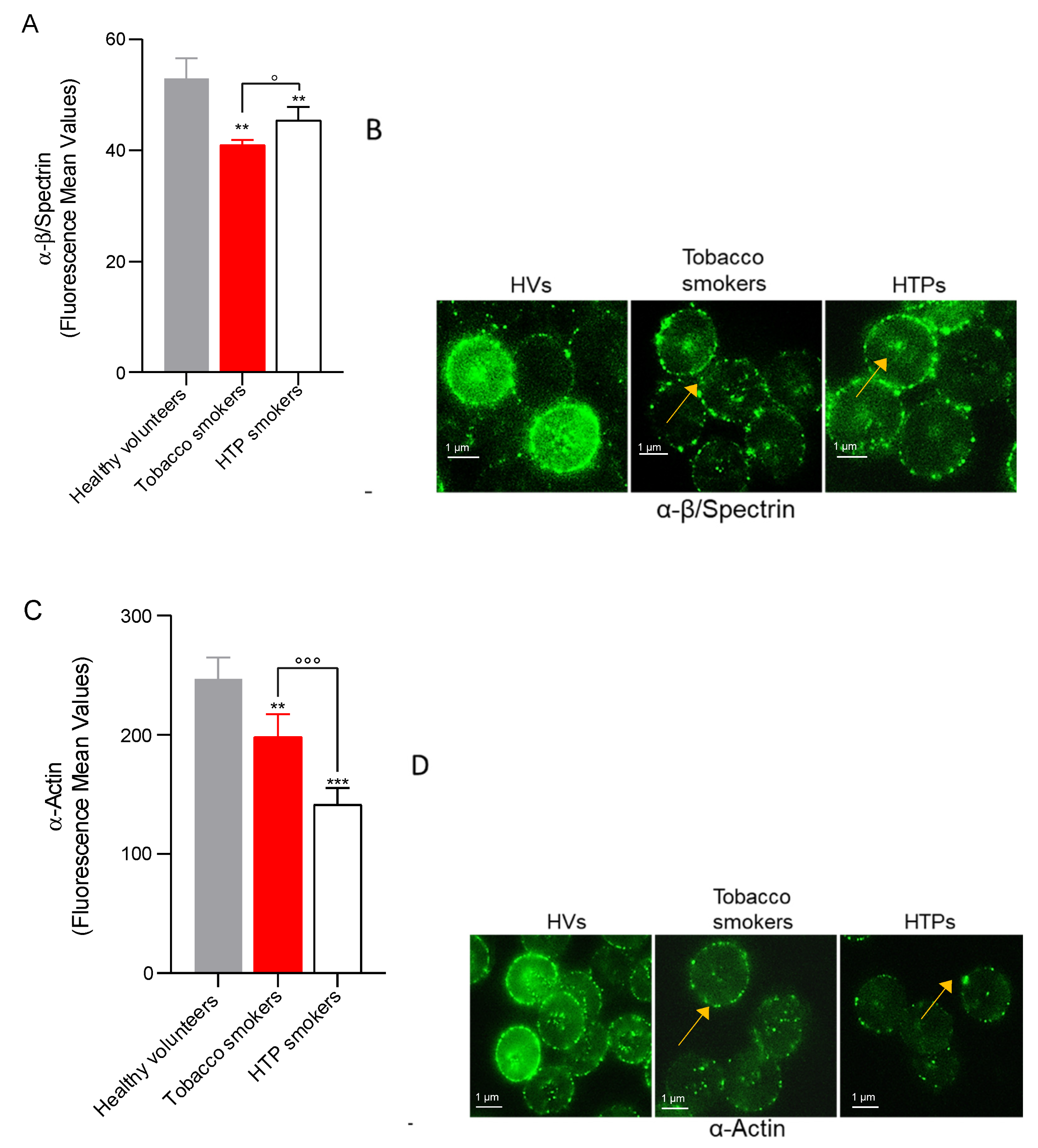
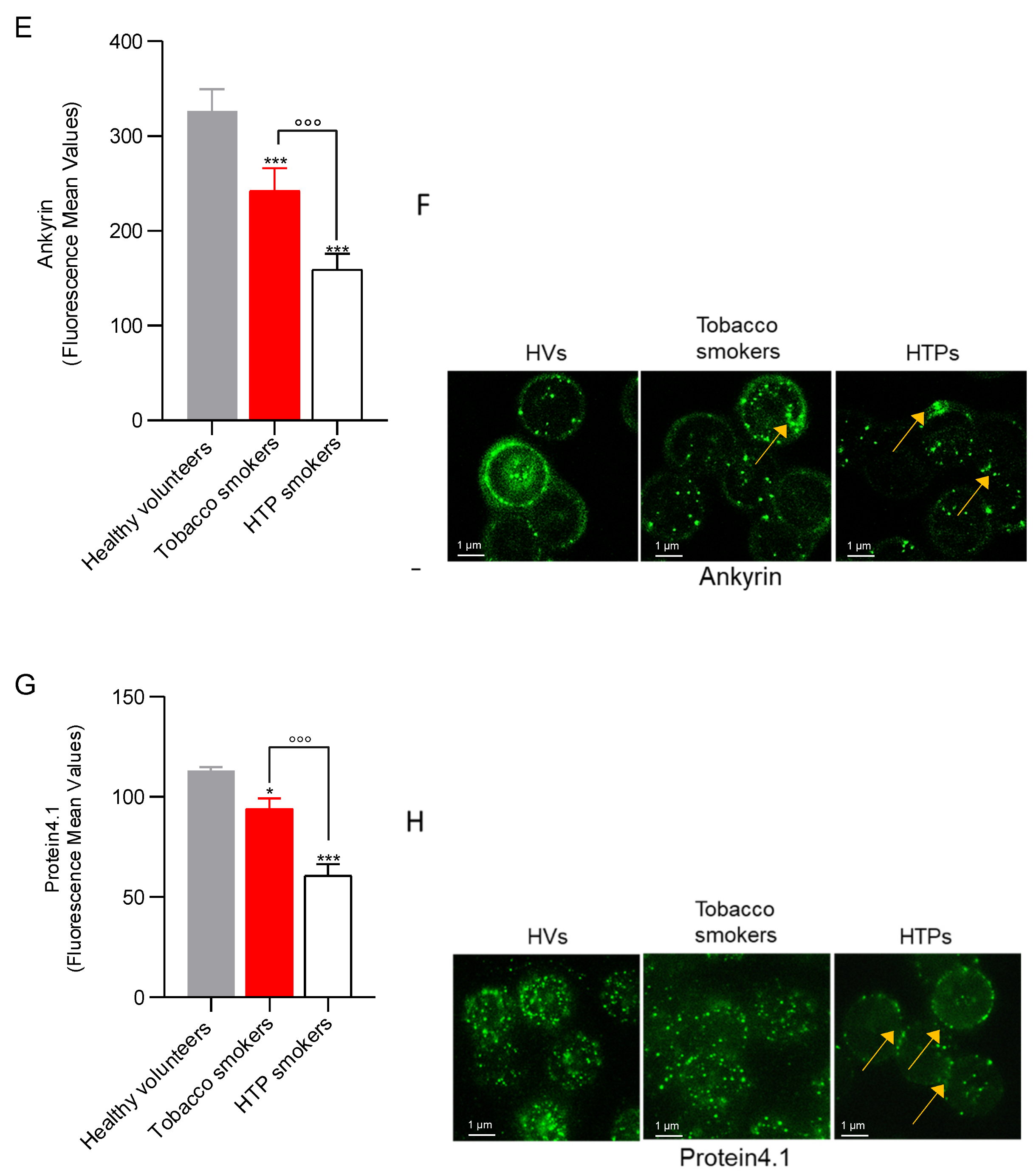
The distribution of cytoskeleton-associated proteins was analyzed by flow cytometry and immunofluorescence in erythrocytes from healthy donors, conventional tobacco smokers, and HTP users. Both smoker groups exhibited a marked reduction in fluorescence intensity of major cytoskeletal proteins, including α/β-spectrin, α-actin, ankyrin, and band 4.1, compared with healthy controls (Figure 6A,C,E,G). Notably, erythrocytes from HTP users exhibited minimal peripheral clustering and reorganization of these cytoskeletal proteins compared with tobacco smokers, with the exception of α/β-spectrin. This pattern suggests subtle yet potentially functionally relevant differences in cytoskeletal remodeling between the two smoker groups, which may impact erythrocyte membrane stability and deformability (Figure 6B,D,F,H).

3.5. Measurement of Erα/β Content and Distribution

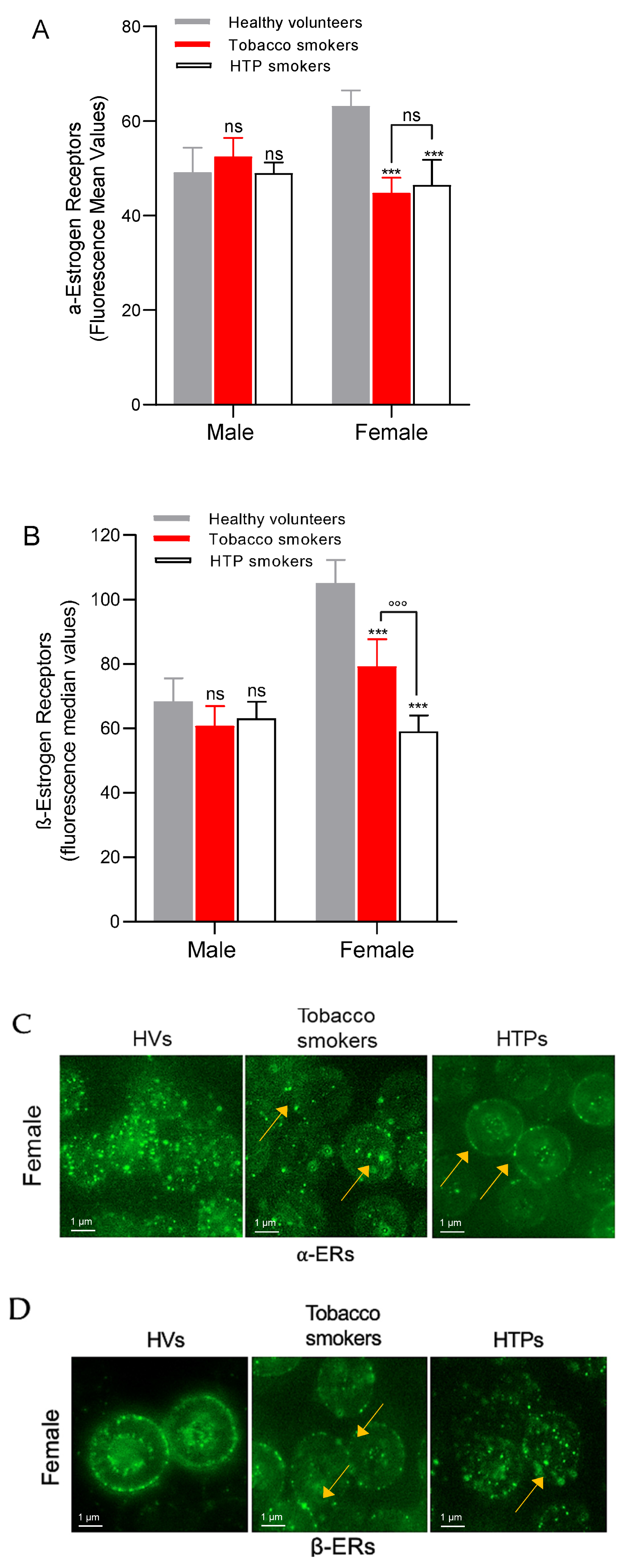
Flow cytometry analysis revealed that ERα/β levels were reduced in erythrocytes from female conventional tobacco smokers and HTP users compared with cells from female healthy controls (Figure 7A,B). Consistently, immunofluorescence images (Figure 7C,D) demonstrated increased redistribution of ERα/β at the plasma membrane in erythrocytes from both female smoker groups. By contrast, erythrocytes from male smokers showed no significant reduction in ERα/β levels compared with healthy male donors. Nevertheless, a redistribution of both receptors toward the plasma membrane was observed, indicating a potential gender-specific response to tobacco-related oxidative stress.

3.6. Measurement of Phosphorylated Erk and Akt Content

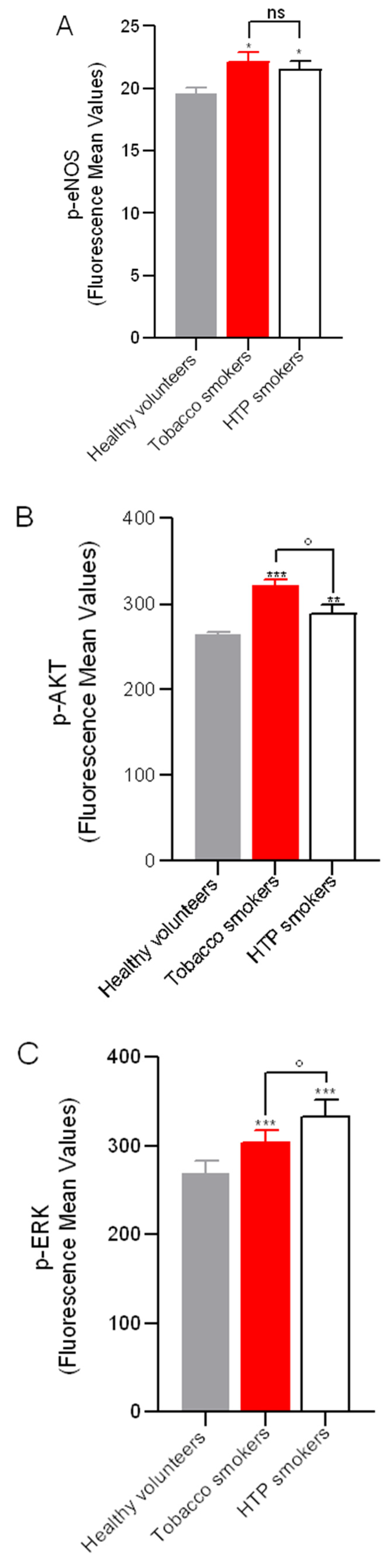
Figure 8 illustrates the levels of phosphorylated eNOS (peNOS), AKT (pAKT), and ERK (pERK) as determined by flow cytometry in cells derived from healthy donors, conventional tobacco smokers, and HTP users. Phosphorylation of all three proteins was elevated in cells from both groups of smokers compared to cells from healthy donors. Notably, pAKT levels were lower in HTP users relative to conventional tobacco smokers, whereas phosphorylated ERK levels were higher in HTP users than in tobacco smokers. In contrast, no significant differences in peNOS phosphorylation were observed between the two smoker groups, indicating that this pathway may be similarly affected by both tobacco and HTP use.

3.7. Detection of Nitro-Tyrosine Levels

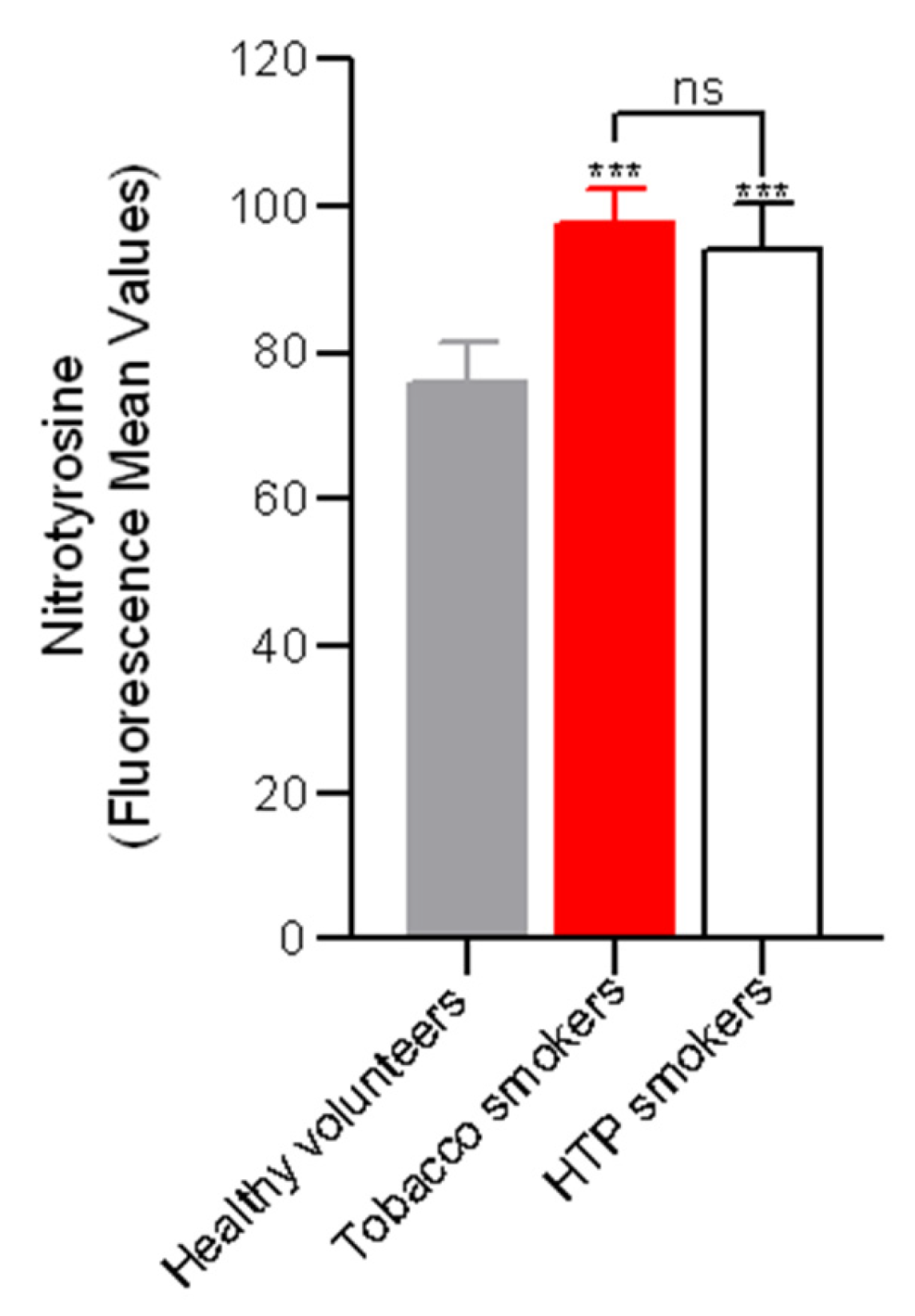
In erythrocyte samples from both groups of smokers, there was a pronounced increase in intracellular nitro-tyrosine levels compared to control cells (Figure 9). This elevation indicates enhanced protein nitration, reflecting higher oxidative and nitrosative stress.

3.8. Activity of G6pdh

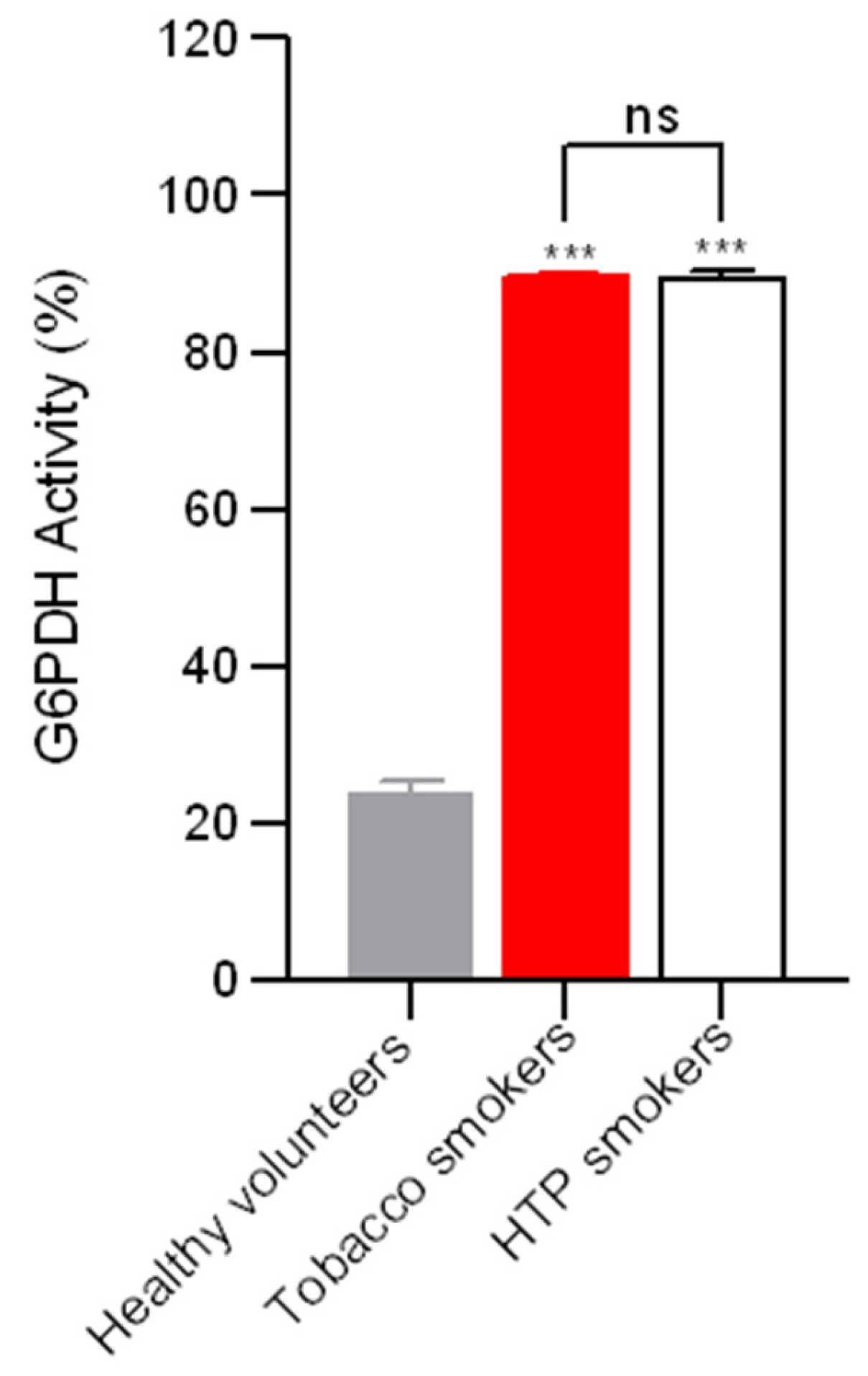
Figure 10 shows G6PDH activity in erythrocytes from healthy volunteers, conventional tobacco smokers, and HTP users. The results indicate a marked increase in G6PDH activity in both groups of smokers compared to healthy controls. No statistically significant difference was observed between tobacco and HTP smokers, suggesting that exposure to either form of smoking induces a comparable up-regulation of G6PDH.

4. Discussion

The present scientific study provides a comprehensive evaluation of oxidative stress-mediated effects induced by conventional cigarette smoking and the use of HTPs on isolated human erythrocytes, highlighting alterations in plasma membrane integrity, structural cytoskeletal organization, and redox-sensitive signaling pathways. By integrating biochemical, functional, and cytological analyses, our findings highlight erythrocytes as highly sensitive cellular targets of tobacco-related toxicity and reveal both shared and distinct effects between conventional and heated tobacco products. A key finding of this study is the demonstration that both conventional cigarettes and HTPs disrupt erythrocyte redox homeostasis via distinct oxidative targets. Interestingly, although intracellular ROS levels were lower in HTP users than in conventional tobacco smokers (Figure 2A), erythrocytes obtained from HTP users displayed significantly increased TBARS levels, even higher than those observed in conventional tobacco smokers (Figure 2B). This apparent dissociation between ROS availability and lipid peroxidation suggests that exposure to HTP aerosols may promote persistent membrane lipid damage through lipid-soluble reactive species, such as aldehydes (e.g., acrolein), which are abundant in heated tobacco emissions. These highly reactive compounds can propagate lipid peroxidation within the membrane independently of steady-state cytosolic ROS levels, thereby sustaining oxidative damage despite a lower overall intracellular ROS burden [42,43]. Such effects could be related to differences in aerosol chemical composition and to distinct temporal dynamics of oxidative injury compared with combustible tobacco smoke [44]. However, these observations suggest that a reduced emission of certain toxicants by HTPs may not necessarily translate into a proportionate reduction in cellular oxidative damage [10]. Consistent with this interpretation, protein oxidation also exhibited divergent patterns between the two smoker populations. The significant depletion of thiol (–SH) groups in erythrocytes from conventional smokers reflects pronounced protein oxidation, likely driven by the elevated oxidative burden resulting from tobacco combustion, which generates free radicals [45]. Conversely, the preservation of –SH levels in HTP users, comparable to that in control subjects, also suggests a relatively limited degree of protein oxidation (Figure 2C). In both cases, this preservation may reflect an efficient engagement of adaptive or compensatory antioxidant responses [46]. Nevertheless, the persistence of lipid peroxidation and membrane remodeling, as indicated by alterations in glycophorin A expression (Figure 1B), suggests that such compensatory mechanisms may be sufficient to limit protein oxidation but not to fully prevent oxidative damage to plasma membrane structure.
Another discriminating feature between the two smoking modalities is hemoglobin oxidation. The absence of significant methemoglobin accumulation in HTP users (Figure 3) suggests a lower propensity to directly oxidize hemoglobin, yet this does not preclude substantial plasma membrane damage, indicating that oxidative stress may preferentially influence specific erythrocyte targets (e.g., abnormal redistribution of Band 3 protein on the plasma membrane). In contrast, the generation of non-functional hemoglobin, observed exclusively in conventional tobacco smokers (Figure 3), was accompanied by a pronounced reorganization of AE1 (Band 3 protein) into discrete membrane clusters, likely resulting from oxidative-induced dimerization and oligomerization [47]. This process was associated with a significant accumulation of hemichromes (Figure 4B), which represent denatured hemoglobin species formed under oxidative conditions and are known to bind the cytoplasmic domain of AE1 [48,49,50]. Hemichrome–AE1 interactions promote Band 3 clustering, disrupt membrane–cytoskeleton anchoring, and serve as signals for erythrocyte aging and early removal [51,52]. In our study, we observed a decrease in Band 3 protein fluorescence, which may indicate a potential redistribution of AE1 on the plasma membrane rather than definitive clustering. Considering the crucial role of AE1 in mediating anion exchange [53,54,55], such altered distribution and reduced expression are likely to compromise membrane stability and gas transport efficiency, thereby contributing to erythrocyte dysfunction. Anion exchanger 1 facilitates the transmembrane exchange of chloride and bicarbonate ions (Cl/HCO3), thereby enabling carbon dioxide removal from peripheral tissues and contributing critically to whole-body acid–base balance [56]. By regulating these processes, AE1 indirectly supports efficient oxygen delivery at the tissue level. The functional activity of the AE1 exchanger can be evaluated by measuring the rate constant of sulfate (SO42−) uptake, an approach that is particularly advantageous because sulfate is transported more slowly than physiological substrates such as chloride or bicarbonate, allowing for improved resolution of exchange kinetics [33]. Functional evaluation of AE1 activity revealed distinct kinetic adaptations between the cells obtained from two smoking groups (Figure 5, Table 1).
Specifically, erythrocytes from conventional smokers exhibited accelerated SO42− uptake kinetics (Figure 2A–C). Although an increased transport rate does not necessarily imply overt pathology, any deviation from physiological kinetics, either decreased or accelerated, may reflect an alteration in AE1 functional regulation. In this context, the observed acceleration could be associated with redox-related modifications, potentially linked to oxidative stress (Figure 3), which may influence Band 3 protein conformational state and transport dynamics. In contrast, cells from HTP users showed uptake kinetics comparable to those of control subjects (Figure 5) but accumulated a significantly lower total amount of intracellular sulfate (Table 1), indicating a reduced overall transport capacity. This reduction may be consistent with the down-regulation and altered membrane distribution of AE1 observed predominantly in HTP users (Figure 4A,B).
Overall, these findings suggest that chronic tobacco exposure may differentially modulate erythrocyte membrane transport properties depending on the smoking modality. While the functional alterations observed do not directly demonstrate impaired in vivo Cl/HCO3 exchange or gas transport, they may represent early or subtle disturbances of erythrocyte homeostasis at the membrane level. Oxidative stress also profoundly affected cytoskeletal organization. The reduced expression and altered distribution of α/β-spectrin, α-actin, ankyrin, and band 4.1 in both smoker groups indicate compromised membrane–cytoskeleton interactions (Figure 6). However, the pronounced peripheral redistribution observed mainly in erythrocytes from smoking users points to potentially significant differences in cytoskeletal remodeling, which may impair erythrocyte deformability [57]. Given the essential role of erythrocyte deformability in microcirculatory flow and tissue oxygen delivery, these structural alterations could contribute to smoking-related vascular dysfunction at the microcirculatory level [58]. Several published studies support the notion that smoking and tobacco-related oxidative stress contribute to altered erythrocyte structural integrity and cytoskeletal remodeling. Tobacco smoke contains numerous reactive species that increase systemic oxidative burden, and this has been linked to changes in erythrocyte membrane architecture and function in smokers. For example, atomic force and electron microscopy studies have documented altered erythrocyte membrane topography, reduced membrane fluidity, and morphological deformities in smokers, consistent with oxidative damage to membrane-associated structures [59]. Moreover, smoking has been associated with increased eryptosis, a form of programmed erythrocyte death triggered by oxidative stress and membrane perturbations, with a higher percentage of phosphatidylserine-exposing erythrocytes observed in current smokers versus non-smokers. Such oxidative processes can indirectly impact the cytoskeletal network, as evidenced in other models of oxidative stress, where spectrin, ankyrin, and protein 4.1 become redistributed or functionally impaired, leading to compromised cytoskeletal linkage and decreased deformability [23]. Against this background, the reduced expression and altered distribution of spectrin, α-actin, ankyrin, and band 4.1 observed in smokers in the present study align with a broader pattern of oxidative-stress-linked cytoskeletal disruption.
Beyond structural damage, our results demonstrate that tobacco exposure modulates erythrocyte regulatory signaling. Tobacco contains compounds, such as nicotine, that can act as xenoestrogens or endocrine-disrupting chemicals, meaning they are capable of mimicking endogenous estrogens and influencing physiological processes [60]. Their estrogenic or anti-estrogenic effects are largely mediated through interactions with plasma membrane estrogen receptors (ERs). Notably, in erythrocytes from female subjects exposed to both conventional tobacco and HTPs, an abnormal distribution of ERs at the plasma membrane was observed (Figure 7C,D), along with changes in overall ER expression levels (Figure 7A,B). In contrast, no such alterations were detected in samples from male donors. In addition to the observed sex-specific responses of ERs at the cellular level, these findings may have broader physiological implications. Differential ER activation could contribute to sex differences in cardiovascular risk associated with smoking, as estrogen signaling is known to influence vascular tone, lipid metabolism, and inflammatory responses. Thus, the distinct ER-mediated responses observed in male and female cells might partially underlie the variability in cardiovascular susceptibility to tobacco or HTP exposure between sexes [61].
Membrane-bound ERs play a key role in erythrocytes’ homeostasis by triggering intracellular signaling pathways, including those mediated by kinase proteins such as ERK1/2 and AKT [62]. Notably, HTP users exhibited lower pAKT (Figure 8B) but higher pERK1/2 (Figure 8C) levels compared with conventional smokers, suggesting differential engagement of survival and stress-response pathways. Moreover, sex-specific alterations in estrogen receptor expression and distribution highlight the influence of biological sex on erythrocyte responses to tobacco-induced oxidative stress, with potential implications for cardiovascular risk stratification [63]. It is important to consider that excessive activation of intracellular pathways regulated by ER signaling may also lead to the phosphorylation and activation of eNOS (Figure 8A), thereby affecting cell function through increased nitric oxide (NO) production [64]. It has been demonstrated that NO synthesis via the eNOS isoform is dependent on ERK1/2 phosphorylation, which can result from uncontrolled stimulation of ERs [65]. Elevated levels of nitric oxide (NO) readily react with superoxide (O2) to form peroxynitrite (ONOO), a potent oxidizing and nitrating agent that can modify protein residues, particularly by nitrating tyrosine to form 3-nitrotyrosine [66]. In our samples, this reaction was associated with increased tyrosine nitration, leading to structural and functional alterations of proteins in erythrocytes from both smoking groups (Figure 9). Such modifications compromise cellular integrity and are widely recognized as markers of oxidative and nitrosative stress. In human erythrocytes, peroxynitrite exposure has been linked to a variety of detrimental effects, including changes in cell morphology, irregular AE1 distribution (Figure 4B), reduced glycophorin A expression (Figure 1B) at the plasma membrane, extensive cytoskeletal remodeling (Figure 6), and enhanced methemoglobin formation (Figure 3) [67].
Human erythrocytes play a key role in redox regulation, with their antioxidant system protecting against free radical-induced damage [68]. Chronic exposure to tobacco smoke is associated with increased oxidative stress markers and with reduced activity of key erythrocyte antioxidants, including superoxide dismutase (SOD), catalase (CAT), thus indicating a diminished capacity to neutralize reactive oxygen species [69]. Interestingly, acute oxidative challenges can elicit transient increases in certain antioxidant activities in erythrocytes, suggesting a short-term adaptive response aimed at counteracting sudden reactive oxygen species surges. However, chronic exposure to tobacco products appears to overwhelm this adaptive capacity, leading to sustained oxidative imbalance, depletion of enzymatic antioxidants, and cumulative erythrocyte damage [70]. Thus, while erythrocytes can temporarily up-regulate antioxidant defenses under acute oxidative stress, long-term smoking shifts the balance toward a pro-oxidant state in chronic smokers.
However, erythrocytes can also rely on the pentose phosphate pathway (PPP) as their sole source of NADPH, which is essential for maintaining reduced glutathione (GSH) [71]. During acute oxidative stress, glycolysis, particularly at the redox-sensitive enzyme glyceraldehyde-3-phosphate dehydrogenase, is inhibited, redirecting glucose flux toward the PPP [71]. Consequently, G6PDH, the rate-limiting enzyme of the PPP, is up-regulated to sustain NADPH production. Measuring G6PDH activity provides a direct indicator of erythrocyte capacity to respond to oxidative stress, unlike enzymes such as SOD and CAT, which are constitutively active and NADPH-independent. In this study, G6PDH activity was markedly higher in erythrocytes from both conventional cigarette smokers and HTP users compared to healthy non-smokers, reflecting PPP up-regulation under oxidative stress. Although this increase likely represents a compensatory mechanism, it is insufficient to fully neutralize the oxidative burden imposed by chronic smoking. This observation is consistent with the idea that erythrocytes can transiently enhance specific antioxidant defenses under acute oxidative challenges, but prolonged exposure to tobacco smoke overwhelms these protective systems, leading to cumulative oxidative damage to cytoskeletal proteins and membrane structures. Thus, while the increased G6PD activity partially supports the endogenous antioxidant system, it does not completely prevent the detrimental effects of sustained oxidative stress on erythrocyte integrity and function. Over the long term, sustained oxidative stress from cigarette smoke leads to functional decline of G6PDH, particularly in older erythrocytes, and accelerated cellular aging, increasing susceptibility to hemolysis. These effects are especially pronounced in individuals with G6PDH deficiency, for whom cigarette smoke represents a well-recognized trigger of hemolytic crises due to the inability to maintain adequate NADPH production [72].

5. Conclusions

This study demonstrates that both conventional cigarette smoking and HTP use induce significant oxidative stress-mediated alterations in human erythrocytes, affecting membrane integrity, cytoskeletal organization, and redox-sensitive signaling pathways. Although HTP users exhibited lower intracellular ROS levels compared with conventional smokers, they still showed pronounced lipid peroxidation, membrane protein remodeling, and functional impairment of the AE1, indicating that reduced combustion does not equate to negligible biological impact. Conventional cigarette smoking was associated with more evident hemoglobin oxidation, hemichrome formation, and accelerated AE1 transport kinetics, suggesting a more severe oxidative burden. Importantly, both smoking modalities activated compensatory redox responses, as shown by increased G6PDH activity and modulation of ERK1/2, AKT, and eNOS signaling pathways. Sex-specific alterations in ER expression and distribution further highlight the complexity of erythrocyte responses to tobacco-related oxidative stress. In conclusion, these findings identify erythrocytes as sensitive and accessible cellular targets of smoking-induced damage and support their use as minimally invasive biomarkers to evaluate the biological effects of conventional and alternative tobacco products. Crucially, the results indicate that HTPs cannot be considered biologically harmless and may induce specific patterns of erythrocyte dysfunction with potential implications for vascular health.

Author Contributions

S.S., R.M., E.S., and A.R. conceived and designed the research; S.S., L.G., and D.C. performed the experiments; S.S., E.S., R.M., and A.R. analyzed the data; S.S., E.S., R.M., and A.R. interpreted the results of the experiments; S.S. and A.R. prepared the figures; A.M. and A.R. edited and revised the manuscript. All authors have read and agreed to the published version of the manuscript.

Funding

This research received no external funding.

Institutional Review Board Statement

The study was conducted in accordance with the Declaration of Helsinki and approved by the Institutional Review Board (or Ethics Committee) of the University of Messina (port.52-22, date of approval 20 April 2022).

Informed Consent Statement

Informed consent was obtained from all subjects involved in the study.

Data Availability Statement

The original contributions presented in this study are included in the article. Further inquiries can be directed to the corresponding author.

Conflicts of Interest

The authors declare that the research was conducted in the absence of any commercial or financial relationships that could be construed as a potential conflict of interest.

References

  1. West, R. Tobacco smoking: Health impact, prevalence, correlates and interventions. Psychol. Health 2017, 32, 1018–1036. [Google Scholar] [CrossRef]
  2. World Health Organization. Tobacco Use Declines Despite Tobacco Industry Efforts to Jeopardize Progress. Available online: https://www.who.int/news/item/16-01-2024-tobacco-use-declines-despite-tobacco-industry-efforts-to-jeopardize-progress (accessed on 10 January 2026).
  3. Office of the Surgeon General; Office on Smoking and Health. The Impact of Smoking on Disease and the Benefits of Smoking Reduction. In The Health Consequences of Smoking: A Report of the Surgeon General; Centers for Disease Control and Prevention (US): Atlanta, GA, USA, 2004. [Google Scholar]
  4. Wittenberg, R.E.; Wolfman, S.L.; De Biasi, M.; Dani, J.A. Nicotinic acetylcholine receptors and nicotine addiction: A brief introduction. Neuropharmacology 2020, 177, 108256. [Google Scholar] [CrossRef] [PubMed]
  5. Govind, A.P.; Vezina, P.; Green, W.N. Nicotine-induced upregulation of nicotinic receptors: Underlying mechanisms and relevance to nicotine addiction. Biochem. Pharmacol. 2009, 78, 756–765. [Google Scholar] [CrossRef] [PubMed]
  6. Martin-Soelch, C. Neuroadaptive changes associated with smoking: Structural and functional neural changes in nicotine dependence. Brain Sci. 2013, 3, 159–176. [Google Scholar] [CrossRef] [PubMed]
  7. Emma, R.; Caruso, M.; Campagna, D.; Pulvirenti, R.; Li Volti, G. The Impact of Tobacco Cigarettes, Vaping Products and Tobacco Heating Products on Oxidative Stress. Antioxidants 2022, 11, 1829. [Google Scholar] [CrossRef]
  8. Upadhyay, S.; Rahman, M.; Johanson, G.; Palmberg, L.; Ganguly, K. Heated Tobacco Products: Insights into Composition and Toxicity. Toxics 2023, 11, 667. [Google Scholar] [CrossRef]
  9. Chwal, J.; Filipowska, A.; Antonowicz, M.; Lisicki, D.; Kostka, P.; Doniec, R. Elemental composition of vaping and smoking aerosols: Influence of liquid type and tank conditions. PLoS One 2025, 20, e0338087. [Google Scholar] [CrossRef]
  10. Loffredo, L.; Maggio, E.; Bartimoccia, S.; Magna, A.; Tote, C.M.; Bagnato, C.; Cinicola, B.L.; Armeli, F.; Leonardo, A.; D’Amico, A.; et al. Tobacco Smoke Exposure and Oxidative Stress: The Role of Circulating Lipopolysaccharides in Heated and Conventional Products. Antioxidants 2025, 14, 1316. [Google Scholar] [CrossRef]
  11. Golbidi, S.; Li, H.; Laher, I. Oxidative Stress: A Unifying Mechanism for Cell Damage Induced by Noise, (Water-Pipe) Smoking, and Emotional Stress-Therapeutic Strategies Targeting Redox Imbalance. Antioxid. Redox Signal. 2018, 28, 741–759. [Google Scholar] [CrossRef]
  12. Seo, Y.S.; Park, J.M.; Kim, J.H.; Lee, M.Y. Cigarette Smoke-Induced Reactive Oxygen Species Formation: A Concise Review. Antioxidants 2023, 12, 1732. [Google Scholar] [CrossRef]
  13. Spinelli, S.; Marino, A.; Remigante, A.; Morabito, R. Redox Homeostasis in Red Blood Cells: From Molecular Mechanisms to Antioxidant Strategies. Curr. Issues Mol. Biol. 2025, 47, 655. [Google Scholar] [CrossRef] [PubMed]
  14. Obeagu, E.I.; Igwe, M.C.; Obeagu, G.U. Oxidative stress’s impact on red blood cells: Unveiling implications for health and disease. Medicine 2024, 103, e37360. [Google Scholar] [CrossRef] [PubMed]
  15. Boehm, R.E.; Do Nascimento, S.N.; Cohen, C.R.; Bandiera, S.; Pulcinelli, R.R.; Balsan, A.M.; Fao, N.S.; Peruzzi, C.; Garcia, S.C.; Sekine, L.; et al. Cigarette smoking and antioxidant defences in packed red blood cells prior to storage. Blood Transfus. 2020, 18, 40–48. [Google Scholar] [CrossRef] [PubMed]
  16. Aldosari, K.H.; Ahmad, G.; Al-Ghamdi, S.; Alsharif, M.H.K.; Elamin, A.Y.; Musthafa, M.; Abbas, M.Y.; Alqarni, A.A.; Alqudeebi, S.K.; Binsaqer, A.A.; et al. The influence and impact of smoking on red blood cell morphology and buccal microflora: A case-control study. J. Clin. Lab. Anal. 2020, 34, e23212. [Google Scholar] [CrossRef]
  17. Racine, M.L.; Dinenno, F.A. Reduced deformability contributes to impaired deoxygenation-induced ATP release from red blood cells of older adult humans. J. Physiol. 2019, 597, 4503–4519. [Google Scholar] [CrossRef]
  18. Wang, J.; Wang, Y.; Zhou, W.; Huang, Y.; Yang, J. Impacts of cigarette smoking on blood circulation: Do we need a new approach to blood donor selection? J. Health Popul. Nutr. 2023, 42, 62. [Google Scholar] [CrossRef]
  19. Diederich, L.; Suvorava, T.; Sansone, R.; Keller, T.C.S.t.; Barbarino, F.; Sutton, T.R.; Kramer, C.M.; Luckstadt, W.; Isakson, B.E.; Gohlke, H.; et al. On the Effects of Reactive Oxygen Species and Nitric Oxide on Red Blood Cell Deformability. Front. Physiol. 2018, 9, 332. [Google Scholar] [CrossRef]
  20. Orrico, F.; Laurance, S.; Lopez, A.C.; Lefevre, S.D.; Thomson, L.; Moller, M.N.; Ostuni, M.A. Oxidative Stress in Healthy and Pathological Red Blood Cells. Biomolecules 2023, 13, 1262. [Google Scholar] [CrossRef]
  21. Madamanchi, N.R.; Runge, M.S. Redox signaling in cardiovascular health and disease. Free Radic. Biol. Med. 2013, 61, 473–501. [Google Scholar] [CrossRef]
  22. Attanzio, A.; Frazzitta, A.; Vasto, S.; Tesoriere, L.; Pintaudi, A.M.; Livrea, M.A.; Cilla, A.; Allegra, M. Increased eryptosis in smokers is associated with the antioxidant status and C-reactive protein levels. Toxicology 2019, 411, 43–48. [Google Scholar] [CrossRef]
  23. Schmitt, M.; Ewendt, F.; Kluttig, A.; Mikolajczyk, R.; Kraus, F.B.; Watjen, W.; Burkner, P.C.; Stangl, G.I.; Foller, M. Smoking is associated with increased eryptosis, suicidal erythrocyte death, in a large population-based cohort. Sci. Rep. 2024, 14, 3024. [Google Scholar] [CrossRef] [PubMed]
  24. Caliri, A.W.; Tommasi, S.; Besaratinia, A. Relationships among smoking, oxidative stress, inflammation, macromolecular damage, and cancer. Mutat. Res. Rev. Mutat. Res. 2021, 787, 108365. [Google Scholar] [CrossRef] [PubMed]
  25. Fujii, J.; Homma, T.; Kobayashi, S.; Warang, P.; Madkaikar, M.; Mukherjee, M.B. Erythrocytes as a preferential target of oxidative stress in blood. Free Radic. Res. 2021, 55, 562–580. [Google Scholar] [CrossRef] [PubMed]
  26. Erythropel, H.C.; Jabba, S.V.; Silinski, P.; Anastas, P.T.; Krishnan-Sarin, S.; Zimmerman, J.B.; Jordt, S.E. Variability in Constituents of E-Cigarette Products Containing Nicotine Analogues. JAMA 2024, 332, 753–755. [Google Scholar] [CrossRef]
  27. Das, D.; Alam El Din, S.M.; Pulczinski, J.; Mihalic, J.N.; Chen, R.; Bressler, J.; Rule, A.M.; Ramachandran, G. Assessing variability of aerosols generated from e-Cigarettes. Inhal. Toxicol. 2022, 34, 90–98. [Google Scholar] [CrossRef]
  28. Morabito, R.; Costa, R.; Rizzo, V.; Remigante, A.; Nofziger, C.; La Spada, G.; Marino, A.; Paulmichl, M.; Dossena, S. Crude venom from nematocysts of Pelagia noctiluca (Cnidaria: Scyphozoa) elicits a sodium conductance in the plasma membrane of mammalian cells. Sci. Rep. 2017, 7, 41065. [Google Scholar] [CrossRef]
  29. Murphy, M.P.; Bayir, H.; Belousov, V.; Chang, C.J.; Davies, K.J.A.; Davies, M.J.; Dick, T.P.; Finkel, T.; Forman, H.J.; Janssen-Heininger, Y.; et al. Guidelines for measuring reactive oxygen species and oxidative damage in cells and in vivo. Nat. Metab. 2022, 4, 651–662. [Google Scholar] [CrossRef]
  30. Mendanha, S.A.; Anjos, J.L.; Silva, A.H.; Alonso, A. Electron paramagnetic resonance study of lipid and protein membrane components of erythrocytes oxidized with hydrogen peroxide. Braz. J. Med. Biol. Res. 2012, 45, 473–481. [Google Scholar] [CrossRef]
  31. Aksenov, M.Y.; Markesbery, W.R. Changes in thiol content and expression of glutathione redox system genes in the hippocampus and cerebellum in Alzheimer’s disease. Neurosci. Lett. 2001, 302, 141–145. [Google Scholar] [CrossRef]
  32. Naoum, P.C.R.J.; Magaly da Silva, M. Spectrometric measurement of methemoglobin without interference of chemical or enzymatic reagents. Rev. Bras. Hematol. Hemoter. 2004, 26, 19–22. [Google Scholar]
  33. Romano, L.; Peritore, D.; Simone, E.; Sidoti, A.; Trischitta, F.; Romano, P. Chloride-sulphate exchange chemically measured in human erythrocyte ghosts. Cell. Mol. Biol. 1998, 44, 351–355. [Google Scholar] [PubMed]
  34. Romano, L.; Passow, H. Characterization of anion transport system in trout red blood cell. Am. J. Physiol. 1984, 246, C330–C338. [Google Scholar] [CrossRef] [PubMed]
  35. Morabito, R.R.A.; Arcuri, B.; Marino, A.; Giammanco, M.; La Spada, G.M.A. Effect of cadmium on anion exchange capability through Band 3 protein in human erythrocytes. J. Biol. Res. 2018, 91, 1–7. [Google Scholar] [CrossRef]
  36. Perrone, P.; Spinelli, S.; Mantegna, G.; Notariale, R.; Straface, E.; Caruso, D.; Falliti, G.; Marino, A.; Manna, C.; Remigante, A.; et al. Mercury Chloride Affects Band 3 Protein-Mediated Anionic Transport in Red Blood Cells: Role of Oxidative Stress and Protective Effect of Olive Oil Polyphenols. Cells 2023, 12, 424. [Google Scholar] [CrossRef]
  37. Morabito, R.; Remigante, A.; Cordaro, M.; Trichilo, V.; Loddo, S.; Dossena, S.; Marino, A. Impact of acute inflammation on Band 3 protein anion exchange capability in human erythrocytes. Arch. Physiol. Biochem. 2020, 128, 1242–1248. [Google Scholar] [CrossRef]
  38. Remigante, A.; Spinelli, S.; Straface, E.; Gambardella, L.; Russo, M.; Cafeo, G.; Caruso, D.; Falliti, G.; Dugo, P.; Dossena, S.; et al. Mechanisms underlying the anti-aging activity of bergamot (Citrus bergamia) extract in human red blood cells. Front. Physiol. 2023, 14, 1225552. [Google Scholar] [CrossRef]
  39. Remigante, A.; Spinelli, S.; Patane, G.T.; Barreca, D.; Straface, E.; Gambardella, L.; Bozzuto, G.; Caruso, D.; Falliti, G.; Dossena, S.; et al. AAPH-induced oxidative damage reduced anion exchanger 1 (SLC4A1/AE1) activity in human red blood cells: Protective effect of an anthocyanin-rich extract. Front. Physiol. 2023, 14, 1303815. [Google Scholar] [CrossRef]
  40. Crupi, R.; Morabito, R.; Remigante, A.; Gugliandolo, E.; Britti, D.; Cuzzocrea, S.; Marino, A. Susceptibility of erythrocytes from different sources to xenobiotics-induced lysis. Comp. Biochem. Physiol. C Toxicol. Pharmacol. 2019, 221, 68–72. [Google Scholar] [CrossRef]
  41. Jessen, F.; Sjoholm, C.; Hoffmann, E.K. Identification of the anion exchange protein of Ehrlich cells: A kinetic analysis of the inhibitory effects of 4,4’-diisothiocyano-2,2’-stilbene-disulfonic acid (DIDS) and labeling of membrane proteins with 3H-DIDS. J. Membr. Biol. 1986, 92, 195–205. [Google Scholar] [CrossRef]
  42. Distefano, A.; Orlando, L.; Partsinevelos, K.; Longhitano, L.; Emma, R.; Caruso, M.; Vicario, N.; Denaro, S.; Sun, A.; Giordano, A.; et al. Comparative evaluation of cigarette smoke and a heated tobacco product on microglial toxicity, oxidative stress and inflammatory response. J. Transl. Med. 2024, 22, 876. [Google Scholar] [CrossRef]
  43. Kopera, M.; Gwozdzinski, K.; Pieniazek, A. Acrolein Induces Changes in Cell Membrane and Cytosol Proteins of Erythrocytes. Molecules 2024, 29, 2519. [Google Scholar] [CrossRef] [PubMed]
  44. Dusautoir, R.; Zarcone, G.; Verriele, M.; Garcon, G.; Fronval, I.; Beauval, N.; Allorge, D.; Riffault, V.; Locoge, N.; Lo-Guidice, J.M.; et al. Comparison of the chemical composition of aerosols from heated tobacco products, electronic cigarettes and tobacco cigarettes and their toxic impacts on the human bronchial epithelial BEAS-2B cells. J. Hazard. Mater. 2021, 401, 123417. [Google Scholar] [CrossRef] [PubMed]
  45. Goel, R.; Bitzer, Z.T.; Reilly, S.M.; Foulds, J.; Muscat, J.; Elias, R.J.; Richie, J.P., Jr. Influence of Smoking Puff Parameters and Tobacco Varieties on Free Radicals Yields in Cigarette Mainstream Smoke. Chem. Res. Toxicol. 2018, 31, 325–331. [Google Scholar] [CrossRef] [PubMed]
  46. Nishimoto-Kusunose, S.; Sawa, M.; Inaba, Y.; Ushiyama, A.; Ishii, K.; Hattori, K.; Ogasawara, Y. Exposure to aerosol extract from heated tobacco products causes a drastic decrease of glutathione and protein carbonylation in human lung epithelial cells. Biochem. Biophys. Res. Commun. 2022, 589, 92–99. [Google Scholar] [CrossRef]
  47. Remigante, A.; Spinelli, S.; Basile, N.; Caruso, D.; Falliti, G.; Dossena, S.; Marino, A.; Morabito, R. Oxidation Stress as a Mechanism of Aging in Human Erythrocytes: Protective Effect of Quercetin. Int. J. Mol. Sci. 2022, 23, 7781. [Google Scholar] [CrossRef]
  48. Anong, W.A.; Franco, T.; Chu, H.; Weis, T.L.; Devlin, E.E.; Bodine, D.M.; An, X.; Mohandas, N.; Low, P.S. Adducin forms a bridge between the erythrocyte membrane and its cytoskeleton and regulates membrane cohesion. Blood 2009, 114, 1904–1912. [Google Scholar] [CrossRef]
  49. Wu, F.; Satchwell, T.J.; Toye, A.M. Anion exchanger 1 in red blood cells and kidney: Band 3’s in a pod. Biochem. Cell Biol. 2011, 89, 106–114. [Google Scholar] [CrossRef]
  50. Spinelli, S.; Straface, E.; Gambardella, L.; Caruso, D.; Falliti, G.; Remigante, A.; Marino, A.; Morabito, R. Aging Injury Impairs Structural Properties and Cell Signaling in Human Red Blood Cells; Acai Berry Is a Keystone. Antioxidants 2023, 12, 848. [Google Scholar] [CrossRef]
  51. Mannu, F.; Arese, P.; Cappellini, M.D.; Fiorelli, G.; Cappadoro, M.; Giribaldi, G.; Turrini, F. Role of hemichrome binding to erythrocyte membrane in the generation of band-3 alterations in beta-thalassemia intermedia erythrocytes. Blood 1995, 86, 2014–2020. [Google Scholar] [CrossRef]
  52. Ferru, E.; Giger, K.; Pantaleo, A.; Campanella, E.; Grey, J.; Ritchie, K.; Vono, R.; Turrini, F.; Low, P.S. Regulation of membrane-cytoskeletal interactions by tyrosine phosphorylation of erythrocyte band 3. Blood 2011, 117, 5998–6006. [Google Scholar] [CrossRef]
  53. Percy, M.J.; McFerran, N.V.; Lappin, T.R. Disorders of oxidised haemoglobin. Blood Rev. 2005, 19, 61–68. [Google Scholar] [CrossRef] [PubMed]
  54. Beale, A.D.; Hayter, E.A.; Crosby, P.; Valekunja, U.K.; Edgar, R.S.; Chesham, J.E.; Maywood, E.S.; Labeed, F.H.; Reddy, A.B.; Wright, K.P., Jr.; et al. Mechanisms and physiological function of daily haemoglobin oxidation rhythms in red blood cells. EMBO J. 2023, 42, e114164. [Google Scholar] [CrossRef] [PubMed]
  55. Thiagarajan, P.; Parker, C.J.; Prchal, J.T. How Do Red Blood Cells Die? Front. Physiol. 2021, 12, 655393. [Google Scholar] [CrossRef]
  56. Frumence, E.; Genetet, S.; Ripoche, P.; Iolascon, A.; Andolfo, I.; Le Van Kim, C.; Colin, Y.; Mouro-Chanteloup, I.; Lopez, C. Rapid Cl/HCO3 exchange kinetics of AE1 in HEK293 cells and hereditary stomatocytosis red blood cells. Am. J. Physiol. Cell Physiol. 2013, 305, C654–C662. [Google Scholar] [CrossRef]
  57. Martinez-Vieyra, I.; Hernandez-Rojo, I.; Rosales-Garcia, V.H.; Chavez-Pina, A.E.; Cerecedo, D. Oxidative Stress and Cytoskeletal Reorganization in Hypertensive Erythrocytes. Antioxidants 2024, 14, 5. [Google Scholar] [CrossRef]
  58. Barshtein, G.; Livshits, L.; Gural, A.; Arbell, D.; Barkan, R.; Pajic-Lijakovic, I.; Yedgar, S. Hemoglobin Binding to the Red Blood Cell (RBC) Membrane Is Associated with Decreased Cell Deformability. Int. J. Mol. Sci. 2024, 25, 5814. [Google Scholar] [CrossRef]
  59. Pretorius, E.; du Plooy, J.N.; Soma, P.; Keyser, I.; Buys, A.V. Smoking and fluidity of erythrocyte membranes: A high resolution scanning electron and atomic force microscopy investigation. Nitric Oxide 2013, 35, 42–46. [Google Scholar] [CrossRef]
  60. Lee, H.S.; Na, H.K.; Chang, S.S.; Kim, S.Y.; Kim, C.S.; Kim, M.J.; Yang, M. Tobacco smoking as an endocrine disrupting chemical: An assessment through biological monitoring. Tob. Induc. Dis. 2025, 23, 109. [Google Scholar] [CrossRef]
  61. Boese, A.C.; Kim, S.C.; Yin, K.J.; Lee, J.P.; Hamblin, M.H. Sex differences in vascular physiology and pathophysiology: Estrogen and androgen signaling in health and disease. Am. J. Physiol. Heart Circ. Physiol. 2017, 313, H524–H545. [Google Scholar] [CrossRef]
  62. Vona, R.; Gambardella, L.; Ortona, E.; Santulli, M.; Malorni, W.; Care, A.; Pietraforte, D.; Straface, E. Functional Estrogen Receptors of Red Blood Cells. Do They Influence Intracellular Signaling? Cell Physiol. Biochem. 2019, 53, 186–199. [Google Scholar] [CrossRef]
  63. Mendelsohn, M.E. Protective effects of estrogen on the cardiovascular system. Am. J. Cardiol. 2002, 89, 12E–17E; discussion 17E–18E. [Google Scholar] [CrossRef]
  64. Andrabi, S.M.; Sharma, N.S.; Karan, A.; Shahriar, S.M.S.; Cordon, B.; Ma, B.; Xie, J. Nitric Oxide: Physiological Functions, Delivery, and Biomedical Applications. Adv. Sci. 2023, 10, e2303259. [Google Scholar] [CrossRef]
  65. Di Franco, M.; Vona, R.; Gambardella, L.; Cittadini, C.; Favretti, M.; Gioia, C.; Straface, E.; Pietraforte, D. Estrogen receptors, ERK(1/2) phosphorylation and reactive oxidizing species in red blood cells from patients with rheumatoid arthritis. Front. Physiol. 2022, 13, 1061319. [Google Scholar] [CrossRef] [PubMed]
  66. Jiang, M.; Zhao, X.M.; Jiang, Z.S.; Wang, G.X.; Zhang, D.W. Protein tyrosine nitration in atherosclerotic endothelial dysfunction. Clin. Chim. Acta 2022, 529, 34–41. [Google Scholar] [CrossRef] [PubMed]
  67. Metere, A.; Iorio, E.; Pietraforte, D.; Podo, F.; Minetti, M. Peroxynitrite signaling in human erythrocytes: Synergistic role of hemoglobin oxidation and band 3 tyrosine phosphorylation. Arch. Biochem. Biophys. 2009, 484, 173–182. [Google Scholar] [CrossRef] [PubMed]
  68. Minetti, M.; Agati, L.; Malorni, W. The microenvironment can shift erythrocytes from a friendly to a harmful behavior: Pathogenetic implications for vascular diseases. Cardiovasc. Res. 2007, 75, 21–28. [Google Scholar] [CrossRef]
  69. Orhan, H.; Evelo, C.T.; Sahin, G. Erythrocyte antioxidant defense response against cigarette smoking in humans—The glutathione S-transferase vulnerability. J. Biochem. Mol. Toxicol. 2005, 19, 226–233. [Google Scholar] [CrossRef]
  70. Kaçmaz, M.; Öztürk, H.S.; Çete, S.; Kavutcu, M.; Durak, İ. The effects of smoking on antioxidant defence system and membrane free fatty acid content of erythrocytes and plasma lipid parameters: Protective role of antioxidant vitamins. Nutr. Res. 1997, 17, 931–940. [Google Scholar] [CrossRef]
  71. Moller, M.N.; Orrico, F.; Villar, S.F.; Lopez, A.C.; Silva, N.; Donze, M.; Thomson, L.; Denicola, A. Oxidants and Antioxidants in the Redox Biochemistry of Human Red Blood Cells. ACS Omega 2023, 8, 147–168. [Google Scholar] [CrossRef]
  72. Liu, W.C.; Chuang, H.C.; Chou, C.L.; Lee, Y.H.; Chiu, Y.J.; Wang, Y.L.; Chiu, H.W. Cigarette Smoke Exposure Increases Glucose-6-phosphate Dehydrogenase, Autophagy, Fibrosis, and Senescence in Kidney Cells In Vitro and In Vivo. Oxid. Med. Cell Longev. 2022, 2022, 5696686. [Google Scholar] [CrossRef]
Figure 1. Detection of glycophorin A content and distribution. (A) Histogram reporting mean values of fluorescence intensity of glycophorin A. (B) Representative images of immunofluorescence show glycophorin A distribution in cells obtained from healthy or smoker (tobacco and HTP users) donors. Aggregates of glycophorin A are indicated by yellow arrows. Samples were observed with a 100× objective. ns, not statistically significant versus tobacco smokers; *** p < 0.001 versus control condition. One-way ANOVA followed by Bonferroni’s post-test; (n = 10). Scale bar = 1 µm.
Physiologia 06 00017 g001
Figure 2. Evaluation of oxidative stress parameters. (A) Intracellular ROS levels, (B) TBARS levels, and (C) content of total sulfhydryl groups were measured in cells obtained from healthy (control) donors, conventional tobacco smokers, and HTP users. ns, not statistically significant versus control cells; * p < 0.05 and *** p < 0.001 versus control condition; °°° p < 0.001 between tobacco smokers and HTP users. One-way ANOVA followed by Bonferroni’s post hoc test (n = 22).
Physiologia 06 00017 g002
Figure 3. Measurement of MetHb levels was detected in cells obtained from healthy (control) donors, conventional tobacco smokers, and HTP users. ns, not statistically significant versus control cells; *** p < 0.001 versus control cells; °°° p < 0.001 between cells, conventional tobacco smokers and HTP users; one-way ANOVA followed by Bonferroni’s post hoc test (n = 22).
Physiologia 06 00017 g003
Figure 4. Detection of AE1 protein content and distribution. (A) Histograms report mean values of fluorescence intensity of AE1 in cells obtained from healthy (control) donors, conventional tobacco smokers, and HTP users. (B) Representative images of immunofluorescence show AE1 distribution (red arrows). Hemichromes are instead indicated by a yellow arrow. Samples were observed with a 100× objective. ** p < 0.01 and *** p < 0.001 versus control cells; ° p < 0.05 between cells from conventional tobacco smokers and HTP users; one-way ANOVA followed by Bonferroni’s post-test (n = 10). Scale bar = 1 µm.
Physiologia 06 00017 g004
Figure 5. Time course of SO42− uptake measured in cells from healthy (control) donors, conventional tobacco smokers, and HTP users, as well as in control cells exposed to 10 μM DIDS. Data are expressed as mean ± SEM. ns, not statistically significant versus control; *** p < 0.001 versus control cells and DIDS-treated cells. Statistical analysis was performed using two-way ANOVA followed by Bonferroni’s post-test (n = 20).
Physiologia 06 00017 g005
Figure 6. Detection of cytoskeleton-associated proteins. (A,C,E,G) Histograms show the mean fluorescence intensity of major cytoskeleton-associated proteins in cells from healthy (control) donors, conventional tobacco smokers, and HTP users. (B,D,F,H) Representative immunofluorescence images illustrate the distribution of cytoskeletal proteins along the plasma membrane (yellow arrows). Samples were observed with a 100× objective. * p < 0.05, ** p < 0.01 and *** p < 0.001 versus control cells; ° p < 0.05 and °°° p < 0.001 between cells from conventional tobacco smokers and HTP users; one-way ANOVA followed by Bonferroni’s post-test (n = 10). Scale bar = 1 µm.
Physiologia 06 00017 g006aPhysiologia 06 00017 g006b
Figure 7. Detection of ERα/β content and distribution. (A,B) Histograms show the mean fluorescence intensity of ERs in cells from healthy (control) donors, conventional tobacco smokers, and HTP users. (C,D) Representative immunofluorescence images show both ER distribution along the plasma membrane (yellow arrows). Samples were observed with a 100× objective. Erythrocyte samples labeled for β-ER were imaged at 2500× magnification, whereas those labeled for α-ER were imaged at 2000×. ns, not statistically significant versus control cells and between cells from conventional tobacco smokers and HTP users; *** p < 0.001 versus control cells; °°° p < 0.001 cells from conventional tobacco smokers and HTP users; one-way ANOVA followed by Bonferroni’s post-test (n = 10). Scale bar = 1 µm.
Physiologia 06 00017 g007
Figure 8. Detection of peNOS, pAKT, and pERK expression levels. (AC) Histograms report the mean fluorescence intensity of peNOS, pAKT, and pERK in cells from healthy (control) donors, conventional tobacco smokers, and HTP users. * p < 0.05, ** p < 0.01, and *** p < 0.001 versus control cells; ° p < 0.05 versus samples obtained from tobacco smokers; ns, not statistically significant versus control cells and between cells from conventional tobacco smokers and HTP users; one-way ANOVA followed by Bonferroni’s multiple comparison post-test (n = 10).
Physiologia 06 00017 g008
Figure 9. Assessment of nitro-tyrosine levels. Histograms show the mean fluorescence intensity, reflecting the nitro-tyrosine levels, in cells from healthy (control) donors, conventional tobacco smokers, and HTP users. *** p < 0.001 versus control cells; ns, not significant between conventional smokers and HTP users; one-way ANOVA followed by Bonferroni’s post hoc test (n = 12).
Physiologia 06 00017 g009
Figure 10. Measurement of G6PDH activity in cells from healthy volunteers, conventional tobacco smokers, and HTP users. *** p < 0.001 versus control cells; ns, not significant between conventional smokers and HTP users; one-way ANOVA followed by Bonferroni’s post hoc test (n = 10).
Physiologia 06 00017 g010
Table 1. Rate constant of SO42− uptake and total SO42− internalized measured in erythrocytes from healthy (control) donors, conventional tobacco smokers, and HTP users, as well as in control cells exposed to 10 μM DIDS. Data are presented as means ± S.E.M. from (n) independent experiments. ns, not statistically significant versus control; * p < 0.05 versus control; *** p < 0.001 versus control and DIDS-treated cells; °°° p < 0.001 versus tobacco smoker cells. Two-way ANOVA followed by Bonferroni’s post-test (n = 20).
Experimental ConditionRate Constant (min−1)Time (min)[SO42−] Internalized After 45 Min Incubation in SO42− Medium ([SO42−] L Cells × 10−2)n
Healthy Volunteers0.055 ± 0.00717.95 ± 1.036285.54 ± 15.9120
Tobacco Smokers0.074 ± 0.005 ***13.45 ± 0.850 ***274.92 ± 14.52 ns20
HTP Smokers0.053 ± 0.007 ns, °°°18.65 ± 0.860 ns, °°°256.33 ± 15.67 *, ns20
10 µM DIDS0.029 ± 0.002 ***34.07 ± 0.997 ***11.33 ± 7.534 ***20
Disclaimer/Publisher’s Note: The statements, opinions and data contained in all publications are solely those of the individual author(s) and contributor(s) and not of MDPI and/or the editor(s). MDPI and/or the editor(s) disclaim responsibility for any injury to people or property resulting from any ideas, methods, instructions or products referred to in the content.