1. Introduction
Driven by its exceptional nutritional profile encompassing high-value proteins, the commercial cultivation of Spirulina sp. has experienced substantial global growth. Nevertheless, the overall economic feasibility of microalgal biotechnology remains severely constrained by downstream processing. The recovery of dilute biomass from culture broths is inherently energy-intensive and constitutes a major fraction of total production expenses. Furthermore, while conventional harvesting techniques like centrifugation and chemical flocculation are ubiquitous, they present critical limitations, including prohibitive scale-up costs and the potential for chemical contamination of the final biological product [
1].
Polymeric filtration membranes offer a highly efficient alternative for this phase separation, acting as critical, thin-layer porous barriers traditionally used in seawater desalination, industrial wastewater treatment, and biomedical processing [
2]. Membrane efficacy relies on an optimal balance of key operational parameters: hydrophilicity, pore morphology, permeability, and solute rejection [
3]. In recent years, practical studies exploring membrane-based cyanobacteria and microalgae recovery have established ultrafiltration and microfiltration as state-of-the-art downstream processing techniques [
4]. Current industrial and academic applications predominantly rely on commercial polymers due to their robust mechanical integrity and tunable pore structures. For instance, research demonstrates that integrating activated carbon into polyethersulfone membranes successfully mitigates typical organic transport resistance by enhancing structural interconnectivity, thereby optimizing pure water flux and reducing the surface contact angle [
5]. In a comparable approach, tuning the base scaffolds and electrospinning intervals of PVDF barriers allows precise control over their morphological imbalance and interfacial drag throughout the separation phase [
6]. Alongside conventional membrane technologies, a variety of advanced filtration designs are now being applied to biomass processing, including dead-end polyethersulfone systems specifically tailored for combined microalgae harvesting and protein purification [
7]. These approaches also encompass hollow-fiber polyvinylidene fluoride microfiltration setups that utilize periodic backwashing to efficiently remove compacted algal cakes from the membrane interface [
8]. Additionally, specialized magnetically induced membrane vibration modules have been developed to create localized turbulence and elevated shear rates directly at the oscillatory surface; this horizontal movement successfully mitigates severe extracellular organic fouling while minimizing overall energy requirements [
9].
However, the practical deployment of these virgin polymers is frequently hindered by severe membrane fouling driven by the accumulation of extracellular polymeric substances and cyanobacterial cells on the membrane surface which drastically reduces permeate flux and increases energy consumption [
10]. To mitigate this critical bottleneck, the latest research trajectory has pivoted toward the development of mixed-matrix membranes [
11].
While conventional substrates like polyethersulfone and polyvinylidene fluoride demonstrate robust performance, their high synthesis costs represent a significant limitation to large-scale deployment [
12]. Consequently, upcycled expanded polystyrene (EPS) has emerged as a highly compelling, cost-effective alternative [
13].
EPS, commonly known as Styrofoam, is a ubiquitous polymer utilized extensively across sectors such as food packaging and construction. Its widespread application stems from a unique structural composition comprising approximately 95% air and 5% polystyrene (PS) which results in an ultralight, low-density profile. Coupled with low manufacturing costs, excellent thermal insulation, and inherent water resistance, EPS stands as one of the most economically advantageous polymers globally [
14].
Paradoxically, the durability and affordability that drive the industrial dominance of EPS also fuel a profound environmental crisis. EPS waste is notoriously recalcitrant to biodegradation, persisting in the environment for centuries and ultimately fragmenting into ecologically devastating microplastics. Furthermore, conventional disposal and logistical management are severely hindered by its high volume-to-weight ratio [
15]. To address this mounting ecological challenge, recent research paradigms have pivoted toward circular economy approaches, specifically the upcycling of EPS waste into high-value functional materials such as filtration membranes.
Despite its economic and environmental advantages, pristine EPS-derived membranes lag behind specialized commercial polymers in performance and remain relatively underexplored [
16]. Bridging this performance gap necessitates strategic structural modifications. The fabrication of nanocomposite membranes via the incorporation of functional nanomaterials is a highly effective strategy to impart synergistic improvements, including enhanced mechanical integrity, precise selectivity, and robust antifouling properties [
17,
18].
Activated carbon (AC) is a premier candidate for such enhancements, characterized by a highly porous architecture and massive specific surface area that facilitate exceptional adsorption [
19,
20]. While the integration of AC has successfully improved permeability and fouling resistance in conventional Polysulfone [
21] and PAN [
22] matrices, the functionalization of upcycled waste materials remains in its nascent stage. Most EPS upcycling studies currently focus on physical consolidation, often neglecting the synergistic role of nano-additives in structural engineering. Consequently, while nano-activated carbon (nAC) modification is proven in virgin polymers, the precise optimization of nAC loadings within an EPS framework specifically for cyanobacteria harvesting remains a critical knowledge gap in the current literature.
This study addresses this critical research gap by investigating the structural and functional evolution of recycled EPS composite membranes embedded with 50 nm nano-activated carbon. Synthesized via the wet-phase inversion method utilizing N-methyl-2-pyrrolidone (NMP) as the solvent, the resultant nanocomposite membranes were evaluated for their efficacy in filtering Spirulina sp. cyanobacteria. Ultimately, this work presents a sustainable, low-cost nanotechnology platform for simultaneous water treatment, cyanobacteria harvesting, and high-value EPS waste valorization.
2. Materials and Methods
2.1. Material
Post-consumer Styrofoam, sourced from discarded food packaging, was collected and utilized as the primary polymer precursor for membrane fabrication. Nanosized activated carbon (nAC) was procured from Nanostructured & Amorphous Materials, Inc., featuring a particle size below 50 nm. N-methyl-2-pyrrolidone (NMP, 99.5% purity), serving as the solvent for polymer dope formulation, was purchased from P.T. Merck Chemicals and Life Sciences. Membrane separation performance and harvesting efficiency were evaluated using Spirulina platensis cyanobacteria as the model filtration solute. The Spirulina platensis strain was originally obtained from the local aquaculture. Prior to the filtration experiments, the cyanobacterial cultures were maintained at a controlled room temperature of (28 °C). The cultures were continuously illuminated using fluorescent lamps and were aerated to ensure homogeneous growth and prevent settling. All chemical reagents were of analytical grade and used as received without any further purification. High-purity deionized water was employed throughout all synthesis, phase-inversion, and testing procedures.
To evaluate membrane separation performance and harvesting efficiency, the cyanobacterium Spirulina platensis was employed as the model filtration solute. The specific freshwater strain, BGR, was sourced from Bogor, West Java, Indonesia. Prior to the filtration experiments, the cultures were cultivated in Zarrouk’s medium at a controlled room temperature of 28 °C. To maintain homogeneous growth and prevent cell settling, the cyanobacteria were continuously aerated at a rate of 0.5 L/min and illuminated with fluorescent lamps at a constant light intensity of 3000 lux.
2.2. Membrane Fabrication
The nanocomposite membranes were fabricated utilizing the nonsolvent-induced phase separation (NIPS) technique, a foundational method widely consulted for manufacturing high-performance asymmetric polymeric membranes. This technique has been specifically validated in recent literature as highly effective for upcycling waste expanded polystyrene into functional filtration media [
4]. The specific formulations utilized in this study are detailed in
Table 1. To ensure precise polymer dissolution and uniform distribution, 20 wt.% of the recovered EPS was dissolved in NMP under magnetic stirring at 80 °C for 12 h. Subsequently, nano-activated carbon (nAC) was incorporated into the solution and stirred continuously for an additional 12 h at 80 °C to prevent nanoparticle agglomeration.
While empirical viscosity measurements were not performed, the rheological consistency of the dope solution was ensured by maintaining a strict polymer-to-solvent ratio (20 wt.% EPS in NMP) and a standardized dissolution protocol (12 h at 80 °C), ensuring batch-to-batch reproducibility. The homogeneous dope solutions were cast onto a non-woven fabric support using a mechanized film applicator with a nominal gap height of 100 µm. To ensure immediate and uniform phase separation, the nascent films were subjected to direct, immediate immersion into the deionized water coagulation bath, eliminating intentional air exposure. This rapid immersion protocol was adopted to minimize the evaporation of volatile components and to maintain a consistent solvent/nonsolvent exchange rate across all membrane samples.
Following immersion (1–2 h), the membranes were rinsed thoroughly in a secondary deionized water bath for 24 h to ensure complete removal of residual NMP solvent. To preserve the intrinsic pore morphology and avoid structural deformation caused by capillary-induced pore collapse during evaporation, membranes designated for filtration experiments were stored in a wet state (submerged in deionized water) and used directly for testing. Conversely, a distinct set of samples designated for SEM morphological analysis was desiccated in a vacuum oven at 80 °C for 8 h to ensure structural stability during high-vacuum imaging. Finally, the active layer thickness was measured using digital micrometer at randomly different points across the membrane, resulting in a measured average thickness of µm.
The synthesized membranes were systematically designated according to their nAC loading. The pristine EPS membrane was labeled as STY-nAC0, whereas the nanocomposite variants containing 0.1, 0.2, 0.3, and 0.4 wt.% nAC were designated as STY-nAC1, STY-nAC2, STY-nAC3, and STY-nAC4, respectively.
2.3. Membrane Morphology Analysis
The morphological architecture of the nanocomposite membranes encompassing pore geometry, structural asymmetry, and surface topography was systematically characterized to elucidate the microstructural evolution induced by nAC incorporation. These structural attributes fundamentally dictate the permeability and selectivity of the resultant filtration media.
Prior to morphological imaging, the membrane specimens were thermally dehydrated in an oven at 100 °C for 1 h to eliminate residual moisture that could compromise vacuum integrity or induce imaging artifacts. The desiccated samples were subsequently sectioned into appropriate dimensions and mounted onto aluminum stubs using double-sided conductive carbon tape. To mitigate electron charging phenomena and enhance topographical resolution, the mounted specimens were sputter-coated with a nanoscale layer of osmium to impart surface conductivity [
23].
High-resolution morphological micrographs were acquired using a scanning electron microscope (SEM) operated under high-vacuum conditions. The accelerating voltage was carefully optimized for sensitive polymeric matrices to prevent structural degradation during electron bombardment. To construct a comprehensive microstructural profile, imaging was conducted across two distinct spatial domains for each specimen: the top active surface and the transverse cross-section. This multidimensional imaging protocol enabled a rigorous qualitative assessment of asymmetric layer formation, pore size distribution, and the impact of varying nAC loadings on the structural uniformity of the EPS matrix.
2.4. Surface Hydrophilicity and Water Contact Angle Analysis
The surface hydrophilicity of the fabricated nanocomposite membranes was quantitatively assessed via static water contact angle (WCA) measurements employing the sessile drop technique [
23]. A 5 μL droplet of deionized water was precisely dispensed onto the dry membrane surface using a calibrated micropipette. Immediately upon deposition, the liquid–solid interface profiles were captured using a high-resolution digital microscope.
To account for potential localized surface heterogeneity, droplet depositions were executed at multiple randomly selected coordinates across each membrane sample. The resulting static contact angles were subsequently extracted from the captured micrographs utilizing Computer-Aided Design (CAD) software (AutoCAD 2020) to ensure robust geometric accuracy. To guarantee statistical reliability and experimental reproducibility, a minimum of three independent measurements were recorded for each membrane variant, with the final WCA values reported as the mean ± standard deviation.
2.5. Membrane Porosity
The overall porosity of the fabricated nanocomposite membranes was quantitatively assessed via the standard gravimetric method to elucidate the influence of nAC incorporation on the internal pore architecture. Prior to analysis, the membrane specimens were submerged in high-purity deionized water for an extended duration to guarantee the complete liquid saturation of the internal void volumes.
Once fully saturated, excess superficial moisture was carefully removed from the membrane surfaces, and the wet mass was recorded using a high-precision analytical balance. Subsequently, the samples were thoroughly dried to a constant mass in an oven to determine their corresponding dry weights.
The bulk membrane porosity (
) was then calculated using Equation (1) [
23]:
where
and
represent the wet and dry membrane weights (
), respectively;
denotes the density of pure water at the operating temperature (0.998 g/cm
3);
corresponds to the effective macroscopic surface area of the membrane specimen (cm
2); and
indicates the measured membrane cross-sectional thickness (
).
2.6. Estimation of Average Pore Size
To quantitatively assess the surface morphology, the mean pore radius (
) was calculated using the Guerout–Elford–Ferry model [
24]. As expressed in Equation (2), this model correlates the steady-state pure water permeation with the internal void volume (porosity) of the membrane matrix.
In this expression, denotes the mean pore radius, stands for the viscosity of the permeating water, represents the measured thickness of the membrane, corresponds to the volumetric permeate flow rate, and defines the constant transmembrane pressure applied during the filtration test.
2.7. Filtration Experiments
2.7.1. Pure Water Flux Test
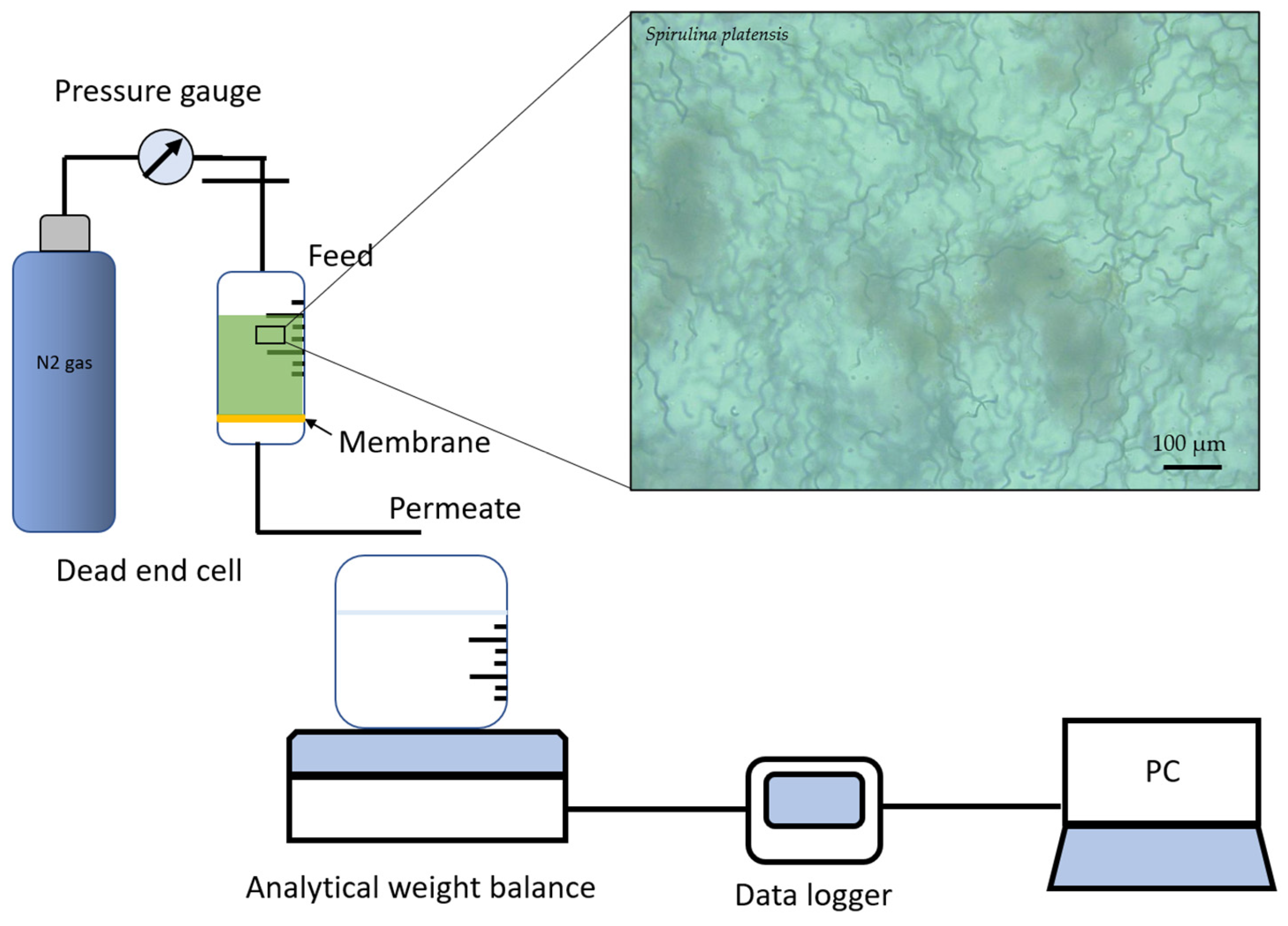
The pure water permeation performance of the nanocomposite membranes was evaluated utilizing a stirred dead-end filtration cell configuration, as illustrated in
Figure 1. Prior to testing, the fabricated membranes were precisely sectioned to match the geometric requirements of the filtration module’s active area. High-purity deionized water served as the feed solution, and all permeation experiments were conducted isothermally at 28 °C. To drive fluid transport across the membrane pore network, a constant transmembrane pressure of 2 bar was applied using compressed nitrogen gas. Permeate generation was monitored continuously in real-time utilizing an automated data acquisition system. Prior to logging data for performance evaluation, each membrane specimen was subjected to a 30 min pre-compaction period at the operating pressure (2 bar) to achieve hydrodynamic equilibrium.
Permeate generation was monitored continuously in real-time utilizing an automated data acquisition system. The accumulated permeate was recorded gravimetrically and subsequently converted into volumetric data based on the density of water at the operating temperature. The pure water volumetric flux (
) and the intrinsic membrane permeability (
) were then quantified using Equation (3) and Equation (4) [
25], respectively:
where
is the volumetric flux (LMH/Bar),
is the volume of permeate collected (L),
A is the effective membrane area (measured in square meters), ∆
t is the filtration time (h), and
is the applied transmembrane pressure (bar).
2.7.2. Solute Rejection and Pore Size Estimation
Solute rejection is a critical performance metric that quantifies a membrane’s capacity to selectively retain particulate and macromolecular matter, preventing its migration into the permeate stream. In this study, the separation efficiency of the nanocomposite membranes was evaluated by their ability to harvest Spirulina platensis cyanobacteria. Given the particulate nature of the cyanobacteria suspension, macroscopic turbidity levels quantified via a calibrated turbidimeter were employed as a reliable physical proxy for the solute concentration.
The experimental protocol commenced by determining the initial turbidity of the raw Spirulina platensis suspension to establish the baseline feed concentration (), which was standardized at 1052 NTU. The microalgal suspension was subsequently processed through the dead-end filtration cell, operated isothermally under a constant transmembrane pressure of 2 bar. Following filtration through the STY-nAC membranes, the accumulated permeate was collected, and its resulting turbidity () was analyzed to quantify the fraction of cyanobacteria that successfully traversed the porous membrane matrix.
Beyond establishing direct harvesting efficiency, this particle rejection profile functions as a practical, empirical proxy for elucidating the effective pore size and sieving selectivity of the synthesized membrane networks. By analyzing the physical dimensions of the retained versus permeated particles, the structural constraints of the membrane pores can be reliably inferred. The overall cyanobacteria rejection efficiency (
) was calculated using Equation (5) [
26]:
where
- -
: Turbidity of the feed solution.
- -
: Turbidity of the permeate solution.
Generally, a membrane is classified as effective for removing suspended contaminants if it achieves a rejection value of 80% or higher.
3. Results
3.1. Membrane Morphology
The morphological architecture of a membrane encompassing surface topography and internal pore geometry is a fundamental determinant of its mass transport properties and liquid separation efficacy. These structural characteristics govern the complex interfacial dynamics between the active membrane surface and the feed solution, thereby dictating overall permeability and solute rejection. In this study, SEM was utilized to elucidate the microstructural evolution of the pristine expanded Styrofoam membranes following the incorporation of nanosized activated carbon.
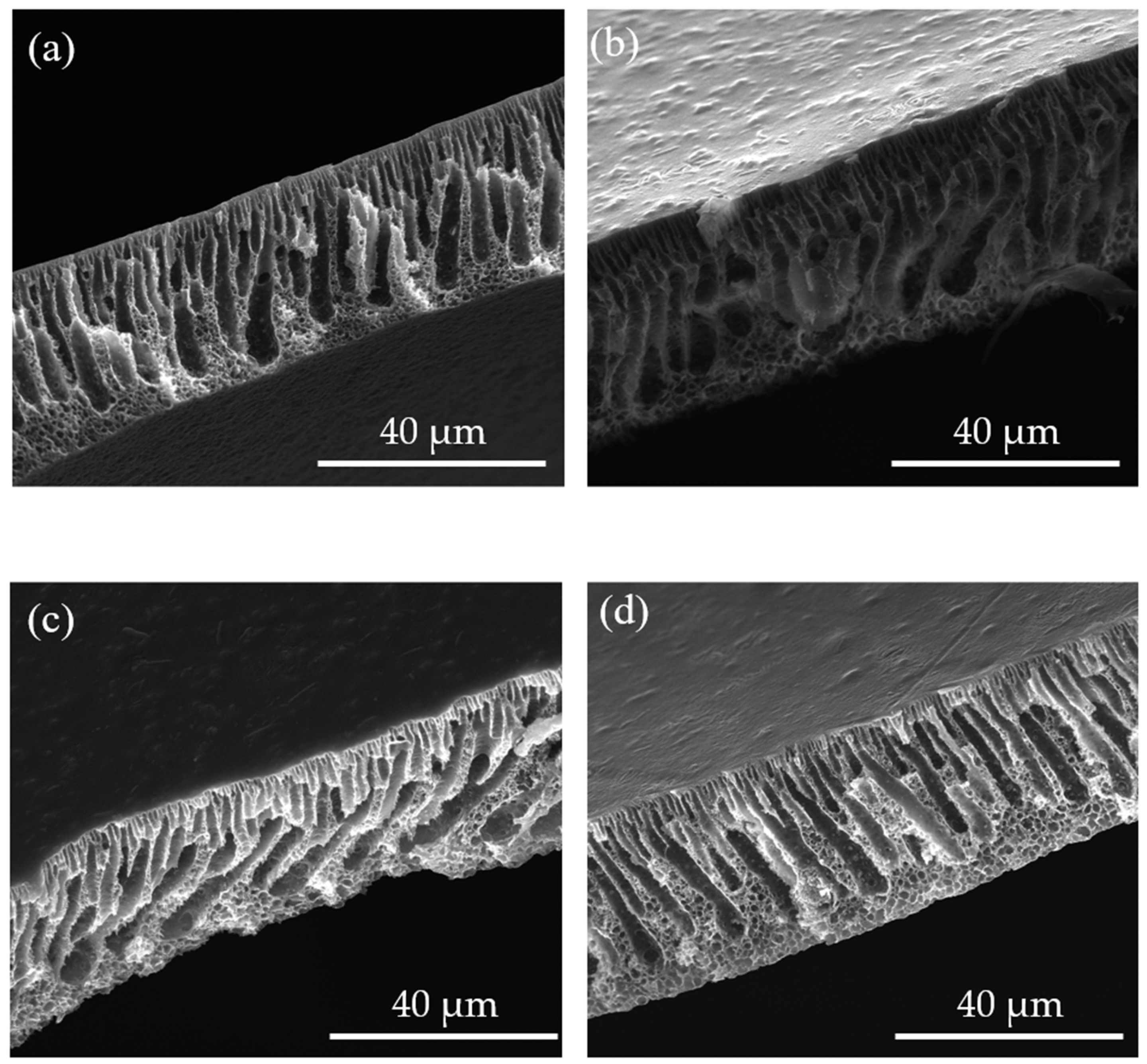
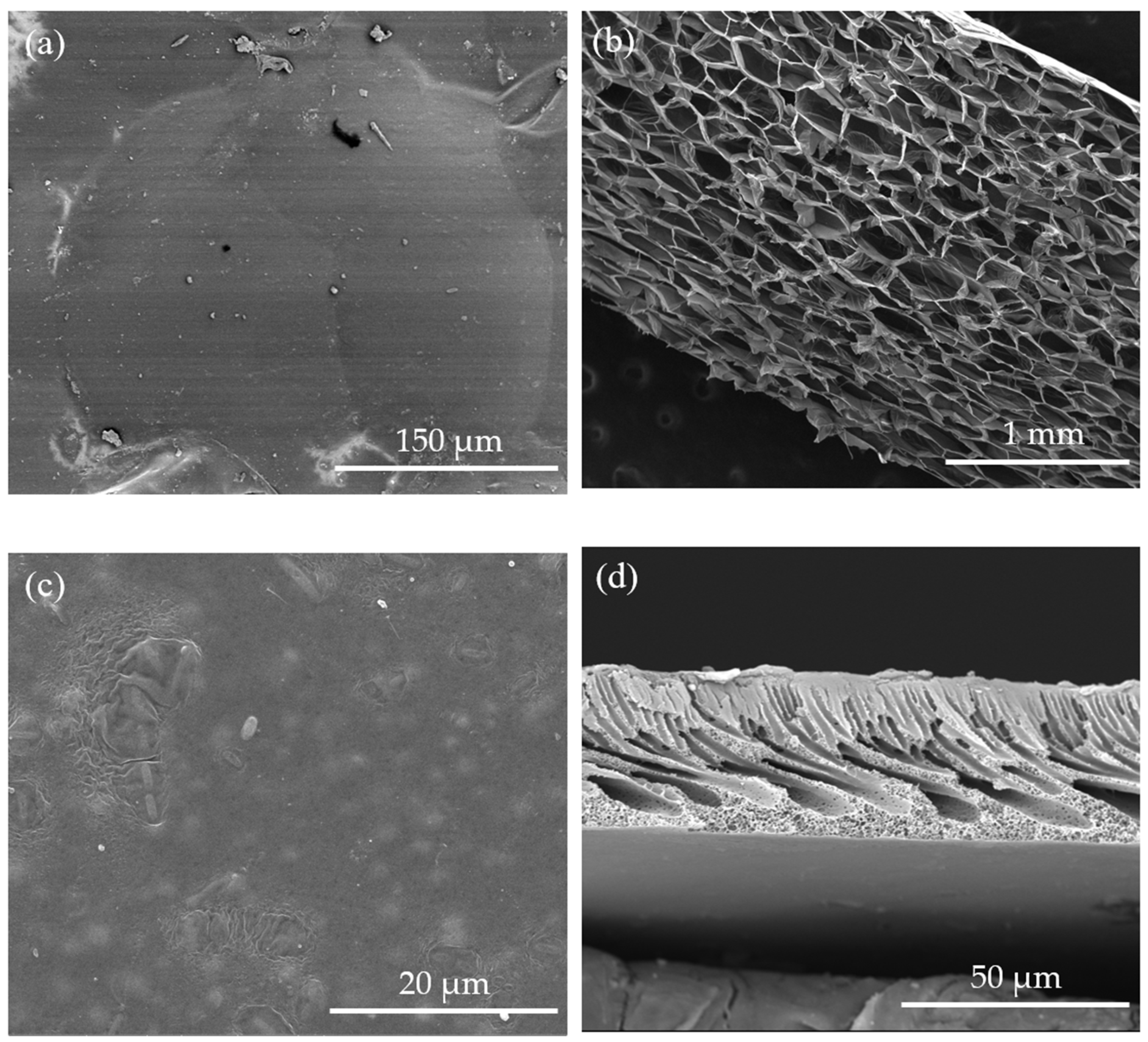
Figure 2 presents the SEM micrographs illustrating the morphology and cross-section of raw Styrofoam and the fabricated Styrofoam membranes. Based on these micrographs, a significant transformation in the polymer matrix is observed following synthesis via the wet-phase inversion technique, which successfully converted the dense Styrofoam into an asymmetric membrane. This characteristic asymmetric architecture featuring a dense, selective skin layer supported by a highly porous sublayer is highly consistent with the thermodynamic and kinetic mechanisms of nonsolvent-induced phase separation widely reported in the literature [
27]. During phase inversion, rapid solvent/nonsolvent exchange at the uppermost interface precipitates the dense top layer, while a delayed demixing process in the sublayer fosters the growth of larger macrovoids [
28]. This asymmetric morphology provides an optimal balance between a high surface area and streamlined flow paths, ultimately maximizing membrane performance in various separation applications.
The structural transformations observed across all modified membranes are governed by the role of nAC in the NIPS process. The incorporation of hydrophilic carbon-based nanomaterials acts as a thermodynamic instability promoter within the hydrophobic EPS casting dope. During immersion in the coagulation bath, the hydrophilic nAC particles tend to spontaneously migrate toward the polymer–water interface to lower the system’s overall interfacial energy. This migration accelerates the mutual mass transfer rate between the NMP solvent and the water nonsolvent, triggering instantaneous liquid–liquid demixing. Consequently, this rapid phase separation prevents the premature densification of the polymer matrix, allows nascent pores more time to nucleate, and fosters the development of a more open, highly porous asymmetric structure featuring localized surface disturbances. Furthermore, maintaining the nAC concentration strictly within the targeted low-concentration regime (0.1–0.4 wt.%) ensures uniform nanoparticle dispersion without inducing detrimental particle agglomeration that could obstruct flow pathways.
3.1.1. Influence of nAC Incorporation on Surface Topography
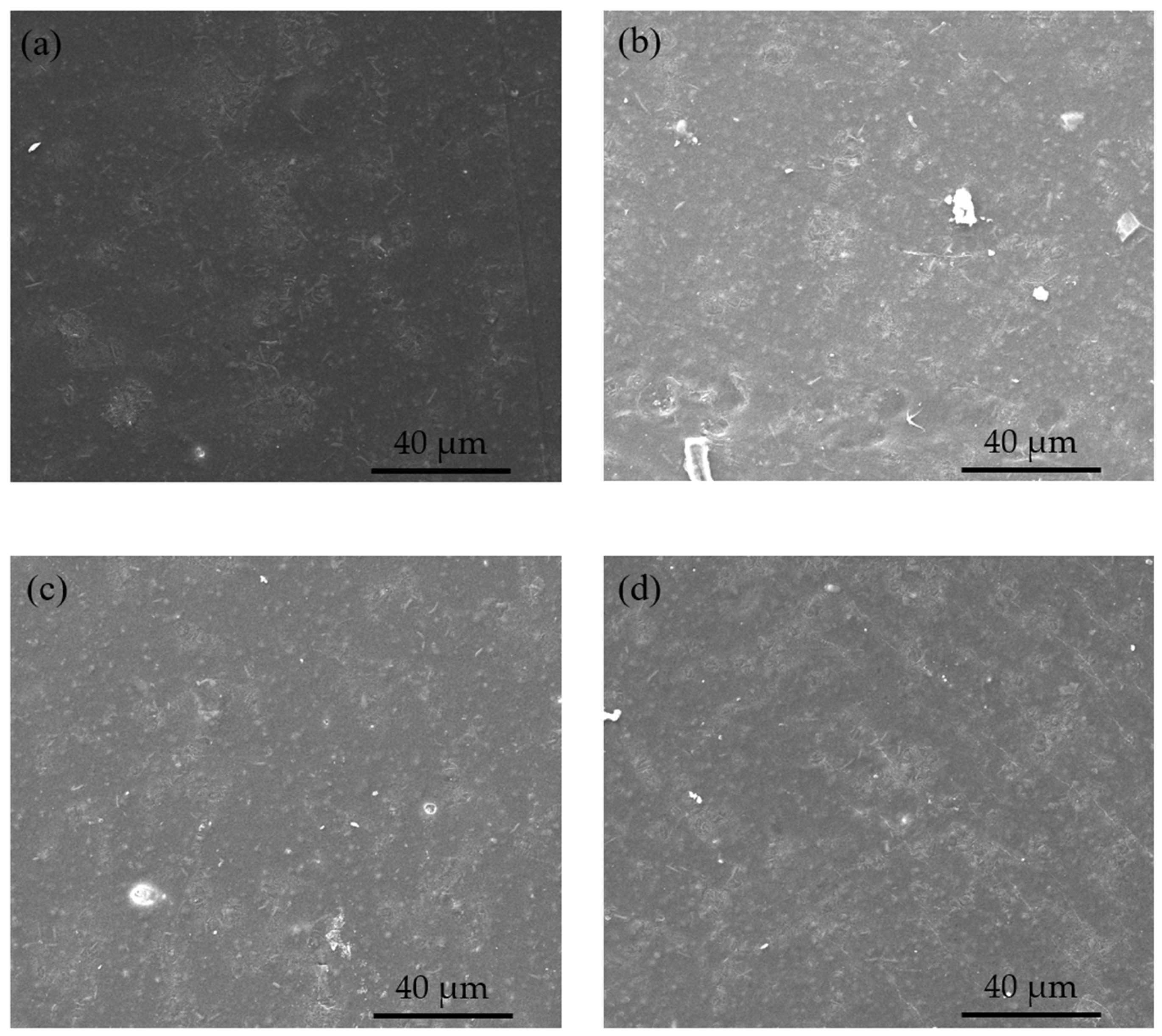
Figure 3 specifically depicts the top surface SEM micrographs of the various tested membrane formulations. As presented in
Figure 3, the top surface of the pristine membrane (0 wt.% additive) exhibits a relatively smooth morphology with fewer visible pores compared to the modified membranes. As a direct morphological consequence of the nAC migration mechanisms described in
Section 3.1, the incorporation of the activated carbon additive renders the top surface texture rougher with distinct crater-like depressions. Furthermore, increasing the additive concentration progressively intensifies these structural alterations, transforming the smooth matrix into a highly complex [
29] and porous surface network that is expected to enhance particle rejection capabilities [
30].
3.1.2. Cross-Sectional Evolution
As depicted in the cross-sectional SEM micrographs in
Figure 4, the membranes incorporated with the nano-activated carbon additive do not exhibit significant structural deviations compared to the pristine Styrofoam membrane shown in
Figure 2d. All analyzed formulations consistently maintain an asymmetric morphology, characterized by distinct structural gradients between the top and bottom regions.
Despite the increasing concentration of the nano-activated carbon filler, no visible agglomeration is observed within the polymer matrix. This homogeneous dispersion is a critical achievement, as the literature frequently highlights nanoparticle agglomeration as a major bottleneck in mixed-matrix membrane fabrication. Excessive agglomeration typically occurs at higher filler loadings due to the high surface energy of nanoparticles, which can create non-selective interfacial defects and obstruct flow pathways [
31]. The absence of particle clustering in our samples indicates that our targeted low-concentration regime (0.1–0.4 wt.%) ensures uniform distribution without disrupting the underlying pore formation mechanisms.
To provide a quantitative dimension to the morphological assessment, the overall thickness of the membranes was systematically evaluated. The digital micrometer measurements revealed a highly consistent average membrane thickness of
µm across all modified formulations, confirming that the mechanized casting protocol maintained excellent structural uniformity. While elemental mapping via EDX was outside the scope of the current characterization, the macroscopic dispersion of the nAC can be confidently inferred from the combined structural and operational data. As established in the literature for mixed-matrix membranes, severe nanoparticle agglomeration typically manifests as macroscopic interfacial defects that physically obstruct flow pathways and drastically compromise solute selectivity [
31]. Therefore, the complete absence of visible nanoparticle clusters or macrostructural anomalies in the cross-sectional SEM micrographs (
Figure 4), coupled with the highly predictable pure water flux trends and uniform 100% cyanobacteria rejection efficiency, strongly demonstrates that the nAC was homogeneously distributed throughout the EPS matrix without inducing detrimental particle agglomeration.
3.2. Water Contact Angle Analysis
Surface wettability, quantified via the Water Contact Angle (WCA), is a critical parameter that dictates a membrane’s operational performance, specifically its permeability and fouling resistance. In the context of pressure-driven liquid filtration, a lower WCA indicates enhanced hydrophilicity. This characteristic facilitates the formation of a stable, protective water film on the membrane surface, thereby minimizing the thermodynamic adhesion of hydrophobic foulants.
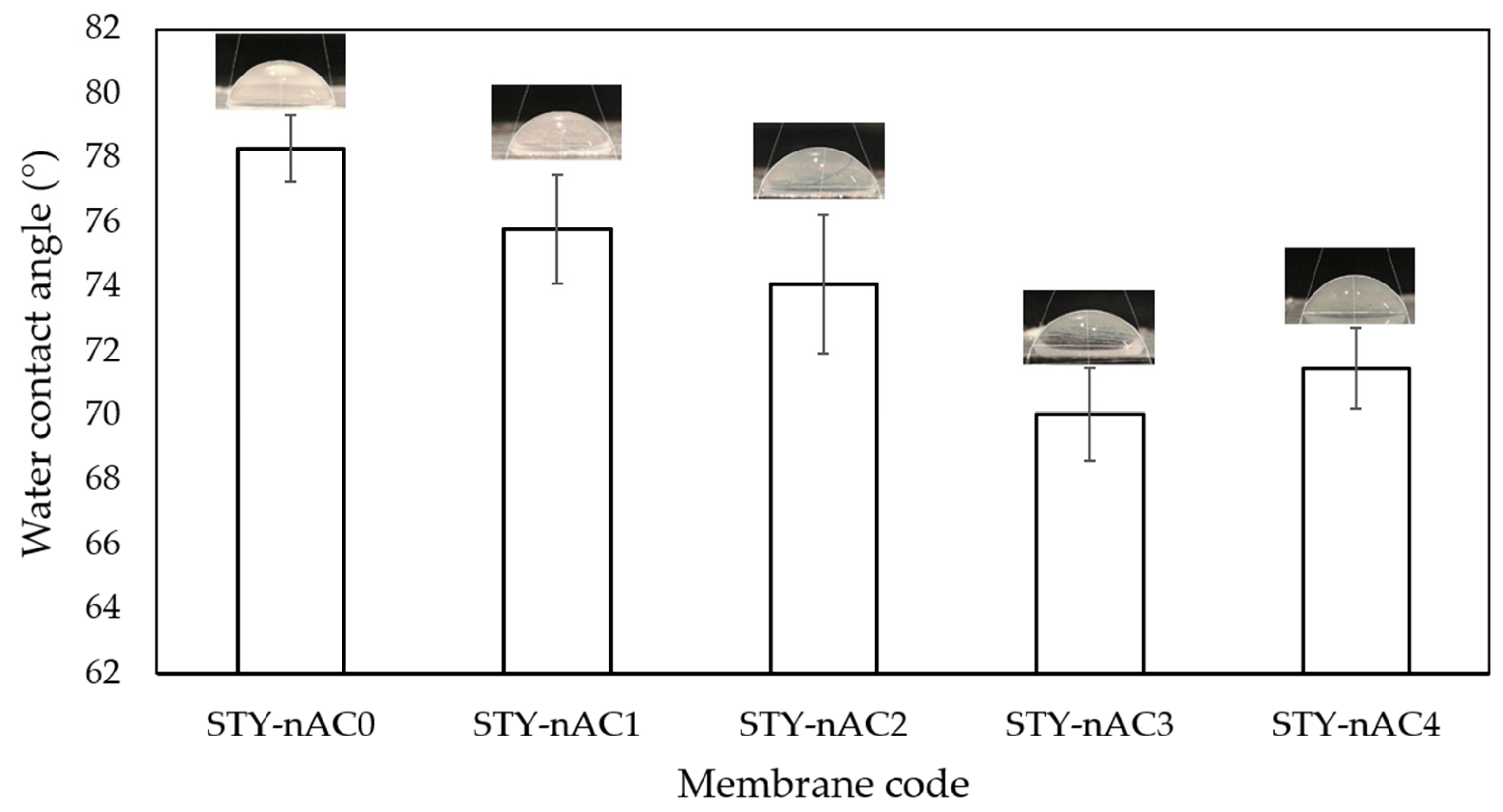
The experimental WCA values for the pristine Styrofoam and Styrofoam/nAC composite membranes are presented in
Figure 5. The data reveal a clear correlation between nAC concentration and surface wettability. The pristine Styrofoam membrane (STY-nAC0) exhibited the highest contact angle at 78.3°, which is consistent with the inherently hydrophobic nature of the polystyrene backbone. Upon the incorporation of nAC, a progressive decrease in the contact angle was observed, reaching a minimum of 70.03° for the STY-nAC3 (0.3 wt.%) membrane. This reduction represents a statistically significant improvement in surface hydrophilicity.
The observed enhancement in surface wettability can be attributed to two synergistic mechanisms, namely the introduction of oxygen-containing functional groups and surface topography alterations. First, activated carbon inherently possesses various oxygenated functional groups, such as hydroxyl and carboxyl groups, on its surface [
32]. When blended, these hydrophilic moieties increase the overall surface free energy of the membrane matrix and actively promote hydrogen bonding with surrounding water molecules. As observed in the SEM analysis, the addition of nAC alters the surface roughness and induces crater-like microstructures. According to the Wenzel wetting model, increasing the surface roughness of an inherently hydrophilic substrate (where the intrinsic contact angle
) further decreases its apparent contact angle [
33]. Therefore, the crater-like microstructures induced by the nAC migration successfully enhanced the geometric roughness of the matrix, thereby augmenting the macroscopic affinity of the upcycled Styrofoam toward water. However, it is notable that at a higher loading of 0.4 wt.% nAC (STY-nAC4), the downward trend in WCA plateaued, displaying a slight fluctuation. This behavior likely signifies a saturation threshold where the nanoparticles become completely embedded or encapsulated within the bulk polymer matrix, or it may indicate minor surface inhomogeneities at elevated nanofiller loadings [
34]. Overall, the target loading range of 0.1–0.4 wt.% nAC successfully transitioned the recycled Styrofoam precursor into a significantly more hydrophilic and filtration-efficient substrate. This enhanced wettability is expected to directly correlate with higher water flux and superior anti-fouling performance during subsequent cyanobacteria harvesting applications [
35].
To contextualize these wetting characteristics within the existing literature, the contact angle values achieved in this study compare highly favorably with alternative upcycled substrates used in biomass separations. For instance, in an evaluation of water filtration utilizing electrospun expanded polystyrene waste nanofibers, the incorporation of PVP modified the water contact angle to 84.70° [
13]. Similarly, previous work indicated that modified upcycled expanded polystyrene matrices blended with 8 wt.% polyvinylpyrrolidone exhibited a contact angle of 85° [
15]. By comparison, the minimum WCA of 70.03° achieved by the STY-nAC3 formulation in this work represents a significantly more pronounced hydrophilic shift. This behavior demonstrates that the strategic migration of nAC to the active layer establishes a more energetically favorable interface for water droplet spreading than conventional upcycled configurations.
3.3. Membrane Porosity Analysis
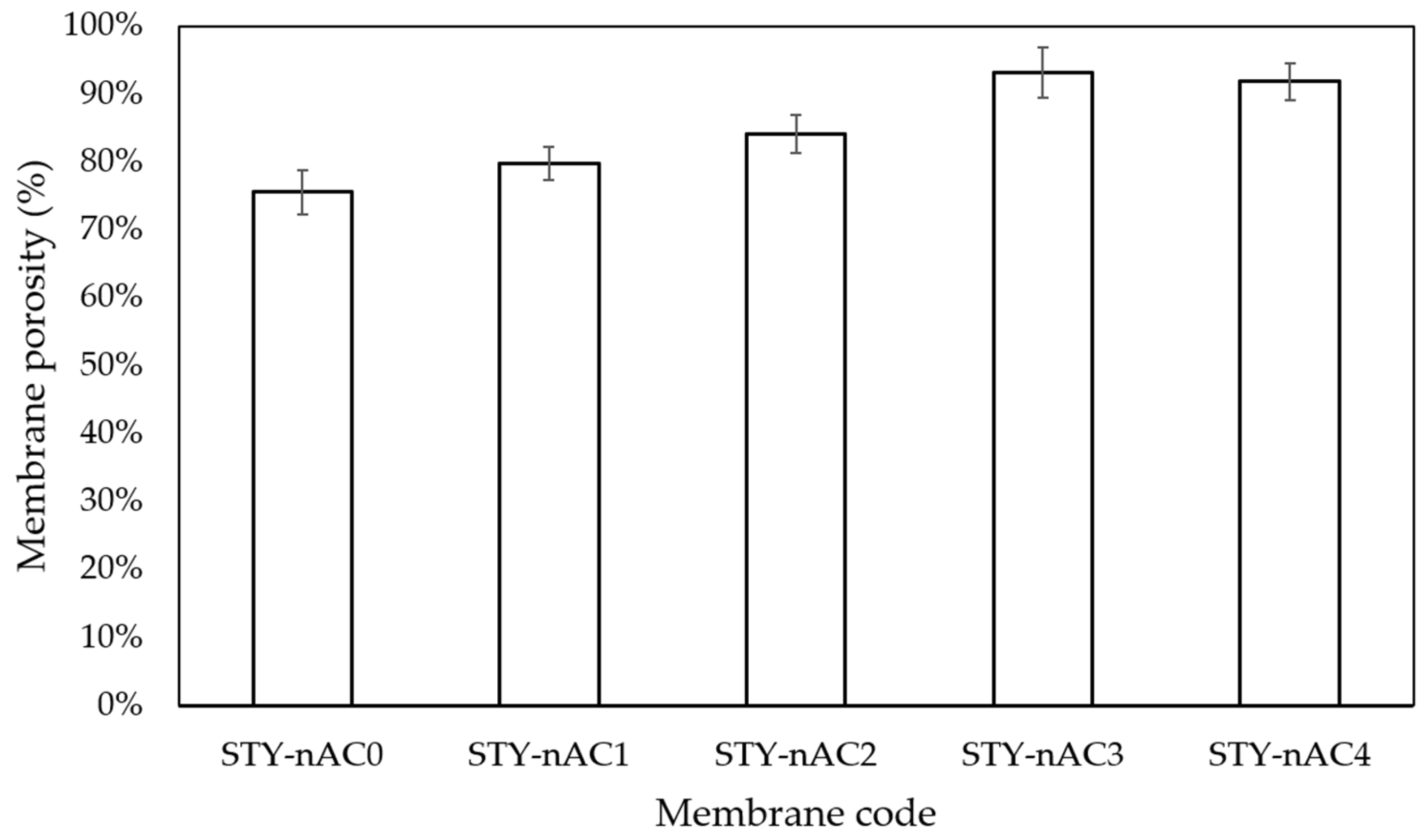
The calculated porosity values alongside their corresponding statistical variations are presented with their graphical trend in
Figure 6. The results indicate that the integration of nano-activated carbon significantly modulated the internal void structure of the upcycled Styrofoam matrix, driving a progressive increase from a baseline of 75.4% for the pristine membrane (STY-nAC0) to a peak of 93.17% at a 0.3 wt.% loading (STY-nAC3).
This quantitative evolution in bulk porosity is directly supported by the cross-sectional SEM observations detailed in
Section 3.1, which show a distinct structural shift toward larger [
36], highly elongated, finger-like macrovoids. Beyond the accelerated phase separation mechanisms driven by nAC hydrophilicity, the introduction of solid nanofillers into the polymer matrix generates interfacial nanovoids at the polymer-filler boundaries due to localized polymer chain packing disruptions. These micro-cavities contribute directly to the total free volume of the membrane [
37]. However, when the nAC loading is increased to 0.4 wt.% (STY-nAC4), a minor decline in bulk porosity down to 91.9% occurs. This slight drop aligns perfectly with the onset of nanoparticle agglomeration observed at elevated loadings, which slightly constricts local pore channels.
The maximum gravimetric porosity of 93.17% attained by the STY-nAC3 membrane is exceptionally high when benchmarked against both commercial and alternative composite systems. For context, PES ultrafiltration membranes incorporated with PEG/Al
2O
3 nanoparticles exhibit internal bulk porosities ranging from 69% to 86% under standard wet-phase inversion conditions [
38]. Furthermore, even when EPS-based nanofibrous membranes are heavily modified with hydrophilic additives such as PVP, their total internal porosity reaches a maximum of only 65.57% [
10]. The substantially higher void volume observed in our optimized STY-nAC3 matrix demonstrates that the thermodynamic instability induced by the nAC filler within the recycled Styrofoam generates highly open, interconnected transport pathways that are difficult to achieve in conventional virgin polymer matrices.
3.4. Average Pore Size Analysis
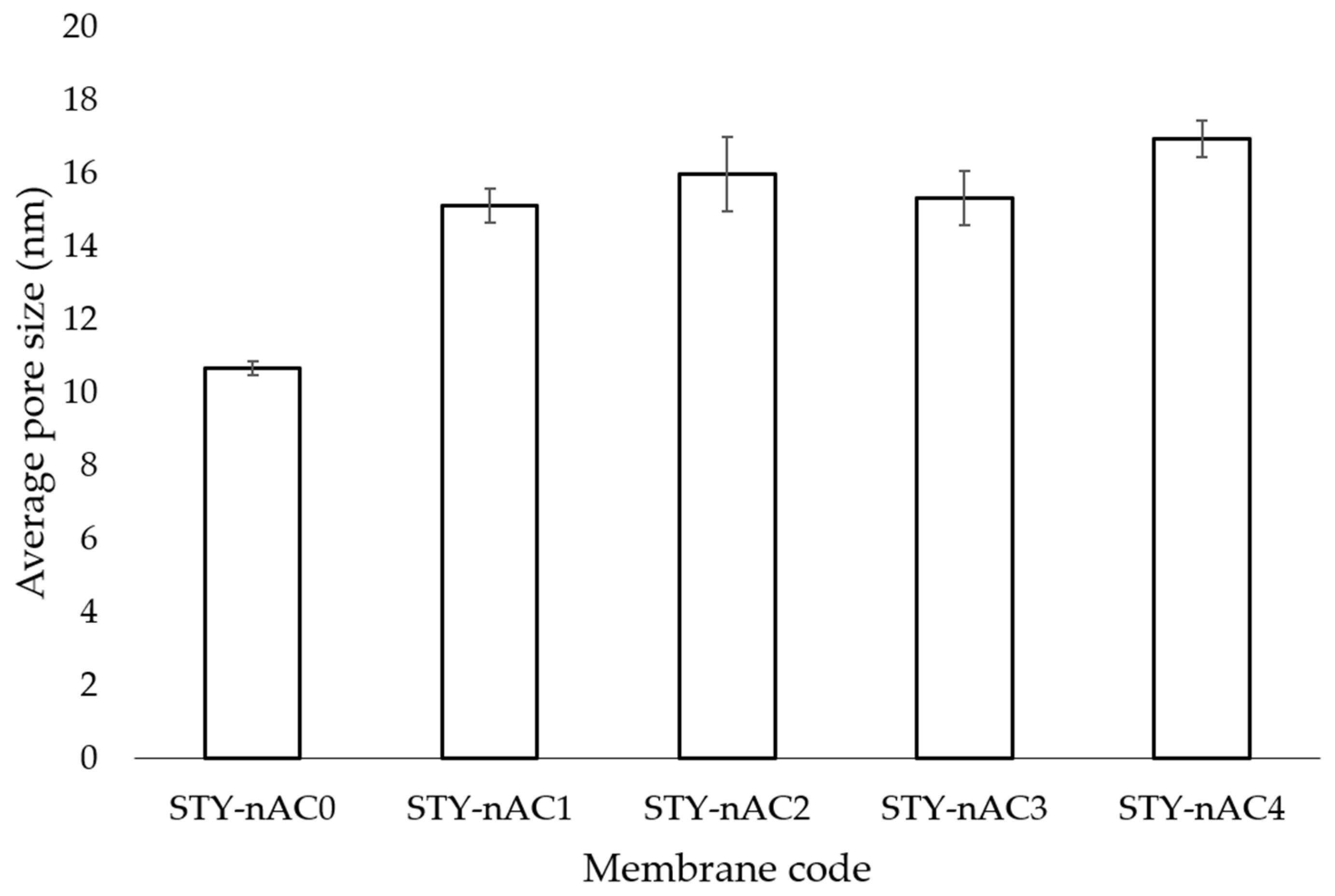
Figure 7 illustrates the effect of nano-activated carbon (nAC) loading on the average pore size of the fabricated membranes, as determined via the Guerout–Elford–Ferry equation. The pristine upcycled Styrofoam membrane (STY-nAC0) exhibited the most constricted pore architecture, with an average pore size of approximately 10.6 nm. Upon the strategic incorporation of nAC, the average pore size increased significantly, expanding to 15.1 nm for STY-nAC1 and stabilizing between 15.3 nm and 17.0 nm for the higher loading formulations (STY-nAC2 through STY-nAC4).
This measurable pore expansion is a direct physical result of the accelerated mass transfer and delayed interfacial solidification mechanisms detailed in
Section 3.1. To contextualize these structural dimensions within similar harvesting applications, standard PES ultrafiltration membranes typically present smaller average pore sizes, varying between 3.91 nm and 11.99 nm based on the polymer concentration [
10]. Additionally, PVDF membranes formulated with 3 wt.% polyvinylpyrrolidone as a pore-forming agent produce an average pore size of 0.013 µm, approaching the microfiltration threshold [
8].
Crucially, while the nAC incorporation successfully enlarged the surface pores to diminish capillary resistance against fluid flow, the maximum average pore size of approximately 17.0 nm remains strictly within the tight ultrafiltration regime. Because the physical dimensions of Spirulina sp. cyanobacteria (typically 5–10 µm) are orders of magnitude larger than the membrane pores, the STY-nAC composite membranes guarantee 100% physical retention of the biomass via size-exclusion without risking cellular breakthrough.
3.5. Water Flux and Permeability Performance
Water flux, defined as the volumetric rate of solvent permeation through a membrane per unit area and time, serves as a primary indicator of filtration efficiency. In this study, the hydraulic performance of the Styrofoam/nAC composite membranes was evaluated using a dead-end filtration system to elucidate the influence of nAC loading on volumetric throughput. Crucially, to ensure a reliable baseline for practical separation, all permeation metrics reported herein represent the stabilized, steady-state flux captured after 30 min of continuous pressure operation, rather than the uncompacted, initial flux.
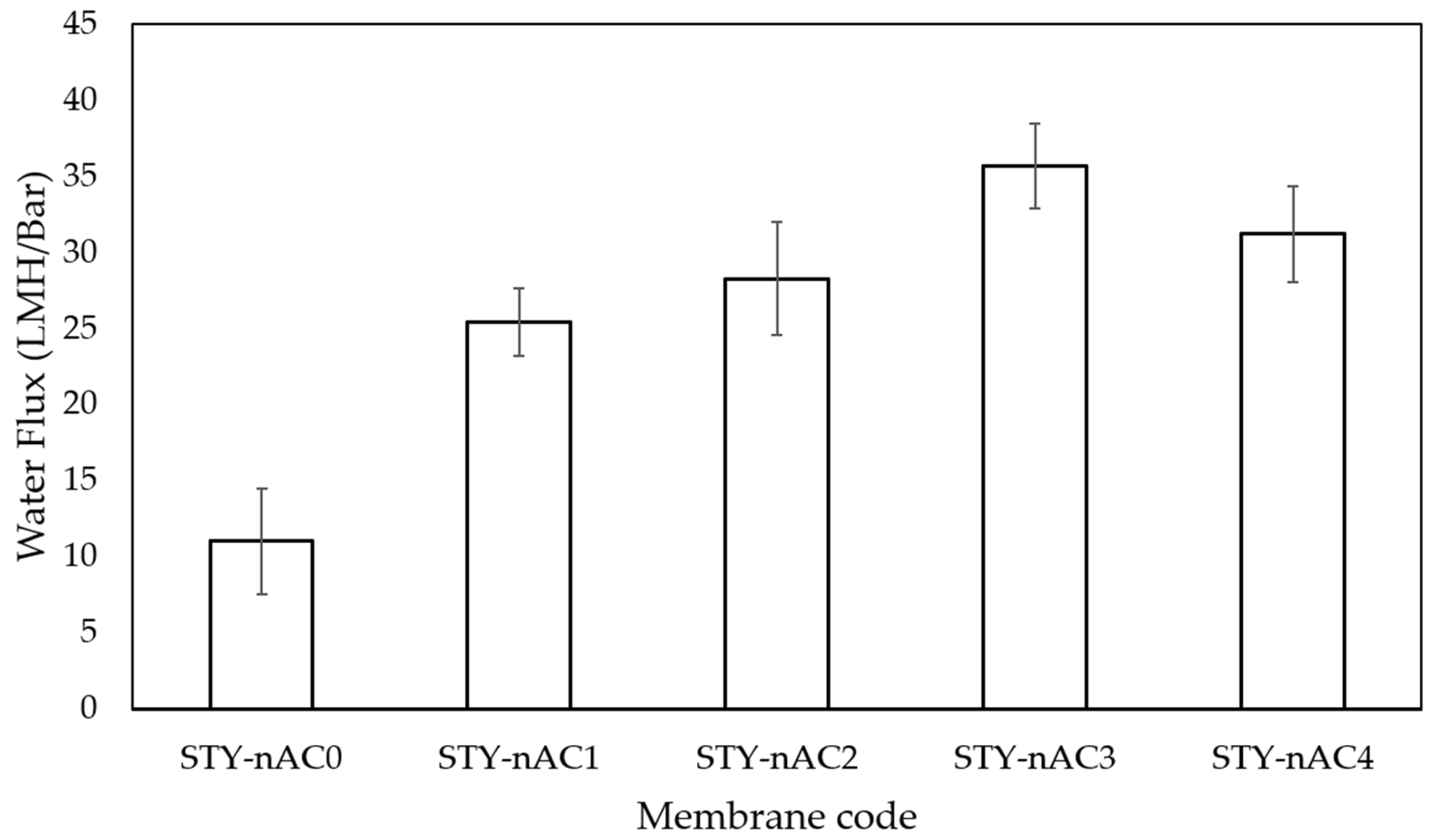
The hydraulic permeability with the correlation between nAC loading and membrane permeability graphically illustrated in
Figure 8. The data demonstrate a significant enhancement in water flux upon the incorporation of nAC. While the pristine Styrofoam membrane (STY-nAC0) exhibited the lowest baseline permeability, a progressive increase was observed as the nAC concentration rose from 0.1 to 0.4 wt.%.
As supported by the hydrophilicity and porosity analyses, this enhanced hydraulic performance results from decreased hydraulic resistance and increased surface free energy. Specifically, the increased internal porosity and enlarged pore channels observed in the SEM micrographs facilitate the passage of water molecules, thereby reducing the structural resistance to hydrodynamic flow [
35]. Simultaneously, the transition from a hydrophobic to a more hydrophilic surface (lower WCA) lowers the interfacial tension at the liquid–membrane boundary, which promotes pore wetting and accelerates the transport of water through the polymer matrix [
39]. The synergistic interplay between improved surface wettability and a more open pore structure confirms that nAC successfully optimizes the transport properties of the recycled Styrofoam matrix, indicating that the STY-nAC composite membranes are highly suitable for high-throughput applications such as cyanobacteria biomass harvesting [
40].
Based on the experimental data, membrane permeability (
) exhibited a positive correlation with nAC concentration up to a threshold loading of 0.3 wt.%. The pristine Styrofoam membrane (STY-nAC0) yielded the lowest average
value of 11.03 LMH/bar. In contrast, the incorporation of 0.3 wt.% nAC (STY-nAC3) resulted in a significantly enhanced permeability of 35.66 LMH/bar, representing an approximate 223% improvement over the baseline. This substantial gain in hydraulic throughput is a direct consequence of the synergistic increase in surface hydrophilicity and internal porosity afforded by the carbon nanoparticles [
41]. However, further increasing the nAC concentration to 0.4 wt.% (STY-nAC4) led to a notable reduction in permeability, with the
value declining to 31.21 LMH/bar. This flux decline at higher nanofiller loadings is typically associated with the phenomenon of nanoparticle agglomeration [
42]. As the filler concentration exceeds a critical threshold, the high surface energy of the nanoparticles causes them to cluster, forming dense aggregates that physically obstruct the membrane’s transport pathways or create a bottleneck within the pore channels [
43]. This structural interference severely restricts water transport and effectively reduces the available effective surface area for permeation. Consequently, the results identify 0.3 wt.% nAC as the optimal concentration for achieving peak water flux performance in Styrofoam-activated carbon composite membranes. This optimal formulation provides an ideal balance between enhanced surface energy and structural porosity while successfully avoiding the detrimental effects of particle clustering.
The recorded maximum steady-state permeability of 35.66 LMH/bar is highly competitive with, and often surpasses, the processing capacities of significantly costlier commercial polymers. For instance, during microalgae recovery, a conventional PVDF membrane established a baseline hydraulic flux of approximately 40 LMH/bar prior to the onset of severe cake fouling [
8]. Additionally, the optimized STY-nAC3 formulation outperforms the 28.9 LMH/bar permeability previously documented for functionalized PES/MWCNT/LiBr composites [
9]. Attaining such competitive hydrodynamic flow rates with repurposed waste underscores the practical and economic viability of this approach; it demonstrates that inexpensive, post-consumer recycled matrices can be engineered to achieve separation efficiencies rivaling those of premium, virgin synthetic plastics.
3.6. Filtration Performance and Solute Rejection
The ultimate efficacy of a separation membrane is dictated by its capacity to selectively reject target contaminants from a feed solution. In this study, the separation performance was quantified via the solute rejection percentage (), which measures the reduction in cyanobacteria concentration (evaluated via turbidity) between the initial feed solution () and the resulting permeate stream (). To ensure experimental consistency and a direct correlation between structural properties and operational performance, the identical membrane samples characterized in the preceding water flux experiments were utilized for these cyanobacteria filtration tests.
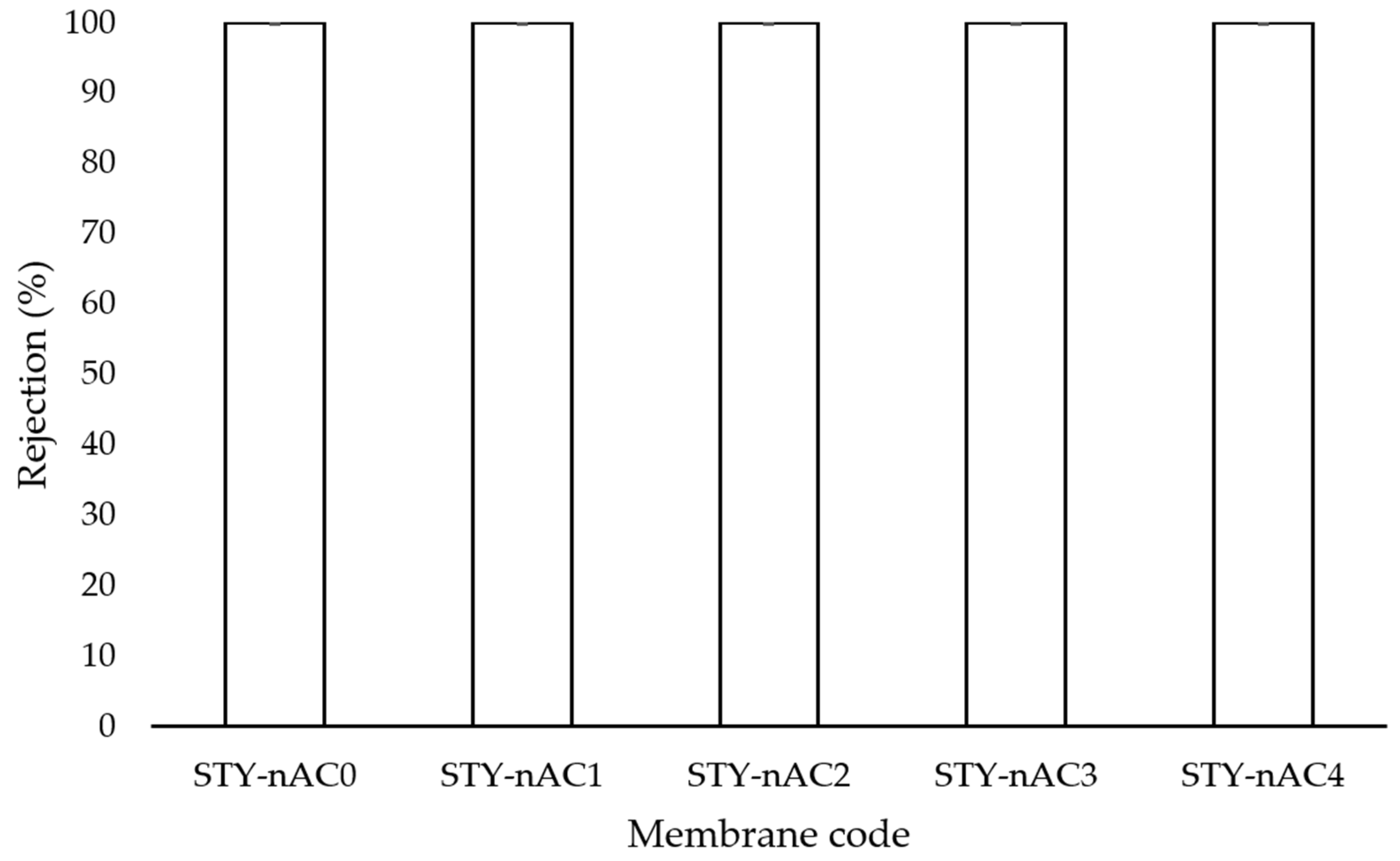
The consistent 100% rejection suggests that the separation process is governed by a size-exclusion mechanism.
Spirulina sp. typically possesses dimensions in the range of several micrometers [
44], which significantly exceed the pore diameters of the selective skin layers observed in the SEM micrographs. Consequently, even the pristine Styrofoam membrane provided an effective physical barrier against the cyanobacteria biomass.
The integration of nAC, while significantly enhancing water flux and hydrophilicity, did not compromise the structural integrity or the selectivity of the membrane matrix [
45]. This is a critical finding, as it confirms that the increased porosity observed at higher nAC loadings (up to 0.3 wt.%) did not result in pore-stretching to a degree that would allow cyanobacteria passage.
The transition from the concentrated feed to the permeate resulted in a complete reduction of turbidity to 0 NTU. The absence of residual green pigment or suspended solids in the permeate provides a clear qualitative validation of the membrane’s potential for cyanobacteria harvesting and high-level water purification [
46]. The consistent achievement of 100% rejection across all membrane variations demonstrates the high robustness of recycled Styrofoam-based composites for biomass rejection.
All fabricated membranes demonstrated a nominal rejection efficiency of 100% during Spirulina sp. Harvesting (
Figure 9). This absolute retention is governed by a straightforward size-exclusion mechanism. Spirulina sp. features a cell diameter of 5 to 10 µm, whereas the calculated mean surface pore size of upcycled membranes ranges narrowly between 10.6 nm and 17.0 nm (0.0106 to 0.017 µm). Because the cell dimensions are vastly larger than the pore channels, physical sieving guarantees complete biomass recovery. Crucially, achieving 100% rejection across all formulations including the pristine upcycled matrix serves as a vital structural validation, proving that post-consumer Styrofoam waste can be successfully reprocessed into continuous, defect-free membranes without the micro-cracks or pinholes common in recycled materials.
However, using turbidity-based optical density to calculate rejection has inherent limitations. While highly effective for tracking intact, pigmented biomass, optical methods lack the sensitivity to detect dissolved organic matter, intracellular proteins, or minute cell fragments released if cells lyse under operational shear stress. Because these dissolved constituents pass through the membrane without scattering light, they do not impact turbidity readings. Therefore, the reported 100% efficiency should be strictly interpreted as cell-retention efficiency rather than absolute chemical purification of the water.





 ,
,