
Article

Cell Damage, Toxicity and Bacterial Diversity Shifts of Microcystis and Oscillatoria Cultures Treated with Bacterial Isolates

by
Luyanda Lindelwa Ndlela
1,2,*,
James Wesley-Smith
3,
Paul Johan Oberholster
2 and
Monique Smit
4
1
Council for Scientific and Industrial Research, Smart Places, Water Centre, 11 Jan Celliers Road, Stellenbosch 7600, South Africa
2
Centre for Environmental Management, Faculty of Natural and Agricultural Sciences, University of the Free State, P.O. Box 339, Bloemfontein 9300, South Africa
3
Electron Microscope Unit, Sefako Makgatho Health Sciences University, Molotlegi St., Ga-Rankuwa Zone 1, Ga-Rankuwa 0208, South Africa
4
Technical Sales, Paper Technologies, Buckman Laboratories, Buckman Blvd, Hammarsdale-Sterkspruit, Hammarsdale 3700, South Africa
*
Author to whom correspondence should be addressed.
Phycology 2026, 6(1), 25; https://doi.org/10.3390/phycology6010025
Submission received: 9 November 2025 / Revised: 23 January 2026 / Accepted: 29 January 2026 / Published: 11 February 2026
(This article belongs to the Collection Harmful Microalgae)

Abstract

The mitigation of toxic cyanobacterial blooms is a much-researched and ongoing challenge. Seasonal influences, microbial diversity, and the wide range of cyanotoxins known to be associated with cyanobacterial blooms add layers of complexity to these environmental threats. Strategies to remediate blooms must avoid inducing widespread cell lysis and the release of cyanotoxins, which would compound rather than address the problem. Bacterial isolates have been found to be effective in bloom mitigation and can impact the diversity associated with the bloom. The present study reports on the exposure of non-axenic cultures of colonial Microcystis sp. and filamentous Oscillatoria sp. isolated from dams in South Africa to low ratios of four antagonistic bacterial isolates for 4 days. TEM was used to assess ultrastructural changes, HPLC to determine the relative concentrations of microcystin-LR and RR, and next-generation sequencing (NGS) to explore possible shifts in diversity from control samples as a result of exposure to the biological control bacterial isolates used. Ultrastructurally, Microcystis showed greater signs of stress than cells of Oscillatoria, with isolate 1 (Aeromonas lacus) having the least effect overall, whilst Isolate B (Lysinibacillus) and 3Y (Pseudomonas sp.) induced cell lysis in Microcystis. All isolates reduced the concentration of the toxic microcystin-LR, while the -RR variant often increased after 4 days. Minimal diversity shifts were noted in Microcystis-treated cultures, whilst those of Oscillatoria showed a greater diversity shift, indicating an increase in families containing isolates linked to bloom decline.

1. Introduction

The harmful effects of cyanobacterial blooms on water ecosystems are well documented [1,2,3]. There has been a growing number of cyanobacterial blooms reported globally in the last decade, likely driven by global warming, as increased global temperatures favour bloom proliferation. The resulting foul odour, taste, aesthetics, toxicity, and oxygen depletion associated with their occurrence [4,5] have prompted extensive research to better understand and manage this threat to global ecosystems.
Biological control methods involve the use of living organisms to control the occurrence of cyanobacteria blooms. Examples include non-traditional and traditional bio-manipulation, which utilize zooplankton and fish, respectively [6]. The use of bacteriophages, fungi, and phagotrophic protozoa is also a common example of biological control intervention.
An approach that has been applied effectively in South Africa involves research into the use of bacterial isolates to treat toxic cyanobacterial blooms [7,8] in wastewater and acid mine drainage [9,10]. The use of microbial control agents has been explored over the decades, with focus on groups from the phyla Proteobacteria (specifically Sphingomonas) and isolates from Firmicutes (Bacillus in particular). [11] reported that yeast can inhibit Microcystis without having an impact on other microalgae co-occurring with the targeted cyanobacteria. However, successful biological control of cyanobacterial blooms must address a complex series of variables. Firstly, the composition of the bloom has been shown to vary over time, and microbial phyla are closely associated with the peak and decline phases of blooms [12,13]. Such shifts have been linked to changes in substrate availability [13] and the release of cyanotoxins [14]. Secondly, exploiting the use of lytic bacteria, algae, and protozoa, which cause cellular damage and impair the functioning of the targeted cyanobacteria [15], can lead to the undesirable leakage of cyanotoxins such as microcystins, which are harmful to living organisms, thus compounding the threat to the environment. Microcystin-LR is the most reported cyanotoxin among the 279 variants known to be produced by cyanobacteria, of which some are produced due to environmental mutations [16,17] reduction in cyanotoxins in live cyanobacterial cultures has been reported by Su et al. [18], associated with improved water quality. This finding is less common and requires further research in terms of cyanotoxin reduction and removal mechanisms. One of the most explored microcystin degraders is Sphingomonas sp. [19], where the upregulation of the mlr gene in the presence of toxins reportedly plays a critical role. Additional variables that can also influence the efficacy of a particular treatment include the experimental conditions used to develop it (e.g., on axenic vs. non-axenic cultures; the ratio of predatory/antagonistic bacteria to cyanobacteria), and the location of target cyanobacteria in the water column to be treated, among others. Therefore, there is a need for additional research into biological control of cyanobacterial blooms using bacterial isolates that would be effective against non-axenic cyanobacterial populations, and which also minimize toxicity through the degradation of harmful compounds such as microcystin. It is appreciated that such interventions require adequate research for implementation, as some experimental work thus far has been on small-scale volumes of water; therefore, the interplay between different factors remains a needed area of investigation, especially the microbial community interactions in biological controls.
Microcystis is naturally colonial and buoyant in form, occurring at the surface of the water and reported more commonly as the dominant species in cyanobacterial blooms, which are often toxic. Oscillatoria sp. is a filamentous subsurface occurring as a common bloom-causing species, capable of producing various toxins. The responses of these two different types of cyanobacteria provide a comparison of the ecology and susceptibility of these bloom-causing agents. The present contribution aims to increase the present understanding of the biological control of cyanobacterial blooms by evaluating the impact of four bacterial isolates upon non-axenic cultures of colonial Microcystis and filamentous Oscillatoria sp. The research on these isolates and their toxin reduction has been explored through ELISA, fluorescence microscopy, and chlorophyll changes [8]. This is a cumulative study, further analyzing the microbial diversity changes after introducing bacterial control agents to non-axenic cyanobacterial cultures. The hypothesis is that changes in cell structure and microbial diversity may be noted, with the subsequent suppression or stress of the bloom-causing agents. Transmission electron microscopy provides insights into ultrastructural changes occurring after a four-day exposure to each isolate cultured at room temperature, as well as isolates that are mildly heat-stressed in an attempt to stimulate their activity. The ratio of cyanobacteria to bacteria was deliberately kept low (1:0.5) in order to determine whether lower ratios can be effective without bringing about complete cell lysis, which is one of the drawbacks in the large-scale implementation of the biological control of cyanobacteria. High Performance Liquid Chromatography (HPLC) was used to monitor the quantity of the extracellular microcystins -LR and -RR, released following exposure to the bacterial isolates, relative to that of control samples. Lastly, possible shifts in microbial diversity over the duration of the study were monitored using next-generation sequencing.

2. Materials and Methods

2.1. Collection and Isolation of Cyanobacteria and Heterotrophic Bacteria

The methodology followed in this research is similar to that of Ndlela et al. [8] in terms of sample collection and exposures. Bloom samples of Microcystis sp. were collected from Brandwacht wastewater treatment works, in Mossel Bay, Western Cape, South Africa (34°3′3.6″ S, 22°3′28.8″ E). Filamentous cyanobacteria were collected in Klippoortjie colliery neutral mine waters (26°07′00″ S; 29°08′00″ E), near the town of Ogies, Mpumalanga, South Africa. Samples were collected in sterile water bottles and kept on ice during commutation. Isolates were identified by light microscopy at 1200×magnification (Zeiss Axioscop, Zeiss Germany), using the procedures mentioned by Oberholster et al. [20] and stored as non-axenic cultures at 4 °C for the duration of the study. Cyanobacteria with colonial morphology and filamentous isolate presenting with no sheath or heterocysts were assigned to the genera Microcystis sp. and Oscillatoria sp., respectively.
Heterotrophic bacteria showing antagonistic activity against cyanobacteria were isolated from the water containing cyanobacterial isolates using a plaque assay, as mentioned in the study by [7]. Three isolates were randomly selected from the plaque assay, namely, isolate 1, 3w, and 3y. A strain of Bacillus, which was later identified as Lysinibacillus, was generously donated by the Microbiology Department at Stellenbosch University and used as a reference. Isolates were then grown as pure cultures in nutrient agar and nutrient broth medium (Merck, Germany) at 25 °C.

2.2. Growth Conditions

Cyanobacteria were grown in BG-11 broth medium (Sigma-Aldrich, St. Louis, MO, USA) in 100 mL volumes, as previously described [8], with wet weight and chlorophyll measurements taken to confirm isolate growth over time.
Bacterial isolates were grown in 100 mL volumes of nutrient broth medium (Merck) and inoculated in Tween 80 broth medium overnight at 25 °C (5 g peptone, 3 g meat extract, 10 mL Tween 80, 100 mg CaCl2.2H2O, 15 g agar per litre, pH 7.2). Master cultures were prepared with 80% of culture medium and 20% glycerol (Merck) and stored at −80 °C.

2.3. Exposure Experiments

2.3.1. Pre-Growthof Cyanobacterial and Bacterial Isolates

Studies assessing antagonism against cyanobacteria are commonly conducted on laboratory strains of cyanobacteria, usually axenic and unicellular in presentation, which contrast markedly with colonial aggregates in a natural setting. For this reason, the present study entails non-axenic biological control akin to a natural environment, with the cyanobacteria exhibiting more of their natural characteristics. Therefore, samples collected from blooms of Oscillatoria and Microcystis were utilized.
Environmental samples of Oscillatoria sp. and Microcystis sp. previously collected from the field were cultured separately in 1× BG-11 broth (Sigma-Aldrich) as described in Section 2.2. Bacterial isolates 1, 3w, 3y, and Lysinibacillus were grown separately in Tween 80 broth over 8 h at 25 °C. Non-axenic isolates of 0.1 g (wet weight) of filamentous cyanobacteria and 1 × 10⁶ cells of Microcystis sp. were separately cultured in 100 mL sterile BG-11 medium and grown at 25 °C. After 2–3 days, eight-hour-old bacterial cultures of isolates 1, 3y, 3w, and B grown in Tween 80 broth were counted within a bacterial counting chamber (Helber type, Marienfeld, Germany) using a light microscope (Zeiss Axioskop, Germany). Bacterial cells were harvested by centrifugation at 10,000× g for 10 min (Thermo Scientific SL 16R, MA, USA) and washed twice with phosphate-buffered saline (PBS) (Lonza, Switzerland).
The isolates were previously identified as: 1, Aeromonas lacus, 3Y and 3W, Pseudomonas sp., Pseudomonas rhodesiae, and isolate B, Lysinibacillus sp., based on earlier research by Ndlela et al. [8], as were the cyanobacterial isolates.

2.3.2. Addition of Bacterial Isolates to Cyanobacterial Cultures

Washed bacterial cells were re-suspended in 1 mL of PBS and added to 3-day-old cyanobacterial cultures. In a separate experiment, some bacterial cells were heat-treated to 50 °C for 10 min after resuspension in PBS (1×) and prior to addition into cyanobacterial cultures. This was to determine whether heat would enhance any antagonistic activity.
Based on preliminary chlorophyll a determination, 0.1 g of Oscillatoria sp. yielded approximately 10× more chlorophyll -a compared to a million cells of Microcystis sp. (wet weight of 0.01–0.03 g). Therefore, 10× more bacterial cells were added to the filamentous cultures. Cells were added in 1:0.5 ratios of cyanobacteria/heterotrophic bacteria (approximately 500,000 bacterial cells to a million cyanobacterial cells), shaking briefly after addition. These flasks were allowed to stand at room temperature (25 °C) for four days before vacuum filtration using 0.22 µm 250 mL Steri-cup Express filters (Merck) to separate the cells from the culture medium. The residual cells, as well as the filtrate, were analyzed to establish microbial diversity and changes in extracellular microcystin concentrations, respectively. Experiments were conducted in triplicate.

2.4. Microcystin Detection UsingHPLC

High-performance liquid chromatography (HPLC) was performed on filtered water samples using a slightly modified method [21] to confirm whether extracellular toxin concentrations were reduced after the addition of bacteria. Analysis was conducted with a HP 1050 Series Liquid Chromatograph equipped with a HP 1040M DAD UV detector (Hewlett Packard). Separations were performed in a LunaC18 column (150 × 4.6 mm) (Phenomenex, Torrance, CA, USA) with a mobile phase consisting of water containing 0.05% (v/v) methanol in channel A and acetonitrile with 0.05% (v/v) methanol in channel B. Linear gradient elution started with 10/60% B for 20 min followed by a 5 min hold at 60% B with a flow rate of 1 mL min. Reference standards of microcystin-LR/RR/YR were used for the analysis (Sigma Aldrich). Experiments were conducted in triplicate, with the exception of heat-treated cells, which were conducted as a preliminary assessment

2.5. Transmission Electron Microscopy (TEM)

TEM was used to assess the ultrastructural integrity of Microcystis and Oscillatoria cells before and after exposure to the bacterial isolates. Control and treated samples were pelleted through gentle centrifugation, fixed in 2.5% glutaraldehyde in 0.1 M phosphate buffer (pH 7.2) for 1 h, and washed in distilled water prior to post-fixation in 0.5% osmium tetroxide for 1 h. Samples were subsequently dehydrated in an ethanol–water graded series, infiltrated in epoxy resin, and polymerised in an oven set at 70 °C overnight. Sections (80 nm thickness) were cut using a Leica FC7 ultramicrotome (Leica, Vienna, Austria), contrasted for observation using conventional stains, and calibrated images were captured digitally at 100 kV using a JEOL JEM 1010 (JEOL, Tokyo, Japan).

2.6. Microbial Diversity Analysis

The effect on the diversity in the non-axenic cultures was investigated following four days of exposure of the cyanobacteria to the four bacterial isolates at the ratio used. Microbial diversity was determined through next-generation sequencing, using an Ion Torrent sequencer as described by [22], with metagenomic analysis conducted using the Ion reporter software., version 5.10 The study data were uploaded onto the ENA database with the following study details: PRJEB42976 (ERP126890)|Microbial diversity shifts in cyanobacteria treated with potential bacterial biological control agents.

3. Results

3.1. Transmission Electron Microscopy

TEM was used to visualize the native ultrastructure of untreated cells of Microcystis and Oscillatoria, and to contrast this against any changes in cells exposed to bacterial isolates. The observations were any alterations occurring in cells following a four-day exposure to four bacterial isolates. These isolates were either cultured entirely at room temperature or after mild heat-shock in an attempt to boost metabolic activity. The descriptions below are informed by the detailed descriptions of cyanobacterial structure and function by [23] and are based on the assessment of numerous cells examined, while the images shown are representative of what was observed during the analysis.
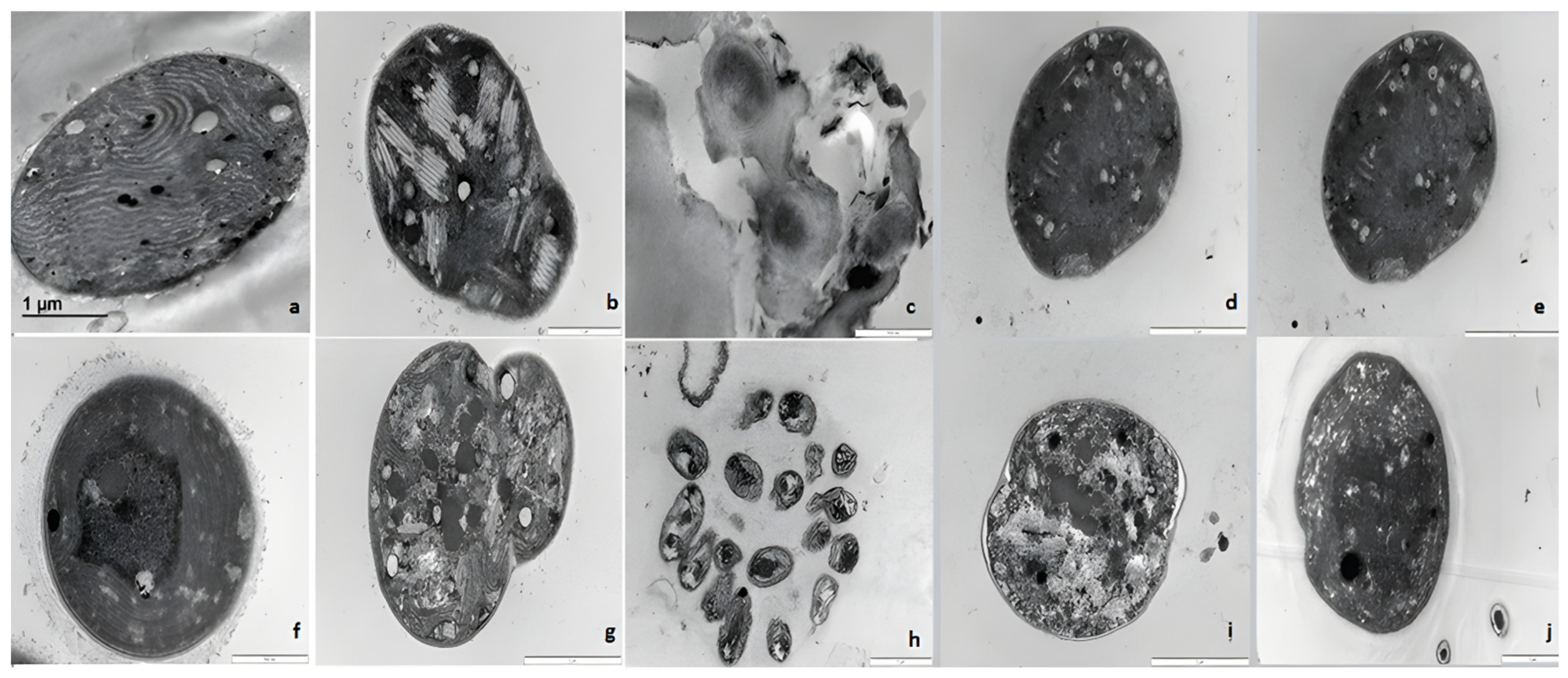
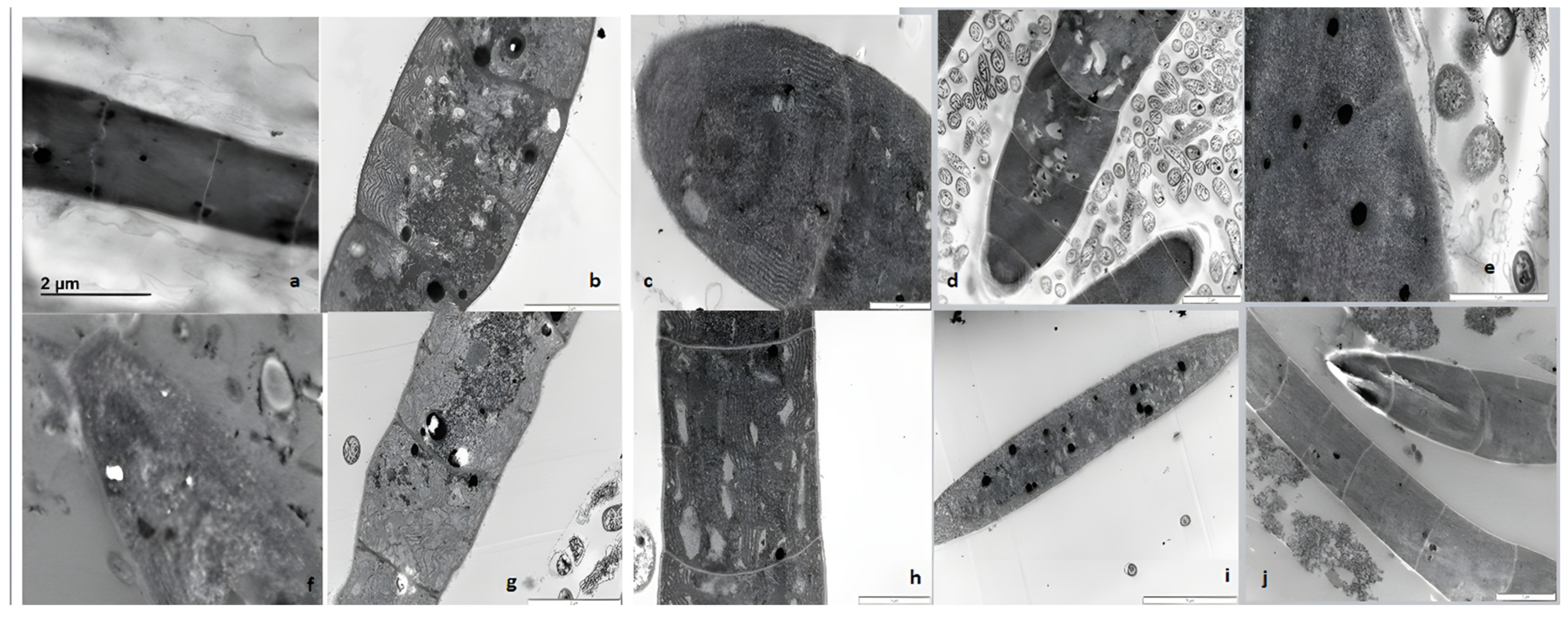
The ultrastructures of cells in cultures of Microcystis sp. and Oscillatoria sp. (Figure 1 and Figure 2, respectively) were examined using transmission electron microscopy. The morphology of untreated (control) cells was contrasted against that of corresponding cultures exposed to the four bacterial isolates to determine their cellular morphology. Overall, all isolates had an effect on the ultrastructure of cells, some more marked than others, especially for Microcystis. Prior heat treatment of bacteria had a relatively marginal adverse impact on the cyanobacterial isolates over most of their non-heated counterparts, with the exception of the M+B heat treatment in Microcystis sp. (see below). The most common alterations noted included an increase in vacuolation, irregular thylakoid profiles, cytoplasmic clearings, and, in more severe cases, loss of cell and vacuolar membrane integrity.
Microcystis control (untreated) cells appeared metabolically active. The cytoplasm was tightly packed with ribosomes, with carboxysomes (involved in CO2 fixation), cyanophycin granules (acting as a nitrogen reservoir in many cyanobacteria), and vacuoles also present (Figure 1a). The plasmalemma of control cells was distinct and closely adherent to a clearly defined cell wall, and thylakoids appeared regularly ordered with associated phycobilisomes and neighbouring glycogen granules, suggesting active photosynthesis and reserve accumulation (Figure 1b). Polyphosphate granules and gas vesicles, both aiding in controlling buoyancy, were frequently seen.
Microcystis cells exposed to the M+1 (Aeromonas lacus) isolate appeared intact, showing tightly adpressed plasmalemma and densely packed cytoplasm, but slightly distended thylakoids (Figure 1b). Cyanophycin granules were present and prominent, as were numerous gas vesicles. Carboxysomes were also seen, suggesting that photosynthetic ability was unaffected. Cells exposed to the M+1 heat isolate looked similar, with the exception of relatively large and irregularly shaped vacuole membranes, and a more granular appearance of the cytoplasm, suggesting the early onset of cellular stress (Figure 1g). The M+B (Lysinibacillus sp.) isolate appeared to have only a moderate effect upon the cells of Microcystis, revealing a relatively greater number of small vacuoles, diffuse thylakoid membranes, and few visible polyphosphate granules (Figure 1e). However, its heat-treated counterpart led to widespread damage, denoted by loss of plasmalemma and vacuolar integrity, plasmolysis, cytoplasmic clearings (respectively), and irregular thylakoid profiles, all of which point towards irreparable cell damage (Figure 1j). Cells exposed to the M+3Y (Pseudomonas sp.) isolate varied widely between relatively unaffected to cells showing crenulated cell outlines (Figure 1d and Figure 1i, respectively), and in more extreme cases, cells that had lysed completely. Paradoxically, cells in the M+3Y heat isolate appeared close to normal, with no evidence of visible cellular stress (Figure 1). In sharp contrast, cultures exposed to M+3W (Pseudomonas rhodesiae) and M+3W heat showed no intact cells, only the remains of cells after complete lysis had taken place (Figure 1c,h).
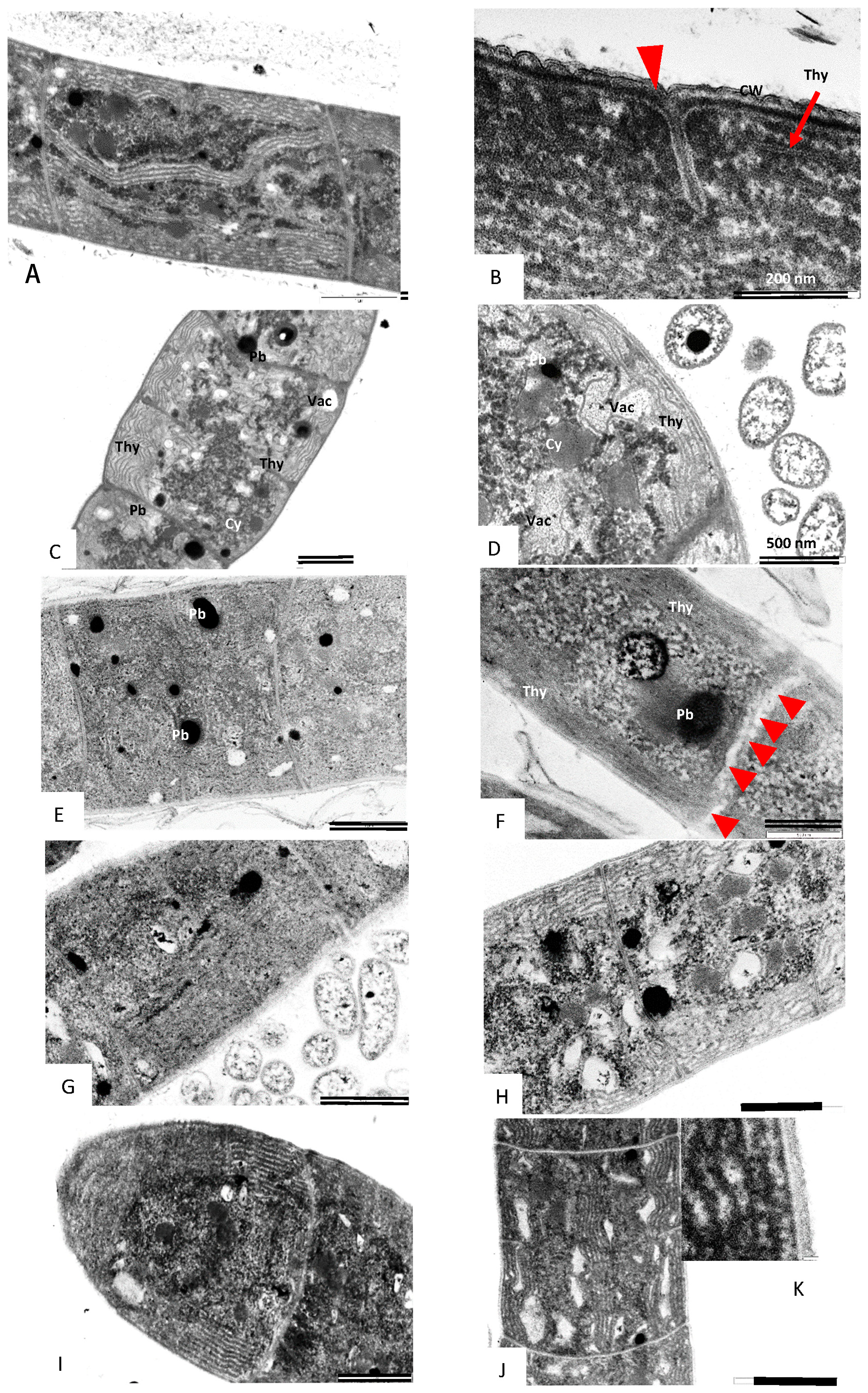
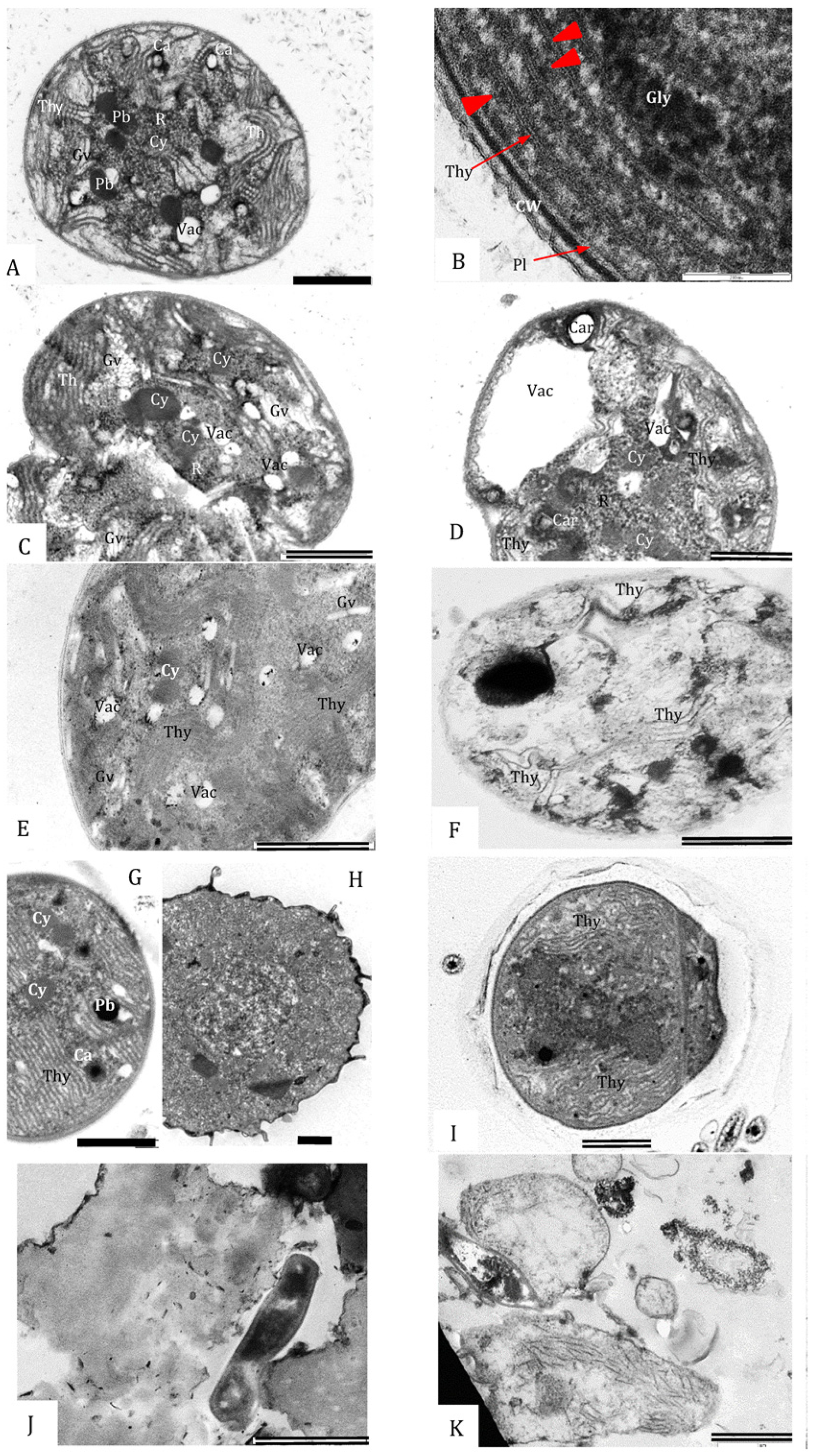
Filaments of untreated Oscillatoria cells showed the presence of a sheath, cells bound by clearly defined plasmalemma adhering closely to the external and transverse walls, and phycobilisomes attached to long thylakoid profiles were visible in longitudinal sections (Figure 2a,f). A few small vacuoles, carboxysomes, and cyanophysin granules were observed in the cytoplasm, which was densely packed with ribosomes. Figure 2b shows a filament of Oscillatoria exposed to isolate O+1. Oscillatoria cells showed visibly intact plasmalemma and densely packed ribosomes in the cytoplasm (Figure 2b). A large number of small, electron-lucent vacuoles and polyphosphate bodies were observed in the proximity of long thylakoid profiles, overall suggesting metabolically active cells. Cells exposed to the heat-treated O+1 isolate shown in Figure 2g looked relatively unaffected despite the close proximity of bacterial cells adhering to the sheath. The greater extent of vacuolation (filled with dense deposits in this case) agrees with the corresponding O+1 treatment in Microcystis with and without heating. A similar trend to Microcystis was also observed in the O+B isolate of Oscillatoria, where cells showed intact plasmalemma and ordered thylakoids, albeit diffuse in appearance (Figure 2e). Polyphosphate granules and a few small vacuoles were noted. The O+B heat isolate induced visible vesiculation near the plasmalemma separating adjacent cells and conferred a greater granularity to the cytoplasm (Figure 2j). The same extent of disruption of thylakoid ordering noted in Microcystis was not observed here. The O+3y (Pseudomonas sp.) isolate appeared to have no influence on the ultrastructure of Oscillatoria cells, and, with the exception of a slight increase in vacuolation, neither did the O+3y heat treatment (Figure 2d, i). Lastly, isolate O+3w (Pseudomonas rhodesiae) had a negligible effect on cell ultrastructure (Figure 2c), while O+3w heat resulted in a small increase in vacuolation. (Figure 2h; see inset). Further detailed annotations of cellular structures and changes can be observed in Figure 3 and Figure 4, contrasting the changes in ultrastructure with the introduction of bacteria to otherwise healthy cyanobacterial isolates.

3.2. HPLC Analysis

HPLC allowed the concentrations of microcystin-LR and -RR to be determined in Microcystis sp. and Oscillatoria sp. samples after four days (Table 1); these were the targeted toxins for analysis in the present study. Microcystins showed approximately 14 min retention time, which is similar to that reported by Aguete et al. (2003) [21]. Untreated Microcystis sp. cultures showed an average concentration of 0.12 µg·mL−1 of microcystin-LR and 0.4 µg·mL−1 microcystin-RR. The average microcystin-LR concentrations for untreated Oscillatoria sp. were 0.13 µg·mL−1 of microcystin-LR, whilst microcystin-RR was 0.38 µg·mL−1. The HPLC method was sensitive to even slight changes at low concentrations.
Changes in microcystin concentration were expressed as reduction percentages relative to the control samples, using these values as a baseline. Overall, HPLC findings of the exposures of non-heat-treated bacteria indicate a slight increase in microcystin-RR, whilst all the isolates show the capacity to decrease microcystin LR concentration. Prior heat treatment of bacterial cells, however, resulted in high concentrations of microcystin-LR release, especially for Microcystis. Other peaks were visualized, suggesting the presence of other toxins or degradation by-products of microcystin-LR, but these could not be quantified unequivocally.

3.3. Microbial Diversity Changes

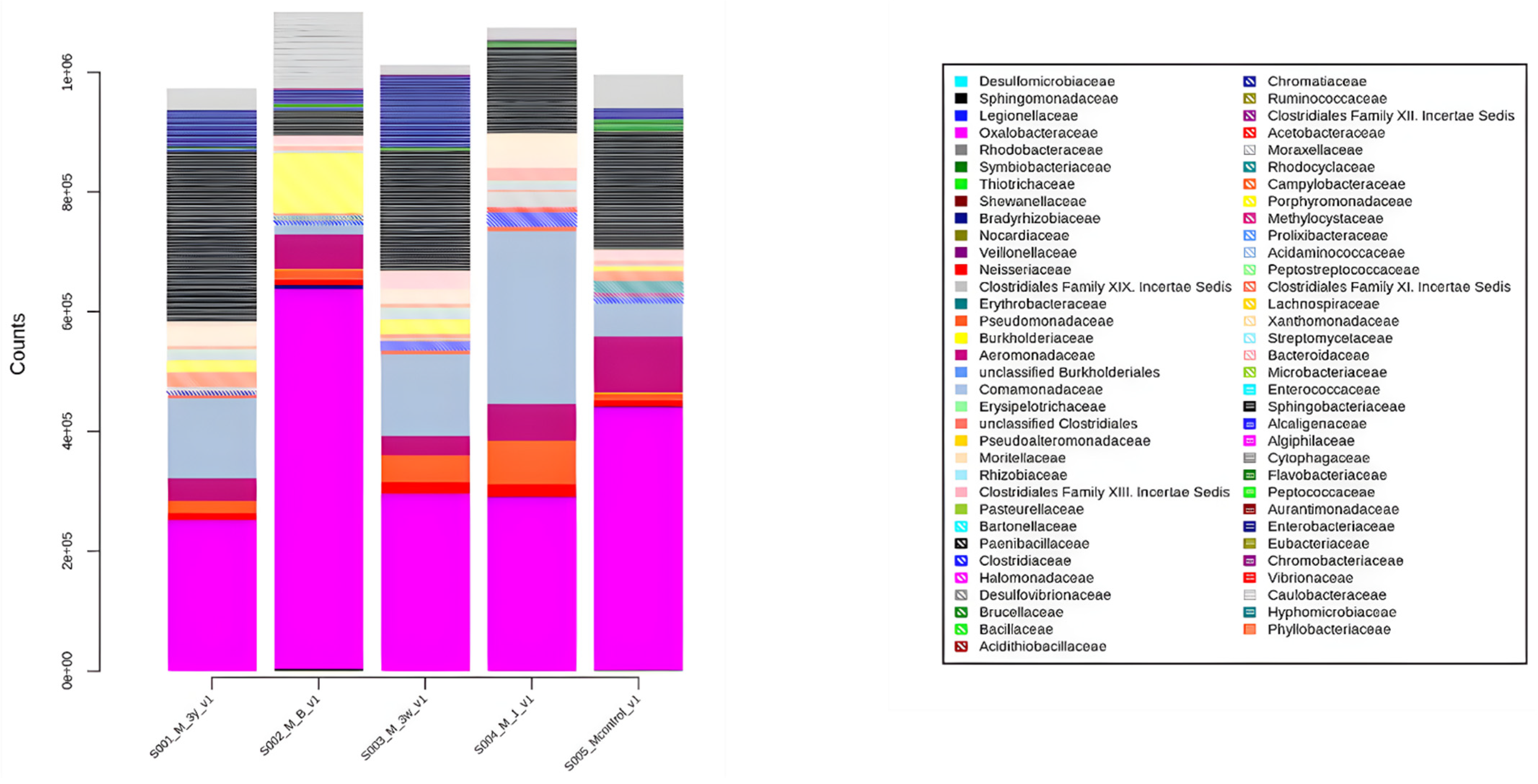
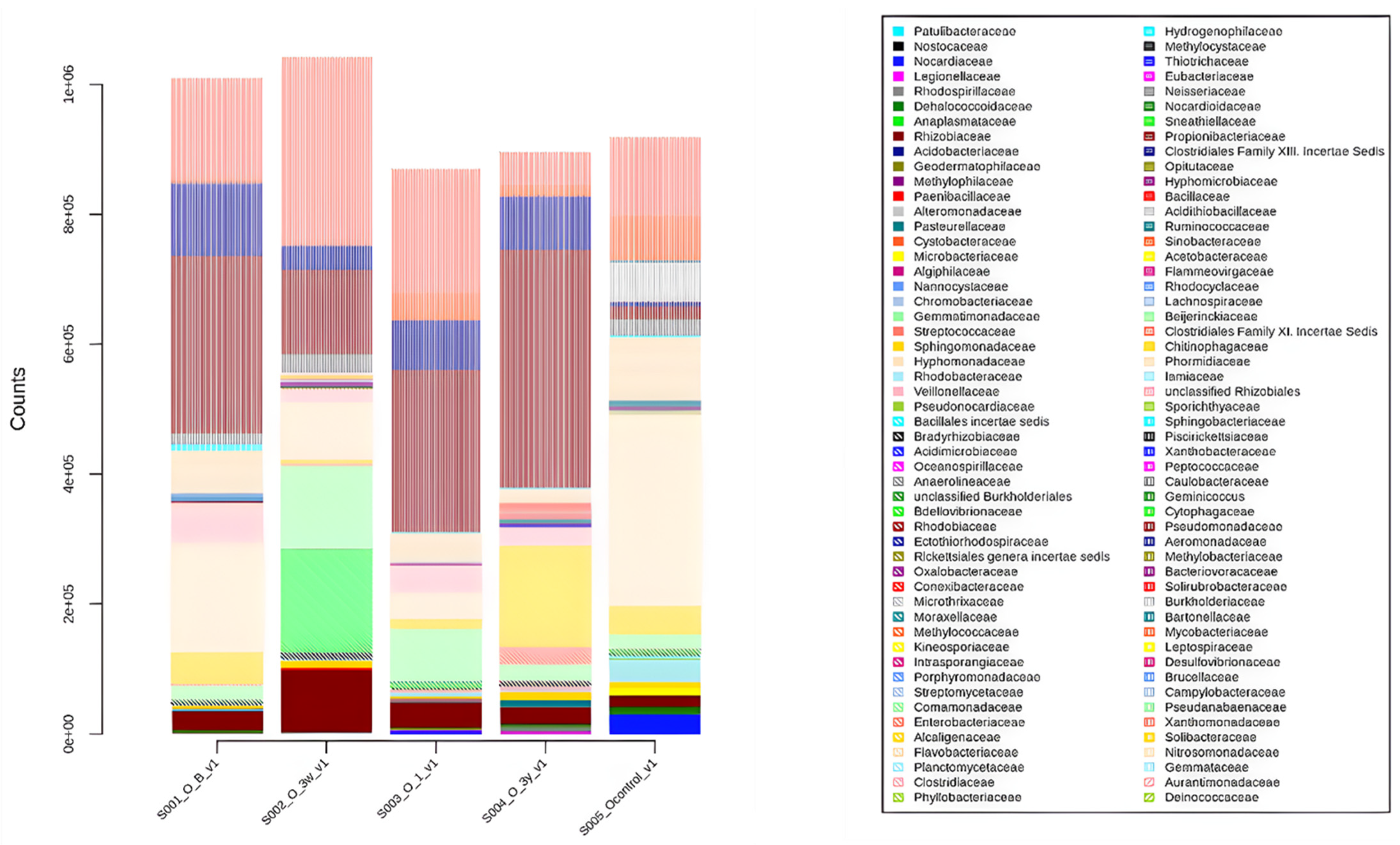
This preliminary analysis aimed to examine possible shifts in microbial diversity during cyanobacterial exposure to bacterial isolates. The findings of the Ion reporter software’s metagenomics analysis were represented by way of consensus data from all the samples (Figure 5 and Figure 6). The diversity in Microcystis sp. samples was mostly uniform, with minor shifts in Sphingobacteriaceae, Pseudomonadaceae, and Commonadaceae. The addition of bacterial isolates resulted in microbial diversity shifts, with an increased dominance of Pseudomonadaceae noticed in Oscillatoria sp. exposed to isolates 1, 3w, and 3y (Aeromonas lacus; isolate 3Y, Pseudomonas sp., and 3W, Pseudomonas rhodesiae). An increase in Sphingobacteriaceae, which has antagonistic bacterial isolates, was also noticed in samples treated with isolate B. Treated Oscillatoria samples showed a reduced presence of the family Phormidiaceae relative to the untreated control. Phormidiaeceae falls under the order Oscillatoriales, which can be assumed as a representation of the filamentous cyanobacteria, and was reduced in the presence of isolate 1, 3y (Pseudomonas sp.), with slight reductions in the presence of isolate B (Lysinibacillus sp.).Further assessment of the changes in diversity and the possible implications are illustrated in Supplementary Material Figures S1 and S2.

4. Discussion

Biological control of cyanobacteria has been studied mainly from a perspective of predatory or ammensalic bacteria and their lytic action, primarily on lab strains of cyanobacteria. To advance the understanding of how these control agents influence water quality, the present study used reduced bacterial ratios upon non-axenic cyanobacterial strains isolated from naturally occurring blooms. Findings from earlier studies informed the approach applied in the current study. Firstly, lowered ratios have a bacteriostatic effect as opposed to inducing total lysis, thereby preventing toxin release and subsequent bloom progress [24]. Secondly, the presence of microcystin-degrading bacteria has been found to influence a shift in toxic to non-toxic Microcystis isolates [25]. Against this backdrop, the theory of biological control and its role in either fast-tracking bloom succession or possibly having minimal diversity impacts was explored.
Based on these findings, the current study assessed the response of two cyanobacterial isolates from different parts of the water column to assess the antagonistic effects of bacterial isolates at half the recommended 1:1 ratio. The current study compared 3 bacterial isolates from surface water, which included: Isolate 1, Aeromonas lacus; Isolate 3Y and 3W, Pseudomonas rhodesiae, and Isolate B, Lysinibacillus sp. This was to assess whether the isolates had a similar impact as the reports of Bacillus in an earlier study [26], thereby serving as a form of reference. The present study found a reduction in toxicity, with the concentration of the more toxic variant of microcystin (-LR) reduced after a four-day period, contrasting with a general increase in the less toxic microcystin. This study is based on earlier work by Ndlela et al. [8,27], where ratios of bacterial cells were introduced at half those of the cyanobacterial population and found to have an improved water quality impact after 4 days. In addition to reduced toxin concentration, water quality improvements were also noted by an improved bio-indicator response/survival. Initial analysis in these studies was conducted through ELISA, and bio-indicators were used in addition to assess water quality improvements. This study provides additional insights into the impacts of these biological control agents, looking at specific toxins, ultrastructural changes in the cyanobacteria, and the shifts in the microbial community, to better understand the effect of this biological control.

4.1. Ultrastructural Analysis

Exposure of cells to a stress-inducing agent involves two key factors: (a) the intensity of the stress, and (b) its duration. In the present study, the intensity of stress (i.e., the presence of bacteria) was deliberately kept low by using a lower-than-recommended (sub-lethal) ratio of bacteria to cyanobacteria. In doing so, it was possible to observe incipient changes that provide clues to the mechanisms of damage at play that would have otherwise been missed if cell damage had been severe and immediate. On the other hand, the duration of the study was limited to four days based on previous results, and, therefore, the findings reported here are a snapshot of cellular activities at that time.
TEM revealed that isolate 1 (Aeromonas lacus) induced only small increases in vacuolation in both Microcystis and Oscillatoria, appearing more marked in the heat-treated isolates. At the opposite extreme, isolate B (Lysinibacillus sp.) and 3W (Pseudomonas rhodesiae) induced complete lysis in Microcystis, and cytoplasmic granularity and plasmalemma vesiculation in Oscillatoria. Isolate 3Y (Pseudomonas rhodesiae) introduced ultrastructural changes falling somewhere in between these extremes. Although speculative, the ultrastructural changes observed are suggestive of different levels of expression of free radical-mediated damage, although other causative agents cannot be discounted. If correct, this assumption would be supported by the findings of Zhou et al. (2016) [28], who reported an increase in catalase and peroxidase activity in Microcystis exposed to Pseudomonas. Since these enzymes have a free radical-quenching role, an increase in expression, coupled with the similar ultrastructural changes observed by those authors after 3 days of exposure to the enzymes reported here, suggests the activation of cellular repair mechanisms in an attempt to counter oxidative damage. Only a longer sampling regime would reveal the ultimate fate of cells following exposure, i.e., whether they tolerate the stress (albeit at a lower metabolic rate, in a bacteriostatic state), or fail to repair damage and eventually lyse.
The principle of heat treatment was explored primarily on the basis that certain bacterial cell enzymes may be enhanced at exposure to increased temperatures [29] and therefore may enhance the antagonistic effects that these bacteria may have, although it is also possible that not all enzymes would react in the same manner. However, although the accelerated damage of both Microcystis and Oscillatoria was observed in heat-treated cells, the resulting impacts on water quality, specifically microcystin concentration changes, showed increased microcystin –LR release, indicative of cell lysis, as observed in the ultrastructural changes. This may mean that heat treatment, although it causes more pronounced cell damage, may not be ideal for environmental applications due to subsequent toxin release.

4.2. HPLC Analysis Findings

To date, it is not clear what the primary role of microcystins in cyanobacteria is [29,30,31] Various factors, such as temperature and [32] phosphorus [33] nutrient, and nitrogen availability [34] have been associated with the production of different microcystin congeners, but the relationship between these various factors remains unclear.
An earlier study [8] found fluctuations in the total microcystin toxin reduction for water samples of cyanobacteria treated with individual bacterial isolates. Although the study was conducted in BG-11 medium, preliminary testing in sewage waters was also conducted; however, this may indicate some fluctuations in the natural environment. This aspect of the study needs to be further optimized in future research. HPLC was employed in the present study to clearly assess the changes in the toxin concentrations, primarily microcystin-LR and -RR, even at very low concentrations. Only filtrate water samples from the exposure experiments were analyzed using HPLC, which then represent extracellular toxins released into the water body by the cyanobacteria. HPLC data indicated the presence of two measurable microcystin variants, viz. microcystin-LR and -RR. While more variants may have been present, these could not be quantified with the standards available at the time, which were limited to microcystin-LR, -RR, and -YR. Although microcystin-LR and -RR are reportedly the most common variants [35,36,37], others have recommended screening for more hydrophobic microcystins such as -LF and -LA, which are reported to be as toxic as microcystin-LR on living organisms [38]. This was not conducted in the current study but is considered for future work, as it is appreciated that other toxin changes may occur in conjunction with the more commonly studied -LR and -RR variants.
microcystin-LR has been reported to be up to 10 times more toxic than microcystin-RR, based on mouse bioassays [16,38]. In the current study, control microcystin-RR concentrations almost doubled compared to those of microcystin-LR in the Microcystis sp. control filtrate water (0.12 and 0.4 µg·mL−1, respectively) and Oscillatoria sp. (0.13 and 0.38 µg·mL−1, respectively). Results obtained from the exposure experiments confirm that the bacteria used successfully reduced the extracellular toxicity of the water tested. A reduction in the more toxic microcystin-LR by 2 to 28% was recorded in exposed Microcystis filtrate samples. Similarly, 4 to 73% reductions were observed in the filtrate water of Oscillatoria sp. treated with the different bacterial isolates. Based on the HPLC findings, isolates 3w, 3y, and B (isolate 3Y and 3W, Pseudomonas rhodesiae, and isolate B, Lysinibacillus sp.) were the most effective in toxin reduction in both species.
Surprisingly, in Microcystis samples, the severity of the ultrastructural changes observed in non-heat-treated exposures is inversely related to the reduction in microcystin-LR concentration. This ranges from a small extent of vacuolation accompanied by a 2% -LR reduction in isolate 1 (A. lacus), to variable structural alterations observed at a 14 and 18% reduction in isolates 3Y and B (Lysinibacillus sp. and P. rhodesiae, respectively), to complete cell lysis in isolate 3W (P. rhodesiae), associated with a 28% reduction. These findings could attest to an effective degradation of microcystin-LR in this species by these isolates in spite of the lysis induced. This trend was not observed in Oscillatoria, as the overall cellular integrity was maintained more uniformly than in Microcystis. With regard to the marked increase in -LR levels observed for Microcystis exposed to heat-treated isolates, it would seem plausible to suggest that while some enzymes responsible for the enhanced cellular deterioration observed may have been promoted by this treatment, enzymes responsible for the hydrolytic cleavage of the toxins coded by the mlr gene [14], may have been negatively affected.
Differences in the ability of bacteria to degrade microcystin have been reported. Most degraders of microcystin-LR have also been reported to degrade other variants, such as microcystin-RR and -YR [39,40,41]. Microcystin variants differ in the attachment of aminoacids in the X and Z positions. In the case of the microcystins -RR (arginine -arginine) and -LR (leucine-arginine), the difference is the amino acid in the X position [42]. Lower rates of degradation of microcystin-LR and -RR by an isolate of Bordetella sp. were reported when these variants occurred together than when separately [39]. In the present study, the concentration of microcystin-RR remained almost unchanged during the four-day period, in contrast to microcystin-LR, despite being more abundant in control samples of both species. Furthermore, a marked increase in microcystin-RR concentration was observed following exposure to bacterial isolates. It is possible that degradation of microcystin-RR may require a longer timeframe than that used in the present study. Microcystin degradation by bacterial communities required an eight-day period for the complete removal of the toxin [43] while Pseudomonas was reported to reduce microcystin-LR over a three-week period [43]. The study by [28] investigating the impact of Pseudomonas aeruginosa on Microcystis was conducted over a 7-day period. These findings collectively endorse the merits of a longer period of assessment.

4.3. Diversity Shifts

Evidence points to the existence of microbial succession associated with bloom-forming cyanobacteria, marked by peaks and declines of specific phyla. A study by [44] found an increase in Firmicutes and Sphingomonas in cyanobacterial waters where microcystin degradation was occurring. Coupled with this, there was an increase in bacterial isolates after 7 days of microcystin degradation that are not primarily known for this capability. This is similar to the findings in this study, where Proteobacteria increases were also observed, with Oxalobacteriaceae (nitrogen fixers) co-occurring in abundance with Microcystis, indicating a possible beneficial symbiotic relationship, where the abundance decreases upon treatment with bacterial isolates except for isolate B. Other studies have described the succession observed with bloom decline and found that a successional pattern occurs in the abundance of phyla at the beginning and the end of the bloom [13,41,45]. The diversity shifts in Oscillatoria samples indicate this, with an increase in known antagonistic bacteria containing families such as Firmicutes and Sphingobacteriaceae, which are typically linked to bloom decline and/or microcystin degradation. This has also been observed with Microcystis sp. blooms, where Firmicutes was also among the phyla linked to microcystin degradation co-occurring with the bloom [46]. This is further supported by recent research, noting an increase in Firmicutes and Proteobacteria phyla where cyanobacteria were treated with hydrogen peroxide. This led to an inhibitory effect on various cyanobacterial species, with subsequent microbial taxa shifts [47]. Previous studies [48] suggested that microcystin degraders within the environment proliferate in response to the presence of toxins in the water, indicating an interplay between cyanobacteria and microcystin degraders. [13] described possible scenarios based on the literature on phyla co-occurrences with cyanobacteria, specifically how the antagonistic phyla are found in larger aggregates of colonial cyanobacteria. Microcystins could potentially be an available substrate, creating a competitive advantage under limited nutrient conditions when a bloom is in full effect.
The selected bacteria were exposed at their exponential growth phase, pre-grown in Tween 80, which has been known to increase cell permeability, among other enhanced cell properties, such as stress protection, growth enhancement, and oleic acid supplementation [8,49]. However, testing for cyanobacterial response using bacteria at other stages of the growth curve, over longer time periods, may also be useful, although nutrient depletion and other factors will need to be considered. The current study simulated ideal growth conditions from a nutritional and physicochemical perspective under laboratory conditions, yet with the advantage that cultures were from the field and non-axenic, therefore representative of an environmental bloom.

4.4. Mode of Action—Preliminary Findings

The mode of action in terms of microcystin reduction by the bacterial isolates employed in this study has not been fully elucidated. While lipopeptides are produced by some of the genera identified in this research, preliminary testing did not show the presence of antimicrobial biosurfactants such as lipopeptides in the culture supernatant. However, if the bacterial isolates are in fact microcystin degraders, the reduction in colonies and mucilage around the Microcystis sp. isolate can be explained through the findings of [50], where microcystin-degrading bacteria were found to degrade microcystins released from the mucilage of the cyanobacteria. Other studies indicate the use of microcystins by Pseudomonas aeruginosa isolates as a sole carbon source [51], which may be the case in the present study. Sphingomonas and related isolates have often been reported as microcystin degraders; however, other isolates have been identified as well [37,52,53,54]. Earlier research indicated the presence of the microcystin-degrading gene cluster, mlr A, B, C, and D, in Sphingomonas and other related species [40]; however, the study by Yang et al. [39] reported a Bordetella sp. isolate, which contained this gene cluster. A study [55] indicated that none of the previously reported mlr genes were present in Arthrobacter sp., Brevibacterium sp., and Rhodococcus sp. isolates, indicating another mode of microcystin degradation or the presence of different genes for microcystin degradation.
Earlier studies of the isolates described here have shown reduced ecotoxicity by way of bio-indicators in water treated, as described in this research [27]. The current application of bacterial isolates pre-grown in Tween (increased cell permeability) [8] and applied at lower ratios has indicated a minimal shift in bacterial diversity, and where observed, diversity similar to that observed in bloom successions. Moreover, the combination of these methods in an earlier study [27] improved water quality based on bio-indicator survival, in line with toxin reduction, while eliciting cyanobacterial cell stress. The mode of action could not be classified, and additional research is required to better understand the theories within a mixed microbial community. Examples of this include further experiments to identify microcystin-degrading genes in the isolates, furthering understanding of how the changes occur over longer periods of time, as well as understanding of the interplay between specific microorganisms in a mixed system, which is not easy to understand, based on studies assessing cyanobacterial and microbial resistance gene expressions in a similar system [56].
This study indicates the potential of biological control against nuisance blooms, although their efficacy under varying conditions needs to be considered. Earlier studies [57] also mentioned efficacy, host specificity, and mass culturing considerations as challenges and factors in the piloting and upscaling of bacterial control agents. The research conducted in this study is not exempt from these unknowns and future considerations when introducing biological control agents on a larger scale.
In summary, the bacterial isolates selected in this study, namely isolates 1, 3w, 3y, and B (isolate 1, Aeromonas lacus; isolate 3Y and 3W, Pseudomonas sp., Pseudomonas rhodesiae, and isolate B, Lysinibacillus sp.), even at the low ratio used, were capable of eliciting stress responses and reducing the concentration of microcystin-LR in filamentous and colony-forming cyanobacteria to various degrees. HPLC analysis of filtrate water showed 3w to be the most effective in reducing the concentration of extracellular toxins of both isolates of cyanobacteria, indicating that bacterial isolates appear to have microcystin-degrading abilities. However, the relationships between the stress induced, the reduction in toxicity of the variants produced, and the elucidation of the degradation mechanism need to be confirmed with further studies and a greater sample size. Similarly, a greater sampling frequency and for a longer period will also prove beneficial. Molecular testing of genes present in microcystin degraders may offer confirmation of the theory that the isolates in the study are microcystin degraders. Lastly, next-generation sequencing was useful in establishing that minimal shifts had occurred in Microcystis-treated cultures, whilst those of Oscillatoria showed greater diversity, indicating an increase in families containing isolates linked to bloom decline. The ability to induce and monitor such shifts opens the door to being able to manipulate the timing of the succession patterns of cyanobacterial blooms and thus potentially arrest growth, if not completely, at least in the least toxic phase.

Supplementary Materials

The following supporting information can be downloaded at: https://www.mdpi.com/article/10.3390/phycology6010025/s1, Figure S1: Microbial diversity in untreated Microcystis sp. (S001) exposed to isolate 3y (S001), to isolate B (S002), to isolate 3w (S003), isolate 1 (S004) and unexposed (S005), Microcystis sp. after four days. Figure S2: Microbial diversity in untreated Oscillatoria sp. exposed to isolate B (S001), to isolate 3w (S002), to isolate 1 (S003), isolate 3y (S004) and unexposed (S005), Oscillatoria sp. after four days.

Author Contributions

Conceptualization, methodology, analysis: L.L.N., J.W.-S., M.S. and P.J.O.; writing—original draft preparation: L.L.N., writing—review and editing, L.L.N., J.W.-S.; visualization, J.W.-S.; supervision, P.J.O.; project administration, L.L.N.; funding acquisition, P.J.O. All authors have read and agreed to the published version of the manuscript.

Funding

This research was funded by the CSIR (Council for Scientific and Industrial Research) through project ECSD 015, parliamentary grant funding.

Data Availability Statement

All data generated or analyzed during this study are included in this published article (and its supplementary information files).

Acknowledgments

The authors wish to acknowledge the Stellenbosch University Central Analytical Facility staff for their kind assistance in the microbial diversity analysis component of this research.

Conflicts of Interest

The authors declare that the research was conducted in the absence of any commercial or financial relationships that could be construed as a potential conflict of interest.

References

  1. Paerl, H.W.; Gardner, W.S.; Havens, K.E.; Joyner, A.R.; McCarthy, M.J.; Newell, S.E.; Qin, B.; Scott, J.T. Mitigating Cyanobacterial Harmful Algal Blooms in Aquatic Ecosystems Impacted by Climate Change and Anthropogenic Nutrients. Harmful Algae 2016, 54, 213–222. [Google Scholar] [CrossRef] [PubMed]
  2. Huisman, J.; Codd, G.A.; Paerl, H.W.; Ibelings, B.W.; Verspagen, J.M.H.; Visser, P.M. Cyanobacterial Blooms. Nat. Rev. Microbiol. 2018, 16, 471–483. [Google Scholar] [CrossRef] [PubMed]
  3. Paerl, H.W.; Otten, T.G.; Kudela, R. Mitigating the Expansion of Harmful Algal Blooms Across the Freshwater-to-Marine Continuum. Environ. Sci. Technol. 2018, 52, 5519–5529. [Google Scholar] [CrossRef]
  4. Ndlela, L.L.; Oberholster, P.J.; Van Wyk, J.H.; Cheng, P.H. An Overview of Cyanobacterial Bloom Occurrences and Research in Africa over the Last Decade. Harmful Algae 2016, 60, 11–26. [Google Scholar] [CrossRef]
  5. Preece, E.P.; Hardy, F.J.; Moore, B.C.; Bryan, M. A Review of Microcystin Detections in Estuarine and Marine Waters: Environmental Implications and Human Health Risk. Harmful Algae 2017, 61, 31–45. [Google Scholar] [CrossRef]
  6. Chen, J.; Liu, J.; Han, S.; Su, H.; Xia, W.; Wang, H.; Liu, Y.; Zhang, L.; Ke, Z.; Zhang, X.; et al. Nontraditional Biomanipulation: A Powerful Ecotechnology to Combat Cyanobacterial Blooms in Eutrophic Freshwaters. Innov. Life 2023, 1, 100038. [Google Scholar] [CrossRef]
  7. Gumbo, J.R.; Ross, G.; Cloete, T.E. The Isolation and Identification of Predatory Bacteria from a Microcystis Algal Bloom. Afr. J. Biotechnol. 2010, 9, 663–671. [Google Scholar] [CrossRef]
  8. Ndlela, L.L.; Oberholster, P.J.; Van Wyk, J.H.; Cheng, P.H. A Laboratory Based Exposure of Microcystis and Oscillatoria Cyanobacterial Isolates to Heterotrophic Bacteria. Toxicon 2019, 165, 1–12. [Google Scholar] [CrossRef]
  9. Oberholster, P.J.; Cheng, P.-H.; Genthe, B.; Steyn, M. The Environmental Feasibility of Low-Cost Algae-Based Sewage Treatment as a Climate Change Adaption Measure in Rural Areas of SADC Countries. J. Appl. Phycol. 2019, 31, 355–363. [Google Scholar] [CrossRef]
  10. Oberholster, P.J.; Cheng, P.-H.; Botha, A.-M.; Genthe, B. The Potential of Selected Macroalgal Species for Treatment of AMD at Different PH Ranges in Temperate Regions. Water Res. 2014, 60, 82–92. [Google Scholar] [CrossRef]
  11. Mohamed, Z.A.; Alamri, S.; Hashem, M.; Mostafa, Y. Growth Inhibition of Microcystis Aeruginosa and Adsorption of Microcystin Toxin by the Yeast Aureobasidium Pullulans, with No Effect on Microalgae. Environ. Sci. Pollut. Res. 2020, 27, 38038–38046. [Google Scholar] [CrossRef]
  12. Lezcano, M.Á.; Velázquez, D.; Quesada, A.; El-Shehawy, R. Diversity and Temporal Shifts of the Bacterial Community Associated with a Toxic Cyanobacterial Bloom: An Interplay between Microcystin Producers and Degraders. Water Res. 2017, 125, 52–61. [Google Scholar] [CrossRef]
  13. Ndlela, L.L.; Oberholster, P.J.; Van Wyk, J.H.; Cheng, P.H. Bacteria as Biological Control Agents of Freshwater Cyanobacteria: Is It Feasible beyond the Laboratory? Appl. Microbiol. Biotechnol. 2018, 102, 9911–9923. [Google Scholar] [CrossRef]
  14. Yu, L.; Kong, F.; Zhang, M.; Yang, Z.; Shi, X.; Du, M. The Dynamics of Microcystis Genotypes and Microcystin Production and Associations with Environmental Factors during Blooms in Lake Chaohu, China. Toxins 2014, 6, 3238–3257. [Google Scholar] [CrossRef]
  15. Arii, S.; Tsuji, K.; Tomita, K.; Hasegawa, M.; Bober, B.; Harada, K.-I. Cyanobacterial Blue Color Formation during Lysis under Natural Conditions. Appl. Environ. Microbiol. 2015, 81, 2667–2675. [Google Scholar] [CrossRef]
  16. Schmidt, J.R.; Wilhelm, S.W.; Boyer, G.L. The Fate of Microcystins in the Environment and Challenges for Monitoring. Toxins 2014, 6, 3354–3387. [Google Scholar] [CrossRef] [PubMed]
  17. Bouaïcha, N.; Miles, C.O.; Beach, D.G.; Labidi, Z.; Djabri, A.; Benayache, N.Y.; Nguyen-Quang, T. Structural Diversity, Characterization and Toxicology of Microcystins. Toxins 2019, 11, 714. [Google Scholar] [CrossRef]
  18. Su, J.F.; Ma, M.; Wei, L.; Ma, F.; Lu, J.S.; Shao, S.C. Algicidal and Denitrification Characterization of Acinetobacter sp. J25 against Microcystis Aeruginosa and Microbial Community in Eutrophic Landscape Water. Mar. Pollut. Bull. 2016, 107, 233–239. [Google Scholar] [CrossRef] [PubMed]
  19. Zhu, X.; Shen, Y.; Chen, X.; Hu, Y.O.O.; Xiang, H.; Tao, J.; Ling, Y. Biodegradation Mechanism of Microcystin-LR by a Novel Isolate of Rhizobium sp. TH and the Evolutionary Origin of the MlrA Gene. Int. Biodeterior. Biodegrad. 2016, 115, 17–25. [Google Scholar] [CrossRef]
  20. Oberholster, P.J.; Myburgh, J.G.; Govender, D.; Bengis, R.; Botha, A.M. Identification of Toxigenic Microcystis Strains after Incidents of Wild Animal Mortalities in the Kruger National Park, South Africa. Ecotoxicol. Environ. Saf. 2009, 72, 1177–1182. [Google Scholar] [CrossRef]
  21. Aguete, E.C.; Gago-Martínez, A.; Leão, J.M.; Rodríguez-Vázquez, J.A.; Menàrd, C.; Lawrence, J.F. HPLC and HPCE Analysis of Microcystins RR, LR and YR Present in Cyanobacteria and Water by Using Immunoaffinity Extraction. Talanta 2003, 59, 697–705. [Google Scholar] [CrossRef]
  22. Watts, G.S.; Youens-Clark, K.; Slepian, M.J.; Wolk, D.M.; Oshiro, M.M.; Metzger, G.S.; Dhingra, D.; Cranmer, L.D.; Hurwitz, B.L. 16S RRNA Gene Sequencing on a Benchtop Sequencer: Accuracy for Identification of Clinically Important Bacteria. J. Appl. Microbiol. 2017, 123, 1584–1596. [Google Scholar] [CrossRef] [PubMed]
  23. Xiao, M.; Li, M.; Reynolds, C.S. Colony Formation in the Cyanobacterium Microcystis. Biol. Rev. Camb. Philos. Soc. 2018, 93, 1399–1420. [Google Scholar] [CrossRef]
  24. Flaherty, K.W.; Walker, H.L.; Britton, C.H.; Lembi, C.A. Response of Cylindrospermopsis raciborskii and Pseudanabaena limnetica to a Potential Biological Control Agent, Bacterium SG-3 (Lysobacter Cf. brunescens). Lake Reserv. Manag. 2007, 23, 255–263. [Google Scholar] [CrossRef]
  25. Zhu, L.; Wu, Y.; Song, L.; Gan, N. Ecological Dynamics of Toxic Microcystis spp. and Microcystin-Degrading Bacteria in Dianchi Lake, China. Appl. Environ. Microbiol. 2014, 80, 1874–1881. [Google Scholar] [CrossRef]
  26. Gumbo, J.R.; Cloete, T.E. The Mechanism of Microcystis Aeruginosa Death upon Exposure to Bacillus Mycoides. Phys. Chem. Earth 2011, 36, 881–886. [Google Scholar] [CrossRef]
  27. Ndlela, L.L.; Oberholster, P.J.; Madlala, T.E.; Van Wyk, J.H.; Cheng, P.H. Determination of the Ecotoxicity Changes in Biologically Treated Cyanobacteria Oscillatoria and Microcystis Using Indicator Organisms BT. In Current Microbiological Research in Africa: Selected Applications for Sustainable Environmental Management; Abia, A.L.K., Lanza, G.R., Eds.; Springer International Publishing: Cham, Switzerland, 2020; pp. 257–281. [Google Scholar]
  28. Zhou, S.; Yin, H.; Tang, S.; Peng, H.; Yin, D.; Yang, Y.; Liu, Z.; Dang, Z. Physiological Responses of Microcystis Aeruginosa against the Algicidal Bacterium Pseudomonas Aeruginosa. Ecotoxicol. Environ. Saf. 2016, 127, 214–221. [Google Scholar] [CrossRef] [PubMed]
  29. White, P.A.; Kalff, J.; Rasmussen, J.B.; Gasol, J.M. The Effect of Temperature and Algal Biomass on Bacterial Production and Specific Growth Rate in Freshwater and Marine Habitats. Microb. Ecol. 1991, 21, 99–118. [Google Scholar] [CrossRef] [PubMed]
  30. Rapala, J.; Sivonen, K.; Lyra, C.; Niemela, S.I. Variation of Microcystins, Cyanobacterial Hepatotoxins, in Anabaena spp. as a Function of Growth Stimuli. Appl. Environ. Microbiol. 1997, 63, 2206–2212. [Google Scholar] [CrossRef]
  31. Su, X.; Xue, Q.; Steinman, A.D.; Zhao, Y.; Xie, L. Spatiotemporal Dynamics of Microcystin Variants and Relationships with Environmental Parameters in Lake Taihu, China. Toxins 2015, 7, 3224–3244. [Google Scholar] [CrossRef]
  32. Bui, T.; Dao, T.-S.; Vo, T.-G.; Lürling, M. Warming Affects Growth Rates and Microcystin Production in Tropical Bloom-Forming Microcystis Strains. Toxins 2018, 10, 123. [Google Scholar] [CrossRef]
  33. Oh, H.M.; Lee, S.J.; Jang, M.H.; Yoon, B.D. Microcystin Production by Microcystis Aeruginosa in a Phosphorus-Limited Chemostat. Appl. Environ. Microbiol. 2000, 66, 176–179. [Google Scholar] [CrossRef] [PubMed]
  34. Pimentel, J.S.M.; Giani, A. Microcystin Production and Regulation under Nutrient Stress Conditions in Toxic Microcystis Strains. Appl. Environ. Microbiol. 2014, 80, 5836–5843. [Google Scholar] [CrossRef]
  35. Cantoral Uriza, E.A.; Asencio, A.D.; Aboal, M. Are We Underestimating Benthic Cyanotoxins? Extensive Sampling Results from Spain. Toxins 2017, 9, 385. [Google Scholar] [CrossRef]
  36. Shen, P.P.; Shi, Q.; Hua, Z.C.; Kong, F.X.; Wang, Z.G.; Zhuang, S.X.; Chen, D.C. Analysis of Microcystins in Cyanobacteria Blooms and Surface Water Samples from Meiliang Bay, Taihu Lake, China. Environ. Int. 2003, 29, 641–647. [Google Scholar] [CrossRef]
  37. Chen, J.; Hu, L.B.; Zhou, W.; Yan, S.H.; Yang, J.D.; Xue, Y.F.; Shi, Z.Q. Degradation of Microcystin-LR and RR by a Stenotrophomonas sp. Strain EMS Isolated from Lake Taihu, China. Int. J. Mol. Sci. 2010, 11, 896–911. [Google Scholar] [CrossRef]
  38. Xie, L.; Rediske, R.R.; Gillett, N.D.; O’Keefe, J.P.; Scull, B.; Xue, Q. The Impact of Environmental Parameters on Microcystin Production in Dialysis Bag Experiments. Sci. Rep. 2016, 6, 38722. [Google Scholar] [CrossRef]
  39. Yang, F.; Zhou, Y.; Sun, R.; Wei, H.; Li, Y.; Yin, L.; Pu, Y. Biodegradation of Microcystin-LR and-RR by a Novel Microcystin-Degrading Bacterium Isolated from Lake Taihu. Biodegradation 2014, 25, 447–457. [Google Scholar] [CrossRef]
  40. Valeria, A.M.; Ricardo, E.J.; Stephan, P.; Alberto, W.D. Degradation of Microcystin-RR by Sphingomonas Sp. CBA4 Isolated from San Roque Reservoir (Córdoba – Argentina). Biodegradation 2006, 17, 447–455. [Google Scholar] [CrossRef] [PubMed]
  41. Dziga, D.; Wasylewski, M.; Wladyka, B.; Nybom, S.; Meriluoto, J. Microbial Degradation of Microcystins. Chem. Res. Toxicol. 2013, 26, 841–852. [Google Scholar] [CrossRef] [PubMed]
  42. Song, W.; de la Cruz, A.A.; Rein, K.; O’Shea, K.E. Ultrasonically Induced Degradation of Microcystin-LR and -RR: Identification of Products, Effect of PH, Formation and Destruction of Peroxides. Environ. Sci. Technol. 2006, 40, 3941–3946. [Google Scholar] [CrossRef] [PubMed]
  43. Takenaka, S.; Watanabe, M.F. Microcystin LR Degradation by Pseudomonas Aeruginosa Alkaline Protease. Chemosphere 1997, 34, 749–757. [Google Scholar] [CrossRef] [PubMed]
  44. Li, J.; Li, J.; Shi, G.; Mei, Z.; Wang, R.; Li, D. Discerning Biodegradation and Adsorption of Microcystin-LR in a Shallow Semi-Enclosed Bay and Bacterial Community Shifts in Response to Associated Process. Ecotoxicol. Environ. Saf. 2016, 132, 123–131. [Google Scholar] [CrossRef]
  45. Xu, H.; Zhao, D.; Zeng, J.; Jiao, C.; Yu, Z.; Wu, Q.L. Distinct Successional Patterns and Processes of Free-Living and Particle-Attached Bacterial Communities throughout a Phytoplankton Bloom. Freshw. Biol. 2020, 65, 1363–1375. [Google Scholar] [CrossRef]
  46. Dziga, D.; Kokociński, M.; Barylski, J.; Nowicki, G.; Maksylewicz, A.; Antosiak, A.; Banaś, A.K.; Strzałka, W. Correlation between Specific Groups of Heterotrophic Bacteria and Microcystin Biodegradation in Freshwater Bodies of Central Europe. FEMS Microbiol. Ecol. 2019, 95, fiz162. [Google Scholar] [CrossRef]
  47. Piel, T.; Sandrini, G.; Muyzer, G.; Brussaard, C.P.D.; Slot, P.C.; van Herk, M.J.; Huisman, J.; Visser, P.M. Resilience of Microbial Communities after Hydrogen Peroxide Treatment of a Eutrophic Lake to Suppress Harmful Cyanobacterial Blooms. Microorganisms 2021, 9, 1495. [Google Scholar] [CrossRef]
  48. Lezcano, M.Á.; Quesada, A.; El-Shehawy, R. Seasonal Dynamics of Microcystin-Degrading Bacteria and Toxic Cyanobacterial Blooms: Interaction and Influence of Abiotic Factors. Harmful Algae 2018, 71, 19–28. [Google Scholar] [CrossRef] [PubMed]
  49. Reitermayer, D.; Kafka, T.A.; Lenz, C.A.; Vogel, R.F. Interrelation between Tween and the Membrane Properties and High Pressure Tolerance of Lactobacillus Plantarum. BMC Microbiol. 2018, 18, 72. [Google Scholar] [CrossRef]
  50. Maruyama, T.; Kato, K.; Yokoyama, A.; Tanaka, T.; Hiraishi, A.; Park, H.-D. Dynamics of Microcystin-Degrading Bacteria in Mucilage of Microcystis. Microb. Ecol. 2003, 46, 279–288. [Google Scholar] [CrossRef]
  51. Lemes, G.A.F.; Kist, L.W.; Bogo, M.R.; Yunes, J.S. Biodegradation of [D-Leu1] Microcystin-LR by a Bacterium Isolated from Sediment of Patos Lagoon Estuary, Brazil. J. Venom. Anim. Toxins Incl. Trop. Dis. 2015, 21, 4. [Google Scholar] [CrossRef]
  52. Kansole, M.M.; Lin, T.-F. Microcystin-LR Biodegradation by Bacillus sp.: Reaction Rates and Possible Genes Involved in the Degradation. Water 2016, 8, 508. [Google Scholar] [CrossRef]
  53. Zhang, M.; Pan, G.; Yan, H. Microbial Biodegradation of Microcystin-RR by Bacterium Sphingopyxis sp. USTB-05. J. Environ. Sci. 2010, 22, 168–175. [Google Scholar] [CrossRef]
  54. Alamri, S.A. Biodegradation of Microcystin-RR by Bacillus Flexus Isolated from a Saudi Freshwater Lake. Saudi J. Biol. Sci. 2012, 19, 435–440. [Google Scholar] [CrossRef]
  55. Manage, P.M.; Edwards, C.; Singh, B.K.; Lawton, L.A. Isolation and Identification of Novel Microcystin-Degrading Bacteria. Appl. Environ. Microbiol. 2009, 75, 6924–6928. [Google Scholar] [CrossRef]
  56. Kim, M.-J.; Kang, D.; Lee, G.; Kim, K.; Kim, J.; Shin, J.-H.; Lee, S. Interplays between Cyanobacterial Blooms and Antibiotic Resistance Genes. Environ. Int. 2023, 181, 108268. [Google Scholar] [CrossRef] [PubMed]
  57. Velivelli, S.L.S.; De Vos, P.; Kromann, P.; Declerck, S.; Prestwich, B.D. Biological Control Agents: From Field to Market, Problems, and Challenges. Trends Biotechnol. 2014, 32, 493–496. [Google Scholar] [CrossRef] [PubMed]
Figure 1. Transmission electron micrographs of Microcystis sp. exposed to four bacterial isolates after 4 days. Unexposed Microcystis (a,f) Microcystis exposed to isolate 1 (Aeromonas lacus) (b) and heat-treated isolate 1 (g), isolate 3w (Pseudomonas rhodesiae) (c) and heat-treated isolate 3w (h), isolate 3y (d) and heat-treated isolate 3y (Pseudomonas sp.) (i), isolate B (Lysinibacillus sp.) (e) and heat-treated isolate B (j).
Phycology 06 00025 g001
Figure 2. Transmission electron micrographs of Oscillatoria sp. exposed to four bacterial isolates after 4 days. Unexposed Oscillatoria sp. (a,f) Oscillatoria sp. exposed to isolate 1 (Aeromonas lacus) (b) and heat-treated isolate 1 (g), isolate 3w (Pseudomonas rhodesiae) (c) and heat-treated isolate 3w (h), isolate 3y (Pseudomonas sp.) (d) and heat-treated isolate 3y (i), isolate B (Lysinibacillus sp.) (e) and heat-treated isolate B (j).
Phycology 06 00025 g002
Figure 3. Transmission electron micrographs of Microcystis cells. (A,B) Control. Arrowheads: phycobilisomes; arrows: thylakoids; (C) Isolate 1; (D) Isolate 1 heat-treated; (E) Isolate B; (F) Isolate B heat-treated; (G,H) Different degrees of damage visible in cells exposed to Isolate 3Y. Note the granular appearance of the cytoplasm in (H); (I) Isolate 3Y heat-treated; (J) Isolate 3W; (K) Isolate 3W heat-treated. Unless otherwise indicated, all scale bars = 1 µm. ((A,B)—200 nm, (CE)—500 nm, (K,F)—200 nm). (Isolate 1, Aeromonas lacus; Isolate 3Y and 3W, Pseudomonas sp., Pseudomonas rhodesiae and isolate B, Lysinibacillus sp.). Legends: Car, carboxysome; CW, cell wall; Cy, cyanophicin granule; Gly, glycogen granules; Gv, gas vesicle; Pb, polyphosphate body; Pl, plasmalemma; R, ribosomes; Thy, thylakoid; Vac, vacuole.
Phycology 06 00025 g003
Figure 4. Transmission electron micrographs of Oscillatoria cells. (A,B) Control. Arrowhead: septum forming between adjacent cells; Sh, sheath; (C) Isolate 1; (D) Isolate 1 heat-treated. Note dense inclusions in vacuole and neighbouring bacteria; (E) Isolate B; (F) Isolate B heat-treated; Arrowhead: septum forming between adjacent cells; (G,H) Different degrees of damage visible in cells exposed to Isolate 3Y. Note the granular appearance of the cytoplasm in (H); (I) Isolate 3Y heat-treated; (J) Isolate 3W; (K) Isolate 3W heat-treated. Note inset showing diffuse, yet intact thylakoids and plasmalemma. Unless otherwise indicated, all scale bars = 1 µm. (B)—200 nm, (D)—500 nm. (Isolate 1, Aeromonas lacus; Isolate 3Y and 3W, Pseudomonas sp., Pseudomonas rhodesiae, and isolate B, Lysinibacillus sp.). Legends: Bac, bacteria; Car, carboxysome; CW, cell wall; Cy, cyanophicin granule; Gly, glycogen granules; Gv, gas vesicle; Pb, polyphosphate body; Pl, plasmalemma; R, ribosomes; Thy, thylakoid; Vac, vacuole.
Phycology 06 00025 g004
Figure 5. Microbial diversity in untreated Microcystis sp. exposed to isolate 3y (S001), to isolate B (S002), to isolate 3w (S003), isolate 1 (S004), and unexposed (S005), Microcystis sp. after four days (Isolate 1, Aeromonas lacus; Isolate 3Y and 3W, Pseudomonas sp., Pseudomonas rhodesiae, and isolate B, Lysinibacillus sp.).
Phycology 06 00025 g005
Figure 6. Microbial diversity in untreated Oscillatoria sp. exposed to isolate B (S001), to isolate 3w (S002), to isolate 1 (S003), isolate 3y (S004), and unexposed (S005), Oscillatoria sp. after four days. (Isolate 1, Aeromonas lacus; Isolate 3Y and 3W, Pseudomonas sp., Pseudomonas rhodesiae, and isolate B, Lysinibacillus sp.).
Phycology 06 00025 g006
Table 1. The average change in Microcystis and Oscillatoria microcystins -LR and -RR in samples treated with bacterial isolates, relative to the control untreated samples. Microcystin concentrations from cyanobacterial isolates exposed to bacterial isolates. The change in microcystin concentration is recorded as a percentage reduction, relative to untreated (control) samples. In samples where microcystins increased more than the control, the change was regarded as a negative reduction. Negative numbers (red) indicate increased toxin concentrations relative to the control, whilst positive numbers (black) indicate an expected percentage reduction in microcystins relative to untreated (control) samples over four days.
Isolatemicrocystin-LR Concentrations (µg/mL)microcystin-LR
Reduction (%)
microcystin-RR
Concentrations (µg/mL)
microcystin-RR
Reduction (%)
M control0.120667 0.37411
M+ 10.10016716.988950.417133−11.5002
M+ 3w0.06853343.204420.426833−14.093
M+3y0.10416713.674030.3433678.217726
M+ B0.079634.033150.32326713.59048
M control0.102 0.4857
M+ 1 heat0.2173−113.0390.4458.379658
M+ 3w heat0.1568−53.72550.424512.60037
M+ 3y heat0.2276−123.1370.37123.6154
M+ B heat0.1723−68.92160.43879.676755
O control0.1027 0.375567
O+ 10.07953322.557610.410967−9.42576
O+ 3w0.06686734.891270.3826−1.87273
O+ 3y0.05993341.642320.389733−3.77208
O+ B0.060840.798440.381367−1.54433
O control 0.1372 0.3702
O+ 1 heat0.15944−16.20990.36810.567261
O+ 3w heat0.061355.32070.36391.701783
O+ 3y heat0.084738.265310.3854−4.10589
O+ B heat0.1475−7.507290.36371.755808
Negative numbers indicate an increase in toxin concentration relative to the control sample.
Disclaimer/Publisher’s Note: The statements, opinions and data contained in all publications are solely those of the individual author(s) and contributor(s) and not of MDPI and/or the editor(s). MDPI and/or the editor(s) disclaim responsibility for any injury to people or property resulting from any ideas, methods, instructions or products referred to in the content.