Article

Growth and Productivity of Micractinium inermum with Increased Inorganic Carbon Delivery Under Ammonium Nutrition Conditions

by
Elvira E. Ziganshina
* and
Ayrat M. Ziganshin
*
Department of Microbiology, Institute of Fundamental Medicine and Biology, Kazan (Volga Region) Federal University, 420008 Kazan, Republic of Tatarstan, Russia
*
Authors to whom correspondence should be addressed.
Phycology 2026, 6(1), 26; https://doi.org/10.3390/phycology6010026
Submission received: 7 January 2026 / Revised: 25 January 2026 / Accepted: 10 February 2026 / Published: 18 February 2026

Abstract

Microalgae are emerging as a key biological platform for the production of important metabolites, environmental monitoring, and water treatment. However, despite their significant potential for a variety of industrial applications, several challenges associated with the efficiency of their cultivation hinder their widespread use. Here, focus was placed on the freshwater organism, Micractinium inermum strain EE-M2, to study the growth and accumulation of pigments, proteins, lipids, and starch under various strategies of increased inorganic carbon supply and ammonium nutrition conditions. NaOH and NaHCO3 were tested as pH control agents. Combinations of constant sparging with atmospheric air enriched with CO2 (finally 2.0% CO2, v/v) and NaHCO3 addition showed a slight increase in algal biomass productivity, but the metabolic profiles were indistinguishable from those obtained with pH regulation using NaOH. Decreasing the CO2 concentration from 2.0% to 0.5% significantly reduced the final biomass yield and productivity of this strain (in a batch process). Also, the present study showed the feasibility of continuous cultivation of M. inermum to produce marketable biomass and metabolites. Under two cultivation strategies, batch and continuous, the alga effectively accumulated pigments (up to 2.7% of dry weight), proteins (up to 37.3%), lipids (up to 23.3%), and starch (up to 22.5%), indicating its biotechnological value. Overall, the obtained results demonstrate that M. inermum strain EE-M2 is a robust and fast-growing microalgal strain suitable for both laboratory and industrial cultivation.

1. Introduction

The reliability of microalgal biomass application in various industries has been confirmed by numerous fundamental and applied studies. Photoautotrophically cultivated microalgae are used as efficient converters of atmospheric and industrial CO2 into high-quality products such as biodiesel [1,2], bioplastic precursors [3], valuable pharmaceuticals [4], and high-protein feeds or feed additives [5]. The microalgae industry is actively focused on solving problems related, in particular, to reproducing optimal growth conditions in large-scale processes, increasing the competitiveness of algal metabolites in the global market and reducing cultivation costs [6,7,8].
The efficiency of microalgae cultivation in closed systems (tubular and flat panel photobioreactors (PBRs)) depends on the characteristics of the strains themselves, which necessitates the search for highly productive and adaptive strains, as well as on the precise selection of growth parameters. Among the latter, the influence of integral parameters such as temperature, illumination, aeration, carbon source, and pH is actively studied [9,10,11,12,13]. Maintaining cultivation parameters at an optimal level is a key aspect of the efficient accumulation of biomass and value-added products [14,15,16]. Among these parameters, pH and buffer capacity of the growth medium have a significant impact on the metabolism of microalgae and their interactions with heterotrophic bacteria [17]. Deviations from optimal pH values can reduce the productivity of algae due to a decrease in enzyme activity, including the RubisCO enzyme [18,19], limited availability of inorganic carbon sources and other nutrients [20], and changes in the osmotic balance of the system [21].
The pH control is essential for improving the productivity and economic viability of industrial cultivation of microalgae, while the costs of maintaining this parameter during cultivation should also be taken into account [2,22]. The pH of the system directly affects the ratio of CO2 (aq), HCO3, and CO32− (dissolved inorganic carbon or DIC species) in the medium [11]. CO2 and HCO3 are used as carbon sources for autotrophic growth of microalgae, but the main focus is on the utilization of CO2 by algae due to its significant contribution to global warming [23]. At the same time, HCO3 is often tested as a substitute for the inorganic carbon source due to the ability of microalgal cells to undergo intracellular and extracellular interconversion of CO2 and HCO3, catalyzed by carbonic anhydrases [21]. For example, it has been observed that the addition of HCO3 increases biomass and lipid productivity of Chlorella vulgaris [24] and Scenedesmus sp. [25]. However, most studies are conducted on a small scale without monitoring important parameters, especially pH fluctuations. CO2, like HCO3, has properties that determine the efficiency of autotrophic cultivation, and its supply to the nutrient medium and its utilization by algal cells affect the pH of the medium [2,13,18,26]. The use of flue gases or high concentrations of CO2, despite the problem of the solubility of this gas, significantly decrease the pH of the growth medium, hindering the growth of algae and requiring pH control and maintenance. Among the studies in this area, the few valuable ones are those devoted to the selection of buffering agents or approaches to pH control, considering their impact on the physiology of the strain and the cost of its cultivation [2,22,27].
Stabilization of the pH of the medium during cultivation of microalgae is based on the addition of buffer solutions, bases (NaOH, KOH), or acids (HCl, H2SO4) [21,28]. As an example, Choi and colleagues [22] investigated a combined bicarbonate and phosphate buffer system for large-scale cultivation of Haematococcus lacustris in a tubular vertical bubble column PBR under photoautotrophic growth conditions with flue gas supply. As a result, the biomass and astaxanthin productivities were increased by 105% and 103%, respectively. However, many studies ignore pH-maintaining agents that affect the growth of microalgae and the economics of the process. At the same time, the assimilation of different forms of nitrogen by algae has a greater impact on the pH of the culture medium than CO2 assimilation [10]. Scherholz and Curtis [9] demonstrated that pH fluctuations during the growth of Chlorella vulgaris and Chlamydomonas reinhardtii in the medium with a low buffer capacity can be overcome by using media containing both NH4+ and NO3 as N sources. At the same time, the authors note that the issue of decreasing pH fluctuations through the use of reduced and oxidized N sources requires a more thorough study of the transport and equilibrium of CO2 and N assimilation. In this regard, it is important to expand knowledge on the impact of pH-stabilizing agents on the growth of microalgae and their metabolic response under different cultivation regimens. The choice of a cultivation regimen, batch or (semi-)continuous, is of great importance for bridging the economic gap between expensive controlled systems such as PBRs and low-cost open ponds. Continuous cultivation is more economically advantageous than batch cultivation, mainly due to the reduced inoculum preparation costs, but its productivity is very sensitive to culture stability. In-depth studies of these cultivation regimens for producing high-value algal biomass emphasize the importance of optimizing growth parameters to improve the economic efficiency of both cultivation strategies [6].
Among the various species of microscopic algae, the phylum Chlorophyta includes the greatest diversity of species used in biotechnology as efficient producers of biomass and specific valuable compounds [29,30]. Representatives of the widespread genus Micractinium (class Trebouxiophyceae; order Chlorellales; family Chlorellaceae) are represented by non-flagellate spherical or oval cells. This genus includes species with and without bristles, with the species Micractinium inermum belonging to the latter group [31,32]. The characteristics of this species suggest its potential in certain biotechnologies [33,34], but at the same time it has been less studied compared to species of the genera Chlorella, Scenedesmus, and Chlamydomonas [35]. M. inermum can grow under autotrophic, heterotrophic, and mixotrophic conditions, with better performance observed under mixotrophic conditions [36]. This alga can accumulate 28–52% lipids in dry biomass under certain conditions [37,38,39]. M. inermum has been previously studied for cost-effective biomass production when grown in blended wastewater media [40] and biogas reactor effluents [37], indicating its high potential for wastewater purification while simultaneously producing valuable metabolites. The effect of different pH values (3.6–7.2) on the growth of Micractinium sp. Ehime has also been demonstrated, with the best growth achieved at pH 7.2 [41]. However, there is a gap in knowledge regarding the controlled photoautotrophic growth parameters of this species and the conditions for the accumulation of biomass with valuable metabolites.
Given the potential of HCO3 as a stable and efficient carbon source, HCO3-based cultivation technologies have been previously studied for other algal cultures [21,42]. Nevertheless, our study is the first to evaluate the role of NaHCO3 as an accessible and environmentally attractive pH control agent for M. inermum cultivation, which is important for the subsequent commercialization of the alga. This study compares how different pH control strategies (NaOH and NaHCO3) affect the growth of M. inermum strain EE-M2 under photoautotrophic and ammonium nutrition conditions. This study provides fundamental insights into the cultivation characteristics of M. inermum, especially for the production of biotechnologically valuable metabolites. Algal growth was assessed under controlled batch and continuous cultivation conditions in a lab-scale photobioreactor.

2. Materials and Methods

2.1. Alga Isolation and Identification

The local freshwater green alga Micractinium inermum strain EE-M2 (hereafter M. inermum) was selected as the object of this study. The alga was isolated from a stream in the Yelabuga district of the Republic of Tatarstan (55°48′33.9″ N 51°43′49.6″ E) and is currently in the microalgal collection of the Research Laboratory of Ecological Biotechnology and Biomonitoring (Kazan Federal University, Kazan, Republic of Tatarstan, Russia). The taxonomic identification of the microalga was established based on the analysis of nucleotide sequences of the ribulose-1,5-bisphosphate carboxylase/oxygenase large subunit (rbcL) and 18S rRNA genes. Amplification was carried out using primers described in detail in earlier studies [13,43]. Purified PCR products were sequenced using a cycle sequencing technology on an Applied Biosystems 3130xl genetic analyzer (Thermo Fisher Scientific, Wilmington, DE, USA). The BLASTN tool (https://blast.ncbi.nlm.nih.gov/Blast.cgi) was then applied for finding similar sequences in the public databases. Phylogenetic analysis was conducted in MEGA using the neighbor-joining method [44]. Parachlorella kessleri was used as an outgroup.

2.2. Cultivation in a Photobioreactor

The strain EE-M2 was selected based on our preliminary experiments as a fast-growing and highly adaptive strain. Standard solidified Bold’s basal medium (BBM) with NaNO3 as a nitrogen source (NO3-N, 41 mg L−1) and antibiotics (10 µg of ampicillin and 50 µg of kanamycin per 1 mL of medium) was used to maintain the strain on Petri plates. Before each run in a photobioreactor (PBR), the inoculum was obtained. The alga was grown in 250 mL Erlenmeyer flasks with 50 mL of standard BBM (without antibiotics) in a temperature-controlled orbital shaker-incubator at 120 rpm. The photosynthetic photon flux density (PPFD) was 250–300 µmol m−2 s−1. After 5 photo-days, cells were collected by centrifugation (3000× g for 5 min at room temperature), washed with a 16 mM Na2HPO4 + KH2PO4 buffer (pH 7.0), and added to PBR (0.06–0.07% of the total medium volume). All experiments were started with the same algal biomass concentration, the optical density of which was measured at 750 nm (OD750nm), namely 0.05.
Cultivation was carried out in a 3.6 L autoclavable Labfors 5 Lux photobioreactor (Infors HT, Bottmingen, Switzerland) with a working volume of 2.6 L, with control of the main parameters: temperature (+30 °C), agitation (120 or 240 rpm), aeration (0.8 L min−1), CO2 level (2.0% or 0.5%, v/v), pH (6.0–8.15), photoperiod (24:0 light/dark), high instantaneous PPFD provided by up to 16 Gro-Lux tubes (with high blue and red radiation; average 1300 µmol m−2 s−1), and pressure in the culture vessel (controlled by a pressure transmitter 35XHT (Keller, Switzerland)). Despite the high PPFD values used in our work, these values were in the optimal range, since the light-saturation at which additional light does not increase photosynthetic activity ranges from 300 to 1600 µmol m−2 s−1, while photoinhibition is observed at values >1600 µmol m−2 s−1 [45]. Based on our previous studies with various green algal species [46,47,48], M. inermum was grown in PBR in a modified BBM with an increased level of the reduced form of N (170–174 mg NH4+-N L−1). NH4Cl was used to increase the N concentration in the medium. The reduced form of N ensures lower energy losses by cells, and an approximately fourfold increase in N load allowed for increased biomass accumulation efficiency without a significant increase in the cultivation duration [48]. The choice of algal culture growth parameters assumes that the growth of the culture will not be limited by light conditions, nutrient levels, and pH.
Continuous aeration was achieved using a compressor through a Midisart 2000 filter with a 0.20 μm pore size and a polytetrafluoroethylene membrane (Sartorius Stedim Biotech, Göttingen, Germany). All experiments were conducted in a well-ventilated laboratory room, where O2 levels ranged from 20.7% to 21.2% (v/v) and CO2 levels ranged from 0.02% to 0.04% (v/v). A controlled amount of compressed CO2 was added using a thermal mass flow meter and controller (Vögtlin Instruments, Aesch, Switzerland). Air and CO2 were mixed and then injected into PBR by sparging. The pH of the medium was measured continuously by using an autoclavable EasyFerm Plus PHI K8 425 electrode (Hamilton, OH, USA) connected to the Infors system. PPFD levels were measured using a photosynthetically active radiation meter (Apogee Instruments, Logan, UT, USA) on the surface of the Erlenmeyer flasks (at the stage of obtaining inoculum) or PBR vessel. A sterile 2% antifoam (Antifoam B, Sigma-Aldrich, St. Louis, MO, USA) was used to suppress foaming in PBR. CO2 and O2 levels emitted from PBR were measured using an Infors gas analyzer. All culture manipulations were performed under aseptic conditions using sterile consumables and reagents. A Super Safe Sampler (Infors HT, Bottmingen, Switzerland) was used as an aseptic sampling system. Microscopic and culture-based methods were used to regularly monitor the culture’s purity.

2.3. Experimental Conditions

This study was divided into four groups (TR 1, TR 2, TR 3, and HRT (hydraulic retention time) experiments; Table 1). Since dissolved CO2 and HCO3 are preferable to CO32−, microalgae were cultivated at slightly acidic, neutral, and slightly alkaline conditions.
In the first experimental group (TR 1), the pH of the growth medium was maintained at 6.0, 7.0, and 8.0 by adding 2 M NaOH (analytical grade). Since bubbling is the most effective strategy for gas phase distribution in the nutrient medium and the stirring speed of the nutrient medium affects the size and circulation of bubbles [49], two different stirring speeds (120 rpm and 240 rpm) were also tested in this group. In the second experimental group (TR 2), the pH of the growth medium was maintained at 6.0, 7.0, and 7.7 by adding 1 M NaHCO3 (analytical grade) instead of NaOH. The pH of the medium in TR 2_4 was increased from 6.0 to 7.7 (during the first two days of active ammonium consumption, the growth medium pH was maintained at 6.0, while on the third day the pH was raised to 7.0, and on the fourth day – to 7.7). The cultures from both groups received atmospheric air enriched with CO2 (finally 2.0% CO2, v/v). Increasing the pH of the nutrient medium above 8.0 with the addition of NaOH and above 7.7 with the addition of NaHCO3 resulted in a significant release of pH-regulating agents and complete suppression of algal growth. In the third experimental group (TR 3), the cultures received atmospheric air enriched with a lower level of CO2 (finally 0.5% CO2, v/v), and the pH of the nutrient medium was maintained at 7.0 by adding 2 M NaOH (TR 3_1) or 1 M NaHCO3 (TR 3_2). In TR 3_3, the growth medium pH was increased from 7.0 to 8.15 to increase the HCO3 concentration in the medium (during three days of active ammonium consumption, the growth medium pH was maintained at 7.0, while on the fourth day the pH was raised to 8.15). The TR 1–TR 3 experiments were conducted under batch culture conditions, while the fourth experimental group (HRT) was conducted under continuous culture conditions (Table 1). The growth medium was continuously refreshed by PBR. Thus, HRT values from 10 to 6 days were tested. At an HRT of 6, two pH control agents (NaOH or NaHCO3) were tested. All experiments of one group were carried out within a narrow time interval. Three independent experiments were carried out in batch culture mode and two independent experiments in continuous culture mode.
Since long-term cultivation resulted in partial evaporation of water from PBR, the culture medium level was maintained by adding a certain amount of bidistilled water daily. It should also be noted that increasing the pH of the growth medium led to an increase in the supply of pH-regulating solutions (NaOH or NaHCO3), meaning that less bidistilled water was required to maintain the required culture medium level during cultivation at elevated pH. During the batch process, no more than 4 mL of culture suspension was collected for analyses (this volume was not taken into account when maintaining the overall growth medium level, as it had a minimal effect).

2.4. Assessment of Algal Growth

The following parameters were used to analyze the algal growth: OD750nm, direct cell count, final dry weight (DW), ash-free dry weight (AFDW), and N consumption. Pigment analysis also served as an indicator of the physiological state of algal cells and N consumption efficiency. Pigment concentrations were determined using the dimethyl sulfoxide extraction method [48]. Culture growth was assessed using quartz cuvettes with 1 cm path length and a Lambda 35 UV/VIS spectrophotometer (Perkin Elmer, Singapore) at a wavelength of 750 nm (to avoid errors that could occur due to absorption by pigments) [50]. Cell suspensions were diluted before measurements to achieve a final OD750nm of less than 0.4. To determine DW, microalgal cells were pelleted after cultivation in a centrifuge (at 5000× g for 5 min), washed twice with distilled water, and dried at +105 °C in a dry oven for 16 h. To determine AFDW, crucibles with dried biomass were placed in a muffle furnace at +550 °C for 2 h. Biomass for metabolite analysis was dried at +60 °C in a thermostat (the obtained data were then recalculated based on the DW data obtained after drying at +105 °C). Total ammonium nitrogen concentration in the medium was determined spectrophotometrically using Nessler’s reagent (Sigma-Aldrich, St. Louis, MO, USA). All analyses were performed in triplicate. Biomass productivity (BP, g L−1 day−1) was calculated for each batch experiment. BP was determined by dividing DW by the total number of days within an experiment (7 days).

2.5. Analysis of Biochemical Composition of Algal Cells

A detailed description of the measurement of protein, starch, and lipid concentrations in the final dried algal biomass is given in our previous studies [48,51]. Briefly, for protein content analysis, 20 mg of biomass dried at +60 °C and 1 mL of 0.5 M NaOH were added to a 2 mL metal lysing tube (MP Biomedicals, Ilkrich, France) with two types of beads (0.6 g of 0.1 mm zirconium/silicate beads and 0.4 g of 1.0 mm glass beads). For starch content analysis, 50 mg of the same biomass, 0.2 mL of 80% ethanol solution, and 0.8 mL of 1.7 M NaOH were added to the 2 mL metal lysing tube with the same two types of beads. For lipid content analysis, 30 mg of the same biomass was placed in the 2 mL metal lysing tube containing two types of beads (0.5 g of 1.0 mm diameter glass beads and one 3 mm diameter metal bead). Then, 0.666 mL of chloroform and 0.333 mL of methanol were added to the sample. Cell disruption was performed using a high-speed benchtop homogenizer, FastPrep-24 (MP Biomedicals, Solon, OH, USA), at 6.0 m s−1 for 30 s twice with a 5 min cooling period. Protein content in the microalgal biomass was then analyzed using a Bio-Rad protein assay kit (Munich, Germany). Starch content was analyzed using a K-TSTA starch assay kit (Megazyme, Wicklow, Ireland). Lipid content was determined based on a modified Folch’s extraction protocol. The concentration of pigments also extracted by this approach was subtracted from the total lipid content. All these analyses were performed in triplicate.

2.6. Statistical Analysis

The mean values are shown together with the standard deviations. Initially, data for normal distribution were tested using the Kolmogorov–Smirnov and Shapiro–Wilk tests, then statistically compared using the Tukey method and 95% confidence (Minitab software version 22.4.0.0, State College, PA, USA).

3. Results and Discussion

3.1. Phylogenetic Analysis of M. inermum EE-M2

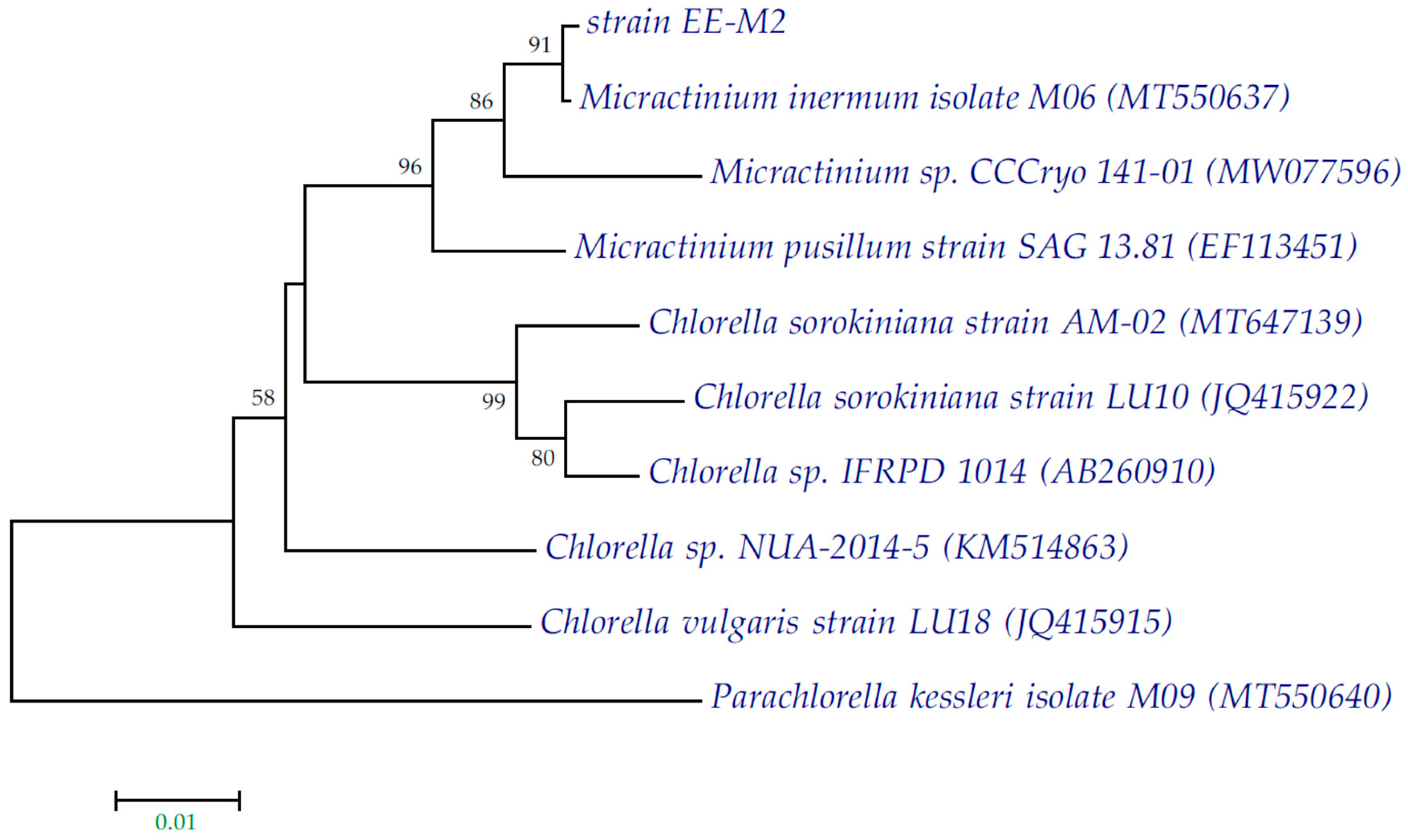
Homoplastic characters causing similarities between the algal genera Chlorella and Micractinium make it difficult to identify taxa based on morphological data alone, so in such cases, a combination of traditional microscopy techniques and molecular phylogenetic analysis should be used for reliable species identification. Identification based on the 18S rRNA gene assigned the strain EE-M2 to the species Micractinium inermum, and this strain showed 100% 18S rRNA gene sequence similarity with the M. inermum strain NIES-2171 described by Hoshina and Fujiwara [31]. The closest match for the chloroplast rbcL gene sequence was M. inermum strain M-06 described by Ballesteros et al. [43]. Phylogenetic analysis of the rbcL gene sequence revealed that the strain EE-M2 is clearly distinct from the genus Chlorella and closely related to the species Micractinium inermum (Figure 1). This strain has a typical Chlorella-like morphology, without bristles, unlike other algae of the genus Micractinium, which form colonies and produce bristles (Micractinium-like morphotype) [31,32].

3.2. Cultivation of M. inermum Under Batch Conditions

In this study, the pH of the growth medium was maintained by adding NaOH or NaHCO3. The supply of NaOH or NaHCO3 was controlled by the Infors system during the initial pH adjustment of the growth medium and during active ammonium consumption by the microalgal cultures. In the studied pH range (Table 1), the main sources of inorganic carbon in the nutrient medium were H2CO3 and HCO3 at pH 6.0 and HCO3 at pH above 7.0. Lower or higher pH values were not tested, considering that this could cause enzyme denaturation and affect the uptake of nutrients, inorganic carbon, and production of metabolites [2,18,19,20]. The choice of NaHCO3 was based on the involvement of HCO3 in the carbon concentrating mechanism. In addition, HCO3 has attractive economic and environmental properties, especially when using HCO3 produced by CO2 absorption in alkaline absorbents. The integration of HCO3 produced in this way into microalgae cultivation systems is currently considered a promising technology for carbon sequestration and sustainable development of the industry [21,52,53].
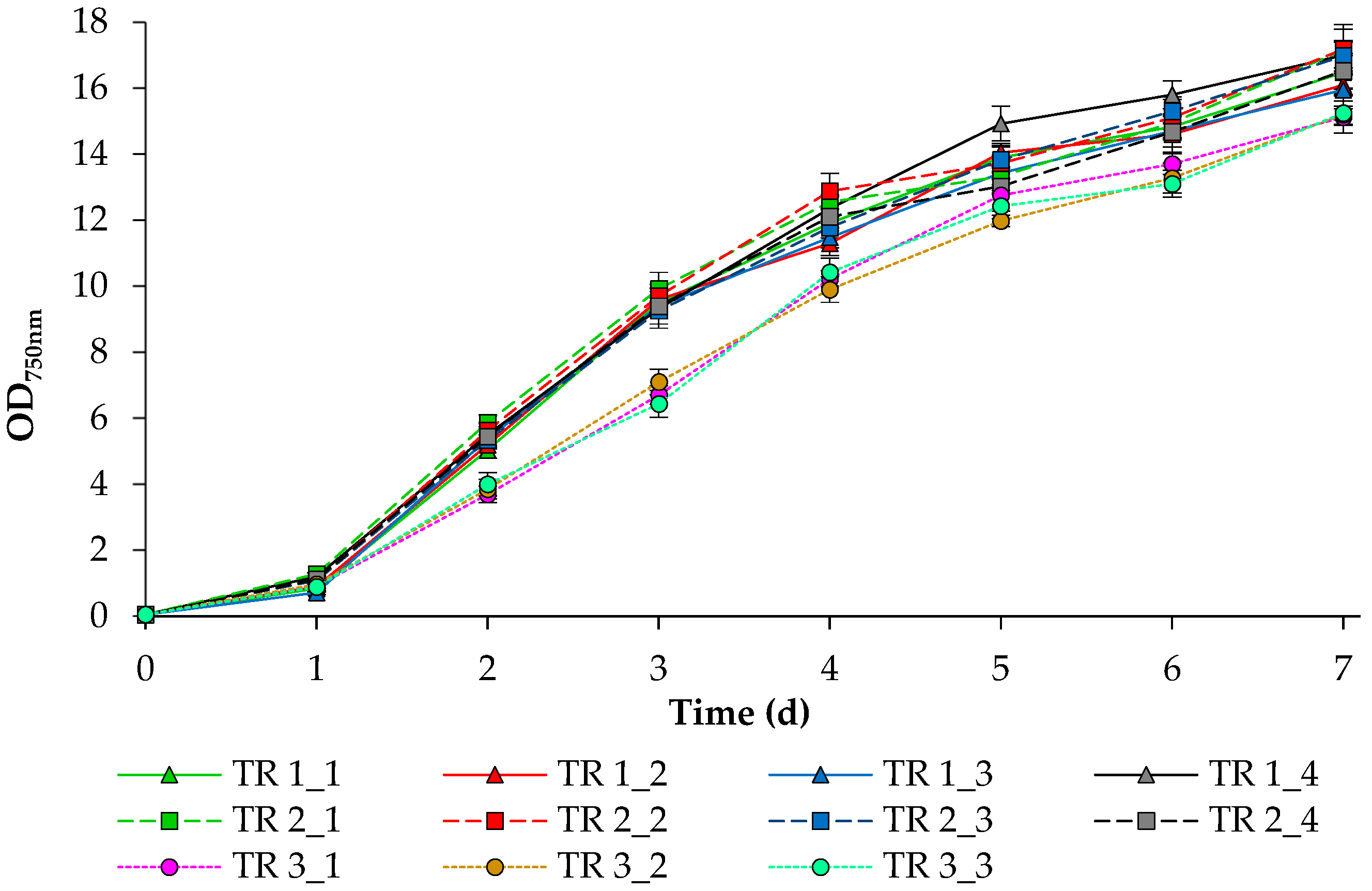
The growth characteristics of algal cultures are presented in Table 2 and Figure 2. The data from the 1st and 2nd groups of experiments (described in Table 1) show that NaHCO3 (tested as a pH-adjusting agent) is able to positively, although slightly, influence the algal biomass yield, which is consistent with some other data [24,25]. Analysis of the growth curves showed a more substantial increase in algal cell density values when pH was controlled with NaHCO3 (TR 2_1–TR 2_3 and TR 3_2), namely during the hours of active ammonium consumption by cells. It should be further clarified that the final OD750nm values represent the sum of the OD750nm of planktonic cell suspensions and biofilms formed on the vessel walls during cultivation.
At the same time, based on the final data obtained on algal cell density, dry weight, biomass productivity (Table 2), and chlorophyll concentration (Table 3), no significant differences in the studied parameters were found between the TR 1 and TR 2 groups (at 120 rpm). Analysis of pigments (as an indicator of the physiological state of cells) also showed that in experiments TR 1 and TR 2 an increase in pH from 6.0 to 7.7–8.0 and sodium concentration slightly affected the concentration of total chlorophylls and total carotenoids; namely, a tendency toward a decrease in these parameters was observed with increasing pH. The decrease in the final pigment content in algal cells with increasing pH (Table 3) may be due to partial degradation of pigments (oxidation and de-esterification) under elevated pH conditions [54,55]. For example, a recent study demonstrated that an increase in pH significantly affects the cellular pigments of a terrestrial green alga of the family Bracteacoccaceae, specifically Bracteacoccus minor [55]. Our study revealed a relatively high adaptability of the studied alga M. inermum to changes in growth medium pH and high sodium concentrations, allowing us to recommend this strain for use in the bioremediation of saline wastewater and restoration of water resources.
Figure 2. Growth curves of the alga M. inermum grown according to the strategies outlined in Table 1. The final OD750nm values (day 7) represent the sum of the OD750nm of planktonic cell suspensions and biofilms formed on the photobioreactor’s vessel walls.
Phycology 06 00026 g002
Table 3. Pigment characteristics of the alga M. inermum cultivated under batch conditions.
TreatmentMaximum
Chlorophylls,
mg L−1
Maximum
Carotenoids,
mg L−1
Final
Pigments,
% DW
TR 1_171.1 ± 2.62 a12.2 ± 0.45 a2.32 ± 0.16 a,b
TR 1_266.2 ± 3.46 a7.6 ± 0.40 c1.81 ± 0.10 c,d
TR 1_366.4 ± 3.97 a8.9 ± 0.53 b,c1.80 ± 0.13 c,d
TR 1_464.8 ± 3.09 a9.0 ± 0.43 b1.78 ± 0.07 d
TR 2_170.1 ± 3.12 a11.3 ± 0.50 a2.03 ± 0.13 a,b,c,d
TR 2_267.4 ± 3.83 a12.1 ± 0.69 a1.97 ±0.14 b,c,d
TR 2_363.6 ± 2.75 a9.2 ± 0.40 b1.78 ± 0.10 d
TR 2_465.2 ± 3.34 a8.2 ± 0.42 b,c1.83 ± 0.15 c,d
TR 3_169.8 ± 2.14 a8.6 ± 0.26 b,c2.38 ± 0.12 a
TR 3_271.7 ± 4.02 a9.0 ± 0.50 b2.14 ± 0.18 a,b,c,d
TR 3_368.4 ± 4.23 a7.9 ± 0.49 b,c2.19 ± 0.14 a,b,c
The maximum values of pigment accumulation were obtained on day 3 or day 4 of the cultivation period (depending on the experiment). Arithmetic means that do not share a letter are statistically significantly different from each other according to the Tukey method and 95% confidence.
Comparing TR 1_2 and TR 1_4, it can be noted that increasing the stirring speed (from 120 to 240 rpm) while maintaining the same pH level (7.0) contributed to a statistically significant increase in the final biomass weight. Thus, when maintaining the pH with alkali at 7.0 and stirring at 240 rpm (TR 1_4), 3.88 ± 0.07 g L−1 AFDW was obtained (compared to 3.57 ± 0.07 g L−1 in TR 1_2 at 120 rpm). The growth curves also demonstrate the positive effect of increasing the stirring speed on the growth parameters (Figure 2). Increasing the stirring speed of the nutrient medium improves light distribution and mass transfer in the culture vessel and also plays an important role in the availability of dissolved O2 and CO2 (including bubble size decrease and gas retention). This contributes to increased algal productivity (Table 2). The selection of appropriate agitation methods and speeds to achieve high biomass yields is the subject of limited research [56], with the main focus being on optimizing algae cultivation in open culture systems [57,58]. However, it is important to note that the optimal stirring speed for each system should be determined experimentally, as higher levels may cause stress to algal cells. In experimental group TR 3, the growth parameters of the studied alga M. inermum were investigated when cultivated at a lower CO2 concentration (finally 0.5% CO2, v/v). Despite different strategies for pH control and NaHCO3 addition, no significant differences were observed among the three experiments of the third group. However, a decrease in the CO2 concentration from 2.0% to 0.5% significantly reduced the final biomass yield and productivity of this alga (Table 2), although the pigment concentration remained comparable (Table 3).
The DW and AFDW values (up to 4.14 g L−1 and 3.88 g L−1, respectively), as well as the pigment concentration (up to 2.38% of DW) and BP values (up to 0.59 g L−1 day−1), indicate the biotechnological value of M. inermum grown under photoautotrophic conditions. Kim et al. [37] showed that M. inermum is an adaptive and highly productive alga in a study aimed at wastewater treatment combined with biodiesel production (in comparison, DW and BP values reached 3.23 g L−1 and 0.16 g L−1 day−1, respectively). In another study, M. inermum grown in purified and pasteurized lake water with supplemented nutrients in a 1000 L photobioreactor had a biomass yield of 0.36 g L−1 [38]. Smith et al. [36] demonstrated that M. inermum grown in BBM in 130 mL tubular miniature bioreactors in atmospheric air and atmospheric air supplemented with 5% CO2 under constant illumination achieved maximum BP of 0.08 g L−1 day−1 and 0.84 g L−1 day−1, respectively. However, it should be noted that the cultivation parameters in these studies are not comparable with the parameters applied in our work. Our previous studies with another green alga, Tetradesmus obliquus, showed that NaHCO3 did not have a sufficient stimulating effect on this microalga, which can be explained by both the species characteristics and different cultivation parameters [48].
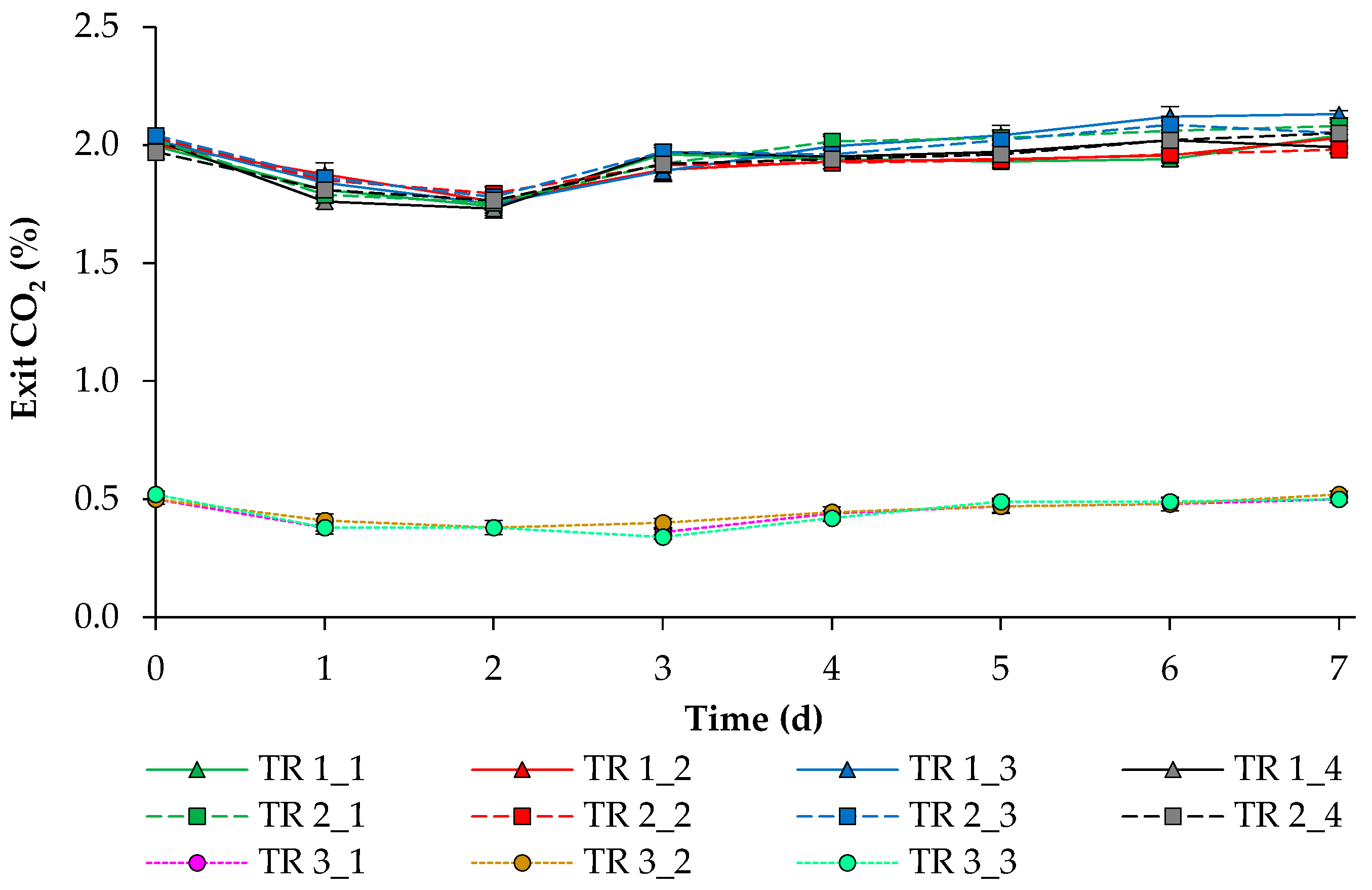
In this study, the carbon assimilation efficiency was evaluated based on the outlet CO2 concentrations (Figure 3), along with the physiological state of algal cells and their growth performance. As shown in Table 4, at a target pH of 6.0 (TR 1_1 and TR 2_1), both pH-regulating agents had no effect on the outlet CO2 concentration at the pH adjustment stage. At the same time, it is clear that when setting the pH to 8.0 in TR 1_3, the exit CO2 level at the alkalization stage substantially decreased, which can be explained by the retention of CO2 in the growth medium during the addition of alkali. However, when replacing the pH-regulating agent with NaHCO3 (TR 2_2 and TR 2_3), the outlet CO2 concentration increased, which can be explained by a decrease in the solubility of the added CO2 and/or decomposition of the incoming HCO3. It should be noted that algal cells were added to the growth medium only after the gas stabilization input (2% CO2 for all experiments in the first and second groups; 0.5% CO2 for the third experimental group). Therefore, while maintaining a slightly alkaline environment in both compared cases, some time was required for the pH to stabilize. This should be taken into account when implementing this technology on a large scale.
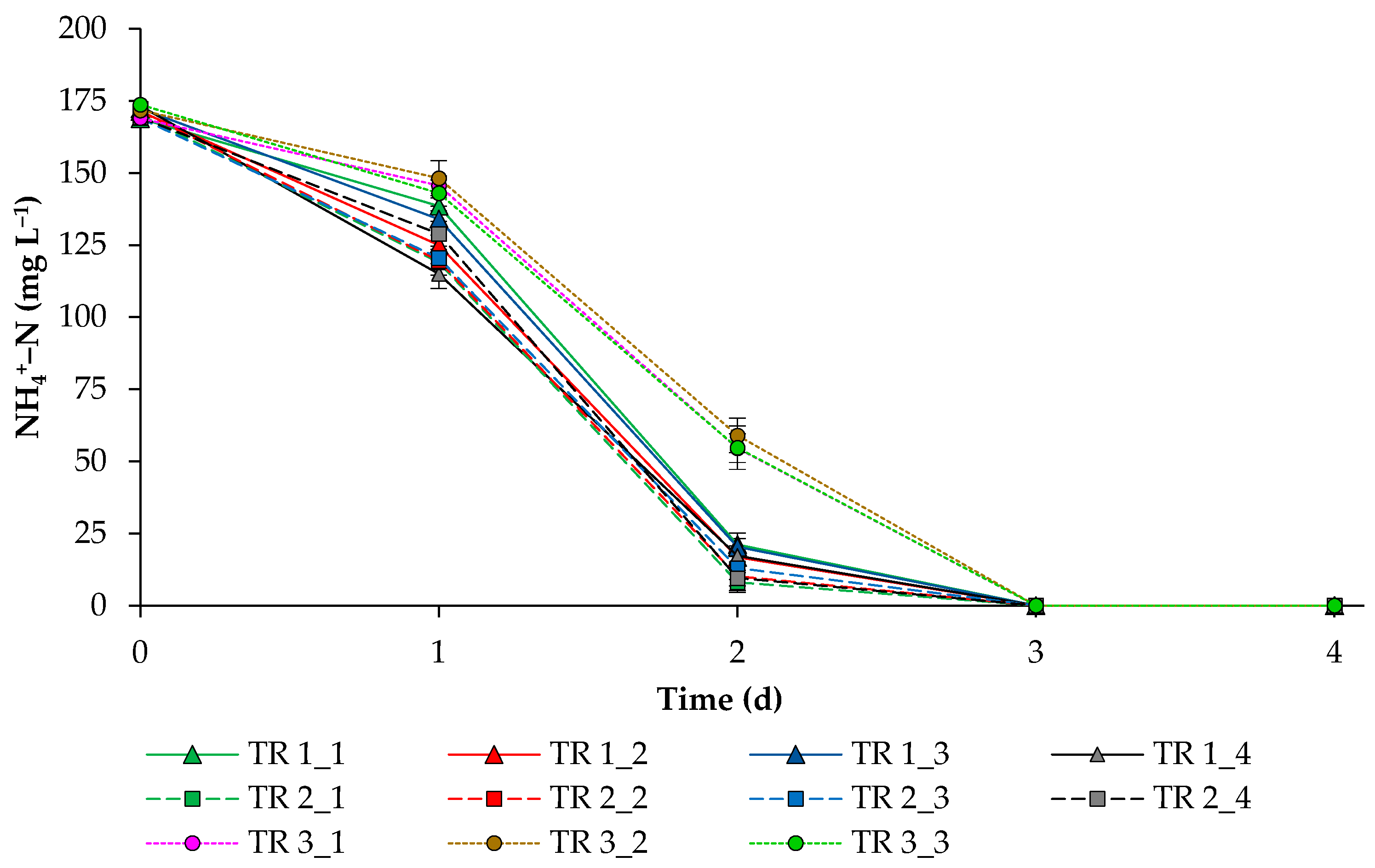
As can be seen in Figure 3, the period of intensive growth of cultures was accompanied by a decrease in the concentration of CO2 at the outlet of PBR, indicating the efficient carbon assimilation. Importantly, increasing the stirring speed to 240 rpm (TR 1_4) increased the rate of CO2 transition from the gaseous phase to the liquid phase, which was reflected in its output parameter. With an increase in microalgal cell concentration and complete utilization of ammonium from the nutrient medium (Figure 4, after 3 days of cultivation), the CO2 concentration at the outlet of PBR slightly increased, which can be explained both by its lower fixation by algal cells and its active release by cells before entering the stationary growth phase. In our recent study [15], a similar trend was noted for the growth of another chlorophyte alga in a modified BBM containing ammonium chloride as a nitrogen source.
When culturing the alga M. inermum at a set pH of 6.0, the automatic system added 7.3 ± 0.1 mL of 2 M NaOH per 1 L or 13 ± 0.1 mL of 1 M NaHCO3 per 1 L during the experimental period. Increasing the pH of the medium to 7.0 increased the volume of pH-regulating agents (7.7 ± 0.1 mL or 14.6 ± 0.1 mL of 2 M NaOH and 1 M NaHCO3 per 1 L, respectively), whereas cultivation under alkaline conditions required the addition of 20.4 ± 0.1 mL of 2 M NaOH (pH 8.0) or 25.0 ± 0.12 mL of 1 M NaHCO3 per 1 L (pH 7.7). In experiment TR 2_4, which investigated a gradual increase in pH from 6.0 to 7.7, the volume of 1 M NaHCO3 added was 25.1 ± 0.11 mL per 1 L. In experiments with decreased CO2 supply, smaller amounts of pH-maintaining agents were required; for example, in experiments TR 3_2 and TR 3_3, 12.5 ± 0.1 mL or 21.8 ± 0.11 mL of 1 M NaHCO3 per 1 L were added, respectively.
Given that ammonium uptake by algal cells is strictly dependent on light and CO2 levels, sufficient levels of these allowed M. inermum cells to demonstrate a relatively high nitrogen assimilation efficiency. It is worth noting that the strain coped with the ammonium load in all experiments and utilized ammonium nitrogen by the third day of the experiments (Figure 4). As shown in Figure 3, during the period of active NH4+–N uptake, algal cells actively consumed incoming carbon to incorporate ammonium and synthesize amino acids (using carbon skeletons from the Calvin-Benson-Bassham cycle). As can be seen from the growth curves of M. inermum (Figure 2), after assimilating available ammonium (Figure 4), the alga continued to increase biomass under sufficient light conditions, converting stored and/or incoming C and stored N (as well as other nutrients, particularly P and S) into organic compounds. Microalgae are able to store excess nutrients within their cells, often in the form of lipids (or lipophilic molecules such as pigments) or carbohydrates, which serve as reserves during nutrient-deficient conditions [59]. Algae enter the stationary phase, switching to a strategy of converting captured energy and used macronutrients into storage compounds. These compounds prevent damage caused by excess light energy (photoinhibition) and help neutralize reactive oxygen species.
Although ammonium uptake by algal cells during their growth was weaker in experiments with the addition of 0.5% CO2, the alga also utilized this form of nitrogen from the growth medium over three days. This was reflected in pigment levels similar to those observed in experiments with the addition of 2.0% CO2 (Table 3). Gradually increasing the pH of the medium from 7.0 to 8.15 (to add more NaHCO3 and study its effect; TR 3_3), did not affect the biomass values or algal activity in N uptake and C assimilation but confirmed the adaptation of the alga to changes in pH and high Na+ concentrations. In this study, the dosed addition of HCO3 to the culture system is considered not only as an alternative to CO2 bubbling in terms of growth efficiency, but also as a readily available and inexpensive pH control agent. The use of NaHCO3 not only as a carbon source but also as a pH-adjusting agent in ammonium-containing media for some algal species has potential due to its technological and environmental advantages.
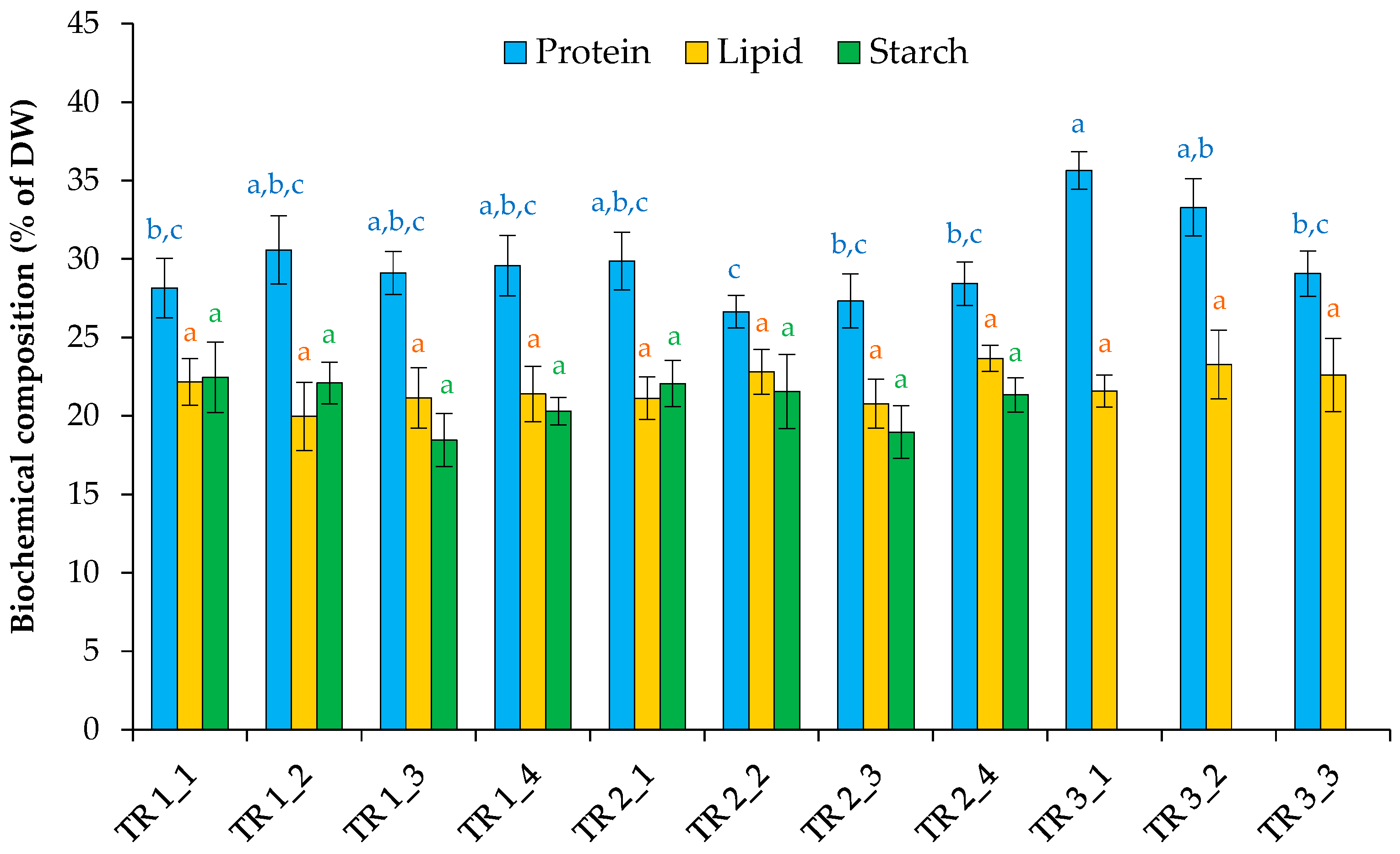
Figure 5 shows the protein, lipid, and starch content in biomass of M. inermum. Different pH values, as well as the use of NaOH or NaHCO3, did not significantly affect the content of valuable compounds such as lipids and starch in algal cells, whereas the protein content varied depending on the strategy used. As a result, the protein content in algal cells varied within 27–36%, the lipid content varied within 20–24%, and the starch content varied within 18–22% of DW. Considering the high level of ammonium nitrogen (170–174 mg NH4+-N L−1) in the growth medium and its active consumption by cells, it should be noted that the cultures were not in a state of initial N starvation, which might have affected the lipid content in algal cells (despite the fact that this species is characterized as a lipid-rich microalga (28–52% lipids in dry biomass under certain conditions)) [37,38,39]. Although the biomass yield and NH4+-N uptake decreased during the algal growth with the addition of 0.5% CO2, the obtained data indicate the possibility of controlled cultivation of M. inermum with the reduced dependence on external sources of concentrated CO2 and the production of protein-rich biomass.
Importing HCO3 ions into algal cells, where carbonic anhydrase converts them to CO2 (in addition to CO2 diffusing across the lipid membrane), increases the efficiency of CO2 fixation, which may affect biomass productivity and metabolite redistribution. Li and coauthors [60] studied the cell growth and lipid synthesis by C. vulgaris in cultures containing 0–160 mM NaHCO3. The authors demonstrated that low NaHCO3 concentrations (up to 80 mM) improved the cell growth, possibly by increasing the concentration of DIC species, while high NaHCO3 concentrations (160 mM) were considered a stimulus for lipid accumulation (measured at the end of cultivation). The addition of inorganic carbon in the form of HCO3 has been noted in other studies as a factor for lipid accumulation in other green algae [61,62,63]. However, it is worth noting that the reported studies were conducted in culture bottles without pH control and in nitrate-containing media.
Although short-term application of NaHCO3 slightly increased the biomass productivity of M. inermum in our study, the metabolic profiles remained largely unchanged compared to NaOH-regulated cultures. The lack of effect of bicarbonate on the metabolic profile of M. inermum cells may be associated with the application of HCO3, namely with the dosed use of 1 M NaHCO3. It is worth noting that carbonic anhydrase activity is related to the dissolved CO2 content [64], whereas algal cells in the present study were sufficiently supplied with the external carbon source. Due to the short-term application of NaHCO3 and biomass assessment only at the end of cultivation (day 7), no strong effect of the additional carbon source on biomass characteristics was observed, highlighting the need to conduct experiments at other non-inhibitory pH levels and assess biomass composition over time.
Finally, at selected pH values, both tested pH-regulating agents allowed the cultures to grow actively and accumulate valuable biomass under batch conditions. It is worth noting that with both tested pH-regulating agents, especially when cultured under alkaline conditions, the Na+ concentration in the growth medium increased. For example, NaHCO3 was noted as a salt capable of maintaining high DIC concentrations in open cultivation systems with C. vulgaris [65]; however, the authors noted that the salinity created by Na+ must be taken into account. In our experiments, since the pH control agents were added periodically to maintain the desired pH level, strong negative effects on algal growth and metabolic profile associated with high Na+ concentration were not observed.

3.3. Cultivation of M. inermum Under Continuous Conditions

During continuous growth of M. inermum, the pH of the medium was maintained at 7.0 (Table 1, experimental group 4). M. inermum growth in PBR was evaluated at different HRT (from 10 to 6 days, pH-controlling agent: NaOH). At HRT of 6 days, NaOH and NaHCO3 were tested as pH-controlling agents (HRT_6 a and HRT_6 b treatments, respectively). Algal growth efficiency and pigment concentrations are presented in Table 5.
Although many microalgae and cyanobacteria are becoming the subject of research aimed at producing valuable biomass or natural compounds with bioactive properties under semi-continuous or continuous growth conditions [66,67,68], many unanswered questions remain in this area. Researchers note that important issues that need to be addressed include establishing the relationship between nutrient availability and cell growth rate [69], as well as selecting the optimal HRT [67,68] that will maintain the productivity of algal cells and prevent their washout.
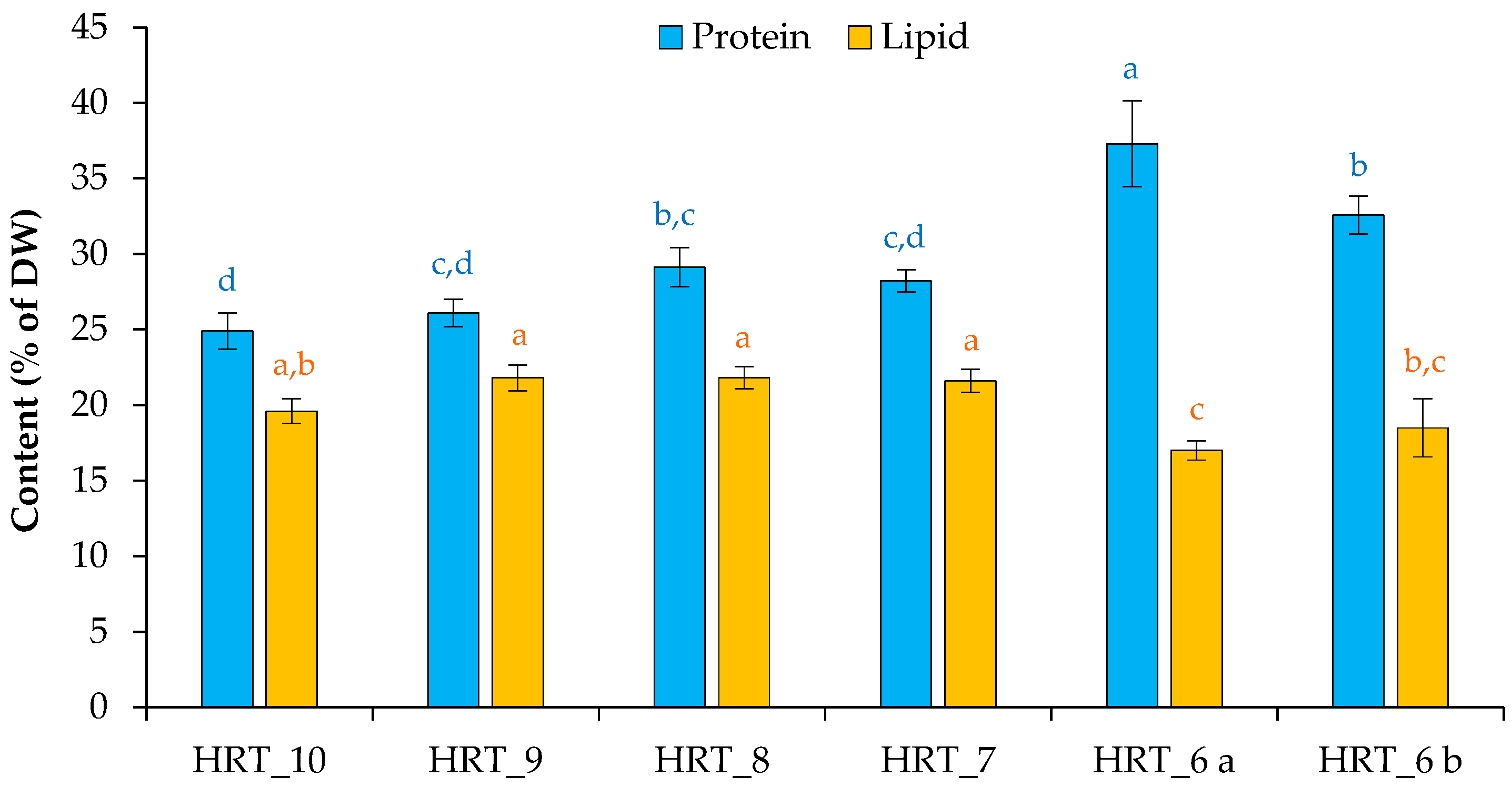
In the present study, it was observed that HRT values from 10 to 8 days allowed the M. inermum strain EE-M2 to demonstrate attractive biomass concentrations due to the development of dense microalgal cultures; however, cultivation at HRT less than 7 days resulted in a decrease in biomass concentration of harvested suspension. It should be noted that, regardless of the HRT (10–6 days) and pH-adjusting agent used, the pigment concentration was maintained at a sufficiently high level (up to 2.7% of dry weight), and the removal of ammonium ions was in the range of 98–100%. pH control with bicarbonate did not affect the photosynthetic pigment content of microalgal cells (Table 3 and Table 5), which may indirectly indicate the absence of an effect in carbonic anhydrase activity. The obtained results are consistent with the results of studies by other scientific groups, which note the importance of selecting HRT for the efficient growth and productivity of biotechnologically promising microalgal species [70,71]. Thus, the present study demonstrated the feasibility of continuous cultivation of M. inermum at a controlled pH of 7.0 to produce biomass, pigments, proteins, and lipids (Table 5, Figure 6). An earlier study on the semi-continuous cultivation of Chlorella sorokiniana also showed that HRT affects biomass yield, while the pigment levels do not change significantly [72].
Controlled addition of sodium bicarbonate to maintain pH under continuous culture conditions is considered a viable strategy for producing valuable algal biomass. Furthermore, bicarbonate is considered an inexpensive and readily available inorganic carbon source and pH-controlling agent (instead of NaOH) for large-scale pond and photobioreactor cultures and can reduce the dependence of cultures on an external CO2 source if the appropriate concentration is selected [42,73]. However, in both cases of pH-maintaining strategies in systems with recirculating culture medium, the accumulation of Na+ in the growth medium must be taken into account.
The lipid content of the alga M. inermum EE-M2 was 17–22% of DW when grown under continuous conditions, similar to the batch mode. Park et al. [40] compared two cultivation strategies, fed-batch cultures and sequencing-batch cultures, to develop a cost-effective method for producing high-lipid microalgal biomass. M. inermum NLP-F014, as a high-lipid microalgal strain, was cultivated in a blended wastewater medium. Both cultivation modes showed the similar biomass productivity of 0.95–0.96 g L−1 day−1. Considering the importance of pH for algal growth, the authors maintained the pH of the medium at 7.5 ± 1 by supplying CO2. Another study examined the effects of temperature (+15 °C, +25 °C, and +35 °C) and light intensity (50, 350, and 650 μmol m−2 s−1) on the ability of another Micractinium alga (Micractinium pusillum) to decrease CO2 levels and produce biofuels using a semi-continuous cultivation approach [74]. Thus, increasing light intensity accelerated growth, CO2 uptake, and biofuel production.
Given the importance of pH in microalgae-based biotechnologies, researchers are increasingly turning to the development and modification of pH regulation systems, including those that address contemporary environmental issues [21,53,75]. In a recent study [75], the authors proposed a novel water electrolysis-based microalgae culture system capable of both pH control and a continuous supply of a bicarbonate-based carbon source. To the best of our knowledge, our study is the first to cultivate M. inermum under controlled pH conditions. The results open the possibility of safe and cost-effective cultivation of the freshwater alga M. inermum, which is valuable due to its balanced biomass composition. Although this study was limited to examining the effect of bicarbonate addition at low carbon dioxide input and other pH values, the importance of the obtained results can be considered in terms of developing technologies for the sustainable cultivation of promising microalgae in ammonium-containing media (including wastewater) with periodic addition of available bicarbonate.
A distinctive feature that enriches and highlights the results obtained in this study is the identification of the characteristics of pH-controlled M. inermum cultivation under both batch and continuous conditions. This approach yielded new valuable data for practical applications, ranging from the production of valuable metabolites to the implementation of environmentally friendly wastewater treatment.

4. Conclusions

In summary, the strategies presented in this work can facilitate the development of a potentially economically competitive approach to optimizing inorganic carbon supply and valuable microalgal metabolite production at varying pH conditions. Combinations of constant sparging with atmospheric air enriched with CO2 (finally 2.0% CO2, v/v) and NaHCO3 addition to control pH and to serve as carbon sources showed a slight increase in biomass productivity of M. inermum compared to NaOH-supplemented cultures. Regardless of the growth medium pH (6.0–8.15), the alga efficiently accumulated pigments (up to 2.7% of DW), proteins (up to 37.3%), lipids (up to 23.3%), and starch (up to 22.5%), indicating its biotechnological value. Among the limitations, without mitigation, repeated addition of NaOH or NaHCO3 will lead to increased salinity and may reduce long-term cultivation efficiency and limit biomass use. However, further optimization can be achieved by adding KOH and/or KHCO3 to maintain optimal pH values and to increase the proportion of beneficial potassium ions in algal biomass.

Author Contributions

Conceptualization, E.E.Z. and A.M.Z.; methodology, E.E.Z. and A.M.Z.; investigation, E.E.Z. and A.M.Z.; writing—original draft preparation, E.E.Z.; writing—review and editing, A.M.Z.; visualization, E.E.Z.; supervision, A.M.Z.; funding acquisition, A.M.Z. All authors have read and agreed to the published version of the manuscript.

Funding

This research was funded by the Russian Science Foundation under project no. 25-64-00027.

Institutional Review Board Statement

Not applicable.

Informed Consent Statement

Not applicable.

Data Availability Statement

The original contributions presented in this study are included in the article. Further inquiries can be directed to the corresponding authors.

Conflicts of Interest

The authors declare no conflicts of interest.

Abbreviations

The following abbreviations are used in this manuscript:
AFDWash-free dry weight
BBMBold’s basal medium
DWfinal dry weight
DICdissolved inorganic carbon
HRThydraulic retention time
OD750nmoptical density measured at 750 nm
PBRphotobioreactor

References

  1. Pekkoh, J.; Ruangrit, K.; Aurepatipan, N.; Duangjana, K.; Sensupa, S.; Pumas, C.; Chaichana, C.; Pathomaree, W.; Kato, Y.; Srinuanpan, S. CO2 to green fuel converter: Photoautotrophic-cultivation of microalgae and its lipids conversion to biodiesel. Renew. Energy 2024, 222, 119919. [Google Scholar] [CrossRef]
  2. Nashath, F.Z.; Ng, Y.J.; Khoo, K.S.; Show, P.L. Current contributions of microalgae in global biofuel production; cultivation techniques, biofuel varieties and promising industrial ventures. Biomass Bioenergy 2025, 201, 108092. [Google Scholar] [CrossRef]
  3. Chaudry, S.; Hurtado-McCormick, V.; Cheng, K.Y.; Willis, A.; Speight, R.; Kaksonen, A.H. Microalgae to bioplastics—Routes and challenges. Clean. Eng. Technol. 2025, 25, 100922. [Google Scholar] [CrossRef]
  4. Kim, M.; Cazzaniga, S.; Jang, J.; Pivato, M.; Kim, G.; Ballottari, M.; Jin, E. Photoautotrophic cultivation of a Chlamydomonas reinhardtii mutant with zeaxanthin as the sole xanthophyll. Biotechnol. Biofuels 2024, 17, 41. [Google Scholar] [CrossRef]
  5. Daneshvar, E.; Wicker, R.J.; Show, P.; Bhatnagar, A. Biologically-mediated carbon capture and utilization by microalgae towards sustainable CO2 biofixation and biomass valorization—A review. Chem. Eng. J. 2022, 427, 130884. [Google Scholar] [CrossRef]
  6. Quiroz, D.; McGowen, J.; Quinn, J. Techno-economic analysis of microalgae cultivation strategies: Batch and semi-continuous approaches. Algal Res. 2025, 90, 104109. [Google Scholar] [CrossRef]
  7. Esteves, A.F.; Gonçalves, A.L.; Vilar, V.J.P.; Pires, J.C.M. Is it possible to shape the microalgal biomass composition with operational parameters for target compound accumulation? Biotechnol. Adv. 2025, 79, 108493. [Google Scholar] [CrossRef]
  8. Narayanan, I.; Pandey, S.; Vinayagam, R.; Selvaraj, R.; Varadavenkatesan, T. A recent update on enhancing lipid and carbohydrate accumulation for sustainable biofuel production in microalgal biomass. Discov. Appl. Sci. 2025, 7, 195. [Google Scholar] [CrossRef]
  9. Scherholz, M.L.; Curtis, W.R. Achieving pH control in microalgal cultures through fed-batch addition of stoichiometrically balanced growth media. BMC Biotechnol. 2013, 13, 39. [Google Scholar] [CrossRef]
  10. Wang, J.; Rosov, T.; Wensel, P.; McGowen, J.; Curtis, W.R. A preliminary implementation of metabolic-based pH control to reduce CO2 usage in outdoor flat-panel photobioreactor cultivation of Nannochloropsis oceanica microalgae. Algal Res. 2016, 18, 288–295. [Google Scholar] [CrossRef]
  11. Razzak, A.S.; Bahar, K.; Islam, K.M.O.; Haniffa, A.K.; Faruque, M.O.; Hossain, S.M.Z.; Hossain, M.M. Microalgae cultivation in photobioreactors: Sustainable solutions for a greener future. Green Chem. Eng. 2024, 5, 418–439. [Google Scholar] [CrossRef]
  12. Hanachi, P.; Aghababaie, A.; Noroozi, M. Effects of temperature and pH on biochemicals content of microalgae Monoraphidium sp. Iran. J. Med. Aromat. Plants Res. 2021, 37, 290–299. [Google Scholar]
  13. Ziganshina, E.E.; Bulynina, S.S.; Ziganshin, A.M. Comparison of the photoautotrophic growth regimes of Chlorella sorokiniana AM-02 in a photobioreactor for enhanced biomass productivity. Biology 2020, 9, 169. [Google Scholar] [CrossRef] [PubMed]
  14. Singh, S.P.; Singh, P. Effect of temperature and light on the growth of algae species: A review. Renew. Sustain. Energy Rev. 2015, 50, 431–444. [Google Scholar] [CrossRef]
  15. Ziganshina, E.E.; Bulynina, S.S.; Yureva, K.A.; Ziganshin, A.M. Optimization of photoautotrophic growth regimens of Scenedesmaceae alga: The influence of light conditions and carbon dioxide concentrations. Appl. Sci. 2023, 13, 12753. [Google Scholar] [CrossRef]
  16. Alavianghavanini, A.; Shayesteh, H.; Bahri, P.A.; Vadiveloo, A.; Moheimani, N.R. Microalgae cultivation for treating agricultural effluent and producing value-added products. Sci. Total Environ. 2024, 912, 169369. [Google Scholar] [CrossRef]
  17. Gopalakrishnappa, C.; Li, Z.; Kuehn, S. Environmental modulators of algae-bacteria interactions at scale. Cell Syst. 2023, 15, 838–853. [Google Scholar] [CrossRef]
  18. Aditya, L.; Vu, H.P.; Abu Hasan Johir, M.; Mahlia, T.M.I.; Silitonga, A.S.; Zhang, X.; Liu, Q.; Tra, V.-T.; Ngo, H.H.; Nghiem, L.D. Role of culture solution pH in balancing CO2 input and light intensity for maximising microalgae growth rate. Chemosphere 2023, 343, 140255. [Google Scholar] [CrossRef]
  19. Kassim, M.A.; Adnan, M.F.I.M.; Tan, K.M.; Bakar, M.H.A.; Lalung, J.; Mohamed, M.S. Carbonic anhydrase (CA) activity by Chlorella sp. in immobilised matrix under carbon dioxide rich cultivation condition. IOP Conf. Ser. Mater. Sci. Eng. 2020, 716, 012015. [Google Scholar] [CrossRef]
  20. Yu, H.; Kim, J.; Rhee, C.; Shin, J.; Shin, S.G.; Lee, C. Effects of different pH control strategies on microalgae cultivation and nutrient removal from anaerobic digestion effluent. Microorganisms 2022, 10, 357. [Google Scholar] [CrossRef]
  21. Latagan, M.J.D.; Nagarajan, D.; Huang, W.-M.; de Luna, M.D.G.; Chen, J.-H.; Rollon, A.P.; Ng, I.-S.; Lee, D.-J.; Chang, J.-S. Bicarbonate-based microalgal cultivation technologies: Mechanisms, critical strategies, and future perspectives. Chem. Eng. J. 2024, 502, 157998. [Google Scholar] [CrossRef]
  22. Choi, Y.Y.; Joun, J.M.; Lee, J.; Hong, M.E.; Pham, H.M.; Chang, W.S.; Sim, S.J. Development of large-scale and economic pH control system for outdoor cultivation of microalgae Haematococcus pluvialis using industrial flue gas. Bioresour. Technol. 2017, 244, 1235–1244. [Google Scholar] [CrossRef]
  23. Alami, A.H.; Alasad, S.; Ali, M.; Alshamsi, M. Investigating algae for CO2 capture and accumulation and simultaneous production of biomass for biodiesel production. Sci. Total Environ. 2021, 759, 143529. [Google Scholar] [CrossRef] [PubMed]
  24. Lohman, E.J.; Gardner, R.D.; Pedersen, T.; Peyton, B.M.; Cooksey, K.E.; Gerlach, R. Optimized inorganic carbon regime for enhanced growth and lipid accumulation in Chlorella vulgaris. Biotechnol. Biofuels 2015, 8, 82. [Google Scholar] [CrossRef] [PubMed]
  25. Pancha, I.; Chokshi, K.; Ghosh, T.; Paliwal, C.; Maurya, R.; Mishra, S. Bicarbonate supplementation enhanced biofuel production potential as well as nutritional stress mitigation in the microalgae Scenedesmus sp. CCNM 1077. Bioresour. Technol. 2015, 193, 315–323. [Google Scholar] [CrossRef]
  26. Mitra, R.; Das Gupta, A.; Kumar, R.R.; Sen, R. A cleaner and smarter way to achieve high microalgal biomass density coupled with facilitated self-flocculation by utilizing bicarbonate as a source of dissolved carbon dioxide. J. Clean. Prod. 2023, 391, 136217. [Google Scholar] [CrossRef]
  27. Gao, K. Approaches and involved principles to control pH/pCO2 stability in algal cultures. J. Appl. Phycol. 2021, 33, 3497–3505. [Google Scholar] [CrossRef]
  28. Sathinathan, P.; Parab, H.M.; Yusoff, R.; Ibrahim, S.; Vello, V.; Ngoh, G.C. Photobioreactor design and parameters essential for algal cultivation using industrial wastewater: A review. Renew. Sustain. Energy Rev. 2023, 173, 113096. [Google Scholar] [CrossRef]
  29. Fernandes, T.; Cordeiro, N. Microalgae as sustainable biofactories to produce high-value lipids: Biodiversity, exploitation, and biotechnological applications. Mar. Drugs. 2021, 19, 573. [Google Scholar] [CrossRef]
  30. Kandasamy, S.; Zhang, B.; He, Z.; Bhuvanendran, N.; EL-Seesy, A.I.; Wang, Q.; Narayanan, M.; Thangavel, P.; Dar, M.A. Microalgae as a multipotential role in commercial applications: Current scenario and future perspectives. Fuel 2022, 308, 122053. [Google Scholar] [CrossRef]
  31. Hoshina, R.; Fujiwara, Y. Molecular characterization of Chlorella cultures of the National Institute for Environmental Studies culture collection with description of Micractinium inermum sp. nov., Didymogenes sphaerica sp. nov., and Didymogenes soliella sp. nov. (Chlorellaceae, Trebouxiophyceae). Phycol. Res. 2013, 61, 124–132. [Google Scholar]
  32. Chae, H.; Lim, S.; Kim, H.S.; Choi, H.G.; Kim, J.H. Morphology and phylogenetic relationships of Micractinium (Chlorellaceae, Trebouxiophyceae) taxa, including three new species from Antarctica. Algae 2019, 34, 267–275. [Google Scholar] [CrossRef]
  33. Krivina, E.; Sinetova, M.; Savchenko, T.; Degtyaryov, E.; Tebina, E.; Temraleeva, A. Micractinium lacustre and M. thermotolerans spp. nov. (Trebouxiophyceae, Chlorophyta): Taxonomy, temperature-dependent growth, photosynthetic characteristics and fatty acid composition. Algal Res. 2023, 71, 103042. [Google Scholar] [CrossRef]
  34. Sushchenko, R.Z.; Nikulin, V.Y.; Bagmet, V.B.; Nikulin, A.Y. Molecular genetic and morphological characteristics of Micractinium thermotolerans and M. inermum (Trebouxiophyceae, Chlorophyta) from pyroclastic deposits of the Kamchatka Peninsula (Russia). Vavilovskii Zhurnal Genet Sel. 2024, 28, 706–715. [Google Scholar] [CrossRef]
  35. Severo, I.A.; Ordóñez, J.C.; Mariano, A.B.; Vargas, J.V.C. Microalgae Horizons. Fundamentals, Innovations, and Industrial Applications; Springer: Cham, Switzerland, 2025. [Google Scholar]
  36. Smith, R.T.; Bangert, K.; Wilkinson, S.J.; Gilmour, D.J. Synergistic carbon metabolism in a fast growing mixotrophic freshwater microalgal species Micractinium inermum. Biomass Bioenergy 2015, 82, 73–86. [Google Scholar] [CrossRef]
  37. Kim, G.-Y.; Yun, Y.-M.; Shin, H.-S.; Han, J.-I. Cultivation of four microalgae species in the effluent of anaerobic digester for biodiesel production. Bioresour. Technol. 2017, 224, 738–742. [Google Scholar] [CrossRef]
  38. Banskota, A.H.; Hui, J.P.M.; Jones, A.; McGinn, P.J. Characterization of neutral lipids of the oleaginous alga Micractinum inermum. Molecules 2024, 29, 359. [Google Scholar] [CrossRef]
  39. Shi, M.; Wei, H.; Chen, Q.; Wang, X.; Zhou, W.; Liu, J. Exploring an isolate of the oleaginous alga Micractinium inermum for lipid production: Molecular characterization and physiochemical analysis under multiple growth conditions. J. Appl. Phycol. 2019, 31, 1035–1046. [Google Scholar] [CrossRef]
  40. Park, S.; Kim, J.; Park, Y.; Son, S.; Cho, S.; Kim, C.; Lee, T. Comparison of batch cultivation strategies for cost-effective biomass production of Micractinium inermum NLP-F014 using a blended wastewater medium. Bioresour. Technol. 2017, 234, 432–438. [Google Scholar] [CrossRef]
  41. Germond, A.; Inouhe, M.; Nakajima, T. Effects of acidic conditions on the physiology of a green alga (Micractinium sp.) before and after a 5-year interaction with Tetrahymena thermophila in an experimental microcosm. Eur. J. Phycol. 2014, 49, 526–537. [Google Scholar] [CrossRef]
  42. Zhu, C.; Chen, S.; Ji, Y.; Schwaneberg, U.; Chi, Z. Progress toward a bicarbonate-based microalgae production system. Trends Biotechnol. 2022, 40, 180–193. [Google Scholar] [CrossRef]
  43. Ballesteros, I.; Terán, P.; Guamán-Burneo, C.; González, N.; Cruz, A.; Castillejo, P. DNA barcoding approach to characterize microalgae isolated from freshwater systems in Ecuador. Neotrop. Biodivers. 2021, 7, 170–183. [Google Scholar] [CrossRef]
  44. Kumar, S.; Stecher, G.; Tamura, K. MEGA7: Molecular evolutionary genetics analysis version 7.0 for bigger datasets. Mol. Biol. Evol. 2016, 33, 1870–1874. [Google Scholar] [CrossRef]
  45. Straka, L.; Rittmann, B.E. Light-dependent kinetic model for microalgae experiencing photoacclimation, photodamage, and photodamage repair. Algal Res. 2018, 31, 232–238. [Google Scholar] [CrossRef]
  46. Ziganshina, E.E.; Bulynina, S.S.; Yureva, K.A.; Ziganshin, A.M. Growth parameters of various green microalgae species in effluent from biogas reactors: The importance of effluent concentration. Plants 2022, 11, 3583. [Google Scholar] [CrossRef] [PubMed]
  47. Bulynina, S.S.; Ziganshina, E.E.; Ziganshin, A.M. Growth efficiency of Chlorella sorokiniana in synthetic media and unsterilized domestic wastewater. BioTech 2023, 12, 53. [Google Scholar] [CrossRef] [PubMed]
  48. Ziganshina, E.E.; Ziganshin, A.M. Influence of nutrient medium composition on the redistribution of valuable metabolites in the freshwater green alga Tetradesmus obliquus (Chlorophyta) under photoautotrophic growth conditions. BioTech 2025, 14, 60. [Google Scholar] [CrossRef]
  49. Le Gouic, B.; Marec, H.; Pruvost, J.; Cornet, J.F. Investigation of growth limitation by CO2 mass transfer and inorganic carbon source for the microalga Chlorella vulgaris in a dedicated photobioreactor. Chem. Eng. Sci. 2021, 233, 116388. [Google Scholar] [CrossRef]
  50. Griffiths, M.J.; Garcin, C.; van Hille, R.P.; Harrison, S.T. Interference by pigment in the estimation of microalgal biomass concentration by optical density. J. Microbiol. Methods 2011, 85, 119–123. [Google Scholar] [CrossRef]
  51. Ziganshina, E.E.; Yureva, K.A.; Ziganshin, A.M. Poultry slaughterhouse wastewater treatment by green algae: An eco-friendly restorative process. Environments 2025, 12, 331. [Google Scholar] [CrossRef]
  52. Ughetti, A.; Roncaglia, F.; Anderlini, B.; D’Eusanio, V.; Russo, A.L.; Forti, L. Integrated carbonate-based CO2 capture—biofixation through cyanobacteria. Appl. Sci. 2023, 13, 10779. [Google Scholar] [CrossRef]
  53. Zhu, C.; Zhang, R.; Cheng, L.; Chi, Z. A recycling culture of Neochloris oleoabundans in a bicarbonate-based integrated carbon capture and algae production system with harvesting by auto-flocculation. Biotechnol. Biofuels 2018, 11, 204. [Google Scholar] [CrossRef] [PubMed]
  54. Elisabeth, B.; Rayen, F.; Behnam, T. Microalgae culture quality indicators: A review. Crit. Rev. Biotechnol. 2021, 41, 457–473. [Google Scholar] [CrossRef] [PubMed]
  55. Gaysina, L.A. Influence of pH on the morphology and cell volume of microscopic algae, widely distributed in terrestrial ecosystems. Plants 2024, 13, 357. [Google Scholar] [CrossRef] [PubMed]
  56. Wu, Y.; He, Y.; Zhao, T.; Zhao, Y.; Yu, Z.; Pei, H. Enhanced production of microalgal metabolites through aeration coupled with stirring. Sustainability 2024, 16, 9001. [Google Scholar] [CrossRef]
  57. Bautista-Monroy, S.S.; Chávez-Urbiola, E.A.; Ortega-Palacios, R.; González-Sánchez, A.; Gómez-Aldapa, C.A.; Rodríguez-Nava, O.; Salgado-Ramírez, J.C.; Cadena-Ramírez, A. Insights of raceway bioreactor scale-up: Effect of agitation on microalgae culture and reduction of the liquid medium speed. Appl. Sci. 2022, 12, 1513. [Google Scholar] [CrossRef]
  58. Ren, S.; Shao, C.; Zhu, F.; Schagerl, M.; Hu, X.; Sobhi, M.; Xu, L.; Qian, J.; Huo, S. Optimization and synergistic enhancement of microalgae productivity in laboratory raceway ponds via co-regulation of automated light-supplemented mixers and electric field system. Biotechnol. Biofuels Bioprod. 2025, 18, 63. [Google Scholar] [CrossRef]
  59. Ran, W.; Wang, H.; Liu, Y.; Qi, M.; Xiang, Q.; Yao, C.; Zhang, Y.; Lan, X. Storage of starch and lipids in microalgae: Biosynthesis and manipulation by nutrients. Bioresour. Technol. 2019, 291, 121894. [Google Scholar] [CrossRef]
  60. Li, J.; Li, C.; Lan, C.Q.; Liao, D. Effects of sodium bicarbonate on cell growth, lipid accumulation, and morphology of Chlorella vulgaris. Microb. Cell Fact. 2018, 17, 111. [Google Scholar] [CrossRef]
  61. White, D.A.; Pagarette, A.; Rooks, P.; Ali, S.T. The effect of sodium bicarbonate supplementation on growth and biochemical composition of marine microalgae cultures. J. Appl. Phycol. 2013, 25, 153–165. [Google Scholar] [CrossRef]
  62. Umetani, I.; Janka, E.; Sposób, M.; Hulatt, C.J.; Kleiven, S.; Bakke, R. Bicarbonate for microalgae cultivation: A case study in a chlorophyte, Tetradesmus wisconsinensis isolated from a Norwegian lake. J. Appl. Phycol. 2021, 33, 1341–1352. [Google Scholar] [CrossRef]
  63. Ratomski, P.; Hawrot-Paw, M.; Koniuszy, A. Utilisation of CO2 from sodium bicarbonate to produce Chlorella vulgaris biomass in tubular photobioreactors for biofuel purposes. Sustainability 2021, 13, 9118. [Google Scholar] [CrossRef]
  64. Mukherjee, S.; Sen, R.; Ralph, P.G.; Poddar, N. The catalytic role of carbonic anhydrase in optimizing carbon fixation in microalgal cultures. J. Clean. Prod. 2025, 505, 145461. [Google Scholar] [CrossRef]
  65. Kim, J.; Lee, J.-Y.; Lu, T. Effects of dissolved inorganic carbon and mixing on autotrophic growth of Chlorella vulgaris. Biochem. Eng. J. 2014, 82, 34–40. [Google Scholar] [CrossRef]
  66. López-Hernández, J.F.; García-Alamilla, P.; Palma-Ramírez, D.; Álvarez-González, C.A.; Paredes-Rojas, J.C.; Márquez-Rocha, F.J. Continuous microalgal cultivation for antioxidants production. Molecules 2020, 25, 4171. [Google Scholar] [CrossRef]
  67. De Paepe, J.; Gragera, G.D.; Jimenez, A.C.; Rabaey, K.; Vlaeminck, S.E.; Gòdia, F. Continuous cultivation of microalgae yields high nutrient recovery from nitrified urine with limited supplementation. J. Environ. Manag. 2023, 345, 118500. [Google Scholar] [CrossRef]
  68. Vezzosi Zoto, G.F.; Sacks, N.A.; Urbani, M.A.; Zapata, L.M. Semi-continuous microalgae cultivation on dairy wastewater considering low dilution rates: Insights about cultivation stability and contaminant removal. Int. J. Phytoremediat. 2026, 28, 255–266. [Google Scholar] [CrossRef]
  69. Tuantet, K.; Temmink, H.; Zeeman, G.; Janssen, M.; Wijffels, R.H.; Buisman, C.J.N. Nutrient removal and microalgal biomass production on urine in a short light-path photobioreactor. Water Res. 2014, 55, 162–174. [Google Scholar] [CrossRef]
  70. Nur, M.M.A.; Buma, A.G.J. Opportunities and challenges of microalgal cultivation on wastewater. Waste Biomass Valorization 2019, 10, 2079–2097. [Google Scholar] [CrossRef]
  71. Feng, S.; Liu, F.; Zhu, S.; Xu, Z.; Qin, L.; Feng, P.; Wang, Z.; Chen, H.; Guo, W.; Hao Ngo, H. Role of hydraulic retention time in integration of microalgae and activated sludge process for nutrient recycle from diluted dairy liquid digestate. Chem. Eng. J. 2024, 484, 149538. [Google Scholar] [CrossRef]
  72. Ziganshina, E.; Bulynina, S.; Ziganshin, A. Semi-continuous cultivation of indigenous Chlorella sorokiniana for biomass and pigment production. E3S Web Conf. 2023, 431, 01021. [Google Scholar] [CrossRef]
  73. Agbebi, T.V.; Ojo, E.O.; Watson, I.A. Towards optimal inorganic carbon delivery to microalgae culture. Algal Res. 2022, 67, 102841. [Google Scholar] [CrossRef]
  74. Chauhan, D.S.; Sahoo, L.; Mohanty, K. Acclimation-driven microalgal cultivation improved temperature and light stress tolerance, CO2 sequestration and metabolite regulation for bioenergy production. Bioresour. Technol. 2023, 385, 129386. [Google Scholar] [CrossRef]
  75. Kim, G.-Y.; Heo, J.; Kim, K.; Chung, J.; Han, J.-I. Electrochemical pH control and carbon supply for microalgae cultivation. Chem. Eng. J. 2021, 426, 131796. [Google Scholar] [CrossRef]
Figure 1. Phylogenetic tree indicating the relationship of the selected rbcL gene sequence to those retrieved from algal strains. The evolutionary history was inferred using the neighbor-joining method. The percentages of replicate trees in which the associated taxa clustered together in the bootstrap test (1000 replicates) are shown next to the branches. The tree is drawn to scale, with branch lengths in the same units as those of the evolutionary distances used to infer the phylogenetic tree. Parachlorella kessleri was used as an outgroup.
Phycology 06 00026 g001
Figure 3. Changes in CO2 levels at the reactor outlet during the growth of the alga M. inermum.
Phycology 06 00026 g003
Figure 4. NH4+–N utilization by the alga M. inermum grown according to the strategies outlined in Table 1.
Phycology 06 00026 g004
Figure 5. Protein, lipid, and starch content of the alga M. inermum grown according to the strategies outlined in Table 1. In TR 3, the starch content in algal cells was not measured. Arithmetic means that do not share a letter are statistically significantly different from each other according to the Tukey method and 95% confidence (blue letters refer to protein content, orange letters refer to lipid content, and green letters refer to starch content).
Phycology 06 00026 g005
Figure 6. Protein and lipid content of the alga M. inermum grown under continuous conditions. Arithmetic means that do not share a letter are statistically significantly different from each other according to the Tukey method and 95% confidence (blue letters refer to protein content, orange letters refer to lipid content).
Phycology 06 00026 g006
Table 1. Experimental conditions applied in the present manuscript.
TreatmentpH of MediumpH Control
Agent
Continuous
Supply of CO2, %
Stirring,
rpm
Cultivation
Regimen
1st group of experiments
TR 1_16.02 M NaOH2.0120Batch
TR 1_27.0120
TR 1_38.0120
TR 1_47.0240
2nd group of experiments
TR 2_16.01 M NaHCO32.0120Batch
TR 2_27.0
TR 2_37.7
TR 2_4from 6.0 to 7.7
3rd group of experiments
TR 3_17.02 M NaOH0.5120Batch
TR 3_27.01 M NaHCO3
TR 3_3from 7.0 to 8.151 M NaHCO3
4th group of experiments
HRT_107.02 M NaOH2.0120Continuous
HRT_9
HRT_8
HRT_7
HRT_6 a
HRT_6 b1 M NaHCO3
Table 2. Biomass characteristics of the alga M. inermum cultivated under batch conditions.
TreatmentFinal Cell
Concentration,
×106 Cells mL−1
DW,
g L−1
Biomass
Productivity,
g L−1 day−1
AFDW,
g L−1
TR 1_1451 ± 17.7 a3.79 ± 0.13 b,c0.54 ± 0.02 b,c3.56 ± 0.12 b,c
TR 1_2446 ± 23.3 a3.82 ± 0.08 b0.55 ± 0.01 b,c3.57 ± 0.07 b
TR 1_3457 ± 28.3 a3.81 ± 0.10 b,c0.54 ± 0.01 b,c3.53 ± 0.09 b,c
TR 1_4496 ± 16.3 a4.14 ± 0.08 a0.59 ± 0.01 a3.88 ± 0.07 a
TR 2_1471 ± 18.4 a4.01 ± 0.09 a,b0.57 ± 0.01 a,b3.76 ± 0.08 a,b
TR 2_2479 ± 20.5 a4.03 ± 0.11 a,b0.57 ± 0.02 a,b3.79 ± 0.12 a,b
TR 2_3489 ± 12.7 a3.98 ± 0.07 a,b0.57 ± 0.01 a,b3.72 ± 0.08 a,b
TR 2_4482 ± 11.3 a4.00 ± 0.15 a,b0.57 ± 0.02 a,b3.75 ± 0.14 a,b
TR 3_1431 ± 17.0 a3.42 ± 0.08 d0.49 ± 0.01 d3.20 ± 0.11 d
TR 3_2436 ± 19.8 a3.50 ± 0.11 c,d0.50 ± 0.02 c,d3.28 ± 0.09 c,d
TR 3_3427 ± 26.9 a3.44 ± 0.10 d0.49 ± 0.02 d3.21 ± 0.09 d
Arithmetic means that do not share a letter are statistically significantly different from each other according to the Tukey method and 95% confidence.
Table 4. Changes in the CO2 level at the reactor outlet during the start-up and pH adjustment stages, as well as during the inoculation stage in TR 1_1–TR 1_3 and TR 2_1–TR 2_3 treatments.
pH Control
Agent
Maintained pH During
Cultivation
Exit CO2, %
Start-Up Stage *
(No Algal Cells)
pH Adjustment Stage
(No Algal Cells)
Inoculation Stage
After 10 minAfter 30 min
NaOH6.02.01 ± 0.032.00 ± 0.031.99 ± 0.032.00 ± 0.02
7.02.01 ± 0.021.69 ± 0.021.80 ± 0.031.97 ± 0.02
8.01.99 ± 0.031.56 ± 0.03 1.61 ± 0.02 1.95 ± 0.02
NaHCO36.02.00 ± 0.012.01 ± 0.032.02 ± 0.022.02 ± 0.03
7.02.02 ± 0.022.17 ± 0.032.09 ± 0.022.03 ± 0.01
7.72.01 ± 0.02 2.25 ± 0.02 2.22 ± 0.032.06 ± 0.02
* The initial pH of autoclaved modified BBM was 6.51 ± 0.02, and after 2% CO2 addition (aeration 0.8 L min−1) it decreased to 5.85 ± 0.03 (measured after 30 min).
Table 5. Characteristics of the alga M. inermum cultivated under continuous conditions.
TreatmentDry Weight,
g L −1
Chlorophyll a
(mg L−1)
Chlorophyll b
(mg L−1)
Total Carotenoids (mg L−1)HRT,
Day
HRT_103.36 ± 0.14 a41.66 ± 1.98 a27.47 ± 1.35 a12.80 ± 1.80 a10
HRT_93.43 ± 0.12 a42.19 ± 3.09 a26.58 ± 2.33 a12.96 ± 1.50 a9
HRT_83.30 ± 0.15 a43.92 ± 3.71 a27.16 ± 2.01 a13.04 ± 1.55 a8
HRT_72.99 ± 0.14 b38.78 ± 4.85 a25.02 ± 2.74 a10.82 ± 2.16 a,b7
HRT_6 a2.86 ± 0.11 b37.09 ± 1.95 a24.73 ± 1.72 a7.98 ± 0.92 b6
HRT_6 b2.74 ± 0.13 b38.34 ± 2.17 a26.08 ± 2.49 a8.95 ± 1.53 a,b6
Arithmetic means that do not share a letter are statistically significantly different from each other according to the Tukey method and 95% confidence. Measured parameters are presented as weekly mean values.
Disclaimer/Publisher’s Note: The statements, opinions and data contained in all publications are solely those of the individual author(s) and contributor(s) and not of MDPI and/or the editor(s). MDPI and/or the editor(s) disclaim responsibility for any injury to people or property resulting from any ideas, methods, instructions or products referred to in the content.