

Valorization of Canteen Wastewater Through Optimized Spirulina Platensis Cultivation for Enhanced Carotenoid Production and Nutrient Removal

 , , ,
, , ,  and
and
Abstract
1. Introduction
2. Materials and Methods
2.1. Wastewater Collection and Pre-Treatment
2.2. Wastewater Characterization
- pH: Measured using a benchtop pH meter (Mettler Toledo SevenCompact).
- COD: Determined by the open reflux titrimetric method with potassium dichromate digestion.
- Nitrate (NO3−–N): UV absorbance at 220 nm with baseline correction at 275 nm.
- Phosphate (PO43−–P): Molybdenum blue method, absorbance at 880 nm.
2.3. Microalgal Strain and Inoculum Preparation
2.4. Experimental Setup and Cultivation Conditions
2.4.1. Screening of Wastewater Dilution Factors
2.4.2. Screening of Light Intensities
2.4.3. Main Cultivation Experiment
2.5. Analytical Procedures
2.5.1. Biomass Concentration
2.5.2. Nutrient, Phosphate and COD Removal
2.5.3. Analytical Validation
2.6. Biomass Harvesting and Carotenoid Extraction
2.7. Biochemical Composition
2.7.1. Protein Content
2.7.2. Carbohydrate Content
2.7.3. Lipid Content
2.8. Statistical Analysis
3. Results
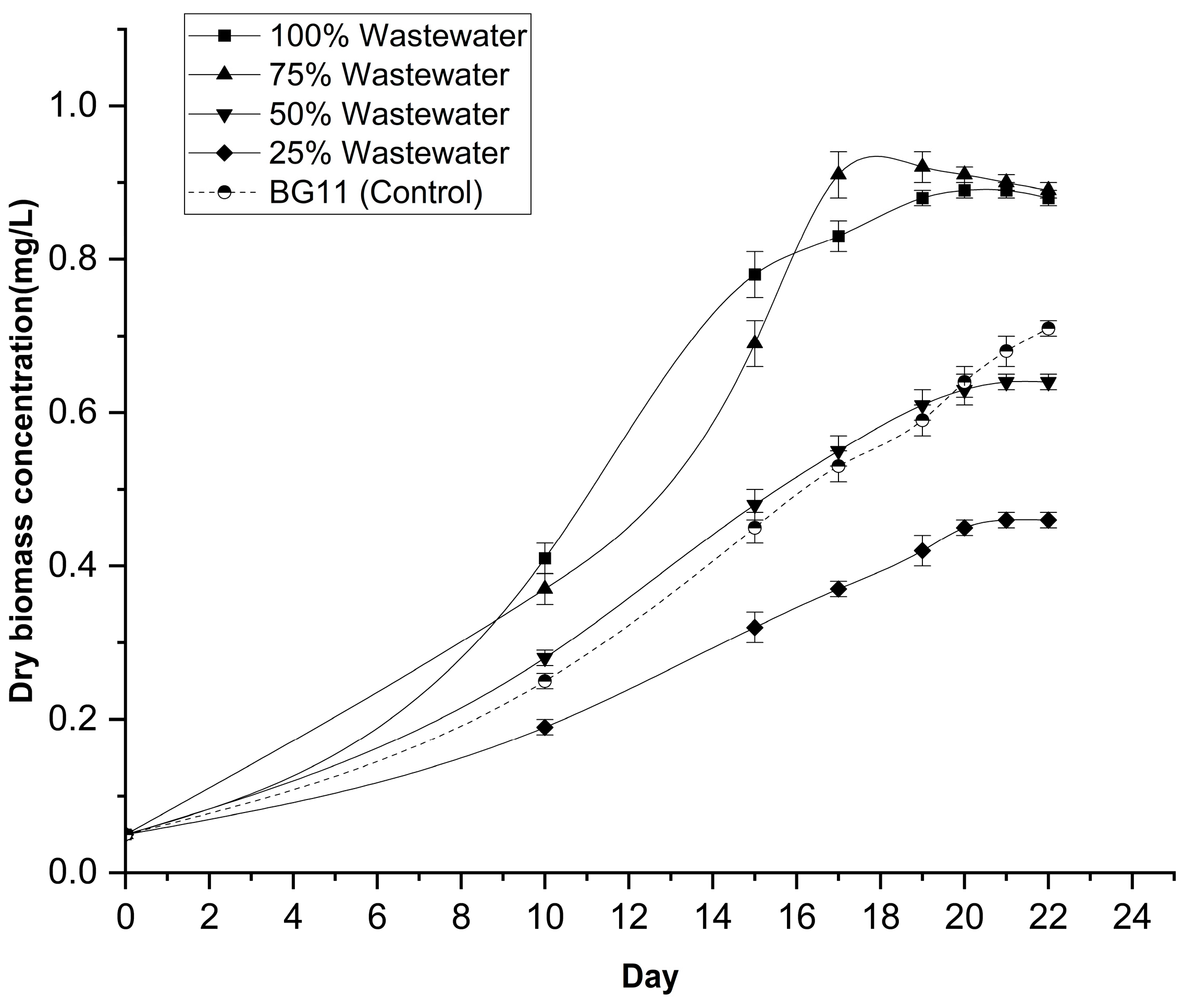
3.1. Effect of Wastewater Dilution on Growth
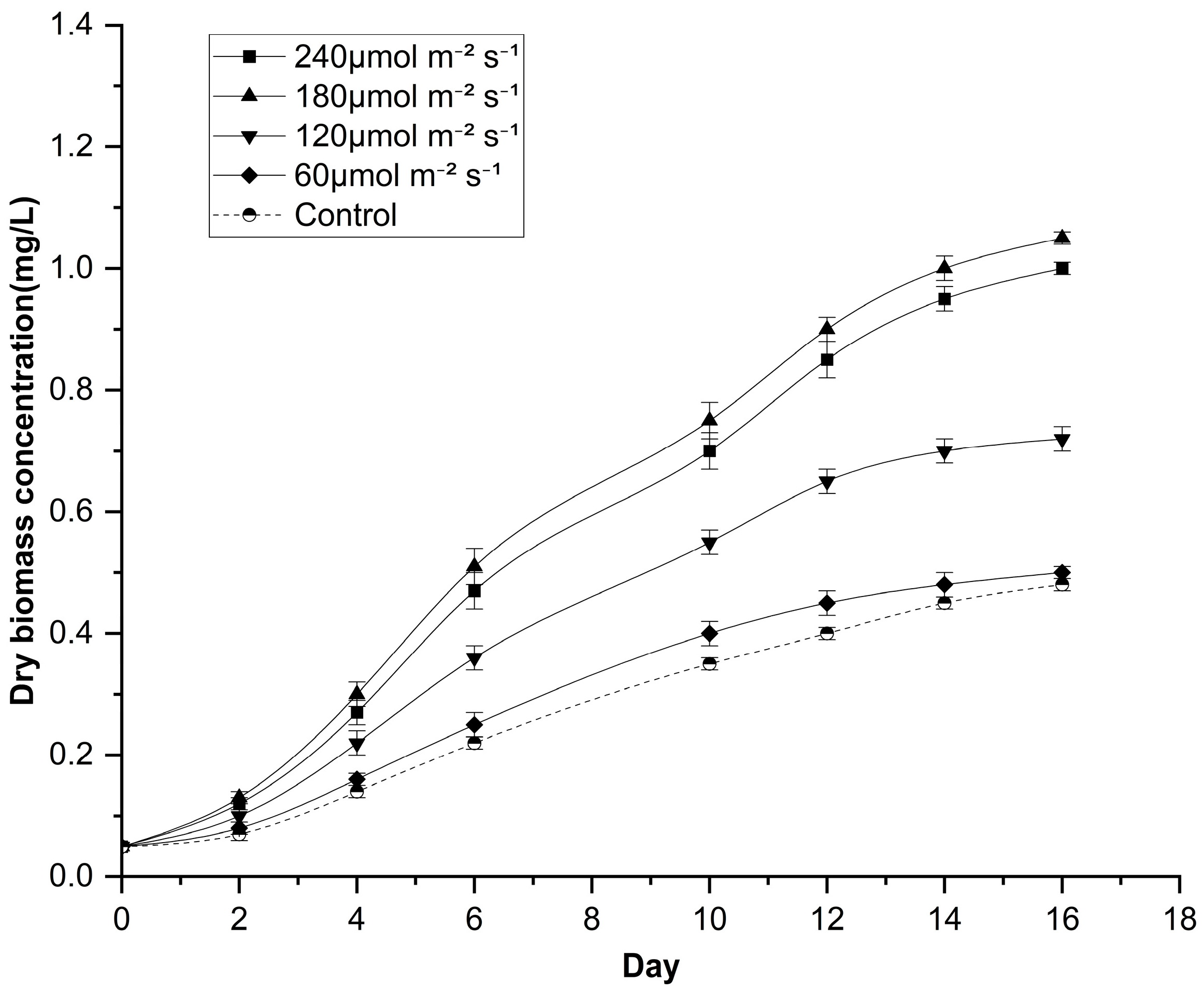
3.2. Effect of Light Intensity on Growth
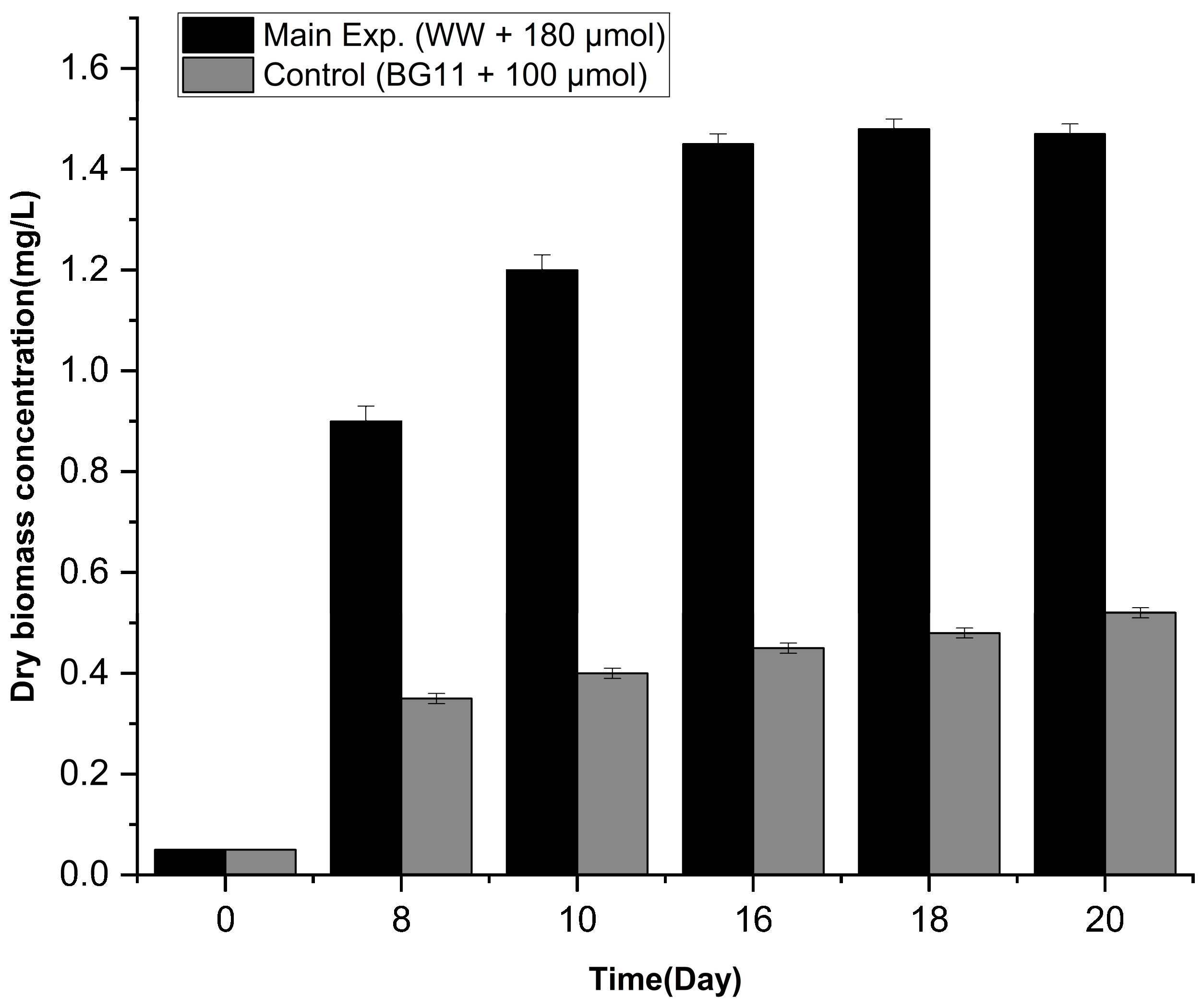
3.3. Growth Performance in 2 L Bioreactors (Main Experiment)
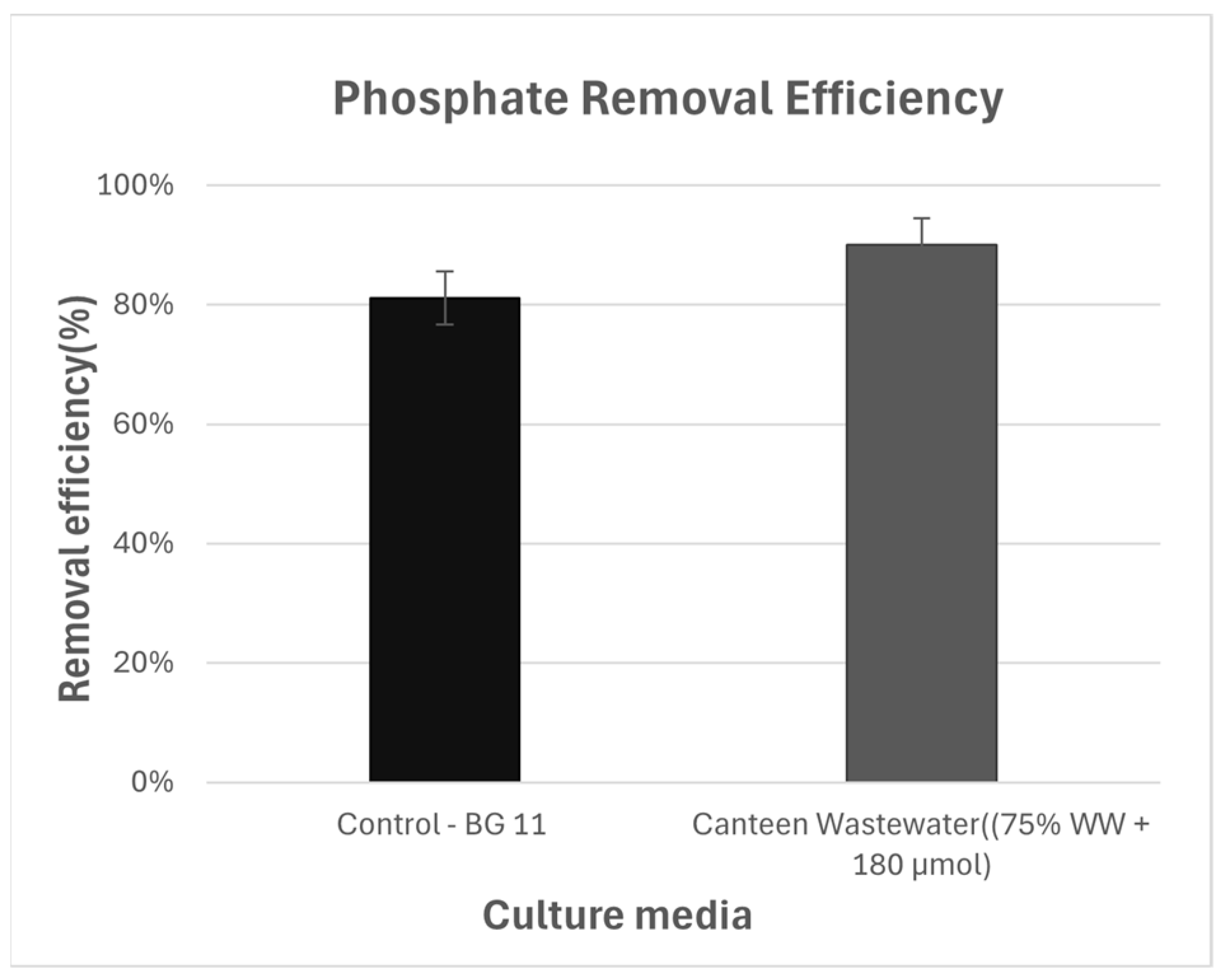
3.4. Nutrient Removal Efficiency
3.5. Biomass Productivity and Biochemical Composition
4. Discussion
5. Conclusions
Supplementary Materials
Author Contributions
Funding
Data Availability Statement
Acknowledgments
Conflicts of Interest
References
- Zhai, J.; Li, X.; Li, W.; Rahaman, M.H.; Zhao, Y.; Wei, B.; Wei, H. Optimization of biomass production and nutrients removal by Spirulina platensis from municipal wastewater. Ecol. Eng. 2017, 108, 83–92. [Google Scholar] [CrossRef]
- Dodangodage, C.A.; Premarathne, H.; Kasturiarachchi, J.C.; Perera, T.A.; Rajapakshe, D.; Halwatura, R.U. Algae-Based Protective Coatings for Sustainable Infrastructure: A Novel Framework Linking Material Chemistry, Techno-Economics, and Environmental Functionality. Phycology 2025, 5, 84. [Google Scholar] [CrossRef]
- Khan, M.A.; Uddin, I.; Othman, N.S. Factors determining water stress: Do environmental distress, energy consumption and industrialization matter? Environ. Dev. Sustain. 2025, 27, 25273–25297. [Google Scholar] [CrossRef]
- Dodangodage, C.A.; Kasturiarachchi, J.; Perera, T.; Rajapakshe, D.; Halwatura, R. Integrated Microalgal-Aquaponic Systems for Enhanced Water Treatment and Food Security: A Critical Review of Recent Advances in Process Integration and Resource Recovery. Biol. Biotechnol. 2025; preprint. [Google Scholar] [CrossRef]
- Singh, P.K.; Kumar, U.; Kumar, I.; Dwivedi, A.; Singh, P.; Mishra, S.; Seth, C.S.; Sharma, R.K. Critical review on toxic contaminants in surface water ecosystem: Sources, monitoring, and its impact on human health. Environ. Sci. Pollut. Res. 2024, 31, 56428–56462. [Google Scholar] [CrossRef] [PubMed]
- Ozcicek-Dolekoglu, C.; Var, I. Analysis of food waste in university dining halls: A case study from Turkey. Fresenius Environ. Bull. 2019, 28, 156–166. [Google Scholar]
- Li, H.; Li, X.; Cui, L.; Alam, A.; Lu, W. Coupling nutrient removal and biodiesel production by cultivation of Chlorella sp. in cafeteria wastewater: Assessment of the effect of wastewater disinfection. Desalination Water Treat. 2023, 291, 101–107. [Google Scholar] [CrossRef]
- Ragaza, J.A.; Hossain, S.; Meiler, K.A.; Velasquez, S.F.; Kumar, V. A review on Spirulina: Alternative media for cultivation and nutritive value as an aquafeed. Rev. Aquac. 2020, 12, 2371–2395. [Google Scholar] [CrossRef]
- Chen, Y.; Sun, L.-P.; Liu, Z.-H.; Martin, G.; Sun, Z. Integration of Waste Valorization for Sustainable Production of Chemicals and Materials via Algal Cultivation. Top. Curr. Chem. 2017, 375, 89. [Google Scholar] [CrossRef]
- Ruslinda, Y.; Nur, A.; Komala, P.S.; Leni, L.; Regia, R.A.; Mardatillah, R. Characterization of Wastewater in The University Campus: A Case Study in Universitas Andalas, Indonesia. Dampak 2025, 21, 18–26. [Google Scholar] [CrossRef]
- Gude, V.G. Desalination and water reuse to address global water scarcity. Rev. Environ. Sci. Biotechnol. 2017, 16, 591–609. [Google Scholar] [CrossRef]
- Dada, E.O.; Agu, C.M.; Akinola, M.O. Physicochemical Quality and Genotoxic Potential of Wastewater Generated by Canteen Complex. ARO-Sci. J. Koya Univ. 2019, 7, 19. [Google Scholar] [CrossRef]
- Mohadi, R.; Hermansyah; Mavala, H.; Zulkifli, H. The effect of metal ion Cd(II) concentration on the growth of Spirulina sp. cultured on BG-11 medium. IOP Conf. Ser. Earth Environ. Sci. 2020, 530, 012036. [Google Scholar] [CrossRef]
- de Morais, E.G.; da Silveira, J.T.; Schüler, L.M.; de Freitas, B.C.B.; Costa, J.A.V.; de Morais, M.G.; Ferrer, I.; Barreira, L. Biomass valorization via pyrolysis in microalgae-based wastewater treatment: Challenges and opportunities for a circular bioeconomy. J. Appl. Phycol. 2023, 35, 2689–2708. [Google Scholar] [CrossRef]
- Gupta, S.; Marchetti, J.M.; Wasewar, K.L. Enhancing nutrient removal, biomass production, and biochemical production by optimizing microalgae cultivation in a mixture of untreated and anaerobically digested dairy wastewater. J. Water Process Eng. 2024, 63, 105413. [Google Scholar] [CrossRef]
- Sarker, N.K.; Kaparaju, P. Microalgal Bioeconomy: A Green Economy Approach Towards Achieving Sustainable Development Goals. Sustainability 2024, 16, 11218. [Google Scholar] [CrossRef]
- Dammak, I.; Fersi, M.; Hachicha, R.; Abdelkafi, S. Current Insights into Growing Microalgae for Municipal Wastewater Treatment and Biomass Generation. Resources 2023, 12, 119. [Google Scholar] [CrossRef]
- Salbitani, G.; Carfagna, S. Ammonium utilization in microalgae: A sustainable method for wastewater treatment. Sustainability 2021, 13, 956. [Google Scholar] [CrossRef]
- Lu, W.; Lin, M.; Guo, X.; Lin, Z. Cultivation of Spirulina platensis using raw piggery wastewater for nutrients bioremediation and biomass production: Effect of ferrous sulfate supplementation. Desalination Water Treat. 2020, 175, 60–67. [Google Scholar] [CrossRef]
- Balan, V.; Pierson, J.; Husain, H.; Kumar, S.; Saffron, C.; Kumar, V. Potential of using microalgae to sequester carbon dioxide and processing to bioproducts. Green Chem. 2023, 25, 7934–7951. [Google Scholar] [CrossRef]
- Kumar, S.; Ghangrekar, M.M. Algae-Based Bioenergy Production as a Carbon Mitigation Technology. In Algae as a Natural Solution for Challenges in Water-Food-Energy Nexus: Toward Carbon Neutrality; Kurniawan, T.A., Anouzla, A., Eds.; Springer Nature: Singapore, 2024; pp. 833–850. [Google Scholar] [CrossRef]
- Salman, M.; Adeel, S.; Naseer, M.; Haider, M.Z.; Anjum, F. Modern Approach Toward Algal-Based Natural Pigments for Textiles. In Plant Biomass Derived Materials: Sources, Extractions, and Applications; John Wiley and Sons: Hoboken, NJ, USA, 2024; pp. 213–241. [Google Scholar] [CrossRef]
- Kaur, P. Microalgae as Nutraceutical for Achieving Sustainable Food Solution in Future. In Microbial Biotechnology: Basic Research and Applications; Singh, J., Vyas, A., Wang, S., Prasad, R., Eds.; Springer: Singapore, 2020; pp. 91–125. [Google Scholar] [CrossRef]
- El-Sayed, A.E.-K.B.; Almutairi, A.W. Nutrient balance for enhanced recovery of stressed Spirulina platensis. Environ. Sci. Pollut. Res. 2024, 31, 56685–56696. [Google Scholar] [CrossRef] [PubMed]
- Marzorati, S.; Schievano, A.; Idà, A.; Verotta, L. Carotenoids, chlorophylls and phycocyanin from Spirulina: Supercritical CO2 and water extraction methods for added value products cascade. Green Chem. 2020, 22, 187–196. [Google Scholar] [CrossRef]
- Prates, J.A.M. Applications of Bioactive Compounds from Marine Microalgae in Health, Cosmetics, and Functional Foods. Appl. Sci. 2025, 15, 6144. [Google Scholar] [CrossRef]
- Wils, L.; Yagmur, M.; Phelippe, M.; Montigny, B.; Clément-Larosière, B.; Jacquemin, J.; Boudesocque-Delaye, L. Alternative Solvents for the Biorefinery of Spirulina: Impact of Pretreatment on Free Fatty Acids with High Added Value. Mar. Drugs 2022, 20, 600. [Google Scholar] [CrossRef]
- Yaqoob, S.; Riaz, M.; Shabbir, A.; Zia-Ul-Haq, M.; Alwakeel, S.S.; Bin-Jumah, M. Commercialization and Marketing Potential of Carotenoids. In Carotenoids: Structure and Function in the Human Body; Zia-Ul-Haq, M., Dewanjee, S., Riaz, M., Eds.; Springer: Berlin/Heidelberg, Germany, 2021; pp. 799–826. [Google Scholar] [CrossRef]
- Hamidi, M.; Mohammadi, A.; Mashhadi, H.; Mahmoudnia, F. Evaluation of effective environmental parameters on lipid, protein and beta-carotene production in Spirulina platensis microalga. Results Eng. 2023, 18, 101102. [Google Scholar] [CrossRef]
- Mohammed, I.A.; Ruengjitchatchawalya, M.; Paithoonrangsarid, K. Cultivation manipulating zeaxanthin-carotenoid production in Arthrospira (Spirulina) platensis under light and temperature stress. Algal Res. 2023, 76, 103315. [Google Scholar] [CrossRef]
- Vellaiyan, S. Unlocking the potential of Spirulina microalgae: Cultivating in wastewater treatment for sustainable biofuel production. Sustain. Chem. Pharm. 2024, 41, 101705. [Google Scholar] [CrossRef]
- Zhang, F.; Man, Y.B.; Mo, W.Y.; Wong, M.H. Application of Spirulina in aquaculture: A review on wastewater treatment and fish growth. Rev. Aquac. 2020, 12, 582–599. [Google Scholar] [CrossRef]
- Bürck, M.; Fratelli, C.; Campos Assumpção de Amarante, M.; Braga, A.R.C. Unveiling the Potential of Spirulina Biomass—A Glimpse into the Future Circular Economy Using Green and Blue Ingredients. Biomass 2024, 4, 704–719. [Google Scholar] [CrossRef]
- Cardoso, L.G.; Duarte, J.H.; Andrade, B.B.; Lemos, P.V.F.; Costa, J.A.V.; Druzian, J.I.; Chinalia, F.A. Spirulina sp. LEB 18 cultivation in outdoor pilot scale using aquaculture wastewater: High biomass, carotenoid, lipid and carbohydrate production. Aquaculture 2020, 525, 735272. [Google Scholar] [CrossRef]
- Saini, J.K.; Gupta, R.; Hemansi; Verma, A.; Gaur, P.; Saini, R.; Shukla, R.; Kuhad, R.C. Integrated Lignocellulosic Biorefinery for Sustainable Bio-Based Economy. In Sustainable Approaches for Biofuels Production Technologies; Srivastava, N., Srivastava, M., Mishra, P., Upadhyay, S., Ramteke, P., Gupta, V., Eds.; Springer: Cham, Switzerland, 2019; pp. 25–46. [Google Scholar] [CrossRef]
- Ijaz, S.; Ahmed, M. Harnessing Microalgae for Wastewater Treatment: Optimizing Cultivation, Pollutant Removal, and Photobioreactor Technologies for a Sustainable Future. In Green Technologies for Wastewater Treatment and Bioenergy Production; CRC Press: Boca Raton, FL, USA, 2025; pp. 64–109. [Google Scholar]
- American Public Health Association. Standard Methods for the Examination of Water and Wastewater; American Public Health Association: Washington, DC, USA, 1926; Volume 6. [Google Scholar]
- Indrani, M.W.; Mafasia, M.B.F.; Gunawardana, T.; Sriyani, G.T.W.; Gunarathne, K. The Role of Central Environmental Authority in Managing Solid Waste in Sri Lanka. J. Account. Financ. 2024, 11, 1–24. [Google Scholar] [CrossRef]
- Mattos, E.R.; Singh, M.; Cabrera, M.L.; Das, K.C. Biorefining and Carbon Cycling Program. Effects of Inoculum Physiological Stage on the Growth Characteristics of Chlorella sorokiniana Cultivated Under Different CO2 Concentrations. Appl. Biochem. Biotechnol. 2012, 168, 519–530. [Google Scholar] [CrossRef] [PubMed]
- Nicodemou, A.; Konstantinou, D.; Koutinas, M. Enhanced biomass and lipid production from olive processing wastewater using Scenedesmus obliquus in a two-stage cultivation strategy under salt stress. Biochem. Eng. J. 2024, 205, 109290. [Google Scholar] [CrossRef]
- Premaratne, M.; Liyanaarachchi, V.C.; Nishshanka, G.K.S.H.; Nimarshana, P.H.V.; Ariyadasa, T.U. Nitrogen-limited cultivation of locally isolated Desmodesmus sp. For sequestration of CO2 from simulated cement flue gas and generation of feedstock for biofuel production. J. Environ. Chem. Eng. 2021, 9, 105765. [Google Scholar] [CrossRef]
- Richmond, A. Handbook of Microalgal Culture: Biotechnology and Applied Phycology; Blackwell Science Ltd.: Oxford, UK, 2004. [Google Scholar]
- Potts, M. Nostoc. The Ecology of Cyanobacteria; Whitton, B.A., Potts, M., Eds.; Kluwer Academic Publishers: Dordrecht, The Netherlands, 2000. [Google Scholar]
- Lichtenthaler, H.K. Chlorophylls and carotenoids: Pigments of photosynthetic biomembranes. In Methods in Enzymology; Elsevier: New York, NY, USA, 1987; Volume 148, pp. 350–382. [Google Scholar]
- Michałowski, T.; Navas, M.J.; Asuero, A.G.; Wybraniec, S. An Overview of the Kjeldahl Method of Nitrogen Determination. Part I. Early History, Chemistry of the Procedure, and Titrimetric Finish. Crit. Rev. Anal. Chem. 2013, 43, 178–223. [Google Scholar] [CrossRef]
- Dubois, M.; Gilles, K.A.; Hamilton, J.K.; Roberts, P.A.; Smith, F. Phenol sulphuric acid method for carbohydrate determination. Ann. Chem. 1956, 28, 350–359. [Google Scholar] [CrossRef]
- Pérez-Palacios, T.; Ruiz, J.; Martín, D.; Muriel, E.; Antequera, T. Comparison of different methods for total lipid quantification in meat and meat products. Food Chem. 2008, 110, 1025–1029. [Google Scholar] [CrossRef]
- Karimi, S.; Shaygannejad, V.; Mohammadalipour, A.; Feizi, A.; Hooshmand, S.; Kafeshani, M. Effects of spirulina (Arthrospira) platensis supplementation on inflammation, physical and mental quality of life, and anthropometric measures in patients with relapsing-remitting multiple sclerosis (RRMS): A triple-blinded, randomized, placebo-controlled trial. Nutr. J. 2025, 24, 132. [Google Scholar] [CrossRef]
- Mallamaci, R.; Storelli, M.M.; Barbarossa, A.; Messina, G.; Valenzano, A.; Meleleo, D. Potential Protective Effects of Spirulina (Spirulina platensis) against In Vitro Toxicity Induced by Heavy Metals (Cadmium, Mercury, and Lead) on SH-SY5Y Neuroblastoma Cells. Int. J. Mol. Sci. 2023, 24, 17076. [Google Scholar] [CrossRef]
- Yuan, X.; Kumar, A.; Sahu, A.K.; Ergas, S.J. Impact of ammonia concentration on Spirulina platensis growth in an airlift photobioreactor. Bioresour. Technol. 2011, 102, 3234–3239. [Google Scholar] [CrossRef]
- Mirhosseini, N.; Davarnejad, R.; Hallajisani, A.; Cano-Europa, E.; Tavakoli, O.; Franco-Colín, M.; Blas-Valdivia, V. Cultivations of Arthrospira maxima (Spirulina) using ammonium sulfate and sodium nitrate as an alternative nitrogen sources. Iran. J. Fish. Sci. 2021, 20, 475–489. [Google Scholar] [CrossRef]
- Attene, L.; Deiana, A.; Carucci, A.; De Gioannis, G.; Asunis, F.; Ledda, C. Efficient Nitrogen Recovery from Agro-Energy Effluents for Cyanobacteria Cultivation (Spirulina). Sustainability 2023, 15, 675. [Google Scholar] [CrossRef]
- Converti, A.; Scapazzoni, S.; Lodi, A.; Carvalho, J.C.M. Ammonium and urea removal by Spirulina platensis. J. Ind. Microbiol. Biotechnol. 2006, 33, 8–16. [Google Scholar] [CrossRef] [PubMed]
- Kim, S.; Moon, M.; Kwak, M.; Lee, B.; Chang, Y.K. Statistical optimization of light intensity and CO2 concentration for lipid production derived from attached cultivation of green microalga Ettlia sp. Sci. Rep. 2018, 8, 15390. [Google Scholar] [CrossRef] [PubMed]
- Shaikh, S.; McKay, G.; Mackey, H.R. Light intensity effects on bioproduct recovery from fuel synthesis wastewater using purple phototrophic bacteria in a hybrid biofilm-suspended growth system. Biotechnol. Rep. 2024, 44, e00863. [Google Scholar] [CrossRef] [PubMed]
- Marie, M.; Bigot, K.; Angebault, C.; Barrau, C.; Gondouin, P.; Pagan, D.; Fouquet, S.; Villette, T.; Sahel, J.-A.; Lenaers, G.; et al. Light action spectrum on oxidative stress and mitochondrial damage in A2E-loaded retinal pigment epithelium cells. Cell Death Dis. 2018, 9, 287. [Google Scholar] [CrossRef]
- Prakash Pandey, J.; Tiwari, A. Optimization of Biomass Production of Spirulina maxima. J. Algal Biomass Utln 2010, 1, 20–32. [Google Scholar]
- Lao, I.K.M.; Edullantes, B. Growth, Productivity, and Size Structure of Spirulina Strain Under Different Salinity Levels: Implications for Cultivation Optimization. Phycology 2025, 5, 31. [Google Scholar] [CrossRef]
- Lim, H.R.; Khoo, K.S.; Show, P.L. Impact of nutrient deficiency and harvesting strategy on biomass and phycocyanin production in Spirulina cultures. Front. Bioeng. Biotechnol. 2025, 13, 1546801. [Google Scholar] [CrossRef]
- Villaró, S.; Morillas-España, A.; Acién, G.; Lafarga, T. Optimisation of Operational Conditions during the Production of Arthrospira platensis Using Pilot-Scale Raceway Reactors, Protein Extraction, and Assessment of their Techno-Functional Properties. Foods 2022, 11, 2341. [Google Scholar] [CrossRef]
- Zhu, B.; Shen, H.; Li, Y.; Liu, Q.; Jin, G.; Han, J.; Zhao, Y.; Pan, K. Large-Scale Cultivation of Spirulina for Biological CO2 Mitigation in Open Raceway Ponds Using Purified CO2 From a Coal Chemical Flue Gas. Front. Bioeng. Biotechnol. 2020, 7, 441. [Google Scholar] [CrossRef] [PubMed]
- Liu, M.; Jiang, L.; Yu, Z.; Ma, M.; Chen, H.; Pei, H. Cultivation strategy optimization and pilot-scale production of Spirulina subsalsa grown in seawater and monosodium glutamate wastewater. Bioresour. Bioprocess. 2025, 12, 83. [Google Scholar] [CrossRef] [PubMed]
- Cardoso, L.G.; Lombardi, A.T.; de Jesus Silva, J.S.; Lemos, P.V.F.; Costa, J.A.V.; de Souza, C.O.; Druzian, J.I.; Chinalia, F.A. Scaling-up production of Spirulina sp. LEB18 grown in aquaculture wastewater. Aquaculture 2021, 544, 737045. [Google Scholar] [CrossRef]
- Hoeniges, J.; Welch, W.; Pruvost, J.; Pilon, L. A novel external reflecting raceway pond design for improved biomass productivity. Algal Res. 2022, 65, 102742. [Google Scholar] [CrossRef]
- Rayen, F.; Behnam, T.; Dominique, P. Optimization of a raceway pond system for wastewater treatment: A review. Crit. Rev. Biotechnol. 2019, 39, 422–435. [Google Scholar] [CrossRef]
- Baraldi, L.; Usai, L.; Torre, S.; Fais, G.; Casula, M.; Dessi, D.; Nieri, P.; Concas, A.; Lutzu, G.A. Dairy Wastewaters to Promote Mixotrophic Metabolism in Limnospira (Spirulina) platensis: Effect on Biomass Composition, Phycocyanin Content, and Fatty Acid Methyl Ester Profile. Life 2025, 15, 184. [Google Scholar] [CrossRef]
- Ngerem, E.C.; Sanusi, I.A.; Kana, G.E.B.; Olaniran, A.O. Optimization of co-valorisation techniques for dairy and paper pulp wastewater in the cultivation of Chlorococcum sp. with a focus on mixture design, microwave-assisted pretreatment, and bioethanol production. Heliyon 2025, 11, e42531. [Google Scholar] [CrossRef]
- Usai, G.; Cordara, A.; Mazzocchi, E.; Re, A.; Fino, D.; Pirri, C.F.; Menin, B. Coupling dairy wastewaters for nutritional balancing and water recycling: Sustainable heterologous 2-phenylethanol production by engineered cyanobacteria. Front. Bioeng. Biotechnol. 2024, 12, 1359032. [Google Scholar] [CrossRef]
- AlFadhly, N.K.Z.; Alhelfi, N.; Altemimi, A.B.; Verma, D.K.; Cacciola, F. Tendencies Affecting the Growth and Cultivation of Genus Spirulina: An Investigative Review on Current Trends. Plants 2022, 11, 3063. [Google Scholar] [CrossRef]
- Hajri, A.K.; Alsharif, I.; Albalawi, M.A.; Alshareef, S.A.; Albalawi, R.K.; Jamoussi, B. Utilizing Mixed Cultures of Microalgae to Up-Cycle and Remove Nutrients from Dairy Wastewater. Biology 2024, 13, 591. [Google Scholar] [CrossRef]
- Lochab, S.; Oberoi, H.S.; Gothwal, M.; Abbey, D.; Raghuram, N. Nitrate assimilatory enzymes of Spirulina (Arthospira) platensis are more thermotolerant than those of rice. Physiol. Mol. Biol. Plants 2009, 15, 277–280. [Google Scholar] [CrossRef] [PubMed]
- Ali, A.; Jha, P.; Sandhu, K.S.; Raghuram, N. Spirulina nitrate-assimilating enzymes (NR, NiR, GS) have higher specific activities and are more stable than those of rice. Physiol. Mol. Biol. Plants 2008, 14, 179–182. [Google Scholar] [CrossRef] [PubMed]
- Aizpuru, A.; González-Sánchez, A. Traditional and new trend strategies to enhance pigment contents in microalgae. World J. Microbiol. Biotechnol. 2024, 40, 272. [Google Scholar] [CrossRef] [PubMed]
- Bossa, R.; Di Colandrea, M.; Salbitani, G.; Carfagna, S. Phosphorous Utilization in Microalgae: Physiological Aspects and Applied Implications. Plants 2024, 13, 2127. [Google Scholar] [CrossRef]
- Sočo, E.; Domoń, A.; Azizi, M.; Pająk, D.; Cieniek, B.; Michel, M.M.; Papciak, D. Efficiency of Spirulina sp. in the Treatment of Model Wastewater Containing Ni(II) and Pb(II). Materials 2025, 18, 3639. [Google Scholar] [CrossRef]
- Iba, W.; Akib, N.I.; Jumardin, L.O.M.; Arif, B.; Yosalina, S.; Andas, J.A. Organic Culture Media for Sustainable Carotenoid Production From Microalgae; IntechOpen: London, UK, 2023. [Google Scholar]
- Guedes, A.C.; Amaro, H.M.; Malcata, F.X. Microalgae as sources of carotenoids. Mar. Drugs 2011, 9, 625–644. [Google Scholar] [CrossRef]
- Lim, H.R.; Khoo, K.S.; Chew, K.W.; Chang, C.K.; Munawaroh, H.S.H.; Kumar, P.S.; Huy, N.D.; Show, P.L. Perspective of Spirulina culture with wastewater into a sustainable circular bioeconomy. Environ. Pollut. 2021, 284, 117492. [Google Scholar] [CrossRef]
- Podgórska-Kryszczuk, I. Spirulina—An Invaluable Source of Macro- and Micronutrients with Broad Biological Activity and Application Potential. Molecules 2024, 29, 5387. [Google Scholar] [CrossRef]
- Peng, Y.; Gao, F.; Hang, W.W.; Yang, H.; Jin, W.; Li, C. Effects of organic matters in domestic wastewater on lipid/carbohydrate production and nutrient removal of Chlorella vulgaris cultivated under mixotrophic growth conditions. J. Chem. Technol. Biotechnol. 2019, 94, 3578–3584. [Google Scholar] [CrossRef]
- Nynas, A.-L.; Berndtsson, E.; Newson, W.R.; Hovmalm, H.P.; Johansson, E. Protein Fractionation of Leafy Green Biomass at the Pilot Scale: Partitioning and Type of Nitrogen in the Fractions and Their Usefulness for Food and Feed. ACS Food Sci. Technol. 2024, 4, 126–138. [Google Scholar] [CrossRef]
- Park, W.S.; Kim, H.J.; Li, M.; Lim, D.H.; Kim, J.; Kwak, S.S.; Kang, C.M.; Ferruzzi, M.G.; Ahn, M.J. Two classes of pigments, carotenoids and c-phycocyanin, in spirulina powder and their antioxidant activities. Molecules 2018, 23, 2065. [Google Scholar] [CrossRef]
- Ismaiel, M.M.S.; El-Ayouty, Y.M.; Piercey-Normore, M. Role of pH on antioxidants production by Spirulina (Arthrospira) platensis. Braz. J. Microbiol. 2016, 47, 298–304. [Google Scholar] [CrossRef]
- Murton, J.; Nagarajan, A.; Nguyen, A.Y.; Liberton, M.; Hancock, H.A.; Pakrasi, H.B.; Timlin, J.A. Population-level coordination of pigment response in individual cyanobacterial cells under altered nitrogen levels. Photosynth. Res. 2017, 134, 165–174. [Google Scholar] [CrossRef]
- Kumar, D.; Kannaujiya, V.K.; Richa; Pathak, J.; Sundaram, S.; Sinha, R.P. Composition and functional property of photosynthetic pigments under circadian rhythm in the cyanobacterium Spirulina platensis. Protoplasma 2018, 255, 885–898. [Google Scholar] [CrossRef]
- Fu, W.; Guomundsson, Ó.; Paglia, G.; Herjólfsson, G.; Andrésson Ó, S.; Palsson, B.O.; Brynjólfsson, S. Enhancement of carotenoid biosynthesis in the green microalga Dunaliella salina with light-emitting diodes and adaptive laboratory evolution. Appl. Microbiol. Biotechnol. 2013, 97, 2395–2403. [Google Scholar] [CrossRef]
- Bazyar, P.; Sheidaee, E. Algae-Based Carbon Sequestration: Optimizing Renewable Energy and Climate Strategy. In Advances in AI for Simulation and Optimization of Energy SystemsI; CRC Press: Boca Raton, FL, USA, 2025; pp. 83–108. [Google Scholar]
- Bedru, T.K.; Garuma, W.B.; Baskaran, R.; Jayakumar, M.; Selvaganapathy, T. Road Map from Microalgae Biomass to Biorefinery Prospects and Challenges. In Algal Biorefineries in Circular Economy for Climate Change Resilience; CRC Press: Boca Raton, FL, USA, 2025; pp. 57–80. [Google Scholar]



| Day | 75% Wastewater + 180 µmol (g/L) | Control BG11 (g/L) |
|---|---|---|
| 0 | 0.05 ± 0.00 Ea | 0.05 ± 0.00 fa |
| 8 | 0.90 ± 0.01 Da | 0.35 ± 0.01 Eb |
| 10 | 1.20 ± 0.01 ca | 0.40 ± 0.01 Db |
| 16 | 1.45 ± 0.01 Ba | 0.45 ± 0.01 cb |
| 18 | 1.48 ± 0.01 Aa | 0.48 ± 0.01 Bb |
| 20 | 1.47 ± 0.01 ABa | 0.52 ± 0.01 Ab |
| Day | pH—Main Experiment (75% WW + 180 µmol) | pH—Control (BG11) |
|---|---|---|
| 0 | 7.51 ± 0.03 | 7.50 ± 0.02 |
| 2 | 7.82 ± 0.03 | 7.65 ± 0.03 |
| 4 | 8.30 ± 0.04 | 7.90 ± 0.03 |
| 6 | 8.55 ± 0.04 | 8.10 ± 0.03 |
| 8 | 8.68 ± 0.05 | 8.30 ± 0.04 |
| 10 | 8.85 ± 0.05 | 8.45 ± 0.04 |
| 12 | 9.20 ± 0.05 | 8.55 ± 0.04 |
| 14 | 9.72 ± 0.05 | 8.60 ± 0.04 |
| 16 | 9.73 ± 0.05 | 8.60 ± 0.04 |
| 18 | 9.72 ± 0.05 | 8.58 ± 0.04 |
| 20 | 9.70 ± 0.05 | 8.55 ± 0.04 |
| Parameter | BG11 Control | Canteen Wastewater |
|---|---|---|
| Phosphate removal efficiency (%) | 81.16 ± 2.45 | 90.05 ± 2.15 |
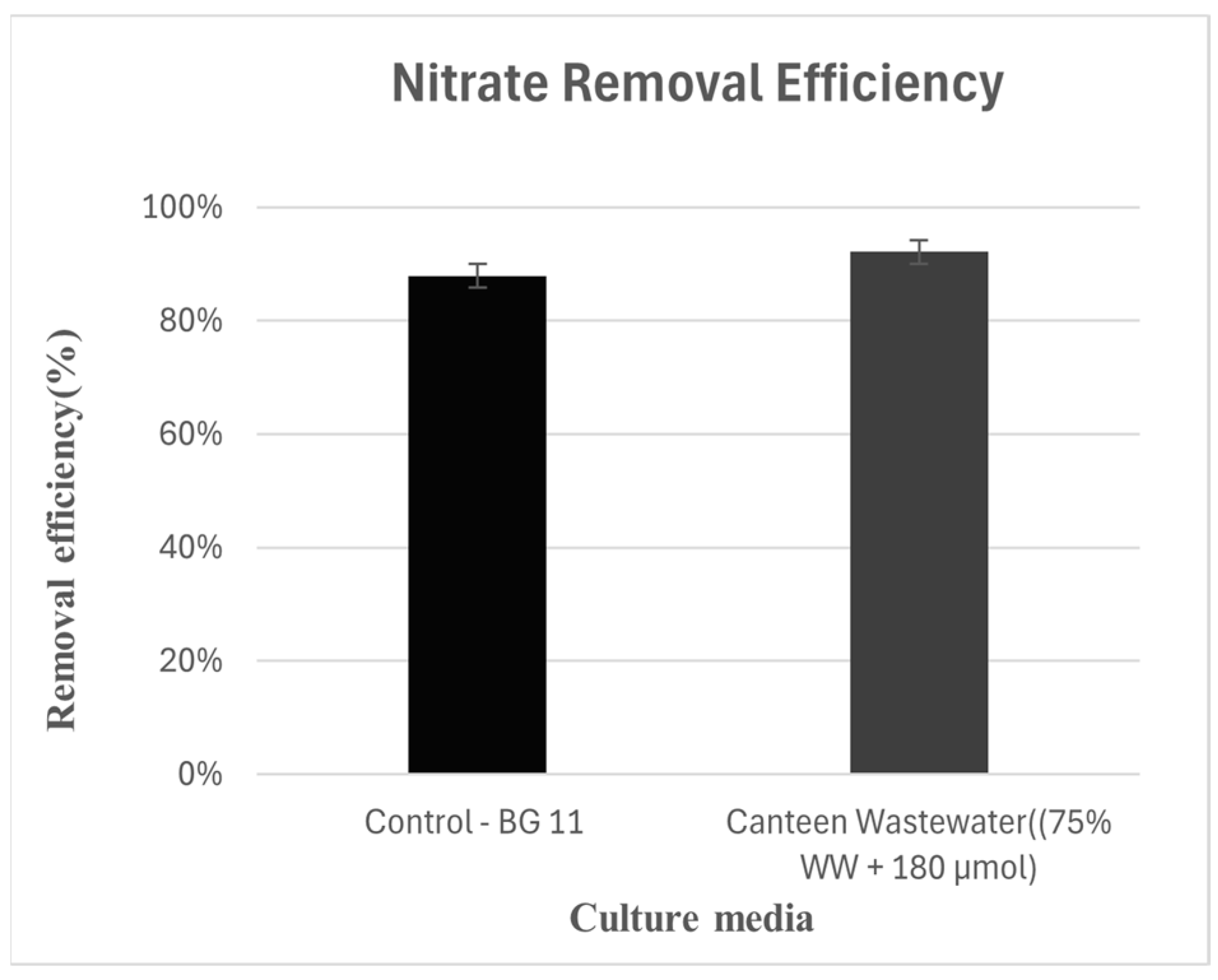
| Nitrate removal efficiency (%) | 87.93 ± 2.62 | 92.12 ± 2.32 |
| COD removal efficiency (%) | - | 83.00 ± 1.25% |
| Parameter | Canteen Wastewater | BG 11 Control |
|---|---|---|
| Biomass Productivity (g L−1 day−1) | 0.071 ± 0.003 a | 0.023 ± 0.002 b |
| Carotenoid Yield (mg g−1 DW) | 21.81 ± 1.15 a | 6.85 ± 0.45 b |
| Protein Content (%) | 54.3 ± 2.4 a | 61.5 ± 2.1 b |
| Carbohydrate Content (%) | 13.8 ± 1.2 a | 15.4 ± 1.2 a |
| Lipid Content (%) | 7.85 ± 0.45 a | 5.90 ± 0.35 b |
| Scale/System Type | Maximum Productivity (g L−1 day−1) | System Volume/Area | Key Performance Metrics | Production Conditions | Species/Strain | References |
|---|---|---|---|---|---|---|
| Commercial raceway pond (605 m2, strain 208) | 0.058 (18.7 g m−2 day−1) | 605 m2 (industrial) | 18.7 g m−2 day−1 DW | Semi-continuous, outdoor | Spirulina 208 | [61] |
| Commercial raceway pond (605 m2, strain 220) | 0.041 (13.2 g m−2 day−1) | 605 m2 (industrial) | 13.2 g m−2 day−1 DW | Semi-continuous, outdoor | Spirulina 220 | [61] |
| Indoor raceway pond (4 m2) | 0.045 (44.75 mg L−1 day−1) | 4 m2 | Highest in strain 220 | Controlled indoor, pH 9.5 | Spirulina 220 | [61] |
| Indoor raceway pond (4 m2) | 0.029 (29.20 mg L−1 day−1) | 4 m2 | pH 9.5 optimal | Controlled indoor | Spirulina 208 | [61] |
| Pilot-scale cultivation (162 L) | 0.12 (0.84 g L−1 biomass) | 162 L | μ = 0.53 d−1 (first 3 days) | Seawater medium | S. subsalsa | [62] |
| Large-scale cultivation (10 L) | 0.21 (2.43 g L−1 in 10 days) | 10 L | 2.43 g L−1 biomass | Batch, 10 days | Spirulina sp. | [59] |
| Lab-scale cultivation (1 L) | 0.23 (2.89 g L−1 in 10 days) | 1 L | 2.89 g L−1 biomass | Batch, optimal | Spirulina sp. | [59] |
| Outdoor pilot (aquaculture WW) | 1.10–3.33 g L−1 | 240 L (Pilot scale) | Weather-dependent | Outdoor, variable | Spirulina LEB 18 | [63] |
| Raceway pond (1400 L) | 0.05 | 1400 L | Modified Zarrouk | Standard operation | A. platensis | [61,64,65] |
| Present study (canteen WW, 75% dilution) | 0.071 | 2 L (lab scale) | Threefold higher than BG-11 | 180 µmol m−2 s−1 light | Spirulina sp. | – |
Disclaimer/Publisher’s Note: The statements, opinions and data contained in all publications are solely those of the individual author(s) and contributor(s) and not of MDPI and/or the editor(s). MDPI and/or the editor(s) disclaim responsibility for any injury to people or property resulting from any ideas, methods, instructions or products referred to in the content. |
© 2026 by the authors. Licensee MDPI, Basel, Switzerland. This article is an open access article distributed under the terms and conditions of the Creative Commons Attribution (CC BY) license.
Share and Cite
Dodangodage, C.A.; Gamage, G.N.; Wijesekara, I.A.; Kasturiarachchi, J.C.; Perera, T.A.; Rajapakshe, D.; Halwatura, R.U. Valorization of Canteen Wastewater Through Optimized Spirulina Platensis Cultivation for Enhanced Carotenoid Production and Nutrient Removal. Phycology 2026, 6, 15. https://doi.org/10.3390/phycology6010015
Dodangodage CA, Gamage GN, Wijesekara IA, Kasturiarachchi JC, Perera TA, Rajapakshe D, Halwatura RU. Valorization of Canteen Wastewater Through Optimized Spirulina Platensis Cultivation for Enhanced Carotenoid Production and Nutrient Removal. Phycology. 2026; 6(1):15. https://doi.org/10.3390/phycology6010015
Chicago/Turabian StyleDodangodage, Charith Akalanka, Geethaka Nethsara Gamage, Induwara Arsith Wijesekara, Jagath C. Kasturiarachchi, Thilini A. Perera, Dilan Rajapakshe, and Rangika Umesh Halwatura. 2026. "Valorization of Canteen Wastewater Through Optimized Spirulina Platensis Cultivation for Enhanced Carotenoid Production and Nutrient Removal" Phycology 6, no. 1: 15. https://doi.org/10.3390/phycology6010015
APA StyleDodangodage, C. A., Gamage, G. N., Wijesekara, I. A., Kasturiarachchi, J. C., Perera, T. A., Rajapakshe, D., & Halwatura, R. U. (2026). Valorization of Canteen Wastewater Through Optimized Spirulina Platensis Cultivation for Enhanced Carotenoid Production and Nutrient Removal. Phycology, 6(1), 15. https://doi.org/10.3390/phycology6010015