1. Introduction
Alaska, with its vast and diverse coastline, has emerged as a promising region for kelp farming [
1]. It is the leading kelp producer on the West coast of North America and second in the United States, after Maine [
2]. Between 2017 and 2022, the Alaska kelp farming industry grew steadily, led by small-scale operators cultivating primarily
Saccharina latissima (sugar kelp) and
Alaria marginata (ribbon kelp). While
S. latissima has been the focus of most commercial and research efforts,
A. marginata is gaining attention for its market potential, particularly in food-grade applications where specific phenotypic traits are valued.
Unlike
S. latissima, which thrives in protected coastal environments,
A. marginata is naturally found in more exposed, rocky shorelines. Its holdfast and blades are much more robust than those of Alaska
S. latissima, offering opportunities for diversification of farm sites and products, particularly in more exposed areas [
3]. Despite its commercial potential, limited research exists on the performance of this species in specific farm settings. For example, cultivation line spacing within farm designs may be adjusted based on practical experience or site-specific constraints. However, there are limited or no systematic studies quantifying how this variable affects key production metrics, such as sporophyte phenotype, yield, biofouling, or tissue nutrient content, under real-world farming conditions [
4,
5]. Effective seaweed farm design is fundamental to optimizing the growth, quality, and resilience of cultivated species, as it governs the hydrodynamic, optical, and nutritional environment that the thalli experience [
6].
The arrangement of longline spacing between ropes and the orientation relative to prevailing currents determine light availability, water flow, and nutrient exchange, strongly influencing the photosynthetic performance, tissue nitrogen content, and biomass yield of seaweed [
7,
8]. Designs that minimize self-shading and mechanical stress while maintaining consistent exposure to currents can enhance productivity compared to designs in which light penetration or nutrient exchange are reduced due to limited water flow [
6,
9]. Moreover, thoughtful spatial configuration can support uniform growth and biochemical composition, facilitating efficient harvests and reliable product quality for food or bioindustrial uses [
5,
10].
Like many other seaweeds,
A. marginata is sensitive to hydrodynamic forces, nutrient availability, and light gradients. Therefore, farm layouts that balance line spacing, depth, and tension are key to achieving sustainable biological performance and operational effectiveness. Nonetheless, the lack of empirical data hinders the development of best-practice farm configurations tailored to this species, constraining the industry’s ability to scale efficiently [
11,
12,
13]. In this study, we focused on the effects of five line-spacing treatments on blade phenotypes and yield of
A. marginata, aiming to identify potential trade-offs. By clarifying these relationships, producers can assess approaches to balance production efficiency, product quality, and profitability.
2. Materials and Methods
This study occurred within an 86-acre plot leased by Alaska Ocean Farms, LLC, in Kalsin Bay, Kodiak Island (57.6585800° N, −152.4166224° W;
Figure S1). The lease site is situated along the northwestern shoreline of the bay, with Kalsin Island forming its southwestern boundary. Extensive rocky reefs, exposed at low tide to the north and east, characterize the surrounding area. This setting provides natural protection from ocean swells and large seas, offering a sheltered environment ideal for farm operations (
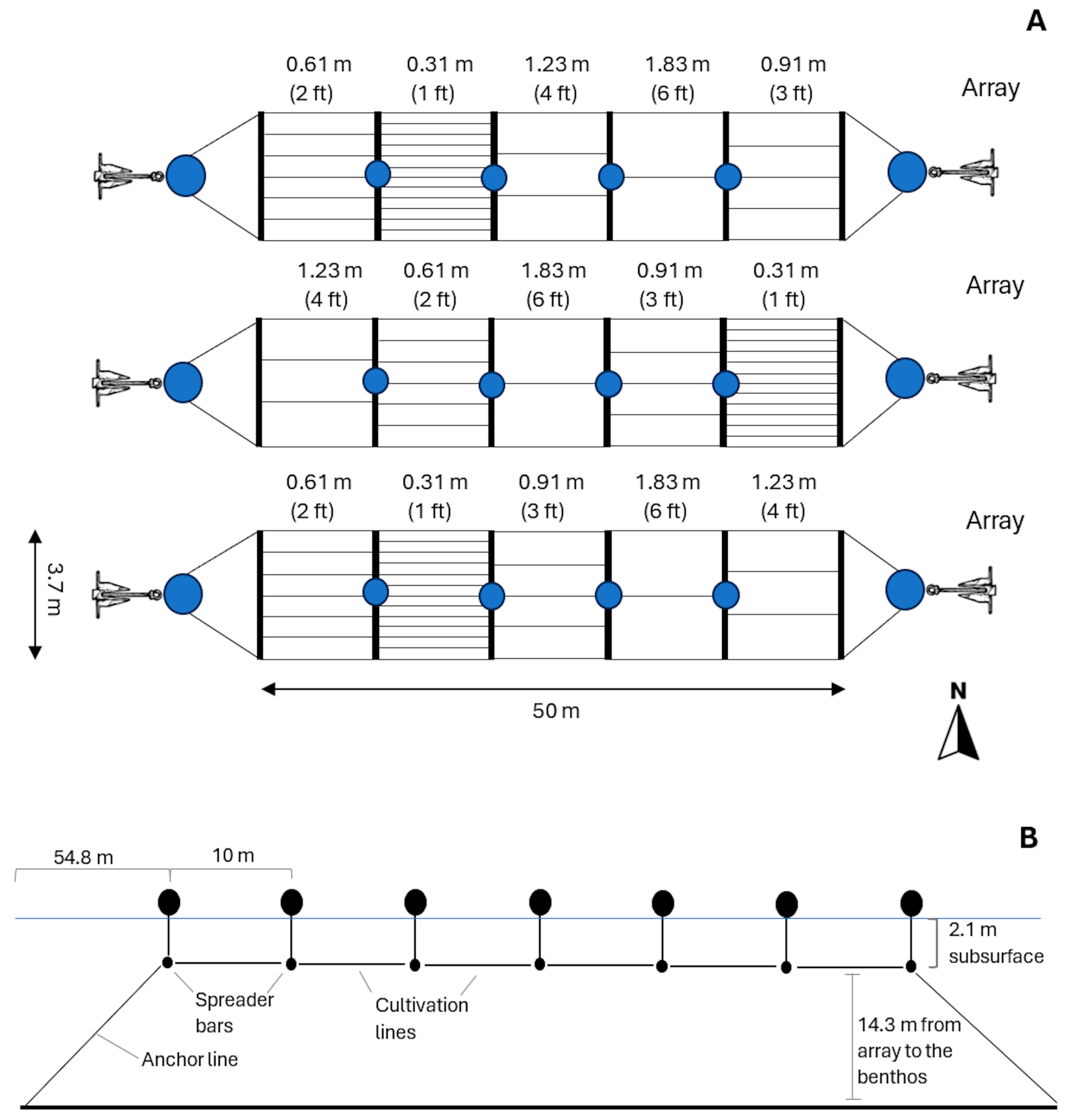
Figures S1 and S2). Five line-spacing treatments were established using three replicate spreader-bar array systems (
n = 3), designed and constructed by Alaska Ocean Farms, LLC (Kodiak, AK, USA). Each 50 m array consisted of 12-foot aluminum spreader bars, which connected cultivation lines made from 3/8″ poly-dacron sinking line. This configuration enabled each array to accommodate one block of all five treatments while maintaining consistent and standardized line spacings across the study (
Figure 1).
Each treatment block (n = 3) had a potential farming area of 34.77 m
2 (9.5 m in length by 3.66 m in width). Cultivation lines within these blocks were numbered and spaced at 1.83 m, 1.23 m, 0.91 m, 0.61 m, or 0.31 m apart. As such, the number of lines within each treatment block varied (
Table 1).
Line spacings were randomly assigned to treatment blocks, ensuring each array contained all five treatments. Line spacings of 1.83 m (6 ft) and 1.23 m (4 ft) were selected to represent the usual line spacings on regional commercial farms. In comparison, 0.91 m (3 ft), 0.61 m (2 ft), and 0.31 m (1 ft) were considered as possibilities to maximize the use of leased areas [
14,
15]. Edge lines were excluded from data collection due to their potential bidirectional effect on results. Unlike inner lines, edge lines are not flanked by seeded lines on both sides and therefore do not experience the same density-dependent competitive environment we sought to isolate. While edge line exposure may enhance light or nutrient availability in some cases, mechanical stress can reduce biomass quality or quantity in others [
16].
The spreader bar arrays were deployed in parallel, with a maximum separation of approximately 20 m, so that each plot was exposed to incoming currents. Kelp seed, consisting of embryonic sporophytes, was cultivated at Blue Evolution Hatchery within the Kodiak Fisheries Research Science Center (Kodiak Island, AK, USA). Holdfast® poly twine (Biddeford, ME, USA) was inoculated with 2500 meiospores mL−1 following the usual commercial seeding density in Alaska. Cultures were maintained under controlled conditions of light (60 ± 20 μmol m−2 s−1), temperature (11 ± 1 °C), and photoperiod (12:12 h light/dark cycle) for 14 weeks. This extended hatchery period was followed to avoid timing conflicts with the commercial kelp operation at the site. Seeded lines were deployed onto the arrays in early January 2022 and harvested in early June 2023.
Nitrogen, phosphorus, and silicate concentrations, plus sea surface temperature, and water transparency were monitored across the study area to verify that environmental conditions remained consistent among the three arrays. Measurements and samples were collected adjacent to each array every two weeks between February and June. Three 30 mL water samples were collected at approximately 2.13 m (7 ft) depth at each sampling station, corresponding to the kelp growth zone. Samples were immediately filtered through 0.45-µm filters and stored at −20 °C until analysis. Water transparency was measured with a Secchi disk to the nearest 0.25 m. HOBO MX2202 Temperature Data Loggers (Bourne, MA, USA) were attached to each array to record temperature (°C) at hourly intervals from seeding through harvest. In situ temperature readings were also taken at the same depth to verify logger accuracy using a YSI EcoSense 300A meter (Yellow Springs, OH, USA), which was used for calibration checks.
Phenotypic and yield data were obtained at harvest. Kelp was stripped from the cultivation lines, ensuring that as much holdfast as possible was recovered. Biomass from each line was placed into individual labeled burlap sacs, allowing us to track the placement of each sample within the arrays. For each treatment, we randomly collected 0.5 m sections, totaling 66 subsamples, to obtain phenotypic measurements. Edge lines were not considered. Blade length, width, and thickness were obtained using measuring tapes and calipers from ten randomly selected sporophytes per subsample [
17]. Blade density per meter was obtained by counting all individual blades in each subsample and multiplying them by two. Yield per meter (kg m
−1) was obtained by weighing all biomass harvested per 10 m line.
All statistical analyses were conducted in RStudio (v2025.05.0 + 496). Significance was determined at an alpha of 0.05. Normality was assessed using the Shapiro–Wilk test, and homogeneity of variance was evaluated with Levene’s test. For most metrics, outputs were non-normal and heteroscedastic. Therefore, further comparisons were conducted using the nonparametric Kruskal–Wallis test, with Dunn’s test as the post hoc test [
18]. Boxplots were constructed to summarize the distribution of all continuous numerical data obtained. Lastly, probability distribution plots were constructed by estimating the probability density function for each response variable, with the area under the curve equal to 1. These plots illustrate the likelihood of different values within each treatment, allowing a visual comparison of their underlying distributions [
19].
3. Results
Environmental conditions during the study period followed expected seasonal trends, including winter storms that caused mechanical damage to lines in the 0.61 m (2 ft), 1.23 m (4 ft), and 1.83 m (6 ft) line-spacing treatments, particularly in the middle array (
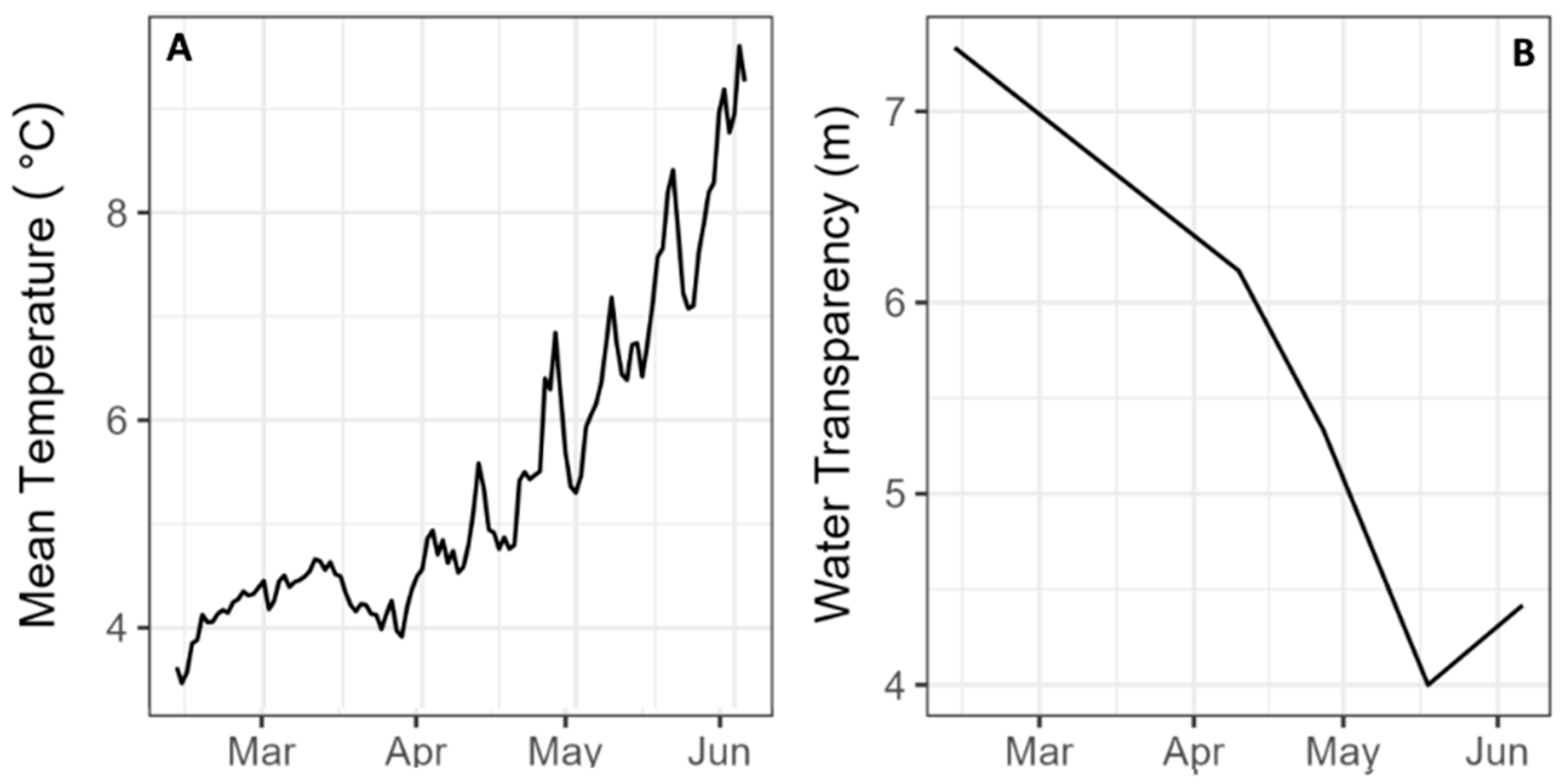
Figure S2). Sea surface temperatures rose from approximately 3 °C to more than 9 °C as the season shifted from winter to spring (
Figure 2A). Transparency of the water column decreased from more than 7 m in February to 4 m in mid-May and to ~4.5 m in mid-June, when biomass was harvested (
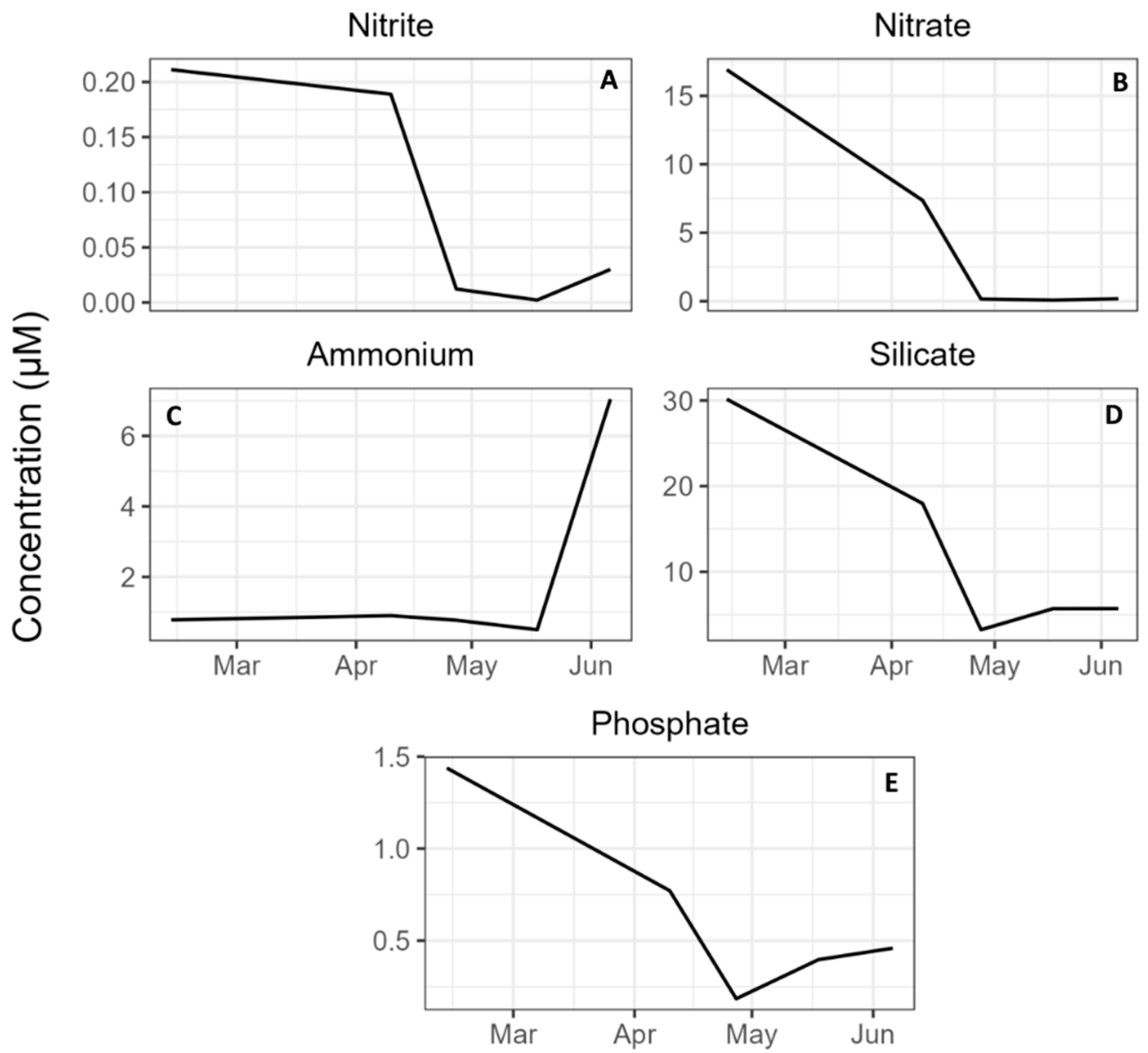
Figure 2B). Nitrate, nitrite, silicate, and ammonium also decreased from February to June (
Figure 3A,B,D,E), while ammonium showed the opposite trend (
Figure 3C).
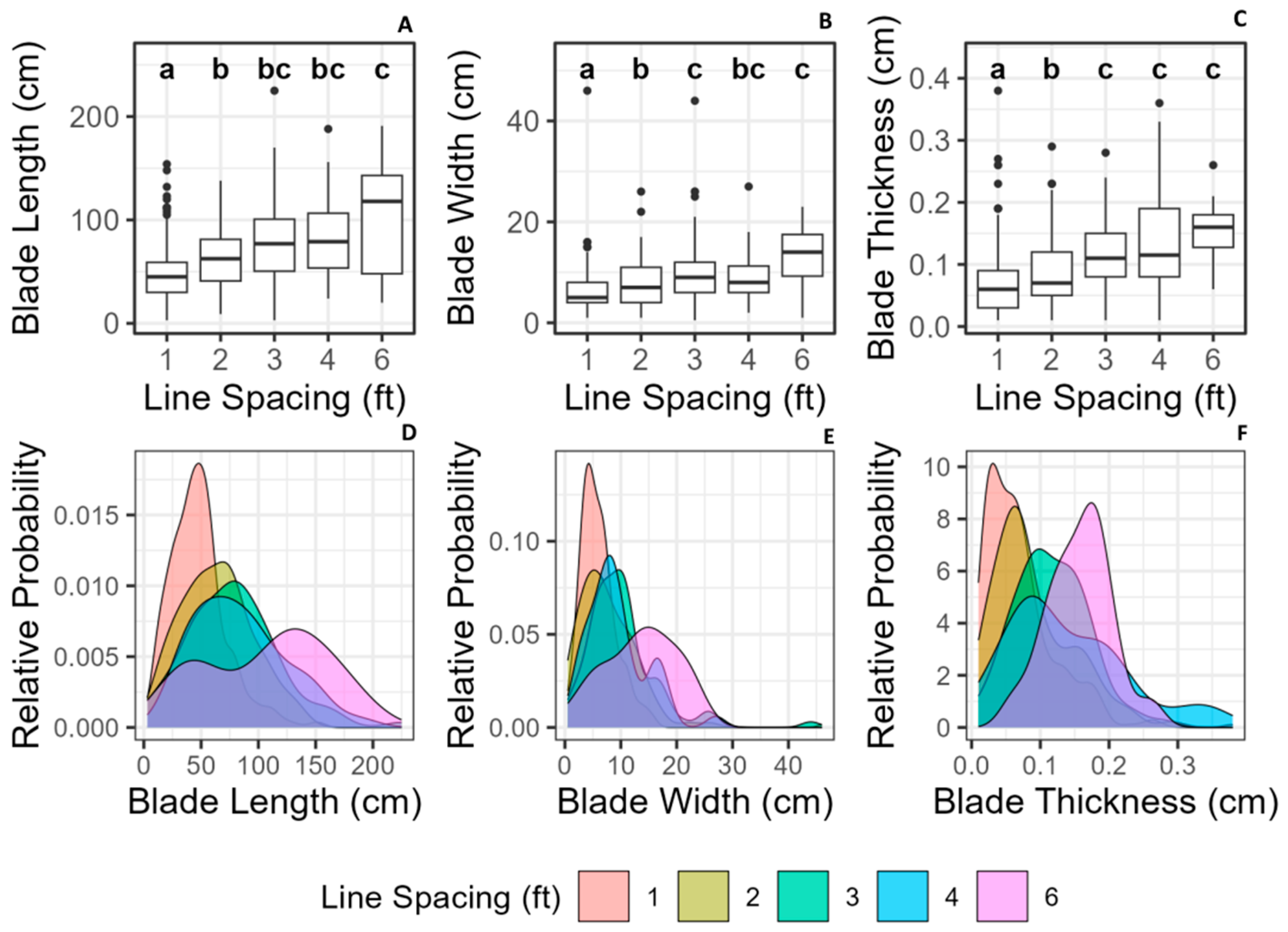
Line spacing significantly affected blade length, width, and thickness (
Figure 4 and
Table 2). No significant differences in blade density were found at harvest (
Figure S3). Box plots show larger, wider, and thicker blades as line spacing increased (
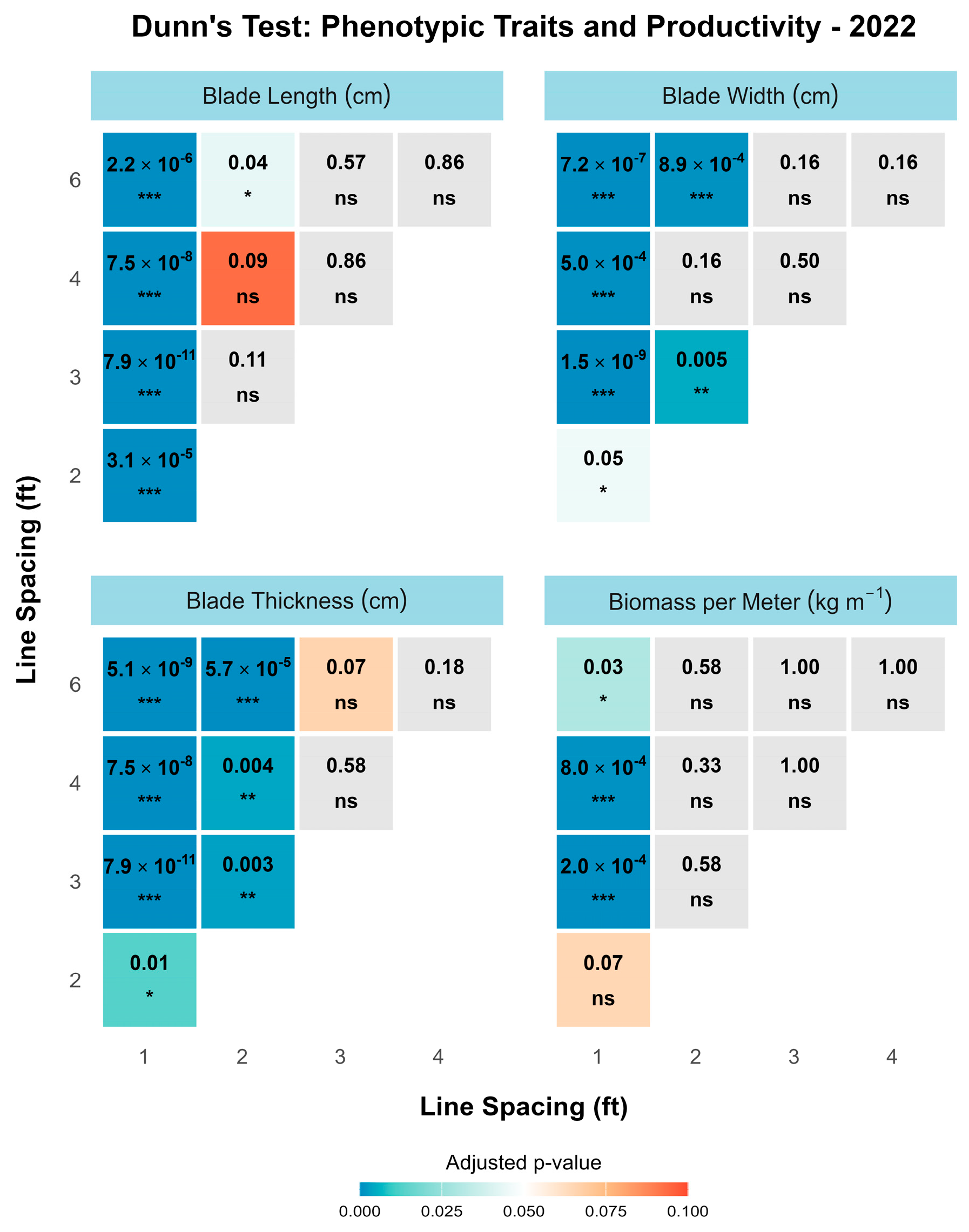
Figure 4A–C). This trend was always significant between the line spacings of 0.31 m (1 ft) and 0.61 m (2 ft) vs. 1.83 m (6 ft). Nonetheless, the levels of significance between treatments varied (0.001 <
p < 0.05) depending on the phenotypic trait assessed, as shown in
Figure 5, which displays outputs from Dunn’s post hoc test.
Probability distribution plots indicate that line spacings of 1.83 m (6 ft) and 1.23 m (4 ft) are the only configurations likely to yield sporophytes reaching 200 cm in length under the tested farming conditions (
Figure 4D). Blade width and thickness would likely remain under 30 and 0.3 cm, respectively, across all line spacings tested (
Figure 4E,F).
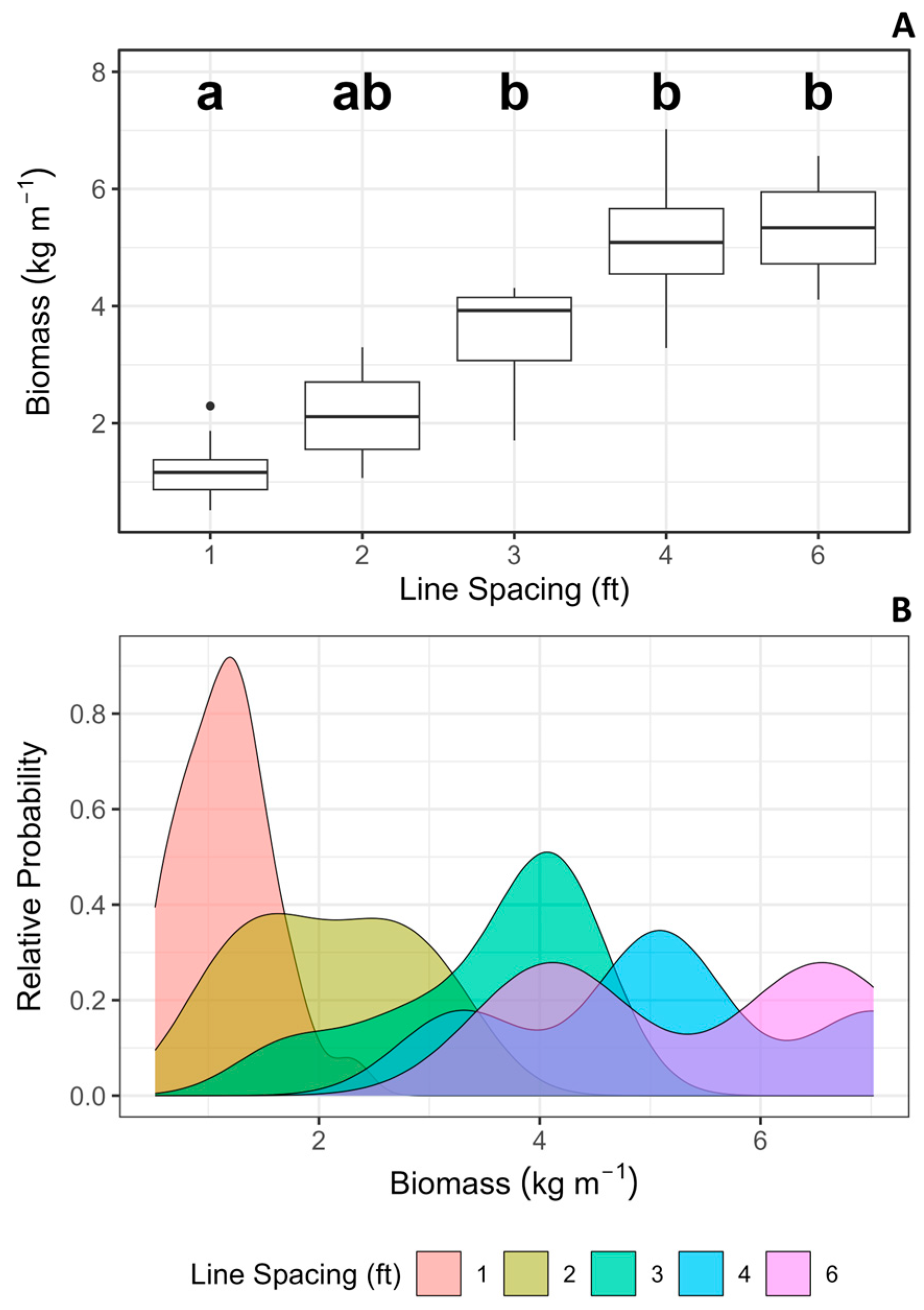
As with phenotypic attributes, line spacing also significantly affected yield per meter (
Table 2). Yield per meter was significantly lower at 0.31 m (1 ft) spacing than at all other treatments, except 0.61 m (2 ft) spacing (
Figure 5 and
Figure 6A). The level of significance varied across line spacings, with 0.31 m (1 ft) differing from 1.83 m (6 ft) and 1.23 m (4 ft) the most (
Figure 5). Overall, the 0.31 m (1 ft) spacing treatment showed a probability of yielding up to ~2 kg per meter, while all other spacings could yield 3 kg or more (
Figure 6B).
4. Discussion
Kelp farming is a relatively young maritime industry in Alaska. The sector is invested in learning how to increase overall production efficiency for
Alaria marginata grown at scale. Here, we measured the effects of cultivation line spacing on blade phenotype and yield per meter to assess potential tradeoffs for this species. Environmental conditions at the site reflected typical regional trends in temperature, water transparency, and nutrient concentrations. Sea surface temperatures tend to increase sharply with longer photoperiods, which, in turn, promote phytoplankton blooms driven by high nutrient availability. This dynamic is responsible for the annual reduction in water transparency and nutrient concentrations observed throughout the Gulf of Alaska, typically between April and May [
20,
21]. Opposite to all other nutrients measured, ammonium concentrations increased due to the presence of large salmon runs in the area.
Results showed that
A. marginata grown with wider cultivation line spacing exhibited larger thalli and higher yields per meter than those grown with closer spacing. These findings align with other studies demonstrating that kelp length and productivity are strongly density-dependent, with increased blade density resulting in reduced growth due to competition for various resources [
9,
22]. For example, at high densities, blades compete for light and nutrients while potential overlapping boundary layers and insufficient water exchange may restrict adequate nutrient delivery to tissues, suppressing overall productivity. Increasing spacing may relieve these physical and biological constraints, improving resource access across all individuals so that growth gains outweigh losses due to blade density per area. Similar results and data interpretations have been described for a pilot polyculture of
Saccharina latissima and
Nereocystis luetkeana, deployed in Kodiak, Alaska [
5]. They have also been described for
Saccharina latissima cultured at a variable-spacing research farm at the same site [
14]. The authors suggest that increasing the spacing between cultivation lines could improve overall growth, potentially driven by reduced competition for light and nutrients.
In essence, our study and the polyculture assessment mentioned above suggest that physical transport capacity and light availability, rather than intrinsic growth potential, may be the primary bottlenecks limiting yield in the system tested. Nonetheless, further fine-scale measurements of flow, light, and nutrient availability within and outside different line spacing systems will be required to quantify the full extent of potential resource limitations. Beyond the biological responses observed, line-spacing assessments carry important practical and economic implications. Spacing directly determines material requirements and labor investments, including the purchase or production of seeded line and the effort required for deployment and harvesting [
23]. Denser configurations also impose higher environmental burdens, including increased fuel use, greater vessel time devoted to tending operations, and other associated operational demands.
However, evaluating production performance solely based on yield per meter of cultivation line may obscure the true biomass production potential at the array or farm scale. Without accounting for yield per unit of cultivation area, assessments of overall investment efficiency relative to returns remain incomplete. Incorporating yield per unit area would provide a more comprehensive and realistic evaluation of A. marginata biomass production within a given leased cultivation area. This metric could not be evaluated in the present study because biomass from edge lines was not collected, and the experimental arrays were likely too small to fully resolve production outcomes across the widest spacing treatment (1.83 m [6 ft]). These practical, real-world considerations are critical for identifying cultivation strategies that are both productive and sustainable.
Market demands further influence optimal spacing decisions. Kelp food markets prioritize a combination of physical quality, nutritional composition, and post-harvest performance. For food applications, traits such as blade length, texture, and visual appeal—including uniform color and minimal fouling, as observed in our overall biomass—are often emphasized [
24,
25]. These characteristics were more closely associated with phenotypes obtained under wider line-spacing treatments than with those produced under closer spacings. In contrast, fertilizer markets place less emphasis on blade size or appearance and greater importance on biochemical composition and processing efficiency [
26,
27]. Although chemical composition was not assessed in the current study, it warrants further investigation given its direct relevance to product quality and market value.
Lastly, we must highlight that this study was limited in scope to biological yield responses of A. marginata under controlled spacing conditions in a specific site and one growing season, and thus did not account for interannual variability, broader environmental gradients, or economic trade-offs that may affect the generalizability of the results to commercial-scale farming across Alaska. Nonetheless, the insights provided here, combined with additional factors such as site-specific constraints, input costs, and target product profiles, can help farmers better evaluate whether a given location and spacing strategy will likely deliver the desired biological outcomes alongside the economic returns required before scaling up operations.