


Simple Summary
Sheep and goats have evolved to survive in harsh environments such as deserts and mountains. They have found ways to live, grow, and reproduce in these conditions. To understand this adaptation, researchers examined almost 1800 scientific papers, focusing on the 86 most useful ones. The studies show that these animals adapt in several clever ways. For instance, they may have special coat colors, compact sizes, or other physical traits that help them stay cool, conserve water, or travel long distances to find food. Their hearts, lungs, and temperature control systems adapt to enable them to cope with extreme heat, cold, and drought. Their stomachs are highly efficient at extracting nutrients from dry, tough plants that other animals cannot digest. Internal chemical signals help them time reproduction and growth according to the seasons and scarce resources. Thanks to these innate advantages, raising sheep and goats is often the best—or sometimes the only—way for families in areas with limited resources to earn a living. These hardy animals transform challenging landscapes into sources of meat, milk, and fiber, providing vulnerable communities with a reliable supply of food and income while they adapt to climate change.
Abstract
This narrative review aims to summarize, synthesize, and organize current knowledge on the adaptation of sheep and goats to stressful environments and to discuss how these adaptations contribute to food security in vulnerable communities. A structured search of Web of Science, Scopus, PubMed, and Google Scholar was conducted using combinations of terms related to sheep and goats, harsh environments (e.g., arid and semi-arid regions, heat stress, water restriction, poor-quality forage), and adaptation or resilience, combined with Boolean operators. A total of 1718 research publications were found, of which 86 were retained as the most relevant because they provided direct and detailed evidence on anatomical, physiological, digestive–microbiome, behavioral, and genomic adaptations of sheep and goats to stressful environments. The selected studies describe a wide range of phenotypic and integumentary traits, thermoregulatory and endocrine responses, digestive and microbial adjustments, behavioral strategies, and genomic signatures that, together, allow small ruminants to maintain basic functions, reproduction, and production under conditions of climatic and nutritional stress. Evidence from these studies also highlights how adaptive traits support herd productivity, economic stability of households, and the sustainable use of natural resources in regions where climatic variability and resource scarcity are common. Overall, the synthesis presented here underscores the importance of conserving and strategically using locally adapted sheep and goat breeds, incorporating resilience-related traits into breeding and management programs, and prioritizing further research on genomic, microbiome, and epigenetic mechanisms that underpin adaptation to harsh environments.
1. Introduction
Globally, around 445 million people in more than 90 countries are in a situation of vulnerability due to climate catastrophes, where phenomena such as cyclones, floods, or droughts have caused more than 1,252,000 deaths [1]. In this context, developing countries, particularly those in the southern portion of the planet, such as Latin America, Africa, and Asia, are at medium to very high levels of vulnerability [2]. However, these regions also have the largest sheep and goat populations in the world [3]. Therefore, the study of how small ruminants adapt to environmental changes due to climatic effects is extremely important, particularly in these regions of the planet.
In many arid, semi-arid, and marginal regions, sheep and goats are managed predominantly by smallholder and pastoral households whose livelihoods are highly dependent on natural resources. In line with widely used FAO and IPCC frameworks, we refer here to vulnerable communities as populations whose food security and income are strongly exposed to climatic and economic shocks, whose livelihoods are highly sensitive to those shocks because they rely on climate-dependent production systems, and whose adaptive capacity is limited by restricted access to land, capital, infrastructure, technology and social protection [4,5,6]. In these areas, sheep and goats are mainly bred for meat and milk production, but they also provide fiber and skins, manure for fertilizing crops, and serve as a form of savings and insurance that can be mobilized in response to climatic or economic shocks.
From an animal physiology perspective, stress can be defined as a state in which environmental or management challenges threaten the homeostasis of the animal and trigger coordinated neuroendocrine, metabolic, and behavioral responses aimed at restoring internal balance [7,8]. In the context of small ruminant production, key stressors include high ambient temperatures, water scarcity, poor or fluctuating forage supply, and other characteristics of harsh environments. When such stressors are intense or prolonged, they may exceed the animal’s adaptive capacity, leading to impaired welfare, reduced growth and reproductive performance, and higher mortality, whereas adapted breeds can tolerate these conditions with less disruption of homeostasis.
Given the growing problem of food security, small ruminants, particularly goats and sheep, seem promising to solve this difficulty, largely due to their capacity to survive in areas with a lack of water and food as well as in harsh environments, in comparison with larger ruminants [9]. On a daily basis, farming of small ruminants is associated with poor and marginal conditions. However, a more adequate definition is based on the close relation of these species with environmental conditions limited by extreme temperatures, low water availability, and low value forages, where any other species could thrive. In this context, Feleke et al. [10], focused their study on the analysis of the preferences of goat and sheep producers to select their animals, foreseeing circumstances of food and water shortage, and heat stress; considering that the breeding of small ruminants has a natural capacity to restore the concept of “green production”, since this activity is practically at the margin of environmental pollution that, in general, is related with intensive production systems, like the ones of the beef and milk producers [11]. Moreover, in the face of an increasingly evident and alarming global warming scenario, small ruminants have an elevated production potential, which turns them into key species to provide animal protein to the growing human population [12].
Globally, domestic sheep (Ovis aries) and goats (Capra hircus) play an important role in the economy and food security of millions of people, particularly in vulnerable rural populations. Because of their relatively small body size, flexible feeding behavior and ability to use heterogeneous vegetation, these small ruminants can be raised in agroecosystems where crops and larger livestock cannot be maintained, and they are consequently less affected by extreme temperatures than many other domestic species [12,13].
In arid, semi-arid, and marginal regions, small ruminants often coexist with cattle and other livestock species, yet they fulfill partially distinct economic roles. Sheep and goats generally require lower initial investment, can be purchased and sold in smaller units, and can be more easily adjusted to short-term cash needs, making them particularly suitable for households with limited capital. Compared with larger ruminants, these species are able to use a wider range of forage resources, including shrubs and crop residues, and to maintain productive function under conditions of low feed availability and quality, which reduces the risk of catastrophic losses during droughts. Meat and milk from sheep and goats typically command higher prices per unit of product in many local markets, partly reflecting their suitability for household-level consumption and cultural preferences, whereas cattle often represent longer-term assets with higher individual value but also higher feeding and management costs. In vulnerable communities, small ruminants therefore contribute not only to the direct provision of animal-source foods (meat, milk and dairy products) but also to income diversification, savings, and insurance functions that complement those of larger livestock.
In this regard, both goats and sheep have developed mechanisms to effectively regulate their body temperature, which is of vital importance to maintain their overall health and productivity. These animals are adept at minimizing water loss. They can tolerate dehydration better than cattle, losing up to 30% of their body’s water without major physiological problems. This is achieved by concentrating their urine and reducing its volume, due to an efficient renal system that can reabsorb water [14]. Goats, in particular, are adept at selective feeding, which allows them to consume moisture-rich forages, which decreases their water requirement. This ability helps them meet their hydration needs even in dry conditions. Sheep can also adapt by eating succulents, if available. Also, in extremely hot conditions, both species reduce their metabolic rate to reduce internal heat production. This adaptive strategy allows them to minimize their total heat load, thereby maintaining homeostasis [15]. Conversely, goats and sheep show elevated expression of heat shock proteins, in particular, HSP70—this protein helps to stabilize and repair heat-affected proteins [16]. Such genetic adaptation improves cellular resistance to heat and ensures survival in hot environments. In addition, some genes involved in thermoregulation and metabolic efficiency show increased expression in these animals, which contributes to their resilience [17].
Likewise, there is a growing theory that points out that microorganisms assume a fundamental role in the development of these adaptation characteristics, because the microbiotic complexes of each organism confer immunologic, metabolic, and behavioral benefits, and a disturbance in these complexes leads to stress and disease episodes [18]. Nevertheless, the involvement of microorganisms in different evolutionary and adaptive processes will not be discussed in this document, given that it is a highly complex topic and the understanding of the symbioses and perturbations presented at the microbiome level under stress conditions is still virtually unknown. Therefore, it will only be described in information related to the behavior that can be observed and measured, for both goats and sheep, when they are submitted to stress conditions and how they modify their metabolism to cope with these changes.
Based on the above, this narrative review will analyze information on the different adaptive mechanisms that goats and sheep have developed that help them cope with extreme environments. This information is necessary to understand the physiological or genetic mechanisms underlying the tolerance of extreme conditions and, thus, to propose more efficient management schemes that help increase the productivity of these animals and improve the quality of life of the people who depend on these production systems.
2. Search Strategy and Selection of Literature
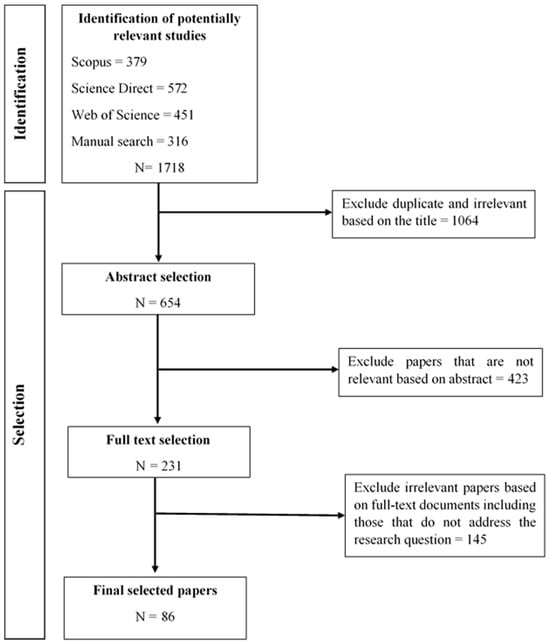
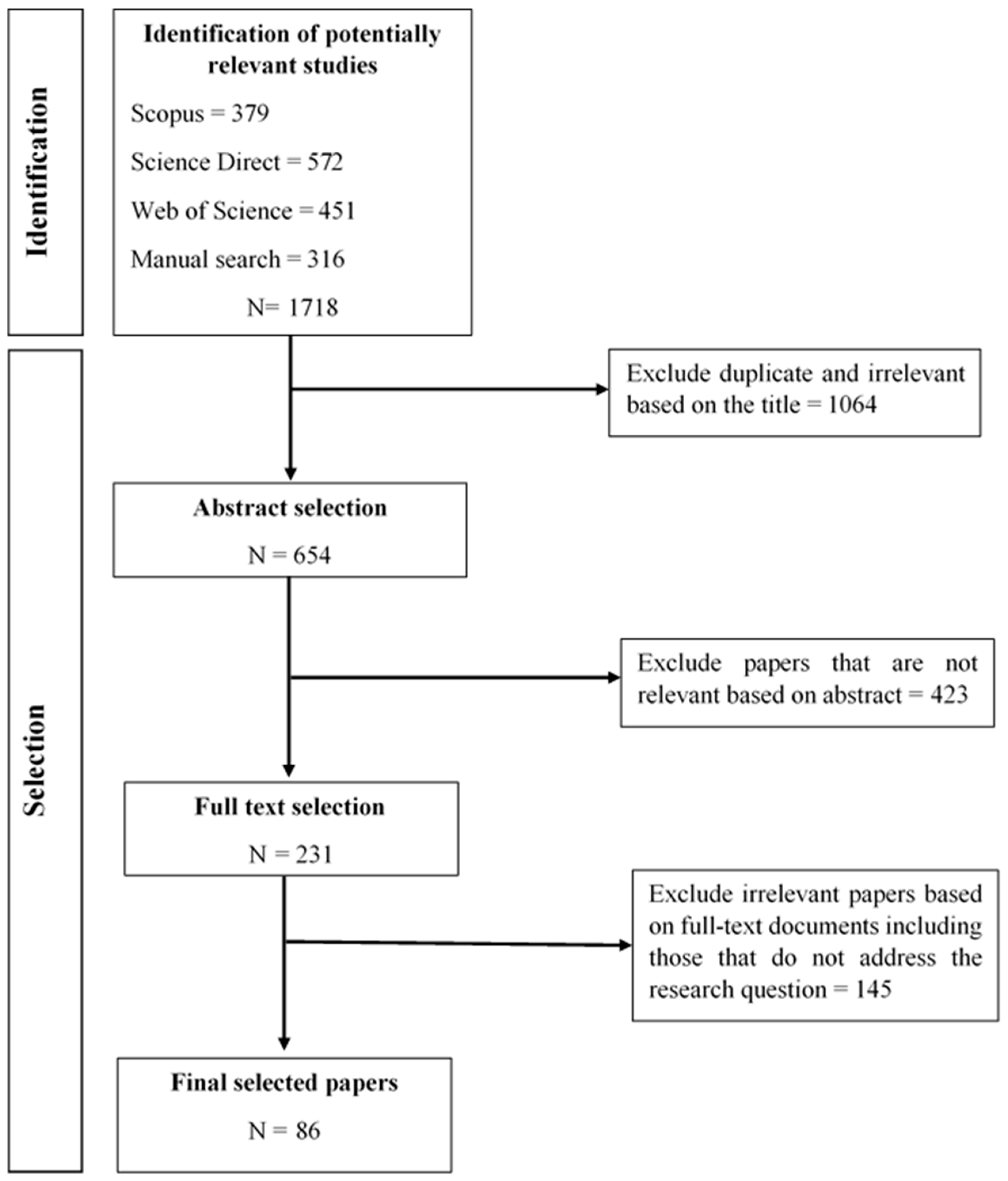
This narrative review is based on a structured search of the scientific literature on adaptation of sheep and goats to stressful environments. The search was conducted in Web of Science, Scopus, PubMed, and Google Scholar using combinations of keywords and Boolean operators related to species (“sheep”, “goat*”, “small ruminant*”), environments (“arid”, “semi-arid”, “harsh environment”, “drought”, “heat stress”, “water restriction”, “poor-quality forage”), and adaptation (“adaptation”, “resilience”, “tolerance”) (Figure 1). The initial search yielded 1718 records after removal of duplicates. Titles and abstracts were screened to retain studies that (1) involved sheep and/or goats; (2) exposed animals to naturally occurring or experimentally simulated stressful environments (e.g., high temperature, water scarcity, feed shortage or low-quality forage); and (3) reported anatomical, physiological, digestive, behavioral, or genomic responses relevant to adaptation. We excluded studies focused only on monogastric species, stressors unrelated to environmental or nutritional conditions, purely in vitro or bioinformatic analyses without clear linkage to adaptive traits in vivo, and articles not available in English or Spanish. After full-text assessment, 86 core studies were selected because they provided direct evidence on adaptation mechanisms in sheep and goats in harsh environments; additional review articles were used to complement background information and to frame the discussion. For each study, information on species and breed, environment, type of stressor, traits evaluated, and main outcomes was extracted and synthesized thematically according to the level of biological organization (morphological, physiological, digestive–microbiome, behavioral, and genomic/epigenetic). Owing to the heterogeneity of designs and response variables, the synthesis is qualitative and integrative rather than a formal meta-analysis.
Figure 1.
A PRISMA flow diagram detailing the literature search strategy and study selection for the literature review.
3. Results
3.1. Production System and Its Impact on the Adaptation to the Environment
Under the current climatic stage, recently, some studies have analyzed how the animals adapt locally to extreme climatic conditions [19]. Nevertheless, it is known that one of the factors that greatly influences the adaptation processes is the production system itself. In Tibet, it was found that the highest variations in the fiber diameters of Kashmir goats are related to adaptations to hypoxia and stress response metabolism due to the altitude, which is directly related to the production system of this breed [20].
Therefore, adaptation to different environmental and management conditions is an important characteristic that must be considered in genetic improvement and selection schemes, as it is a systematic condition that will vary depending on the degree of involvement of organs, tissues, and body fluids. Therefore, the ability to become in harmony with the environment in a short period of time will significantly help to reduce stress in animals, will increase productivity levels, and will make the activity friendlier to the environment [21]. In addition, given the background, it is expected that the economic value of small ruminants, especially that of native or local breeds, increases as a result of climatic change since, in the presence of these adverse conditions, the genetic variability of these populations is a key factor that would allow the production of highly adaptable and hardy animals [22].
In this regard, there is evidence that the environment in which small ruminants develop has a profound impact on the ability of individuals to proliferate the species, for example, Zarazaga et al. [23] found in their review that altitude tends to decrease the testicular size of male goats, delay the age at first service, prolong the inter-lambing interval, and reduce fertility in female goats. Makhlouf et al. [24] found that the reproductive efficiency of sheep in mountain areas at altitudes above 3500 m a.s.l. remains poor, with fertility fluctuating between 40 and 48%; but when acutely exposed, fertility is nil.
3.2. Small Ruminants as a Model of Adaptation
It is known that stressors, like heat or cold, negatively affect productive behavior through growth decrease and milk or meat production, as well as immunological aspects, making the animals more susceptible to diseases and, in extreme cases, causing their death [25]. For this, energy conservation and variation between thermoregulatory response and electrolytic equilibrium are key adaptations for small ruminants to recover after going through episodes of lack of food or, in general, challenging environmental and management conditions [26]. Some examples of these adaptations have been reported in Morada Nova sheep, as they possess a thermal conservation mechanism during the night because they adjust their rectal temperature when the rates of sensible heat loss surpass the heat generated by the metabolism [27]. Likewise, other examples have been reported for Salem Black and Amanabadi goats, and Awassi and Dorper sheep, where low water consumption and no modifications in feed intake are observed under high ambient temperature conditions (>35 °C) [28]. Similarly, Torres-Hernández et al. [29], in their review, found reports of Black Bedouin goats in Israel withstanding up to two days without drinking water. Therefore, these characteristics make small ruminants an excellent livestock option to tolerate extreme environmental conditions.
Conversely, features such as seasonality and reproductive aptitude are recognized as phylogenic adaptation mechanisms developed to minimize the environment’s impact on the offspring’s survival. One hypothesis suggests that these adaptations are directly related with some hematologic aspects, as it has been found that various types of hemoglobin interact in different ways in the face of extreme environmental changes, and the response of the animals is directly related to adjustments in several reproductive abilities. Some examples like elevated prolificacy in some genotypes and the onset of reproductive activity are in function of the environmental conditions [30].
Therefore, it is recognized that both sheep and goats have developed a wide variety of environmental adaptation mechanisms that include digestive, physiologic, metabolic, or endocrine modifications and/or alterations. These have helped to consider them as less susceptible to environmental stressors (temperature, humidity, photoperiod, solar radiation, and wind speed), in comparison with other domestic ruminants and this converts them into an excellent model to study genetic adaptation to different environments [21,31].
3.3. Anatomic and Metabolic Adaptations
Generally speaking, morphologic characteristics of the animals that result from a high adaptation capacity and resilience to different climatic conditions, can be observed in corporal conformation, length, coat color, and structure, sweat and salivary glands, subcutaneous fat, exposure surface of the skin, volume, and digestive anatomy [32]. Because of this, several studies have focused on documenting adaptation evidence, and where under stress conditions, the body must redistribute the corporal and energetic reserves at the expense of a decrease in growth, reproduction, production, or health itself, to find a new dynamic balance, which requires a myriad of corporal and physiological responses [33].
Fat-tailed sheep represent a classic example of morphological adaptation to harsh and highly variable environments. The accumulation of adipose tissue in the tail and rump provides a readily mobilizable energy reserve that can be exploited during periods of feed scarcity, long-distance movements, or prolonged drought. This physiological buffer allows animals to maintain basic functions, reproductive activity and, to some extent, milk production when pasture biomass and quality are severely compromised [22,28,34,35]. However, the adaptive value of the fat tail is context dependent: in intensive or semi-intensive systems targeting lean meat production, excessive tail fat may be penalized by carcass grading schemes and consumer preferences and may also be associated with lower feed efficiency under constant high-quality diets. Thus, fat-tailed phenotypes should not be regarded simply as a curiosity of traditional breeds, but as a strategic resource for production systems exposed to recurrent climatic shocks, where the capacity to withstand nutritional stress and recover quickly is often more important than maximal growth.
On the other side, in different sheep and goat genotypes, there have been observed unique adaptation abilities to dry, warm, and undernourished conditions. They have an excellent capacity to walk long distances, with minimal or null water consumption, and where the animals have the ability to conserve water by decreasing the basal metabolic rate, elevating the respiratory rate and/or adjustment of the skin temperature, as well as a constant cardiac output [31].
Nevertheless, even when both species of small ruminants show a good tolerance to dehydration, it has been reported that goats in deserts, in general, have shown a better tolerance to heat stressors when compared with sheep in deserts [31]. This better tolerance is due, in principle, to the fact that goats recover any weight loss at the next water point, and may even consume the equivalent of 18–40% of their body weight in a time-lapse from 3 to 10 min [9]. Nevertheless, comparatively, there is a greater amount of literature that describes this effect in larger species such as dairy cattle than in small ruminants.
Likewise, some reports indicate that certain desert goat ecotypes can withstand substantial body water losses and recover rapidly after rehydration, reflecting a high degree of physiological adaptation to arid environments. Experimental and field observations suggest that goats from these environments may survive losses of around 20–25% of live weight due to water deprivation, whereas dehydration above about 12–15% of live weight is usually fatal for sheep and most other livestock species [9]. These marked interspecific and intra-breed differences indicate that high dehydration tolerance is not a general property of all small ruminants, but rather a specific adaptation of goats from arid and semi-arid regions.
Hematological parameters provide additional insight into how sheep and goats respond to thermal and hydric stress in harsh environments [7]. Under acute or chronic heat stress and water restriction, many studies report increases in packed cell volume, hemoglobin concentration, and red blood cell counts, reflecting hemoconcentration associated with dehydration and reduced plasma volume, together with changes in blood osmolality and electrolyte balance [15,17,30]. In some cases, total leukocyte counts and the neutrophil-to-lymphocyte ratio also increase, indicating activation of stress-related neuroendocrine pathways and modulation of immune function [30]. However, in adapted breeds and ecotypes, these changes tend to be moderate and reversible once animals are rehydrated or environmental conditions improve, suggesting the presence of effective regulatory mechanisms that buffer the impact of stress on circulatory and immune homeostasis [13]. Hematological profiles should therefore be interpreted in conjunction with behavioral, endocrine, and productive responses when evaluating the adaptive capacity of small ruminants in harsh environments, and may be useful as complementary markers for identifying resilient genotypes in breeding and selection programs [7,12,30].
Other adaptation mechanisms in goats have to do with a browse capacity, because of the fact that their mouth, provided with mobile lips, allows them to select and consume leaves, buds, flowers, and fruits of woody and thorny species, thus allowing them to wander a wider range of fodder species. Furthermore, exposure to browsing experiences at early ages triggers a series of changes (morphological, physiological, and neurological) that provide a better adaptation to the environment and influence the behavior [36]. Therefore, the implementation of nutritional interventions at early ages improves gastrointestinal adaptability and helps to reduce stress, given that, in this period, the animal undergoes an adaptation process to solid food, in which molecular adjustment intervenes this process which includes absorption, transportation, pH regulation, and immune function [37].
Another topic in which evidence of adaptation has been found is at the digestive level, which has allowed sheep and goats to take advantage of various fodder species as food sources that, at the same time, present positive collateral effects (such as the anthelmintic activity of secondary metabolites, specifically against gastrointestinal nematodes). An example of these adaptations is observed in the tolerance to fodder consumption with high contents of tannins and oxalic acid, which produce changes in the rumen microbial populations, the same populations that provide a type of protection against parasitic agents. Likewise, it has been found that tannins improve digestibility and the utilization of proteins, forming complexes with the rumen proteins, and making them usable as surplus protein, thus improving immunity. In addition, it has been observed that the saliva has a binding capacity, so they can be quickly bonded to these compounds and precipitate as well as regulate the acidity to detoxify several vegetable compounds. This allows them to succeed in areas dominated by vegetable species that possess these defense mechanisms [38].
In general, goats stand out for their grazing ability and for showing anatomic and physiologic adaptations (larger saliva glands, larger absorptive mucosa surface area in comparison with other ruminants, and a capacity to substantially increase the volume of the foregut when they are fed with rich in fiber foods), which together make this species the most efficient desert-dwelling domesticated ruminant [39].
3.4. Criteria and Variables Employed to Measure Adaptation in Small Ruminants
3.4.1. Ethology and Corporal Response
To evaluate the adaptation capacity of any animal species, its behavior must be considered, in the first instance, as it is the most important and effective indicator of any disturbance, at least in short periods of time [25]. Behavioral changes in the animals are easily observable and, when under stress, the animal tends to seek refuge, change its posture, rest upwind, reduce or increase food and water consumption, or modify their urinary and fecal frequency, depending on the climate they face [40]. In this regard, some studies that have quantified the magnitude of the body response indicate, for example, in Jamunapari and Barbari goats, that body temperature and heart rate increase by up to 1.6 and 2.0 degrees, as well as 11.70 and 17.70 beats per minute, respectively, when the animals are under heat stress [41].
Therefore, knowing and understanding the normal behavior of the animals is essential to evaluate the impact of certain stressors and measure their adaptation capacity [15]. In this context, these behaviors have a marked effect on physiologic variables such as respiration rate, rectal temperature, skin temperature, heart rate, and number of sweat glands, which commonly affect the body’s biochemistry and hematology (erythrocytes, leukocytes, cell volume, hemoglobin, aspartate aminotransferase concentration [AST], alanine aminotransferase [ALT], glucose, protein, albumin, globulin, cholesterol, triglycerides, and blood urea nitrogen, non-esterified fatty acids, beta-hydroxybutyrate, cortisol, aldosterone, triiodothyronine, and thyroxine). When affected, these variables will undoubtedly modify the productive and survival response of the animals and are therefore used to measure the degree of adaptation in a variety of genotypes around the world. In this context, some reports indicate that stress in animals modifies some behavioral patterns, where they dedicate up to 5 min per day less to feeding, decrease the time they ruminate up to 45 min, and increase the time they dedicate to panting up to 100 min per day, which presents productive affectations where weight gain is reduced up to 15 g d−1 in goats, while in sheep, this decrease reaches 45 g d−1 [42].
In their review, Fernández-Foren et al. [42] indicate that variations in the Leptin hormone are a sign of endocrine, metabolic, and behavioral adaptations that help to restore homeostasis, and a decrease in their concentrations is observed when sheep are in undernourished conditions. In goats, the muscular structure is the first to decrease its metabolism when facing limited or restricted food conditions. This suggests that adaptation processes in sheep as well as in goats can be considered as an epigenetic strategy of adaptation to challenging environmental conditions [43].
3.4.2. Phenotypic Typology
Another kind of variable considered to measure the degree of adaptation is based on the phenotype, due to the fact that the environment directly interferes in the selection pressure, helping to shape phenotypic variation and leaving “traces” in the genome of the breeds that have been developed in different agroecological zones [44]. Body traits such as body length, height, chest circumference, horn length, ears, and tail, as well as the coat color, skin and mucous pigmentation, are the zoomometric and phaneroptic variables most used to study the capacity of adaptation to various stressors, as well as the study of the genes associated with their expression [45].
There are observed, for example, adjustments in the physical dimensions of some corporal structures, finding that the extremities are smaller in individuals that live in high and cold zones [46], as well as a greater length of structures such as ears—in goats—and tail—in sheep—in individuals that are developed in warm environments [47]. Therefore, these phenotypic changes act as adaptation indicators in different environments. Likewise, Lopes-Neto et al. [46] developed an index of pupil stress, which considers the increase in pupil dilatation when goats are exposed to high environmental temperatures. As a result, the recognition of these characteristics is critical, from an adaptive point of view, when choosing animals that will be integrated into a particular environment.
A distinctive feature in any breed or genotype is the color of the coat, which can be considered as a genetic factor in different climates. Some reports even point out that the color affects all heat tolerance criteria (rectal temperature, respiratory rate, heart rate, heat stress index, and several hematologic parameters), suggesting that animals of different colors possess different thermoregulatory ability [48,49]. In this context, it has been found that animals with white and light coats reflect between 50 and 60% of the direct solar radiation [28,50]. Nevertheless, the penetration to the skin is in function of the coat structure, not only the color [51]. Thus, the tolerance and adaptation criteria of the animals are, in principle, determined by a heat transference to the nucleus of the skin through the dilatation of arterioles towards the extremities, ears, and snout, allowing an increase in the peripheral blood flow, facilitating the loss of heat [27].
Evidence of the aforementioned has been reported [28] when observing a lower urinary rate in dark-coated animals and a greater reflection of solar radiation, minor heat absorption, and lower superficial temperature in light-coated animals [26]. Chokoe et al. [50] indicate that black-colored animals show a better adaptation to the cold, as the black pigment helps in the increase in temperature because color allows us to catch more solar energy, allowing homeostasis [52]. Nonetheless, the previous information is contradictory for desert zones, since black-colored goats predominate in these zones, which could be attributed to the fact that they have the advantage to face direct exposure to solar radiation and limit their water consumption for up to four days [25].
Furthermore, producers in Nigeria, do not select light-coated animals because they consider that these specimens are more susceptible to predator attacks, as well as to theft, and having higher risks when they move away from the herd, even when the same species has developed protection mechanisms against predators. Also, there have been observed genes associated with dark colorations in sheep and goats, which are associated with higher body weight, which is of utmost importance, as a higher weight is related to better survival [52,53,54].
3.5. Metabolic Response Under Stress
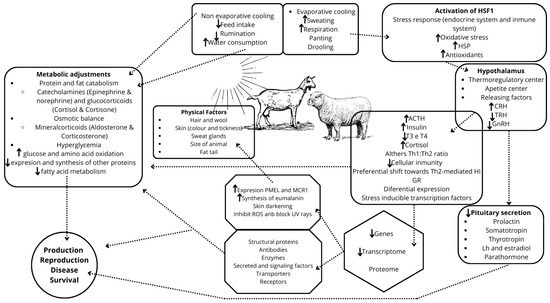
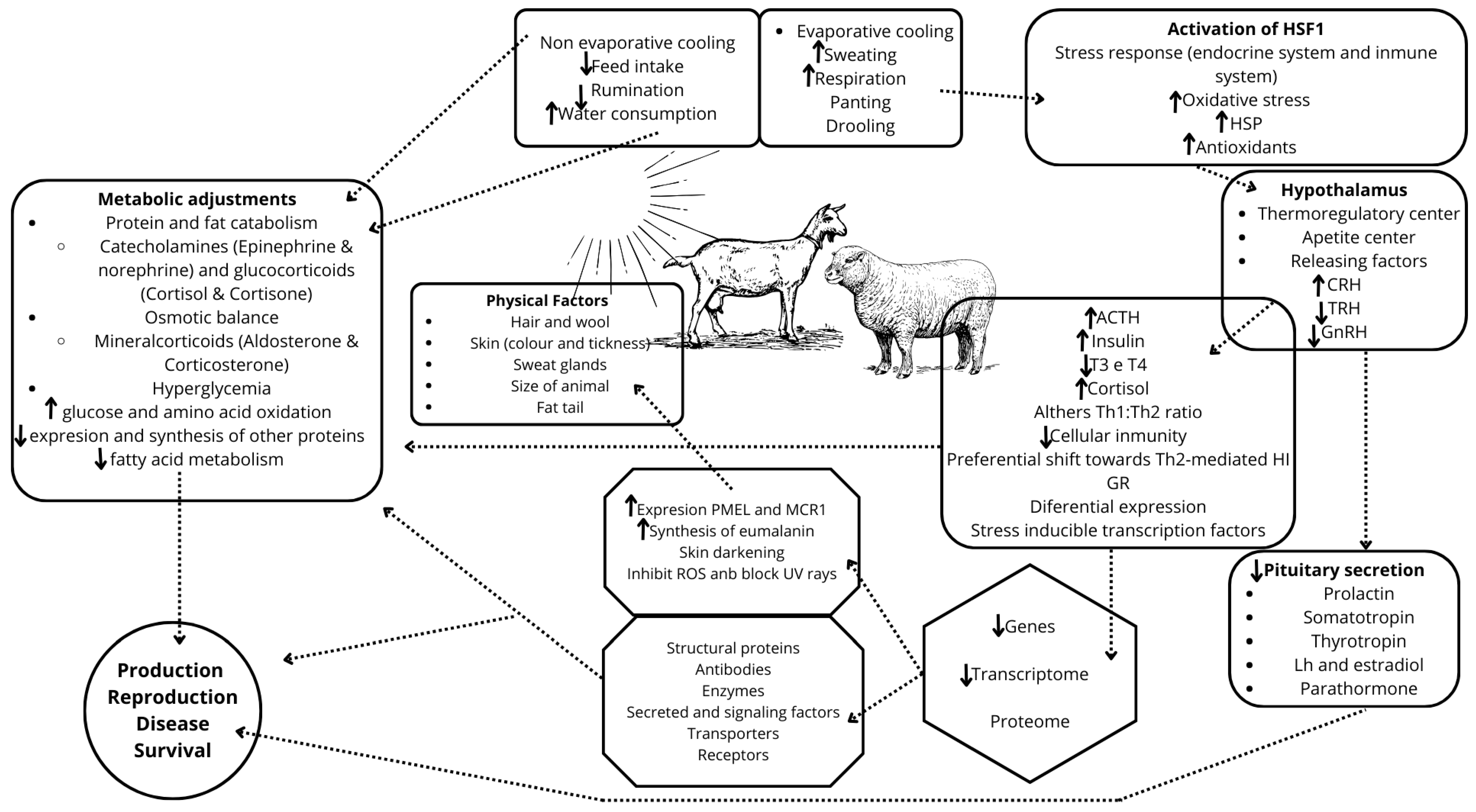
Figure 2 provides an integrative overview of the main environmental stressors affecting sheep and goats in harsh environments and the corresponding adaptation mechanisms at different levels of biological organization. The diagram links climatic and nutritional stressors (heat, water scarcity, feed shortage, and low-quality forage) to morphological and integumentary traits, physiological and endocrine responses, digestive and microbiome adaptations, behavioral strategies and genomic/epigenetic mechanisms, and highlights how these mechanisms jointly support productive function and, ultimately, the food security of vulnerable communities.
Figure 2.
Schematic representation of the multi-level adaptation mechanisms that enable sheep and goats to cope with stressful environments. Environmental stressors (heat stress, water scarcity, feed scarcity, and low-quality forage) are shown at the top, with arrows indicating their effects on different levels of biological organization: morphological and integumentary traits (body conformation, coat color, fleece and skin characteristics); physiological and endocrine responses (thermoregulation, water–electrolyte balance, heat shock proteins); digestive and microbiome adaptations (use of fibrous, low-quality diets, modulation of rumen function and microbial communities); behavioral strategies (altered grazing patterns, shade-seeking, social behavior); and genomic and epigenetic mechanisms. The right-hand side of the figure illustrates how these combined adaptations contribute to resilience, productive performance, and food security in vulnerable communities.
Table 1 shows that there is no consistent trend or pattern in the evaluation of particular stressors. However, most of the studies considered focus on describing increasingly frequent phenomena arising as a result of climate change in various parts of the world.
Table 1.
Employed variables to measure the degree of adaptation of small ruminants to several stressors in different agro-environments.
The phenomena referred to, are food restrictions due to droughts, water scarcity, and thermal stress. In this regard, the study of Mascarenhas et al. [66], stands out, who report the development of a thermal stress index in native sheep, as part of the efforts for the development of more effective genetic improvement schemes, in the face of the increasingly serious effects of climate change. The development of these tools can be very useful to evaluate, in a fast and more efficient way, the level of adaptation when the animals are subjected to particular stress conditions.
Although sheep and goats possess numerous adaptations that allow them to survive and remain productive in harsh environments, these adaptive responses do not automatically guarantee good welfare [17]. Prolonged exposure to high heat loads, water restriction, feed scarcity, and heavy parasite burdens can compromise one or more dimensions of welfare, including thermal comfort, satiety, health, and the ability to express normal behavior. Many of the physiological and behavioral changes described in this review (e.g., increased respiratory rate, altered grazing patterns, reduced activity, mobilization of body reserves) should therefore be interpreted not only as indicators of adaptation but also as potential signs of chronic challenge. In vulnerable production systems, welfare outcomes will largely depend on how effectively husbandry practices support the animals’ adaptive capacity—for example, through provision of shade and shelter, reliable access to water, strategic supplementation, parasite control, and low-stress handling [46,68]. Breeding for resilience traits should thus be complemented by management interventions that reduce the intensity and duration of environmental stressors, so that the adaptive potential of small ruminants is expressed under conditions compatible with acceptable welfare standards [58].
After considering the analyzed information, it is suggested that the studies about some particular adaptation mechanism must consider the animal as a whole. This is because the generation of this knowledge is of utmost importance to understand how the animals adapt in different environments, and will serve as a reference in future genetic improvement programs that consider these evolutionary advantages of small ruminants in increasingly complex agroecological environments [29].
3.6. Long-Term Implications in Adaptive Processes in the Genetic Improvement of Small Ruminants
In evolutionary biology, the traditional perspective that genes “guide” and phenotypes “follow” is taken, in the adaptive evolutionary process. Based on this, adaptation can be defined as the set of morphological, anatomic physiological, biochemical, and behavioral characteristics that arise in response to internal or external stimulations that promote well-being, encourage survival in a specific environment, and can also be inherited by the next generation. In this regard, artificial and natural selection in the long term causes changes in certain regions of the genome, resulting in selection signatures that can reveal genes associated with characteristics such as horns, quality fibers, and adaptability to high-altitude hypoxia [69,70].
Likewise, it is known that natural selection plays an important role in the determination of the individuals that are better adapted to any given environment. Nevertheless, artificial selection has been widely used to improve more desirable and profitable characteristics [31]. Some findings suggest that native breeds are more adaptable than specialized breeds, as they probably possess genetic variants adapted in a unique way to specific environmental conditions that may or may not be expressed in commercial genotypes. Some evidence is related to the reduction in the water and food intake, modification in the animal’s locomotion (decrease in walking and increase in lying time), increase in live weight and concentration of blood metabolites (glucose, cholesterol, creatinine, and urea), as well as the decrease in physiological variables such as respiratory rate [9,22].
Consequently, adaptation to new environments will undoubtedly have an effect on the genotypic and phenotypic composition of the individuals of a population. In this respect, Avendaño-Reyes et al. [55] points out that stress increases the variation in a population in three main ways: (a) the directional selection imposed by the stressor can result in high mutation and recombination rates; (b) the challenges of stress to the regulatory mechanisms can release and amplify genetic and phenotypic variation previously accumulated, but not expressed; (c) stressful environments can facilitate the expression of the development of the accumulated genetic variation, but that was phenotypically neutral in a normal environment.
Therefore, these variation sources can be adaptive in stress conditions, and for this reason, any population has the possibility to evolve rapidly, to generate new genotypes more resistant and productive. Thus, the evolution of adaptive characters could be defined as a change in allele frequencies and, therefore, there must exist enough genetic variation to produce evolution by natural selection, just as it has been observed in indigenous goat populations in Africa, where multiple loci have been found that seem significant and that, under selection, can be responsible for the adaptation to the local production systems [25], as described by Akinmoladun et al. [9], who point out that the tolerance to stressors such as water scarcity depends largely on the breed. Otherwise, it is expected that the variability of these genotypes or breeds becomes reduced and, consequently, these previously described mechanisms get lost.
In this context, considering the aforementioned, improvements can be made by artificial selection and an effective crossbreeding program, but without affecting the population dynamics and taking into account what has happened in Menz sheep, where the genetic improvement schemes have been made in detriment of the black color (causing a reduction in their frequency), which has brought a negative effect on the population because the evidence indicates that parameters such as birth weight, growth rate, weight at one year, and genetic values are higher in the black genotype than in the white one [71].
These efforts could be supported by tools such as the analysis of gene expression, that allow the identification of specimens highly tolerant to several stressors, or by genome-wide association studies (GWAS), which allow us to detect selection signatures and where there is the potential to identify genes associated with phenotypic variants, making crossbreeding and artificial selection schemes more efficient [21,31].
Recent findings suggest that the circulating miRNAs can be promising biomarkers to evaluate the resilience of small ruminants and their relation to the immune system [72]. Moreover, genomic regions that codify the expression of certain proteins that are used as biomarkers have been found, like the case of the heat shock protein 70 (HSP70) and ENOX2, which have been identified as a result of the cellular and molecular response of protection against thermal stress to ensure cellular survival, or the plasma of the growth hormone and the gen IGF-1, which are used to improve the impact of heat stress in the behavior of the development of native goats [13,25].
Conversely, Kim et al. [62] and Luo et al. [72] identified, in goats and sheep, several genomic regions as potential candidates associated with adaptation to warm and dry conditions, and where the identified genes are involved in multiple route signs for an extensive variety of biochemical and cellular processes, including the melanogenesis of the thermal tolerance, body size, development, nematodes resistance, and fat deposition in the tail, as well as the energetic and digestive metabolism. Álvarez et al. [73] found in Djallonké sheep 12 candidate genes associated with selection signatures that are related to the metabolic response to stress, among which oxidative, metabolic, and thermal tolerance stress, stand out. The study carried out by Mohamadipoor-Saadatabi et al. [74] found, in East Friesian, Lacaune, Dorset Horn, and Texel sheep, candidate genes for adaptation to warm environments (CORIN gene), to water deficit (CPQ gene), and to heat stress (PLCB4, FAM107B, NBEA, PIK3C2B and USP43 genes).
It should be noted that transgenerational effects, in combination with the recurrence of stress factors, could result in the genetic assimilation of the effects induced by stress. Thus, the accumulation of genetic variance, phenotypic matching of the stressor effects, and the inheritance of these modifications will ensure the evolutionary persistence of the response strategies to stress. Just as pointed out by Bertolini et al. [75] and Henkel et al. [76], who found genetic signatures in goats that have helped in understanding the domestication and adaptation process in 144 breeds, and where the changes that are observed in the structure of the genome as well as the possible genes that could have contributed in breed differentiation are emphasized, it is of utmost importance to understand the evolutionary and adaptation processes of these species as a response to the food necessities of the population.
Taken together, the genomic signatures identified in locally adapted sheep and goat populations indicate that adaptation to stressful environments is a polygenic and multi-trait process [45,52]. Candidate genes related to thermoregulation and integumentary traits highlight the importance of managing heat load at the body surface, whereas genes associated with water–electrolyte balance, nutrient metabolism, and immune function reflect internal mechanisms that sustain performance under chronic stress [63,64]. From a breeding perspective, these findings suggest that selection for adaptation cannot be reduced to a single locus or marker; instead, it requires a multi-trait approach that combines genomic information with on-farm phenotyping of resilience-related traits such as survival, reproductive success under stress, and capacity to maintain body condition during feed shortages [57]. Genomic regions under selection in indigenous breeds can support the development of selection indices that explicitly incorporate adaptive traits, guide marker-assisted or genomic selection strategies aimed at introgressing adaptive alleles into more productive but less resilient genotypes, and provide a scientific basis for conservation programs that prioritize populations harboring unique adaptive variants [50,60]. In many smallholder and pastoral systems, however, the application of these tools is constrained by limited recording, infrastructure, and economic incentives, so genomic information should be viewed as a complementary tool that helps to design context-appropriate breeding schemes and to preserve adaptive variation, rather than as a replacement for farmers’ own selection practices [3].
4. Future Perspectives for Small Ruminant Breeding in a Changing Climate
Locally adapted sheep and goat breeds already harbor many of the traits required for coping with future climatic scenarios, including effective thermoregulation, efficient use of low-quality feeds, tolerance to irregular water supply, and resistance to endemic diseases. A key priority is to conserve these genetic resources and to ensure that they are actively used in breeding programs rather than being replaced by highly specialized but climate-sensitive genotypes. In practice, future breeding schemes should aim to combine adaptive traits from indigenous populations with desirable production characteristics, through balanced selection within breeds, structured crossbreeding, and, where feasible, genomic or marker-assisted introgression.
Advances in genomic technologies, including dense SNP arrays and whole-genome sequencing, provide new opportunities to identify alleles and genomic regions associated with resilience traits and to apply genomic selection in small ruminants. However, the success of these tools in a changing climate will depend on their integration with robust on-farm phenotyping under realistic production conditions, especially in smallholder and pastoral systems. Future programs should therefore invest in recording schemes that capture survival, reproductive performance under stress, health, body condition dynamics, and other indicators of robustness and link these data to genomic information. At the same time, breeding objectives will need to be defined in close collaboration with farmers, taking into account their multiple goals (food, income, savings, cultural values) and the specific climate risks they face. By aligning conservation, breeding, and management strategies with projected climatic changes, small ruminant production systems can be made more resilient and continue to support food security and livelihoods in diverse environments.
Specialized high-yield dairy breeds such as Lacaune sheep, Saanen goats, and other cosmopolitan dairy genotypes have been selected primarily under temperate or relatively benign environments, with abundant high-quality feed, controlled housing, and good access to veterinary services. Under such conditions, these breeds can achieve very high levels of milk production, but they often show limited tolerance to heat stress, water restriction, low-quality forage, and endemic diseases when introduced into harsh environments. Their successful use in arid and semi-arid regions generally requires substantial investments in cooling systems, water supply, improved feeding, and health care, which may not be feasible for many smallholder and pastoral households. Consequently, relying solely on these high-output breeds to ensure milk supply in vulnerable communities exposed to climatic and economic shocks is risky and, in many cases, not viable. A more realistic strategy in difficult environments is to base production on locally adapted breeds or crossbreeds that combine part of the production potential of specialized dairy genotypes with the resilience traits of indigenous populations. In better resourced areas within harsh regions (for example, peri-urban or irrigated zones with access to markets and inputs), high-yield dairy breeds can still play an important role, provided that breeding objectives incorporate resilience traits and that appropriate management and welfare standards are maintained.
5. Conclusions
Sheep and goats possess a wide array of complementary adaptations that enable them to survive and remain productive in harsh environments characterized by high temperatures, water scarcity, and poor or fluctuating forage resources. These adaptations operate at multiple levels of biological organization. Morphological and integumentary traits such as body conformation, coat color, fleece characteristics, and skin pigmentation help modulate heat gain and loss and protect against intense solar radiation. Physiological and endocrine responses, including adjustments in respiration rate, peripheral blood flow, sweating, water–electrolyte balance, and heat shock protein expression, contribute to maintaining homeostasis under thermal and hydric stress. Digestive and microbiome adaptations support the efficient use of fibrous, low-quality feeds, and allow animals to cope with irregular feed intake, while behavioral strategies such as changes in grazing patterns, shade-seeking, and social spacing reduce exposure to extreme conditions. At the genomic and epigenetic level, signatures of selection in locally adapted breeds point to polygenic architectures underlying these traits and suggest that adaptive variation is deeply embedded in the genomes of small ruminants that have co-evolved with harsh environments.
For breeders and livestock practitioners, these findings underscore that resilience to stressful environments should be considered a central breeding goal rather than a by-product of selection for production. Conservation and strategic use of locally adapted sheep and goat breeds are crucial, especially in vulnerable communities where small ruminants underpin food security and income stability. Breeding schemes in these systems should deliberately integrate adaptive traits—such as survival, reproductive performance under stress, capacity to maintain body condition, and resistance to endemic diseases—into selection indices and avoid indiscriminate replacement of adapted genotypes with high-output but fragile breeds. At the management level, relatively simple interventions (provision of shade and water points, tactical supplementation during critical periods, and improved health and welfare practices) can substantially enhance the expression of adaptive potential and reduce the risk of catastrophic losses during climatic extremes. Policymakers can support these efforts by recognizing the value of small ruminants in climate adaptation strategies, investing in extension services and local recording systems, and promoting incentives for the conservation and sustainable use of adapted genetic resources. Future research should give priority to genome-wide association studies (GWAS) and related genomic approaches targeting resilience-related traits in indigenous breeds, microbiome analyses that clarify how rumen and intestinal microbial communities contribute to nutrient utilization and resilience under stress, and epigenetic studies exploring how early-life and transgenerational exposures to stress and shape gene expression and adaptive phenotypes. Integrative multi-omics approaches combined with robust on-farm phenotyping in diverse production systems will be essential to translate biological understanding into practical breeding and management strategies capable of enhancing food security and livelihood resilience in the world’s most vulnerable regions.
Author Contributions
J.A.M.-J. was responsible for conceptualization, methodology, investigation, data curation, formal analysis, and writing (original draft preparation). G.T.-H. and G.C.-H. were responsible for conceptualization, supervision, and writing—review. L.D.G.-R. was responsible for conceptualization, data curation, formal analysis, and review and editing. L.D.L.C.-C., L.A.M., G.J.-P., S.G.-L. and P.A.-B. were responsible for validation and writing (review and editing). All authors have read and agreed to the published version of the manuscript.
Funding
This research received no external funding.
Institutional Review Board Statement
Not applicable.
Data Availability Statement
No new data were created or analyzed in this study. Data sharing does not apply to this article.
Conflicts of Interest
The authors declare no conflicts of interest.
Abbreviations
The following abbreviations have been used in this study:
| HSP | Heat shock protein |
| THI | Temperature–humidity index |
| VFA | Volatile fatty acids |
| GI | Gastrointestinal tract |
| GIN | Gastrointestinal nematodes |
| GWAS | Genome-wide association study |
| FAO | Food and Agriculture Organization of the United Nations |
| IPCC | Intergovernmental Panel on Climate Change. |
References
- Brumfield, K.D.; Usmani, M.; Long, H.A.; Lupari, D.M.; Pope, R.K.; Jutla, A.S.; Huq, A.; Colwell, R.R. Climate change and Vibrio: Environmental determinants for predictive risk assessment. Proc. Natl. Acad. Sci. USA 2025, 122, e2420423122. [Google Scholar] [CrossRef] [Scilit]
- Ngcamu, B.S. Climate change effects on vulnerable populations in the Global South: A systematic review. Nat. Hazards 2023, 118, 977–991. [Google Scholar] [CrossRef] [Scilit]
- Torres-Hernández, G.; Maldonado-Jáquez, J.A.; Granados-Rivera, L.D.; Salinas-González, H.; Castillo-Hernández, G. Status quo of genetic improvement in local goats: A review. Arch. Anim. Breed. 2022, 65, 207–221. [Google Scholar] [CrossRef] [Scilit]
- Díaz-Cervantes, R.E. Vulnerabilidad y riesgo como conceptos indisociables para el estudio del impacto del cambio climático en la salud. Reg. Soc. 2018, 30, 1–33. [Google Scholar] [CrossRef] [Scilit]
- Flores, H.; Azita, A. Addressing food insecurity in vulnerable populations. Am. J. Nurs. 2019, 119, 38–45. [Google Scholar] [CrossRef] [Scilit]
- Wodajo, H.D.; Gemeda, B.A.; Kinati, W.; Mulem, A.A.; van Eerdewijk, A.; Wieland, B. Contribution of small ruminants to food security for Ethiopian smallholder farmers. Small Rumin. Res. 2020, 184, 106064. [Google Scholar] [CrossRef] [Scilit]
- Collier, R.J.; Renquist, B.J.; Xiao, Y. A 100-year review: Stress physiology including heat stress. J. Dairy Sci. 2017, 100, 10367–10380. [Google Scholar] [CrossRef] [Scilit] [PubMed]
- Schulte, P.M. What is environmental stress? Insights from fish living in a variable environment. J. Exp. Biol. 2014, 217, 23–34. [Google Scholar] [CrossRef] [Scilit]
- Akinmoladun, O.F.; Muchenje, V.; Fon, F.N.; Mpendulo, C.T. Small Ruminants: Farmers’ Hope in a World Threatened by Water Scarcity. Animals 2019, 9, 456. [Google Scholar] [CrossRef] [Scilit]
- Feleke, F.B.; Berhe, M.; Gebru, G.; Hoag, D. Determinants of adaptation choices to climate change by sheep and goat farmers in northern Ethiopia: The case of southern and central Tigray, Ethiopia. Springerplus 2016, 5, 1692. [Google Scholar] [CrossRef] [Scilit]
- Darcan, N.K.; Silanikove, N. The advantages of goats for future adaptation to Climate Change: A conceptual overview. Small Rumin Res. 2017, 163, 34–48. [Google Scholar] [CrossRef] [Scilit]
- Reshma Nair, M.R.; Sejian, V.; Silpa, M.V.; Fonsêca, V.F.C.; de Melo Costa, C.C.; Devaraj, C.; Krishnan, G.; Bagath, M.; Nameer, P.O.; Bhatta, R. Goat as the ideal climate-resilient animal model in tropical environment: Revisiting advantages over other livestock species. Int. J. Biometeorol. 2021, 65, 2229–2240. [Google Scholar] [CrossRef] [Scilit] [PubMed]
- Berihulay, H.; Abied, A.; He, X.; Jiang, L.; Ma, Y. Adaptation Mechanisms of Small Ruminants to Environmental Heat Stress. Animals 2019, 9, 75. [Google Scholar] [CrossRef] [Scilit]
- Runa, R.A.; Brinkmann, L.; Gerken, M.; Riek, A. Adaptation capacity of Boer goats to saline drinking water. Animal 2019, 13, 2268–2276. [Google Scholar] [CrossRef] [Scilit]
- Shilja, S.; Sejian, V.; Bagath, M.; Mech, A.; David, C.G.; Kurien, E.K.; Varma, G.; Bhatta, R. Adaptive capability as indicated by behavioral and physiological responses, plasma HSP70 level, and PBMC HSP70 mRNA expression in Osmanabadi goats subjected to combined (heat and nutritional) stressors. Int. J. Biometeorol. 2015, 60, 1311–1323. [Google Scholar] [CrossRef] [Scilit]
- Archana, P.R.; Aleena, J.; Pragna, P.; Viya, M.K.; Abul Niyas, P.A.; Bagath, M.; Krishnan, G.; Manimaran, A.; Beena, V.; Sejian, V.; et al. Role of heat shock proteins in livestock adaptation to heat stress. J. Dairy Vet. Anim. Res. 2017, 5, 13–19. [Google Scholar] [CrossRef] [Scilit]
- Sejian, V.; Bhatta, R.; Soren, N.M.; Malik, P.K.; Ravindra, J.P.; Prasad, C.S.; Lal, R. Introduction to Concepts of Climate Change Impact on Livestock and Its Adaptation and Mitigation; Springer: Delhi, India, 2015. [Google Scholar]
- Bang, C.; Dagan, T.; Deines, P.; Dubilier, N.; Dushl, W.J.; Fraune, S.; Hentschel, U.; Hirt, H.; Hülter, N.; Lachnit, T.; et al. Meta organisms in extreme environments: Do microbes play a role in organismal ad-aptation? Zoology 2018, 127, 1–19. [Google Scholar] [CrossRef] [Scilit]
- Morais Leite, J.H.G.; Evangelista Façanha, D.A.; Delgado-Bermejo, J.V.; Guilhermino, M.M.; Bermejo, L.A. Adaptive assessment of small ruminants in arid and semiarid regions. Small Rumin. Res. 2021, 203, 106497. [Google Scholar] [CrossRef] [Scilit]
- Zhao, B.; Wu, C.; Sammad, A.; Ma, Z.; Suo, L.; Wu, Y.; Fu, X. The fiber diameter traits of Tibetan cashmere goats are governed by the inherent differences in stress, hypoxic, and metabolic adaptations: An integrative study of proteome and transcriptome. BMC Genom. 2022, 23, 191. [Google Scholar] [CrossRef] [Scilit] [PubMed]
- Abied, A.; Bagadi, A.; Bordbar, F.; Pu, Y.; Augustino, S.M.A.; Xue, X.; Xing, F.; Gebreselassie, G.; Han, J.-L.; Mwacharo, J.M.; et al. Genomic Diversity, Population Structure, and Signature of Selection in Five Chinese Native Sheep Breeds Adapted to Extreme Environments. Genes 2020, 11, 494. [Google Scholar] [CrossRef] [Scilit]
- Zewdu, E.; Hailu, D.; Tadelle, D.; Kwan-Suk, K. Genomic signatures of high-altitude adaptation in Ethiopian sheep populations. Genes Genom. 2019, 41, 973–981. [Google Scholar] [CrossRef] [Scilit]
- Zarazaga, L.Á.; Gatica, M.-C.; De La Rosa, I.; Delgado-Pertíñez, M.; Guzmán, J.L. The High Testosterone Concentrations of the Bucks Used in the “Male Effect” Is Not a Prerequisite for Obtaining High Ovarian Activity in Goats from Mediterranean Latitudes. Animals 2022, 12, 954. [Google Scholar] [CrossRef] [Scilit] [PubMed]
- Makhlouf, A.; Titaouine, M.; Mohamdi, H.; Yakoub, F. Effect of differential altitude on reproductive performance and mineral assessment in Ouled Djelal ewes during the mating period. Trop. Anim. Health Prod. 2020, 52, 3275–3283. [Google Scholar] [CrossRef] [Scilit] [PubMed]
- Mili, B.; Chutia, T. Adaptive mechanisms of goat to heat stress. In Goat Science—Environment, Health and Economy; Kukovics, S., Ed.; IntechOpen: London, UK, 2021. [Google Scholar] [CrossRef] [Scilit]
- Evangelista Façanha, D.A.; Ferreira, J.; Freitas Silveira, R.M.; Nunes, T.L.; de Oliveira, M.G.C.; de Sousa, J.E.R.; de Paula, V.V. Are locally adapted goats able to recover homeothermy, acid-base and electrolyte equilibrium in a semi-arid region? J. Therm. Biol. 2020, 90, 102593. [Google Scholar] [CrossRef] [Scilit]
- Fonsêca, W.J.L.; Azevêdo, D.M.M.R.; Campelo, J.E.G.; Fonseca, W.L.; Luz, C.S.M.; Oliveira, M.R.A.; Evangelista, A.F.; Borges, L.S.; Sousa-Júnior, S.C. Effect of heat stress on milk production of goats from Alpine and Saanen breeds in Brazil. Arch. Zootec. 2016, 65, 615–621. [Google Scholar]
- Joy, A.; Dunshea, F.R.; Leury, B.J.; Clarke, I.J.; DiGiacomo, K.; Chauhan, S.S. Resilience of Small Ruminants to Climate Change and Increased Environmental Temperature: A Review. Animals 2020, 10, 867. [Google Scholar] [CrossRef] [Scilit]
- Torres-Hernández, G.; Maldonado-Jáquez, J.A.; Granados-Rivera, L.D.; Wurzinger, M.; Cruz-Tamayo, A.A. Creole goats in Latin America and the Caribbean: A priceless resource to ensure the well-being of rural communities. Int. J. Agric. Sustain. 2022, 20, 368–380. [Google Scholar] [CrossRef] [Scilit]
- Al-Thuwaini, T.M. The relationship of hematological parameters with adaptation and reproduction in sheep; a review study. Iraqi J. Vet. Sci. 2021, 35, 575–580. [Google Scholar] [CrossRef] [Scilit]
- Aboul Naga, A.M.; Abdel Khalek, T.M.; Osman, M.; Elbeltagy, A.R.; Abdel-Aal, E.S.; Abou-Ammo, F.F.; El-Shafie, M.H. Physiological and genetic adaptation of desert sheep and goats to heat stress in the arid areas of Egypt. Small Rumin Res. 2021, 203, 106499. [Google Scholar] [CrossRef] [Scilit]
- Ramachandran, N.; Sejian, V. Climate resilience of goat breeds in India: A review. Small Rumin Res. 2022, 206, 106630. [Google Scholar] [CrossRef] [Scilit]
- Carcangiu, V.; Arfuso, F.; Luridiana, S.; Giannetto, C.; Rizzo, M.; Bini, P.P.; Piccione, G. Relationship between different livestock managements and stress response in dairy ewes. Arch. Anim. Breed. 2018, 61, 37–41. [Google Scholar] [CrossRef] [Scilit]
- El Moutchou, N.; González, A.M.; Chentouf, M.; Lairini, K.; Rodero, E. Morphological differentiation of northern Morocco goat. J. Livest. Sci. Technol. 2017, 5, 33–41. [Google Scholar] [CrossRef] [Scilit]
- Mullakkalparambil Velayudhan, S.; Sejian, V.; Devaraj, C.; Manjunathareddy, G.B.; Ruban, W.; Kadam, V.; König, S.; Bhatta, R. Novel insights to asses climate resilience in goats using a holistic approach of skin-based advanced technologies. Int. J. Mol. Sci. 2023, 24, 10319. [Google Scholar] [CrossRef] [Scilit]
- Ortíz-Domínguez, G.A.; Marín-Tun, C.G.; Torres-Fajardo, R.A.; González-Pech, P.G.; Capetillo-Leal, C.M.; Torres-Acosta, J.F.J.; Ventura-Cordero, J.; Sandoval-Castro, C.A. Selection of forage resources by juvenile goats in a cafeteria trial: Effect of browsing experience, nutrient and secondary compound content. Animals 2022, 12, 1317. [Google Scholar] [CrossRef] [Scilit]
- Sun, D.; Mao, S.; Zhu, W.; Liu, J. Proteomic identification of ruminal epithelial protein expression profiles in response to starter feed supplementation in pre-weaned lambs. Anim. Nutr. 2021, 7, 1271–1282. [Google Scholar] [CrossRef] [Scilit]
- Schmitt, M.H.; Ward, D.; Shrader, A.M. Salivary tannin-binding proteins: A foraging advantage for goats? Livest. Sci. 2020, 234, 103974. [Google Scholar] [CrossRef] [Scilit]
- Silanikove, N.; Koluman, N.D. Impact of climate change on the dairy industry in temperate zones: Predications on the overall negative impact and on the positive role of dairy goats in adaptation to earth warming. Small Rumin. Res. 2015, 12, 27–34. [Google Scholar] [CrossRef] [Scilit]
- Attia, N.E.S. Physiological, hematological and biochemical alterations in heat stressed goats. Benha Vet. Med. J. 2016, 31, 56–62. [Google Scholar]
- Rout, P.K.; Kaushik, R.; Ramachandran, N. Differential expression pattern of heat shock protein 70 gene in tissues and heat stress phenotypes in goats during peak heat stress period. Cell Stress Chaperones 2016, 21, 645–651. [Google Scholar] [CrossRef] [Scilit] [PubMed]
- Fernández-Foren, A.; Meikle, A.; de Brun, V.; Graña-Baumgartner, A.; Abecia, J.A.; Sosa, C. Metabolic memory determines gene expression in liver and adipose tissue of undernourished ewes. Livest. Sci. 2022, 260, 104949. [Google Scholar] [CrossRef] [Scilit]
- Atoui, A.; Najari, S.; Díaz, C.; Abdennebi, M.; Carabaño, M.J. On the modelling of weights of kids to enhance growth in a local goat population under Tunisian arid conditions: The maternal effects. Trop. Anim. Health Prod. 2022, 54, 177. [Google Scholar] [CrossRef] [Scilit] [PubMed]
- Elbeltagy, A.R.; Aboul Naga, A.M.; Hassen, H.; Solouma, G.M.; Rischkowsky, B.; Mwacharo, J.M. Genetic diversity and structure of goats within an early livestock dispersal area in Eastern North Africa. Afr. J. Biotechnol. 2016, 15, 431–441. [Google Scholar] [CrossRef] [Scilit]
- Mwacharo, J.M.; Kim, E.S.; Elbeltagy, A.R.; Aboul-Naga, A.M.; Rischkowsky, B.A.; Rothschild, M.F. Genomic footprints of dryland stress adaptation in Egyptian fat-tail sheep and their divergence from East African and western Asia cohorts. Sci. Rep. 2017, 7, 17647. [Google Scholar] [CrossRef] [Scilit] [PubMed]
- Lopes Neto, J.P.; Marques, J.I.; Furtado, D.A.; Lopes, F.F.d.M.; Borges, V.P.; Araújo, T.G.P. Pupillary stress index: A new thermal comfort index for crossbred goats. Rev. Bras. Eng. Agric. Ambient. 2018, 22, 866–871. [Google Scholar] [CrossRef] [Scilit]
- Arenas-Báez, P.; Torres-Hernández, G.; Castillo-Hernández, G.; Hernández-Rodríguez, M.; Sánchez-Gutiérrez, R.A.; Vargas-López, S.; González-Maldonado, J.; Domínguez-Martínez, P.A.; Granados-Rivera, L.D.; Maldonado-Jáquez, J.A. Coat Color in Local Goats: Influence on Environmental Adaptation and Productivity, and Use as a Selection Criterion. Biology 2023, 12, 929. [Google Scholar] [CrossRef] [Scilit] [PubMed]
- Ferreira, J.; Freitas Silveira, R.M.; de Sousa, J.E.R.; Vasconselos, A.M.; Guilhermino, M.M.; Evangelista Façanha, D.A. Evaluation of homeothermy, acid-base and electrolytic balance of black goats and ewes in an equatorial semi-arid environment. J. Therm. Biol. 2021, 100, 103027. [Google Scholar] [CrossRef] [Scilit]
- Stuart-Fox, D.; Newton, E.; Clusella-Trullas, S. Thermal consequences of colour and near-infrared reflectance. Phil. Trans. R. Soc. B or Phil. Trans. R. Soc. B-Biol. Sci. 2017, 372, 20160345. [Google Scholar] [CrossRef] [Scilit]
- Chokoe, T.C.; Matelele, T.C.; Maqhashu, A.; Ramukhithi, F.V.; Mphahlele, T.D.; Mpofu, T.J.; Nephawe, K.A.; Mtileni, B. Phenotypic diversity of South African indigenous goat population in selected rural areas. Am. J. Anim. Vet. 2020, 15, 59–66. [Google Scholar] [CrossRef] [Scilit]
- Maldonado-Jáquez, J.A.; Arenas-Báez, P.; Garay-Martínez, J.R.; Granados-Rivera, L.D. Body composition as a function of coat color, sex and age in local kids from northern Mexico. Agrociencia 2023, 57, 1–11. [Google Scholar] [CrossRef] [Scilit]
- McManus, C.M.; Lucci, C.M.; Maranhao, A.Q.; Pimentel, D.; Pimentel, F.; Rezende-Paiva, S. Response to heat stress for small ruminants: Physiological and genetic aspects. Livest. Sci. 2022, 263, 105028. [Google Scholar] [CrossRef] [Scilit]
- Askar, A.R. Effects of long-term restricted feeding on digestion and energy utilization in Balady vs. Shami goats. Livest. Sci. 2016, 185, 61–67. [Google Scholar] [CrossRef] [Scilit]
- Lara, C.; Del Viento, A.; Palma, J.M. Preferencia y consumo de diferentes partes morfológicas de Ricinus communis L. (higuerilla) por ovinos. Av. En Investig. Agropecu. 2016, 20, 43–52. [Google Scholar]
- Avendaño-Reyes, L.; Macías-Cruz, U.; Correa-Calderón, A.; Mellado, M.; Corrales, J.L.; Ramírez-Bribiesca, E.; Guerra-Liera, J.E. Biological responses of hair sheep to a permanent shade during a short heat stress exposure in an arid region. Small Rumin Res. 2020, 189, 106146. [Google Scholar] [CrossRef] [Scilit]
- Baenyi, S.P.; Birindwa, A.B.; Mutwedu, V.B.; Mugumaarhahama, Y.; Munga, A.; Mitima, B.; Kamgang, V.W.; Ayagirwe, R.B.B. Effects of coat color pattern and sex on physiological traits and heat tolerance of indigenous goats ex-posed to solar radiation. J. Anim. Behav. Biometeorol. 2020, 8, 142–151. [Google Scholar] [CrossRef] [Scilit]
- Kim, E.S.; Elbeltagy, A.R.; Aboul-Naga, A.M.; Rischkowsky Sayre, B.; Mwacharo, J.M.; Rothschild, M.F. Multiple genomic signatures of selection in goats and sheep indigenous to a hot arid environment. Heredity 2016, 116, 255–264. [Google Scholar] [CrossRef] [Scilit]
- Pinto Santini, L.; Ríos de Álvarez, L.; Oliveros, I.; Pigliacampo, A.; Chacón, T. Índices fisiológicos em corderas tipo West African con acceso voluntario a sombra artificial bajo condiciones de emergencia de calor leve. Livest. Res. Rural Dev. 2014, 26, 1–9. [Google Scholar]
- Pragna, P.; Sejian, V.; Soren, N.M.; Bagath, M.; Krishnan, G.; Beena, V.; Indira Devi, P.; Bhatta, R. Summer season induced rhythmic alterations in metabolic activities to adapt to heat stress in three indigenous (Osmanabadi, Malabari and Salem Black) goat breeds. Biol. Rhythm. Res. 2017, 49, 551–565. [Google Scholar] [CrossRef] [Scilit]
- Yang, J.; Li, W.R.; Lv, F.H.; He, S.G.; Tian, S.L.; Peng, W.F.; Sun, Y.W.; Zhao, Y.X.; Tu, X.L.; Zhang, M.; et al. Whole-genome sequencing of native sheep provides insights into rapid adaptations to extreme environments. Mol. Biol. Evol. 2016, 33, 2576–2592. [Google Scholar] [CrossRef] [Scilit]
- Tarekegn, G.M.; Khayatzadeh, N.; Liu, B.; Osama, S.; Haile, A.; Rischkowsky, B.; Zhang, W.; Tesfaye, K.; Dessie, T.; Mwai, O.A.; et al. Ethiopian indigenous goats offer insights into past and recent demo-graphic dynamics and local adaptation in sub-Saharan African goats. Evol. Appl. 2020, 14, 1716–1731. [Google Scholar] [CrossRef] [Scilit] [PubMed]
- Fan, Q.; Cui, X.; Wang, Z.; Chang, S.; Wanapat, M.; Yan, T.; Hou, F. Rumen microbiota of Tibetan sheep (Ovis aries) adaptation to extremely cold season on the Qinhai-Tibetan plateau. Front. Vet. Sci. 2021, 8, 673822. [Google Scholar] [CrossRef] [Scilit]
- Gorkhali, N.A.; Dong, K.; Yang, M.; Song, S.; Kader, A.; Shrestha, B.S.; He, X.; Zhao, Q.; Pu, Y.; Li, X.; et al. Genomic analysis identified a potential novel molecular mechanism for high-altitude adaptation in sheep at the Himalayas. Sci. Rep. 2016, 6, 29963. [Google Scholar] [CrossRef] [Scilit]
- Mastrangelo, S.; Moioli, B.; Ahbara, A.; Latairish, S.; Portolano, B.; Pilla, F.; Ciani, E. Genome-wide scan of fat-tail sheep identifies signals of selection for fat deposition and adaptation. Anim. Prod. Sci. 2018, 59, 835–848. [Google Scholar] [CrossRef] [Scilit]
- Serranito, B.; Cavalazzi, M.; Vidal, P.; Taurisson-Mouret, D.; Ciani, E.; Bal, M.; Rouvellac, E.; Servin, B.; Moreno-Romieux, C.; Tosser-Klopp, G.; et al. Local adaptations of Mediterranean sheep and goats through an integrative approach. Sci. Rep. 2021, 11, 21363. [Google Scholar] [CrossRef] [Scilit] [PubMed]
- Mascarenhas, H.N.M.; Araújo Furtado, D.; Carvalho Fonsêca, V.F.; de Souza, B.B.; de Oliveira, A.G.; Leal Morais, F.T.; de Sousa Silva, R.; Rodrigues da Silva, M.; Figueiredo Batista, L.; Carvalho Dornelas, K.; et al. Thermal stress index for native sheep. J. Therm. Biol. 2023, 115, 103607. [Google Scholar] [CrossRef] [Scilit] [PubMed]
- Guo, J.; Zhong, J.; Li, L.; Zhong, T.; Wang, L.; Song, T.; Zhang, H. Comparative genome analyses reveal the unique genetic composition and selection signals underlying the phenotypic characteristics of three Chinese domestic goat breeds. Genet. Sel. 2019, 51, 70. [Google Scholar] [CrossRef] [Scilit] [PubMed]
- Danso, F.; Iddrisu, L.; Lungu, S.E.; Zhou, G.; Ju, X. Effects of Heat Stress on Goat Production and Mitigating Strategies: A Review. Animals 2024, 14, 1793. [Google Scholar] [CrossRef] [Scilit]
- Getachew, T.; Haile, A.; Tessema, T.; Dea, D.; Edea, Z.; Rischkowsky, B. Participatory identification of breeding objective traits and selection criteria for indigenous goat of the pastoral communities in Ethiopia. Trop. Anim. Health Prod. 2020, 52, 2145–2155. [Google Scholar]
- Bhat, B.; Singh, A.; Iqbal, Z.; Kaushik, J.K.; Rao, A.R.; Ahmad, S.M.; Bhat, H.; Ayaz, A.; Sheikh, F.D.; Kalra, S.; et al. Comparativetranscriptome analysis reveals the genetic basis of coat color variation in Pashmina goat. Sci. Rep. 2019, 9, 6361. [Google Scholar]
- Ciliberti, M.G.; Caroprese, M.; Albenzio, M. Climate resilience in small ruminant and immune system: An old al-liance in the new sustainability context. Small Rumin. Res. 2022, 210, 106662. [Google Scholar] [CrossRef] [Scilit]
- Luo, R.; Zhang, X.; Wang, L.; Zhang, L.; Li, G.; Zheng, Z. GLIS1, a potential candidate gene affect fat deposition in sheep tail. Mol. Biol. Rep. 2021, 48, 4925–4931. [Google Scholar] [CrossRef] [Scilit]
- Álvarez, I.; Fernández, I.; Traoré, A.; Pérez-Pardal, L.; Ménendez-Arias, N.A.; Goyache, F. Genomic scan of se-lective sweeps in Djallonké (West African Dwarf) sheep shed light on adaptation to harsh environments. Sci. Rep. 2020, 10, 2824. [Google Scholar] [CrossRef] [Scilit] [PubMed]
- Mohamadipoor-Saadatabi, L.; Mohammadabadi, M.; Amiri Ghanatsaman, Z.; Babenko, O.; Stavetska, R.; Kalashnik, O.; Kucher, D.; Kochuk-Yashchenko, O.; Asadollahpour Nanaei, H. Signature selection analysis reveals candi-date genes associated with production traits in Iranian sheep breeds. BMC Vet. Res. 2021, 17, 369. [Google Scholar] [CrossRef] [Scilit] [PubMed]
- Bertolini, F.; Servin, B.; Talenti, A.; Rochat, E.; Kim, E.S.; Oget, C.; Palhière, I.; Crisà, A.; Catillo, G.; Steri, R.; et al. Signatures of selection and environmental adaptation across the goat genome pot-domestication. Genet. Sel. Evol. 2018, 50, 57. [Google Scholar] [CrossRef] [Scilit]
- Henkel, J.; Saif, R.; Jagannathan, V.; Schmocker, C.; Zeindler, F.; Bangerter, E.; Herren, U.; Posantzis, D.; Bulut, Z.; Ammann, P.; et al. Selection signatures in goats reveal copy number variants underlying breed-defining coat color phenotypes. PLoS Genet. 2019, 15, e1008536. [Google Scholar] [CrossRef] [Scilit] [PubMed]

Disclaimer/Publisher’s Note: The statements, opinions and data contained in all publications are solely those of the individual author(s) and contributor(s) and not of MDPI and/or the editor(s). MDPI and/or the editor(s) disclaim responsibility for any injury to people or property resulting from any ideas, methods, instructions or products referred to in the content. |
© 2025 by the authors. Licensee MDPI, Basel, Switzerland. This article is an open access article distributed under the terms and conditions of the Creative Commons Attribution (CC BY) license (https://creativecommons.org/licenses/by/4.0/).